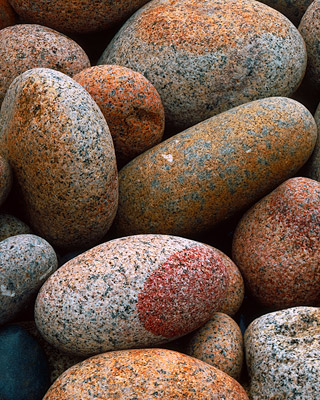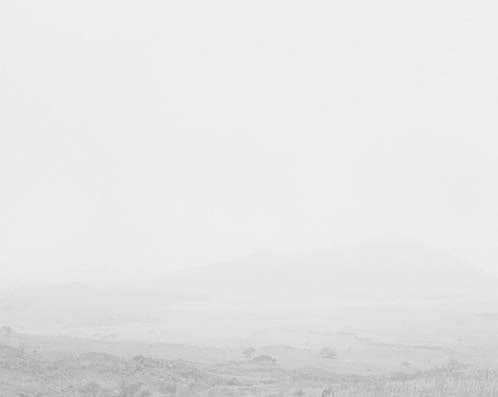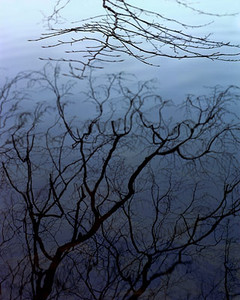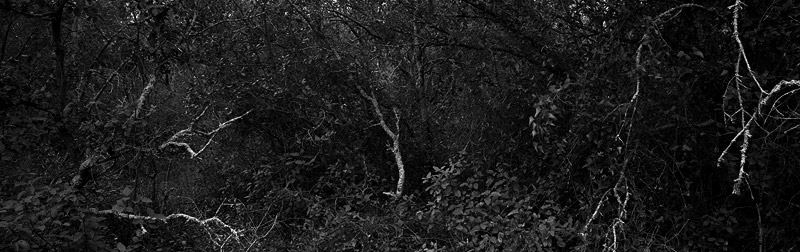
We’ve all seen them on photo-sharing sites: images of grand vistas with strong colours, dramatic perspectives, apocalyptic lighting. We’ve read the comments: “wow, great shot”, “wow, amazing colours”, “stunning composition”, “I’m blown away”, etc., etc., etc. We may have seen these images walking away with the top prize at our local camera club’s competitions. But hold on a moment. Aren’t they all a little bit, well, samey? Don’t they all seem to use similar techniques, effects and compositional devices? Haven’t we seen the same handful of famous locations before?
The pursuit of the ‘wow’ factor…
40 Responses
-
-
Doug Chinnery
Your use of the term ‘anti-wow’ is brilliant, Julian. A great way to describe images that don’t rely on high impact colours and contrast to hide poor composition or subtle beauty. Don’t get me wrong, If I am out and the sky turns into a Technicolor dream I will happily photograph it and then watch the plaudits roll in on Flickr. But in reality, I am slowly learning the truth of what you highlight as the subtle beauty of our landscape and am striving to make images which encourage viewers to think and linger. Off to check out your website now!
On February 21, 2011 at 12:23 pm • Reply -
I think it is worth highlighting, though I am not suggesting anyone is saying anything to the contrary, that photographing in the so called “golden hour” should not be completely written off (I would say that though LOL). Images can still be “thoughtful, provocative, evocative, mysterious, beautiful” when the colours are anything but subtle. A subtle photograph does not necessarily need to have subtle colours and light; the subtlety can lie in the framing, composition and the subject matter.
I am huge fan of bold, strong and vibrant colours in landscape photography – it is a shame that the monotonous formulaic photographs lend a bad name to it.
Although it is not just “golden hour” photography which has such a problem over cliche – I see the same things in sub genres like long exposure mono and intentional camera movement shots (amongst others).On February 21, 2011 at 1:14 pm • Reply -
Hmm. Much food for thought for us all at the moment about what, how and why. A good run of recent articles has had me thinking about my own approach. While I would previously have felt a little apologetic about concentrating on sites within a comfortable walking radius of my home when the riches of the Peak District are on my doorstep, now I don’t feel the need to make excuses. And while I don’t think I want to stop taking wider views or experiencing the rush of the golden hour, I recognise that the images that give me most satisfaction are the quieter ‘small’ landscapes and details found within the view. In some cases these have literally resulted from a pause for breath or refreshment – definitely a case of stop, look and learn.
On February 21, 2011 at 2:27 pm • Reply -
Really nice piece of writing Julian. I hope you do more of this.
It was somewhat cathartic to read these words as I have become utterly bored with the world of online galleries and short attention spans. To get attention these days an image has to be noticed in a 200 px thumbnail and that tends to make people respond similarly – seek out something bright in the landscape. People will then open your image and leave their in-depth commentary enroute to the next brightly colored light trophy. (My own pet peave word is “stunning” by the way). If an image lacks that thumbnail appeal then it simply lies there waiting to be relegated to the next page.
However, I honestly think that the ‘wow factor’ has gotten a bad name in this world of drive through photography galleries. Somehow it has become equivalent to bright red clouds and vibrant color during the golden hour. I personally get just as much (sometimes more) wow out of the sort of introspective intimate landscapes like the ones you displayed in the article. My response is “wow, I’ve never appreciated the textures and form of wet moss before”. Wow! I hadn’t thought of the compositional possibilities of photographing single malt barrels. Wow! the frame looks empty until I get closer to see the subtle detail emerge. George Barr’s industrial imagery has a fascinating wow factor for me that would simply tank with the online community.
The fine art wow is a different animal alltogether. Maybe the real artists out there need to take “Wow” back.
Looking forward to reading more stuff from you mate!
On February 22, 2011 at 7:38 am • Reply -
This is spot on, as far as I am concerned! Nothing wrong with vibrant colours; but, as with any art form, those who view should be asked – indeed, expected? – to enter into the work and inhabit it in some way. Think Bach’s Goldberg Variations, or some such. Art which beckons us in, encourages us to make connections, and to look around a bit before going on to the next thing. Thanks for the article!!
On February 22, 2011 at 9:15 am • Reply -
Tweets that mention The pursuit of the ‘wow’ factor… | Great British Landscapes -- Topsy.com linked to this.On February 22, 2011 at 1:06 pm • Reply
-
Richard
I think these OTT images are usually created by people starting off in photography and are easily influenced by others. They will always exist, I think what is important that you don’t look at others peoples work, produce images for yourself and as long as you are happy that is all that matters. I dabbled in digital HDR when i started and now will use nothing but b/w negative – I was lucky to learn from my mistakes!
On February 23, 2011 at 1:28 pm • Reply -
JBA
‘jools_b’ isn’t anybody’s flickr name, or if it is i can’t locate it in the search function thingy. So what is Julian Barkway’s flickr name? thanks.
On February 23, 2011 at 2:03 pm • Reply -
JBA
OK, well I found it by googling! The flickr search is useless
On February 23, 2011 at 2:05 pm • Reply -
-
kevin-allan
I think one of the factors contributing to the “wow” movement is the ubiquity of extreme wide-angle lenses. Just about every landscape photographer on flickr is using a 10-20mm lens and they seem to be mostly used on 10mm. This provides a very distinctive perspective, currently fashionable, but not one you will find utilised heavily throughout history, by painters for example.
I recently sold my 17mm lens (which give the same view on 35mm as the 10mm on an APS-C digital camera) because it was just too distorted and little used. Now I have no desire to go wider than 24mm equivalence.
I think it’s also true that the coastline is being emphasised at the expense of the countryside. Here in Northumberland we have access to excellent coastline but also some very fine interiors (think of the Peak District being close to the sea); but flickr content is weighted about 80% coast to 15% countryside – the remaining 5% being images of a quarter mile stretch around the Newcastle-Gateshead Millenium Bridge, Baltic, and the Sage.
The article also prompts me to think about what we mean by “fine-art” photography – but perhaps that’s a whole other topic for another day.
On February 23, 2011 at 6:57 pm • Reply-
michaelmarten
This is an excellent point. One of the problems, however, is the camera manufacturers: try to find a prime lens for Nikon’s DX format under 35mm (equivalent to ca. 50mm in ‘real life’). There isn’t anything. I ended up buying a 10-24mm zoom for my DX camera, and whilst I played about with the 10mm end for a bit, the widest I normally go is about 15-16mm (equivalent to about 24mm). This is not because I watch the millimetres on the zoom as I compose, it’s what I find when I get the images back to my computer – I think it’s to do with what still looks vaguely sensible when I’m out. (The kit lenses often start at 18mm (= ca. 28mm), but the one I had produced lots of distortion, and the 18-200mm produces different but also significant distortion! The 10-24mm is at least a bit better in this regard.)
On my film camera, I have just a 28mm and 50mm prime, though I do sometimes hanker after a 24mm…
On April 11, 2011 at 10:04 pm • Reply
-
-
JonSparks
Lots of food for thought. I think Bob-G makes some very good points too about the superficial fast-food tendencies of online galleries and sharing sites. Problem is that’s what many people think photography is now. And any of us who are still trying to make a living out of photography are in a bind because it’s such an important showcase.
And you’re right, it encourages a certain sameness of approach, people going out to try and make ‘wow’ pictures that will get noticed on Flickr, instead of trying to express their feelings and response to the places they find themselves in.On February 23, 2011 at 7:19 pm • Reply -
Thanks for the overwhelmingly positive comments! I’m very gratified that the article has struck such a chord with people.
Kevin, I feel I should clarify my use of the term ‘fine-art’ as it has been somewhat misappropriated in some quarters. I’m talking about photographers who work within what can loosely be regarded as the ‘Art Establishment’. People like Alec Soth, Thomas Struth, Martin Parr, Tim Flach, etc. I’m not talking about people who use the term simply because they feel it sets their work apart from the work of photographers who do not wish to refer to their images in this way. That, as you say, is a whole other topic.
On February 23, 2011 at 8:23 pm • Reply -
Joe Rainbow
A great article all round.
There is a danger that an assumption is made that by posting an image to flickr, you are wanting to be labeled as a ‘fine art photographer. Not so. Most if not nearly all flickr images are on the commercial side, the amateur side or the ‘family’ side of things. With 5 billion images uploaded, of coarse there will be masses of dross. Many people copy a style because they are learning, and I respect that. I learned a great deal until I felt I was in command of my art form and could look more inward.
Like anything, fashions come and go. Wide angle shots are very popular but then so are minimal B&W shots of posts in the sea and piers and hearts on a page formed by the pages and so on.
Being devil’s advocate here, it would seem that an awful lot of large format photography has a particularly ‘anti wow’ statement to it, that makes many LF images quite samey and slightly predictable too. I would of course far prefer an image made from pure artistic pleasure than for show, but I think it is important to emphasize the creative freedom of the individual. As Julian pointed out so nicely, Brian doesn’t want all LF photographers to go and shoot trees and nothing but
As long as the photograph has been made with the right motivation for the individual I think it is good that so many more people have got hold of this art form as it can only raise the amount of people actually looking and learning, even if some seem to follow trends.P.s. I would like to add, I am interested in getting my first 4×5 camera, and see no end of benefits to this way of working. Just wanted to add some balance to the comments.
On February 23, 2011 at 9:41 pm • Reply -
samantha
Excellent article Jools. There are many photo websites whose subscribers are influenced by the technicolour sunset/rises. Not saying there is anything wrong in this, I for one have been influenced, but after seeing and following photographers such as yourself on mainstream photosites (not just Flickr) who always stick to there guns and produce excellent work with a different subtle view regardless of the votes etc…..I find this more inspiring anyday.
On February 24, 2011 at 8:28 am • Reply -
tiekie
Does the smell of snobbery and elitism drift through the air are some people loosing their sense of humour and are taking them selfs much to seriously , who cares what other people like to photograph it,s so-posed to be fun , we all have our own personal likes and dislikes no one is superior to another in what they like – yes digital wide angled seascapes at dawn and dusk are popular – but that does n,t make them inferior to any other style , being popular does n,t make them any more un skilful than the person that likes somber 5×4 landscapes – mono or any other genre
they are all equal and to suggest that they arn,t smacks of self righteousness – it,s all a learning curve what we like now will be different on a n other point of the curve nothing stays the same for long – lets just enjoy what we like in this moment of time stop the preaching and sniping about other peoples efforts they are doing there best as they see fit , as the popular saying goes what a borring world it would be if we all likes the same things in life .Ray Bradshaw .
On February 24, 2011 at 10:32 am • Reply-
Hi Raymond – I think Julian is saying there is a risk of it being a boring world because so many people like the same things (the wow pictures). I don’t think he’s suggesting that all coastal sunset/sunrise pictures should be banned, just that people should develop their own personal style (I don’t think all these coastal shots appeared because so many people just happen to have converged on that personal style somehow).
You are arguing for variety and personal style – I think Julian would whole heartedly agree that this is a good thing..
On February 24, 2011 at 10:46 am • Reply -
Hi, Ray. It’s always refreshing to hear a dissenting voice. Tim is correct in his interpretation that I am not fundamentally anti this type of image, nor am I suggesting that everyone should photograph the landscape exactly the way I do. In fact, I happily admit to enjoying the occasional ‘wow’ image, when executed well.
Rather, the whole thrust of my article is about considering what it is you are trying to say with photography. Admittedly, at the beginner level, people are more concerned with learning technique than with more esoteric matters of motivation and re-interpreting work that you admire is certainly a good way of learning. We all do it, whether consciously or otherwise. However, once you have reached a certain level of ability, you have a choice. Do you continue to work within a style that is so overwhelmingly popular as to be almost the de-facto way of depicting the landscape or do you try to reflect the way you see the landscape as an individual and pursue your own path?
I’m merely arguing that people should strive to look more deeply at the landscape, perhaps even to introspect a little and to produce work that is personal, thoughtful and has real depth. What I am not saying is that there is only one way to do that. This is clearly nonsense. Even in the last paragraph I am not trying to be prescriptive, only that people should be open to ideas that contradict the orthodoxy (whatever that might be) as a way of finding their own voice.
Julian.
On February 24, 2011 at 11:39 am • Reply-
Hello Julian and Tim, an interesting read and a conversation stimulator.
There is indeed many of these type of images that you describe, I could probably be lumped into this brigade now and will certainly have had my fair share of images as a beginner. I agree with you that they can look very similar in style and depict the most photogenic and iconic locations but I wouldn’t agree with your argument that folk should strive to look more deeply at the landscape or find their own voice.
Photography may mean different things to different people and folk may have all sorts of reasons to capture these “Wow” images. Many folk like photography for the social aspect, the club and forum meets etc where taking images of iconic locations in decent light is more a priority than anything they may want to ‘say’ with the picture.
I’m not at all sure that the majority of folk with a camera actually what to say or particularly communicate any specific messages with their images, do we need to, to enjoy taking pictures?
Why do you and Tim think people have to pursue and develop their own style? and more to the point, many people who are striving for these “Wow” images may think they are developing their own style anyway, it may just happen to be a popular style that many others are doing at the minute as well.
I’m sure many folk are quite content to visit the most photogenic locations, hope for a bit of decent light, make an image they are proud of and perhaps hang on the wall and even display in popular galleries and be part of a mutual community.
Photographic tastes are so diverse and subjective and what works for one won’t for another but I don’t think folk should do anything other than what they want to in style or enjoyment they get out of photography.
Just a little counterbalance to the discussion.John
On February 24, 2011 at 3:46 pm • Reply-
Hi John,
I’m rather mystified by your suggestion that either myself or Tim are saying that people ‘have to’ do anything ‘other than what they want to’. I am simply offering the notion that there are alternative styles of landscape photography to the sort of immediately accessible ‘wow’ images that are the mainstay of photo-sharing websites and the mainstream photographic press. I also suggest that those people who wish to develop their photography further might like to consider a less ‘obvious’ approach, involving embracing subtlety and suggestion over immediate accessibility and formula. Readers are, of course, free to agree or disagree with my assertions and opinions as they please. I am not saying for one moment that anyone absolutely has to practice their art, craft or pastime in any particular way.
Julian.
On February 24, 2011 at 9:06 pm • Reply-
Julian,
I do understand that you were offering a notion now, please forgive my interpretation that the article read in a slightly condescending manner to the many folk who are quite happy I believe in their ways. I read it carefully several times but there was still a feeling that the tone of the article was a bit lofty and from high. I don’t suspect you intended it this way but its just how it read, to me at least and you are not arguing that people should strive to look deeper just offering a notion now.
I agree with much of your content and suggestion that there are alternatives to the wide angle sunset shots, can’t seem to bring myself to look much deeper than that wide vista though….
John
On February 24, 2011 at 11:55 pm • Reply -
Nothing like a bit of provocative content to bring the comments pouring in – perhaps the “Anything, in fact, but ‘wow!’” was the line that got people wound up, I must admit to liking a wow on occasion (even if I like the WOW to be followed by a OOH and then maybe a HMMM and finally an AHA!)
On February 28, 2011 at 3:41 pm • Reply
-
-
-
-
-
Excellent article – now I know why my photos never got any positive comments Seriously though, there’s a whole load of truth in what you say Mr B. As you know I have pretty well given up with one of these fora, though whether it was my sub-standard photography or that my work was simply wrong for that forum will remain unknown. As many others, I too fell for the over-saturated look in my early days but have since settled down into less garish images especially of intimate details. Nevertheless, here too I do like punchy colours (where appropriate) but not screamingly so. Still, I do very much appreciate the ability of people like Michael Kenna to convey so much with so little. Rgds, Adam
On February 24, 2011 at 1:39 pm • Reply -
Julian,
Excellent debate initiated here…
As someone who is relatively new to landscape photography, and having started with the pursuit of the “WoW” factor type of shot, and , hopefully now moved on and grown into a more thoughtful replicator of both the detail and the beauty that can be conveyed through making an image, I wanted to add to the debate that it is about the ‘journey’ of each image, because the one enduring aspect of each image is the personal memory of the different elements of the day that resulted in the image being taken…
I recently attended a talk by Prof Joshua Cooperwho, in setting up his talk, spent almost thirty five minutes talking about the reasoning behind his project (over twenty years and £1,2m) before moving onto show his first image, Cooper image, I have got to say that, in a room full of about fifty camera club attendees, the anticipation of this first image was palpable.
After the presentation I was struck by the division within the small cohort that i talked to, who seemed split as to their enjoyment of the lecture…
I was very open minded about the lecture, but what i did feel was that the journey was the most important aspect of the talk, and the single minimalist images were but the product of some incredible journeys , hardships and passion, which, if you viewed the image alone without the journey, would have been redundant, and I instantly ‘got’ the reason for the preamble of thirty five minute… and the reason why i feel that Vogt images, in full context, are indeed superb… but, at a glance, could be so easily dismissed.
So, with that in mind, I have had my journeys, some to the iconic sites and locations which have pitted me against my mentors, and has been part of the journey which has now, i feel, equipped me to recognise the next step in the process of developing my ‘style’ which will hopefully be the synergy of all the elements of the journey, technical learns, artistic temperament, and appeal…
I think that what we are seeing (in my humble opinion) in the previous posts, are photographers at various points in this journey, who, when they arrive, may ultimately be happy with the destination whether that be technical excellence, peer endorsement, commercial fulfilment or simply ‘wow’… all destinations hopefully acceptable to themselves…On February 25, 2011 at 8:03 am • Reply-
Hi David,
A good point about Vogt’s work. You really do need to see it in a gallery to get the full effect as such a lot depends on the immersive viewing experience of a large print. At web size, it’s very difficult to see why these images might be interesting, sadly.
And thanks for introducing me to Joshua Cooper’s work. I’m off to google for some more examples right now…
Julian
On February 25, 2011 at 1:31 pm • Reply
-
-
Julian,
Just a few days ago a photography student emailed me to ask about my approach to b&w landscape photography. I chose to answer fully and my response was very much along the lines of what you talk about here. I thought I’d quote a section from my reply, to add to the agreeable and supportive feedback above:
“B&W is what I prefer, what I like doing and it reflects the way I choose to see the land. My choice of B&W is to distance myself from the total familiarity of colour. We all see in colour, almost every image produced today is in colour, TV and films are in colour, newspaper and the web are in colour. All life is colour so it is common ground for everyone. So a “good” or “successful” colour landscape often has to rely on dramatic lighting or exaggerated colour for its impact. Indeed, the very familiarity of colour allows us to hardly look with any intensity at these images. We skip over them with hardly a glance. Very often these images have no merit whatsoever other than their colour. There is often no coherence to composition and framing of the image. B&W on the other hand forces us by the very lack of colour to pay much more attention to the whole image, to its composition, its textures, its local and overall contrast, and the relationships of different image components within the frame. A B&W image demands much closer attention from the viewer thereby placing a much higher onus on the photographer to address all elements of the image. And hence its an enhanced challenge for the photographer and an enhanced viewing experience for the viewer.
…
B&W offers a vast range of choices to be made in the way in which the final image is portrayed. It’s that choice which I enjoy so much – or more specifically the process of deciding and presenting the image in the way I want it to look. But for me it is vital that any changes or manipulations that I make must never be obvious to the viewer.So, in a nutshell, that’s my stance. Of course there are fantastic colour landscape images and photographers, but for me they come from the few who have managed to incorporate the essence of B&W into their colour work.”
Steve Gledhill
On February 26, 2011 at 8:14 pm • Reply -
Philip Eaglesfield
An interesting article, and clearly a fine spark for discussion – but I am in the disagree camp. People will take whatever images they like, and, if they stay passionate and engaged, they will naturally and eventually evolve their style. As you bring up classical music and modern jazz, we could also talk about the sounds of the Seventies.
A core within the music world became bored of “indulgent” Prog Rock (the analogy fits, as many might easily mistake some of your dreaded “wow” images for overwrought Prog Rock album covers) Punk Rock flickered into life, all about being stripped down, pure, finding a voice and a “message”. And lo, in no time, most of it was just as hollow and easily caricatured as any Yes concept album….
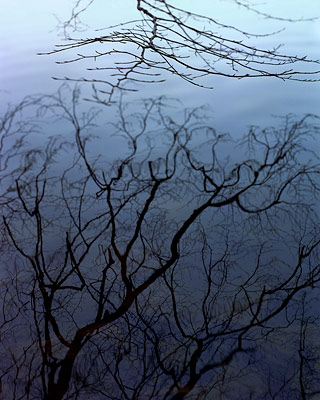
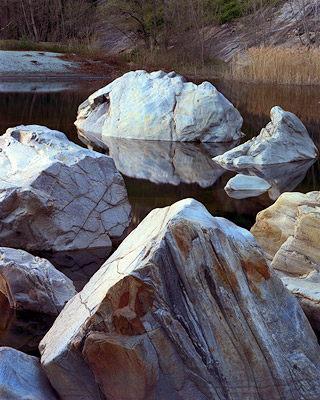
I expect to be logged on in a couple of years absorbing a piece about how everyone is lazily and slavishly knocking out derivative versions of the close-ups of Nanven’s boulders, Vogt’s blank mist images and the reflected twigs which currently excite you.
Sure people, make sure you are connecting with the images you create, but in the meantime, be wary of following Julian’s clarion call – we shouldn’t be so certain that achieving the opposite of “wow” might not, for many, be very hollow achievement indeed…
On February 27, 2011 at 2:11 pm • Reply-
Hi Phillip,
As someone who grew up with Prog Rock (I unashamedly admit to still having the odd ‘Yes’ album on my iPod :^) ), yours is an interesting analogy. However, I think the weight of history is against your assertion that ‘anti-wow’ is the new upstart.
Intimate landscapes are nothing new and can be traced back to the ’50s and ’60s when people like Eliot Porter and Minor White were active, if not before. The use of ‘flat light’ and restrained colours has run through the ‘Art Photography’ world ever since William Egglestone proved that art photography didn’t have to be in monochrome. Check out Nadav Kander’s recent ‘Yangtze’ series for a masterly example of how to create colour landscape images of beauty and power without recourse to dramatic light or forced perspective.
Julian.
On February 28, 2011 at 9:20 am • Reply
-
-
Thanks Julian for the article and for the commenters for creating a great discussion here. I agree that a lot of photographers who settle on only producing ‘wow’ pictures are either a) content with that or b) are still going through the process of finding their photographic voice.
I love to record a view in great light and I used to plan a lot of my photography around that. However, it was a couple of years ago while on a very wet trip to the Lakes that I realised there was so much potential to make photos in anything but perfect weather. To retrofit a relatively famous Billy Connelly quote: there’s no such thing as bad light, only the wrong light for a particular subject.
Sometimes while I’m out I’ll struggle for inspiration, but rather than going to the pub, I find that sticking at it will eventually pay dividends. I find that it can take me some time to become absorbed by a location – especially if it’s new, but also if it’s a familiar location that I’m just struggling to get in tune with – and it will take time for me to make a meaningful image.
I grew out of the ultra-wide angle cliché soon after getting my UWA lens and rarely go wider than 24mm now. Even then, anything wider than 45mm tends to be an exception rather than a rule.
On February 27, 2011 at 9:23 pm • Reply-
Hi Tim,
You make a very good point about there being no such thing as ‘bad light’. I went through a similar process to yourself only with me it was more about questioning why I was dragging myself out of bed at stupid o’clock just to be disappointed by yet another overcast dawn. I realised that, by concentrating on getting out for the four hours or so per day of ‘best’ light, I was missing the opportunity of using the remaining 8 – 16 hours of perfectly acceptable illumination.
As you say, the trick is in matching your subject to the available light. Once I learned how to do that, I found myself taking a much more relaxed approach to image making and creating more satisfying photographs (for me, at least) into the bargain – not least because, as Steve G. rightly points out, once you take away dramatic lighting you are forced to concentrate on the fundamentals of form and composition.
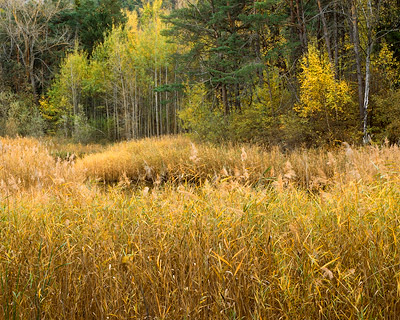
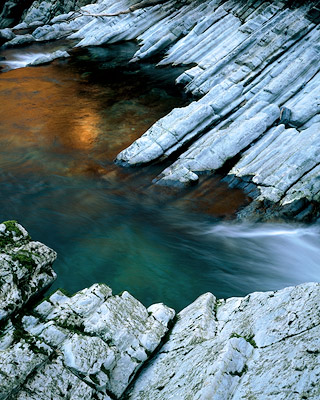
That said, I have to come clean and admit that one of my own included images was made just before dawn and another at sunset.
On February 27, 2011 at 10:04 pm • Reply
-
-
Joe Cornish
Hi Julian,
Great article, and equally great response thread.
It may not be relevant, but as a bit of an old stager, I think it might be worth observing colour photography’s evolution since around, say 1980. Before then, there were no decent colour transparency films and anyone who shot colour seriously tended to use negative (strange, since it was also the family album medium of choice). There was no internet. Seeing the work of other photographers was mainly books and magazines, and these were, relatively-speaking, far more expensive than now. All ‘proper photography’ was black and white, and proper hand-printing was an intrinsic part of that art. Colour photography was not taken remotely seriously as art until Haas and Egglestone in their very different ways, and outside of the USA no-one knew of Eliot Porter.
Better E6 films started to change things in the ’80s as Fujifilm entered the western market. I remember my first roll of Velvia in 1989 (how sad is that!) and thinking my world was about to change as a result. Digital was still a vague irrelevance at the beginning of the 1990s. Now, in ways unimaginable then, colour photography has been revolutionised, and much of that revolution has been at the hand of post processing, and the ability to define and change a colour pixel in terms of its RGB numbers. We are all still getting used to the tools (well I am anyway!) and it is not surprising that there is a popular tendency to render colours very saturated. I think the appeal and power of saturated colours are hard-wired in human vision. Now we can control colours as never before. We can also choose to ‘turn them down’, or off altogether as well. Most artists want to express their own individual view, and stand a little bit apart from the crowd, but many don’t see themselves as artists (although I suspect most LandscapeGB readers do). The day may come when we are all artists, but that day hasn’t arrived yet.
Because the state of the art in photography also tends to reflect the state of the technology I just wanted to put things into that perspective. The first colour pictures may well have been made in the 1890s, but colour photography today is still in the growing pains of a technical revolution (even if you are shooting on film!).
Great pictures by the way!On March 2, 2011 at 8:59 pm • Reply -
Thanks, Joe! Much appreciated.
No decent transparency films before 1980? Have you forgotten Kodachrome already?
Just teasing.
Best,
Julian.On March 3, 2011 at 8:13 pm • Reply-
Joe Cornish
Oh yes, Kodachrome; don’t get me started!
I’ll bore you with my Kodachrome stories another day… but for now it is safe to say that I part company with Paul Simon on this one.
JoeOn March 12, 2011 at 11:52 am • Reply
-
-
Whenever I see the classic “Awesome shot!” comment on Flickr I’m so tempted to write “No. It isn’t”. But I don’t. The trauma of the backlash I was hit by after daring to criticise a cat photo more than a few years back has yet to wear off.
But the thing is, these sites are schizophrenic. Superficially they’re about photography, but in fact, most of the time, they’re just another Facebook. The number of comments received on Flickr is highly correlated with how much cleavage you show in your avatar… which is a double edged sword for good photographers who also happen to be attractive females
Anyway, I completely agree with the article, but I don’t think anybody should take photo sharing sites too seriously. Of course, there is always http://1x.com//, but there we go from one extreme to the other.
On March 4, 2011 at 5:46 pm • Reply -
Malcolm MacGregor
Hello Julian,
Thanks for such an interesting piece. I have made a mental connection between what you wrote and your review in Issue 10 of the Japanese photographer Shinzo Maeda.Most of his photographs seem to have asked the viewer to meet the photographer half way to use your analogy. There is something about those photographs that makes the viewer really look at them, and make a connection with the photographer via the photograph. What that connection is, is up to the viewer. Serenity, beauty, calmness, rhythm. With Maeda’s photographs I don’t think you would ever get tired of looking at them – they are so easy on the mind.
On the other hand, photographs made by,say, Galen Rowell or Jack Dykinga are so striking as to really force the viewer to take note. I don’t think I could face that sort of photograph day in day out on my wall. Although what Dykinga does with a 45 camera is pretty remarkable. Perhaps it is a ‘western’ thing to love the ‘wow’ factor, with unbelievable compositions and light. In the case of Maedo there may be a cultural aspect whereby, the Japanese and ‘easterners’ are more ‘chilled’ than we are so the photographs have less impact, but rather creep up on you communicating in a different, easier way.
The cultural thing might not hold water when considering Eliot Porter, Paul Strand, Weston maybe.
Anyway, thanks again,
Malcolm
On March 7, 2011 at 5:53 pm • Reply-
Hi Malcolm,
First, I feel I have to point out that I am not the author of the Shinzo Maeda piece, although I am an admirer of his images.
It’s quite likely that Maeda’s work has been influenced by the whole Japanese aesthetic but I’m not sure it’s quite as clear-cut as a Western/Eastern split – you seem to admit as much when you mention Porter, Strand and Weston. Certainly there is a sense of peace, harmony and a respect for nature in Maeda’s output which could be traced back to Zen and Shinto beliefs but there are many non-Japanese landscape photographers whose output could also be so characterised. I am immediately put in mind of the Sewdish photographer, Jan Töve (featured in an earlier edition of LGB).
Where I would take issue with you is in your characterisation of Dykinga’s work as falling into the ‘wow’ genre. Comparatively few of his images depend on dramatic lighting or forced perspective and much of his output is concerned with thoughtful, small-scale studies of nature. In fact, leafing through his ‘Arizona’ book, I see at least one image that looks very similar to Maeda’s work (the image facing the ‘Introduction’ page). I can’t comment on Galen Rowell’s work as I don’t know it so well.
I can’t help wondering if there is a small misunderstanding here. I have no issue with images shot in fantastic lighting when it suits the subject. My issue is with the rote application of techniques like forced perspective, dramatic light and saturated colours to any and every image, irrespective of subject. In an ideal world, I would like to see people thoughtfully applying a range of techniques to best represent their subject and, not least, whatever it is they might be trying to say.
Julian.
On March 7, 2011 at 6:46 pm • Reply
-
-
Fascinating article and a very stimulating debate! As a photography student (albeit a very mature student) I am consciously trying to develop my own style or “voice” as some people prefer to call it. That said I invariably end up preferring to post the “WOW!” shots to Flickr simply because I am still finding my “voice” and haven’t yet got the confidence to stand up and declare “this is me”. I think that this voice develops over time and that we probably need to go through the “WOW!” stage before we get there.
FPOn May 27, 2011 at 8:46 pm • Reply -
On December 16, 2011 at 1:39 pm • Reply