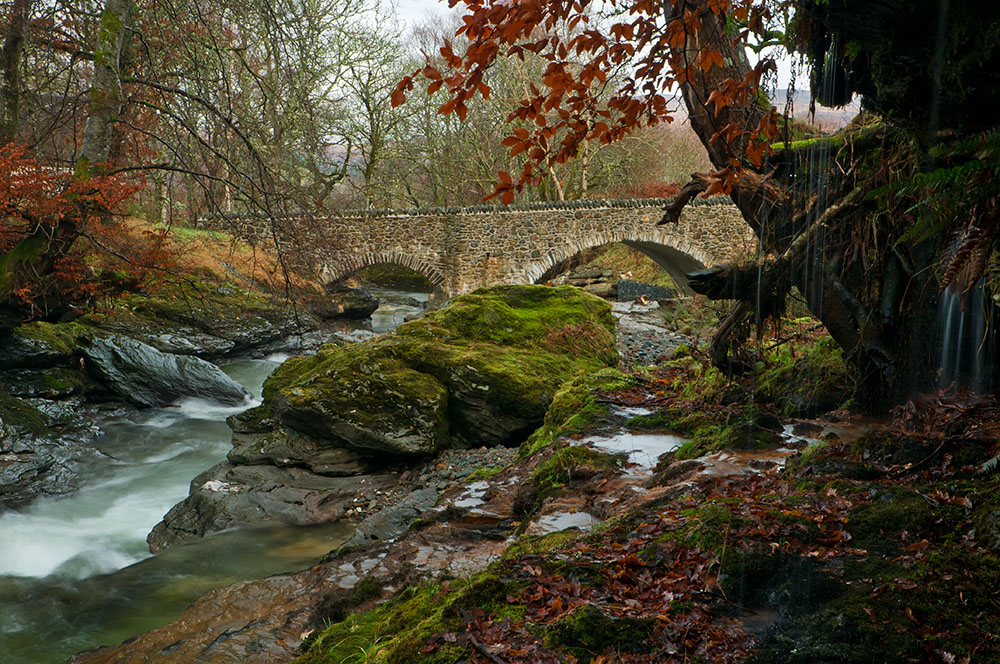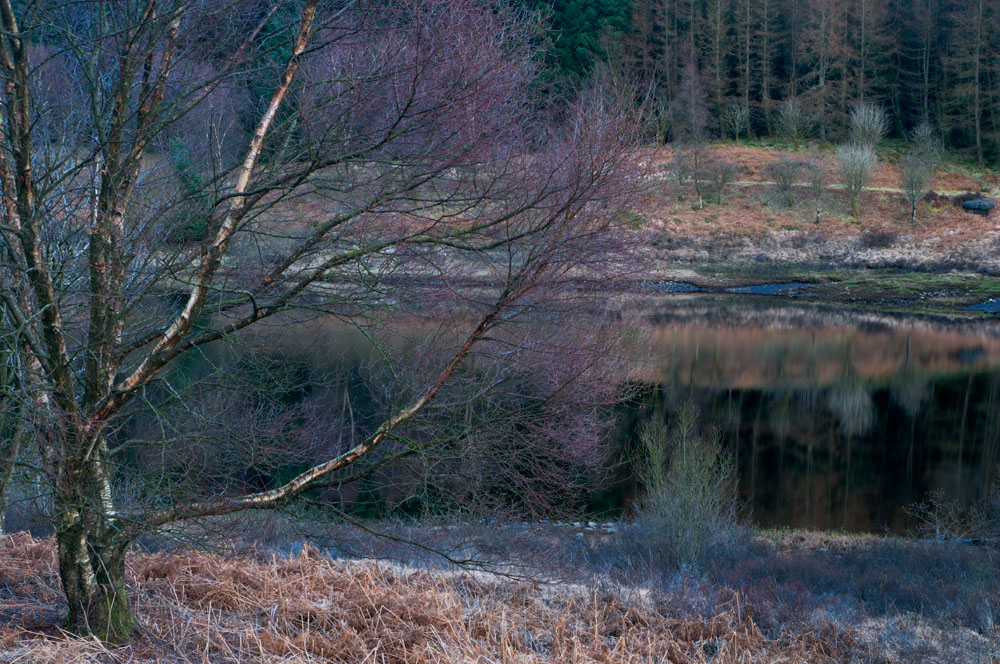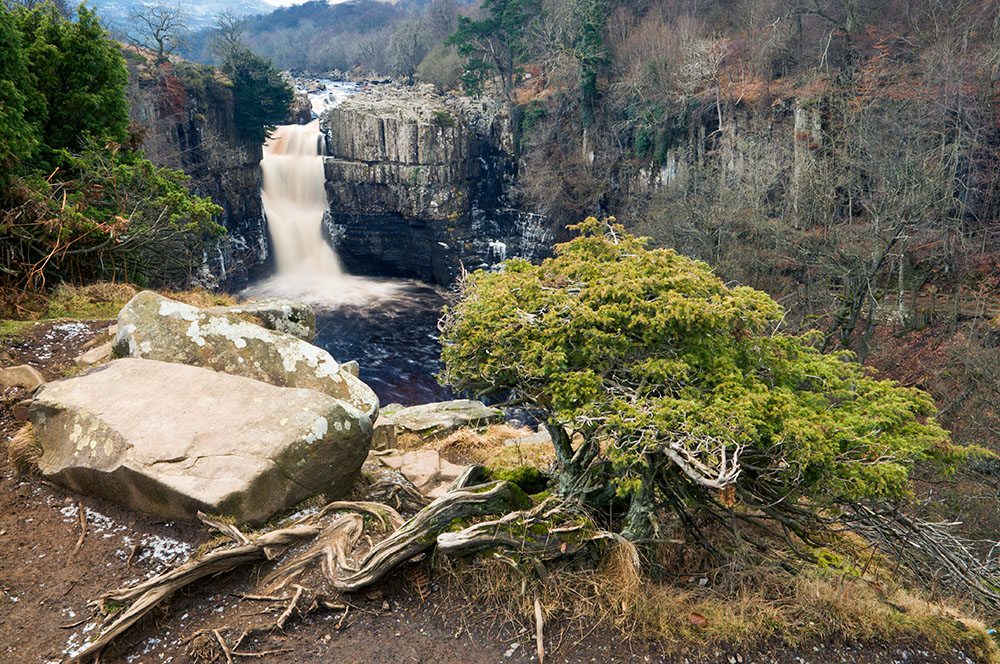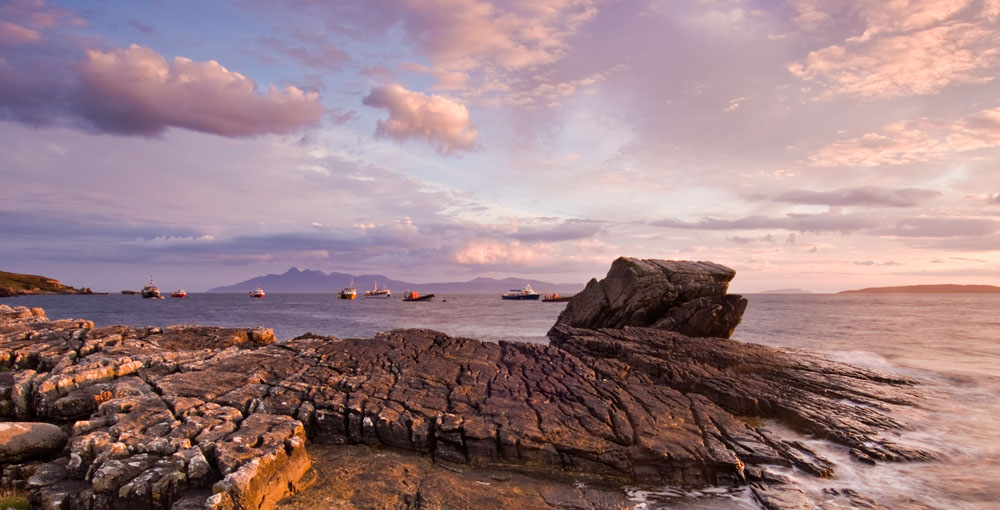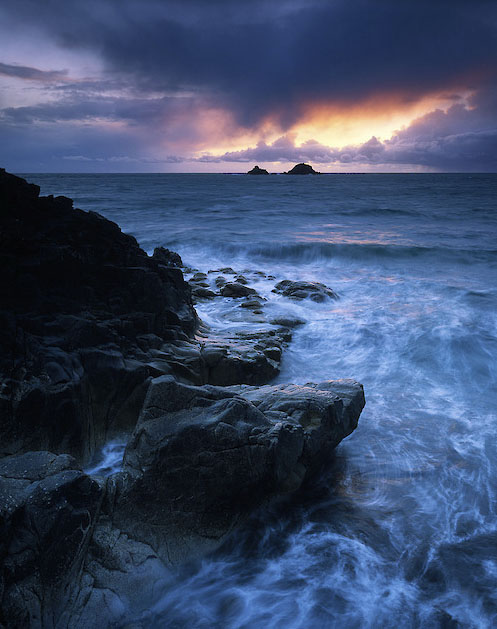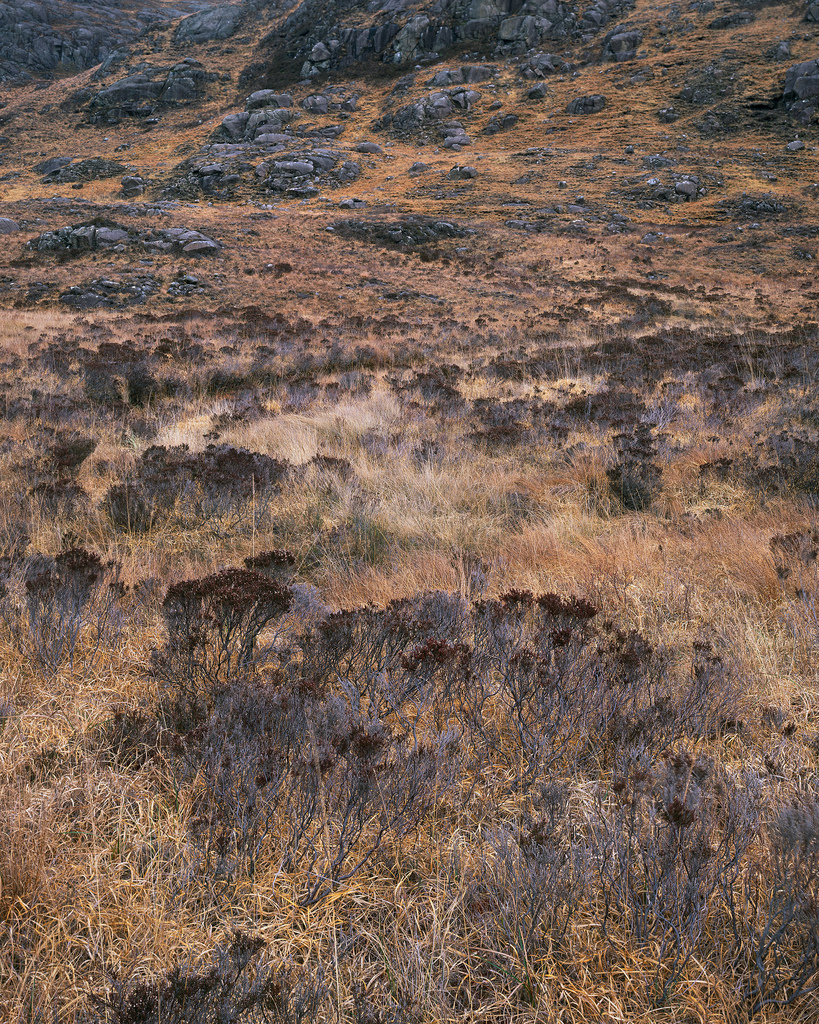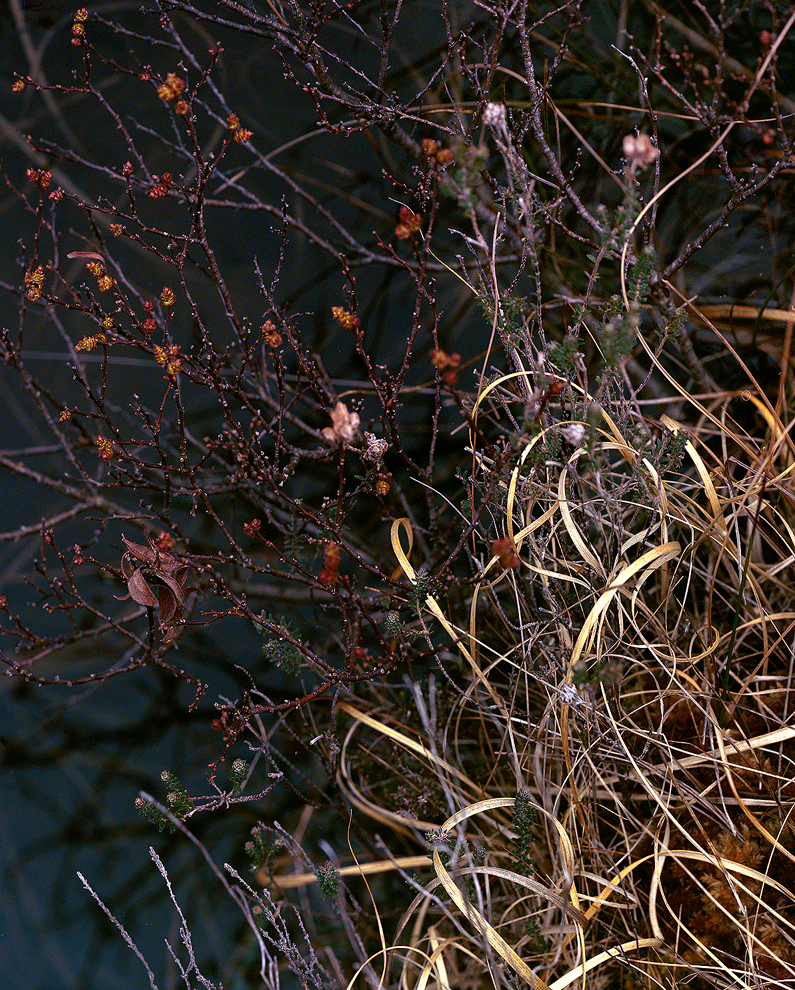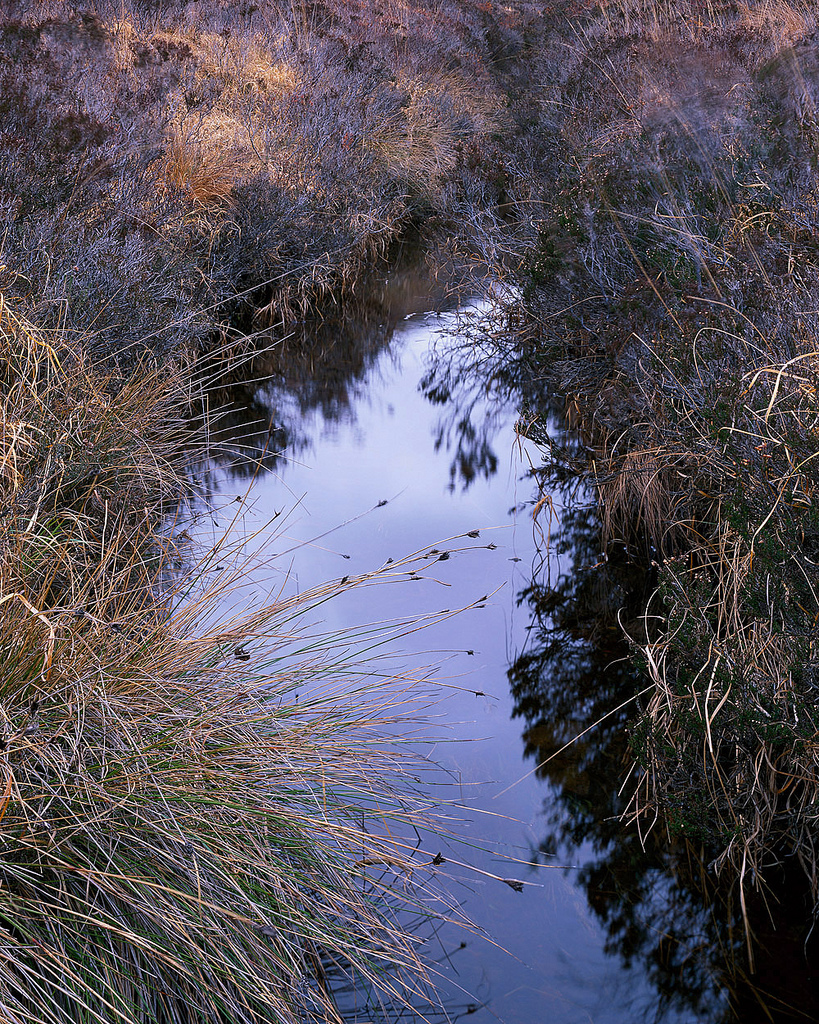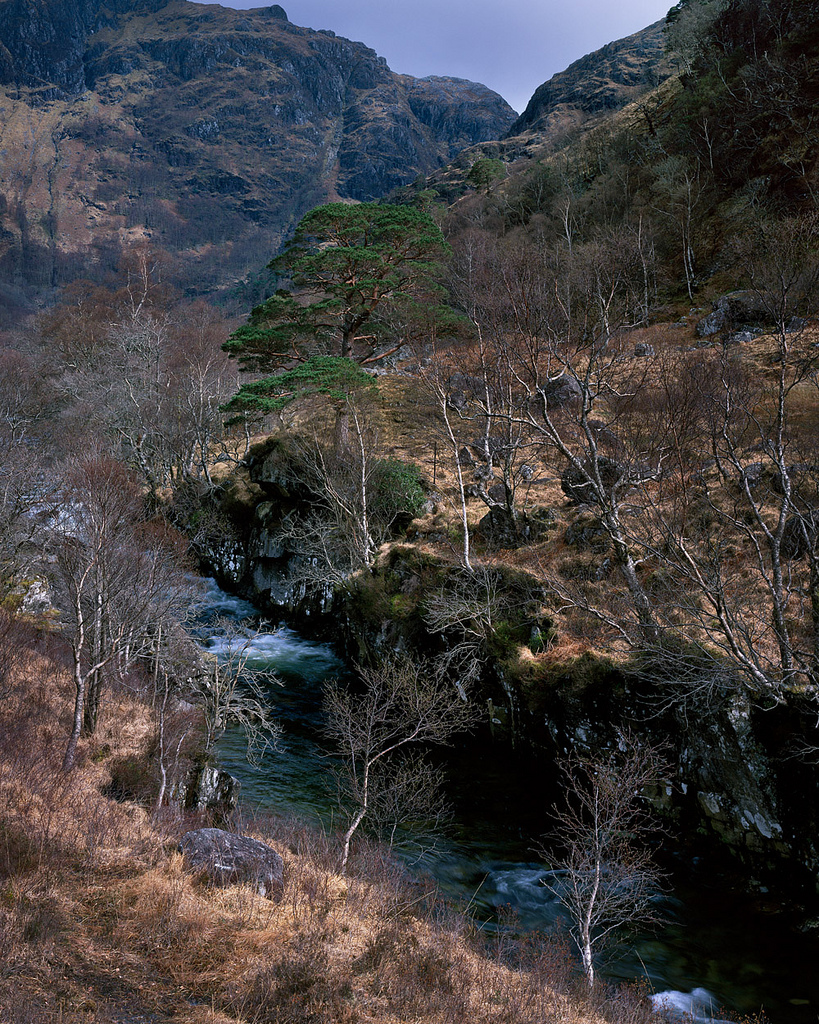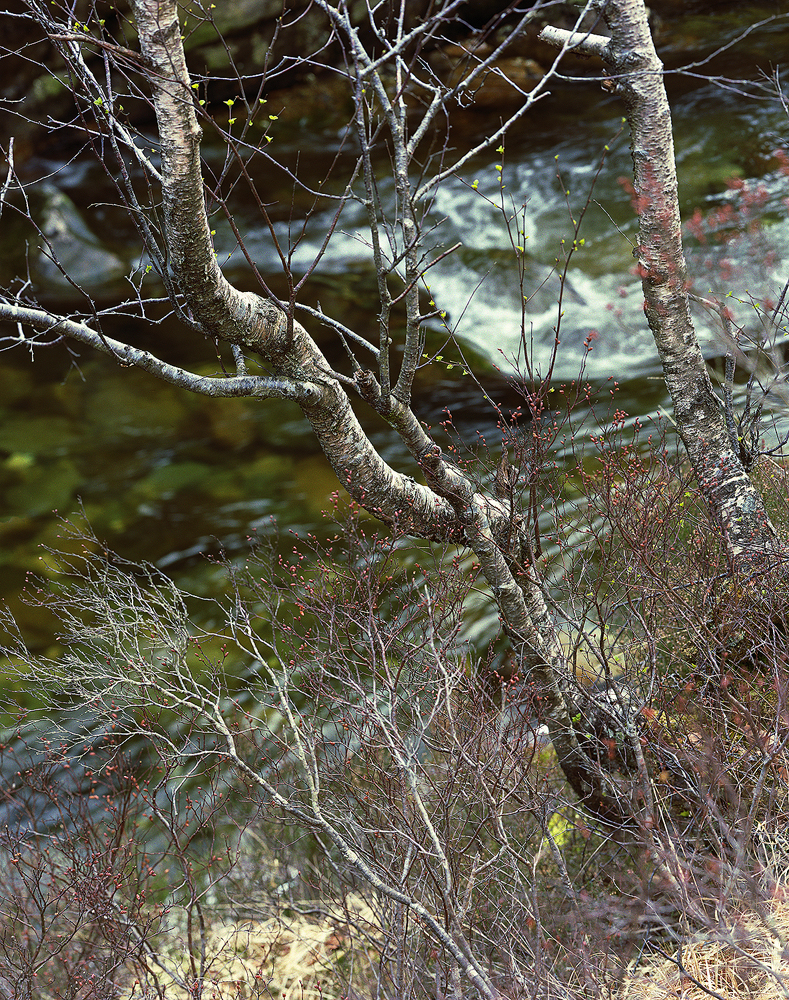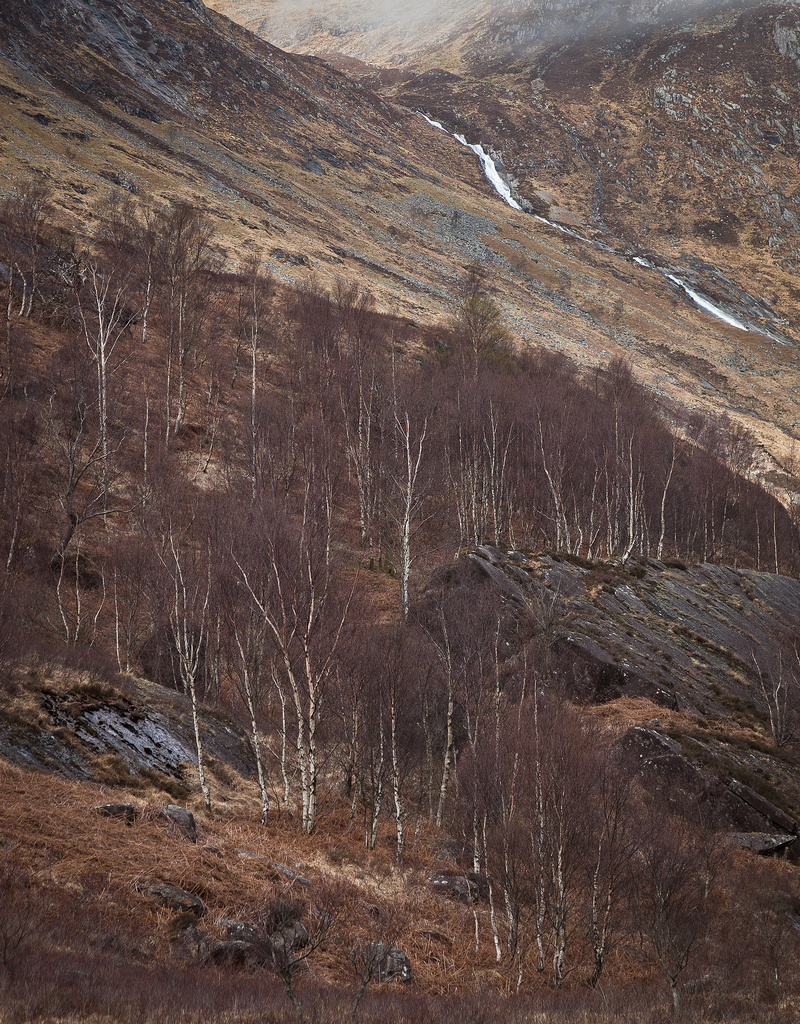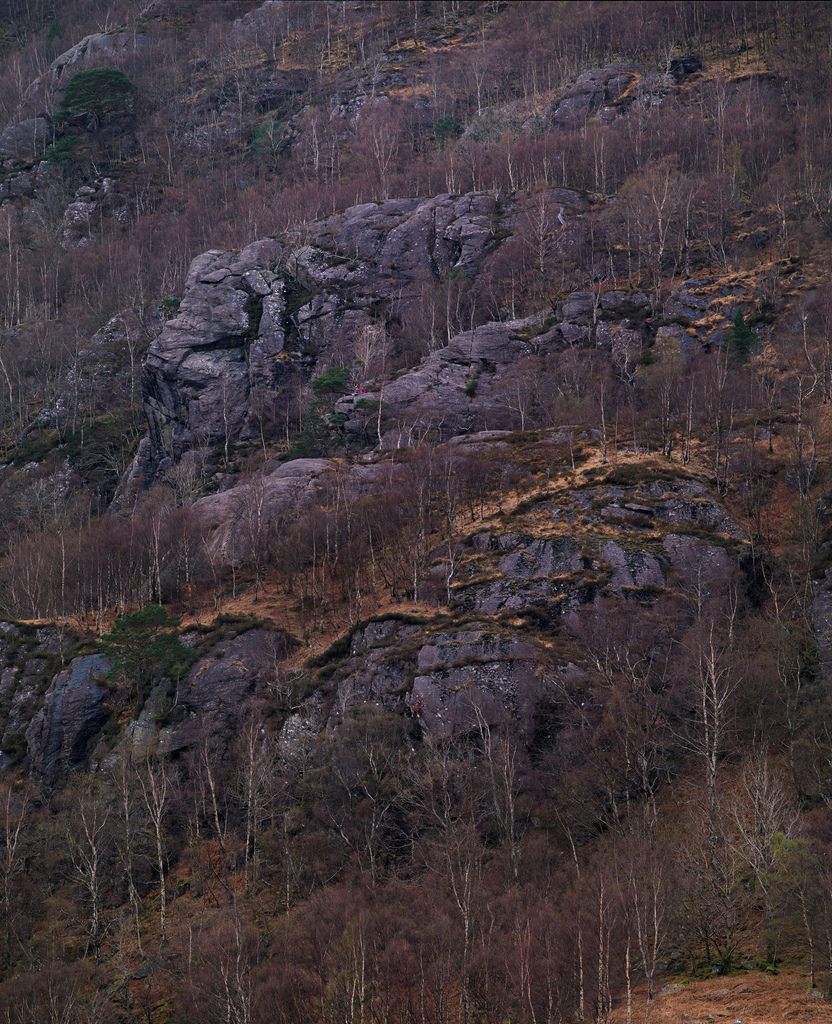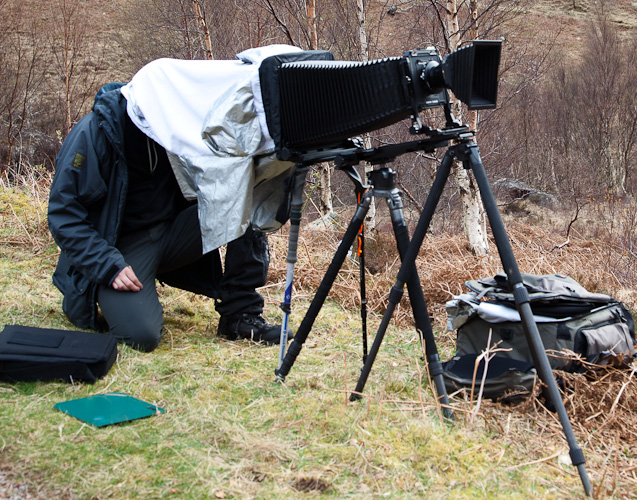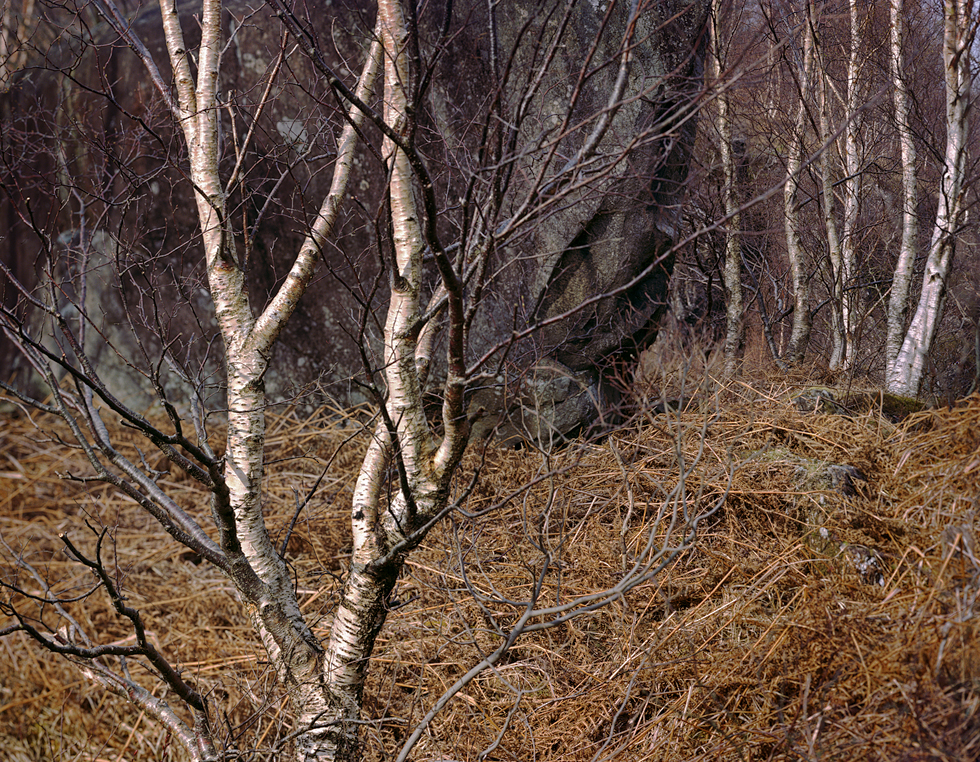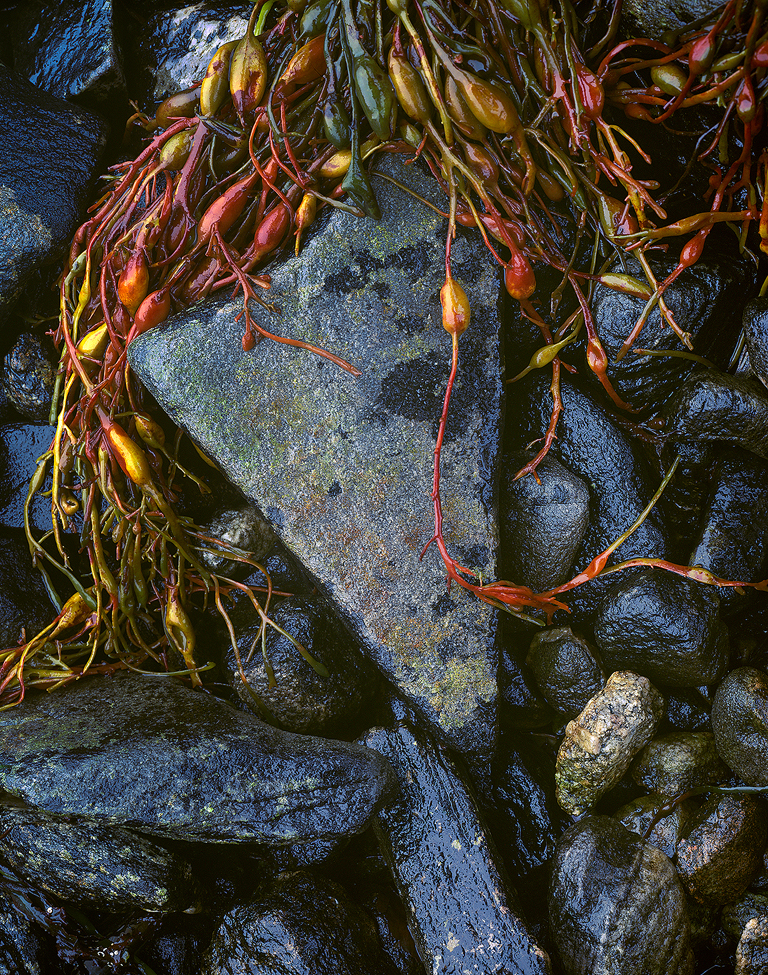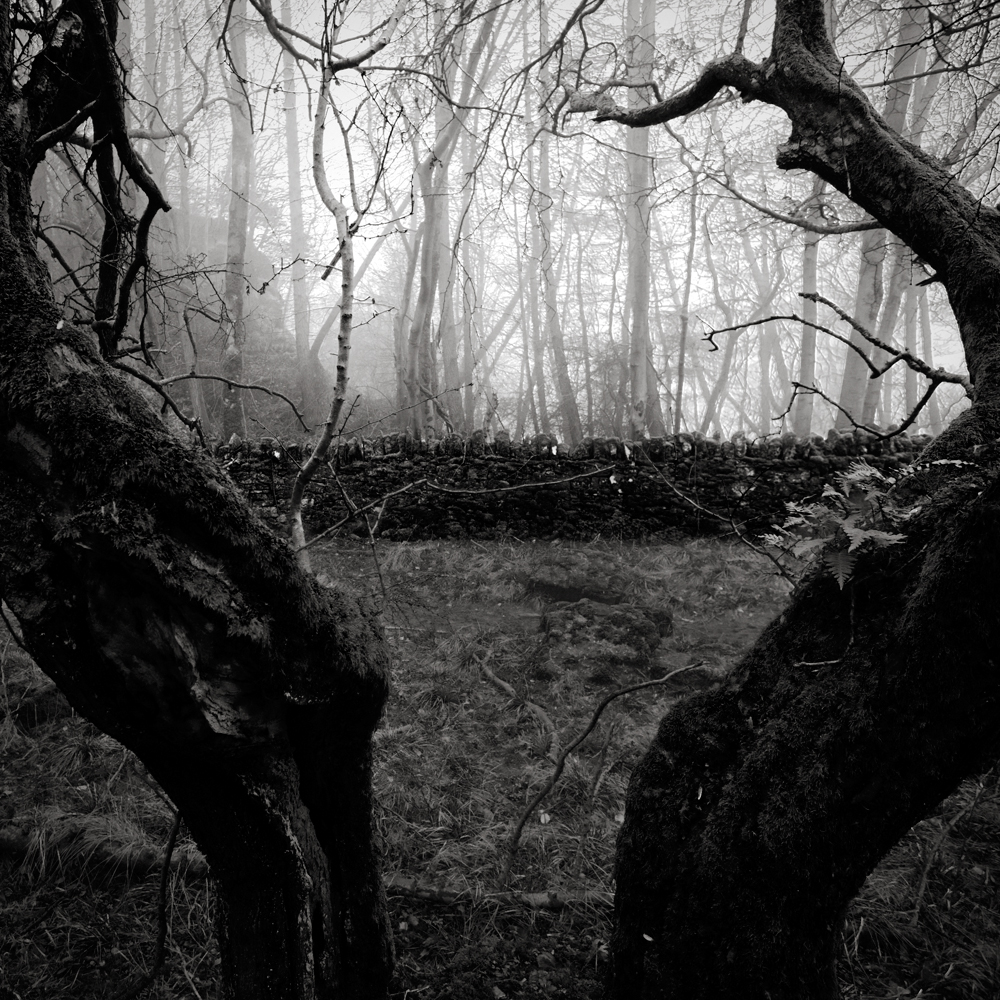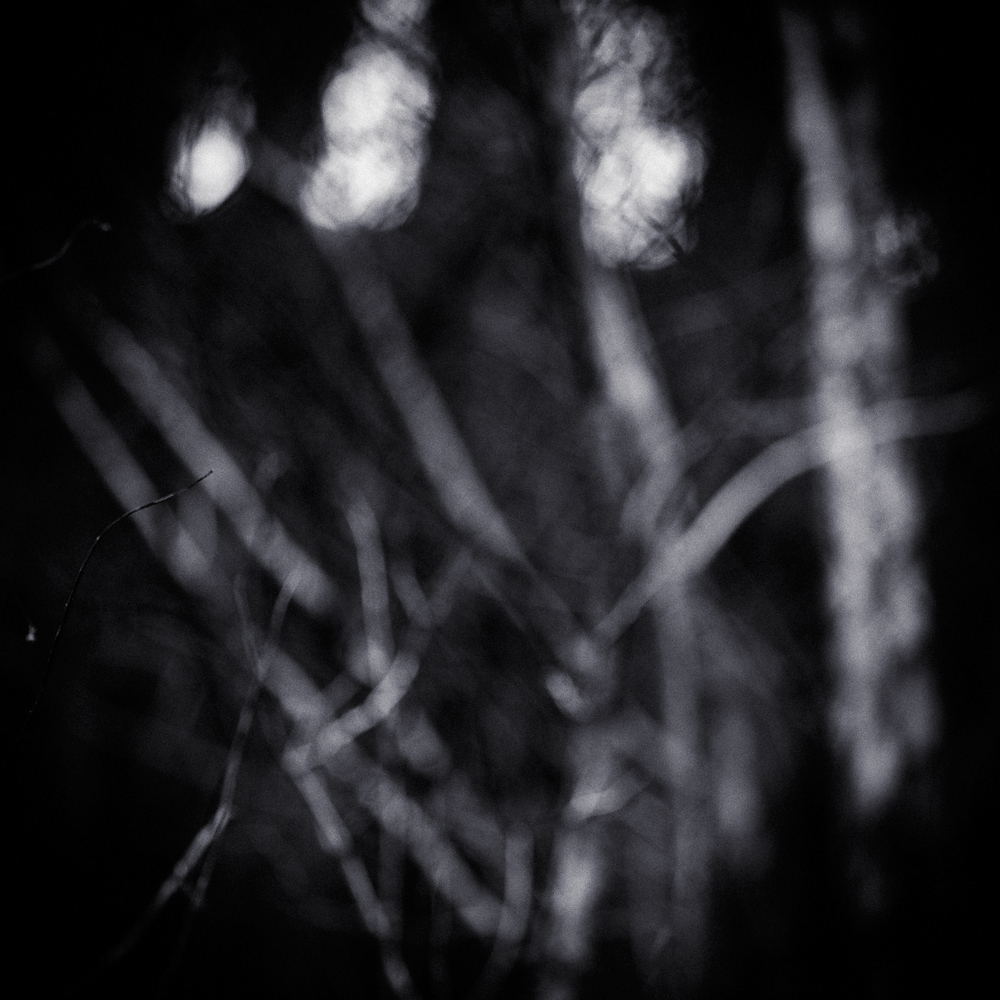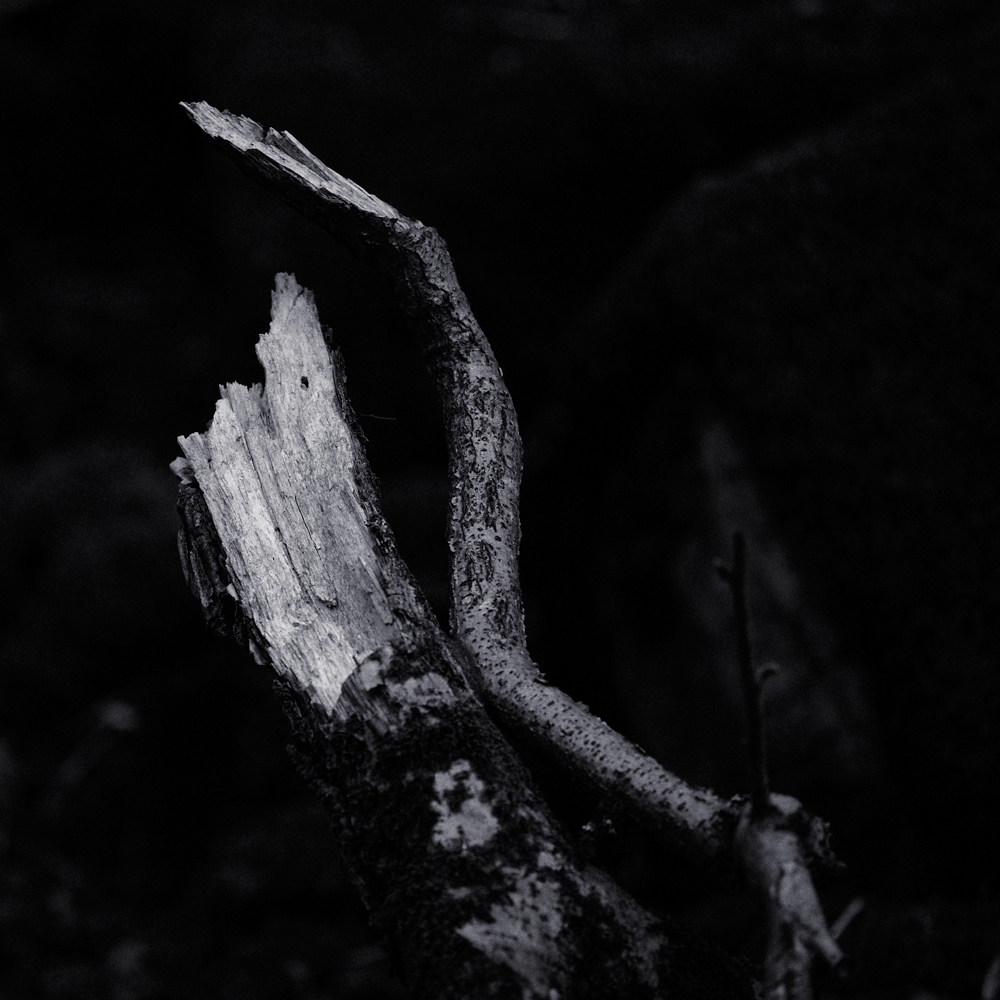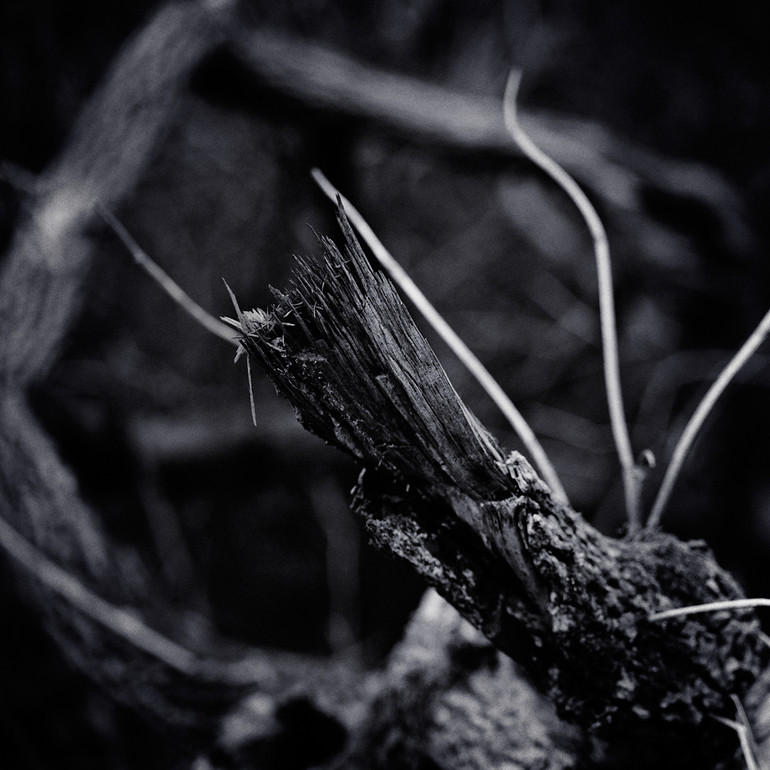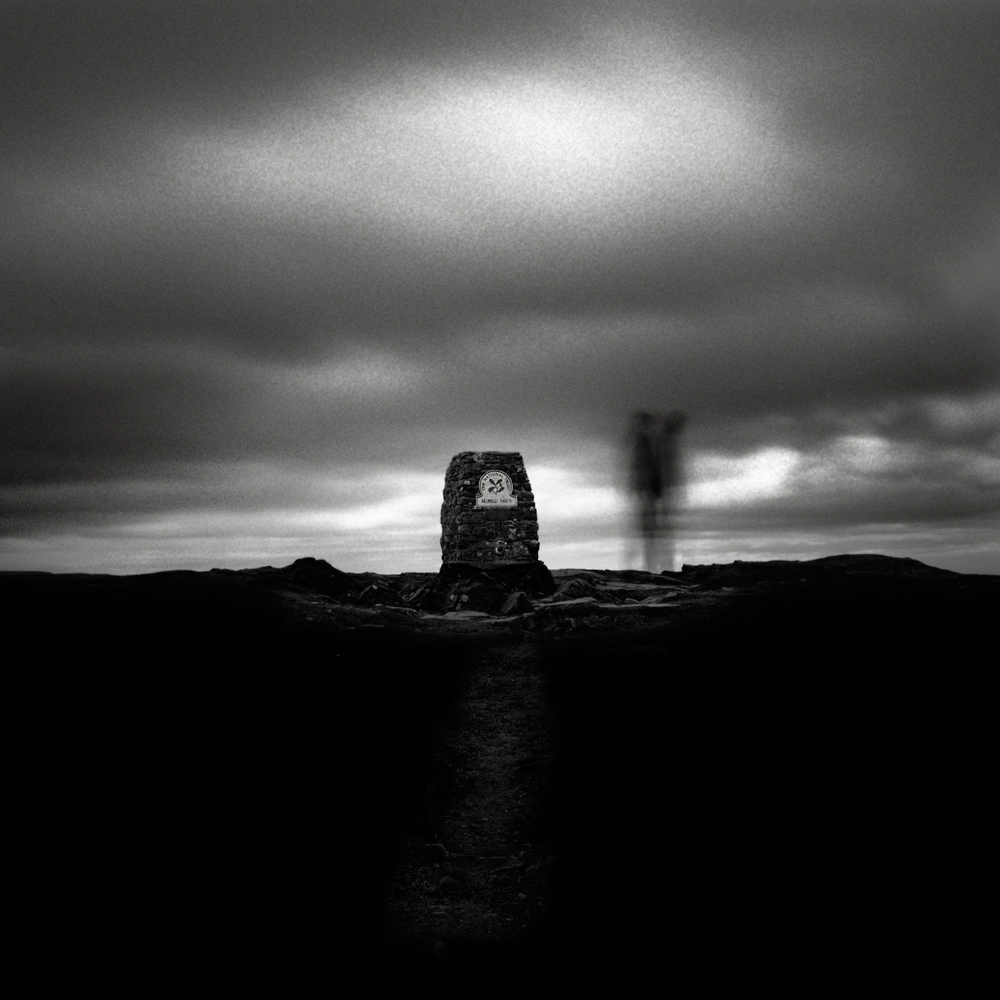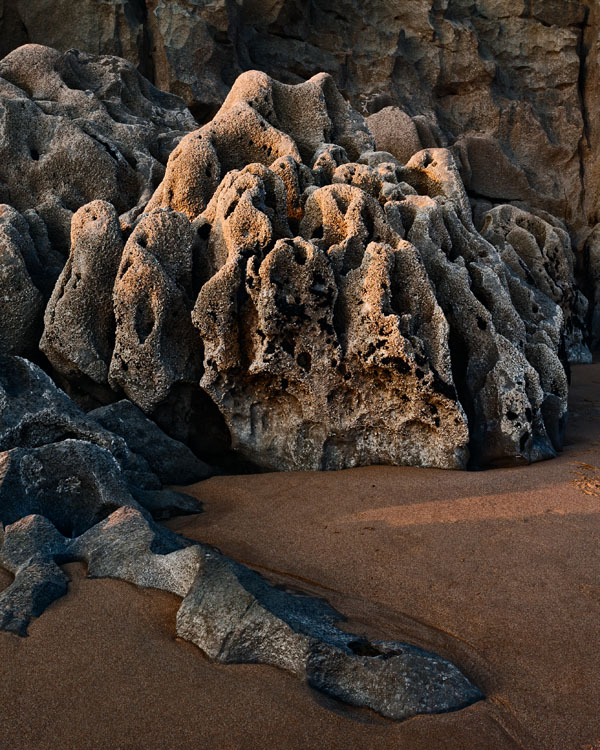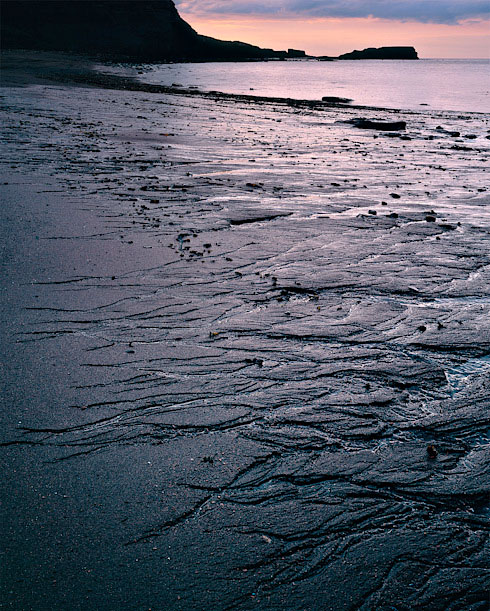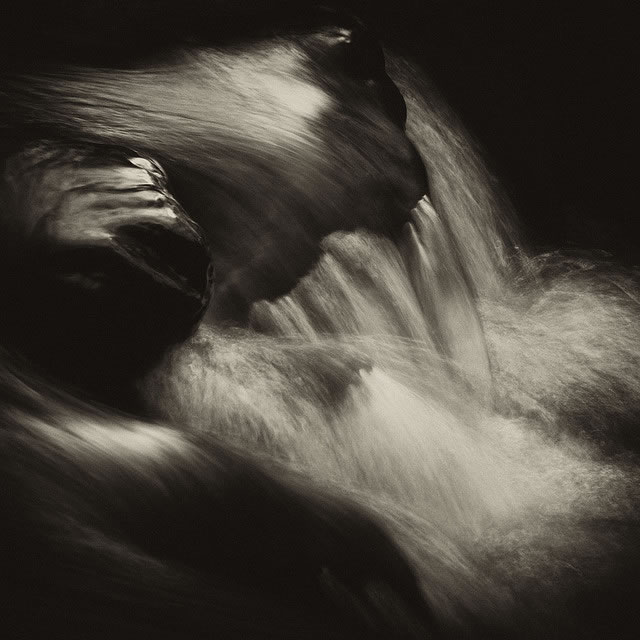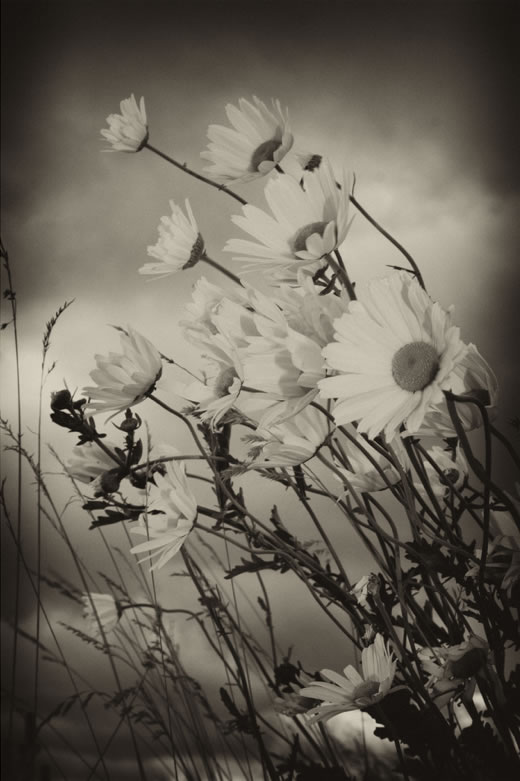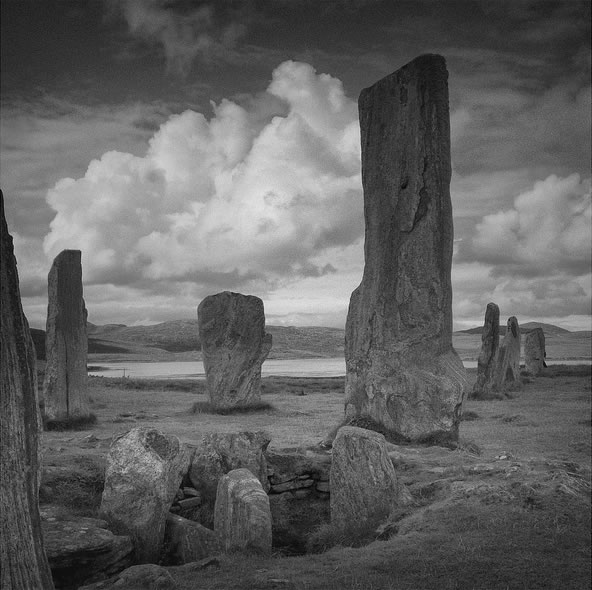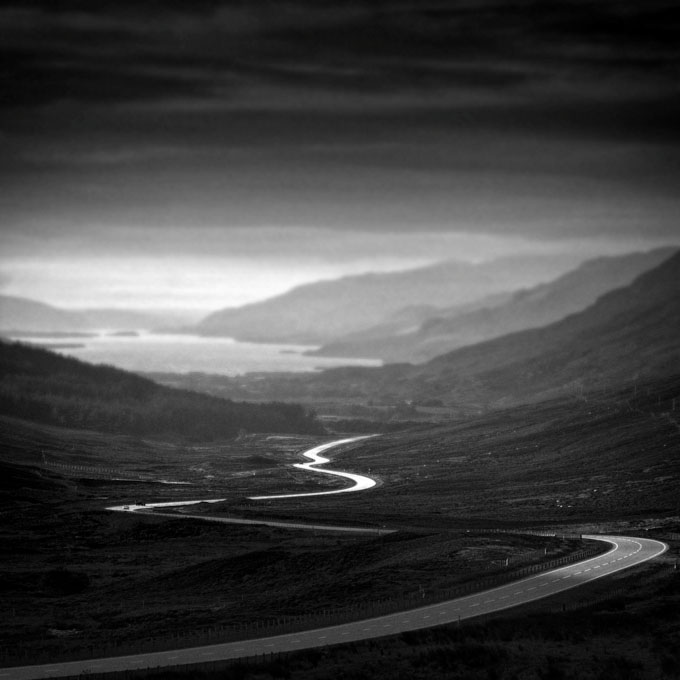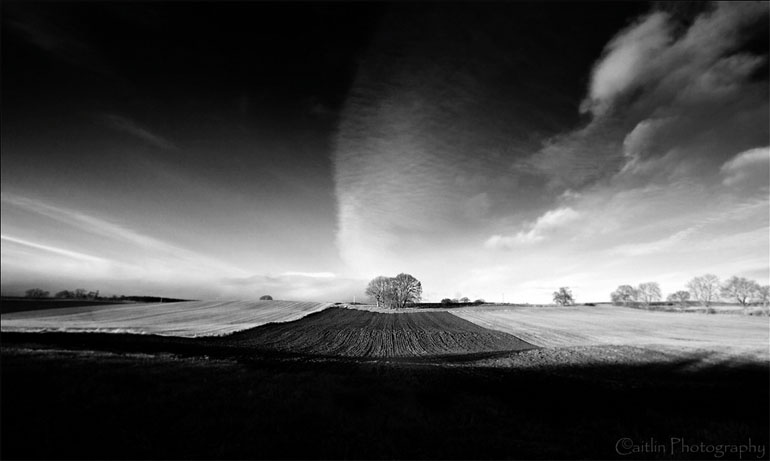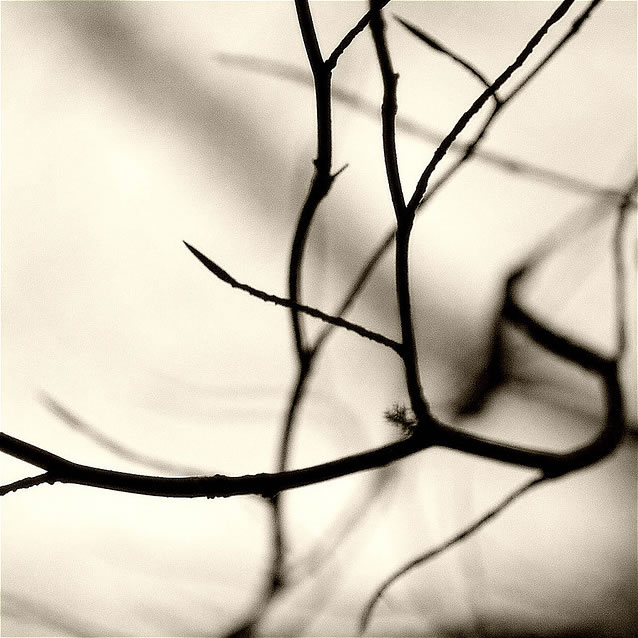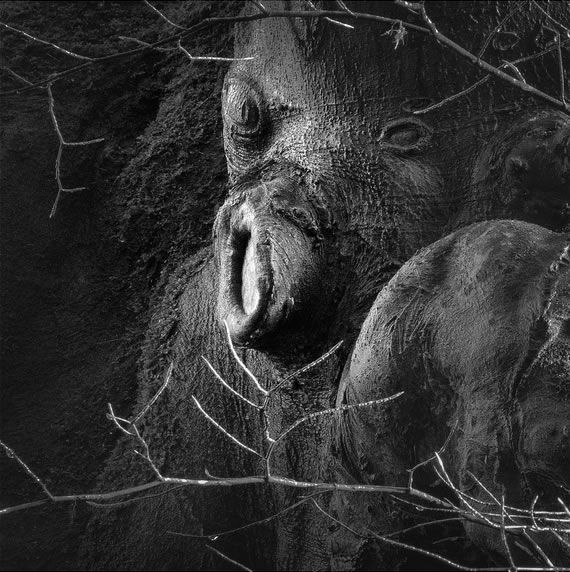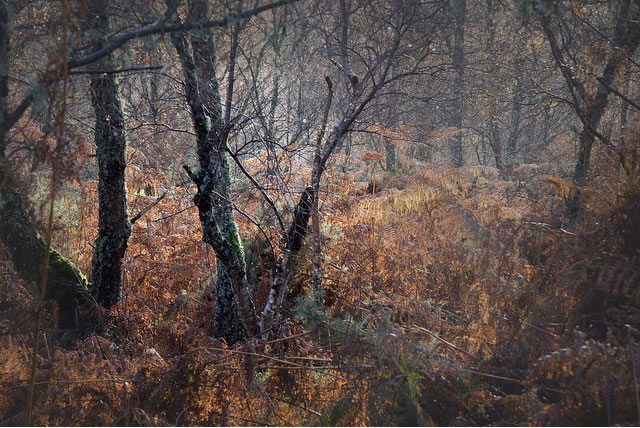
Don Tiffney

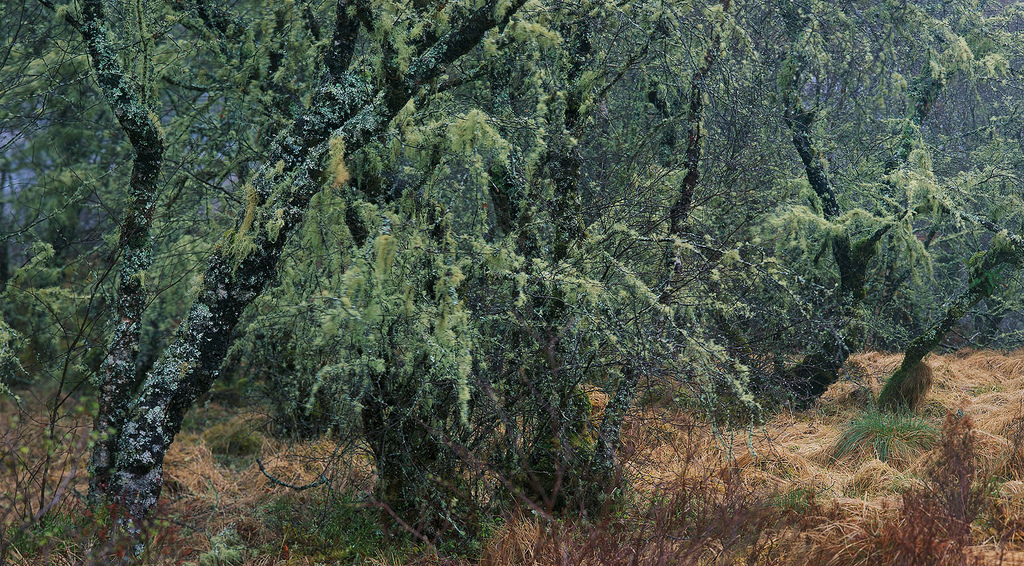
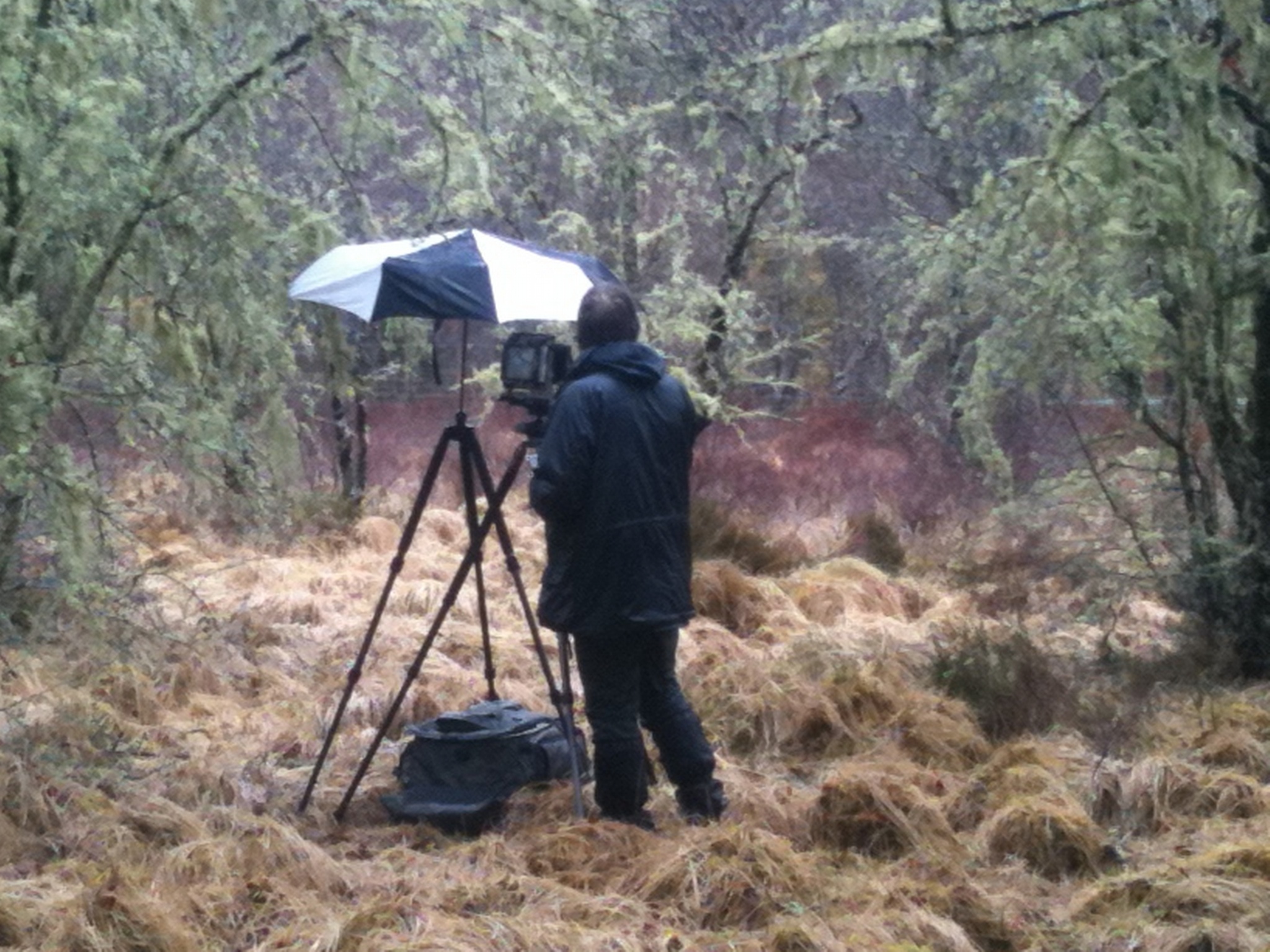
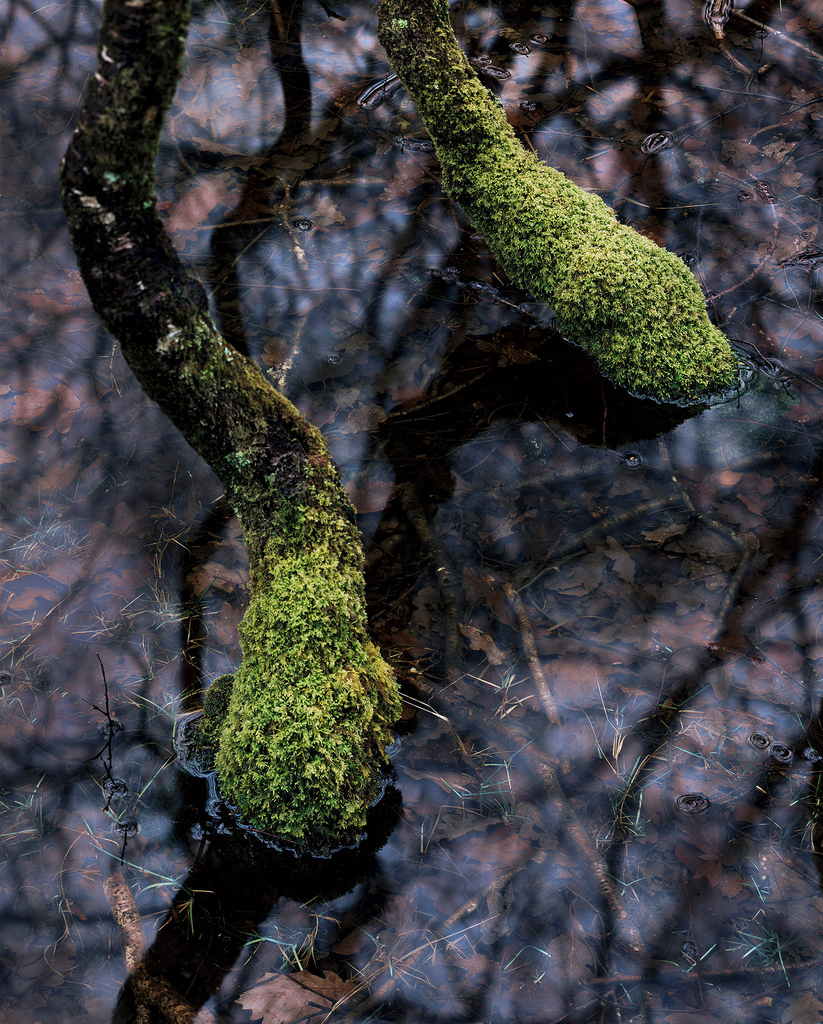
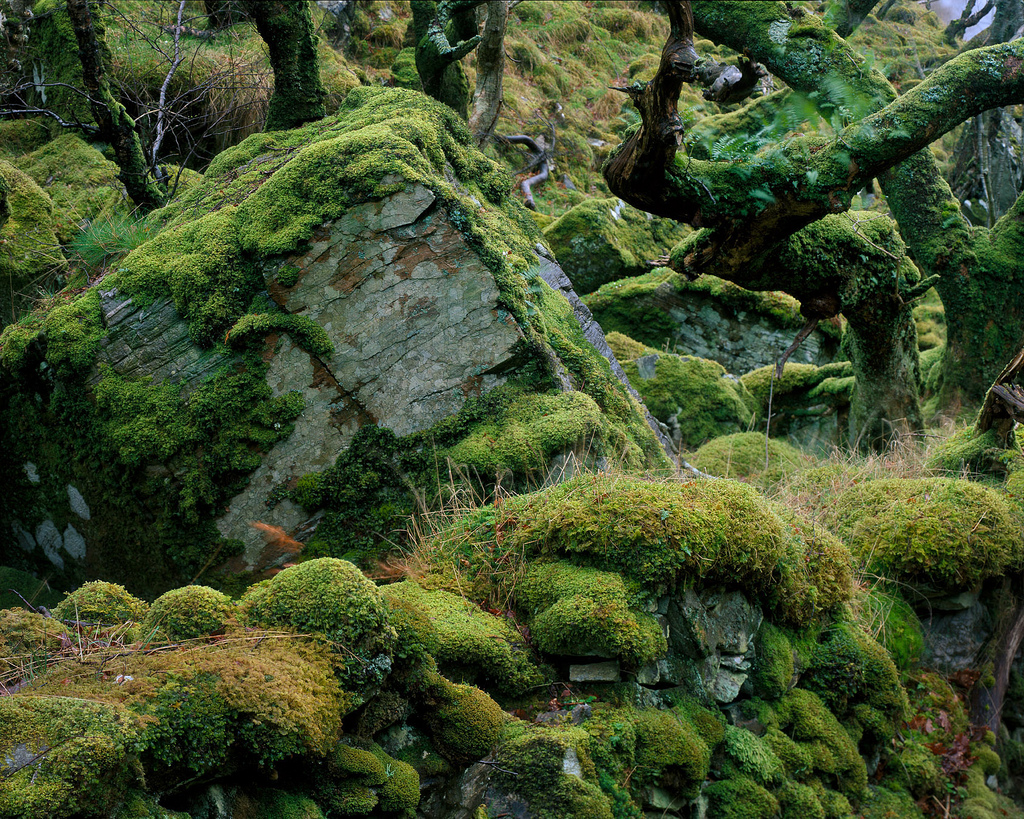
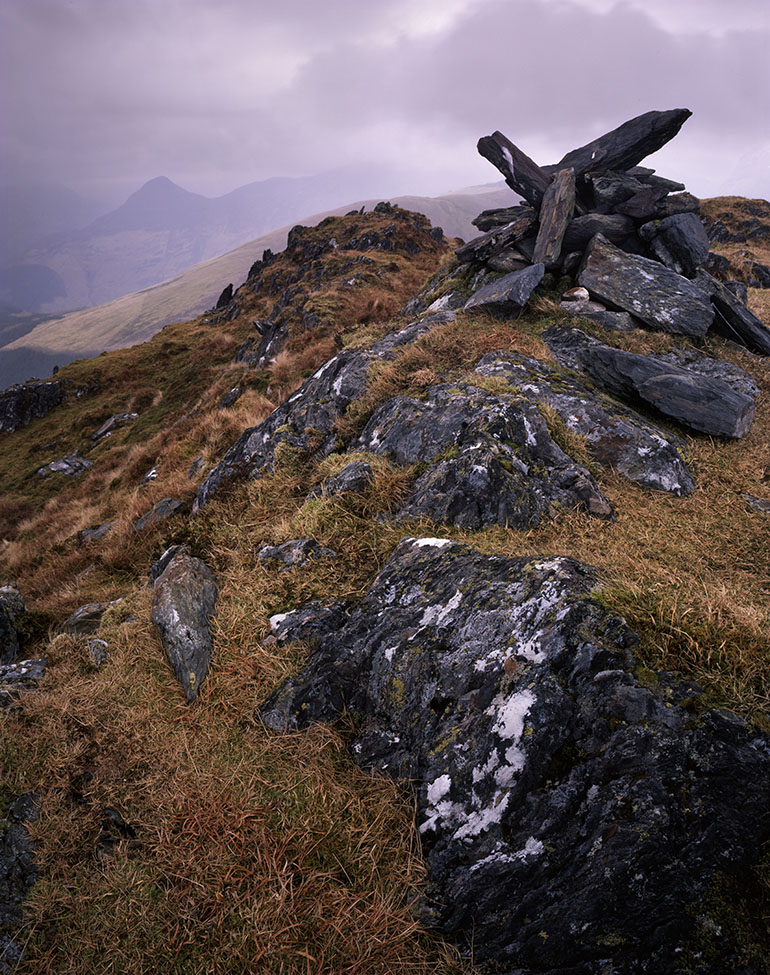
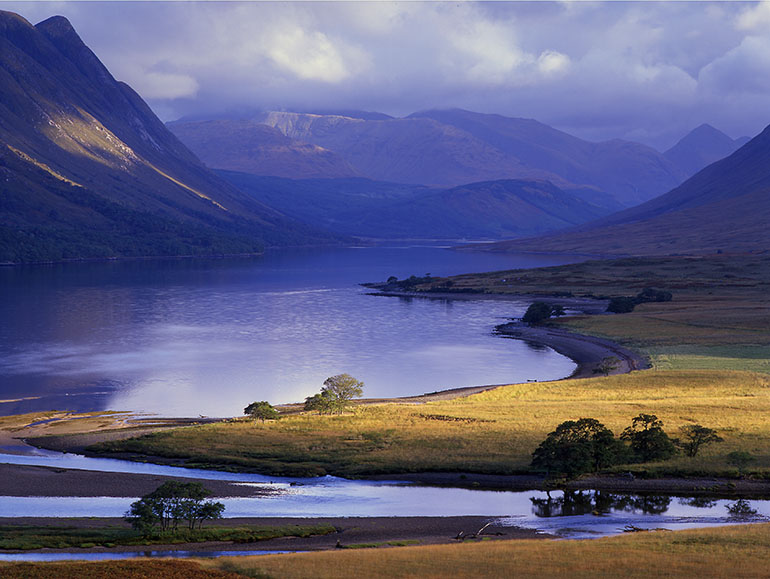
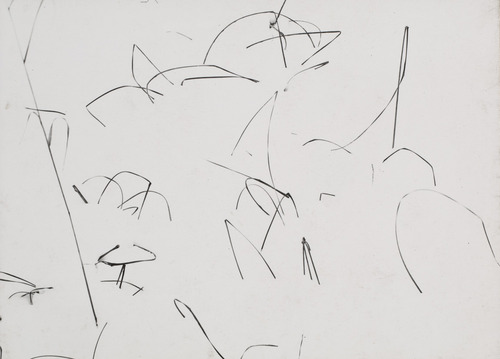
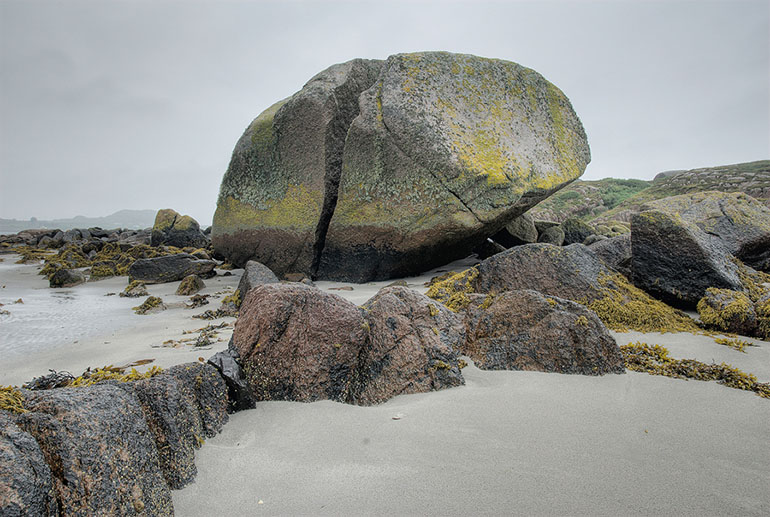
I had been looking at Don's photography on Flickr for a while now and he regularly posts something a little different to the norm. The images are a mix of film photography and digital but are consistently thought out compositions. Despite being a resident of the Lincolnshire and retired automotive entrepreneur (although he'll just say he ran a garage), Don is more at home in the wilds of Scotland (as many of us are). He is a keen cycler and has covered great swathes of the highlands towing camera and camping equipment. We asked him the usual range of questions and he sent us a range of pictures that I had picked out from his Flickr stream. Over to you Don....

In most photographers lives there are 'epiphanic’ moments where things become clear, or new directions are formed. What were your two main moments and how did they change your photography?
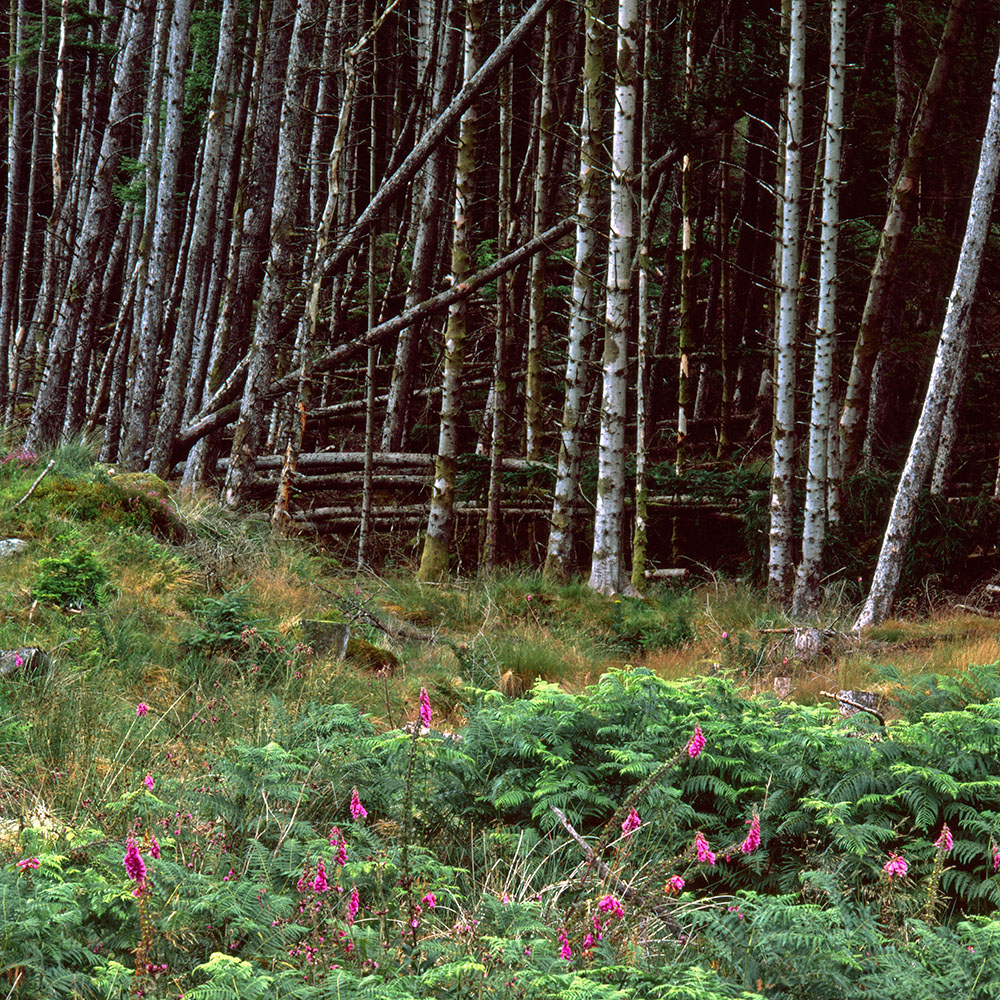
I suppose my first moment came when I was in my very early twenties I worked in the motor trade & won a sales competition, in fact I won several & the manufacturer ‘paid’ me my winnings in ‘Bonus Bonds’ & as I had accumulated a fair few I was able to use these to purchase my first ‘proper’ camera a lovely little 35mm Yashica rangefinder I remember it looking so striking in the brochure, I just had to buy it & from that point on I was hooked. I have always been a lover of the great outdoors & now equipped with my new little camera I would return from hikes in the hills with shots that were clear & sharp giving me super reminders of my forays into the countryside…but there was something lacking & that was technique….they were record shots, clear & sharp maybe but record shots none the less.

My second epiphany came sat in the waiting room at my dentists & doing what we all do to pass the time away I was reading the magazines provided & admiring some superb photographs in National ....Geographic. It was at this moment I realised what was lacking in my photography, sure I had sharp shots that were even possibly story telling but compared with those I had been looking at either the composition was poor, lighting wrong or both, I set out at that point in time to learn more & improve these aspects of my own picture taking skills, in fact that is when I started taking pictures rather than bland records & I am still learning & honing these skills close on forty years later.
What came first, the photography or the landscape?

That’s easy, it has to be the landscape I am & always have been in awe of nature not only the beauty of huge mountain vistas & cascading flows but the associated sounds, smells the endless detail & change…..nothing can compare with the feeling of just being part of this landscape, I feel so privileged just being involved & if I can capture just one small part of the emotion & joy I feel just being there & convey these through my images for others to enjoy I will be a happy man.

You mentioned that you are an avid cycler, how did you mix you photography and cycling? Did you use a trailer or panniers?

As a keen cyclist, passionate photographer & lover of the great outdoors it sort of came naturally to me to combine all of these & so I embarked on cycle touring as a great mode of transport for me & my camera gear enabling me to cover more miles than on foot & yet still feel part of the landscape

In the early days I would carry my gear in panniers, but soon found a single wheel trailer much easier & quicker to pack also capable of carrying more & I found it to be more stable too. I opted for a quick release camera bag on my rear rack whilst my tripod lived strapped to the top of the trailer, the whole lot weighed in at just over 50kgs it was hard work winding it up some of the Scottish mountains, but the 50mph+ down hills were a hoot & the freedom the combo offered was superb & just the tonic after hectic days in the office.

The above combination took me to all parts of Scotland, North, South & the Hebrides plus the north of England too, coming from Lincolnshire I always headed for the hills!
You have a passion for Scotland - where did this start and what is it about the North that appeals so much

The passion for Scotland stems from my childhood, my father is a Scot & he moved to Lincolnshire at the end of the war, married & stayed, as for me I started my northern visits as a babe in arms & have been going back ever since.

Somehow I feel more at home north of the border than I do here & as far as photography goes I just adore the place, its light & endless moods are nirvana for us picture takers & the wild mountainous landscapes cannot get much more jaw dropping.

Another endearing feature of Scotland is it is wet, indeed very wet & I love to include water in my landscapes this dampness also makes for lush greens, massive carpets of moss, lichens, countless waterfalls & feature full skies……I could go on…..

Could you tell us a little about the cameras and lenses you typically take on a trip and how they affect your photography
Unfortunately too many, I normally take both a digital bag & a film bag…plus my odds & sods bag of spare lenses, flash etc. so that all avenues are covered….but that is a trait I have, I will also take two weeks clothes for a one week trip!

However once at the destination (normally a cottage or my caravan) sanity starts to come back & I will tailor the kit accordingly, If I am going to walk miles & miles the digital goes, a Nikon D300, two Nikkors a 12-24 & 16-85VR a set of Lee filters & a Manfrotto 055 carbon tripod in a (new to me & lighter) Hama Daytour 230 backpack ( A plug for Hama here….this is a cracking bit of kit).

My kit of preference if I do not intend to walk all day will revert to film which I enjoy using so much more....this then gets a little heavier & includes Mamiya RZ67 Pro11 Mamiya-Sekor 50mm,110mm & 180mm primes, a couple of backs, WLF & metered prism a 1degree spot meter, a set of Lee or Hi-Tech filters & again the Manfrotto tripod all housed in a Tamrac Expedition 8x backpack.
I am convinced if I had enough battery power & fitted the motordrive I could ‘ride’ the Mamiya to the location such is it’s bulk, the quality is however first class & they are amazingly robust & reliable cameras.

The difference between the two kits is vast, both have their limitations & I will vary the lens choice in the digital bag if I think I will encounter wildlife, with the Mamiya that is off the menu. The main difference working with the film gear over the digital is speed….or rather lack of it, yes I miss the odd shot due to the slow nature of the film gear but on the other hand the whole slowing of the process ensures more time is taken over each shot & the ratio of shots to keepers is much higher, compositionally they are less rushed too which gives better results.

All in all if I think I can carry it without struggling….the film bag goes.
You have a variety of film, and digital photographs and I wondered how you choose which to use and what the different aspects appeal to you.

As I said on the last question my preference leans toward film & as I indicated to you during our chat I think a move up to LF is only a matter of time, with the Mamiya gear I use at present it should save weight too.

It’s not that I don’t like digital the photographs are fine & digital has many great features & to be honest possibly too many for a technophobe like me, the results are as I said fine but the methodology does not sit as well with me. I, like all digital photographers use Photoshop or similar but I would rather the picture taking process create the image & not the post processing….How best can I explain it, it’s like sitting in front of my log burner I can get just as warm with my central heating…..but it lacks that realism, that inner glow the ‘real fire’ gives, using film & ‘old tech’ gives me that glow & is entirely more satisfying, even the wait, the anticipation of the film returning is all part of the fun.

Tell me what your favourite two or three photographs are and a little bit about them. (I’ll include the pictures alongside the text)
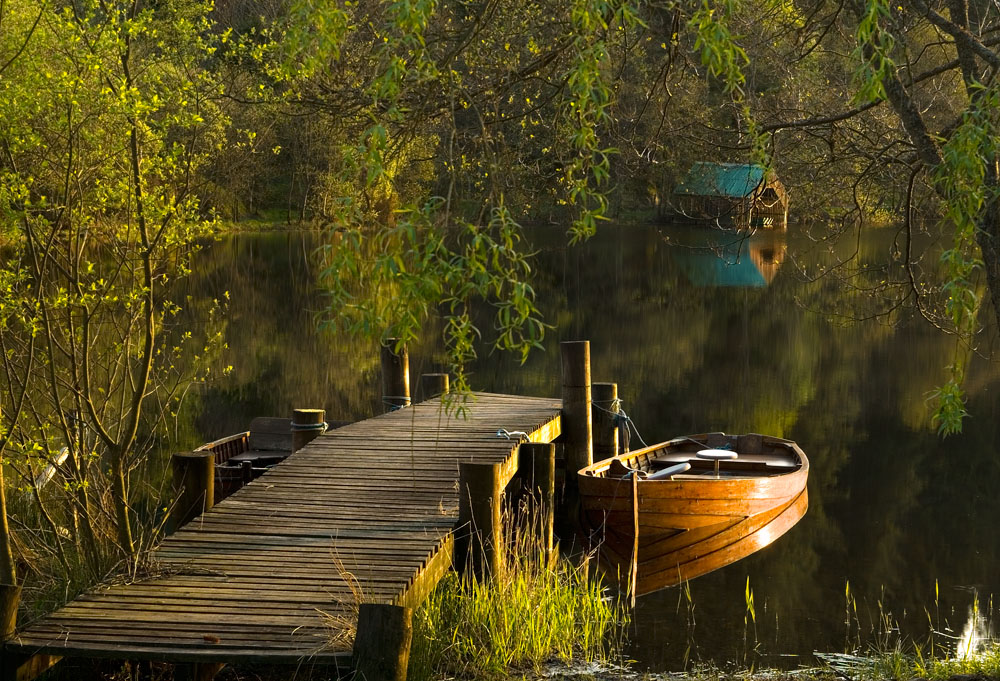
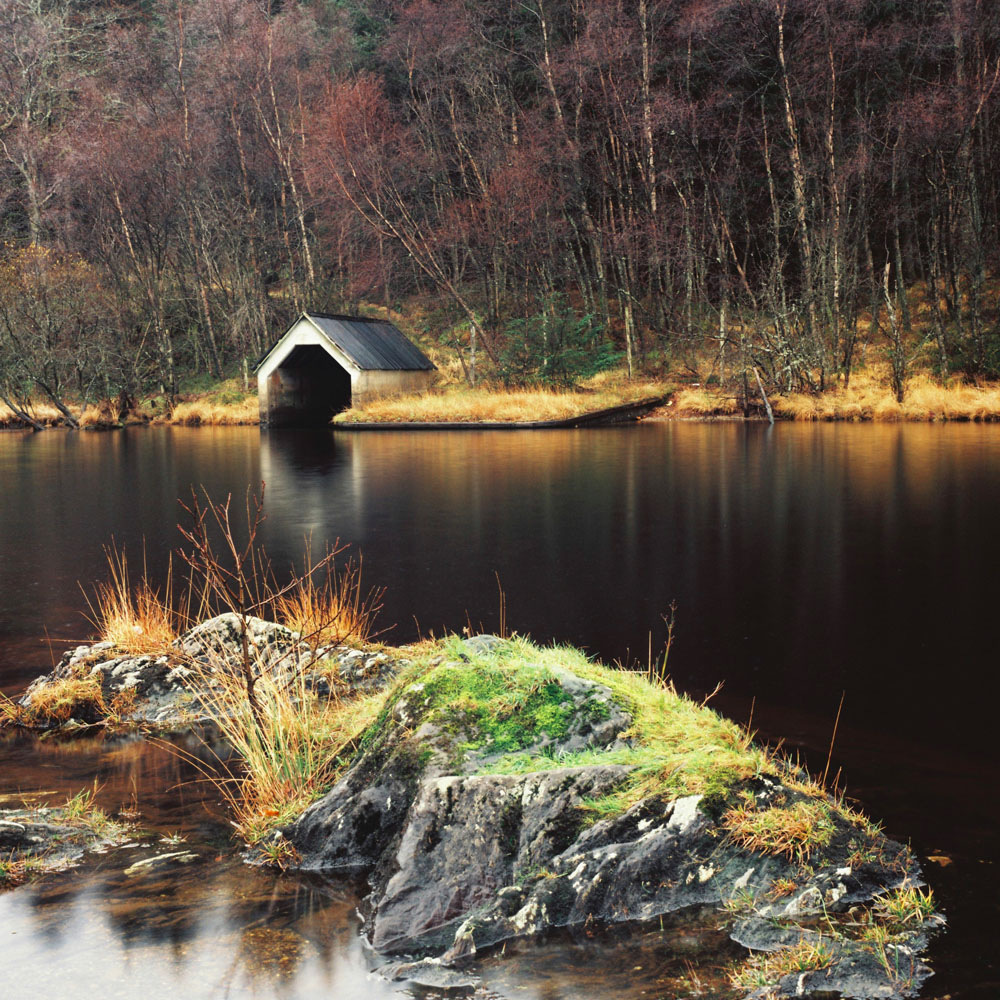
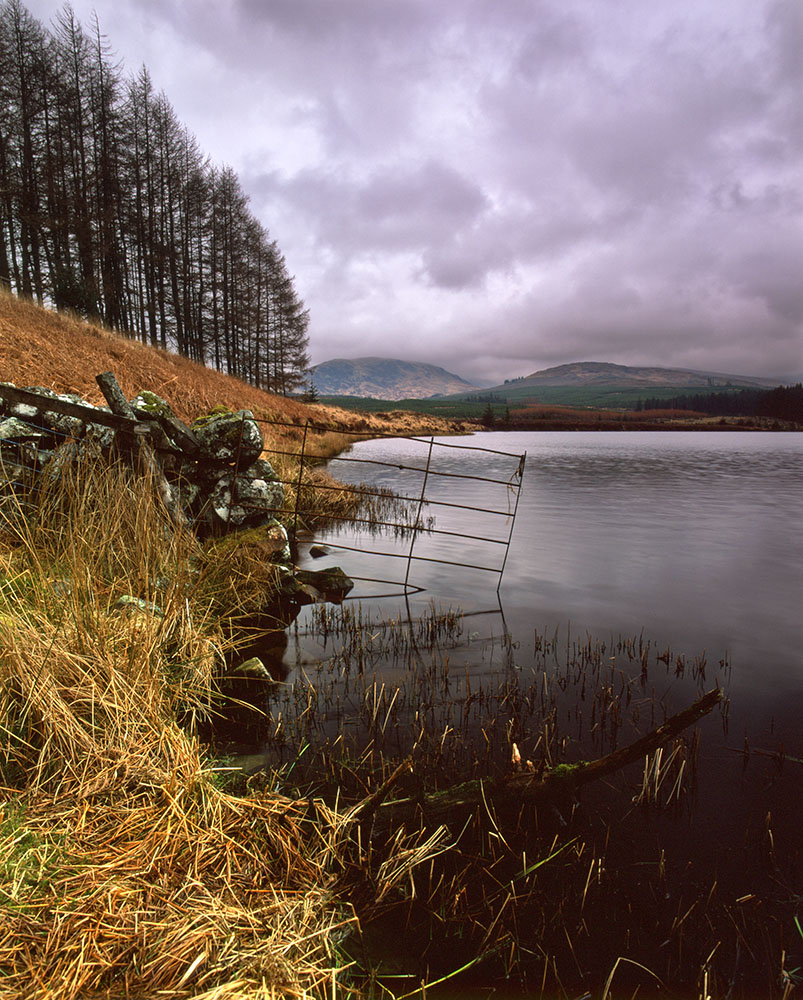
Well these are some of the most satisfying but not necessarily my best, the first would have to be a shot of the jetty at Loch Ard in the Trossachs. Five trips over three years took place to get the conditions I envisaged & the location is nearly three hundred miles from home.  The year I took this shot I visited once & stayed a couple of days without luck, went on to Skye for a couple of weeks & stayed one more day on the way home, on the last day the shot came together as I had imagined it.
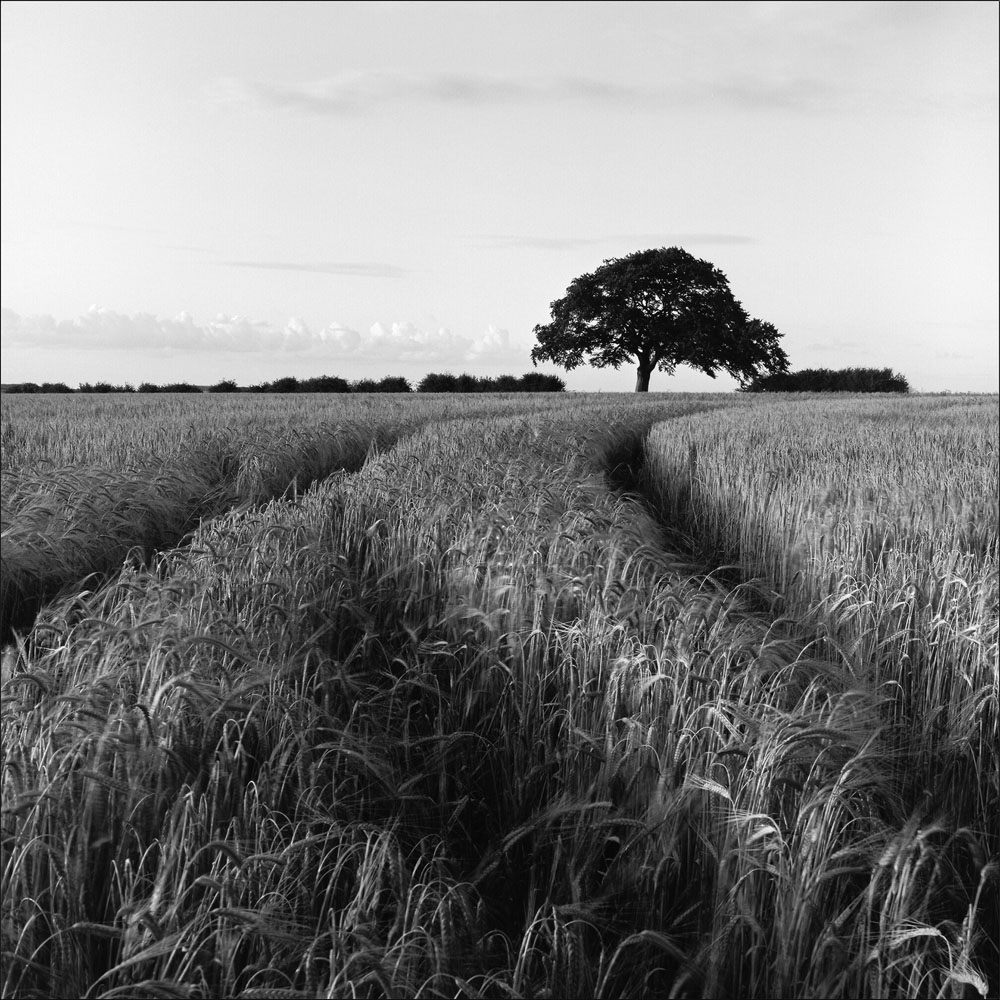
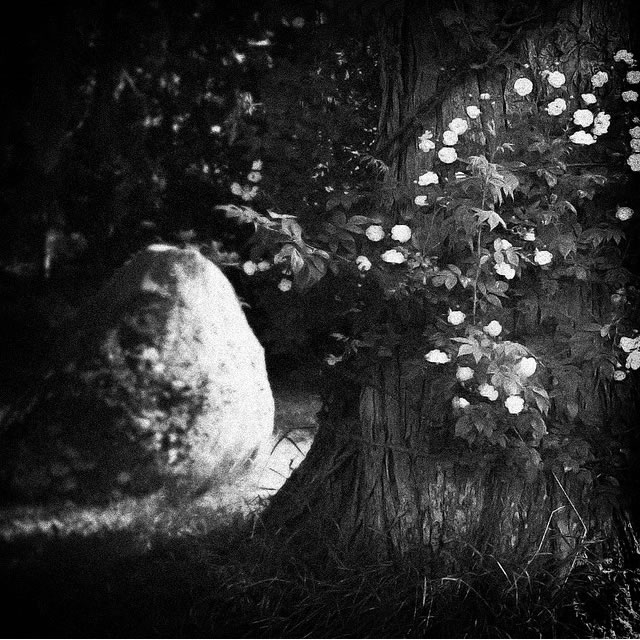
My second choice is a mono taken with my old YashicaMat TLR a study of a cornfield & tree in late summer taken on the Lincolnshire Wolds at Kirmond le Mire, there is just a little something that gives me a buzz I like both it’s form & texture & it is one of those images albeit a simple composition that I can get lost in , folk seem to like it too as it has sold very well both in the UK & abroad.
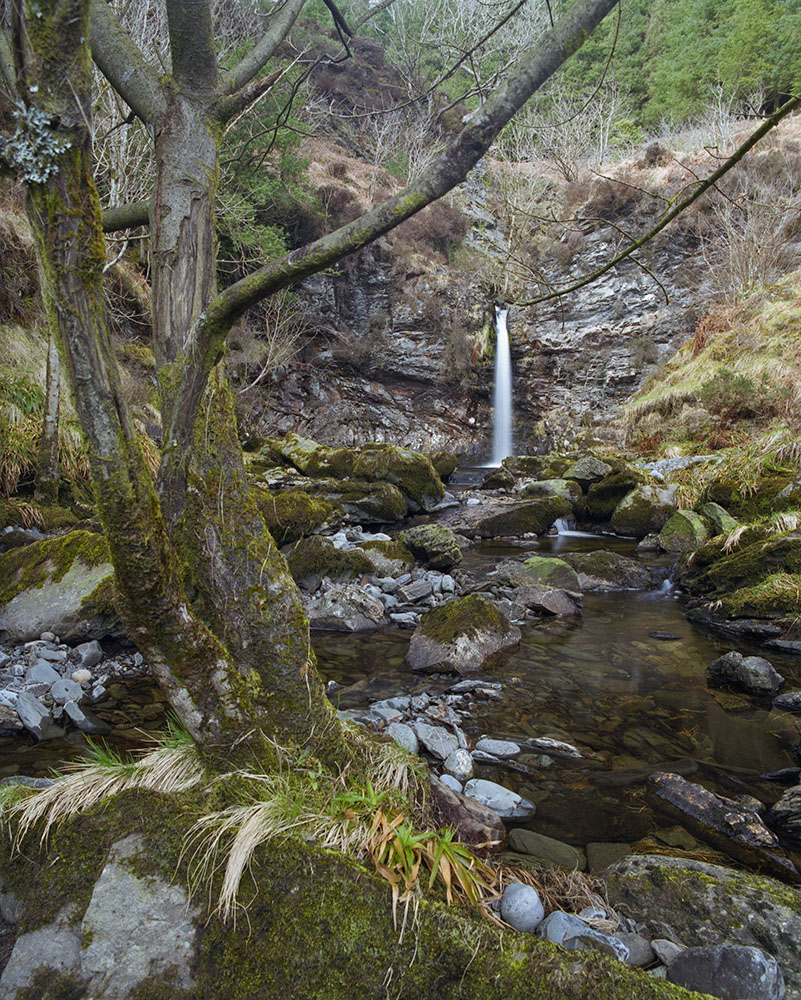
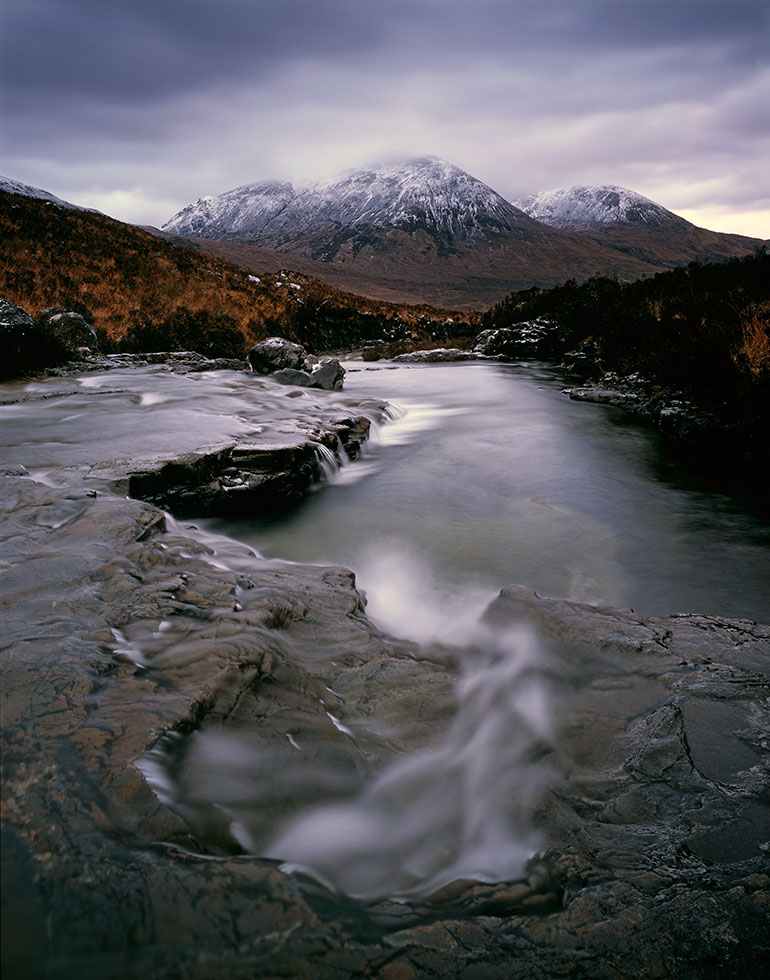
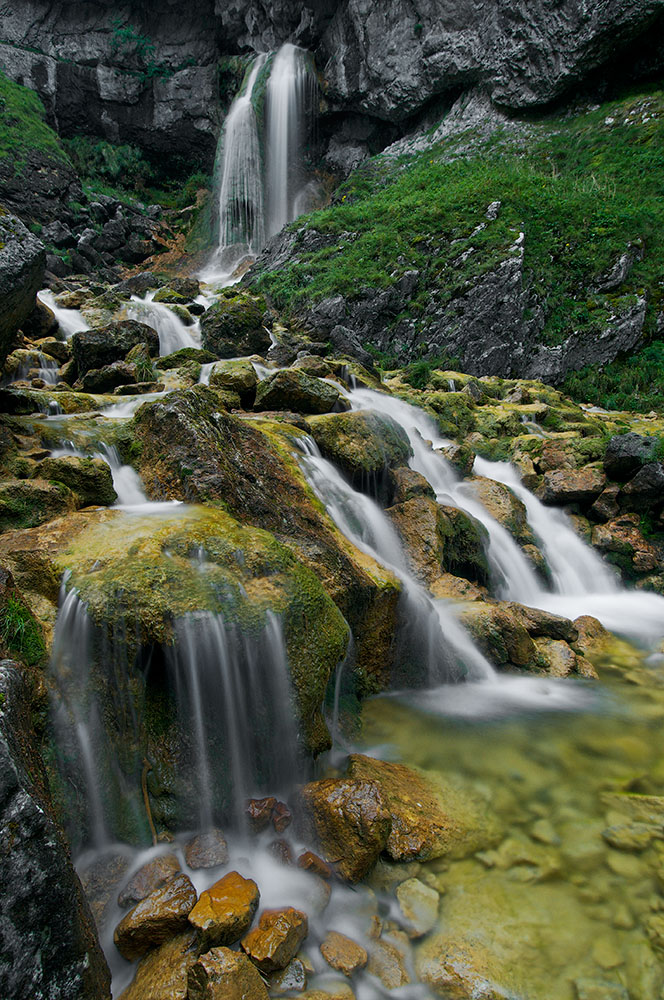
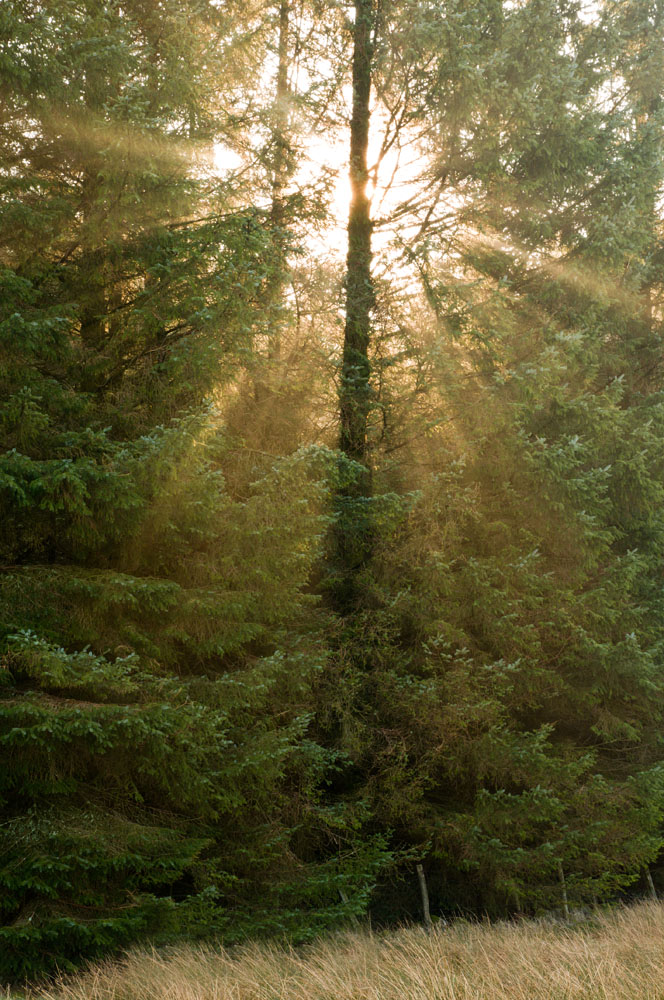
My last choice is a very recent one taken on a trip a few weeks ago to Dumfries & Galloway & is of a waterfall on the Tail burn near the ‘Black Loch’ just off the Queen’s Way, the lighting was flattish but the composition is what appeals to me & by using MF & film I think the shot has been ‘lifted’ become almost 3D & has come alive.
What sort of post processing do you do on your digital files (and what raw converter) and also how do you invert your negatives scans (and what scanner)?

The simple answer to the first part is…as little as possible, normally levels/curves/straighten wonky horizons/ sharpen/dodge/burn & save, I use Adobe Camera Raw & for high iso images I use NIK Dfine to get rid of unwanted noise, occasionally I will blend exposures but more often than not I use grads etc. at point of capture…..as stated above the less PP work, the better.

As for scanning, well this is the Achilles heal in my film processing regime, I use a flatbed…an Epson V500 with an American ANR glass height adjustable film holder & either Epson or Silverfast Ai Studio software.

I have developed my own tweaked profiles for my negative scans & the results are really quite pleasing…..but I know the film holds so much more detail than my combination can extract from it, even so prints up to A3+ compare well for sharpness etc. with my digital files & the tonality to my eye is that much better.

As for slide film, well that is fine unless it is a dark image, then the sheer density of emulsions like Velvia etc. are too much for the flatbed Epson to extract good shadow detail from so this is on my list for an upgrade.
Do you print much of your work? If so how have you approached it and if not, why not?

Yes, I think the displaying them on the internet & keeping digital files is great, but ‘real’ photos are the things that count for me, I know so many talented photographers who take superb quality images only to lock them away on a laptop hard drive never to see the light of day in print.

For images up to A3+ I print my own & mount & frame them myself too, for larger images or Acrylic, block prints etc. I outsource them & use commercial print shops.

I have a few alloy gallery frames at home too so that I can swap the images over easily when my mood changes.

One thing that does impress me is the fantastic quality output from today’s latest inkjet printers (mine is an Epson R2880), the IQ is really first class as is the life of the prints.

One camera, one focal length? Which and why?

That’s a difficult one really as I do a bit of portraiture & commercial as well as my landscape work …..well it would be film for the fun factor & would have to be portable & reliable too, so as it would have to be a ‘Jack of all trades’ I would probably plump for a medium format 6x6 something like a Hasselblad 503cw with standard 80mm glass, after all I could always use my feet for zooming in or out. I get on with 6x6 quite well, some find the format awkward for landscape, I find it different, enjoyable & challenging in equal measures but not difficult, I often crop my 6x7 shots to this format anyway, then again I would not mind just keeping the RZ67 & the excellent Sekor 110mm, I think it would be a close call.

Tell me about your own influences and thoughts about composition
This is the hard one to answer for me as so many things influence my photography. Seeing great photographs taken by others whether they are one of the icons of photography or a total unknown whose images stir my soul …..I wouldn’t want to copy them, mirror them in any way…but to strive to create something that might give that feeling to someone else, now that is my goal, my inspiration.

Being in & feeling part of the landscape, especially in my beloved Scotland is all the inspiration I really need though, if I can ‘bottle’ a little of that heady feeling I get just being there & convey it through my images then that will do for me.

As for composition, we all know about the so called ‘rules’ but my feelings are if it looks right to me then it probably is & if the composition doesn’t find favour with some, then so be it. I find on many occasions my images may include these ‘rules’ & have a pretty standard layout but this will happen as a consequence of the shot looking right to me & not me chasing a composition that conforms.

After all is said & done I am capturing light & it’s interaction with the landscape & light never conforms to ‘rules’ that’s why I find this form of photography so exciting & intriguing.
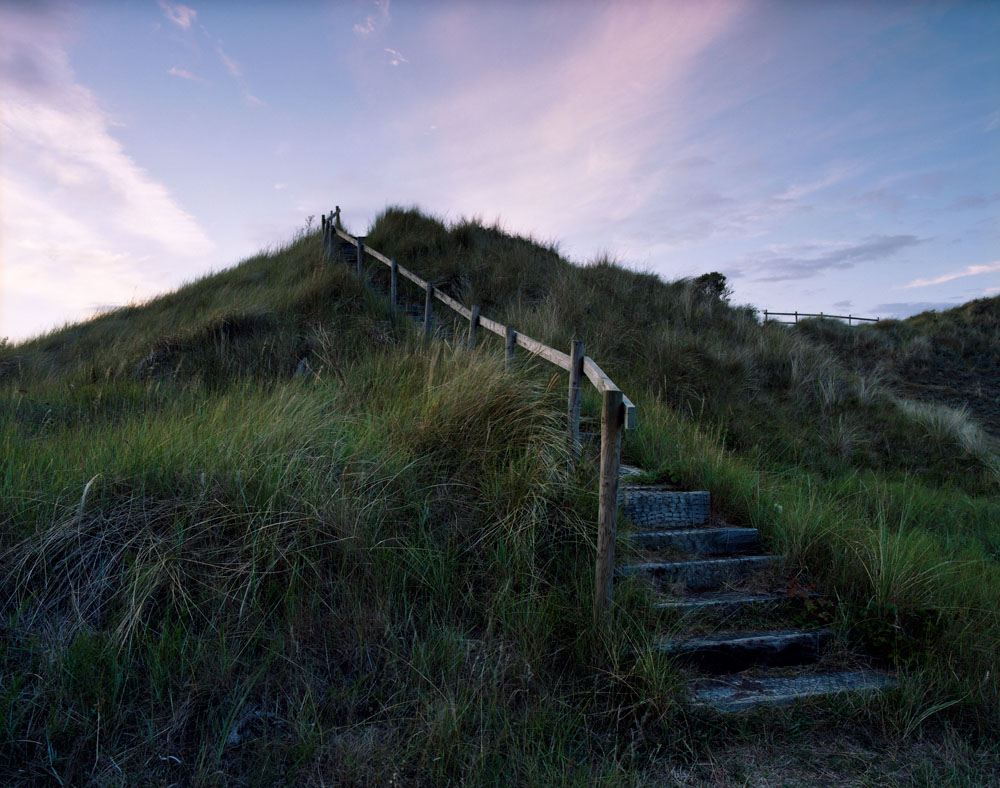
What sorts of things do you think might challenge you in the future or do you have any photographs or styles that you want to investigate? Where do you see your photography going in terms of subject and style?

Well with a possible move to LF in the not too distant future I suppose that will present a challenge albeit one I will relish & really enjoy getting to grips with.

As for photographic styles, I have buzzing about in my head some ideas using long exposures for monochrome landscapes & this is one avenue I would like to tackle in depth along side my more conventional work. My general subject matter will always major on that endless grandeur that starts north of the border, I am sure I will only scratch at the edges during my lifetime.

Who do you think we should feature as our next photographer?

I often browse the net looking at various websites for ideas of locations to place on my very long ‘must visit’ list & I came across Ed Duncan based in Gairloch he has some really inspirational images in his portfolio, so he would be my choice.
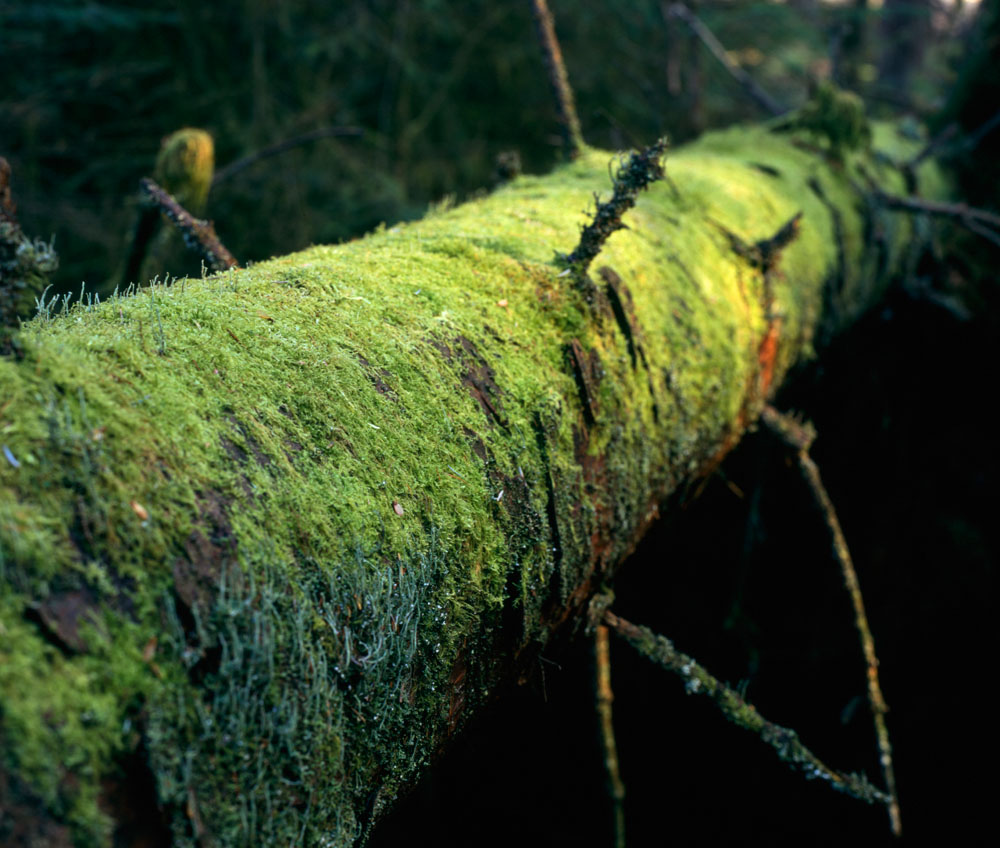
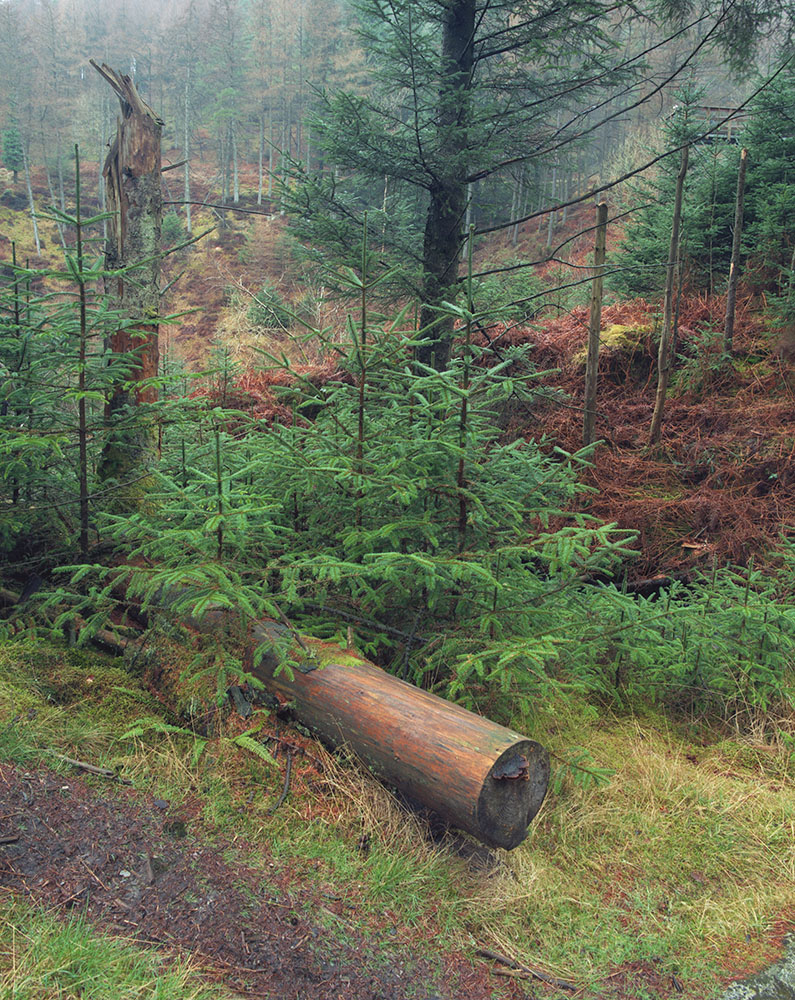
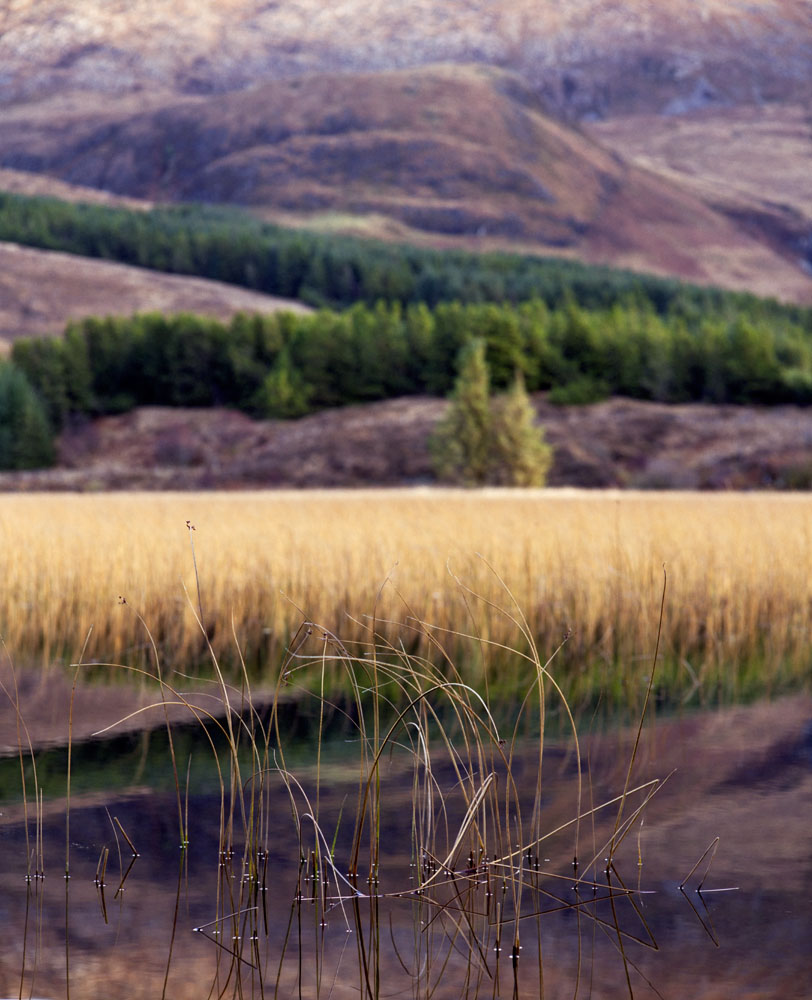
Many thanks to Don for his cooperation and inspiration.. If you want to see more of Don Tiffney's images, take a look at his website at http://www.dontiffney.com/ or follow his flickr stream by clicking here.
Interview with Jason Theaker

I met Jason Theaker a few years ago when I had just started using my digital camera and again a few years later when I first picked up my large format camera. We've met up a few times over the past years and each time we enjoy a chat about photography and a talk through some of our pictures and I'd like to share that enjoyment with you. We picked six photographs to talk through and have split the conversation into three videos of approximately 10-15 minutes each. Jason is a long time flickr user and his thoughtful posts and consistently appealing photography has created an audience that many people pay dearly for. If you want to see more of Jason's work you can got to his flickr account at http://www.flickr.com/photos/photoimage or at http://www.jasontheaker.com/ and he also gives workshop tuition at http://www.landscapeinspired.com/

Part One

Part Two

Part Three


In Defence of ‘Wow!’

There has been a fair bit of sunset/rise bashing goes on in LandscapeGB and there's been a good few debates about the virtues of flat light, contemplative compositions and all that goes with it.

I myself am a fully signed up member of the wowless club, the more I journey into the my world of photography, the more demure my images get – so getting me to sing the praises of Wow(!) photos is a bit like getting Wayne Rooney to talk about his love of ballet. But still, in a bid to try to redress the balance I thought I'd have a go at seeking out some photos which follow the rules set out in the photographic press – golden hour, sea, wooshiness and general photographic bling.

My problem with this type of photography in general is that I find it difficult to gain any lasting pleasure from what they're offering – there's no hidden depth, no character, no emotion imparted in them from the photographer. Landscape photography works for me is when there's a part of the photographer's character embedded in the image – I want to get a sense of place or emotion from an image – ideally with hidden depth – an image you have to work at and grow to love. This is quite the opposite to the general formulaic picture making that's prevalent in most landscape photography today. These images kick you in the teeth and shout "I'm here, look at me, marvel at my many colours!" and then run off into the night to assault someone else's eyes.

Before I head off into rant mode I'll move on to the purpose of this article; to find some art amongst the Wows – to find some images that stand up for golden hour.

So where to start...

The first place for me was to have a look through my Flickr favourites – there must have been some that have snuck in there amongst the mist and tangled branches.

Neil Bryce

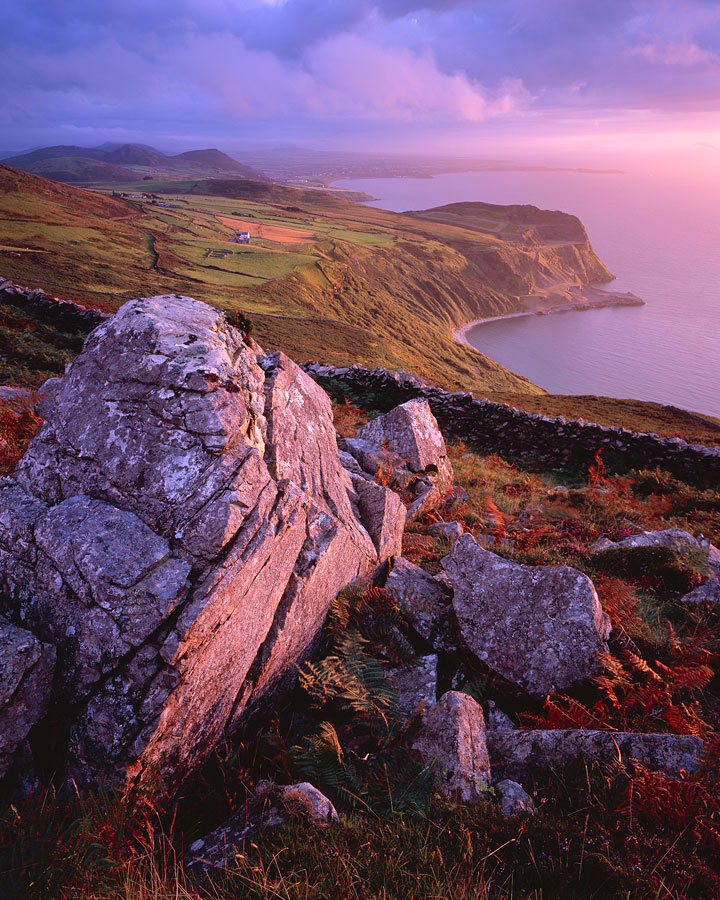
This first image is by the rather brilliant Photographer, Neil Bryce. This is a photograph that is about as Velvia as it gets. I generally don't like the way Velvia puts so much of itself into a photo and here there's an obvious Velvia cast to the whole image. But in this case it works adding a very saturated purple sheen. So why is this a good golden light photo in my opinion? Well, there's a lovely well thought out composition (as you'd expect from Neil), the dynamic shape of the foreground rock leads beautifully into the image and the distant shoreline, the cottage in the far distance provides a point of interest for the eye to linger on. There's enough in the scene to hold the attention, so much to explore. For me everything's right about the composition and in this case the Veliva colours add to the atmosphere rather than overpowering it.

Having looked through the rest of my favourites I realised I needed to remove a lot of my earlier selections - how my tastes have refined over the years, I did find some cute kittens though!

Helen Dixon is a photographer who's work I enjoyed early on in my foray into photography, she really encapsulates the style of populist landscape photography – generally golden hour shots, emphasised foreground interest and saturated colours. She is still one of the few digital photographers working in this style who's work I enjoy to an extent.

Helen Dixon

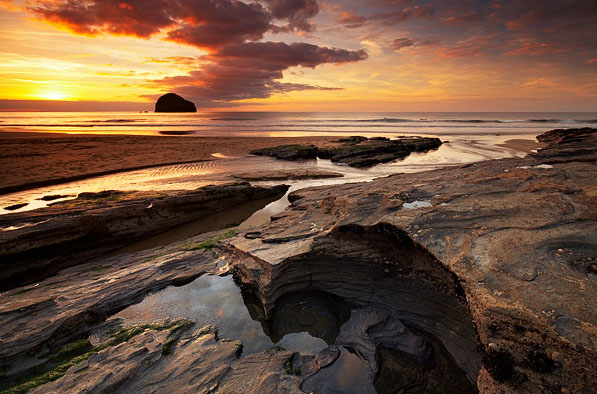
From Helen's recent work gallery here's an image which I shouldn't like! There's the sun kissing the horizon, dramatic skies, foreground interest – horrible! But no, this one is a worthy Wow, the composition is delicately composed, the S curve leading from the foreground rocks out to sea is punctuated by the island out to sea, the curve is then nicely continued with the cloud formation. So many times this sort of image is ruined by lack of composition, the shiny ingredients are thought to be enough to make the photo, but no, a compositional recipe is required to make a photo work. I'd also add that with this photo the colours are saturated but they don't push the realms of possibility, in fact it remains quite a quiet image despite it's golden glow.

Ben Heaven

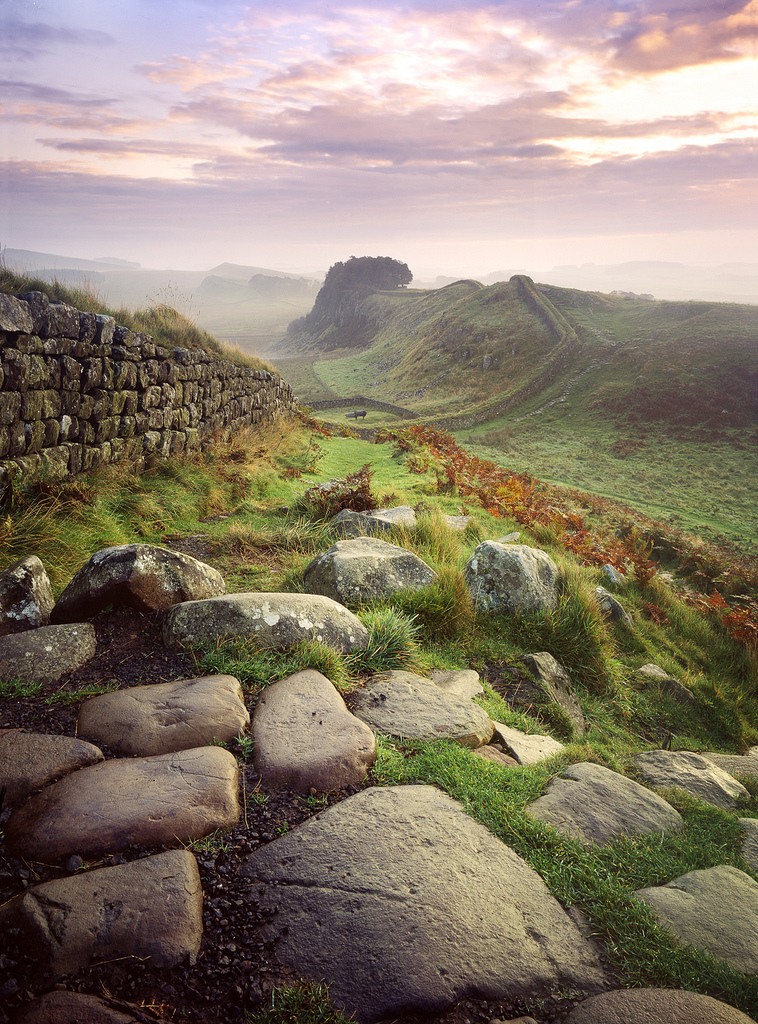
This photo by Ben Heaven is certainly a wow for me. As with Neil's photo this one displays all the hallmarks of a Velvia photo; exaggerated greens, purple tinted sky and separated reds. A lovely composition and although the colours are, I'm sure, not "real" there's a magical feel to the photograph in part due to the early morning mist in the valley. One of my many landscape photography rants is about the inclusion of foreground rocks just for the sake of foreground interest. Often interesting is exactly what they're not and are just part of the prescribed formula. Here though they work so well at leading the eye into the photo and along the wall. The low angle of view also channels the eye with the collection of golden ferns completing the corridor with the wall.

I must say my seemingly simple mission to find colourful golden hour photos that moved me in some way, images that are more than technique, dramatic angles and sledgehammer post processing ended up being a massive struggle for me. Of course there's nothing wrong with this style of photography – each to their own, but most of the time I'm left cold and somewhat depressed about the state of popular landscape photography in the UK. To finish off on a positive note here's a rather lovely image by Baxter Bradford from one of the most photographed chunk of seaside in Britain – Porth Nanvan. This is dramatic seascape done well – a real Wow!

Baxter Bradford

Ardnamurchan in the Rain

First of all please accept your editors humble apologies for the tardiness of the current issue. All the plans were put in place to ensure a week in the wilderness would generate content rather than delay it, but like the best military leaders often say “no plan survives direct contact with the enemy”. In this case the enemy was incessant rain, flat leisure batteries and an underestimation of how tired a photographer gets after a day out taking photographs.

Backing up a little bit to give you some context, last year myself and Dav Thomas planned a campervan adventure to Scotland, hopefully covering the stretch of road from Fort William to Mallaig - a choice made when driving past it all whilst returning from our adventure to the Isle of Eigg in 2009.

Since then the magazine has started and so our initial adventure with just photography in mind and two campervans became a shortened adventure with one campervan (Dav’s had only just had a replacement gearbox fitted and wasn’t properly tested) and a bunch of audio/visual gear. The plan being to do an interview and take some video content of us out and about. I won’t labout the point but in the end we only had three and a half useful days of photography and two of them had heavy rain and by the time the last day came we ended up just wanting to get some results - very slack of your editor (me) but I will make up for it with content over the coming weeks.

Anyway - back to the trip. Setting off on the Sunday afternoon, we made it to the Clachaig Inn by Sunday evening where we rested overnight and then set off to Mallaig (after stocking up on essentials in Morrisons in Fort William). The bad weather had caused a landslide on the Mallaig road however and so we were sent on a detour down via Ardgour and Sunart.

One of the joys of having an unplanned vacation is being able to adapt to circumstances and so we headed around the headland and just drove until something looked interesting and, on the banks of Loch Sunart we found a small layby near Ardery and set base for the evening after a quick scout around.

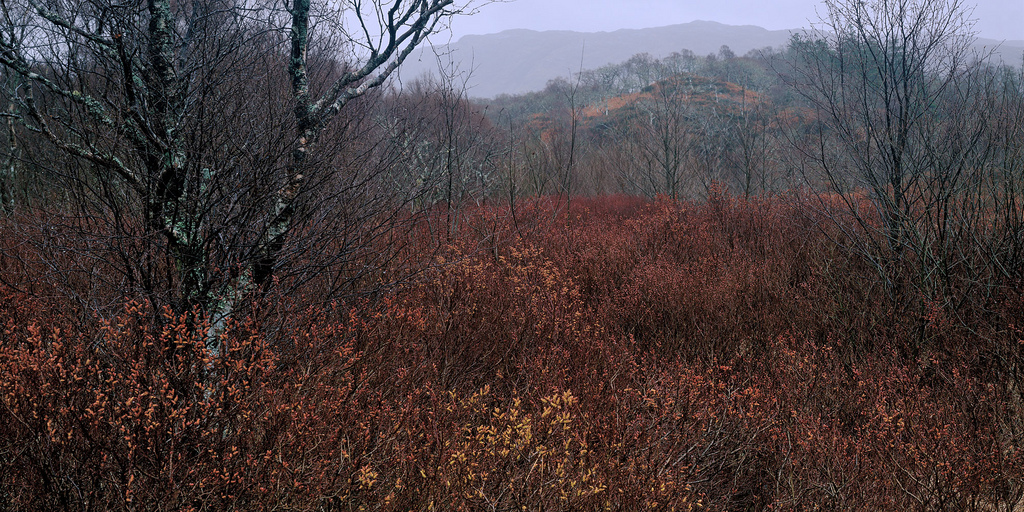
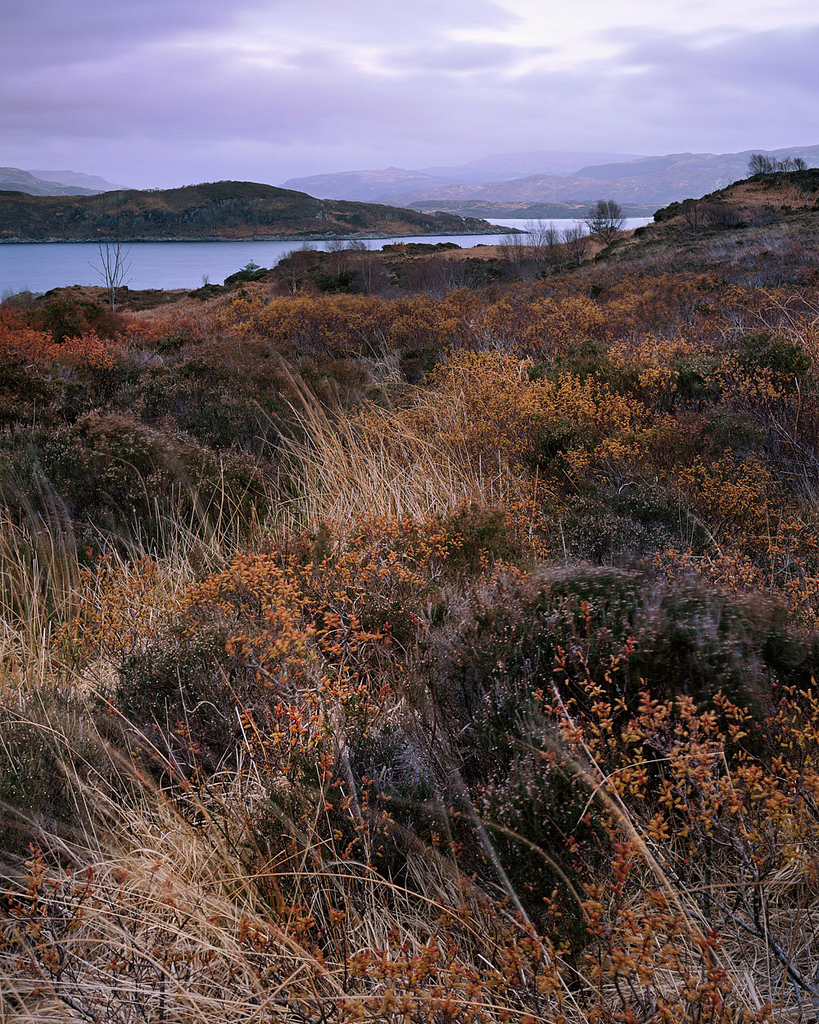
The next morning we were treated to wonderful rain - not enough to stop us taking pictures but definitely enough to make us leave the digital cameras back in the van. The highlight of this first area and probably of the trip, was the way that the rain brought out the colours in everything, including the amazing bog myrtle which was just budding. The picture below shows one of my first photographs of the bank of bog myrtle near where we had parked. It’s colour could be seen all around and even on the far hills. Incredibly, as soon as the rain stopped for more than 10 or 15 minutes, that colour started to dissapear and after half an hour was back to being a subdued reddy-brown.

Loch Sunart Bog Myrtle - Velvia 50 Ebony 45SU Rodenstock Sironar S 150mm f/22 1s

Although we stayed here for a whole day, we only got a couple of photographs. I think this is mostly due to that 'bedding in' period that photographers talk about. It usually takes me a good few hours to get my 'eye in' and I put this down to a process of stopping your language centres from triggering all of the time. What do I mean by this? Well, in our everyday lives we tend to see things in terms of words. kettle, mug, office, report, door, boss, notice, dole office, etc.. but where this language centre is great for limiting the amount of data we have to deal with on a day to day basis, it gets in the way of really seeing. Our first experiences in a place such as this will probably be 'tree', 'red bush', 'hill'. etc and only after a while will we detach this process and start properly seeing in terms of colour and shape.

Fuji Astia Linhof Technikardan Fujinon A 450mm (Dav Thomas)

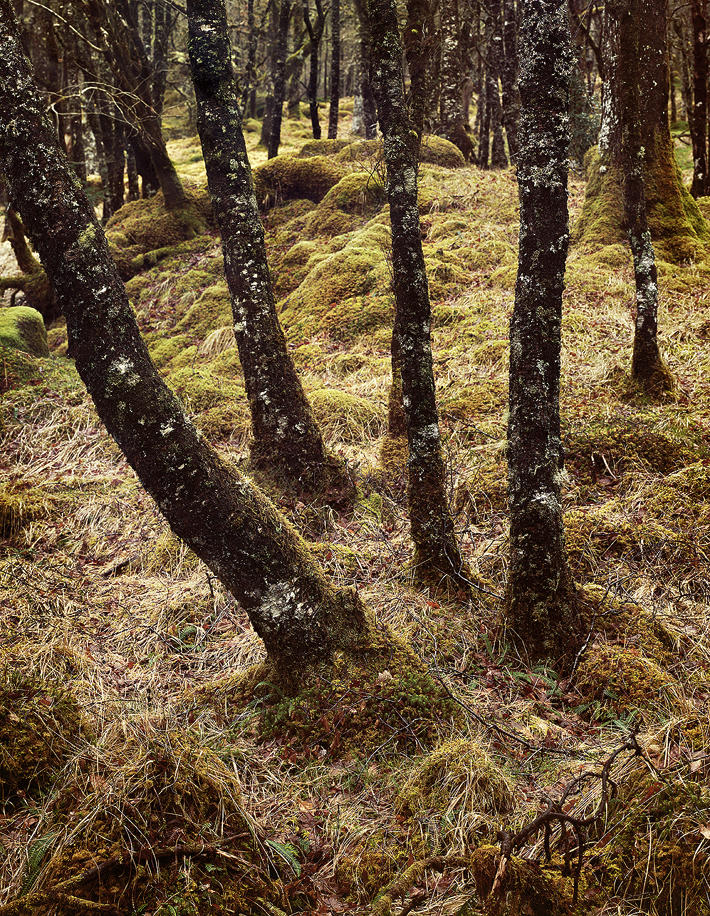
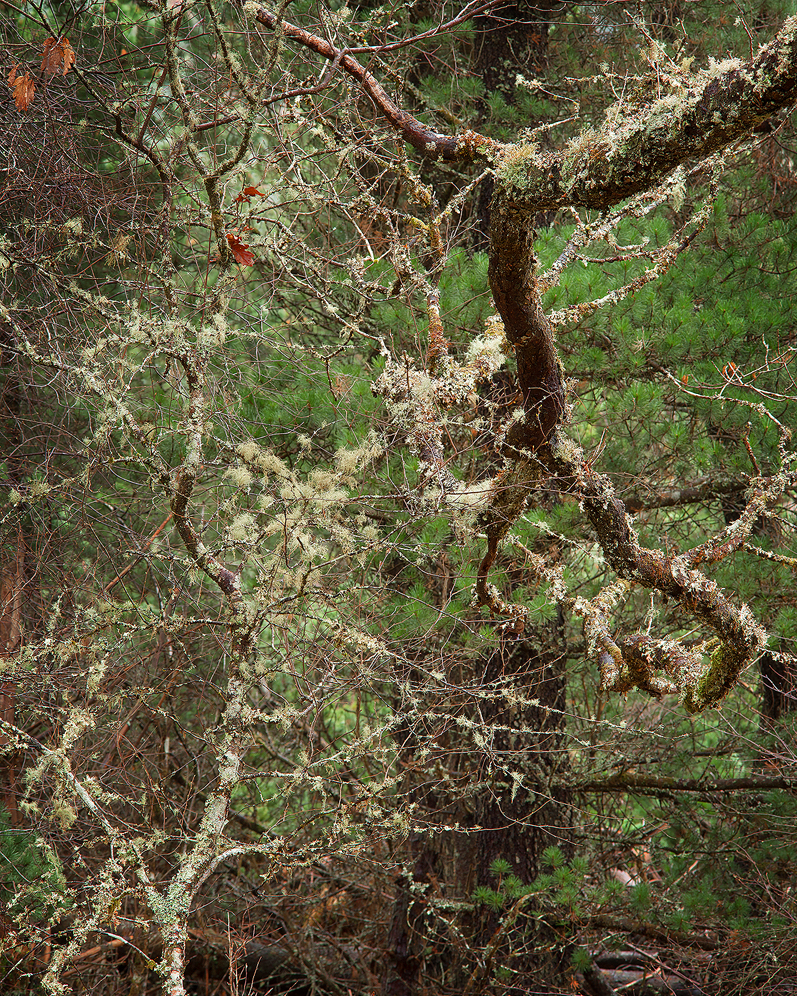
We moved on the next day and took a quick look at Ariundle, again enhanced in colour by the rain. This looks like a wonderful location but we only had a couple of hours their as we wanted to find somewhere to stop for the night so we could relax for the rest of the days photography. Skipping quickly past a four mile detour along one of the steepest, windiest forest roads in Scotland which we found was a dead en, thanks Dav! ;-) , we were driving on for a while when suddenly we both acclaimed 'Jolly gosh those lichen covered trees look super!' (I had to switch on my Yorkshire profanity translation service for that sentence) and pulled the van up shortly after to take a look. What we'd found were possibly the heaviest lichen covered trees in Scotland (at least that we had seen).

Glenborrodale Lichen - Velvia 50 Ebony 45SU Fujinon A 240mm f/22 2s

Dav took a picture showing the lengths I went to to get a dry camera and lens...

A second tripod and a foldable golf umbrella make a great shelter

Dav didn't have much luck during this section as the rain was slowly getting to his camera. The bellows on his Linhof Technikardan were a little tatty when he bought the camera but where they had worn down, the rain had got underneath the surface and was starting to dissolve the paper. It was only when we got to the hotel (yes we slacked off as we were dripping) that we realised quite how bad - holding the bellows up to the bedside lamp showed massive holes, never mind pin prick light leaks. This ruined a fair amount of photographs (mostly ones where the darkslide was pulled out for while whilst waiting for the wind to stop).

We stayed here for a couple of hours and only stopped because we were now so wet that we had nothing dry anywhere to wipe the lenses with and the ground glass on Dav's camera had become waterlogged completely (when you get water in between the fresnel and the cover glass, the whole thing becomes transparent and you can't see the view, never mind focus on it).

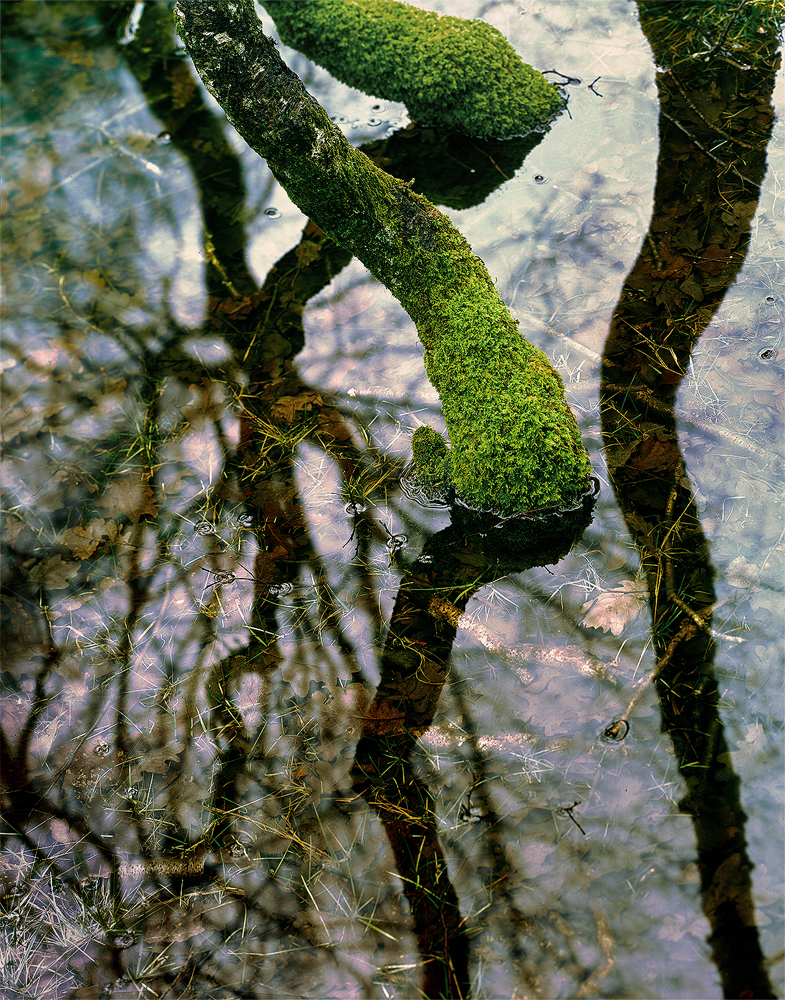
We did stop again once before giving up completely though. Another emergency stop occured whilst we passed an amazing moss covered wall and we both got out to investigate. Whilst walking to the wall we both got drawn by a small pool with two small saplings growing out of it. Despite having only 20% functional cameras, we both worked the area for a composition and the final results were two of the highlight pictures of the week. The mossy wall wasn't so bad in the end either. Dav's interpretation is on the right and mine is on the left.

At this point the rain just got silly - take a look at the following video taken as we were crossing over to Kilchoan.

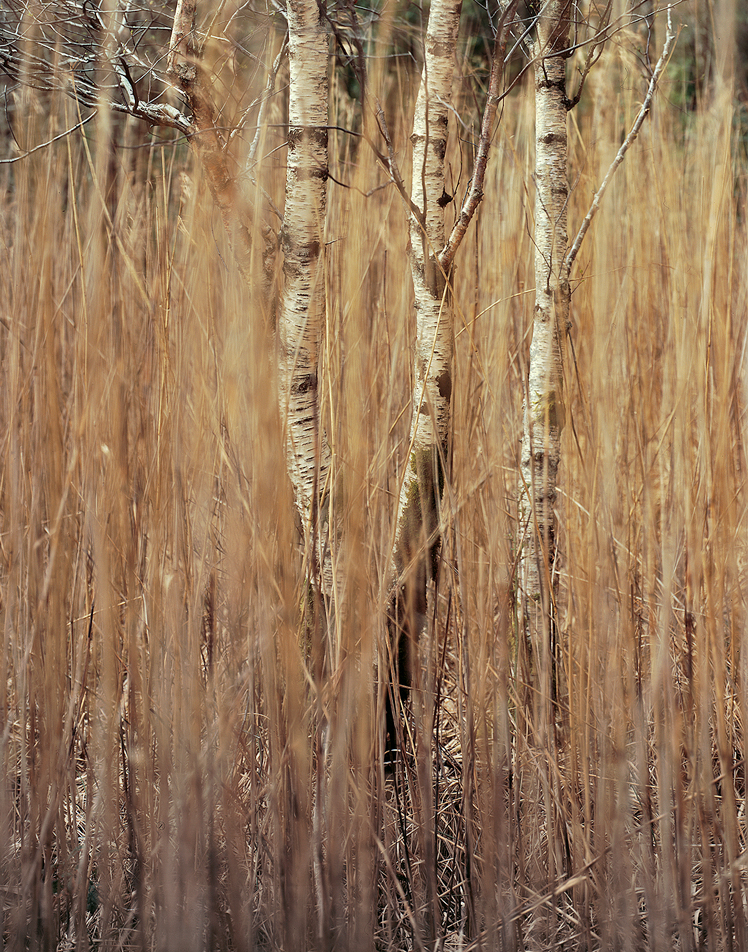
We decided to stop in a hotel for the evening in order to dry everything off (and have a good meal and a shower) and we can heartily recommend the Kilchoan House Hotel which was essentially an Inn with a great lounge and bar. The proprietor was more than helpful and we had a great evening sharing stories with the locals. The next morning we headed back to an area of reeds we had seen previously and as we arrived the sun came out. Dav's shot of these is below..

Sunny Reeds

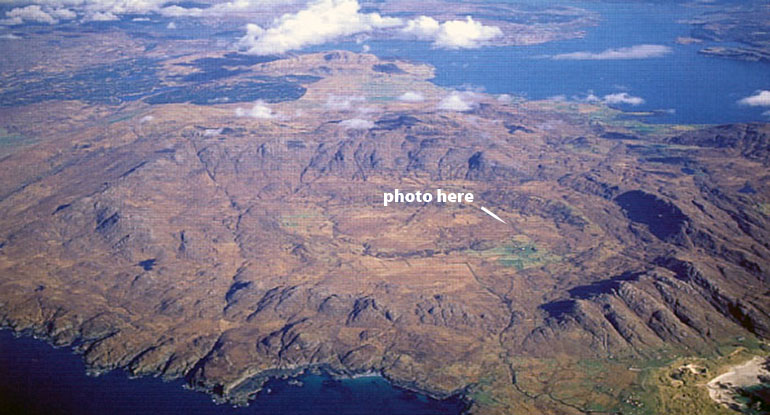
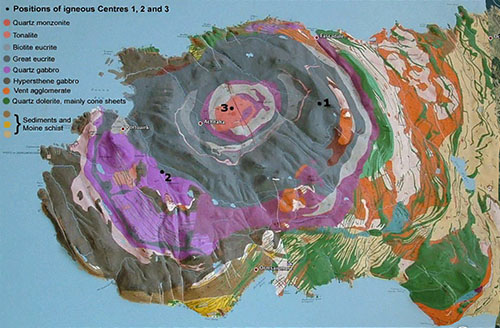
After this we carried on looking around, making our way slowly over to Sanna. On the way to Sanna we stopped in the volcanic crater to take a couple of pictures. If you don't know about this crate, take a look at the following aerial photograph and geological map - you can click on the geology map to get a Google Earth KMZ too..

The area has a barren ruggedness that reminded me of some of the Arizon desertscapes and I couldn't help but create something in an homage to Jack Dykinga. Dav and I also took a couple of shots by the side of, and in my case standing in one of the brooks that flowed off the surrounding hills (which created the nice S shaped line in the foreground of the wide shot).

Velvia 50 Ebony 45SU Schneider SSXL 110mm f/16 1/2 s

Dav Thomas - Portra 400 Chamonix Fujinon A 240mm

Tim Parkin - Ebony 45SU Velvia 50 110SSXL

When we got to Sanna itself, I have to say it was a bit of a dissapointment. The main reason for this was the enormous quantity of kelp that had been deposited on the beach, ruining it's famous bright sands. However, the whole area is fairly flat and I think you'd have to spend a fair amount of time wandering around to create some good compositions. We left fairly quickly and then spent a fairly fruitless few hours visiting every part of the Ardnamurchan North West coastline. The best bit of the coastline appeared to be near the lighthouse but the Camping and Caravan club had erected unsightly fences all around their site, cutting off easy access to the area unless you wanted to take the couple of mile walk north and then back along the coast. To say we weren't impressed is an understatement..

We were then in a bit of a dilemma - 20 minutes before sunset and nowhere to camp. I made an executive decision that we start heading back toward the south and stop on Glen Nevis for a day. We turned up at the car park at 10.30pm in the rain and finally found a small area where Dav could pitch his tent. The decision was a good one however as the days photography here was incredible productive. We had broken cloud but also the tops of the surrounding hills were flowing with cloud too - filling the gaps with mist which ebbed and flowed like the tide. I've included quite a few photographs from here in the gallery at the end but a few stand out.

Toward the Glen Nevis Hanging Valley - Nikkor 300mm (Tim Parkin)

Portra 400 Chamonix Nikkor T-ED 360mm (Dav Thomas)

This shows the view along the river at the car park end of Glen Nevis (at the very dead end of the road that goes up the valley). The walk up into the hanging valley is recommended also.

Allt Coire Eoghainn from Glen Nevis - Canon 5D2 24-105

The river that passes close to the car park starts it's life at the very top of Ben Nevis and because of the amount of snow still at the top, the river was fairly profuse (and because of the torrential rain the previous couple of days had seen). We spent a day wandering around the last accessible mile of the river and at one point I got 'Black Betty' out - this is probably not what you think it is... Black Betty is my 8x10 camera that was purchased from Tristan Campbell at Christmas and I took a shot over to the other side of the valley from the roadside using the 800mm lens I had purchased from ebay a couple of weeks previously (actually a 600/800/1200mm convertible lens - by replacing the back of the lens with various elements). In order to get a stable shot from an 8x10 camera, many people use various forms of extra support, usually an extra tripod. This particular shot with such a long lens needed a little more help to stop the wind wobbling things and so I ended up with my patented 'Octopod' configuration.

Toyo 810MII with Nikkor T-ED 800mm on Velvia 50


Click here for a full size version on flickr..

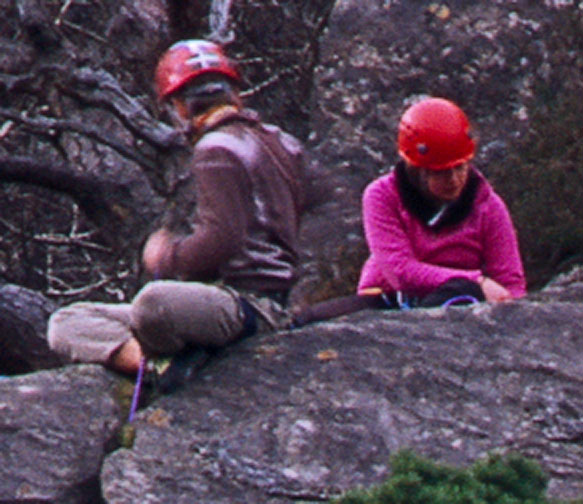
You might be able to make out a couple of climbers in the picture (probably just a single pink dot in the picture above). I've included a close up of them here too.. The 8x10 camera is quite a beast to work with and the advantages over 4x5 are only evident when blowing pictures up to 30x40 inches or more and there are quite a few disadvantages - namely weight (the camera is 7Kg and the 800mm lens I was using is 2Kg never mind an extra tripod to carry and each darkslide weighing nearly a kilogram), speed of use (the movements are difficult to control at this size and just setting up the camera takes a while) and small depth of field. The latter is usually addressed by stopping down to f/45 or even f/64 (hence the name of the club that Ansel Adams was known for being a member of).

After a takeaway curry from Fort William, consumed at dinner table in campervan with doors open overlooking Loch Linnhe, we set off to look for a place to camp in Glencoe. Unfortunately, the saturday night gang were out at all the usual locations on Rannoch Moor (dodgy looking fishing families drinking beer and being lairy) so as a last chance we drove in the dark down into Loch Tulla and found a wild camping spot just off the Highland Way. This meant we could get up for sunrise in the morning and just stroll down the road to some beautiful views.

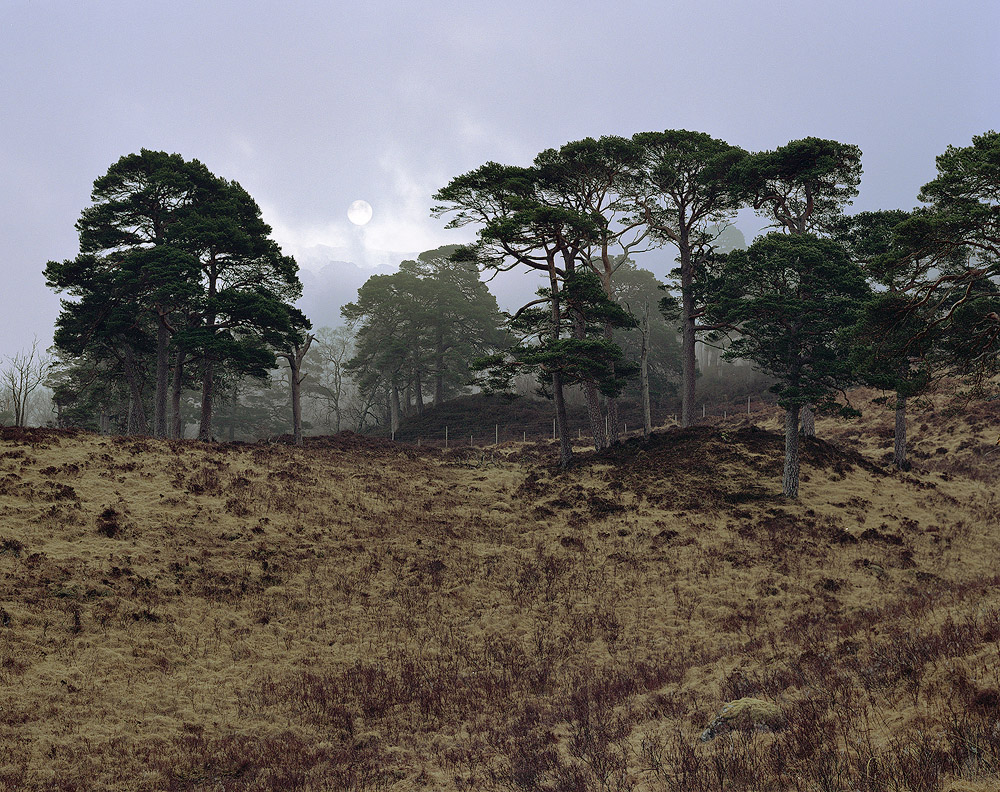
In the morning we studiously ignored 'that Tulla tree' and instead climbed up the bank opposite to take a few silhouette views of the beautiful Scots Pine treeline. Just as we were setting up, the sun popped it head over the horizon and could just be seen as a silver disc behind the bank of mist over the forest. We were both trying out some of Kodak's new Portra 400 film and to our complete astonishment what we thought would be nice silhouttes turned out to be beautifully lit landscapes. The dynamic range in this picture is huge, we both metered it and reckon that there was at least 10 stops between the area in the mist near the sun to the deep shadows (if not more - probably about 12 according to my measurements). Various reports for Portra 400 suggests that it can handle 15 stops of dynamic range which we thought were typical internet exaggerations but after seeing these shots we're believers. It's also incredibly low on grain when scanned and we'll be doing a full report in the near future.

Portra 400 Chamonix Nikkor 300 (Dav Thomas)

And that was it! Only three and a half days of photography but a wonderful experience. The biggest learning from this trip for both of us was how the rain enhances colours and even at this time of year when things can get particularly dull, there is still wonderful colour to be had if you can brave the rain.

Thanks for your patience folks - we'll make sure you're compensated for the wait by some more great content over the next couple of issues..

Tim Parkin

The Skirrid Hill Project

Farther

I’m sure that every reader of this magazine is aware that one of the pitfalls of landscape photography is the tendency to cherry pick the “best locations” repeatedly, the tripod hole mentality if you like. We can appear like a bunch of thrill seekers intent on the next big thing, leaping from subject to subject as if we can’t sit still longer than a 30 second exposure.

But there is more to criticise in that approach. What does a one off image no matter how beautiful say to the viewer? Was the photographer just lucky? Easy enough with a digital camera and a big memory card. Are they trying to tell you they’re a great photographer with one image? How much can one image say about the photographer or the subject? You’ve got to admit it’s limiting and if you want to exhibit your work a unifying theme or subject must trump a series of unrelated images.

More is sometimes more!

I came to photography via street photographers and a more journalistic style, Cartier-Bresson, Koudelka, Martin Parr and McCullin, people who often have something to say in their photography. I only took landscapes initially to misquote George Mallory “because I was there” and if I’m honest because I felt it was something I really wasn’t any good at. It was something I wanted to develop and after the initial amazement at looking at other’s work and producing my own “wows” I found emptiness at the heart of one off landscape photography.

So what is the alternative to leaping about like demented fleas upon the landscape? For many landscape photographers it is the project, either based around a specific area, subject or theme. I’m a big advocate for working on projects they add not just breadth, but depth. A series of images should also lend a more powerful appreciation of what the photographer has to say. More is sometimes more! They allow the viewer to spend more time looking at the work and crucially to make links between images, meaning they are engaging their mind as well as their eyes, surely a more satisfying experience?  I don’t care for mere surface shallowness and I firmly believe that the interaction between thought and image can add something deeper to the experience of viewing. We are after all not just viewing machines designed to gobble up satisfying images, but come with a brain attached that questions, interacts - memories are sparked and associations are made whether we desire it or not. The best photography (and art) captures something that has a meaning beyond the image itself; it sparks a chord within us.

The inspiration behind Skirrid Hill?

Projects can be elusive, so many people tell me they want to follow a more project-based style of photography, but they just don’t know where to start or what to choose.  I hope to be able to share some of my experiences on both my new Skirrid Hill project and some insights from previous projects as a route through the soup of those distractions that prevent us ever starting.

I guess you have to be at a certain level of maturity in your photography before you start a project, to have learned what you need to about technique and process and have learned how they can be bent to communicate something more. But having said that I was working in a project based manner long before I realised the art potential, that something more that connections can make.

Projects for me share three key features, they are personal, they are restrictive either through subject, area, style and or theme and finally I am passionate about them, or why bother! Cobbling that lot together probably looks a bit daunting, but in truth one tends to inform the other. So for example in Memories, Dreams and Reflections I wanted to explore the area around Abergavenny where I spent many of my holidays with my maternal grandparents, that was the place sorted. Analysing my feelings about it – I was grieving the death of my mother and my memories of the past were pretty vague as I hadn’t been there for over 20 years informed the style and theme. I decided the best way to convey the vagueness of that memory was to use intentional camera movement (ICM), sharp bright landscapes would have been completely wrong. Ironically I started off using monochrome for the first three images, before switching to colour when I realised the muted palette of late winter tones were ideal for both relating the mood and to the idea of sparking memories by association. If you’re still photographing orange sunsets and haven’t figured out that if orange were so great why isn’t being stuck on Easyjet not more fun? Then a project is going to be a big leap. That the constant exposure to bright cheerful colours doesn’t bring joy, but makes us suspicious of being sold a lie. Even supermarkets are starting to realise people believe subtle more than having the message poked into their eyes.

My route around the barrier of finding a more meaningful portrayal within the landscape has been to work in a conceptual manner, developing ideas as a sort of backstory to find what I am trying to convey and to concentrate the mind when confronted by the overwhelming wealth the landscape presents us with. In Memories, Dreams and Reflections it was a cathartic response to the death of a loved one, revisiting our childhood haunts and in Tree Line a journey towards the light so to speak – a far more celebratory view of the joys of landscape, but tempered with some of that previous darkness.

Mametz Wood: Study 2

These were very personal pieces, the effort of both the emotional responses required and the construction of the ideas behind them was burdensome to say the least, but more positively also cathartic and releasing. Both the previous projects were taken on the lower slopes of a not quite mountain known as the Sugar Loaf near Abergavenny. When I discovered Owen Sheers’ book of poetry Skirrid Hill was based literally on the next hill east and another of my childhood haunts I became intrigued. This one would be different however; I was going to be more of a director, interpreting the words for the viewer. In many ways that has proved to be a blessing – it is less intrinsically personal, but also the knowledge of working from a personal response gave me the strength to take the project a step further into the territory of art.

How to develop the ideas?

and lay instead an ancient child

I find I have a need for complexity in my project ideas. Complexity helps avoid the formulaic, it helps originality and it helps avoid the banal. I usually start a project with a visit to the place, sometimes with a camera and sometimes without, just as an exploratory trip, a way of analysing the place. It’s important to understand that images can be the start of informing your ideas, so exploring with the camera is as valid as just looking. But I tend to resort to words to generate more clarity and more depth about how I feel and what I want to represent in a given project. I’ll usually start with a pen and paper and make lists of keywords about my feelings, the history of the place and my associations with it. I’ll also make a quick list of images to avoid, the cliché of the lone tree was chief amongst my Tree Line avoidances. This means not only are we producing work that is different, but it also means that we have to think creatively, not relying on the memories of how something was approached by others in the past, but having to look inside ourselves to find a way of expressing our ideas.

Skirrid Hill was different because I already had somebody else’s ideas on a page before me. But before I even got to Sheer’s poetry the book gave two clues as to how to proceed. Firstly the introduction includes an analysis of the name Skirrid Hill. It is an Anglicisation of the Welsh Ysgyrid Fawr. Fawr simply means hill or larger, there is a little Skirrid too) and Ysgyrid is a derivation of the Welsh Ysgariad meaning divorce or separation. They are a central theme within the poetry, but reading around the subject and some local knowledge also revealed that by local legend the landslip that creates a cleft on the northwest side of the hill and is a key feature of the hill when seen from a distance supposedly happened at the time of the Crucifixion.

There is also an introductory quote from T.S. Eliot’s East Coker that was important for both the poetry and my visual interpretation.

‘As we grow older

The world becomes stranger, the pattern more complicated

Of dead and living.’

My initial idea was to follow in the footsteps of Fay Godwin and Ted Hughes in the remarkable collaboration The Remains of Elmet, but I soon found two flaws in that idea. Firstly, I was always dissatisfied in the relationship between words and images in Elmet, not that either lacked beauty in themselves, but that Godwin’s work was essentially an illustration of place designed to illuminate the text rather than being in more directly inspired by the wonderful words of Hughes.

Secondly on reading Owen Sheers’ words it quickly became apparent to me that this was a far deeper and more emotive work than a book of poetry about a small hill on the borders of Wales. The Skirrid is there as a centre-point, it is an anchor to the experiences of life recounted in the poems, from the death of his mother, to his relationship with his father, his lovers and lost lovers and experiences of life and growing up in a small market town.

Faced with these two problems and determined that it should remain a landscape photography project the only way to find a solution to these problems was to literally find a poetic interpretation in the images I produced. Something vaguer and more abstracted, something more akin to art itself, but that could be seen as both interacting with and inspired by the poetry. Where possible I would still produce more literal photographs, a sense of place is important to both the poetry and to myself and as far as possible I would keep to the Skirrid or other nearby locations found within the words. But also those poems that represent a more personal and emotive life experience would give me the opportunity to explore more deeply the ideas contained within and express them through elements found within the landscape itself in a manner perhaps of something vaguely magic realist, perhaps as in the Eliot quote ‘stranger, the pattern more complicated’.

Mametz Wood: Study 1


Problems, problems!

Problems are the route of creativity, they engage our brains and force us to make new connections, to see afresh and find new ideas. So without problems we wouldn’t ever create new work. Obviously the project approach creates it’s own problems, how to hold a style and keep to a theme over a long period of time is one. Funnily enough I find writing about my projects helps, just as I have done here!

There are still some poems that I may never be able to cover in this fashion; it might even be inappropriate to try. I don’t see myself tackling Valentine a poem about love making in Paris or other poems where the sense of place is far removed from the hill itself. But poems like Y Gaer (Hill fort) are ripe for interpretation in the potency of their place and the passion contained within. An excerpt:

The land is three-sixty about you here,

An answer to any question, stitched with river silver,

So I think I understand why the man who lost his son

comes here only in bad weather,

when he can lean full tilt

against the wind’s shoulder,

take the rain’s beating, the hail’s pepper-shot

and shout into the storm,

finding at last, something huge enough to blame.

The seasonality of some of the poems may well slow the rate of progress, I’m finding myself bypassed by the seasons before I can find a suitable image, so I suspect I am looking at years before completion, not weeks or months and in that respect will significantly differ from my previous projects.

Farther: Study 2


I’m also interested in John Berger’s ideas about seeing images in series, about how the force of multiples reinforces the potency of individual images and how I can develop a visual relationship within the images – a series of refrains - as Chris Tancock would put it. The idea that there can be a visual link between them, so like him I’m now carrying the images I’ve made so far on my iPod so that I can use them as a reference when producing new work, and I can find the link between and within.

My first article for LandscapeGB was entitled “Thinking like a poet…” (issue three) and perhaps I’ve now taken that all too literally! Its early days at least in terms of images produced, although in reality I’ve been working on it for nearly six months that’s barely more than one photo per month. I’ll have a whole series of creative problems to solve in the year ahead and that makes me happy! Sometimes doubt creeps in, but I’m not alone as even Marc Chagall wondered:

“But perhaps my art is the art of a lunatic, I thought, mere glittering quicksilver, a blue soul breaking in upon my pictures.”

Please click on individual images to reveal the text that inspired them.

Poetry Copyright from Skirrd Hill by Owen Sheers published by Seren Books ISBN 18541114034

You'll be able to see further progress on this project on my Flickr site:

http://www.flickr.com/photos/robspages/

Give some Praise where Praise is Due

I've read a couple of blog posts recently that asked photographers to give a bit of praise and I thought I'd pass this request on. Next time you see a website or a photograph that moves you, spend a few moments to send the photographer an email or use the contact form on their website. Most photographers don't make much money out of their work an the boost that the praise from another photographer can give is so much more than the effort to give it.

So - I've going to spend the next couple of weeks keeping this in mind and I hope you do to!

Composition – Introducing Flow

Last issue I took a look at the concept of balance in composition. The second main concept that I want to cover is the concept of 'flow'. Flow describes the natural directionality in a  composition and it also describes the way the eye will flow around a photograph.

Firstly it may help to cover a few psychological/perceptual ideas that pertain to composition and how our eye moves around a picture. Research has shown that our eyes find it impossible to 'scan' smoothly across an area with no features. In fact our eyes cannot move smoothly at all, they jump from place to place in movements called 'saccades' and when our eye is focussed on one particular point, they can only see within 2 degrees. The only way we can build up a picture of the whole composition is by jumping from one place to another and 'remembering' the details of the whole.

Chris Goddard

This week I asked Chris Goddard from the south of Wales to send a couple of pictures of Mewslade to me to 'critique'. I'm not a huge fan of the term critique - hints of criticise but that is far from what I want to do here. The two photographs are wonderful interpretations of an area of the world that I visited and found very difficult. If you want to see some more of Chris's pictures, take a look at his flickr stream here.

Part One

Part Two

Here is 'before' and 'after' photograph following some of the tweaks made.

Elemental Landscapes & The Photographer at Work – Harry Callahan

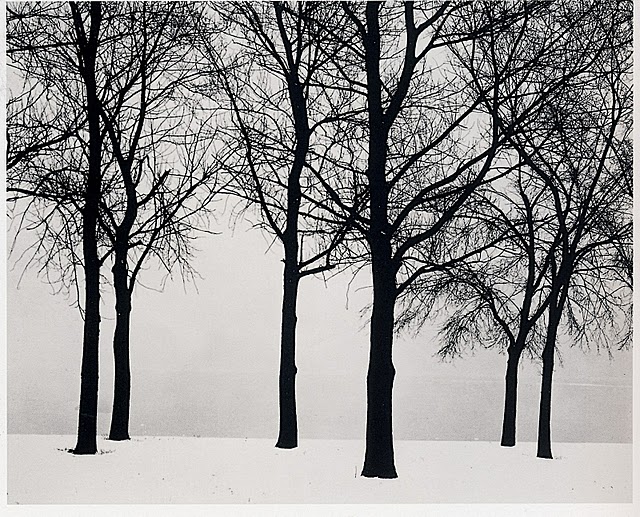
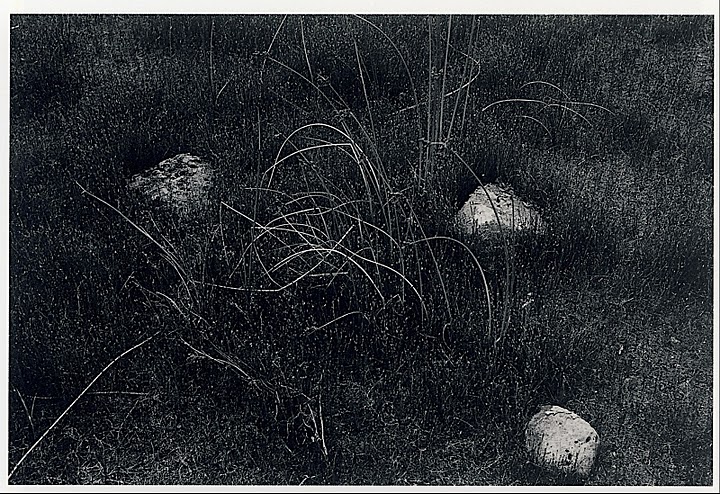
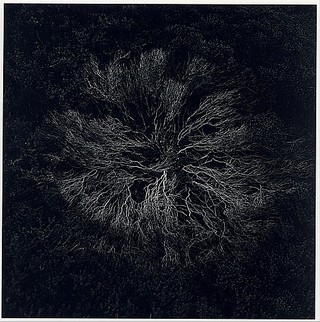
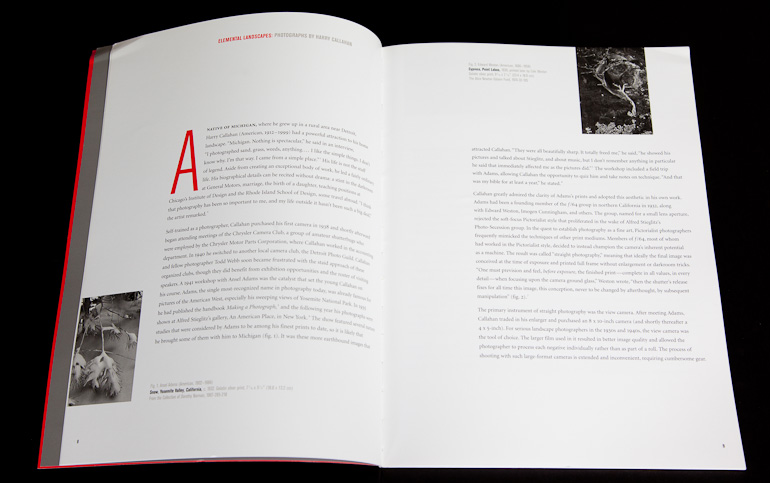
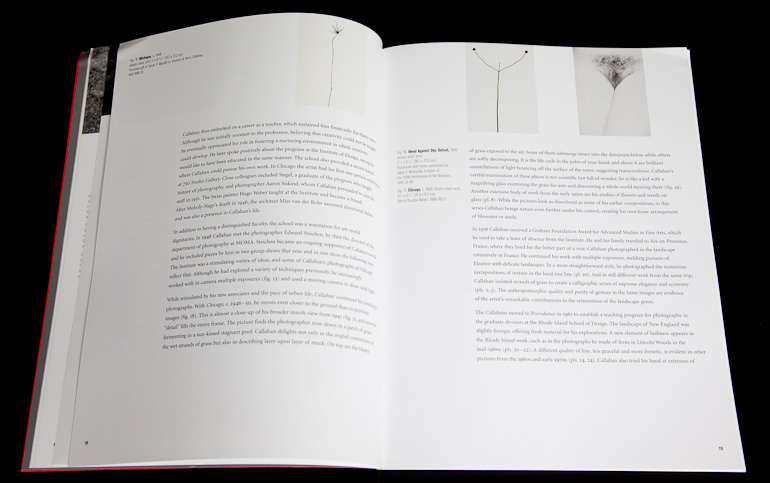
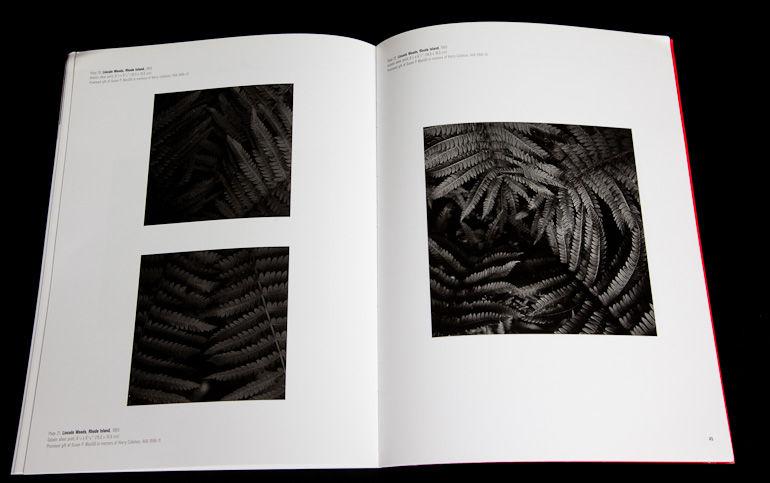
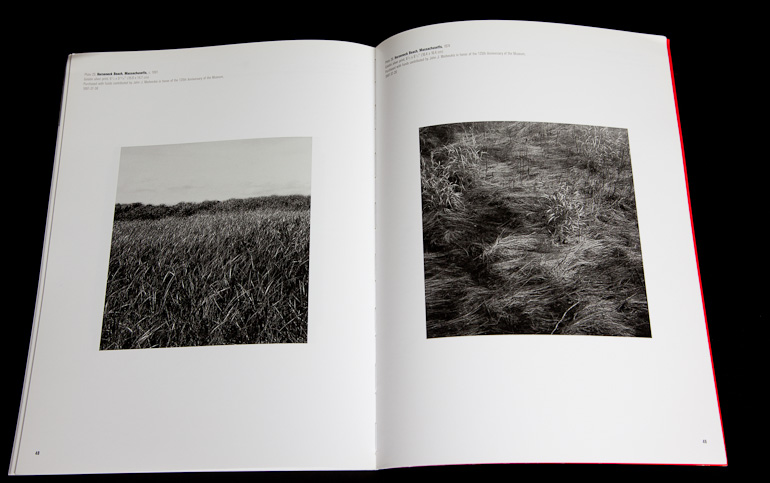
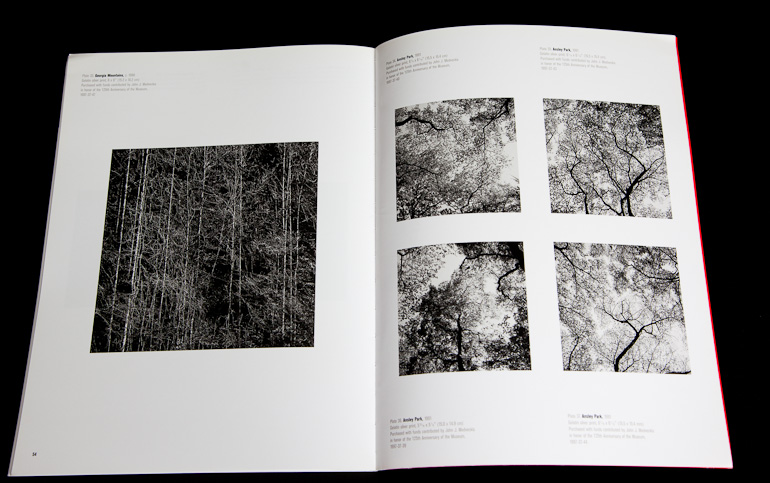
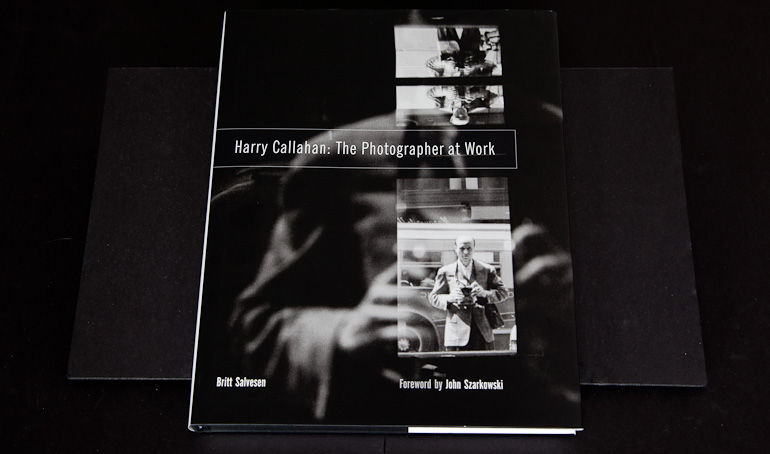
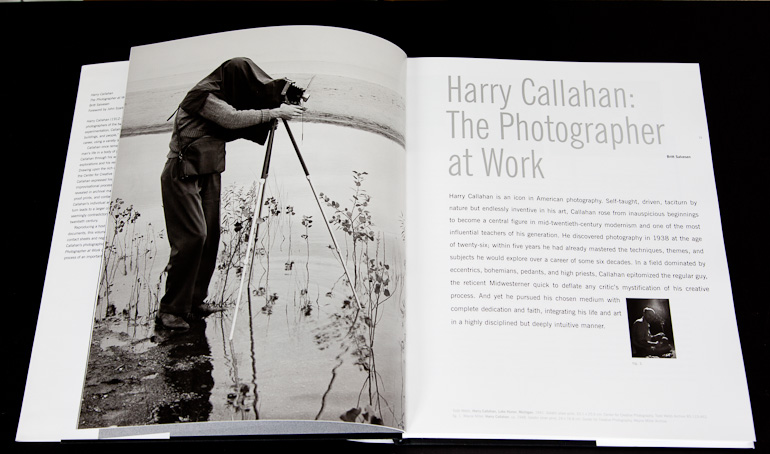
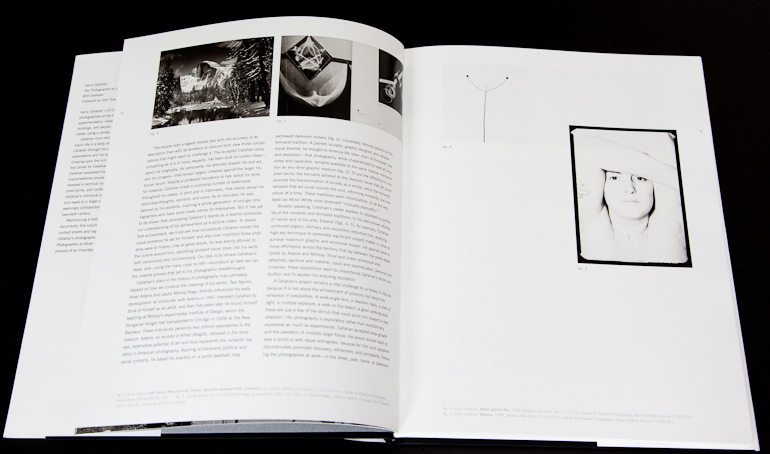
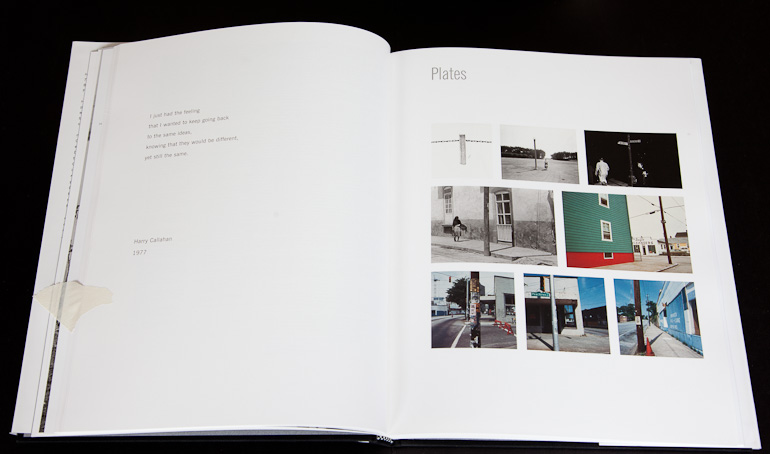
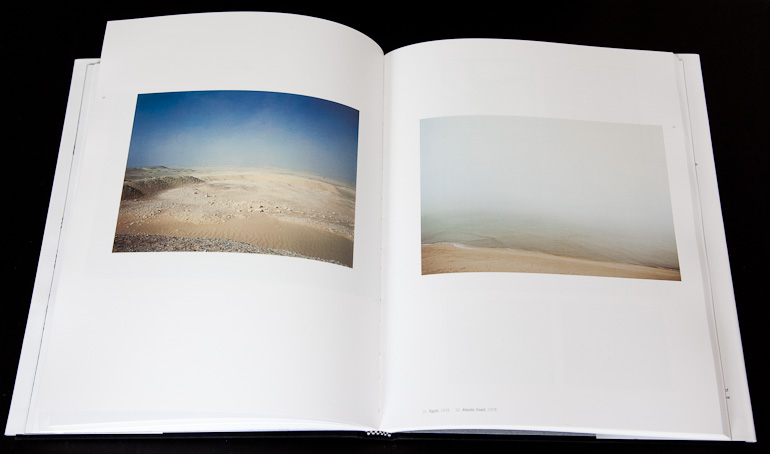
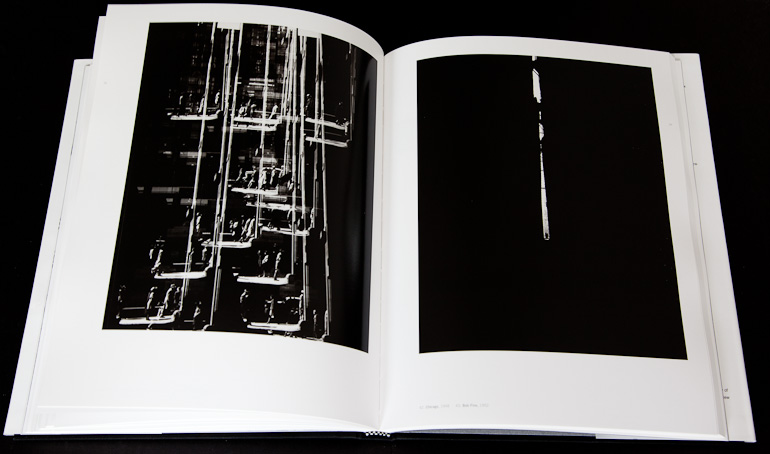
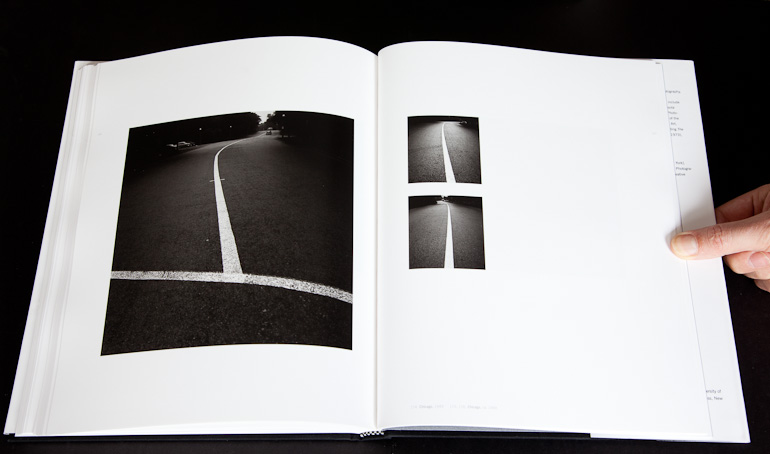
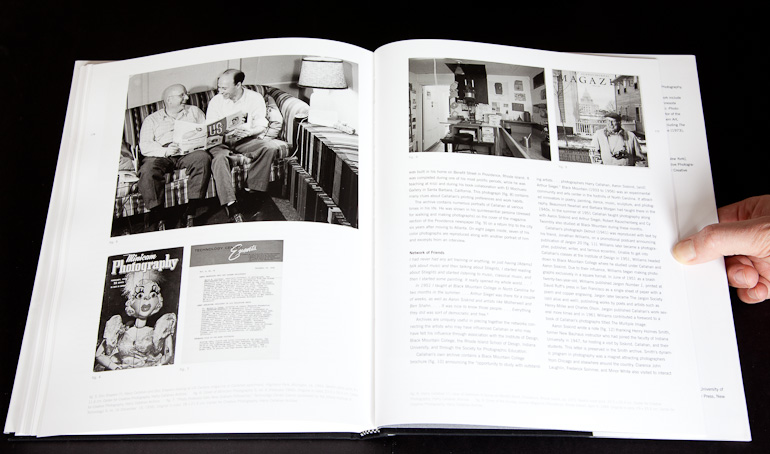
H Callahan 03 shortMy interest in Harry Callahan was piqued when Joe Cornish showed me some of his work and I also saw him mentioned in relation to Minor White and Steiglitz. I saw a book called 'Elemental Landscapes' whilst searching on Alibris and had to buy it. I also bought 'Harry Callahan - The Photographer at Work' from Amazon.

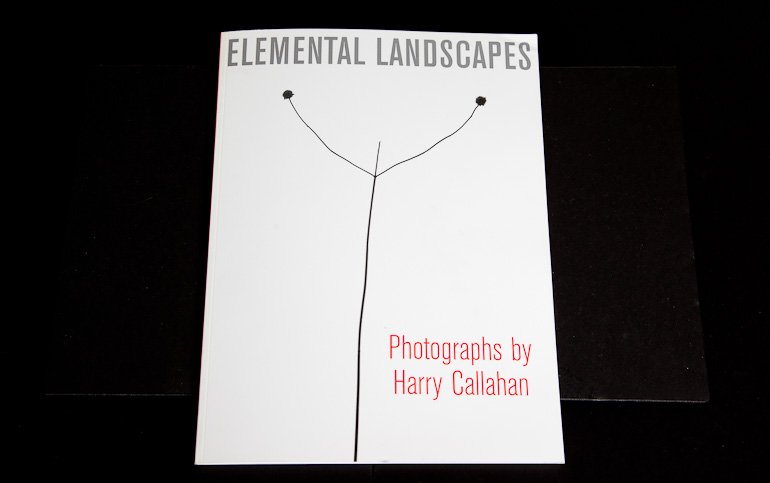
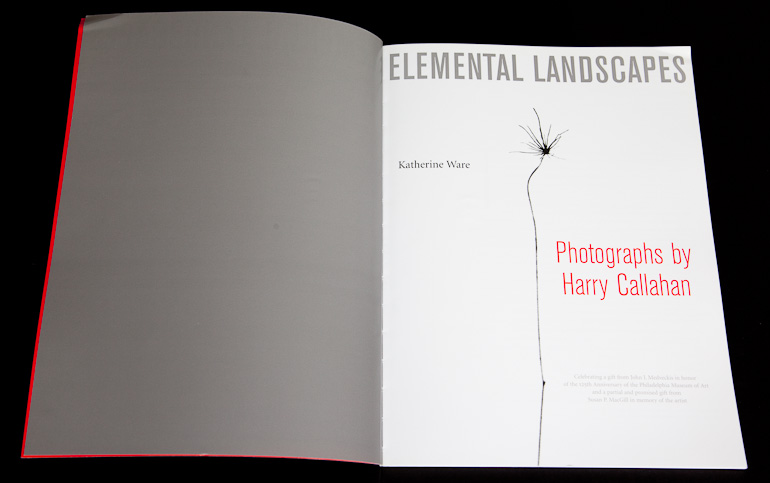
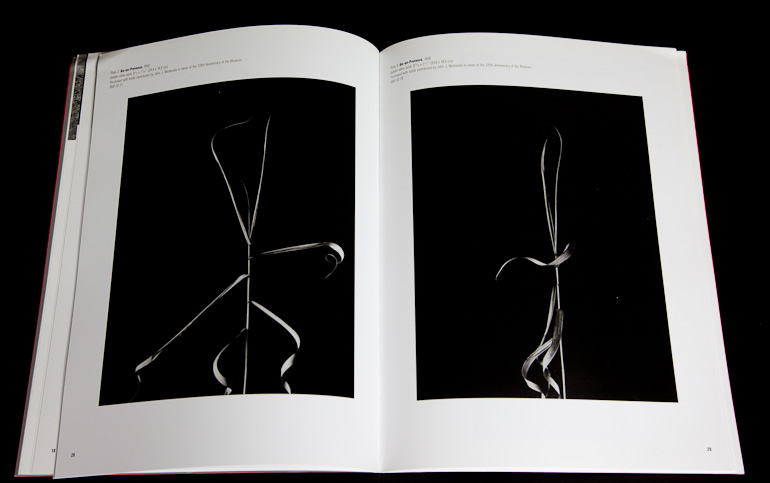
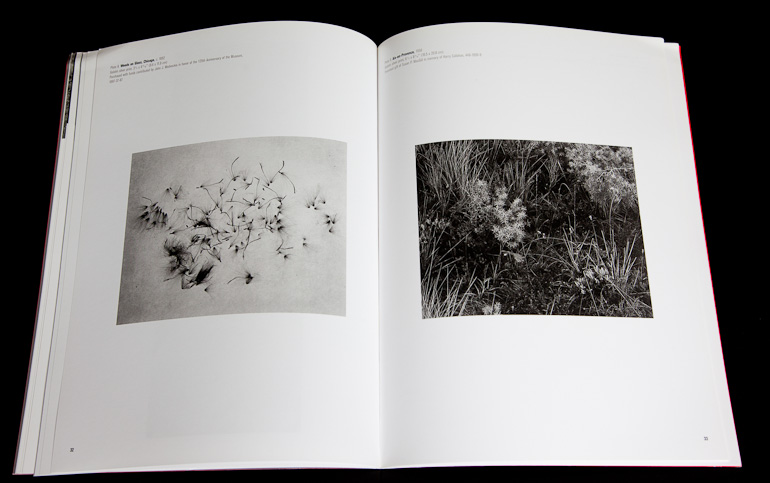
When I received 'Elemental Landscapes' I was initially a little dissapointed. It was only a paperback 55 page publication, more a very high quality magazine than a book. However, upon working my way through the book I quickly changed my mind. The writing, describing Harry Callahan's background and development, paying particular attention to landscape, is clear and well written and describes a photographer working his own path through life. On top of this the black and white prints, approx 40 large plates and about 15 supporting ones, are

beautiful. I haven't seen any original prints of Harry's but from this introduction I shall be looking them up. I've included a few of the pictures along side this text and a few photos from the book below. Altogether though, a highly recommended sampling of the landscape photography aspect of a great photographers life.

The Photographer at Work is a little more comprehensive and covers all angles of Harry Callahan's life. These include quite a bit of street photography and also many photographs of his wife and abstract constructions, almost collages, from his teaching work.

The book is again very well written and describes how Harry developed his style and has intruiging insights into his working process (he used to photograph every day and took thousands of photographs in a year). Another recommended book but for the landscape photographer, I would recommend just buying 'Elemental Landscapes' for a starter.


Elemental Landscapes

The Photographer at Work

Hindsight – Scotland

Richard Childs visited the On Landscape head office this week (aka Tim's office) and as well as enjoying the usual inter photographer chit chat we recorded a few videos about some of his images. As usual, we're using a similar format to Joe's videos, a popular shot, a not so popular shot and, in this case, a shot that is a bit different from Richard's usual modus operandi - taken with a medium format camera at the start of setting up his business in Scotland. For those of you who don't know Richard's work, take a look at his website at http://www.richardchildsphotography.co.uk which I'm told may well be updated this summer.

Richard uses a large format camera** and strolls to the top of great mountains carrying the equivalent in weight to fifteen bottles of whisky!! And that is quite a lot of whisky!!

** I know - we keep featuring all of these film and large format people - suggestions for DSLR digital photographers would be most welcome, please use the 'feedback' tab on the left hand side of this page - if they're in the North of England, even better).

Part One

Part Two

Read the other Hindsight articles in this series.

Harry Callahan

Harry Callahan, born 1912, was a photographer many of us could relate to. He wasn’t a graduate of any particular art school or a rich family who could support a creative life. Harry, an engineer by training, worked for Chrysler during the Great Depression and only started photography as a hobby during a ‘mid life crisis’ in 1938 (sounds like an early life crisis to me). He was going to buy a movie camera but couldn’t afford one so was convinced to buy a twin lens rolleicord instead. He joined a camera club shortly after but was never really happy with the camera club ethos and moved to another very soon where he at least found someone he could relate to. The big ‘epiphanic’ moment (I’ll get that word in the dictionary one day) was when Ansel Adams came to talk at the club in 1941.

Meeting a photographer that lived and breathed his passion had a profound impact on him. Interestingly, Ansel Adams showed one of his only ever series of photographs, a set of pictures of the surf at the San Mateo County Coast; pictures that were themselves inspired by Steiglitz’s ‘Equivalents’ cloud series. This set Harry on a journey of ‘seriality’ where he looked for inspiration in the photographing of things rather than the things themselves. He had already had dissapointments making visits to beautiful locations and producing little that motivated him.

A couple of years later he produced a series of pictures “Weeds in Snow” which set the foundation for all of his future work (which you can see alongside this article), even though it wasn’t published until 1946. This probably coincided with his recruitment to the Institute of Design, Lazlo Moholy Nagy’s Bauhaus “New Vision” college. This recruitment was timely as the previous years were depressing for Harry - trying to fit photography in his spare time.

The exposure to Lazlo Moholy Nagy and Steiglitz (his contemporaries within the circle of photographers at the time) exposed Harry to ‘experimental’ camera techniques such as multiple exposures, extreme contrast, etc. This, and a contrary attitude to any ‘accepted’ patters of art. His approach was both intuitive and documentary - a combination of analytical engineer and iintuitive artist.


To understand Harry Callahan’s work, you need to appreciate the seriality of photography, where the connections between photographs are as important as the photographs themselves. These aren’t necessarily projects, but are ways to distilling the essence of an idea through similarity and difference. The viewer interprets a series through comparison and this gives the photographer a great degree of expressiveness. Harry Callahan did take the occasional individual photograph (especially in street photography) but the majority are weaker when read on their own.

Later on in Harry Callahan’s life, he brought Aaron Siskind into the ID to teach and they then both moved to the Rhode Island School of Design. His work here and for the years after his retirement continued to be fresh and exciting for many at the time (and his grasses work is one of my favourites which was produced in 1988, three years before he had to stop taking photographs due to ill health and seven years before his death).

Harry Callahan didn’t think of himself directly as a landscape photographer, he sampled too much of the photographic repertoire to be called anything but simple a photographer, but his landscape abstracts and deadpan views were hugely influential in the mid to late twentieth century (He made New Topographic work decades before Baltz and Adams).

Which ‘Self’ do you Take Pictures for?

When asked ‘who do you make photographs for’, a very common answer is ‘myself’. However, given recent discussion, I started to think about what this means.

When I started my photography, I didn’t know who I was doing it for. I did know that I wanted to show people what I was doing though; I wanted to share the buzz that I got from seeing these scenes with other people my wife and family seemed to bear the brunt of this (and a couple of work colleagues who were quite understanding).

However as I developed as a photographer, I think my photographic tastes started to develop and some of the work that I was really proud of didn’t have the same impact with family and friends as my initial works. I felt like I was a wine taster developing a palette and that I was tasting things I could only share with other people who had developed that taste.

Fortunately, by this time I had been on a couple of photography trips and had met some other people who shared these tastes and I got some good feedback from them - getting that buzz back again from sharing pictures. However, meeting up with these people once every few months wasn’t my photographic goal.

Tastes continue to develop, as they do, and perhaps there are only a small group of friends who fully understand what I am trying to do (although a wider group may like the work) and so I end up creating my work for an imaginary audience.

I talked about Vivian Maeir in a previous article and the fact that she didn’t show her work to anyone. I think she must have had her own imaginary peers - she may have dreamed of showing pictures with Atget or Bresson but been rebuffed by a local photographic community (I’m guessing, who knows what goes on through most strangers heads).

I create occasional pictures now where I’m not sure whether anyone will like them but I would still like to think that there is an understanding audience out there.

And I think this is the ‘self’ that a lot of people take photographs for. Ourselves as proxy for the audience we would like to have. We have to play creator and audience at the same time. As our photography progresses, we might decide to ‘upgrade’ our audience - playing a new persona that can reassess our images in a new light.

Of course we can’t just change our core personality overnight and so there will still be a fundamental part of us that reacts instinctively about photography. That part of us is our real self, the part that gets an electric thrill when it recognises beauty and/or excellence in craft. We have to remember that this part of us develops over time though. This instinctive reaction to photography will be different that it was when we first picked up our initial ‘wow’ pictures.

A good balance between our instinctive and ‘imaginary’ audiences can help our photography move in the direction we would like to see it go without becoming untrue to our instincts. We have to remember that our instinctive self will be different in a few years time and so we don’t always have to listen to it, just as we don’t have to slavishly work with our imagined audience.

And the outside influences in our photography? Personally I think we need to be very careful who and how many people we let influence us. Choose to pay attention to a subsection of your real audience (don’t be swayed by the 100 favourites that picture on flickr got - if it doesn’t fit into your personal path then enjoy the attention, feel free to work out why it happened but stay consistent with your ‘selves’). And if your external audience clashes dramatically with your internal audience it’s up to you to decide who is right or wrong.. It may just mean that the path you are moving along isn’t quite mature yet.

We should also remember that our ‘instinctive’ self will be quite different in a decade’s time and you have the opportunity to send messages into the future. Take some pictures that are outside your usual creative envelope and mark them for the attention of ‘future me’. You might be surprised at what ‘future you’ thinks when looking back :-)

I asked Dav Thomas to take a look at this and he said he had a picture that reminded him of this so ..

"I was somewhat amused/confused when I read the latter part of Tim's article referring to taking pictures for your future self – but on reflection this is rather a thought provoking idea. Normally I find myself going back through my photos and reflect on what I was thinking at the time – which ones I still think hold some credibility and which ones are purely clichéd landscape porn. There's one photo of mine that stands out as being a "photo for the future me" – thanks old me (or should that be young me...?). Made on a wet, dull day on Mull in 2007 – at the time my subtle pallet hadn't quite developed to the muted wow-less state it's in now and I suppose I was still at a stage where it mattered to me a bit if I got comments on Flickr. Having popped it on Flickr it received little attention but I now realise this matters not a jot. Sure I might do it a little differently now (and certainly in large format) and it's by no means a great photo, but the elements are there for the "now me" to appreciate - muted colours, a compositional idea with the lead line from the corner and a sense of place without being an obvious view. Whether I'm still making photos now for the future me I'm not sure but I will certainly consider this when I'm out in the field."

Jason Theacker asked me in the comments about which picture gives me an emotional connection. In terms of pictures I feel that I have created something a little beyond myself I think it's this shot of Saltwick Nab that expresses most of what in a photograph. It's also one of the pictures that has grown on me more and more over time. (Sorry for the short comment - this is posted from a hotel room in Scotland - waiting for the rain to stop).


Tilt / Shift Photography

As people quest for more resolution and sharper pictures, they invariably encounter someone singing the praises of tilt-shift lenses. Most commonly used in close up product or architectural photography, these lenses allow the photographer to choose where the plane of sharp focus lies and also choose to correct or to manipulate perspective (to a limited extent). It is the ability to control where the plane of focus lies that we will cover in this article (we will come back to the perspective correction in the next issue).

The first thing that we need to understand is how focussing works in cameras. In order to do this, it is useful to look at the large format camera as these have the simplest lenses and are basically just a flexible box with a lens at one end and the ‘sensor’ at the other.

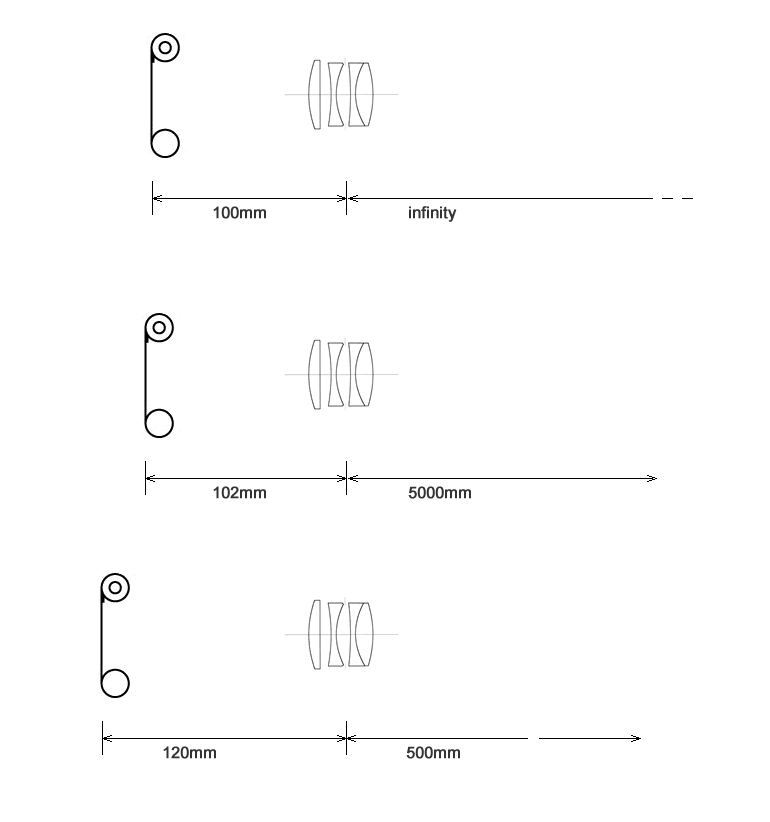
A lens of 100mm is focused on infinity when the distance between the ‘sensor’ and the lens is 100mm (see the diagram below).

Also, in order to focus closer than infinity, you need to make the distance between the sensor and the lens longer. (the actual equation is 1/sensor to lens + 1/lens to object = 1/focal length)

In summary, to focus closer we make the distance from lens to sensor bigger.

This is often masked in modern lenses because they use ‘internal’ focussing elements that move whilst keeping the front element stationary.

Normal Focus with Non-Tilt lens..

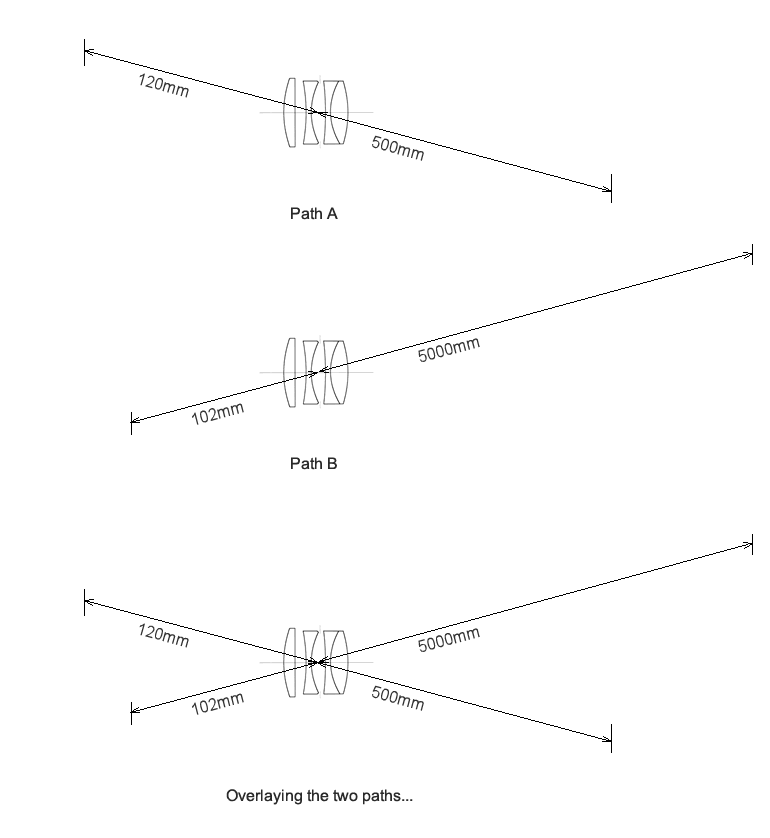
In the diagram below we can see what happens if we show two different paths of light. One focussed close and one focussed further away. The diagram also shows why the image on the sensor is upside down (all light paths pass through the lens).

Taking into account the light paths from different parts of the picture

The last image above shows both light paths shown using a single lens. We can imagine that the ‘target’ of both of these light paths as two little sensors. Or, if we look at the diagram below, we can see that the same would be true of a tilted sensor.

A tilted sensor focusses on a tilted plane

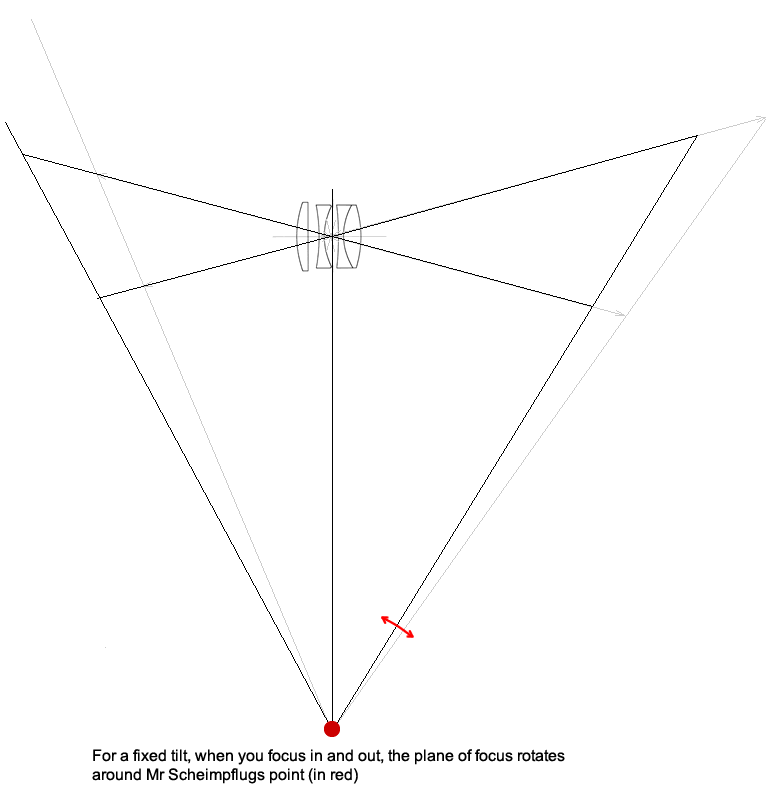
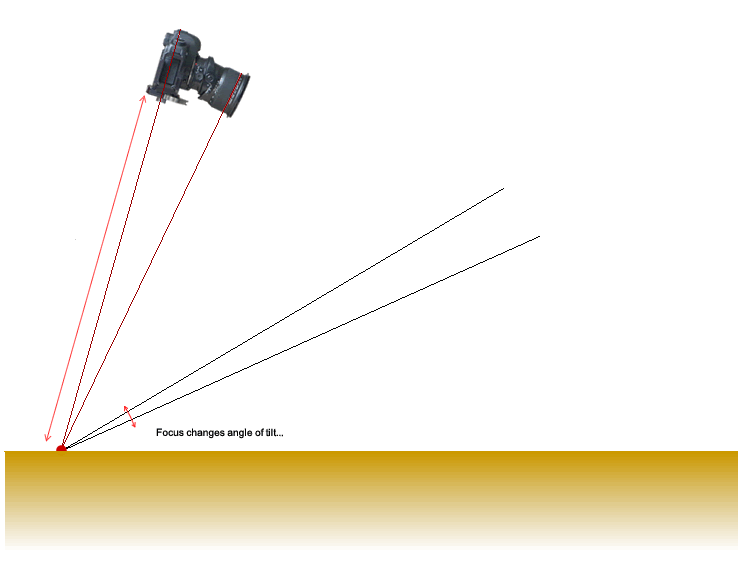
As you can see, each point on the sensor relates to an ‘in focus’ point on the landscape side of the camera. The plane of the sensor, the plane of the lens and the plane of sharp focus coincide at a single point (Hey! Mr Scheumpflug!).

So what happens when you focus? Well, inside the lens an element is moving backwards and forwards. If we focus closer, the lens element moves further away from the sensor. Take a look at what that means for the plane of sharp focus.

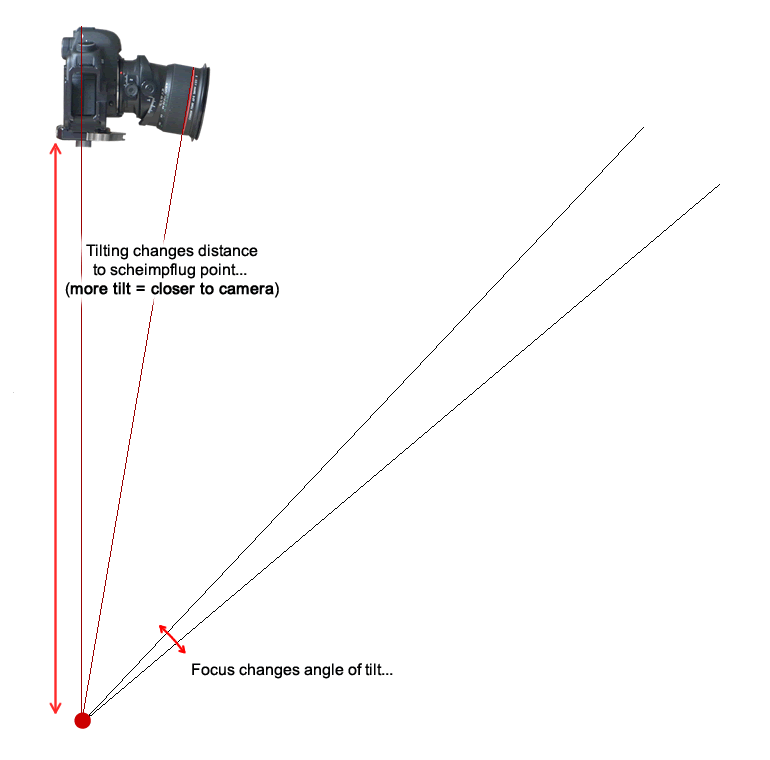
Focussing changes the angle of tilt (changing distance from sensor to lens == focussing)

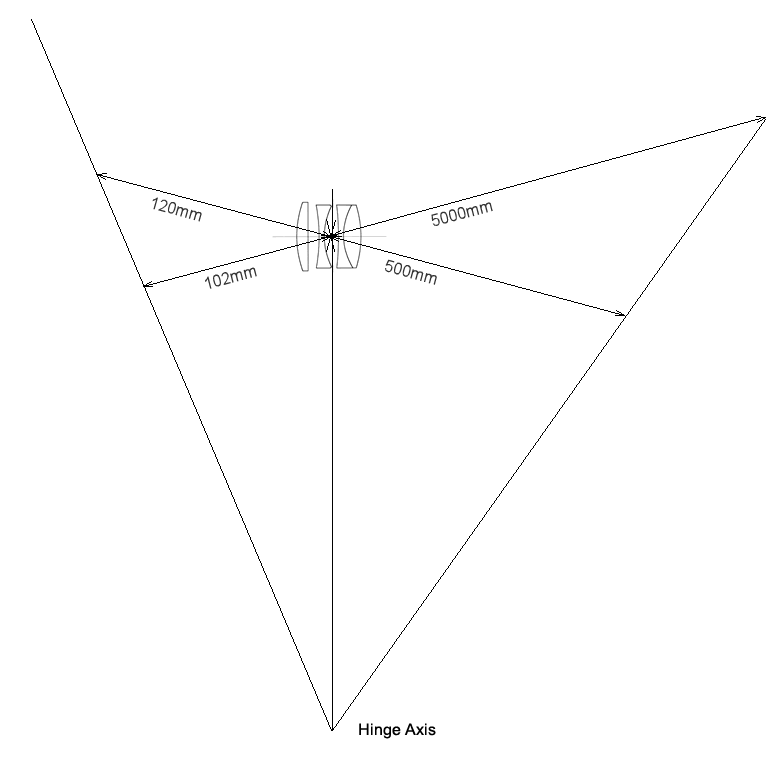
So in summary, when you tilt a lens you can draw a line through the lens plane and the sensor plane and where they meet will be the axis around which the focal plane moves. If the lens is tilted more, that axis gets closer to the camera. When the lens is tilted less, the axis moves away from the camera.

When you focus the lens, you are effectively moving the lens (or lens nodal point) closer to or further away from the camera. This ends up rotating the sharp focus plane around the ‘hinge line’ (OK, it looks like a point on the diagram but it’s actually a line going into the paper).

The following diagram shows this

A typical DSLR tilt shift lens set up

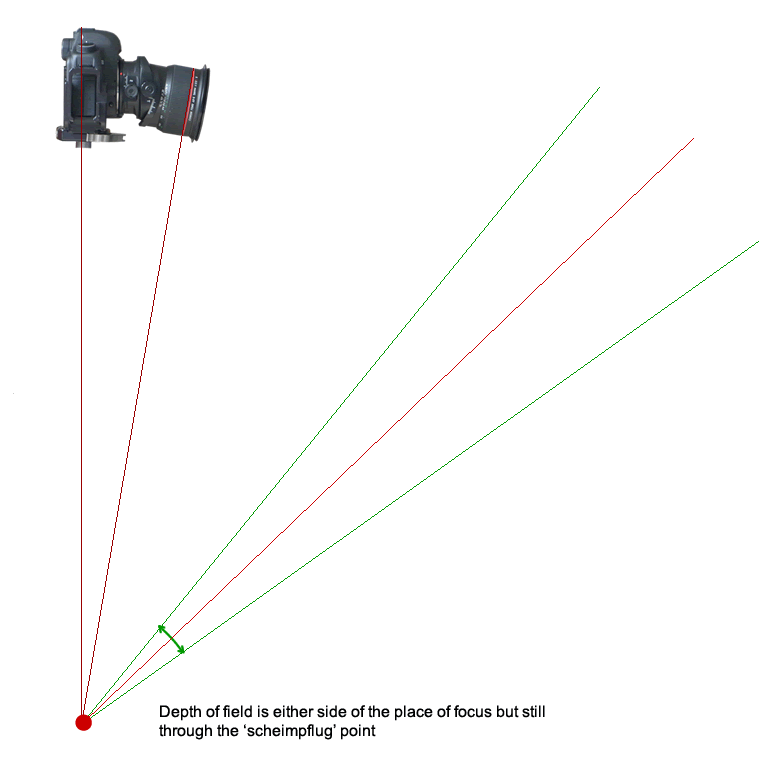
Now depth of field with a tilted focus plane causes some people some trouble to understand. However it’s actually fairly simple. Your depth of field gives acceptable sharpness from an area focussed closer to the camera to an area focussed further away from the camera. Hence, if we show the plane slightly closer to the camera and the plane slightly further away from the camera, you can see that the area of acceptable sharpness is actually wedge shaped.

Depth of field is the same as focussing closer/further

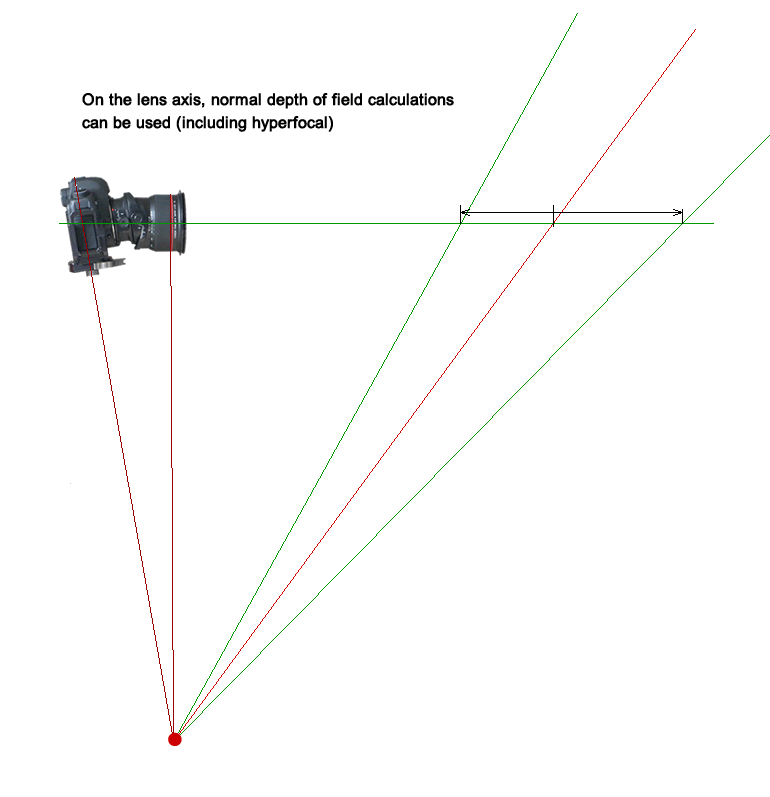
The last thing that is interesting here is that having gone through all of the maths (so you don’t have to) hyperfocal focus still applies along the lens axis (actually it isn’t that complicated, depth of field is normally calculated for a single line and then extrapolated for the whole perpendicular plane. In the tilted case we work out depth of field for a single line as per normal, but we are then constrained by all focal planes passing through the hinge point.

Normal depth of field calculations work on the lens axis

Practical Conclusions from the Above

A few things can be concluded from the information given above and that can be useful when working in the field.

1) You can work out an approximate tilt needed by looking at the plane of focus you want, working out where that plane of focus meets a line drawn through the sensor and then tilting the lens until it also points at the same line. This will usually be enough to get you pretty close for focussing.

2) Depth of field is a *lot* smaller nearer to the camera than farther away. Hence you don’t need to have the plane of focus directly hitting the horizon in a big view. If you do have it hitting the horizon, you are wasting half of your depth of field on the sky! Have a look at the diagram below

3) Your depth of field gets smaller the more you tilt. This isn’t easy to see without flipping between multiple pictures so we’ll take a detour.

I must admit to using my large format camera for most of my tilting and shifting and in the process of learning how to use it I heard someone espousing a concept called ‘microtilts’. The theory was that if you could apply a fractional amount of tilt, nearly everything would come into focus. I had a suspicion that this was a load of cobblers but looking at Harold Merklinger’s books on camera movements (very clever books but not recommended reading) it did seem to imply that this was the case (although I had a sneaky feeling that the maths was hitting the edges of the assumptions). Anyway, I wanted to see what was going on for myself and so I wrote a tilt shift simulator. That simulator allows a user to pick their lens, tilt, circle of confusion, etc, etc. and to play around and see what the depth of field and focal plane actually was.

Well - I’ve tweaked it slightly for DSLR users and here it is..

http://static.timparkin.co.uk/static/dslr-tilt-shift

It will work best Google Chrome, Safari or later versions of Firefox. If the sliders aren’t showing on the right hand side of the screen, zoom out a bit and things should snap into place.

Anyway, now we can take a look at this “depth of field getting smaller” thing. Click on the following link which is set up for hyperfocal focussing and slide the ‘lens tilt’ slider up to 1.6 degrees and back again. This is modelling the 24mm tilt shift lens at f/5.6 and using a circle of confusion that allows you to blow up prints to 10”x15” enlargement (i.e. a 10x enlargement which gives CoC = 0.2/10 = 0.02)

Click here to see what happens to the depth of field using hyperfocal technique. Play with the tilt and notice that some parts of the picture go further out of focus and some come into focus. Imagine you had a tree in the foreground of the picture.

The following table will work for most of the tilt shift lenses available and covers the 17mm, 24mm, 45mm and 90mm focal lengths. The idea here is to take a look down the table column of your lens and pick the distance (in meters) that is closest to the distance you want the focal plane to cross underneath your camera. (e.g. take a look at the distance from the camera to the red dots in the diagrams above). Then read off the number of degrees in the left hand column and apply it to your lens. You can then focus the lens in and out knowing that the plane of focus will always pass the same distance underneath your feet.

I'll give you an example. Let's say you set you camera up to take a photograph of the death valley floor (notice I chose a nice easy flat surface). You point your camera slightly downward to get your shot and then you draw a line from the back of the sensor down to the ground. It might look like the diagram below..

Measure the distance parallel to the camera back.

Measure the distance, let's say it is 0.7m, and look up the closest distance in the table for your lens, let's say 24mm. The table says that the tilt should be approx 2 degrees. Apply this amount of tilt and then focus the camera until the rest of the desert floor comes into focus.

You can see clearly from this diagram that longer lenses need more tilt..

deg/lens

17

24

45

90

0.12

0.17

0.33

0.66

0.14

0.20

0.37

0.74

0.16

0.23

0.43

0.86

0.20

0.28

0.50

1.00

0.25

0.34

0.65

1.30

0.32

0.46

0.85

1.70

0.48

0.70

1.30

2.60

1.5°

0.65

0.90

1.70

3.40

1.00

1.40

2.60

5.40

0.5°

2.00

2.80

5.40

10.80

Hopefully that is enough for this issue. For the next issue I'll be taking a look at some techniques to get best focal length and also looking at how using rise/fall/shift can help you rebalance your photographs.

Colin Campbell

In most photographers lives there are 'epiphanic’ moments where things become clear, or new directions are formed. What were your two main moments and how did they change your photography?

The idea of a narrative existing within a photograph intrigues me. A successful image can be as much about atmosphere and storytelling as about the subject and the composition. The novels of Neil Gunn, a Highland author best known for The Silver Darlings, lie dog eared beside the computer I work on and are a huge inspiration. This is from his 1937 novel ‘Highland River’; "A boy ran through a drift of scent. There was one scent, however, hardly noticed, that yet remains, perhaps, most characteristic of all: the scent of birches in May after rain. For this is not properly a sensuous scent; it has the tang of life and growth, pliant and powerful; it is the scent of briar grown up into the girth of trees; it pervades a whole strath; drifts on the currents of the air; at it's first waft nostrils tilt up and sniff with the action of a stag. In the hot emerging sun the trees are still wet and the clean acrid taste of the bark gets in the mouth; specks of bark and lichen are spat from behind wet lips, swept of the backs of hands, finger-combed from the hair, hunted from the small of the back. The earth breathes upward"

It's just such a wonderful evocation of moving through a landscape and the promise of Spring and change but also it reflects the experience of the photographer in trying to capture the shot. The smell of the seasons and the vegetation, the sweat on your brow as you clamber over rock and burn, getting caught in the undergrowth as you try to get the angle and composition you are after. The process of finding the photograph can be as rewarding and inspiring as the resulting image.

About 2 years ago I came across the work of a French photographer Philippe Marchand (http://www.philmarch-images.fr/index.php ) he has some beautiful ,grainy, black and white images of the west coast of France, I was immediately struck by the way he used selective focusing to draw the eye to where he wants it. Backgrounds and foregrounds are wonderfully blurred around the main subject and his work has great depth. Again, this forms a narrative to describe his chosen location. You can take in the backgrounds in his work as broad expanses of weather and geology that give the subjects location and space but they don’t ever compete with the main subject.

You studied craft and ceramics in Aberdeen. How did this course influence your photography?

If I’m honest I’m not sure that it did it was so long ago. I’d always enjoyed drawing in pencil and charcoal and art school seemed the obvious choice. Funnily enough I’d shied away from colour even then but the course introduced me to all those fine artists that would perhaps later inspire me, however subconsciously , Henry Moore, Barbara Hepworth and Giacometti among many.

Your study of the Bruiach is a central thread through your work, can you tell me more about how this started.

Like many photographers I started by trying to chase the sun and going to those trophy locations that we like to tick off, The Buchaille and the Storr etc but I’m not a driver, never have been but with an enthusiasm for photography I have to look closer to home than some. Bruiach pronounced broo-ee-ack is the small area in the village where I live. It encompasses farmland, moor, woods and central to this is the burn (stream) that runs through it. You’re forced to really explore your own back yard and the challenge is finding effective forms and compositions.

Initially I’d had the idea of working on a project, it was around exploring the depopulation of the Highlands and why many of our talents have to leave the area to find success in their chosen fields however this proved too ambitious and the idea wasn’t really clearly formed so I struggled with it. I chose instead to study the burn (stream) which is a constant presence and reference point when I’m out walking and at home where it passes a few feet from my back door. I like the idea of stumbling across little bits of magic that nobody else knows about let alone has photographed. The more I explored it the greater the idea of the burn as a metaphor of life. The tangled roots and stones that had been stranded there as the soil was washed away became the vital organs, muscle and ligaments of the body, the flow of the water, the blood in our body.

The Bruiach work has taken a few changes in direction as it goes along, from colour to ice, etc. Can you tell me a little about what prompted these changes?

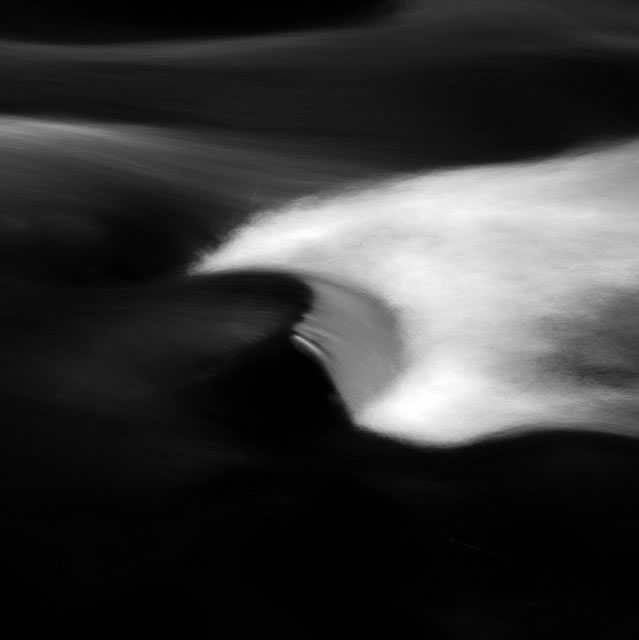
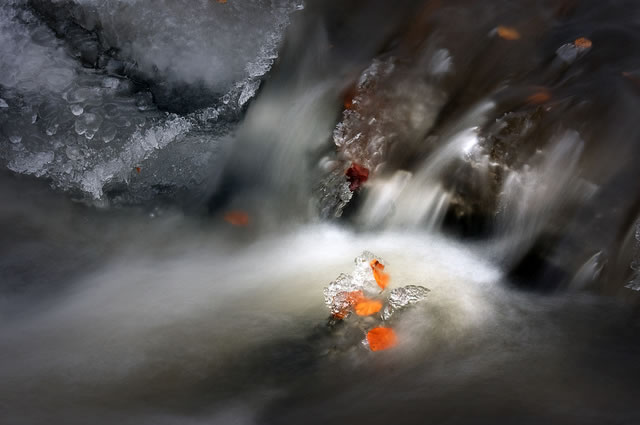
The bulk of work in the Bruiach project is in black and white. I’ve found that because many of them are long exposures of running water and for many of those colour doesn’t really play a large part. I’ve picked out the solid, fixed objects, the stones and roots to give the eye something to focus on. Occasionally however (especially in autumn) the colour of the leaves or the nuts and berries can’t be ignored. I wasn’t sure about introducing colour to the project but in black and white these elements become less recognizable. I don’t think you should be too strict when it comes to working on a project unless you’ve strictly set the parameters. The idea was the story of the burn and certain seasons lend themselves more readily to working in colour than monochrome.

Could you tell us a little about the cameras and lenses you typically take on a trip and how they affect your photography?

I’ve used a Canon 40D now for a number of years which has an ISO down to 100. The majority of the burn shots are taken in low light or under the canopy of the woods so the light is usually low enough to give some long exposures. I’m often in the burn itself and wouldn’t like to take anything heavier or more expensive into that environment. A Canon 24-105mm L series lens is fine for the majority of shots and gives some great detail. It nearly always takes me close enough to the subject but if not I use a Sigma 50-500mm zoom, heavy to carry but useful to have.

Many (if not most) of your photographs are black and white. Are you thinking about the end result whilst taking pictures (visualising the post processed image) or are you capturing raw material to think about later?

I think it’s a mixture of both. I’m looking for strong composures first of all but with some of the long water exposures you have no real control over how that composition is going to come out, it’s purely down to the flow of the water as to where the highlights and darker elements will be so it’s sometimes difficult to visualize the end result. It’s a randomness and chance element which I have little or no control over but adds to the excitement.

You have some beautiful black and white conversions. Do you use a specific method or specific software to convert your digital shots?

I’ve used Photoshop Elements for years and often look at the colour curves to try and reduce the contrast to a more even and consistent level so I have more control when I convert to black and white. I’ll occasionally select areas within the shot using the marquee tool and reduce the contrast even more to bring attention to an area of sharpness and interest before converting to black and white using Nik software’s “Silver Efex” it’s a wonderful tool for converting to monochrome.

Tell me what your favourite two or three photographs are and a little bit about them.

I love this shot of Glen Docherty contrary to what I’ve said about iconic locations this is one view you never get tired of. Taken on a cold and very wet September just the most fleeting break in the weather picked out the road as it snakes its way over to the west.

Shot at a really low angle, the fields of Killearnan is perhaps more representative of the work that I do. Shot 5 years ago in January it’s simply ploughed fields with trees in the distance but it illustrates clearly the idea that inspiring landscapes can be at your backdoor.

I notice that you have a couple of your photographs used as book covers. How did this come about and also how did you feel about the ‘modifications’ made to them?

I sent some shot’s in to Trevillion Images a while ago and some of them have been bought. The modifications in a couple of them have been to add a figure into the shot which means that they pay less so my only real gripe is that I hadn’t the opportunity to do the same. Adding new elements to a shot is something I’m wary of but when it’s done well, why not. It’s about the end result surely?

Do you print much of your work? If so how have you approached it and if not, why not?

I don’t tend to print shots. It’s a whole new discipline to learn and there are so many options out there. If there was a local service I could go to and exercise some control over the process I’d be more inclined to do so. I spend so much time out with the camera it’s something I really need to move on to. Having shots backlit on a computer screen is all very well but will they stand up to providing quality fine art prints? It’s a test that I really need to go through!
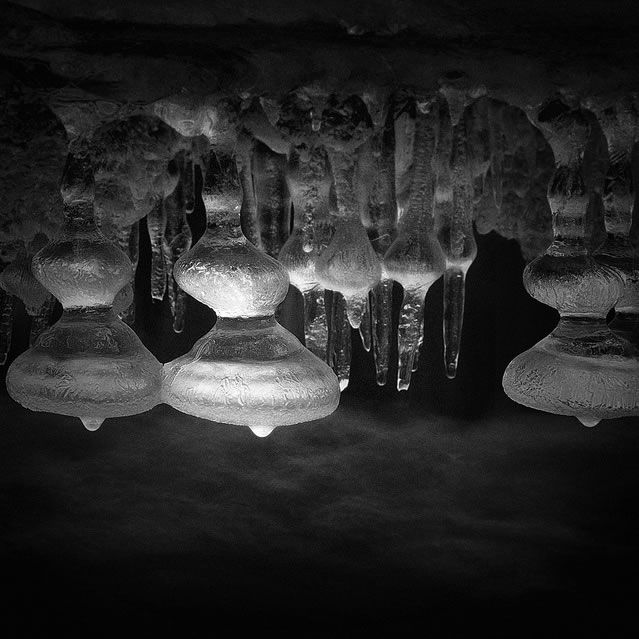
You are a fan of Henry Moore - how does Sculpture and other non-photographic arts influence your work?

Moore was an avid collector of natural objects that had caught his eye, stones and pebbles, skulls and bones, driftwood and shells. I’ve a similar fascination with objet trouve; it’s about the organic forms that are sculpted by natural forces that I’m trying to represent in 2 dimensions. Combined with an implicit narrative about the age of things and how they form the landscapes and in turn, shape us and our understanding of the land. As I’ve said, a line from a novel or a piece of poetry can also offer inspiration. Annie Proulx author of The Shipping News, like Gunn, has that ability to describe a landscape in a completely sensuous and experiential way that makes it integral to the person and their experiences.

I hope that my photographs are as much about me and my understanding and interpretation of the landscapes that I experience. On some level they demonstrate empathy for the land.

What sorts of things do you think might challenge you in the future or do you have any photographs or styles that you want to investigate? Where do you see your photography going in terms of subject and style?

Challenges in the future? I think many of landscapes I’ve worked in scream out for a figure within them. I’ve always found photography to be a solitary process and I rarely plan or set up a shot so to work with models and costumes that would be a real challenge. I’d like to try adding that human element in some way.

Who do you think we should feature as our next photographer?

Jason Theaker always has some interesting work and thoughts if you’ve not featured him already!
http://www.flickr.com/photos/photoimage/