


 Join the conversation
 Subcribe to comment rss feed
Dav Thomas surprises himself by defending the 'Wow!' factor
There has been a fair bit of sunset/rise bashing goes on in LandscapeGB and there's been a good few debates about the virtues of flat light, contemplative compositions and all that goes with it.
I myself am a fully signed up member of the wowless club, the more I journey into the my world of photography, the more demure my images get – so getting me to sing the praises of Wow(!) photos is a bit like getting Wayne Rooney to talk about his love of ballet. But still, in a bid to try to redress the balance I thought I'd have a go at seeking out some photos which follow the rules set out in the photographic press – golden hour, sea, wooshiness and general photographic bling.
My problem with this type of photography in general is that I find it difficult to gain any lasting pleasure from what they're offering – there's no hidden depth, no character, no emotion imparted in them from the photographer. Landscape photography works for me is when there's a part of the photographer's character embedded in the image – I want to get a sense of place or emotion from an image – ideally with hidden depth – an image you have to work at and grow to love. This is quite the opposite to the general formulaic picture making that's prevalent in most landscape photography today. These images kick you in the teeth and shout "I'm here, look at me, marvel at my many colours!" and then run off into the night to assault someone else's eyes.
Before I head off into rant mode I'll move on to the purpose of this article; to find some art amongst the Wows – to find some images that stand up for golden hour.
So where to start...
The first place for me was to have a look through my Flickr favourites – there must have been some that have snuck in there amongst the mist and tangled branches.
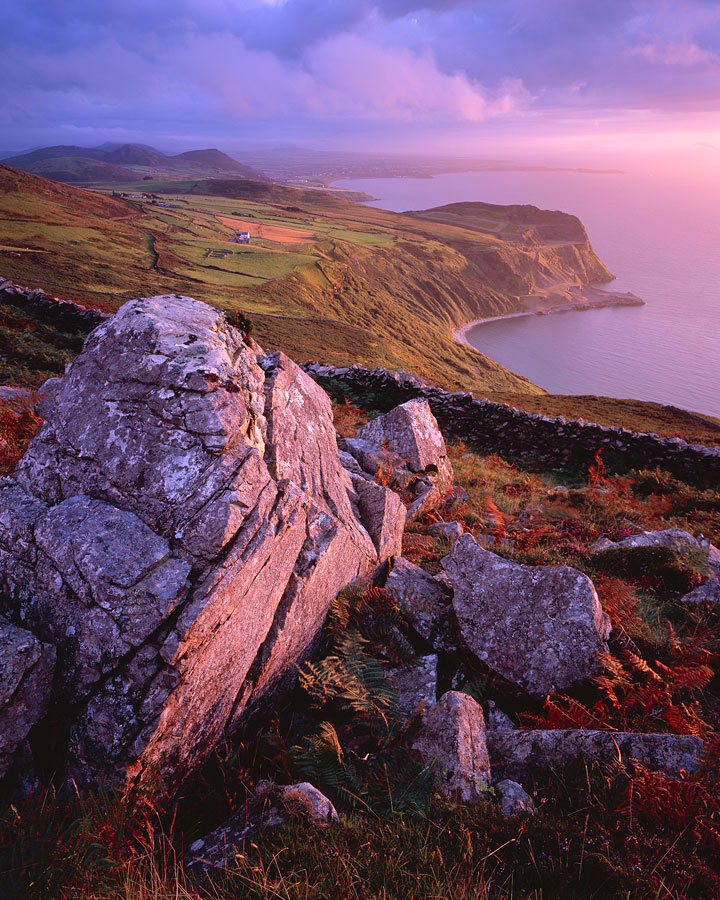
Neil Bryce
This first image is by the rather brilliant Photographer, Neil Bryce. This is a photograph that is about as Velvia as it gets. I generally don't like the way Velvia puts so much of itself into a photo and here there's an obvious Velvia cast to the whole image. But in this case it works adding a very saturated purple sheen. So why is this a good golden light photo in my opinion? Well, there's a lovely well thought out composition (as you'd expect from Neil), the dynamic shape of the foreground rock leads beautifully into the image and the distant shoreline, the cottage in the far distance provides a point of interest for the eye to linger on. There's enough in the scene to hold the attention, so much to explore. For me everything's right about the composition and in this case the Veliva colours add to the atmosphere rather than overpowering it.
Having looked through the rest of my favourites I realised I needed to remove a lot of my earlier selections - how my tastes have refined over the years, I did find some cute kittens though!
Helen Dixon is a photographer who's work I enjoyed early on in my foray into photography, she really encapsulates the style of populist landscape photography – generally golden hour shots, emphasised foreground interest and saturated colours. She is still one of the few digital photographers working in this style who's work I enjoy to an extent.
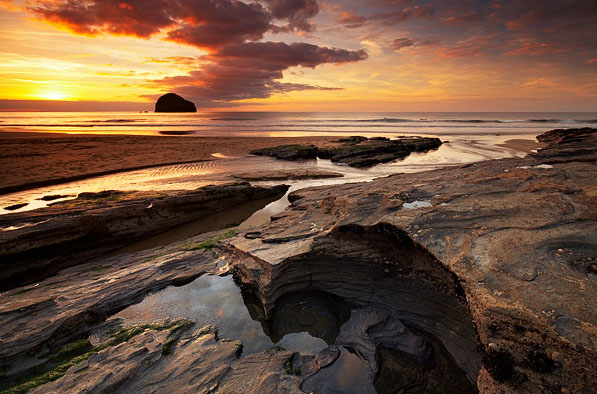
Helen Dixon
From Helen's recent work gallery here's an image which I shouldn't like! There's the sun kissing the horizon, dramatic skies, foreground interest – horrible! But no, this one is a worthy Wow, the composition is delicately composed, the S curve leading from the foreground rocks out to sea is punctuated by the island out to sea, the curve is then nicely continued with the cloud formation. So many times this sort of image is ruined by lack of composition, the shiny ingredients are thought to be enough to make the photo, but no, a compositional recipe is required to make a photo work. I'd also add that with this photo the colours are saturated but they don't push the realms of possibility, in fact it remains quite a quiet image despite it's golden glow.
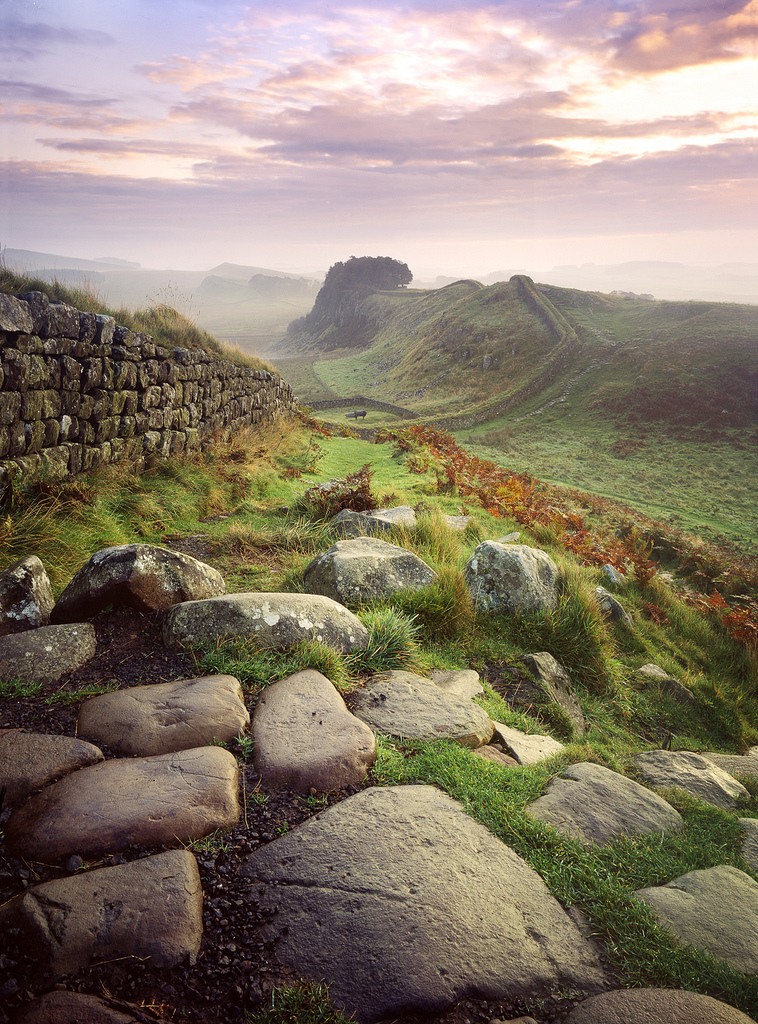
Ben Heaven
This photo by Ben Heaven is certainly a wow for me. As with Neil's photo this one displays all the hallmarks of a Velvia photo; exaggerated greens, purple tinted sky and separated reds. A lovely composition and although the colours are, I'm sure, not "real" there's a magical feel to the photograph in part due to the early morning mist in the valley. One of my many landscape photography rants is about the inclusion of foreground rocks just for the sake of foreground interest. Often interesting is exactly what they're not and are just part of the prescribed formula. Here though they work so well at leading the eye into the photo and along the wall. The low angle of view also channels the eye with the collection of golden ferns completing the corridor with the wall.
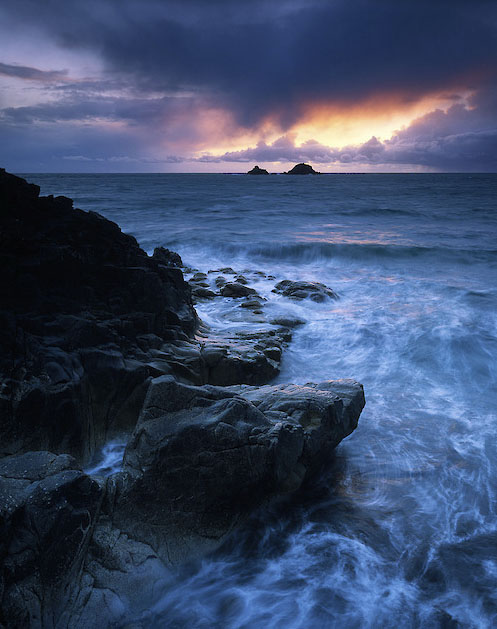
I must say my seemingly simple mission to find colourful golden hour photos that moved me in some way, images that are more than technique, dramatic angles and sledgehammer post processing ended up being a massive struggle for me. Of course there's nothing wrong with this style of photography – each to their own, but most of the time I'm left cold and somewhat depressed about the state of popular landscape photography in the UK. To finish off on a positive note here's a rather lovely image by Baxter Bradford from one of the most photographed chunk of seaside in Britain – Porth Nanvan. This is dramatic seascape done well – a real Wow!
Baxter Bradford