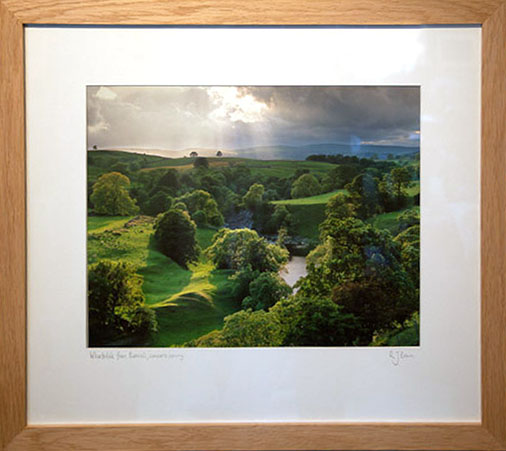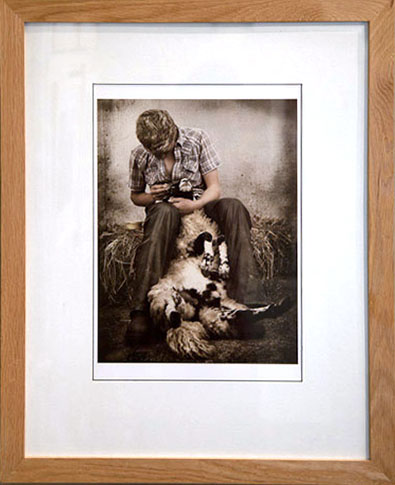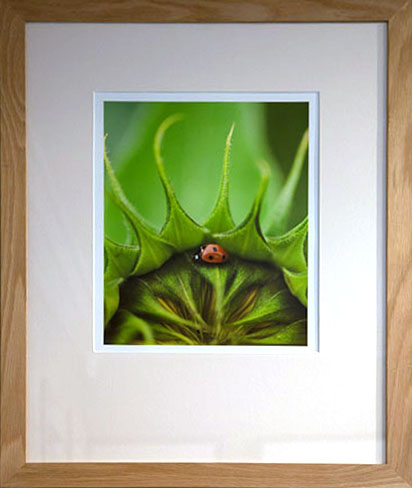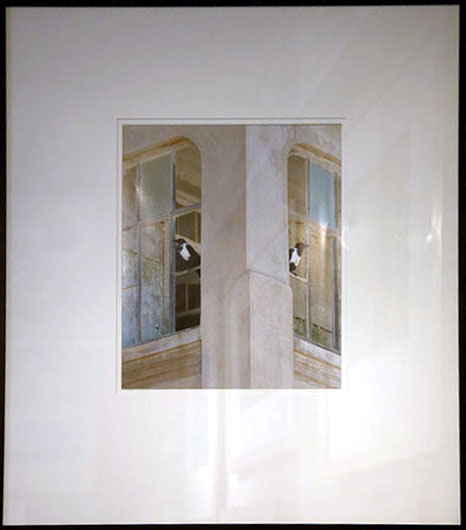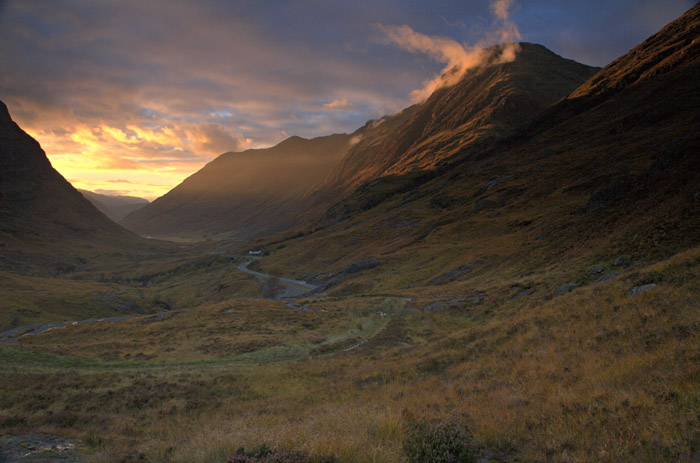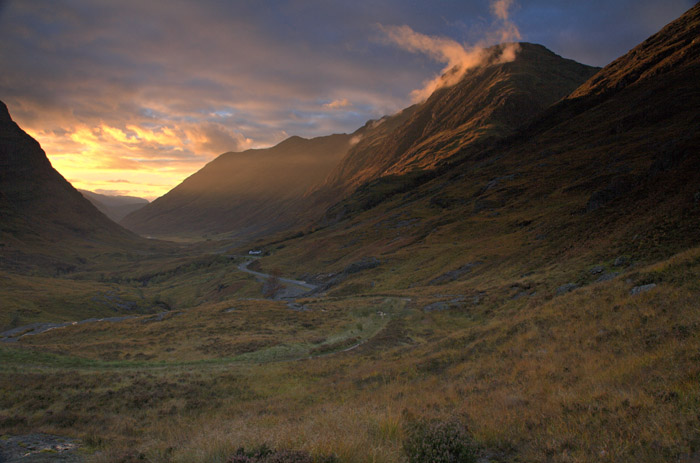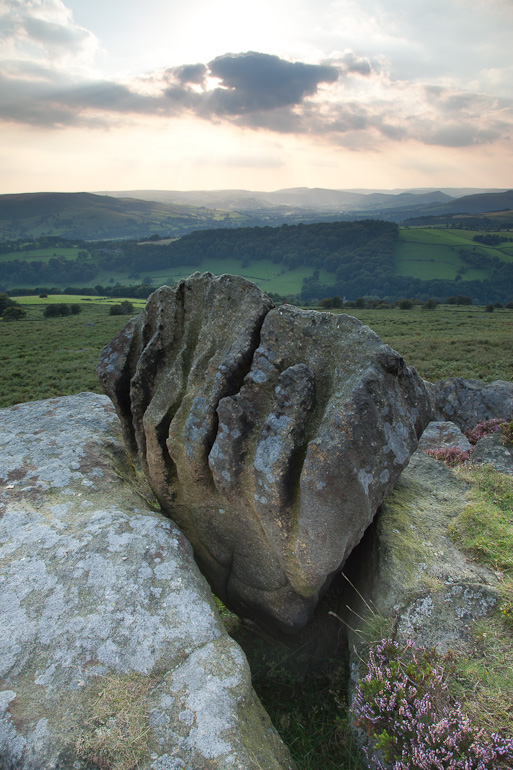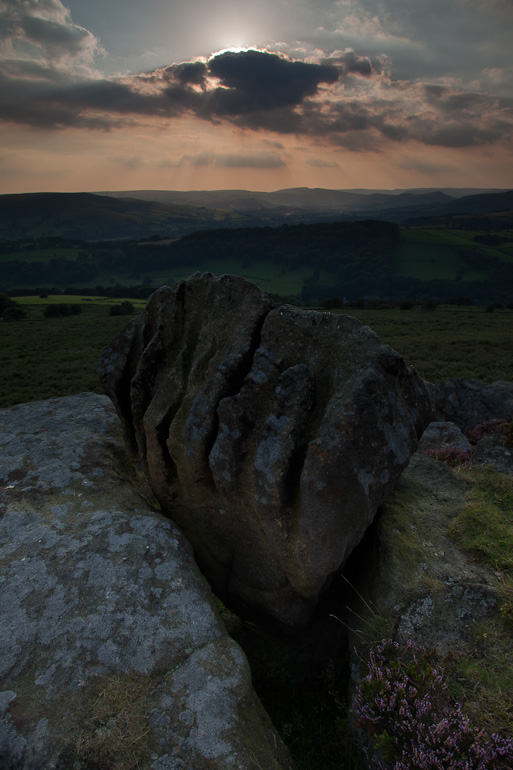


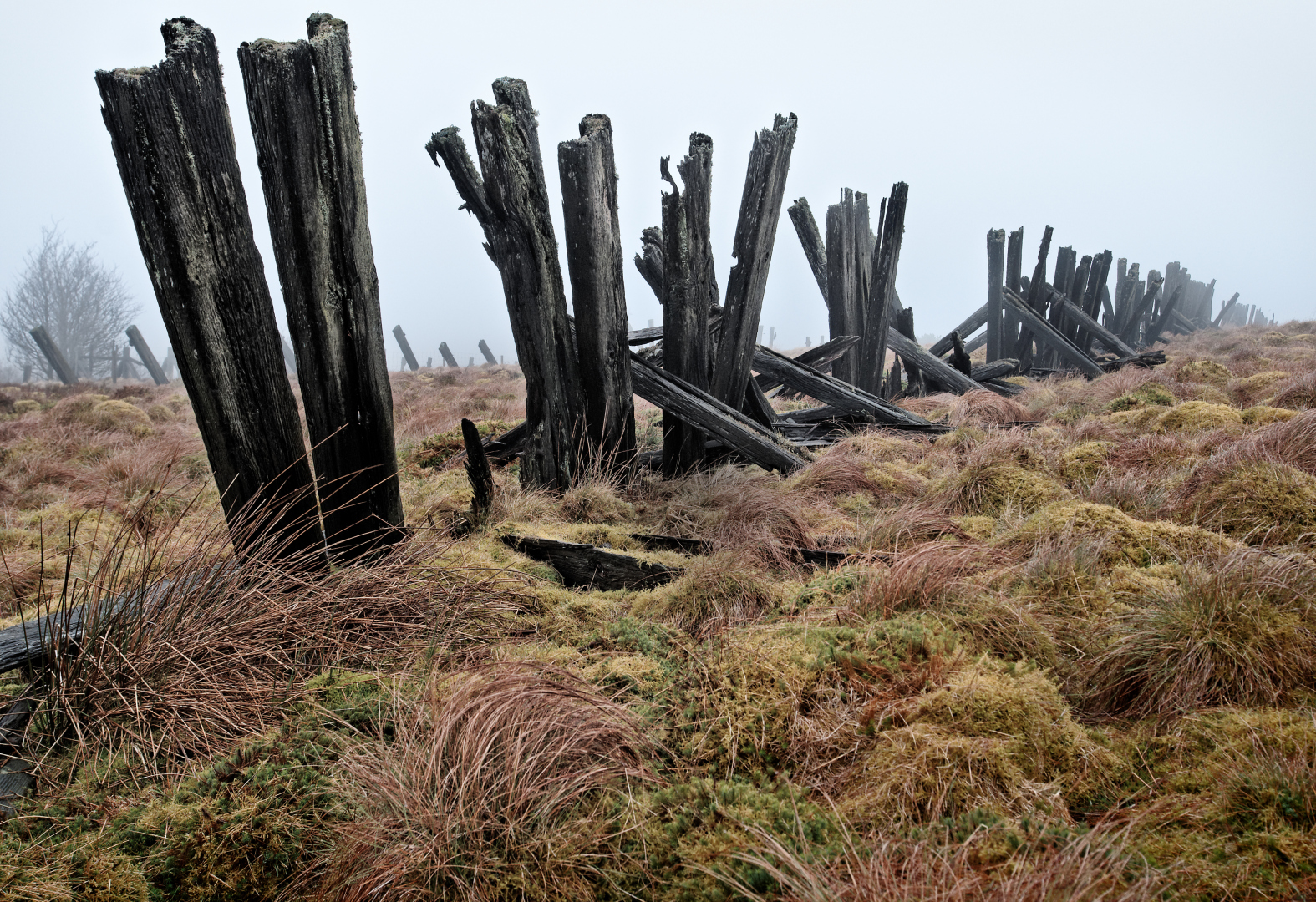
We're featuring another digital photographer this month** who is from Yorkshire and came to my attention with his wonderful image of an old railway fence above Dent station. His flickr stream contains some classic compositions and I hope you enjoy his work and comments as much as I did
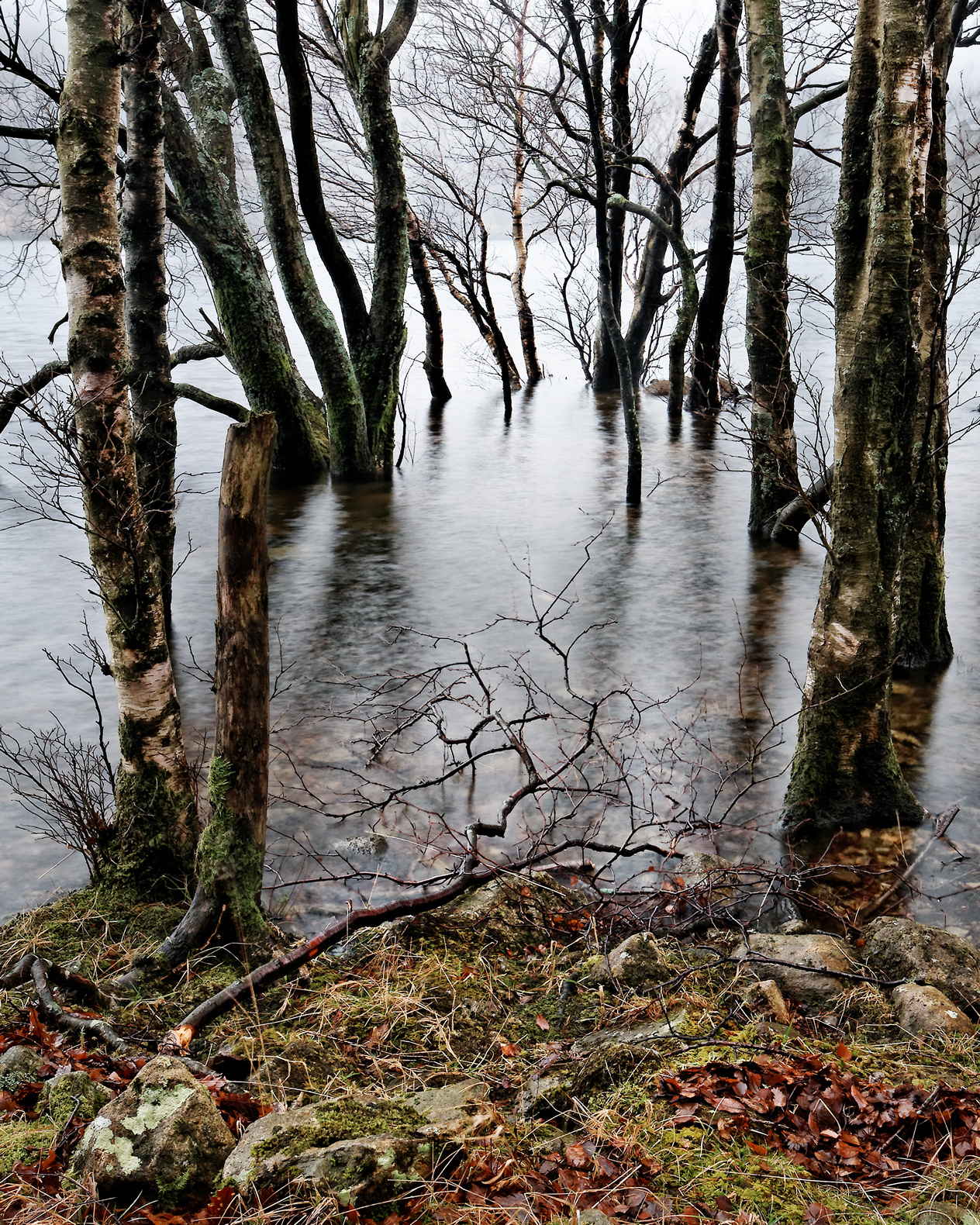 In most photographer's lives there are ‘epiphanic’ moments where things become clear, or new directions are formed. What were your two main moments and how did they change your photography?
I've only been doing photography 'seriously' for a little under two years, so there's been little time for epiphanies as yet! The two items I've chosen to claim as such may seem obvious, or at least minor, to many readers, but in a short photographic 'career', they're my best offering.
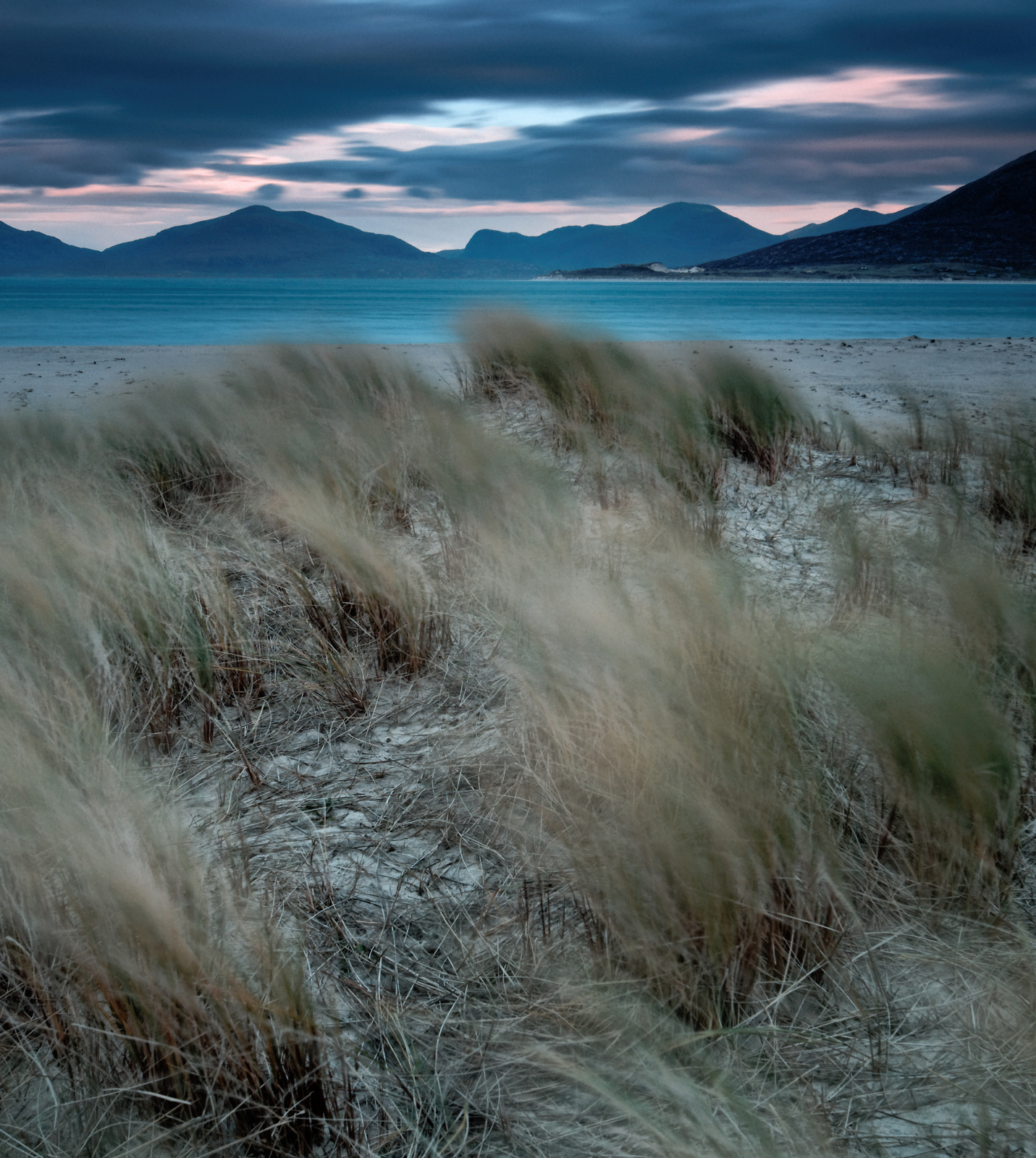
Firstly, after having spent several months photographing the landscape around my home and making what might be called 'advanced holiday snaps' in Bolivia and on Easter Island, I wasn't happy with the results. I was happy with some of the results, but not most. As you might guess, I was mostly going out during the day and thinking 'sunny is good'. I thought I needed some help, so I booked myself onto one of Bruce Percy's workshops, on the Isle of Harris .The idea of photographing when the sun was below the horizon had never really occurred to me, but the workshop concentrated on the radically different colours and effects of doing just that. This was epiphanic; not solely for the specific idea of twilight photography, but also in the simple notion of how significantly different landscapes can appear throughout the day. 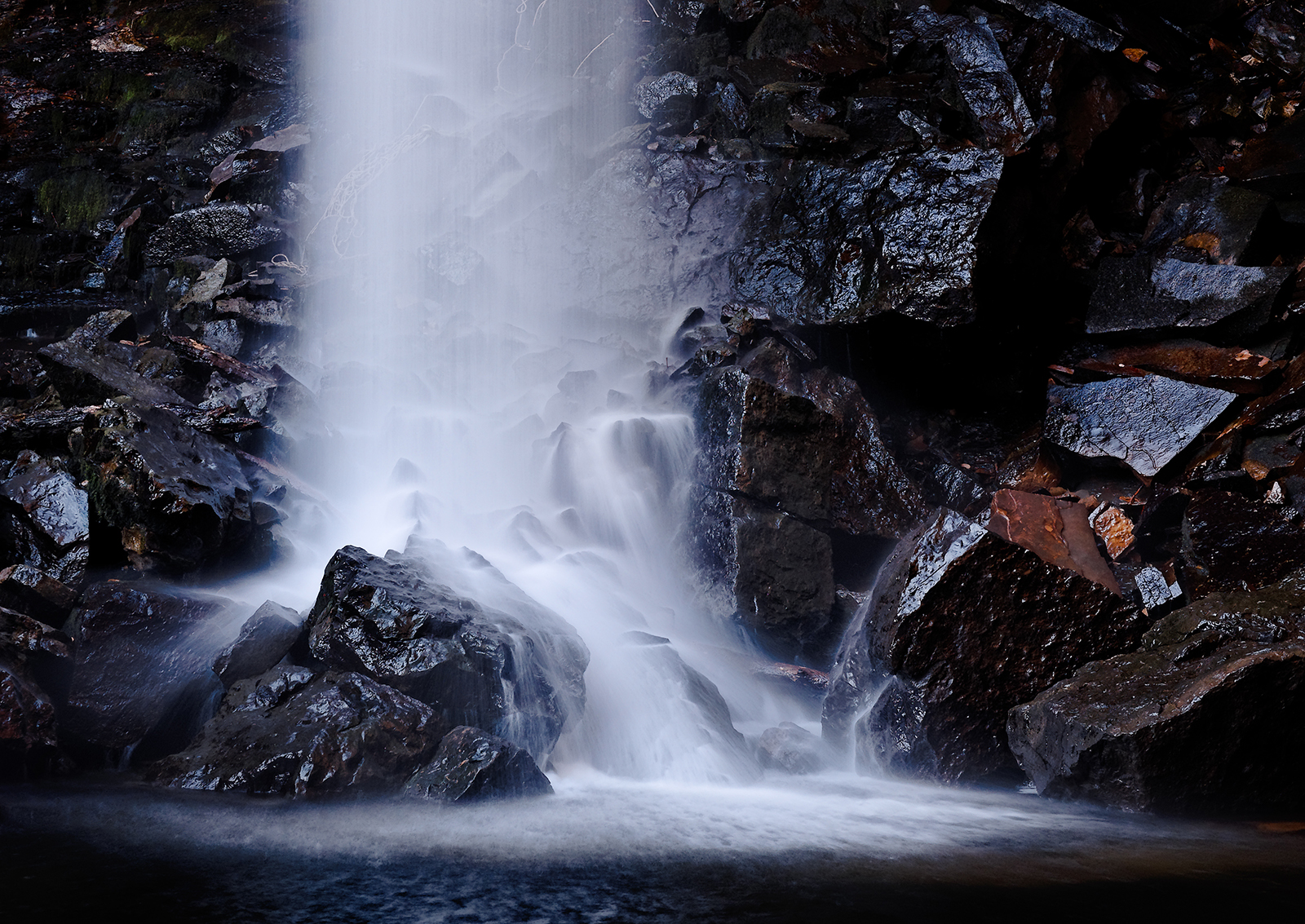 That's entirely obvious now, but it made me think very differently about what I could do in a photograph, and it certainly expanded my ability to imagine compositions under different lighting conditions. Before then, I think I was composing shots moderately well, but I didn't have much understanding of how light varied during the day, so that was certainly a major moment. It led me to see that, broadly speaking, I don't like capturing obvious shadows: I'd rather capture as much as possible of the shapes and textures in the RAW file, and then dodge/burn the image a little later on to produce what I imagined when I captured it.
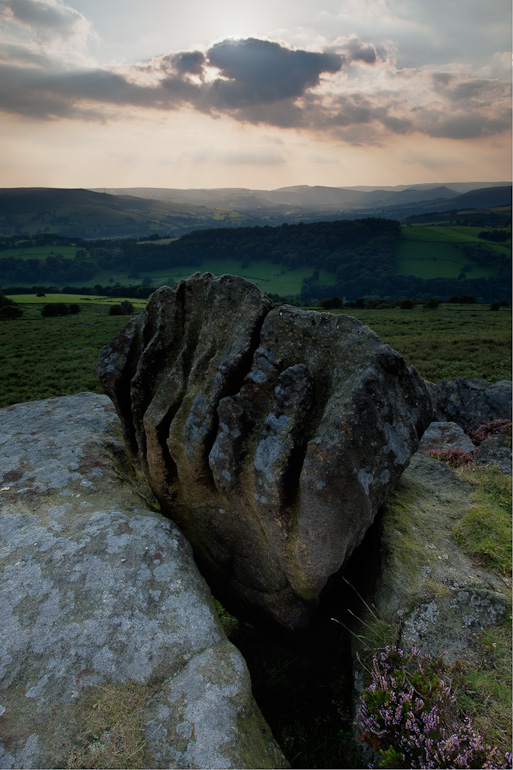
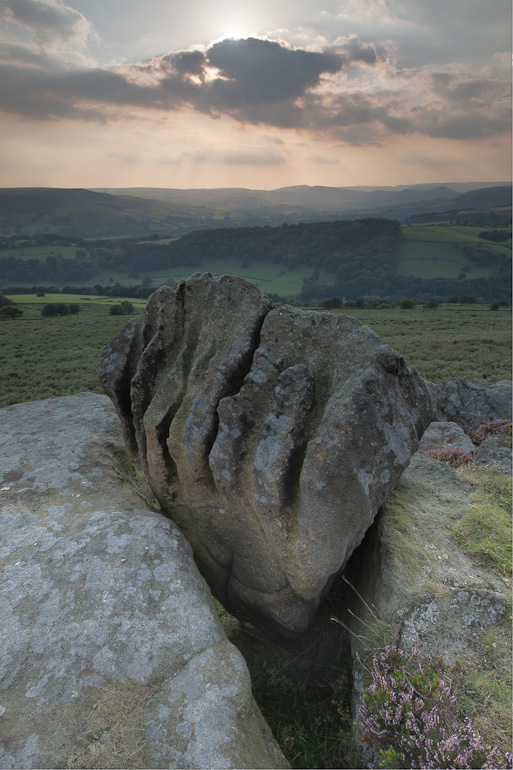
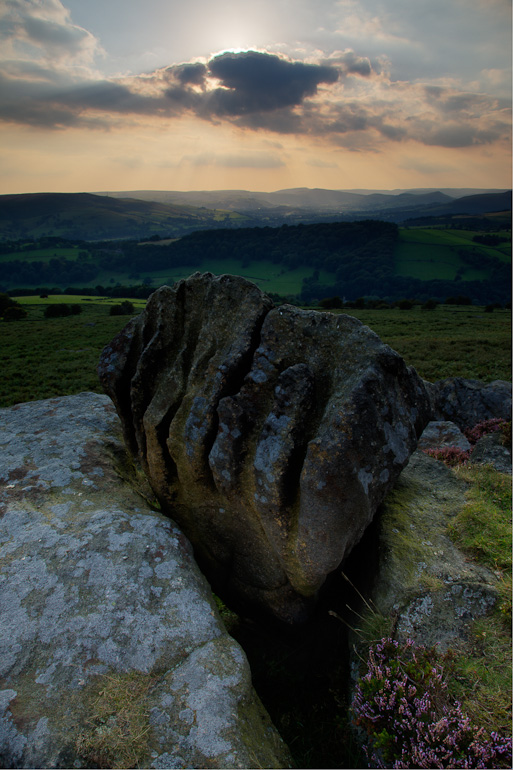
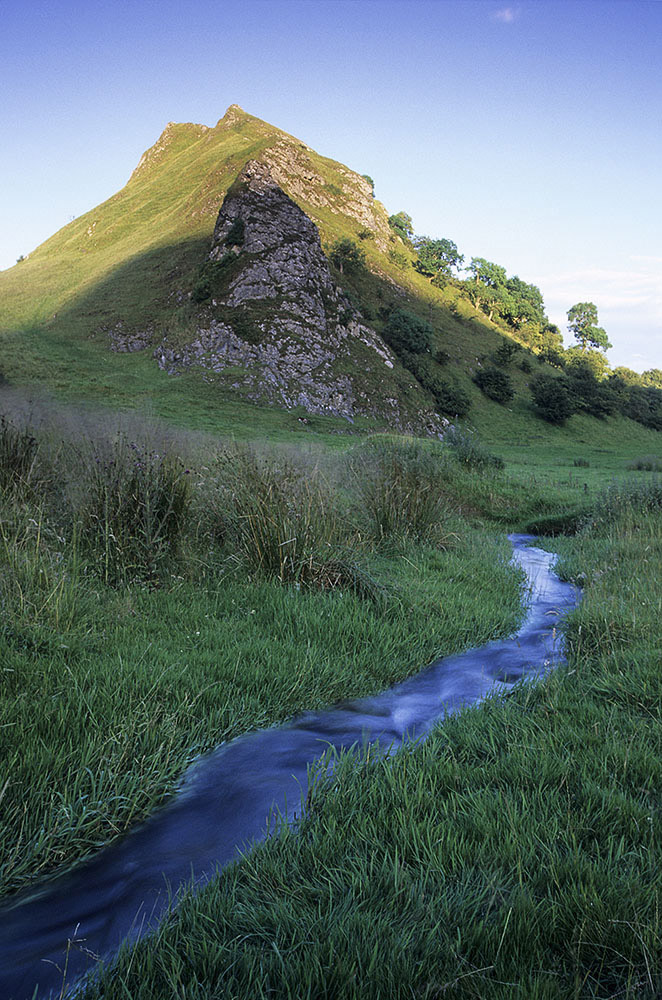
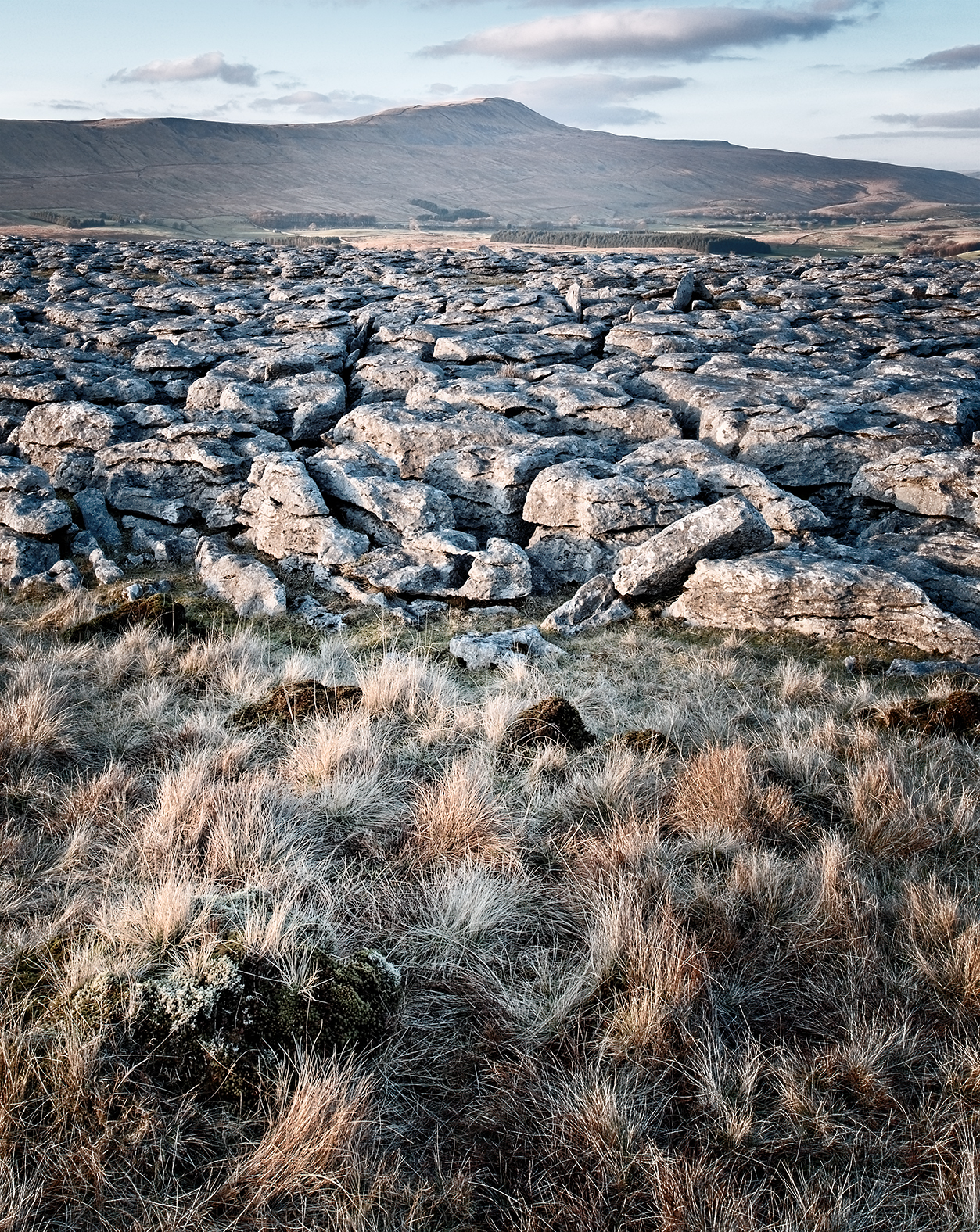
Secondly, I bought a tilt-shift lens in February of this year after reading about camera movements in various places. That really was a revelation in terms of flexibility and in the ability to construct images which I'd only been able to visualise before. 'Talon' – the photograph of the claw-like limestone formation, with Pen-y-ghent way off in the distance – was something I couldn't do when I tried well over a year ago, and the lens enabled that. I now see the potential in things which I had written off as impossible before. The trouble with this is that what I'd really like is to have full camera movements – at least I think I would – but I don't want to go to film [yet] due to hassle, marginal cost of each capture, and the need for scanning. That pretty much means medium format digital as far as I know; and I can't afford that. Ah well!
 You are local to the southern Yorkshire Dales, what parts of this area would you recommend to someone who didn’t know the area.?
I find the Dales one of the most difficult landscapes to photograph well, despite living here on the side of Ingleborough. That's perhaps down to what I want to create though. I think the whole of the Dales is a wonderful landscape for making 'pretty' pictures, but for me it's rather too green for much of the year. So, as a starting point, I'd recommend coming here in autumn and winter, up to early spring. At those times of year the grass becomes a more interesting colour, or it's covered in snow, and the lower angle of the sunlight is a big benefit to making limestone pavement images. Without low-angled light, the pavements, which look fabulous and alien in three dimensional, human vision, can easily look quite flat.
 That leads on to where I'd recommend. I like the limestone scars and pavements which surround Ingleborough very much; it's actually why I moved here as they have extensive cave systems beneath them and I used to go underground a lot. For anyone coming to the Dales, I'd strongly recommend spending time walking on the various scars: White Scar, Keld Head Scar, and Twisleton Scar are possibly the best, but pretty much anything on the north, east and west of Ingleborough has this obvious, karst landscape. There's a real wealth of compositions to be made with limestone foreground and distant hawthorn trees and hills. There are also several great waterfalls around here, such as Scaleber Force, near Settle, Hardraw Force, near Hawes, and the whole of the Ingleton waterfalls walk (though visit that very early or very late since it's more than slightly popular with tourists, and they don't generally enhance photographs).
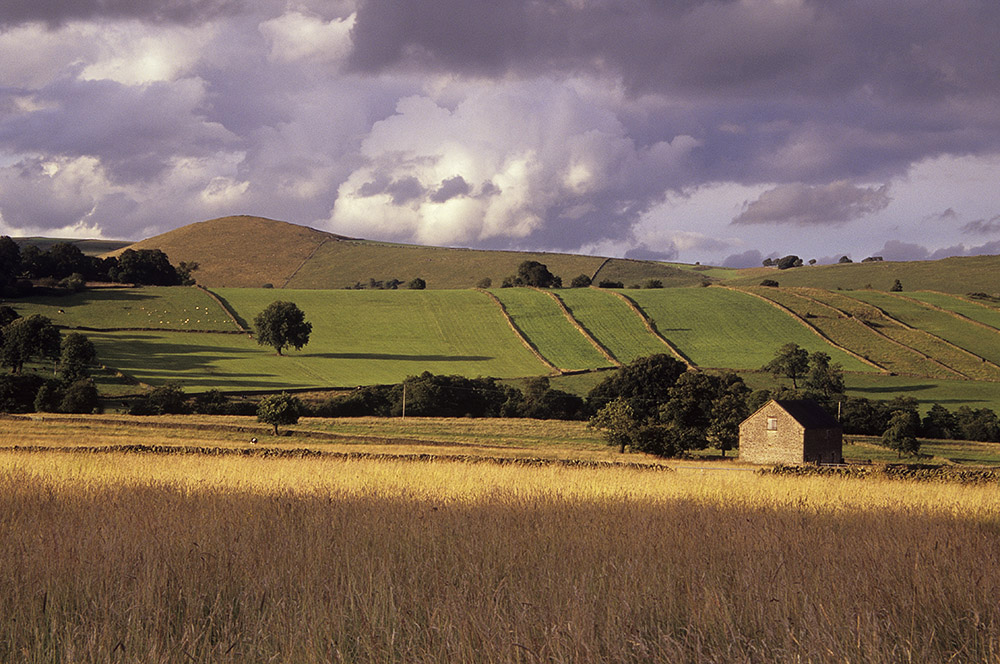
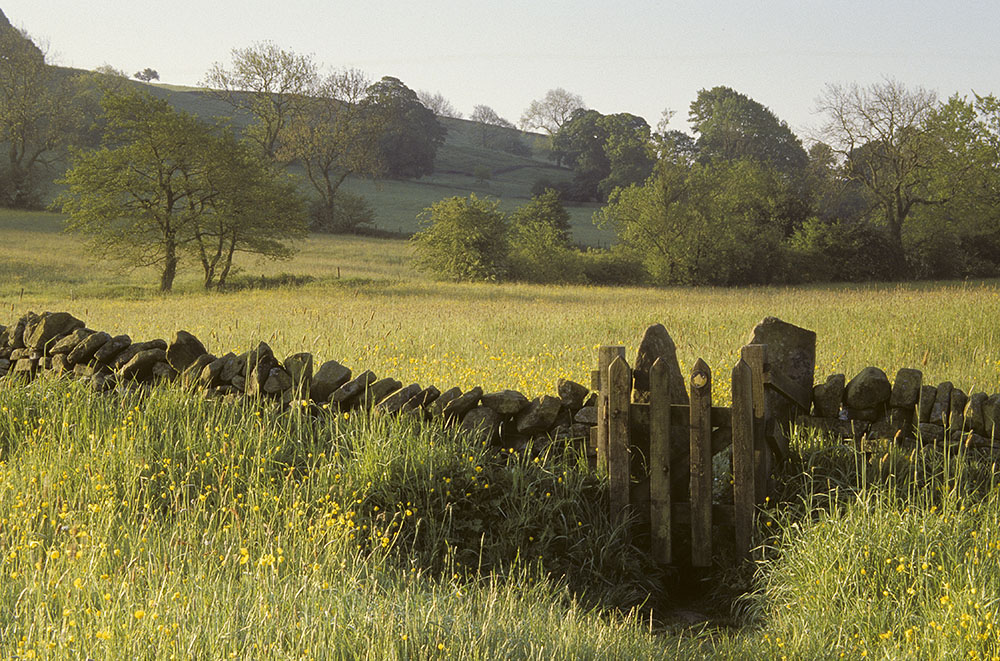
  Anyone who's looking for 'classic' shots of stone barns, walls and green fields dotted with sheep can just pick any footpath near a village around here and head upwards; you're soon rewarded with excellent views over glacier-formed landscapes criss-crossed with dry stone walls, whose look now is near-entirely the result of sheep farming.
Finally, I'll put in a bid for the Howgill Fells. They're wonderfully distinctive, rounded shape is unusual and they have the admirable feature of having no walls at all. They're also highly accessible from the M6, which helps. In the right light, their surface, which is rough, variegated grass, can look like a velvet blanket, folded into humps, and is very graphic in a way that landscapes in the UK usually aren't. I've started a project photographing them and have several locations for what I think are unusual views planned.
I notice from your website that you have been a mountaineer for some time, do you see yourself working in a similar way to Colin Prior at any time?
 I don't know exactly how Colin Prior works, but given that much of his work is from high up on mountains, I'm guessing that he sleeps up high with some regularity. In short, yes! I've spent a lot of time starting the day at altitude, mostly in alpine huts, but quite often in a bivvy bag on various glaciers. When getting fit for alpine trips, I have frequently driven to the Lakes or Scotland in the evening, headed most of the way up a hill, and bivouacked on or near the summit; it's both really convenient and provides for a great starting point in the morning, and often a beautiful opening to the day too. I definitely intend to do exactly this for the purpose of photography sometime in the near future.
As with many people reading the magazine, I love the north west of Scotland, Assynt in particular. I've been up there numerous times, but never specifically for photography, so I now have some ideas of where I'd like to make images. I'm intending to spend a week or two up in that part of the country in winter at some point, finding good compositions during the day and then spending the night up on the hill to capture both evening and morning light. I'm profoundly not a morning person, so this is actually going to be a much easier way for me to make dawn photographs than staying in the valley and deluding myself that I might get up early! There's also something very special about sleeping alone high up on mountains; it's a great way of really developing a feel for the landscape, and I hope that it will provide some deeper inspiration for images, both large vistas and more intimate views of details. 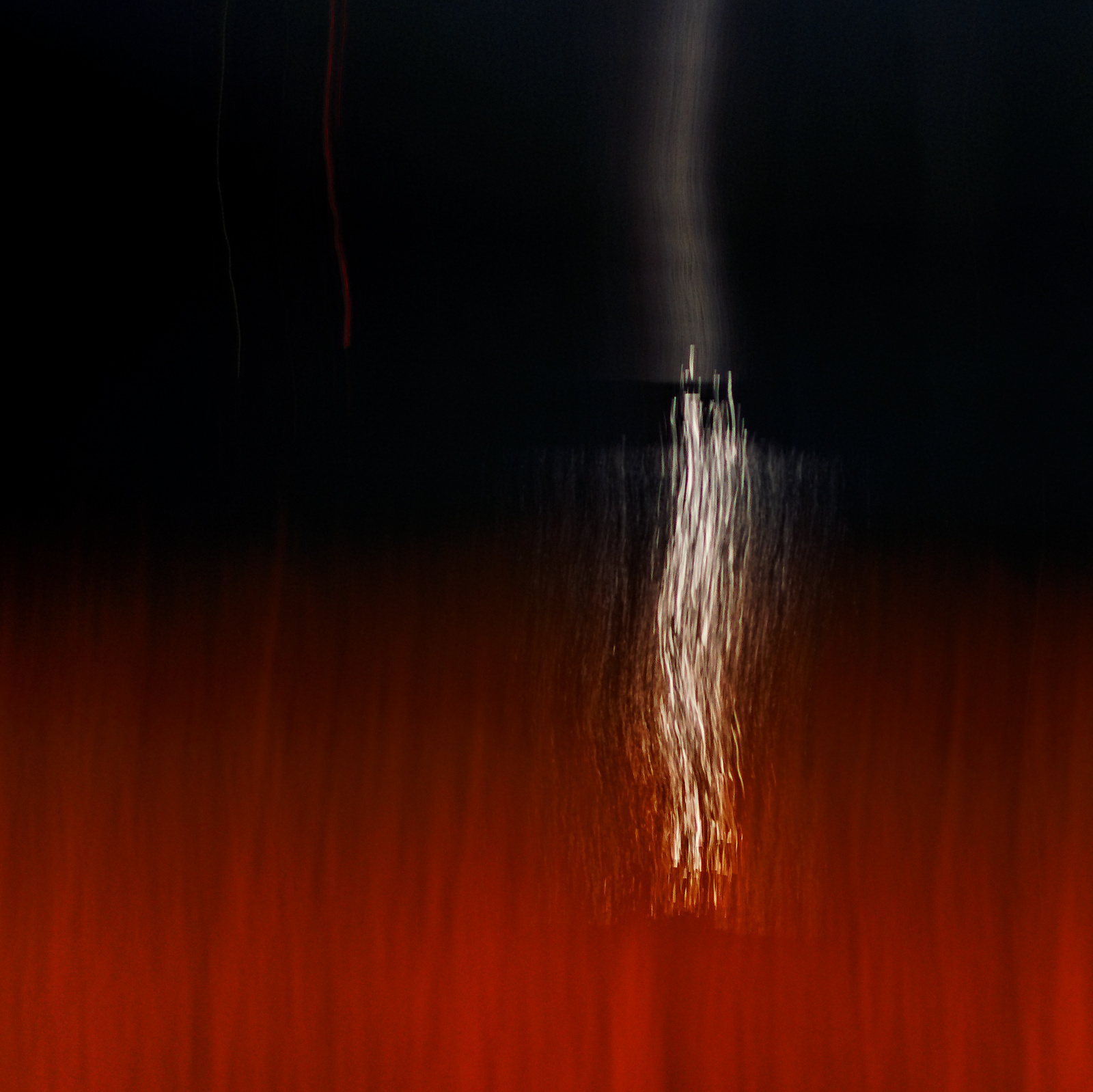 It also seems a very efficient way to 'work': reconnoitring during the day will probably produce some good light and images in itself, and then I'll have both ends of the day at the 'cost' of just one night out. In the worst case, even if I don't make any worthwhile photographs, I'll have had a great, overnight experience in the landscape!
What sorts of experiences have you had when mountaineering that you would have loved to have captured on film?
This has two aspects: it needs to be answered in terms of the difficulty of capturing good images in a mountaineering context, irrespective of whether I'd have liked to. Most of my mountaineering has been in the European Alps, with a lot of ice climbing in various places – neither of those situations is particularly conducive to considered photography. That said, I'd certainly love to have really good photographs from all the major mountains I've climbed, and there are a few incidents I'd particularly like to have been recorded, as distinct from me recording them.
 The trouble with alpine routes and ice-climbing is that what's needed, ideally, is a third person, or another two people, moving independently. You need to be photographing someone else in the context of the mountain, rather than your climbing partner, who will almost always be at the end of a rope and above or below you, which doesn't generally make for great images. I have lot of shots on mountains and ice-falls which show the top of my partner's head, or unflattering shots of crampons and legs from below; it's rare to be traversing horizontally and be able to get one of the classic 'sheer ice wall / climber / very large drop / distant mountains' type of images.
 The experience I would most like to have captured is not strictly alpine; it's better than that. It was a traverse of the Cuillin Ridge on Skye in winter conditions, which is one of those 'big tick' routes for mountaineers. I had a small camera with me then, but only took two slides, over three days, as I was rather absorbed in the traverse of what is quite a major undertaking in winter. Looking back, had I seen myself as 'A Photographer' at the time, I could easily have made some potentially good images: much of the route is broadly horizontal along the ridge, and we were expecting to take three or four days over it anyway, so a little time spent in photography could have been accommodated. I do regret the lack of photos from that very much: the Cuillin are rarely in winter condition, and I don't expect to be repeating the experience – we just 'got lucky with the weather' on that occasion.
Could you tell us a little about the cameras and lenses you typically take on a trip and how they affect your photography ?
 At the moment, 'typically' is a close synonym to 'invariably' for me! I only have one camera that I use for going out to make landscape photos, and that's a Nikon D300s. I started off with a D90 and quickly realised that I needed something I could happily use in all weather and with controls I had some chance of operating with gloves on. I have 10-24mm, 24mm PC-E, 35mm and 55-200mm lenses and I often take all four, though increasingly I'm leaving the 10-24mm behind as, after my initial excitement with really wide angles, I'm growing to be less enthused by that look. More pertinently, I'm very taken with the tilt-shift lens, mainly for the tilt movement, but I do use shift a fair bit too. What I'm really hoping is that Nikon will bring out the rumoured 17mm PC-E, in which case I'll be selling the 10-24 to help buy it. I find that I can usually get by with the 24mm PC-E, but it's certainly true that something wider would be very useful indeed.
 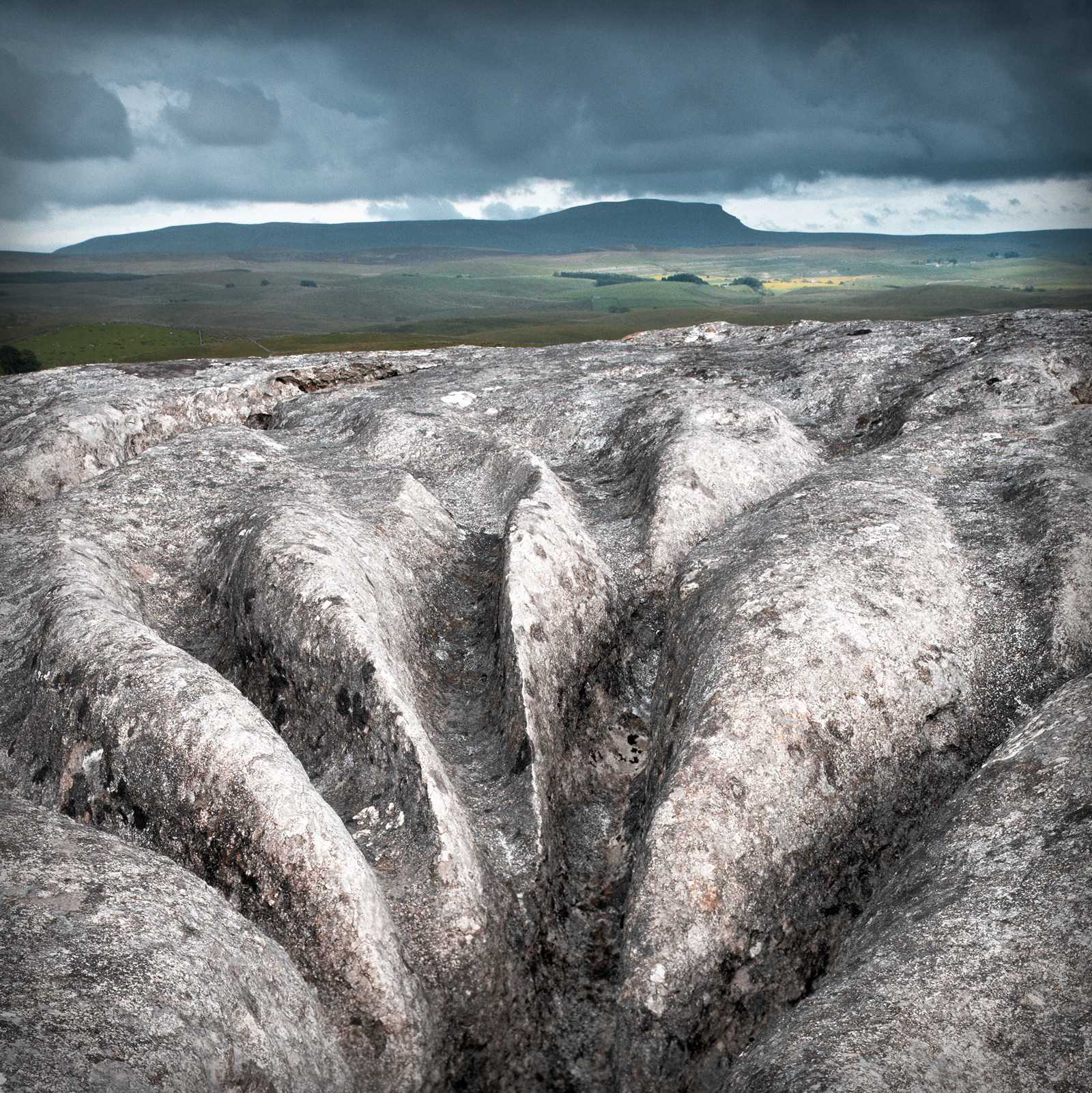 As I said above, under my second epiphanic moment, the flexibility of movements – albeit limited ones of course, compared to a fully-flexible camera system – is giving me much more scope for creativity in what I make. I was never fully happy with using just far-to-near depth of field, and being able to pick and choose where I place the plane of focus and the associated, wedge-shaped depth of field is definitely making me think differently about what I could do in some situations. In terms of the specific effect on my approach: I take my time in examining a site and setting up, so the added discipline of using tilt-shift is a benefit – it slows me down even more and makes me think carefully about what I'm trying to create in the photograph.
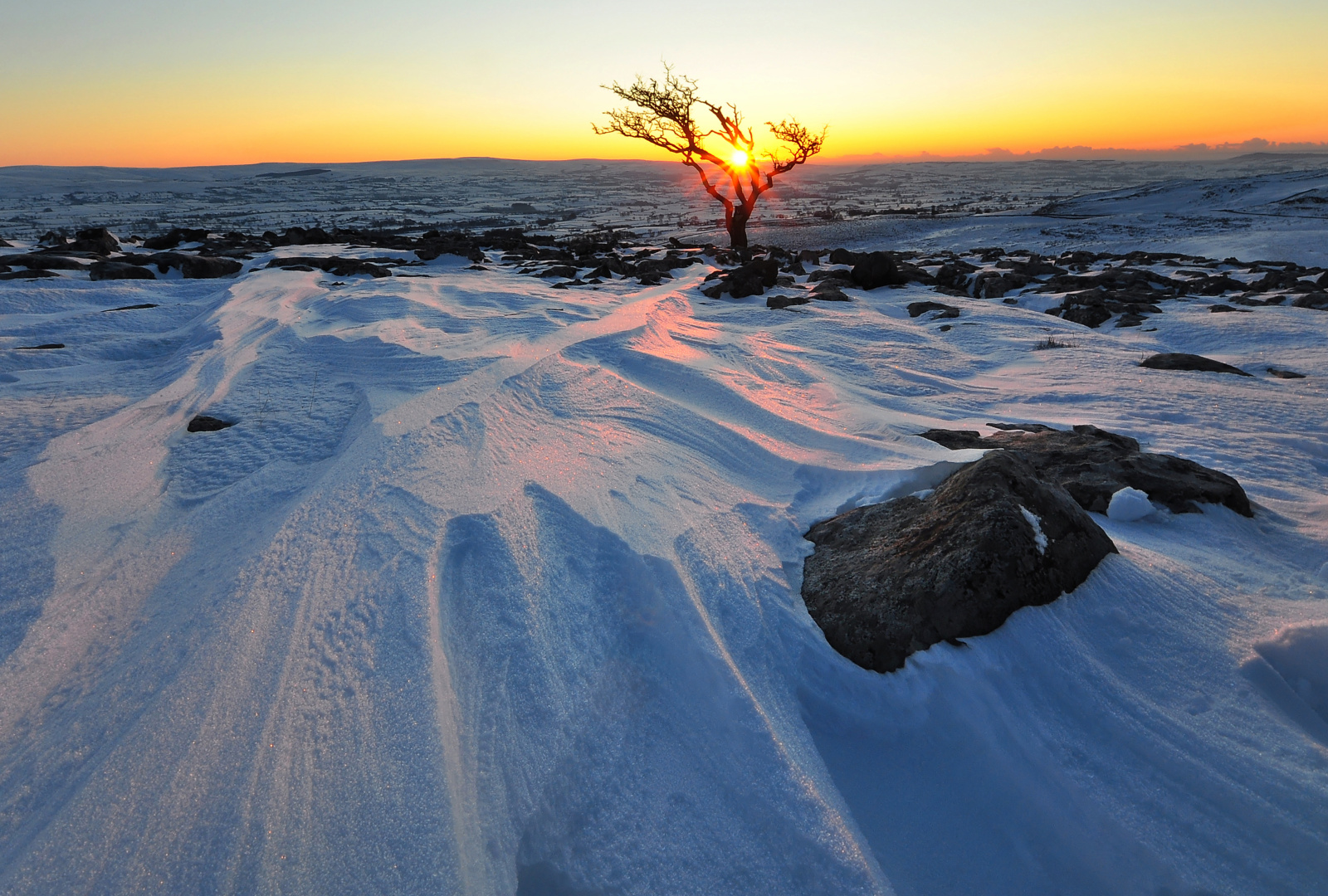
The other really significant piece of kit I always carry is a set of seven Singh-Ray ND and ND grad filters, including a reverse ND grad, which is invaluable when the conditions for it occur, such as in the shot of the Twisleton Scar hawthorn tree with the sun star through it (looking at that now, I would not take it so wide – just goes to show how the novelty of wide angle images has worn off over the last year or so!). The grads are great as I'm not keen on getting into blending exposures; not because of any inherent objection to it, I'd just rather have as little post-processing to do as I can get away with!
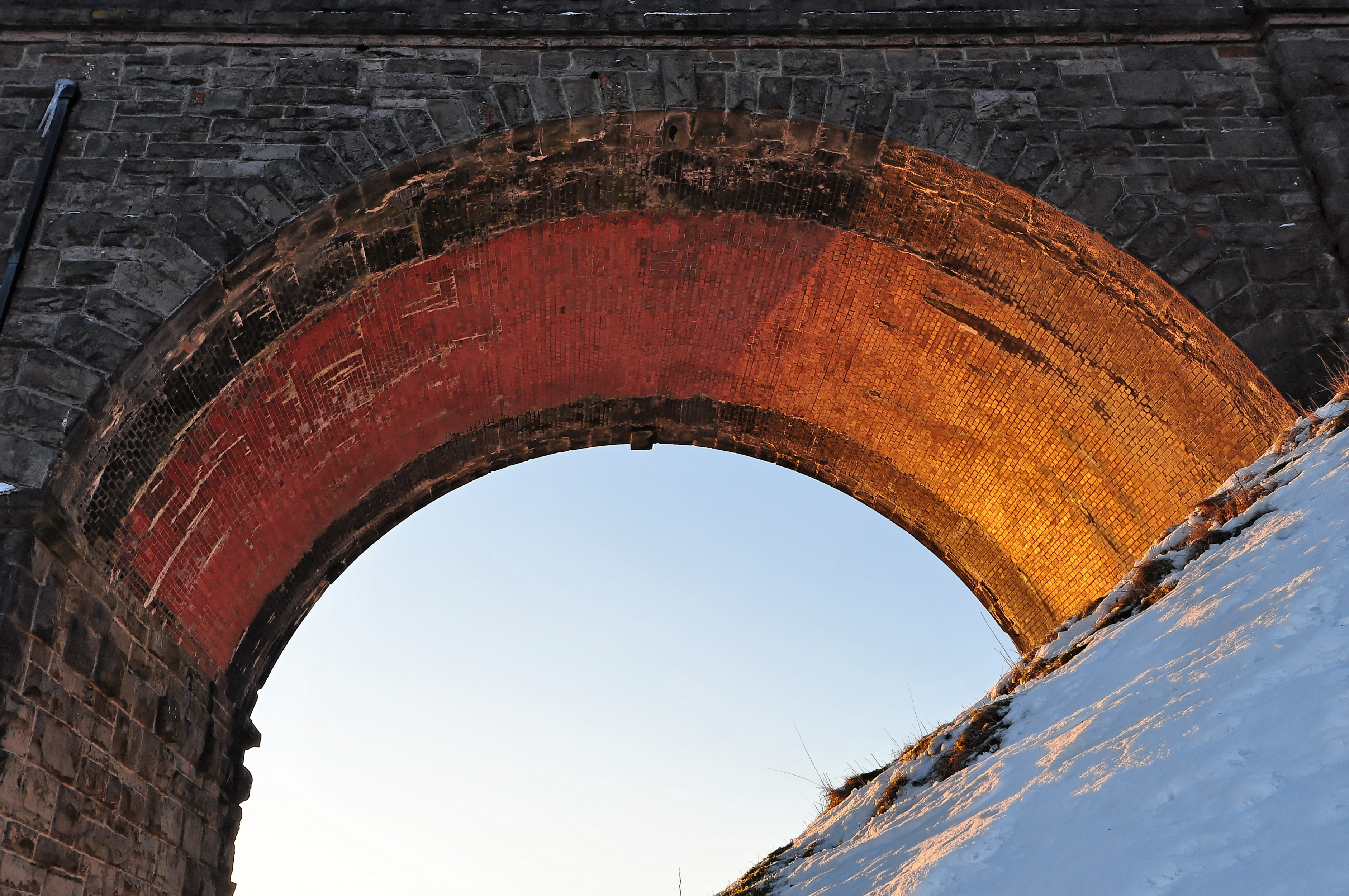 You have a very neutral look to your images, contrary to the general direction in which saturation seems to be going. Is this a self conscious attempt to buck the trend or just the way you see?
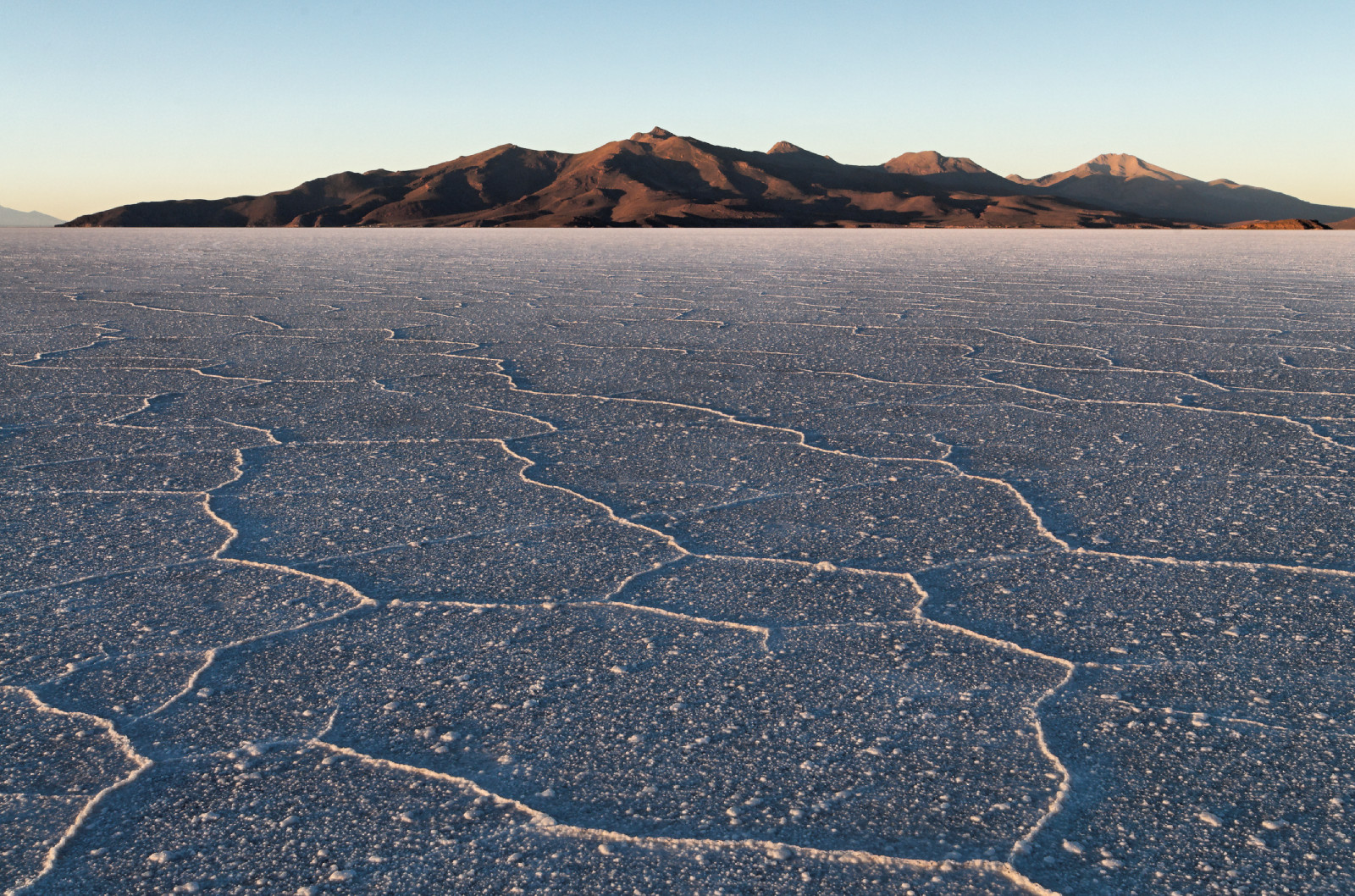
That's not something I'd been consciously aware of until you mentioned it. I think it's very much the way I see. I collect abstract art and, looking around me, it's quite muted for the most part; there are few bright colours – presumably this is what I like and I'm tending to create images with a similar look. I can certainly see that there is a tendency on Flickr and the like to turn up the saturation, but many of the results looks to me just like what they are: normal colours made more intense by software. I'm interested in structure and texture in my images, and over-use of colour seems to me to detract from that aspect. Of course, if those colours are there in reality, I have no problem with it, but I still might knock it back a little bit if I think it's distracting or takes away from the structural aspects of the finished image. Having said that, I do use bright colours: the twin volcanoes image you've included is certainly quite saturated – though I'll admit that it's less so than it was in reality, come to think of it!
Tell me what your favourite two or three photographs are and a little bit about them.
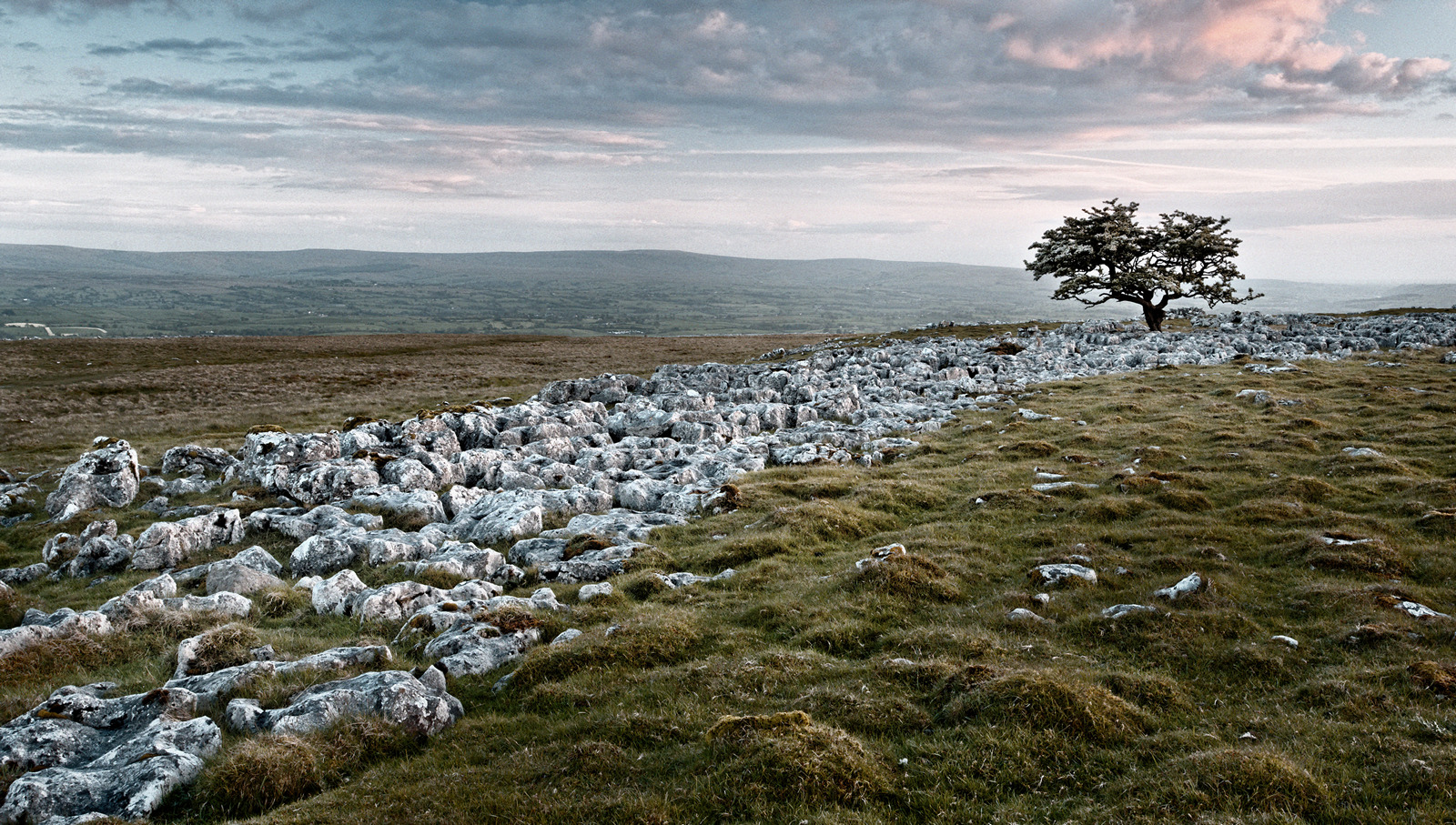
'Twisleton Scar End hawthorn'
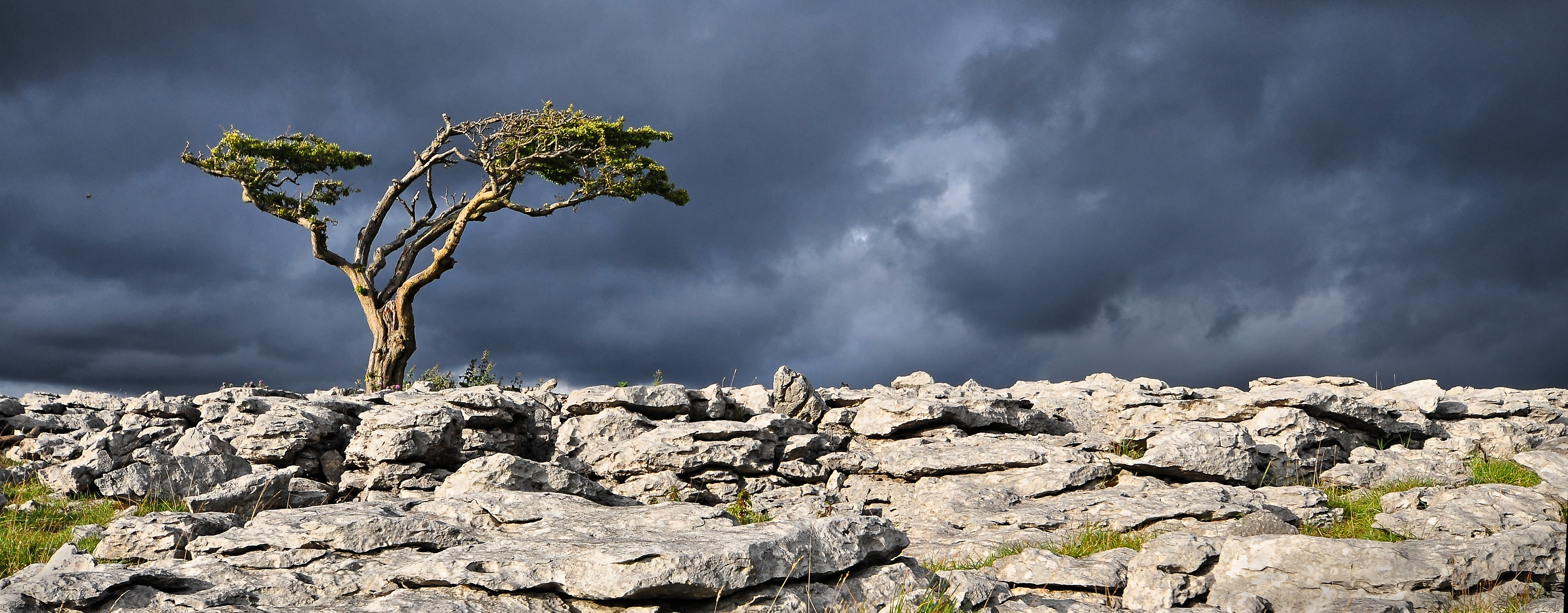
I had some trouble picking these. The first one, however, has to be the one I use as the headline on my blog, mainly because it's the first photo I took with the dSLR and which I actually thought was good. I'd heard that storms made for drama in images, so I was up on Twisleton Scar End in unsettled weather, trying to make something from what I think of as the tree up there. I'd just about given up when the light suddenly changed radically in a few seconds. I'd already packed up, wanting to avoid getting wet (there was a good learning point – I need to accept getting wet!) so I practically ripped the camera out of the bag, swung round and took three frames before the light reverted, one of which became this image. I think, now, I'd do better, but in the circumstances I was very happy with the shot. It could be sharper, and I'd be capturing RAW now and be able to improve it more, whereas I wasn't then. Nonetheless, I love the light on the hawthorn tree against the dark sky and the pale limestone pavement.
'Zip'
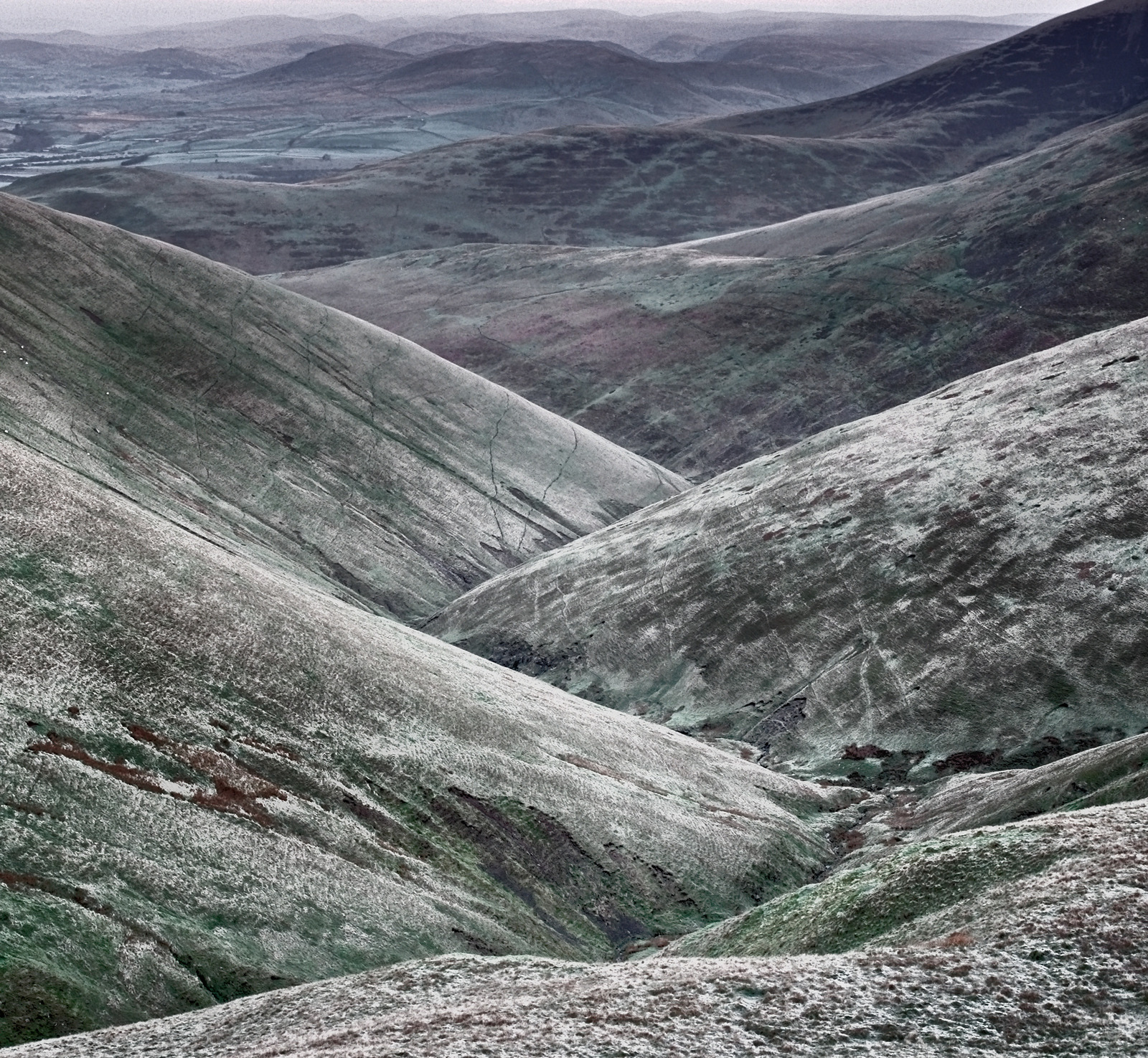
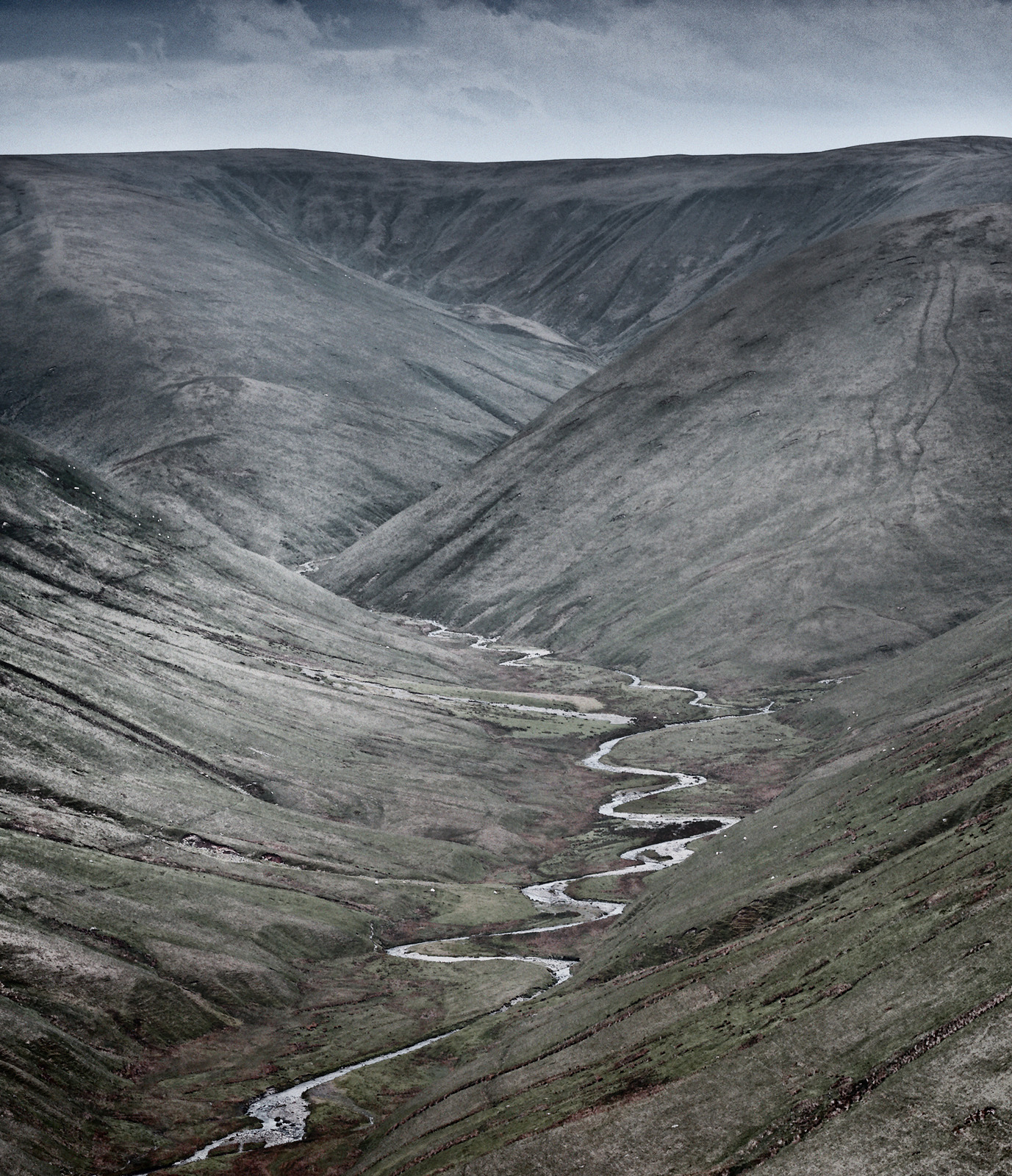
The second one is a toss-up between two images I made recently of the Howgill Fells. As I said above, these hills are wonderfully velvety and have great, rounded shapes, uncluttered by any walls or fences. I was out for a strictly-no-camera (my choice) walk with my girlfriend and I saw the composition I've chosen, or the potential for it, at midday on a hot day in April. A couple of weeks later, we were back there at 0500. It felt like an alpine start, getting up at 0230, driving to Sedbergh, and then a walk of an hour or so, but it was worth it as there was a fabulous frost on the ground which gave an even more emphatic velvet look than usual. This is looking west, so I had a decent window of opportunity before direct sunlight touched the interlocking spurs and I had ample time to compose quite carefully as I waited for some reflected light in the valley. This was probably the first image I'd made a 'big effort' to capture, so it's memorable in that respect, but I'm also very pleased with the result.
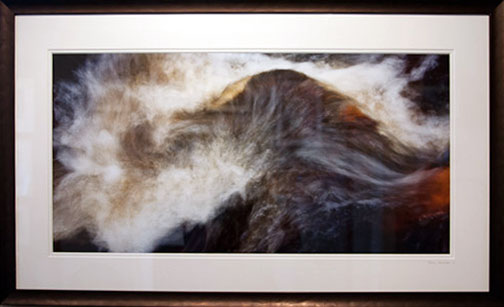
'Forceful mist'
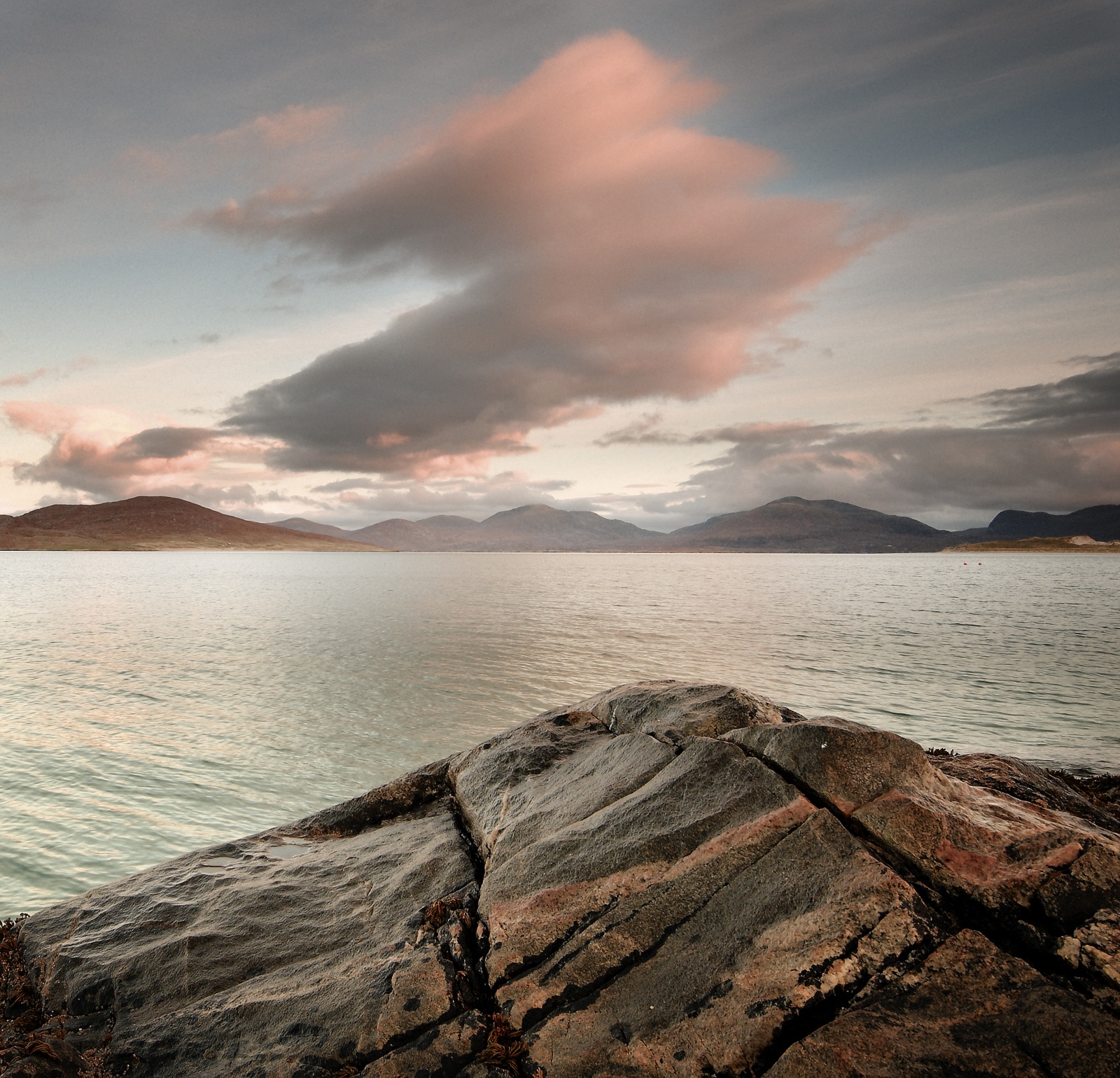
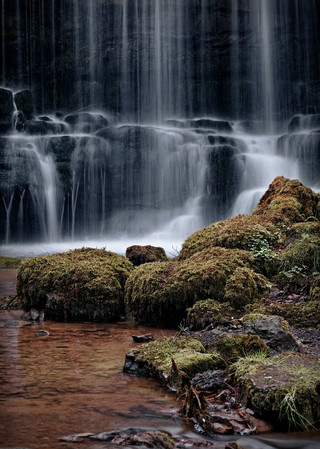
The third I've chosen is of the base of Hardraw Force, the highest single drop waterfall in England (or, as some people disparagingly refer to it, 'the biggest waterfall - in a pub - near Hawes'). I like this since it validated a choice of composition. I chose to use just a couple of metres of its height and I think the result is vastly more interesting than using the whole fall in the shot. I like the texture in the water and the rich colours in the rock. Essentially, this is another first for me: choosing to use just a small detail of an obvious feature rather than the whole thing. I've cropped photos before, but in this case actively choosing to capture a detail view felt like a good choice to have made and, I think, makes a much better image than just another long, thin waterfall would.
 What sort of post processing do you undertake on your pictures? Give me an idea of your work-flow?
I'll not talk about the initial stages of my work-flow, other than to say that I have a rather rigorous process for ingesting, tagging with metadata and extensively backing up all my files, followed by a weeding process to choose the best of a given composition before I do any actual processing. A lot of that is fairly automated, so doesn't take long, but I delete anything which is technically flawed. The next stage is using DxO Optics Pro to produce the initial output TIFFs from my RAW files. This software is where I do the majority of my adjustments. Typically, I run all the 'worth looking at' files, in a batch, through DxO on my default settings. I have the camera set to capture everything as neutrally as possible, so the embedded JPEGs in the RAW files are very dull and soft indeed, hence the first pass through DxO gives me a better idea of whether an image is worth working on individually.
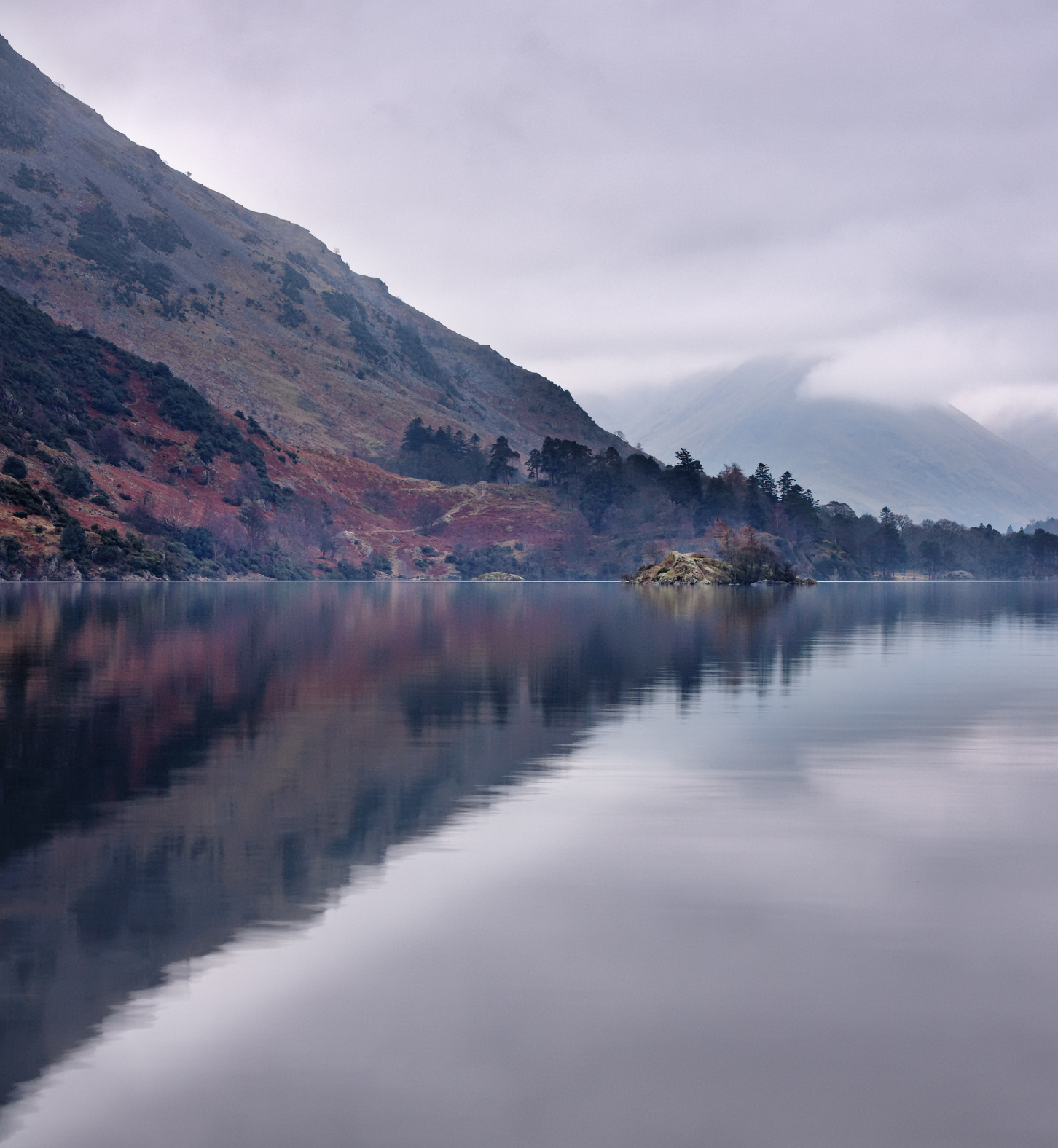 For those that are worth pursuing, I go back and play with most of DxO's options for each image. Firstly, I crop to whatever I envisaged during composition. I'm not at all a fan of 3:2 aspect ratio, particularly for portraits, so I usually intend a crop when composing. After that, I mostly adjust global lighting, local contrast and experiment with DxO's numerous 'film-look' options, usually ending up with Provia 160 NC or desaturated Velvia, but sometimes Astia or Provia. I sometimes desaturate a colour channel or two at this stage if I perceive them as too dominant compared to the shapes in the image – nothing too radical as I'm hoping for the result to be 'credible, but not loud'. Oh, and I do a little bit of sharpening; not much, but enough to look reasonable on-screen.
After that, I open the TIFFs in Photoshop and generally add 2-3 curves layers in which I use masks to adjust the luminosity of various selected parts of the image – dodge and burn essentially – often adding a small amount of vignetting. That's all I use Photoshop for, but it's a very important stage as I like to slightly tweak things to emphasise whatever pattern or structure I've seen in the image.
 Do you print much of your work? If so how have you approached it and if not, why not?
I've printed fewer than ten images, and one of those was three copies of the same thing which I framed and gave to people as presents. Most of them are hanging in my house. In all cases, I had them done by Digitalab in Newcastle. I've not printed anything recently; partly since I don't have much wall space that I want to lose, and partly since I've not yet investigated how to prepare files in order to produce really good prints! Having said that, I've created a couple of Blurb books, mainly as records of what I produced in a given year and, again, as presents.
Tell me about the photographers that inspire you most?
That's difficult since I haven't really studied photographers much as yet, or bought many books. Many of the people I've come into contact with on Flickr and through this magazine I find inspiring, in terms of the work they produce. More than results, however, I would say that I'm most inspired by approach. I feel that I have some ideas about how I'd like my images to look, so what inspires me is people whose approach, method and thoughts on the image-making process I think could help me. 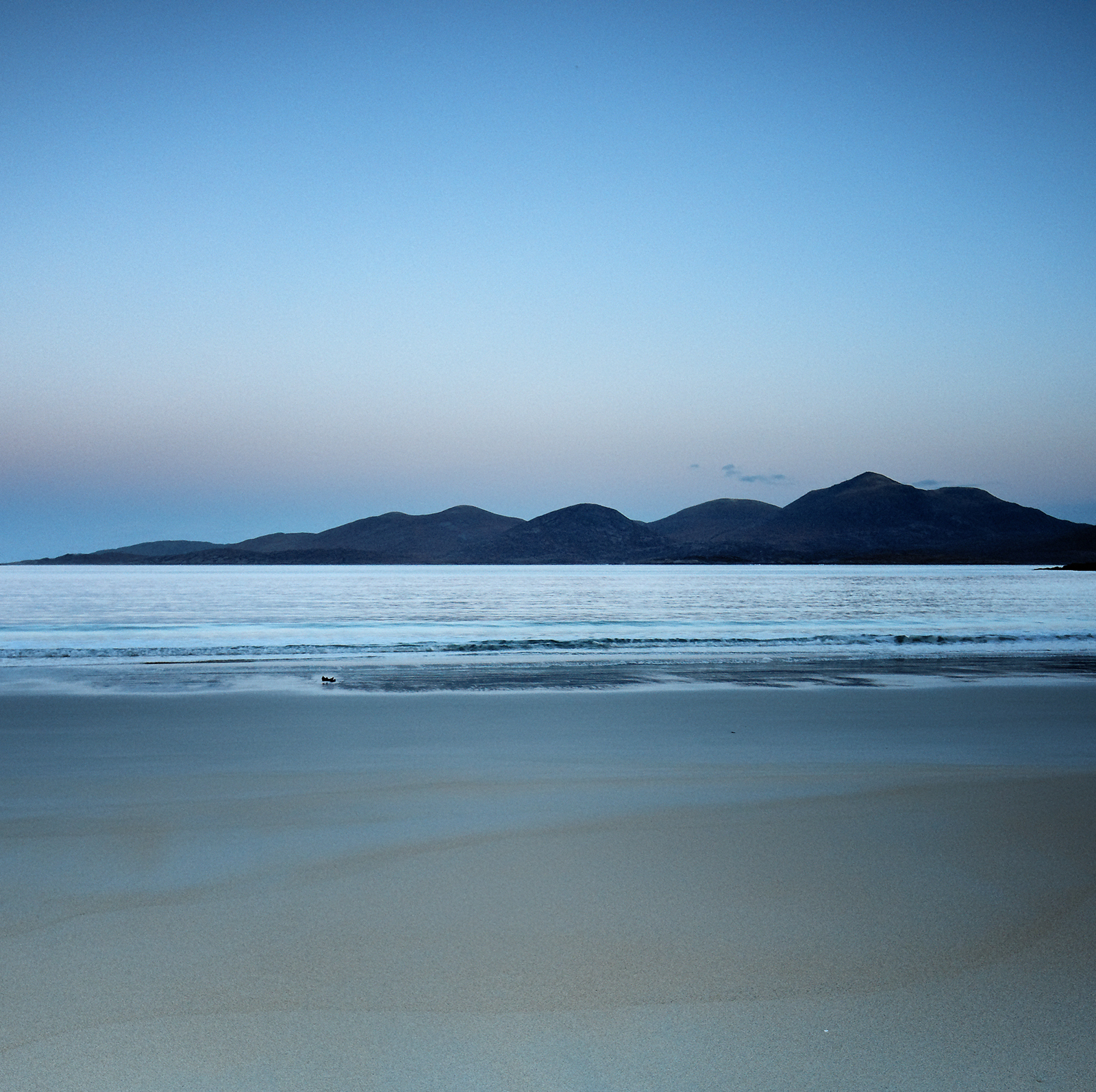 I'd have to cite Galen Rowell, largely for his determination and willingness to make a significant effort to get into situations for making photographs. I'll also mention Bruce Percy again, since I think his philosophy of making images is a strong one that I can relate to, both in terms of travelling to places and using very low light, and in not necessarily seeking to totally represent reality. Michael Kenna, too: I don't seek to emulate him, but I do like the reductionism in his images – that simplicity is something I aspire to.
What sorts of things do you think might challenge you in the future or do you have any photographs or styles that you want to investigate? Where do you see your photography going in terms of subject and style?
That's a wide-ranging question! Starting with what I think are the easier aspects, I don't see my subject matter changing much, and I think of that subject matter as mainly being patterns in the landscape, whether those are large vistas or details – I'm more interested in patterns than I am in representing reality. That's not to say that I don't want my images to be recognisably of landscapes, I certainly do, and I'd like them to be 'credible', but I'm much more enthused by the idea of seeing something geometric or abstract in a landscape – and making an image from it which features shape and texture – than I am in showing 'what place X looks like'.
So that partially covers style too: I'm trying to simplify my images since the work I most admire tends to be structurally simple and elegant. Of course, there may be lots of complex detail within an image, but I usually see that as secondary to the overall compositional structure; something to add depth and interest to it.
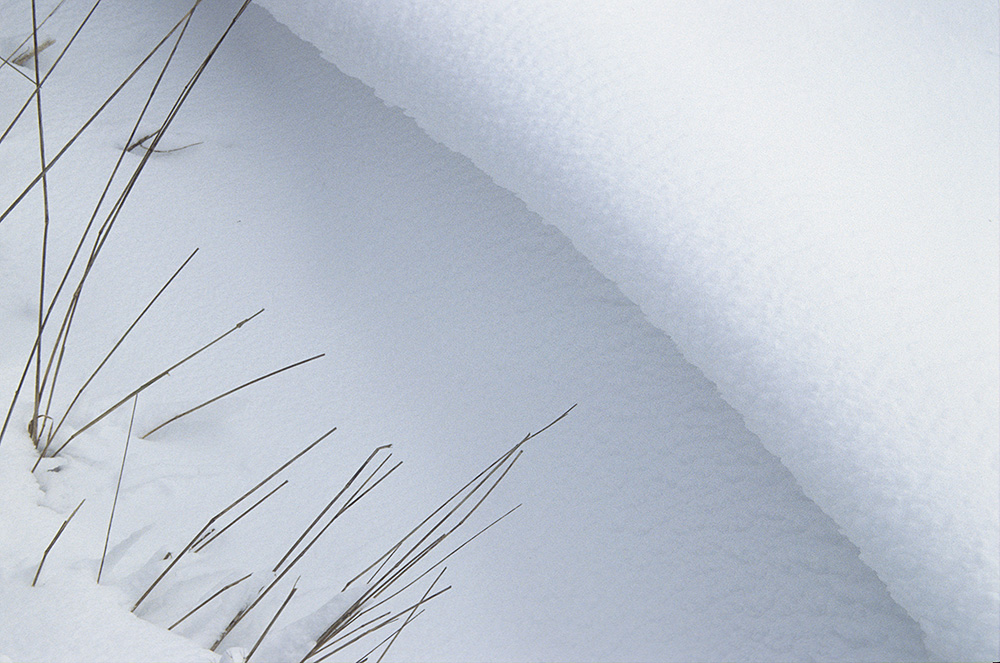
The first part of the question seems rather clearer, now that I've thought through the above! I find simplification difficult, particularly with inland landscapes. I'm looking forward to winter again, and some snow and ice. I find it a great deal easier to make simple compositions in snow, and I prefer the low-angled sunlight of winter. So, I suppose my main challenges are the complex nature of the landscape where I live and the general abundance of green. Still, I'm addressing that by taking myself to northern Norway and Bolivia again next year, where the colours are anything but green and the scenery is in some cases so simple that it's difficult in a different way.
Who do you think we should feature as our next photographer?
There are lots of people who I'd like to see interviewed, most of whom I'm aware of through this magazine. I think David Ward has been mentioned before but I'll add a vote.
Thanks to Mike for a great interview and we'll give David Ward a nudge from him... In the meantime if you want to see more of Mike Green's work take a look at his website or his blog or his Flickr stream.
** - See! Digital! It's not all large format film! although I might have to resort to type soon again as we have a wonderful female large format photographer to include :-)