


 Join the conversation
 Subcribe to comment rss feed
Guy Tal on the concept of art in photography

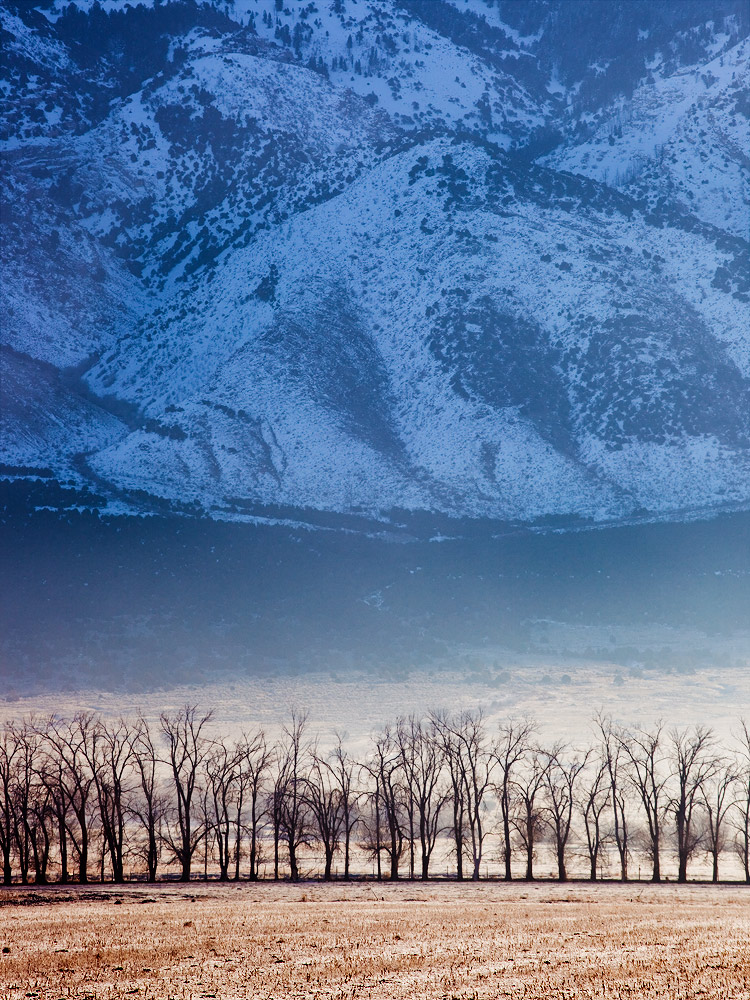 It is likely that everyone reading this article derives some joy from photographic images of the natural landscape and from the practice of photography. If my decidedly un-scientific observations are any indication, it’s also likely that most of you have found your way to this genre of photography through the appreciation of natural beauty that is inherent in most humans. It’s no wonder that most of us intuitively and emotionally respond to natural scenes and phenomena. After all, we are the product of four billion years of evolution, throughout most of which our ancestors relied on instinct alone to tell good from bad, pleasure from pain and safe from dangerous. In time, imagination and creativity served to provide us with the solutions to progressively more complex problems, allowing humanity to rise to a degree of intelligence, prosperity and dominion unprecedented in Earth’s history. Visuals once found conducive to survival became the foundation for our sense of aesthetics; scenes once associated with awe, challenge and opportunity were incorporated into our perceptions of beauty, adventure and spirituality; and the ability to effectively and visually communicate our thoughts and inspiration to others set the stage for our arts.
Yet, for all our progress and intelligence, our brains often function in primitive ways. When challenged, we tend to fall back on instinct, repeat patterns already established to be successful, seek safety in numbers, conform to popular trends, avoid conflict, and heed the authority of those we accept as superior or more successful. Indeed, the survival and dynamics of a productive and well-functioning society depend on compliance and repetition being the norm rather than the exception. The same, however, cannot be said about progress, which requires the occasional disruption: something novel – an aberration – to introduce new possibilities and the potential to advance toward something better than the prevailing paradigm, albeit often at some risk.
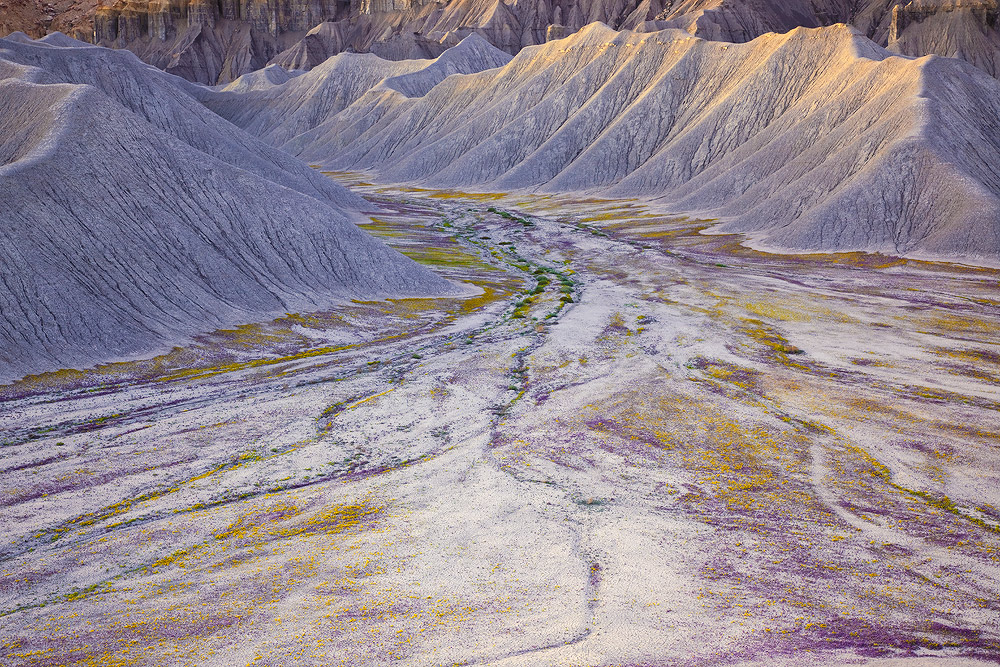 Like the evolution of life, so is the evolution of art dependent on the introduction of new ideas, new methods, new ways of seeing and interpreting, and the courage of creative individuals to step outside the bounds of the common, the accepted and the fashionable, to challenge established concepts and at times to endure personal hardship as well as the ire and ridicule of peers and critics.
I came to photography, as many do, by chance and with little knowledge of, or aspirations for, the creation of art. To me, photography was an extension of my love for the wild; a means of capturing, documenting and sharing the things I’ve seen and the places I’ve been; at least the ones I found worthy and interesting. This was the impetus behind my photography for the nearly two decades over which I became more proficient with tools and techniques. 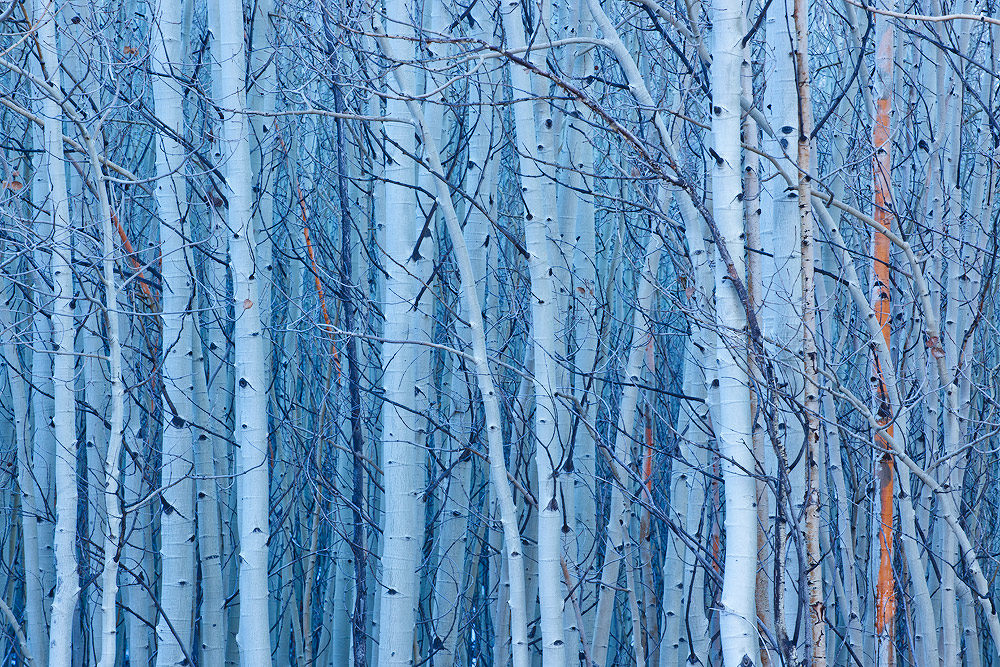 I began earning some income from my images and believed I was content with my work. As long as my images were technically good, aesthetically pleasing and well received, little else mattered. Or, so I tried to convince myself. In truth, my work had become repetitive and formulaic. I visited beautiful places, waited for the ubiquitous “magic” light, captured a few “pretty” images on large film, and waited to post or publish, knowing the accolades from the usual crowd were to follow. It was easy. It required little forethought, emotional engagement or expertise beyond operating the camera. Worst of all, it was utterly and completely meaningless. Short-lived pride in “getting the shot” soon began to feel hollow.
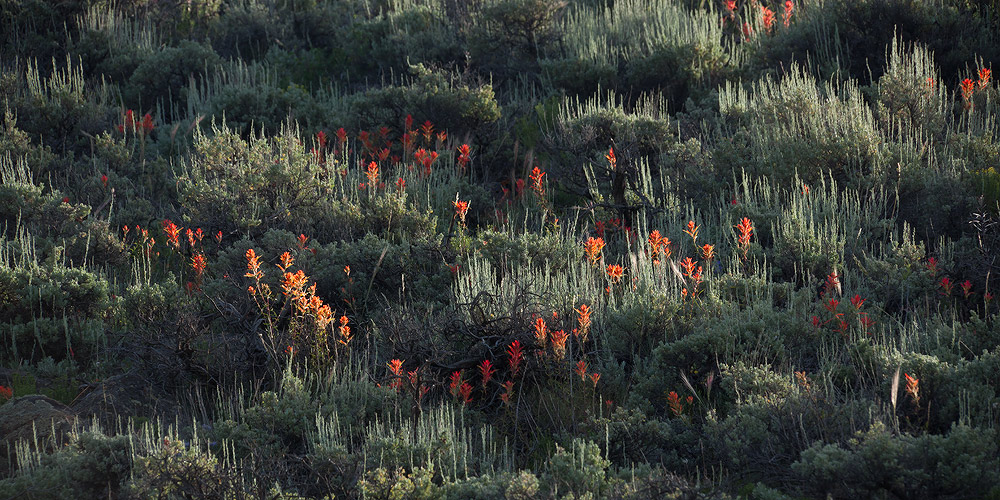 Give anyone a camera and some time to practice, and they’d have made the exact same images that I did. There was nothing in them that was unique to me, that required creativity, that expressed my own sensibilities, state of mind, personal relationship with the subjects or any ulterior message more complex or meaningful than “ooh, pretty.” My images were the equivalent of fast food: simple, momentarily gratifying, requiring little thought, easy to like, and easier to forget and move on.
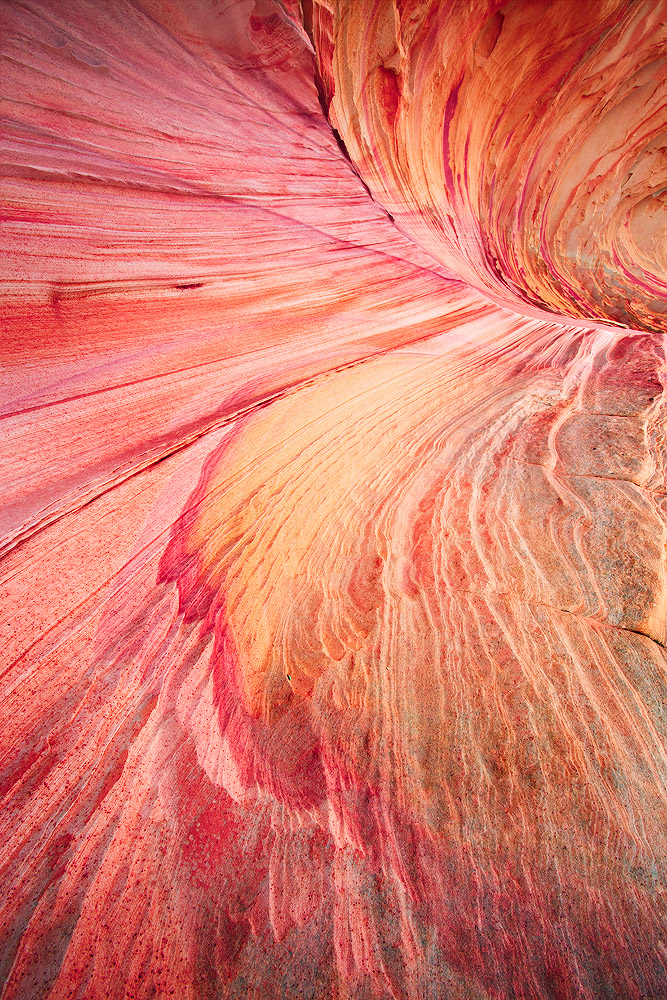 Ultimately, I realized it was not enough; I had a choice to make. I could continue to trickle repetitive and unremarkable “pretty pictures” into the ever-surging torrent of similar, if not identical work; continue bickering about minutia of gear and visual gimmicks with other photographers; revel in being like everybody else, or I could make my life and my work about something greater, aim for something higher, and strive to create a new aesthetic and purpose for my work.
From a professional viewpoint, this was a daunting proposition. Photography as art relies on complexity of message and ulterior meanings beyond mere aesthetics. As such, it tends to demand more of the viewer. It is also rarely about recognizable subjects and demands to be considered on its own rather than as an illustration for an article or an advertisement. It is, therefore, of little use for editorial purposes. On the other hand, photographic art is still a long way from earning its rightful place in most galleries and museums. I was entering a world that fascinated and challenged me with little idea of how I could earn an income in it. Still, once the seed was sown, I knew deep down that I could never be satisfied being “ordinary” again.
There is nothing wrong with taking pleasure in repeating the successes of the past and in remaining faithful to already-established methods and styles, just like there is nothing wrong with spending an evening watching a movie with loved ones, earning a steady income in an un-exciting job, or eating a favorite dish for the third time this week.
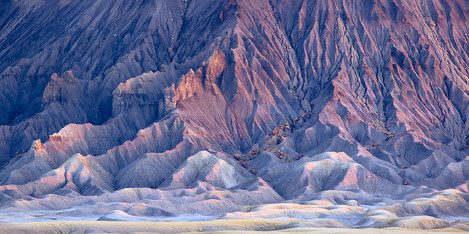
Some people, however, would rather spend the same evening admiring the view from a port-a-ledge hanging 4,000 feet up a cliff, or sitting alone by a small campfire in the middle of nowhere listening to the mournful howls of coyotes, contemplating the universe, or smashing sub-atomic particles hoping to peer into other dimensions.These include people who may not yet know that they would have such preferences and that they are indeed capable of realizing them; people who may never know unless they allow themselves to try. I will tell you this: you will never experience a more profoundly satisfying moment than the instant you realize that you have it in you to be that person – a hero in your own mind, without excuses or wishful thinking.
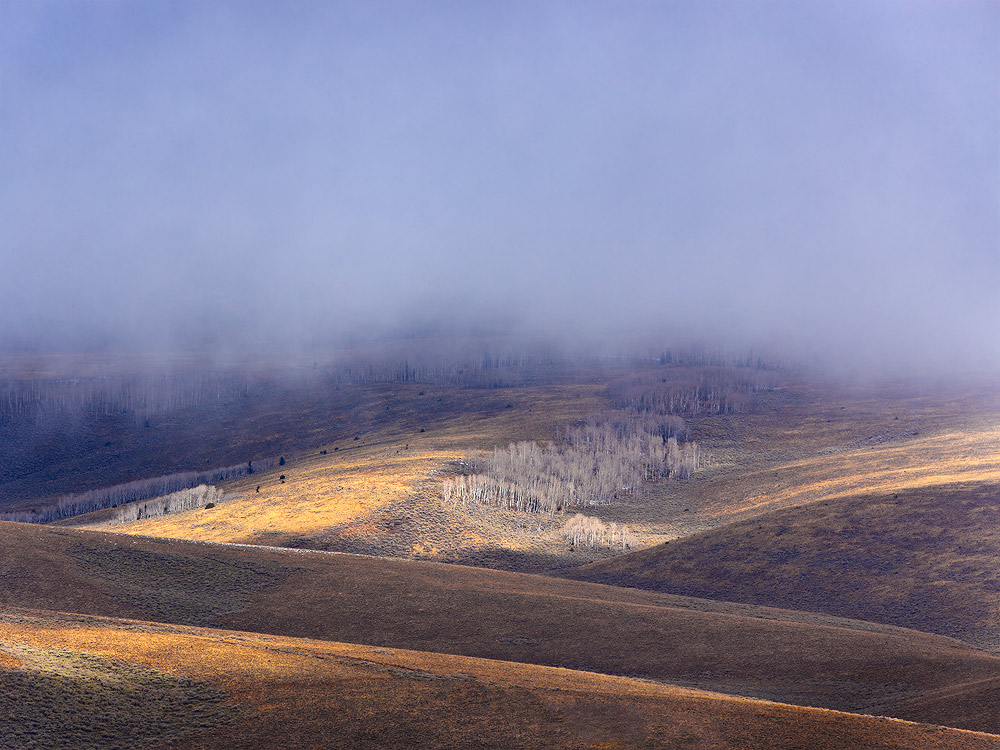 I went to live in a tiny town of 200 residents, surrounded by millions of acres of wilderness. I began making a different kind of image: more considered, more personal, more creative. I made it my goal to come to know the land around me intimately so that I could listen to its stories and understand what it had to offer. I washed my mind clean of the formulas of the past and forced myself to see deliberately – just me and the subject, with no filters, preconception or concerns about what others might say or think. I became an avid reader of journals and biographies of artists I admired and was amazed to find the same common thread: the art and the life become one and the same. The purpose of one becomes the purpose of the other: to experience first, to feel in the raw and with no cynicism or judgment, then to translate the experience into a work by whatever tools available. For better or worse, the tool available to me and with which I had the most experience was the camera, and it became my brush, my notebook and my chisel.
Where in the past I tried to push myself in the physical sense (to climb higher mountains, to visit more remote locations, to photograph under more difficult conditions), it no longer mattered. Bragging rights seemed so shallow a goal compared with experiencing a moment of profound awe, so joyous as to move me to tears, and then to convey at least a small part of it through a photograph.
 I soon learned that I was not alone. Almost every photographer I met expressed a similar desire to produce more personal and original work. The vast majority of them, though, were still beholden to a fear. Yet they were willing to listen, and I began to teach. I was soon able to earn a modest income from the most satisfying of all jobs: inspiring others.
By daring to venture into the unknown and merely being myself in the face of overwhelming pressure to accept photography as practiced and defined by the masses, I was able to not only produce more satisfying work but to live a life that was previously but a dream: the creative life.
There is undoubtedly the risk of failure, but for those bound to be different, the choice of breaking with the pack should be made in consideration of the greater failure of never knowing if your gift and, indeed, your life may be going to waste. You will be far unhappier going through life perpetually wondering “what if” than any ill fate you may suffer for daring to unleash your true self. And, if all comes crashing down, you will at least have the benefit and peace of mind that comes from knowing you tried and you gave it your best.
 How do you know? You just know. It nibbles at you from the inside; it makes you daydream and fantasize; the more you feed it the more restless and frustrated you become until you muster the courage to heed your calling.
There is more to it than personal satisfaction, however. The very concept of photography as art hangs in the balance. Some of the most iconic photographers of the past worked tirelessly and against staggering prejudice to promote their work as worthy as any painting, sculpture, novel or symphony. At some point in recent history, the great photographic artists of their day had passed, and few dared continue their struggle for acceptance.
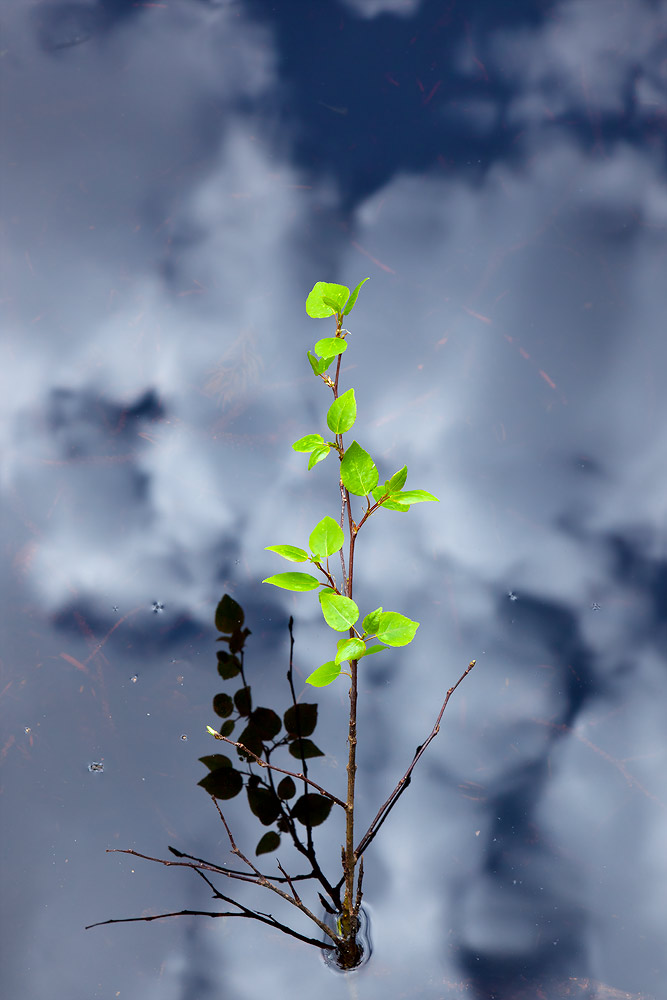 At the core of opposition to photography as art is the assumption that all photographs have but one purpose: to illustrate something already in existence in a way that most closely resembles how a random person would have seen it. Certainly that is one use for photography but it is not the only use. Photography can be a means for creative expression capable of illustrating much deeper concepts than “this is what I saw.” It can be used for the creation of art and ulterior meaning with the same power and nuance as any other means of making and fixing images onto paper (or screen). The purpose of illustration is to say: “Here’s what you would have seen had you been there.” The purpose of art is to say: “Here’s what you would not have seen had I not shown it to you, even if you were standing next to me.” In the former, the photographer is but a passive bystander, a mere operator of machinery; in the latter, the photographer is an integral part of an image and its reason for being.
I no longer consider myself a nature photographer or a landscape photographer. I do not photograph nature or the landscape; I use their visual elements to create images of my own making.
While the proposition of turning your life around on a hunch may understandably be daunting or unrealistic, there is a simple shift you can apply in your work right now, at no practical risk to your livelihood: stop shooting and start creating.
Many thanks to Guy Tal for contributing this article - you can see more of Guy's work at http://www.guytal.com and I can highly recommend his 'Exposures' ebook for a Christmas treat. (all content copyright Guy Tal, all rights reserved)
[/s2If]