


 Join the conversation
 Subcribe to comment rss feed
A Closer Look

Michael Allan
My first camera was a half frame Leica with a fixed lens that I would take backpacking in the Sierra Nevada Mountains when I was in high school. I graduated to a Pentax K1000 and Kodachrome when my boys were old enough to backpack in Colorado with me, but when they were teens with a life of their own, the camera went into a drawer. Several years ago I picked up an all in one Sony and started backpacking again. One thing led to another and I bought a Sony A7r, then upgraded that, bought a printer, and I never looked back. I now mostly shoot black and white with a focus on printing.
The Barker
Resonance recognizes and enters into the intrinsic value of an other and establishes an emotion toward that other. ~Michael Allan
Personal Photography, as I previously proposed, called for a search for Resonance. However, my description was simply a feeling I had in the field and digital darkroom, and I did not offer much detail that would help someone actually try it for themselves.
In an effort to both understand this feeling in myself and assist others, I offer some analysis of my experience, based on a two day backpack trip in the Rocky Mountains of Colorado, where I paid attention to what I was doing and comparing it to Suzi Gablik’s ideas in Progress In Art, then revisit Iain McGilchrist’s science and ideas.
Gablik examined progress in art as a set of stages that mirror Piaget’s stages of child development. There have been other models of social development, and it is not surprising to me that social development and individual development follow similar paths.
For explaining resonance, I am not so much interested in the development of art, than I am in the three modes of resonance Gablik uses. With slight renaming, I will call them Schematic, Iconic, and Conceptual.
Iconic
I will start with Iconic because it comes pretty close to what a camera naturally excels at: sharp images with single eye perspective, accurate tones, realistic color. With minimal darkroom adjustments that mimic what was seen when making the capture, the camera produces very high fidelity representations.
Schematic
Once a two-dimensional image is created, one may consider composition, balance, harmony, leading lines, added contrast and clarity, dogging and burning, and cloning out distractions. Much art theory and advice work in the Schematic mode with endless experts.
Conceptual
When someone says an image has a “what else it is,” or is abstract and creates “a feeling,“ or is made at a “decisive moment,” it becomes conceptual. Whereas Schematic tends to aesthetic values, Conceptual tends towards interpretation or explanation.
In my experience, one can resonate in these three modes individually, in combination, and probably in modes I am unaware of; and use different modes at different stages of making an image: when walking, when capturing, and when editing.
My Personal Experience
My personal experience, by self-examination on my backpack trip, was that these types of resonance typically occurred in a patterned way.
When walking, I am predominantly in an Iconic mode. I see like a human, not like a camera. If I liked to previsualize, I would probably stop and try to build a schematic in my head. But I don’t. Instead, I look through my viewfinder, which presents a two dimensional Schematic mode. Whether or not I capture different versions or move around or change zoom, I am not analyzing, I am seeking an “ahh” feeling of just right.
Because it is a Schematic view, rather than resonating Iconicly in three dimensions, I am responding to the frame, the balance, the harmony, the flow through the image, unwanted distractions and the feel of the light direction. I am not following rules.
Like all photographers, I have read the books and attended the seminars on composition. I, too, used a rule of thirds before I focused on balance or harmony. Perhaps I have internalized these, and resonating in the Schematic> mode is just an internalization of what I was taught. I can only hope there is something unique about my experience that comes from my relationship with nature.
Once I am in the digital darkroom, some images become Conceptual. Even though I may see something Conceptual in the field, I normally recognize it afterwards. It might even come to me while I am writing Poetry along side an image.
However, in the darkroom, it is mostly a Schematic affair of cropping, adjusting tones, contrast, clarity, tweaking colors or color filters, and cleaning up. Printing is just an extension of the same Schematic Mode but on paper.
This phased approach was not intentional, it was just me going out into the woods and paying attention to what I actually do and to try to make my description more concrete.
Examples
I will walk through some examples and try to reverse engineer what was going on in my head at capture and during processing Sunrise at Breakfast.
Sunrise at Breakfast
I was sitting on a log over my backpacking stove waiting for my dehydrated meal to rehydrate. Flies were nagging me and I put my spoon in my shirt pocket to keep them off because I know where those flies have been!
The air was chill, my muscles sore from lugging 4 extra liters to the top of a mountain without a water source. I was too tired to really think about much.
I looked up and was blinded by the sun, but the wind was blowing the tree limbs, and its bright light was flickering in and out. It got my attention, so I grabbed the camera, stood up and walked around a bit until I felt the back-lighting and sky were nice. I played around with framing and the exposure and made a capture.
In the darkroom, I adjusted the exposure and blue filter so the sky felt right, then, using levels, brought up the whites but not clipping the sun, then darkened shadows. A few experiments later, it just felt right.
The drama in the Schematic mode is more intense than the direct experience in the Iconic mode. It is not conceptual for me other than my memory of breakfast.
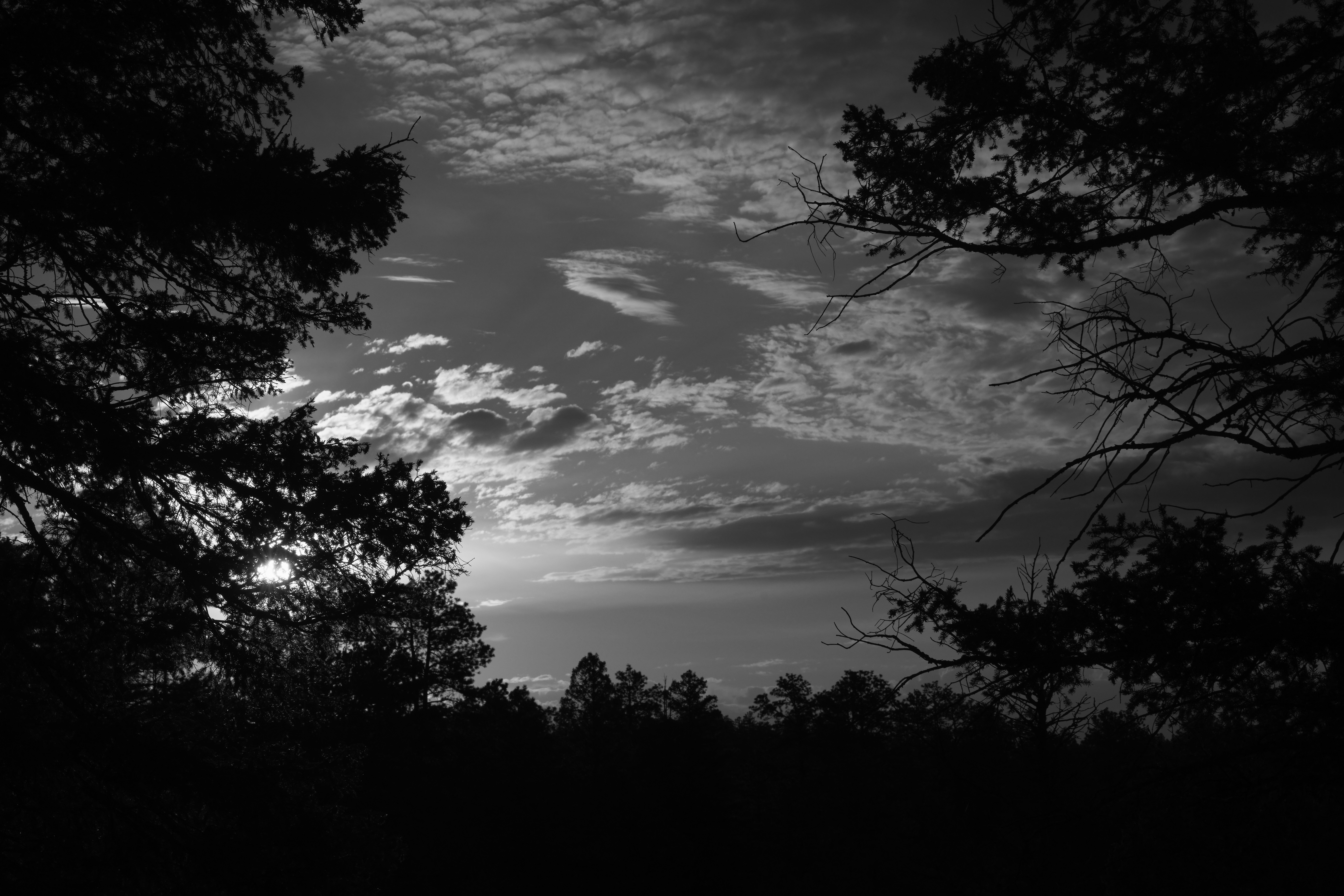
Sunrise at Breakfast
Together is Better
I was walking the trail with many wildflowers in bloom, and plenty of yucca plants. Yucca are mixed with aspen and fir trees at this elevation and look out of place. I have seen many intimate images of them and have made my own images of the seed pods or leaves. Nine times out of ten, I don’t like the result.
But with the flower sitting inside the yucca, it caught my eye.
In the Schematic mode of the viewfinder, I first played with depth of field until only what I felt interested me was sharp, then I moved around trying to minimize the bad effects of the background. Too light, or too splotchy, or too dark. And that log, it tells a story, but it might stick out like a sore thumb.
Eventually it feels right and I capture. In the darkroom, the flowers fall flat. So using the blue filter I brighten them until they capture my attention, some masking and clarity, and all the typical tricks. I find my sweetness.
Then the concept pops: symbiosis; the yucca protects the flower because nobody will sit on or step on a yucca. The flower is a leis around the yucca’s neck. The idea of symbiosis triggers thoughts on culture, and the title emphasises the concept of people together in harmony.
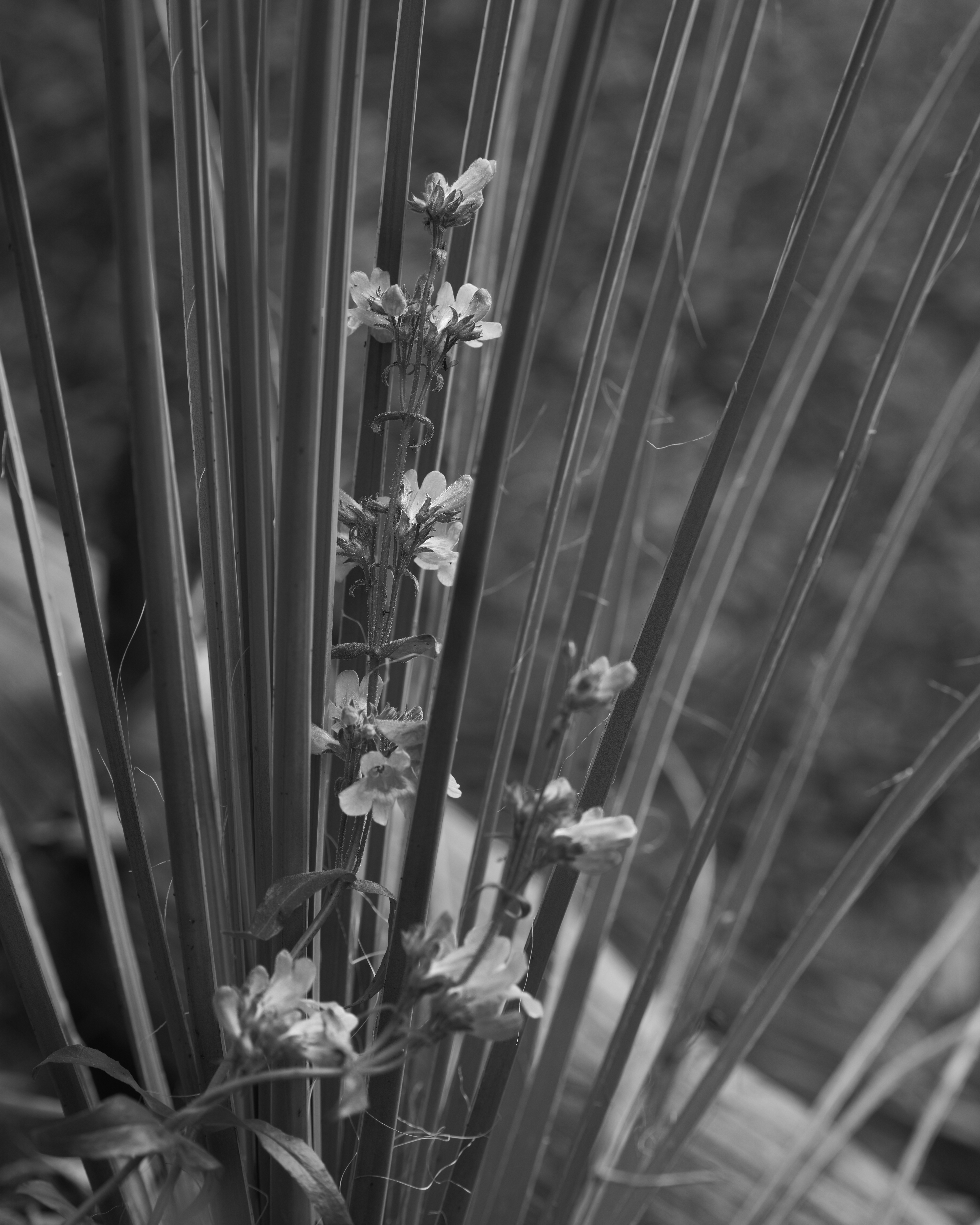
Together is Better
Kiss of Morning
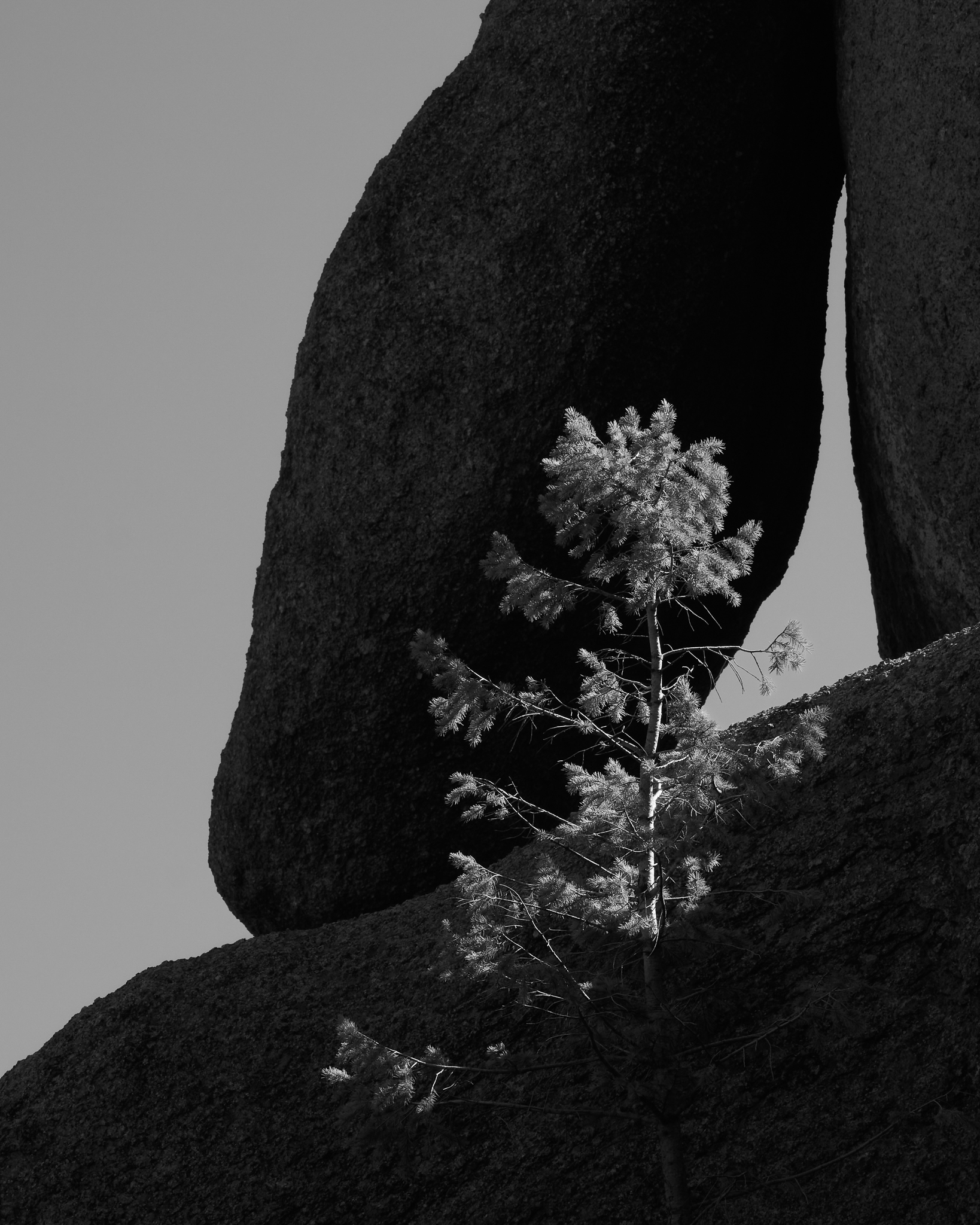
These rocks can be seen from multiple high places, almost always full of tall trees, and on most day hikes, they are washed out by the bright Colorado sun, or in total shadow of thunder showers. After several years
of exploring, I found this viewpoint on the Winding Stairs trail and a place flat enough for a tent out on an outcrop just down the trail from the rocks.
The purpose of the backpacking trip was to try to find resonance with these rocks after failing multiple times. I thought, perhaps sunset or sunrise might do the trick. Sunset was a wash, nothing but thunder and rain while I sat in my tent reading poetry.
I was worried I might oversleep, but the full moon rose at 4:30 am, and by 4:45 am, the birds were chirping with just a little too much enthusiasm for my taste. At 6:00 am I put on warm clothes and headed to my spot between trees down a steep bank, then tripping on a log and sliding a meter down the hill trying not to drop the camera. The light was just touching a few places, and I made a few captures.
I headed back for breakfast, which is when I made Sunrise at Breakfast. I packed the tent, sleeping bag, and all my kit to head down the trail to home and glanced over my left side; I was taken aback.
I know from long experience I had maybe five minutes before the light changed. I already knew where to stand, I knew how to frame it, so there was a lot of quick fire captures that reused my previous resonance prior to breakfast.
In the darkroom, I felt a drama queen emerging, so I masked the sky, rock, and shadow and adjusted them separately.
The line between light and dark felt harsh. So I experimented by opening shadows to different degrees. The lighter the shadows the dimmer the rock looked, which is just the way the eye works with contrast. No matter how many changes I made, none felt better than the original high contrast version you see here.
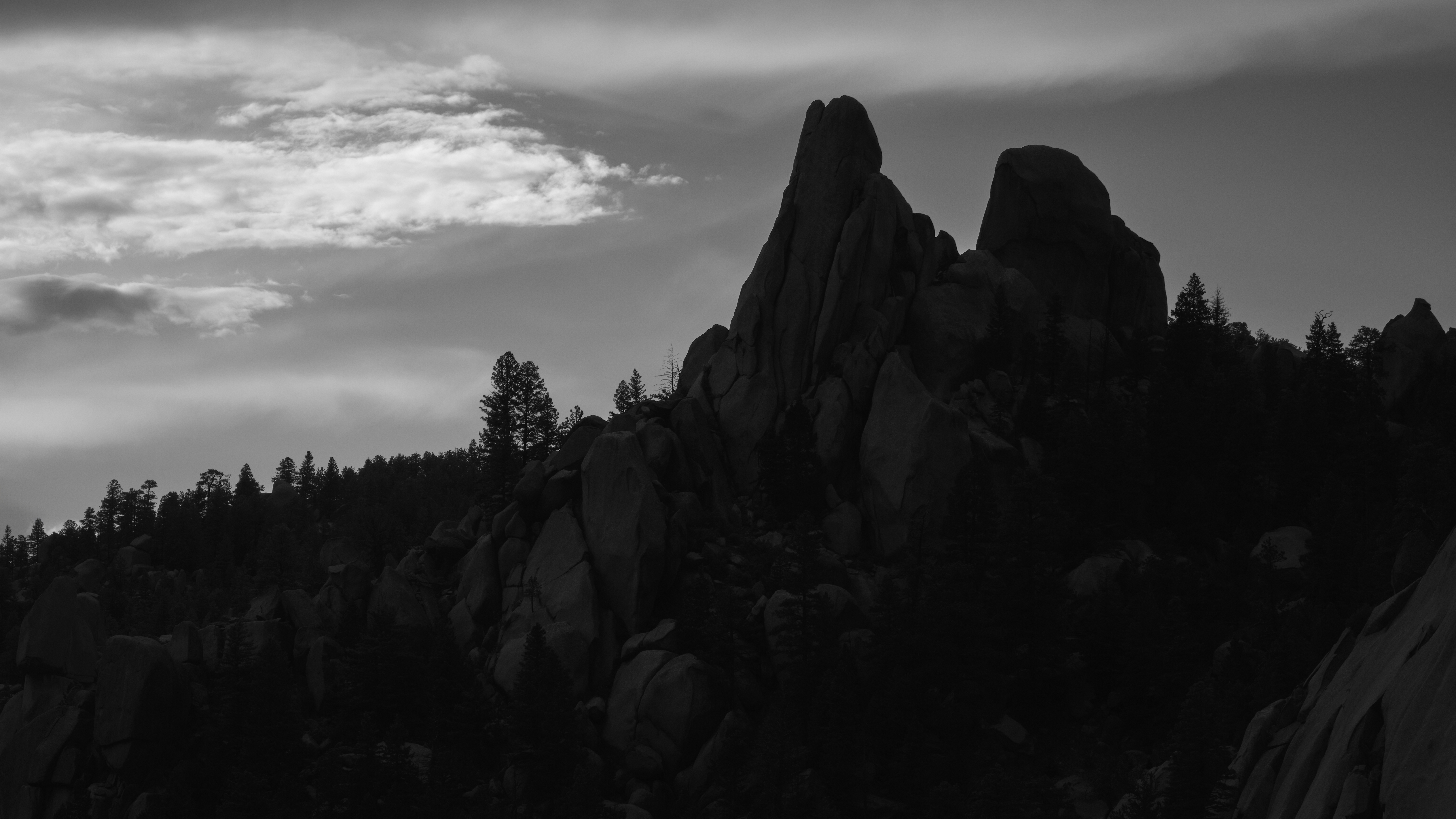
Kiss of Morning
The Barker
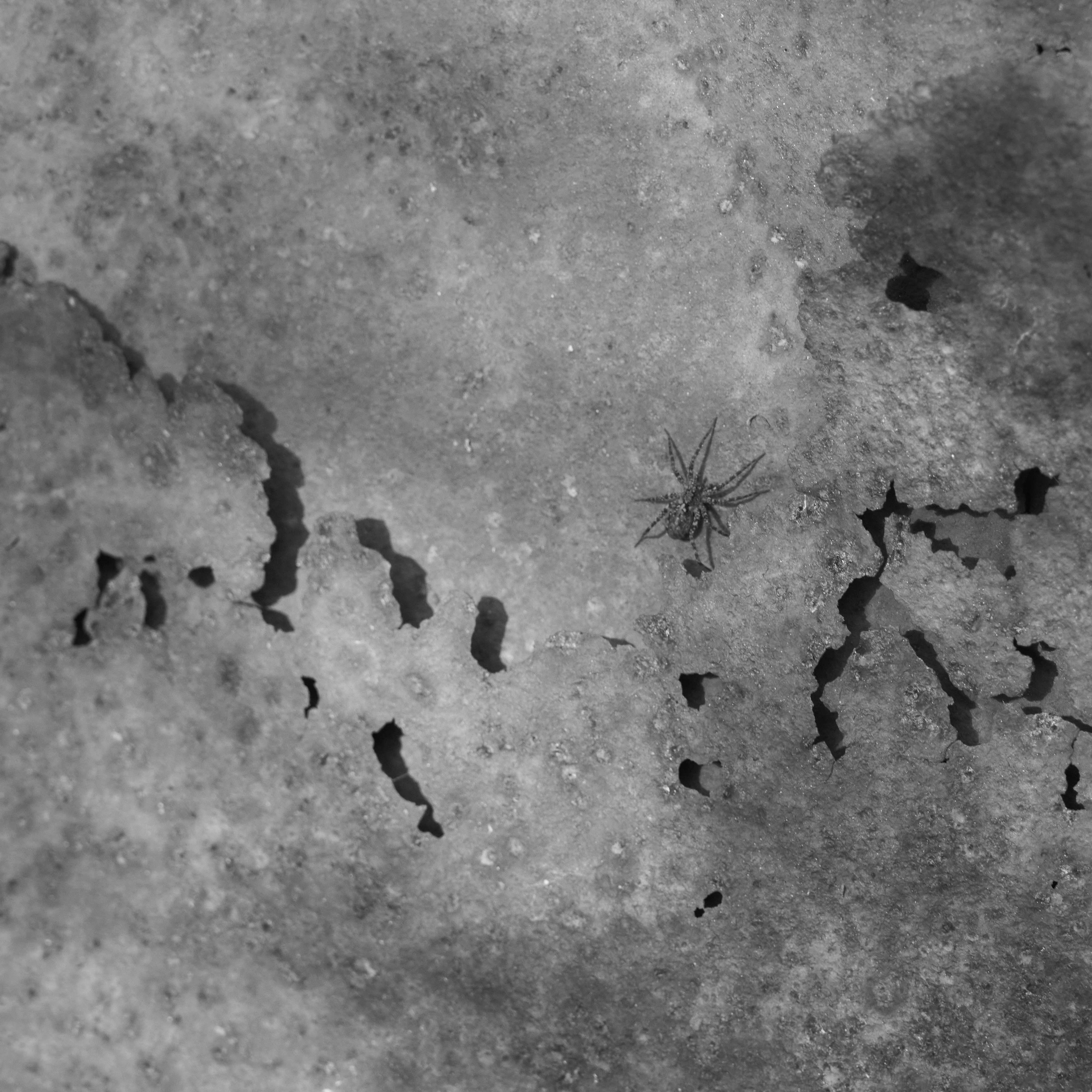
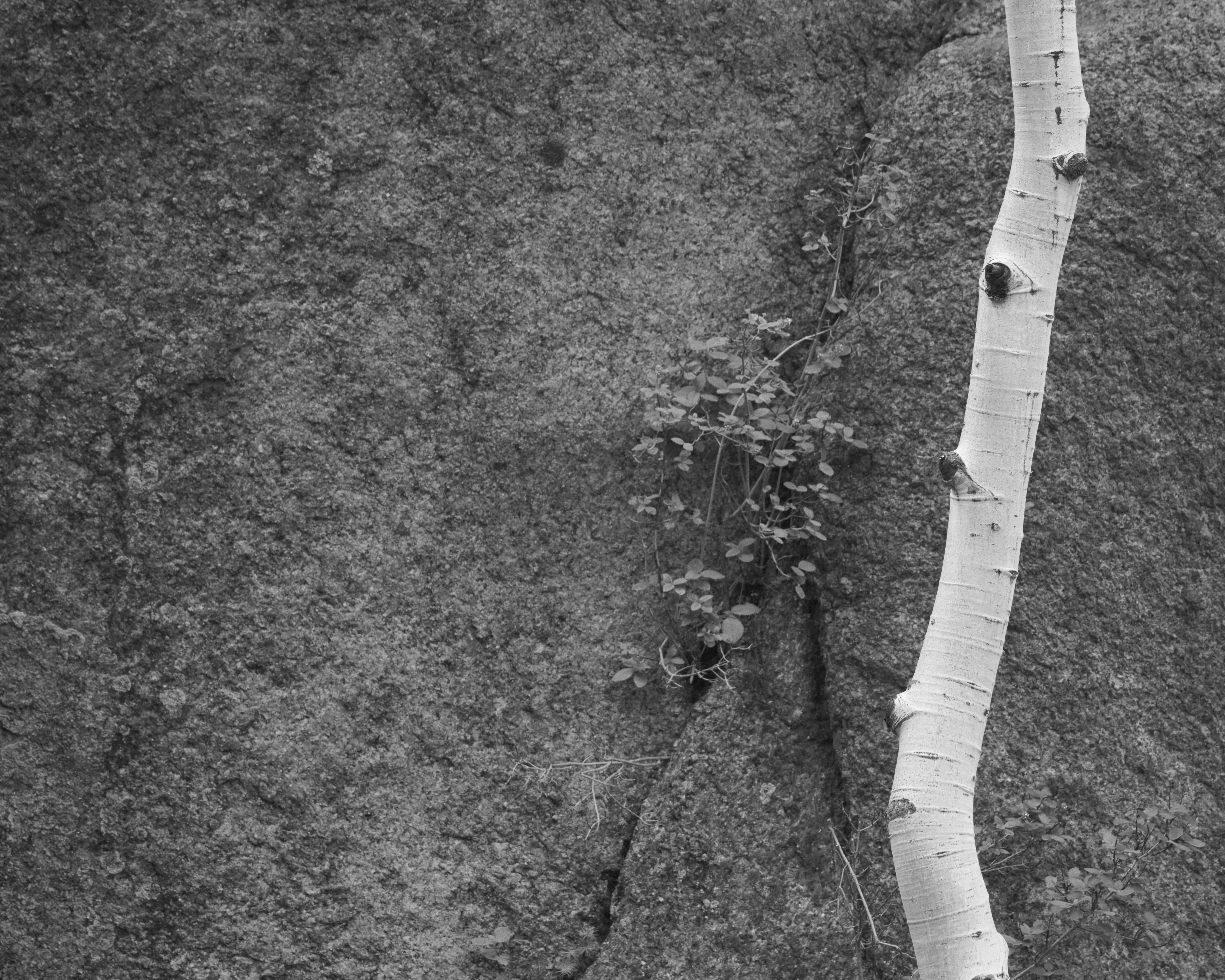
(See image at the start of the article.) Another image from the trail, the trunk of a dead aspen tree in deep shade. Lichens and rot and bark falling off.
There was not a lot I could do with perspective to change the resonance, so I concentrated on adequate depth of field, knowing that it would resonate in the darkroom when the round trunk is sharp enough to make the texture flat and abstract.
I worked the tones to a contrast that felt right to my taste, then I added a vignette. But it looked like a tree, so I started rotating and flipping to see if I would resonate more. I eventually ended up with a rotation and a flip.
Then I revisited the tones until if felt right.
If you want to know why it felt right, I have no idea other than it did not look as much like a typical dead aspen.
Spring Surprise
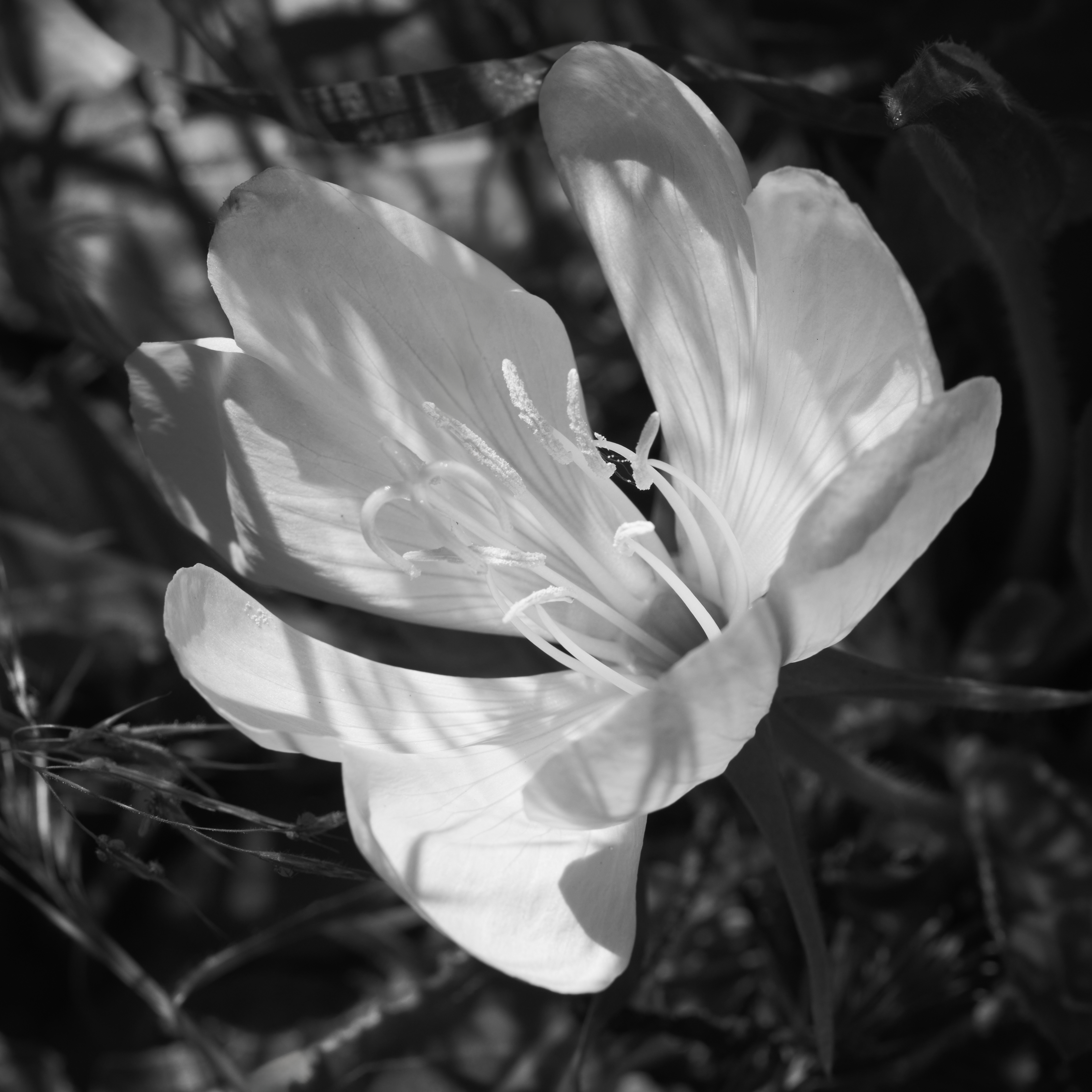
This plant is called Summer Coralroot and is an orchid that depends of a fungus because it cannot photosynthesize. I have never seen one of these before after 40 years of hiking in Colorado.
I was waking the trail as usual, looked down at a rock to ensure I did not trip, and nearly fell over when I saw the unusual flower. I sat down and realized how special this was.
I put the camera in macro mode and looked for some wow, which was a combination of depth of focus and using the tree trunk for a neutral background. The wow is not so much the composition which was very limited by circumstance, and more the pure excitement at finding one in the short time it had flowers.
In the darkroom, the processing was simple. Add some brightness to the plant, darken the trunk, clone out some trunk highlights, and just delight at the plant itself. It is just a plant, but it is a rare find, and to me very beautiful. It is a reminder that I can walk the same trails for many years and still be surprised. The sunrise rock I was looking for became a bonus rather than the main thing.
Resonance makes no guarantees, only promises.
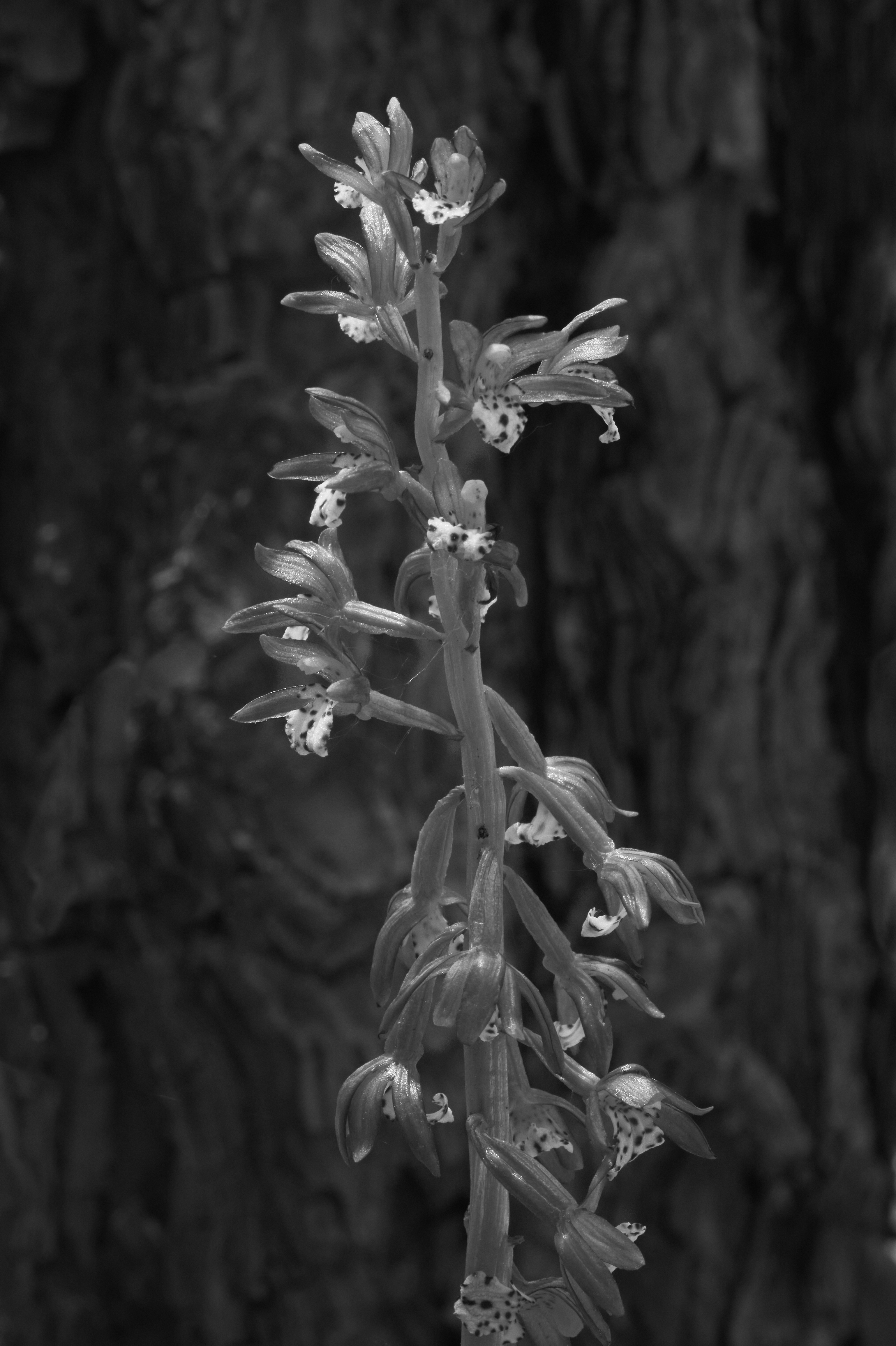
Spring Surprise
Stepping Back
The descriptions above were written as a stream of consciousness with minimal editing so that you can see if I lived up to my aspiration on my backpacking trip. My success in doing what I say wanders. I find that on a single trip, there are a few photographs with intense resonance among a larger number of photographs, someone might say “that’s nice” in a polite way.
I want to explore the role intuition and intellect plays in my proposed “resonance” (and its modes), and for that, I return to Iain McGilchrist for inspiration. Let’s consider two modes of interacting with the world, then the role of culture and society, using The Matter With Things, then The Master and His Emissary.
One way of putting it is that the left hemisphere can provide some sorts of knowledge about the world, as it would be scrutinized from a certain theoretical point of view effectively outside the realms of space and time (as on a map); whereas the right hemisphere provides us with the knowledge of the world in space and time (as experienced).~McGilchrist
This statement about knowledge is important because Macmurray uses the same terms (in bold) to describe science and art. These types of knowing can be found in philosophy as far back as Sir William Hamilton. It is as if philosophy discovered these differences before neurology found their source in brain structure.
These two words for types of knowledge “about” and “of,” one like science and one like art, was the key that unlocked art for me.
Social and emotional understanding are central to understanding all human situations. The evidence is that the right hemisphere is of critical importance for this, including the sense of reality itself, the ability to understand what another person knows, how that differs from what you know, what they mean and what their unspoken intentions might be.
The right hemisphere is superior at emotional expression and receptivity. It is crucial for empathy and for a sense of agency. It is important for understanding implicit meaning, in all its forms, including metaphor, and for reading faces and body language. It understands how context changes meaning. In all these respects, the evidence is that it is superior to the left hemisphere. ~McGilchrist
I don’t know about you, but for me, if I am making art, receptivity, expression, and meaning in context, are what count. So I claim: resonance is mainly a right hemisphere activity, leaving the left hemisphere to help manage the technical aspect of the camera. It is our helper, but should not be in charge.
Now, the problem is, modern culture favors left hemisphere activity: predicting, planning, controlling, managing, rule following, and exploitation. This is why I do not pre-visualize: it stimulates my left hemisphere engineering mind and turns its art neighbor off. Maybe it is possible to pre-visualize with the right hemisphere. If you can do it, by all means go for it. If not, consider joining me in avoiding it.
We are imitators, not copying machines. ~McGilchrist
The context of this statement was a discussion of how ideas propagate differently than genes.
Imitation has a relational and imaginative (you guessed it) right hemisphere aspect. He continues:
...imitation is imagination’s most powerful path into whatever is Other than ourselves.
...only humans directly imitate the means as well as the end.
...ability to transform what we perceive into something we directly experience.
Imitation is non-instrumental. It is intrinsically pleasurable.
Imitation gives rise, paradoxically as it may seem, to individuality. That is precisely because the process is not mechanical reproduction, but an imaginative inhabiting of the other, which is always different because of its intersubjective betweenness ~McGilchrist
.
In the Personal Photography article, I mentioned the photograph expressing the relation between you and the other; intersubjective betweenness is the scientific way to say this. If you are imaginatively inhabiting, you are resonating.
McGilchrist goes on to say that in our contemporary world, we have become busy at “imitating machines.” I think Macmurray saw this problem 100 years before McGilchrist and his philosophy of the personal was his solution. Surely many artists have come to similar diagnosis and solutions under different descriptions, yet some went the other way: full on left hemisphere art. Some modern art seems that way to me, but my concern is photography.
We go out into the landscape with a computerized capture device that has a semiconductor sensor and high quality optics. We process the pixels with computer algorithms and tools. We post images on social media. See the problem? The tools we use are temptations to left hemispheric mechanical thinking alongside all the temptations of our culture and society.
We need all that, but we have to, or at least I have to, resist by intention. I need to aspire to an intuitive personal photography and use resonance as a metaphor of the experience so I don’t wander through the woods thinking about Macmurray and McGilchrist.
A Final Example
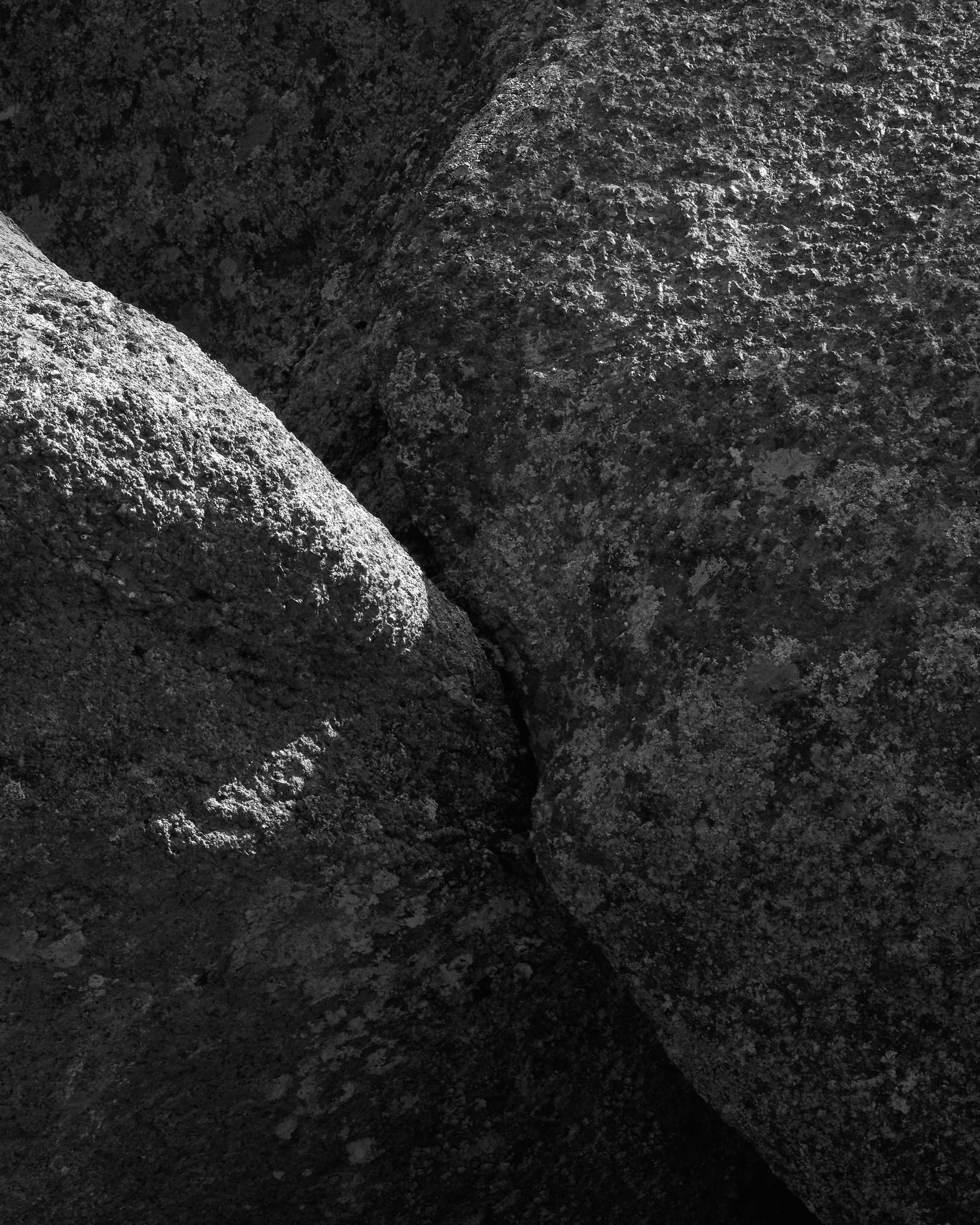
Kissing Rock
I have a hangout place on my backpacking route with boulders. Each trip I stop and look and nothing resonates. But this trip I saw a kiss; the concept resonated immediately. I then went into schematic resonance mode until it just felt right, making multiple captures and reviewing them on the spot.
This one was a “no left-brainer.” And the sun did the heavy lifting.
Resonance in Context
I think that Resonance depends on where you are photographing and your personality. If you are in Death Valley, you find dramatic shadows, blowing sand. If you are in Yosemite, there are clouds and mists from the Merced River. On a beach at sunrise or sunset
there are dramatic skies with color. The Great Plains might have dramatic thunderheads and lighting. A big island might provide fog and misty air with moors and mountains.
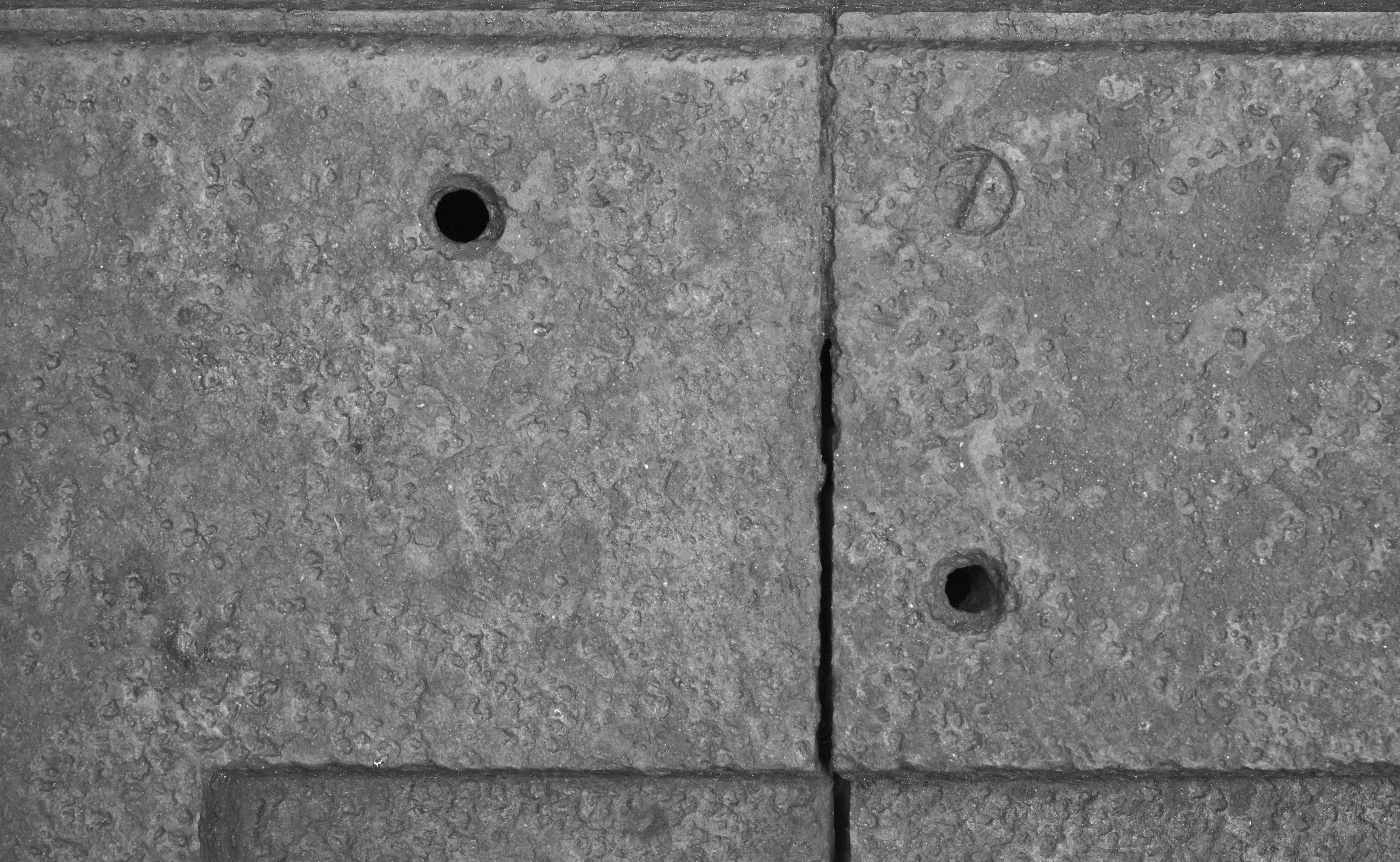
You might prefer drama or realism, contrast or subtlety. You may perceive the world concretely or abstractly. You may be
influenced by historical or contemporary photographers.
But when you spend significant time in your local place, resonance will develop over time. Neither nature, weather, nor a personality is static. If it helps, think of resonance as a form of play, and nature as your playground.
-

- The Barker
-

- Sunrise at Breakfast
-

- Together is Better
-

- Kiss of Morning
-

- Spring Surprise
-

- Kissing Rock