


 Join the conversation
 Subcribe to comment rss feed
A month of snow and sunshine

Tim Parkin
Tim Parkin is a landscape photographer living in Scotland who co-founded On Landscape magazine. Alongside his photography and writing he also co-founded the Natural Landscape Photography Awards, runs a film scanning business and is a judge for other international landscape and nature competitions.
April saw some extreme weather swings, from a brief spell of sub-zero Celsius at the start of the month that saw snow to sea level, all the way to a (relatively) balmy 20 degrees with wall-to-wall sunshine and then stormy rain fronts and back again to sunny days by the end of the month.
Around the middle of the month, a sunny spell triggered a burst of spring growth, and the trees seemed to sprout fresh greens seemingly overnight. As the spring growth accelerated, I’ve particularly enjoyed playing around photographing the River Coe in the evenings. Between the changing water levels with rain and sun, the angle of the late sun moving behind the hills and the bursting forth of spring growth, the same small path of river can change dramatically every few days.
The seasonal changes have also varied significantly from near home at the side of Loch Leven to the elevated areas of Rannoch Moor, where temperatures can be several degrees cooler. And in the mountain areas, spring is held back by a fortnight or more, and you can see the greens crawling up the side of the mountains day by day.
My motivation for the project has improved this month. There’s definitely a rhythm I need to hit to keep going out regularly. I’ve looked back at a couple of attempts to manage a 365 project in the past, and it’s about this time of year when the rainy spells can put paid to the momentum built up from the excitement of the frosty and snowy start. I definitely have a personal problem with motivation. I seem to get stuck with what I’m currently doing and resist change, whatever that may be. When I actually do get up and get out, I love being in the landscape and then don’t want to stop! There’s definitely some neurodivergent stuff going on. Fortunately, I have an assistant who helps push me out the door and get me doing the stuff I actually want to achieve. Thanks, Charlotte!!
Bonus Photo
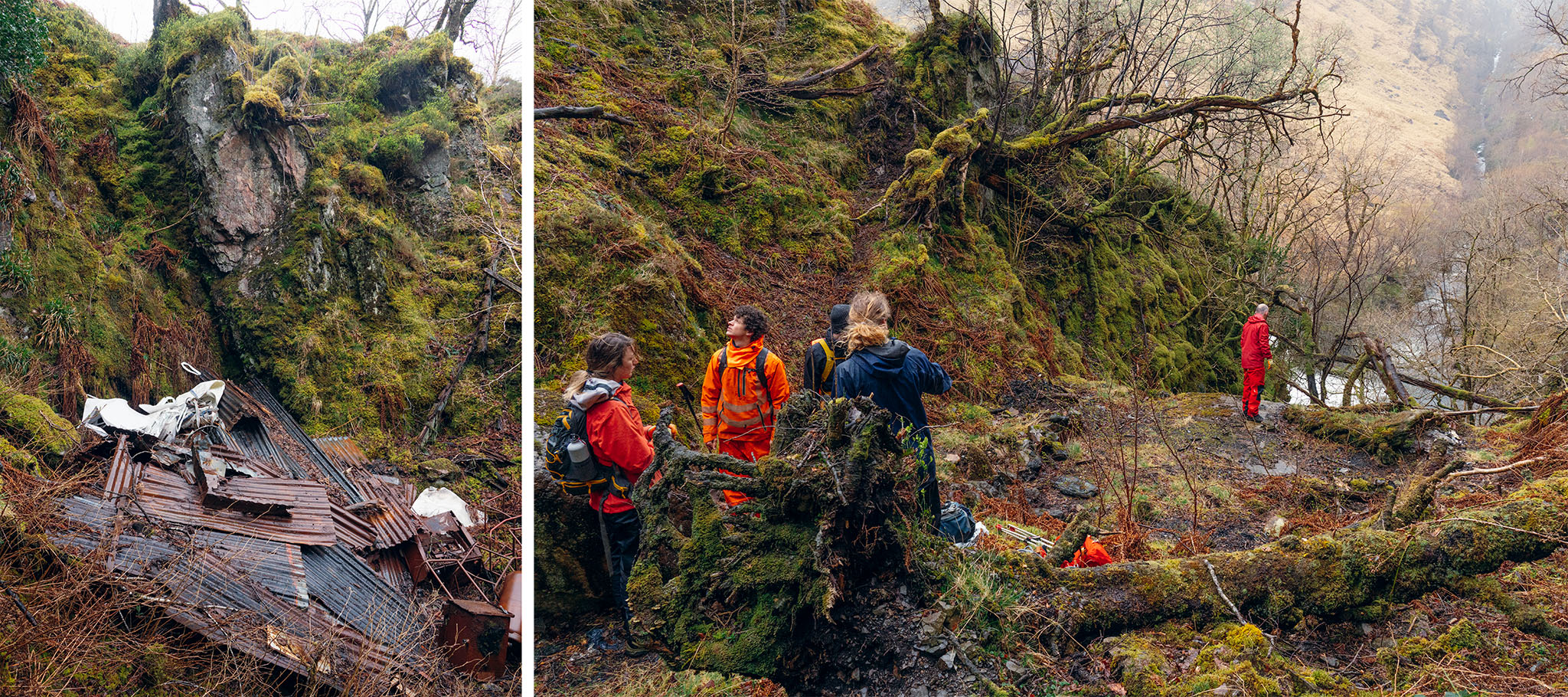
I’m friends with a local ranger for the National Trust for Scotland and he asked for help trying to clear a ‘bit of rubbish’ opposite the Lost Valley in Glencoe. The gully was used by climbers as a hut in the 1970s and could originally house up to 15 people. Since the 90s, the building has rotted and collapsed and all that is left is the corrugated iron, old chairs and tables, gas heaters, etc (as seen in the photo). We managed to drag some of it out of the gully in helicopter bags, but we quickly realised it probably needed a plasma cutter and a generator to cut down the larger pieces and get them into bags to haul out. It feels good to invest a bit of time helping maintain and improve parts of the local landscape and learn about its history at the same time.
10th April
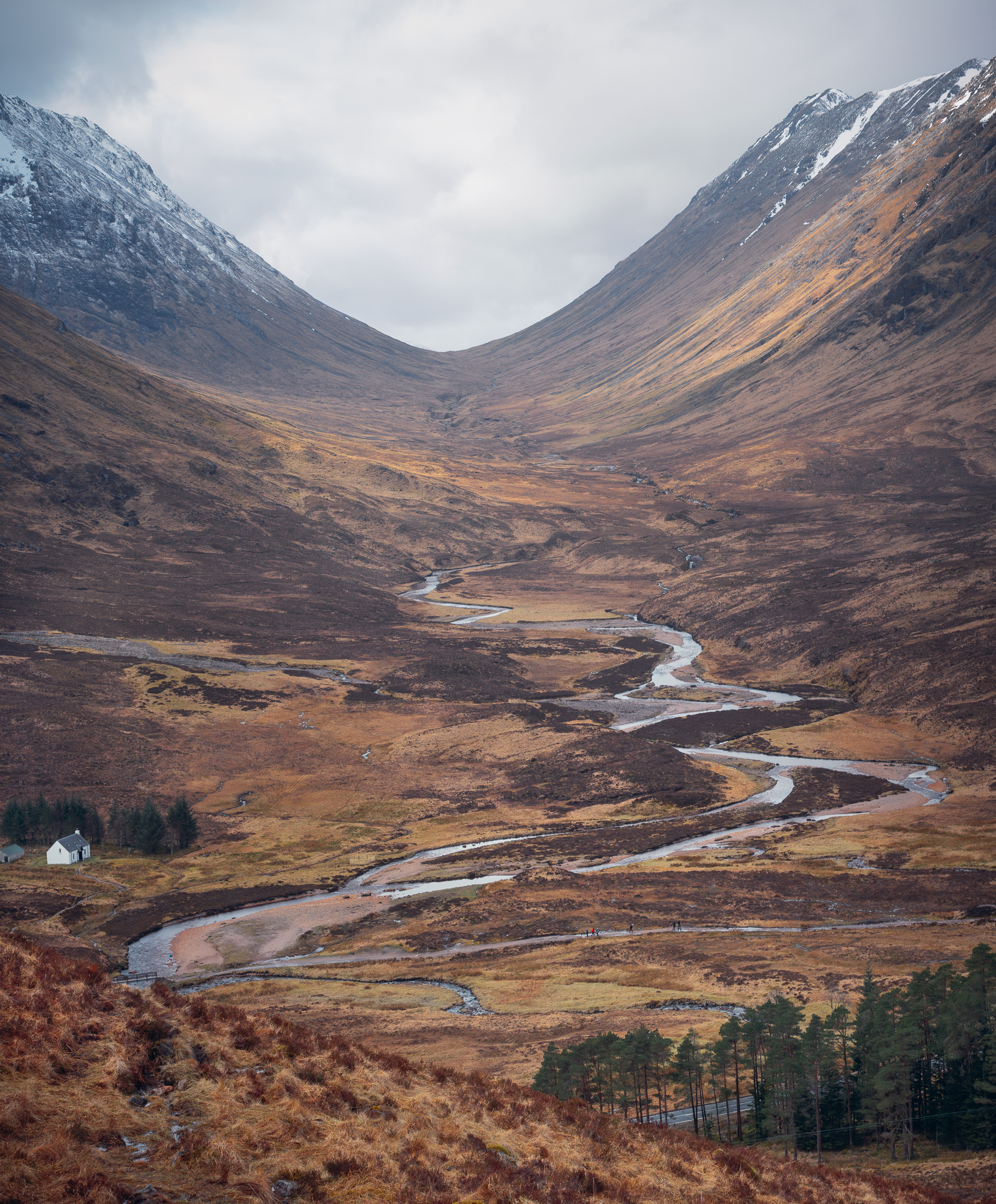
There’s a wonderful and easy scramble up the front of Beinn a’Chrulaiste (the hill with the classic view of Buachaille Etive Mor - insert link) called ‘Pink Rib’, so named as it’s part of a rhyolite dyke, a crack that filled with molten rock and cooled very quickly. As we descended down the normal walking path, the glacial valley of Lairig Gartain became really clear with it’s scooped curve between Buachaile Etive Mor and Buachaille Etive Beag (the big herdsman and little herdsman of Etive). It’s difficult not to include some of the road and I could have cropped higher but the trees give the picture a good foundation. As Joe Cornish and I mentioned in an upcoming Any Questions podcast, the land - especially in the UK - is touched by man everywhere, and to consistently deny that is close to misrepresentation.