Ad Hoc Reverse ND Grad Filters

One of the issues that sometimes comes up when doing landscape photography in the UK (and I’m sure abroad sometimes too, but I never go there) is that we have clouds; lots of them; All over the bloody place. This can sometimes mean that the only glimpse of the sun you get all day is when it slips above the horizon and just before it slips behind this layer of clouds for the rest of the day (and then again in the evening).

This leads to a bit of a problem because that strip of light at the horizon is often about 2 or 3 stops brighter than the sky above it and about 4 or 5 stops brighter than the ground below. Singh Ray, an American manufacturer of filters, sell a filter called a ‘reverse grad’ which aims to solve this issue (well, in the US it tends to be aimed at the gradually darkening clear sky with ultra wide lenses). I should add that even with a clear sky, the brightness difference between the horizon and looking up about 90 degrees can be a couple of stops or more so it’s equally valid then.

Quite a few people have contacted Lee Filters to ask if they can create them only to be told ‘no’. I’m presuming the answer may have been slightly more detailed but ‘no’ is sufficient for this article*.

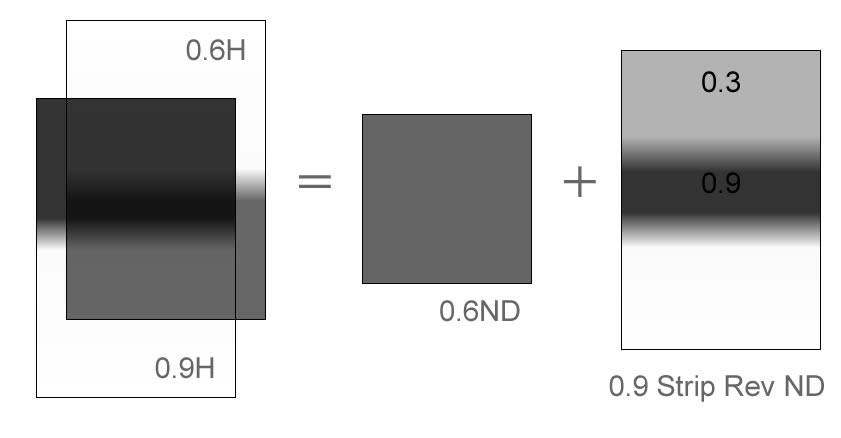
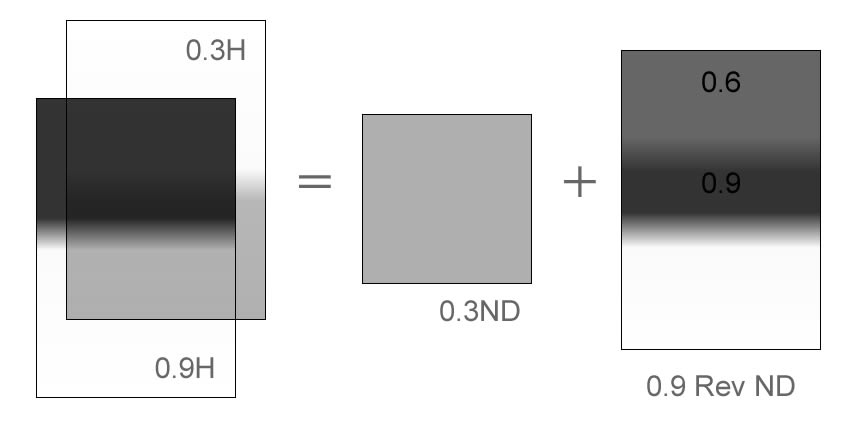
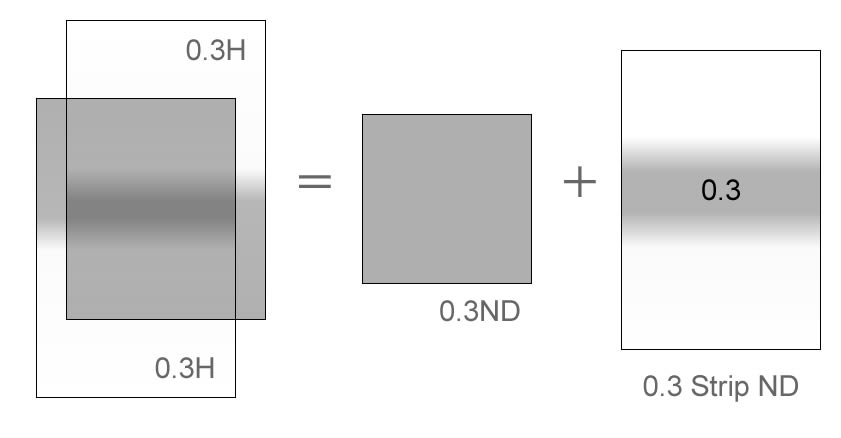
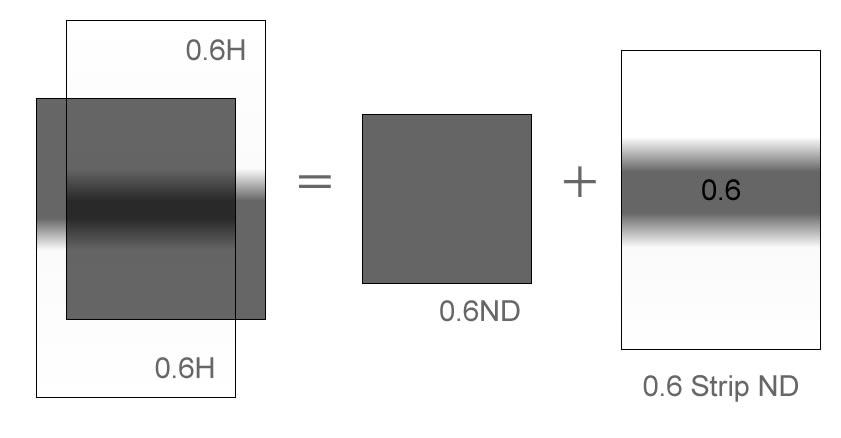
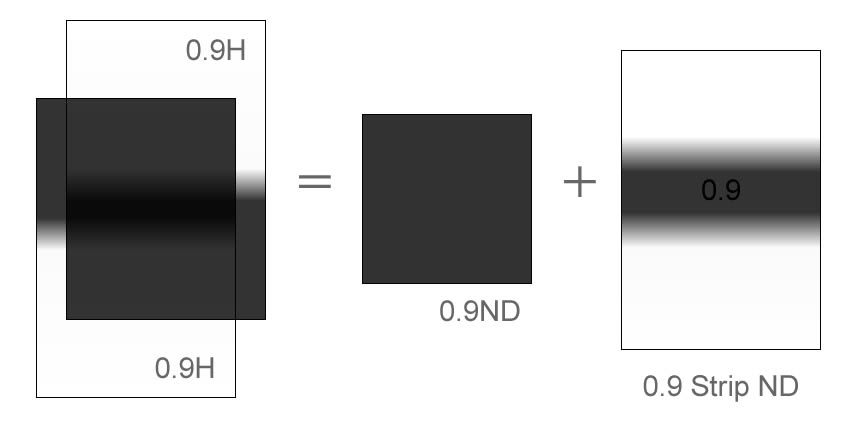
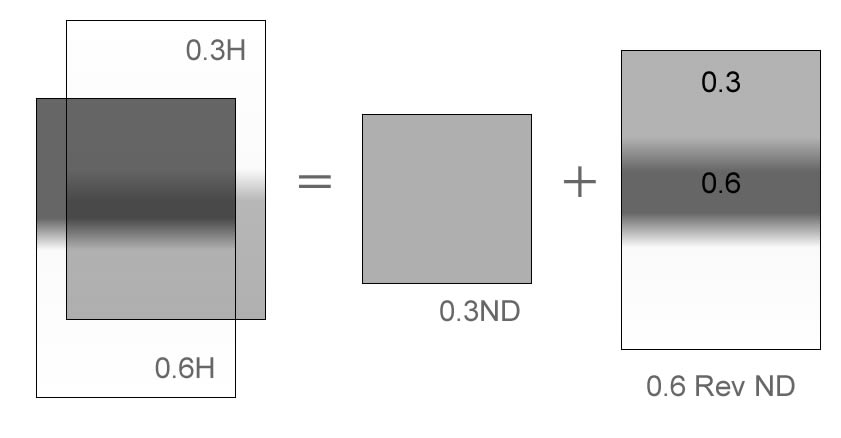
However, “I have a cunning plan!” – we can take two hard graduated filters and turn them around so they are sitting opposite each other. Where the two graduated filters overlap, we have a dense area. Depending on the graduated filters used, we can ‘emulate’ the fabled ‘reverse grad’ as follows..

[3H + 2H] = 3 stop reverse grad + 2 stop ND filter

Obviously we end up with an extra two stops of ND above what a reverse grad would give us but as a bonus, we get to choose the width of the extra one stop of filter.

With a few different combinations, we can create hard strip filters and reverse grads of various powers (the light stopping sort of powers, not flying powers and stuff – that would be silly – although quite handy should you be shooting off the edge of a cliff and you over adjust your 3H filter, dropping it down towards the rocks, despairing at the fact the production capabilities of Lee a running so short of demand and realising that you might be waiting for another three months before you can capture *that* shot, hence scuppering your professional landscape photographer plans for good…).

This isn’t a perfect solution as you end up with an ND grad as well as a reverse grad but if you can get the shot quickly using this then all the better. Let us know what you think of the technique and if you have used it either before or since the article.

Some examples shown visually
*no = the dipping method used by Lee filters makes creating a colour balanced reverse graduated filter very difficult.

14 Responses

  1. Hmm.. That is interesting. I never have thought about stacking and reversing filters like this. Looks like it could solve some issues.

    I have been reversing filters often before, but then to hold back the exposure on the foreground, for example reflections of clouds in a lake and a different one for the sky. Leaving the islands and forest untouched. Will have to give this method a try next time.

    Thanks for the tip.

    Greetings from Finland.

    • I’ve used it a couple of times in the past, especially on the coast or when you have a very flat landscape. The strip can get obvious if you are working in hills or have ‘obstacles’ in the way. Then again, this is equally true for normal grads.

  2. reikanphoto

    Great idea. I was out the other day taking sunrise shots and was wishing for a reverse ND grad. I think my brain froze, as it didn’t occur to me to do this. Great idea for the arsenal.

    On a similar note, I use hard HiTech grads, and they’re transition area is about the same as the Lee soft ones. I have, on occasions, turned the filter upside down and put it half way down the holder – this ends up with the ultimate hard transition (make absolutely sure you use DoF preview to check effect and it only works on very straight horizons).

  3. This is a great technique I have used myself several times to great effect. Fantastic to see it explained so nicely here.

  4. tonyshaw

    If used as in the last example, could be used for the stated effect plus will help give you a slower speed if required if you don’t have a ‘big stopper’.

  5. Richard Childs

    Don’t forget also that if applied sideways on, this overlapping method can be really useful in controlling contrast when photographing (narrower) waterfalls with dark, wet sidewalls. I often use 2x .3nd grads to hold back the water 1 stop and/or reveal more detail from the surrounding rock and foliage.

  6. samantha

    Really interesting article Tim will have to give this a try !

  7. This is a technique that Graham Merritt enlightened me about just over a year ago.

    I have found that when you photograph the early sunrise that when using just a grad on it’s own the top of the image can be dark. However, the reverse grad will even this out. Usually I’d be using a 0.9 with a 0.3 to even it up a bit.

    Last I remember Graham telling me, the next Lee Filters book will highlight this technique.

  8. dtphotography

    Simple – but amazingly useful. I’m off to try the technique right now!

  9. I have used this effect, not realising it, with my Lee pro-glass and 0.3 hard grad… great article, I just need Lee to catch up now so that Santa gets his orders filled!!… any tips on how to get my pro-glass solid to stay in the holder as it wants to slip out and i have already smashed one (very expensive) filter…

  10. kevin-allan

    Really useful article Tim and I also like Richard’s variation for waterfalls.

  11. stevel

    Formatt (Hitech) now sell 0.3, 0.6 and 0.9 reverse grads. They are £51.

  12. rjb

    Hi Tim,
    Only just discovered the magazine, so playing catch up and reading back issues.
    Like you, I rang Lee a couple of times about reverse ND grads and been told “No”. I did some investigating and found the Singh Ray option, then discovered that Hitech also do them and they’ve proved to be a really useful addition to my ND set.

  13. Llike rjb I am catching up on back issues. That thin strip of ultra bright light has been a real frustration – this looks like a great and simple solution, will try it at the first opportunity.

Notify me of followup comments via e-mail. You can also subscribe without commenting.