Rule of Thirds

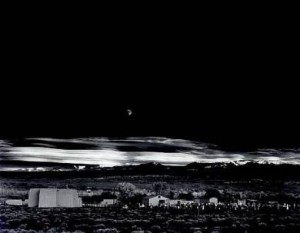
Ansel Adams

Rule of thirds, rule of thirds – it’s all we hear from photography magazines, camera clubs and composition guides. According to these sources, the rule of thirds is the prime rule in photography and you should break it at your peril. In this article I aim to rip up this part of the rule book and show it for the misdirected rubbish it really is (it’s acronym is ROT, in case you need reminding).

First of all let’s start with the origins of this rule. According to our research, the first mention of the rule of thirds is in a book “Chromatics” by George Field where Sir Joshua Reynolds and Sir John Thomas Smith (1797) are referenced as follows:

“Sir Joshua has given it as a rule that the of warm to cold colour in a picture be as two to one although he has frequently therefrom and Smith in his Remarks Rural Scenery would extend a like rule to all proportions of painting begging for it the term the rule of thirds according to which a landscape having one third of land should have two of water and these together forming about third of the picture the remaining two thirds be for air and sky and he applies the same rule the crossing and breaking of lines and objects &c”
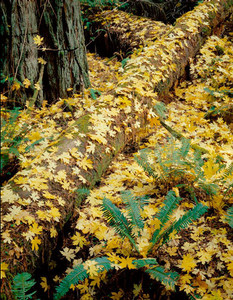
Philip Hyde

So it seems that this rule of ratios is intended at first to be applied to colour ratios but then became extended to all ratios within a picture. Even then, this author immediately follows with “the proportions in both cases are to be governed by the predominance of light or shade, and the required effect of a picture,”. So even this early in the game, the rule is being knocked. He goes on to say.

“This rule, however, does not supply a general law, but universalises a particular, the invariable observance of which would produce a uniform and monotonous practice. But, however occasionally useful, it is neither accurate nor universal, the true mean of nature requiring compensation, which, in the case of warmth and coolness, is in about equal proportions, while, in regard to advancing and retiring colours, the true balance of effect is, approximately, three of the latter to one of the former; nevertheless, the proportions in both cases are to be governed by the predominance of light or shade, and the required effect of a picture, in which, and other species of antagonism, the scale of equivalents affords a guide.”

It is thought that the rule of thirds is originally related to the golden section – where the golden section appears from the golden ratio of approx 1.6:1 – hence the rule of ‘golden ratios’ moves those ‘key third points’ further into the corners. These golden sections supposedly originated in antiquity and were the basis of much historic art and architecture. But many experts say that these ratios can’t be found in the pyramids or the Greek parthenon and other buildings. The obsession with these ratios only really reappeared during the time of da Vinci and this was from Vitruvius’ treatise on proportions (although it is widely thought that even Leonardo didn’t really use the golden section). [see wikipedia golden section page for more]
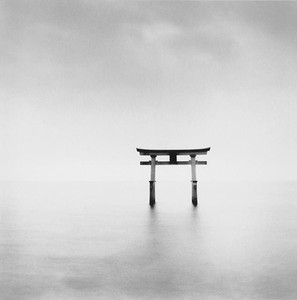
Michael Kenna

So, if there is very little behind the ‘rule of thirds’, why do people hold on to it so strongly as a compositional crutch. After going through hundreds of different pictures, the amount that conform to the rule of thirds is minimal.

I’ve seen critics call objects that are close at the edge of the picture as ‘nearly a third’ and also, anything slightly away from the exact centre as ‘almost a third’. Hence the only things that don’t really fit the thirds rule are objects almost against the edge of the picture, objects in a corner or objects/lines smack bang in the centre. So by applying the ‘rule of thirds’, we’re saying “Don’t put things at the very edges of the frame or slap bang in the centre”.

Another contradictory thing about the rule of thirds is that I’ve yet to see a picture that uses all four of those ‘third’ hot spots. Why not? Surely if it conformed to every third it would be so much better!? In reality it would look very odd, with weird symmetries disturbing the eye.
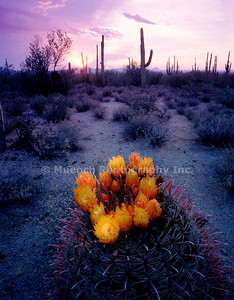
David Muench

It is probably true that the ‘first guess’ placement of an off centre object with no other context will probably be around a third point (but within quite a large tolerance). However, if we can use a musical analogy (and it’s probably one of the most productive genre to access analogies from) a ‘third’ placement is like a major chord in music and just as a song full of major chords will sound dull very quickly, a picture with just thirds will do the same. I tend to place horizons quite close to the edges of the frame – a rule of fifths would work very well.

Just as a side test, I went through twenty of Joe Cornish’s pictures and logged some ‘focal points’ and horizons. The vast majority of the horizons were on a 25% line, although a significant minority were at 20% and 50%. As for objects, the spread was all over the shop but nothing got closer to the edge than 20% of the frame width to the edge.

So what can you take out of this article? Well for one, composition is more than just aligning a few objects with a simple grid (but I guess most of you knew this before you read the article). What composition is about is flow and balance and I’ll use the end of this article to announce a new series starting in February which looks into composition. We’ll study to approach the task of composition from working in the field to honing a composition with your camera on a tripod and predicting/waiting for complementary light.

The pictures in this post are from some photographers that are well known for their compositional skill. I looked though many of their best photographs and it was consistently difficult to find pictures where key elements, such as horizons or focal points, sat on the ‘third’ lines.

48 Responses

  1. JonSparks

    Thank you for this. I’ve been saying it for years too in all of my books and every other chance I get. I thought of the ROT acronym independently (well, it doesn’t take a genius!) – see http://jonsphotothoughts.blogspot.com/
    What really made me challenge this numbing orthodoxy was the comment of one of my students after being asked to explain why a picture was successful: “it’s a good picture because it follows the Rule of Thirds”.
    Great to see someone else attacking ROT.

  2. “The pictures in this post are from some photographers that are well known for their compositional skill. I looked though many of their best photographs and it was consistently difficult to find pictures where key elements, such as horizons or focal points, sat on the ‘third’ lines” that’s me buggered then. (o:
    But seriously, rules are only fashions and it takes several mavericks to turn the popular consciousness… breaking the rules (when they are becoming too conventional) starts something new…

    • Rex

      I have done the same trick by creating a grid on a layer.
      My most fun was a website espousing RoT where the example they gave had the subjects on the quarters not on the thirds. The words shoot, self and foot come to mind.

  3. Well, let’s not be too negative: The Rule of Thirds is a good enough guide for a beginner to help them methodically compose a scene – in particular one which has many elements and gives rise to “help what do I do with this lot”. If the beginner can somehow arrange a dominant element somewhere near one of the intersections, that will in many if not most cases lead to a decent shot.

    Having said that I had the opportunity to visit the Van Gogh museum in Amsterdam just recently and was greatly relieved to see that many of the pictures had no ROT structure at all. (the museum/gallery has paintings by several other artists as well, including Monet). A couple of seascapes had the horizon at around 20%, e.g. (http://www.vangoghmuseum.nl/vgm/index.jsp?page=2679&collection=1282&lang=en) or look at http://en.wikipedia.org/wiki/File:Gustave_Courbet_030.jpg One horizon was bang in the middle for which any self-respecting RPS judge would probably immediately award “Null points”.
    Rgds., Adam

    • > any self-respecting RPS judge

      Is there such a thing? Google for `FRPS’ some time; I prefer a good photo to a pretentious qualification, any day.

  4. jools_b

    I think this is the key part of the quote from Sir Joshua Reynolds cited above:

    “the invariable observance of which would produce a uniform and monotonous practice”

    So it’s not the rule of thirds itself that is the problem but it’s unthinking use. In fact the unthinking use of any compositional formula by an artist will lead to monotonous results simply because the artist is not putting anything of himself or herself into the image (aside from choice of subject). Any approach to composition has to be subservient to what it is that the photographer is actually trying to say. Only then is it likely that the results will be worthy of any more than mere passing interest.

    That said, we shouldn’t reject all rules because they can be seen as impediments to creativity. Compositional ‘rules’ are merely the distillation of many centuries of artistic research into aesthetics – which are themselves based on concepts of beauty that are ‘hard-wired’ into the brain at a deep level. For example, scientists have found that what is considered to be a ‘beautiful face’ can be reduced to a simple set of ratios, entirely independent of racial and cultural factors. So if our appreciation of beauty in a potential mate is so deeply ingrained it follows that we subconsciously apply these ratios to everything we see.

    Since Tim mentioned the Golden Ratio, it should also be noted that this ratio is derived by fitting a rectangle to a spiral generated by plotting the Fibonacci Sequence, a mathematical progression which can be found throughout nature. I think that the reason why the Golden Ratio is so appealing is that we understand this connection innately. The Fibonacci Sequence is as much a part of us as it is a fern or a snail’s shell.

    • Agreed – although I’ve yet to find any evidence that the rule of thirds or the golden ratio correspond to anything in our ‘visual hardwiring’ that would warrant paying it an particular attention, even if the maths is fundamental to most of our make up e.g. we’re all built on the Planck Constant whose length is 1.616 252(81) × 10−35 m but I don’t see much advantage of using that in landscape photography compositions ;-)

  5. Joe Rainbow

    My congratulations on this article which highlights the stifling practice of dividing everything up into bloody thirds. A frame is a frame, and how you arrange elements within it, is a game that never ends. It is surely a question of balance. Look at the works of Mondrian or Miro and see how there are dots of bright colour, balancing larger areas of neutral colour. Elements stuck to the edge of the canvas that balance other shapes floating about in the corners. It is a ridiculous guide to say everything should be divided into thirds.
    The main thing that bugs me about this, is the instant lack of creativity and flare. It is predictable and stifling. Secondly, the eye and the brain in combination can happily deal with points of tension and counter-balance, and in fact, they seem to quite enjoy it! So my own rant over, I would far rather tell a student that they should compose an image by ‘intuition’ than by a rule. All you need, is for the photograph to work.

    • Yep – agreed. I think that teaching composition as series of different ‘ways of analysing’ a picture is a better way of approaching things. e.g. The concept of balance, energy and flow..

    • Joe Cornish

      Joe, just wanted to point out that lack of flare might be seen as a good thing, whereas lack of flair most certainly is not. In every other respect I agree totally.

  6. Hang on a moment, Tim, are you “stringing” us along here? “…Planck Constant whose length is 1.616 …” bla bla and the Golden Mean which is approx 1.618, while ROT is approx 1.67. All very close. There you go then: beauty in Nature at the smallest level (intimate micro-nano landscapes perhaps?) corresponds to our perception of aesthetically pleasing. ‘Nuff said :)

    • Spotted – I’m going to start using ‘rule of planck lengths’ from now on – will place significant features 0.00000000000000000000000000001616% in from the frame edge ;-)

  7. jools_b

    Good luck with that, Tim…. ;^)

    I’m going to carry on using the Fibonacci Sequence for my images with features at 1%, 2%, 3%, 5%, 8%, 13%, etc. Should slow me down, if nothing else….

  8. It is a shame that beginners in photography are bombarded with such rhetoric from the monthly photography press and forums. Should it stop there though ???- other aspects of photography which might need to be uncovered has already been started with JCs aspect ratio articles when he flags up 3×2 – but you could also go on to rubbish cliche locations, not photographing in sunny and bad weather and also never over exposing highlights amongst others.

    It’s a mine field out there!

    D

    • OOh I could make it a series!! I think the over exposing highlights and shadow recovery would be a cool one

  9. hopeless

    I fond myself often creating ROT-like compositions but not necessarily by following the ROT. For example, with birds/pets/kids I’ll often compose something that looks like ROT but is actually just giving the subject space to look or move into. Yes, that’s another one of those rules but it works (and I’ve broken it successfully too).

    I think the real benefit of the ROT is in getting new photographers to step away from the central AF sensor. Whether the horizon is at 33% or 20% isn’t as important as making the photographer think about where it should go.

    • Ah now then, gaze and space – totally agree that this is important. Even for inanimate objects, very often they have their own sense of gaze. And I’m not disagreeing that the rule of thirds results in something useful occasionally, I just think it would be better stated as “Don’t always stick stuff in the middle of the screen – try placing it on just off centre or closer to the edge and see what happens”

      • This is actually heading in a cinematographic direction. These things that we photographers agonize over once, a film-director does at 24fps.
        We landscapie-arty-photographers often like to ignore the mountain and look at the triangle (that’ll be the Buachaille then); we ignore the waterfall and talk about the flowing curves; we ignore the contrail and admire a contrasty white on blue diagonal line; we euphemistically talk about “photos with abstract qualities” meaning we don’t give a stuff about the subject-matter per se. It’s not bad, but…

        Film/movies have the idea of an image-system, which is part psychology (establishing themes for the audience, e.g. the use of *red* in _The Sixth Sense_), and partly a space where attributes of the scene as subject blend with attributes of the finished frame. “Correct head-space” (for loose values of “correct”) means putting someone’s eyes on the top third down; Hitchcock’s Rule is that objects in the scene are presented with size according to importance (think of an extreme closeup of a chess piece in a character’s fingers).

        Your “balance” (an idea I got from reading Tom Ang), the idea of “gaze”.. these things fit in the middle, bridging the subject and the abstract.

  10. Rhysd

    I think “rule of thirds” is probably a misnomer these days as I prefer to think of it more as a “guideline of thirds”. It serves a purpose when composing a landscape image if only to give a vague idea of where elements in the image fall. Exact thirds are very boring in almost all cases and, for instance, if the sky or sea is particularly dramatic wouldn’t one naturally want to see more of it in the final image?
    Far more important is the placing of elements on or near Golden Mean points. Joe Rainbow above mentioned Mondrian & Miro – both of whose works contain important elements on these points in almost all cases.
    In my work I try follow three things in no particular order:
    1) Golden Mean is good
    2) Odd numbers look better then even (ie 3 trees rather than two or four)
    3) Don’t place important elements right in the middle of frame (see Golden Mean!).
    However, even these are only guidelines and I will happily break them in the interests of dramatic impact & “flow & balance” as Tim states above.

    • Hi Rhys, I’m not sure about Miro using the rule of third/golden section (looking through a range of pictures suggests he didn’t use it often at least). Mondrian used it sometimes, although many of his pictures not at all. If we use classical artists as a reference for whether the golden section has any weight, we would have to conclude not. Mondrian used it almost as an affectation though – he was experimenting with shape and division and the golden section was almost guaranteed to get brought up at some point.

      Your third rule/guidelines is a classic photographic one “Don’t place important elements right in the middle of the frame” – expect when you want to. In other words, put stuff where you want.

  11. Rhysd

    Hi Tim – I love a debate :-) ) I agree with you to a certain degree in regards to Miro. Much of his work does not use the Golden Mean directly however there is a recurring “eyeball” shaped element in many of his paintings that lies very close to if not exactly on a GM point. As for Mondrian, I, like most people, am really only familiar with the well known “Composition with red, yellow blue and black”. The very centre of the red square in top left is exactly on a GM point. Is this reason that it is the most widely accepted of his works? ;-)

    • Agreed – Many Mondrian pictures from a certain period used the golden section (his ‘neoplasticist’ period from what I’ve read). But it seems he abandoned it later on. Perhaps it only works for pictures of straight lines ;-)

      I don’t deny that there has been a tradition of using the golden section but don’t think that there is anything inherently ‘perfect’ about it. personally I think it arose in pictures because of the simple mathematical structures behind it – i.e. Just like the ratio of pyramid sides coincides with the only techniques known to work out right angles at the time.

  12. jools_b

    “In other words, put stuff where you want.”

    Well, yes. But only if it _works_ . And how do you know if it works? Experience. And what do you do whilst you’re gaining that experience? Use the rules….

    Which brings us neatly back to the beginning. :)

  13. I do think “rules” of composition are very inhibitive and will be taken literally by the less experienced photographer which will be detrimental to their progress.

    Whilst there are definately agreeable guidelines which help construct an image (flow, balance, lead in lines, not having objects which acting as a barrier etc) I actually think that composing a photograph comes mostly from experience and instinct/gut reaction. That moment when you are walking through the landscape and you instantly “see” the composition, you know the photograph you want to take. Then when the camera is out it is then up to the experience of the photographer to make the necessary adjustments and, almost certainly, subconsciously utilise widely used compositional tools and tricks (for me anyway!) to make the final image.

    No good can really come from sticking religously to rules – I believe that the way we resolve the landscape is the most important factor in our photography and usually the one that is the hardest to learn (anyone can become competent in camera skills)

    I also believe that certain rules will go out of fashion, if only so magazines have something new to push once they have recycled the rules for a few years.

    • “I actually think that composing a photograph comes mostly from experience and instinct/gut reaction”

      In addition to your `mostly’, I’d like to highlight the stochastic method: the idea is that any scene with any potential movement should be shot a few times in bulk mode and the best one chosen.
      Now, it sounds crass, especially in LF circles where everyone strives to make only one authoritative shot of anything and move on (BTDT), but it’s really valid: even a simple matter of shooting in a forest, you’ll get a gentle breeze moving leaves around and you might find, on review, that one shot has a wind-blown blurry leaf obscuring a distant rock, while half a second later that’s not a problem. Thus you learn “subject separation” from first principles.
      The point is not the forest, nor the goal of subject-separation, nor any one *value*; rather, by shooting a handful more than some might admit, you get to establish the *parameters* themselves whereby you like a given variation. Those parameters vary from scene to scene, and from learning them you can build up your own rules of composition.

  14. Doug Chinnery

    When I saw the title of this article I thought straight away it would lead to a “grumpy old men” style of correspondence… Which I have thoroughly enjoyed reading. Personally, I will scream if I see another ‘popular’ photography mag proclaiming the merits of the ROT. I can think of over thirty compositional ‘tools’ which I use and the ROT is one of them because it does work sometimes but no more or less than any other the other plethora of tools available to us. A slavish adherence to it stifles creativity. Great to see the debate – well done Tim.

  15. Great article Tim! You guys have hit it spot on and it is rather cathartic to read this thread. In the end it is all about balance. I think that this whole religion of the rule of thirds has come about due to the influence of the many how-to books and magazines on the market. In countless online galleries that David Meunch image would be marked as “flawed” as the flowers lie along the centre line. Truth be told their position does adhere a bit to the rule of thirds in the amount of visual weight they add toward the bottom third and the placement of the horizon. Somehow people have mistranslated the rule of thirds and now they fell any subject MUST be positioned on one of the “power points”. As you point out that is absolute rubbish and it drives me mental. In the end the rule of thirds or the golden mean or whatever are only guidelines to help newbies figure out how to make a stronger image. The whole point is that most (certainly not all) images tend to be stronger when a subject is composed off centre.

  16. The best thing about rules is that they are there to be broken.

  17. Rule of thirds = don’t put things in the middle

    That’s my interpretation and even that rule can be broken. For me though on most occasions, placing your subject in the middle gives the image a level of immediacy which makes me lose interest quickly (in general). 3rds is just a rule for beginners, I don’t think anyone seriously thinks it is more important than that do they? It’s a good starting place, nothing more.

    • Well speaking as someone who quite often composes with the main subject slap bang in the middle of the frame I can say that I find it a simple and powerful way to quietly and strongly say “look at this…” rather than “look at my composition…” Of course it’s good to say both sometimes but with certain subjects I find a quiet, straightforward approach best.

      • I can only look at your work and say that those are the exceptions I am referring to David. I have often remarked to others how I admire your eye. Its a difficult subject to deal with. The fact of the matter is that compositions with the subject in the middle are where everyone starts out. You point your camera at the subject and inevitably it’s in the middle of the frame. There are only certain subjects that work that way in my opinion, but it’s just an opinion.
        The subjects that you photograph are often so captivating that this simply doesn’t apply for me David! I don’t think any of your images can be absorbed in a glance. I’m also more than happy to make exceptions, perhaps I didn’t put myself across correctly.

  18. I must admit that I do not consciously use the ROT. I find that when composing an image, I’m looking for other elements that will come together in harmony to make the final image, lines, the sky, flow etc

  19. Gary Liggett

    I agree with you Tim. As coincidence would have it, I was looking into this very subject only this week. Like Brad, I do not consciously use anything apart from my eyes when I am composing a picture. Forgive me if this sounds conceited – I do not mean that – but for me composition is instinctive. If it looks right, it usually is right. Having said all of that, I was looking at the work of Henri Cartier-Bresson and, in particular, the shot he took down a staircase of a passing cyclist. Many years later, someone overlaid a Fibonacci spiral… as if H C-B had time to think that through as the cyclist whizzed past. In my research, I did read that someone called the Rule of Thirds a poor man’s Fibonacci spiral, and I would concur with that. Dons tin hat!

  20. Rex

    http://web.me.com/rex_waygood/Site_7/Composition.html

    It isn’t a rule;
    It promotes ‘me too’ photography;
    Given that exponents of RoT include 20% to 40% they can almost never been wrong but then they claim the image has power as there is an absence of anything on the thirds.

  21. Rex

    Be careful what you attribute to the Fibonacci Series. I went to a lecture where the lecturer attributed an ammonite shell to the series. As I’ve given lectures on the series but I didn’t know I asked the lecturer and he was relatively adamant it was. So I contacted the NHM and they forwarded some lovely articles which showed the ammonite spiral isn’t related to the Fibonacci series. I call things like that Myth and Magic, the falsehood that is repeated without any checks until it becomes ‘true’.

    • Gary Liggett

      Rex – Fibonacci is based on a mathematical calculation. I can only speak personally of course, but maths is not to that standard! For me, all things composition are related to my eye.

      There is another consideration too, and that it the balance of colour, light and shade. A strong, but misplaced highlight would skew any so-called rules of composition. Perhaps, and at the risk of conceit, the rules are there for people learning the art of composition? They are simply guidelines.

      • Rex

        Gary – My comment about Fibonacci was due to this comment,The Fibonacci Sequence is as much a part of us as it is a fern or a snail’s shell, being posted. I don’t think Fibonacci is much related to photography. The Fibonacci series is incorrectly inked to natural items that obey other mathematical series but those that want to see Fibonacci do, even when it isn’t there.

        I object to the word rule in this context, I agree with you, call them guidelines, or even better dump them and discover your own take on composition. Obeying the guidelines just means your pictures will look like all the others that follow them. Every day a million pictures are posted to Flickr which is just one photo website, I hope they follow the rules.

  22. My take on the rule-of-thirds is that it’s a good way of reminding newcomers to photography placing your subject somewhere between the middle and the edge of the frame, rather than in the centre, often improves composition. For some reason though most people don’t seem to think about moving beyond the rule-of-thirds and learning about other concepts mentioned in the comments; such as space, aspect ratio, balance, dynamic tension and so on. Thank you Tim for exploring what can be a strangely controversial topic.

  23. Interesting debate. I fully agree that ROT is over used in the photo mags etc. but let’s not forget that it does help “new” photographers to think about their composition and place objects in different areas of the frame. On workshops I always tell my “students” about the rule of thirds but that every rule is there to be broken! Its a great tool for learning so lets not rubbish it completely, and I bet most of us more experienced photographers use it subconsciously more than we might care to admit!
    Oh and compliments of the season to all.

  24. All very interesting stuff, for me a further consideration is the frame ratio and alignment (vertical or horizontal). Putting the subject in the centre of an image works best in either a square or 1.25X1 format but, indeed, anything goes!

  25. Tim, I am so glad you brought this up. The rule describes a tendency towards the making of a strong composition but I for one never use it. It may help teach good composition, but as a photography teacher for 32 years, I’ve seen it heavily-depended upon as a crutch that often overrules the development of a photog’s compositional and creative potential.

    You can read more about my thoughts on the Rule of Thirds in The Digital SLR Expert Landscapes, for which I wrote the chapter on Composition:
    http://www.amazon.com/Digital-SLR-Expert-Landscapes/dp/0715329405

  26. JonSparks

    Nice to see how this debate has progressed, lots of interesting comments.

    I note the comment that ROT may have a value in encouraging new photographers to think about framing. Probably true because it encourages you to look at the whole frame, and to take note of the edges, which define it.

    So how would this be as a useful exercise for students, neophytes, or anyone who wants to work consciously on their framing:

    Phase 1: (an hour, half a day, whatever fits): in this phase take as many images as possible, consciously adhering to the Rule of Thirds for every one.
    Phase 2: repeat, but this time consciously make sure every image does NOT follow the Rule of Thirds

    • Sounds like a good test and one that would demonstrate whether the rule of thirds generates better images for that photographer.

  27. I don’t consciously use ROT but then I certainly wouldn’t change a composition I was happy with because it happened to fit with ROT. I don’t think that there should be any restrictions when looking at composition. An open mind will generate a better composition and for me consciously not using ROT is as restrictive as consciously using it.

  28. Jim, I didn’t mean to suggest that consciously avoiding ROT would make for better images than slavishly following it, but spending a little time doing both could make for a useful learning exercise.

    • Hi Jon. I think your idea is a good one and I should have said so My comment was more of a general ‘what I think’ about ROT.

  29. christheoldfarmhouse

    Fascinating how many people are moved to write about this!

Notify me of followup comments via e-mail. You can also subscribe without commenting.