Landscape Photography: Art or Commerce?

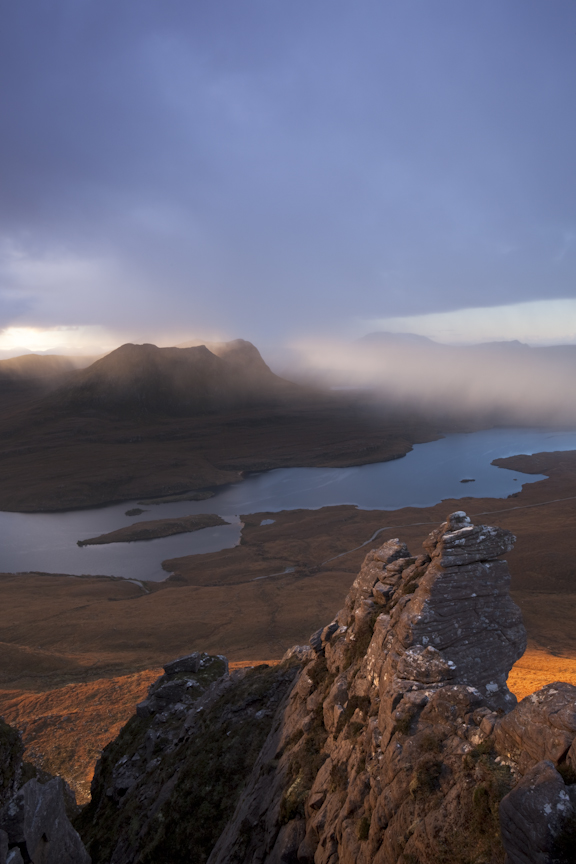
This image was taken on my third ascent up Stac Pollaidh in as many days. Only then were the weather conditions interesting enough to get the camera out.

After a recent 15-day trip where I only got half a dozen images worth mentioning, I’m feeling slightly jaded. Not because I mind waiting days on end for the rain to stop (well I do a bit) but because I made the mistake of working out how much it had cost me to be there with so little to show for it, and then dwelling on how many things I could be doing if only I was back in the office. This kind of money-oriented thinking is death to my creativity. While I am certainly not motivated by cold hard cash – what landscape photographer is? – I do have to keep one foot in reality and pay the bills at the end of the month.
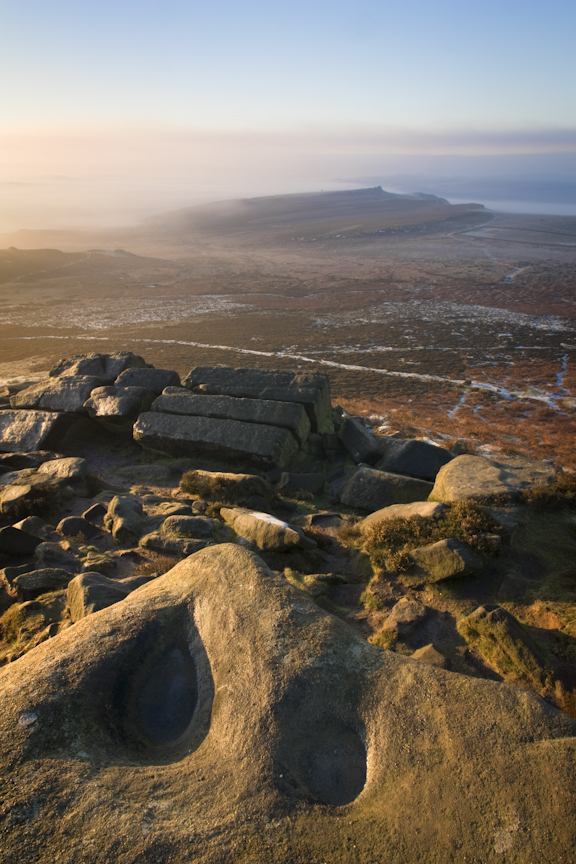
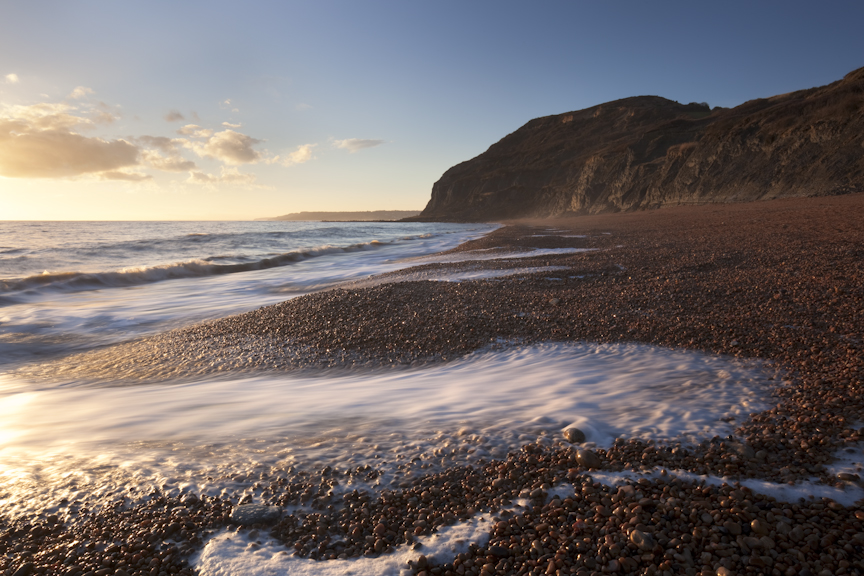
This shot was one of four taken within minutes of each other that have all been published at various points. It is exceptional to get so many useable shots in one day.

The costs of photography are going up, however the prices paid for my images are not – in many cases they are in decline. You might think the answer is to create more work to sell, however a threshold has been reached as there are a finite number of top quality photographs that I can make each year. This threshold is determined by the fact that I cannot spend any more hours making images than I already do, otherwise I would have no time to market them and do all the other things necessary to sustain my business. The only way I can produce more images is to make do with so-so light, which goes against every aesthetic principle I hold, resulting in substandard shots that in all probability have less chance of selling anyway. Either that or I need to learn how to bi-locate so I can double up my chances!

While landscape photography has never been the best paid of jobs (and I understood this before I started) the situation is getting worse and it has most definitely been exacerbated by the proliferation of images available online. It seems that every other person with a digital SLR now wants to be a professional photographer, although some might be put off if they knew the difficulties involved. The issue is when people are willing to have their images published for next to nothing or for free, perhaps under the mistaken assumption that it will lead to paid work. Once you start giving work away people certainly won’t offer to pay for it. This is the paradox – potential publishers can see your work’s worth to them but not it’s financial value to you. There was a time when I somewhat naively thought that people would stop asking me if they could use my images for free, alas that day has not yet transpired. People continue to try it on because although I say ‘no’ the next person on the list may well say ‘yes’.
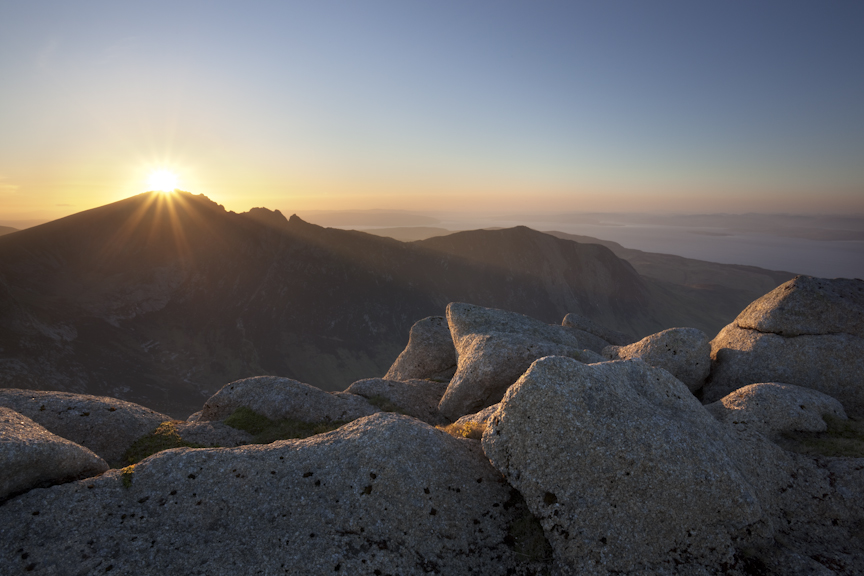
After an unsuccessful morning shoot, I started the long slow climb to this spot. As sunset was around 9.30pm it was nearly midnight before I got back to my car, making the total working day around 20 hours long!

Even after all these years I still find myself in grey area between two worlds: art and commerce. I think like a fine artist, as that is what my degree is in, however my personal experience tells me that the art world is not all that bothered by representational forms of landscape photography. Although I still yet hope to be proved wrong on this front. Consequently I sell the majority of my work to commercial clients, some of whom are willing to pay a reasonable fee, others who understandably want to pay the lowest price possible. I am not pleading a special case only on behalf of photographers, as equivalent problems plague many of the artists, writers and musicians that I know. My conclusion as to why the creative arts are so vulnerable is because, first, it is incredibly hard to get established until you have the requisite experience. For many the only way to gain this experience is to start at the bottom, which often means working for free in exchange for exposure or a foothold on the ladder. Second, unless you are yourself involved in that particular creative activity, it is unlikely that you can truly appreciate the time it takes to make it all possible.
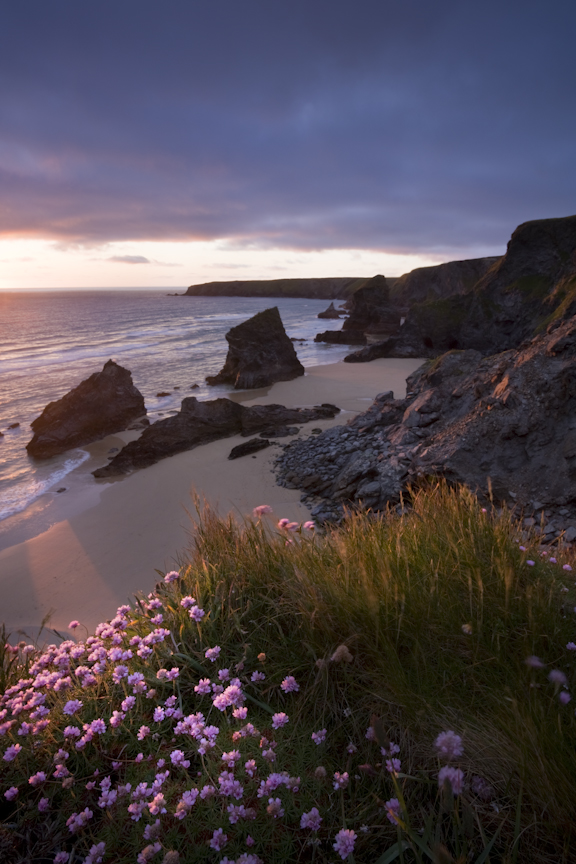
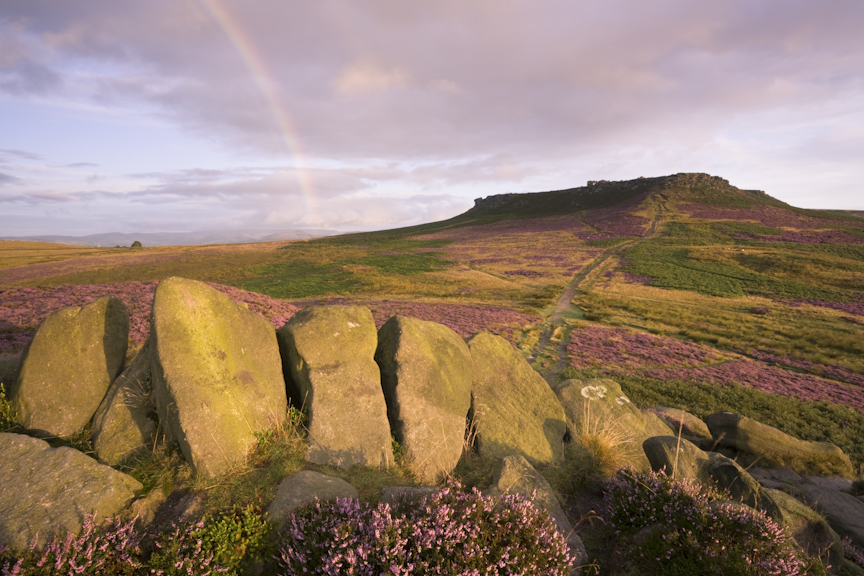
After four visits over the course of three years I finally got the combination I was looking for, the thrift in full bloom accompanied by dynamic lighting.

Before I leave you with the impression that it is all doom and gloom, I still love my job and feel fortunate to have got as far as I have. It is a real privilege to spend so many hours in the great outdoors, observing nature and reminding myself what is really is important in life. For the foreseeable future I will continue to walk the tightrope, rewarded by the immeasurable joy that comes from creating photographs that celebrate our amazing planet.

Fran Halsall © 2011

Fran Halsall has worked as a professional photographer and writer for nearly 7 years, taking as her inspiration the wild landscapes, diverse geology and different habitats of the British Isles. She is the author of two books, The Peak District (Frances Lincoln, 2008) and Light and Shadow (Frances Lincoln, 2010), and is currently working on a third.

Fran is passionate about promoting the value of our natural heritage through her work and hopes that the national obsession with landscape photography is a sign that we moving towards a better appreciation of our environment.


15 Responses

  1. Tom_W

    Fran, this is written from a Pro-Am Nature Photographers perspective, from a person who has looked at turning Pro and decided otherwise : )

    The problem of talented amateurs is a problem that was highlighted in the current “Industrial survey of Photographers 2010: British Photography Council” report.

    The survey clearly shows that the perceived biggest risk to a photographers business is amateur photographers (74.4% of responders stated this was the case); but juxtaposed beside the fact that only 61% of the responders said that all their income came from photography related activity one has got to ask what is a professional photographer today?

    Of all the responders only 9% where employed as a photographer; 91% where freelance. Of the 39% who made money from areas other than photography a pertinent question has to be ‘in what profession was this money earned and are the 100% pro’s in this profession complaining?’ Probably!

    From my Pro-Am perspective, but from a seasoned business professional (albeit in a different profession), “Creative arts” is vulnerable as a profession because;

    a) it is a desirable hobby for many equally talented people who have a disposable income (from their profession) and for whom some ‘sell’ images to make ‘pin’ money – any pin money – to help pay for their trips; for further proof of this look at the Wildlife/Nature market agencies which are saturated with Pro-Am. (RSPB images etc.)
    b) the commercial creative arts ‘image’ market rarely requires any formal qualifications; the final output (the image) is the ‘proof-of-the-pudding’; these images are ubiquitous and in a reasonable enough quantity to dictate that commercial ‘demand and supply’ laws apply.
    c) The majority of the market appears to favour price over ‘ultimate’ quality, as it wants to make as much a profit as possible which is usual for a none philanthropic business, and
    d) the cost of reasonable quality equipment (to help achieve this reasonable quality) has decreased so that it can be procured by a significant proportion of the Pro-Am disposable-income band.

    In truth, the professional photographer (i.e. a person who makes all their money from photography) is becoming a rare breed; even more so when, as stated, the Pro’s work place is the destination others dream of escaping too. And more so, will willingly pay to be there. A full Time Pro only has the luxury of time and as you rightly point out it is the division of that time (between business activities and taking images in the field) that will delineate them between the Pro and Pro-Am in the markets eyes.

    I see little change in the above in the coming years. Market forces drive it and from several different angles most of which are alien to the ‘arts’. In truth, without a seed change in market philosophy, it will only get worse as MF digital kit drops and the retired population increases. That’s said good luck for those that stay Full-Time-Pro, make the most of the opportunity, I enjoy looking at the images as they inspire me to get out again. As for Art or Commerce I would veer towards ‘art’ end as at least that is unique to you and being unique it has its own value (providing you can find a market); commerce, well, commerce is their for everybody to pedal the same wares.

    • HughWebster

      Hello Tom,
      You’ve written a model summary of the intransigent problems facing those wanting to make their living from nature/landscape photography.
      I’ve only managed to survive by going to extremes.
      On the one hand I cater to the cheap and cheerful end of the tourist market here in Scotland by taking popular views and then printing and selling, via an agency, a range of calendars and cards.
      On the other hand I shoot large format landscape photography which appeals to the upper end of the market.
      It’s an uncomfortable position to be in. Rather like paddling down one of our lovely Scottish lochs with each foot in a different canoe!
      If my son or daughter shows an interest in doing what I do I’ll try to dissuade them and advise them to take it up as a serious hobby.

      H Webster

  2. Tom,

    You have obviously thought about this issue in depth and I agree with the points that you make.

    The photographer who makes all their money from image-making is very much in decline. Recent conversations I have had with other professionals confirms this fact. The unfortunate irony is that unless you have oodles of time at your disposal then the quality and or quantity of image making suffers. I have worked part-time in the past and know this to be true, as the key to any landscape photographer’s success has to be the flexibility to determine working hours in accordance with the weather and the season. This is difficult when there are other work commitments involved.

    It seems we are heading into an arena where everyone is becoming a jack of all trades and master of none. Maybe this won’t matter so much to the photography industry, however only time will tell. It really depends on what the role of the photographer is expected to be. Will people still want to commission the knowledge and professionalism of experts in their field? Or go for the cheapest option regardless?

    As for leaning towards art rather than commerce, this is the only way to go. I only wish there were more galleries and institutions out there that celebrate landscape photography. There are some, and for those we should be grateful, but there are disproportionately few considering the artform’s popularity.

  3. frankman57

    Hello Fran,
    thank you for a wonderful article, interspersed with some really fantastic images. The look of your portfolio here, undoubtedly exudes fine art – to my eyes anyway.

    Thank you Tom for your response above.

    I’ve subscribed to this magazine, so that I can learn more about the art of photography, including all the digital finery that nowadays is a requirement. In my case I don’t understand all of it!

    I wouldn’t call myself even a competent amateur. Currently retired, after over 30 years in the grocery business, I’m using my interest in photography to keep my mind active!

    The comments that you both mention are unfortunately true. Every person who now owns a dslr, probably thinks of herself or himself as a ‘pro’.

    I certainly do not. I’d like to be, but I don’t think it will happen.
    Professional photographers need dedication, a passion for their craft and an enormous amount of attention to detail to their business, both in administration and the cataloging and printing of the final print. Obviously not as easy as some lay person may think.

    Fran, you have my utmost respect for the work that you do. And long may it continue!

    Frank.

  4. Excellent article. I think the passion you have for your work shines through and that’s what engages clients and of course, fans of your photographs. David Ward wrote an interesting article about this issue: http://www.professionalphotographer.co.uk/Magazine/Business/Can-you-make-a-living-shooting-landscapes-and-gardens

  5. Some really fascinating and refreshing articles here on LandscapeGB. So much better than any of the stuff I get in the post these days and far more worth the subscription price.

    I reckon this whole transition we are seeing comes down to those principles of supply and demand and what people value these days. I’m an obsessed enthusiast who has no intention of ever becoming a professional. Believe me, if I could make half of my salary doing what I love I’d be giving notice tomorrow and getting out with the camera far more. Instead, I practice my hobby as a weekend warrior happy in the knowledge that I can afford any piece of kit I want/need and that I can make consistently good and occasionally great imagery.

    I have been having a play with stock submissions but, to be honest, I have sold 10 times more through my little website and by people finding me through Flickr. That endeavor is not meeting cost/benefit analysis. I have yet to give anything away for free except to the occasional friend or family member but, on the day that Nat Geo comes along requesting one of my images for a cover but laments not having a budget, I’d be hard pressed to say no simply for the enjoyment of seeing an image of mine showcased in such a way. It would have nothing to do with a stepping stone to a career but more something nice to put into a frame as a testament to my having made something good. Yeah I know that isn’t going to happen so stop sniggering ;)

    Most of the photography market out there isn’t needing the ability to make massive prints and can get what they want/need from the smaller resolution digital images that are beginning to swell the market. It is true that the advent of digital cameras has not drastically increased the number of great photographers. Making consistently great images is a gift nurtured through diligent practice. However, digital does enable far great numbers of amateurs like me to reach the level of ‘consistently good – occasionally great’. Multiply that times a million or two and it is certainly a buyers market.

    From my outsiders view it seems that a lot of togs are making money from workshops these days. I myself consider going on one of these time and again but, when I consider the cost, I realize that I could usually take several weekend trips on my own for the cost of one workshop and end up giving it a pass. Numerous people have asked me if I’m considering doing workshops. As flattering as it is, my response is always that, if you’re in my area and you think I can teach you anything, we can go out on a photo outing together and you don’t need to pay me a thing.

    I do offer prints on my measly little website thing as well but I’m rubbish at promotion. So often I find myself discouraging people from buying one of my prints and encouraging them to learn to use their cameras to make their own images to love. I personally will never buy another print done by someone else. Time and again I see great photos for sale by local artists at tourist information centres around the country. Rather than purchase one of these I simply use them for local knowledge as guides so I can go make my own imagery – looking for something unique of course. The resulting images are just more meaningful to me.

    Sadly, true or not, landscape photography just doesn’t seem to be the specialist skill that it once was.

  6. Frank, many thanks for your kind comments.

    Milouvision, thanks also and for the heads up on that article by David Ward. More food for thought.

    Bob, I agree ‘Great British Landscapes’ is a welcome edition to the photographer’s ezine market. Especially as thoughts that cannot be easily expressed in mainstream magazines are welcome here. You also raise an interesting point about workshops. This is an area that causes me a little disquiet. While it does not follow that a keen amateur is unable to be a good teacher, I do worry about the number of people who have entered this market who are not professionals. Having taught on and off for the last 6 or 7 years I have spoken to many who have previously had bad experiences with certain workshops. Perhaps the worst aspect being that those who do not know enough about photography in the first place will find it difficult to assess whether they are being taught to an acceptable standard. Perhaps the way forward is regulation, with anyone offering workshops having some kind of accreditation. I hope this does not sound too draconian but it would certainly help shine a light on best practice.

  7. Tom_W

    Fran, Bob

    You raise an interesting question.
    How may FT photographers giving workshops are qualified teachers? My guess is that most offering this service are actually the ‘amateur’ teachers taking work from FT qualified teachers. Ironic.

    T

  8. Tom,

    This is a very grey area. I suspect many of those photographer’s that teach don’t have a teaching diploma. On the flip side I know a few photographers who have ended up becoming qualified teachers due to the lack of work in the photography industry!

    As far as I know, and please correct me if I am wrong, many of the creative adult education courses, be they in the public or private sectors, are taught by non-qualified teachers. Some years ago I looked into doing a teaching diploma and was told that it was only relevant for teaching in schools and colleges. As I recall even some of my university teachers did not have a diploma and this tends to be the case in the arts, as courses tend to be taught by those who are still working as artists.

    Perhaps it would be true to say that as photographers are principally teaching adults they may be taking some work away from teachers working in colleges but I suspect not all that much. I have taught people who have previously done a part-time college course who then want hands-on / out in the field kind of tuition. There is room for both approaches as they are offering quite different educational experiences.

    I would argue that some clarity is needed in this area. Maybe teaching diplomas are the way forward but I for one would struggle to fit a full-time course into my schedule. Maybe there should be an equivalent qualification, of shorter duration (and lower cost) for people in my position?

  9. Tom_W

    Fran, and we digress from your articles intent, but to answer your question…

    A person who studies Art gains an appreciation of ‘how art works’ and, if qualified, is qualified by at least their peers to denote some level of demonstrable understanding has been achieved. Equally a Teacher is somebody who has been awarded a qualification that signifies they have completed a course of study, and has some demonstrable understanding (if not actual practice), in the ‘art’ of teaching.

    One is as valuable as the other but they are not the same hence both need effort to be effective, whether in the field or the classroom.

    Being cognisant of what it means to teach would be a step in the right direction for a good number of the FTP’s I have come across for, in truth, their workshops are sometimes little more than a walk and talk in a slightly structured way.

    I’ll leave this here and although we have not met out paths may cross for we live within approx. 30 miles of another and stomp the same hills – I’ll buy you a cake in Outside edge cafe one day and we can continue the conversation.

    T

    • A cup of tea and cake at Outside is always welcome.

  10. Hi Fran
    First some great observations about your life as photographer. I epically am drawn to your thoughts about living the dream, (having time to observe nature, being outdoors, walking in the hills) and I’m sure they resonate with many nature lovers who have a serious interest in representing it. They sure do highlight some of the reasons for my own love of nature and art. Thing is, having to make a living out of something with such a saturated marketplace must be constantly challenging.
    I’m also interested to hear your thoughts about people who run photography courses. I too am often speechless when looking at the work of some people out there that call themselves ‘teachers’. I could forgive their arrogance if the quality of their work backed them up. But I’m not as worried about the teaching qualifications “shine a light on best practice”. I agree it would limit the quantity of people offering such courses, but I feel overregulation only drives up the costs and it should be the quality of the work on the said photographer’s galleries that should qualify them to run a course.
    That said, to answer your question, a few years ago the government introduced a need for teachers in FE and HE to be qualified to teach. They are requiring teachers to have a PGCE- HE –FE. Which is a 2 year master’s level part time course (and I can tell you, it takes over your life).
    Anyway, I’m rambling on… but good luck with the difficult balance you have chosen to follow.

    • Jason, your point about the quality of the photographs speaking for themselves is a good one. Too much regulation does drive up costs and that is not another expense I would wish to inflict on anyone.

      You have my respect for getting properly qualified. Are you teaching now then? I’m not sure that I’ll ever get around to doing an MA, partly because I don’t think I can concentrate hard enough for long enough… Doing a degree was bad enough!

  11. Hi Fran
    I teach at Bradford university, and did my pgcfe at Leeds university a few years ago (was forced to get qualified by my employer at the time, Leeds collage of art). That said, it’s a really good thing to do, and really helps you become a better teacher! But, for me anyway, the images sell my ability to teach not the qualifications…

    • Richard Childs

      You’re right Jason

      I’m sure that most clients decide to study with a photographer based on inspiration rather than qualification. I have teaching qualifications (from the Royal Academy of Music) that are nothing to do with photography and certainly contributed nothing like the experience tutoring one to one as a musician for 15 years and latterly as a photographer. The art of problem solving is something that we photographers have to learn to improve our own work and the skill and patience to pass this on can rarely be learned in a classroom.

Notify me of followup comments via e-mail. You can also subscribe without commenting.