

 Join the conversation
 Subcribe to comment rss feed
Photographing the Eno River

Holden Richards
Holden Richards is native North Carolinian currently residing in Hillsborough. His primary medium is large format film photography via printing in the traditional wet darkroom. He is a current Getty Images Contributor who has had his work featured print, including Jill Enfield's Guide to Photographic Alternative Processes, The Hand Magazine, and The Oxford American as well as appearing in corporate advertising campaigns through Getty. His recent monograph Riverwalk is included in the archives of the University of North Carolina and Duke University, and his darkroom work has been included in the Cassilhaus Collection and the collections of the cities of Raleigh and Durham, North Carolina among others.
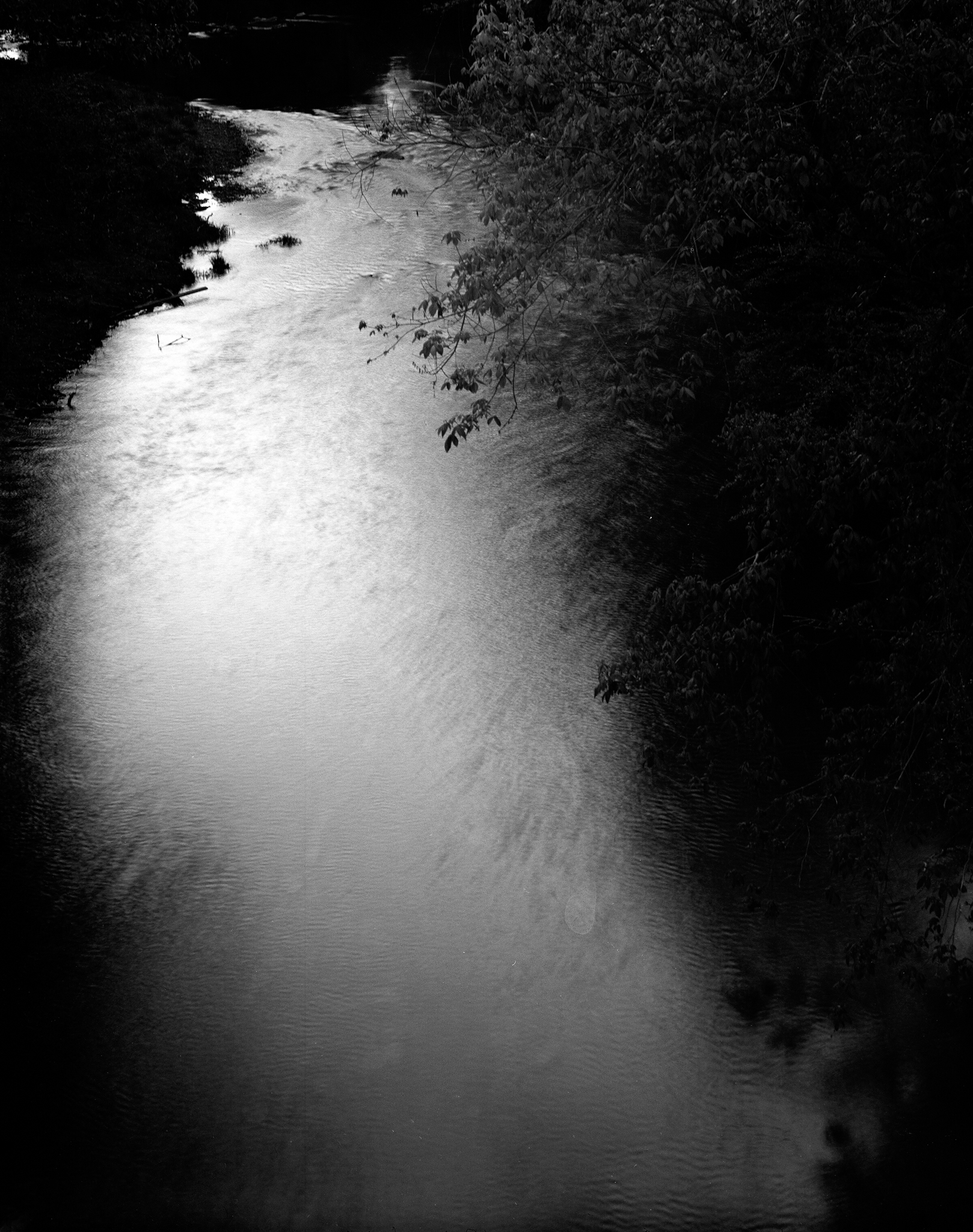
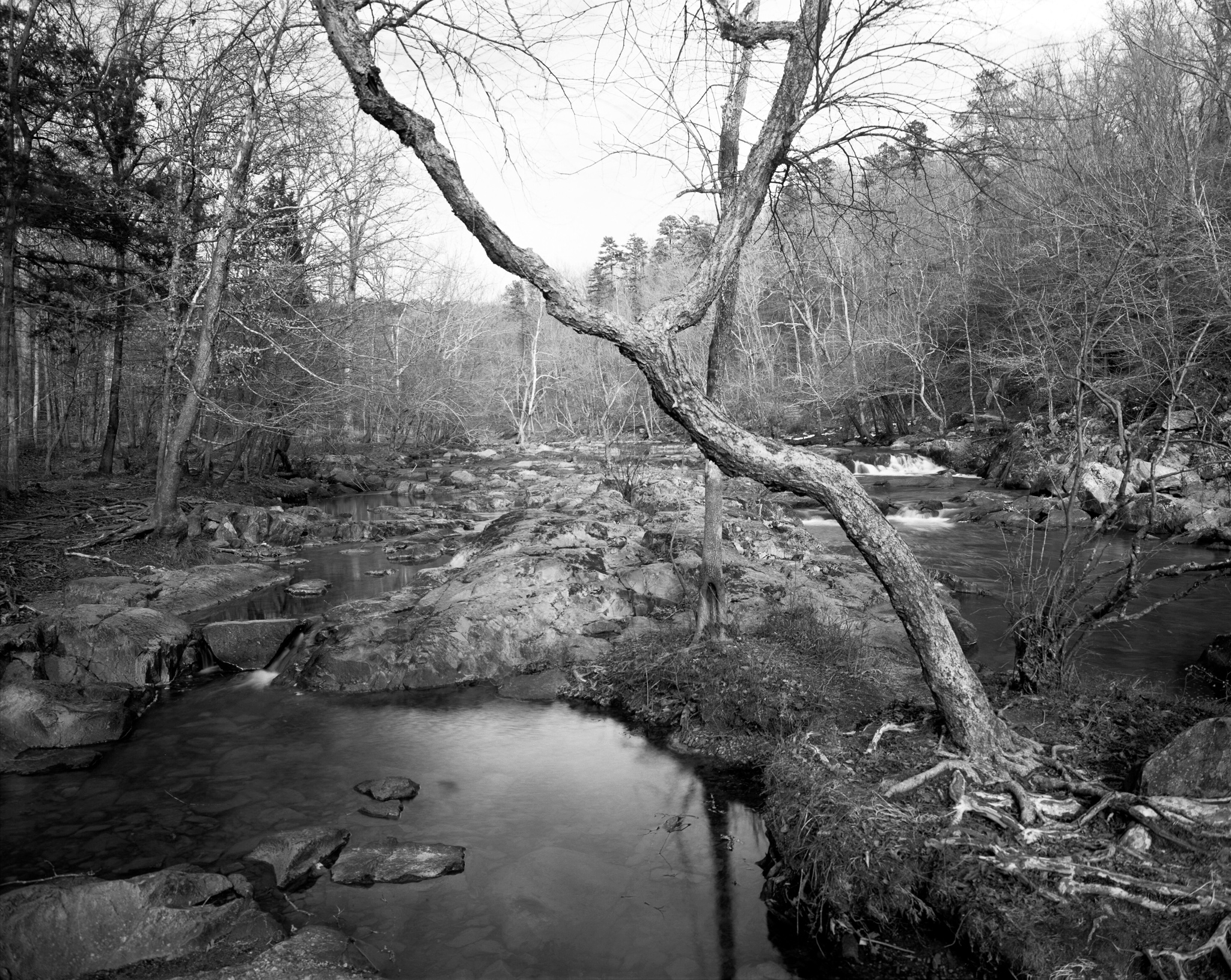
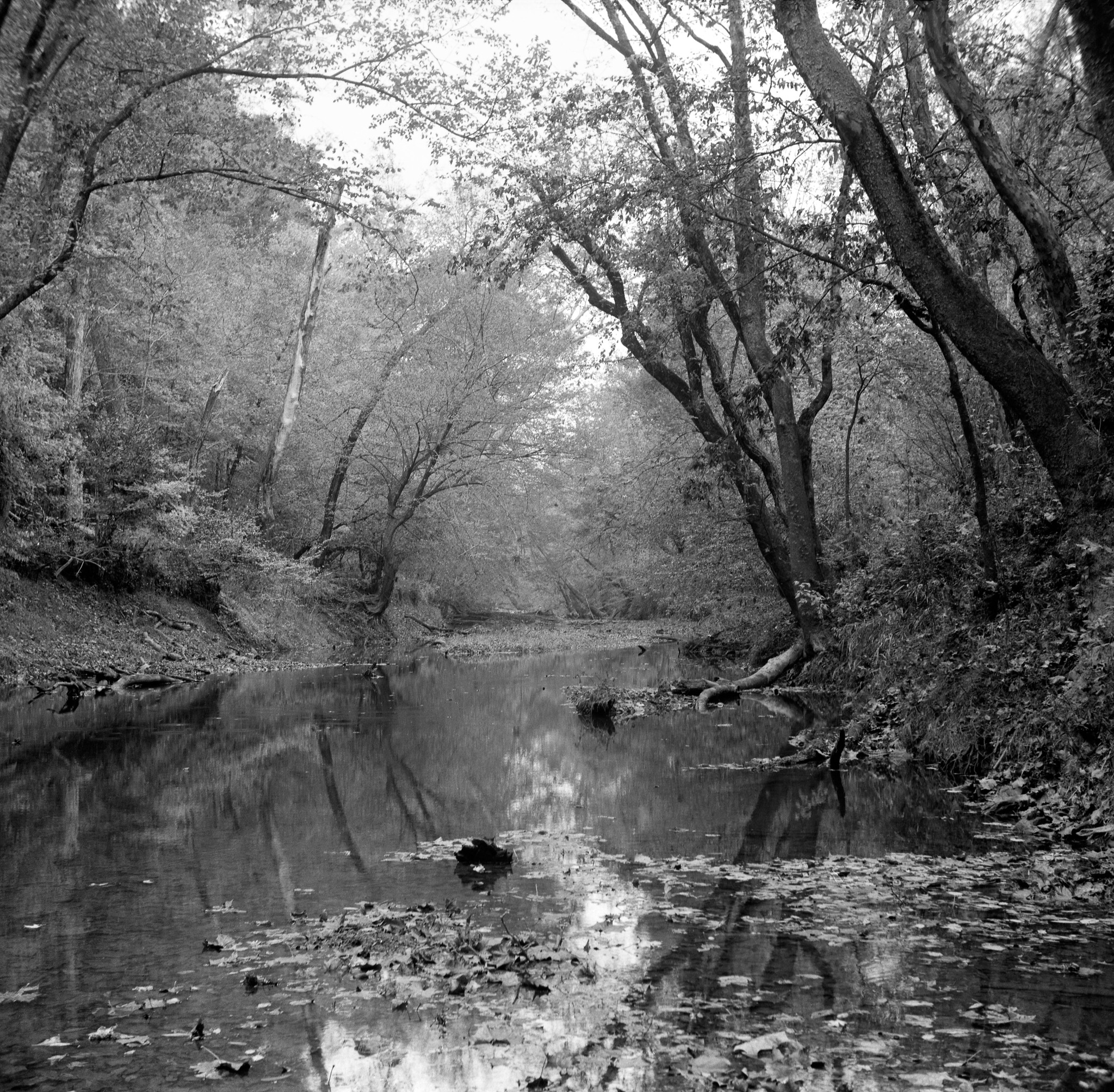
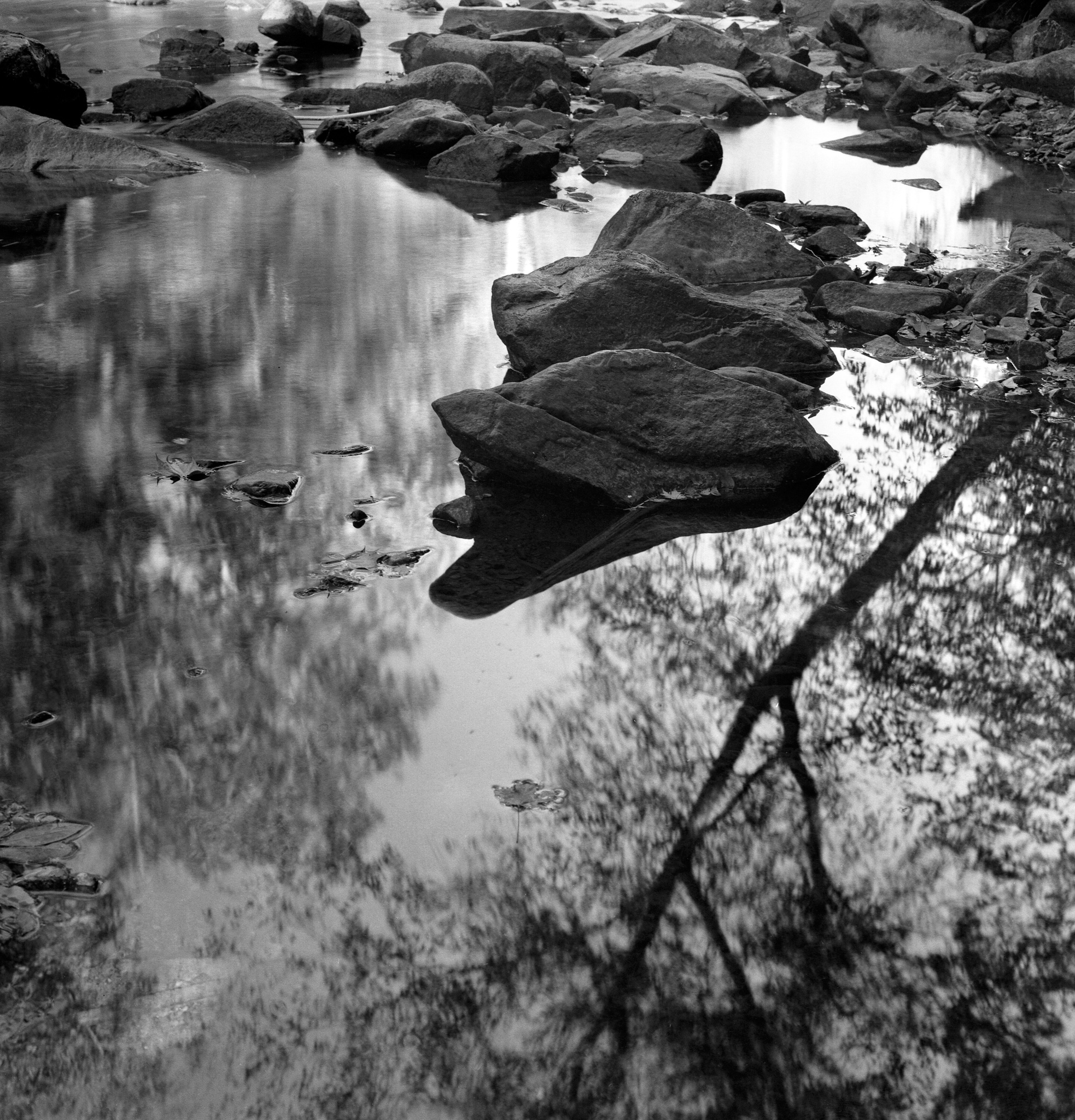
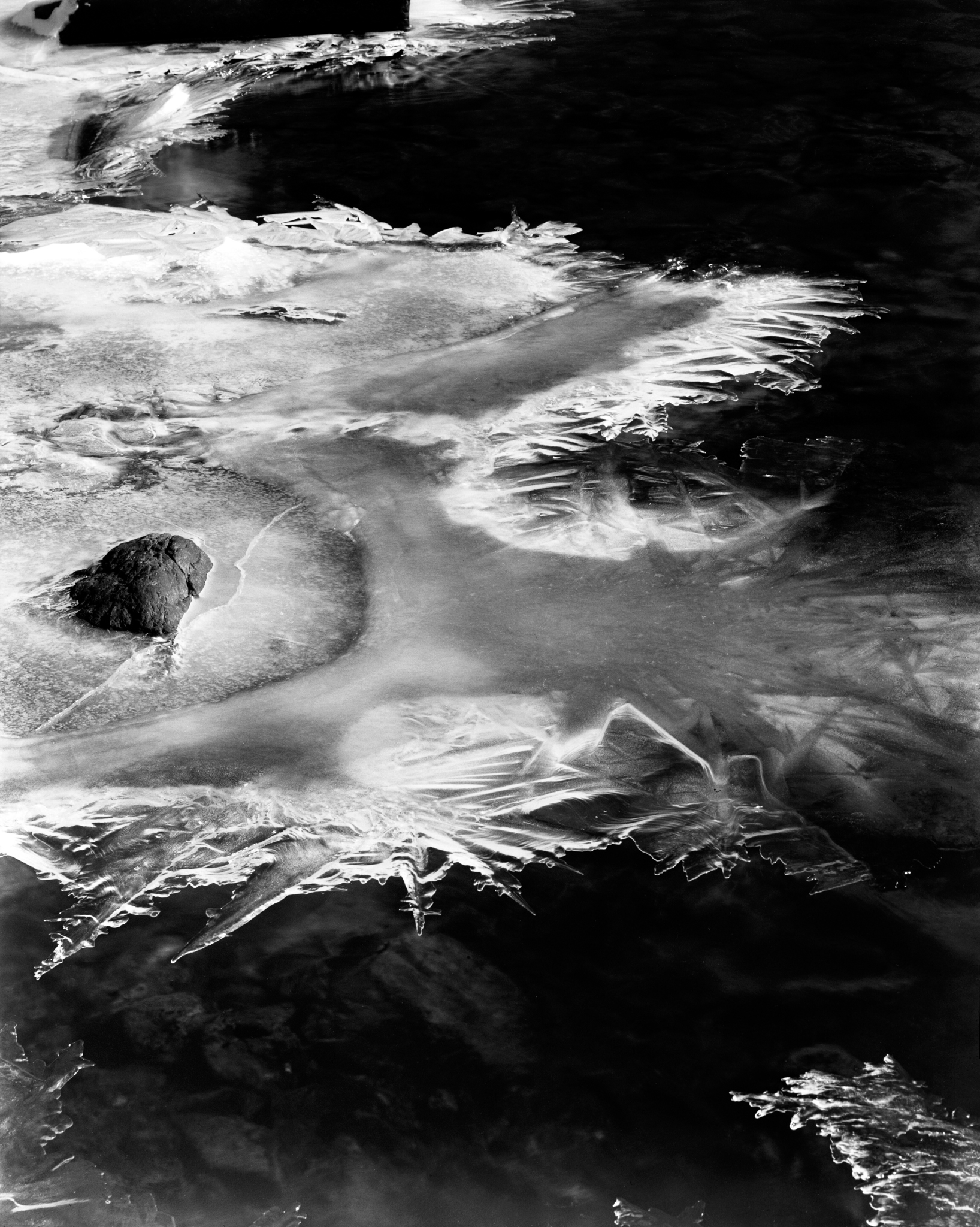
"Riverwalk" is an photographic exhibition and a book based on film images made around the Eno River in central North Carolina by Holden Richards. The collection has been exhibited at The Center for American Photographers, Contemporary Art Museum-Raleigh, and Collected by North Carolina universities and municpalities among others.
Why this project?
"Riverwalk" is my project of photographing the Eno River that flows through Orange and Durham counties of North Carolina and has been my focus for more than a decade. I have made photographs here in all seasons, at all times of day, in most locations along the river. Over years of hiking and photographing in many of the same locations, I have developed a deep relationship with the river and the ecosystems that it is a part of. My thought process has been that I would commit to a very personal vision of this environment as it revealed itself to me. These locations and subjects are at the core of my photographic work.
Unlike the heroic vistas of the western landscape photographers, I have the forested Eno. The land in the Piedmont of North Carolina does not open up. It's not a big, wide-open vista. One of the few places it does open up is in its rivers, so the river became the obvious place for me to photograph. It presents itself, and you just have to find a good place to stand.
As it happens, the Eno River flows through the center of my hometown. It's a very old place and there have been people living near the river for thousands of years, so it's got its own sort of energy. The old pre-colonial trading path runs by the river. There are indigenous settlements along the river that have been archaeologically explored and found to be almost 3,000 years old. It became obvious to me that the river was essential to the town's formation, growth, and zeitgeist. It was a natural subject for me as I didn't want to be a portrait photographer or deal with man-made anything compositionally.
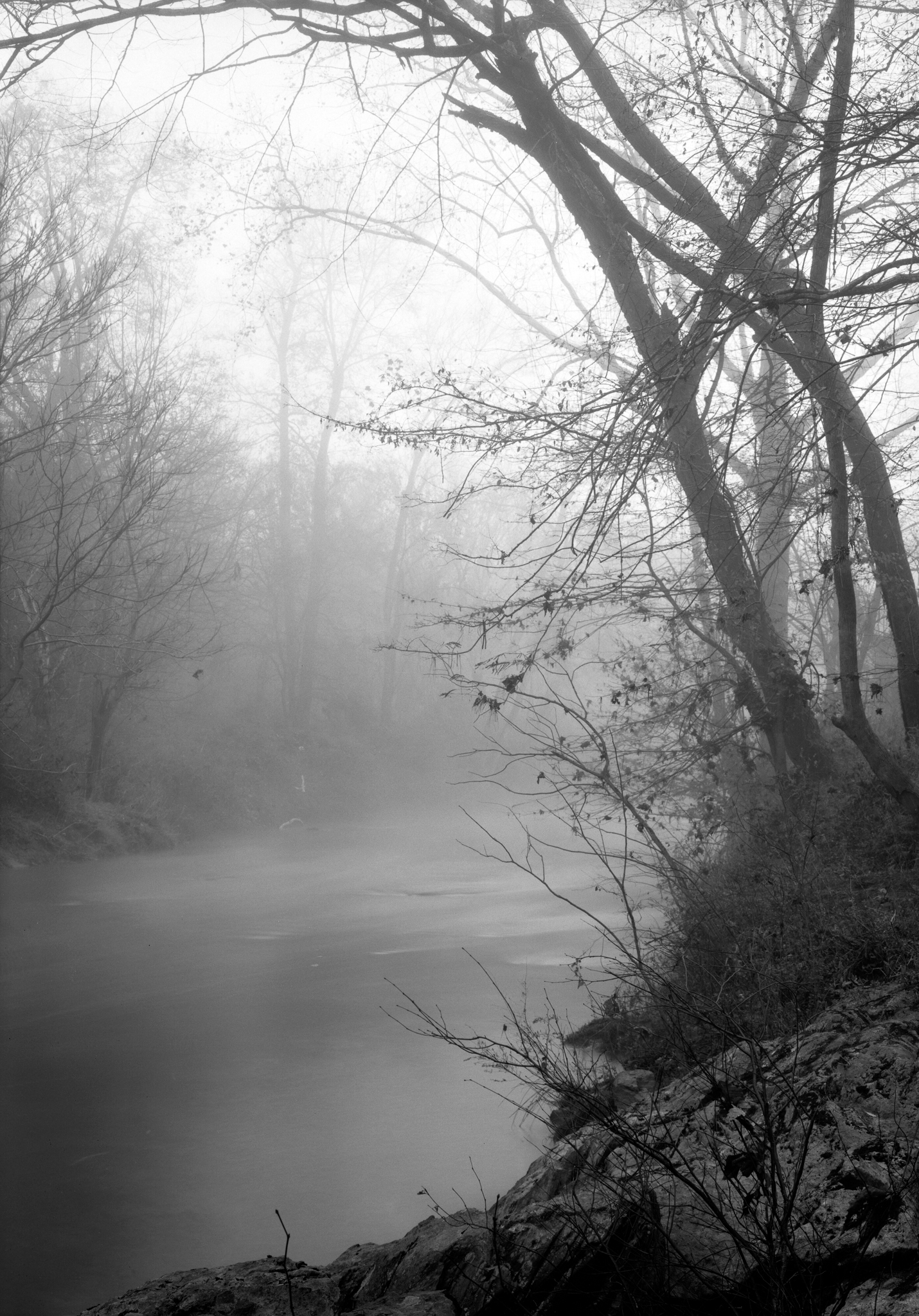
Plants, Birds, Rocks and Things
On my daily walks, I go down to the river even if I'm not going out to photograph. I'm checking the water levels and how much erosion is happening. Observing and then re-observing has real value. It's about recognizing subtle changes.
I have become mindful of the precarious fate of trees along the river's edge.
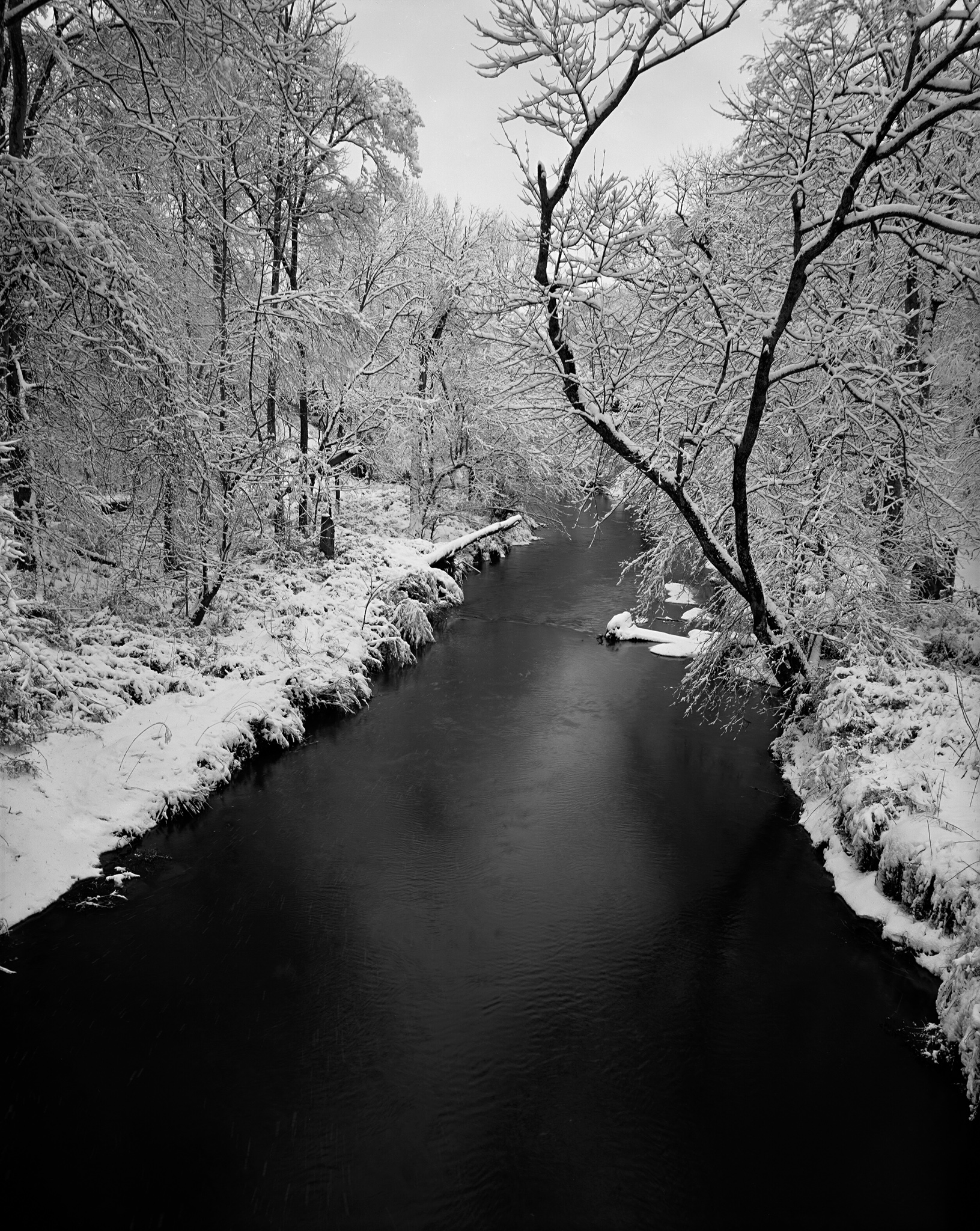
I also notice how the light is always changing around the river. In summer, you have to wait much longer to photograph as the high tree foliage throws shadows on the banks until near mid-day. In winter, all the hidden places are lit. The grey-blue light of winter penetrates the leafless forests of the banks.
The rock formations are one of the few things that remain steadfast. The Eno's rocks are volcanic in origin. Formed in fire, they remain immovable landmarks. But light still manages changes in their apparent shape and color. Then there is the wildlife... Turtles in long lines of 5, 10, or 15, on floating tree trunks, sunning themselves in summer. Fish, snakes, herons, and bugs of all descriptions.
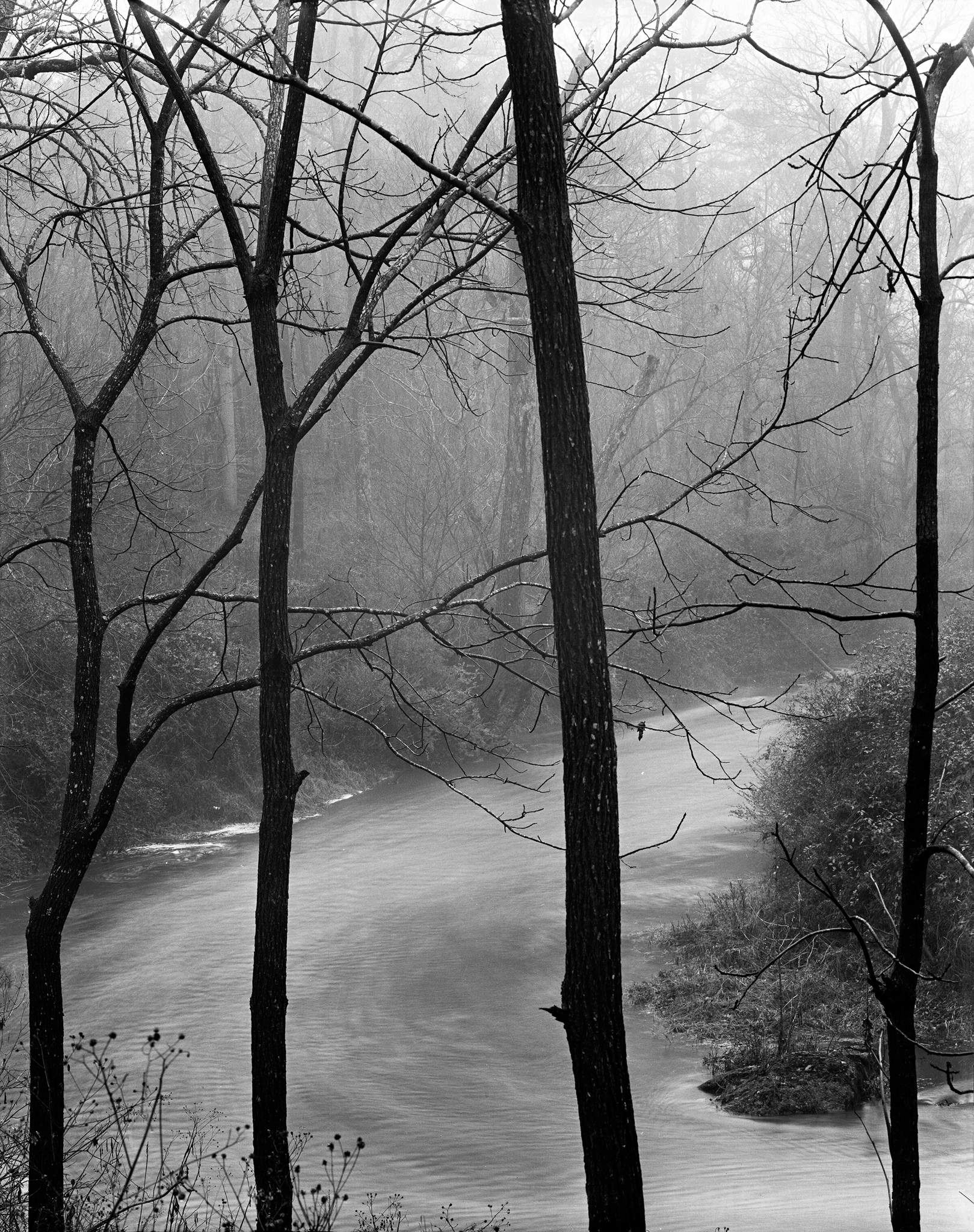
We become what we repeatedly do
Photographing the same sites can reveal vastly different moods or highlight normally hidden elements, given changes in light and season. Working deliberately with a large century-old camera forces you to slow down and be available to engage with what's right in front of you. A practice of seeing with intention that grows sharper with time. I am looking for the extraordinary in the quotidian, because it's there.
I usually only know what I want to photograph when I do see it. It's some combination of light and land that will demand my interest and cause me to set up a camera. You might know a spot like the back of your hand, but the goal is to see it all anew every time and be open to what the light and season are conjuring in that particular moment. If it catches my eye, it will probably result in a photograph being made.
For me, the Eno is the perfect collaborator; it is always posing, never complains. At some point, you start really seeing the character of it. And that's what I've tried to capture. Something personal that speaks to the universal.
Stress on the Ecosystem
On the downside, populations are creating circumstances that can overwhelm the perfectly balanced ecosystems of the Eno, and that brings radical change. I'm visually becoming more and more aware of the consequences of the impacts of development and modernity.
Many of the sites that I have viewed within Orange County are no doubt endangered. The changes I have already seen with creeping subdivisions sniping at farmland and open field year by year, make me fear the images I make may be a historical record someday. That said, my plan is simply to keep my art practice is very local. This is very important to me because it enables me to photograph like an insider instead of a tourist.
Photographing the Eno was something that started off as an observational experimentation and became quite an obsession. With my work I'm trying to photograph the ephemeral, as some elements change or disappear for good each day. These photographs, hopefully, will live longer than some of the trees did. I am sure the true experience of the river is what the river pointed out to you. It's a dialog with an equal.