Wilderness and the mind of the Photographer

This article is written in response to that by Julian Barkway on Beauty, which had a wilderness connection, and as a result of Joe Cornish’s report from the great wilderness trek in NW Scotland. His book Scotland’s Mountains could be regarded as a homage to what remains of Scotland’s wilderness areas. Torridon, Cairngorm, Glencoe, Rannoch Moor, Assynt, and the black Cuillin are all there, in their vastness and enticing wildness.

But does wilderness really exist or is it just in the mind of the photographer, who goes all starry eyed at the mention of the word? Is it an illusion that plays tricks on outdoors people who need such places for their own sanity? Julian asked the question ‘is there something profound in the human psyche that makes the experience of wilderness so alluring?’ This article attempts to answer these questions with reference to wilderness and where the landscape photographer might fit in.
By way of background it is worth considering aspects of wilderness and how it has affected some of our predecessors. For that we need to go to America because that is where wilderness has had the greatest effect on photographers and artists. Ansel Adams, Edward and Brett Weston, Eliot Porter are some examples. This article will mainly use the Ansel Adams experience, as he was such a prolific writer.

The US Congressional Wilderness Act of 1964 defined wilderness as follows: “ A wilderness, in contrast with those areas where man and his works dominate the landscape, is hereby recognized as an area where the earth and its community of life are untrammeled by man, where man himself is a visitor who does not remain.”
I don’t know of any other government in the world that has tried to define wilderness, but the US Congress in 1964 did a pretty good job. Wilderness is an essential part of the history of the American west and the psyche of its people as noted by the environmentalist, Wallace Stegner, writing “Something will have gone out of us as a people if we ever let the remaining wilderness be destroyed.” He believed that there was something deep in the human psyche that needed wilderness, even if it was just to look at from a distance. Americans would have admired the grand vistas in the paintings of Frederick Edwin Church and Thomas Moran, because such art was representative of a new and evolving country.

If it was not for John Muir and latterly Ansel Adams with his well documented photographs of the American west, the Wilderness Act may never have been passed. It was Ansel Adams’ admiration for John Muir and his love of the great outdoors that inspired him to go to Yosemite and other parts of the Sierra Nevada. Paintings by Albert Bierstadt and the photography of Carleton Watkins would have encouraged him. But it was John Muir’s writings about his lengthy travels that motivated him to plan and execute major expeditions into Yosemite with large format gear;10 x 8 kit no less, plus plates and heavy tripods. These trips often lasted up to a month with the equipment, food and camping gear being carried by mules. The preparation and planning would have been a task in itself.

So why did he do it? Because it was there? Or was there something else? Based on my own photographic experience the answer may lie in the mystical attractions of being in the wilderness. Yosemite was a world that was as pristine as you could get it. Working alone in such an environment does things to you. You become more alert to the surroundings. The slightest noise will disturb your sleep. The slightest change in light and cloud cover might be a warning signal. This, I believe is part of our human psyche – we are going back to our evolutionary roots.

The whole business of planning for a trip into the wilderness is mentally stimulating: maps, compasses, GPS, books and all the paraphernalia of camping before you even start on the camera equipment. We plan for difficulties and problems along the way, mindful of Ansel’s other comment that ‘the real wilderness is a hell of a place’. Christopher McCandless, an itinerant traveller and subject of Jon Krakauer’s book Into the Wild, was found dead some four months after entering Denali National Park. Even Edward Weston came across a dead body in the Colorado Desert – which he photographed. The thought of being out in the wilds sits inside us as part of our psyche, taking us back to our forebears.

There are other mental aspects of wilderness that affect us. The feeling of space and solitude that are worth the pain of a long trek. We become tuned into the landscape; touching rocks, drinking pure water, scanning the skyline and hearing mysterious sounds. For Adams to photograph in Yosemite was ‘to enquire of my own soul just what the primeval scene really signifies”.

He went on to write to the director of the National Park Service in 1952 that “ Half dome is just a piece of rock…There is some deep personal distillation of spirit and concept which moulds these earthly facts into some transcendental emotional spiritual experience”. The one time occupants of Yosemite, the Ahwahneechee Indians would have had the same feelings, with one essential difference – they actually lived there. They too had a deep reverence and respect for the land that they occupied and may well have worshipped half dome for all we know. But their voices were lost in the growing nation that largely excluded them.
The fact that Ansel was not simply passing through these mountains and forests must have made a difference. He was a photographer with large format kit. To get those descriptive feelings means spending time in an area. You have to live, eat, and breath it to get the photograph you are after. Or it means returning again and again until you do. Large Format photography demands a certain kind of photographic discipline. Rather than making many pictures knowing a couple will pass muster – it is a few done to perfection. Frame, reframe, focus, refocus, adjust tripod, check edges, check composition, and re-check. Does it feel good? Yes – trip the shutter or no… and wait.. and wait..and wait…..

Ansel made thousands of photographs in the Sierra Nevada but is remembered for a small percentage of them which sell year in year out. To achieve that, something in his personality must be apparent in those photographs. He must have reacted to that transcendental feeling which drove him on in his search. That, I think is where beauty comes in. A natural beauty or even a terrible beauty evokes ideas of wilderness from a different world to that which we are used to. Such impressions sit inside the photographer for a long time.
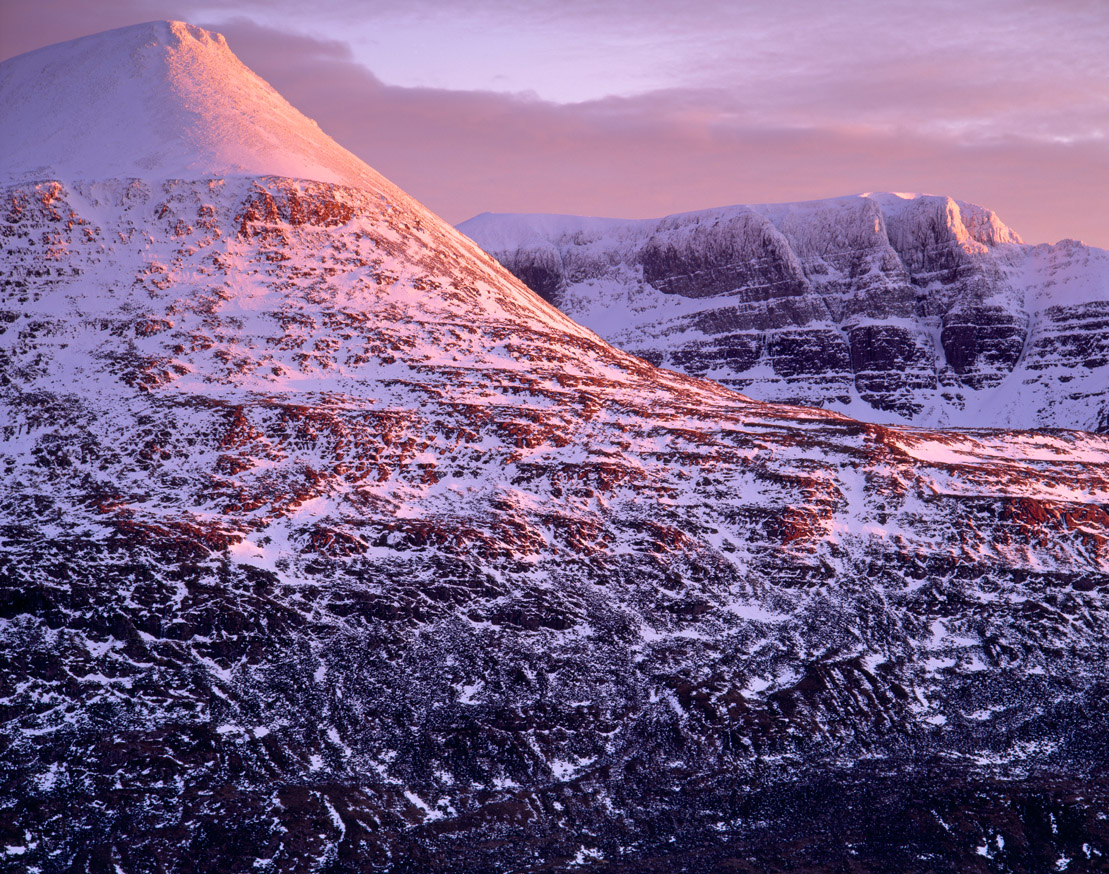
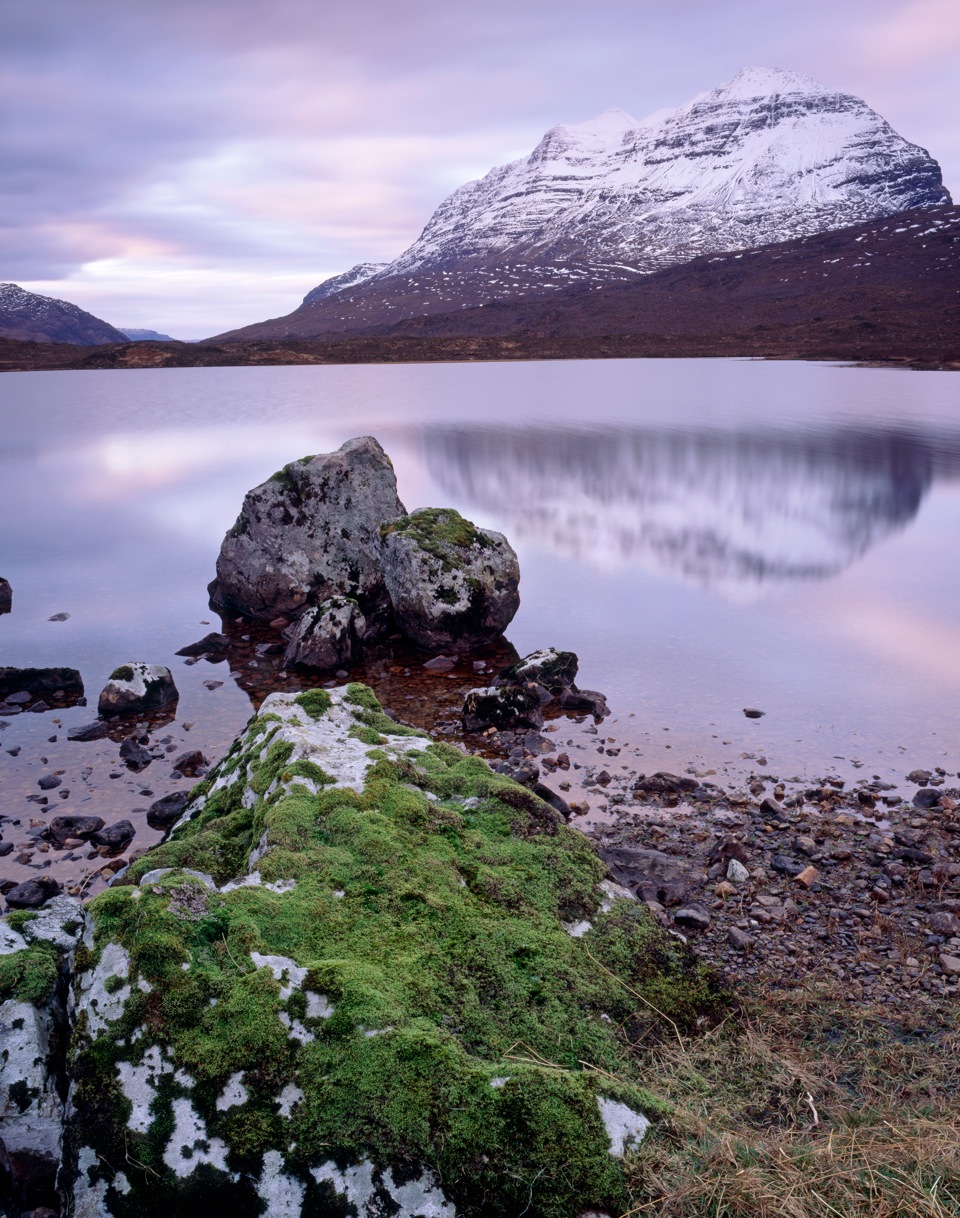
In winter 2010 I made yet another foray into the depths of Torridon in Northern Scotland. An extract from my notes read as follows: “Majesty of Rhuadh-stac Mor, Sail Mor. Pinnacle peaks that stand out. Triple Buttress a bit far away. The wild slopes descending into the glen – the light. An amazing evening – one of the best ever – light and sunset. All mountains illuminated, particularly the tops – even isolated rocks on their faces stand out as little illuminations, not balls of fire but illuminated patches of gravel and rock. Glistening snow – the light getting warmer and warmer until glowing over the mountains. The moment of excitement – the moment when watching the landscape you gasp at the sheer unbelievability of what you are witnessing – the display of light. I try to think about the photograph but it is hard, so many distractions. The real wilderness feeling is here, isolation, apprehension. The feeling of being totally alone, an insignificant part of the grandeur.”
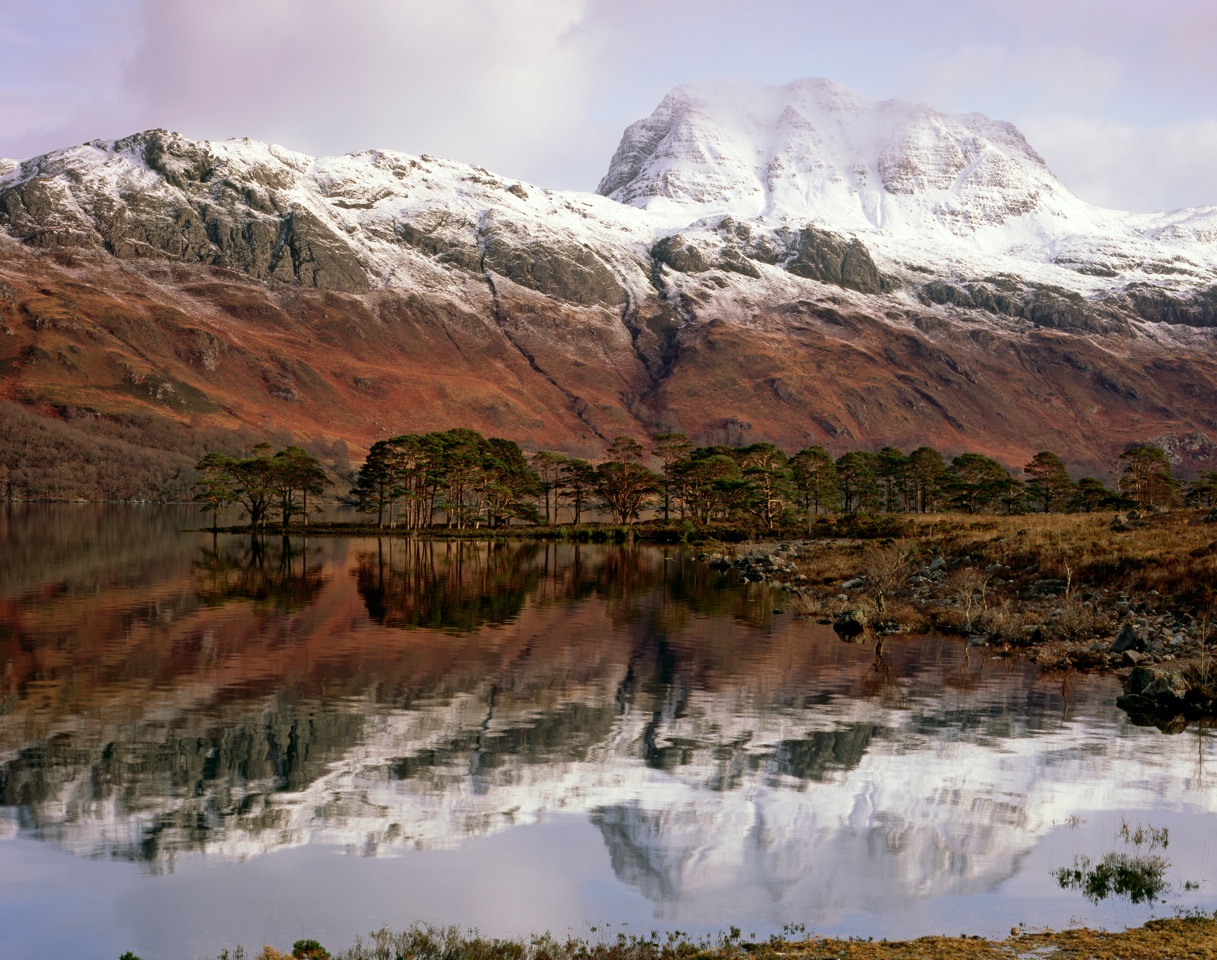
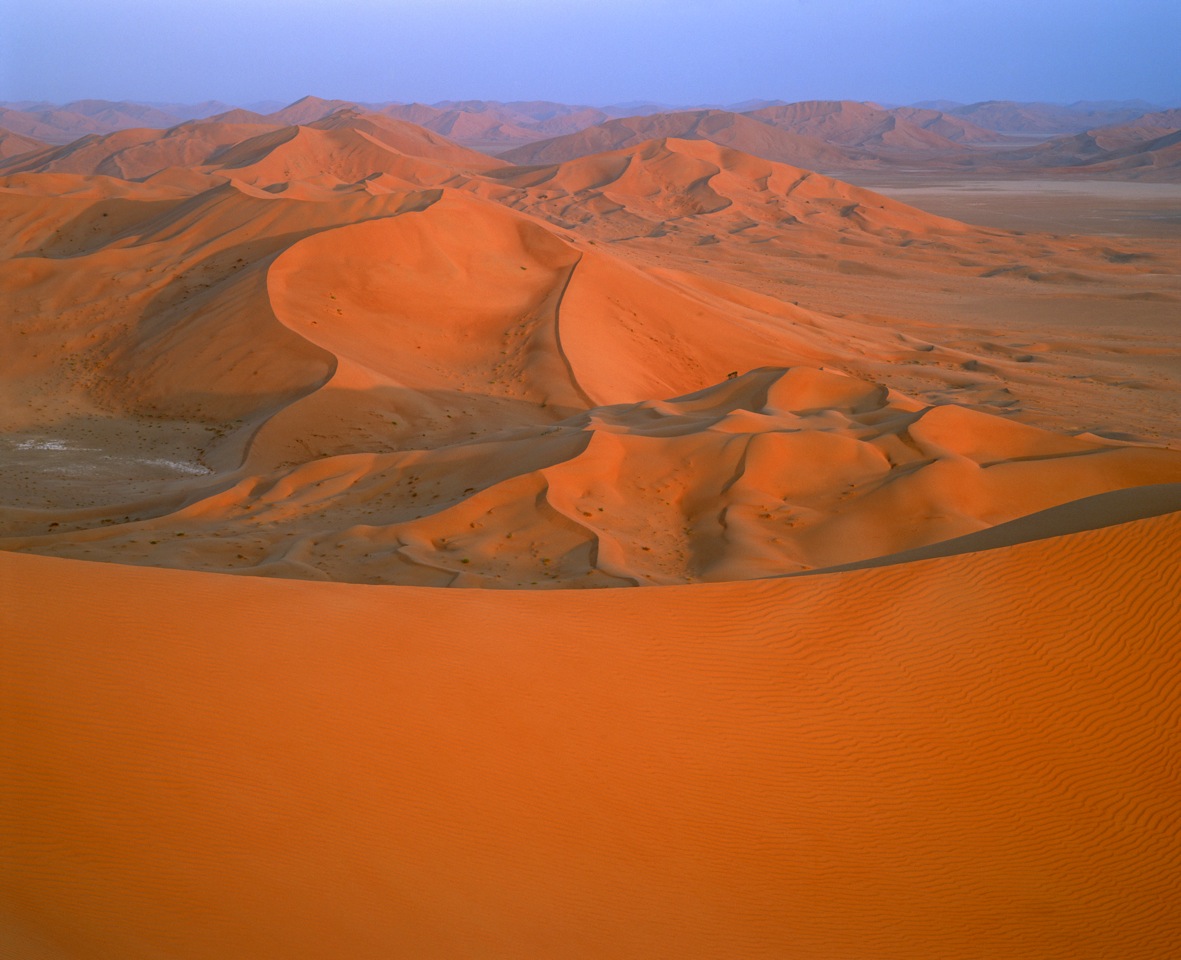
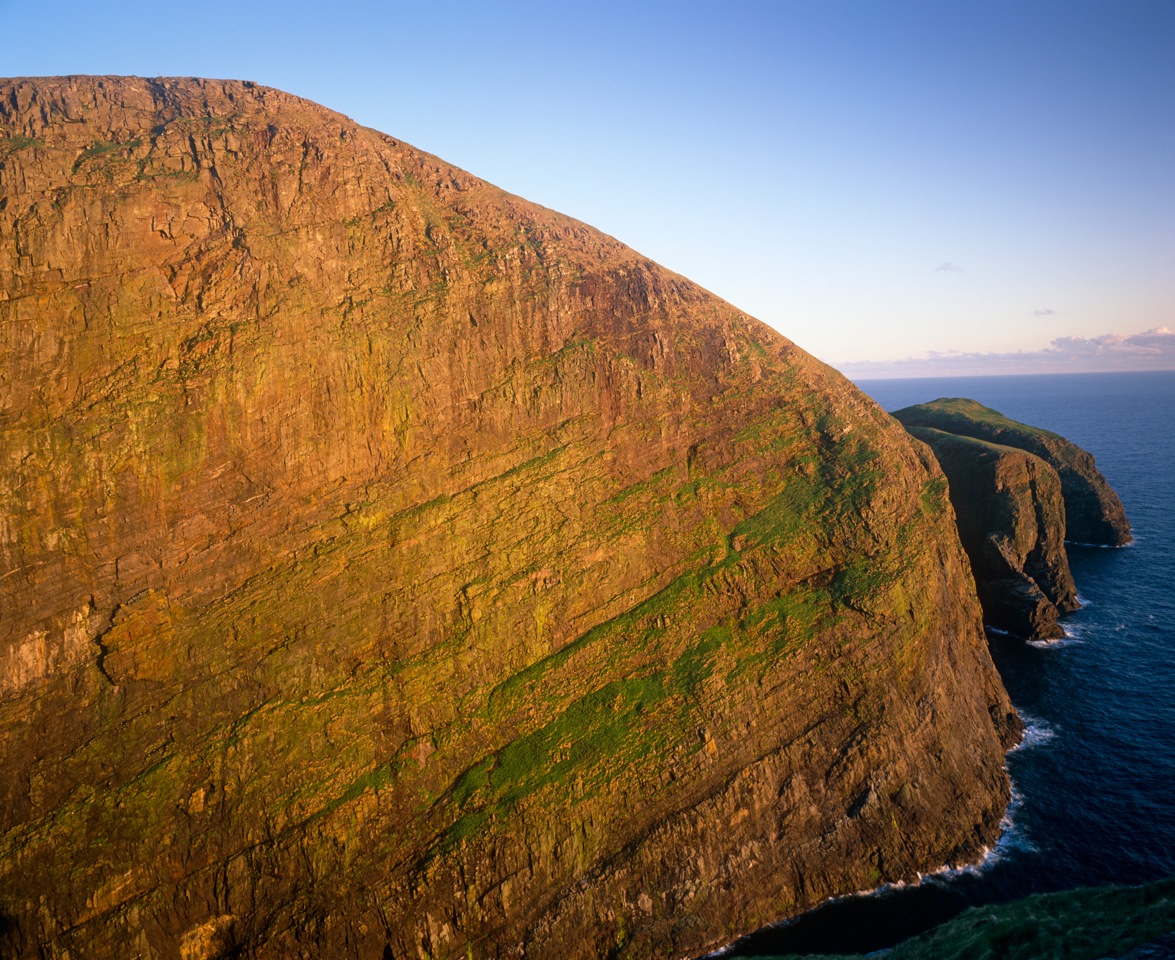
These notes reveal an intense encounter with nature – winter sunset over the Torridon mountains in line with what Ansel experienced time and again in Yosemite. I have had similar experiences in the desert of the Empty Quarter and on the deserted island of Mingulay in the Outer Hebrides, which like Yosemite, was once occupied. Those experiences and photographs remain in the photographer’s mind. The successes and the failures. Perhaps not so much the photograph itself but the experience, and that is why photographers are alive to their art and craft, always speaking animatedly of places they have visited.

I believe beauty is seen and captured by the photographer. In my view nature is intrinsically beautiful but it has to be sought out. They then have to make decisions quickly about what to do when they find it. Immediate impulses can over ride a calm assessment of the photographic possibilities. Can nature be moody and emotional? Possibly. Mixed with other emotions (apprehension, aloneness, elation, tiredness, vulnerability) found in a wilderness location the photographer is almost high on a cocktail of internal feelings before even setting up the camera. Too many artists and writers have written that ‘nature speaks to them’ for me to believe that nature is not moody and emotional or just ‘is’. But one thing is for sure, the photographer has to come alive when nature is performing. Wilderness creates a real sense of awareness – it is not an illusion. Photographers see things that others do not. They have trained their minds and eyes to do that. Climbers climb, and will find a handhold where there isn’t one. The photographer is almost programmed to respond to what is seen and felt, but must be mentally agile in line with the Zen swordsman’s maxim “ expect nothing, prepare for everything”.

12 Responses

  1. Hi Malcolm,

    It’s very gratifying to know that my piece has inspired, at least in part, such a cogent and well-written article!

    Looking at your images and website, I feel certain that our paths must have crossed at some point. Could it have been on a Light&Land workshop in the Lakes in Nov. 2009?

    Julian.

  2. Malcolm MacGregor

    Julian – Thank you very much for your kind words. Absolutely your piece made me get my thinking cap on. Your mention of wilderness is what did it, as it is a strong emotive force in my photography.

    And yes, we did meet on the light and land course in the lakes in Nov 20009. I dont go on many of these courses but that was one of the best.

    Malcolm

  3. Joe Cornish

    Malcolm,

    Loved the article, words and pictures. Your accounts from the wilderness are a great reminder of why that experience is so special, and why the sheer effort and (minor) suffering required to be there is more than worth it without exception.

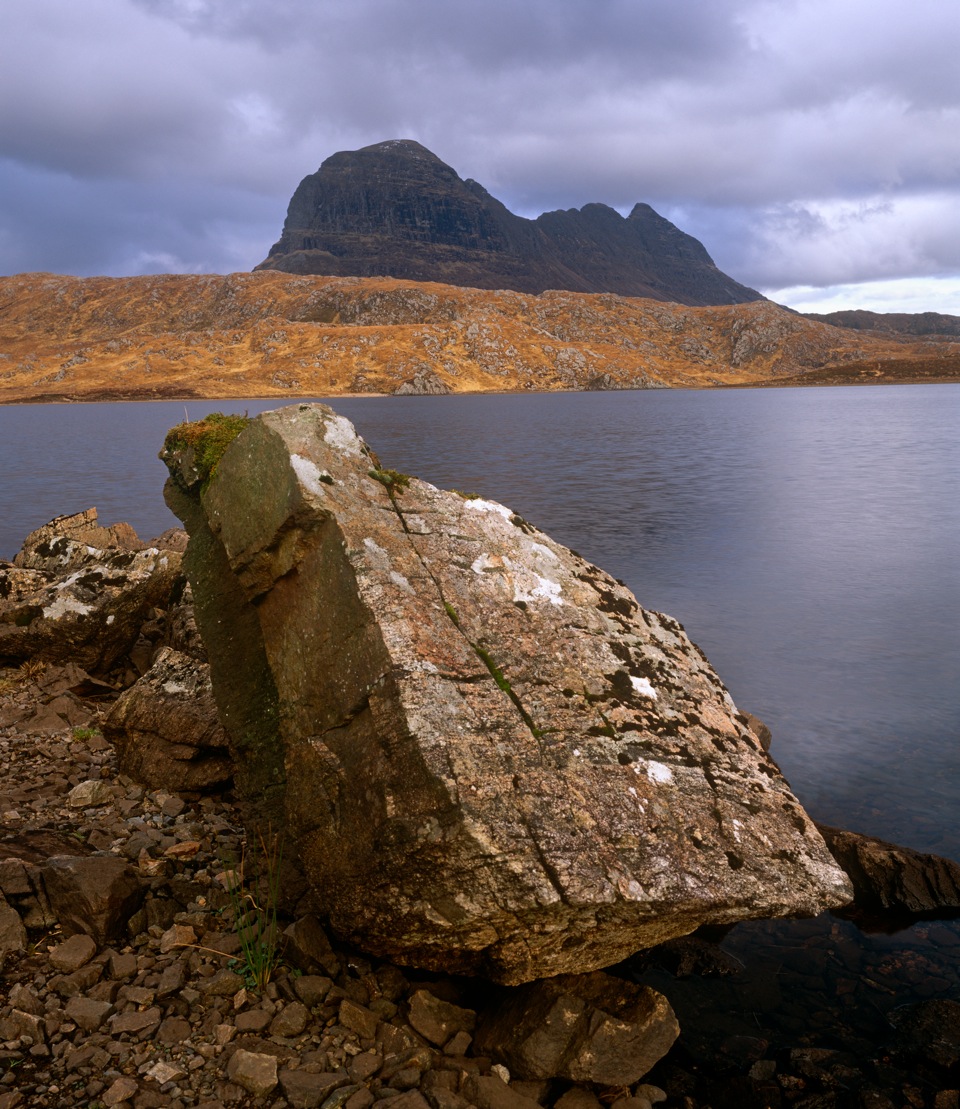
    Definitions of wilderness are quite varied I think, and I agree that the US Congress did a good job in !964. On that definition strictly applied, very few UK landscapes would qualify, with the exception of some steep sea cliffs. Scotland is a special case I feel. Its hills and mountains have been systematically plundered for trees over many centuries, sheep have grazed enthusiastically in some places, deer have kept the trees pegged back with only man to keep their numbers down (since we have eliminated all their other predators), and spruce plantations have sprung up widely in the 20th century. Many of its lochs have been dammed and controlled, even the remotest glens have stalker’s paths, and perhaps a remote bothy. And Suilven even has a wall going over the main ridge! By these visitations and alterations the wilderness ideal is undermined. But amazingly, Scotland’s sense of wildness remains very much intact. So much so that in spite of my tendency to be rather hardline about definitions usually, I’d probably vote for allowing particular tracts of the country, especially say in Knoydart, Torridon Ske, Rum and the far North to be called: Wilderness.

    The spirit of wilderness is also an interesting question. Personally I actually feel the landscape itself is essentially oblivious to humans, as geological events seem to suggest. But when we become re-attuned to the rhythms of the land through that time we spend in it, then our sense of belonging to and feeling part of it has huge emotional significance for us. Our perception of it as beautiful is evidence of this. In that sense, the spirit of wilderness is essentially a human construct, yet I do accept that a deep sense of being connected with the wild world suggests there is more than just our imagination at play here.

    To support the preservation of earth’s remaining wilderness areas seems to me an essential duty for all landscape/nature photographers, although how we do that remains rather unclear. Not everyone believes we are a part of nature, but I do, and wilderness provides the most authentic experience and understanding of it. Since we by definition do not actually live in the wilderness, it is the opportunity to be an occasional visitor there that makes it real. And if we cannot visit, stories and images from wilderness can still inspire and educate.

    Thanks again for a great article.
    Joe

  4. Joe – thank you for comments, which are generous towards me and insightful in other areas, as always. I suppose under the 1964 Wilderness act from the US – not many of Scotland’s landscapes would qualify as wilderness given the sort of activities that have taken place there over the years. However, I do think that there is a feeling of what ‘once was’ which generates the sense of wildness. The fact that photographing in Cairngorm as you did for ‘Scotland’s Mountains’ demanded more than photography. The description of hauling the sledge with your kit is an example. As soon as that sort of workload is imposed on the photographer, then you know that what are doing has gone to another level, which in turn invokes in us the spirit of wilderness and as you put it – we become re-attuned to the rhythms of the land. The senses are heightened, you have to know roughly where you are and you just feel part of it all or completely unnerved and apprehensive.

    I think photographers can support the wilderness ideal by photographing it as much as possible, producing books etc and talking about it. Through that we can support the day to day work carried out by organisations like the John Muir Trust. Ansel Adams’ photographs went a long way to supporting the cause of wilderness and its preservation in a visual manner. The back bone for his efforts came from organisations like the Sierra Club and the literary effort came from brilliant writers like Wallace Stegner.

    Despite the stalkers paths etc the wiilderness areas of Scotland are real and not simply an illusion in my view. Long treks into Knoydart, Torridon, and into Cairngorm are proof that we do have something in this country that is beyond value – even if it is just to look at.

    Malcolm

  5. Thank you for a very interesting and well-written article, Malcolm. Definitely a ‘good read’, as they say.

    It set me thinking about what constitutes wilderness, or at least a feeling of it, for me. I think the US Congress definition is a good one, though I think it takes a rather prescriptive approach and perhaps misses the more ephemeral ‘feeling’ of wilderness that we can all have in the right time and place. Certainly, whilst the Scottish landscape has been hugely influenced by man’s activities, both direct and indirect, over the centuries, it’s still possible, in places like Knoydart, to feel very isolated from the world. Similarly, high mountains everywhere can be subjectively wilderness above a certain altitude (say about 3,000m. in the European Alps). All substantial ranges are largely untouched above whatever the particular height is but, more to the point, they can engender a feeling of isolation in the right circumstances (sleeping on high glaciers or on faces).

    Perhaps the subjective definition of wilderness should include an idea of how long it will take to get out, or down? There’s certainly, to me, an element of how easy it is to communicate externally in any wilderness. For me, being ‘cut off’ helps the wilderness feeling enormously. The idea of only being able to return to the human-controlled world under one’s own power adds to the perception of being in wilderness (and the existence of satellite ‘phones really does mess this up in a fairly profound manner).

    I very much identify with your description of actually being in a wilderness, or at least isolated in a wild place, and not knowing exactly what to do first: perhaps torn between whether to record it on film or to simply watch the light changing, not wishing to miss anything. I used to do the latter, spending hours on high mountains without taking photographs, just watching. I’m now trying to do the former, and I often notice that the fascination with simply /being/ somewhere can tear me away from capturing it as an image.

    Again, thanks for a thought-provoking piece.

    Mike

  6. I think the landscape photographers desire to immerse themselves in wilderness, comes not only from a desire to be in ‘authentic’ nature (as Joe puts it), but to be away from the destructive selfish humans… It’s a form of escapism, but paradoxically realism. Anyway, I personally haven’t been to any kind of wilderness, but feel that one persons deep immersive experience in the back of beyond, can be one persons garden, (isn’t it a state of mind that we are all referring to here?)

    I also feel that to be overwhelmed by nature offers some kind of humbling life affirming experience. (I personally felt this trekking in the Himalayas many years ago before I had to carry a back pack for my camera gear). And I wonder if it’s this true optimistic, grounding feeling that is the allure for many? Anyway, interesting discussion, did anybody mention evolution yet? (o:

  7. Malcolm MacGregor

    Mike- thank you for your kind comments. I have often found myself in certain ‘wilderness’ locations, not knowing what to do at first, owing to light falling on a mountain or the strange compositions in the desert that can be seen immediately. Cmpostional ideas mixed up with emotions of Elation or apprehension, make life mentally difficult perhaps more so with large format.

    How long will take to get up or down or in or out would a be a good indicator of a wilderness, I agree. I think if you are camping out in a tent would be a fairly good indicator too, mixed with detailed preparation.

    Malcolm

  8. Malcolm MacGregor

    Jason – I have to say that the e word was used – in para 6 I think. But probably better not to dwell on that given the potential for ‘incoming’.

    In some ways it is all a bit of escapism as you are in a completely different world to that which we normally experience, or live in day to day. Apologies for going on about LF, but when you get under the dark cloth, wherever you are, it is a way of cutting yourself off from reality and going into another realm – the image on the ground glass. I find that anyway.

    Being overwhelmed by nature is indeed humbling. Photographers are but one small group who go in search of something beyond the norm. That has to be found, principally, in aspects of nature that are unfamiliar but have a certain purity. Members of,say, the Sierra Club were looking for this, but very few were making photographs with any serious intent. On your comment about optimism, this is what I think Wallace Stegner meant when he referred to ‘the geography of hope’ in his wilderness Coda of 1960. A must read for anyone interested in the topic.

    with thanks,

    Malcolm

  9. Greetings All,
    Reading this article, Julian’s before that and the various comments and replies, makes me think even more that our perception of beauty and our feelings for a particular place are as much personal to the individual as a deep response innate in most (but not all) humans. Beauty certainly is in the eye of the beholder but certain natural events, subjects and locations generate an almost universal positive response. But do we really need to be in a remote location with no obvious sign of human intervention to be affected by and in awe of beauty and wilderness?
    Whether in fabulous remote locations or in their own back gardens (e.g. flowers or insects in close-up), photographers have captured the beauty of what nature has provided and if they have done so well they have generated oohs and aahs from the viewer.
    Likewise, whereas solitude in relatively remote places can evoke in us some sort of connection with nature, I have also seen how the – dare I say it – wild beauty of some popular places encourages people to exchange a few words of greeting and share their feelings, as though the power of the experience makes them less inhibited to communicate on a deeper level with others. Think of climbers on a popular but spectacular route, think of walkers enjoying a colourful sunset by the sea. Or being with a bunch of photographers in a fabulous location where nature has put on a fantastic show! Not wilderness, not remote, but still evoking a strong sense of awe and wonder at nature’s power.
    It is surely quite legitimate to gaze at and capture such scenes with our cameras even if there are others doing the same within just a just a short distance. In one case we experience something deeply and perhaps need solitude to do so, in the other we share a powerful experience, possibly with strangers. Surely both are legitimate subjects for photography even though the experience is very different.
    Rgds., Adam

    • Joe Cornish

      Adam,

      In short, yes! You are absolutely right. To venture into a really remote area, in the UK anyway, is a very deliberate act that is usually relatively difficult to do. It is something usually only undertaken by the adventurous (and possibly unsociable?!). Perhaps the fact that those same people (me included) are minded to share that experience with others (eg Malcolm’s article) in whatever way they can confirms your point. Ultimately, the desire to share is a fundamental aspect of our common humanity.

      However, the feelings that arise in the solitary experience and the wilderness are particular, special and powerful. Perhaps less about photography than the simple fact of having the experience? I don’t believe any one of us is saying that the wilderness experience is somehow superior in the pursuit of a numinous experience of natural beauty. But to have this experience of wilderness from time to time, even if very occasionally, does help put a context to the landscapes that are nearer to home and easier to access.

      The following quotation can be found at the beginning of Arctic Dreams by Barry Lopez:

      “Once in his life a man ought to concentrate his mind upon the remembered earth. He ought to give himself up to a particular landscape in his experience; to look at it from as many angles as he can, to wonder upon it, to dwell upon it.
      He ought to imagine that he touches it with his hands at every season and listens to the sounds that are made upon it.
      He ought to imagine the creatures there and all the faintest motions of the wind. He ought to recollect the glare of the moon and the colours of the dawn and dusk.”

      N.SCOTT MOMADAY

      Acknowledging that the writer is from a pre-feminist era (Man, His, He) I have to say that I really do empathise with his sentiments very deeply. “The remembered earth” is a phrase that resonates strongly for me. He does also appear to write with a photographer’s perspective.
      Once in his life perhaps, but I would favour once a year for my immersion in wilderness!
      Joe

  10. Jenny MacLennan

    These articles have been thoroughly thought provoking. Many thanks. Although Malcolm makes the link between wilderness and beauty, I agree with Adam that it is equally possible to be overwhelmed by, and in awe of, natural beauty much closer to home. Why then should there be any yearning to expend enormous energy to experience somewhere more rugged and remote? For me there is a huge difference between the experience of being surrounded by the grandeur of nature in a wild and rugged location, and similar awe experienced in a more cultivated one. The stars seem brighter and the shadows cast by the light of the moon more deep far away from light pollution. The birdsong seems more poignant, and the rustle of the leaves in the trees or a lizard in the undergrowth somehow louder. Why should this be? Perhaps when leaving behind evidence of human habitation we also leave behind other concerns that can distract our thoughts and dull our senses, and combined with a heightened awareness of potential danger, we are more sensitive both to slight changes in our surroundings, and to changes in the light. Joe suggests that experiences of landscape in the wilderness provide a deep sense of connection with the wild world and help to put a context to landscapes closer to home. In addition I think such experiences of being alone in the wild provide a powerful reminder of our own place in nature as a small, transient, vulnerable and insignificant part of the landscape. The implication for my photography is that my attention is drawn away from myself and towards the landscape, which is surely a good thing. I also feel closer to the One who holds such majesty in His hand. Perhaps that is my own experience of the ‘spirit of wilderness’ that Joe refers to, although I am not quite sure what he means by that term, and no doubt it will mean different things to different people.

    Part of the attraction of spending time in a wilderness or wild landscape is being stretched, facing challenges, and finding physical and mental resources within that I didn’t know I had. In one sense this is nothing to do with photography, and I am not sure that it makes me more creative, but I do know that it is good for my soul and my general outlook on life! I don’t think you have to head to a wilderness to be stretched out of your comfort zone, but I would suggest that finding an area with wild beauty and pushing out the boundaries will always be a memorable and rewarding experience.

    Thanks again for an inspiring article and comments.

    Jenny

  11. Malcolm MacGregor

    Jenny – thanks for your comments which I certainly found illuminating. It would seem to me from what you are saying that there are two types of landscape. The first are places of wild beauty which may be close to home and in which people feel comfortable. The second would be of the wilderness type where something else appeals to the photographer. Like you, the allure for me is to be stretched, and face challenges. Photography definitely takes on a different meaning as the senses are heightened, and there is a feeling of a elation as pointed out by Julian.

    The spirit of wilderness is a tricky one as you suggest. Ansel Adams’ photograph ‘clearing winter storm’ in Yosemite is a case in point. It exudes the wilderness feeling. But as I understand it, the actual photo location is in one of the car parks!

    Nonetheless, it evokes a certain ‘spirit’ which is down to him as a photographer As Wallace Stegner wrote – these places are necessary for the human psyche, if only just to look at. But some photographers (and others) , and I suspect you are in this category, have a need to be actually there in amongst the harsh wilderness – actually experiencing it rather than just looking at it. Whilst it is not necessarily pushing the boundaries, it is photography in a different dimension, of a different sort of beauty.

    with thanks again,

    Malcolm

Notify me of followup comments via e-mail. You can also subscribe without commenting.