

 Join the conversation
 Subcribe to comment rss feed
Featured Photographer

Stéphane Jean
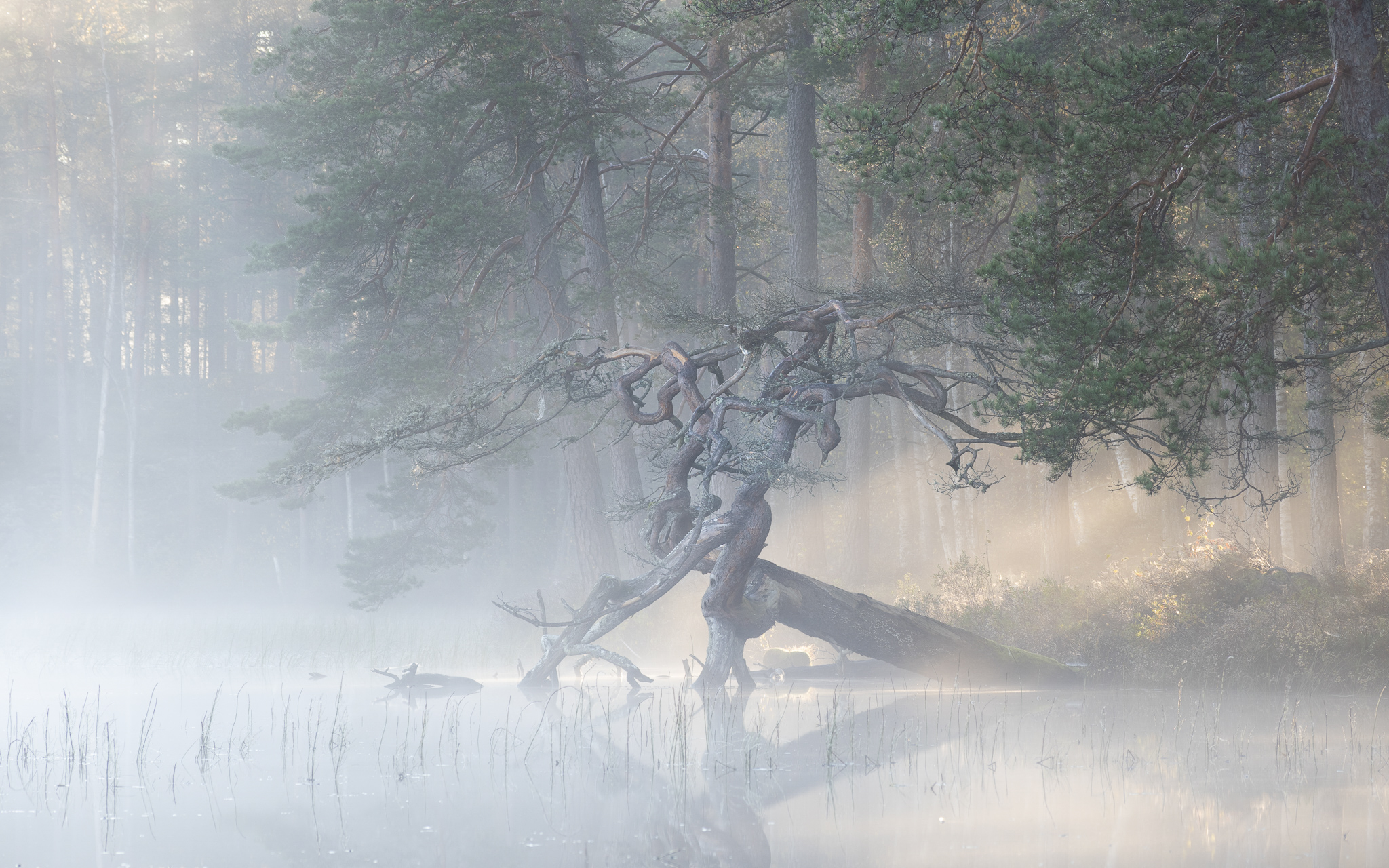
Stéphane is a visual artist and fine art nature and landscape photographer focused on the somewhat forgotten Swedish province of Dalsland—his home of 30 years—occasionally bringing his camera to the neighbouring Bohuslän coastline and Norway. His work features a mix of mostly local and intimate landscapes, aerial views, macro and close-up floral portraits, often leaning towards the minimal and abstract.
After a lifelong but casual relationship with photography, he finally connected it to his deeper and vital need for a creative outlet in 2010.

Michéla Griffith
In 2012 I paused by my local river and everything changed. I’ve moved away from what many expect photographs to be: my images deconstruct the literal and reimagine the subjective, reflecting the curiosity that water has inspired in my practice. Water has been my conduit: it has sharpened my vision, given me permission to experiment and continues to introduce me to new ways of seeing.
Creativity is often accompanied by restlessness. It has taken a while for Stéphane Jean to find the right outlet—nature and landscape photography. Nothing along the way is wasted; all of our career choices and explorations ultimately enrich our experience and interpretation of place and nature.
Stéphane enjoys searching for images close to his home in the Swedish province of Dalsland. His favourite photographs are often of the small things that we might easily pass by, or the moments we experience as a result of slowing down and tuning in to our surroundings. This ultimately deepens our connection with place, and leads us to discover more.
Would you like to start by telling readers a little about yourself – where you grew up, what your early interests were, and what you went on to do?
I was born in Paris, France, but grew up in the south of Sweden as we moved back to my mother’s roots there when I was about 3. With my father working as a drummer, freelance graphic designer, and illustrator, and my mother having a background as a dancer and being raised around music, I was regularly exposed to music and art at home. These influences had me spend many hours drawing as a kid and later diving into music. But while my father supported my interest in music, he also consistently dissuaded me from following his path as a professional musician. This led me to not truly commit, instead choosing a compromise and the sidelines of the music world, working towards being a Recording Engineer.
After a few years in the recording studio business, I realized the downsides were too costly. So, after about a year together, my partner – now wife – persuaded me to try something new, leaving the city behind and moving to a much more rural part of the country. Here, after trying a couple of new things, having previously learned the basics in desktop publishing and Photoshop, I started working in print and newspapers.
Creativity has been an important driver for you, and has taken you through a number of media and expressions?
Yes, that’s true. Looking back, it’s clear that I’ve always had a need for a creative outlet of some sort, like a constant unconscious pull, even when I haven’t indulged. As having this need isn’t always convenient, I’ve slowly learned how to let it rest for longer periods of time, but as the months pile up, I just start to get a little depressed without it. It’s like I slowly dry out of life energy and purpose.
As I mentioned before, music was a huge outlet for me, especially in my late teens, spending many hours on my own, exploring and trying to learn how to play the keyboard, then composing and recording clumsy compositions. It was really nothing spectacular yet it gave me so very much. Playing with others, percussion rather than keyboard, music also found its way back into my life for a couple of years in my 40s. Then, in the early 2000s I embarked on a 3D modeling and rendering journey. What drew me in was the realistic light simulations that had then become more affordable. As animation didn’t interest me much, I focused on stills, eventually printing, exhibiting and selling my work. This adventure and the insights they offered would later turn out to be essential to my photography switch.
When did photography come into it? What was the prompt, and when did you sense that this offered you the balance you were looking for?
While photography has always been present, it wasn’t until in my late 30s that I really started to see its true potential and purpose in my life. I had a couple of periods where it was a bit more central, but I was really quite clueless until about 15 years ago, so it’s been quite a slow awakening.
I remember being very drawn to my father’s Yashica camera, but my first truly vivid photography memory – and probably the spark that truly lit my lifelong fascination with photography – is from when I was about 10 years old, photographing four horse family tree illustrations that my father had made on commission. The camera I used (and still have) was a late 1950s medium format Agfa Isolette I.
Then, in the late 90s, working in print, I got to play around with the first consumer digital cameras, eventually getting a compact digital camera for the family. While it saw some pretty extensive but casual use, my own snapshots never felt very good, and I remember thinking that my wife took much better photos.
After about a decade dabbling with 3D, the frustration of my slow progress and the disproportionate numbers of hours in front of a computer screen had me look for something else, so as I switched to a new livelihood in education in 2010, I also bought my first digital mirrorless camera.
Empowered by what I had learned about light and (virtual) cameras from my years with 3D, I rapidly threw myself into photography. Buying and adapting old lenses, I started experimenting, devoting practically every spare minute of my time to photography, feeling that I had finally found something that offered a perfect balance between my technical and creative affinities and interests. Slowly adding the exploration of the countryside that I had moved to more than a decade earlier, yet still hadn’t learned to fully appreciate, was the final ingredient that turned photography into the thing I had looked for all my life. While I’m probably romanticizing this a little, it really felt like magic.
Then, a few years later, bolstered by a local photography course, I came across and applied to The Arcanum, an online mentor/apprenticeship based photography and arts school co-founded by photographer Trey Ratcliff, that was just about to open. To my great shock, I was among the first to be accepted and invited into a group mentored by Varina Patel. The time I had with Varina and my fellow apprentices, and in a following group studying minimalism, was such an incredible creative boost and learning experience.
Who (photographers, artists or individuals) or what has most inspired you, or driven you forward in your own development as a photographer?
I’ve always instinctively strived to do my own thing and follow my own vision and interpretations, finding that while looking at the work of other photographers can be very inspiring, it does come with risks – losing track of one’s own path being number one.
Other common sources of inspiration of either kind are unexpected life observations and conversations, music, literature, art and movies. I’ve also always been drawn to natural sciences like astronomy, astrophysics and the origins of life and have lately found a lot of inspiration from them.
All that said, the time I had in The Arcanum and the incredible mentors, especially Varina, with her ability to see where I was going before I even knew myself, were definitely key in shaping me into the photographer I am today. Beyond that, there are a great number of photographers that have given me important bits of practical, philosophical and/or sometimes even visual inspiration over the years, with names like David du Chemin, Jean-Michel Berts, Mikko Lagerstedt, Vivian Maier, Bruce Percy, Hengki Koentjoro, Karen Waller, Mark Cornick and Sarah Marino popping up.
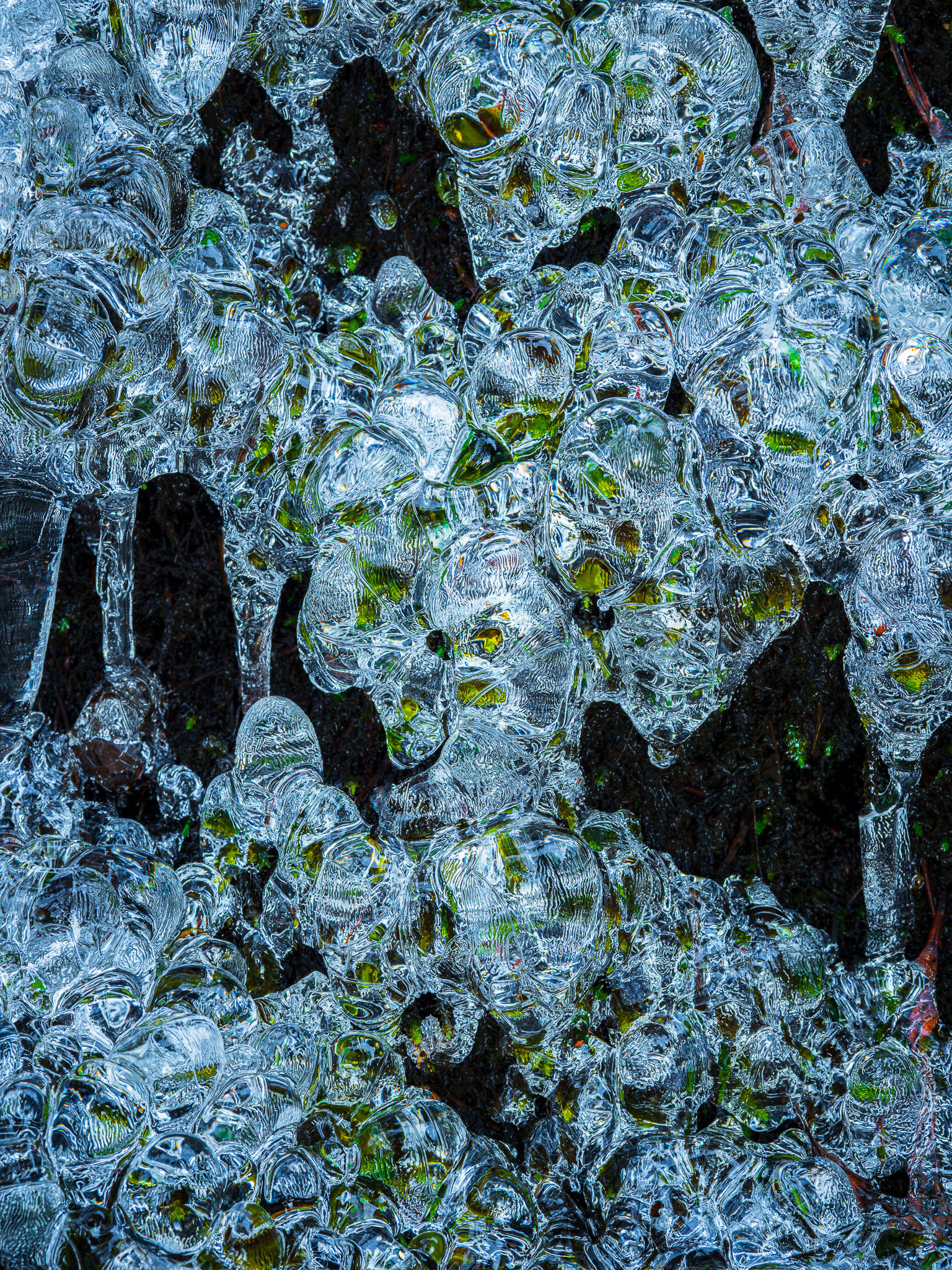
What is, for you, the appeal of landscape photography? How much is down to the outcome (the image) and how much to the experience or the connection with place that can develop out of it?
The appeal, I’d say, is about things like the opportunity to reconnect with nature and trying to capture the essence of it. Then there’s the mental calibration and stress relief that spending time in nature offers alongside some physical exercise.
I think that both these components are about equal in importance to me. While the outcome used to be my main focus, the time I’ve spent in the landscape has opened up so much more. Nature and the landscape offer much-needed stress relief, while photography satisfies my creative urge. Together, they magically provide something greater than the sum of their parts.
In the beginning, the outcome was definitely my main focus at all times, but being more seasoned and confident now, allowing myself to relax and better tune in with my surroundings, I’d say that it has become about equal in importance to the experience. In the landscape, the experience of the moment and nature is definitely prioritized, while the processing phase is about the outcome and conveying the emotional response I experienced in the field. Having both these aspects present in the workflow has definitely improved my images and the overall value I get out of photography. But, while I strongly feel that my own connection with nature and the scene is absolutely essential, and even though knowing that recognizable locations sell images, I rarely try to ”photograph places”, but rather manifestations of life and nature, if that makes sense.
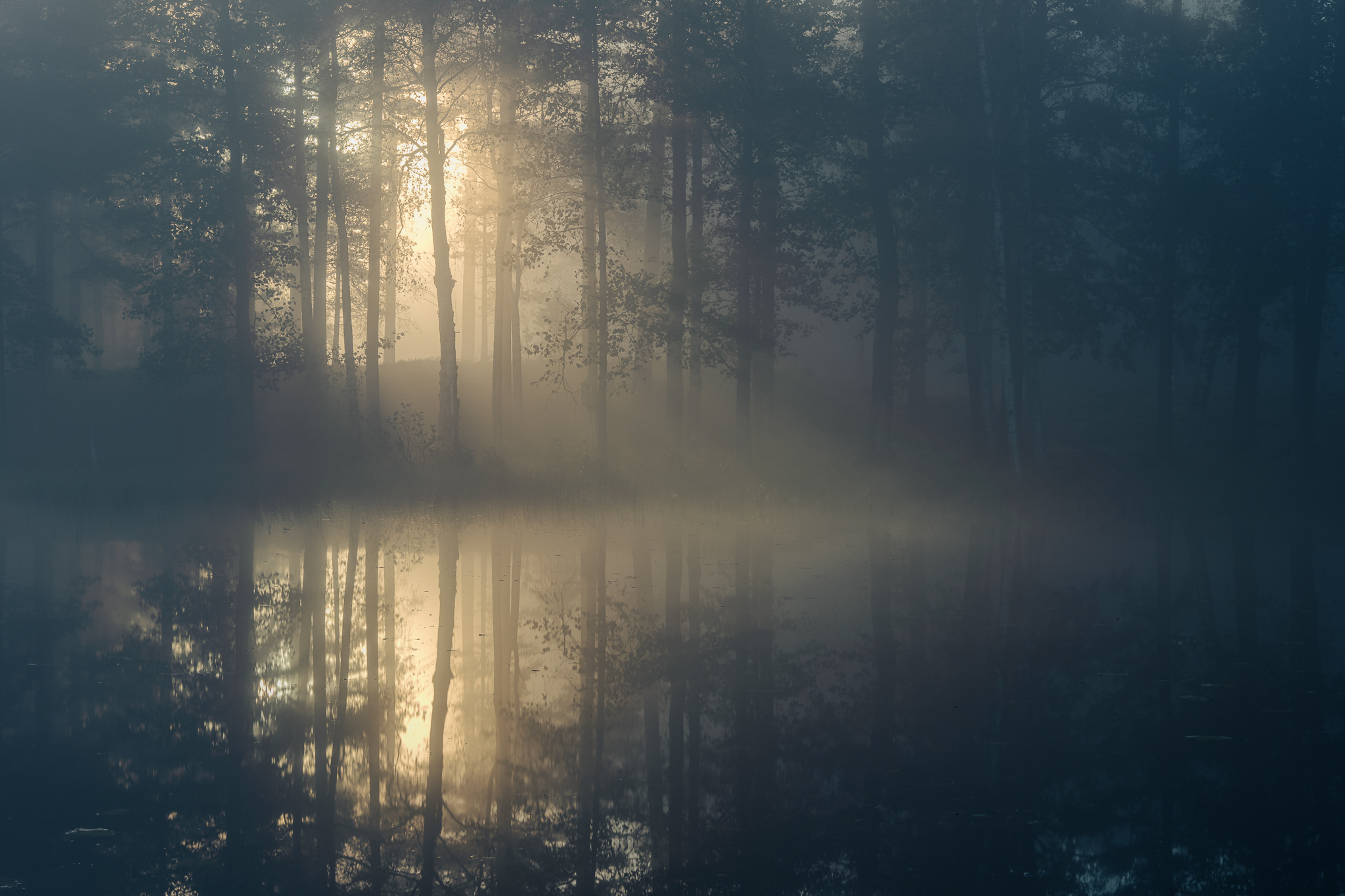
How do you feel that your photography has evolved? I can relate to your progression from classic view to small detail, learning by experimentation, and working close to home – they all resonate and ultimately help us to find our individual style, and better express this.
After the first years of experimenting with many genres of photography, I started focusing more on ”traditional landscape photography”, travelling a bit in Sweden and Norway, looking to capture those grand scenes often seen on social media. With time, though, I realized that the way I saw and instinctively wanted to convey the magic of nature didn’t fit that format. While this insight was a slow-coming one, I clearly remember what finally cemented it. It came to me like a sledge hammer, standing on a mountain in Norway, completely blown away by the vast scenery with surrounding mountain tops and the beautiful valley stretching out into the distance below me, realizing that conveying the entirety of that experience just couldn’t be done with photography.
I still sometimes enjoy the beautiful grand mountain views captured by others in far away exotic places, but find learning to see, appreciate and capture the myriad of nature’s smaller miracles available in my everyday life to be much more rewarding.
Also, having a strong need for diversity, I really can’t stand doing the same thing over and over for too long without changes or challenges, pushing myself and my work to evolve. This is also why I don’t stick to only traditional landscape photography, regularly turning to macro, ICM and other abstract forms.
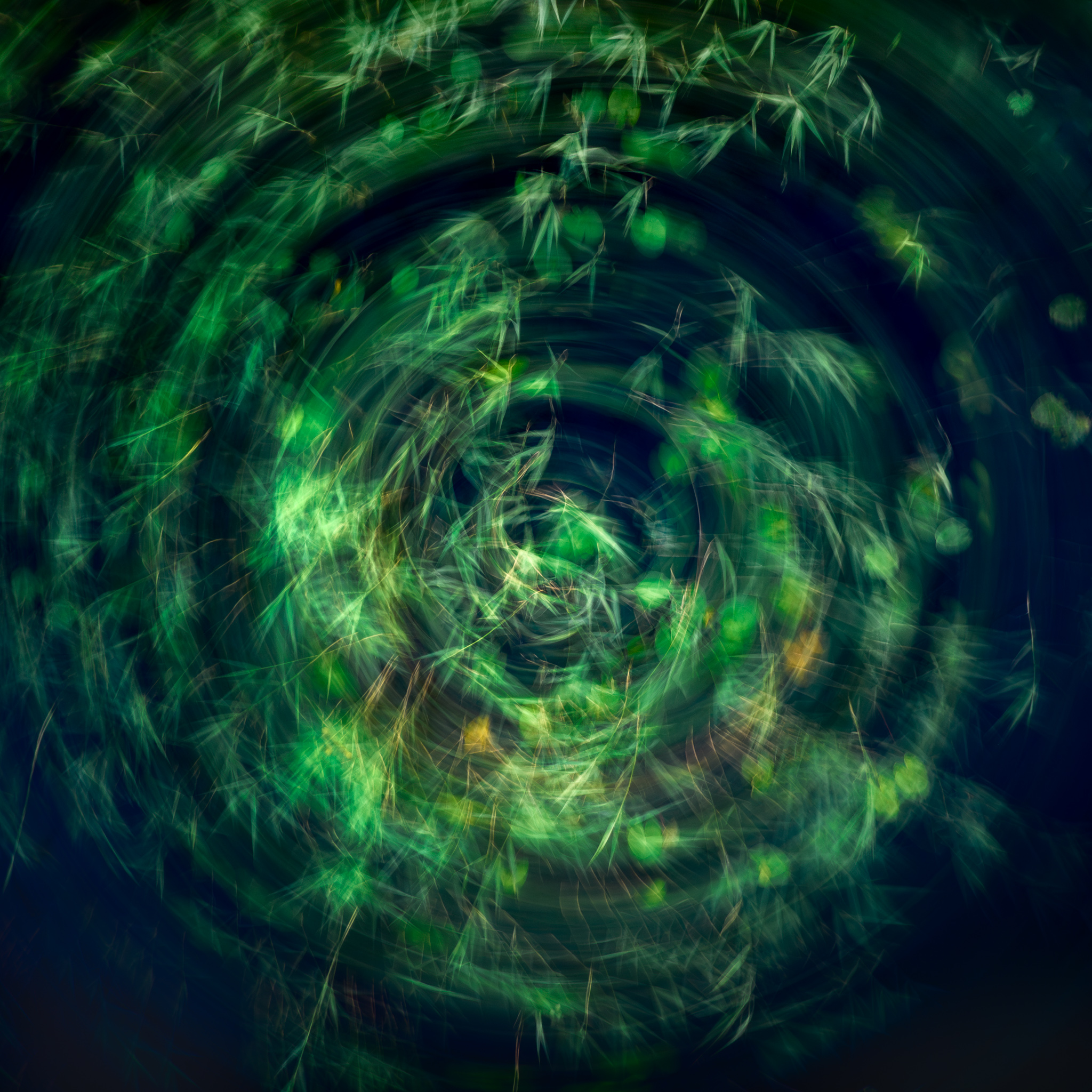
Aerial ICM
Occasionally, making an exception to my ”rule” of not travelling for photography, I leverage Norway's proximity for a photo trip with a friend every five years or so, which helps me avoid stagnation and refreshes my creative mind.
My increasingly more relaxed approach has also made photography more enjoyable and beneficial in many ways, increasing the quality of my photos with fewer exposures. I’ve also learned how expectations make me miss unexpected opportunities and stifle inspiration and creativity, so unless I have a specific new idea to try out, the only plan I make these days is where to bring the camera.
Sticking to a smaller, familiar area, not only maximizes the likelihood of collecting unique photos and enabling more frequent photo opportunities. It also allows me to form a deeper connection with the local landscape and offers a greater chance at revealing the gems and surprises hiding beneath the surface.
Other benefits of the close access that have become important to me are a lower carbon footprint, less wear and tear on popular locations, and the mental health benefits of spending frequent time in nature.
The one thing that I’m currently most focused on is evolving my work into series of photos. I think that this approach is especially well suited for the more minimalist style that I subscribe to as it allows a photographer to weave individual photos into larger, more involving stories. As I tend to go ”blind” and lose my perspective when spending to much time with a single photo or series, I switch between projects all the time, so none are yet released in their entirety. Several series are either very close or just a single decision away though and should soon see a release, though.
Would you like to choose 2 or 3 favourite photographs from your own portfolio and tell us a little about why they are special to you, or your experience of making them?
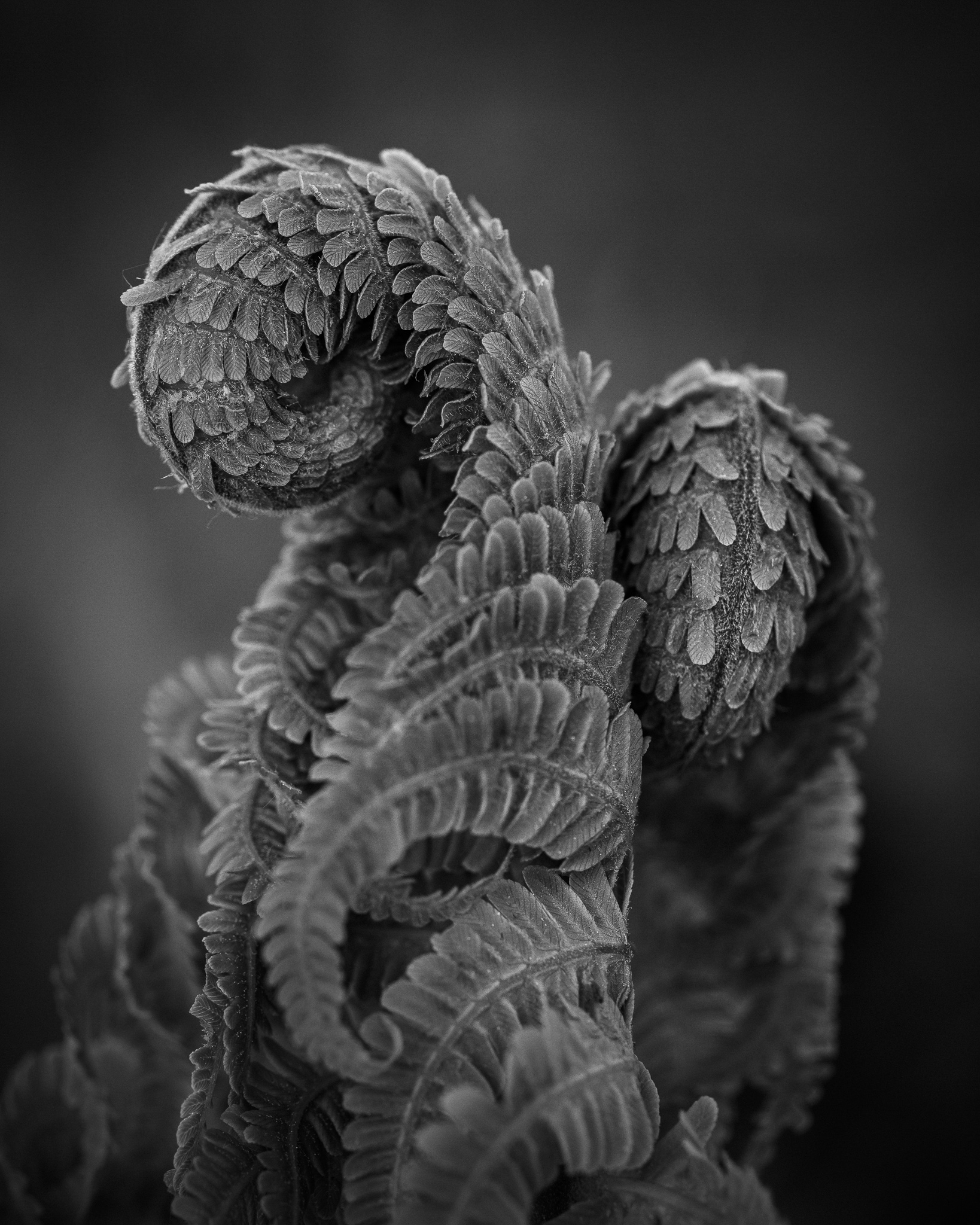
Green Fire
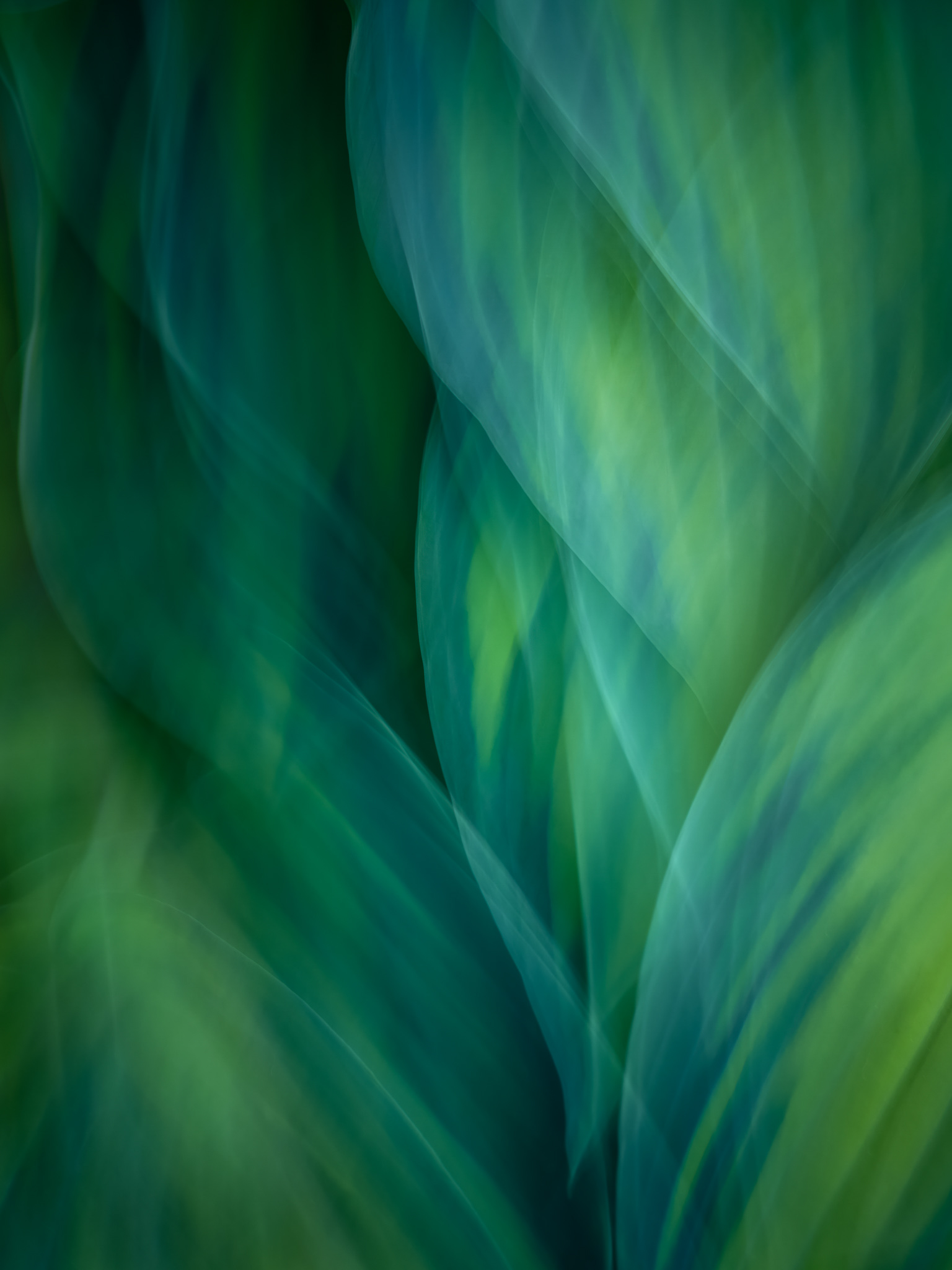
This is the first in a series with the working title ”Green Fire”, representing my first successful close-up ICM set of images. I had been using basic ICM techniques every now and then for many years but then had one of the rare occurrences where I allowed myself to be visually, rather than only emotionally inspired by someone else’s work, more exactly the close-up Agave ICM photography of Mark Cornick and Karen Waller.
After having utterly failed over and over again, I gave up for a while, but then mustered some courage and nervously contacted and asked Karen if she might offer some tips. She was very nice, but in order to not distort my own discovery of this particular technique, she told me that the best thing I could do was to accept that it was indeed very hard and that I shouldn’t give up. Interestingly enough, the next time I attacked my mother in law’s Hosta flower bed, I nailed it (thank you Karen)!
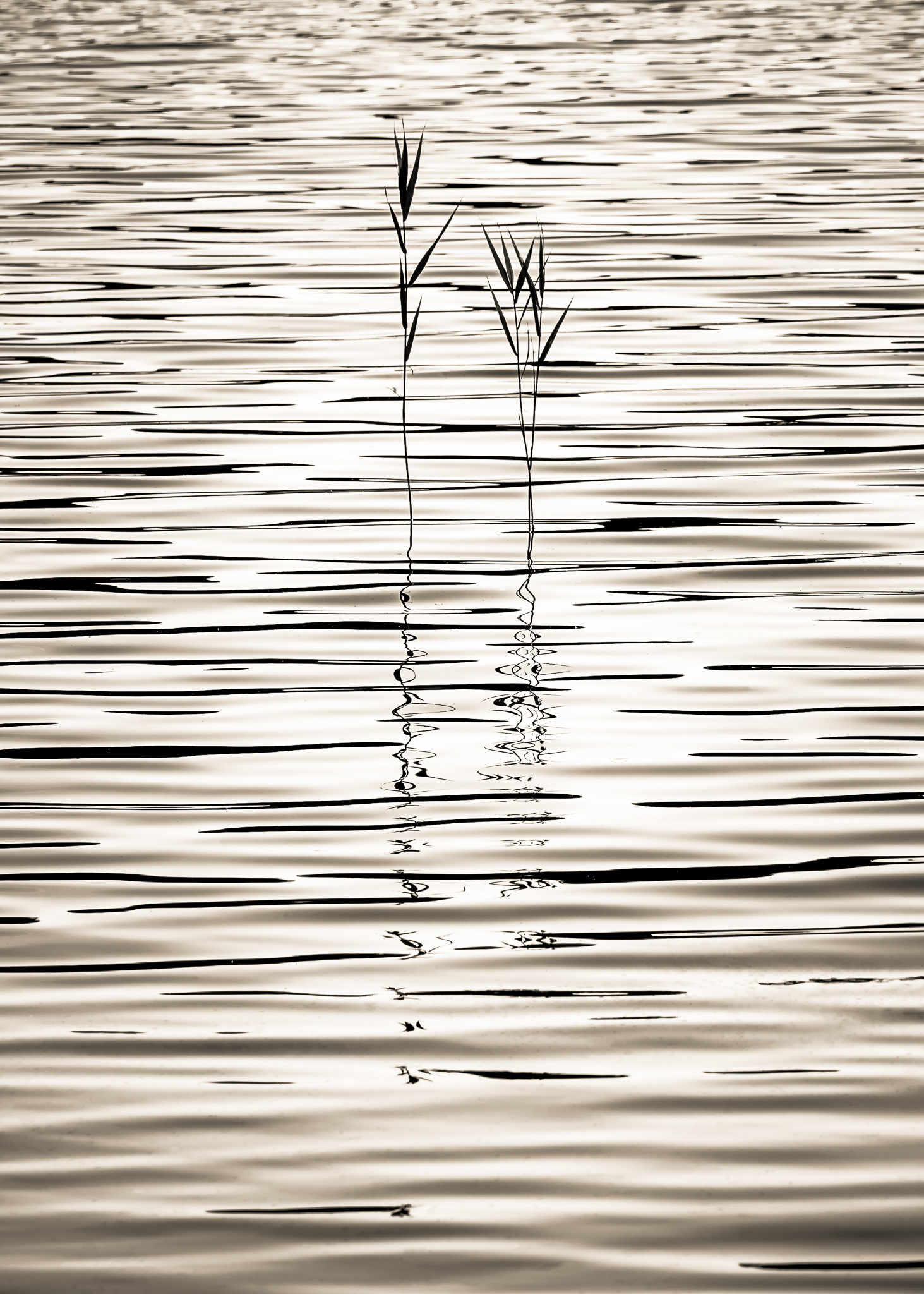
Jǫrmungandr
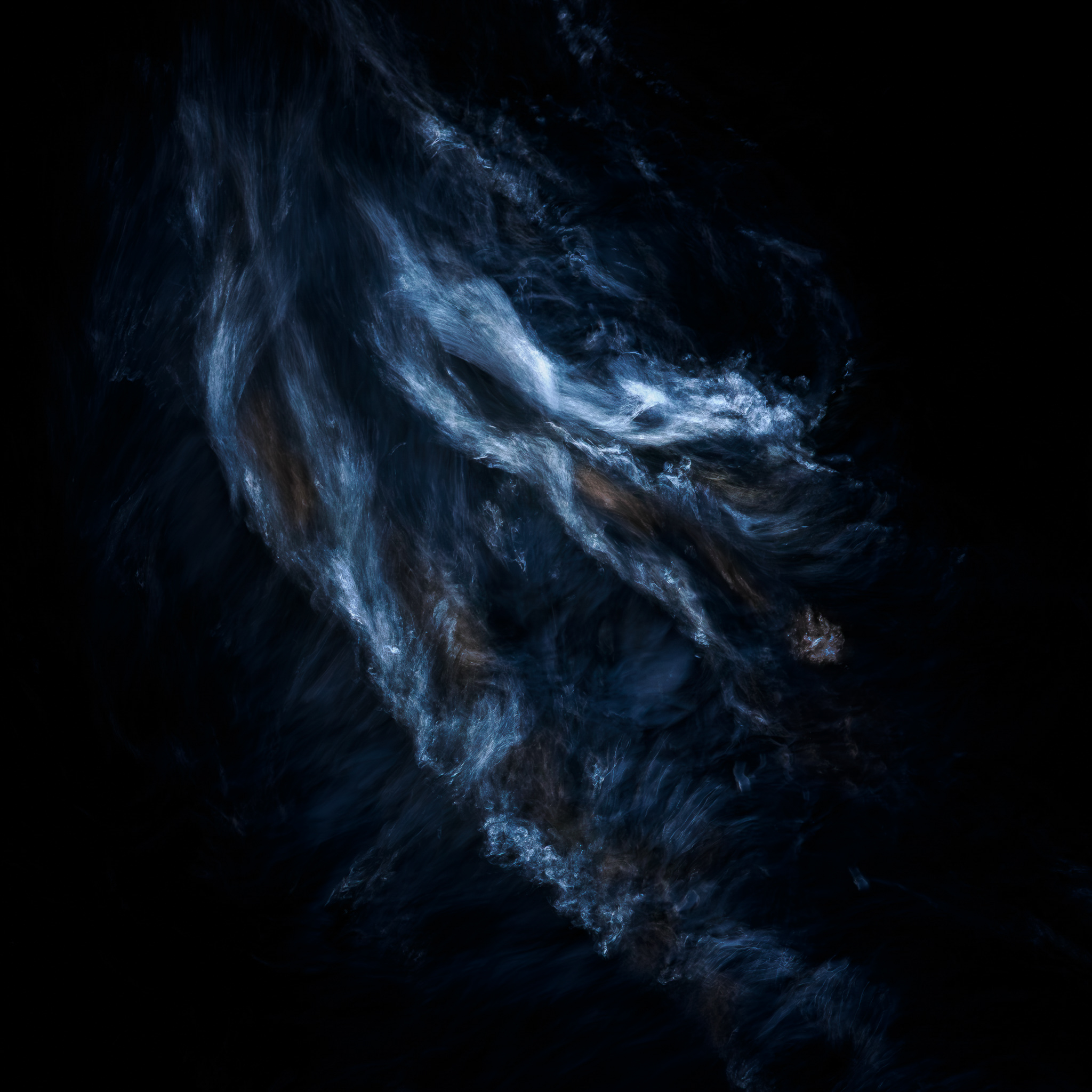
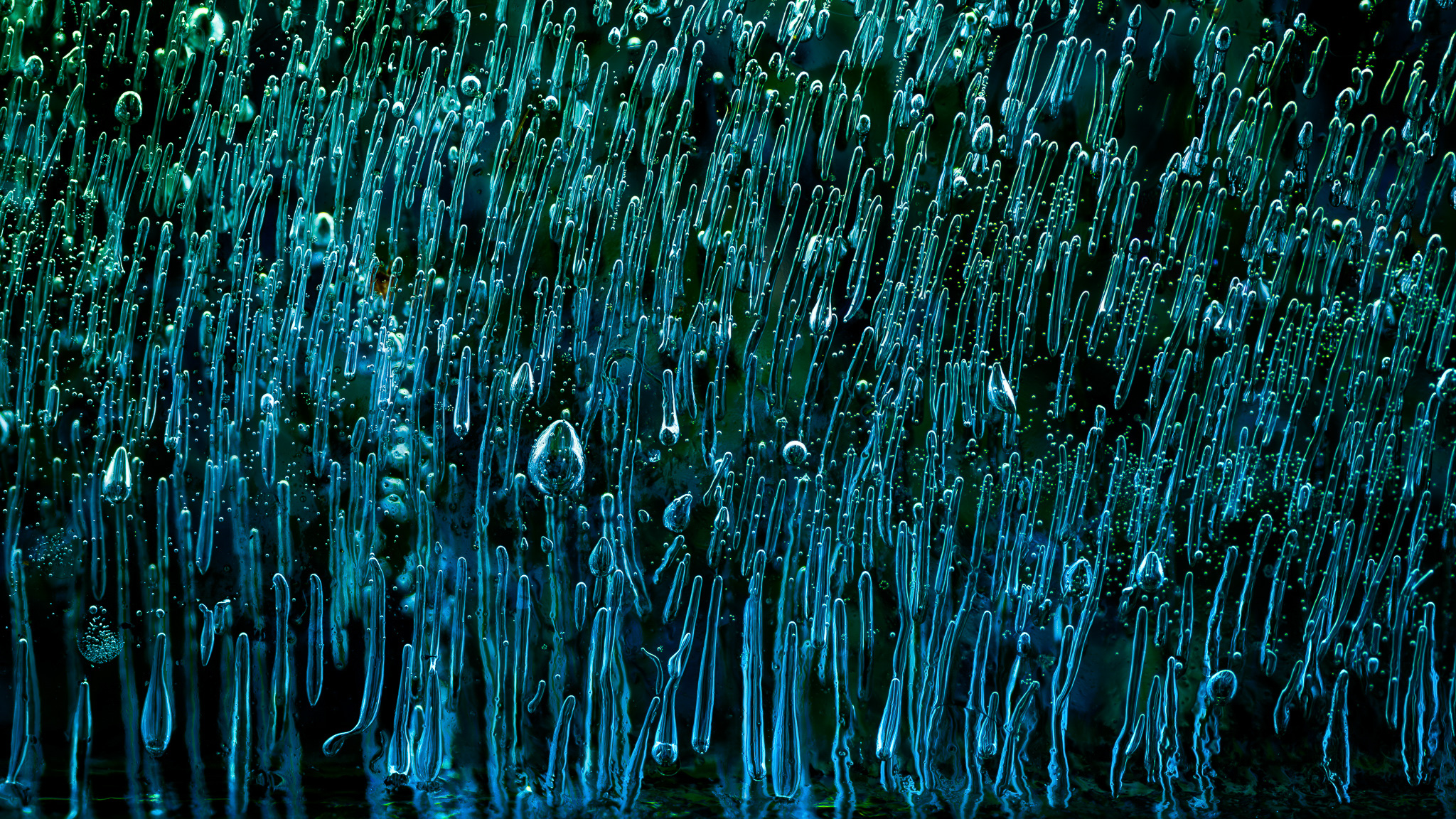
The second image is from my Coriolis series. I started working on this series from a local bridge in 2019, when we had a particularly wet autumn and winter, but this photo is from a few years later. With high water levels, the floodgates are opened on the small power station just downstream, which produces a plethora of swirls moving down the stream, starting right below the bridge. They are very short lived and hard to anticipate, though, making them frustratingly tricky to catch in a decent composition. As I shoot them hand held, panning and zooming as they move away from me, stellar stabilization is essential to get fine hand shake free details mixed with a sense of motion in the water at shutter speeds ranging between 1/10-1/2 seconds at upwards of 200mm full frame equivalent. In these swirls, the most intriguing little things, like this Midgard Serpent, and other mythical characters like Fenrir and Nimue may be found.
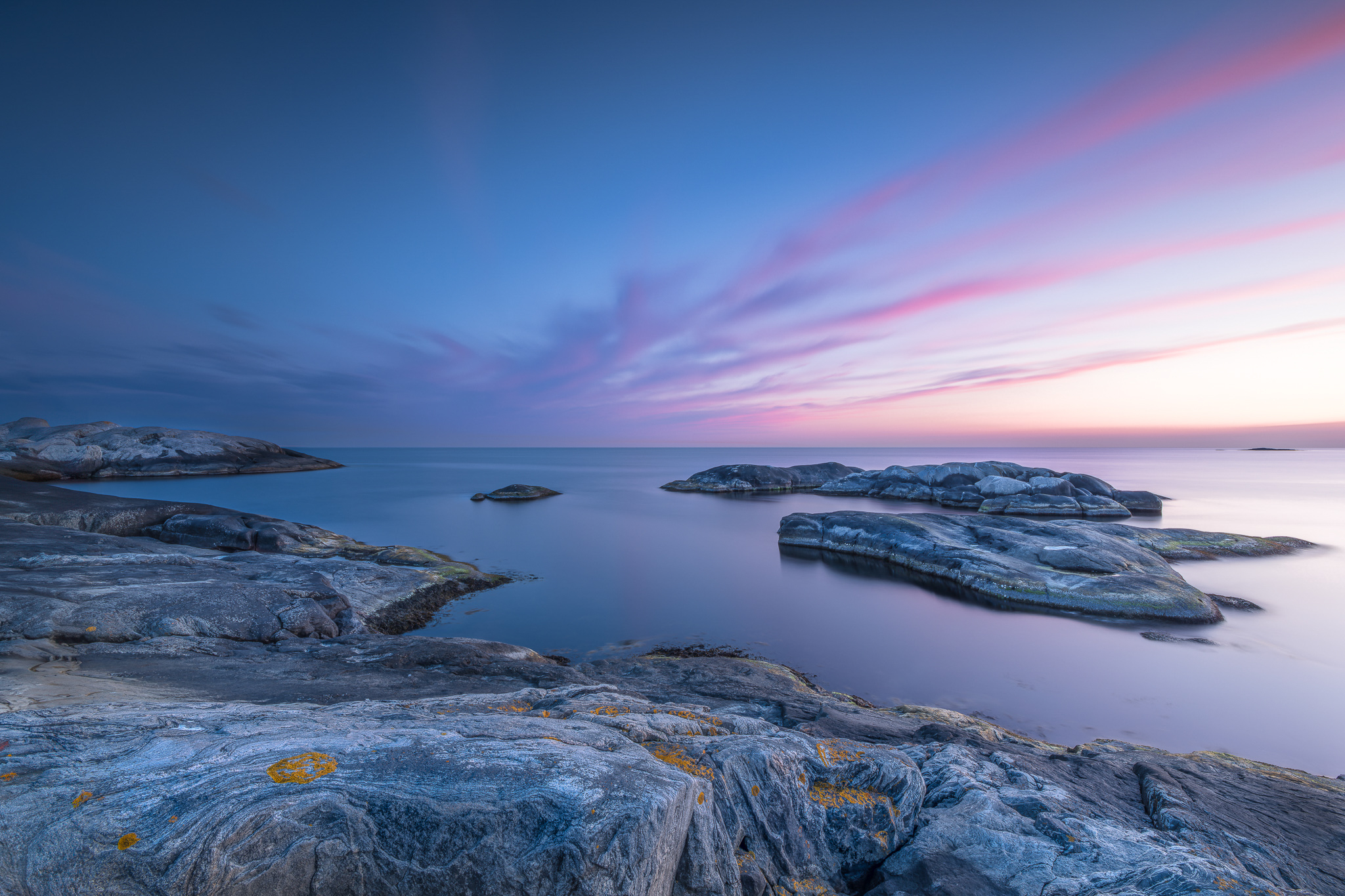
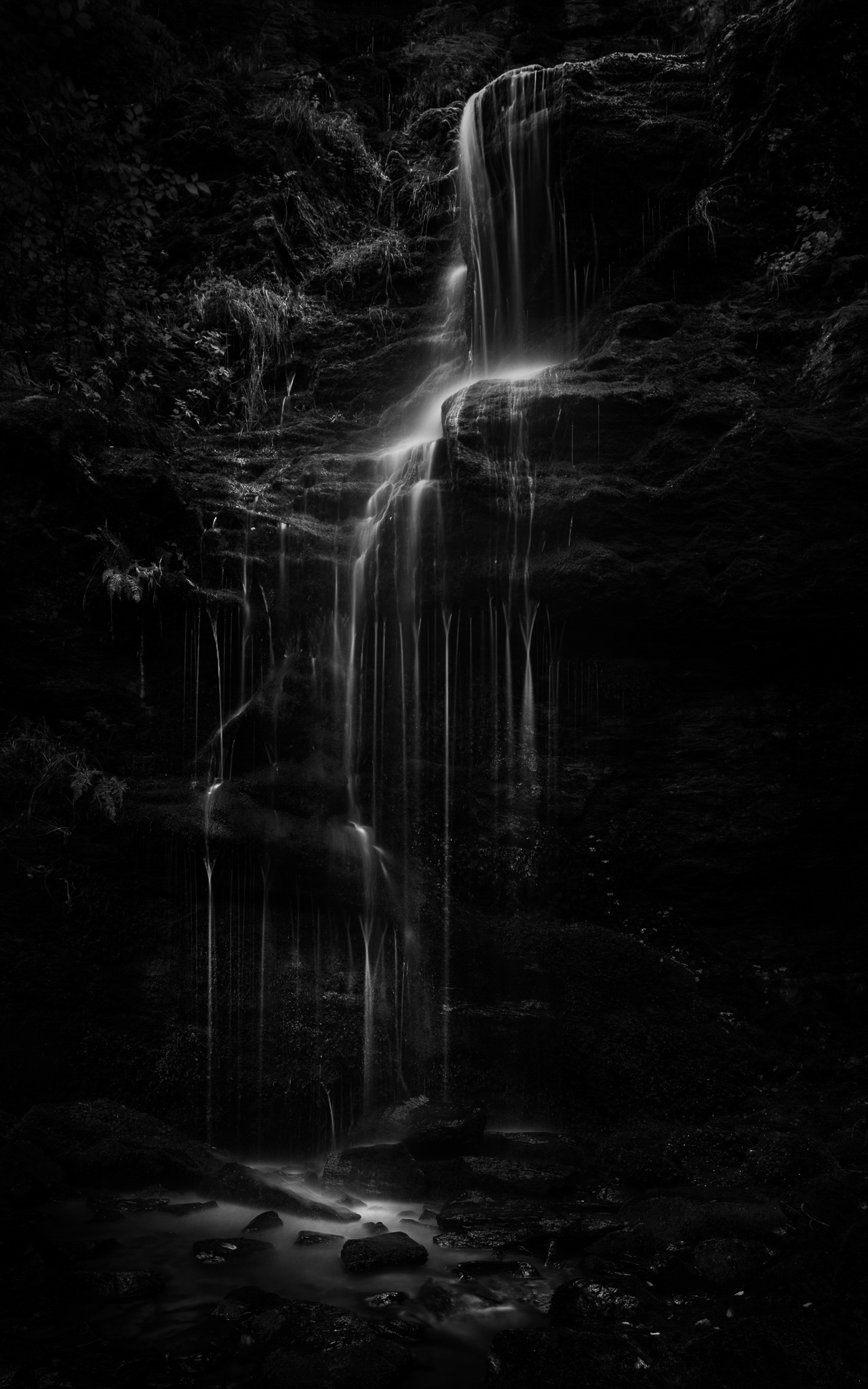
Resting
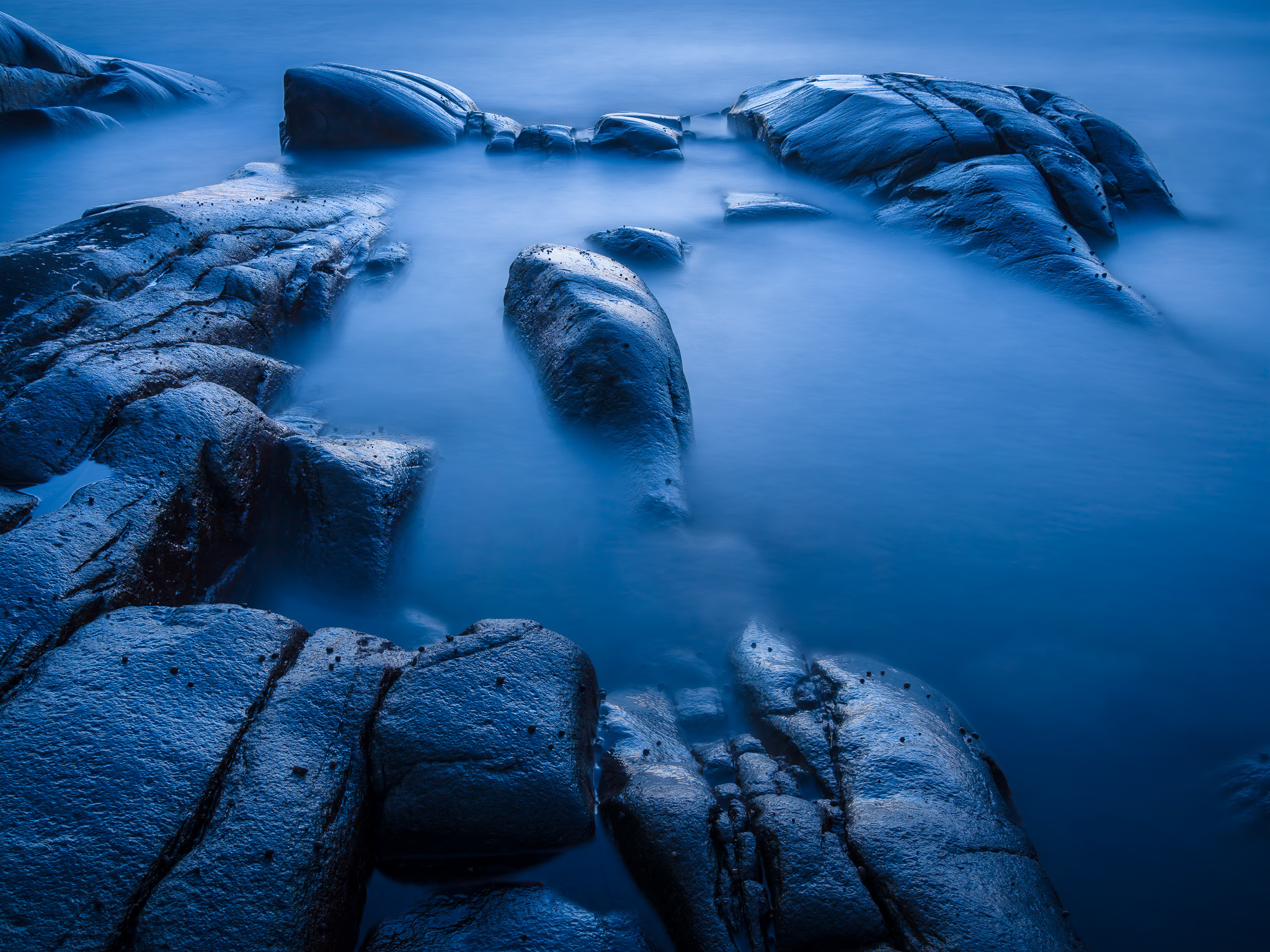
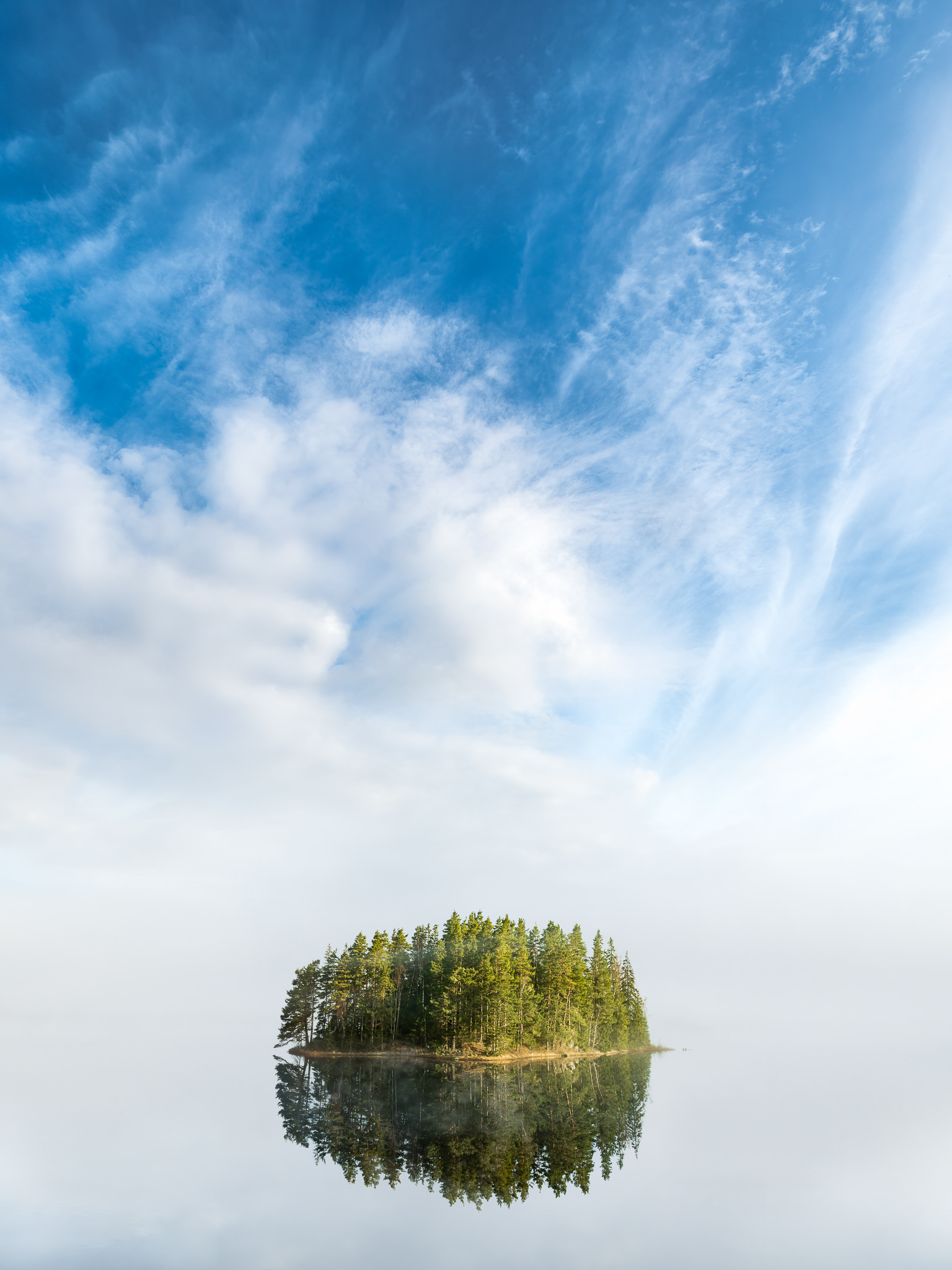
My last pick is the oldest of the lot and from the time I was first trying to get a handle on long exposures, almost 10 years ago. It is from one of my absolute favourite spots on the Swedish west coast, about an hour and a half from home. This is also an early example of me gravitating towards tighter, more intimate framing over the full sunset view. While it may have its flaws, the emotional response it triggers in me still makes this one of my all time favourites.
Tell us a little more about where you live, and the places that you are drawn back to?
The province of Dalsland, the home I left the city for almost 30 years ago, is a bit of a forgotten part of Sweden. Often nicknamed “a Sweden in miniature”, this area is somewhat wedged between Vänern, Europe’s largest third-largest lake, Norway, and the beautiful Bohuslän west coast. Together, they offer a diverse range of nature experiences and landscapes. The landscape closest to me is riddled with forests and boasts over 2000 lakes. It’s a bit ”compact”, offering more intimate views than grand scenery with high peaks and deep valleys, but that’s where one would instead rely on Norway.
I still feel like I’ve barely scratched the surface, but it has just about everything I need to fulfil my nature photography needs. I rarely need to drive or walk for more than 5 to 30 minutes to reach most of my favourite spots, and often take a camera bag with me in the morning for a quick after work session.
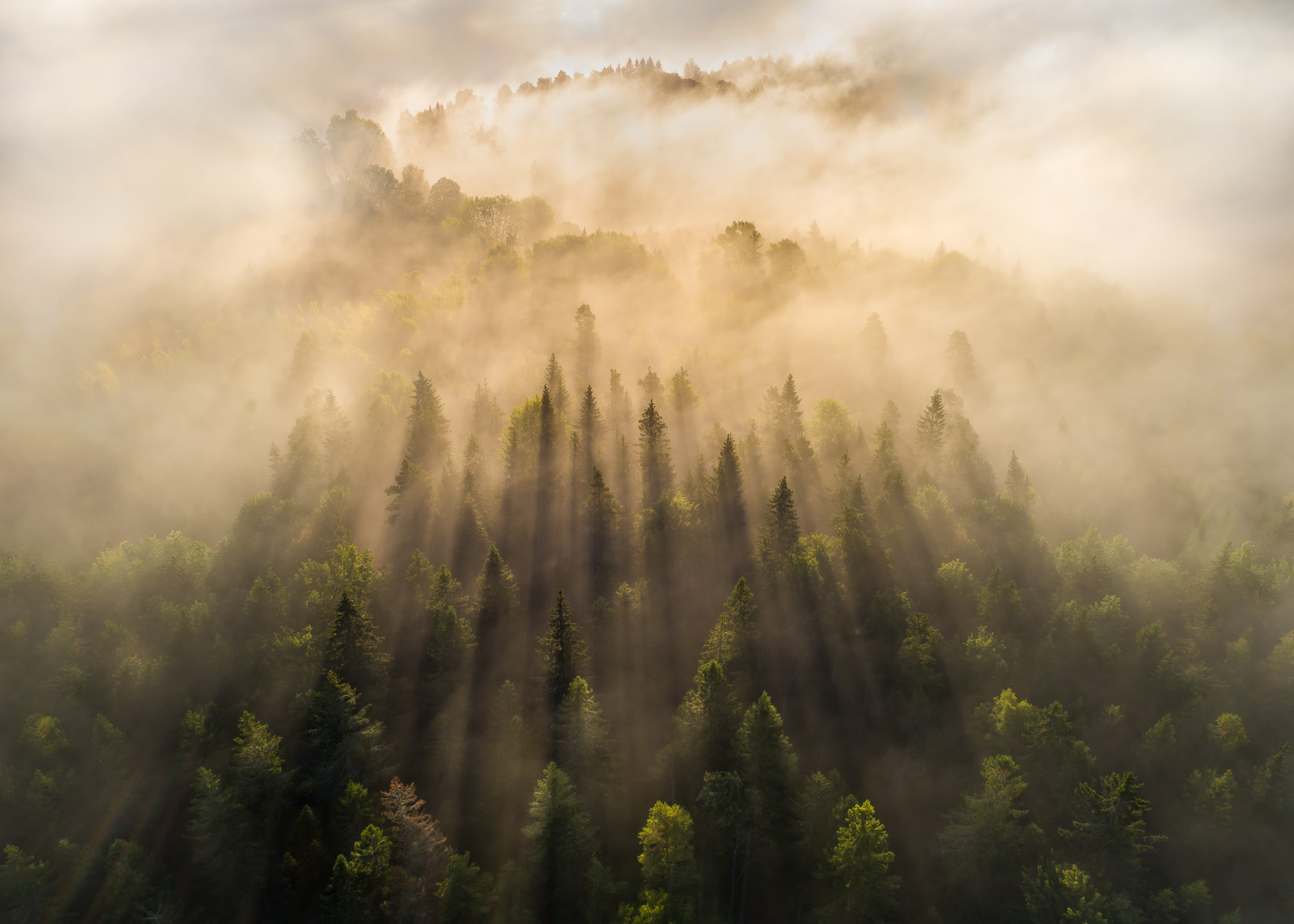
Autumn is perfect for some pre-work drone photography
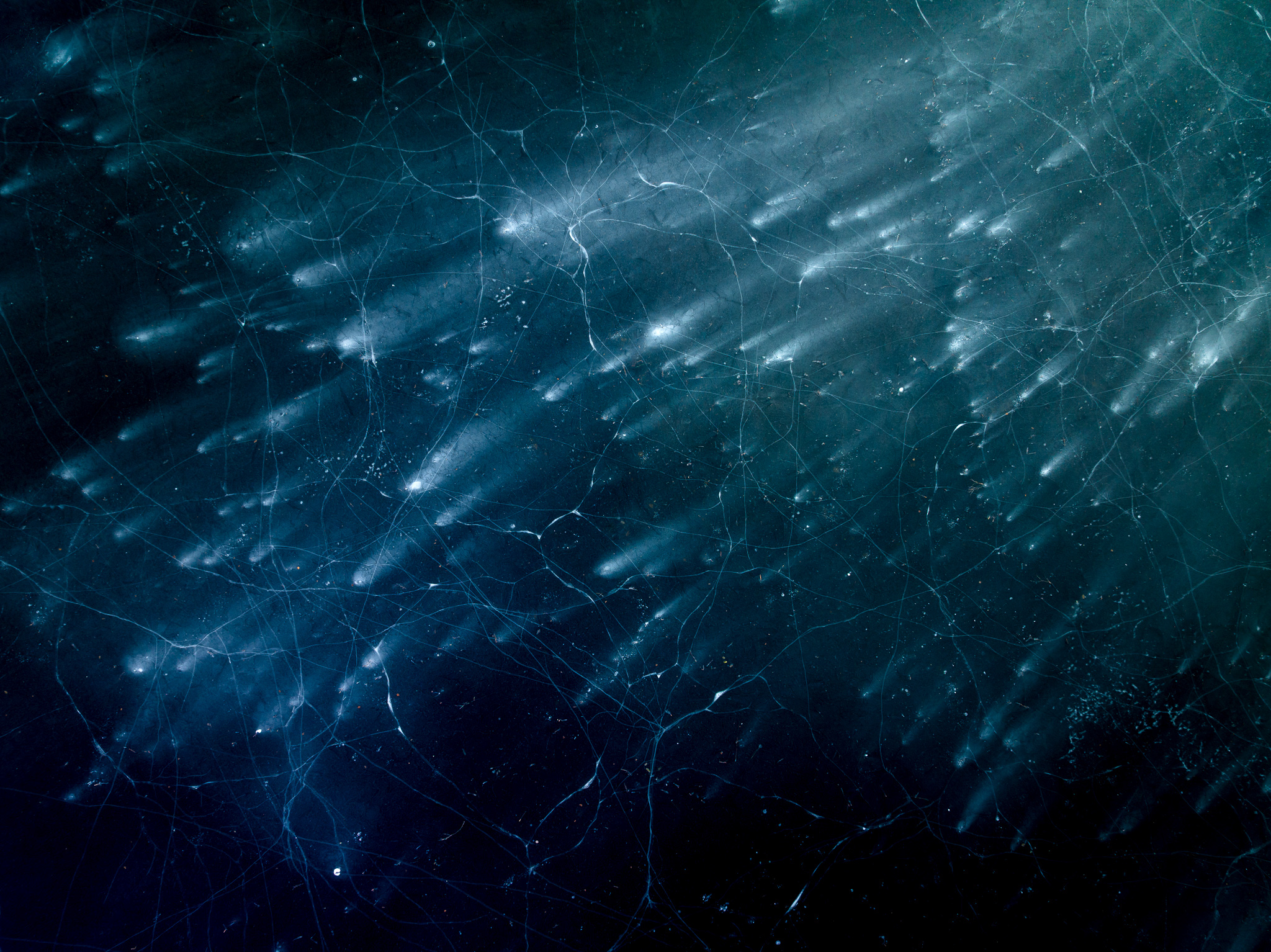
Besides my own garden, which features both wild and domesticated flora, my closest favourite locations are all centered around water—lakes, streams and waterfalls—and with access to the famous 254 km long Dalsland Canal, of which only 12 kms are man made.
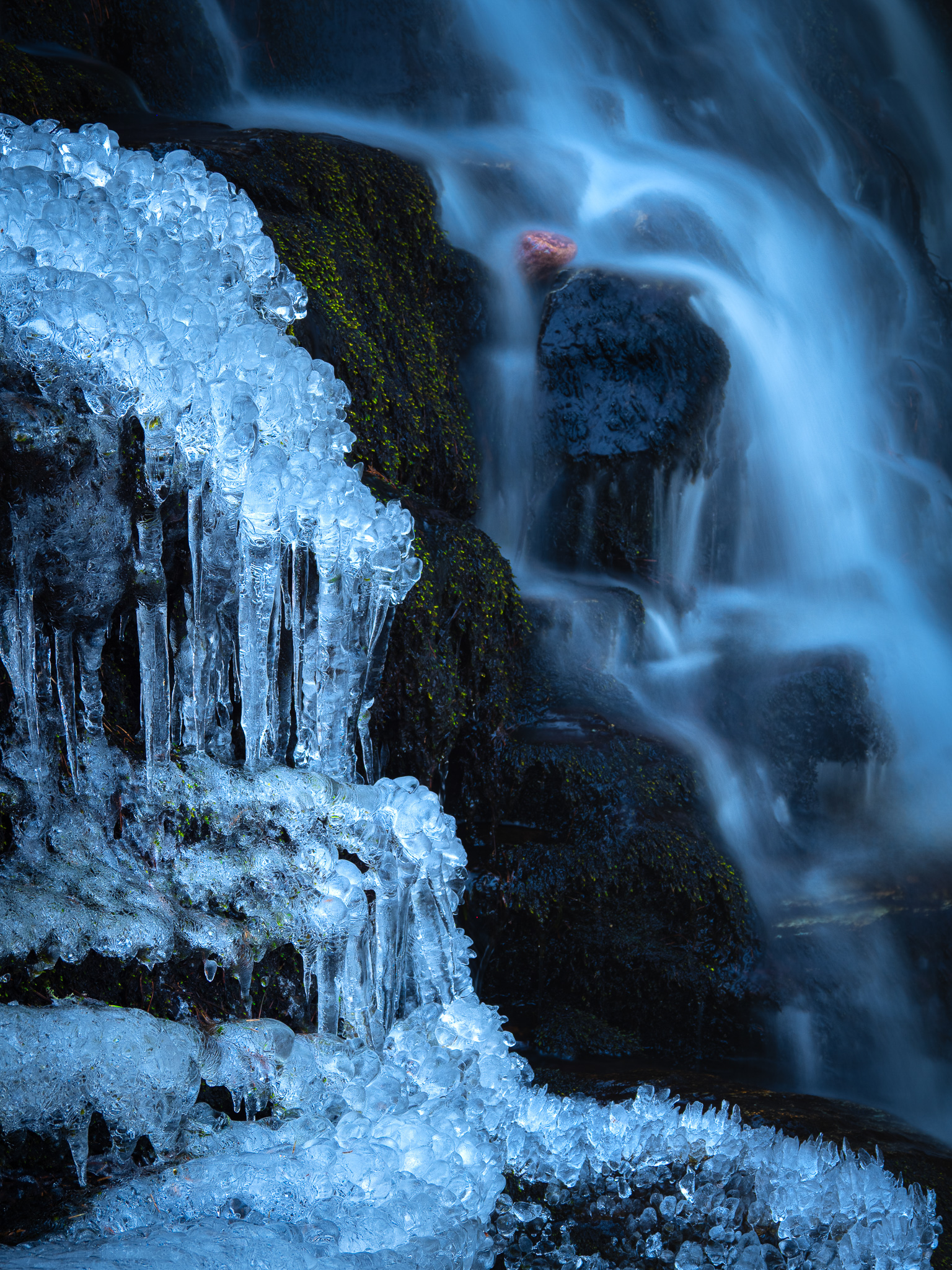
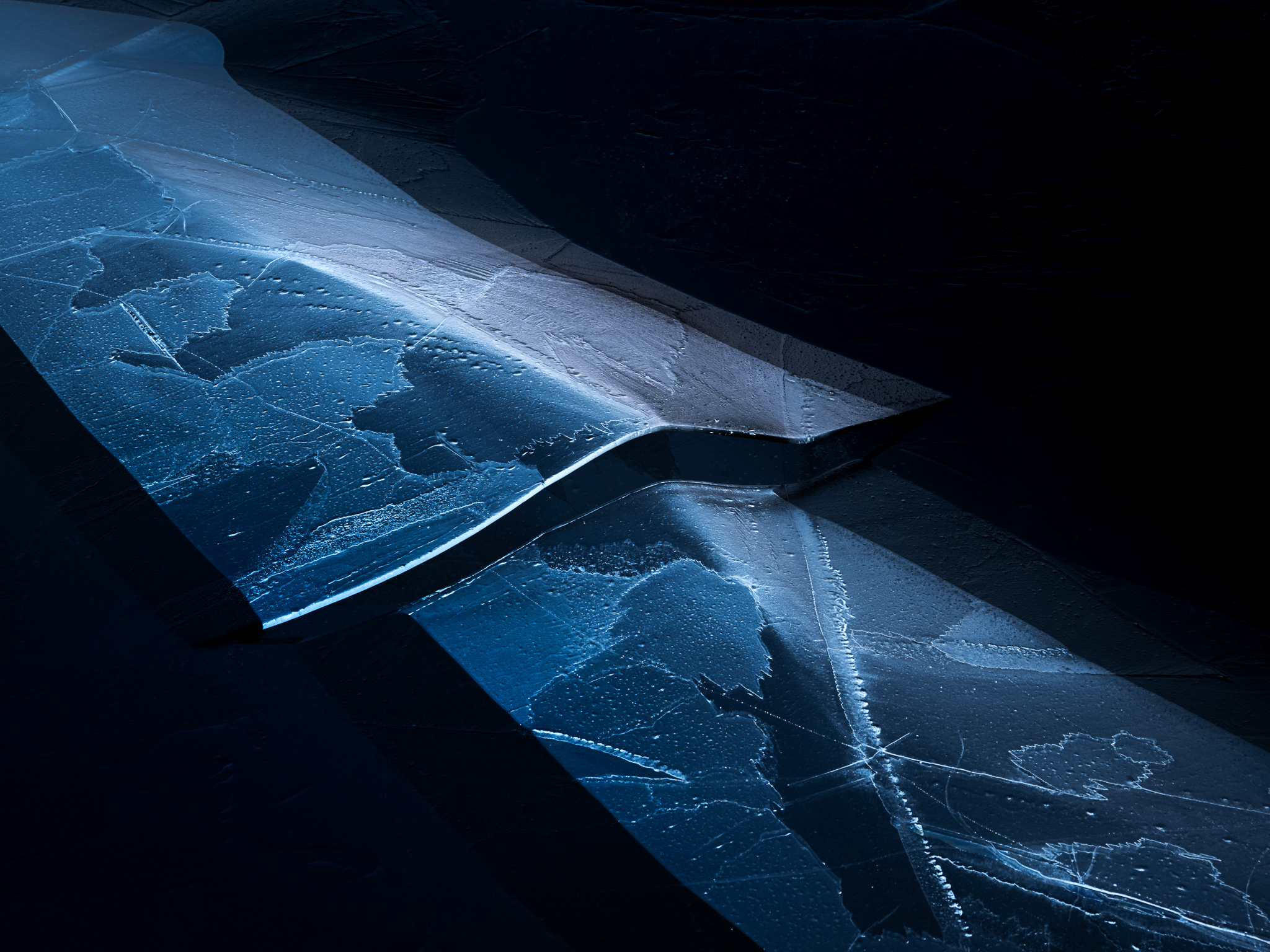
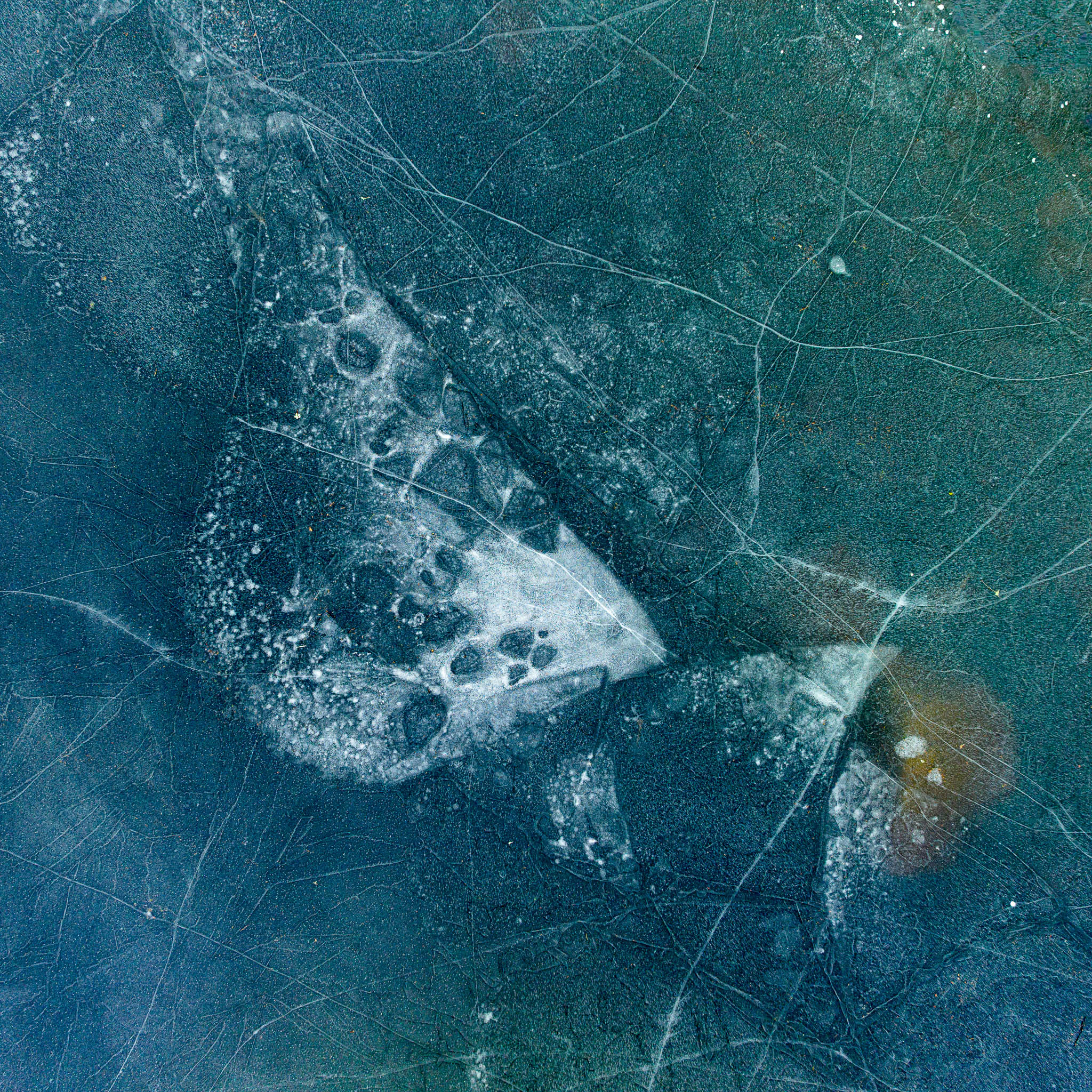
Water and ice are all I need to enjoy photography
Can you give readers a brief insight into your set up – from photographic equipment through processing to printing? Which parts of the workflow especially interest you, and where do you feel you can make the most difference to the end result?
My everyday landscape setup consists of an OM System OM-1 MkI, with an Olympus E-M1 MkII as a backup body and for my son, when we occasionally do photography together. My main lens is the Olympus 12-100mm f/4 Pro lens, usually accompanied by a Panasonic Leica 8-18mm f/2.8-4 and an Olympus 60mm f/2.8 macro lens. When I don’t feel the need for my beloved Shimoda X30 backpack, this 16-200mm FF equivalent trio fits nicely in a sling bag. Also, shooting a lot of verticals, I always either keep a battery grip or an L-bracket attached.
Doing a lot of long exposures, I’ve long carried CPL and ND-filters but but have gone back to circular (magnetic) filters from the bulk of rectangular ones. Most days I employ the excellent 1-6 stops ND simulation of my OM-1, though.
The reasons for sticking with micro four-thirds are size and weight benefits, alongside its flexibility and incredible stabilization (the smaller and lighter the sensor, the easier it is to stabilize), which enables me to do things probably impossible with other systems.
In 2017, I added a DJI Phantom 4 Pro drone, which greatly expanded not only my perspectives but also my photographic agility and flexibility. Photographing with a drone is quite a different and wonderfully liberating experience. The Phantom mysteriously dying on me in 2019 led me to replace it with a Mavic 3 Classic for a renewed creativity boost in late 2021.
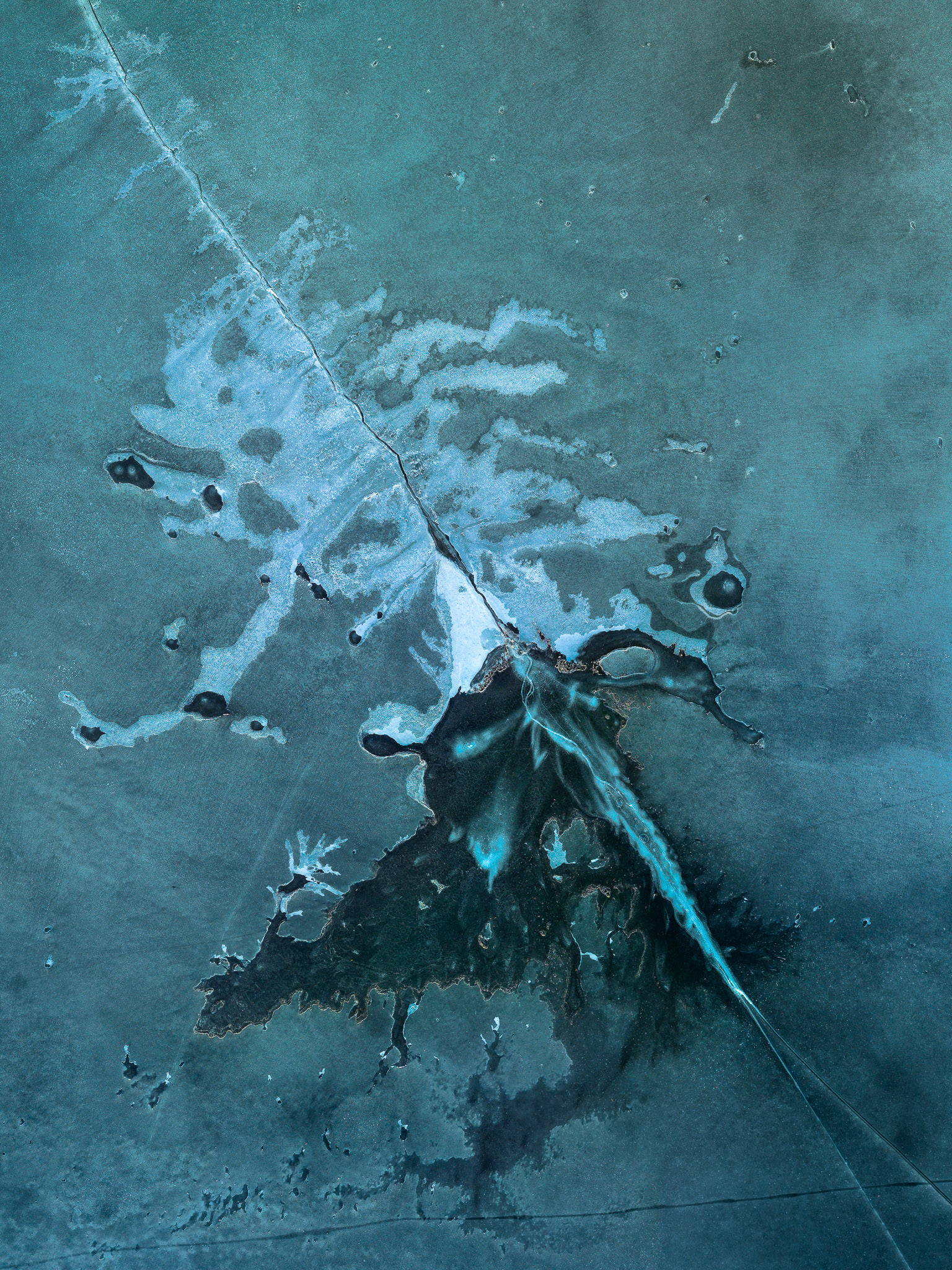
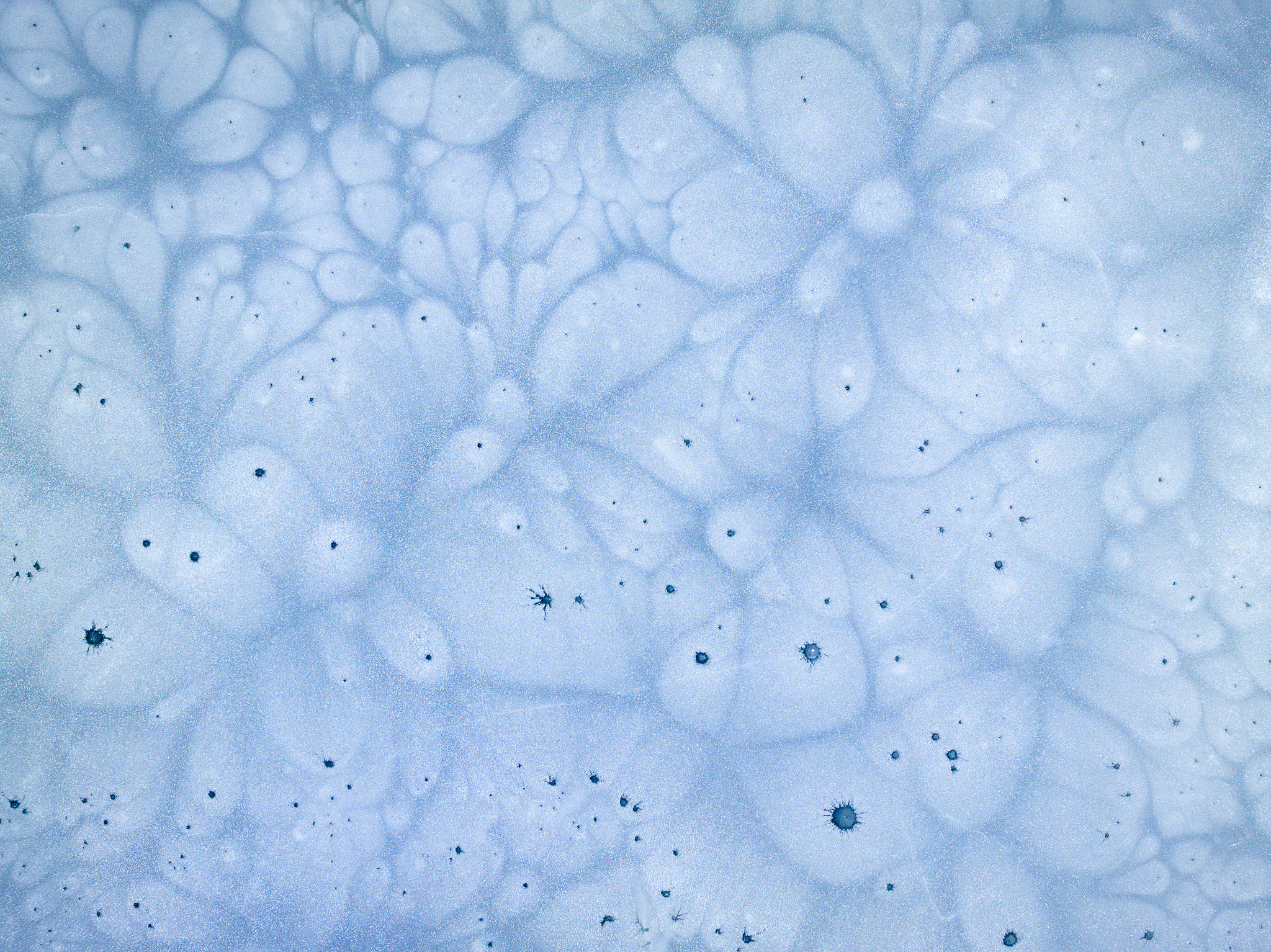
Frozen lake, multi row, drone vertorama
My editing workflow consists of 95% Lightroom Classic, with a rare occasional touch of Photoshop. For the focus stacking, I use Helicon Focus for its excellent results and optional 100% non-destructive RAW workflow.
Contrary to the common view on resolution needs for larger prints, I want mine to be enjoyable really close up too, allowing them to reveal other aspects and perspectives than only the normal viewing distance would. This is why I use Topaz Gigapixel AI for prints where I couldn’t use the 50 and 80MP pixel shift modes of my cameras. Used carefully, combined with AI based denoising in Lightroom, or sometimes DxO Photolab, it allows me to print even older 16MP mFT files at up to 2 meters with truly amazing and natural looking detail that hold up to close scrutiny.
Regarding prints, my choice of paper is usually Hahnemühle Photorag, and while I’d love to do the printing myself, the larger sizes I gravitate towards just make it financially unreasonable for now. So while I do much of the framing myself, I let Grand Image Print studio in Gothenburg handle this (blowing my mind every single time!).
You mention that your process can be a slow one, but that you’ve come to accept this and recognize its benefits?
Yes, although it used to affect all aspects of photography, I find that I’ve become more efficient in the past few years. Realizing that I can do much of my long exposure work hand held has helped free me from the ”tripod dogma” (you know, the one that dictates that landscape photography must be made with a tripod?). This, alongside a couple of other changes, has opened up and made my shooting a lot more flexible and efficient, allowing me to relax and enjoy the moment and nature much more.
The truly slow part of the process happens at home, where I sometimes wait weeks before even importing and looking through ”a catch”, and can edit a photo over several years.
Shooting more abstract images has slowed this part down even more. I find both the blessing and the curse of abstract photography to be that it opens up so many opportunities in post processing. Leaving the figurative behind, it can be very hard to set a limit, often having me work on 2-4 versions in parallel.
While my indecisiveness can be a difficult issue in certain areas of life, I’ve concluded that with patience and in reality, it rarely is in the end when it comes to my photography. I really don’t need to be in a hurry. My photography is primarily for my own well-being, and for those that enjoy more time-less images. Besides, the slower pace and long breaks often make it a little easier to keep some sort of objectivity around my work.
But of course it feels good when a photo or a series is done and released, which in part is why printing and selling prints has become so useful to me. Once a final, limited edition print is made, exhibited and hopefully sold, there’s no turning back, no tweaking allowed.
Exhibitions suggest that it is important to you that other people see your photographs in print. How do you choose to present your work, and what have you gained through showing it?
Well, while I do enjoy meeting people in a gallery, learning what my images make them feel and see, I’ve found the main benefit to be something else. An exhibition can be a closure of sorts. Apart from the creative closure it also makes me feel like I actually accomplished something worthwhile through my efforts. Sure, people can see and enjoy my work online, but that’s rarely anything but a very casual and shallow experience compared to viewing a print, whether it be large and impactful or small and intimate. We can view thousands of fleeting images on our phones and screens a day if we wish but how many of them do we really look at, perhaps even having them tell us something about the world and ourselves?
Also, while the light emitting property of screens can make an image feel closer to reality, it also comes to life in a different way when printed. A print is always present and alive in a way that a screen, reliant on power and scarcity won’t be.
The most important aspect of working with exhibitions, although stressful, is that offers me a focus and clarity that takes me and my work further than it would otherwise reach, and makes me see a much broader image and idea of what I do.
You’ve had a frustrating year, which has undoubtedly knocked back any plans or ambitions that you had for your photography. What do you hope for, going forward?
That’s true. After more than 50 years of near perfect health, too much stress and apparently bad genes handed me a heart attack in February. It was the sneaky silent kind which almost ended my life about a week later. Some additional, unrelated medical complications means that I’m still not fully back to normal.
It’s quite clear to me that I burned that candle a bit too hard, trying to juggle too much for too long. A demanding job, a father with health issues, a son with special needs, the list grows long. Realizing that I had pushed my time and energy resources too thin, my devotion to photography demanded some scrutiny.
While spending time in nature and entertaining my creativity has been a great stress relief and energy source, with building a new website, preparing for exhibitions and a plethora of other related little things, balance was lost, even having me ponder whether I should perhaps quit photography altogether.
Of course I could just go back to ”casual shooting” but I’m pretty sure that I’d lose most of the creative incentive. My nature is to always keep developing and I find challenges to be a big part of that; trying to stop that would only lead to my losing interest. For one, only keeping my work on a hard drive just feels pointless to me.
I still don’t have the final answer to this new challenge but will be moving forward at a more considerate pace from now on, working to have my more relaxed attitude in the field reflected in more parts of the process, while keeping a more vigilant eye on my health.
I’ll also be putting in an effort to enjoy life more, with or without a camera in my hand, probably working less in periods. I’m also taking a break from exhibitions and once I get back to them, I will make sure that I have ample margins for life’s curve balls.
We usually ask our interviewees what they would end up doing if they had to take a break from all things photographic for a week, but I realize that you have found yourself constrained for an extended period. When in good health, what other hobbies or interests do you have?
Well, to be honest, a week without photography is nothing for me. Family and work requirements can sometimes have me ”going dry” for months. But, if I would have to pick something else, it would be playing music (percussion) or perhaps doing some more creative cooking. I do however tend to use those creative breaks to instead fill up on inspiration through listening to audiobooks, the occasional podcast, watching interesting movies and quiet ”meditative walks” in nature.
And finally, is there someone whose photography you enjoy – perhaps someone that we may not have come across - and whose work you think we should feature in a future issue? They can be amateur or professional.
I think that Lesley MacGregor, a dear friend from The Arcanum, would be an excellent choice. She is a brilliant photographer with tons of interesting insight to share. And Adelaide based Karen Waller, another friend that I’ve made through photography, offers what I find to be an amazing portfolio of landscape, drone work and truly spectacular ICM close-ups, among other things.
Another master of ICM – Mark Cornick, who does some truly breathtaking coastal and close-up ICM work, would also be very interesting.
Thank you, Stéphane. We wish you continued good health and enjoyment of what sounds like a rich and rewarding environment.
You can see more of Stéphane’s photography on his website. https://photo.stephanejean.com/