


 Join the conversation
 Subcribe to comment rss feed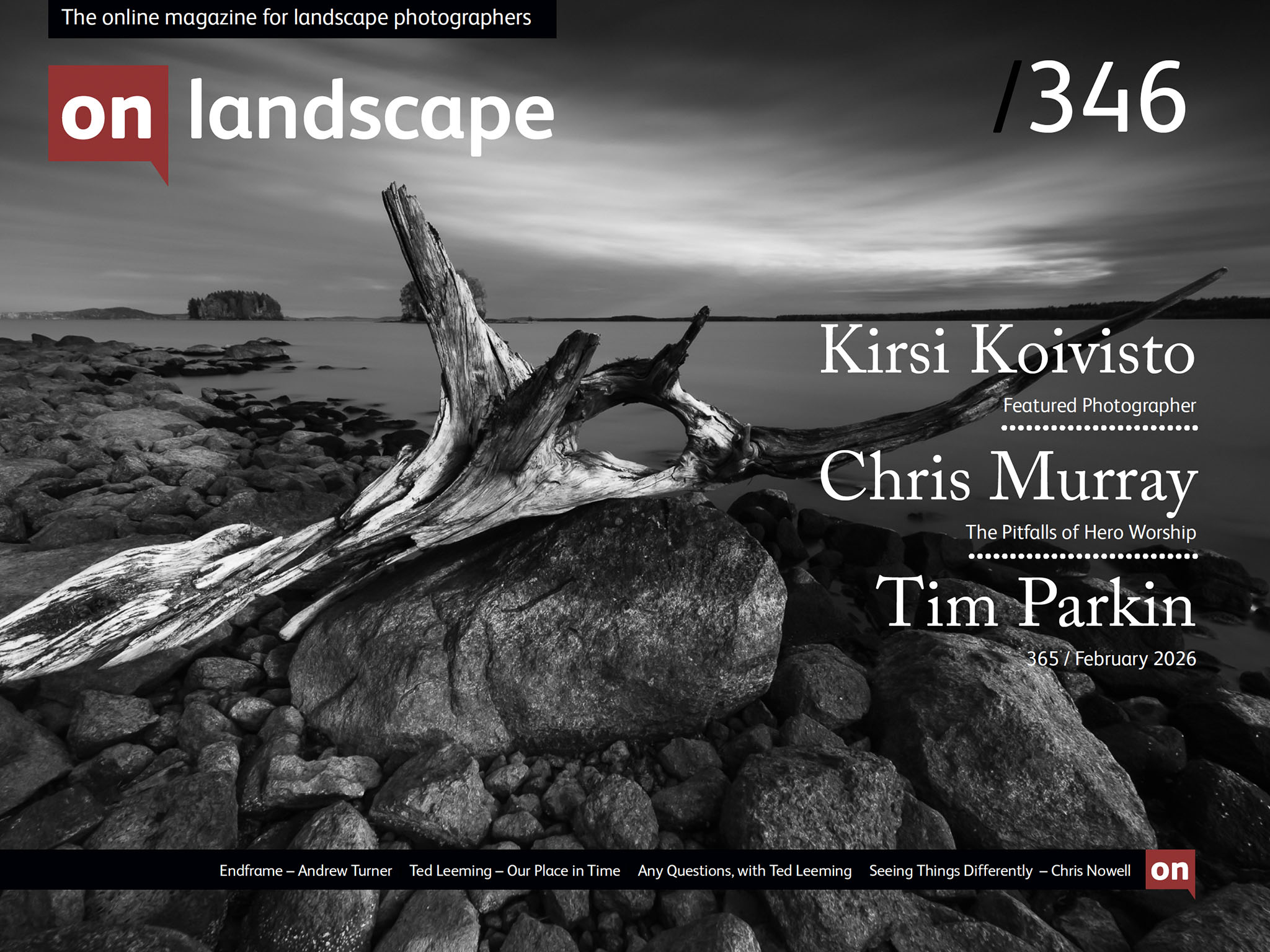

Issue 346
Browse On Landscape on your Tablet, iPad or Desktop
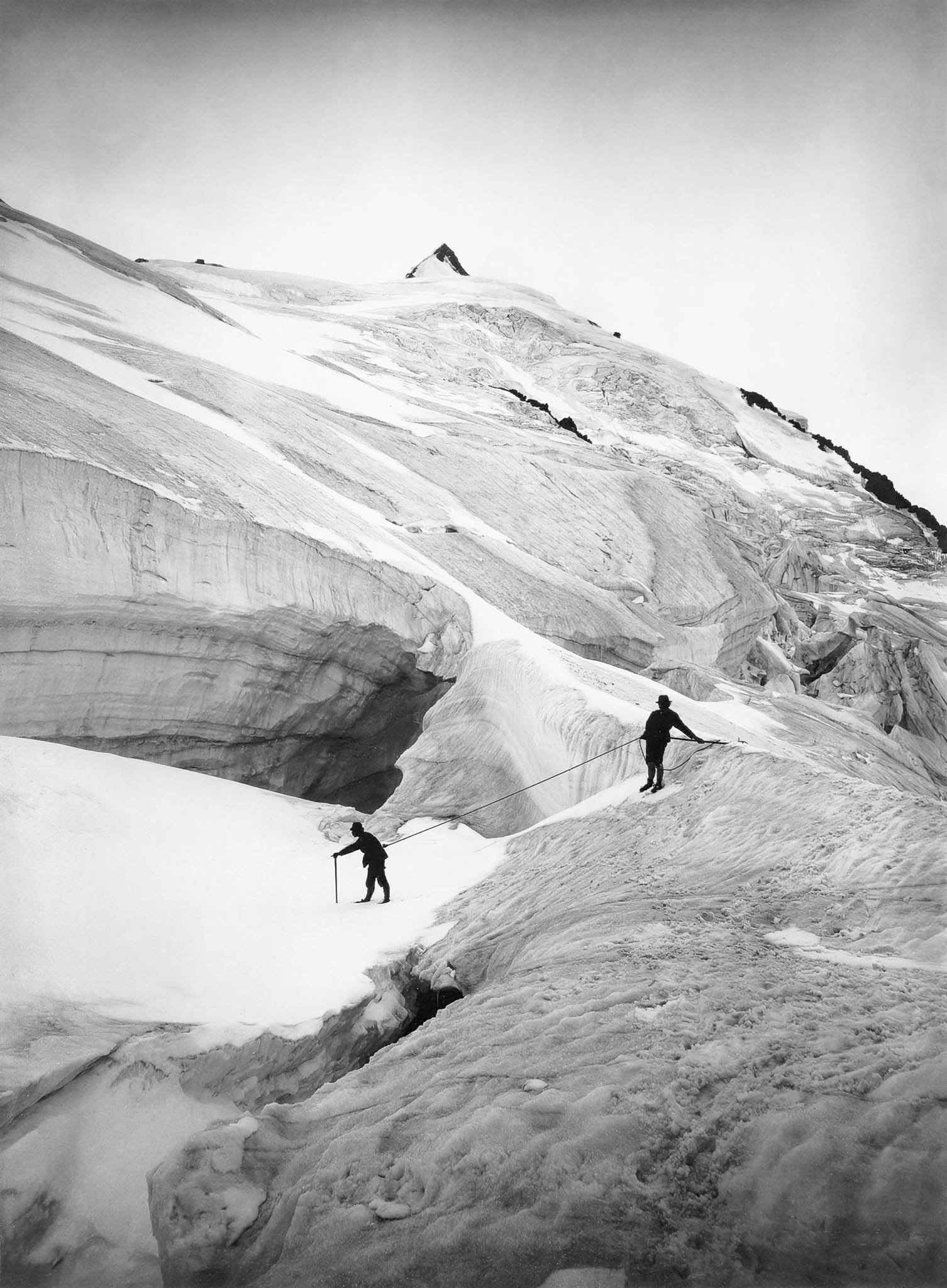
End Frame: Climbers descending the Hoffman Route, Gross Glockner, 1893 by Vittorio Sella
Andrew Turner chooses one of his favourite images
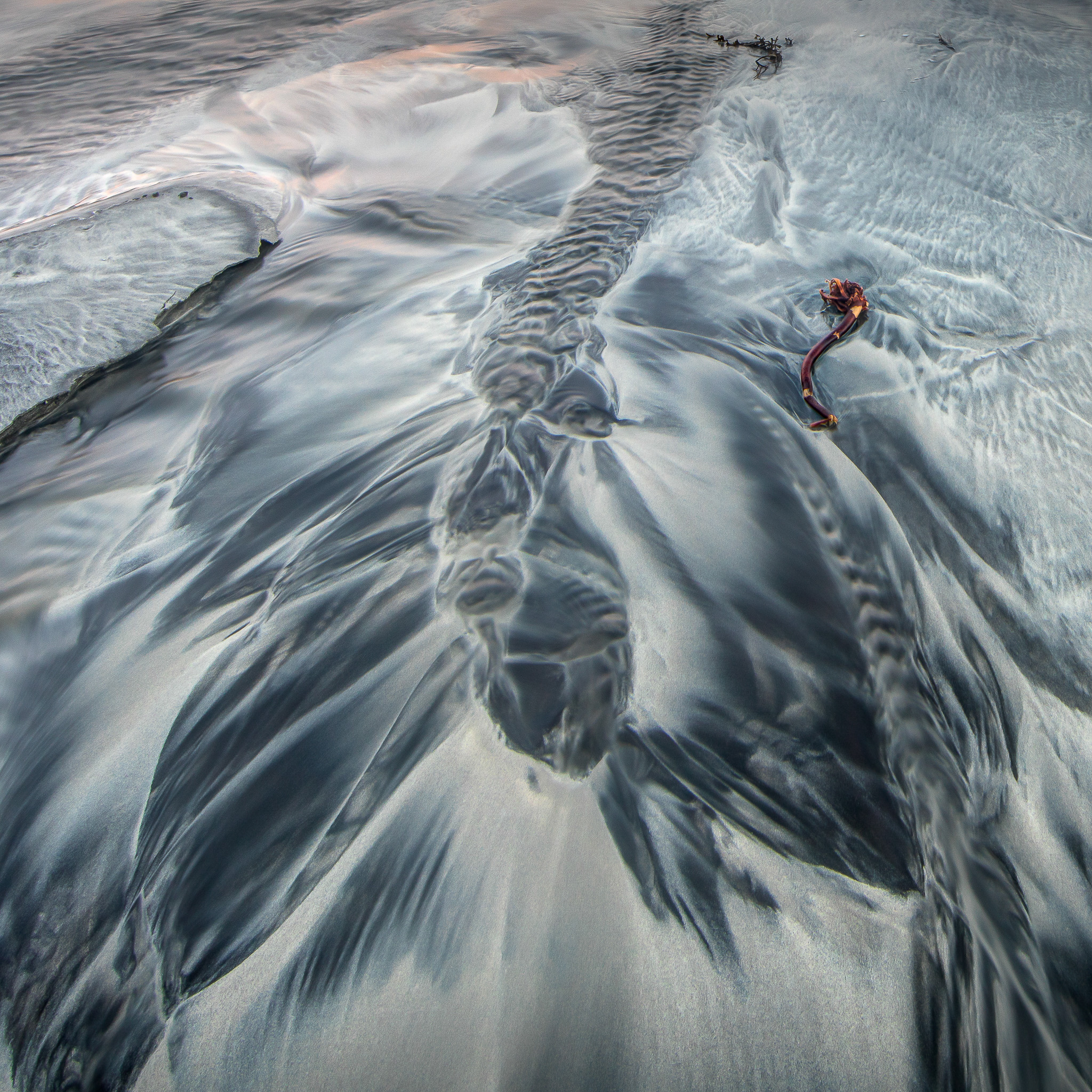
Kirsi Koivisto
Featured Photographer
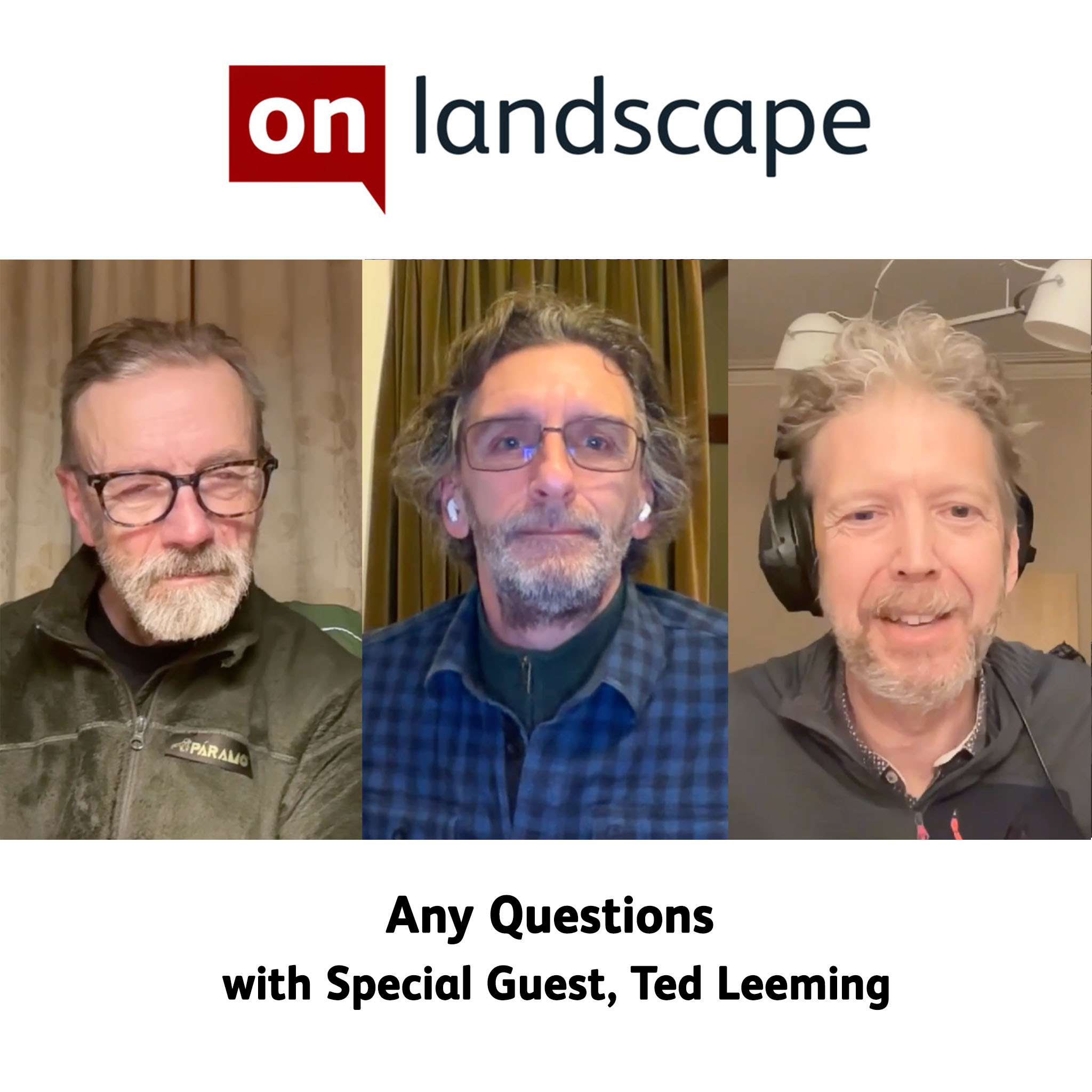
Any Questions, with special guest Ted Leeming
Episode Twenty Six
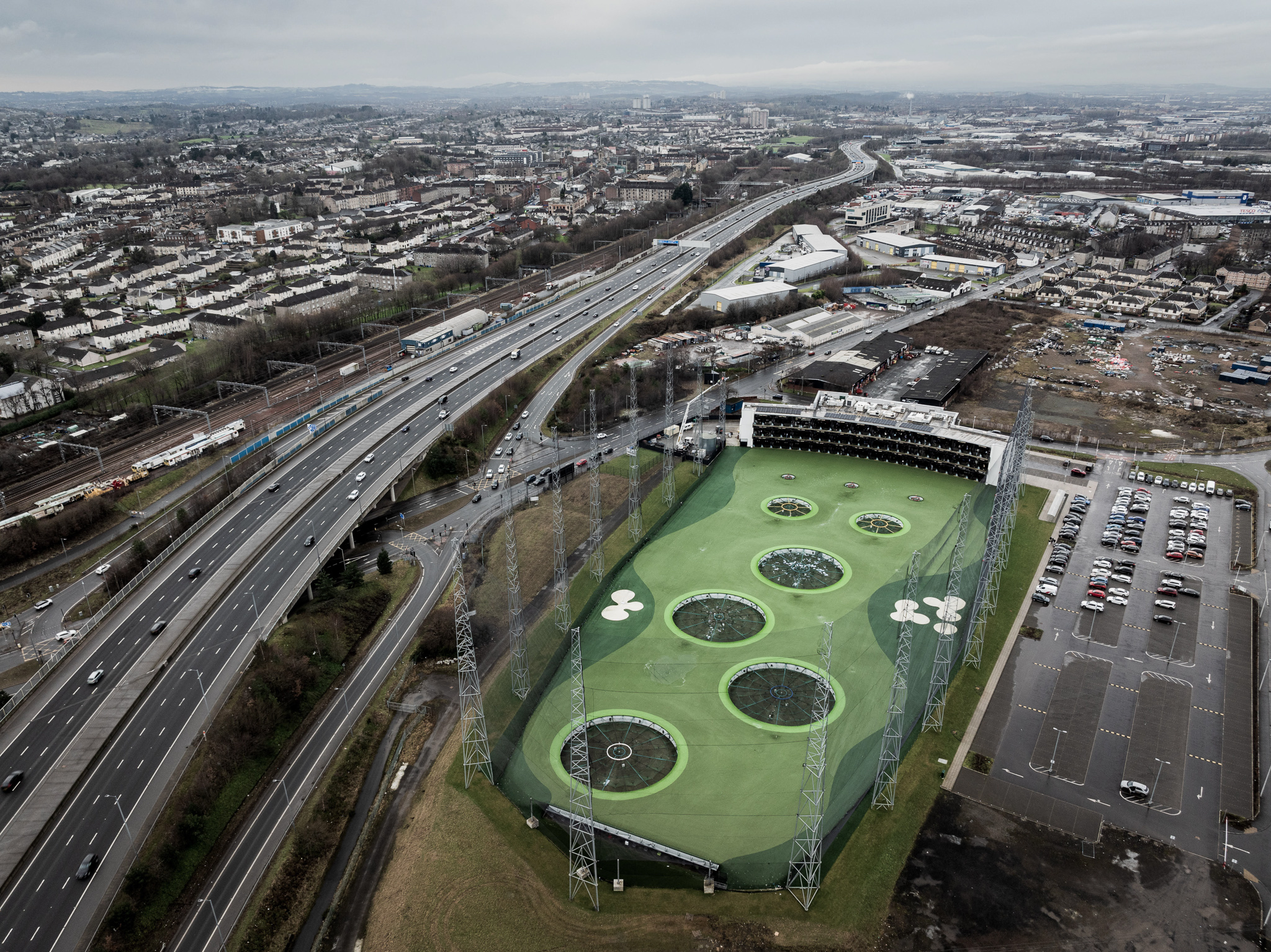
Our Place in Time
A Place Based Photography Practice
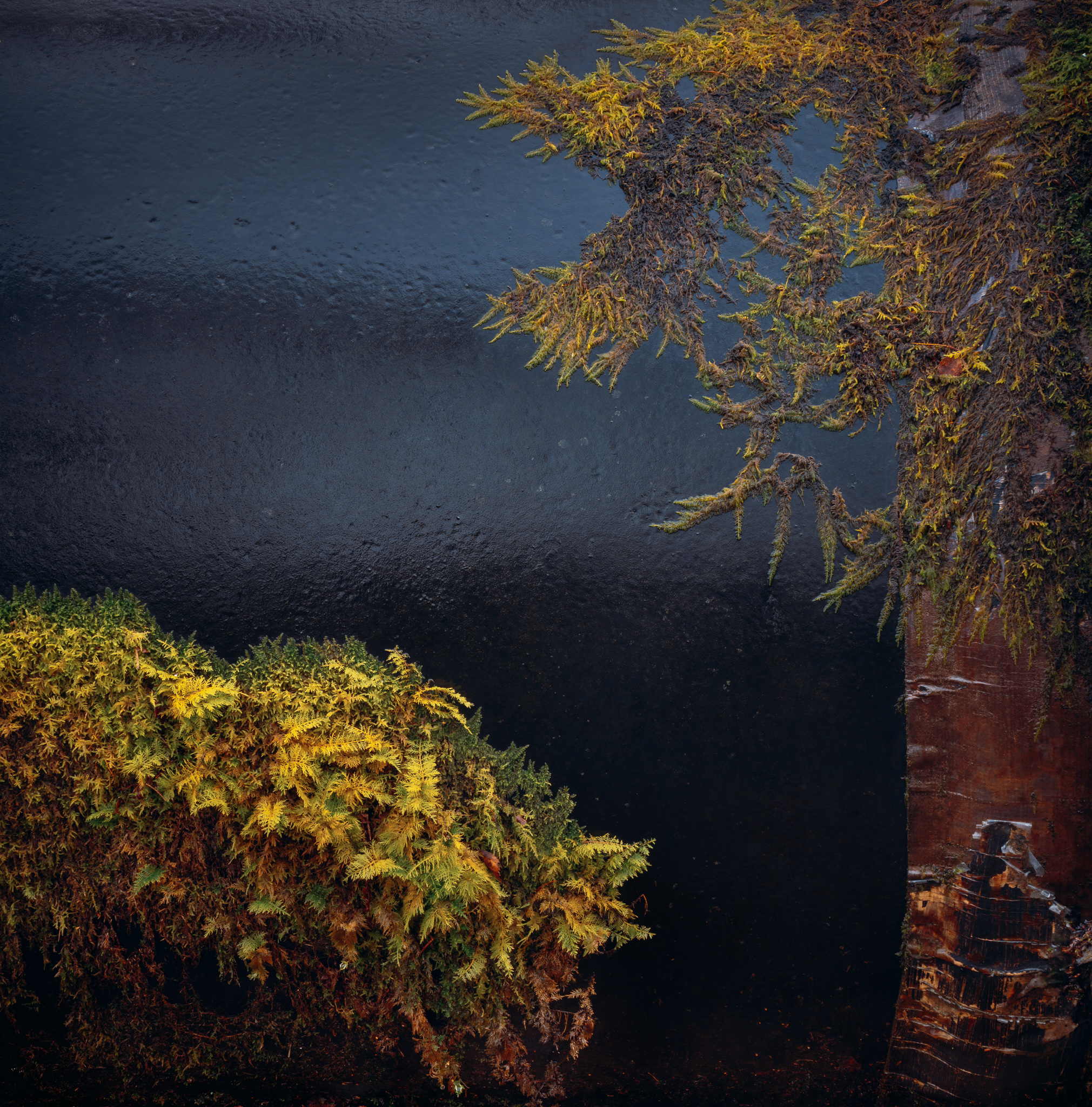
365 / February 2026
Keeping things going
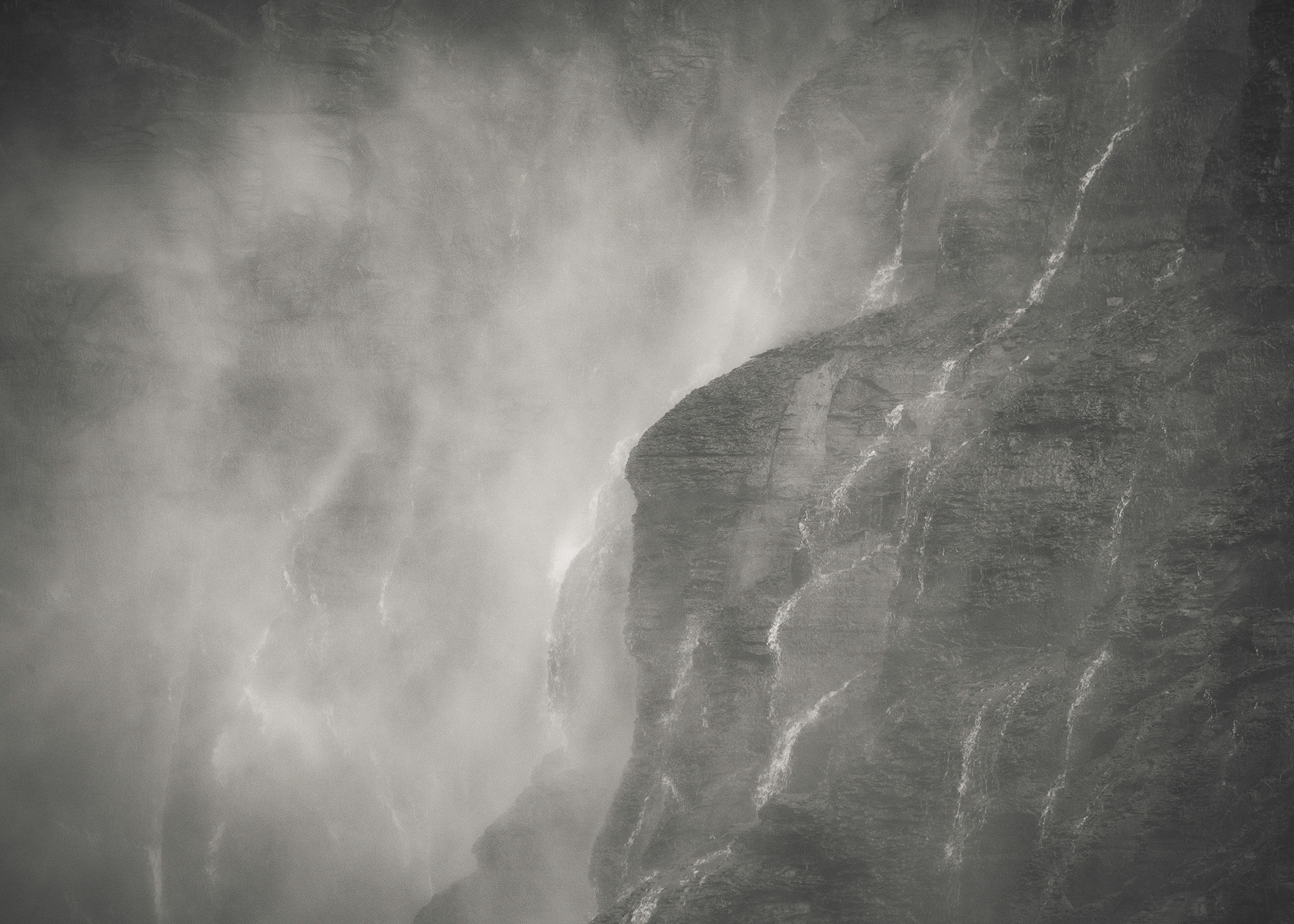
The Pitfalls of Hero Worship
Standing on the Shoulders of Giants
Seeing Things Differently
Seeing things definitely
sponsored by ..

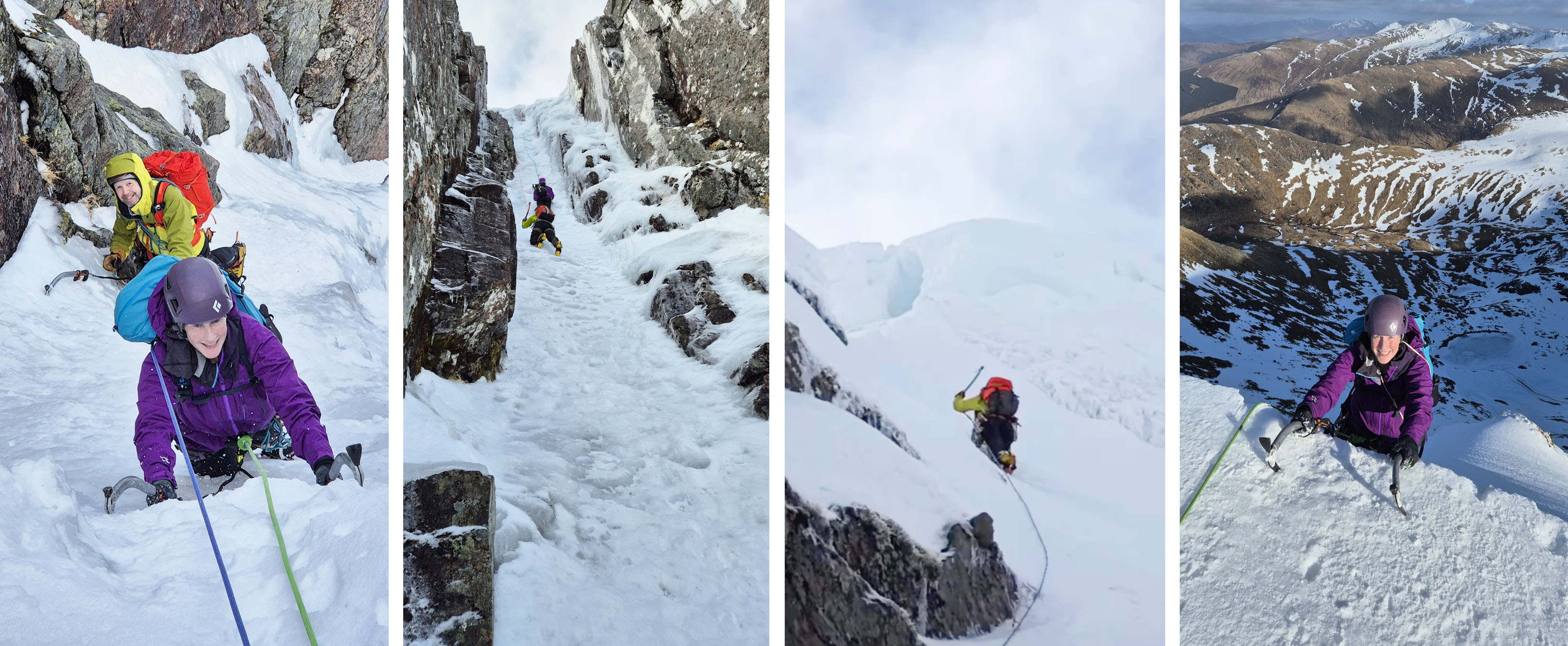
Winter was limping along on the high mountains at the end of February, but a run of cool temperatures meant ice had been building above about 900 metres. So when our guide called to say he had a day to take us climbing at the Nevis Range, Charlotte and I jumped at the chance. Winter climbing can be a bit of a sufferfest. There is often a long walk in carrying fifteen kilograms of gear through deep snow or hard neve, long spells standing around trying to stay warm, bursts of climbing where you try not to overheat beneath your layers, and the inevitable walk off, usually in the dark. March climbing, however, can feel almost civilised. Reliable ice forms high on Aonach Mor and the gondola gives you a head start to around 600 metres, meaning you can set off in daylight and, with luck, be back before dark.
We made our way up to the start of the climb at about 1,200 metres and then abseiled roughly 200 metres into a north east facing cliff to reach the base of the icefall. From there, the only direction is back up. I had decided to be a little braver about taking a camera on these trips. I had hoped for rime ice up high, but recent freeze thaw cycles meant most of the climbing was snow ice with bands of black rock, not the most photogenic combination. Ice climbing does change the way you see mountains though. Once you start looking for frozen lines, the landscape stops feeling fixed and becomes something more alive and transient. Water seeps down rock, freezes, softens in the sun, then locks solid again overnight. Gullies that seem inert in summer reveal themselves in winter as moving systems of ice, snow and temperature. Paying attention to these changes means watching the weather and snowpack closely, noticing windslab on ridges, graupel collecting in pockets, or hoar frost forming in sheltered corners.
Even without the rime I had hoped for, it was reassuring to discover that climbing with a camera on my rucksack was manageable. It also meant we could enjoy belays in the sun with bare hands and base layers, a rare luxury on a winter route. The climbing itself was excellent, thick, plastic ice leaning back to around eighty degrees in places. Despite some understandable nerves about her first time on ice, Charlotte absolutely crushed it, exactly as I expected. The only downside came at the end. Despite rushing to catch the last gondola, we missed it and had to walk the extra six hundred metres down the World Championship mountain bike track, hard work at the end of a ten hour day!
Tim Parkin

Issue 346
Click here to download issue 346 (high quality, 121Mb) Click here to download issue 346 (smaller download, 79Mb) more

End Frame: Climbers descending the Hoffman Route, Gross Glockner, 1893 by Vittorio Sella
Sella’s is often described as the mountaineer’s photographer. Many climbers have referred to Sella’s work in assisting them in planning how to approach a mountain, as the detail in his photographs is clear and informative. more

Kirsi Koivisto
I am fascinated by subtle details, delicate light, and the intimate atmosphere of a place, seeking to convey the feeling of being fully present in the landscape rather than focusing on grandeur or spectacle. more

Any Questions, with special guest Ted Leeming
In this conversation, Tim Parkin and Joe Cornish talk to photographer Ted Leeming, exploring his journey from the Zero Footprint project to redefining his practice as a place-based photographer. more

Our Place in Time
I increasingly see myself as a place-based observer, asking questions through the lens as my chosen medium for conversing. In this context, images also express my wider interests in geography, plac more

365 / February 2026
February’s 365 challenge has sometimes needed a bit more effort to get out and about. The weather hasn’t been as ‘interesting’ for most of the month and it was very tempting just to stay inside. more

The Pitfalls of Hero Worship
Critical in my growth as a photographer and artist has been educating myself on the work and philosophies of the giants on whose shoulders we stand. more

Seeing Things Differently
I had a sense of purpose, which was particularly helpful given the challenges I had been facing with my mental health due to the loss of my career and sight more