


 Join the conversation
 Subcribe to comment rss feed
The ‘Connection Project’

Gill Moon
Gill Moon is a professional photographer based on the Suffolk Coast. She specialises in landscapes, waterscapes and marine photography and is passionate about promoting a connection with the environment through her work.
Gill has been taking photographs for most of her life but decided to turn her hobby into a profession in 2010 when she moved to the Suffolk Coast. Her passion for the outdoors also extends to the sea and Gill is an experienced sailing photographer working with the national yachting press and sailing organisations along the East Coast.
Gill’s real passion is the landscape and the natural world and she is increasingly keen to help others foster a connection with both. “For me photography is not just about the technical side of taking a photograph, it is about observation, emotion and portraying a connection with the world around you. These are the things that I believe contribute the most towards creating a compelling image.”
Recently, I have been thinking a lot about connection and what it means to me as a photographer. It is a word I often use to describe my relationship with the landscapes I photograph and a concept that I think is important in making meaningful images.
Connection is a powerful thing, but I cannot help feeling that in today's world, it is a forgotten concept. Sometimes, when I look at the globe, when I read the news or watch TV, I feel how fractured the modern world really is. Divisions seem to exist everywhere - between nations and ethnicities, between cultures and religions and between humanity and nature. Even on a local level, things feel broken.
As a landscape photographer, I have a deep affinity with the natural world. This was facilitated and nurtured in childhood and is something that has become more and more important to me as I have grown older. When I think about connection, I think about nature.
Unfortunately, humanity as a whole doesn’t seem to share my view, and in 2025, our relationship with the natural world is in crisis. Globally, wildlife populations have plummeted, the natural world is seen as something to exploit rather than protect, or an inconvenience to control rather than enjoy, and climate change has become an ever-present threat.
This disconnect from nature is something that has played on my mind for a long time, and at the beginning of the year, it became one of the main drivers behind a project to explore what connection means to me.
For this body of work, I knew I wanted to focus on my connection with nature, but I also wanted to keep the connection local. I could see all the global issues around climate change, biodiversity loss and our disassociation from nature, but I felt I wanted to keep the project personal to me, and for that, I wanted to stay in Suffolk, where I live and work. I felt I wanted to bridge the gap between global issues and local concerns, but I also wanted to get away from the idea that we have to travel to far flung places to create meaningful images.
As someone who spends a lot of time photographing my local landscapes, I have seen how climate change is impacting the landscape. How dry summers have killed the heathland and affected local farming. How wildfires have destroyed habitat, and coastal erosion has become a constant battle along some stretches of the Suffolk Coast. Flocks of birds, once a common part of my childhood, have dwindled, and some species I used to enjoy seeing have disappeared from my life altogether.
When viewed this way, my relationship with nature is one that worries me, but I also get so much joy from being out in the landscape. I love the natural world, I care about it deeply but I am also frustrated and saddened at the way we treat it. It was this conflict that I decided to explore in my project. However, I didn’t want my images to be made up of obvious problems such as dry landscapes, dead vegetation, pollution, litter or coastal erosion. Instead, I wanted to focus on portraying my emotions through a series of landscape images. I decided to use the landscapes of Suffolk to show how I feel about nature in 2025 in the face of climate change, environmental neglect and biodiversity loss. I wanted to depict 10 emotions using 10 images made in landscapes that mean something to me personally.
Love
The starting point for my project was to pick the emotions that I felt best represented my connection. I began by thinking about how nature made me feel and came up with a list of very positive emotions: happy, alive, love, wonder, awe, calm, peace, joy, gratitude and hope. I then thought about how nature is often treated, and how much it is struggling in the face of climate change, and I began to feel anger, frustration, fear, guilt, anxiety, fragility and grief.
From the list, I generated some words that felt similar in meaning, and others felt impossible to photograph, but I didn’t want to choose words based on how easy they might be to represent. After much deliberation, I came up with 10 words that meant the most to me:
Anger, fear, vulnerability, grief, wonder, alive, peace, joy, love and hope.
Peace
Joy
I chose these because they felt like a good representation of the wide range of emotions I had considered. I didn’t want to focus on the negative feelings too much because overall, my connection with nature is overwhelmingly positive, but I wanted to include hope because I think it is something that we all have to hang on to.
Photographing emotions turned out to be quite a difficult challenge. I am usually aware of what emotion I want to convey when I am photographing a landscape, but it always comes from the reaction I have to a scene. It never comes first. This time the emotion came first, and I had to think about what landscape, subject matter and weather conditions I could use to convey that feeling. I didn’t want to manipulate my images too much and was keen to keep the landscapes authentic.
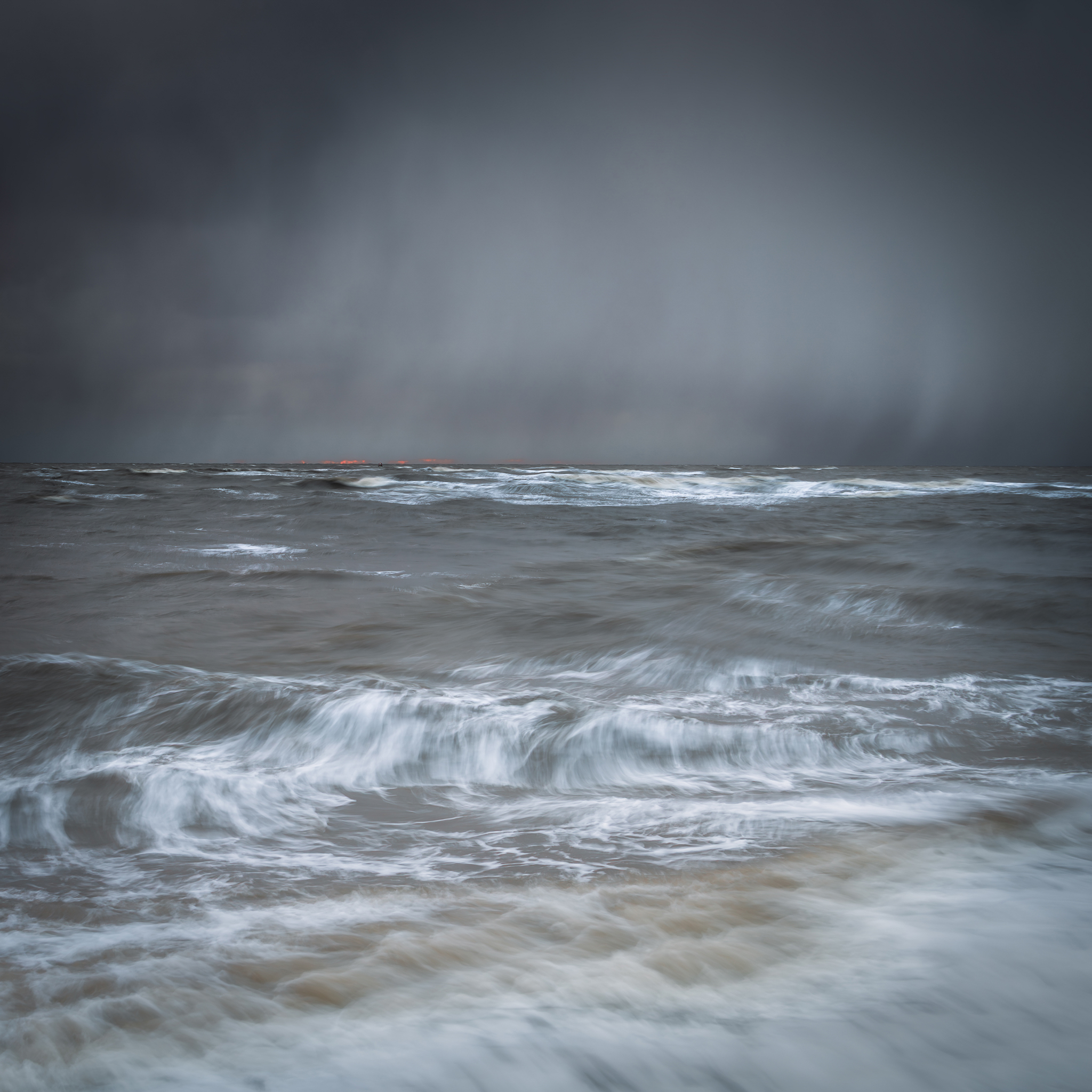
Anger
Anger was the first emotion I photographed, and I did this at the start of the year when the winter storms were at their peak. I chose to work with turbulent seas and angry looking clouds and went out several times to my local beach to try and portray this raw emotion.
On one particular morning, the wind was howling, and the storm clouds were racing past, bringing with them short periods of intense rain. Out to sea, there was a small gap on the horizon where the rising sun had created a tiny hint of red on an otherwise dark division between sea and sky. In that moment, the world felt angry, and I quickly captured my first image.
The negative emotions were definitely the hardest to photograph because they went against everything I usually felt when I was out with the camera.
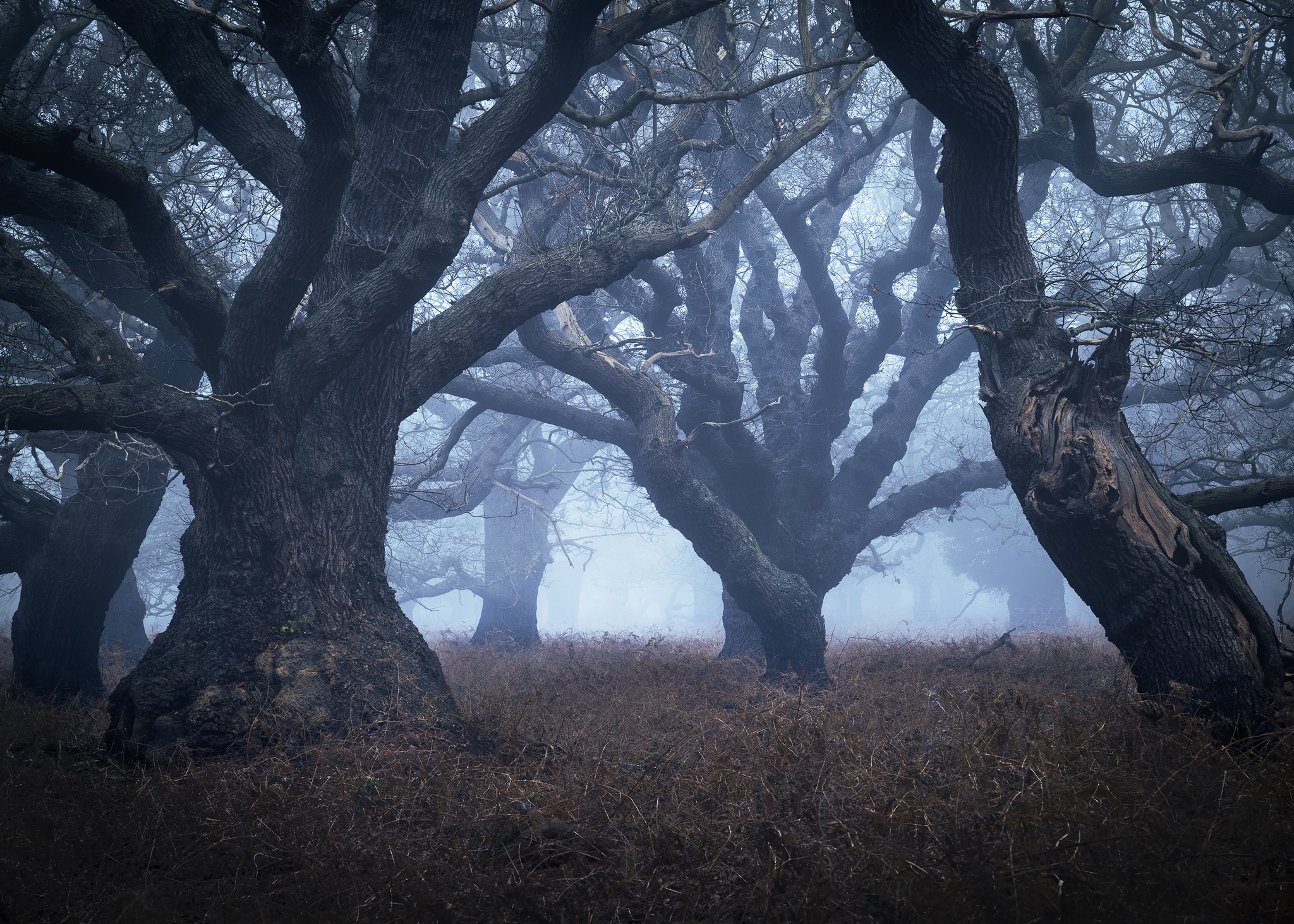
Fear
For fear, I chose a woodland scene on a dull, misty morning. While this composition naturally hinted at the trepidation we might feel on entering a dark woodland, I didn’t experience it personally when I took the photo. As a result, I felt the need to enhance the mood a little in post processing to really get the fear across in the image. I did this by cooling down the overall image and making the blacks stronger than they actually were. I think these subtle changes really helped to convey the essence of fear.
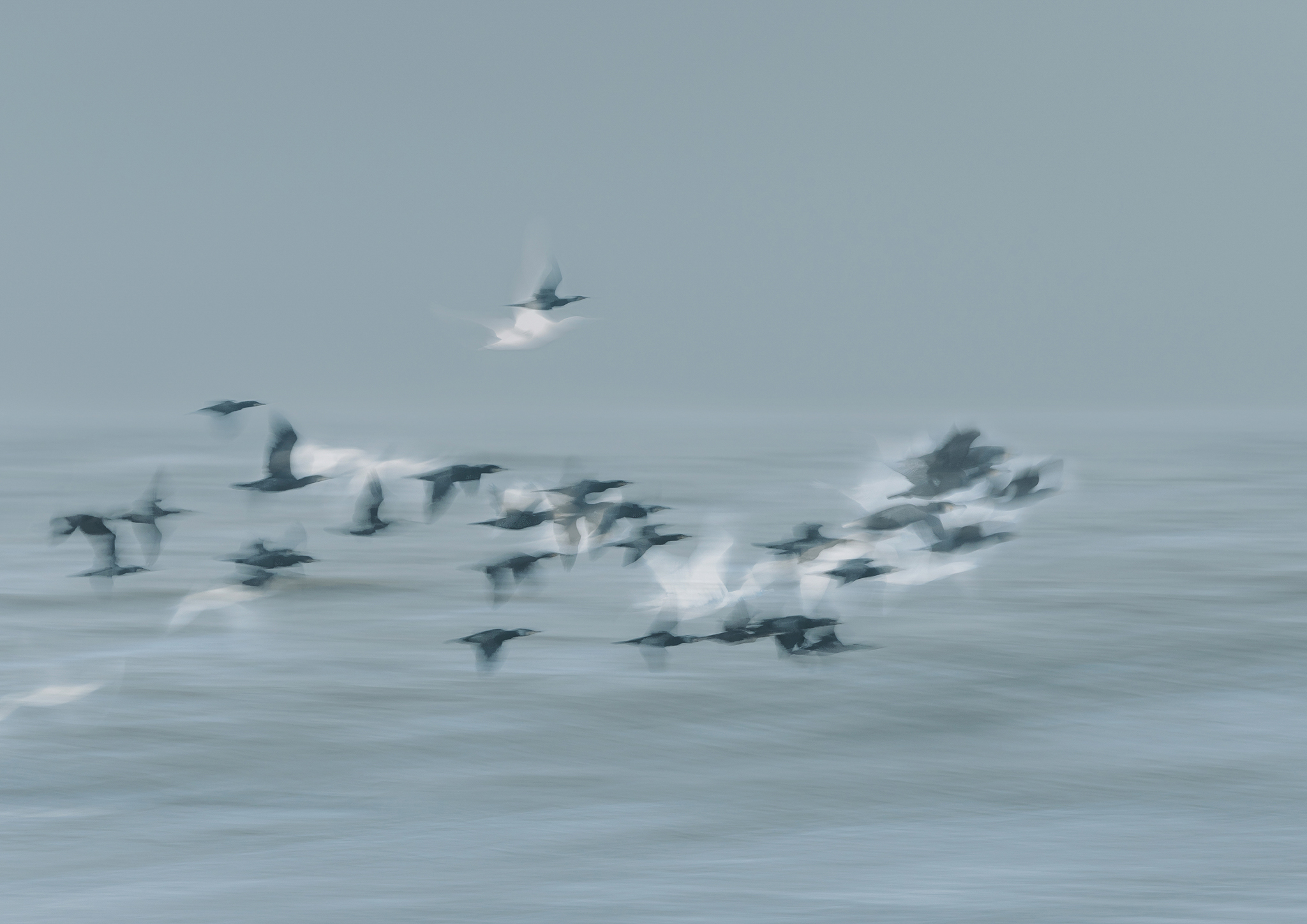
Vulnerability
For vulnerability, I chose to photograph the flocks of cormorants that I regularly see flying along the coast. I used a slow shutter speed to blur their motion a little to make them feel indistinct. I then created a composite image in Photoshop using two images - one an original version and one an inverted version. My intention was for the white birds to represent our vanishing wildlife.
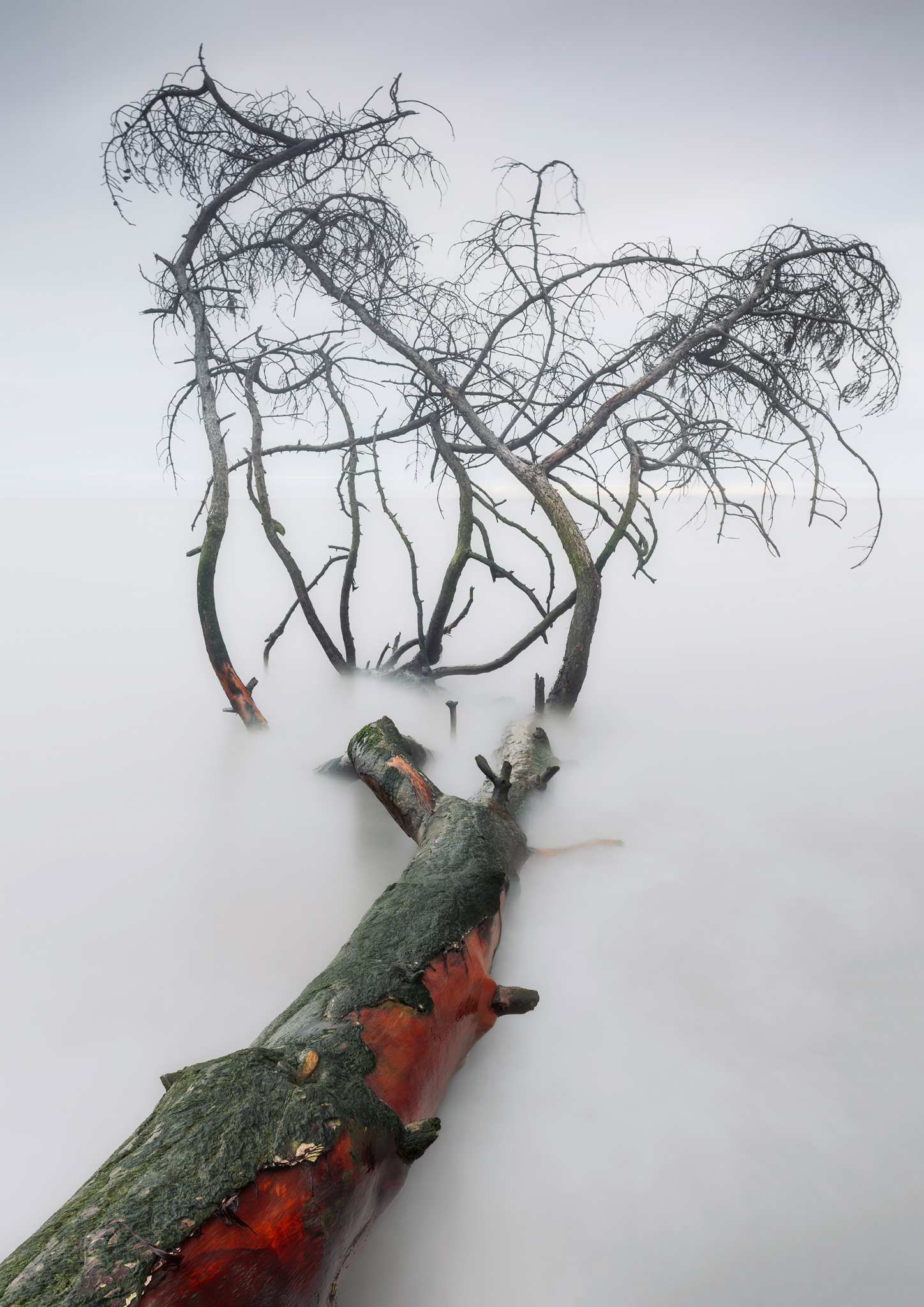
Grief
For grief, I used a fallen tree on my local beach, where coastal erosion causes the loss of about 3 meters of land a year.
The next set of images I found much easier to create. The positive, happy feelings are ones which are always present when I head out to take photographs, so they were much easier to tap into.
For the feelings of wonder and being alive, I chose separate spring mornings in two of my favourite ancient woodlands. The wonder was created by the backlit spider's webs on dew laden grass and the feeling of being alive was summed up by the vibrance of a bluebell wood.
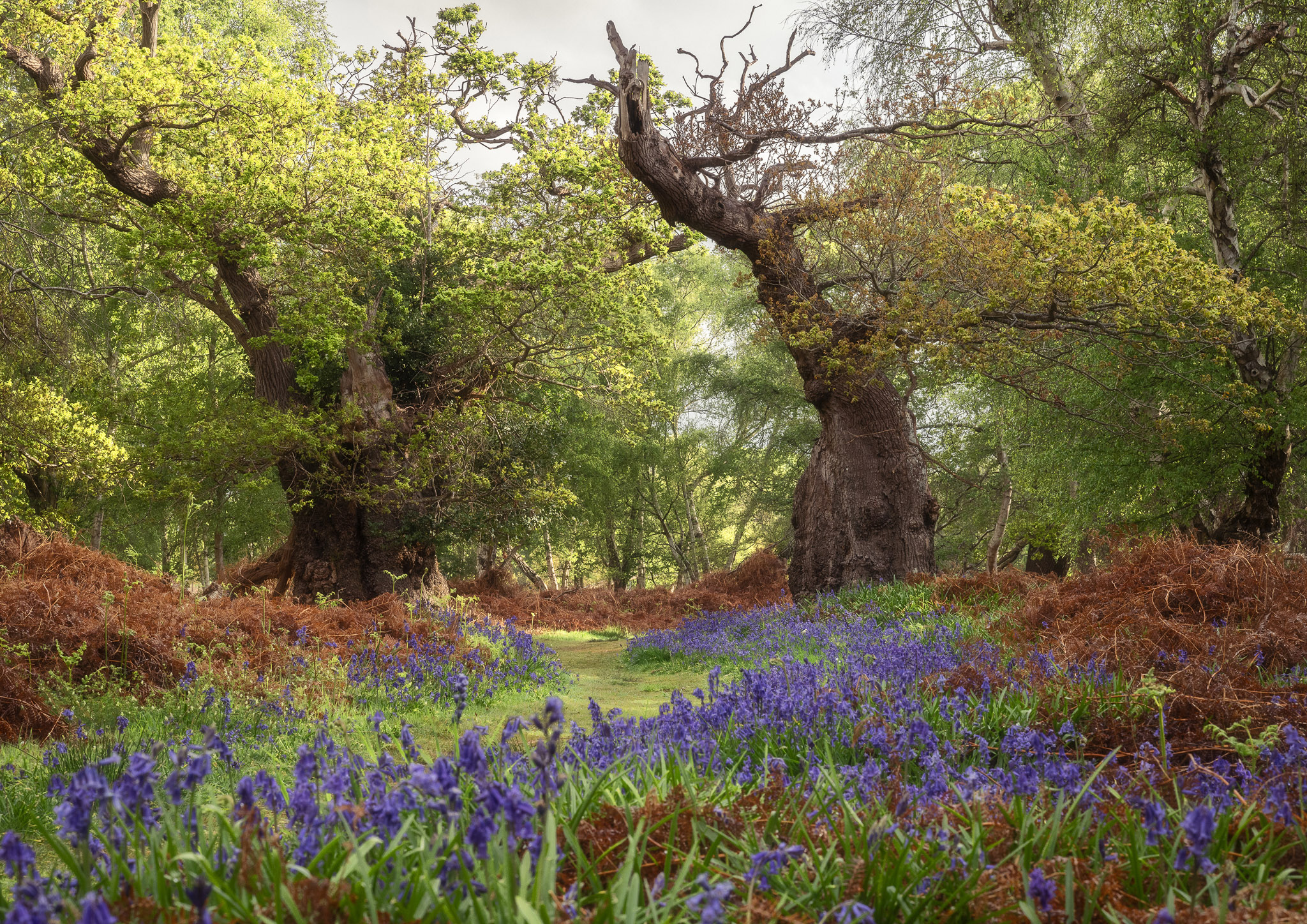
Alive
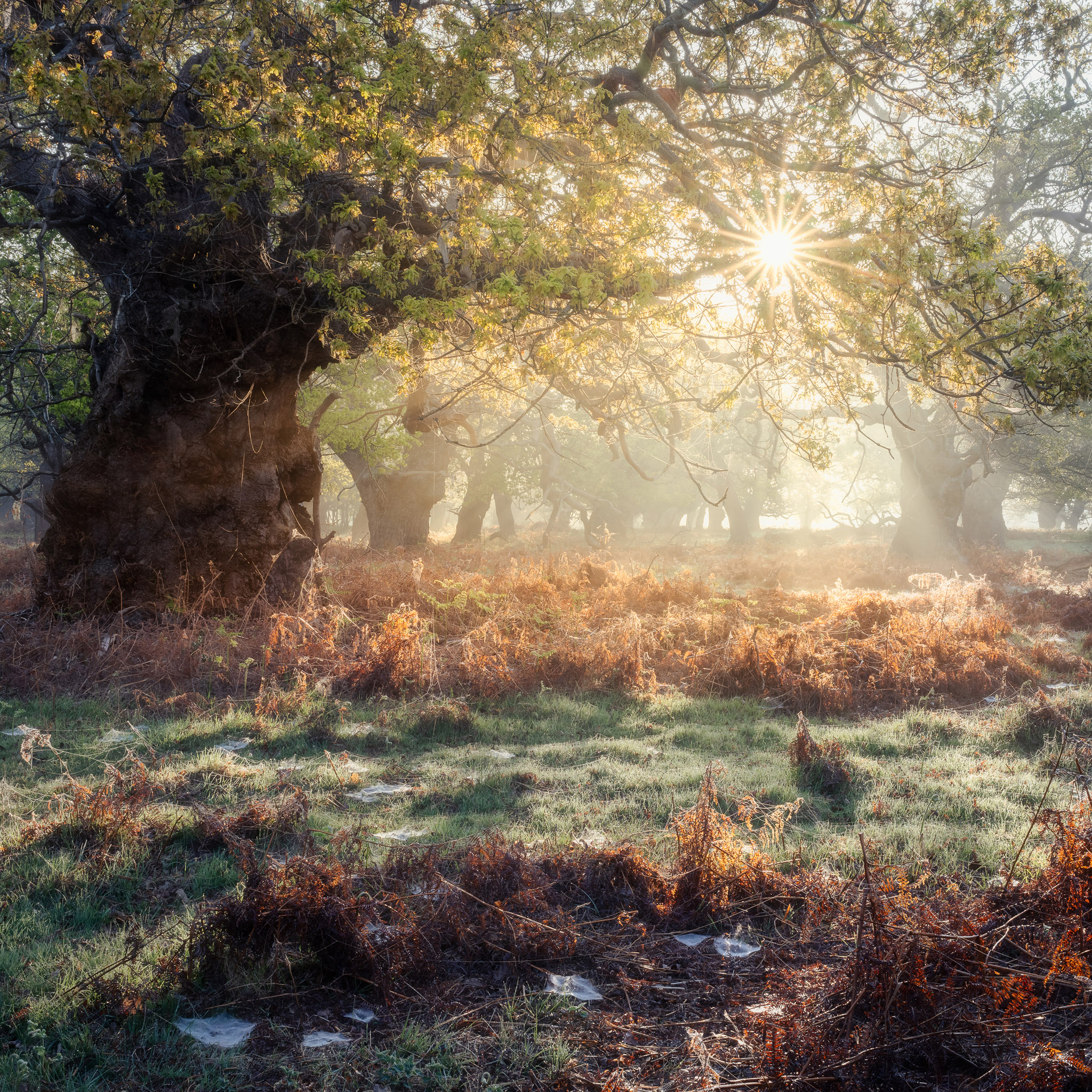
Wonder
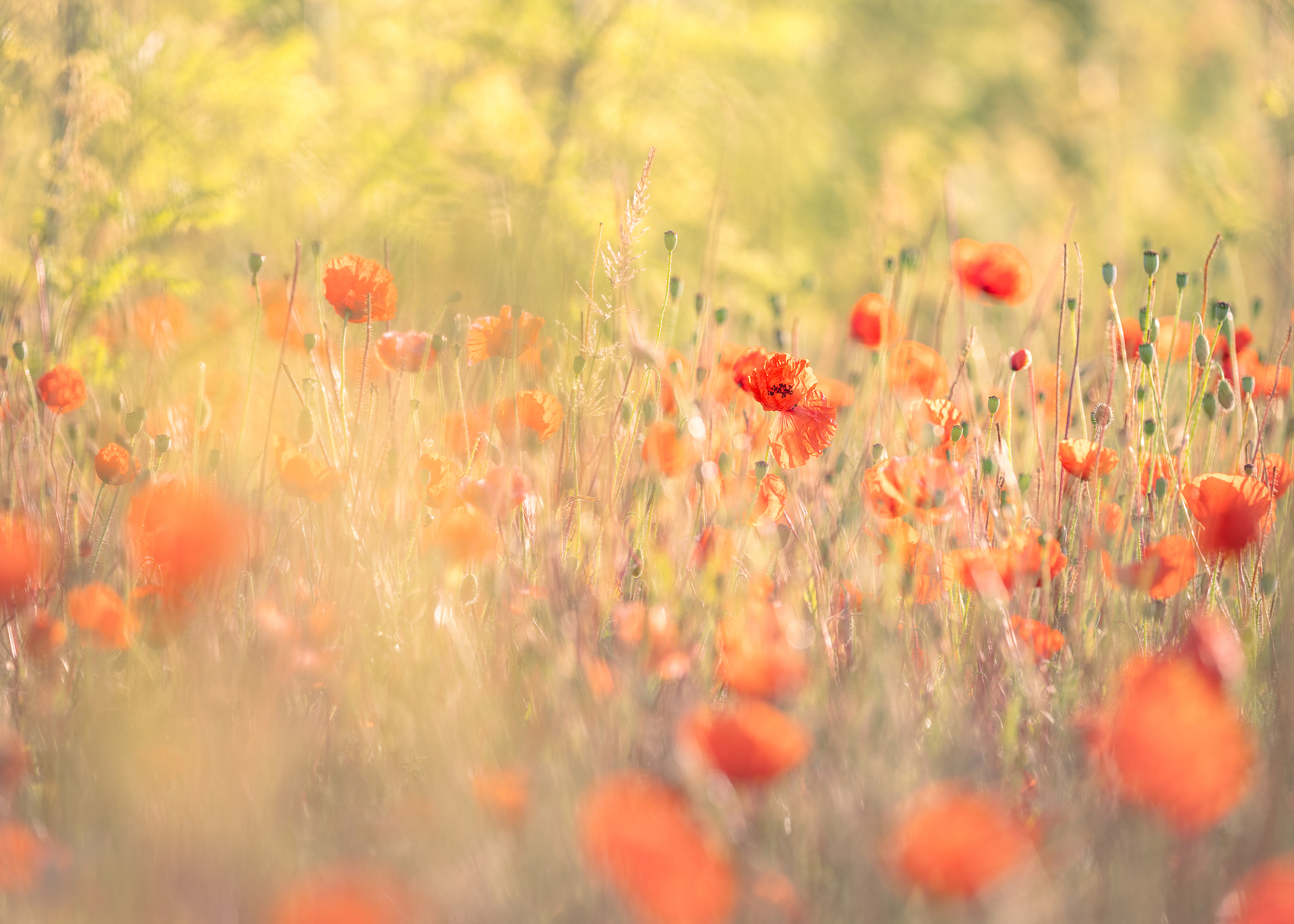
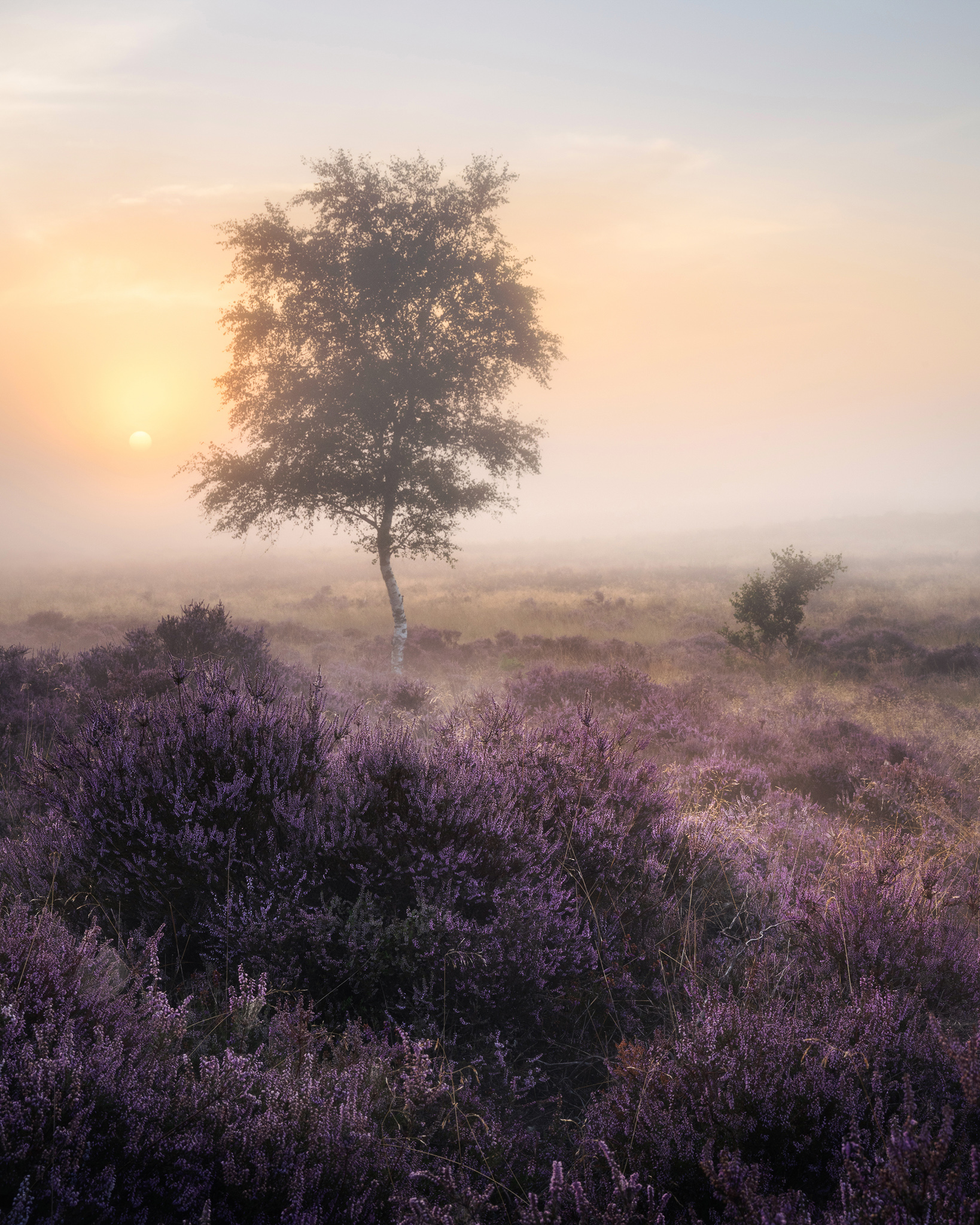
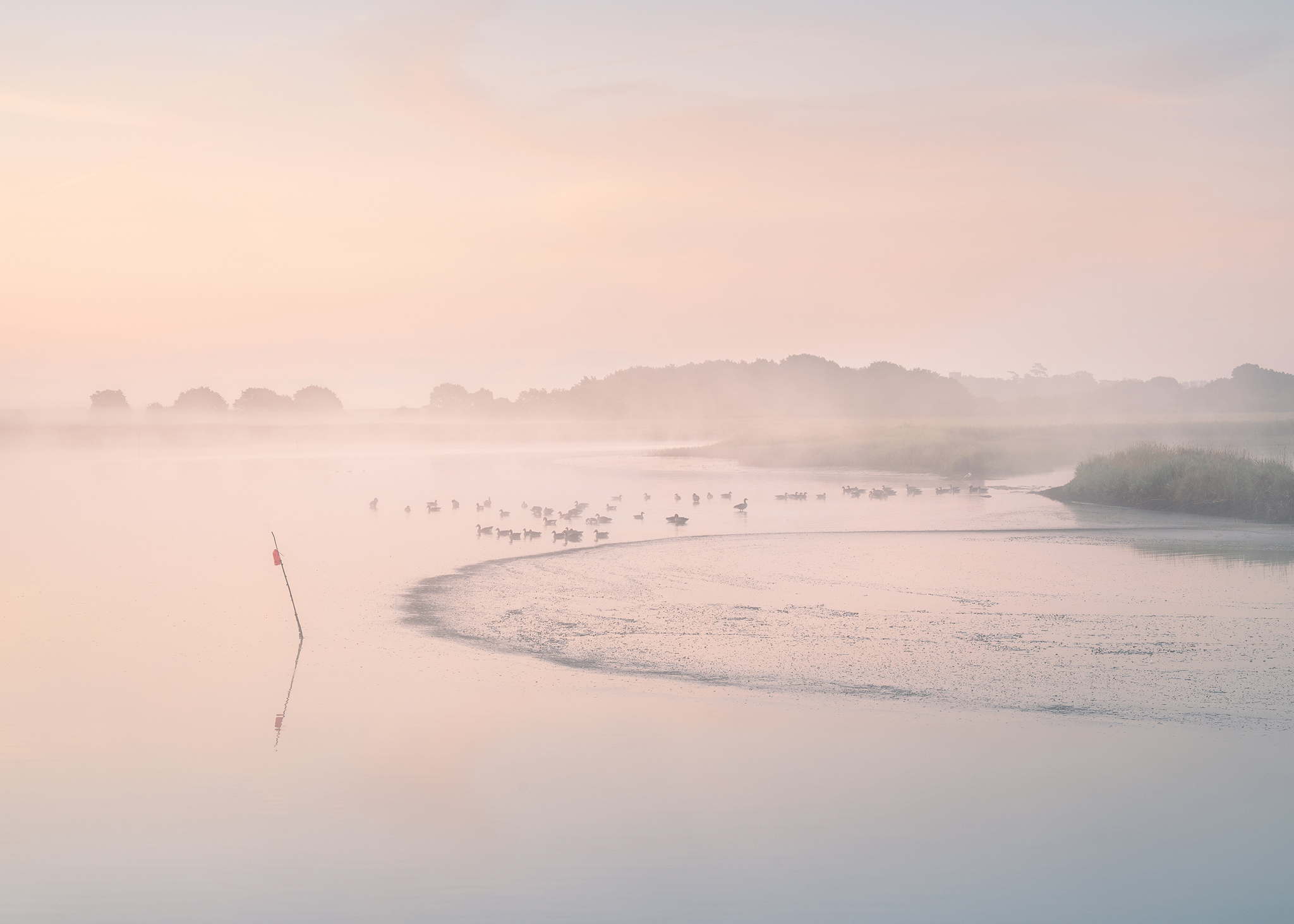
The final four images depict peace, hope, joy and love, and for these I chose to focus on calming, misty landscapes much more representative of my usual style of photography. For love, I chose red poppy flowers for their colours and significance, and used backlighting and high key processing to achieve a dreamy image that I hope conveys my love for nature.
For my final image, hope, I chose to depict a single clump of snowdrops growing in a dark wood. To me, they stood out as a beacon of light in an otherwise dark world.
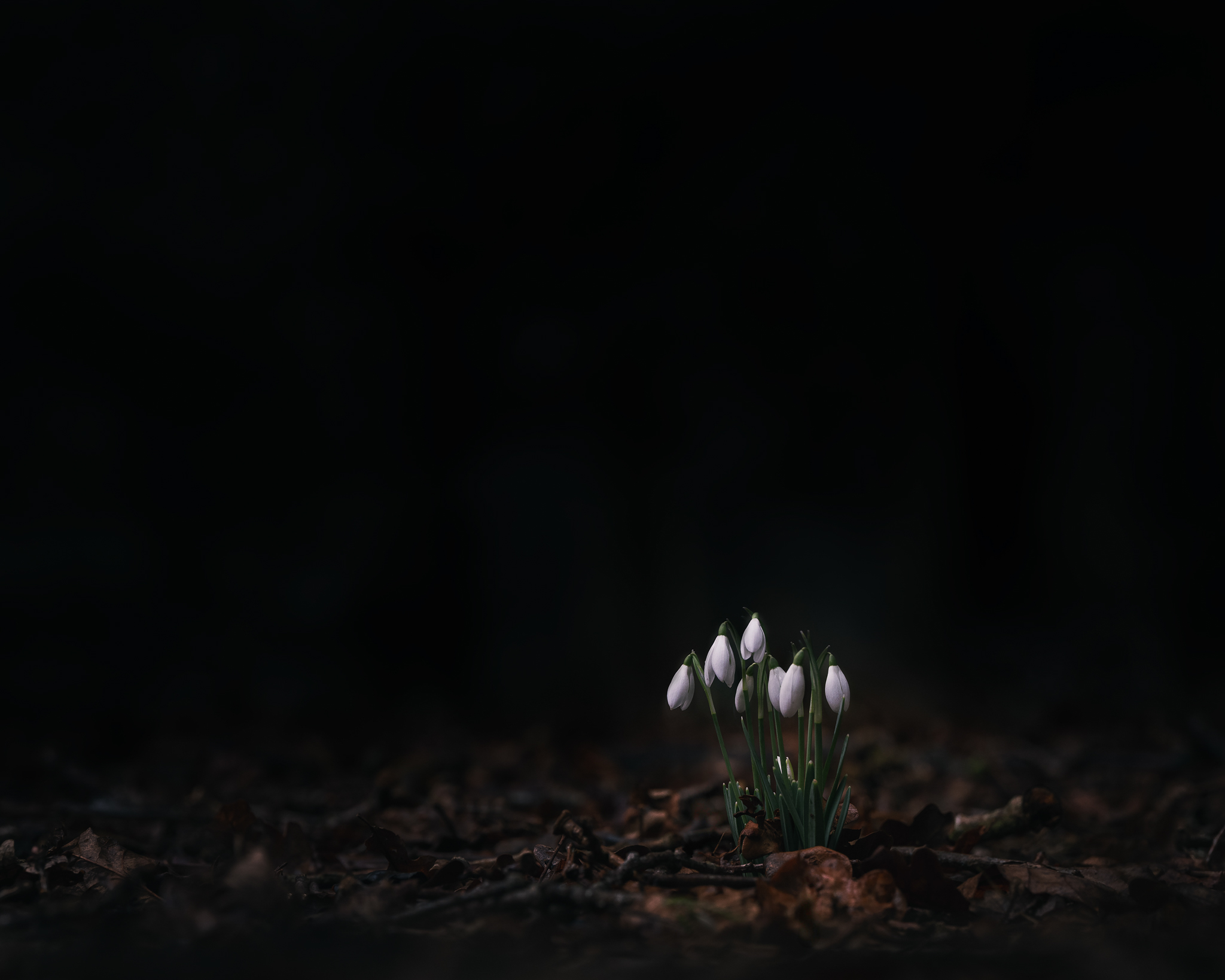
Hope
My panel of images, which I have titled ‘Emotional’, forms part of a wider local project which I set up at the beginning of the year. I have called it the ‘Connection Project’, and it involves seven other photographers who have all explored what connection means to them in respect of the landscapes and environments of Suffolk. The resulting portfolios cover diverse themes exploring connection with landscape, nature, rural traditions, our emotional wellbeing and the past.
I have spent a long time this year thinking about connection, and I believe it is the thing that drives all aspects of photography. It is what inspires us to make images in the first place, but it is also the element that makes us feel something. It is the emotion born from connection that turns a snapshot into a compelling image. Connection is the special ingredient.
Photography is a great facilitator. It connects us to the landscape we are photographing, and it makes us look more closely and ask more questions. Through observation, we come to understand our environment more, whether that is a natural habitat or an urban landscape. We observe the plants and animals, the people and buildings and over time we come to know the places we photograph more intimately. We build a connection and develop a sense of place.
But photography is not just about forging a relationship with the landscape; it is also about the connections we make with the people we meet. With fellow photographers and the people we encounter when we are out with our cameras. Sometimes it is these connections that are so important for our sense of purpose and wellbeing.
In a world that feels fragmented, I think it is important to recognise the value of life and friendship, the wonder of nature and acknowledge the idea that humanity is not elite or special, but we are all part of something much bigger than ourselves. We are a small cog in a big, wonderful world where everything is connected to everything else and our actions and stories, however small, all matter.
All the work for the Connection Project is now available in a book on my website.
-

- Anger
-

- Fear
-

- Vulnerable
-

- Grief
-

- Wonder
-

- Alive
-

- Peace
-

- Joy
-

- Love
-

- Hope