


 Join the conversation
 Subcribe to comment rss feed
Featured Photographer

Joy Kachina
Joy Kachina is a passionate landscape photographer in Northern Tasmania. A dedicated conservationist, she finds inspiration in the stunning landscapes around her and aims to protect endangered trees, particularly the native Miena Cider Gums, which she cherishes like old friends. Through her photography, Joy raises awareness about Tasmania's wild beauty, believing its wilderness is a living gallery showcasing resilience, cultural significance, and the unique stories of each native species.

Charlotte Parkin
Head of Marketing & Sub Editor for On Landscape. Dabble in digital photography, open water swimmer, cooking buff & yogi.
I first came across Joy's work as the winner of the Photographer of the Year category at the Natural Landscape Awards 2025. At the heart of Joy’s practice is a belief that landscapes are living galleries, carrying stories of resilience, culture and interdependence. Her current focus on Tasmania’s threatened forests, particularly the Miena Cider Gums, reflects a wider commitment to advocacy through imagery, using beauty, intimacy and emotional honesty to reconnect viewers with the natural world. In the conversation that follows, Joy talks about influences, creative challenges, conservation, and how listening closely to nature has reshaped not only her photography but also her life.
Please tell us a bit about your love for landscape photography, what your early passions were, what you studied, and the career path you ultimately pursued.
I've always felt a deep connection to nature. It has been a guiding force in my life and career. My journey led me toward a path of healing, where I dedicated myself to becoming a Natural Therapist. In this role, I have had the privilege of supporting others through various natural healing modalities, helping them find balance and wellness in their lives and creating a positive impact on those around me.
My passion for landscape photography ignited in the 1990s during an unforgettable journey around Australia. With my trusty Canon 1000 fn film camera in hand, I set out to capture the stunning scenery that surrounded me. I remember the excitement I felt flipping through the pages of magazines featuring the incredible work of Steve Parish, whose landscape and wildlife images seemed to leap off the page, and Ken Duncan, whose breathtaking panoramic views left me in awe.
I found myself deeply immersed in their work, analysing every detail, their compositions, the way they played with light, and the unique stories woven into each photograph. It wasn’t just about trying to replicate their techniques; it was about uncovering the creative choices behind each shot and finding ways to express my own vision. I was captivated by the idea that every striking image had a lesson to share—about patience, a keen eye, and the ability to see the world anew.
Those early days exploring the breathtaking Australian landscape transformed me; I spent countless hours gazing closely at the details, finding beauty in the smallest things. I was amazed how looking through the viewfinder transformed my way of seeing and experiencing the natural world. To this day, I remain a self-taught photographer, constantly evolving and learning through experimentation.
How did you find the work of Peter Dombrovskis? How did this inspire your craft of photography?
Peter Dombrovskis entered my life during a transformative journey around Australia, and to this day, he holds a special place in my heart as my greatest teacher in capturing the soul of Tasmania's wild places. With every photograph, he invited viewers into his world, sharing nature's stories through his unique artistic style.
Peter had an extraordinary gift for composing images that revealed beauty in unexpected places. One of my favourite photographs of his is a portrait of seaweed, of all things! He introduced us to the finer details of intimate landscapes, exploring the colours, textures and geometry of nature, in all its forms. His images were not just visual representations; they communicated his concern for the wild places and, in turn, awakened a conscience within the Australian Community. He once said, "Photography is, quite simply, a means of communicating my concern for the beauty of the Earth."
Peter's work went beyond photography; it sparked a passion for our planet and called for a strong conservation movement in Australia. Through his powerful images, he encouraged the nation to protect the Tasmanian Wilderness World Heritage Area, the Gordon-Franklin wild rivers reserve in the southwest of the state. Reflecting on his legacy reminds us of our deep connection with nature and the importance of preserving its beauty for future generations. This sentiment has been an ongoing source of inspiration for me personally, and I actively advocate for the protection of our endangered native forests here in Tasmania, today.
Beyond Peter, who or what has been the biggest source of inspiration in your growth as a landscape photographer, whether photographers, artists or individuals?
In 2012, I moved from Australia to New Zealand, which I still consider my spiritual home. During my time there, Craig Potton had a significant influence on my journey into digital landscape photography. Hiking and camping along the Milford Track, the Routeburn Track, and the Hollyford Track reignited my desire to share the stunning beauty of the landscape through my photography.
I discovered Andris Apse, whose panoramic images, characterised by beautiful composition and vibrant colours, had set the benchmark for this style of photography in New Zealand. Rob Brown, a dedicated conservationist who often took his large-format gear into the wilds of New Zealand, was also a tremendous source of inspiration. His ability to enrich the human spirit in every frame he captured left a lasting impression on me.
Joe Cornish, Charlie Waite, David Ward, and Eddie Ephraums, through their book "Developing Vision and Style," also contributed significantly to my creative journey in the early days.
I encourage all natural landscape photographers to explore the work of these generous individuals, as they have been my greatest sources of learning and inspiration throughout my thirty years as a landscape photographer.
How would you describe your photographic style, and what has helped you shape it into something uniquely your own?
I'm not sure I have a distinct style, to be honest. I love exploring a variety of subjects, particularly in nature, and I aim to share as much of the natural world as possible. My hope is that this will inspire a protective instinct in others. I enjoy photographing everything in nature, but recently, trees have become my primary focus due to the urgent need to protect them from human impact, here in Tasmania. Drawing inspiration from the photographers I admire, if I were to describe my style, it would be naturalistic while still being artistically pleasing.
My photographs have evolved significantly over the past few years. In the past, simply documenting the landscapes was sufficient, but now, I find that spending time among the endangered Cider Gums and allowing myself to be guided by the trees themselves has opened up a creative way for me to explore the stories they wish to share. I see no separation between myself and the forest. The trees taught me this. I have a deep appreciation for the Cider Gums; their weathered forms serve as a powerful reminder of how much we are influenced by our environment.
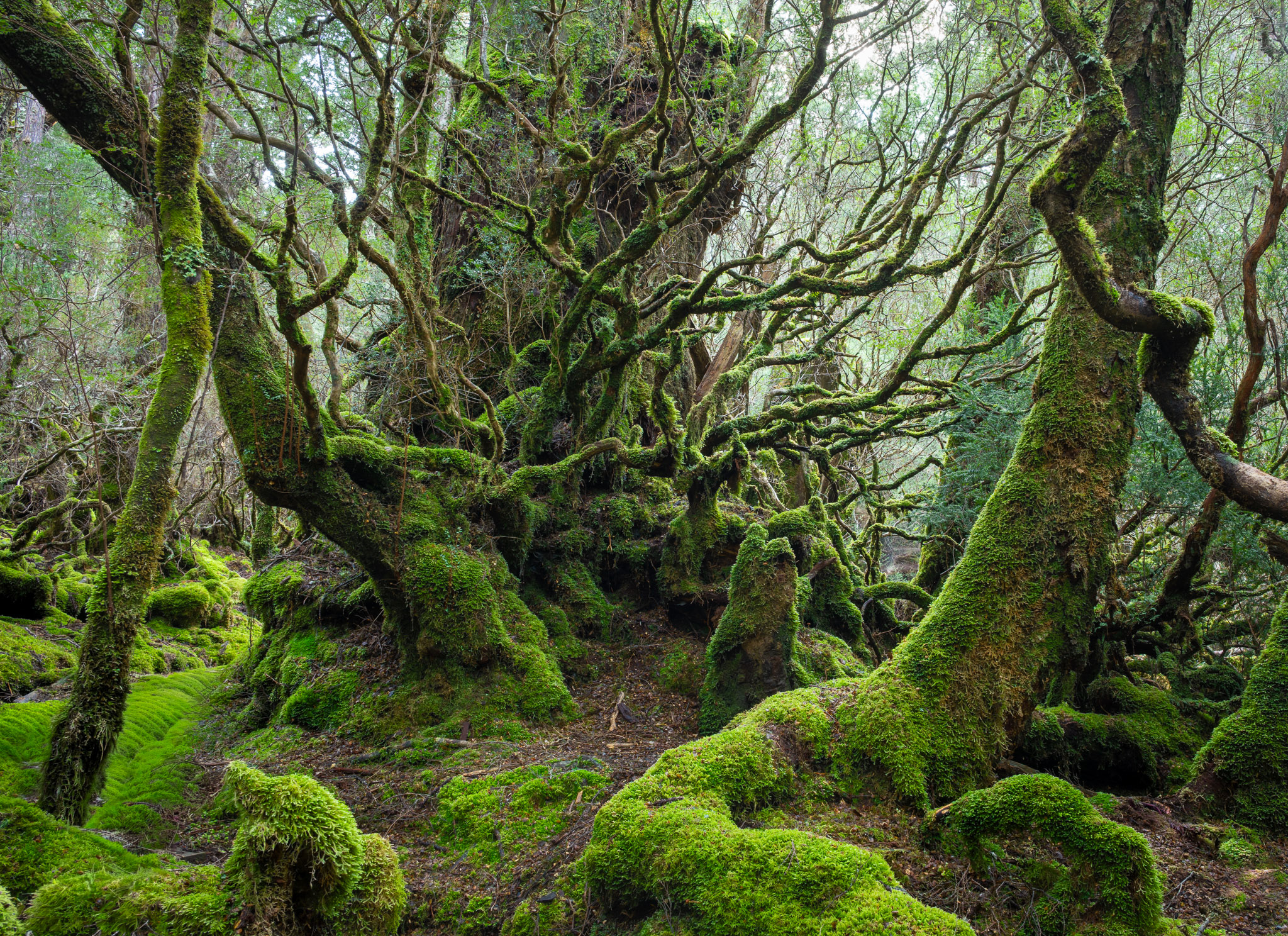
You talk about feeling deeply connected to nature at a time when many people feel quite distant from it. How do your photographs express what you experience in those places and the emotions they evoke for you?
I've noticed that many people who spend a lot of time in bustling cities and are glued to their screens often seem to struggle more and feel a sense of disconnection. In contrast, those who make an effort to engage with the natural world often appear more fulfilled and at peace.
Every photographer has their highs and lows. What have been your biggest challenges and successes?
I understand that the challenges we face often come from within ourselves. For me, my childhood was difficult, and that left me with a persistent feeling of not being good enough. I struggled with perfectionism, constantly battling the struggles of a creative spirit tethered by low self-esteem.
As I am now in my fifties, I’ve had the opportunity to reflect on what it truly means to be a creative person. A turning point for me was discovering Sean Tucker’s book, *The Meaning in the Making*. It shifted my perspective and offered me the space to confront my old wounds and embrace self-acceptance.
I understand how challenging that journey can be, but finding acceptance has given me the courage to step out of my comfort zone. This year, after thirteen long years, I finally entered several photography competitions once again. It feels empowering to share my work again, giving back to nature being my actual motivation, and I hope that by doing so, I can inspire others to confront their own feelings of inadequacy and embrace their identities as the beautiful, creative individuals we all are.
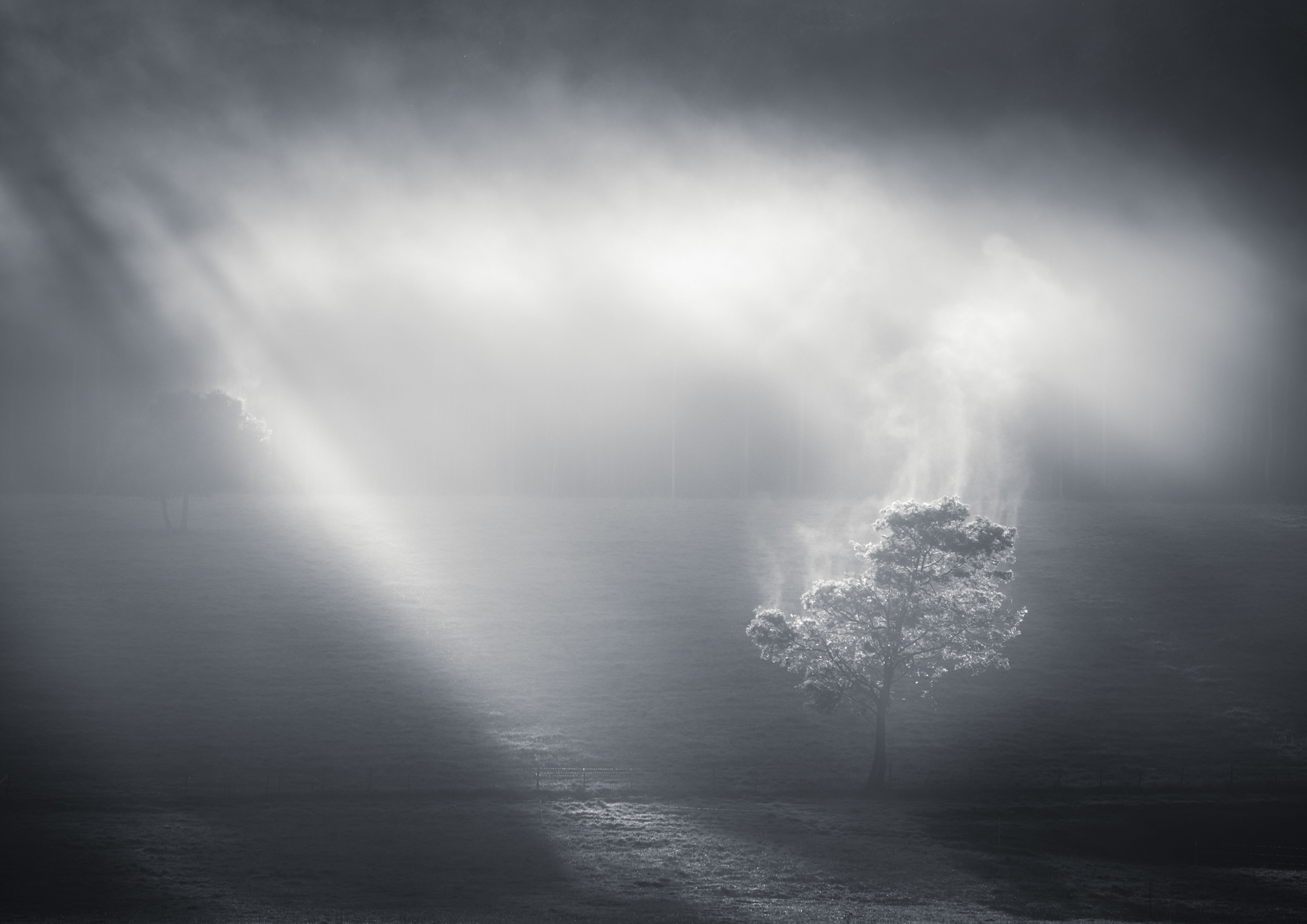
In 2025, I received some very positive reviews of my work. I entered the Australian Landscape Awards with an image of an endangered Cider Gum battling the elements and was thrilled to be awarded overall runner-up in that competition. The trees had found a voice through this exposure. Next, I participated in the Australian Geographic, Nature Photographer of the Year 2025 and shared a photograph taken just ten minutes from my home in the Meander Valley, Northern Tasmania. I was named a finalist, and that image is currently featured in a travelling exhibition across Australia. Many people have reached out to express how moved they were by my photograph, and that truly lights me up!
Another highlight for me was receiving Gold Awards in the Better Photography competition, which is run by the esteemed Australian landscape photographer Peter Eastway.
Winning the NLPA Photographer of the Year 2025 was not only a wonderful surprise in my photographic career, but it also meant the most to me personally. I hold all the photographers who enter the Natural Landscape Awards in the highest regard; they are my peers, my photographic community, and my inspiration. Winning this award was my greatest joy—pardon the pun! I consider these awards the pinnacle of Landscape Photography and will treasure it always.
Success takes many forms. Ultimately, my greatest reward lies in inspiring others to connect with nature through my images. When I can encourage them to give back to the environment, through volunteering or donating to a conservation effort, I know my job is done.
During lockdown, you spent time photographing the river near your garden and the platypus that live there, forming a remarkable connection with one of them. Do you see your photography contributing to the conservation of that habitat, and perhaps other places you care about as well?
I truly believe that we have made meaningful strides in improving the habitat of the platypus, moving from a period of significant destruction to one of hopeful regeneration. My deep connection with these remarkable creatures has always provided me with a sense of wonder, often feeling more at ease among animals than in social settings.
It was deeply distressing to witness the local council authority take such harmful actions—removing trees directly above a vital burrow site, using chemicals that contaminated the waterway, and even burning the remaining timber over the entrance to the nesting burrow during the nesting season, not once but twice! The impact of these actions was heartbreaking.
Can one person make a difference in environmental or conservation awareness?
Driven by concern for the platypus and their habitat, I spent three years advocating for change, facing the fear of public speaking each time. To be honest, I was terrified, but fired up at the same time. I could not stand idly by and do nothing. Using my photographs of the destruction, I was able to evoke a public outcry that resonated with many. The media took notice, amplifying our message and shining a light on the issue.
This collective effort led us from despair to hope, resulting in the planting of over 1,000 native trees and the return of the platypus population, bringing a profound sense of joy to all who care about these unique animals. This story also got the attention of a Wildlife Documentary film company in Germany who travelled to Tasmania over a two year period to film them. They wanted to share the fact that one person can make a significant difference. That documentary will be released early 2026.
For me, Bob Brown exemplifies the Australian conservation movement. I admire his dedication to protecting Tasmania’s wilderness as a co-founder of the Australian Greens, leading campaigns to save forests and endangered species. His motto, "Don't get depressed, get active," inspires many to engage in environmental activism, showing how one person's passion can positively influence conservation efforts globally. It doesn't have to be a big project. Choose a nature project close to home that needs your support and shine a light through your imagery. You can make a significant difference!
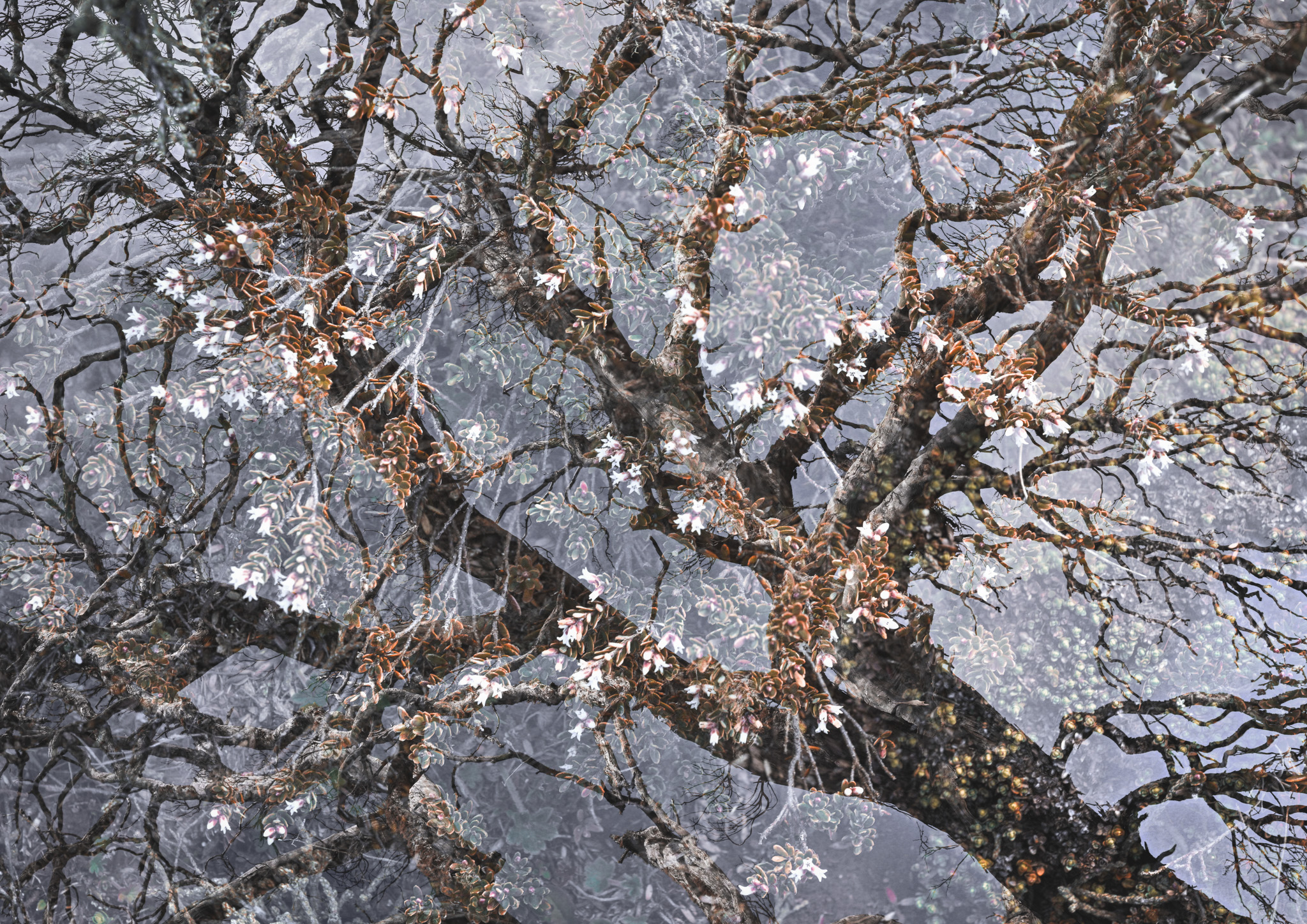
Tell us about your Miena Cider Gums Project, where the idea came from and how it has developed.
I was speaking with a fellow creative—an amazing artist and dear friend. We discussed the plight of the endangered Miena Cider Gums, which are found only in a small region of the central highlands. Together, we decided to start documenting these trees, as they are declining at a rapid rate. What began as a personal project to record their decline sparked a deeper exploration of the Cider Gums.
During my time with the Ciders, I often found myself deeply moved, sometimes to the point of tears, without understanding why. Later, after speaking with a Palawa elder, I gained a clearer understanding. These trees are culturally significant to the Palawa people of Tasmania. They provided nourishment and played a crucial role in ceremonies. The weeping tree releases a sugary sap in the summer, which naturally ferments into a drink called Wayalinah. When a child is born, they receive a cider gum tree, which they care for as if it were family. A hole is carved on the southern side of the tree, where the remains of deceased tribal members are placed temporarily. This practice symbolises the strong bond between the deceased and nature, and it aids in the mourning process.
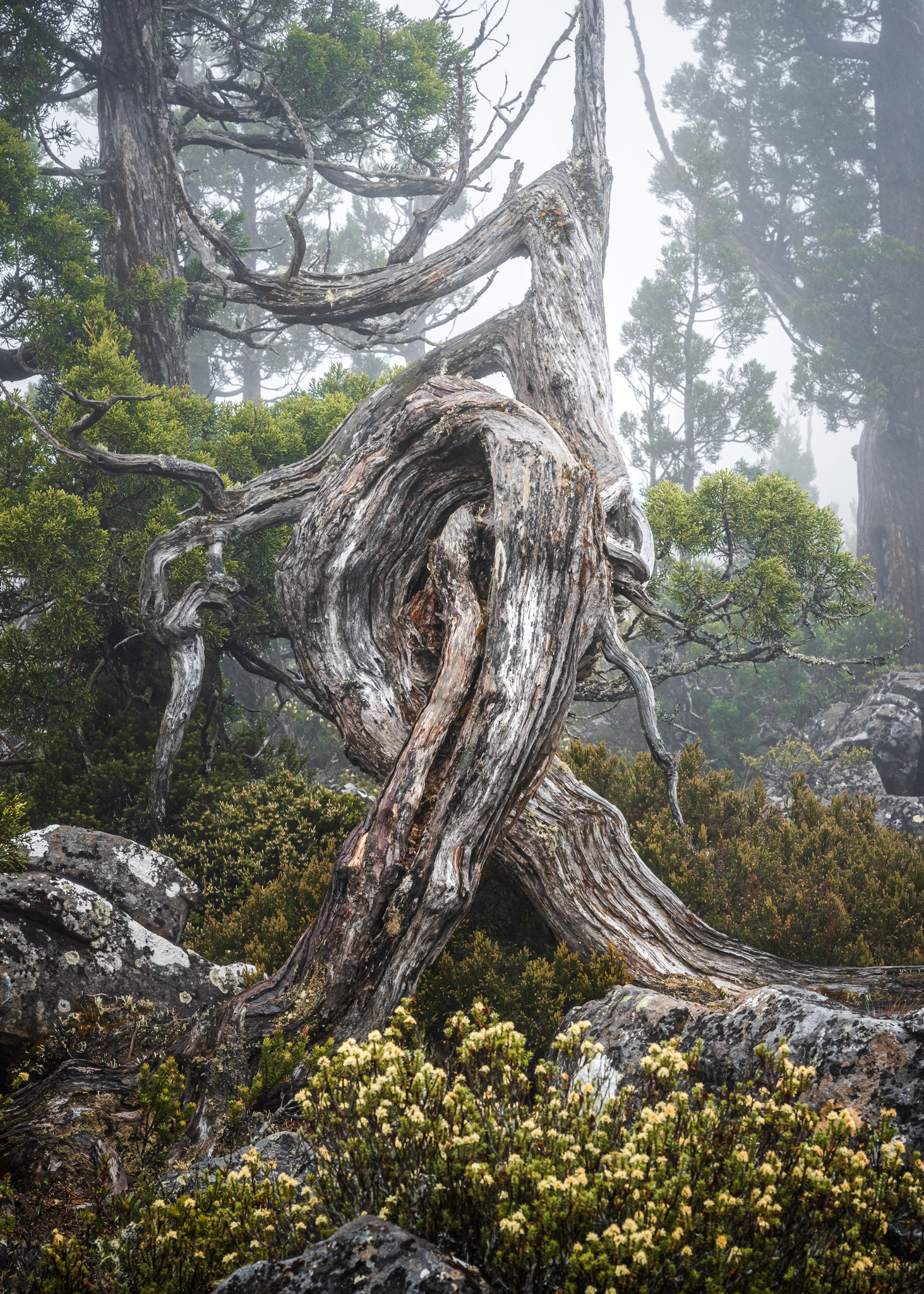
You have an exhibition on Celebrating the Beauty of our Native Tasmanian Trees and your Miena Cider Gums Project. Tell us more about how this came about and what you hope to achieve.
After exploring the significance of these trees, artists Fiona Francois and Cindy Watkins approached me to collaborate on a joint exhibition celebrating the Old Native Trees of Tasmania. Cindy, a textile artist, recently completed a project called "5000 Trees," while Fiona just finished a stunning rendition of a Cider Gum. We booked the gallery two years in advance and secured our beloved forest advocate Bob Brown as a guest speaker, along with contributing speakers from the Tasmanian Land Conservancy and Landcare.
Having hosted a screening of Bob's film "The Giants" three years ago and with Fiona's involvement in his arts program, we aim to inspire our community to protect Tasmania’s native forests. Our focus includes Ancient Rare Pencil Pines, King Billy Pines, Cider Gums, and Fagus—some of these trees live for over 3000 years. Through our creativity, we hope to share their stories through our different choices of medium.
Tell us more about the printing and framing of the images for the exhibition, including the choice of paper, size, and presentation.
I found a fantastic printer and framer in Hobart called Eagle Eye Tasmania. We have decided to use Hahnemühle Fine Art Photographic Papers in various sizes. To give the community every opportunity to take home a print, we will offer framed prints in A3, A2, and 24x24 inch sizes. Additionally, I have chosen some larger prints to showcase some of my favourite trees. These will be displayed in the Long Gallery at Salamanca Arts Centre, in Hobart Tasmania.
You say on your website, “Immersed in these ancient alpine regions, my mind clears, and time seems to stand still, a rare and treasured feeling in today’s fast-paced world.” Tell us more about your connection to the Alpine regions.
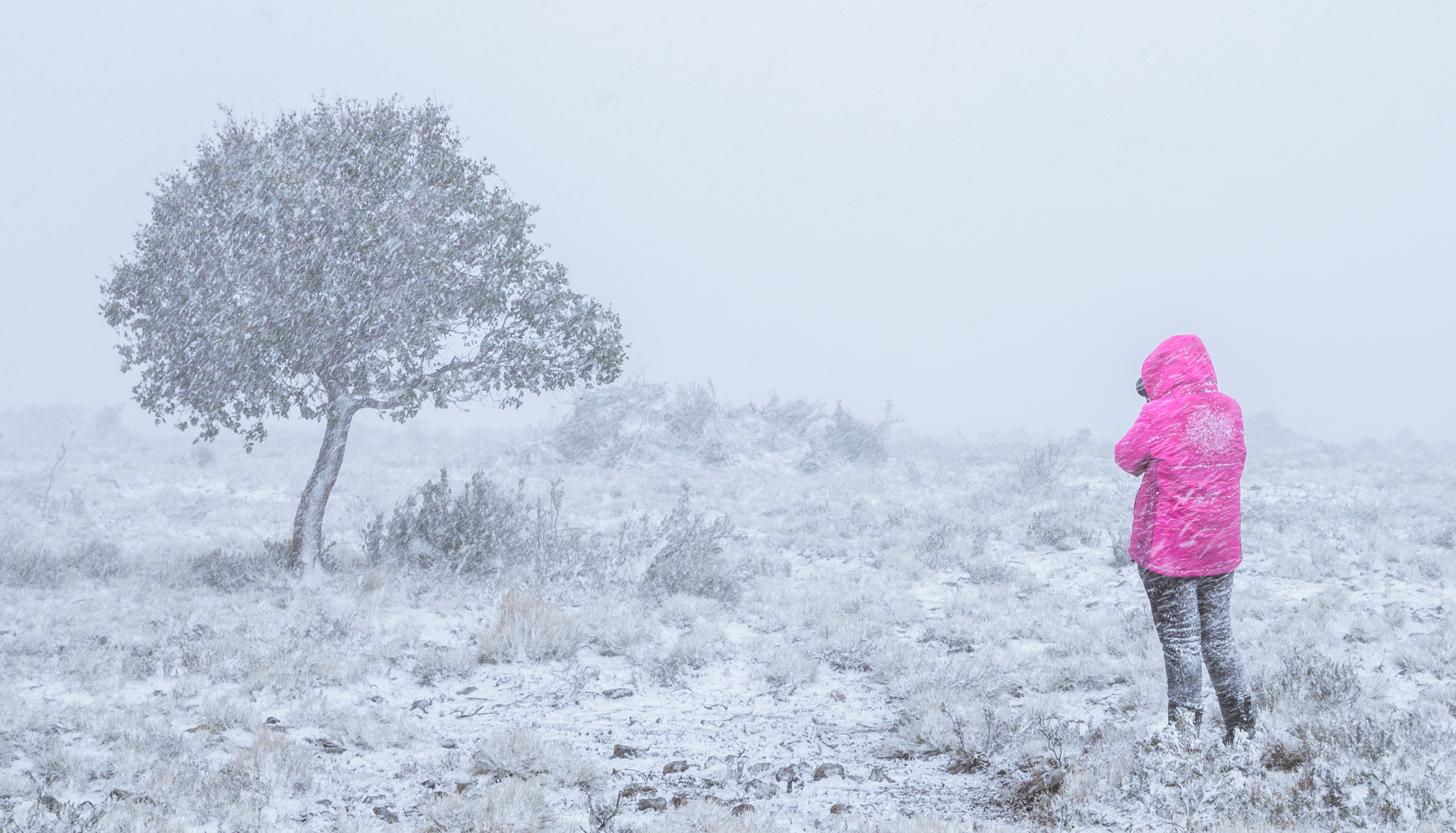
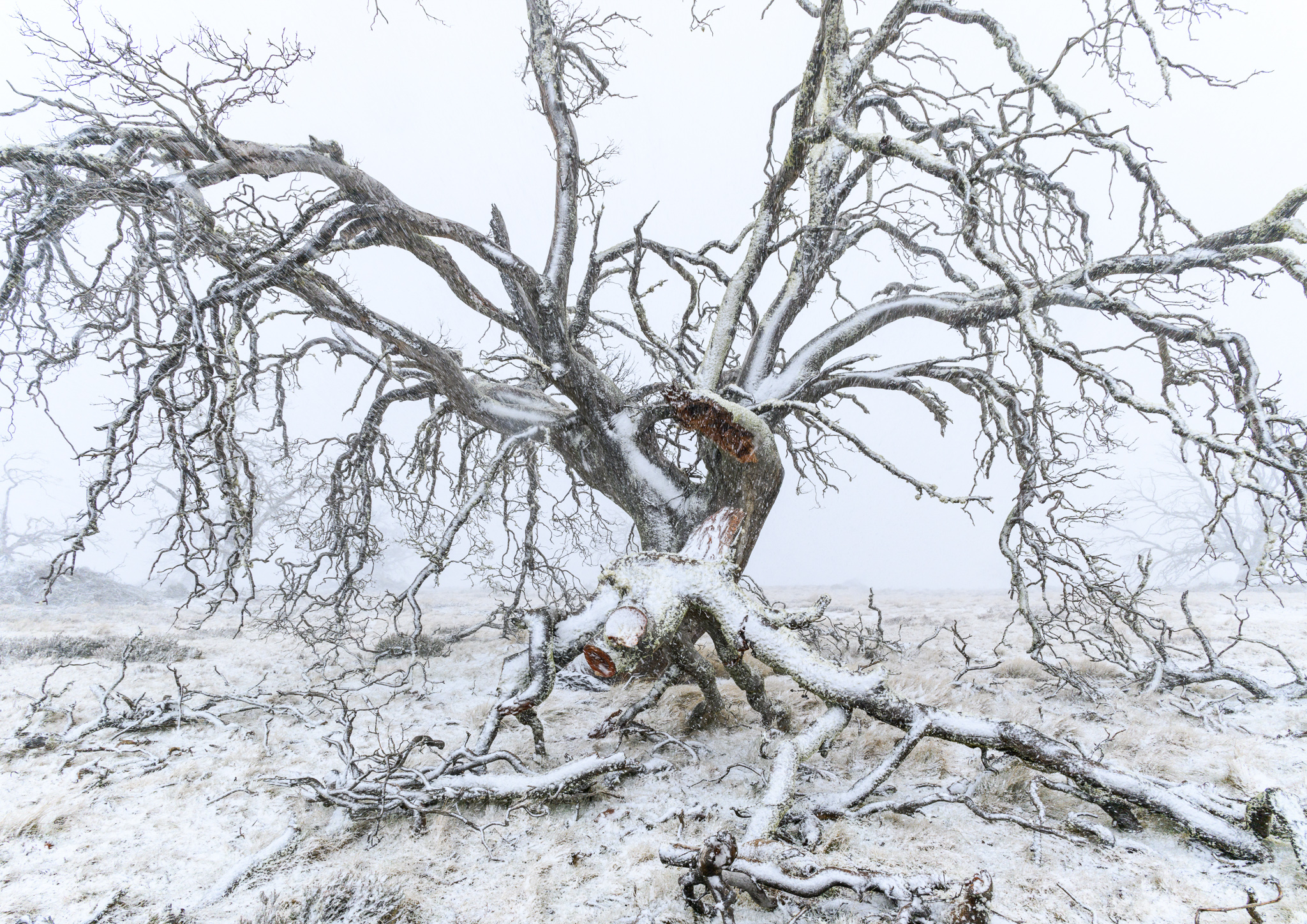
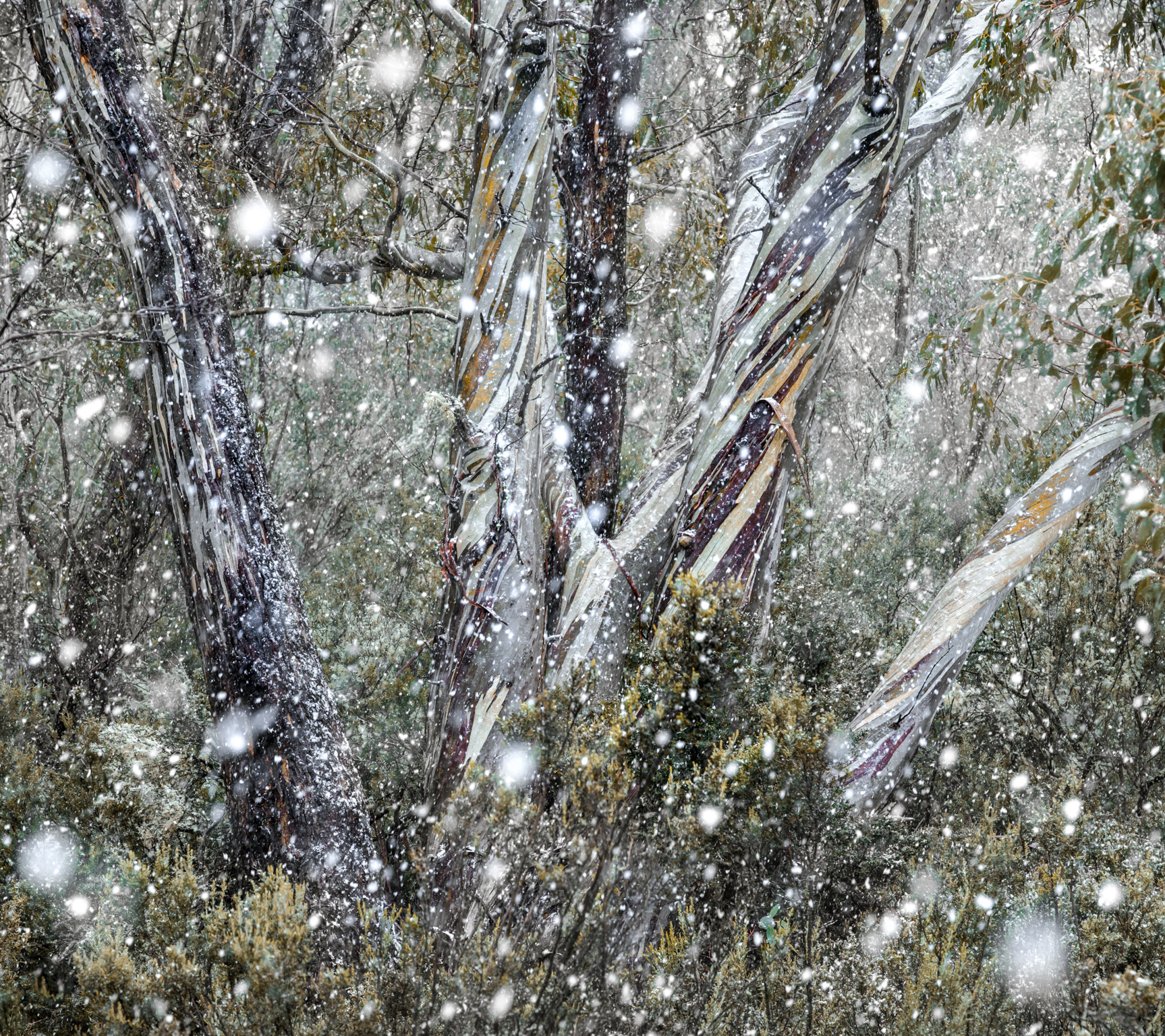
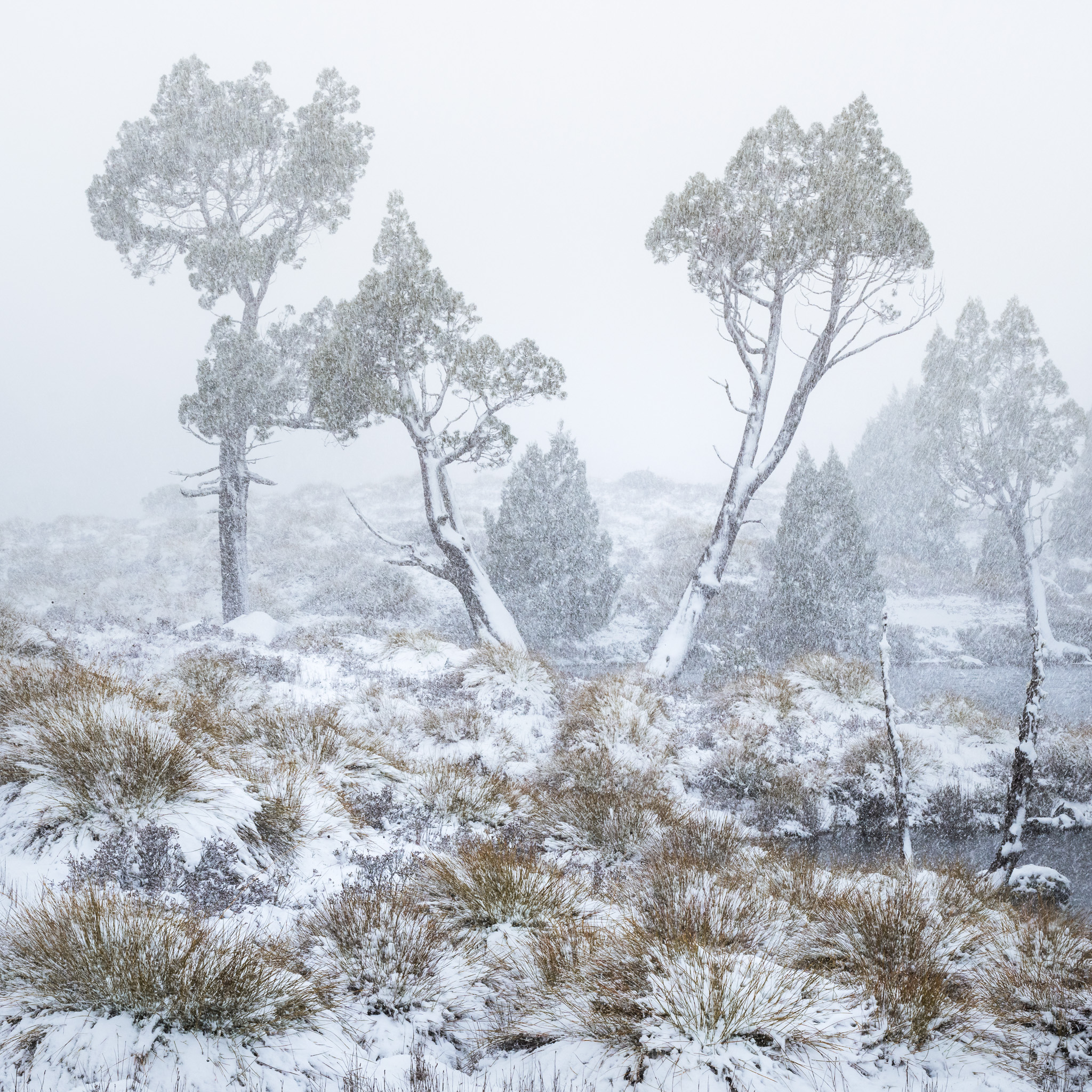
I know I’m not alone in feeling that winter offers some of the most beautiful moments to connect with nature while photographing the landscape. Snow gently blankets the chaotic scenes of a bustling forest, lending a softness that transforms the world into a quieter, more serene place.
During those peaceful moments when everything else seems to pause, I find that I can truly be present, feeling a deep connection to something much larger than myself. In these times, it’s comforting to know that despite the challenges we face, there exists a harmony in nature that makes everything feel right. For a little while, I can forget the impact of human neglect, and instead, I am embraced by a living gallery of wisdom that transcends human understanding—a spiritual bond that words simply cannot capture.
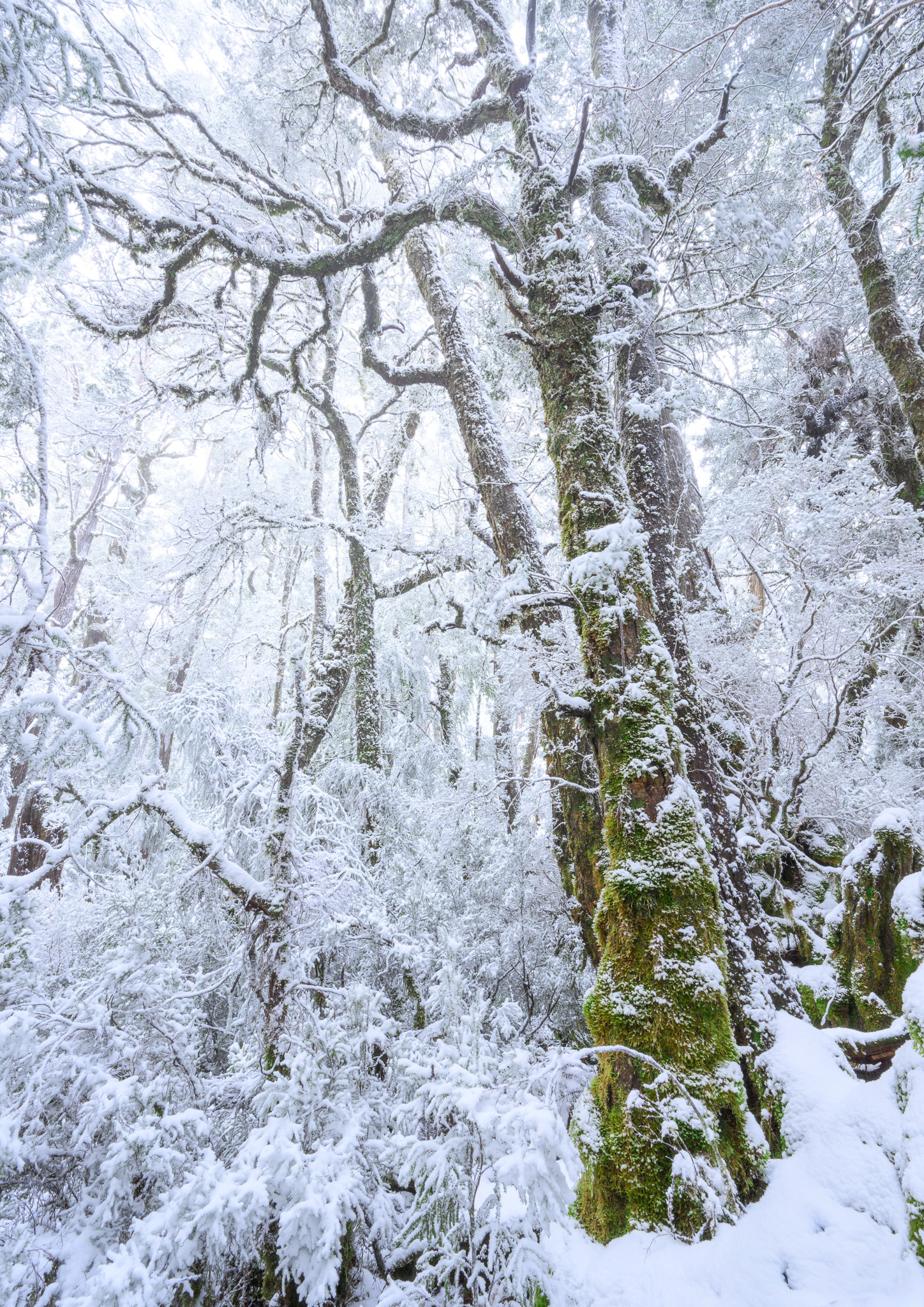
King Billy Alpine Region
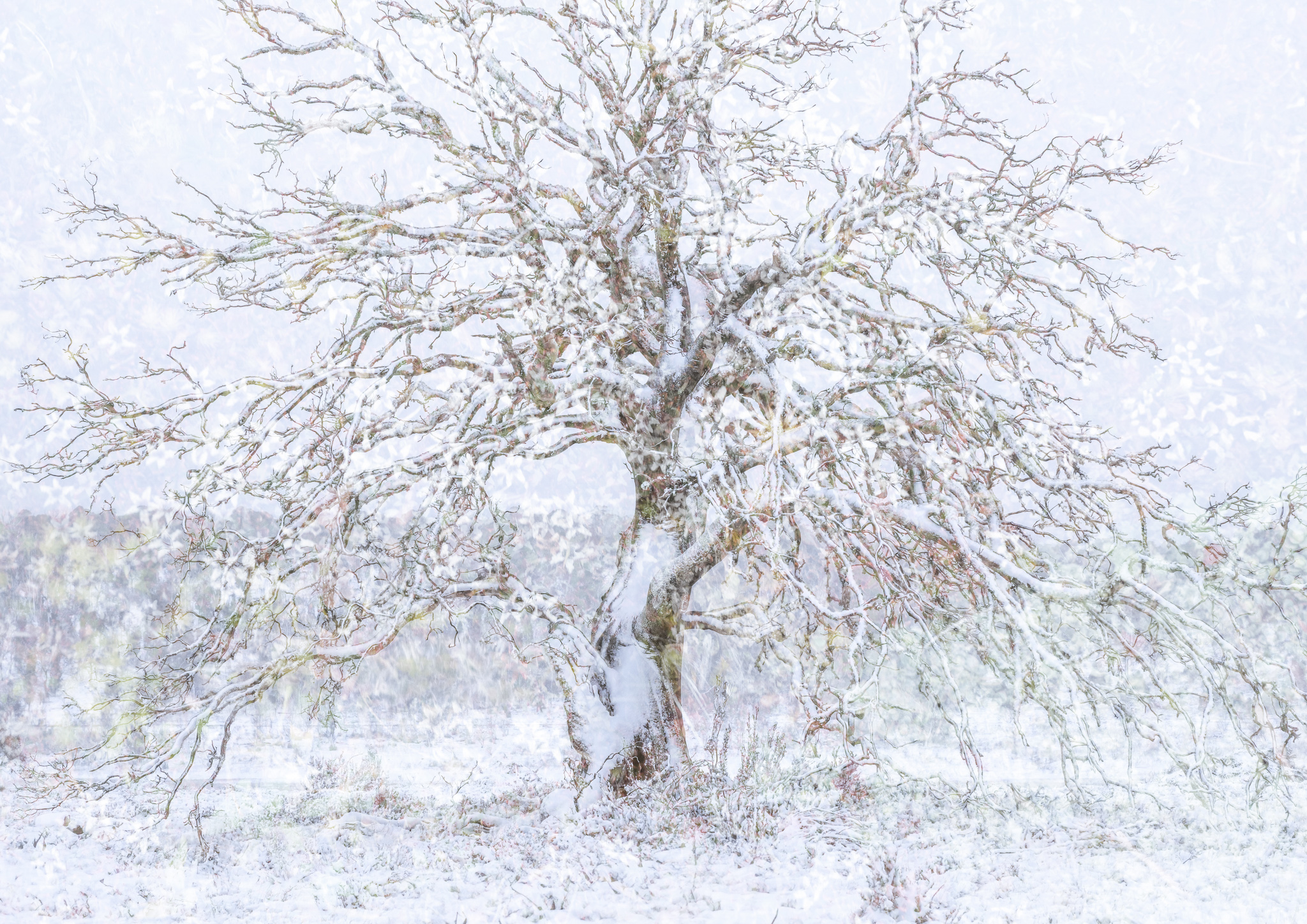
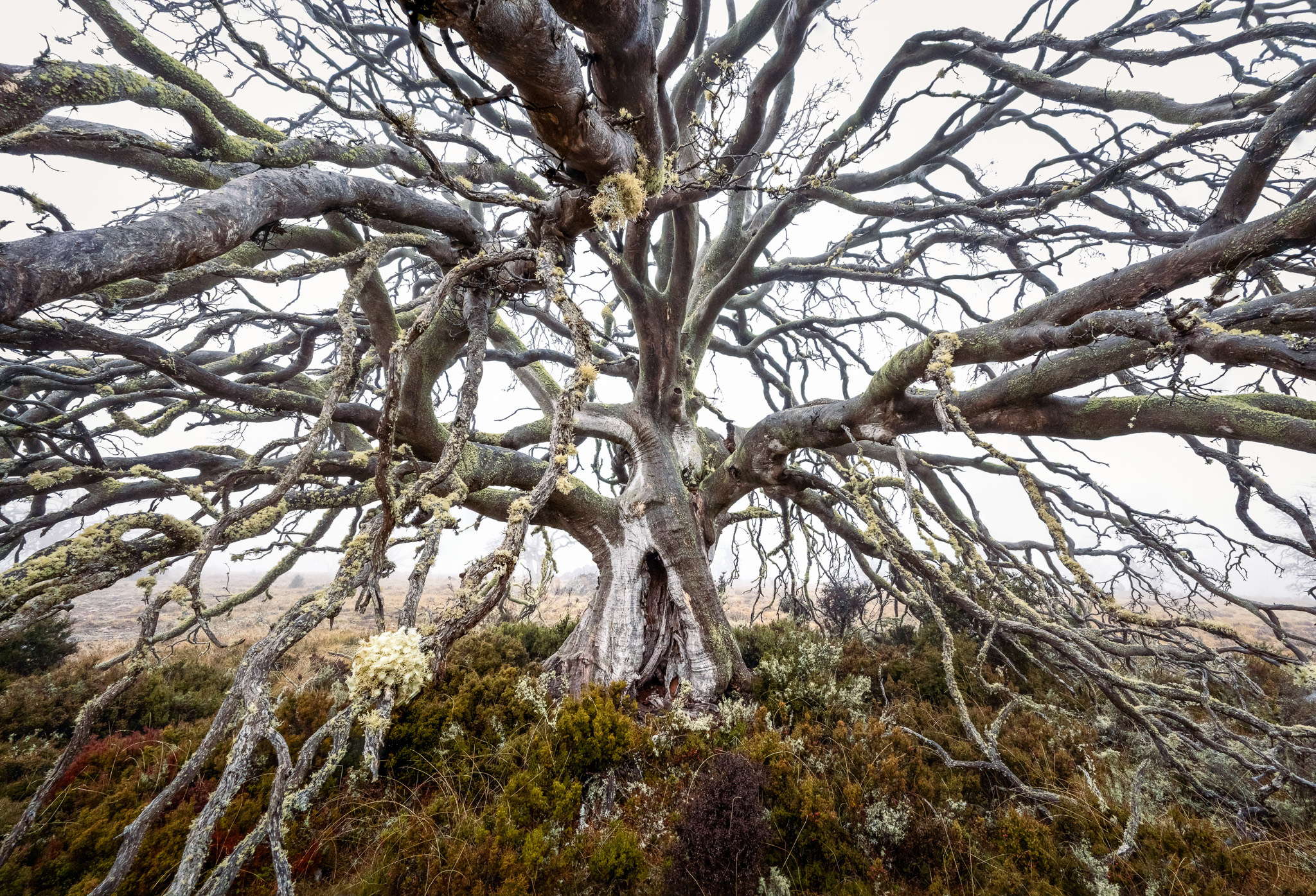
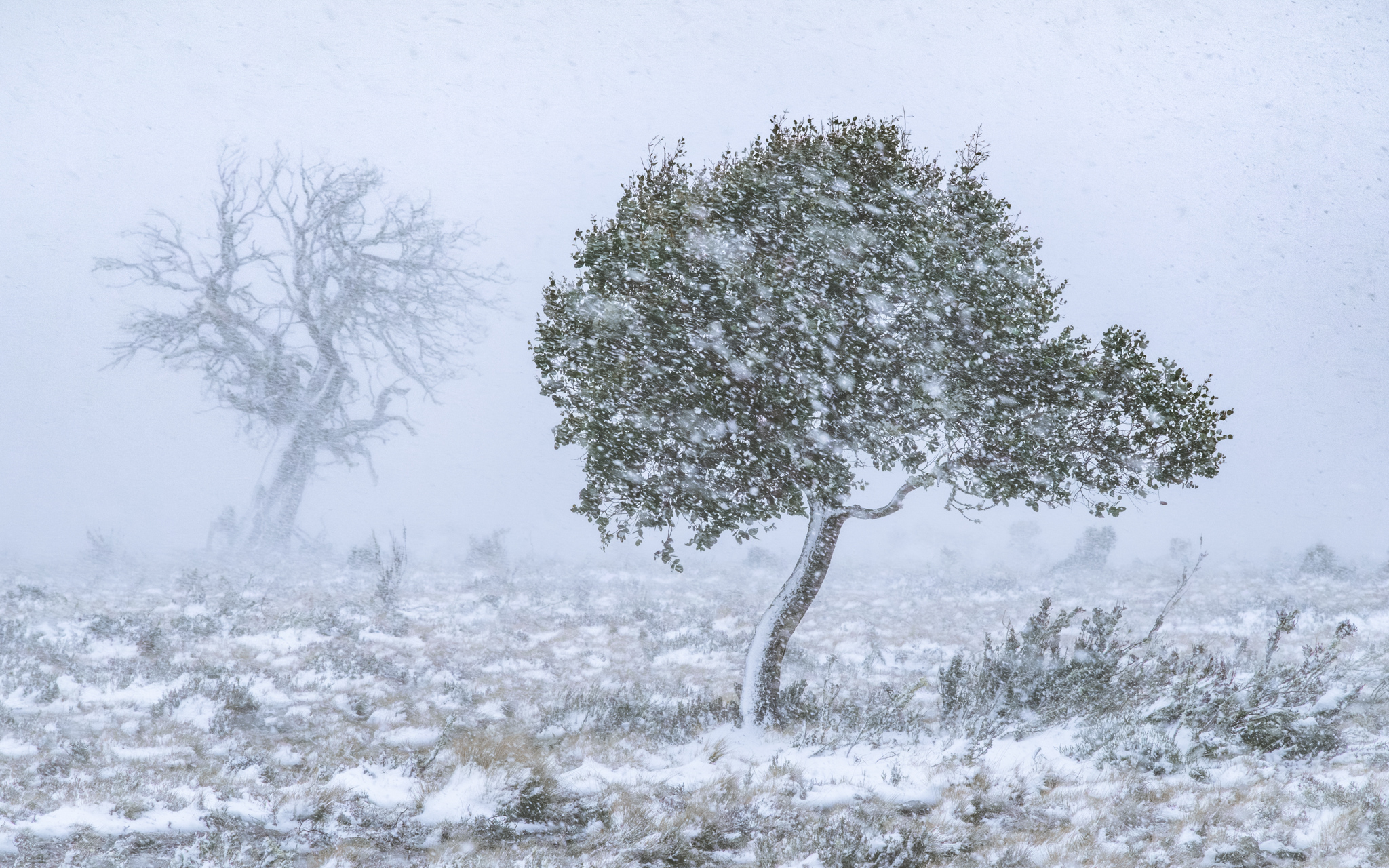
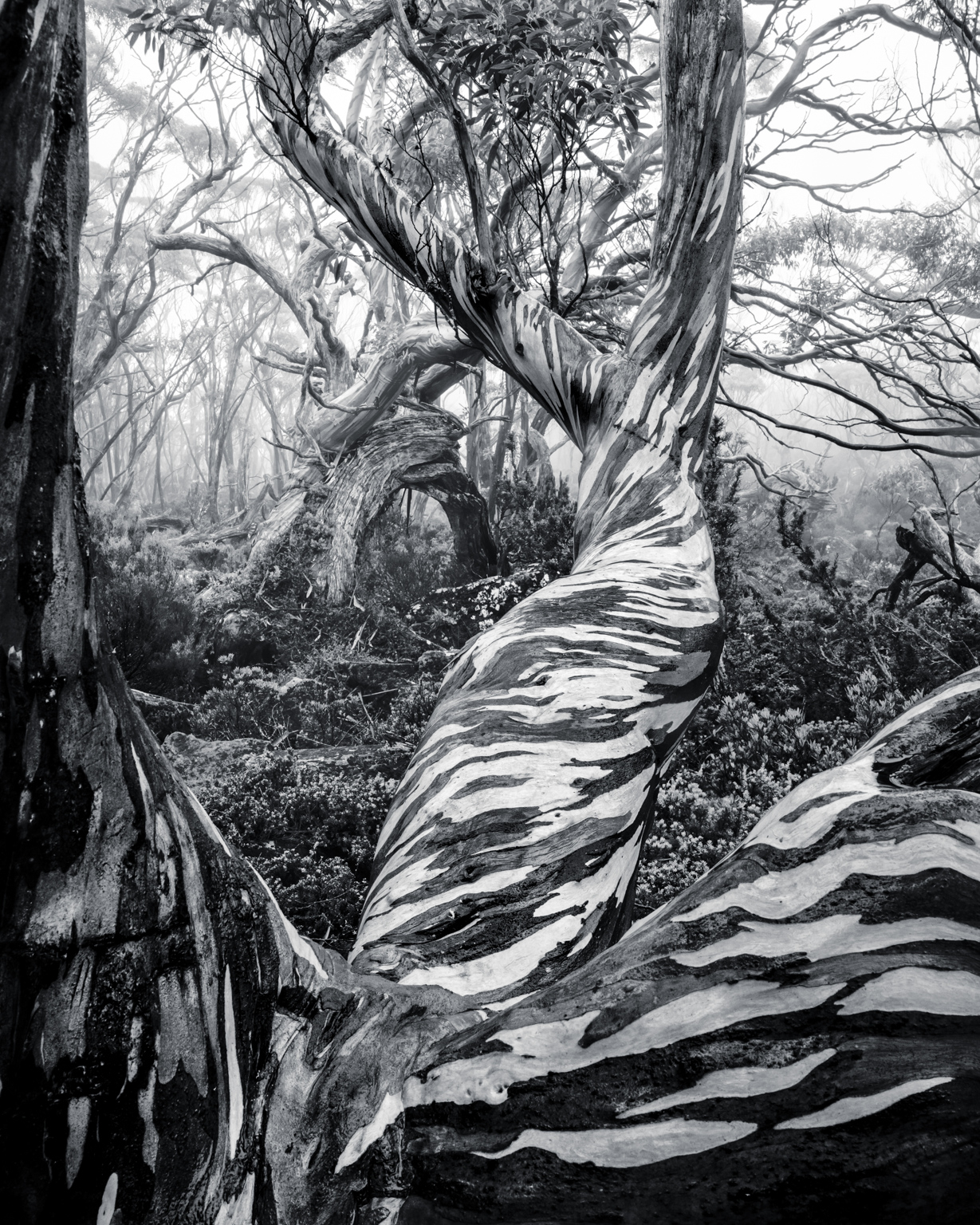
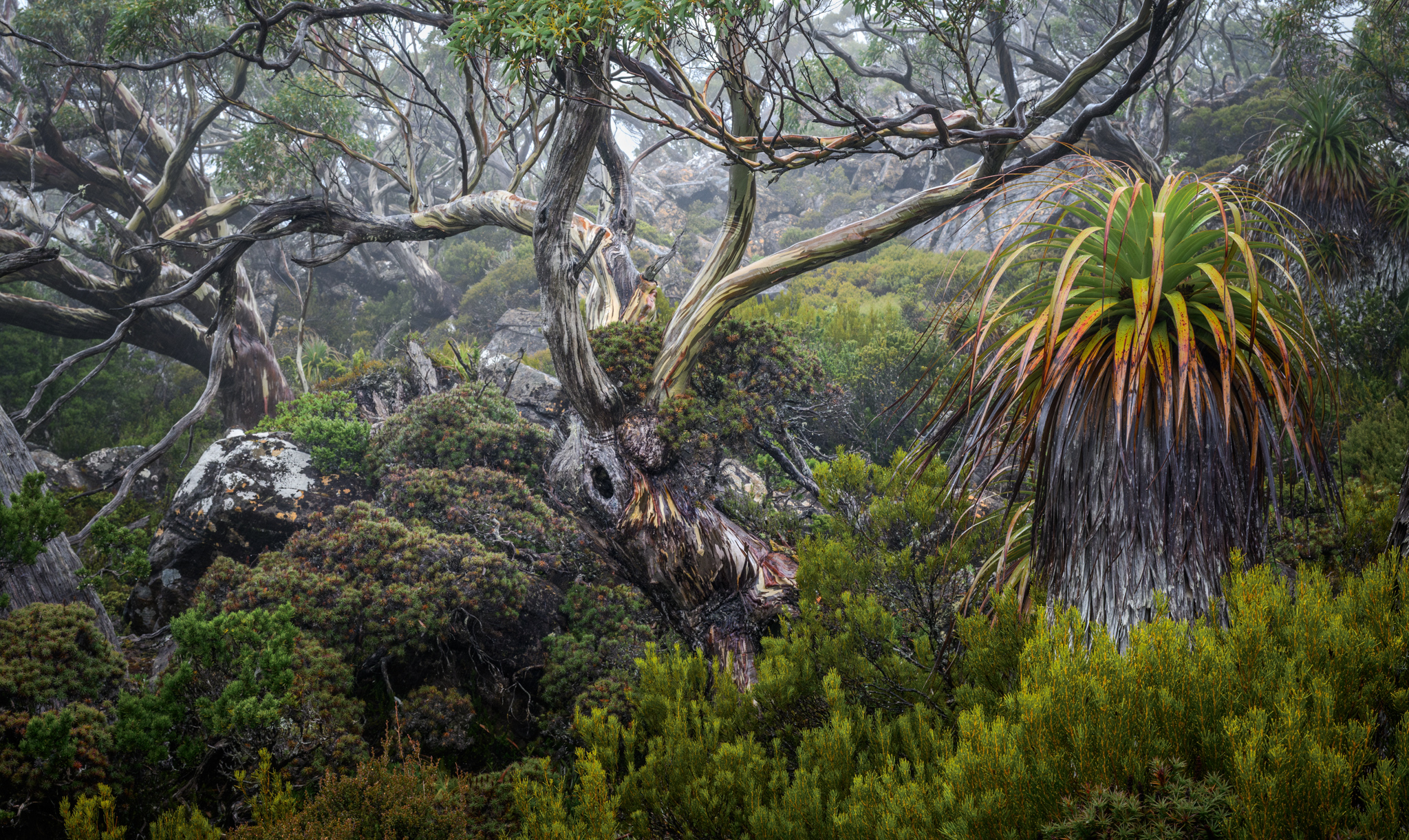
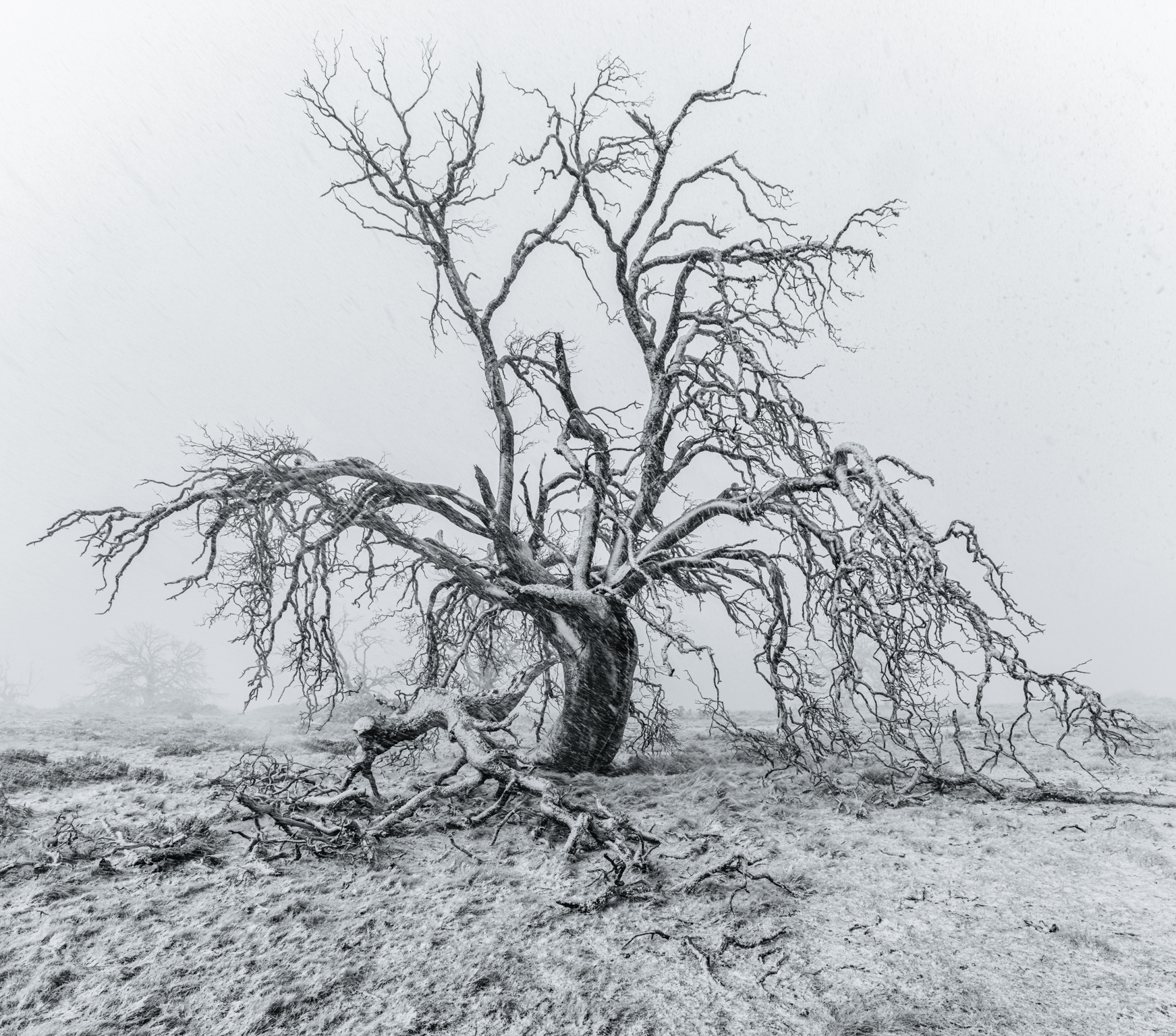
This image of the Tasmanian Snowgum holds a special place in my heart for many reasons. It beautifully represents our native forest, weaving together the intricate tapestry of plant communities and highlighting their crucial roles in sustaining the ecosystem.
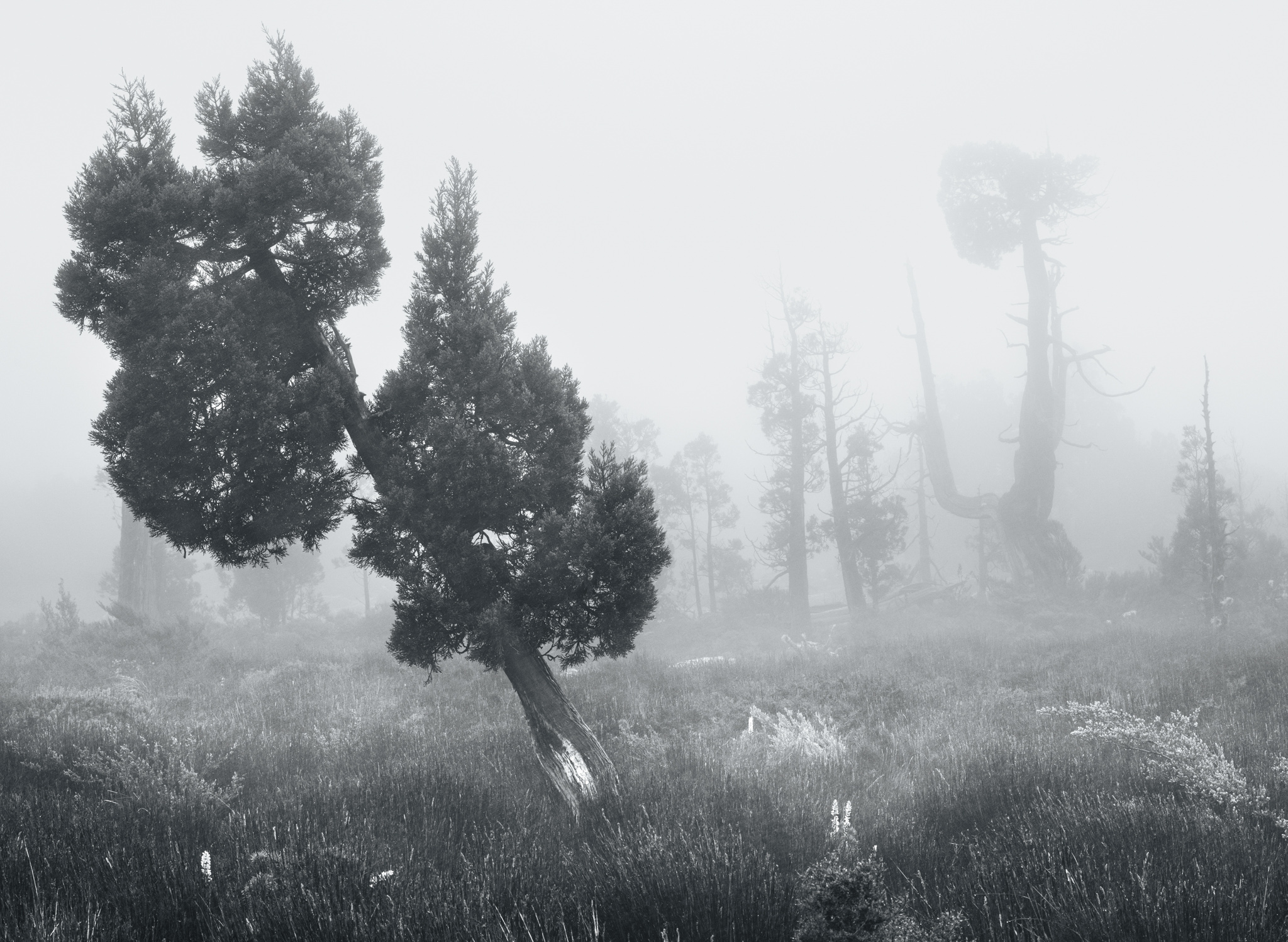
The ancient King Billy Pines, standing proud for over 2000 years, are gentle giants that have witnessed the passage of time. They are living relics, observers to the stories of ancient climates, and yet, they are sadly endangered by human activities.
Equally stunning are the rare and delicate Pencil Pines, unique treasures found only in the alpine regions of Tasmania. These living fossils remind us of a long-lost era, a remnant of the Gondwanan forests that once flourished across the continent. Fossil evidence dating back around 40 million years indicates that these magnificent trees once thrived throughout Australia, retreating to the cooler, wetter climate of the Tasmanian Highlands as the environment changed. It’s a poignant reminder of the fragility of our natural heritage and the importance of protecting these incredible species for future generations.
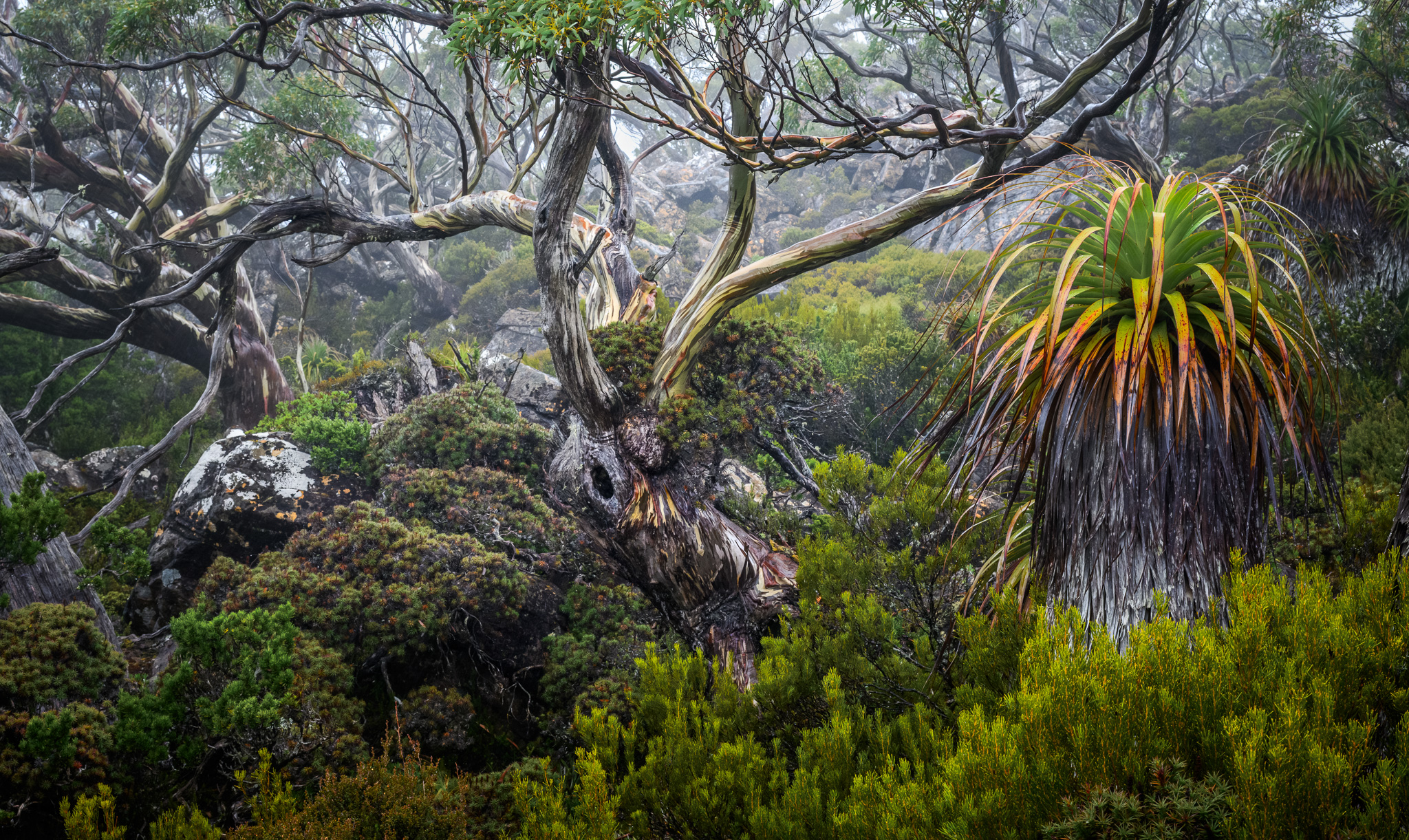
Snowgum Trees
Many of your images double as conservation commentary. How do you balance the aesthetic, such as beauty, composition and mood, with the ecological narrative of endangered trees and habitat change?
In the early days of my journey with the Cider Gums, I faced the heartfelt challenge of sharing the unique story of these endangered trees amidst a sea of images from this beautiful region. It became clear to me that simply documenting the trees wasn’t enough to truly convey their essence. As I meandered through the remnants of these once-majestic forests, I began to realise that the key to telling their story lay in recognising where life still thrived.
I learned that young saplings rely on the nurturing embrace of the understory to survive—a truth that initially eluded me. Being a sensitive soul, I often approached my work intuitively, guided by my right-brain perspective. I gradually allowed myself to embrace the notion that the forest had its own tale, patiently waiting to be shared. If I could simply find the stillness to listen, I might just grasp the message it wished to convey.
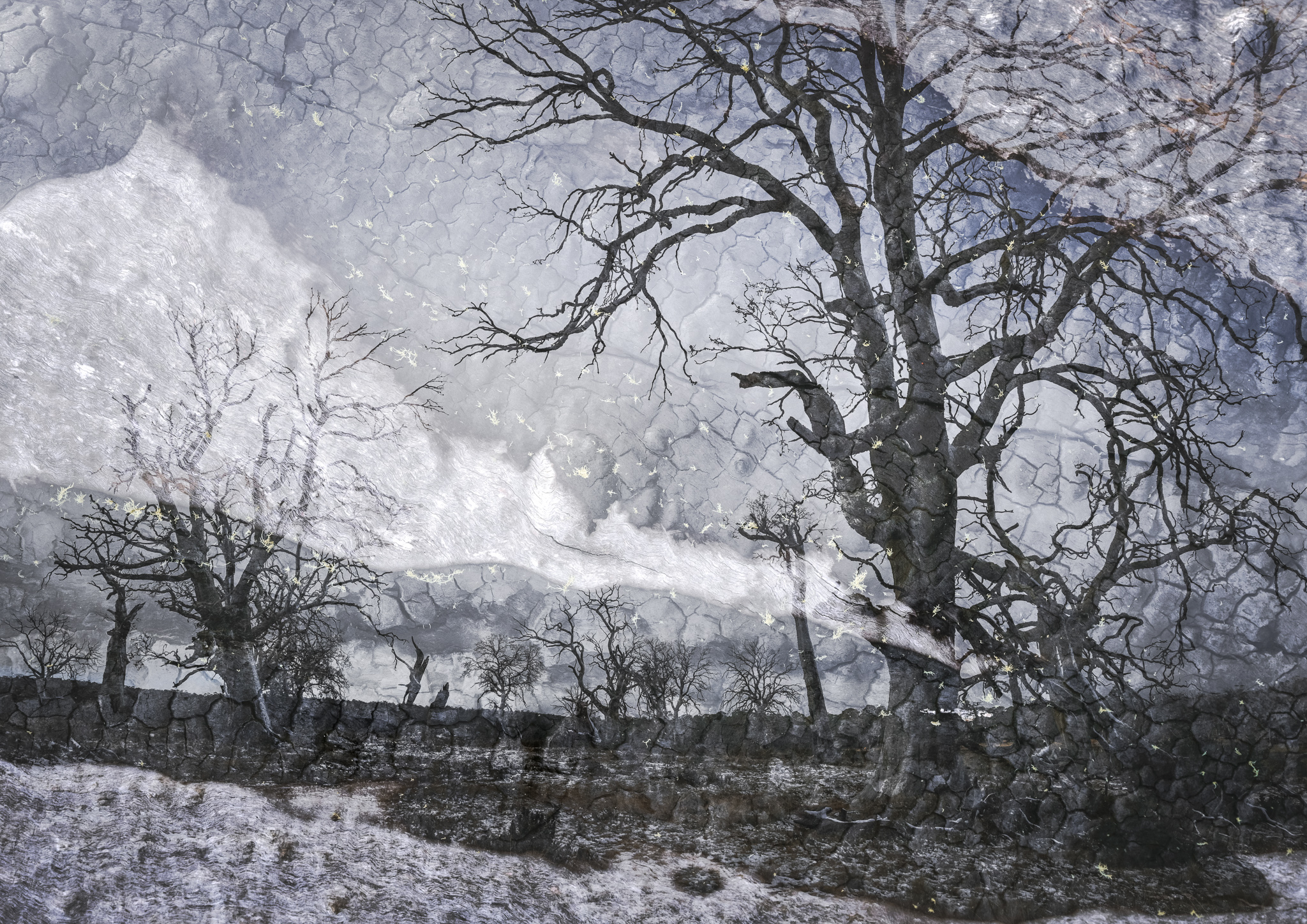
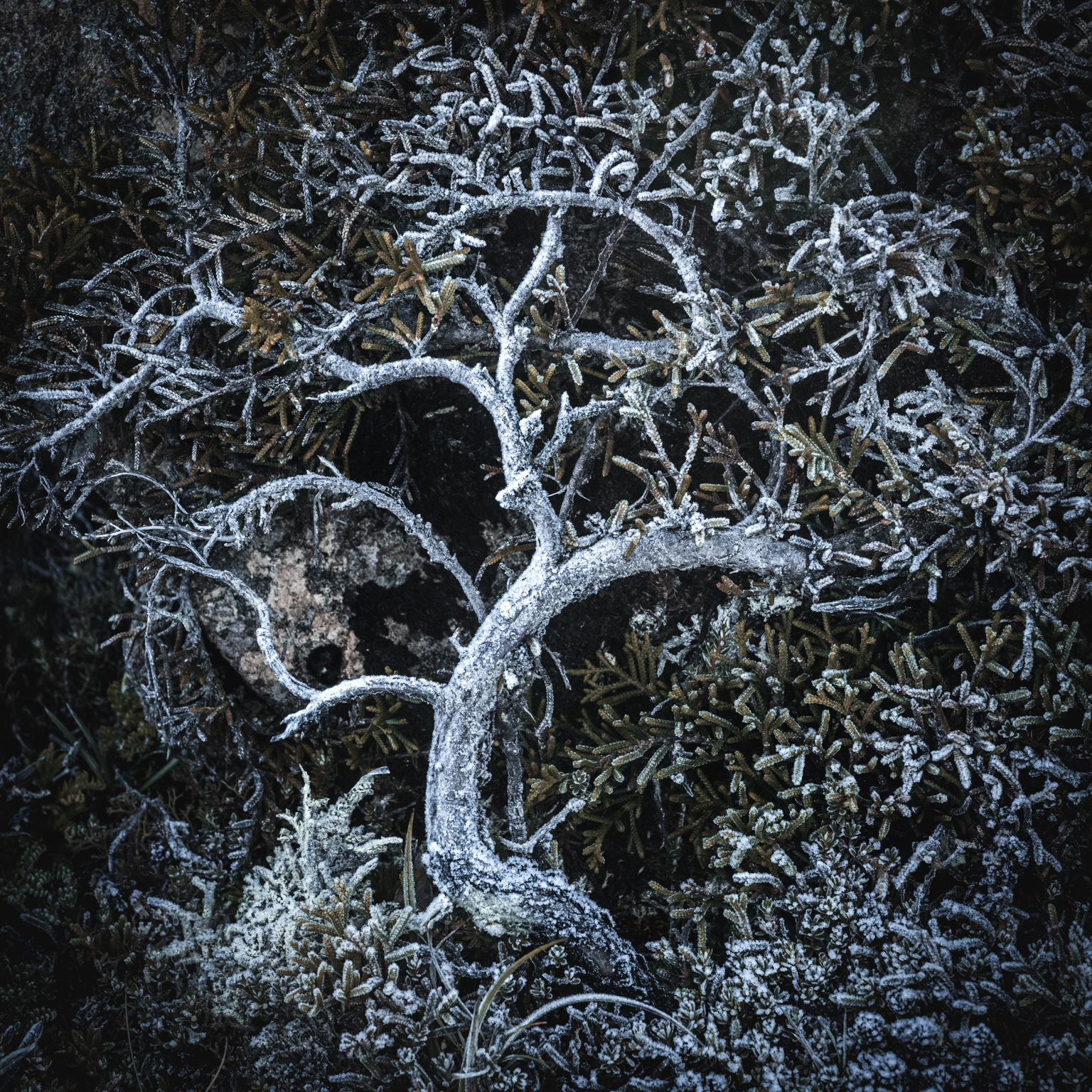
What emerged felt like a vision, as if a picture had been gently placed in my mind. The trees urged me to go beyond their individual journeys and to recognise the vibrancy of the entire ecosystem. I was inspired to focus on a central subject, often a deceased tree, and through the use of multiple exposures, in-camera, weave in the subalpine plant communities as a textured overlay. This thoughtful approach highlighted the significance of the understory and its vital role in nurturing young saplings. Ultimately, it became clear that the elder trees wanted their stories shared, woven together in the fabric of their ecosystem.
I had never seen this done in this way before, and it opened my eyes to a new realm of visual storytelling. My artistic interpretation of these trees will hopefully inspire and continue important conversations about our precious native forests, and these images will be shared in the exhibition this February 2026.
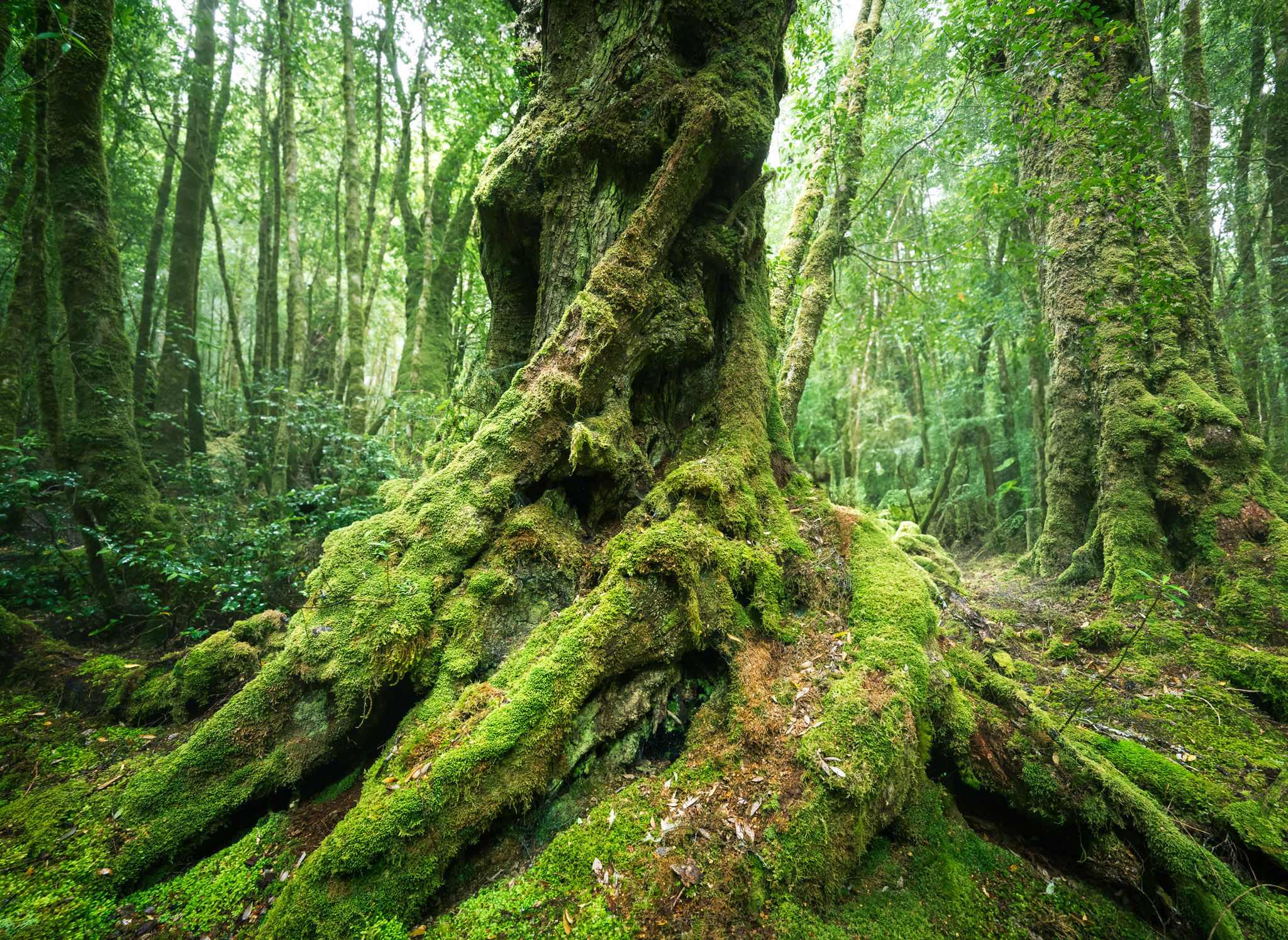
You won the Natural Landscape Awards, Photographer of the Year. Tell us more about the images you submitted.
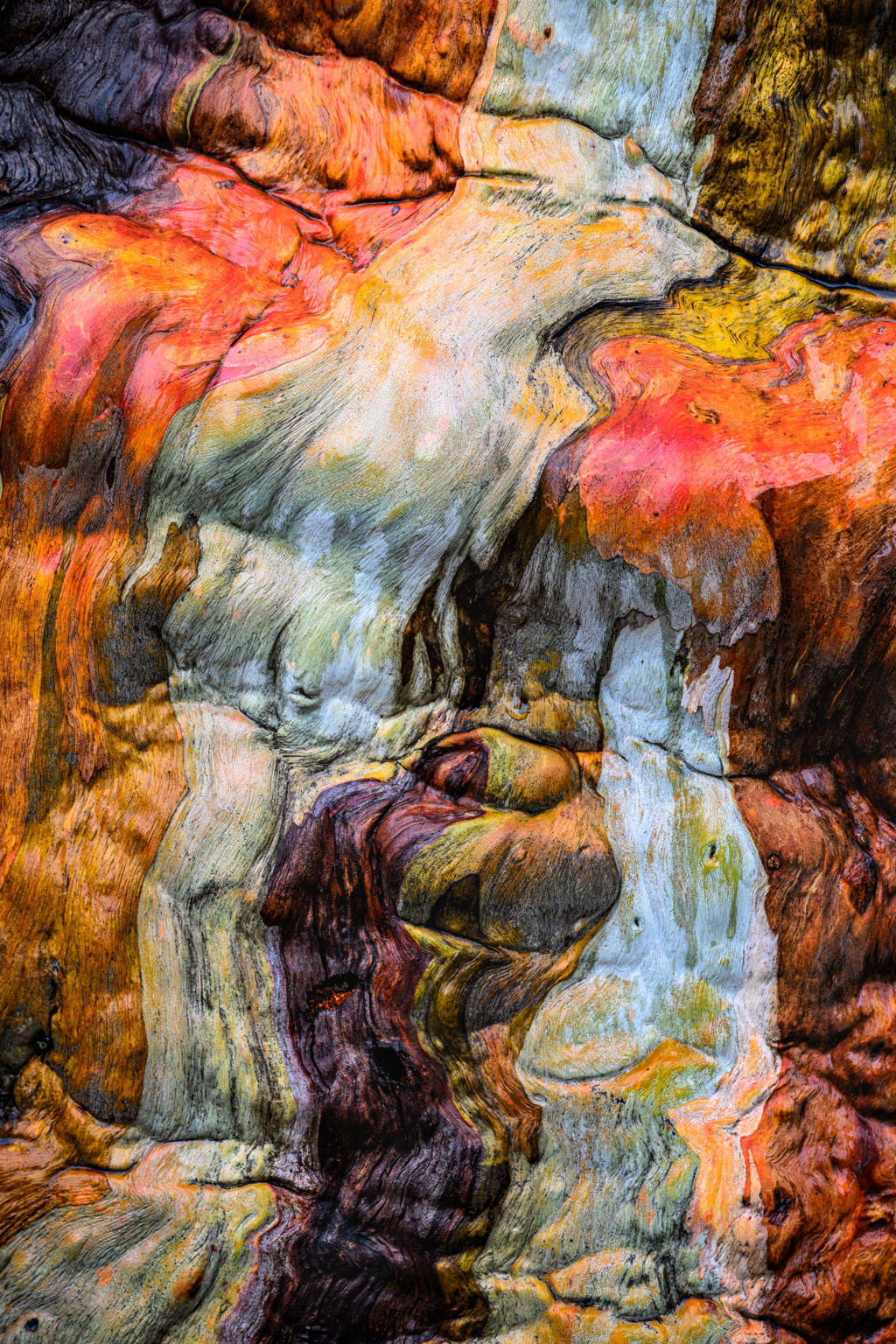
All the images I submitted to the NLPA 2025 were inspired by a deep love and appreciation for our natural world. Sharing these images on this platform has allowed me to highlight the beauty of our Tasmanian Native Forests on a global stage, which has been incredibly meaningful to me. The connections I've made since being named Photographer of the Year have been truly heartwarming.
The NLPA Community is a remarkable group of passionate individuals who share a collective desire to showcase the beauty they find in their own corners of the world. Being part of an international competition provides a wonderful opportunity to celebrate the extraordinary beauty of nature in all her forms, and I feel grateful to contribute to this shared mission. The friendships we forge along the way remind me that we are united in our commitment to protect what is important in our natural world.
In New Zealand, I eagerly participated in the Photographic Society's competitions each year, passionately striving to win the prestigious Gold award for Landscapes. The journey was challenging, yet through hard work and creativity, I achieved that goal, marking a pivotal moment in my photography journey. I also discovered the joy of portraiture. This dedication opened doors, leading to an invitation to become a judge for the PSNZ, deepening my appreciation for photography and allowing me to explore the diverse talent within the community.
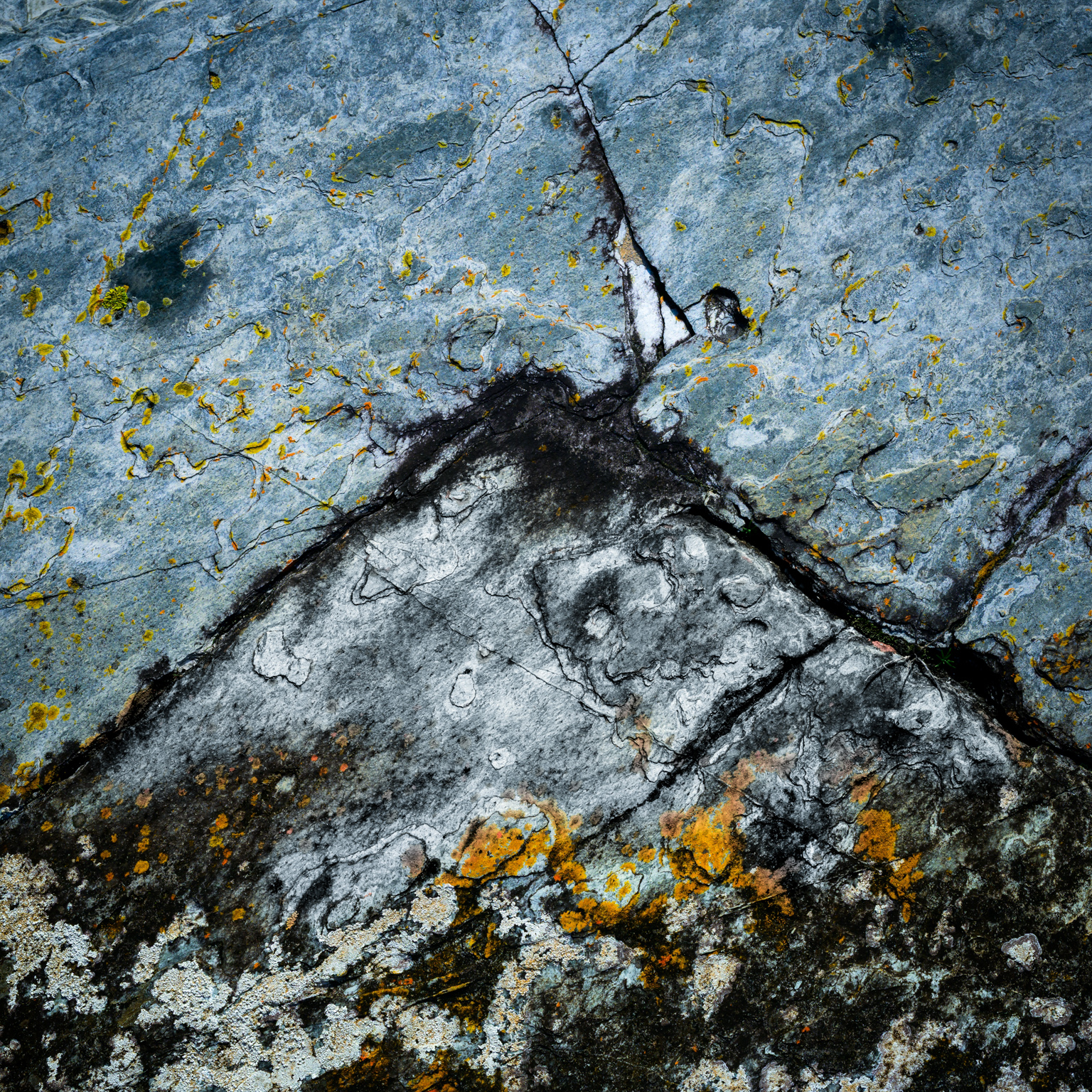
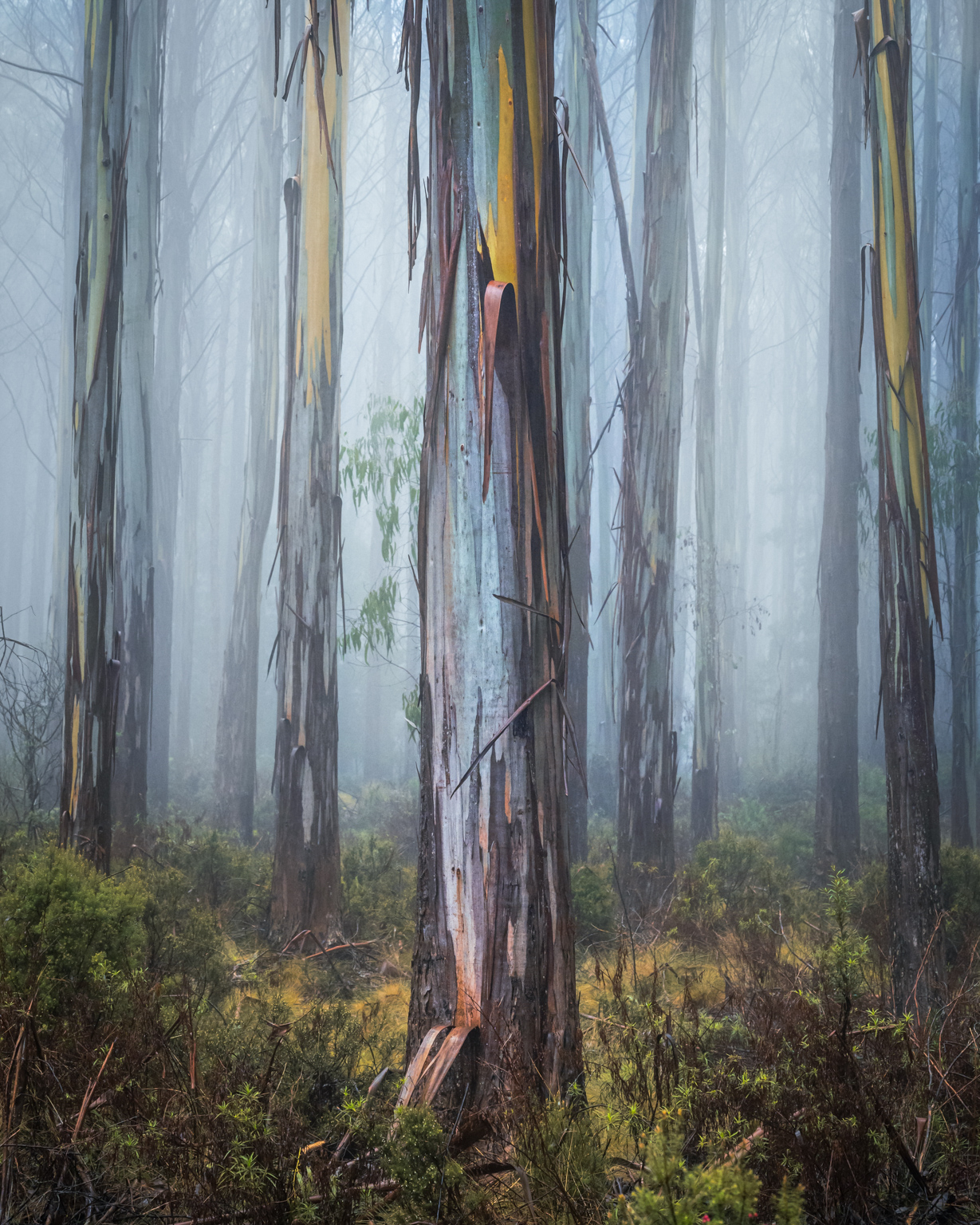
When you step away from the camera and the forest, what do you do to recharge and stay connected to your creative self?
My love for the natural world has always led me to find peace in the garden. My husband and I share a deep passion for bonsai, and I find great joy in growing my own vegetables and nurturing a variety of fruit trees. Being in the garden feels like a sanctuary for me, a place where I truly belong.
What is next for you? Where do you see your photography going in terms of subjects, projects and style?
I’m thrilled to share that my next project is particularly exciting and meaningful. Thanks to the exposure I received from the NLPA Awards, several talented photographers here in Tasmania have reached out to collaborate on a wonderful new venture that highlights our native trees. It’s a heartwarming reminder of the benefits that come from being noticed and connecting with others who share my passion.
This long-term project will involve photographing Huon Pines, Pencil Pines, King Billies, Mountain Myrtles, and Fagus trees for a book. I can hardly contain my excitement about the opportunity to celebrate these magnificent trees. It’s a project that resonates deeply with me, and I truly look forward to every moment of this journey. For the love of trees...and our natural world.
-

- Snowgum
-

- King Billy Alpine Region