

 Join the conversation
 Subcribe to comment rss feed
A Place Based Photography Practice

Ted Leeming
Ted’s practice explores land use and the relationships between people, nature, and power. Through long-term, place-based projects combining photography, research, interdisciplinary collaboration and public engagement, he examines how land is shaped and contested over time, while also asking what more regenerative relationships with place might look like.
After four decades behind the camera, Ted Leeming reflects on the slow unlearning that has reshaped his practice - from landscape photography to place-based observation, civic engagement, and listening to the land itself. This is a story of projects, purpose, and the freedom that comes from no longer trying to please. You can listen to Ted in Episode 26 of the 'Any Questions' Podcast.
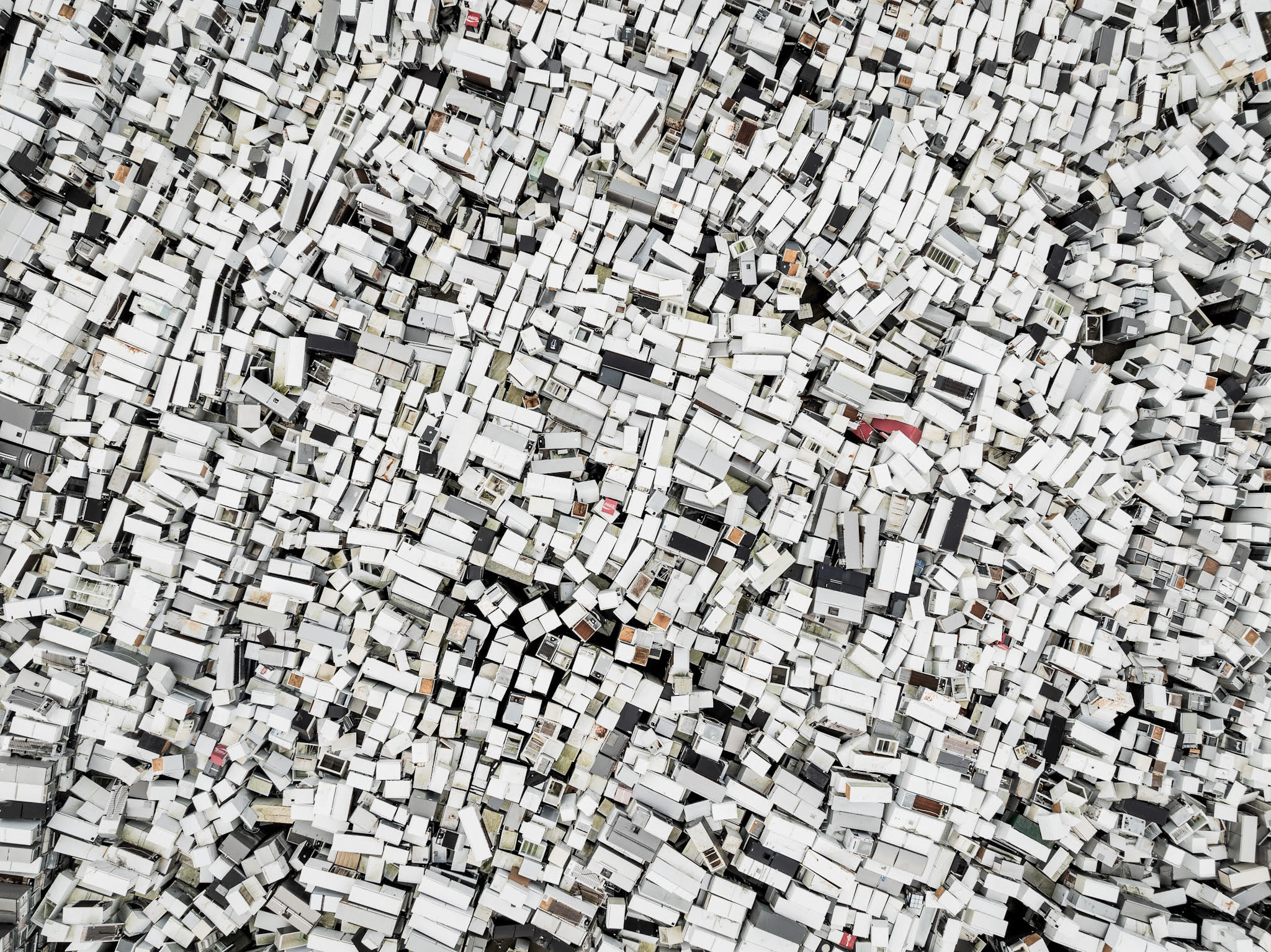
‘I bought a new one in the Sale. Just one is alright isn’t It?’
Fridge & Freezer recycling centre in Perth. I try to include a level of intrigue in my images to help draw in the viewer
Four decades on, aside from colour management (or getting any tech to do as I wish for that matter!), I still love almost everything about photography. And yet I am a very different photographer today than I was even ten years ago, and that journey of discovery has not come without discomfort.
Letting go of familiar rewards - recognition, approval, and the occasional reassurance of kind contemporaries – is tough and felt risky for a very long time. Stepping away from running workshops and a practice focused on fine art prints removed both my structure and, in part, my validation. I found it difficult to relinquish the past for a very long time. What remained was an uncomfortable but necessary question which repeatedly and uneasily bubbled to the surface - why am I really doing this?
We are all on our own, personal photographic journeys, and I began to realise that what increasingly interested me was not the refinement of technique, the proliferation of styles, or the accumulation of equipment (all of which I have at some point craved), but photography’s capacity to start conversations. I became increasingly aware of the power of the visual image to influence, and that its influence could directly and indirectly be for both good and bad. That realisation led to a shift in my mental process from making images to exploring subjects of relevance to my purpose as a photographer - and with that, I had inadvertently redefined my practice.
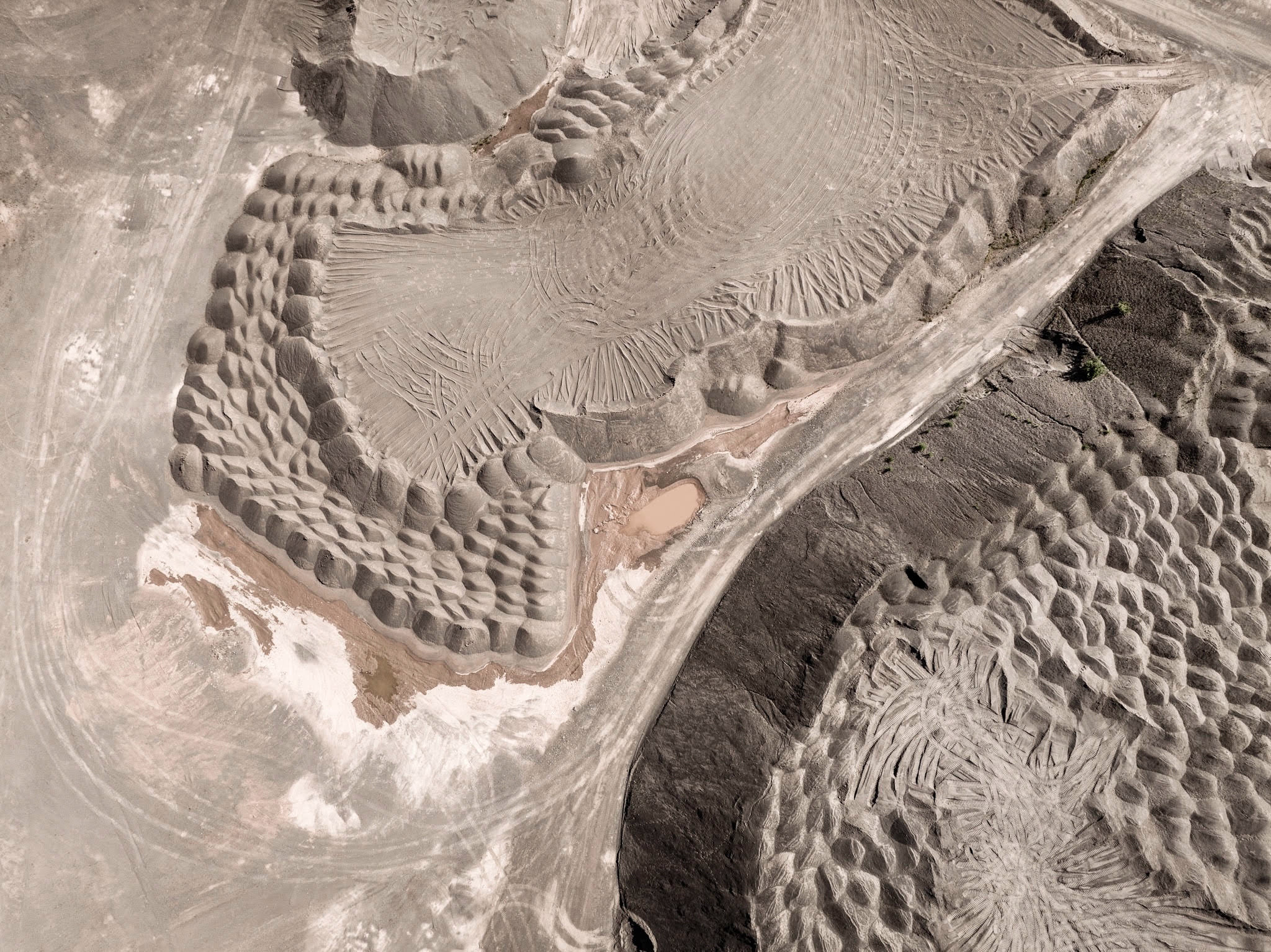
‘Everything comes from somewhere.’
I have been wanting to do an aerial project ever since I saw the work of Yann Arthus-Bertrand in 2001.
Re-evaluating my practice and defining my purpose is probably the single most valuable decision I have made since turning professional. The process unfolded gradually over five or six years, but that slowness was invaluable. My practice is now centred around issues relating to climate, nature, and place - and the human relationships embedded within them. I increasingly see myself as a place-based observer, asking questions through the lens as my chosen medium for conversing. In this context, images also express my wider interests in geography, place, anthropology and environment. This combining of passions was the true revelation that had been missing. I felt as though I had discovered a whole new world.
This clarity has reshaped how I work. I now operate almost entirely through subject based studies and projects, which might last anything from a few hours, or germinate unrushed over several years. A single image may express a sentiment or it may require an entire body of work. In each case, the project determines how I approach the subject photographically, with many including elements of research, collaboration, and some actively involve responding to the views of others. In my current project exploring land use in Scotland, for example, having written down my own thoughts, I asked participants in a workshop a simple question, ‘What three words describe land use in Scotland today?’ The responses not only reinforced my own thinking, but also formed the backbone of a current exhibition and many subsequent images.
Each year, I try to spend up to a month on some form of immersive investigation of place, travelling either by bike or on foot. With this slower approach, I find myself ‘within’ landscapes for extended periods rather than merely passing through them, which allows time for reflection and attentiveness. Spending extended periods moving slowly helps change the direction of my attention. When you slow down enough, land stops behaving like scenery and begins to assert itself as something more than just visual. They become cultural participants rather than passive backdrops, and photography becomes less about representation and more about relationship. The camera is no longer a tool for capturing images, as I had once seen it, but more an instrument for observing and asking questions.
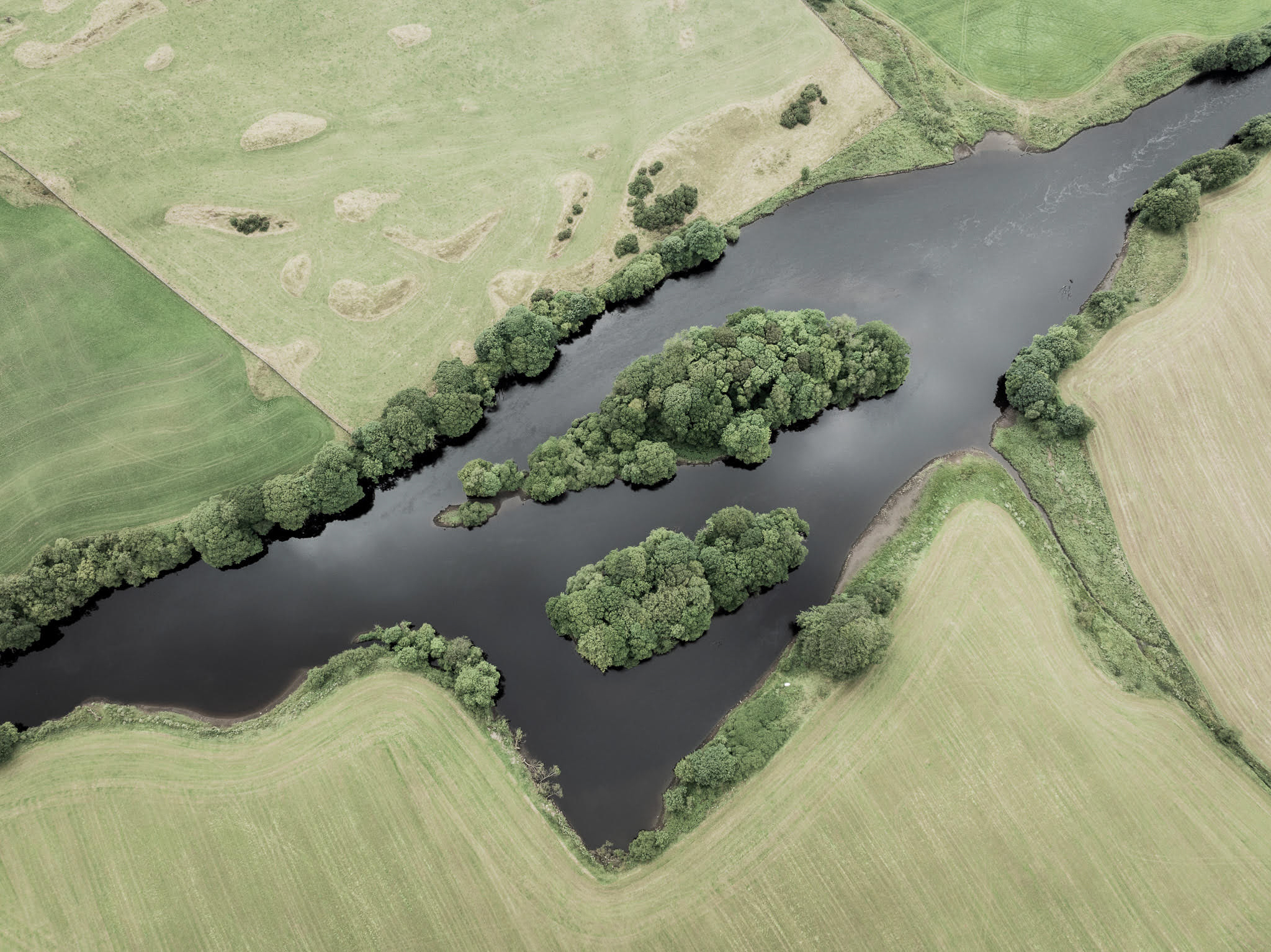
’The Land That Time Forgot’
I often wonder what a location might look like if not for the hand of humans, and whether such places exist.
Working this way, by necessity, also changes how I photograph. For example, when I need to get 50-70 miles from A to B on my bike each day, waiting for the light or chasing golden hour is rarely an option. Instead, I have to respond to what I encounter as I move.
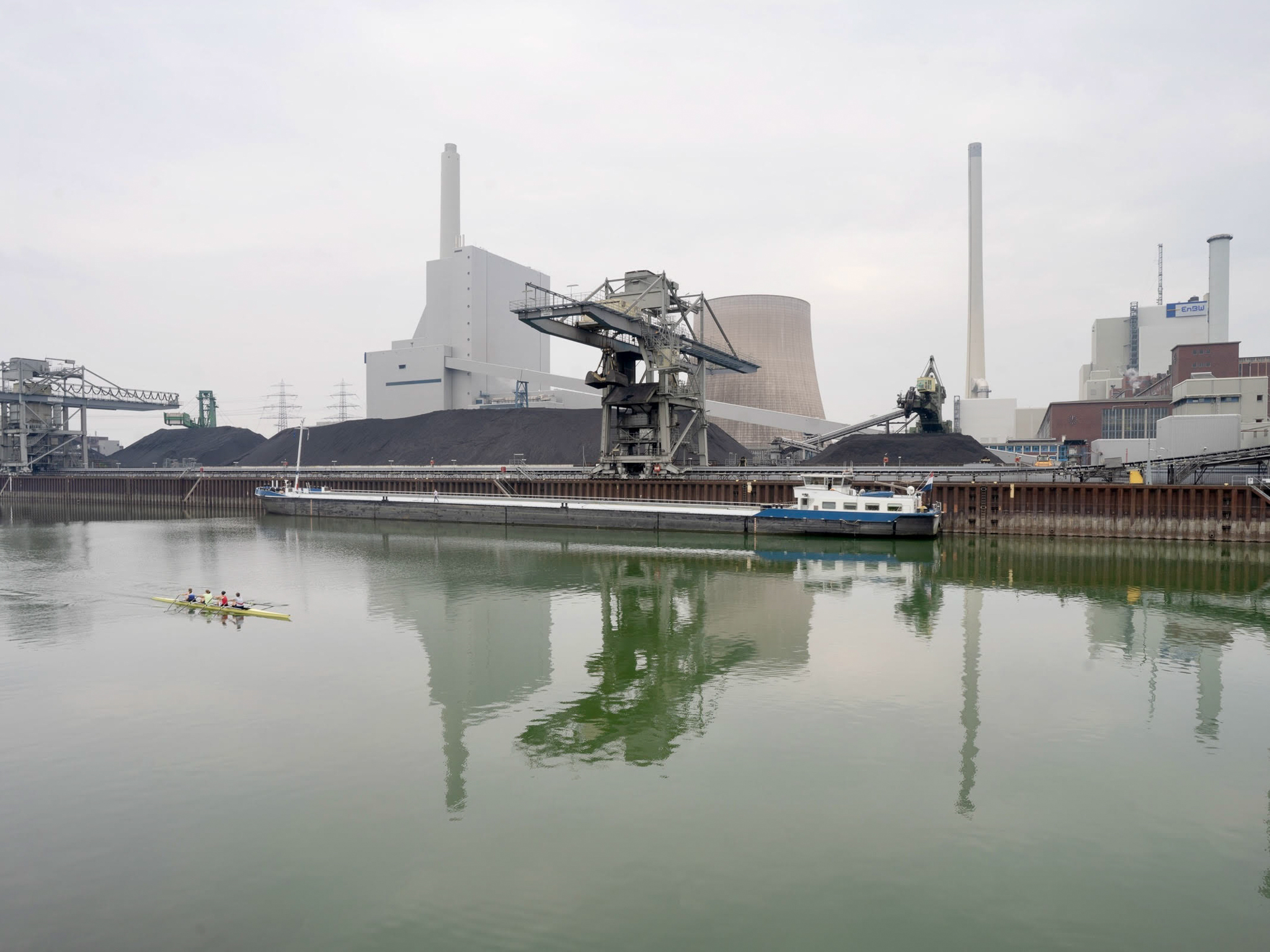
Many of these threads truly came together during my ‘Rhine’ project, when I ‘commuted’ a bicycle from Scotland to Italy along the mighty river and over the Alps. Slow, low-impact travel, heavily commodified landscapes, sustained attention, all situated within the framework of my revised practice. Where once my lens would never have strayed towards such subjects, I suddenly found endless material and themes to develop.
On previous journeys where I would have become ‘struck’ wherever land is treated primarily as commodity, it suddenly became alive as I started to recognise generational changes to place, and these became the subject. I often find this new subject matter uncomfortable, and I occasionally miss the more innocent visual interrogations of my past, but I feel increasingly compelled to bear witness.
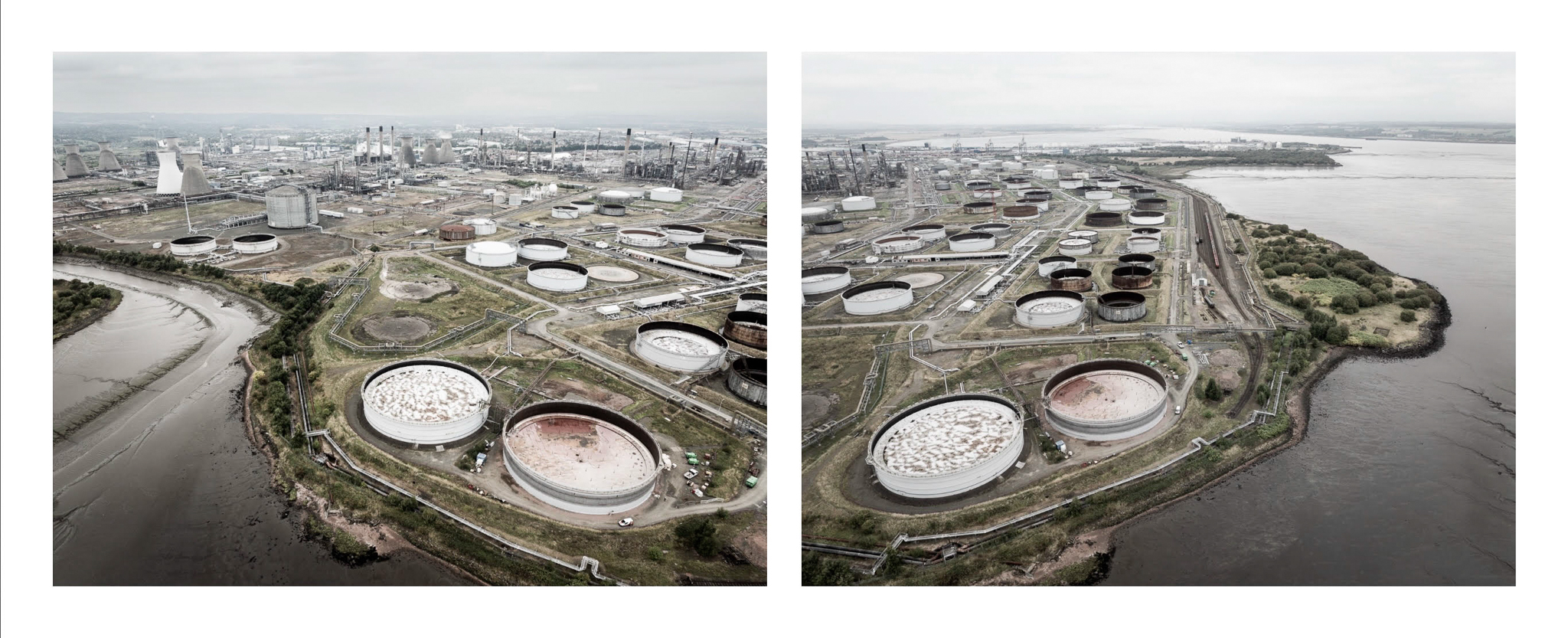
‘Our Favourite Addiction Factory’
Over 50% of the UK’s oil flows through the terminal. Currently under threat of closure, the Grangemouth facility is a sign of ever-changing times. I used diptychs as a presentation method for my shortlisted entry into the Royal Geographical Society’s Earth Photo 2025 competition.
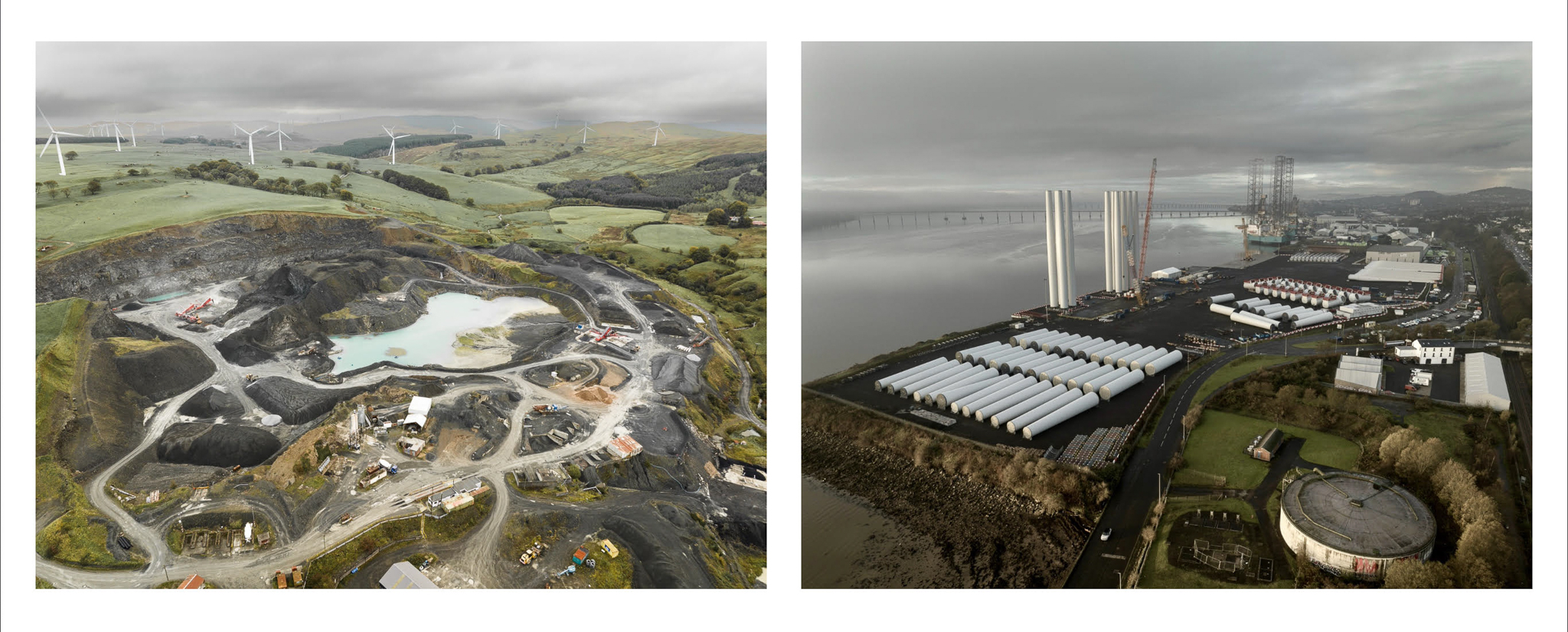
Image 5 ‘The Answer My Friend…?’
Nothing comes for free. We often hear about technological solutions to the big issues. Rarely, however, do I hear the word reduce.
This thinking extended further during a photographic residency at the Fantastic Forest Festival, which Morag and I co-curated. One of my outcomes on this occasion was a picture essay, using words for the first time to sharpen focus and guide interpretation. Artivism, perhaps, and helping others articulate their own projects, are other photographic avenues I have also started exploring, and hope to do more of in future. I increasingly feel real reward in helping make quiet voices heard.
My current project exploring urban and rural land use in Scotland builds on these cumulative experiences. The arrival of an affordable and packable drone to the market (with a Micro Four Thirds sensor) allowed me to finally pursue an aerial dream I had long imagined. During two years of cycling across Scotland, I encountered not only loss, simplification and a commodification of the land, but also glimmers of positive land management futures – the exemplar individuals, interest groups, and communities adopting more balanced approaches to land management. Such determined efforts suggest that positive tipping points are possible in the near future for the good of all users of place.
I am also exploring a range of traditional and non-traditional outcomes for my work. These include talks and discussions, a new website, a Call to Action for incoming MSPs following the up and coming 2026 Scottish parliamentary elections, an open-source guide to land use - and even an exhibition of decomposing Y-fronts! Each exploring the same underlying questions, but seeking to engage a specific audience.
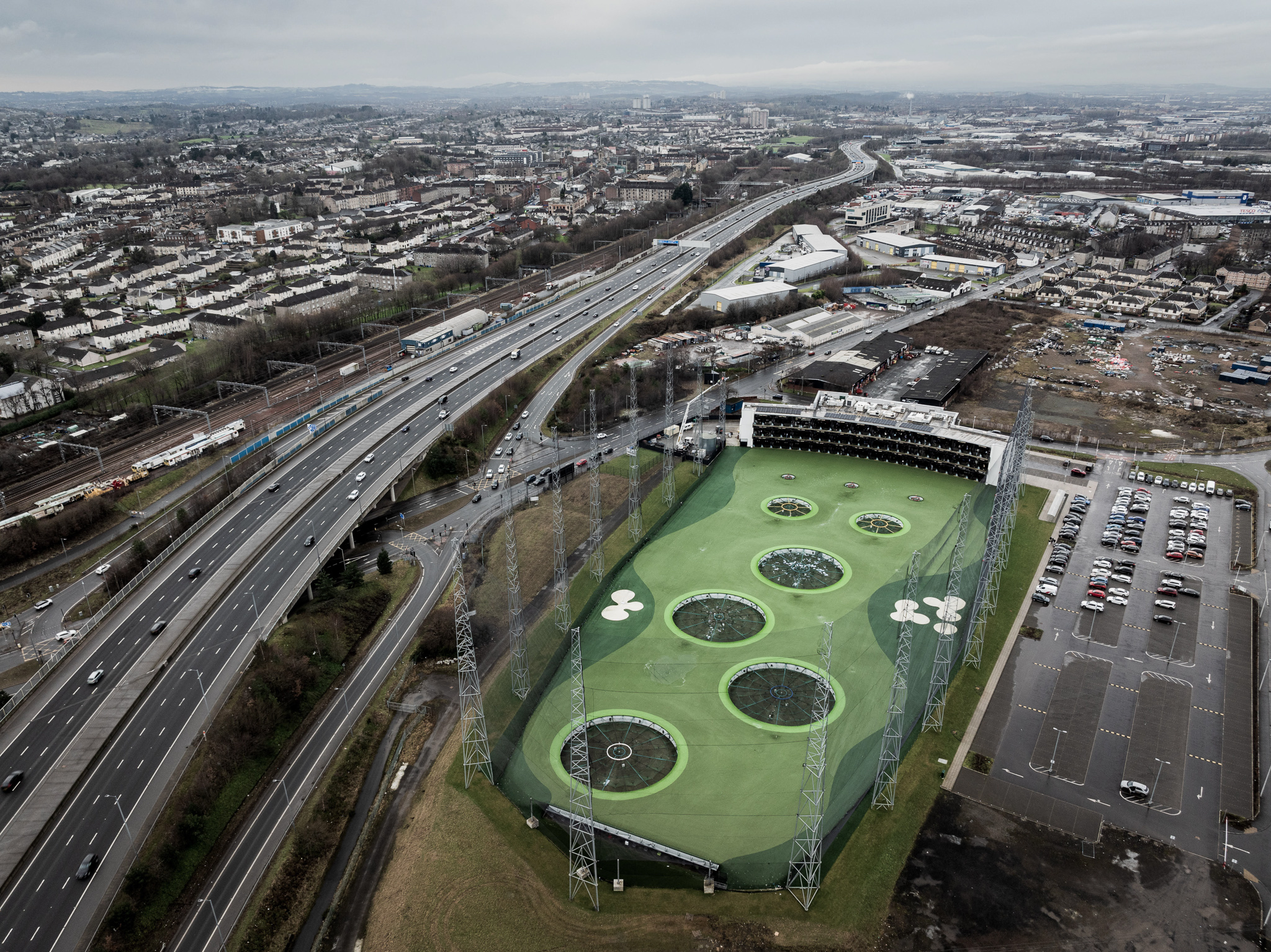
‘Who Needs Grass?’
You no longer need a golf course to have a game!
Looking ahead, I have at least two major ideas waiting to be explored once the current project concludes later this summer, and I can hardly wait. I am even contemplating a practice based PhD! As my apprenticeship continues, I feel I have finally found a way of working that redefines my photographic ideals and allows me to contribute to conversations I value. Perhaps the greatest lesson, however, has been to finally realise I only need to satisfy myself, rather than trying to impress others, as I so often did before.
To see more of Ted’s work described in this article visit his new website at www.exploring.place ,with earlier work and collaborations with Morag Paterson at www.leemingpaterson.com.
-

-
‘I Bought a New One in the Sale. Just One Is Alright Isn’t It?’
Fridge & Freezer recycling centre in Perth. I try to include a level of intrigue into my images to help draw in the viewer
-

-
‘Everything comes from somewhere.’
I have been wanting to do an aerial project ever since I saw the work of Yann Arthus-Bertrand in 2001.
-

-
’The Land That Time Forgot’
I often wonder what a location might look like if not for the hand of humans, and whether such places exist.
-

-
‘Our Favourite Addiction Factory’
Over 50% of the UK’s oil flows through the terminal. Currently under threat of closure, the Grangemouth facility is a sign of ever-changing times. I used diptychs as a presentation method for my shortlisted entry into the Royal Geographical Society’s Earth Photo 2025 competition.
-

-
‘The Answer My Friend…?’
Nothing comes for free. We often hear about technological solutions to the big issues. Rarely, however, do I hear the word reduce.
-

-
‘Who Needs Grass?’
You no longer need a golf course to have a game!
-

-
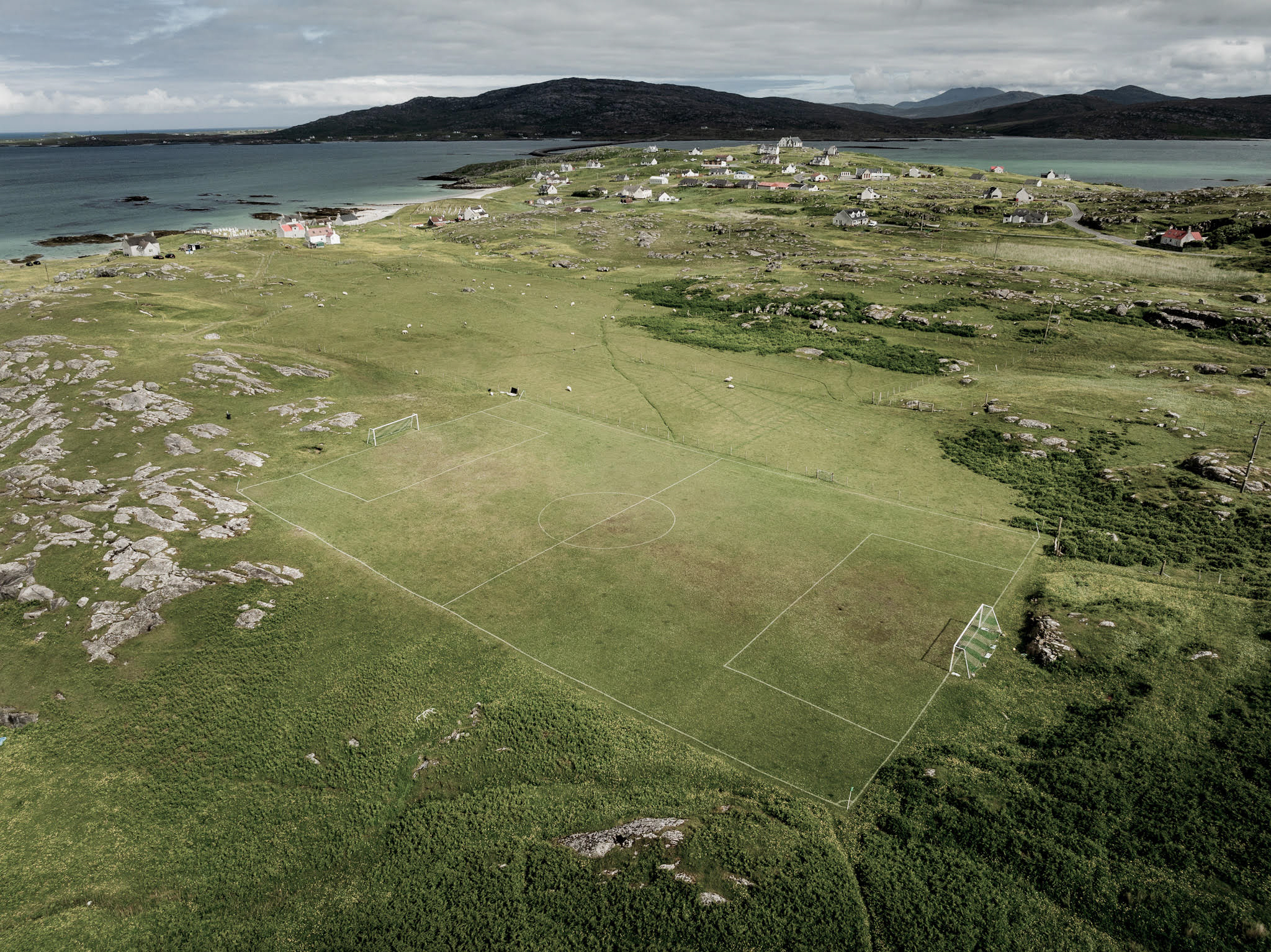
‘The Football Pitch’
Some things just bring us all together. I chuckle when I see this image alongside the one before. Comparisons can be a useful tool in messaging.
-

-
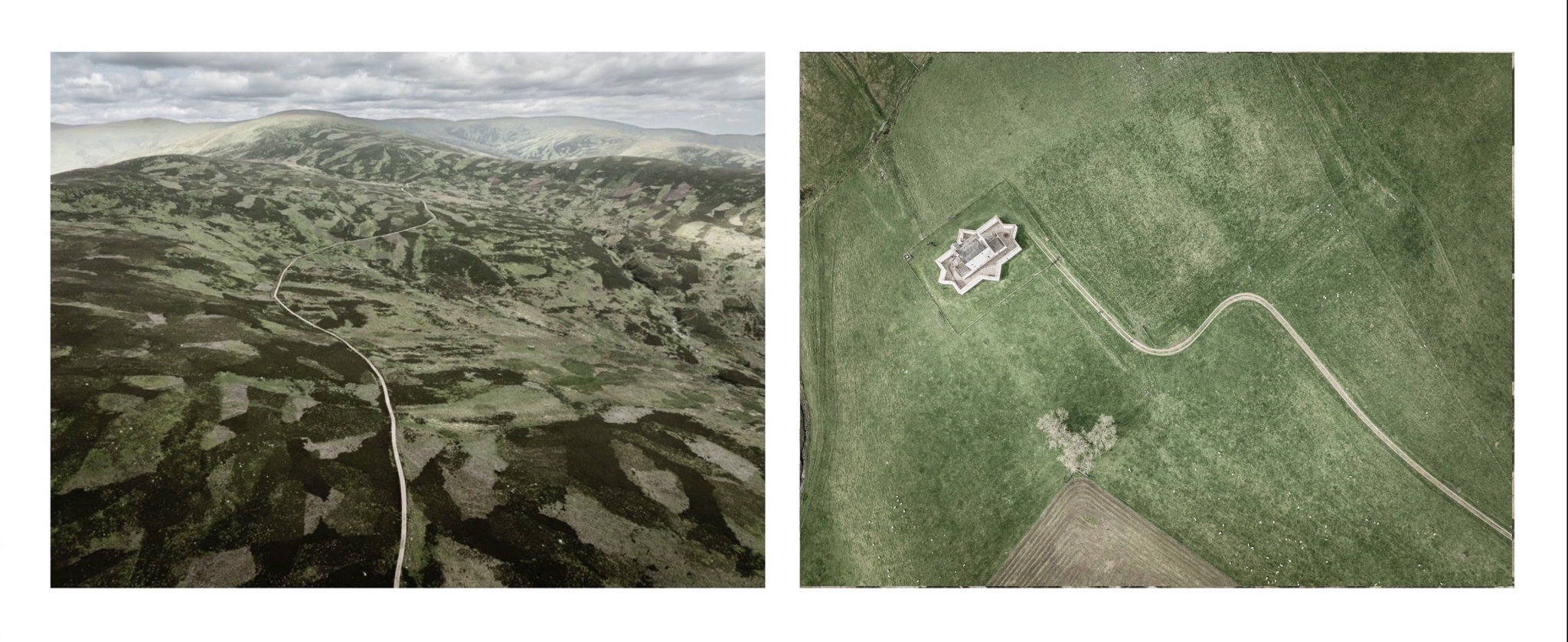
‘Grouselands’
Some 420 individuals own over 50% of Scotland and have total control over how they are managed.
-

-
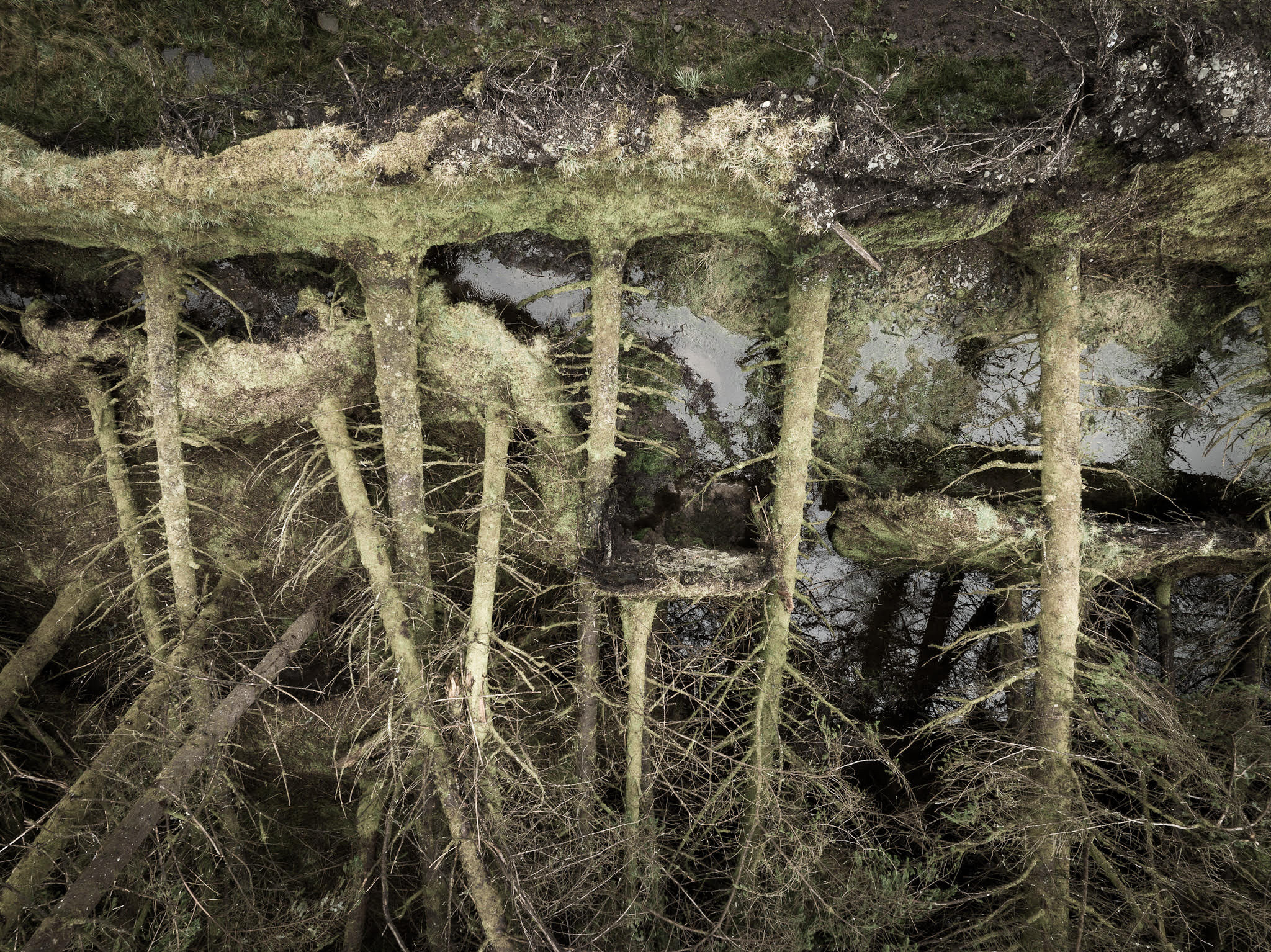
‘After Arwen’
Some 16 million trees were blown over during storm Arwen. The frequency of such events is set to rise moving forward.
-

-
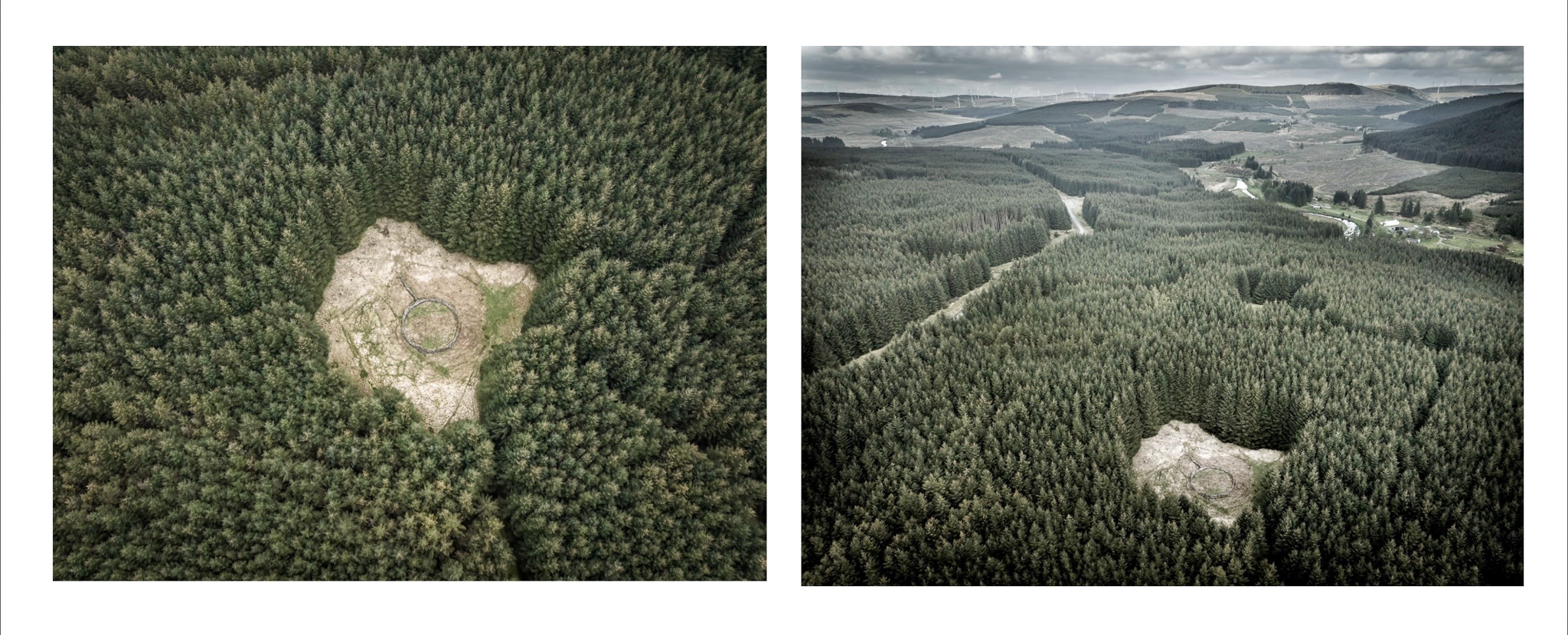
‘The Sheepfold’
This diptych is one of my favourite to depict generational land use change and seeks to ask questions about policy, land zoning and the potential cultural impacts of remote decision making
-

-
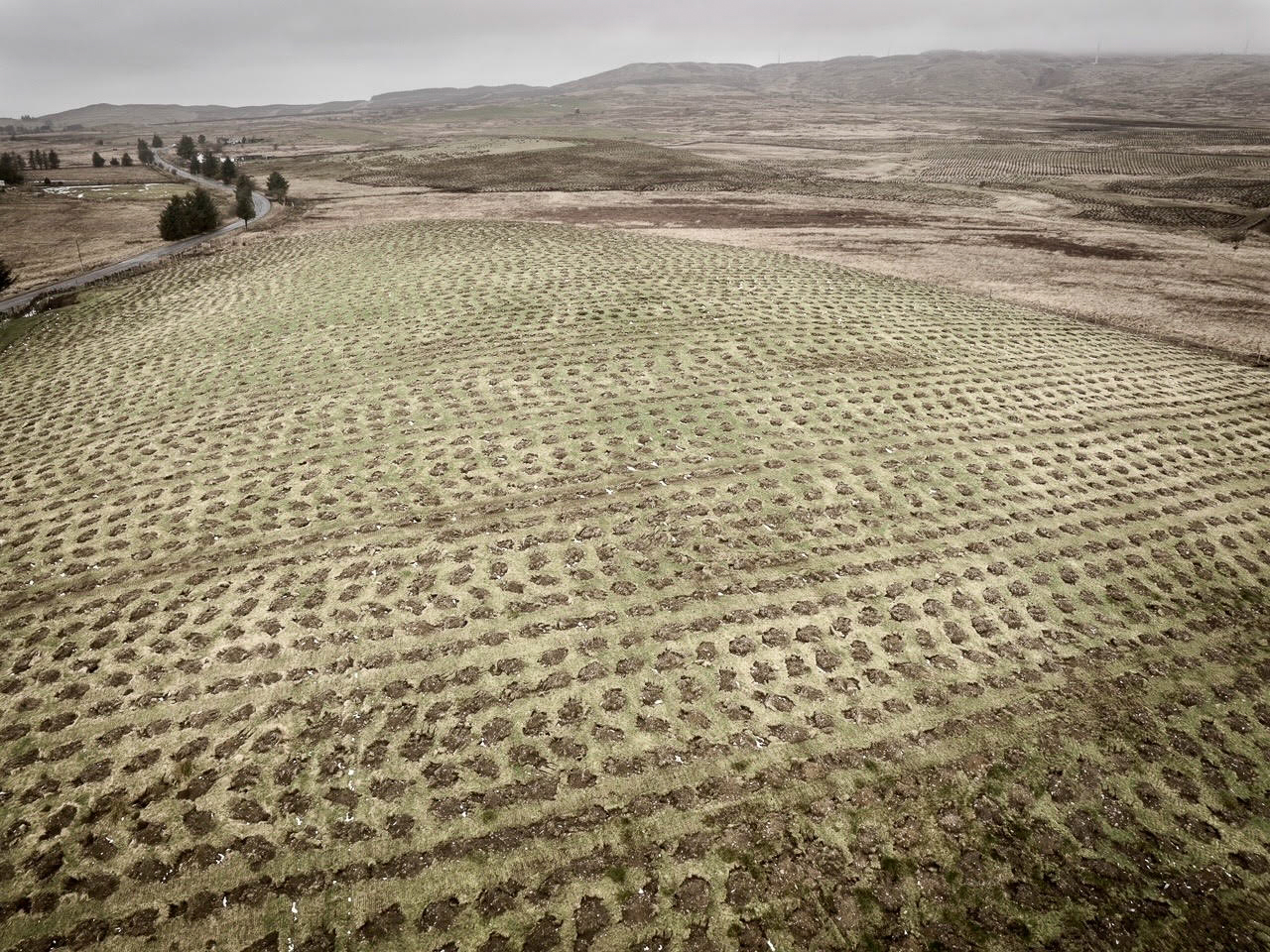
‘The Plantation’
I hope to return to this location over the coming years to see how the landscape changes as a result of the various new plantations visible in this image.
-

-
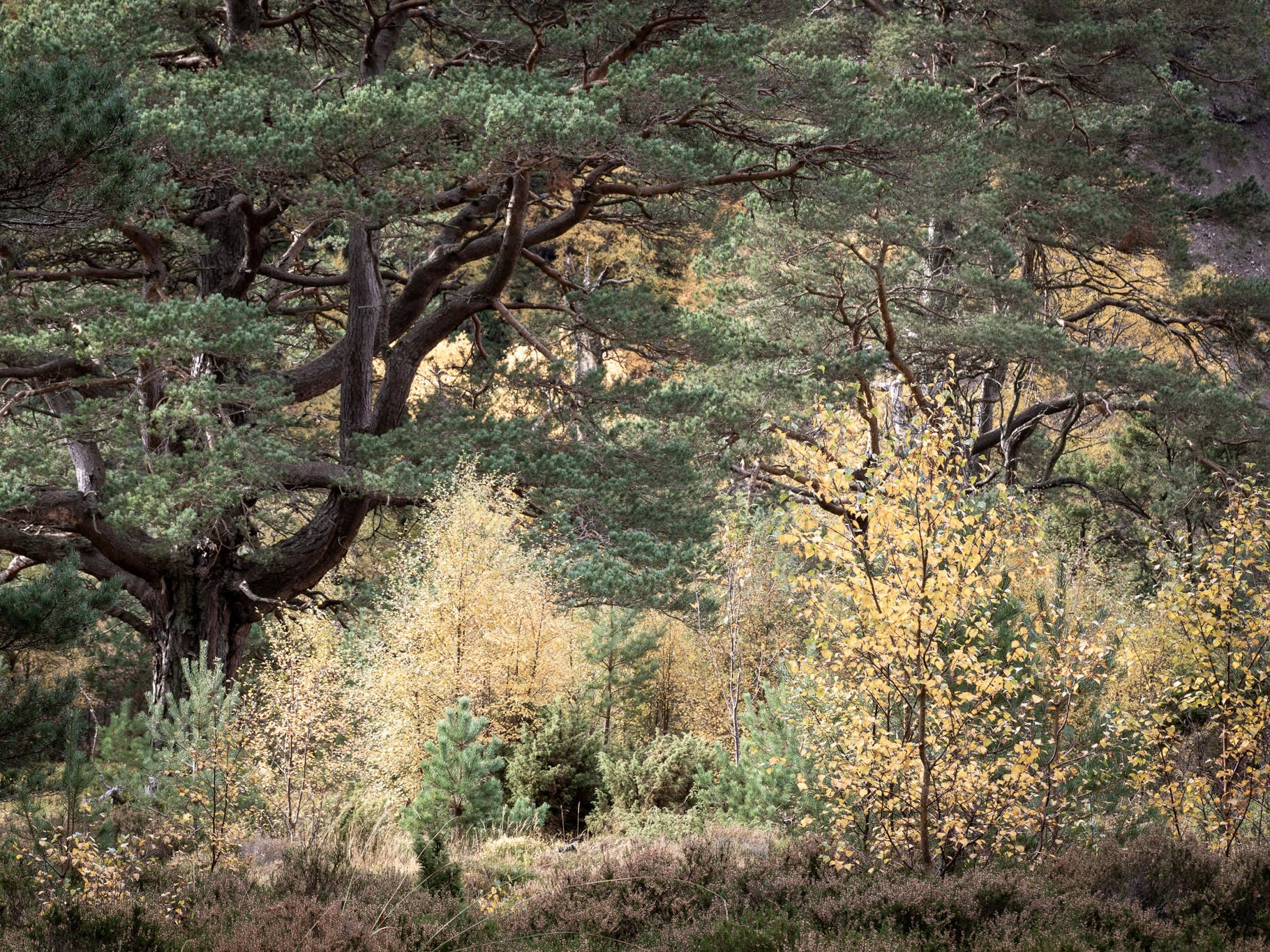
‘Rewild’
The term has become toxic to some, but the speed at which nature can recover is incredible. On 6 rewinding projects in Scotland a recent report identified an increase in local employment of 400% when compared to the previous management approaches on the same estates.
-

-
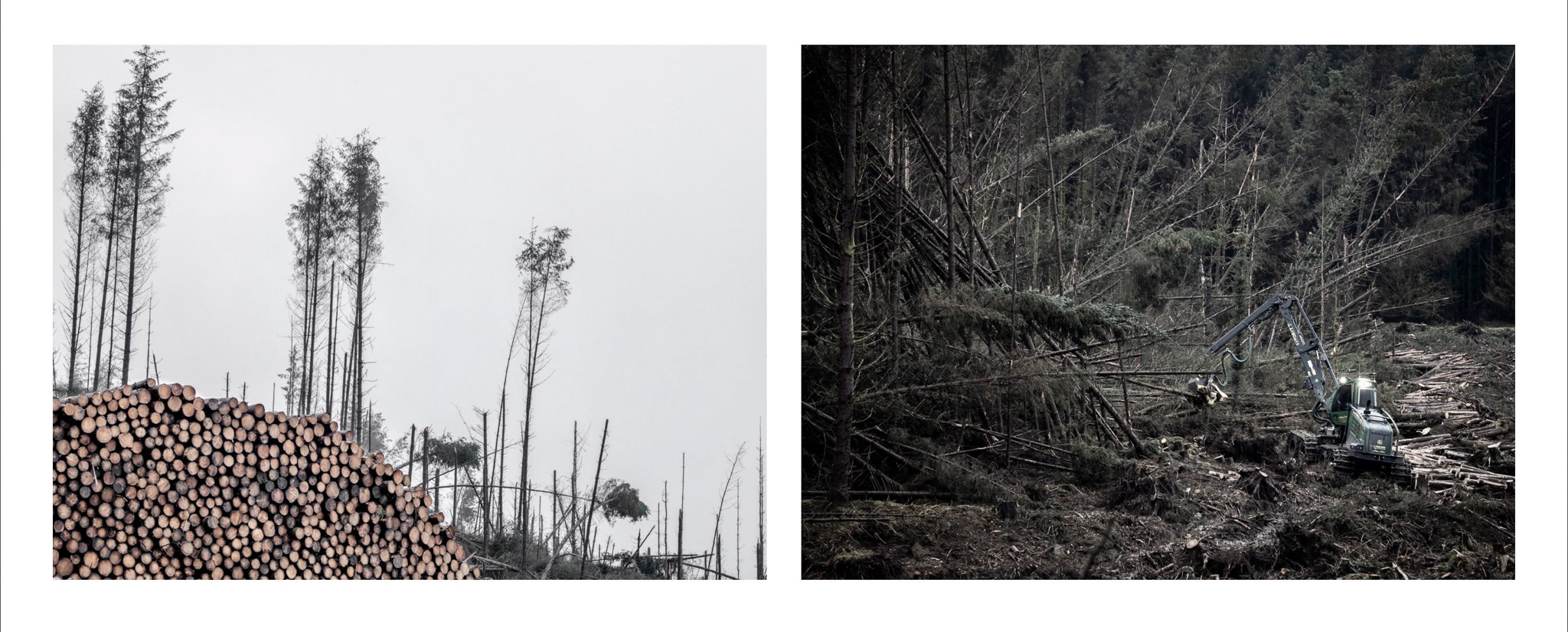
‘Where My Kitchen Was Born – Part One’
Clearfell plantation is the preferred approach to commercial timber production in Scotland.
-

-
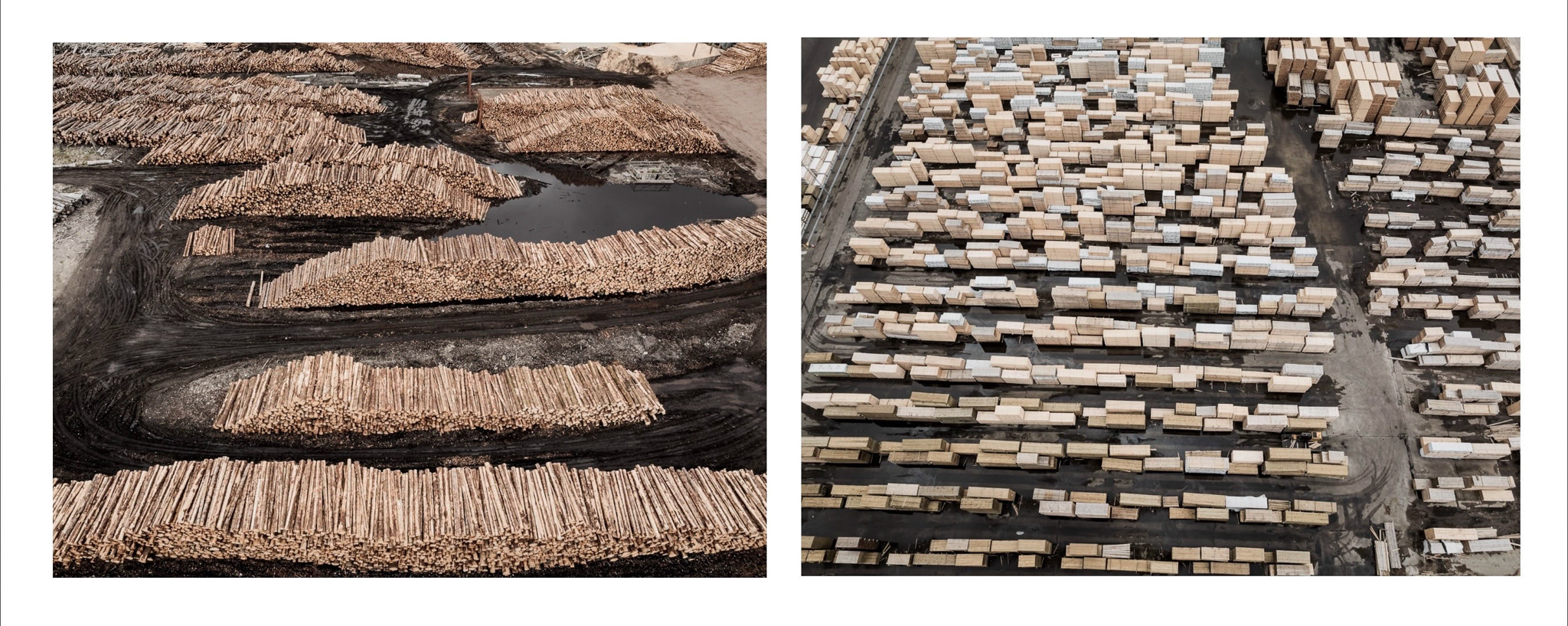
‘Where My Kitchen Was Born – Part Two’
-

-
‘Where My Kitchen Was Born – Part Three’
After the gold rush.

-

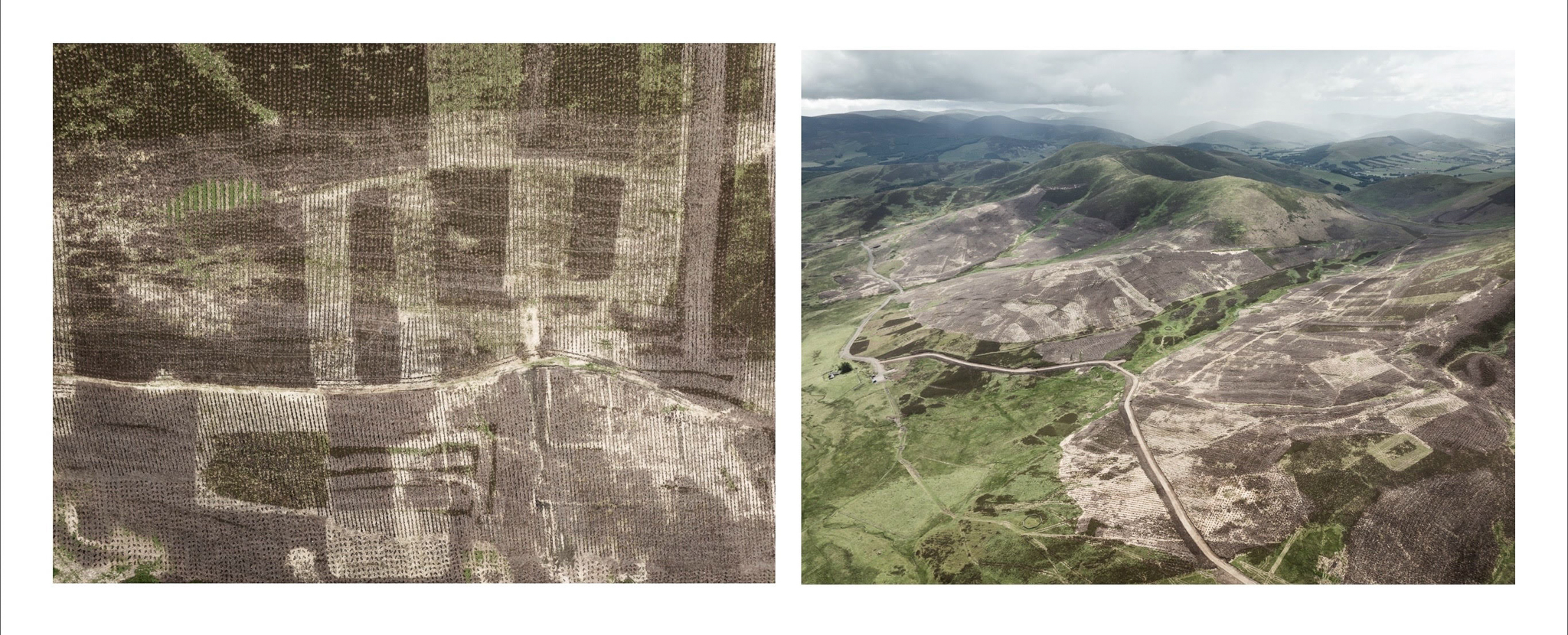
- The images depicts the impact of the unauthorised application of glyphosate on an open moorland by a commercial developer. Frustrated at what appeared to be an illegal application, I assisted a local community in bringing a (successful) judicial review of the project by helping them with imagery and film footage of the aftermath. I would like to do more of this work in future so let me know if I can help you with an environmental campaign.
-

-
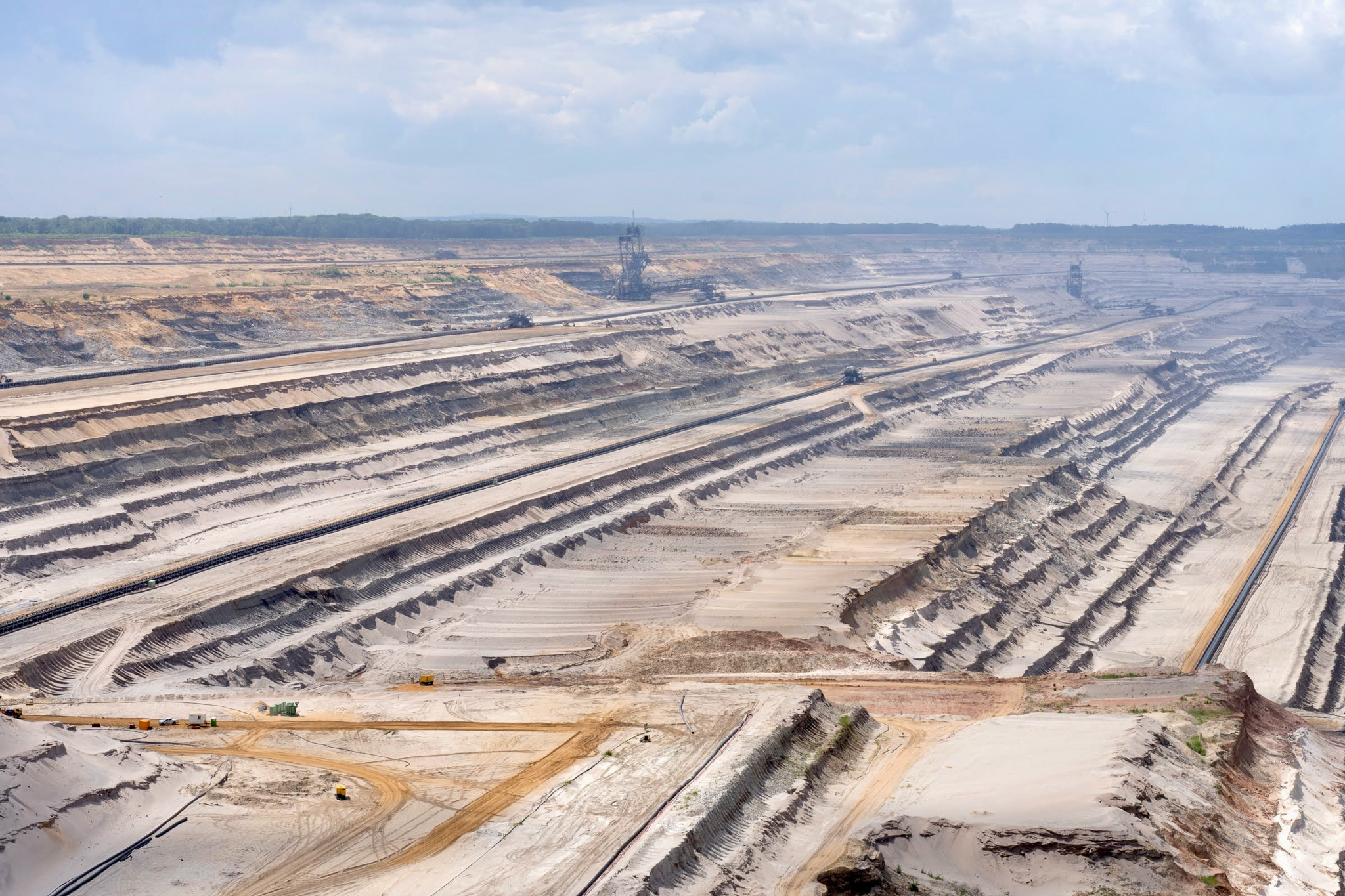
‘Big Fucking Hole – 1’
10km long and 8km wide Hambach is the biggest opencast coal mine in Europe.
-

-
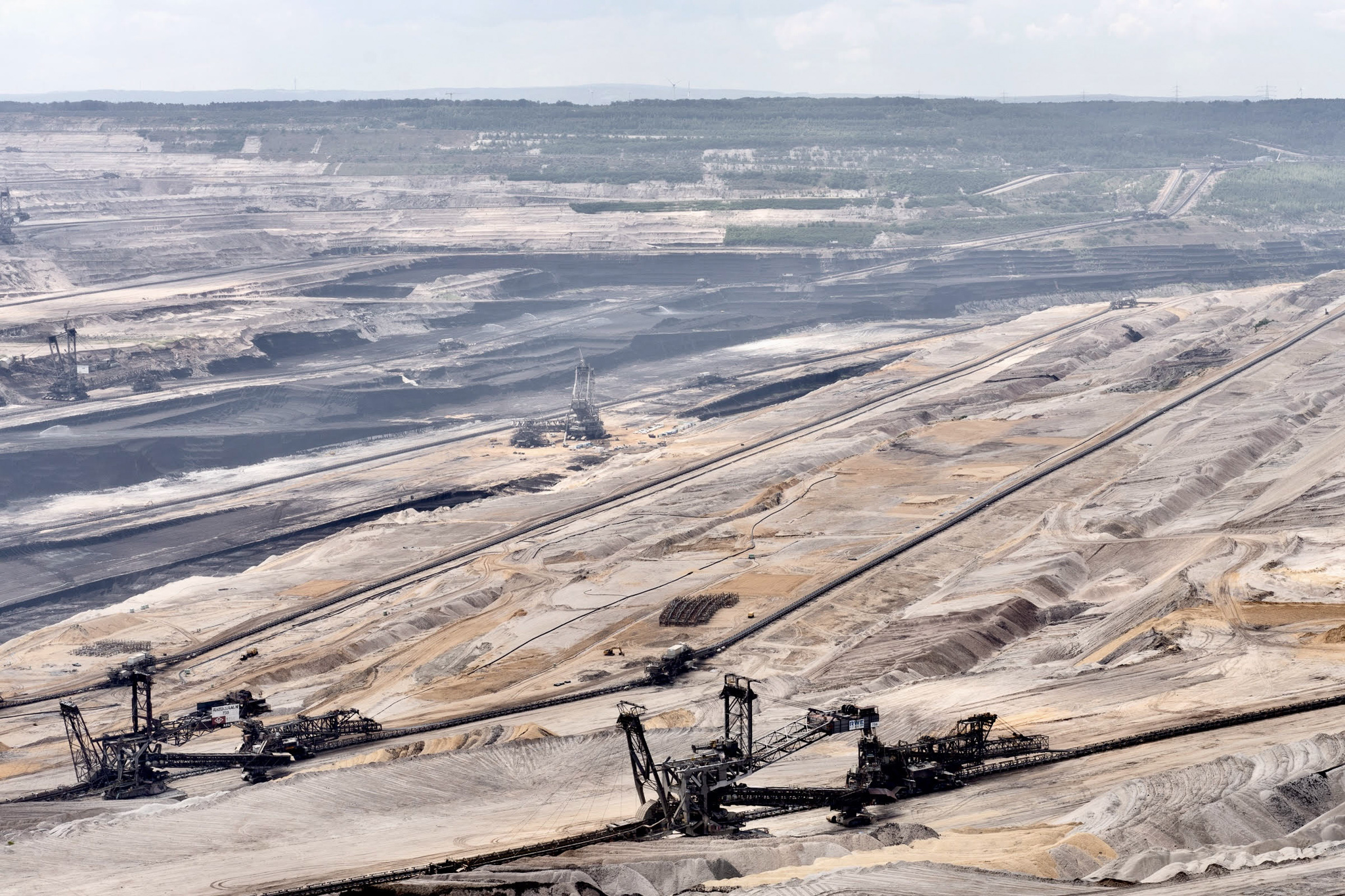
‘Big Fucking Hole – 2’
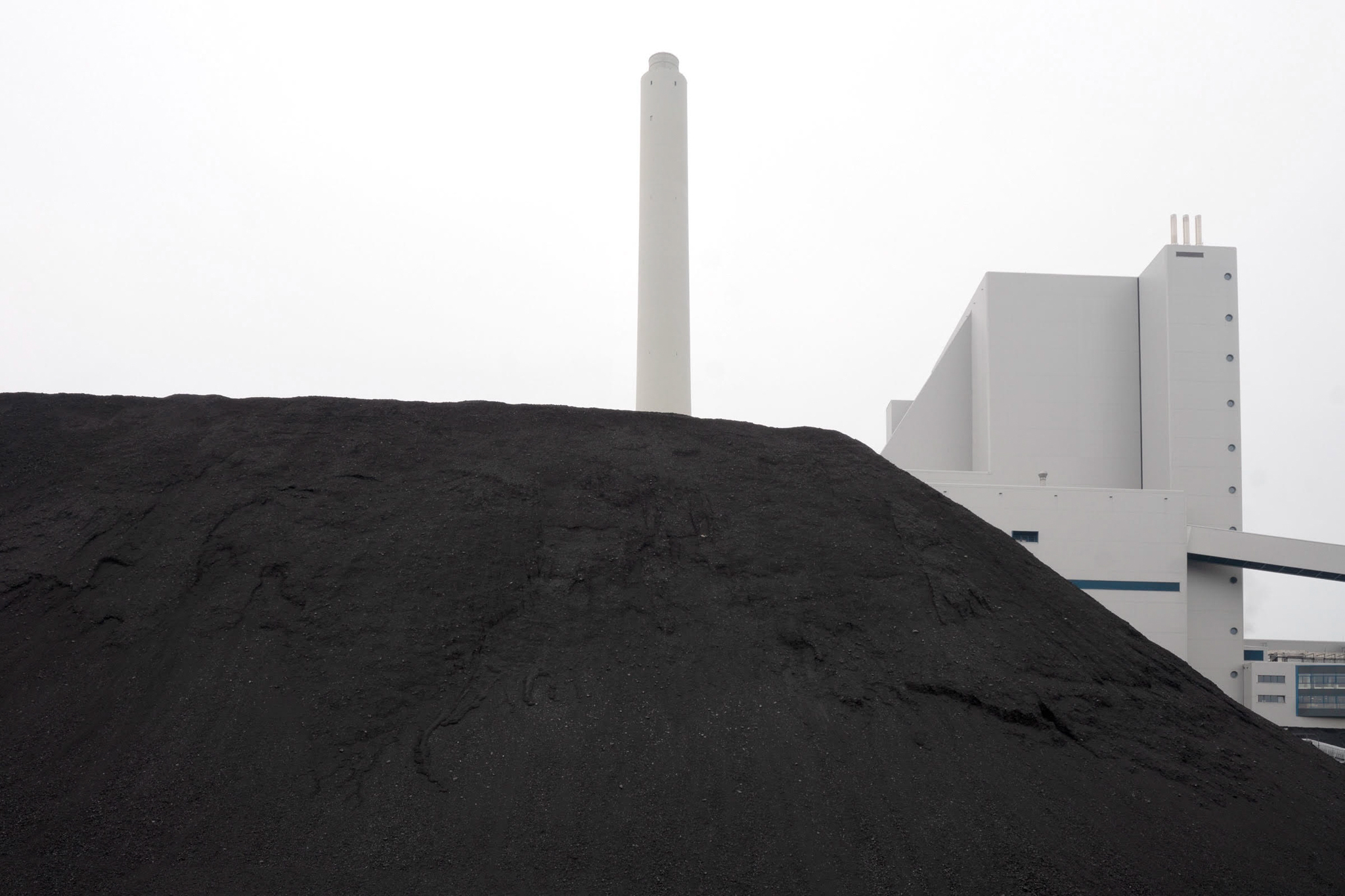
Post the Fukushima nuclear disaster in Japan Germany closed all its nuclear power stations. The consequence was a massive increase in reliance on coal.
-

- ’untitled’
-

- ’untitled’
-

- ’untitled’