


 Join the conversation
 Subcribe to comment rss feed
A work in progress set in a river catchment

Andrew Griffiths
Andrew writes news, columns and features for regional, national and international press. He has specialised in environmental writing, but is now moving into the health sector as well. He has taken photography more seriously in its own right this last few years and has contributed to a few group exhibitions. He is interested in that cross-over between the urban and the rural. Put him on an overgrown piece of wasteland on the edge of a city with his camera and he is unnaturally content.
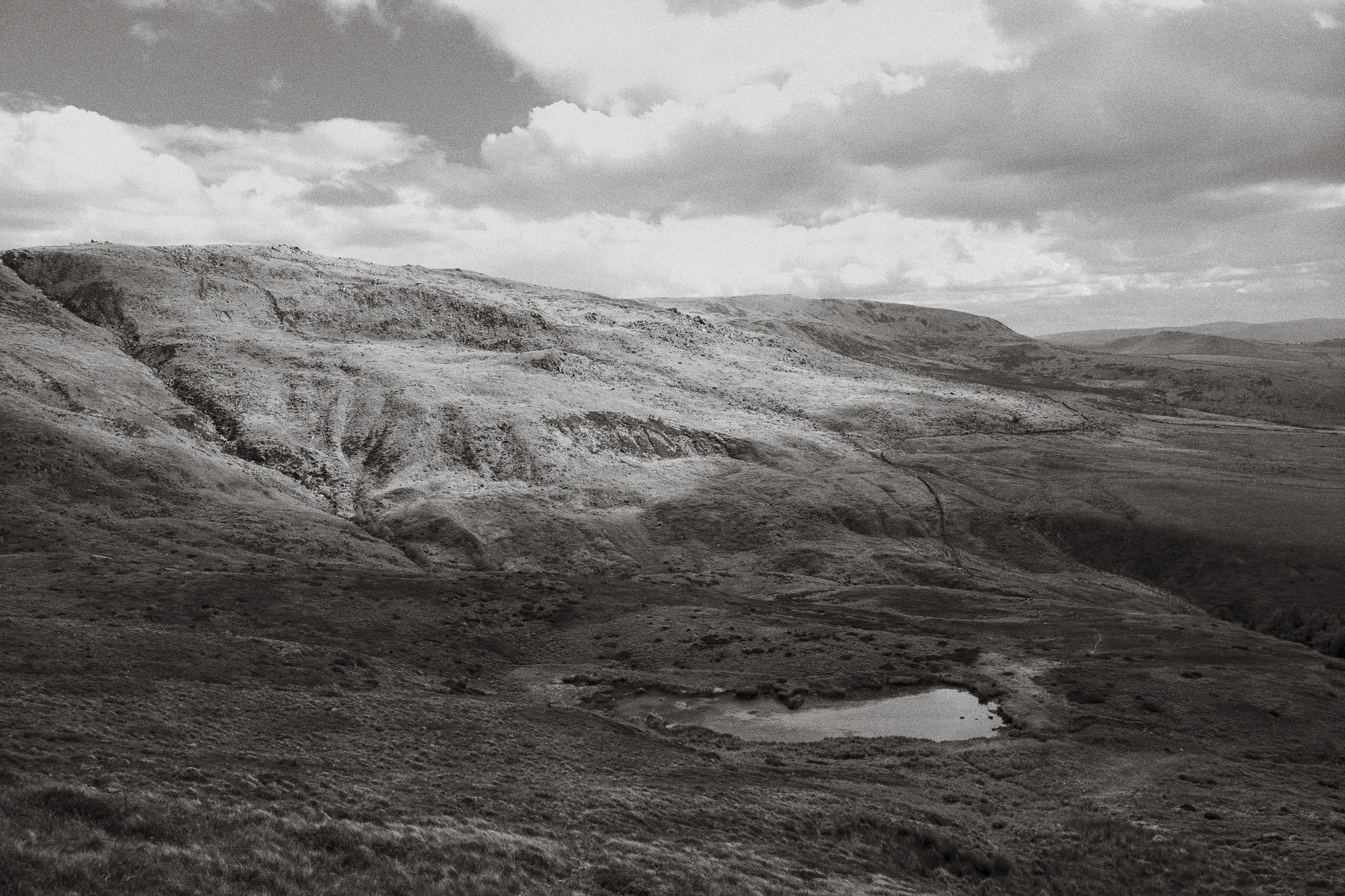
Mermaid’s Pool
Mermaid Pool at a low level in the dry summer of 2025, just below Kinder Downfall, the highest point of the Mersey Catchment
I am not entirely certain whether you choose the landscapes, or the landscapes choose you. Some may be able to jet off to different parts of the world to take pictures on a whim, or as part of their paid work if they are extremely lucky. For most of us who like to photograph the world around us with varying degrees of obsession, though, we must learn to ‘improvise’ and work with what we have got - to practice the ‘art of the possible’.
That puts me on the edge of the Peak District, in the ‘Dark Peak’, just downstream of Buxton, towards Manchester. For many landscape photographers, living in Derbyshire’s Peak District would be, if not a dream location, then at the very least a pleasing one. In my case, though, I have largely turned my back on the roads that lead to the more ‘postcard-friendly’ White Peak region, and instead focused my camera downstream, following the rivers that flow towards the industrial towns and the city of Manchester.
The reasons for this are two-fold: first, like many who take their photography seriously, for non-commercial work, I try to go beyond the ‘one-off’ calendar style shots and towards projects that allow for the development of themes. Second, a while back, I had the opportunity to do some communications work for a river conservation charity.
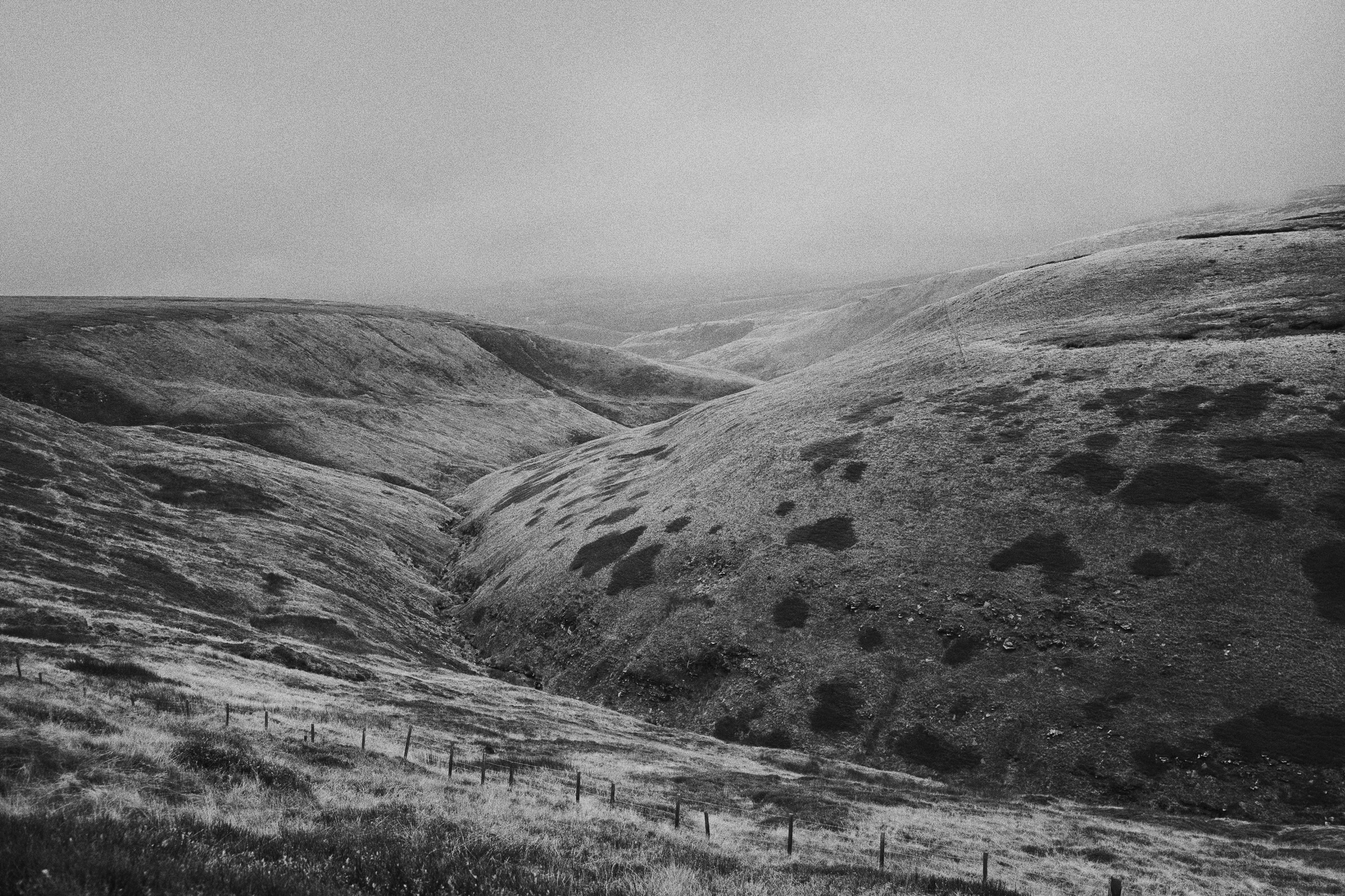
Crooked Clough
Crooked Clough, Bleaklow, Peak District.
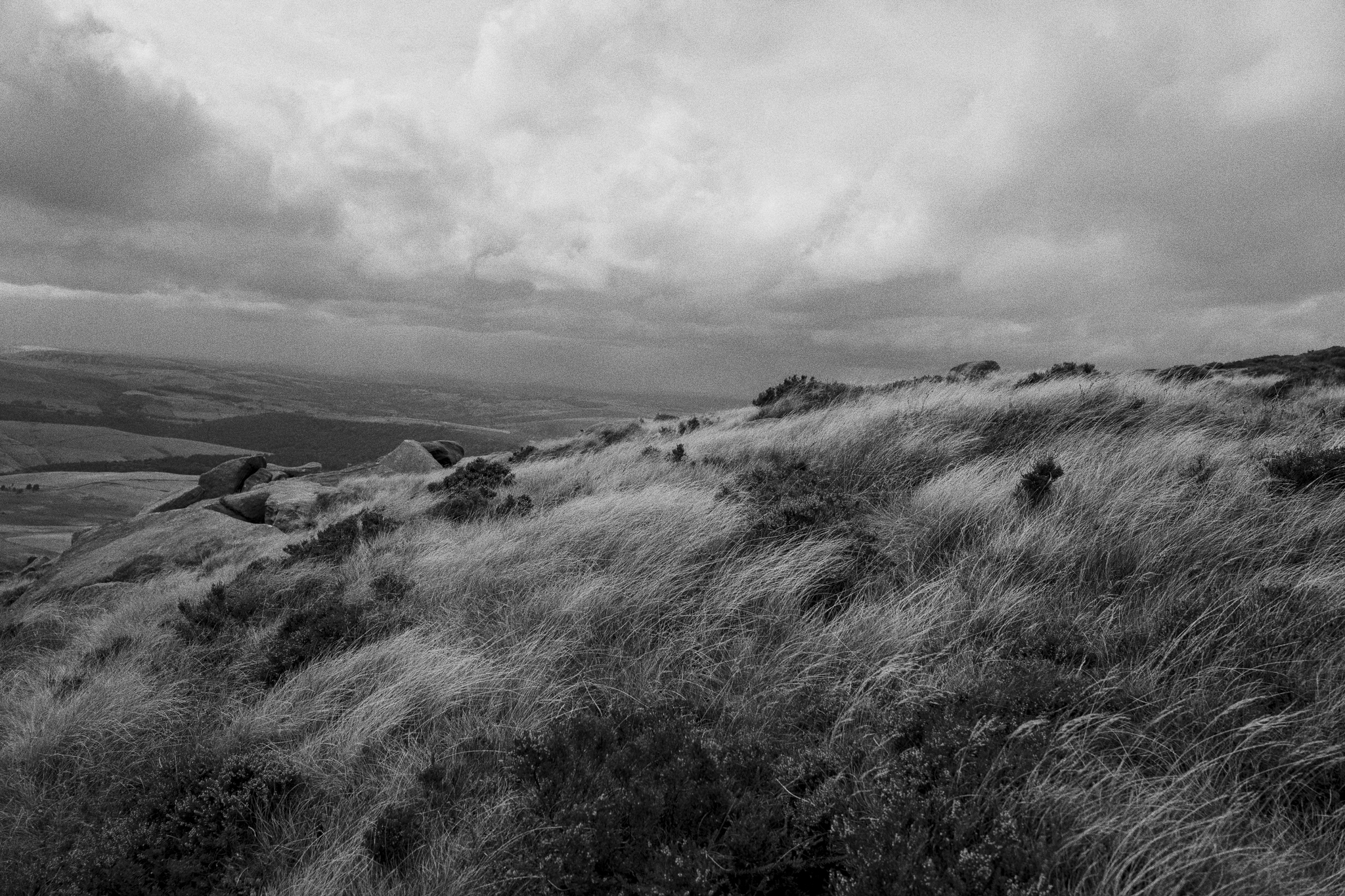
Wind
Kinder Plateau, northern edge, looking out towards Manchester.
This work encouraged me to rethink my sense of ‘place’. Rather than orientate myself by administrative boundaries and a road system that led south and east to the more obviously picturesque quarters of the Peak District, I fixed myself instead in terms of the river catchment headwaters, where the rivers rise which head west towards Manchester and ultimately to the sea on Merseyside.
For a while, I photographed lots of rivers in close, mechanical detail, as that is what my work required. I must admit it was with some relief when that chapter came to an end, and I was able to pursue the themes that had really come to interest me: that is, connectivity and the way the historical role of rivers had linked communities and shaped towns way beyond the channels into which we had corralled them during our industrial and urban development.
What I find so interesting as a photographer is the variety of opportunities that open up when you start to think on a ‘big picture’, landscape scale. My own catchment has everything. It takes you from the middle of the desolate Pennine moors where the rivers first rise, across moorland that is used for leisure, livestock and shooting, and down through farmland. Then it is on to villages and towns, then into the major European city of Manchester, which itself was built on its three main rivers: the Irk, Medlock and Irwell. So there is all this variety to go at, and it all takes place, from the empty middle of the moor to the crowded centre of the city, all within the space of 30 miles!
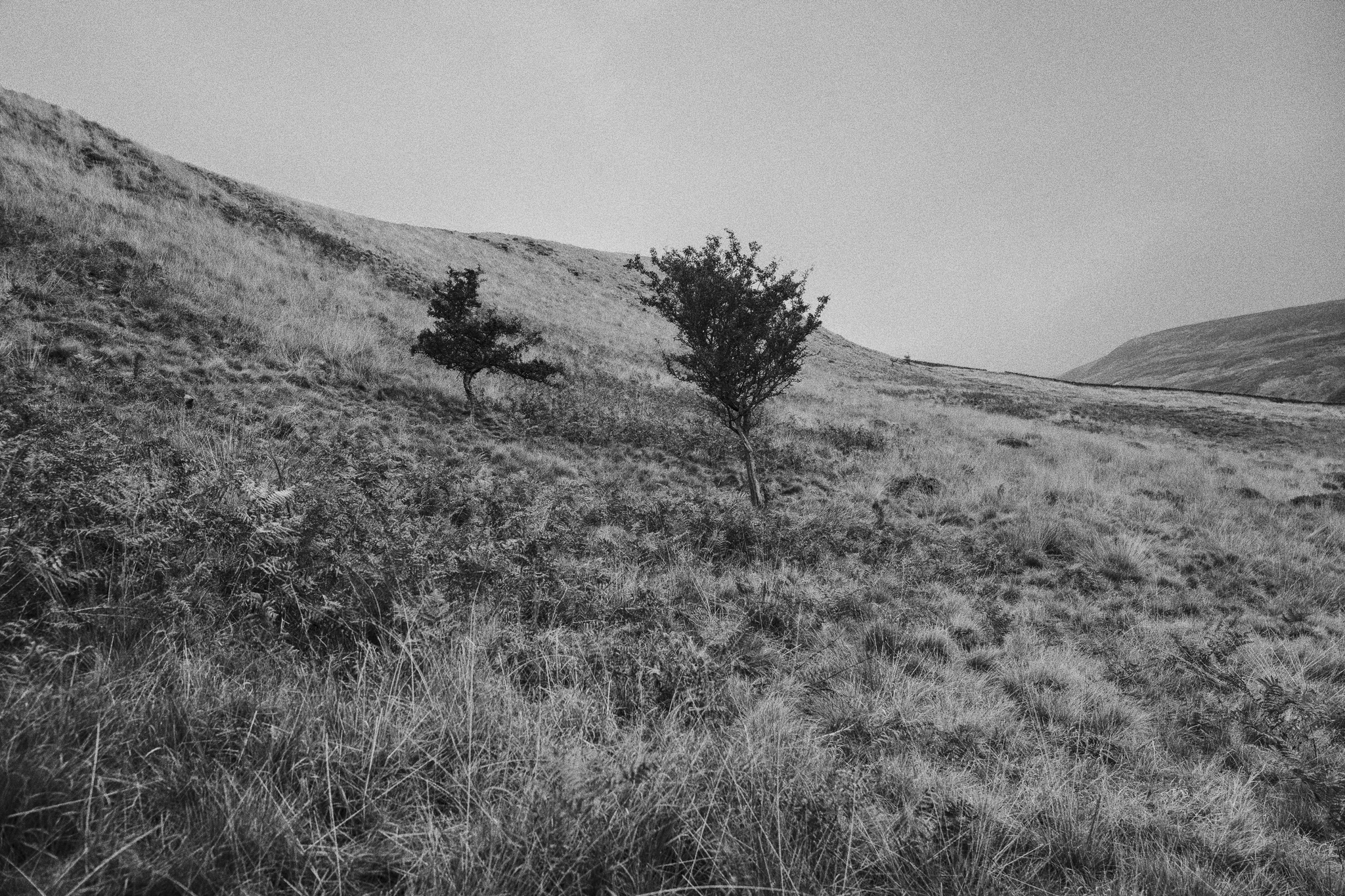
Two Trees
Doctor’s Gate, Peak District.
Once I started to explore this concept, I found it was like a Russian doll: explore one angle, you think you get to know it, then look into it more closely, and there is another perfectly formed within. I’ve found it easiest to break it down into more manageable projects, and it is one of these I am showing some work in progress from here.
‘Edgelands’ began life based on an ecological concept. I was introduced to ‘Edge Theory’ by an ecologist I interviewed for BBC Wildlife Magazine, who was giving my readers some tips on how to spot reptiles out on the moor in summer. We should look, he said, to the open spaces close to heather or other cover, where they might venture out to clear ground to bask in the sun. “The edge is often where the action is,” he told me sagely.
This holds true for many situations. According to ecologists, Edge Theory ‘describes: ‘[...] the ecological changes that occur at the boundary where two or more habitats meet. These boundaries, or edges, can lead to both positive and negative impacts on organisms. Understanding edge theory is crucial for landscape ecology and conservation,’ scientists say, ‘Because human-made edges are increasingly fragmenting habitats.’
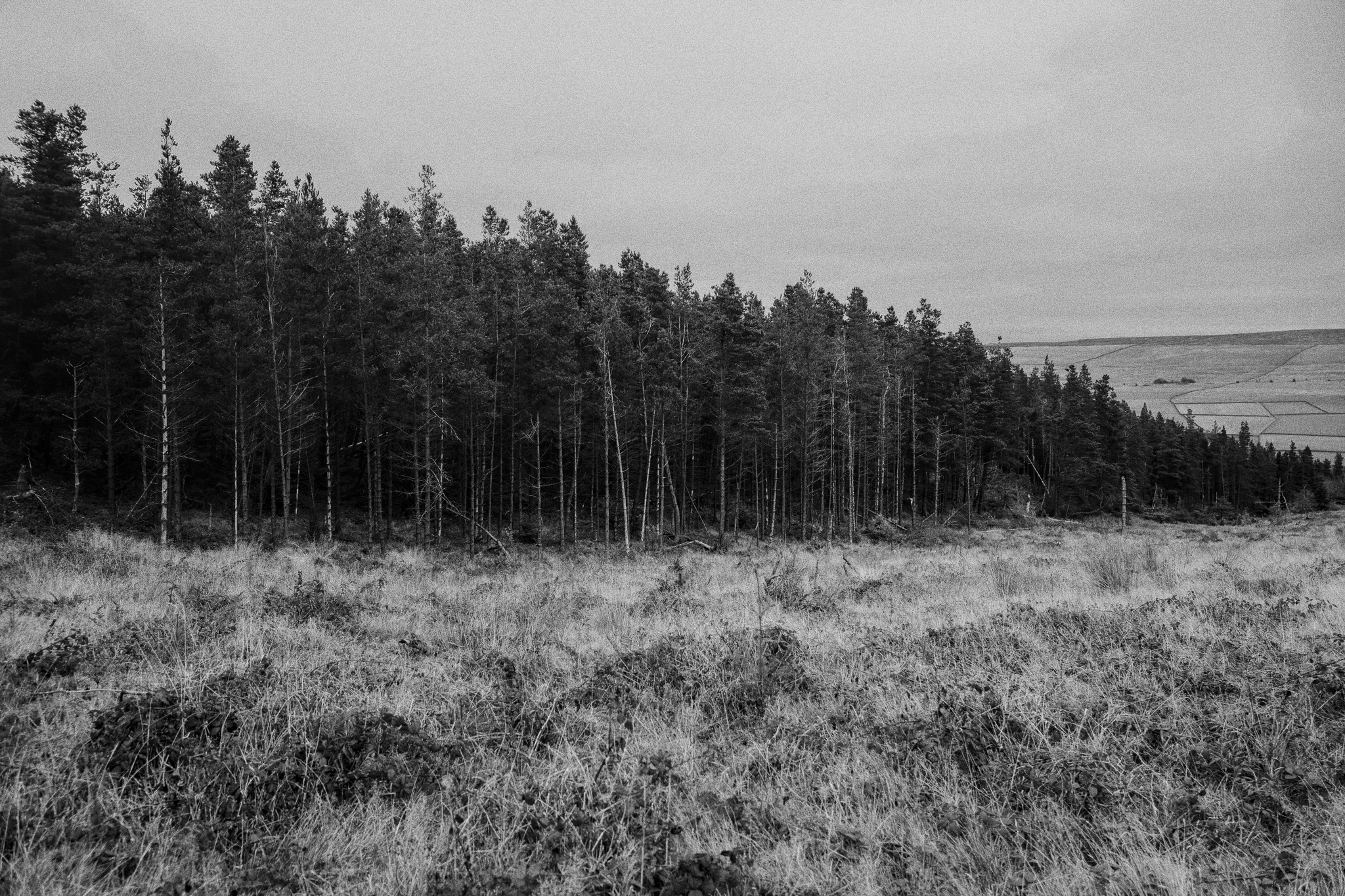
Untitled
Commercial forestry, Goyt Valley, Peak District
What so fascinates me about looking at the landscape at the scale of the catchment is the variety of ‘habitats’ and so edges it contains, all crashing into each other in such a crowded space. Given that we live on a small island, with dense human populations in places, the river catchment is a typical ‘landscape unit’ of Britain and in a way is what gives us our unique identity. Our rivers, remember, not only provided power for the early stages of the industrial revolutions, but were our earliest communications channels, as long ago, explorers used them to navigate inland. They are, in one sense, despite often being hidden away as we commandeered more and more land for urban development, the oldest ties that bind us.
So all those ‘edges’, where moorland meets farmland, where farmland meets village, where village meets town and towns give way to city, and all the human modification to the landscape that entails, both past and present, all form a part of our story and become legitimate subjects for my camera to explore. After all, as the ecologists remind us, the edges are where the action is.
This is before we introduce the concept of scale. At one level, Edge Theory may apply to the zone of change between a farmer’s field and a riverbank, for example. At another the working grouse shooting moor, which is permanently managed to prevent its ecological succession into shrub and woodland. Here, a single, gnarled hawthorn tree can seem like an act of rebellion. In some ways, I think of the moorland as one big human-mediated edge zone.
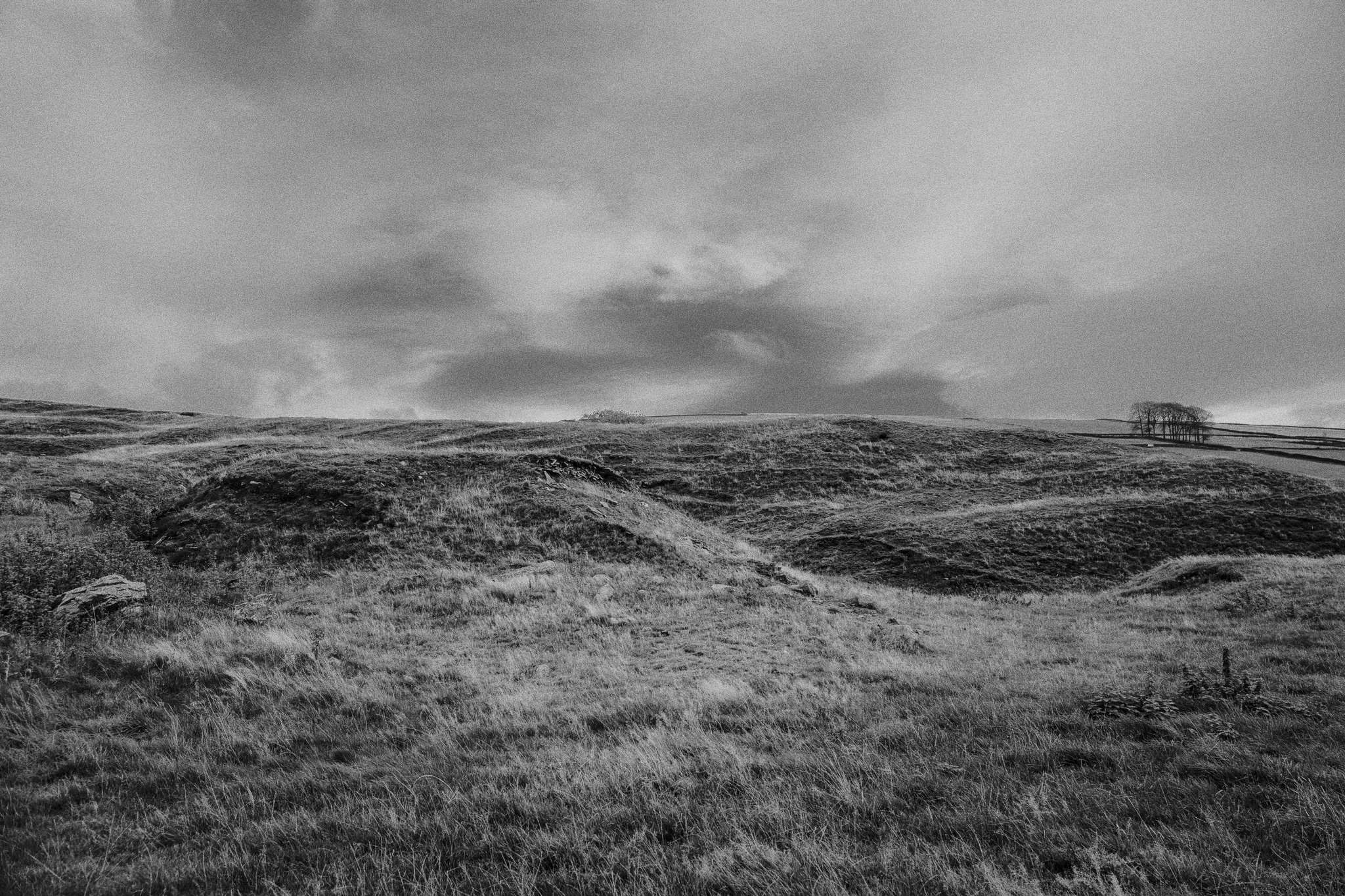
Untitled
Looking out over old spoil heaps from a small, long-abandoned quarry above a Peak District village.
At the other end of the scale, there is the small pool drying up in summer, forming its own, shrinking mudflats’ edge as the water recedes in the unbroken heat, increasingly a feature of climate change.
This though is looking at the landscape purely through the ecologists’ eye.
So the big ones of birth and death spring immediately to mind, but there is, at the other end of the scale, the small, ‘mudflats of shrinking pools’ when applied to life events: a child’s first day at school perhaps?
As this project is very much a work in progress, I am still figuring out the degree to which I want people to play a part in it directly, rather than just their impact on the landscape past and present, as though any actual presence was either about to happen, or had just happened, and they had exited ‘stage left’. But perhaps I have opened up the concept too far and found another, perfectly formed Russian doll within, which may yet evolve distinctly.
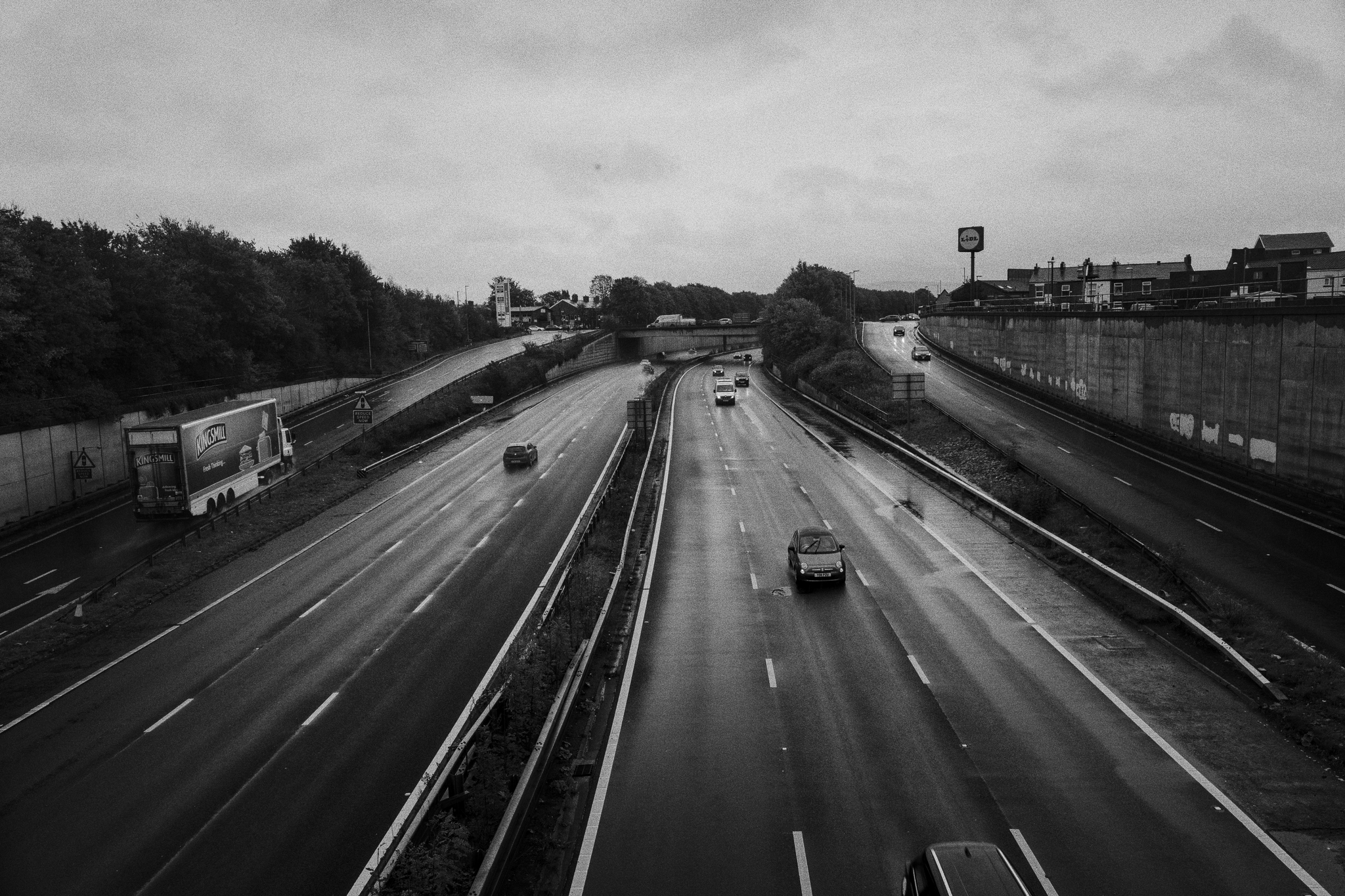
Untitled
Motorway at Denton, Greater Manchester, heading towards the Peak District.
Apart from anything else, if you include people so prominently, is it still landscape photography? How many people do you need to have, and how prominent do they need to be, before an urban landscape becomes a street photograph? Or given the concentration on human impact on the landscape, past and present, should it really be New Topographics? This is one reason I’ve never been comfortable with categories; ultimately, it is all storytelling to me.
For me, it is the story of what is around us, the world in which we happen to find ourselves at any given time. I find that easiest to think of as ‘landscape’. For Robert Adams, it was Man’s encroachment on the vast spaces of the American West that began the new topographics movement in the 1970s. In my more humble situation, I have the crowded land from moor to city in a relatively truncated river catchment. In that sense, at least, ‘Edgelands’ is intended to be my informal, personal portrait of what makes the British landscape British.
-

- Mermaid’s Poolbr Mermaid Pool at a low level in the dry summer of 2025, just below Kinder Downfall, the highest point of the Mersey Catchment.
-

-
Crooked Clough
Crooked Clough, Bleaklow, Peak District.
-

-
Wind
Kinder Plateau, northern edge, looking out towards Manchester.
-

-
Two Trees
Doctor’s Gate, Peak District.
-

-
Untitled
Commercial forestry, Goyt Valley, Peak District
-

-
Untitled
Looking out over old spoil heaps from a small, long-abandoned quarry above a Peak District village.
-

-
Untitled
Motorway at Denton, Greater Manchester, heading towards the Peak District.
-

-
Edgelands
Perimeter fence of DIY store yard, Hyde, Greater Manchester.
-

-
Untitled
Parkland beside Boggart Hole Brook, Harpurhey, Manchester.
-

-
Pylon
Land and flats beside the River Tame, Stockport, Greater Manchester.
-

-
Through Wire
Manchester city centre.