

 Join the conversation
 Subcribe to comment rss feed
Childhood Memory

Michael Allan
My first camera was a half frame Leica with a fixed lens that I would take backpacking in the Sierra Nevada Mountains when I was in high school. I graduated to a Pentax K1000 and Kodachrome when my boys were old enough to backpack in Colorado with me, but when they were teens with a life of their own, the camera went into a drawer. Several years ago I picked up an all in one Sony and started backpacking again. One thing led to another and I bought a Sony A7r, then upgraded that, bought a printer, and I never looked back. I now mostly shoot black and white with a focus on printing.
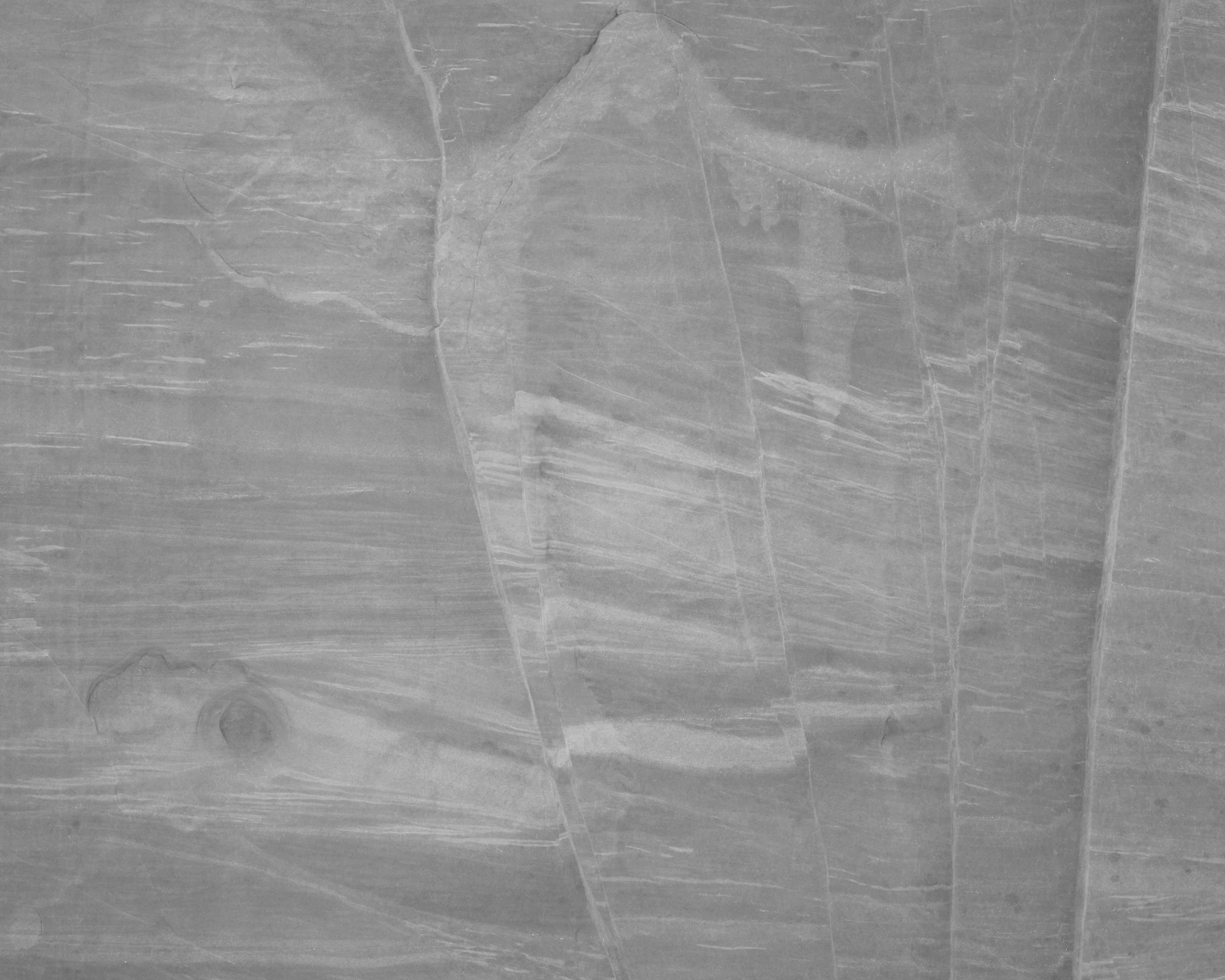
Kodachrome Basin: The Wall
Our National Parks and Monuments are wonderful places to visit, connecting people to nature, and offering a respite from the everyday grind. They also help protect nature by funding and reminding us of its value. However, for me, aiming for a more personal photography and a deeper connection, amenities and crowds are a distraction. I am lucky that there are many neglected places, not neglected from care, but neglected by tourists who prefer the spectacular and popular, leaving places suitable for intimacy.
In 1980, my best friend and backpacking buddy, who got me into photography, went on a cross country trip with his family. They piled into a station wagon and left California and ultimately arrived in Washington, D.C. before turning around and driving back. The first week afterwards he went on and on and on about Kodachrome Basin. For months, it was Kodachrome this and Kodachrome that. Somehow, I never saw the slides, or I have forgotten.
Forty years later, I drove out to California for a funeral, and on the way back through the Colorado Plateau, I stopped at Zion, Bryce Canyon, Capital Reef, and Arches.
Kodachrome Basin did not even register as I drove by the turnoff, heading to the next popular place. This year, however, on a trip out to Cali for my mother’s birthday, I remembered and made it a point to stop, skipping most of the other places.
In my youth, Kodachrome was synonymous with rich color, and the Basin has color, mostly one color: red. The dirt is brown and the junipers are dark green, but the big rocks are mostly red. Not a little red, completely red, and smooth, with little desert varnish.
As a black and white photographer, solid smooth red rock lends itself to photography about as much as green kudzu. In the shade, the histogram is a single narrow hump, in the sun the histogram is a single narrow hump. If one zoom’s out to get some dirt and sky, the histogram has devil’s horns and a big basin.
This particular day was hotter than...you know, hot, like over 100F hot by 10AM. I hiked from shade to shade along the rock faces and drank water like a camel. In the shade ISO 800, in the sun ISO 100. I had three hours from 9AM to Noon before “the boss” would tire of the whole thing. This day’s heat peaked at 115F in the Arizona Strip after passing all the icons.
I could have done Zion and Bryce again, but who has not seen images of The Narrows or Hoodoos? Both of these places have restaurants, bus rides, gift shops, and are jam packed with cars and people mostly interested in selfies. You can find them on insta by the thousands. I have a folio full of color from these places, but I hid it after I committed to my personal approach.
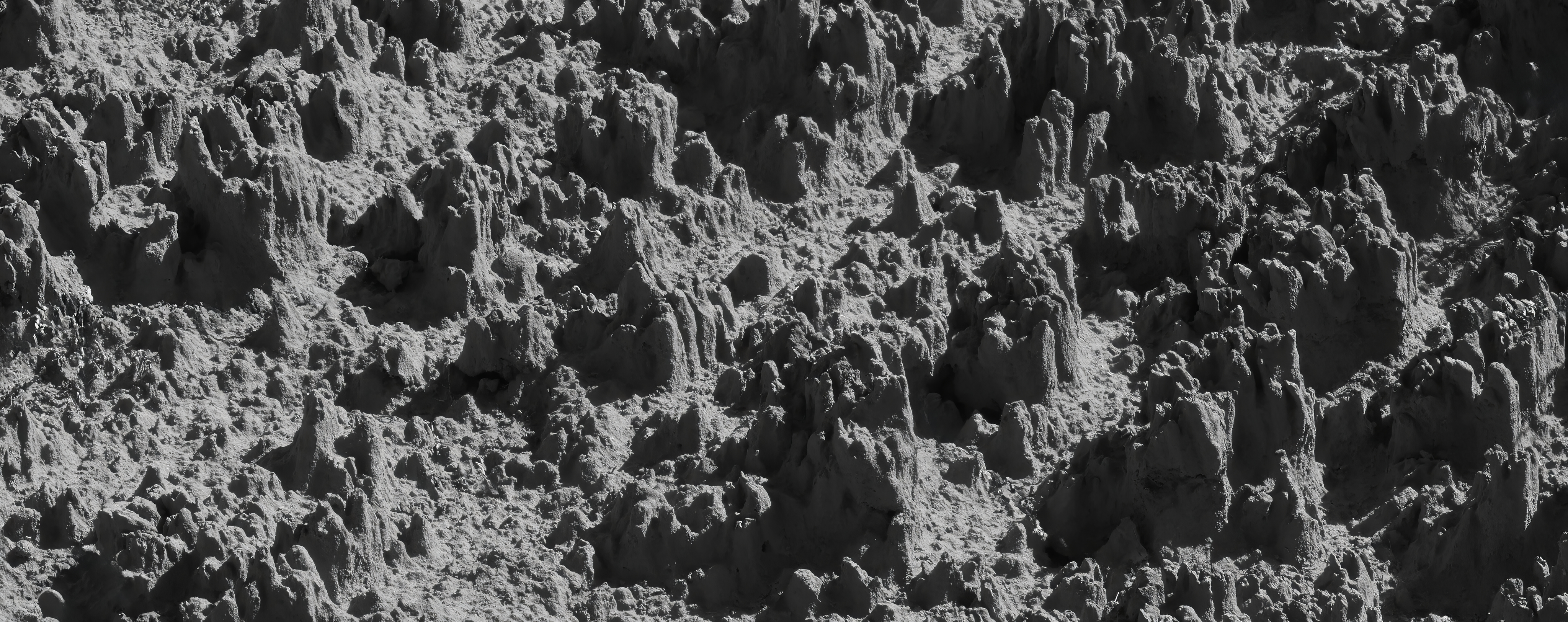
Living Dirt (Cryptobiotic if you are a scientist)
Kodachrome Basin has a couple of parking lots for hiking, a laundry/bathroom, and a campground. If you did not bring something important, too bad. If you don’t have enough food, you go hungry. Run out of water, then dehydrate. Too hot, then sweat and run out of water. Therefore—not many people. I only saw one family of four on my whole hike. They did not even take out a phone or take a selfie. The two kids were busy exploring and the parents were too busy guiding them.
Dirt
I will spare everyone a science lesson when a simple AI Prompt will generate a treatise. Like all landscapes, there is dirt, and if everyone stays on the trails, it limits damage. This is one reason the parents were busy: teaching the kids how to explore without destroying the desert floor.
The micro-landscape is founded in living dirt and has grasses, flowers, bushes, trees, mostly dead looking until that special day it rains, and the floor comes to life in a living dance. Using a long lens, I went about the trail trying to find a pattern free of vegetation that I resonated with.
I confess to removing some stray grass blades with the new Photoshop AI Remove Tool. To me, they were distractions from the pattern made by the late morning sun beaming down over a tall rock wall. I don’t use the latest AI Generate Tool, because I don’t resonate with prompts. The relationship between prompt and result are computational, not dynamic, and my purpose is to resonate with nature, not an algorithm.
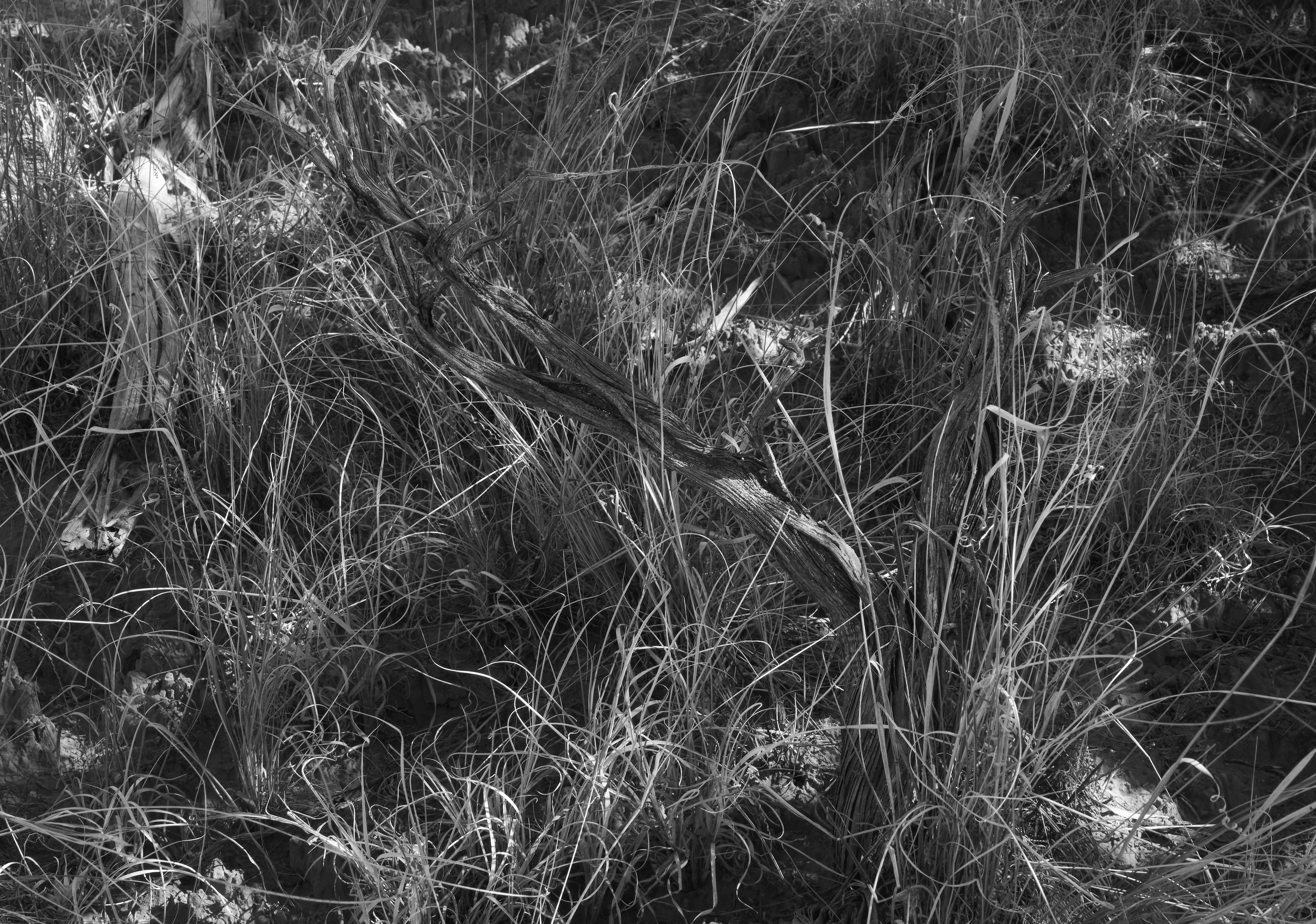
Dead On Top
Grass
The grasses are dead on top from the summer heat and alive on bottom, waiting for rain or snow. I’ve seen a lot of grass and don’t resonate much with just grass. I think it is just too familiar because grass is found everywhere.
When there is something interesting in the grass like this stick, and the sun shines through a neighbor tree making dappled light, I have something to play with. I made this one completely intuitively and it is hard for me to explain why I resonated with this.
What I notice after the fact is a dead branch at a sinister angle, a bigger branch on the left keeping my eyes in the frame, three patches of grass on the bottom, and a couple of light patches on the right keeping me in the frame. I don’t worry much about the formal compositional aspect, but I used to, and my subconscious might be happy with a memory of these things. I always suspect that the way I resonate has a large historical-cultural component that is unavoidable. I ignore it.
Some grass seems sensitive to temperature. The patches in this little gully are mostly on the shade side. In Colorado, a canyon has different trees on the north side than the south side because the north side gets more winter sun and dries out. Nature deals with it.
I was charmed by the split sun, shadow on left and bright on right, but the sun rakes through the grasses creating highlights. To counter the shadow side, there is a grass shadow and one anchoring grass clump on the bottom right. I could only move left and right a very small amount without stepping on the fragile desert soil off the trail, so I could only play with framing until it felt right.
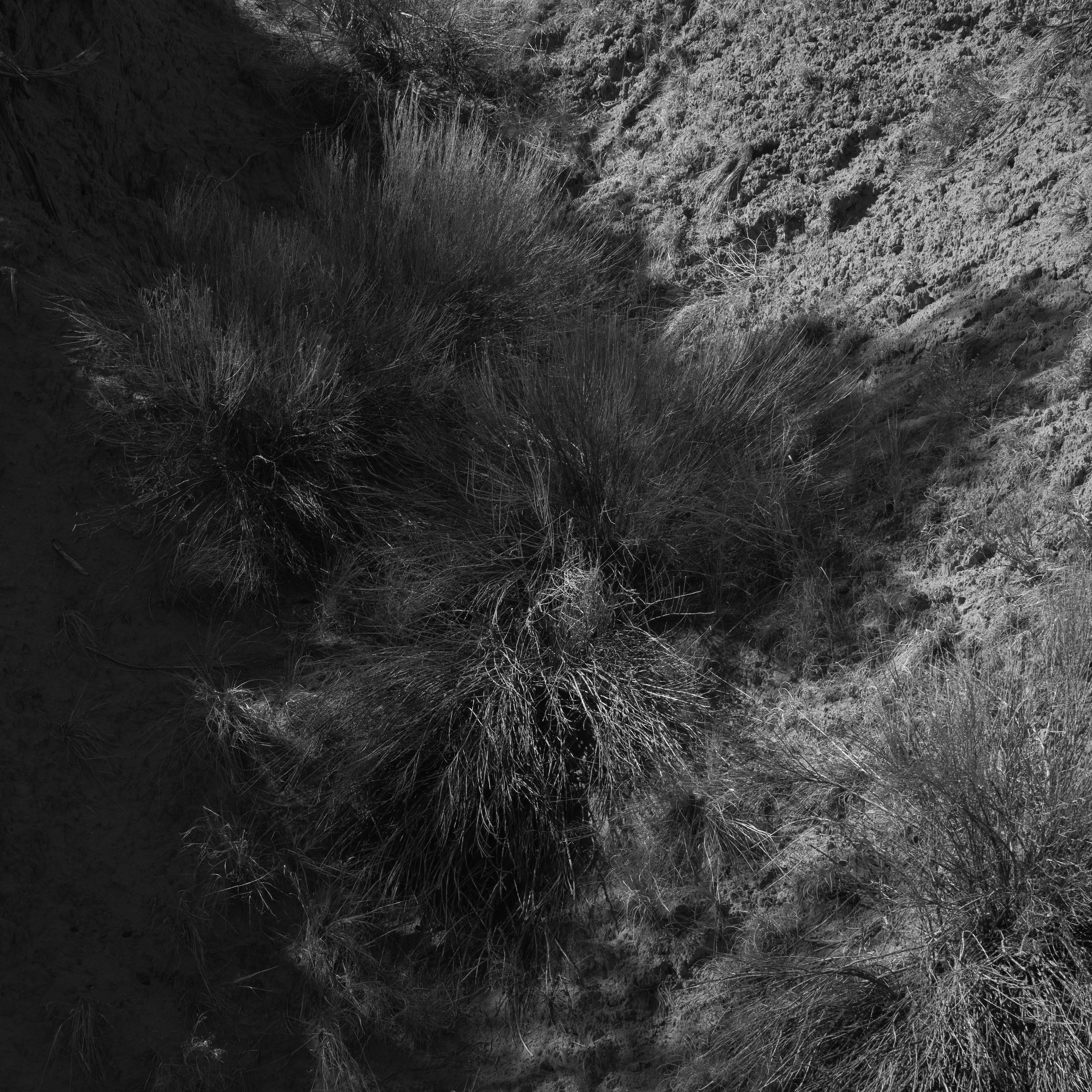
One of my self chosen limitations is to avoid damaging nature, even if that means a failure to resonate. If my goal is a personal relationship with nature, even though nobody would know, damaging nature would be senseless.
This does not mean I never go off trail. Near home, in places that I have hiked for more than 20 years, there are places one can walk off trail with minimal damage. These are also places where hunters stalk their prey, and foragers look for mushrooms. What is important is that in the National Forest, it is not prohibited, but more important is knowing what can tolerate feet, and never walking in the same place twice, creating a new path. Never walking on grass or flowers that would reveal my presence to others. Never letting a less experienced person see me that might think walking everywhere is okay. Not walking in steep areas that would lead to erosion. A personal relationship with nature is key to knowing how to treat her if you are working outside cultural rules. And some places are just too fragile for breaking rules or there are too many people. Chose wisely.
Rocks
The red rock has different textures. Some of it looks like dripping mud, but it is hard to the touch. I imagine it as mud dripping slowly over thousands of years: slo-mo mud. Other rock has striations like slot canyons. The red mud can butt up against white rock, which seems less muddy.
These were made in the shade. The mud is a single color and has a very low contrast. Finding something that tickles me is an exercise in patterns. The contrast has to be boosted in post processing using the levels tool to set a black and white point to emulate the contrast enhancement from my brain.
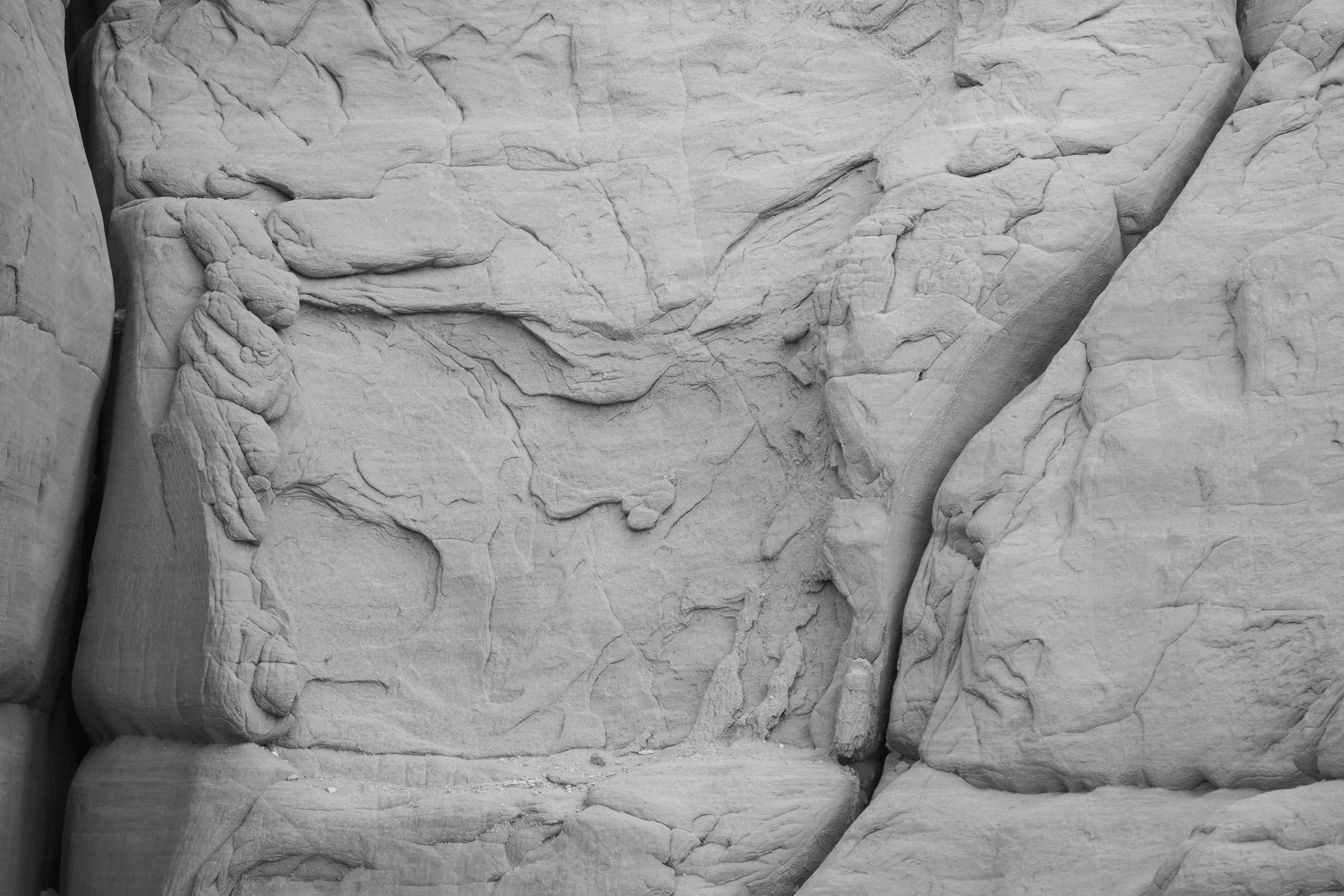
Mud or Not Mud?
The striations of the red rock against the white rock was fun. The two rocks formed a vertical crack 40 meters high. I played with standing position and vertical size. There was a technical challenge with depth of field. I had to shoot high ISO in the shade, but to avoid noise I limited to ISO 800. This forced me into requiring a large aperture so I could hand hold, yet a small aperture so I could stay in focus. After some experiments I ended up with f/18, ISO 1600, 70mm, at 1/10th. You have dealt with this I am sure.
In the darkroom, I rotated the image to make it more abstract. I often rotate textures and see which orientation feels right. Like removing grass, putting priority on resonating.
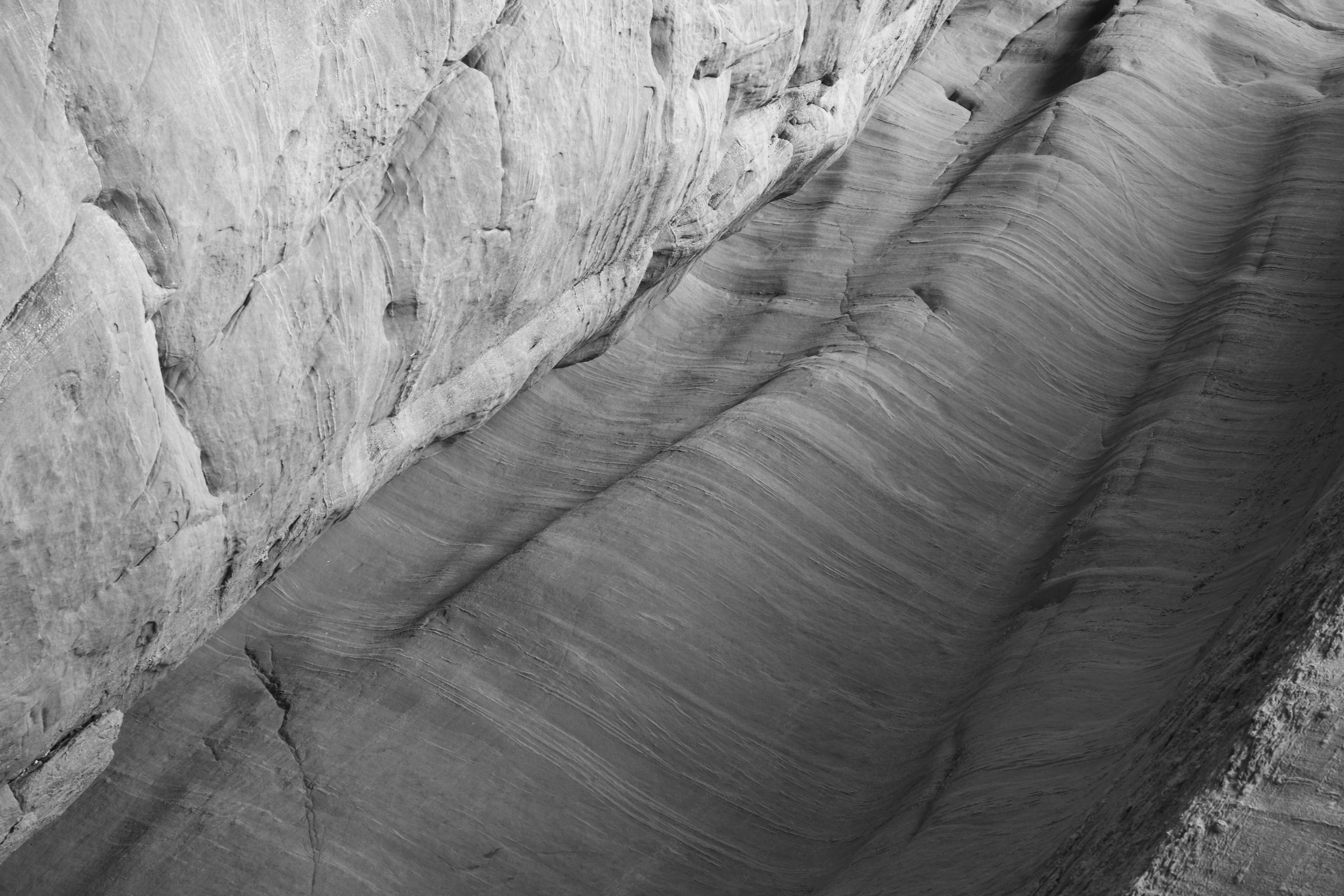
Big Crack
Pareidolia
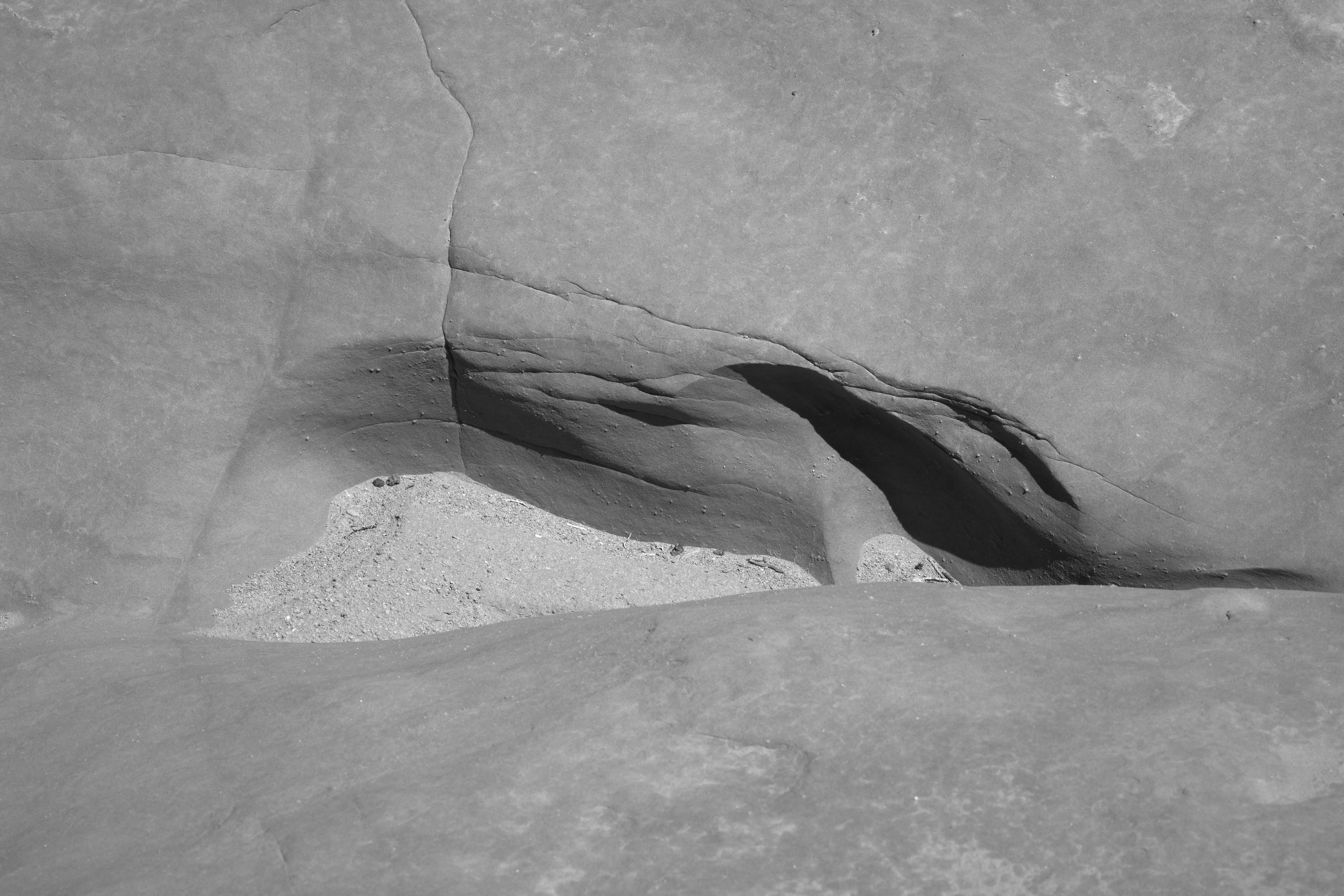
Many times, I see a figure in an image midway through the darkroom work. I don’t look for them when outdoors. I find them fun, but they are hard to use in folios and sequences because they stand out as different in a way similar to adding a self portrait in the middle of landscapes. On the other hand, they are natural images, and I can choose not to point them out.
If I have spoiled the pattern of this rock with the title, you will just have to forgive me. I just can’t resist a little frivolity.
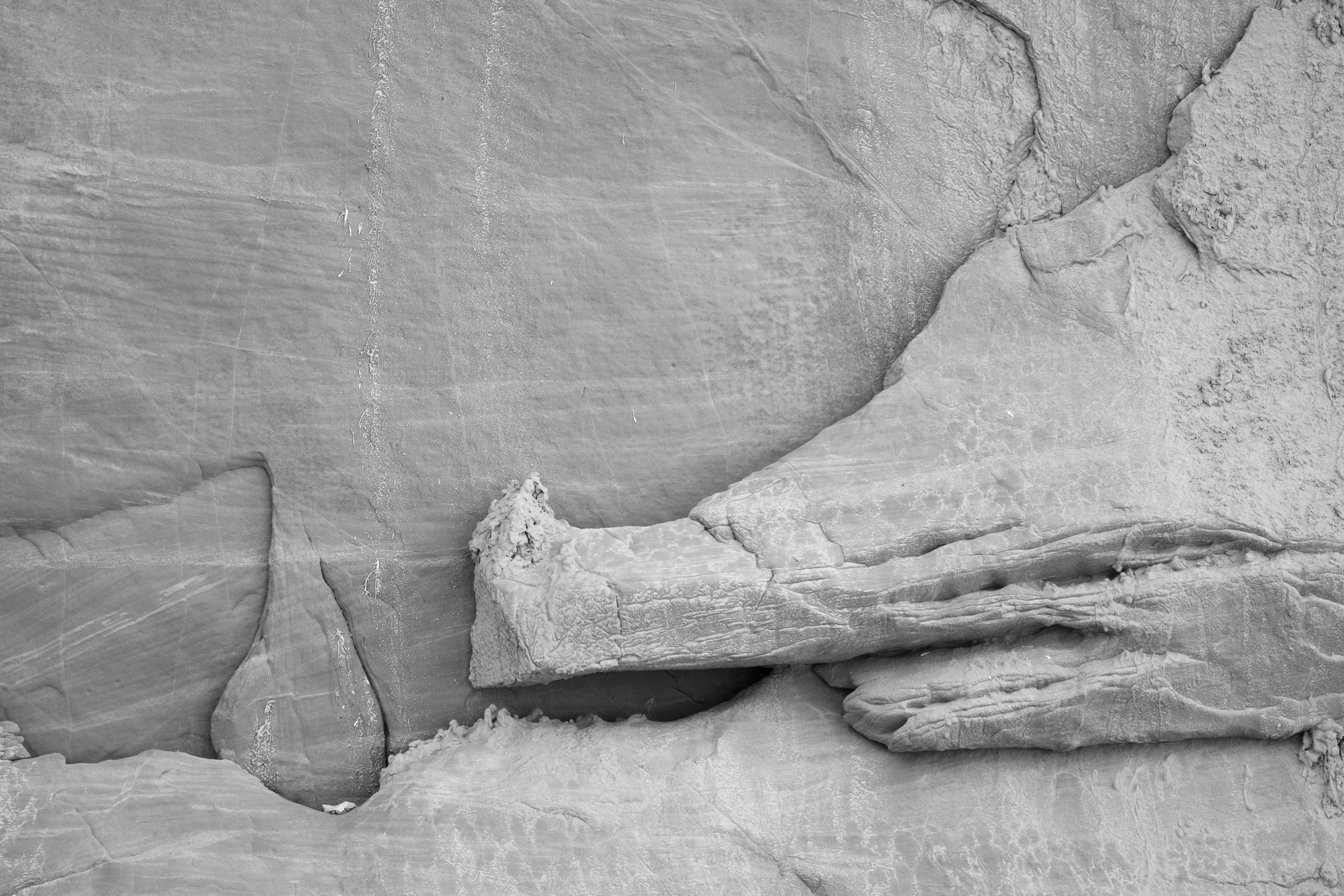
Oink
Cracks
Perhaps I can take the cracks more seriously. What causes them in the first place? Weight? Temperature? Will a large chunk fall off and squish me like Flat Stanley?
Perhaps I approached the rule of thirds with this vertical crack. The rules are not merit-less, just hard to apply to real nature. I still have a lingering question: why do I resonate with the crack on the right rather than the left?
If the crack is like an arrow, I would think it better on the left, pointing into space. If the crack is like a bowl, it is receiving something unknown from the left space, like an ear listening to a distant noise. Honestly, I put the crack where it felt right and did not even consider the problem; a problem that is not a problem if I am simply shooting by feel.
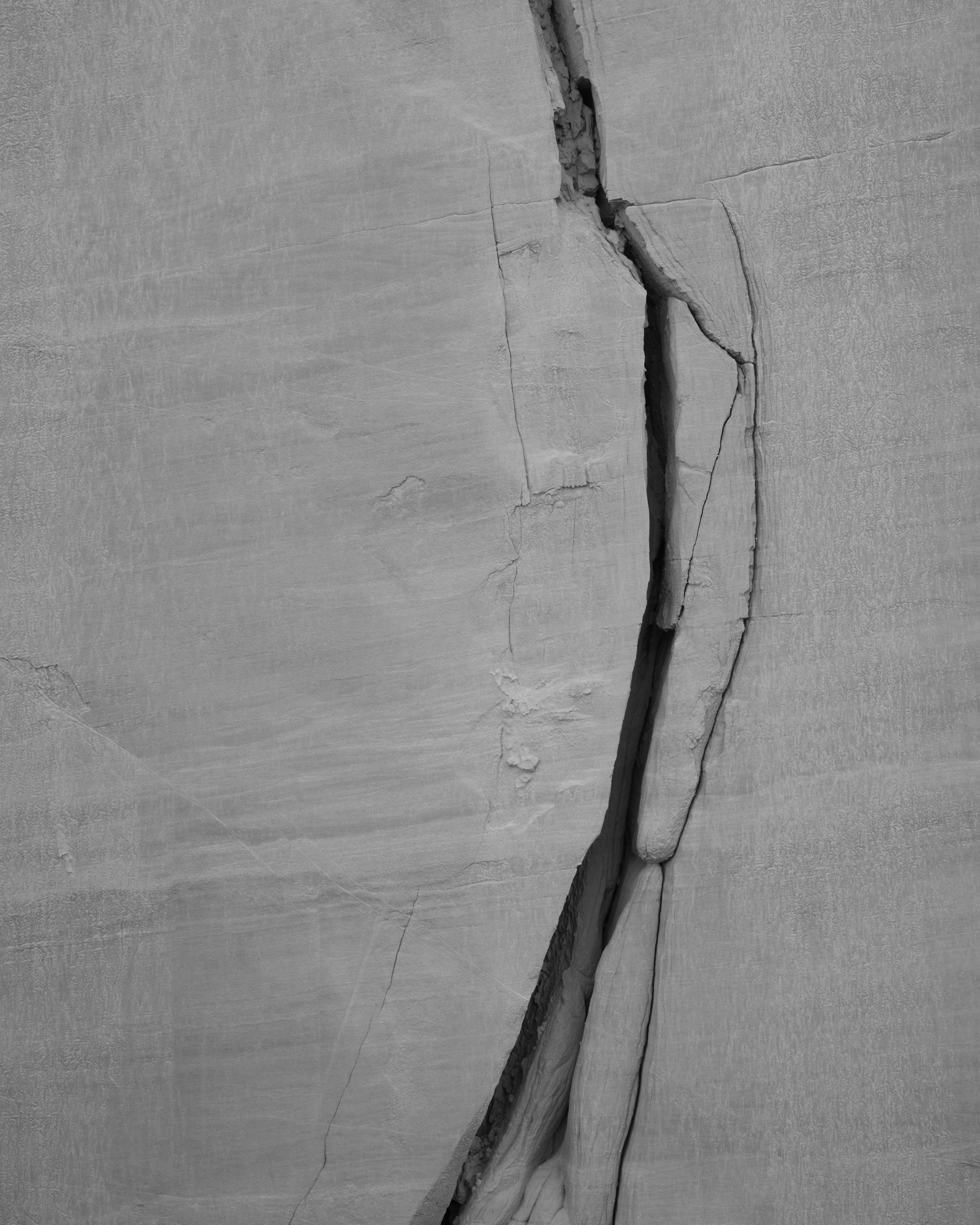
Cracked Open
In both these images, I set the black point almost pure black, but did not set the white point anywhere near pure white. There are and I think it is because the rocks were red and in shadow, plus low key to begin with. During post processing my memory carries the original experience when I was in the presence of the rock.
Occasionally, I make a high key image of a low key experience and like it, but a part of me demands being true to the original experience. So why would I rotate a rock image but not make it high key? I don’t have an answer other than some subconscious preference. Remaining true to tones is more important to me than the natural orientation. Go figure.
Part of personal work is pondering over it.
Water
I would be remiss to not mention flash floods. The rocks form box canyons that are like funnels. The water flows by the bottoms of rocks and through the dirt. In this basin, the boxes are small enough that the water would not wash you away or drown you like a slot canyon, but they leave an ephemeral track, a history of the weather.
The traces remind me of patterns on a beach, but I also remember that millions of years ago, where I stood for this image, was once an ocean, and the red rocks are sediment that was the sea floor, now exposed and eroded.
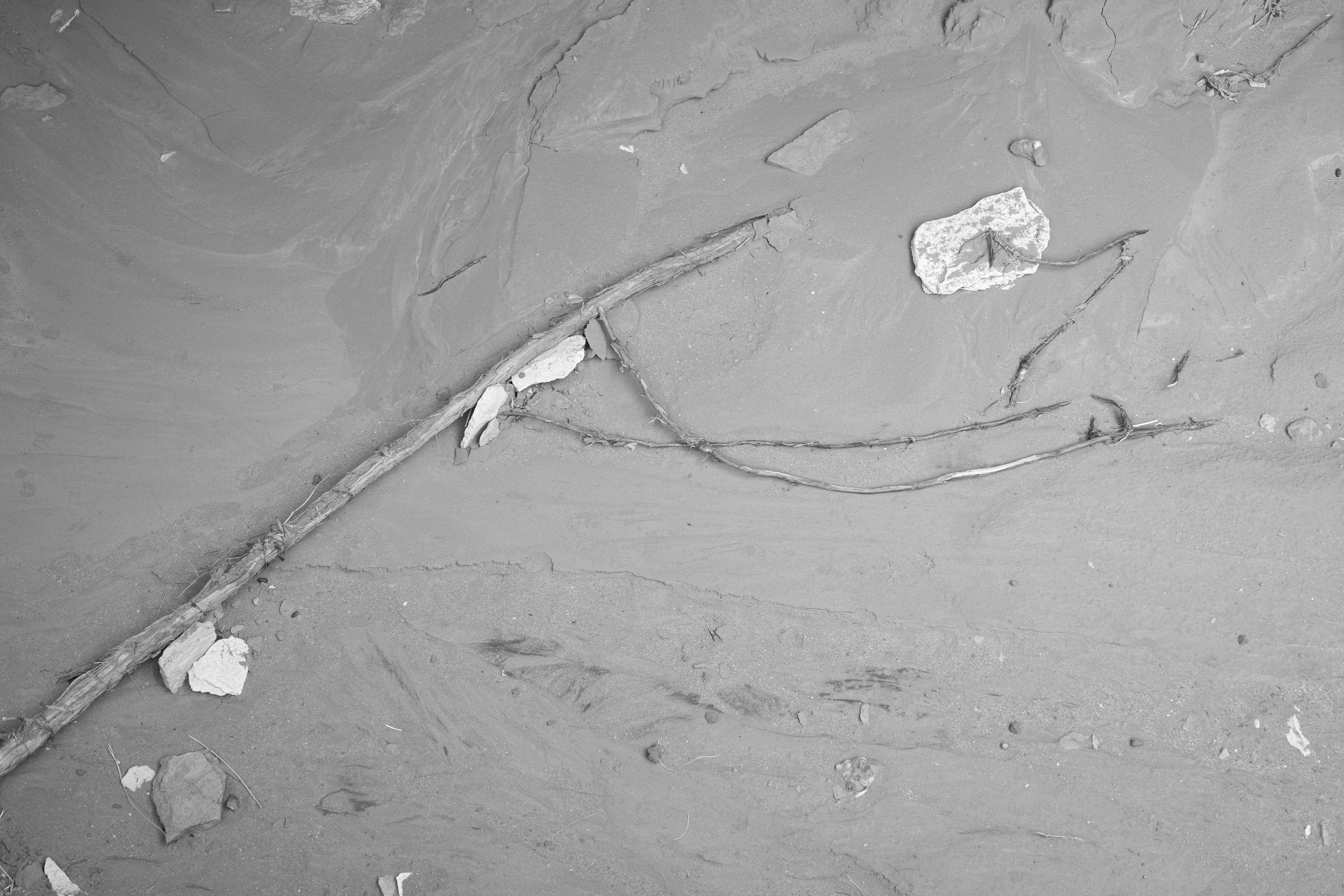
Flash Flood
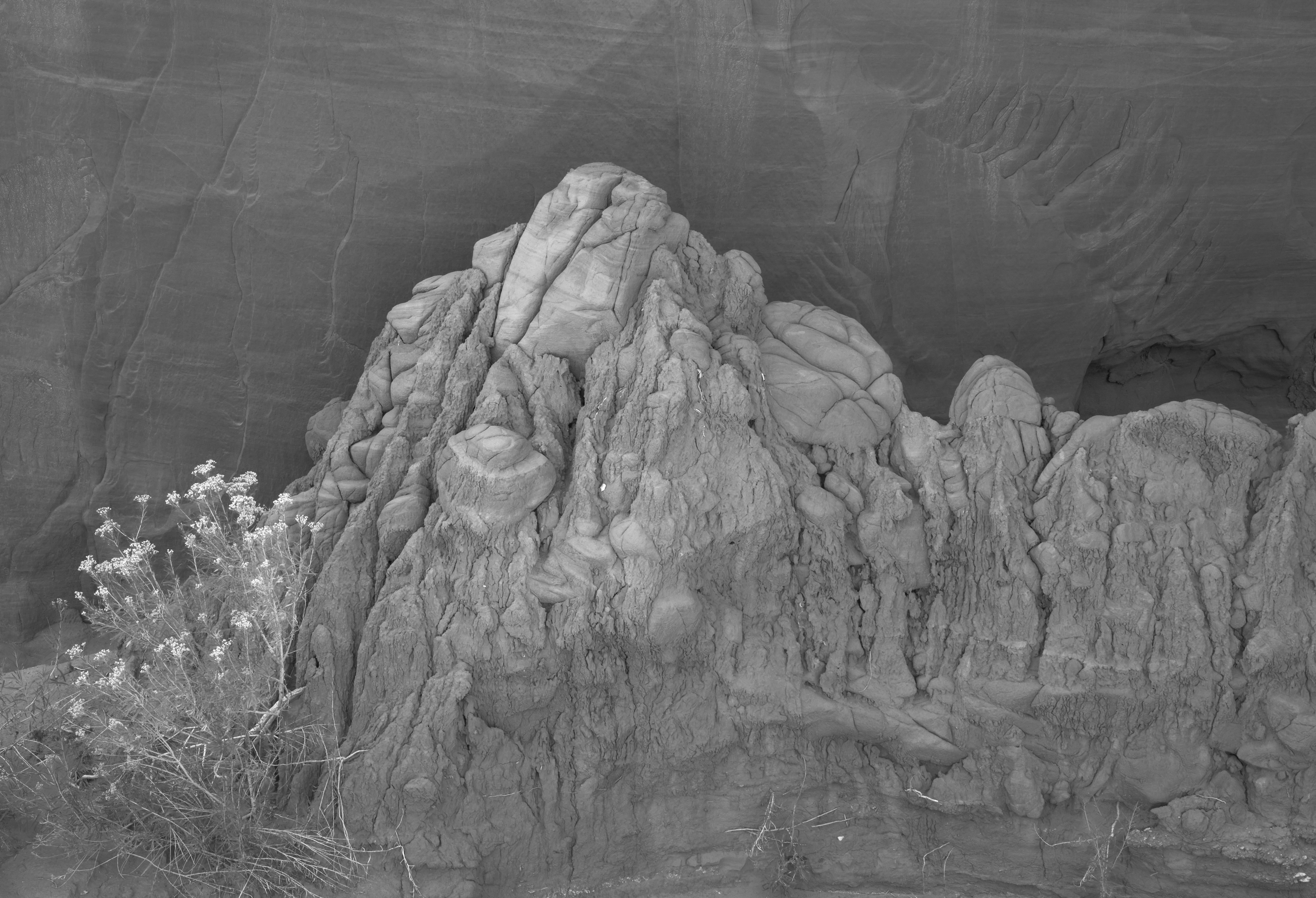
Ground Everywhere
Finding a nice pattern is not much different than a beach, but the patterns are less stereotypical because of clutter. Or I just like them, just because...
When water eats away the rock, it sometimes leaves an island. How is it that the island has the dripping mud pattern and the remaining rock is flat? Rather, did the rock drip eroded grains until the island was formed?
The flowers somehow established a foothold that flooding did not wash away. The rock became its protector.
When I made this capture, it was more about what was not in it. A flat sand bottom with more flowers to the left, and a flat sand bottom to the right. Detritus at the bottom. I cut away until it seemed just right, and my viewer never has to know what is missing.
Box Canyons
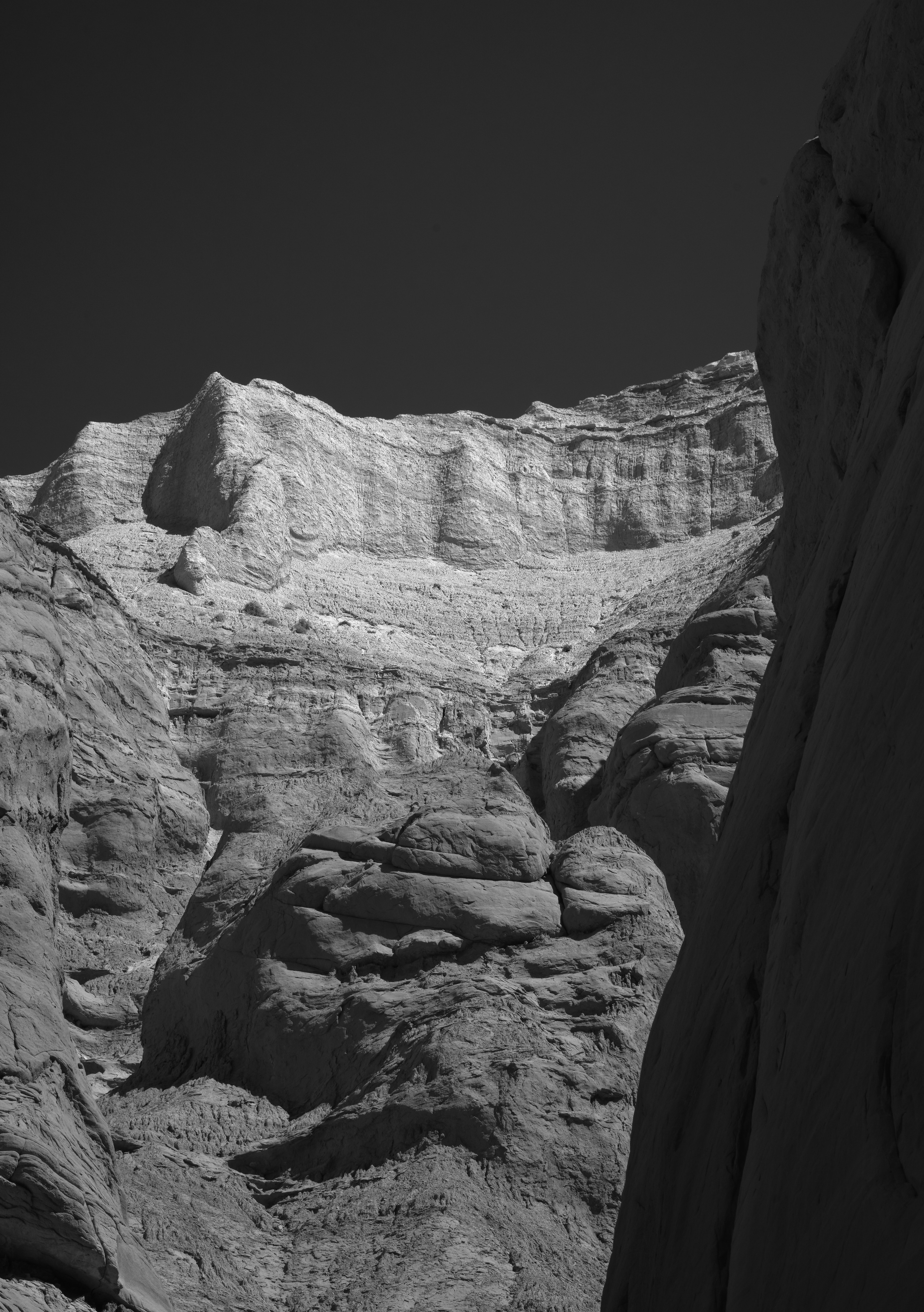
There were two box canyons on my hike, formed by whiter rock. I didn’t resonant with smaller patterns because there was too much texture in the bright sun. The larger view with sky was more interesting. The tree on the columnar rock is a problem. I failed to find a way for it to stand out and look good. I had to settle. Relationships come with challenges, and nature is no different. Sigh.
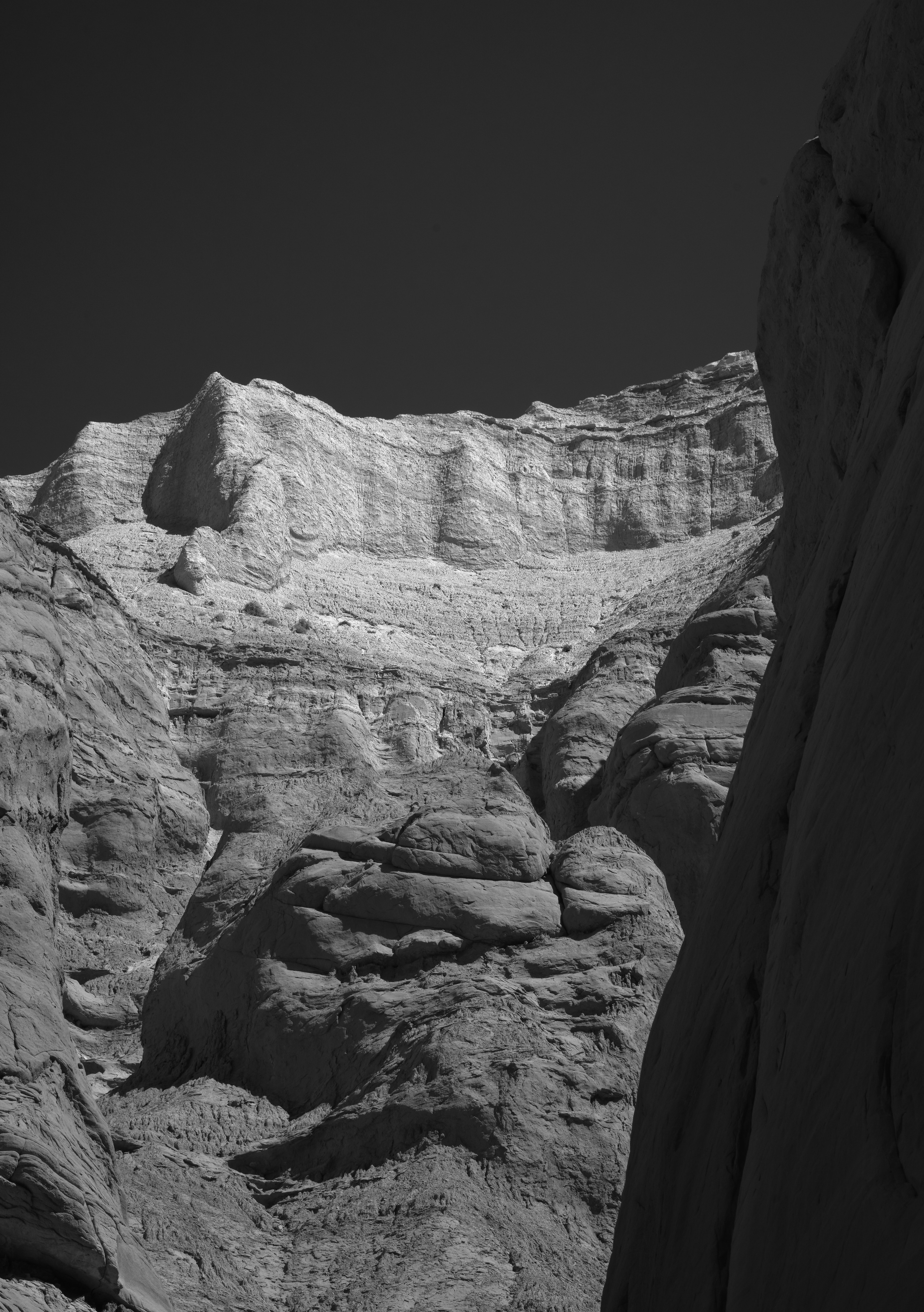
Back of Box Canyon
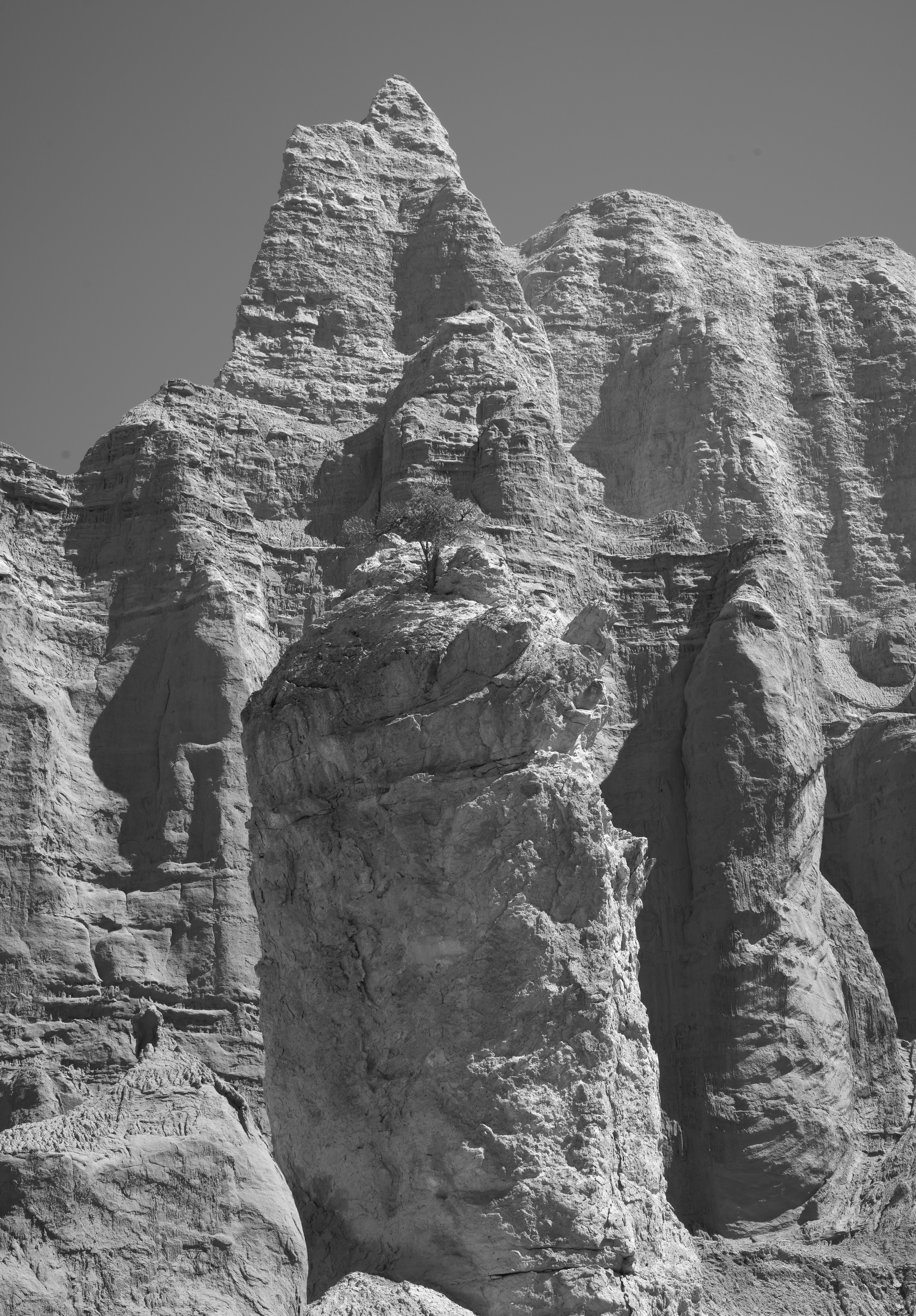
Side of Box Canyon
Complexity
Some scenes in the Basin are complicated because they mix in different things and/or combine bright sun and shadow. I treat them the same as the close-in and far-out scenes, I go by feel. Sometimes I notice a pattern of objects, sometimes a pattern of light.
The place “not to sit” is a tree in a wash without footprints and off trail, a place I would not want to ruin with footprints. The ant hill is framed by the large trunk. The shadow of the tree branches between the hill and branch enhances the pattern. The joy of this one for me is the exploration within the frame and the questions about how all came to be.
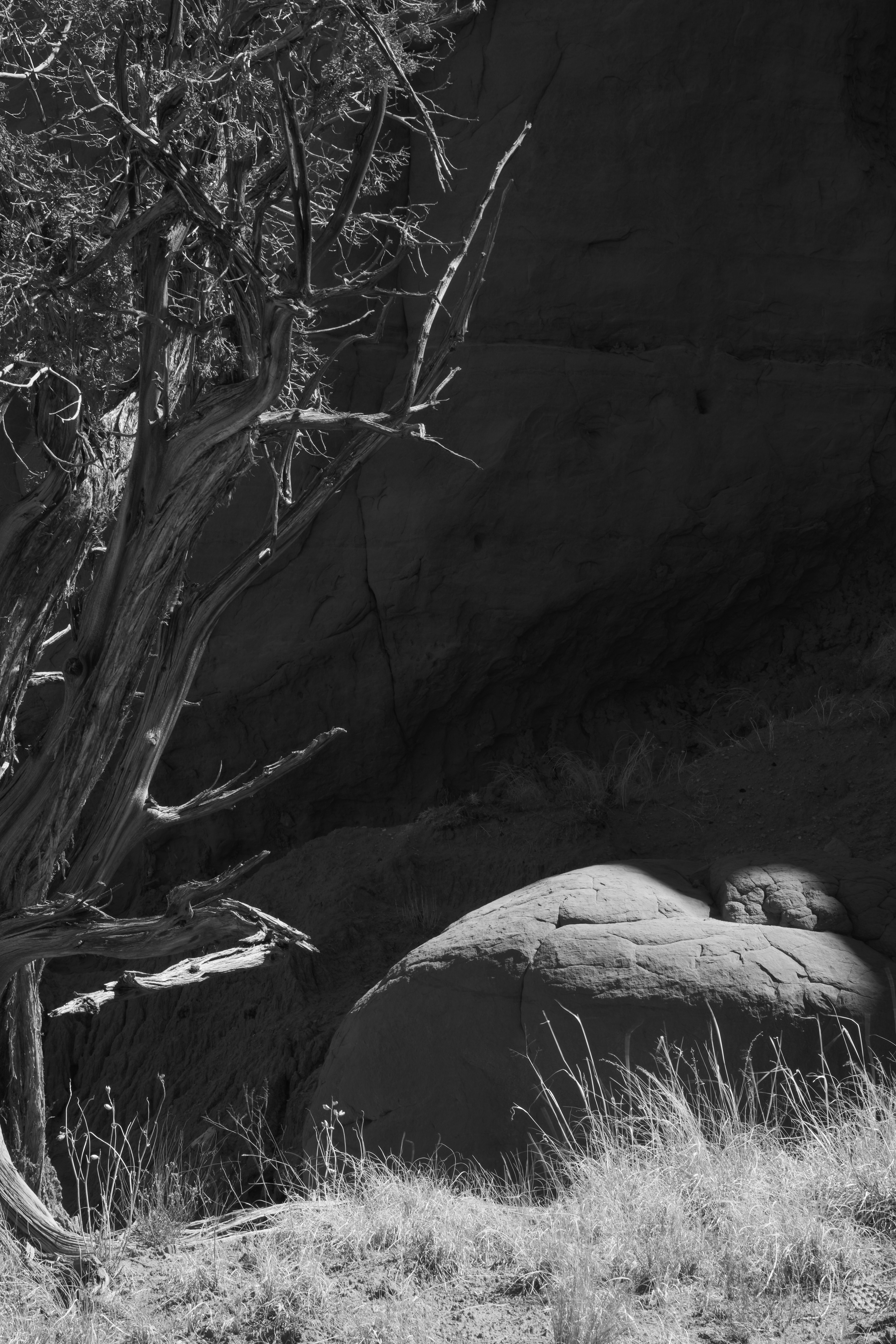
Sitting Place
The place “to sit” is accessible by the trail, but that is not important for appreciation. The sun highlights the rock and adds contrast to the tree. The shaded side of the rock makes the sunny grass pop. All this structure becomes a source of resonance, partly because it invites a sitter, yet nobody is around to sit. Change the time of day and all is lost.
You might have a personal preference with these two images. They both have contrast, structure, and conceptual aspects. If so, ask yourself why. If you don’t know, all the better.
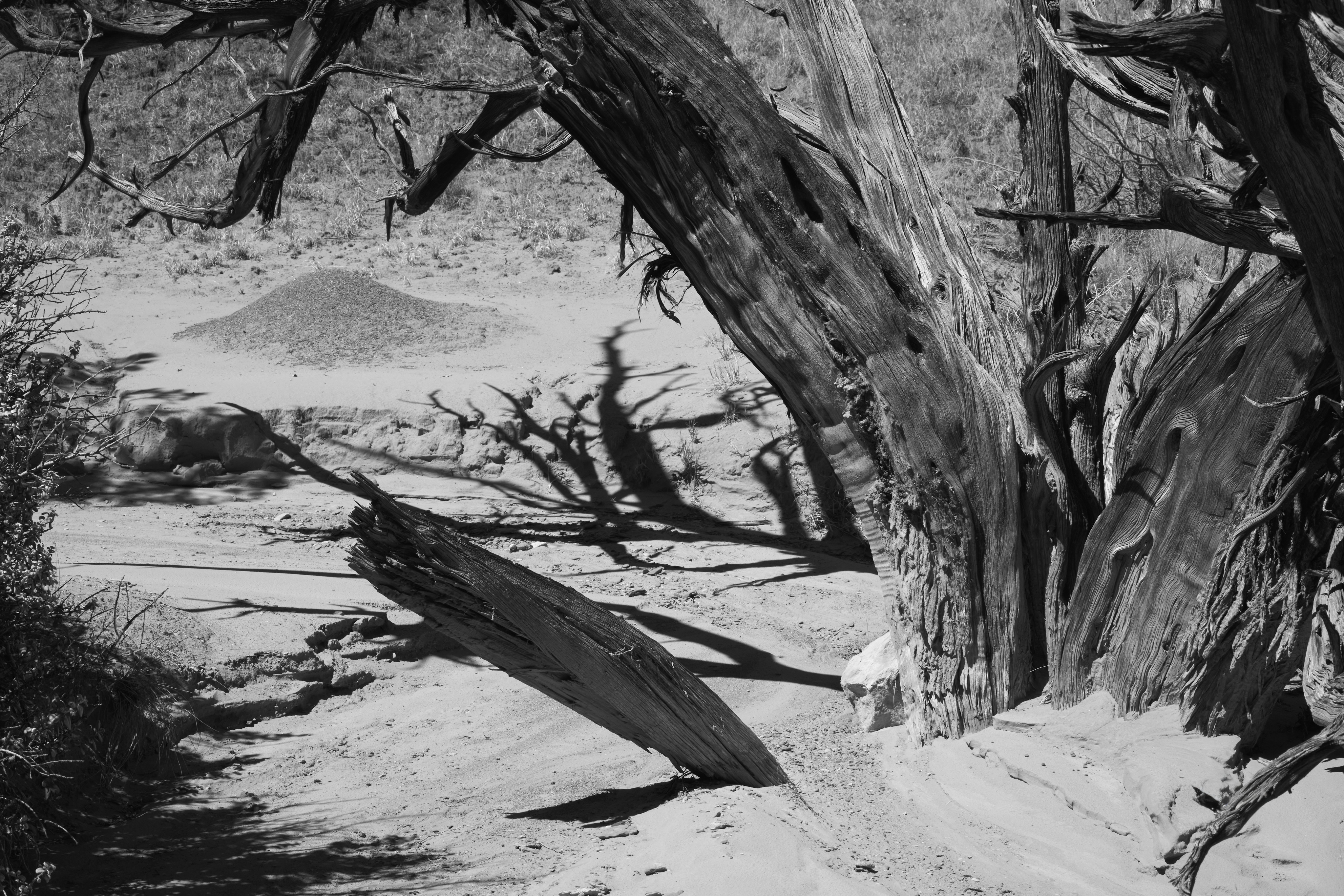
Not a Sitting Place
End of the Hike
My story must end like my hike.
Kodachrome Basin is a treasure off the normal roads leading to the well known and popular parks.
Avoiding the well worn paths not only skirts around the problem of viewer recognition and expectations, but it provides solitude. For me, at least, people are as distracting as the anxiety of expectations.
Consider all the neglected hidden gems wherever you may be, and don’t feel guilty when you skip over the popular places.
-

- Kodachrome Basin: The Wall
-

- Living Dirt (Cryptobiotic if you are a scientist)
-

- Dead On Top
-

- Mud or Not Mud?
-

- Big Crack
-

- Oink
-

- Cracked Open
-

- Flash Flood
-

- Ground Everywhere
-

- Side of Box Canyon
-

- Back of Box Canyon
-

- Sitting Place
-

- Not Sitting Place