


 Join the conversation
 Subcribe to comment rss feed
The Lineage of Fine Art and Photography

Tim Parkin
Amateur Photographer who plays with big cameras and film when in between digital photographs.
A visit to London this weekend with my parents-in-law took me to a few different exhibitions. The Ansel Adams exhibition has already been reviewed so I’ll be writing instead about the “Seduced By Art: Photography Past and Present” exhibition at the Sainsbury Wing of the National Gallery as well as “Constable, Gainsborough, Turner and the Making of Landscape” at the Royal Academy.
The Seduced by Art exhibition’s primary purpose is to look into the ways that the themes, subjects and techniques of art have influenced photography. The exhibition features work by big hitters from the historical art and historical to contemporary photography world ranging from Goya, Degas and Delacriox through Gustave Le Grey, Fox Talbot and Roger Fenton to Richard Billingham, Thomas Struth and Jem Southam and many more; and even without the context it would have made a wonderful collection of works of art.
But it’s the context that really lifts this exhibition above the general ‘best of’ exhibits that we sometimes see and reveals some of the genealogy underlying contemporary photography. Split into Portrait, Figure, Tableau, Still Life and Landscape, each of these sections brings together the history of painting, early photography and contemporary photography and discusses the connections between them.
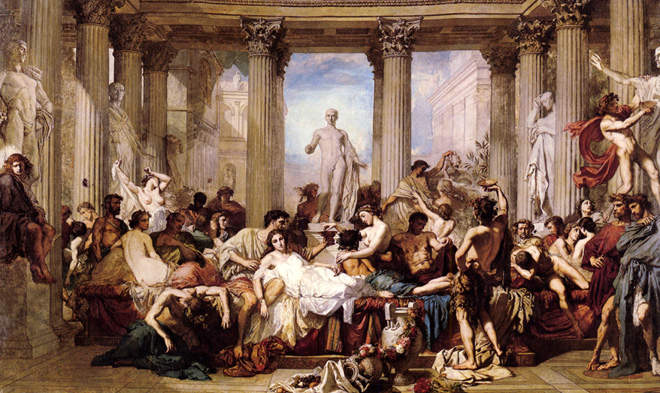
For example: the first room, Portrait, shows how the photographer Oscar Gustave Rejlander used Thomas Couture’s painting/engraving “The Romans during the Decadence” as inspiration for his piece “Two Ways of Life” which was a massive ‘hit’ when released to the public in 1857.
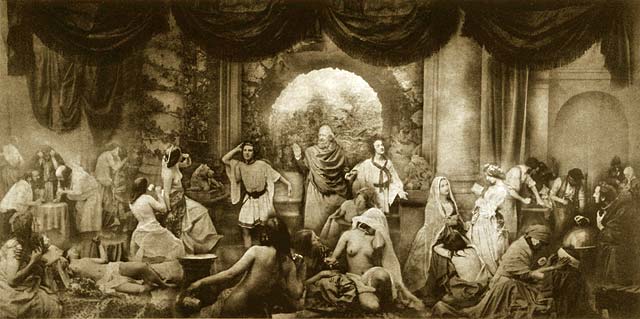
The image used many smaller study pictures and composited them in a darkroom montage to create a panoramic scene of a father showing his two sons the moral choices they have in life. Estimates of the number of studies he used vary between 30 and 50 but show just how much work was much work was involved. Rejlander’s use of historic references was common in photography of the time with practitioners eager to convince the critics that their work was more than just reproduction.