


 Join the conversation
 Subcribe to comment rss feed
Featured Photographer

Matt Palmer
Matt Palmer is an award-winning photographic artist based in Alpine Victoria. Passionate about our natural world, and photographs that tell a story or establish a sense of place, Matt has won significant national and international titles in documentary, travel and landscape photography genres. Matt runs the Alpine Light Gallery located in Bright, Victoria with his wife, landscape photographer Mieke Boynton.

Tim Parkin
Tim Parkin is a landscape photographer living in Scotland who co-founded On Landscape magazine. Alongside his photography and writing he also co-founded the Natural Landscape Photography Awards, runs a film scanning business and is a judge for other international landscape and nature competitions.
For Matt, a difficult childhood forged a sharp sense of justice that would later find its outlet behind a lens turned toward the natural world. Photography arrived first as a trade rather than a calling: over a decade spent shooting portraits, weddings and touring musicians — including Metallica, Nick Cave and Pearl Jam — gave him a disciplined, image-a-day fluency long before landscapes entered the frame. It wasn't until a 2011 trip to Norway and Iceland, tripod-less and unprepared, that the landscape took hold of him entirely.
That pull proved strong enough to reroute his life: a sudden change of circumstance saw Matt pack his car and leave Brisbane for Tasmania, trading touring acts for wilderness and beginning the richest period of his creative life. The camera became less a means of documentation than a way of bearing witness — to beauty, but just as often to loss — translating a background in graphic design and an outsider's restlessness into images that place a single strong subject centre-stage. That instinct for witness runs through Icelandic Echoes, his book on Iceland's abandoned farmsteads, with a foreword by Icelandic-Australian author Kári Gíslason, available to order through Alpine Light Gallery in Bright, Victoria, which Matt runs with his wife and fellow photographer Mieke Boynton.
What drew you to landscape photography, and how did your early interests and education shape the path you took?
I came to landscape photography after over a decade of portraits and documentary photography. Living in Brisbane, I had greater access to people than I did to landscapes. It wasn’t until traveling to Norway and Iceland in 2011 that the landscape grabbed me. At the time I didn’t even pack a tripod! When you are able to stand on the edge of a rock structure like Preikestolen or catch a sunset over Jökulsárlón glacial lagoon, I feel like you’re experiencing a heightened level of existence that is very addictive.
The F-Stop podcast mentioned that your rough childhood shaped you as a photographer. How much do you think personal history informs the emotional content of your landscape work, even when you're pointing a camera at something as apparently neutral as a mountain or a burnt forest?
My childhood gave me a strong sense of justice and injustice. Nature can’t advocate for itself, so nature photographers in general tend to have a pretty strong sense of their representation for the natural world. I’d say where I might be a little different from many of my peers is that I’m possibly more willing to confront and photograph ugliness. For example, my image Disposed captures illegally dumped rubbish on a forest floor. While capturing it, I wasn’t sure what the creative outcome would be, but acting as a witness allowed me to process and express anger in the moment.
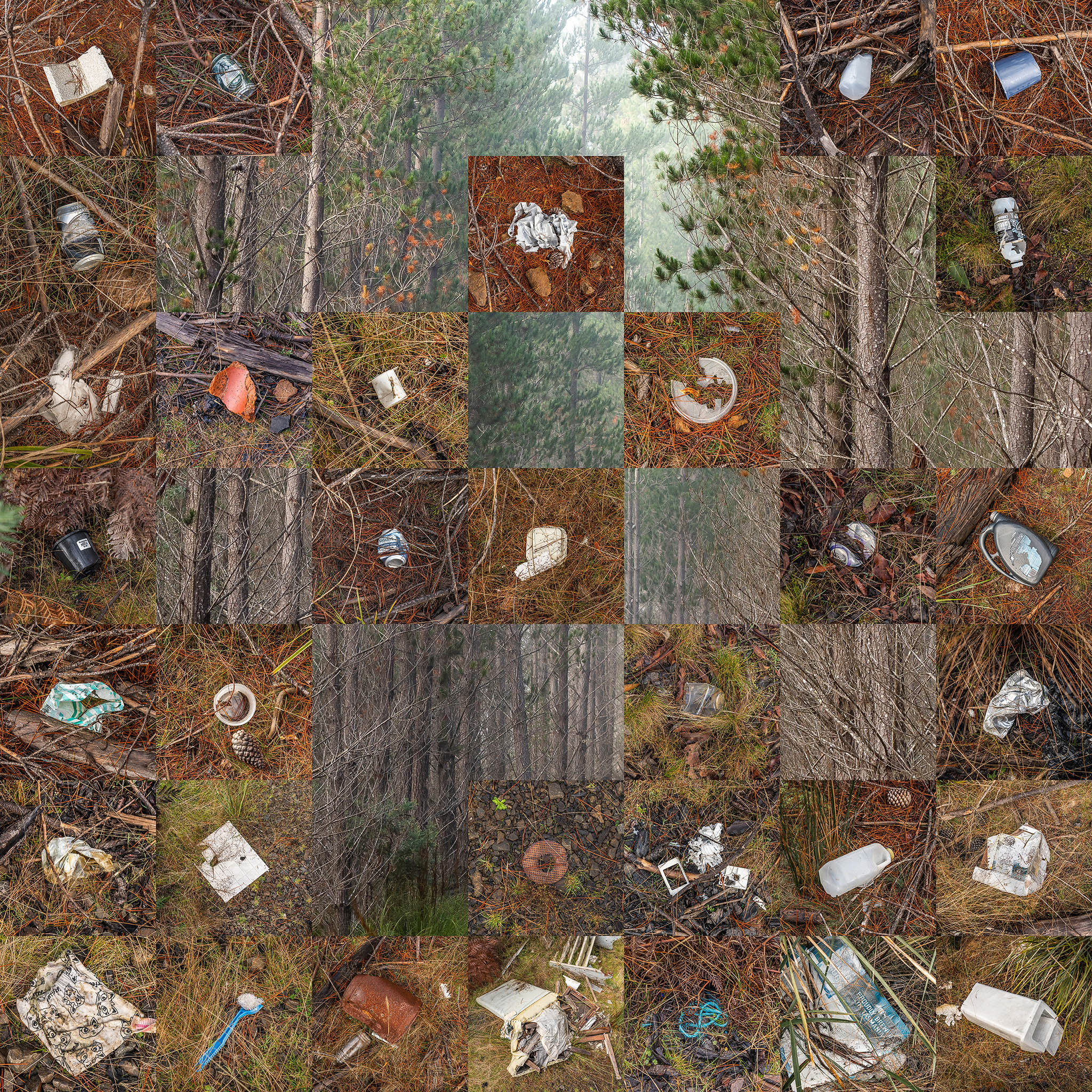
Disposed
A lot of art forms thrive out of protest, anger and ugliness, but it’s less common in landscape photography, which we often approach with positivity and wanting to capture beauty. But for me, the ugly can hold a lot of meaning, and can even sometimes have its own form of beauty.
You came to landscape photography after an extensive career documenting music, sport, weddings and commercial work, including photographing artists like Metallica, Nick Cave and Pearl Jam. What was the turning point that pulled you toward landscape, and what did that shift feel like at the time?
What do you think defines your photographic style at the moment, and what shaped it into something distinctly your own? Take us through where it started and how it grew.
For the most part, I let others think about what a Matt Palmer image or style is, and I just focus on making things based on what I respond to. How a tennis player or football player strikes a ball is based on their muscle memory, physicality, and training. If they thought consciously about the action when they were performing it, it would go awry very quickly.