

 Join the conversation
 Subcribe to comment rss feed
Portrait of the World’s Largest Single Organism

Matt Lancaster
Award-winning visual artist Matt Lancaster fuses photography and encaustics to explore emotional connection, natural processes, and geometric relationships, drawing on his backgrounds in design and geology, with work exhibited nationally, collected by institutions, and supporting land conservation efforts.
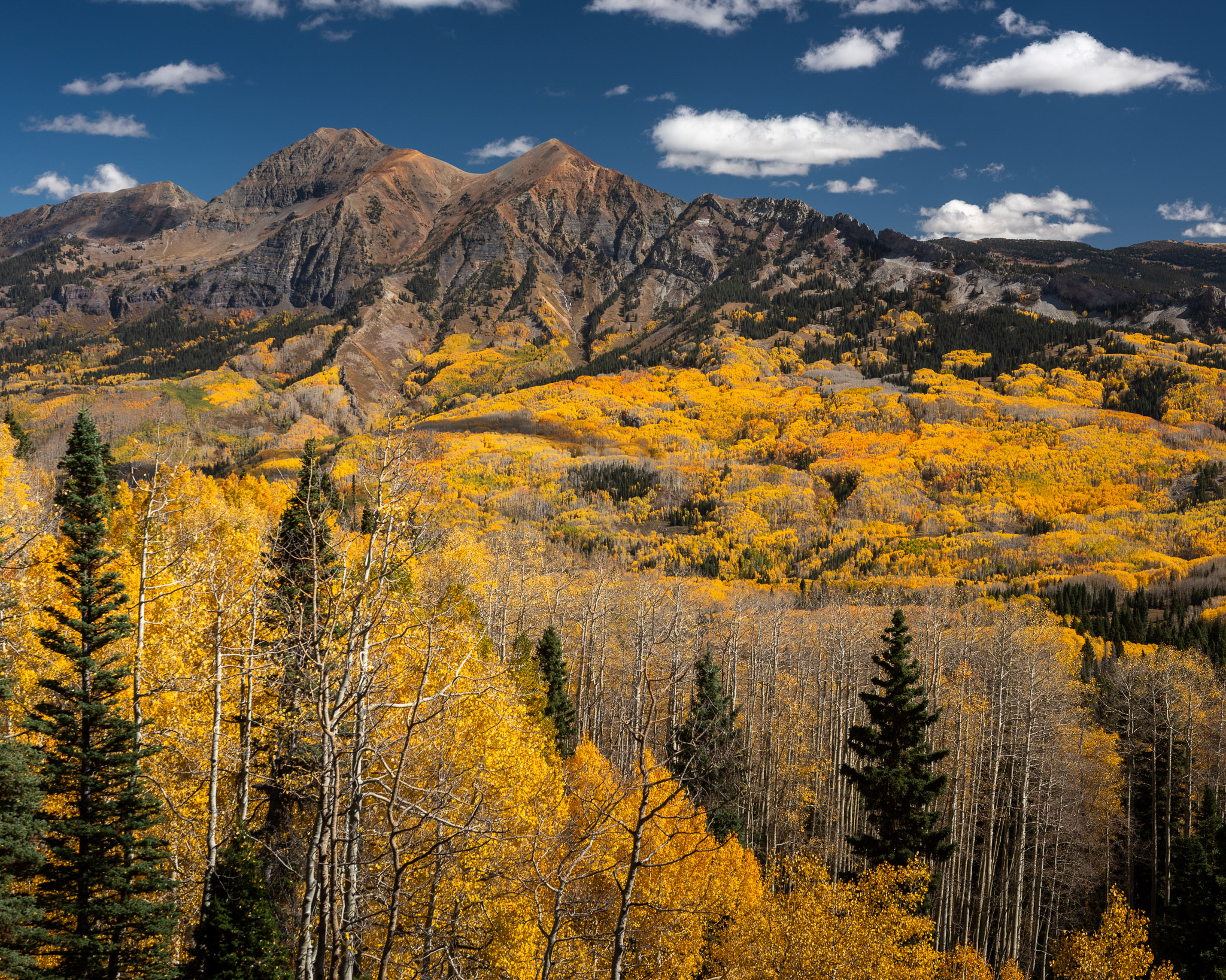
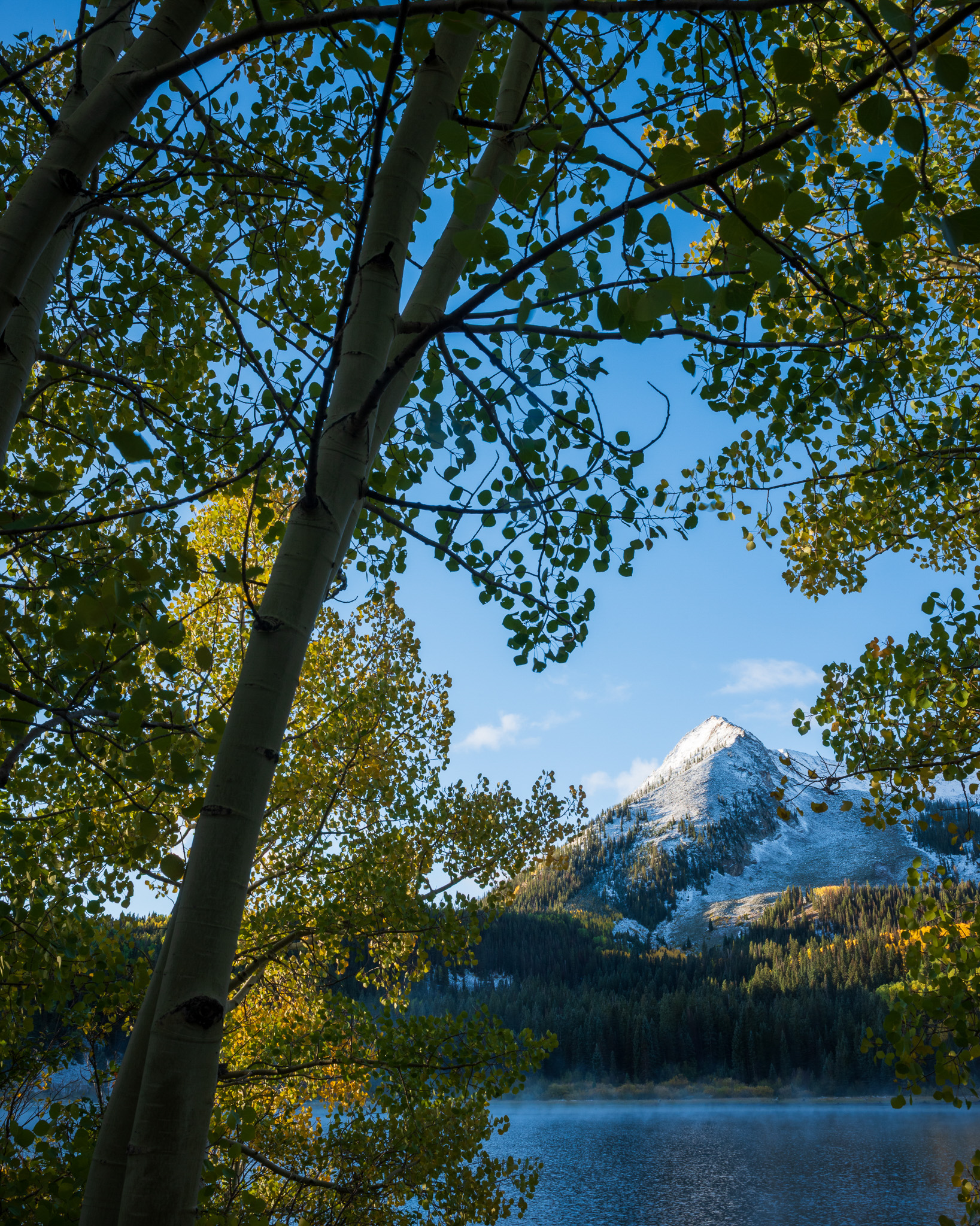
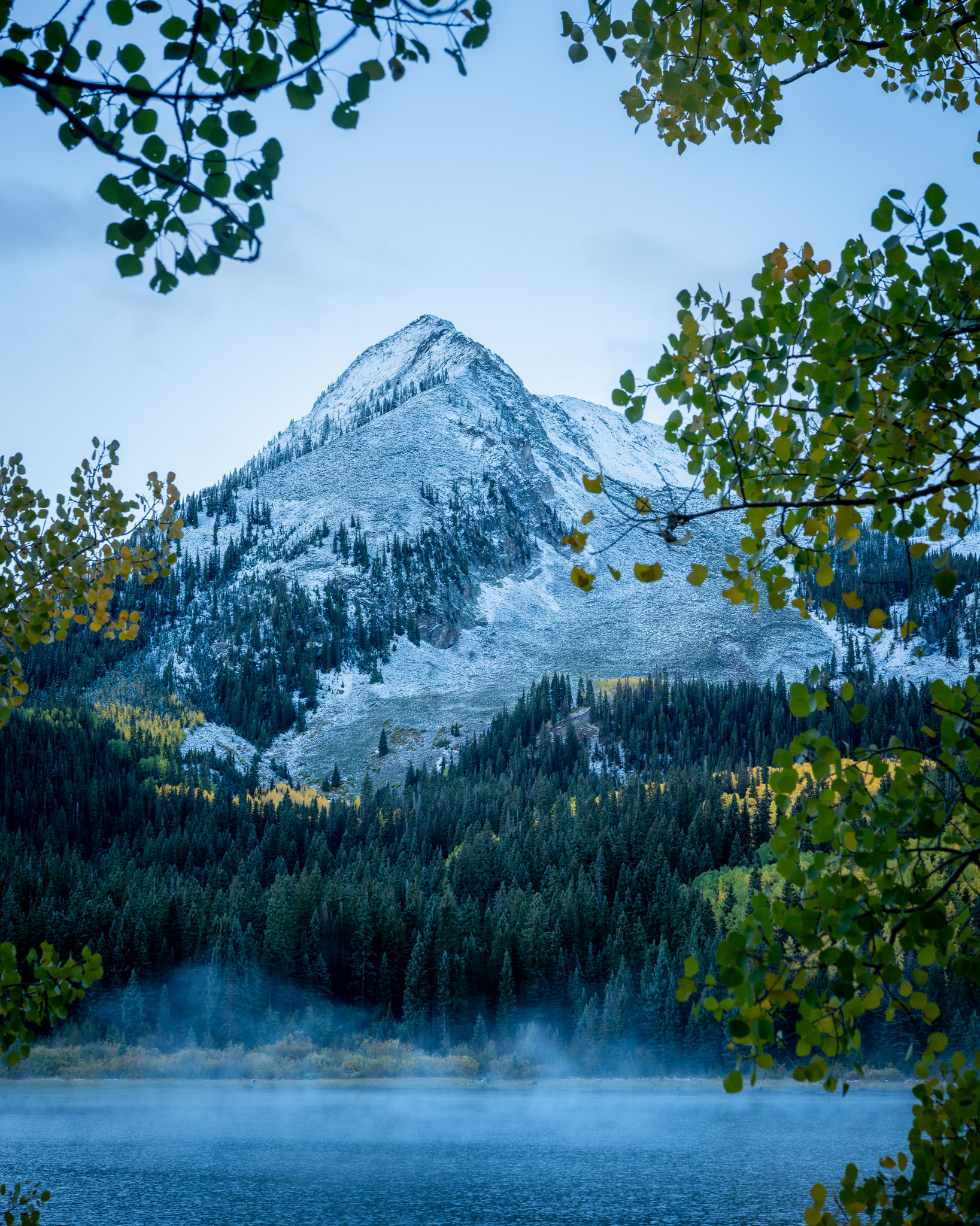
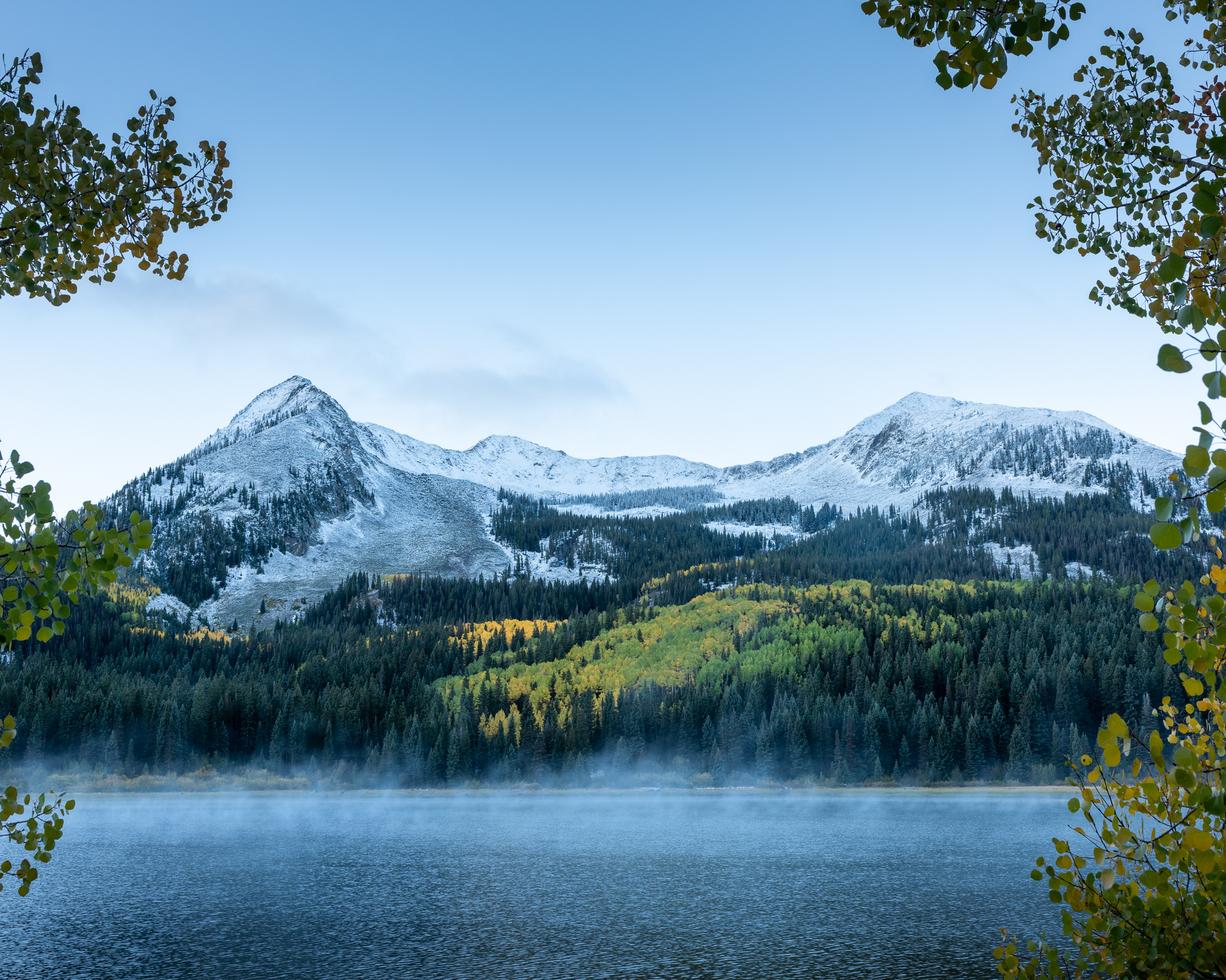
For more than thirty years, I have wandered the aspen forests of North America, learning their secrets as one learns the quirks and stories of kin. These are not just trees to me - they are family. The quaking aspen, Populus tremuloides, stretches its roots across the North American continent, from the wilds of Alaska and boreal forests of the Canadian Shield to the sunlit slopes of Colorado. Here, in the heart of the American Rockies, I have found my home among them, and my devotion runs as deep as their ancient roots.
But how does one show such devotion? Let me introduce you to a particular family—one that may be the world’s largest living being: the quaking aspen forest of Kebler Pass, Colorado, USA. This is a realm where the forest itself is a single, breathing organism, its reach spanning valleys and ridges, its presence felt from horizon to horizon. To tell its story, I begin with the grand lineage, then draw ever closer, until I am face to face with the smallest, most intimate member—the leaf.
A bit of biology helps set the scene. Aspens reproduce by sending up new shoots from a shared underground root system, creating genetically identical “clones.” Over time, these stands function as a single, interconnected organism, with each tree expressing the collective life of the whole. In spring and fall, the forest puts on a show as new leaves emerge and, later, as color sweeps across the canopy.
The Lineage: Ecosystem
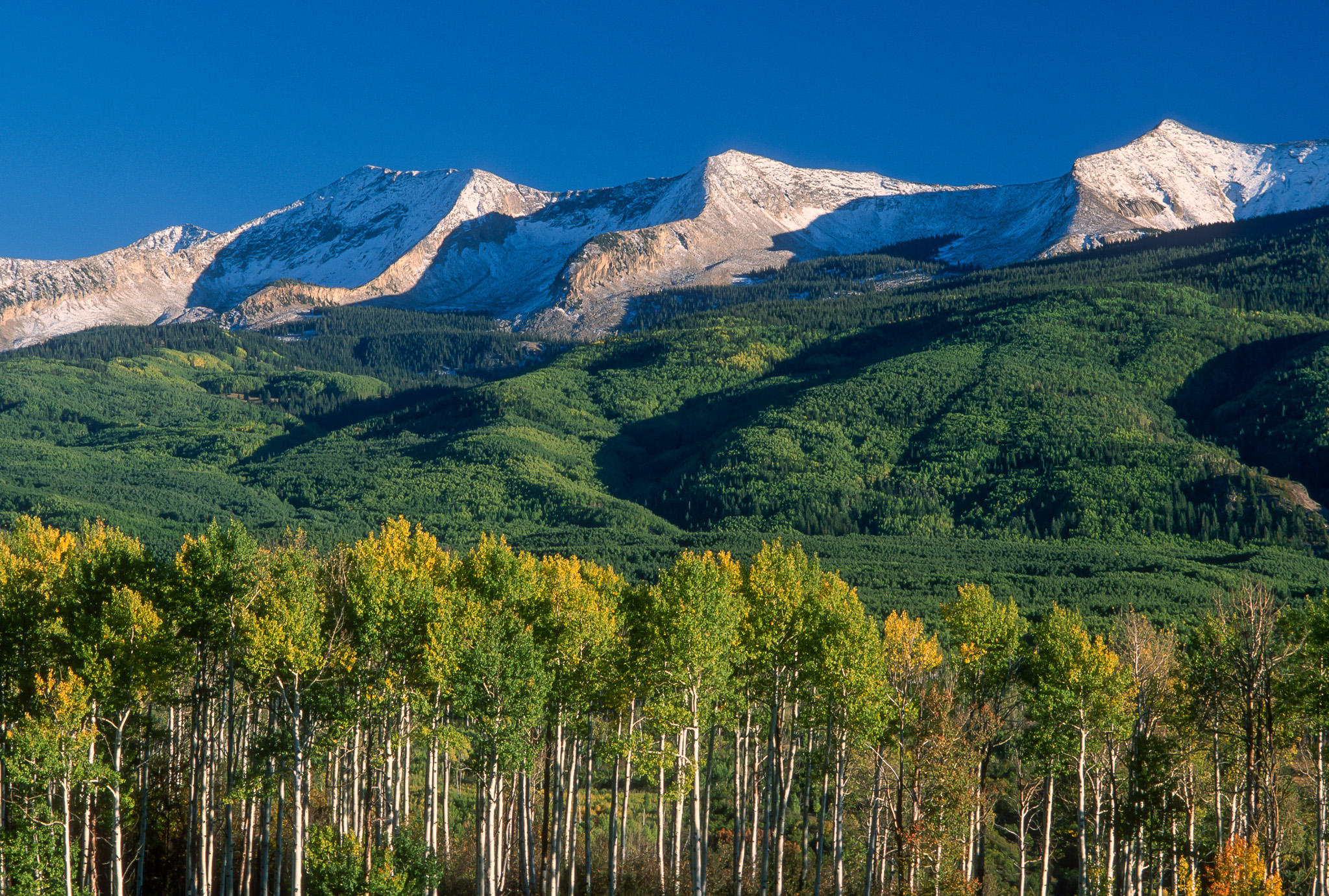
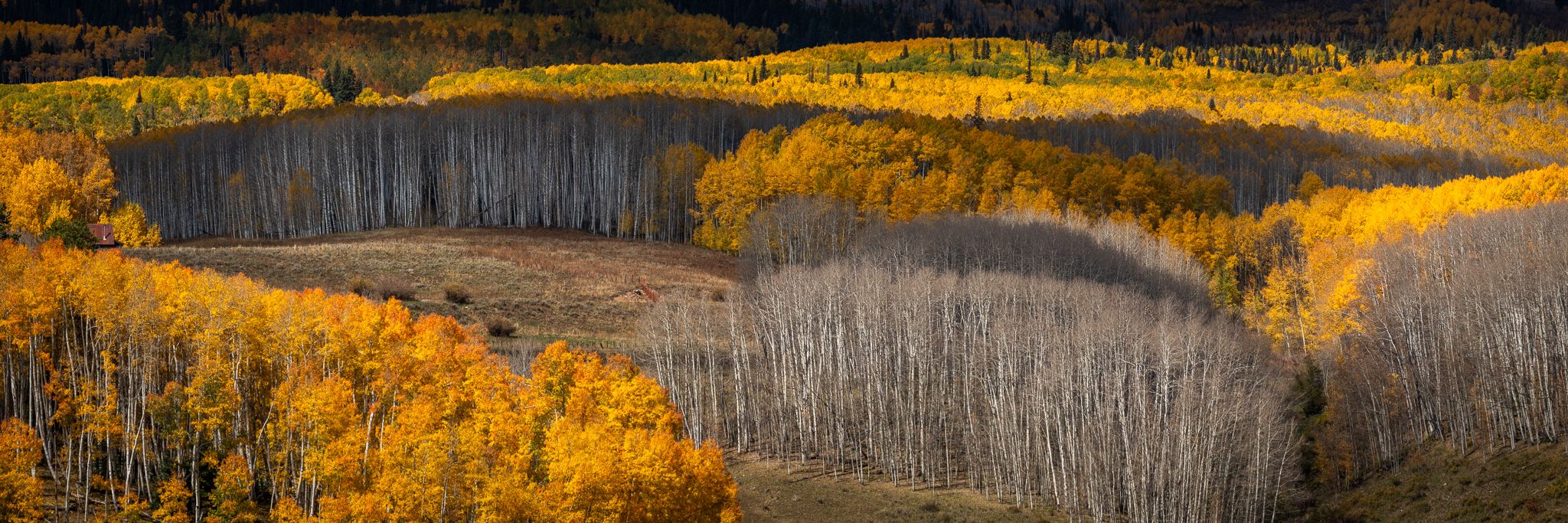
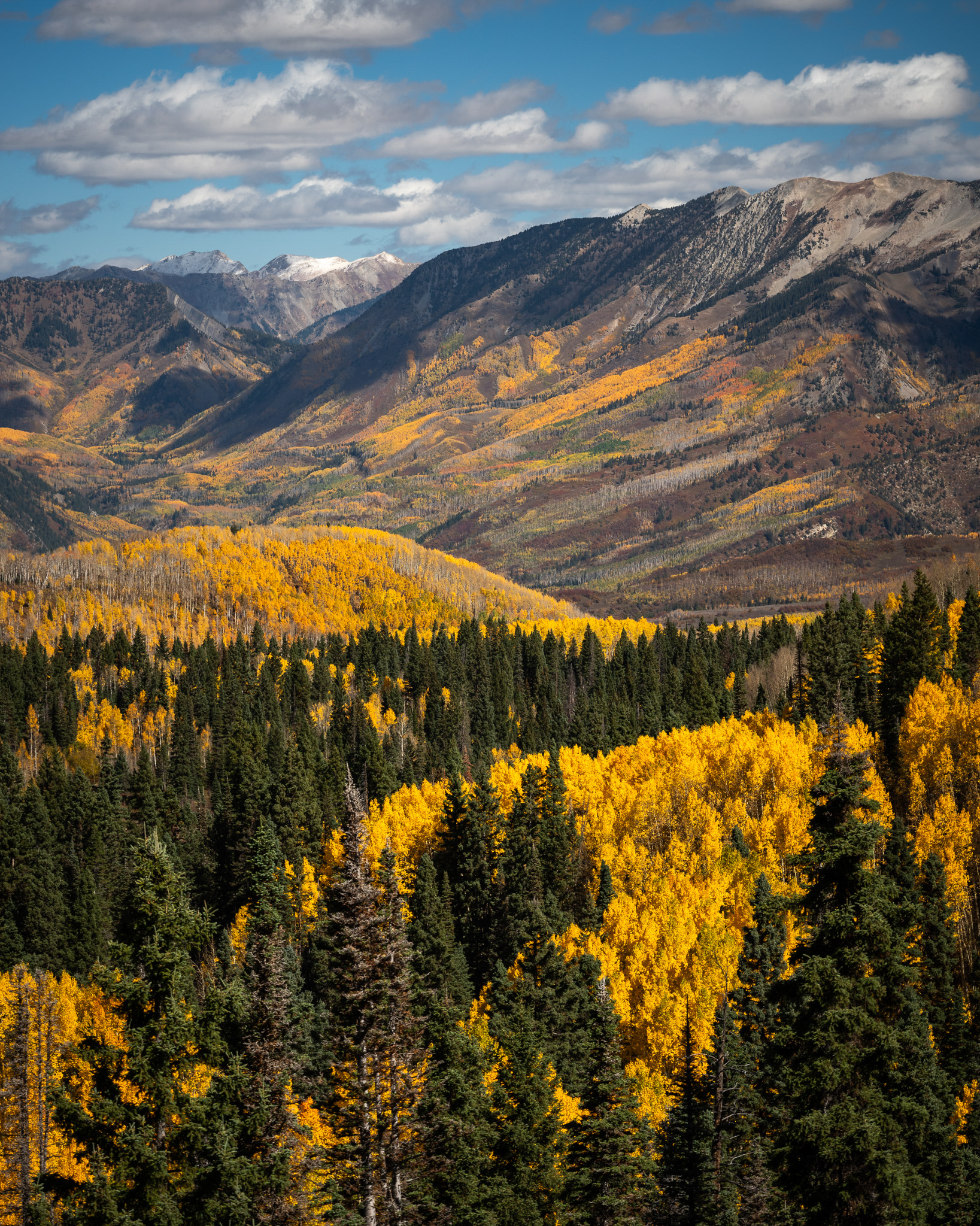
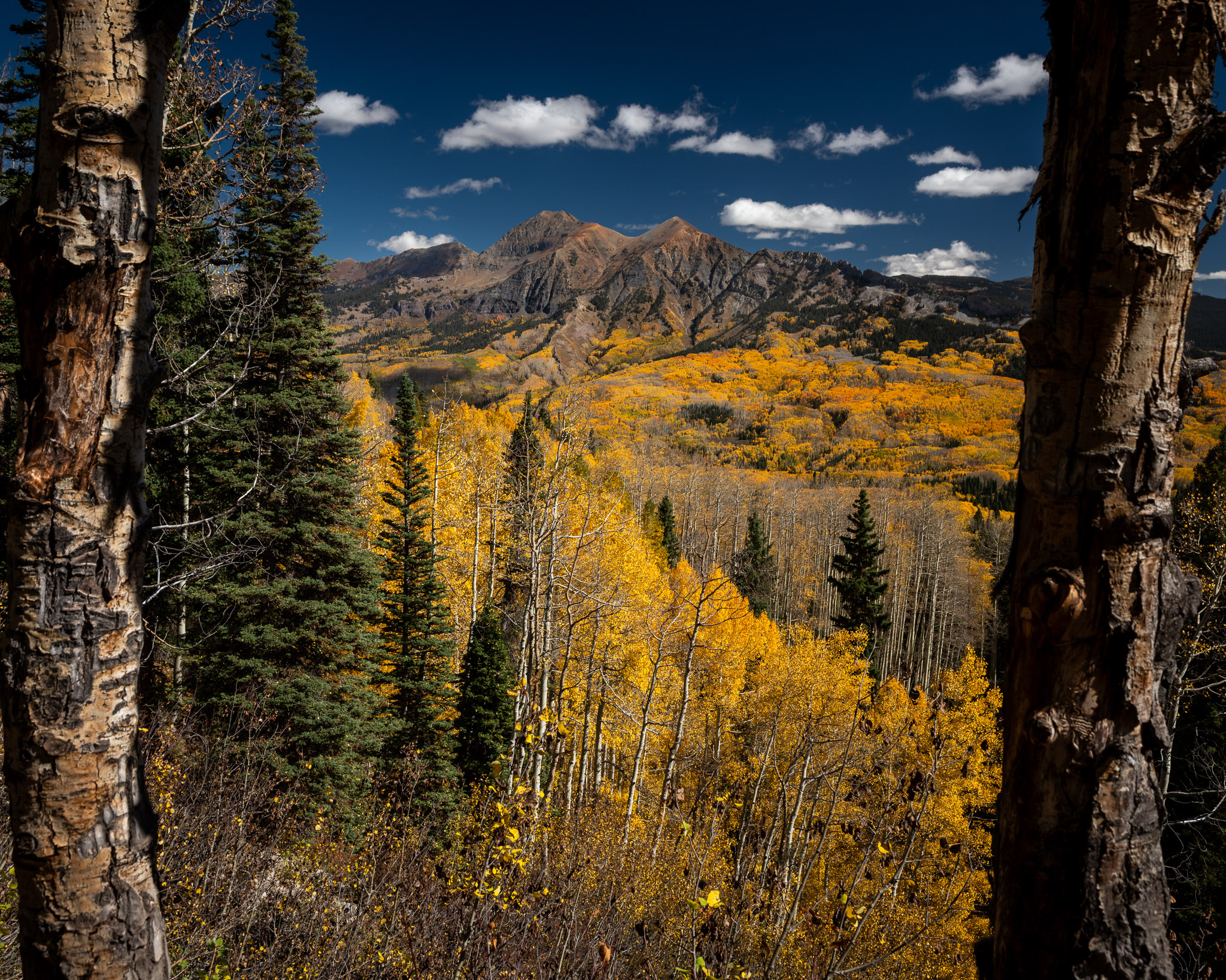
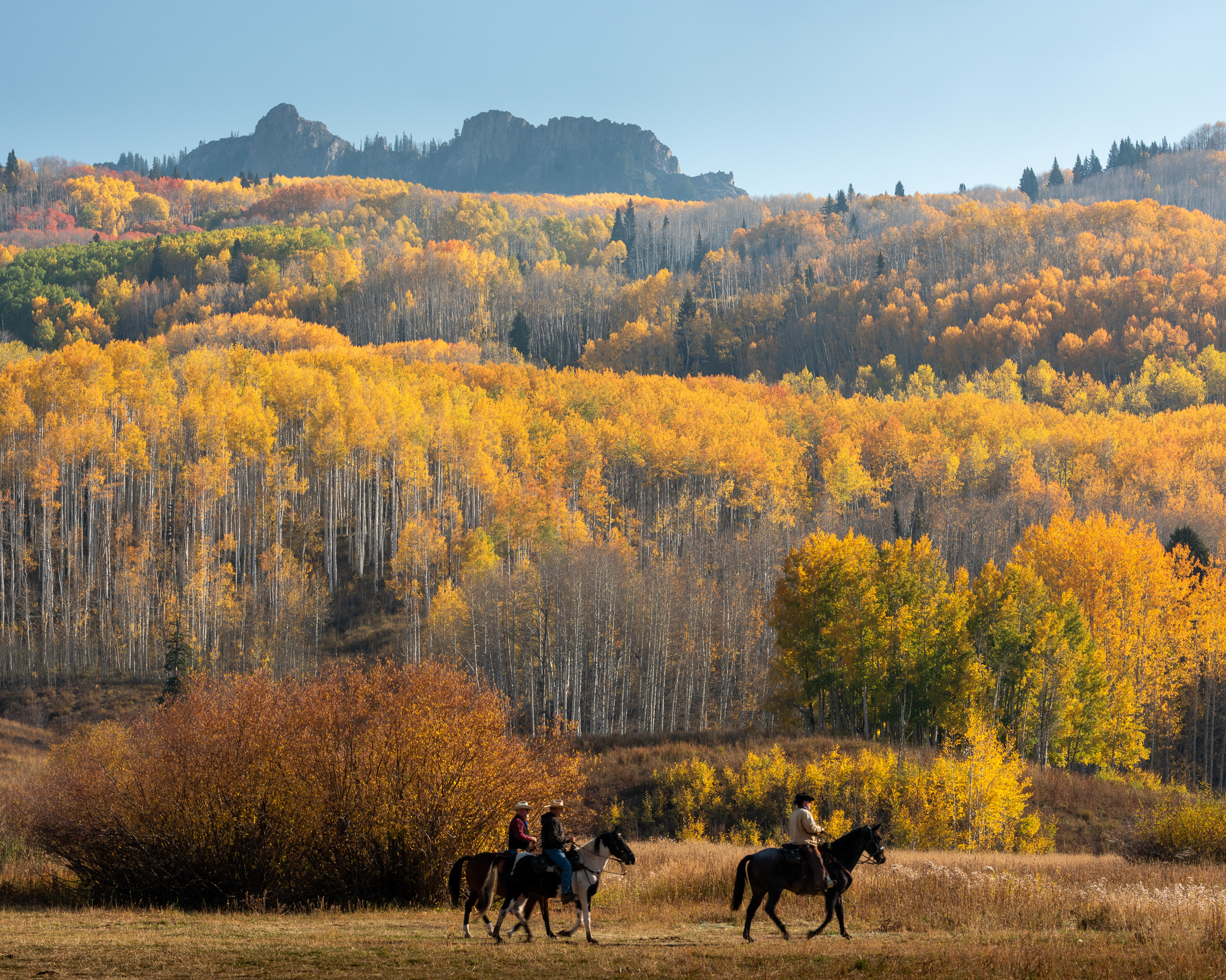
This forest, known popularly by Coloradans as simply “Kebler Pass” - the name of the high point on the dirt road separating the east and west halves of the organism - contains members young and old (even dead), tall and short, clones and mutants, blood, guts and all.
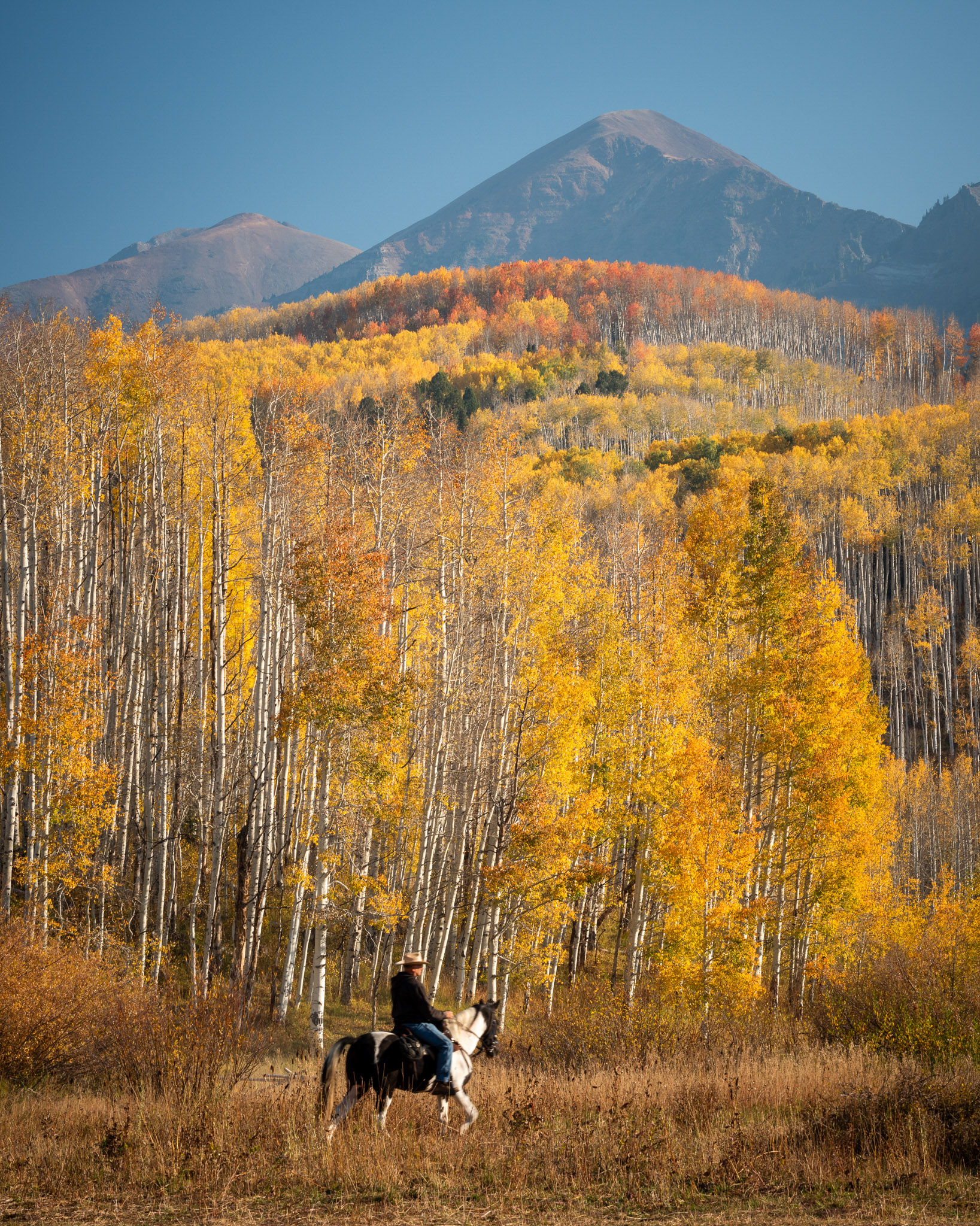
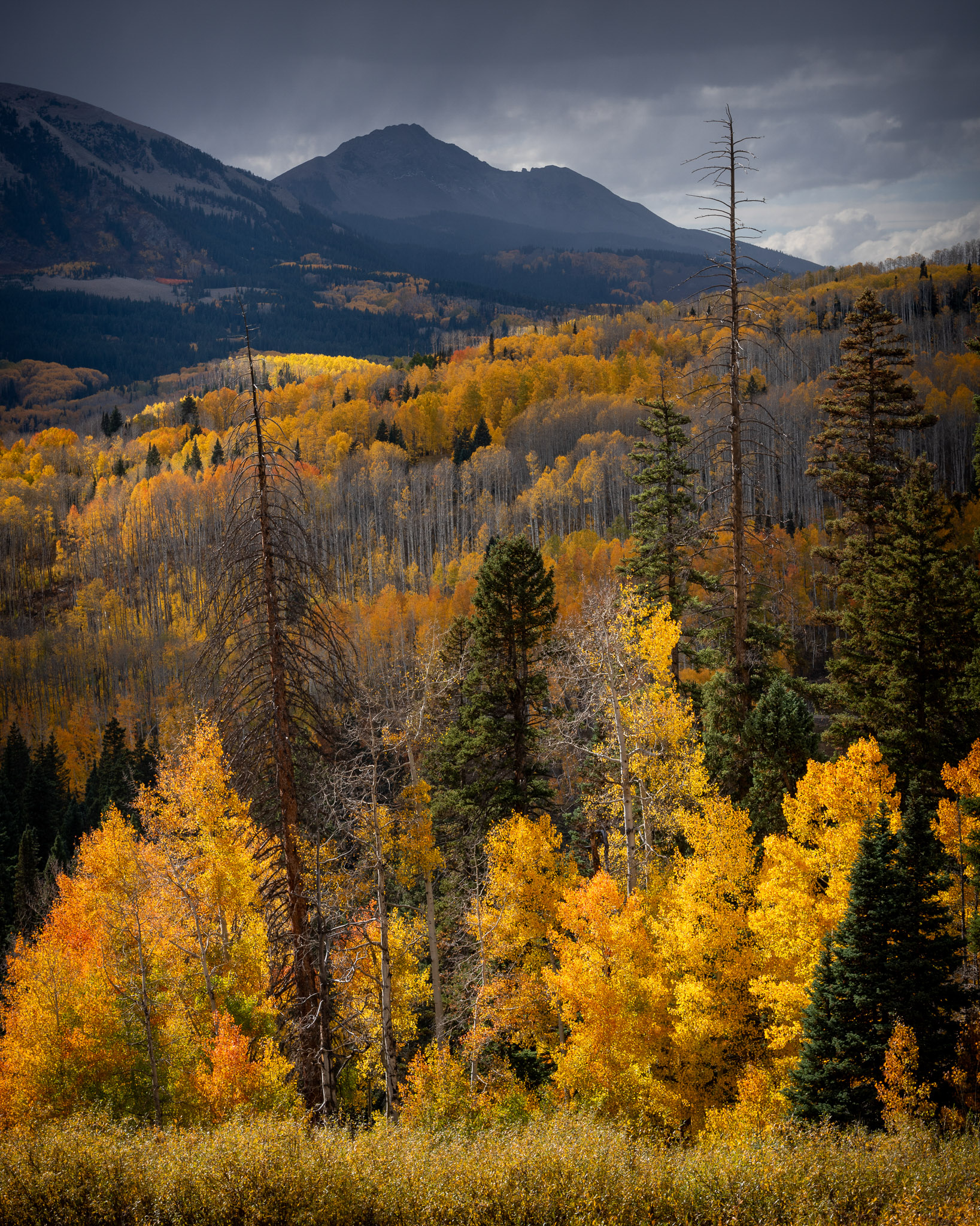
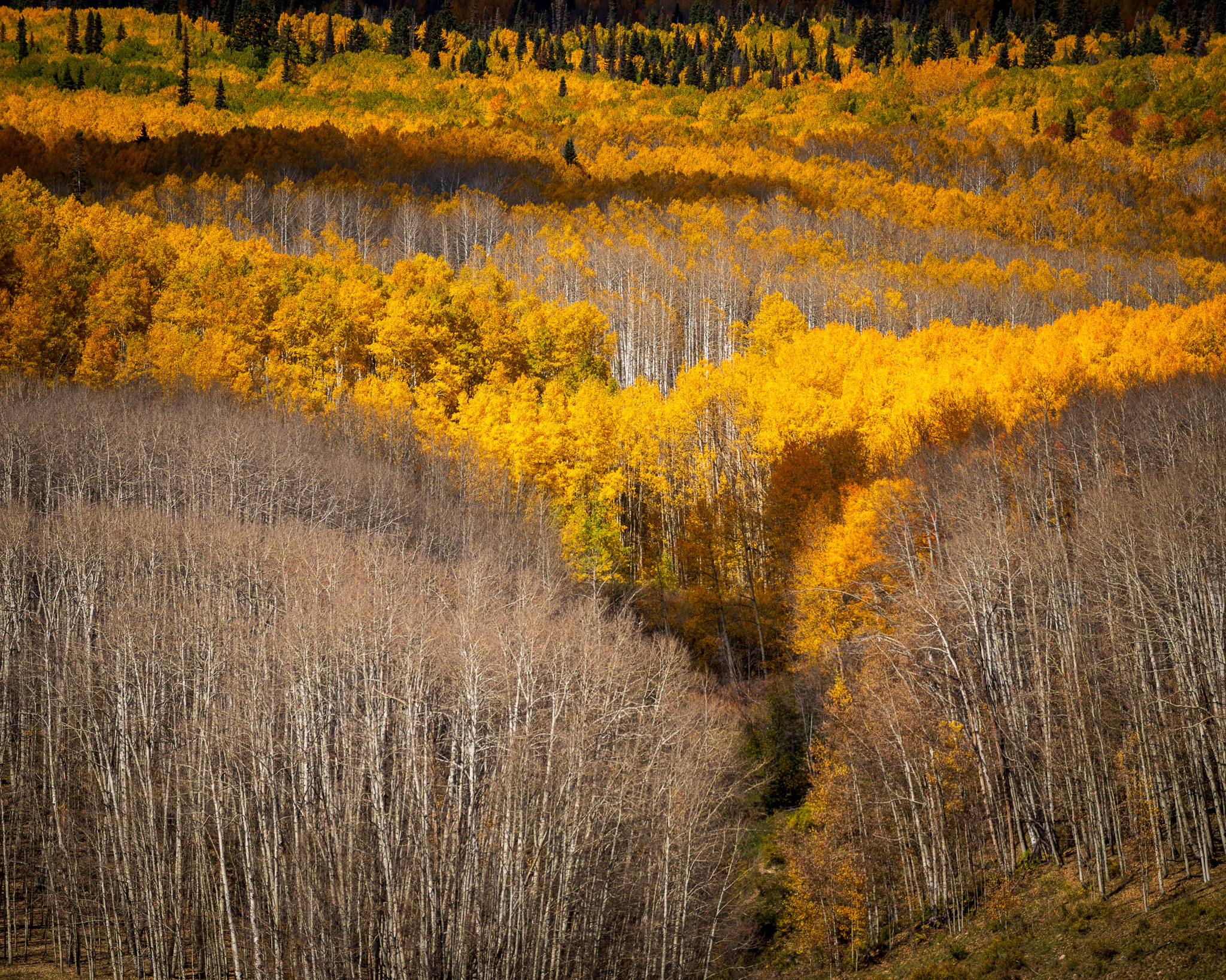
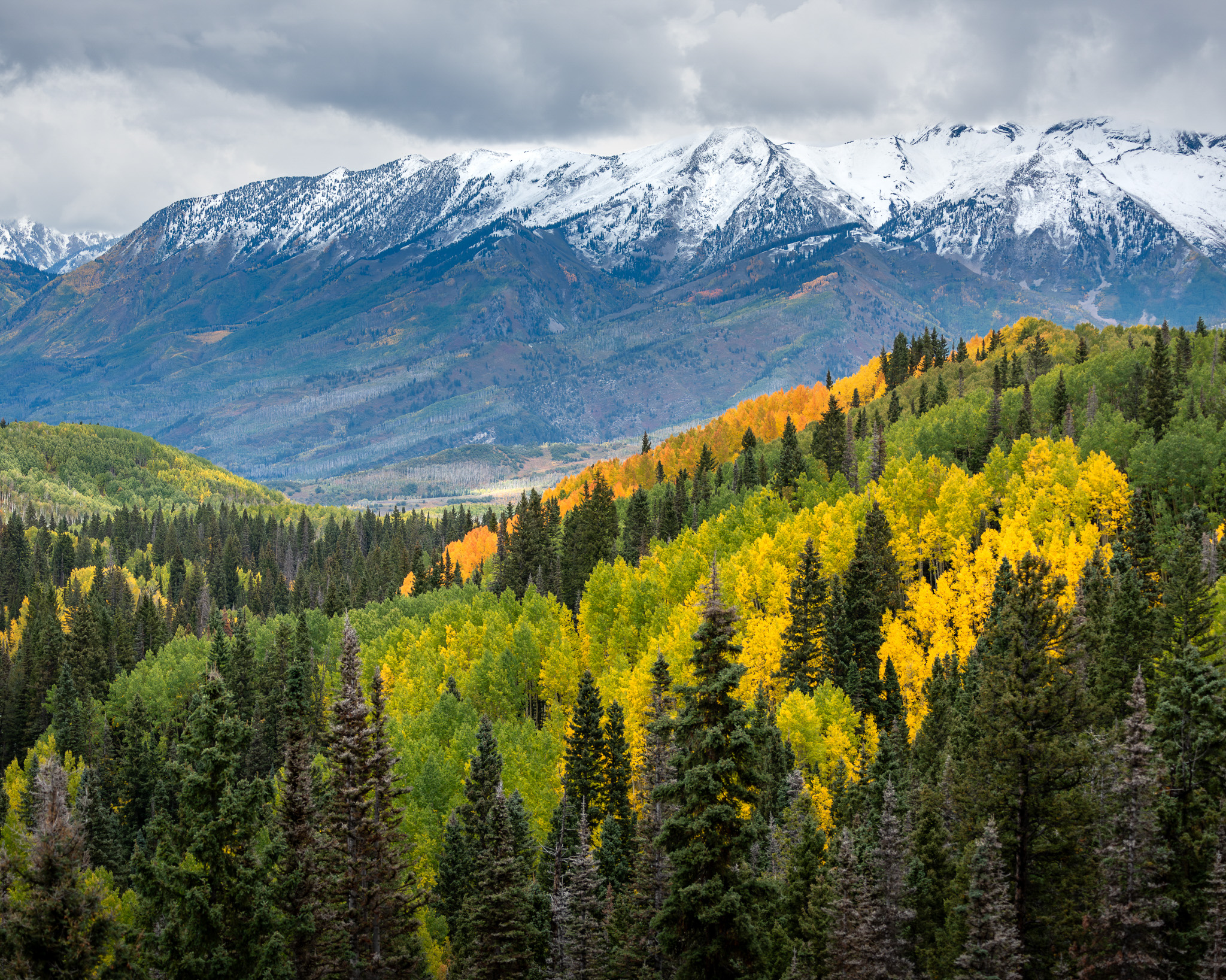
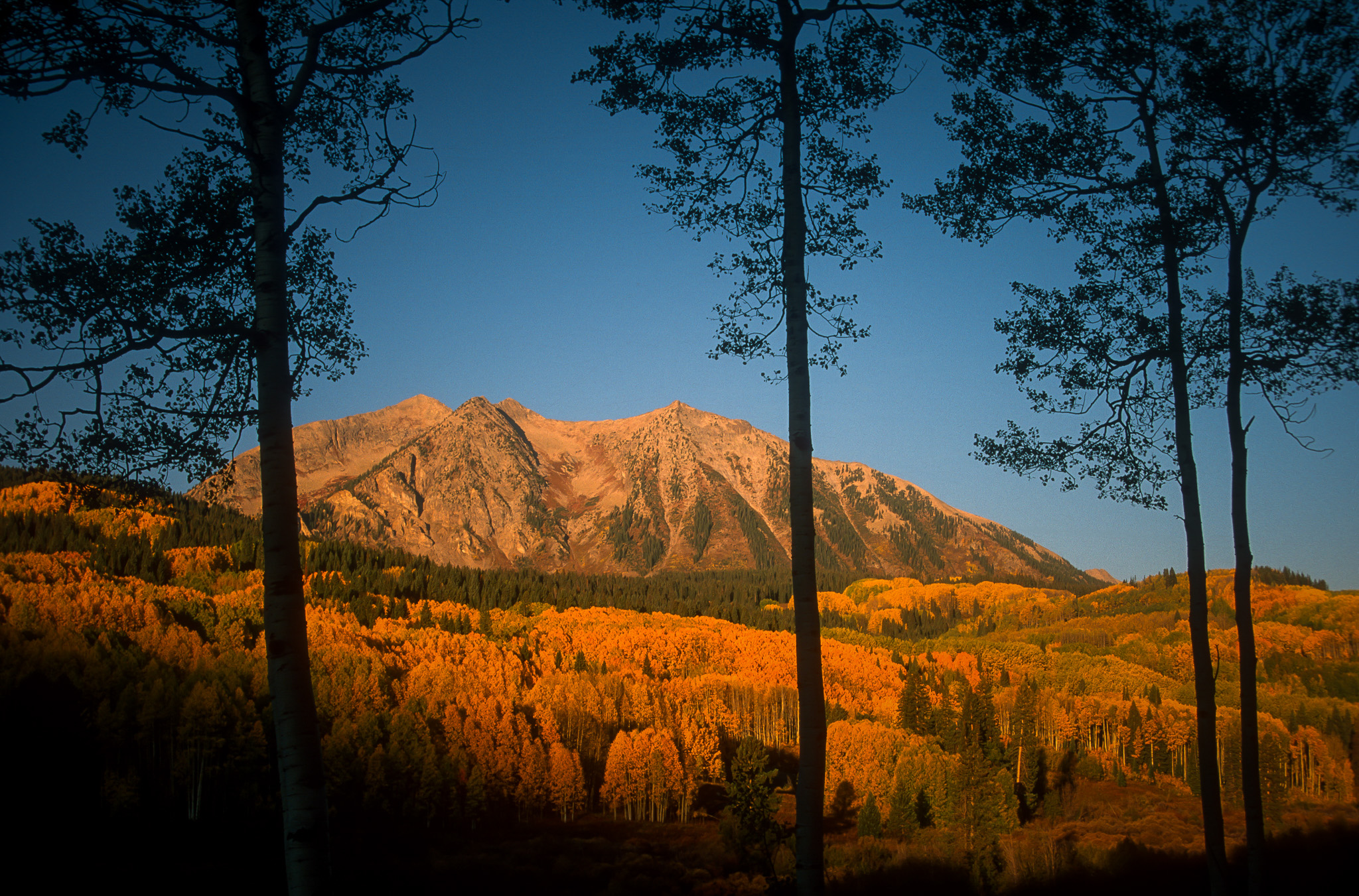
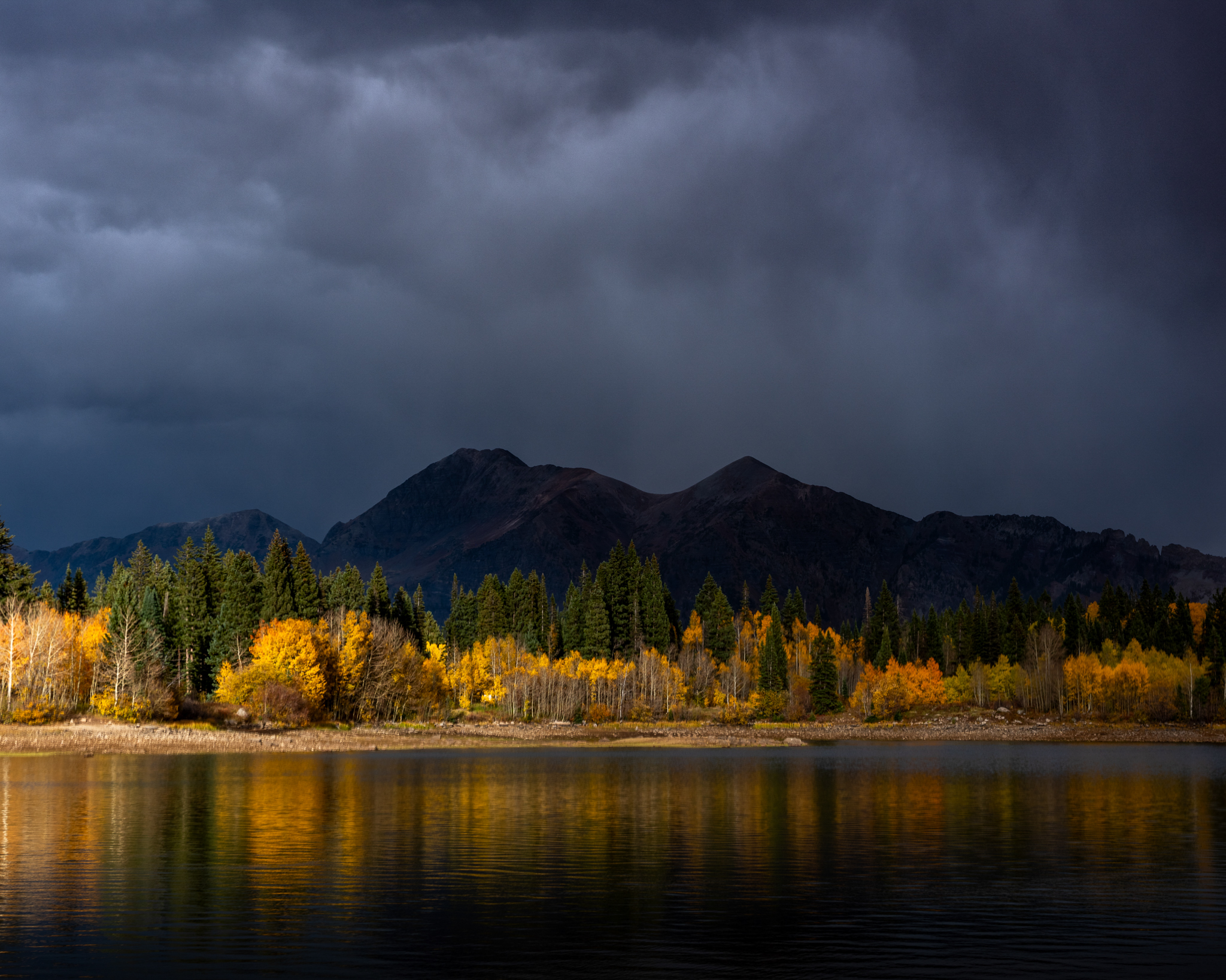
From high vantage points - like the Lily Lake Trail - the unity of this family is revealed. The canopy ripples in harmony with the land, rising and falling with the topography, punctuated with low summits and evergreen tree stands and divided by rocky ridges emanating from high summits at the limits of view. Family clans of aspens synchronize their coloration in autumn, painting the mountainsides in gold, green, and rare flashes of orange. When the sun is low, the whole forest seems to sing – a chorus of light and color.
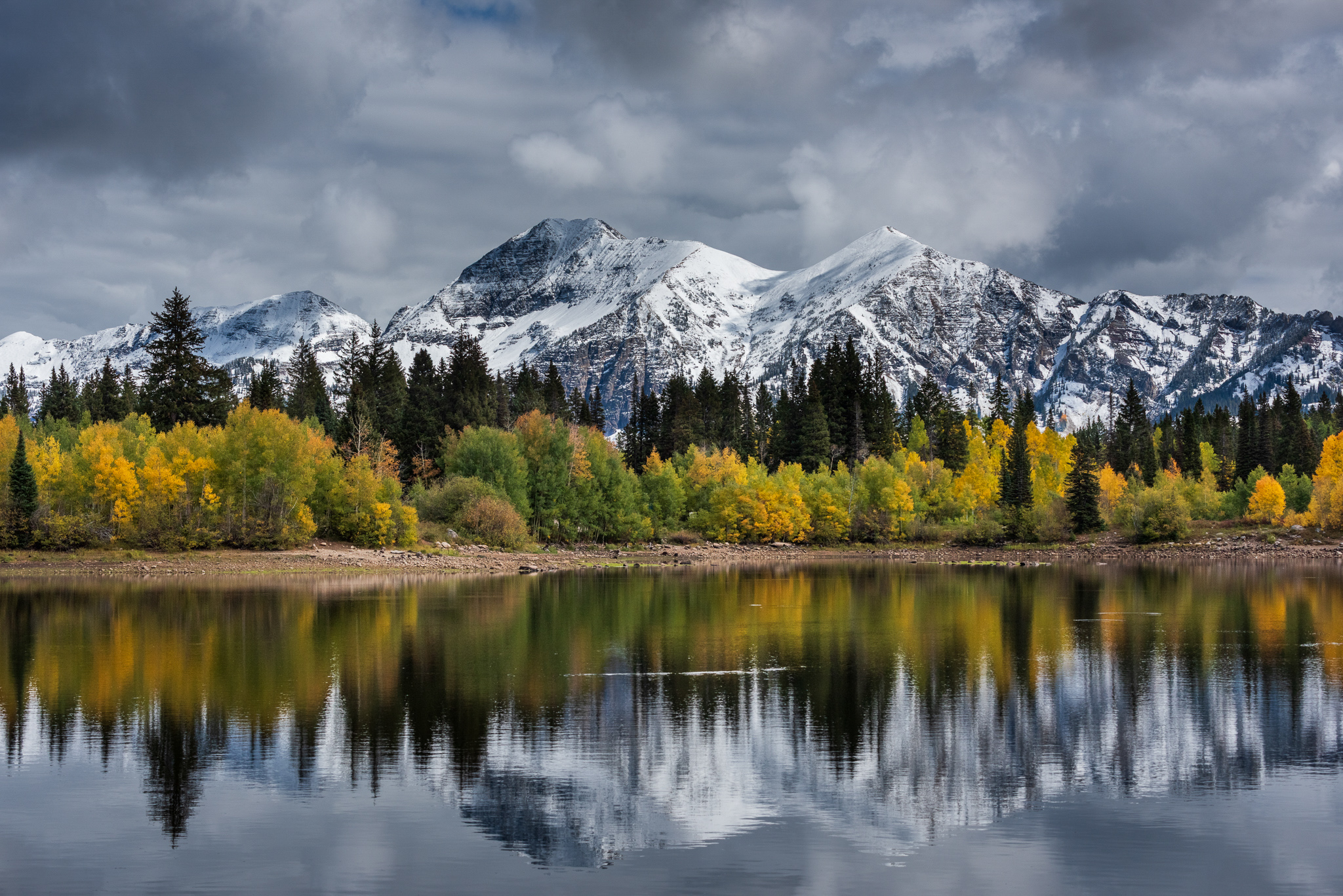
Over the years, by following many of the numerous dirt roads and hiking trails that crisscross the forest floor, I’ve found far less popular and even some unique views. Frankly, though, even the popular views are rewarding – spiritually and physically if not photographically. So, let’s move a little closer.
The Family: Stand
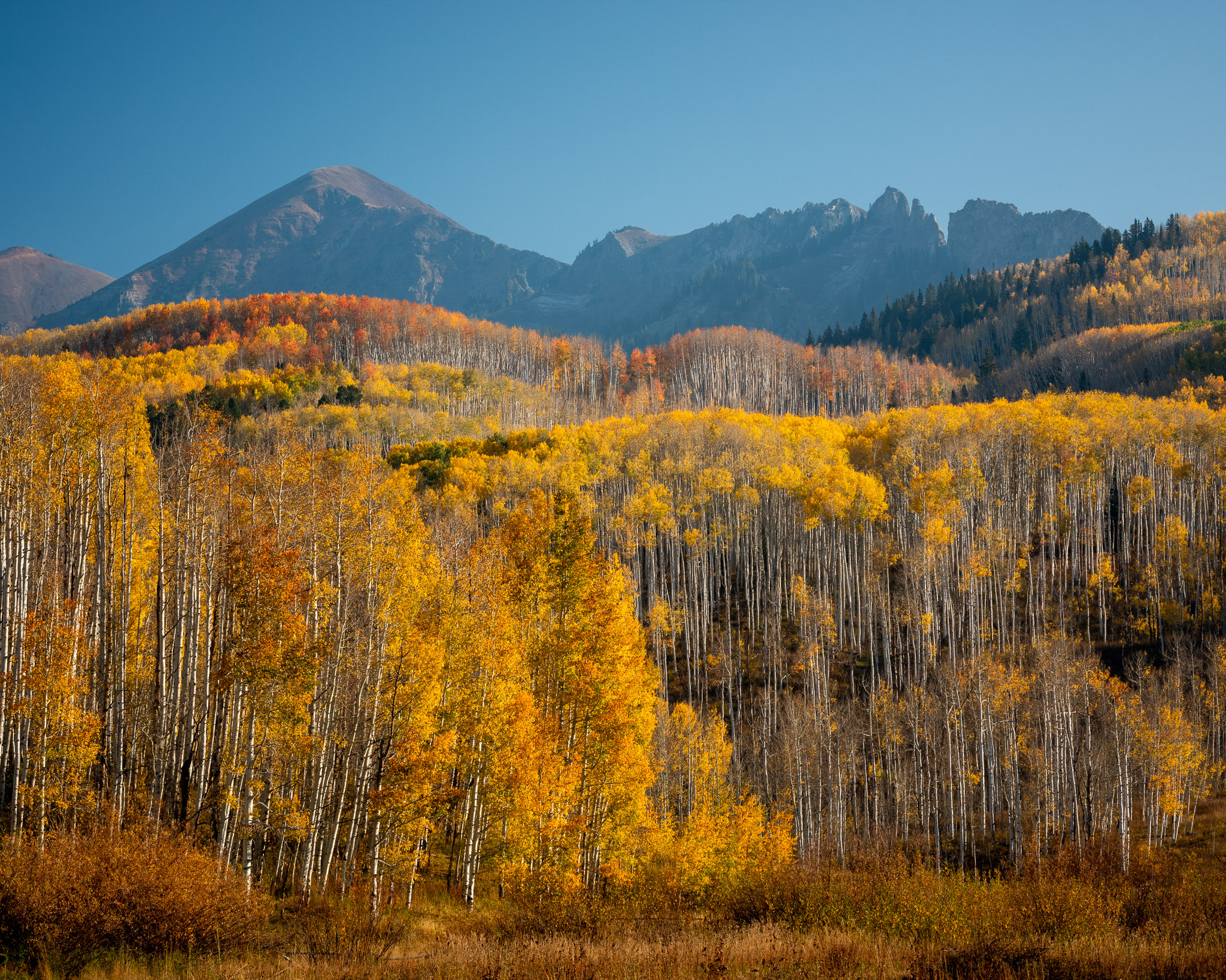
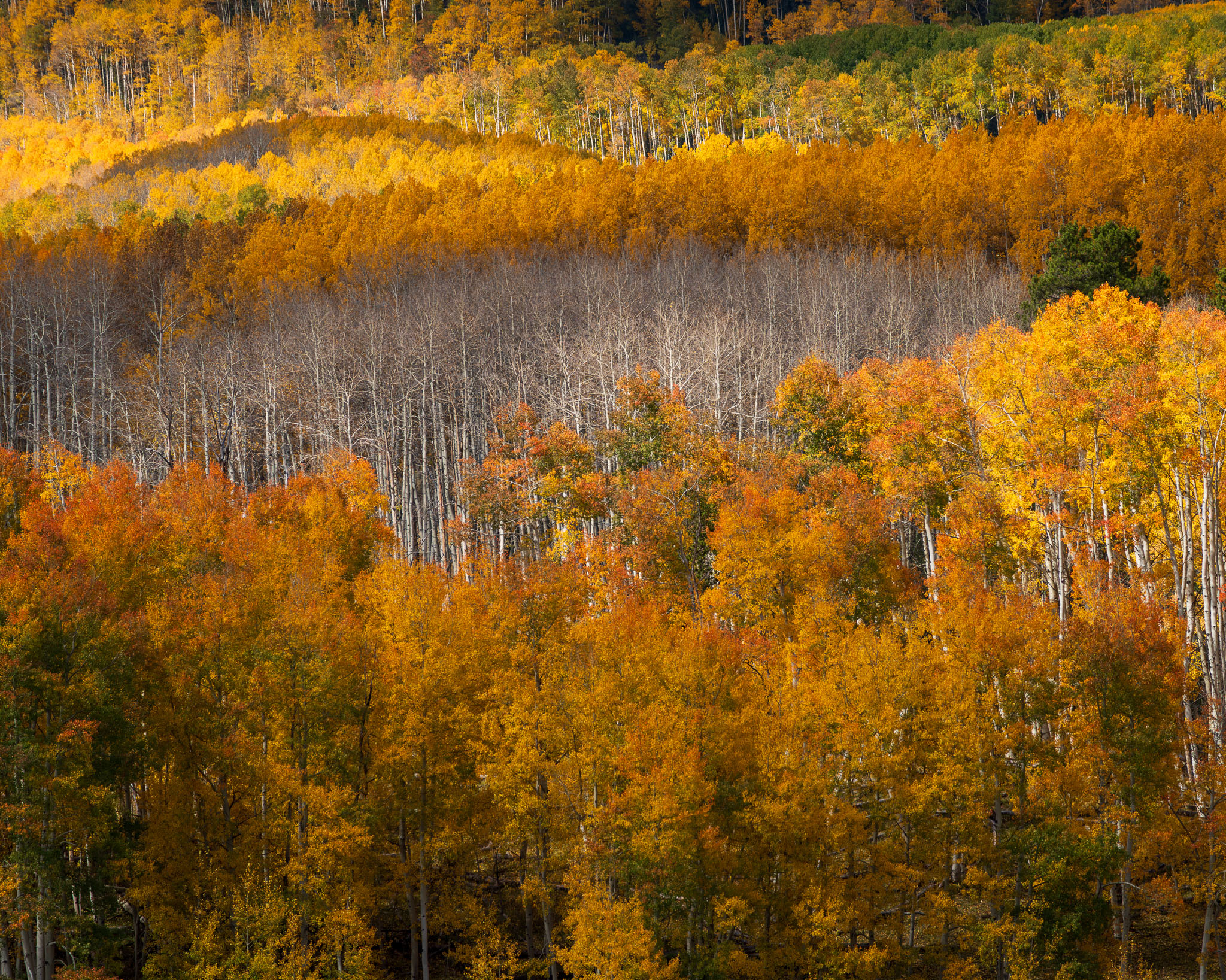
Within the Kebler Pass forest, family groups of quaking aspen trees, or stands, show off a defining group characteristic that attracts my inner artist’s attention: the visual pattern of repeating vertical lines created by their white trunks. This signature of the aspen forest pulls my eye with such strong gravity that I feel my own sense of belonging deepen and my emotional condition transform. The pattern is mesmerizing.
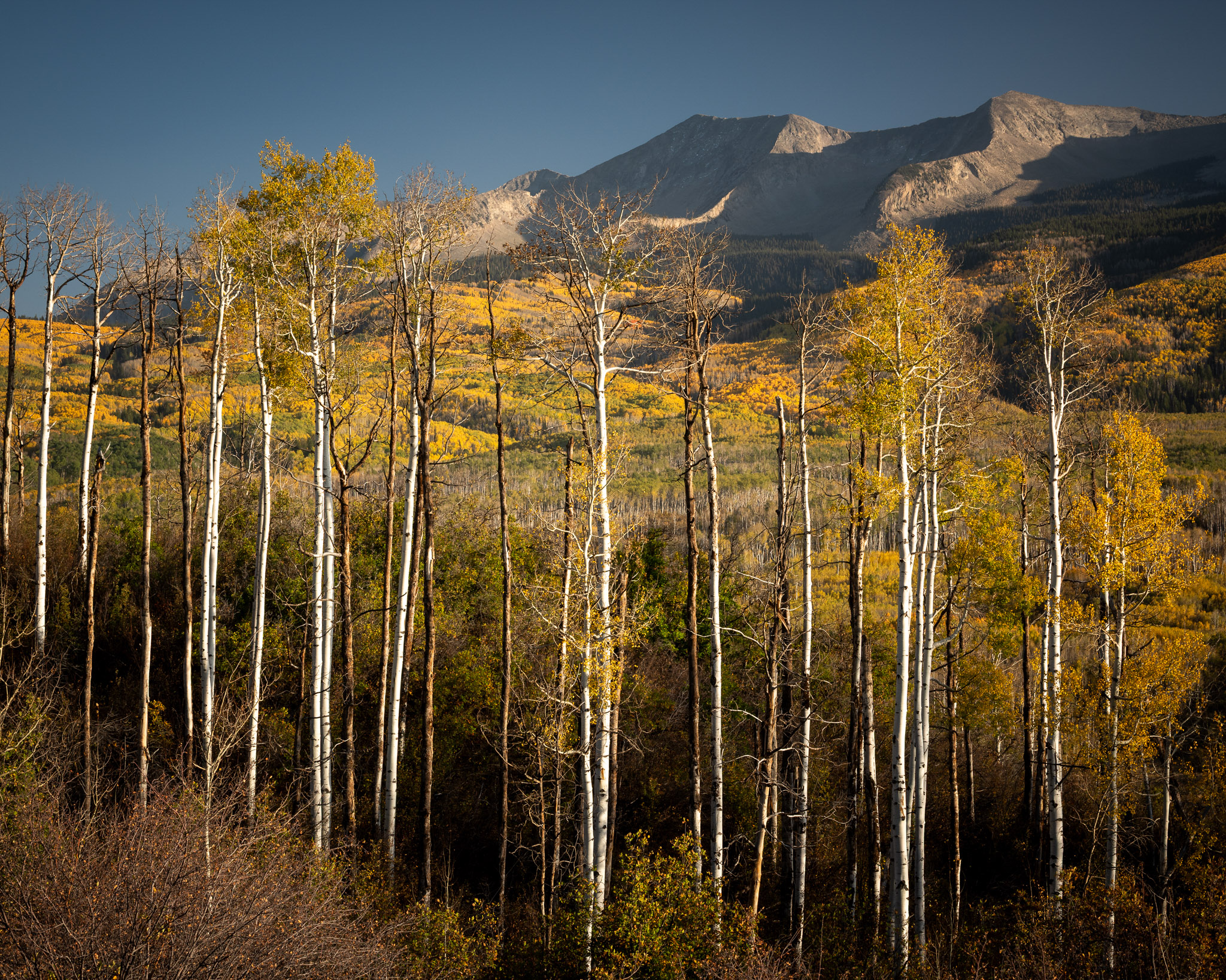
I feel an identity with the quaking aspen stand: stand tall, strong, silent. In their presence, I look inward and feel affection as I have for my own family. Their trunks can reach a couple of feet (60 cm) in diameter and when they do, their canopy dwarfs me. Above me, their branching covers me; I feel protected. In the moment, this is my family.
During autumn as sunlight penetrates the golden leaves of the canopy, the syrupy light casts a honeyed glow that chases away shadows. Overhead, the trunks stretch upward in perfect perspective, like arms reaching for the sky in a glorious chorus and the interplay of yellow and blue vibrating in my vision. It’s a scene that never grows old
Photographically, the stand is where the aspen’s character shines. Despite the who-knows-how-many images in my catalog of the simple yet powerful composition of isolated trunks, my favorite practice of intentional camera movement creates soft, evocative images that express the peace and connection I feel in their presence. These are my family portraits: quiet, contemplative, and spiritually radiant.
The Individual: Tree
Though each aspen is part of the whole, individual trees have their own stories. Unlike solitary species, aspens rarely stand alone; their strength is in their unity. Nevertheless, the clone displays characteristic features of the stand, such as a relatively straight and pale (or white) trunk, a high canopy of short, spreading branches, and a pyramidal or rounded canopy shape.
Yet, like any family, it’s the deviations from the norm that intrigue me. So, I find the younger clones at the edges of the stand, which grow with great energy, sometimes displaying unique mutations. Here, I also find backlit leaves that pop against the shaded interior, especially at dawn and dusk.
Gnarled or deformed quaking aspen grow where stressors are great. On steep terrain, heavy snow or soil creep forces trees to grow with a curved trunk. Although genetic mutations for twisted or contorted forms occur elsewhere, the quaking aspen trees at Kebler Pass generally display their strong dominant genetic pattern.
The Skin: Bark
From a distance, the bark of the Kebler Pass quaking aspen tree is very pale or white, but up close, details and deviations become clear and my photographic eye piques. I see smooth bark but also wrinkles, dark spots, and exfoliation, each a record of the tree’s life, much like human skin. Abstract patterns are born on fallen aspen trunks; there is much to explore here.
Perhaps the most striking human-like feature on quaking aspen tree bark is the “eyes,” oval scars left by self-pruning branches. As I wander the forest, I sometimes feel as though the aspens are watching, silent witnesses to my experience.
The Fingerprint: Leaf
If the stand is a family, the leaf is its fingerprint—unique, intricate, and endlessly varied. I would venture to guess that much like human fingerprints, no two leaves are alike. Their general shape is orb to ovate, with flattened and flexible stems, or petioles, that allows them to quake in the slightest breeze.
Autumn brings a riot of color to the leaves, and I love to photograph them up close. By positioning my lens just inches away, I create “view through” images - blurry and colorful veils that steal the fleeting beauty. Early in the fall, I find leaves with multiple hues and prominent veins, like a miniature world.
At the closest local scale, my macro lens reveals a complex, organic, cellular structure reminiscent of a medieval street pattern. A hierarchy of secondary veins branch off at intervals from a primary vein (a pinnate pattern). Smaller veinlets (higher-order veins) connect the larger, primary, and secondary veins in what is called a reticulate mesh.
A Peak Experience
Photographing Kebler Pass is a peak experience—both literally and figuratively. This ancient aspen organism offers endless inspiration for photographers seeking to capture the extraordinary within the ordinary. My approach, shaped by years of observation and affection, is to make portraits – family portraits - that span every scale: from the sweeping lineage of the ecosystem to the intimate fingerprint of a single leaf. My hope is that my photographs communicate more than a visual record; they express the personal connection and wonder I feel in the presence of this vast, living organism.