


 Join the conversation
 Subcribe to comment rss feed
Exhibition Review

Leo Catana
I live and work in Copenhagen, Denmark. I am an amateur photographer, who has pursued landscape photography over the last year and a half besides my day job. To me, landscape photography offers a unique possibility to connect to the land and its light.
Exhibition at the National Collection of Photography, The Royal Library, Copenhagen, Denmark. Open from November 18, 2025, to November 18, 2028. Curated by Charlotte Præstegaaard Schwartz.
The National Collection of Photography is hosted at The Royal Library, facing the waterfront of the harbour. To reach the exhibition area, one leaves the lobby’s panorama view of the waterfront and walks downstairs, entering four large rooms placed sub-sea level. The 300 square meter exhibition area is like a huge darkroom, where its lighting presents the many exhibited photographs from the 1840s to 2023 very well. Audio guides in Danish and English put the displayed photographs into context, and a catalogue (Meyer and Schwartz 2025) supplements the exhibition.
The exhibition is divided into four historically organised rooms. The first is the largest, and it is dedicated to pictorialism from the 1880s onwards and exhibits 38 original prints; the second to modernism in the mid-20th century, displaying 25 prints; the third to conceptual photography from the 1960s onwards, presenting 18 prints; the fourth room showcases photography in the service of environmental activism over the last 50 years or so. The title of the exhibition is vague: What is meant by ‘world’? The natural world? The social world? Or something else? Likewise, what is the extension and meaning of ‘around’? And what about ‘us’? The title is indeed accommodating, and it allows the curators to present many original prints by international and Danish photographers acquired by the National Collection of Photography over several decades. The curators have established an unusual, interesting and timely dialogue between landscape photography pursued by pictorialists, conceptual photographers and contemporary photographers dedicated to environmentalism.
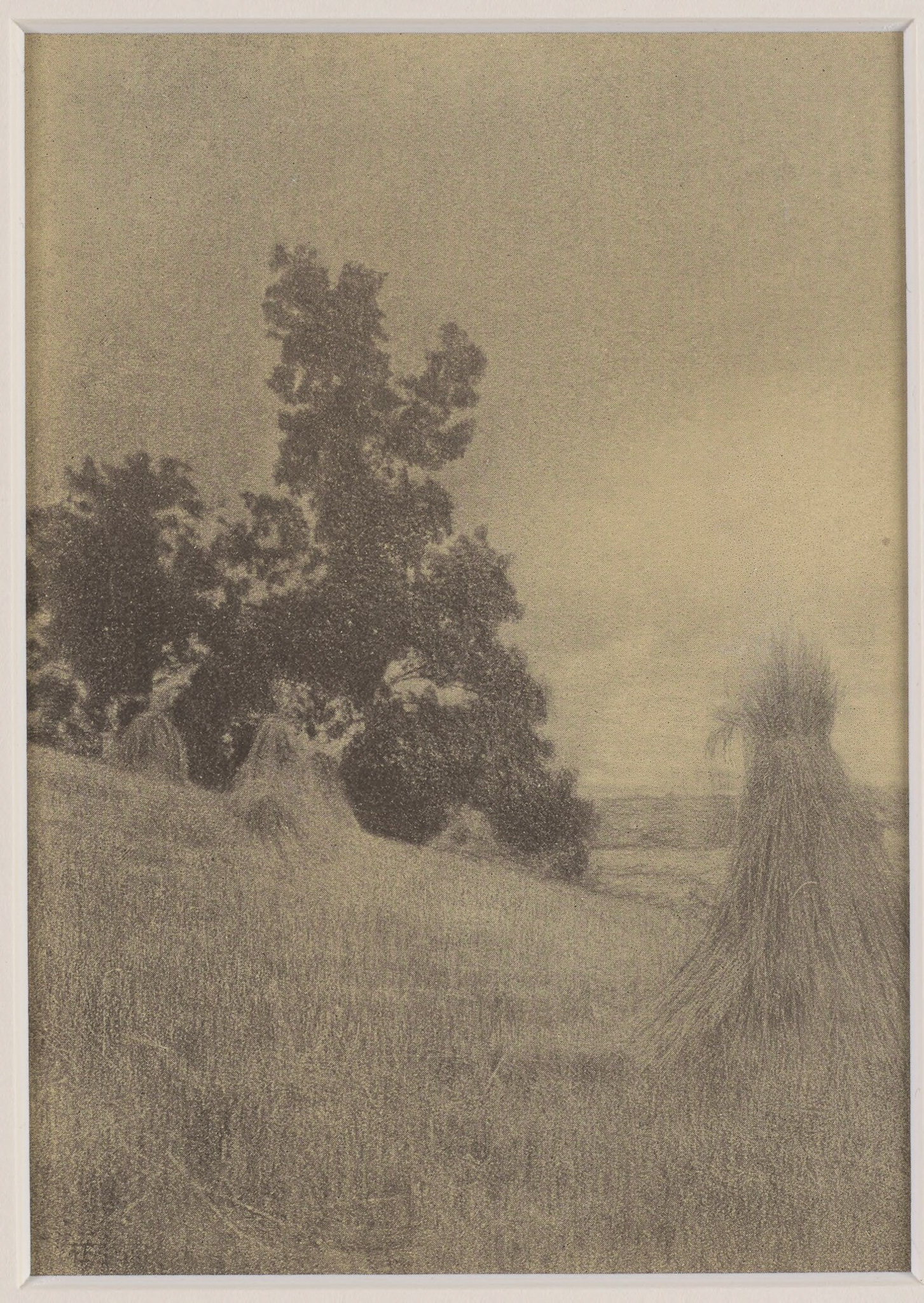
Alfred Stieglitz (1864–1946), September (1899). Photogravure, 160 x 115 mm.
The Pictorialists
The first room is dedicated to pictorialism, especially Danish pictorialism. It displays prints that inspired the early pictorialism, like those by William Henry Fox Talbot; prints by internationally famous pictorialists, like Julia Margaret Cameron, Gertrude Käsebier, Alfred Stieglitz, Heinrich Kühn, Clarence H. White, Albert Steiner, Edward Steichen and Alvin Langdon Coburn; but also prints by Danish pictorialists active between ca. 1890 and ca. 1920, e.g. Carl Frederiksen, Julius Folkmann, Julius Møller, Niels Christian Bang, Sigvard Werner, Hans Billeskov Jansen Cramer and Paul Georg Kobierski Bentzon. Many of these Danish pictorialists published their works in the magazine Amatør-fotografen (The amateur photographer), which came out 1912-1919. Given that the final print was decisive to pictorialists, it is rewarding to see so many original prints, produced via a variety of techniques on a range of different papers.
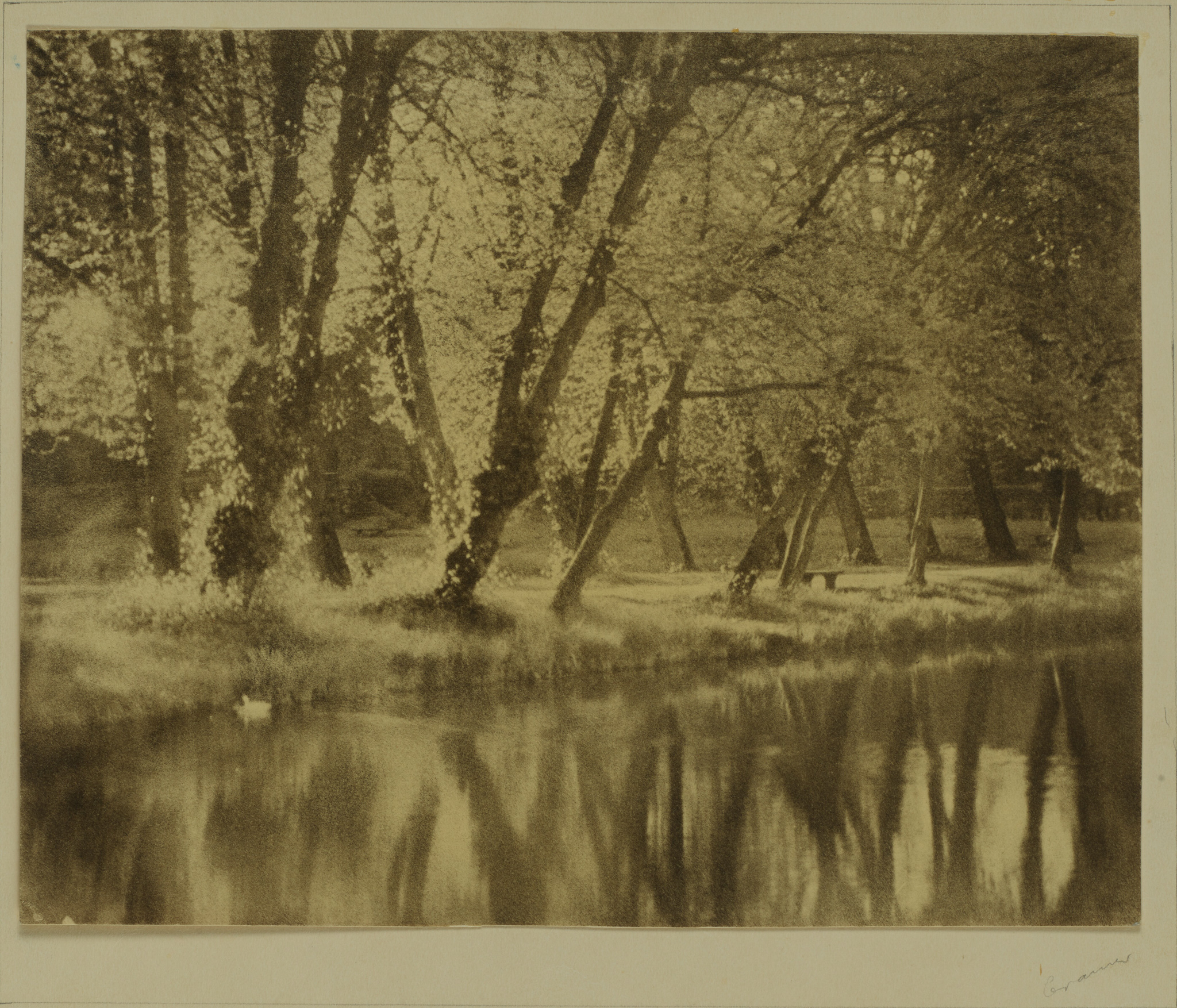
Hans Billeskov Jansen Cramer (1891-1973), Skovparti [Piece of Woodland] (after 1906). Gelatin silver print, 235 x 295 mm.
Thage is the first art historian who has thoroughly examined the rich material pertaining to Danish pictorialism 1890-1920: The biographies of the Danish pictorialists; their images presented and discussed in Amatør-fotografen and other outlets; their communication with other pictorialists outside Denmark, especially European and American ones; their participation in international pictorialist exhibitions; and, not at least, their texts explaining their artistic intention governing their photographs.

Gertrude Käsebier (1852–1934), Pastoral (1903–1907). Photogravure, 213 x 166 mm.
This material was not covered in the otherwise excellent publication on pictorialism produced by Nordström and Padon in 2008. As Thage documents, Danish pictoralists were very well connected to the international community of cutting-edge photographers, and in 1920 they organized an exhibition in Copenhagen boasting 240 prints by American photographers, 100 by English photographers, including photographers that were to steer photography away from pictorialism and towards straight photography, e.g. Alfred Stieglitz, Imogen Cunningham, Edward Weston and Paul Strand (Thage 2020: 74-78).
Thage’s book presents a rich selection of Danish pictorialist prints, and it goes a long way to distinguish various strands within pictorialism, which is important when assessing the various criticisms that have been levelled against pictorialism. Notably, she distinguishes between at least four groups of Danish pictorialists:
-
- Landscape photographers, typically photographing local landscapes imbued with atmosphere, e.g. Carl Frederiksen
- Ethnographic photographers, documenting fishermen, peasants and other groups in Denmark, e.g. Julius Folkman;
- Photographers inspired by the Englishman Henry Peach Robinson and his staged and strongly manipulated images, which sampled dozens of images in order to achieve artistic effect, and which also inspired photographers to hand paint prints in order to enhance an artistic or painterly effect. A Danish example is Siegwart Werner, who inserted swans on lakes etc.;
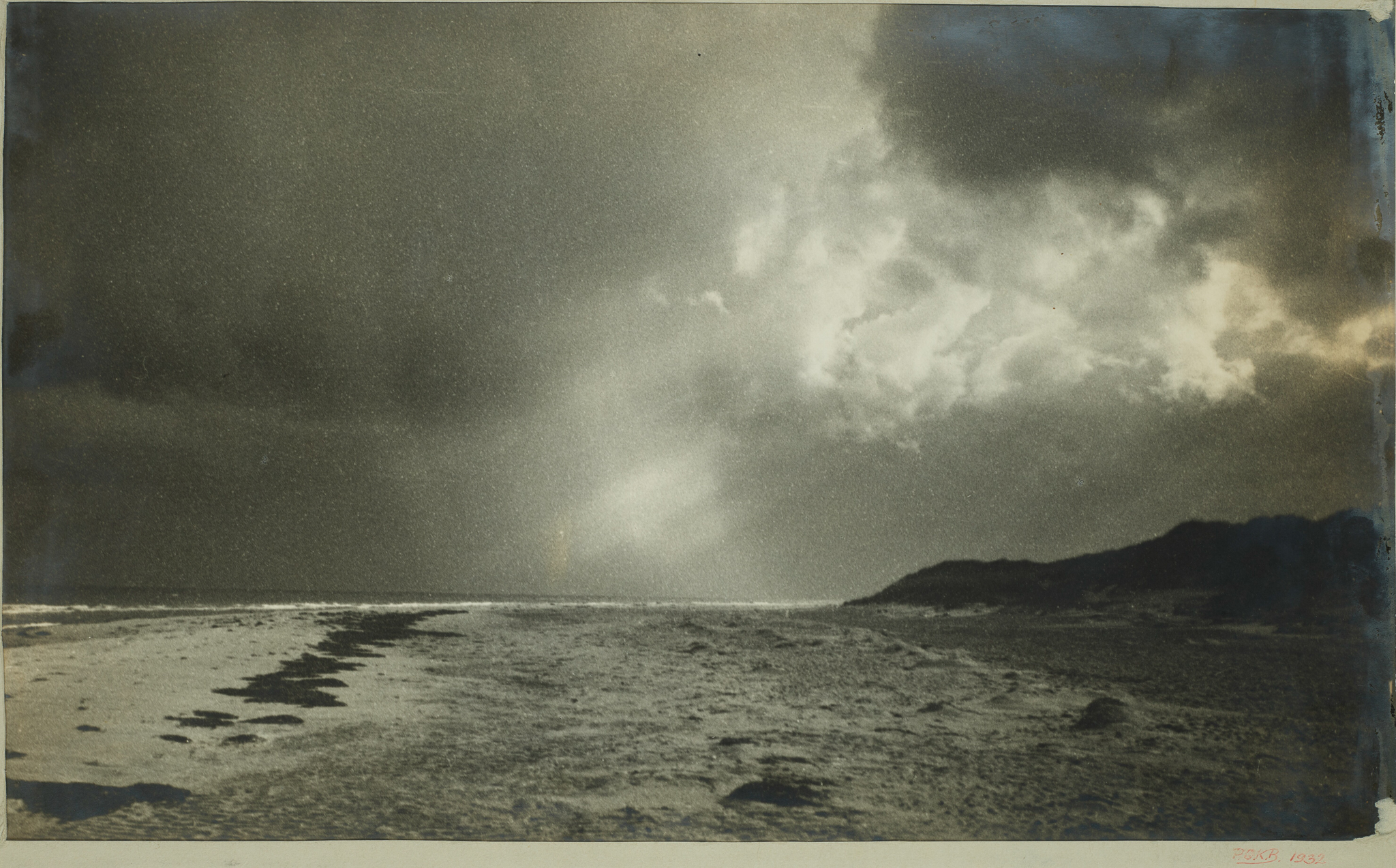
- Portrait photographers making use of soft focus, high key tonalities and light vignetting, e.g. Paul G. K. Bentzon. Today, pictorialists active around 1900 are sometimes regarded as one homogenous group, but Thage points out that pictorialism looked different from “the inside” of the movement.
Pictorialists thus perceived marked fractions among themselves. For instance, the photographer Johan Christoffer Stockholm, identifying with (b), effectively reduced pictorialist prints belonging to group (a) to the mannerisms of group (c), and thus rejected the works of group (a) (Thage 2020: 93-94). Thage’s work is not only valuable to anyone trying to get a nuanced and historically informed understanding of the pictorialist movement, but also to anyone trying to re-assess predominantly negative judgements that posterity have passed on the pictorialists: More often than not, such verdicts have targeted one of the sub-groups in pictorialism — e.g. (c) and (d) — and unduly generalized its evaluation to the entire pictorialist movement, even though it was heterogeneous and diversified, and even though several of its sub-groups were not adequately described in such generalizations.
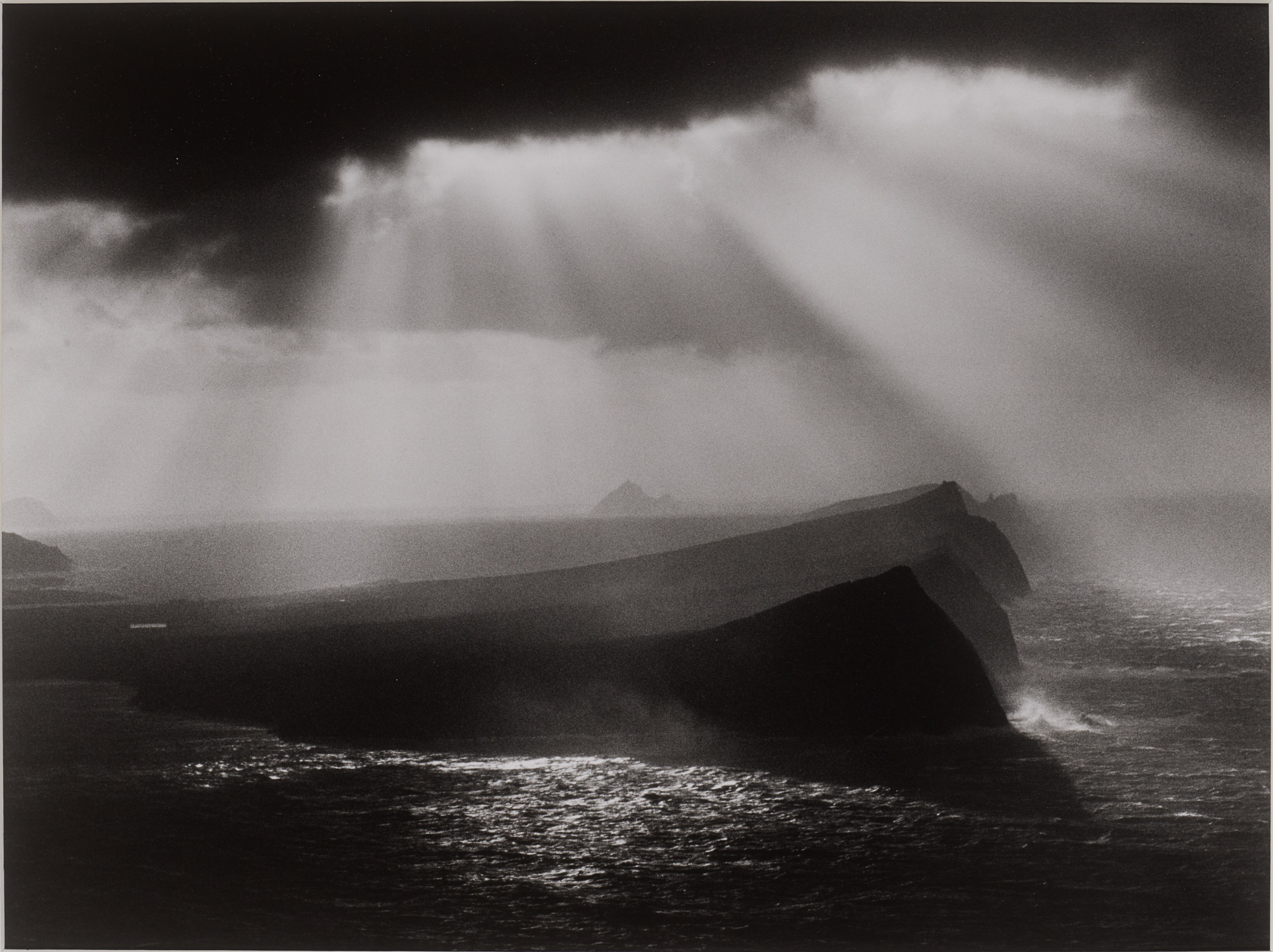
One of the merits of the exhibition is that it suggests an ongoing influence of pictorialism by mixing the prints of the pictorialists with those of contemporary landscape photographers, notably the Danish photographer Kirsten Klein, whose atmospheric black and white landscape photographs from her book on Ireland (1998) connect aesthetically with the prints by Carl Frederiksen and Paul G. K. Bentzon.
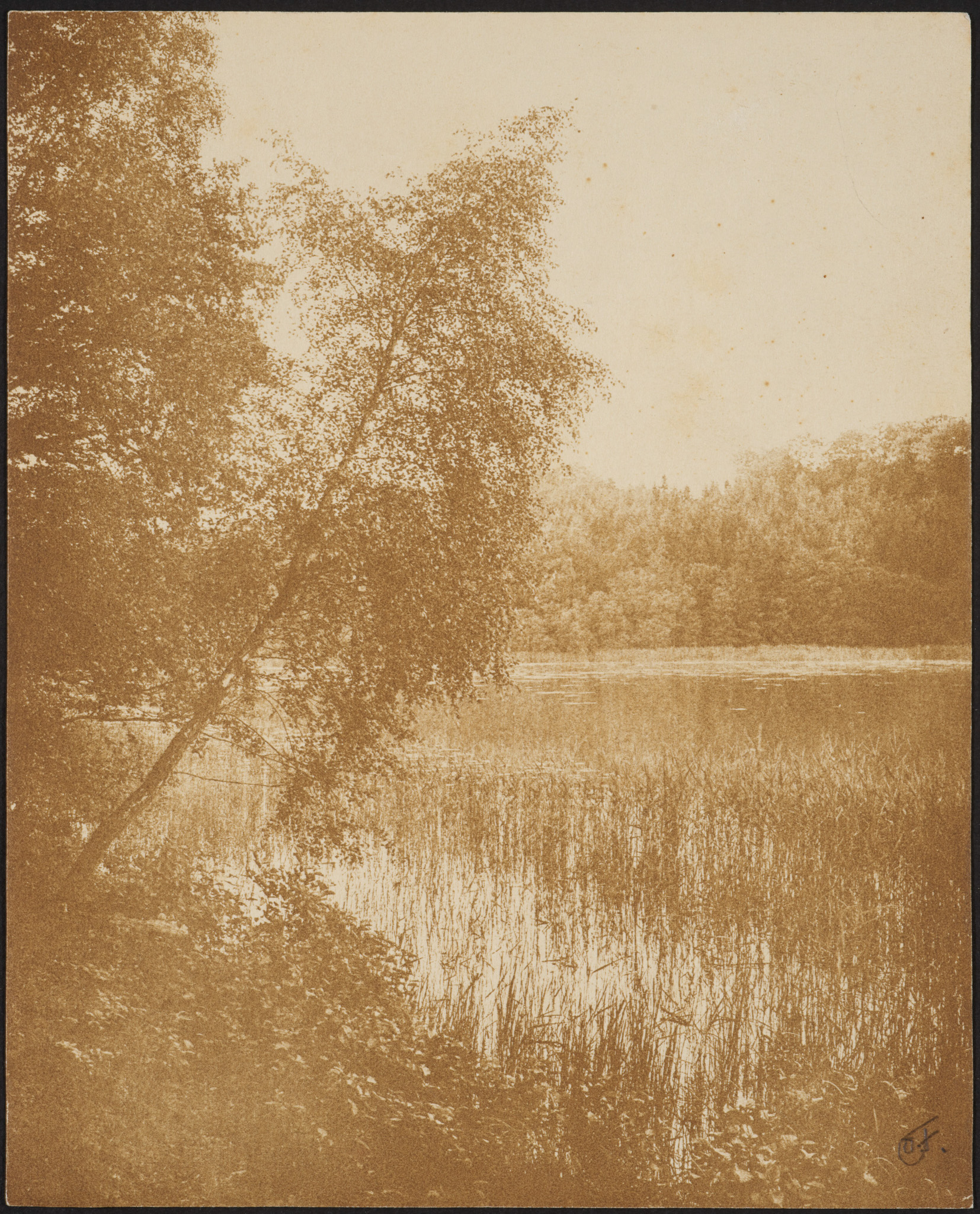
Carl Frederiksen (?-1922), untitled (1910-1919). Gum bicromate, 195 x 157 mm.
Carl Frederiksen
One of the most talented Danish pictorialists belonging to group (a) was Carl Frederiksen (?-1922), who published his landscape photographs in the magazine Amatør-fotografen 1912-1913. Many of his prints, including those on display, are of what we would now call intimate scenes in atmospheric and moody conditions. In 1913, he published an essay explaining the motivation and meaning that he found in landscape and nature photography, entitled ‘I Naturens Skole’ (‘In the School of Nature’). Extracts from this exceptionally illuminating essay are read aloud in the exhibition’s audio guides. Frederiksen explained that he approached “photography as a unique way of venerating nature”, and he confided that he only photographed locally, that is, in and around Copenhagen, partly because he was too poor to travel, partly because he found his local, natural surroundings photographically inexhaustible. He argued that sensibility to nature’s impressions may well be inborn to many, but that it had to be nurtured consciously in order to become personal and serve to venerate nature; landscape photography was one way of making that happen. The photographs thus made were a documentation of a landscape and an expression of a personal experience of unity with that very same landscape. There is a romantic ring to these words, but Frederiksen pointed out Japanese art and its purity, simplicity and concentration on a delineate subject as his source of inspiration.
He stated an ambitious mission for all practitioners of this form of photography: It should serve as a counterweight to the effects of the mass production of his age, it should enhance personal and individual sensibility — a sensibility that was otherwise threatened by mass production and its tendency to generate conformity and inattentiveness. He regarded industrialisation not as a source to material affluence, as most of his contemporaries would do, but as a source to a new form of poverty. As he explained, “the lack of conscious individuality was the cause of the poverty for which I was seeking a remedy”. (This and the following translations are by LC.) He continued: “As time went by, I followed a solitary road. I now understand that the meaning of photography is not to create ornamentation, but to empower the eye to become a truly seeing faculty, which must be nurtured, and which still leaves much to be hoped for” (Frederiksen 1913: 117-123). This intention has very little to do with photography as an emulation of painting, as often said about pictorialism: Photographing nature, according to Frederiksen, was a means to such training of the eye and a means to achieve a unitary experience with nature, or, as he formulates it, to venerate nature. Clearly, to him, nature and landscape photography, was not an emulation of painting. Frederiksen’s prints exemplify these precepts — they are personal and local, they display tonal volume and soft tonal transitions between tonalities, but they are without gimmicks like soft focus or hand painting added to achieve painterly effects.
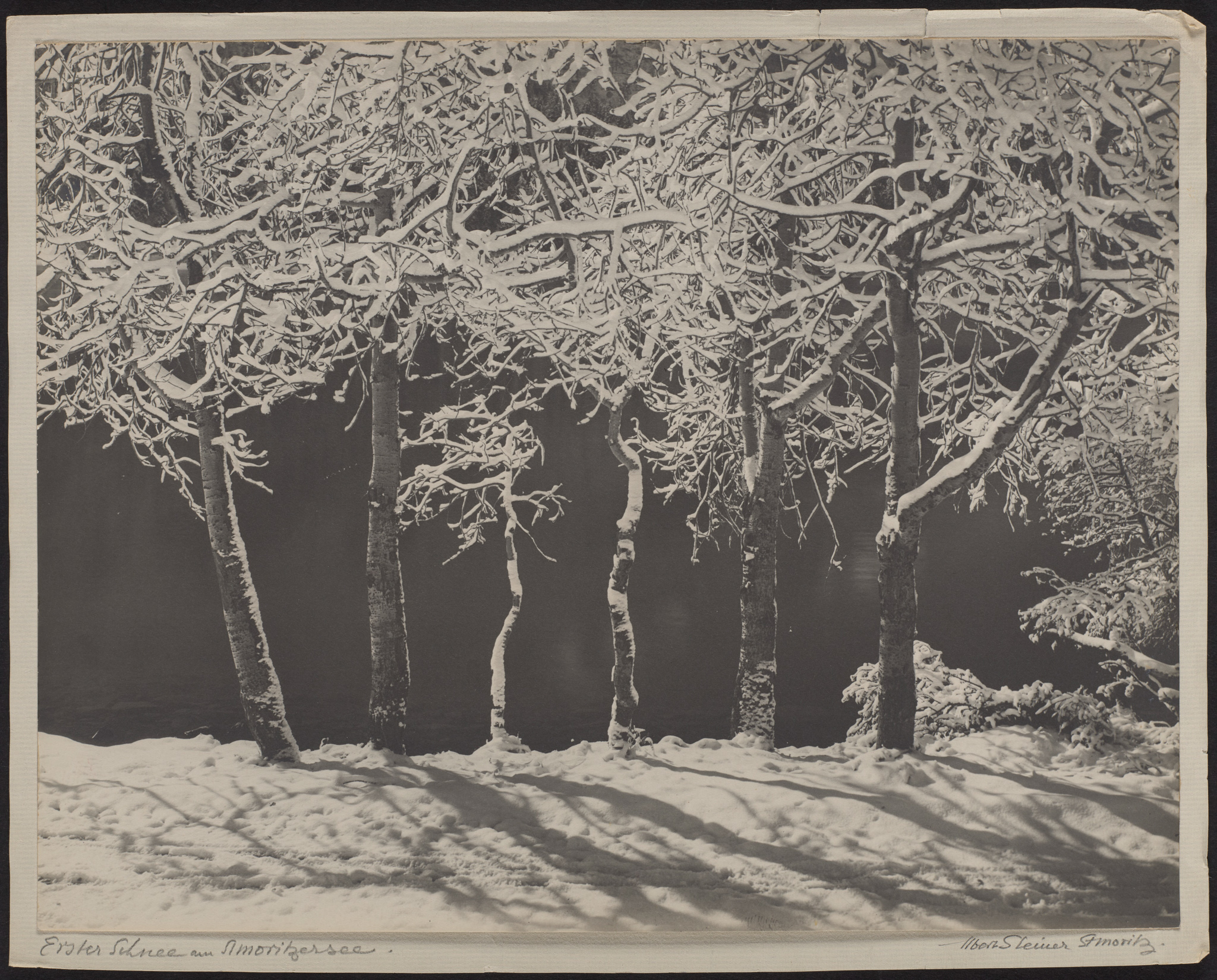
Albert Steiner (1877–1965), Erster Schnee am Moritzersee [The First Snow at St. Moritz Lake] (1918–1922). Silver print, 222 x 282 mm.
Modernist photography
The second room in the exhibition presents modernist photographs. Here we find photographs from urban settings: International photographers like Imogen Cunnigham and Albert Renger-Patzsch, but also Danish modernist photographers like Keld Helmer-Petersen and Marianne Engberg, as well as its adaptation in commercial photography, as in the case of Rie Nissen. It is surprising that the curators have avoided the well-known dialogue, in the context of landscape photography, between pictorialism and modernist straight photography. Instead, they have chosen to put pictorialism in connection with conceptual photography, thereby setting up a timely dialogue.
Conceptual photography
As mentioned already, the third room is dedicated to conceptual photography. In the exhibition and the accompanying catalogue, the curators suggest lines of continuity from the early days of conceptual photography in the 1960s up to present time (Meyer and Schwartz 2025: 124). If conceptual art, and its conceptual photography, is the institutionally dominating form of expression in our postmodern art world, much to the detriment of modern nature and landscape photography, as argued by David Ward (2008: 66-94) and Guy Tal (2021: 53-55), then the third room is of interest to contemporary nature and landscape photographers, because it suggests one reason why this form of photography is largely left outside the art institution.
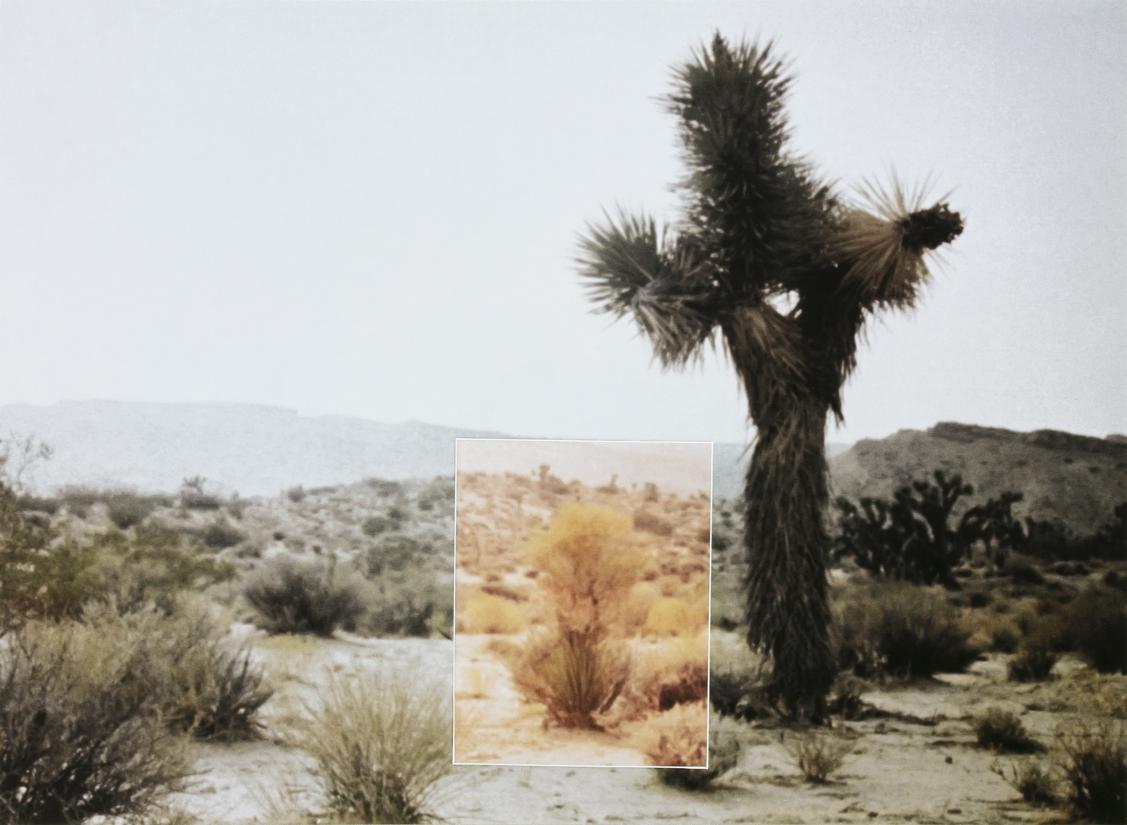
Stig Brøgger
In this room, we find Danish conceptual photographs by Bjørn Nørgaard, Stig Brøgger, Willy Ørskov and others. The most prominent conceptual photographer on display is Stig Brøgger, whose prints from the late 1960s were inspired by the American artists Robert Smithson and Edward Ruscha. Brøgger gained prominence in the Danish and international art world, partly because of these photographs, partly because of his 1978 publication, reprinted several times and translated into English, and cited in the audio guide. In this publication Brøgger claimed that “the [art] institution is necessary, if art is to have any meaning at all as art” (Brøgger 1978: 36). Depending on context, Brøgger’s claim can be understood as a criticism of the art institution and its mechanisms of inclusion and exclusion, or as a legitimization of the power of the art institution; it may thus be understood as if its gatekeepers — curators, magazines, art school professors, etc. — should rightly be endowed with extensive powers to determine what counts as art and what does not, with all the risks of inward-looking academism that it entails.
In Brøgger’s conceptual photography — as in conceptual art in general — the medium, the craft and the materiality of the art is subordinate to an idea. Aesthetic engagement plays a secondary role. One may ask, however, whether the label ‘conceptual photography’ is a derogatory term, since it suggests that only so-called conceptual photography is concept-based, and that other forms of photography are robbed of conceptual content. This may be misleading on two counts: So-called conceptual photographs may in fact be conceptually shallow, although they pose as conceptual; conversely, photographs that do not pose as ‘conceptual’ may in fact be exceedingly thoughtful and conceptual in their content.
Photography serving environmentalism
The fourth and last room is dedicated to environmental photography. It exhibits Danish and other Nordic photographers approaching environmentalism in a variety of ways, for instance, Christina Capetillo, documenting human interference in landscapes, subsequently developing an identity of their own; Emil Ryge, documenting activists participating in demonstrations; and the eco-poet Christian Yde Frostholm, inserting images of natural elements into his publications of poems. The accompanying catalogue makes the point that photography serving environmental protection can take up at least two very different forms, namely loud images documenting the human intervention of natural landscapes, that may eventually take up an identity of their own, as documented by Christina Capetillo; or quieter images showing the beauty of the natural world, intending to motivate the viewer care for it. The latter approach was taken by the old pictorialists, according to the curators, pointing out Sigwart Werner and his photographs from the first decades of the 20th century as an example (Meyer and Schwartz 2025: 166-167).
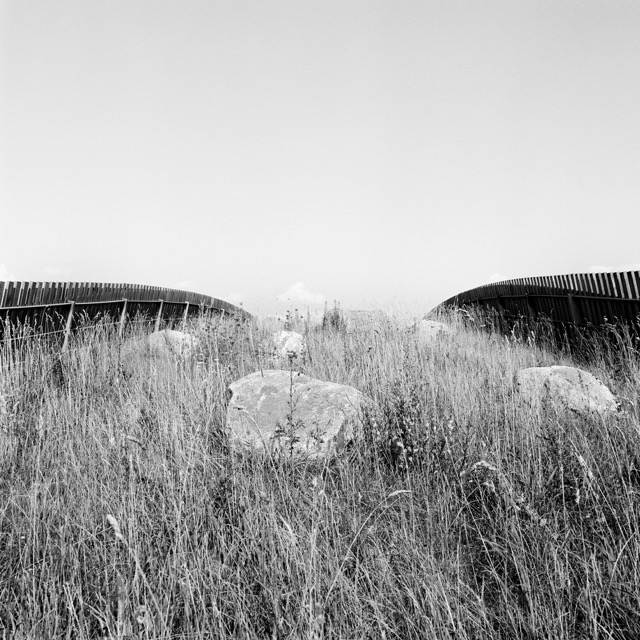
Christina Capetillo
The curation invites the viewer to ask themselves "why", at least some contemporary nature and landscape photographers, who now pursue the latter approach, have not been included in this fourth room? Is it because the influence of conceptual photography from the 1960s, ostracising nature and landscape photography that pays attention to the medium, the craft and the materiality of the art, is still regarded as authoritative in the art world? If so, it is worth noticing that even well-established photographers in the art world have become increasingly critical of the institutional hegemony of conceptual art and its indifference to, or hostility towards, such elements, and to other ways of seeing (Graham 2010). The curation thus leads one to ask: Is it time to move away from 20th-century conceptual art and its denigration of elements such as craft, materiality and aesthetic engagement? And does pictorialism have more to say to us today than its bad press has led us to assume? Be that as it may, the curators have done a great job in establishing a visual dialogue between photographic traditions that are typically dealt with separately.
Literature
- Brøgger, Stig (1978). ‘At fotografere kunst som fotografi' [‘To photograph art as photography’], in Stig Brøgger, Fotografi som kunst — kunst som fotografi. Sophienholm.
- Frederiksen, Carl (1913). ‘I Naturens Skole’: Amatør-Fotografen, 2. year, nr. 8, August 1913, pp. 117-124.
Graham, Paul (2010). ‘The Unreasonable Apple’, talk presented at the first MoMA Photography Forum, February 2010. See here. - Klein, Kirsten (1998). En hymne til Irland. Land of Spirit. Copenhagen: Gyldendal.
- Meyer, Mette Kia Krabbe, and Charlotte Præstegaard Schwartz (eds) (2025). Verden omkring os. Copenhagen: Det Kgl. Bibliotek. Catalogue for the exhibition Verden omkring os. English translation with the title The World Around Us. Link
- Newhall, Baumont (1982). The History of Photography from 1839 to the Present. Completely revised and enlarged Edition, 5th ed. New York: The Museum of Modern Art.
- Nordström, Alison (curator) and Thomas Padon (editor) (2008). Truth Beauty: Pictorialism and the Photograph as Art, 1845-1945. Vancouver: Vancouver Art Gallery.
- Tal, Guy (2021). More than a Rock. Essays on Art Creativity, Photography, Nature and Life, 2nd ed. San Rafael, CA, USA: Rocky Nook Inc. First edition 2015; I cite the 2nd edition.
- Thage, Tove (2020). Pictorialisterne: En fotografisk kunst uden for akademierne. Skive: Wunderbuch.
- Ward, David (2008). Landscape Beyond. A Journey into Photography. London: Argentum.
-

- Kirsten Klein (1945-), Three Sisters (1978). Gelatin silver print, 441 x 586 mm.
-

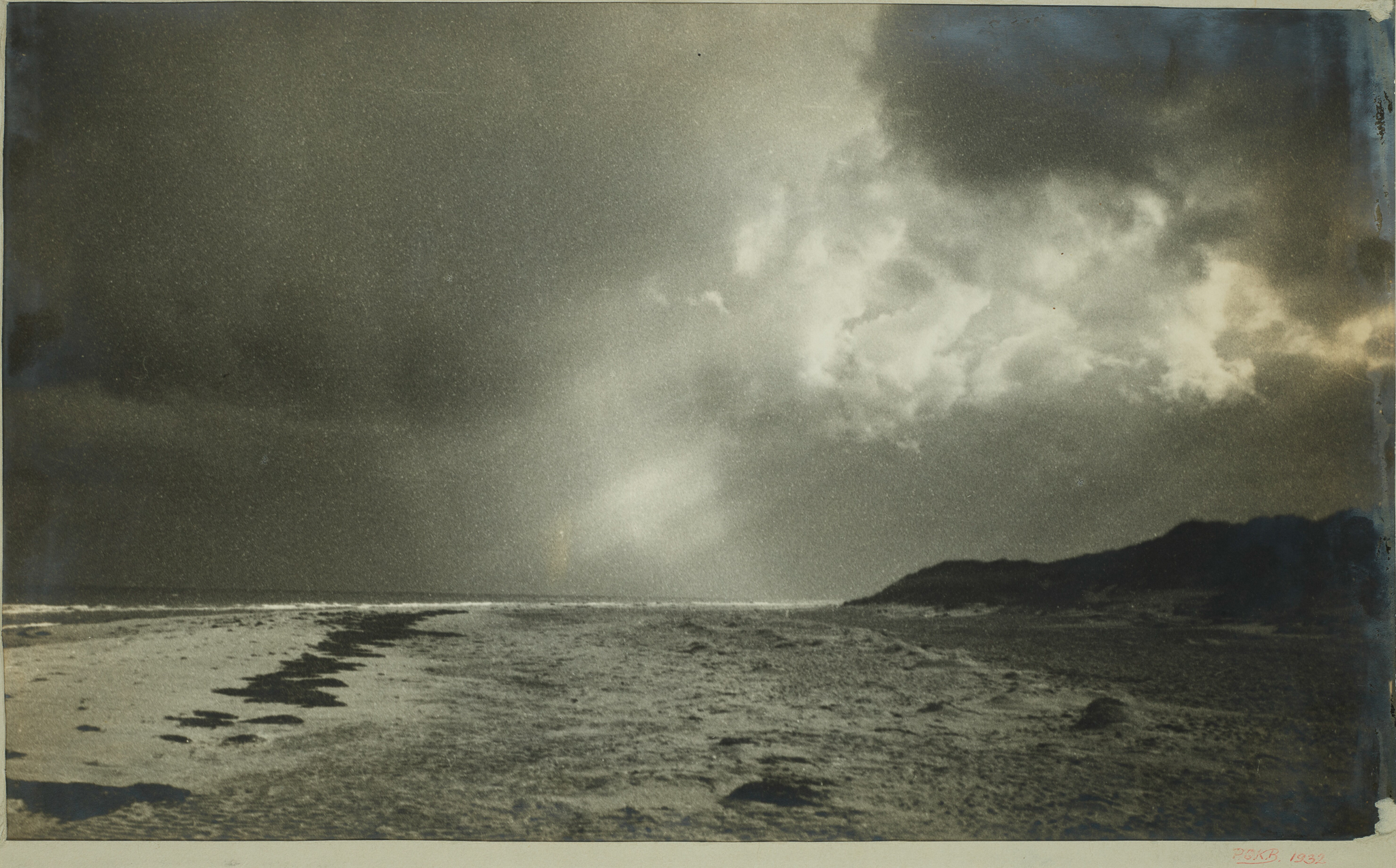
- Paul Georg Kobierski Bentzon (1891-1974), Tordenbyge over Anholt Sydstrand [Thundercloud over Anholt Sydstrand] (1932). Gelatin silver print, 283 x 465 mm.
-

- Hans Billeskov Jansen Cramer (1891-1973), Skovparti [Piece of Woodland] (after 1906). Gelatin silver print, 235 x 295 mm.
-

- Carl Frederiksen (?-1922), untitled (1910-1919). Gum bicromate, 195 x 157 mm.
-

- Albert Steiner (1877-1965), Erster Schnee am Moritzersee [The First Snow at St. Moritz Lake] (1918-1922). Silver print, 222 x 282 mm.
-

- Gertrude Käsebier (1852-1934), Pastoral (1903-1907). Photogravure, 213 x 166 mm.
-

- Alfred Stieglitz (1864-1946), September (1899). Photogravure, 160 x 115 mm.
-

- Stig Brøgger
-

- Christina Capetillo