

 Join the conversation
 Subcribe to comment rss feed
Through the Glass

Rikki-Paul Bunder
I am a Naarm (Melbourne) based fine art landscape photographer, artist, and educator with over 20 years of professional experience. My practice is grounded in fine art photography, focusing on the natural landscape as a space of quiet beauty. I use light not just to illuminate, but to express atmosphere, evoke memory, and explore my emotional connection to the land.
After a long career in commercial advertising photography, working with leading automotive and lifestyle brands, I shifted my creative direction toward fine art. My current work engages deeply with the Australian landscape, using light and abstraction to evoke psychological and emotional responses. Each image is part of a quiet meditation on place, perception, and the natural forces that shape our world.
As a reflective exercise, I sometimes look back through my image library, all the way back to the beginning. Well, the beginning of my digital archive, when I began to call myself a photographer. What I don’t see there is all the photography I made before I started archiving images, saving them to folders, rating them, comparing them, and spending hours in post-production. Back then, my photography seemed a lot ‘freer’. Sure, it wasn’t as technically ‘perfect’ as later work, but in reflecting on it now, this work had something worth considering, worth revisiting.
Through studying photography, working as a commercial photographer and eventually becoming an academic teaching photography, my skills have evolved and refined over time. I know the camera and its tricks. I know Photoshop and have worked with it for over 30 years. While this accumulation of skills and knowledge has been significantly beneficial, it has also led to heightened self-expectations and perfectionism.
So, many years ago, while completing a Master of Fine Art, I began devoting time to letting go of these creativity killing traits. My approach was quick, simple and, at least for me, brutal. I attempted to ‘play’ without concern for the outcome. My question was what happens when you release yourself from expectations. Does it reveal something new, unexpected? This did not mean that I let go of all my previous skills and knowledge locked away in my subconscious. Of course, I brought all these along for the ride, reminding me of ‘know all the rules before breaking them’; allowing experience to influence instinct.
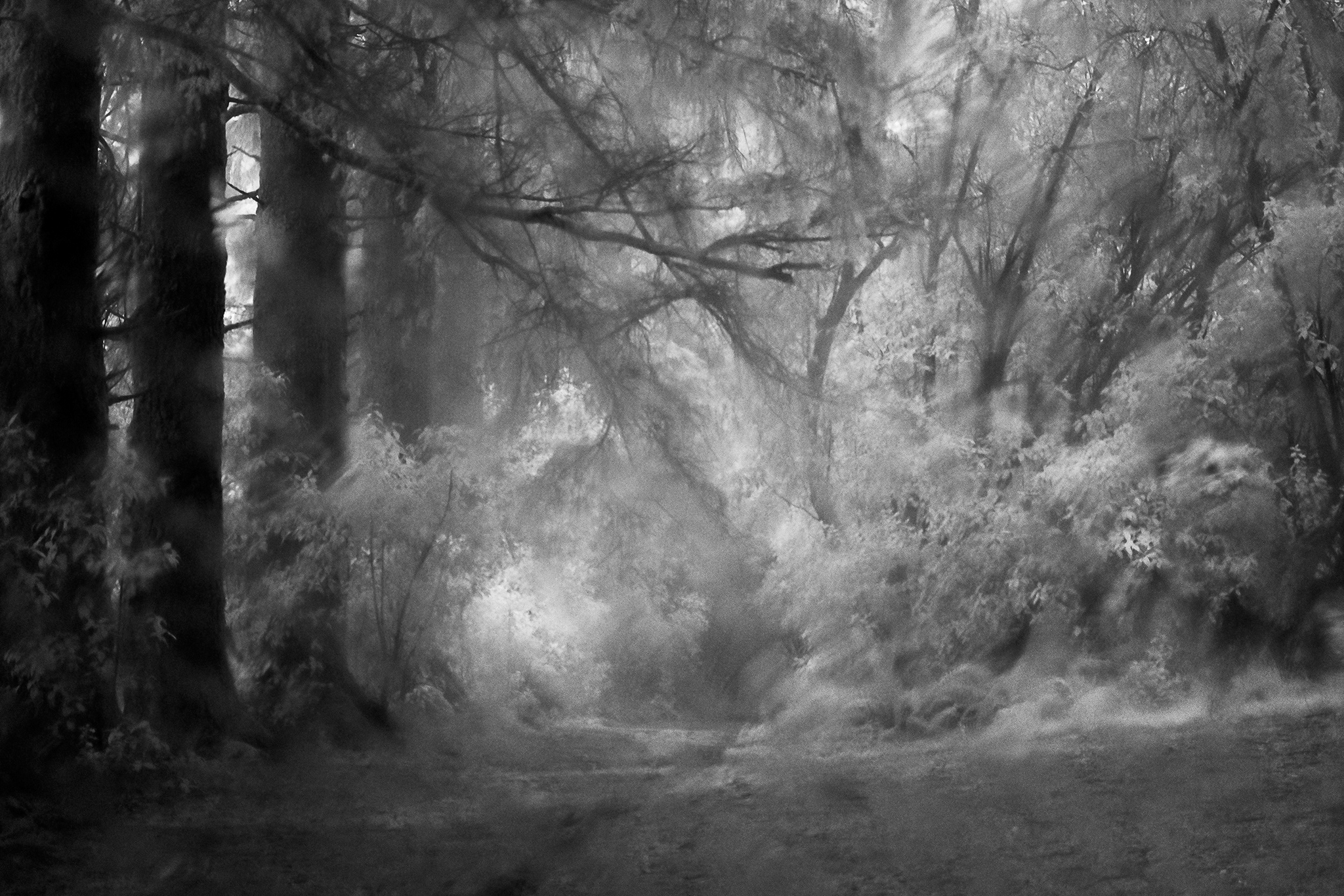
I have been slowly working on this idea for several years, which leads me to this series; Interrupted. These images celebrate ‘play’ as a catalyst for creativity, a way of opening doors to ideas that otherwise may have been stifled by overthinking and self-expectations. The project relies on instinct to influence the process (or at least attempts to).
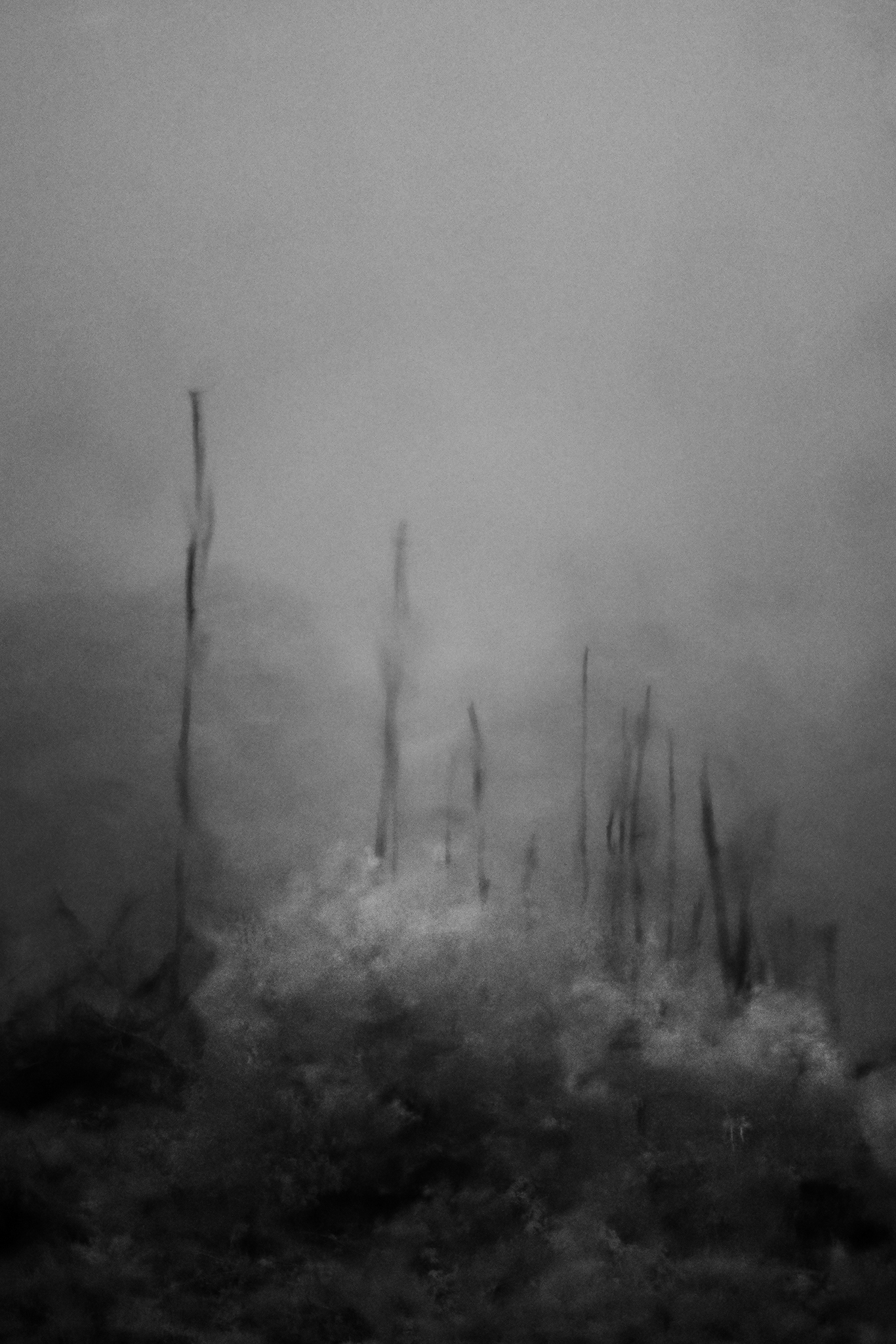
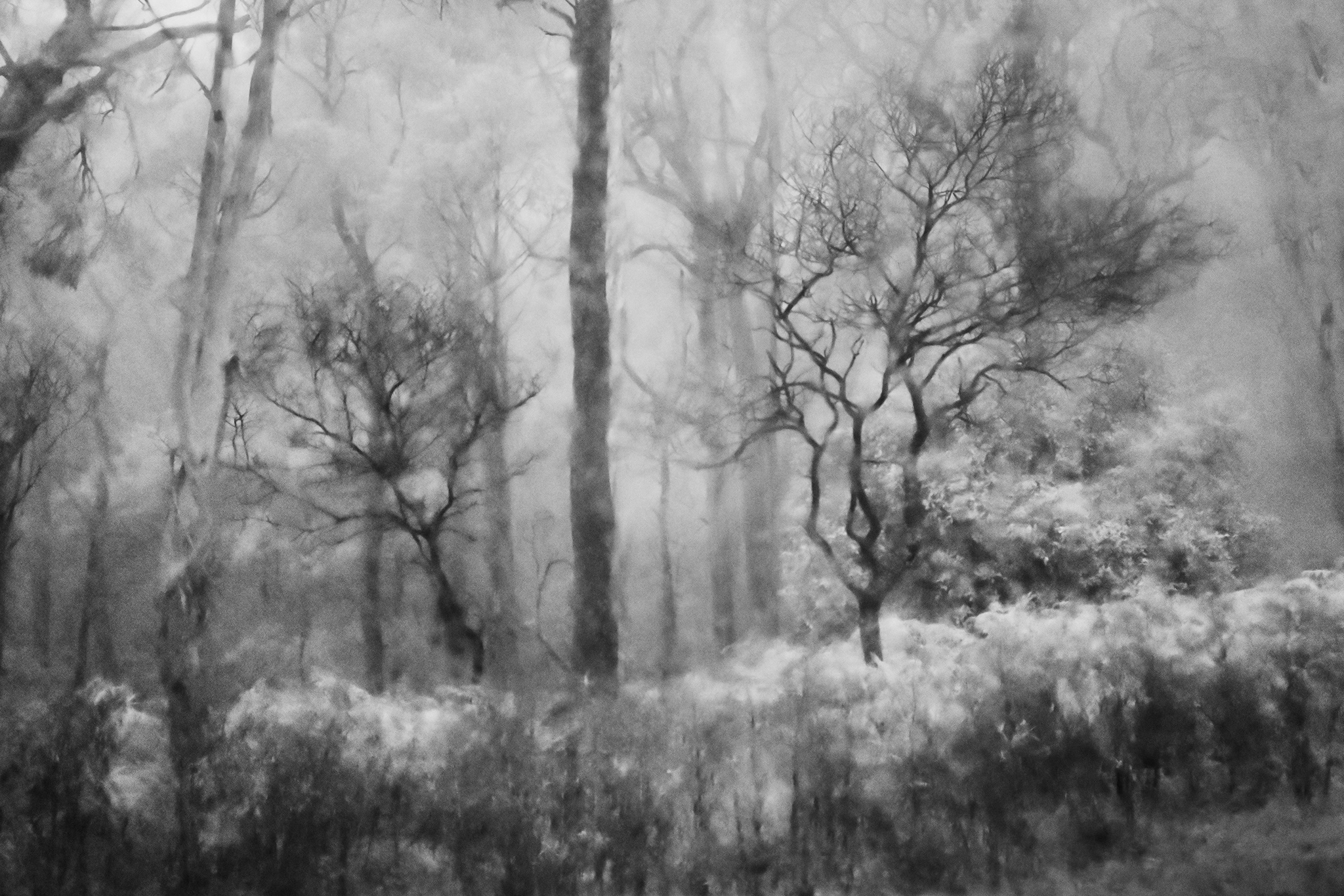
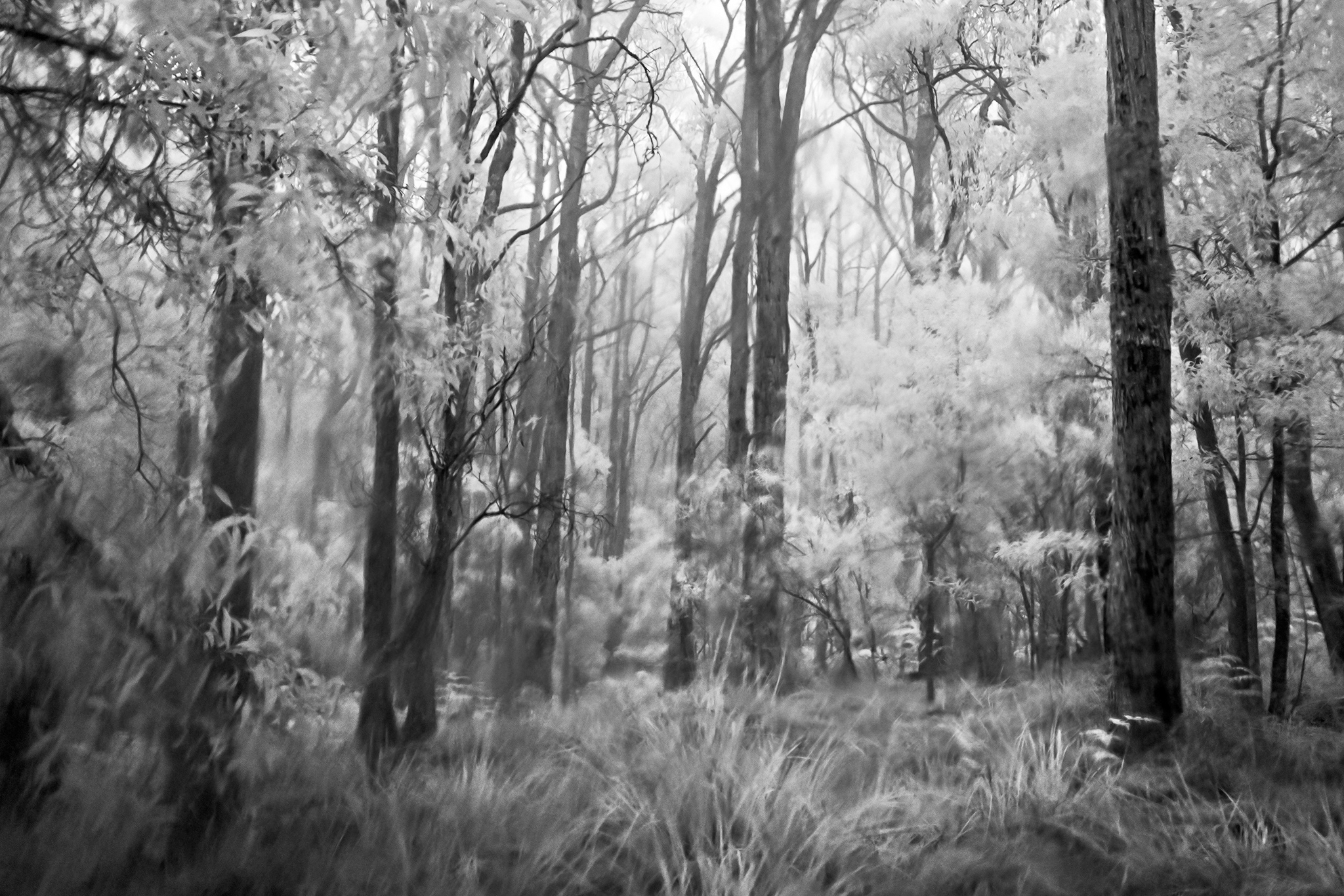
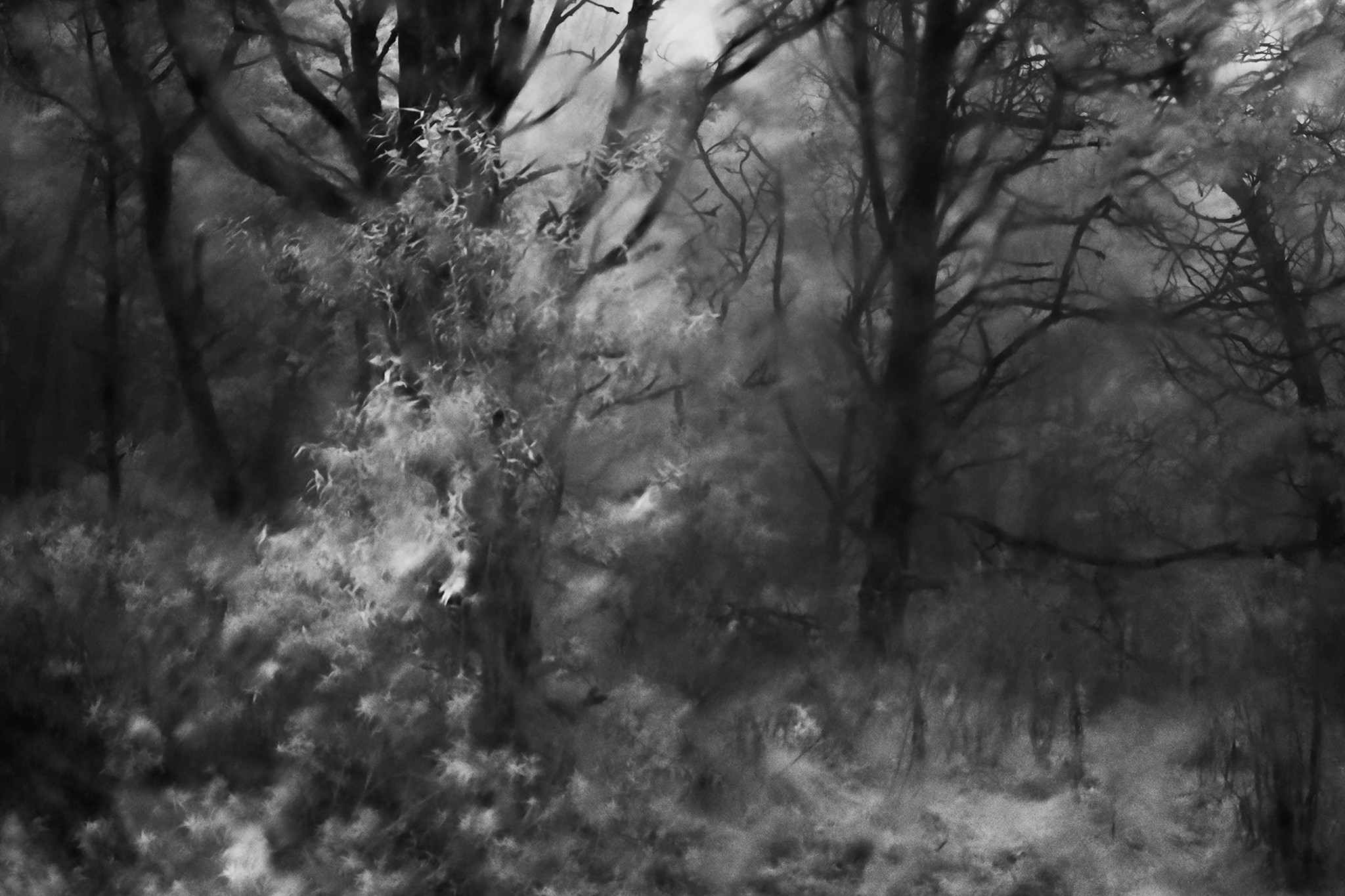
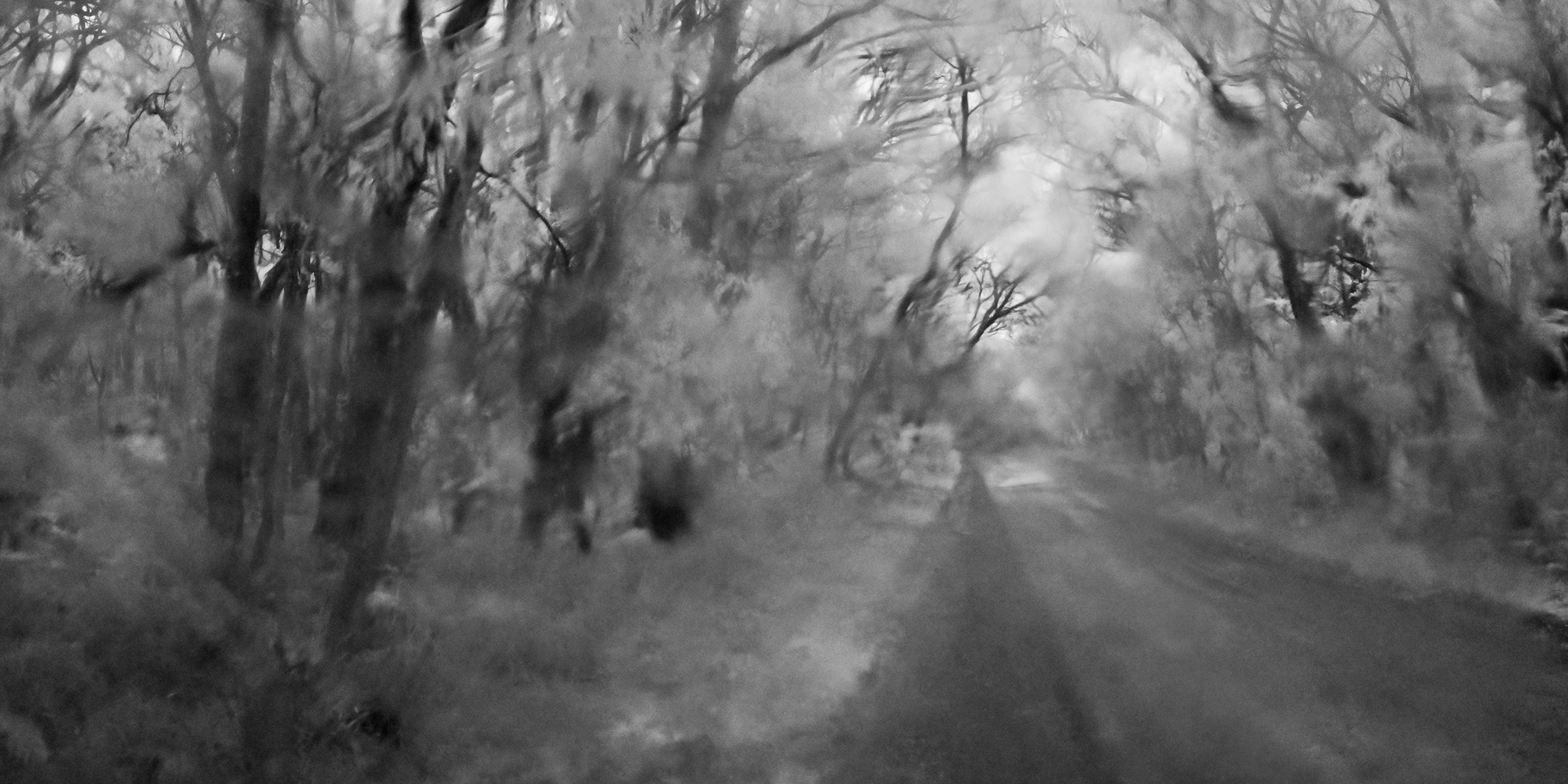
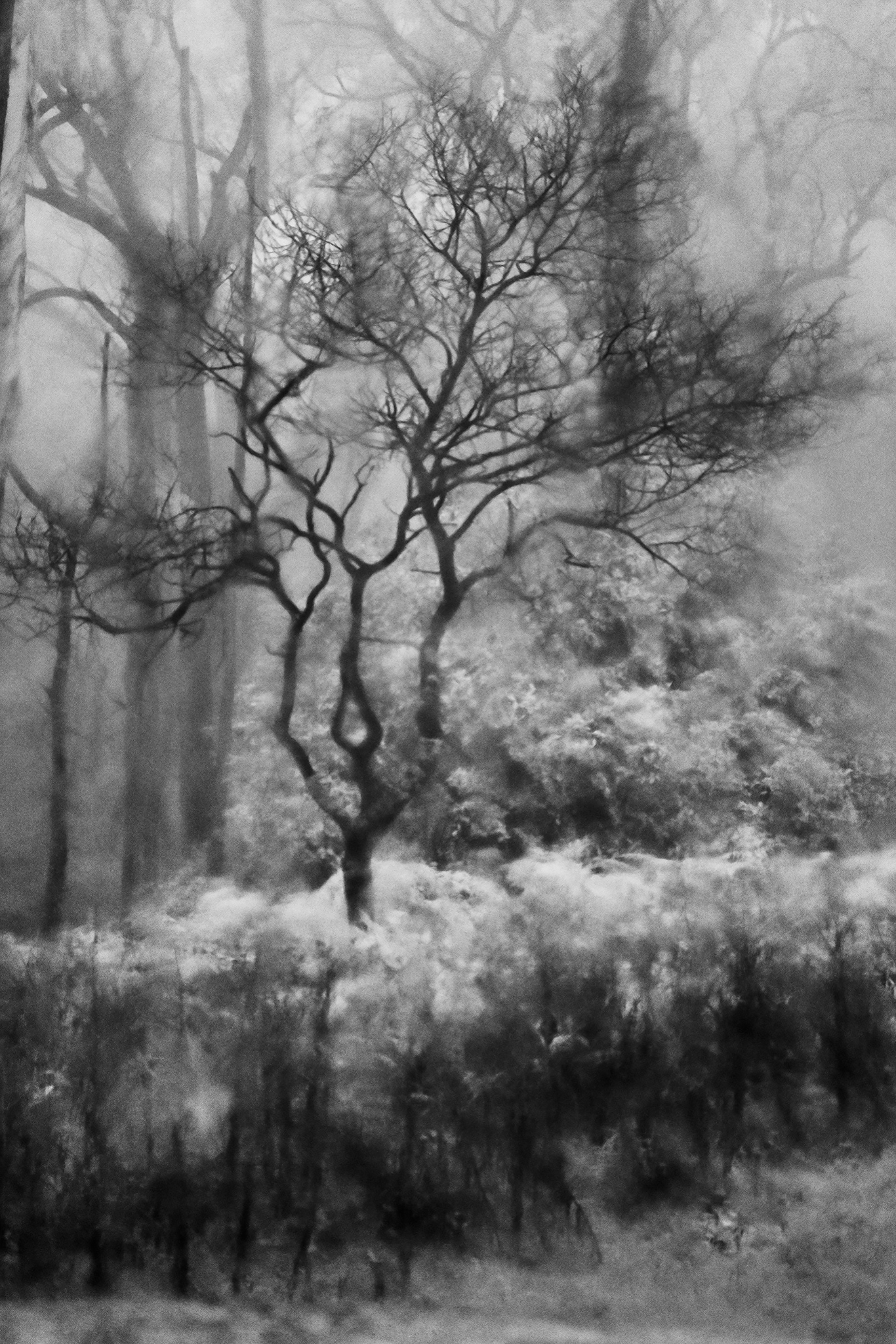
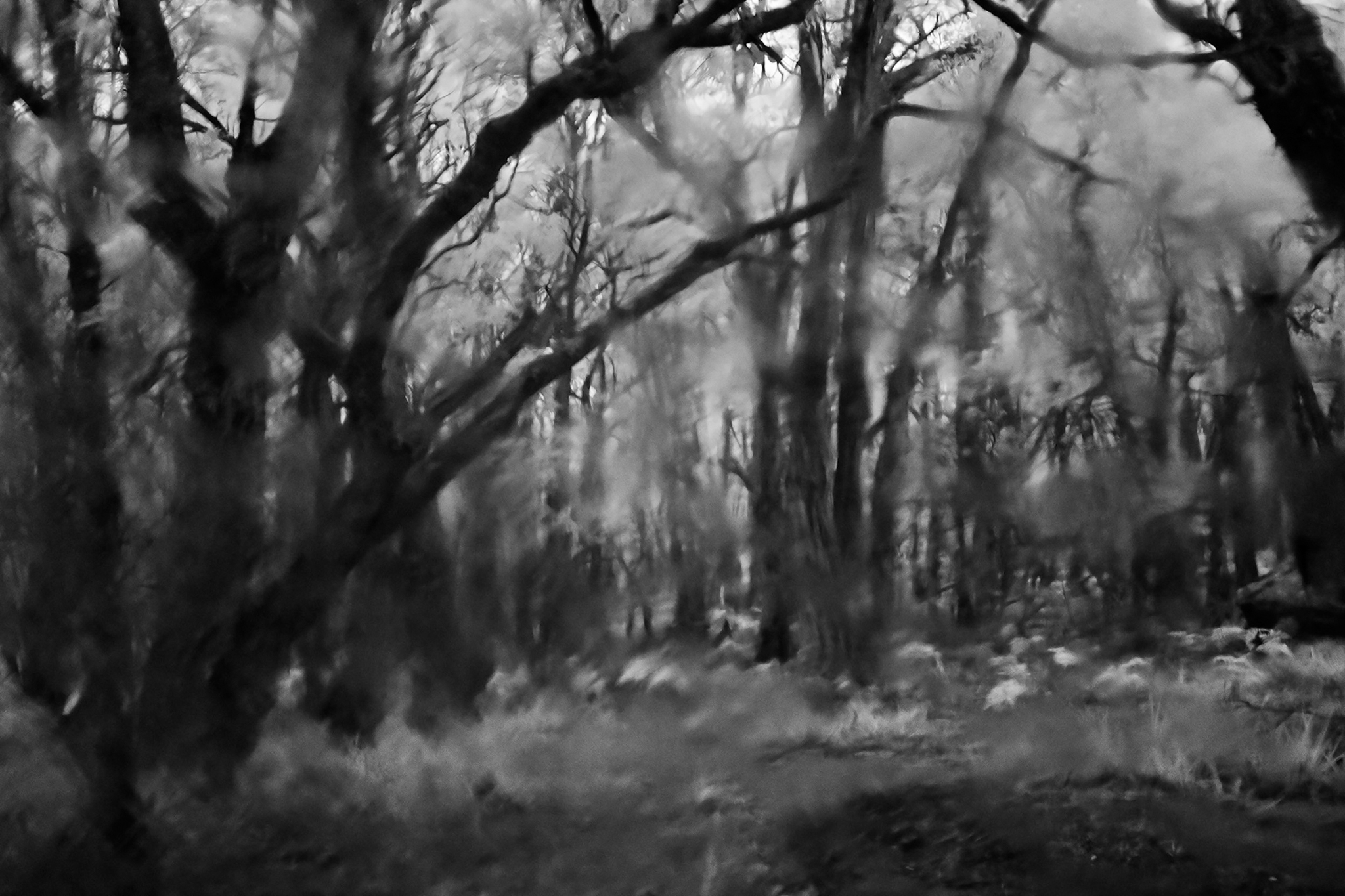
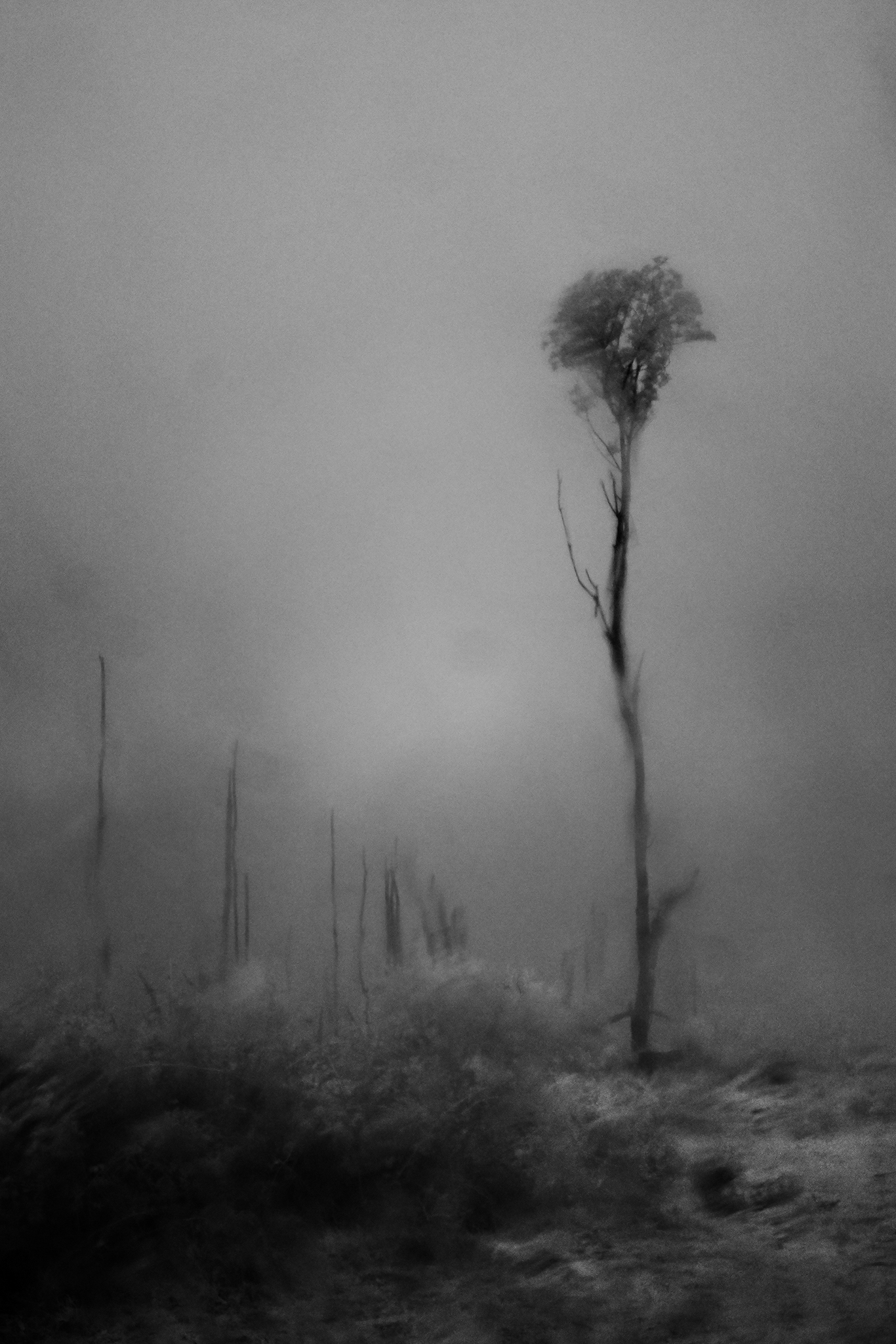
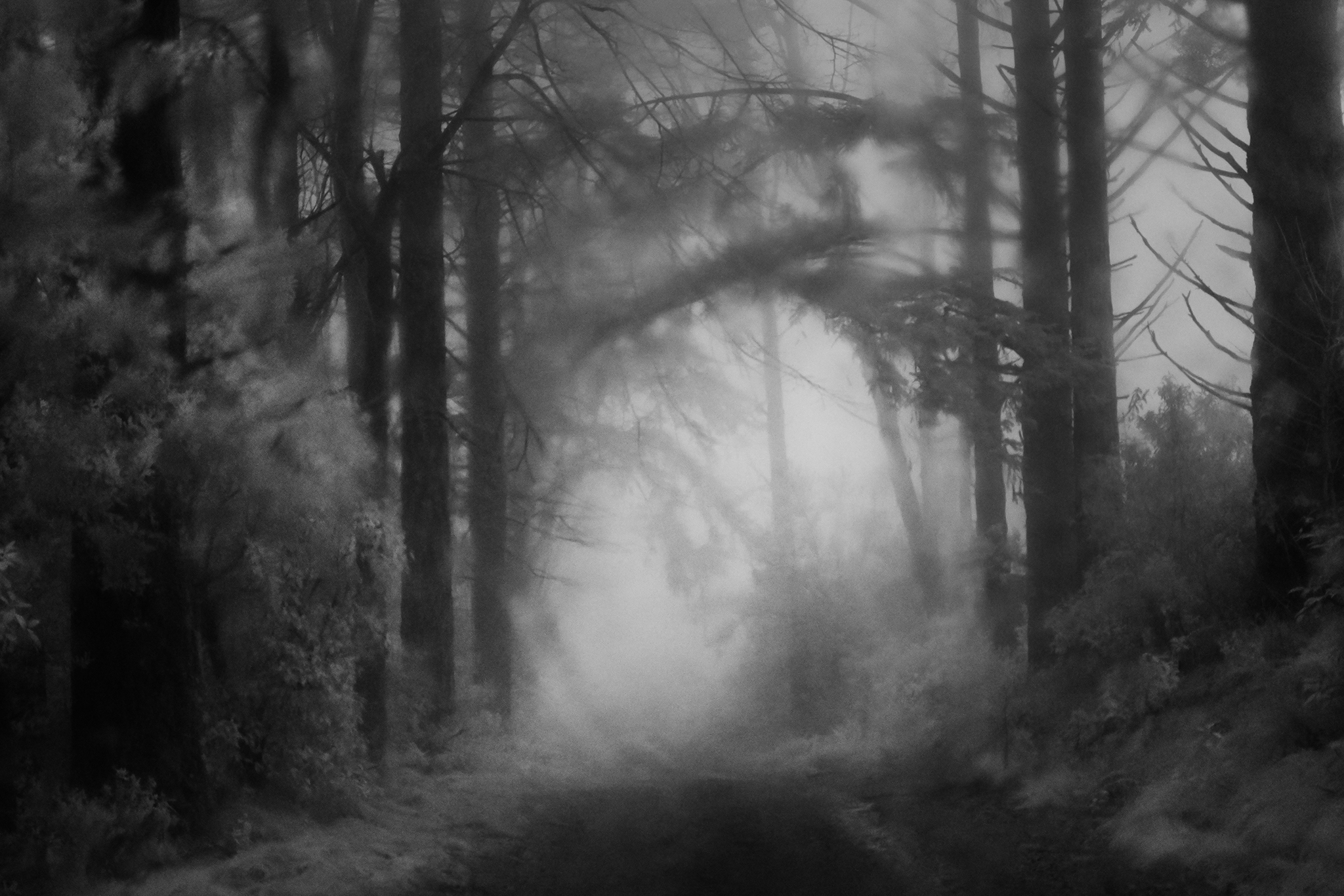
Captured over the winter of 2025, these images were made with an infrared camera in pouring rain, from inside my car. Infrared photography is traditionally captured under clear skies and in bright midday light, conditions that enhance contrast and highlight the surreal qualities of infrared wavelengths.
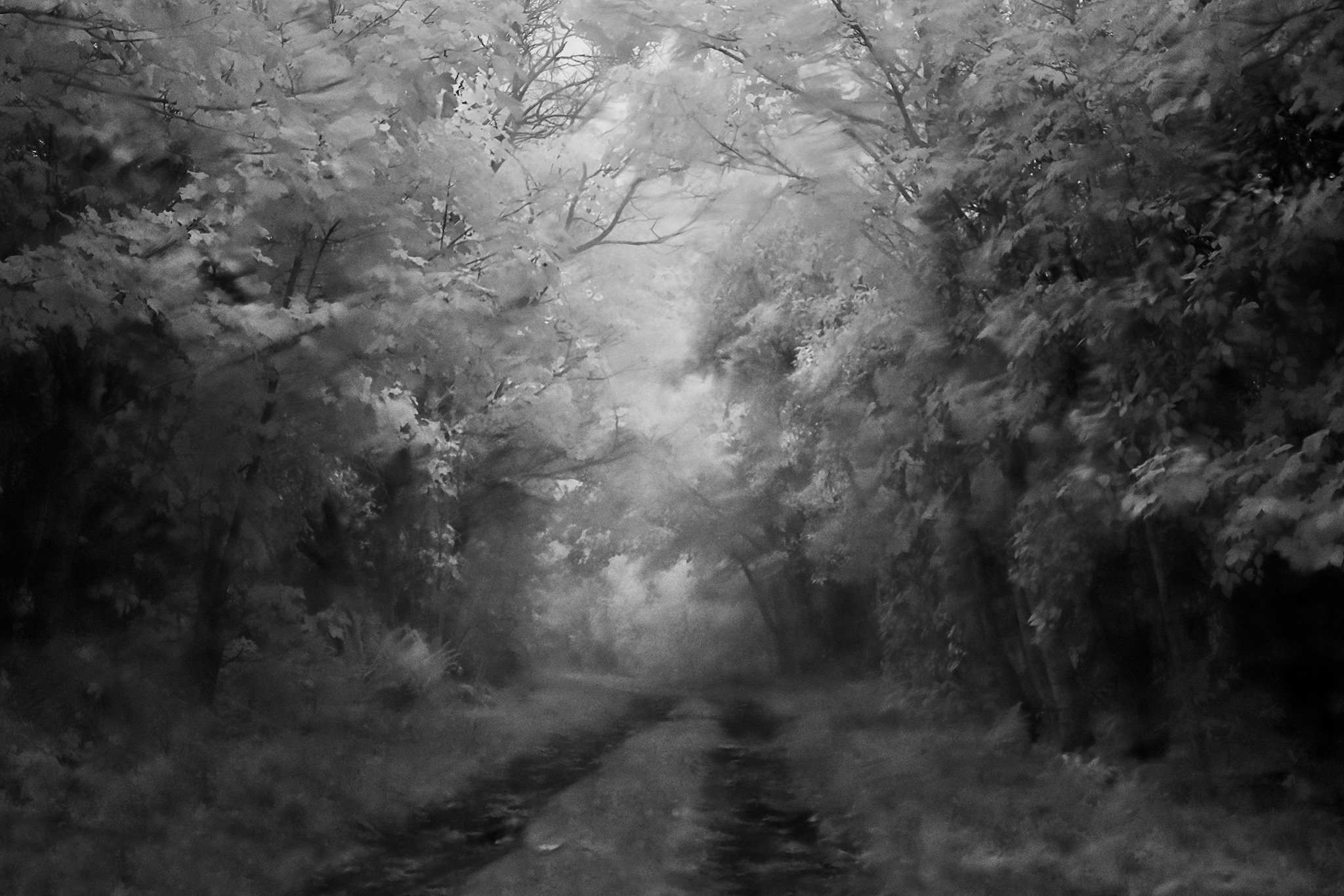
The infrared reveals unseen and intriguing tonal relationships, forming relationships between elements of the landscape that do not exist in standard human vision. While these tones are alien, they seem to be strangely recognisable, exhibiting qualities that look familiar. Whether this is because I have been looking at infrared images over my lifetime or whether the infrared is showing me something I subconsciously ‘know’ is debatable, but intriguing nonetheless. Adding the car window and rain allows the view to be distorted and obscured further. The resulting image becomes a collaboration between light, weather, and surface, uncontrolled and inherently unpredictable.
It is this unpredictability that potentially frees me from expectation and allows happenstance to play a more active role in the outcomes. I use the word potentially deliberately, as expectations and ingrained perfectionism are still very present. That said, the process does create space for me to look at how I work and reflect on how my expectations shape both the process and the final outcomes.
The water and windscreen abstract the view, distorting the image in unpredictable ways. At times this produces romantic, dreamlike images, while others take on a more unsettling, almost grotesque quality. Tones sometimes seem to bleed into each other, creating a painterly feel, and when this combines with the visual distortion, the images begin to shift in how they are read and/or felt.
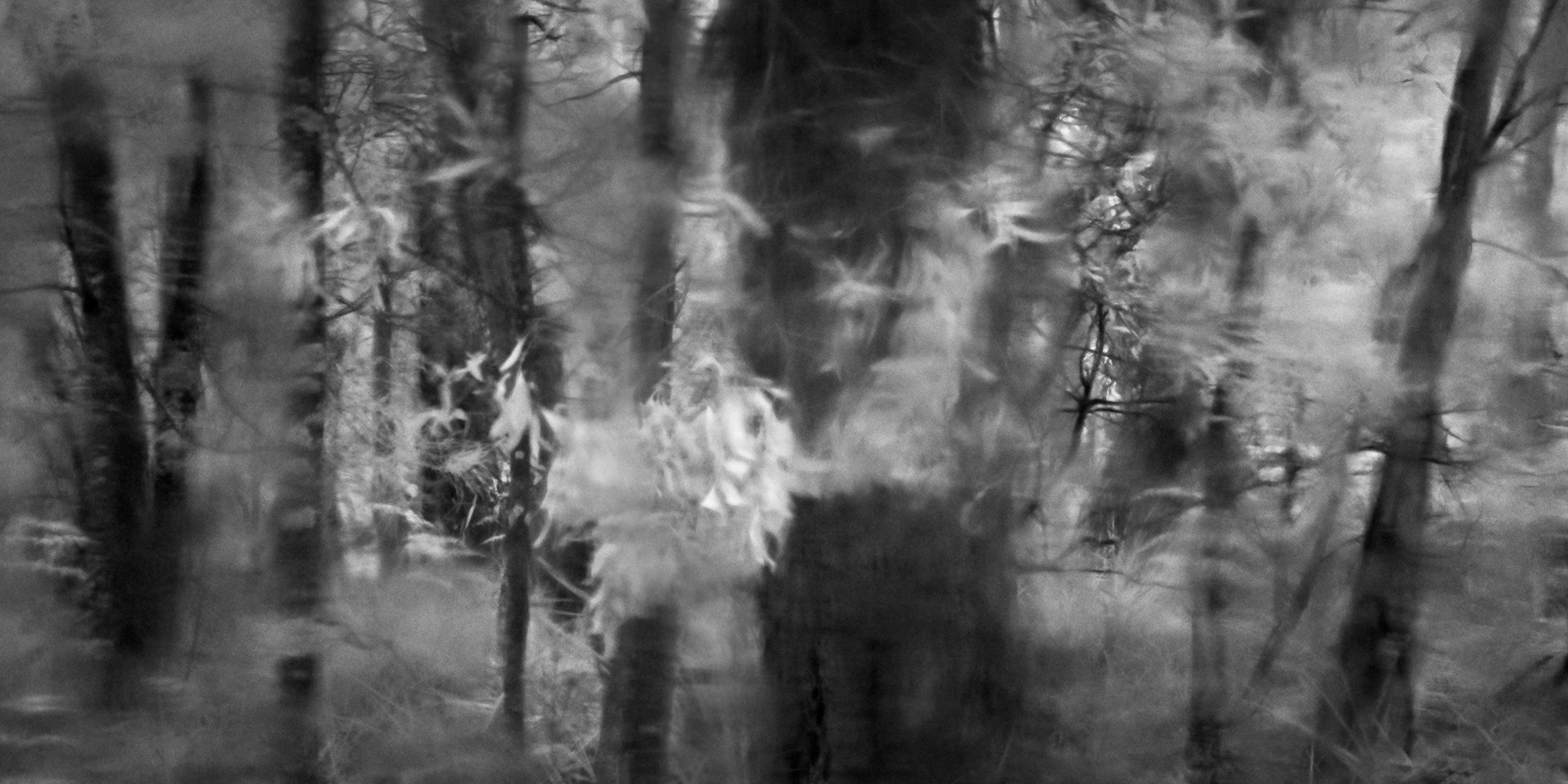
Due to the infrared camera, foliage glows and becomes the primary highlight within each image. This strongly influences the compositional flow, drawing the viewer into the frame. It also contributes to the dreamlike abstract qualities of the work. As discussed earlier, to the human eye this light is unfamiliar, even alien, yet it can feel strangely recognisable. Perhaps this is because we have become accustomed to photographic abstraction more broadly or been oversaturated with imagery. It is interesting that when we encounter images made in other wavelengths, their unfamiliarity is not always immediately perceived as alien.
I am also exploring how play and experimentation, used as a catalyst, not only transform the photographic image but also how it reshapes how I approach photography, how it affects my process. This project is an investigation into my seeing.
When I make work that I know will be well received, I reveal very little about my practice. The work becomes technically resolved, but it stops helping me think through the questions that drive it.
This project, along with several others, has significantly changed the way I approach photography. I no longer feel the need for a well-considered plan before beginning a project or a shoot; in fact, I often achieve stronger results without one. What I need instead is just a spark of an idea.
In practice, that can be as simple as a camera, a coffee, and a good pair of shoes.
This shift feels significant. In the past, many ideas never progressed because they felt too complex, or had too many barriers or, more importantly, because I thought the results would fall short of my own expectations.
I need to trust myself, and trust that my skills and knowledge will come through in the work. Interruption reveals the process, both in how the image is disrupted, and in how the work itself is made, and in turn, offers insight into my creativity.