

 Join the conversation
 Subcribe to comment rss feed
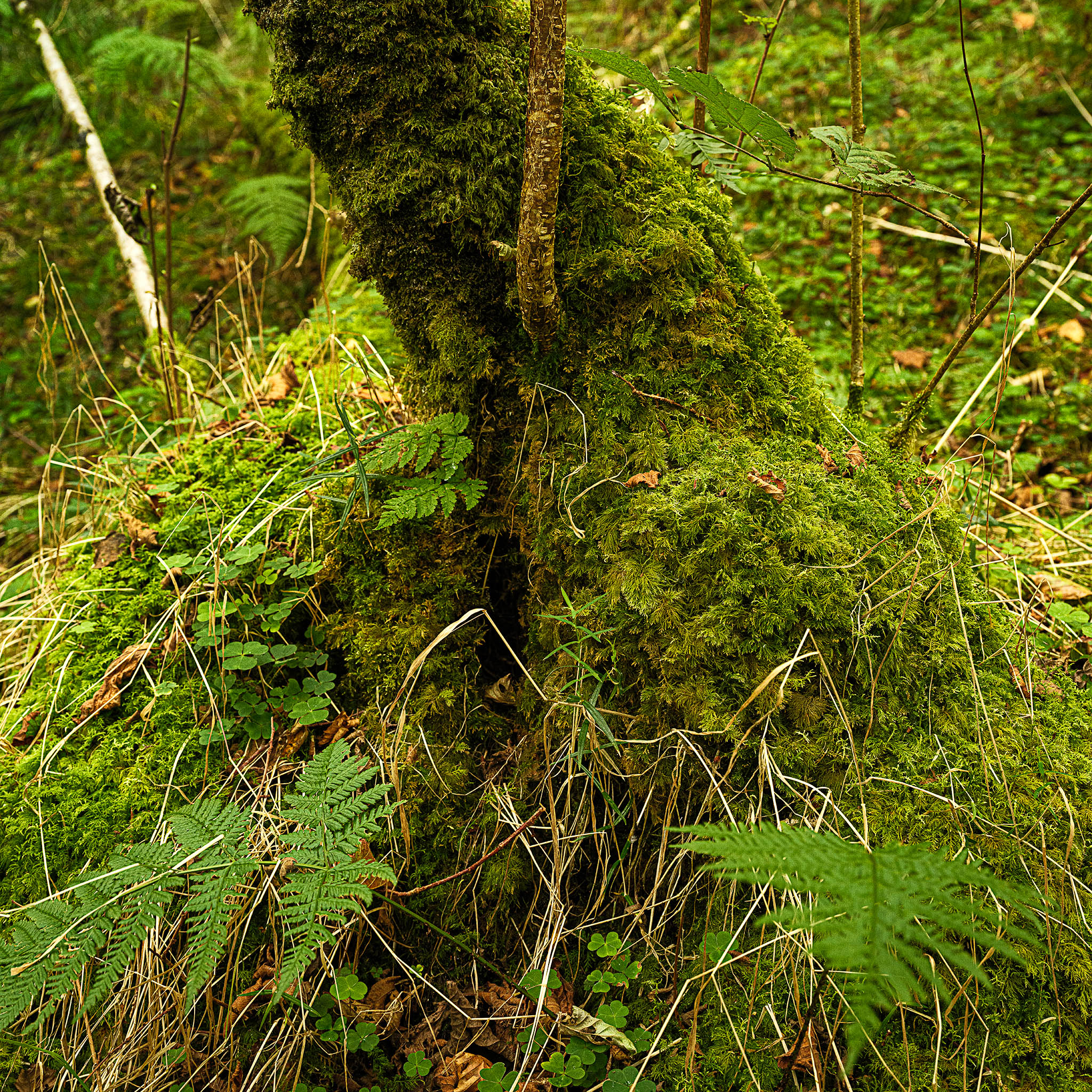
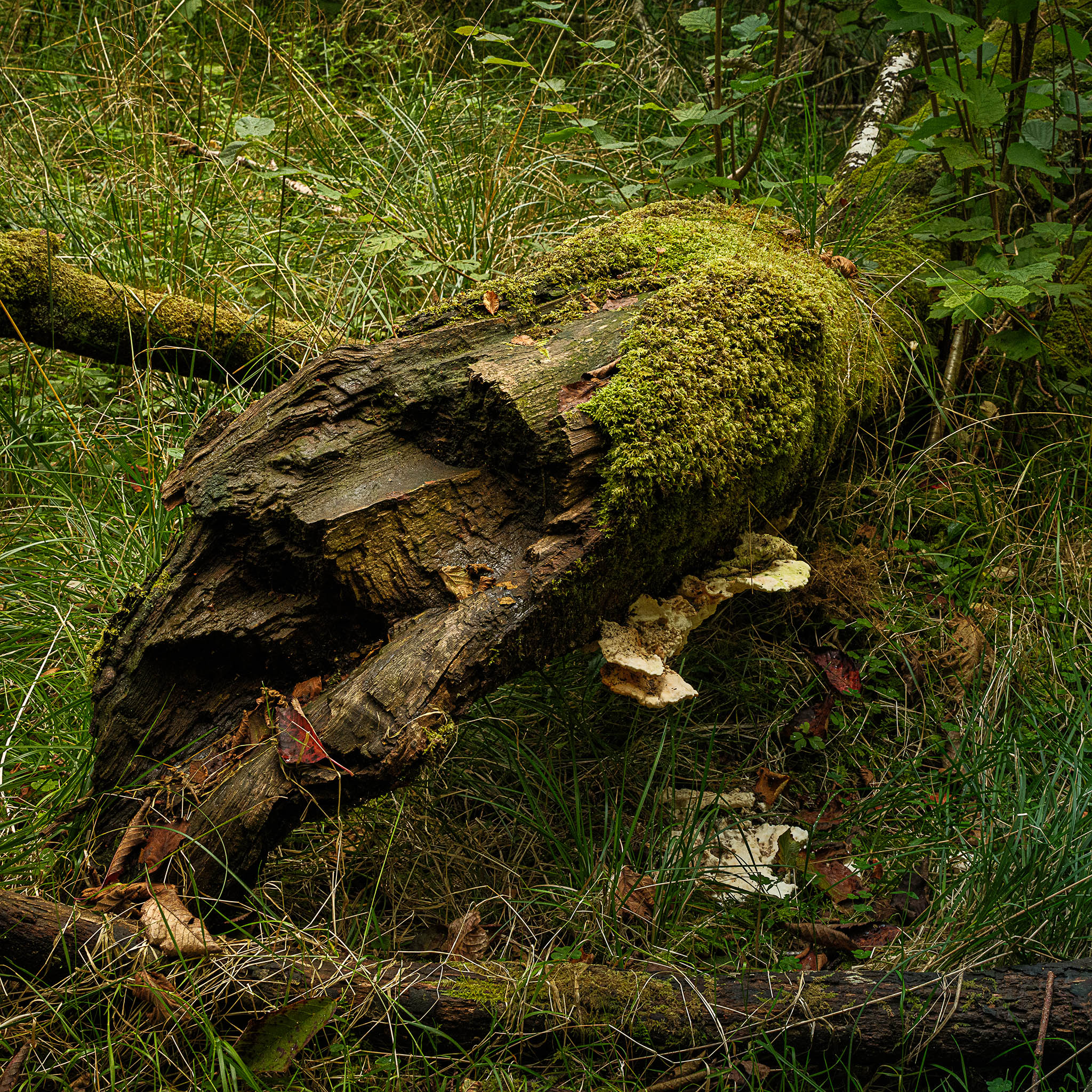
OS ref. NM763153

Douglas Thompson
I am Douglas Thompson, a long term enthusiastic amateur photographer based in Scotland. I work with film and digital mediums and have a keen interest in early photographic processes.
I am particularly drawn to platinum printing and have been working with this process since visiting a stunning exhibition of early ‘Vanity Fair’ platinum portraits at the National Portrait Gallery in 2008. This led to a determined desire to learn the process.
I organise an RPS group in Lanarkshire and the Glasgow cell of ‘Scottish Photographers’ based at Street Level Photoworks.
douglasthompsonphotography.scot
As a photographer, I have had a long running interest in photographing the rich and diverse woodland in my native Scotland.
As part of this approach, I have of late focused on the Argyll west coastal area, an area which is meteorologically subject to frequent precipitation and to the warming influence of the Gulf Stream crossing the Atlantic keeping, it largely frost free. This small area, the hyper-oceanic zone, contains diverse pockets of ancient woodland, known variously as Atlantic woodlands, Celtic rainforest or temperate rainforest.
In terms of human history, influence on Argyll from the Neolithic period some twelve thousand years ago, through the foundation of the Galic Kingdom of Dal Riata, the cradle of Scottish nationhood around 500 AD, the evangelism of the Celtic saints 4th to 10th centuries, the rise and fall on the Scottish clan influences and to the subsequent sporting estates of Victorian entrepreneurs.
All have left their mark in shaping this area of Scotland.
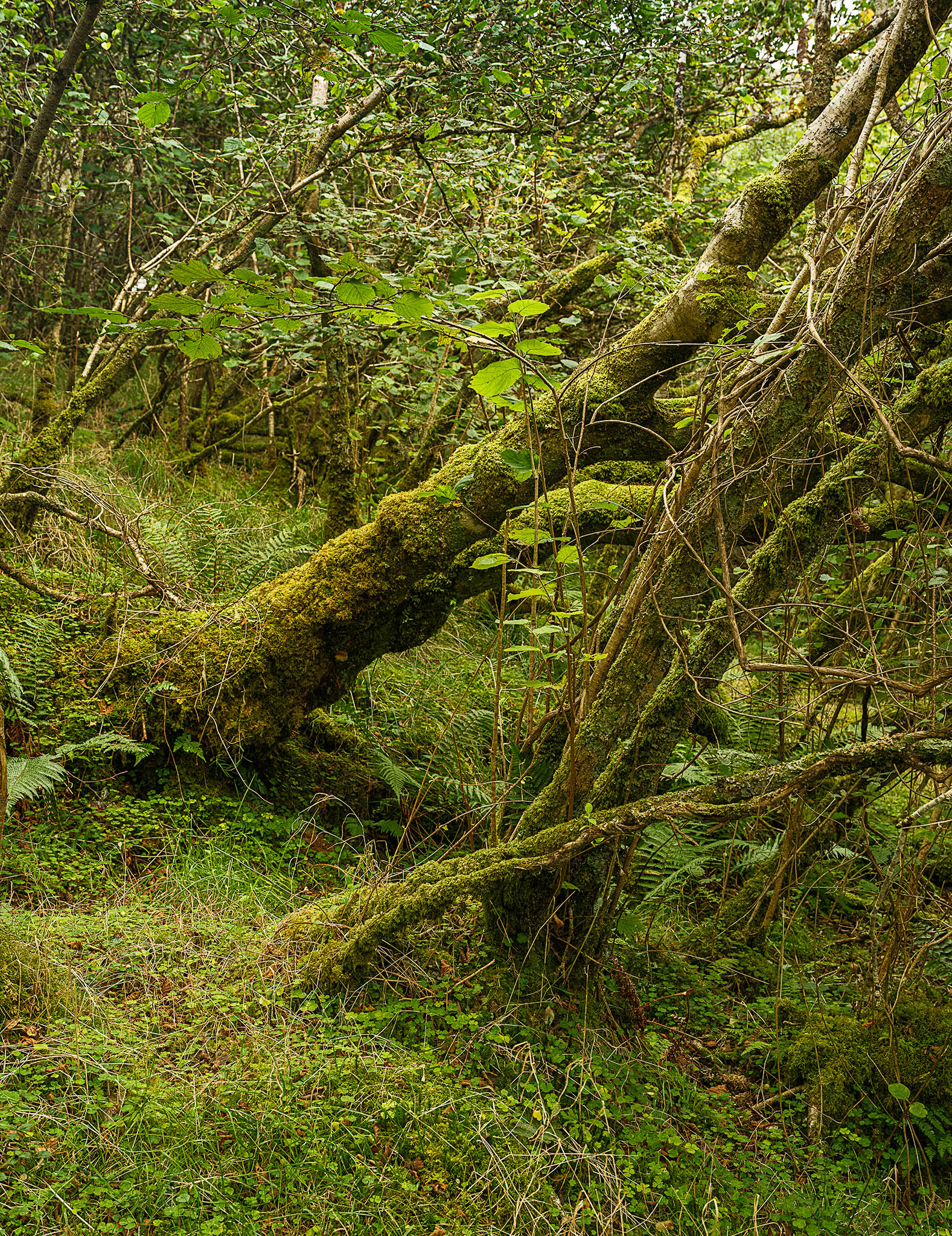
In ecological terms, this combined human impact has had a profound effect. The once extensive areas of natural woodland that would at one time have stretched across most of the west coast are now reduced to tiny pockets clinging on to something resembling a natural state.
Although a much-reduced entity, contemporary recognition of ecological significance offers opportunities to preserve and promote the continued viability of these rich and significant environments.
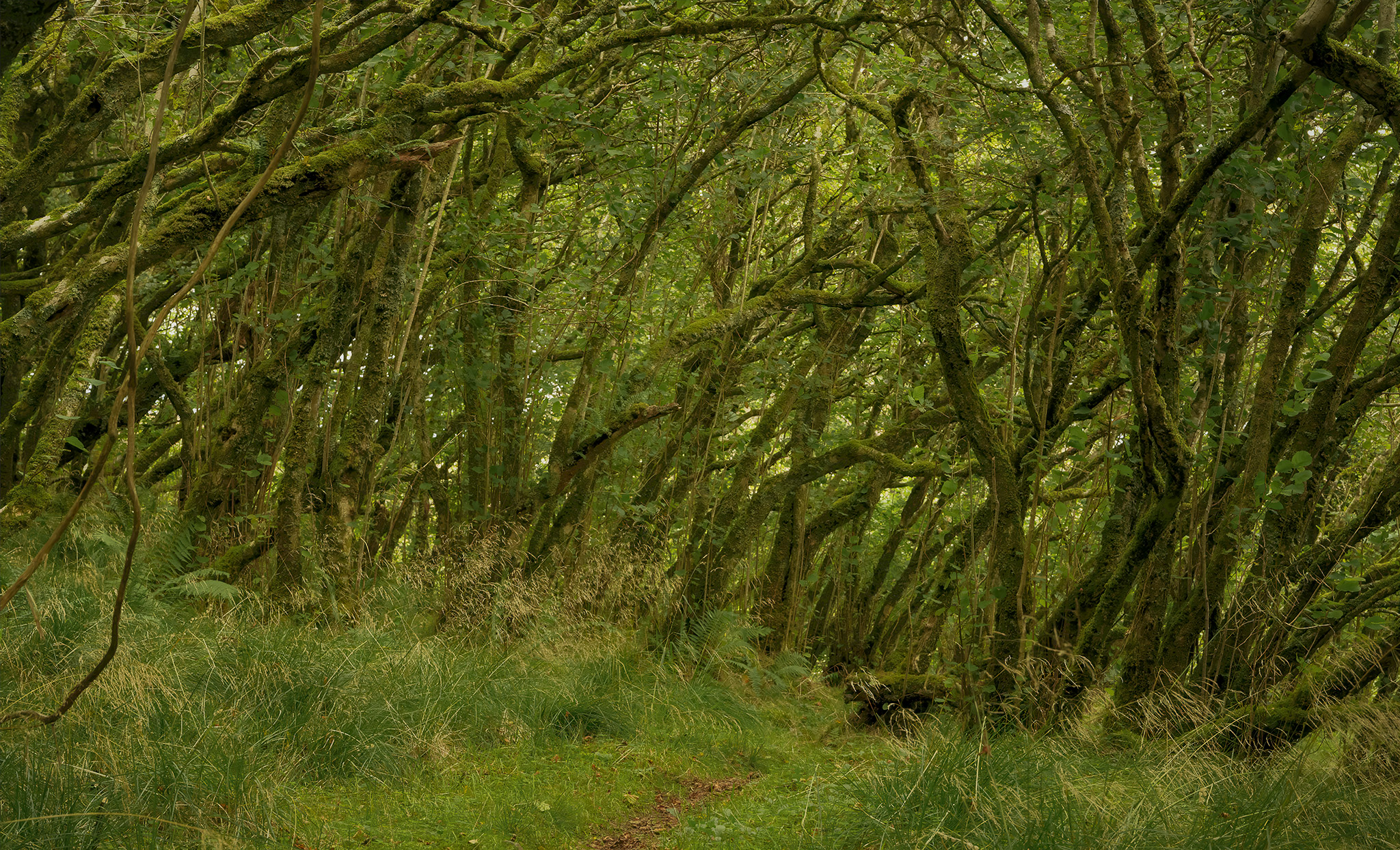
For this part of my project, I have concentrated on Ballachuan Hazel Wood, a protected nature reserve, owned by the Scottish Wildlife Trust, located on Seil Island, south of Oban.
There are areas of hazel woodland throughout the UK. The unique significance of Ballachuan Wood is that it has not been coppiced in hundreds of years and, as such, has reached a rare natural maturity.
Hazel wood has limited value as structural timber but was widely used for coppiced shoots, firewood, fencing, and the wattle-and-daub construction of medieval buildings. Hazel nuts were also an important historical food source, providing a rich supply of protein for both humans and wildlife.
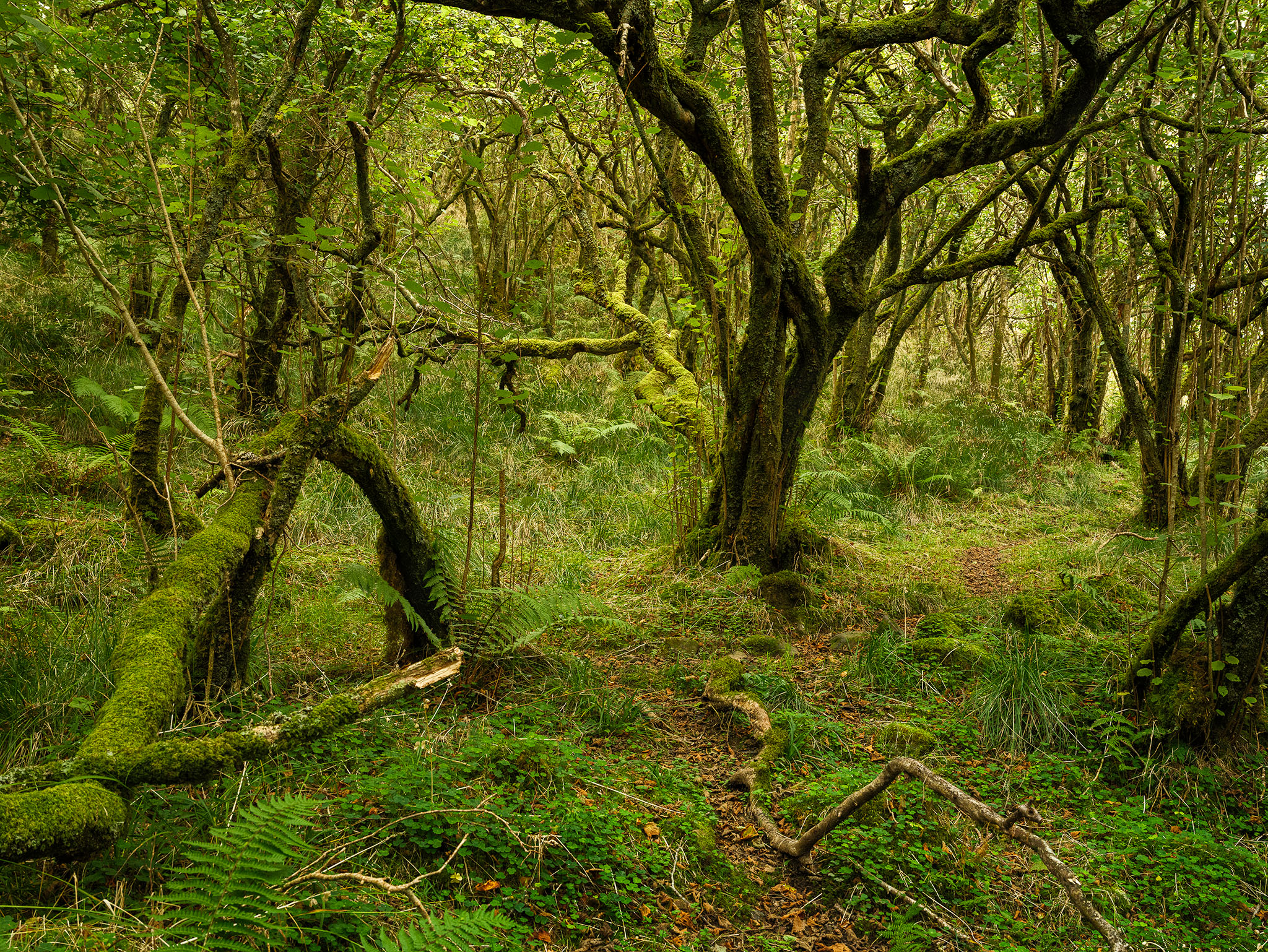
The fact that this wood has not been ‘farmed’ has, over time, allowed a rich and complex ecosystem to evolve, supporting the interconnection between trees, fungi, bryophytes, lichens, insects, birds and animals.
The future viability of this and many other temperate rainforest areas in Argyll requires human intervention, not least to control and begin the eradication of the invasive non-native rhododendron, a monstrous task for landowners, community groups and environmental agencies.
There is also the significant influence of many environmentalists urging the necessity to allow nature to take its own course.
Seil Island is accessed by crossing the ‘Atlantic Bridge’, a single stone arch bridge that spans the island divide from the mainland.
I made my way south, parked up, pulled on my wellies and hiked the short farm road towards the coastal wood. The pouring rain passed over, and the clouds began to break. I climbed over a stile and crossed a boggy field, giving wide berth to cattle and calves, sentinels to the forest beyond.
First impressions were of a dense, lush environment. A woodland, quite magical under the clearing light. Woodland photographers regularly raise the concept of chaos and the need to find some sort of compositional order and structure. I understand the point they are making, the shapes, shades and separations all clamouring for consideration. The intent is to find visual order from the perceived chaos.
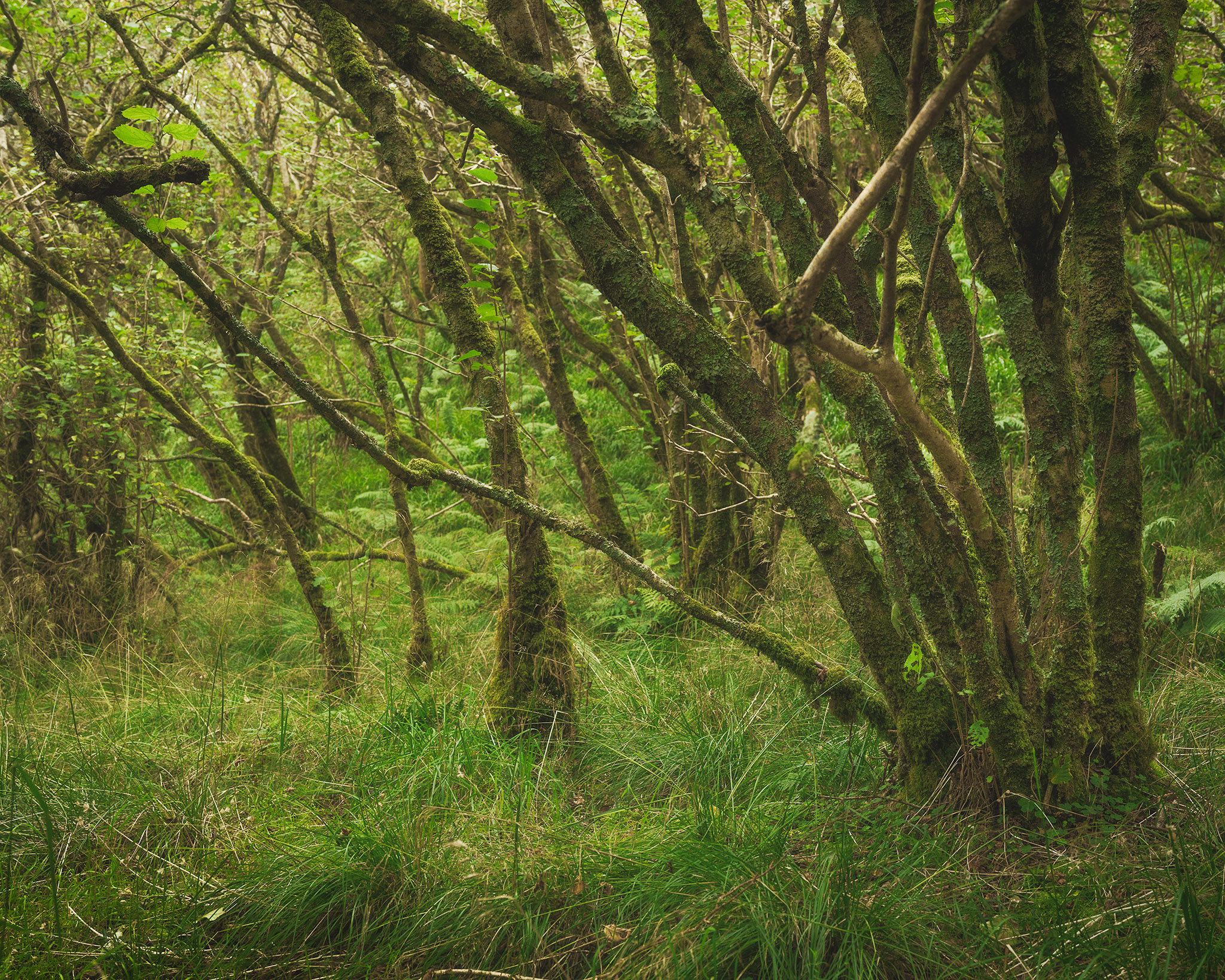
The reality of what we are looking at is, however, the antithesis of chaos. We are looking at a highly complex and ordered woodland world. A world structured with interdependence between and across species. A vast underground pathway of mitochondrial fungi connectivity, sometimes referred to as the wood-wide-web. A world responding to geological structure, weather patterns, biochemistry, flora and fauna.
In short, a world in which nature, in its own time and in its own way, just quietly does its own thing.
In the case of this ancient Ballachuan woodland, it follows a regenerative pattern finely established over hundreds and thousands of years.
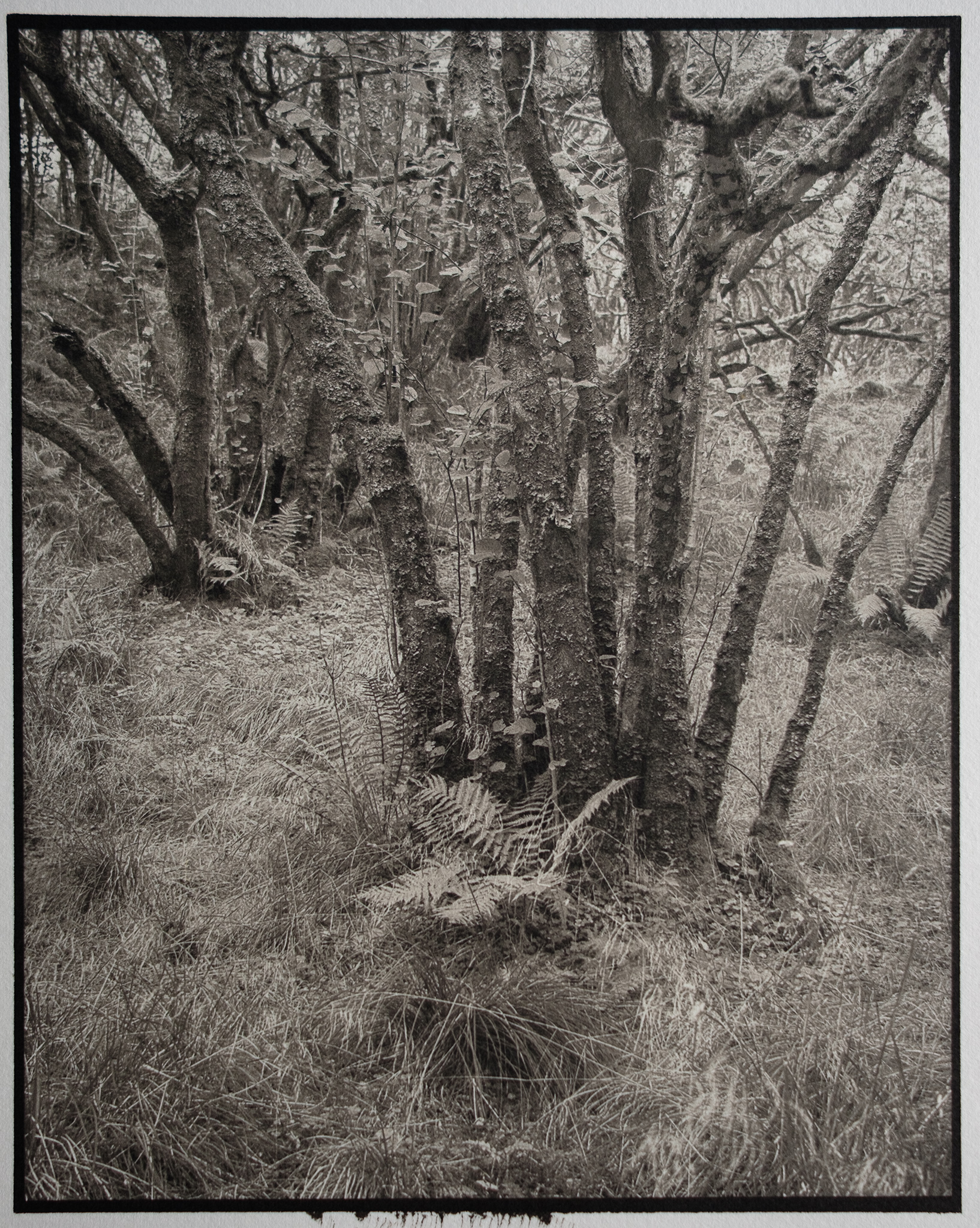
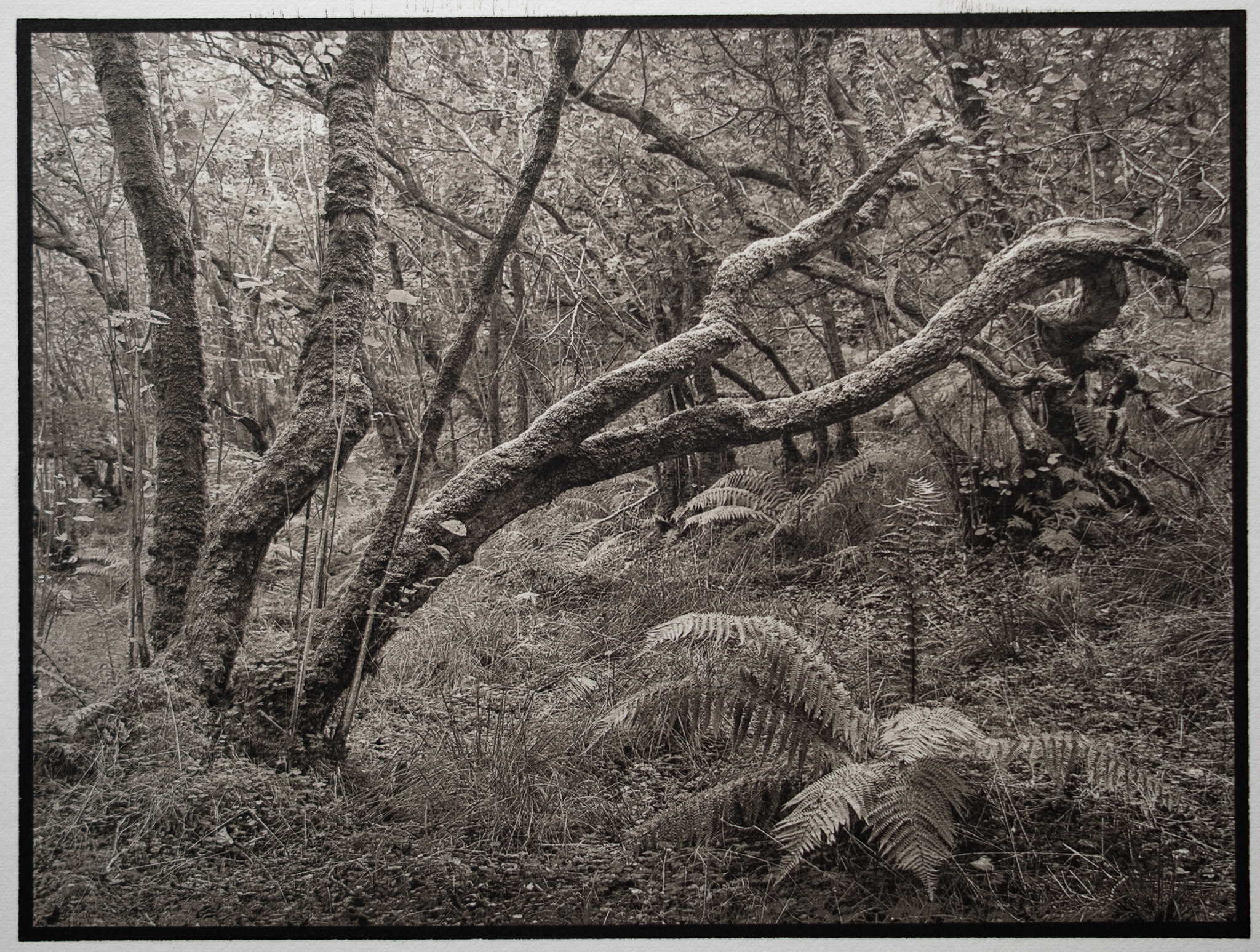
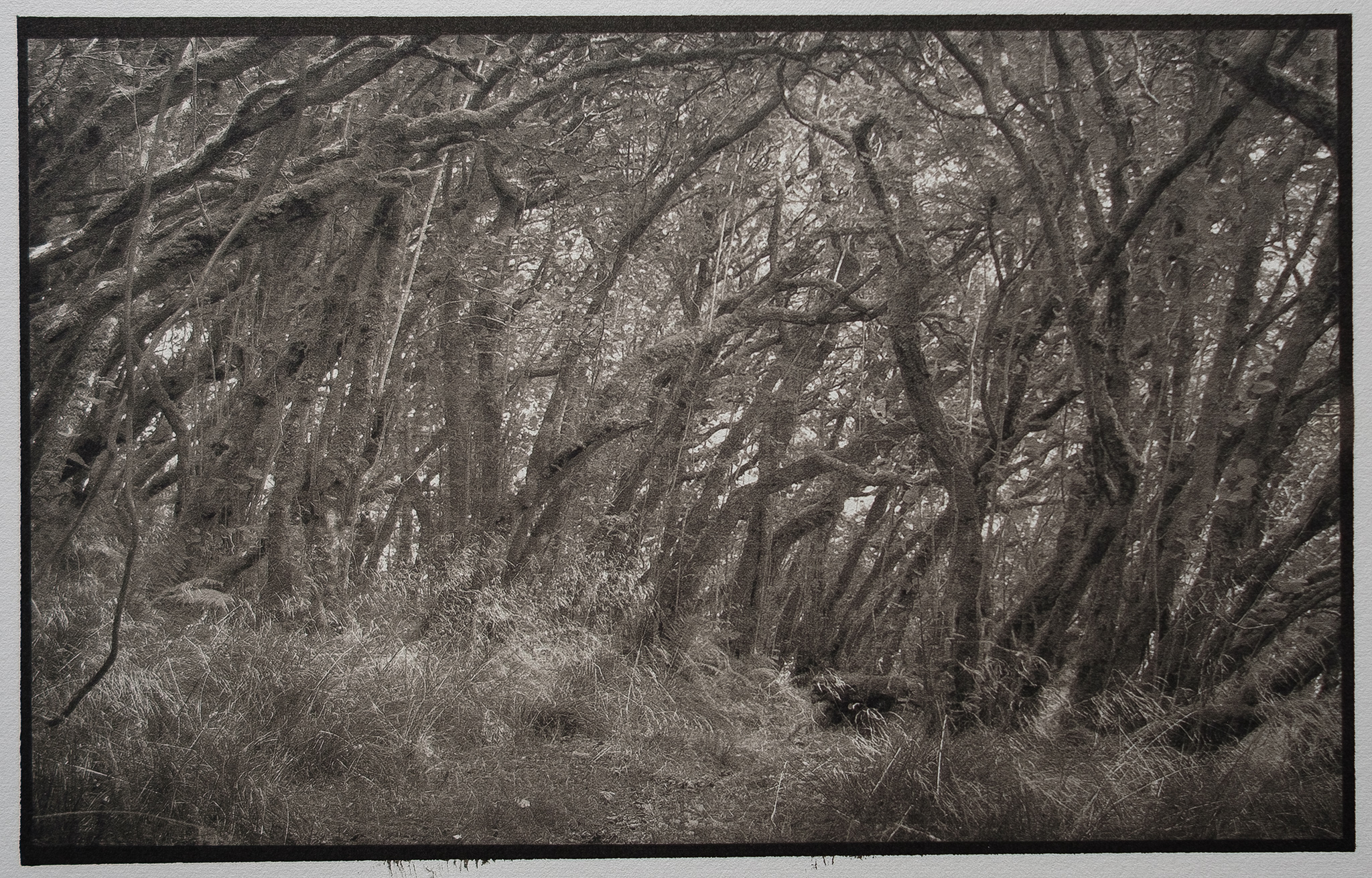
Processing of the RAW files was largely limited to some contrast adjustments and the inevitable preparation for a series of digital prints. My preference was for finely textured cotton rag matt paper. My intention was always to further include some Platinum/ Palladium darkroom prints. I have long been interested in early photographic processes, and this one from the late 19th century is particularly exquisite.
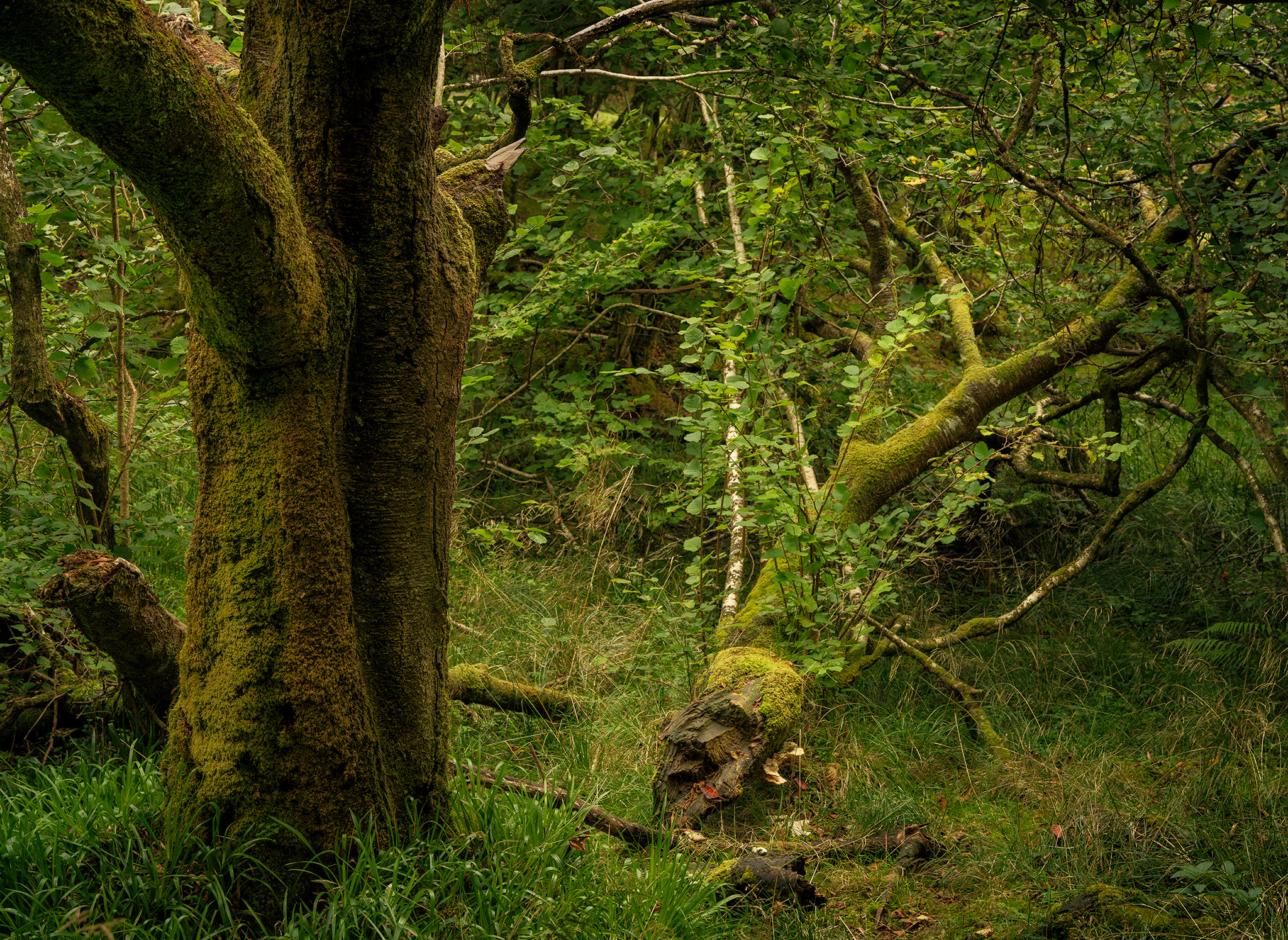
A well-developed Pt/Pd print has two main qualities: a beautiful tonal range and outstanding archival properties. Historically, carefully prepared Pt/Pd prints were always something special, but gradually declined due to the availability of materials, the commercial cost involved and the competing opportunities created by other emerging processes.
The resurgence in more recent times has been largely due to the digital age, putting exponents in touch with each other and the means to digitally produce large negatives for contact printing.
The negatives require preparation to take a black and white image, then apply a suitable curve to replicate the tonality and density of a traditional glass plate negative processed in pyrogallic acid. This results in a negative, particularly attuned to the Pt/Pd process, so that under an ultraviolet light source, the density of the negative will block light to create the latent image.
The next stage is to brush (or rod) coat an appropriate watercolour like paper with a combination of the Pt/Pd salts and ferric oxalate to create a light sensitive substrate.
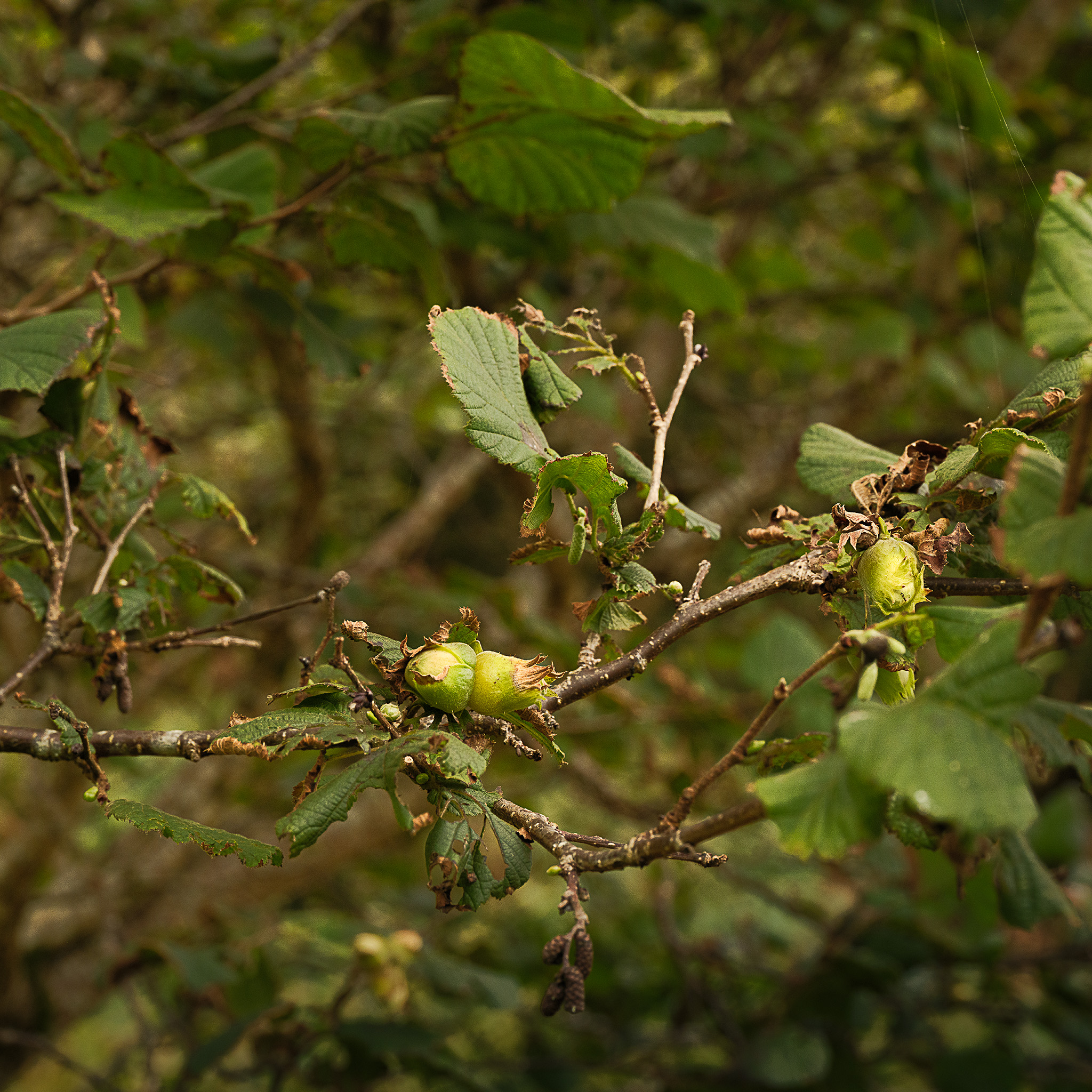
The negative is then sandwiched with the coated paper and exposed to a controlled UV light source. This results in a ghosted image, which is then fully developed to remove the iron-based solution and leave only the ‘noble’ metals. The print then makes its way through a series of clearing baths and is allowed to dry.
For me, there is a synergy of both subject and process. The combination of an ancient woodland spanning back through time and a Pt/Pd process fused with noble metals, embedded in the paper rather than on it, indeed, the paper will disintegrate with age before the image deteriorates.
The print and the woodland itself share the capacity to span forward through time, and that for me is both majestic and more than a little magical.