


 Join the conversation
 Subcribe to comment rss feed
Photography as Pattern, Abstraction, and Quiet Endurance

Matt Payne
Matt Payne is a landscape photographer and mountain climber from Durango, Colorado. He’s the host of the weekly landscape photography podcast, “F-Stop Collaborate and Listen,” co-founder of the Nature First Photography Alliance, and co-founder of the Natural Landscape Photography Awards. He lives with his wife, Angela, his son Quinn, and his four cats, Juju, Chara, Arrow, and Vestal.
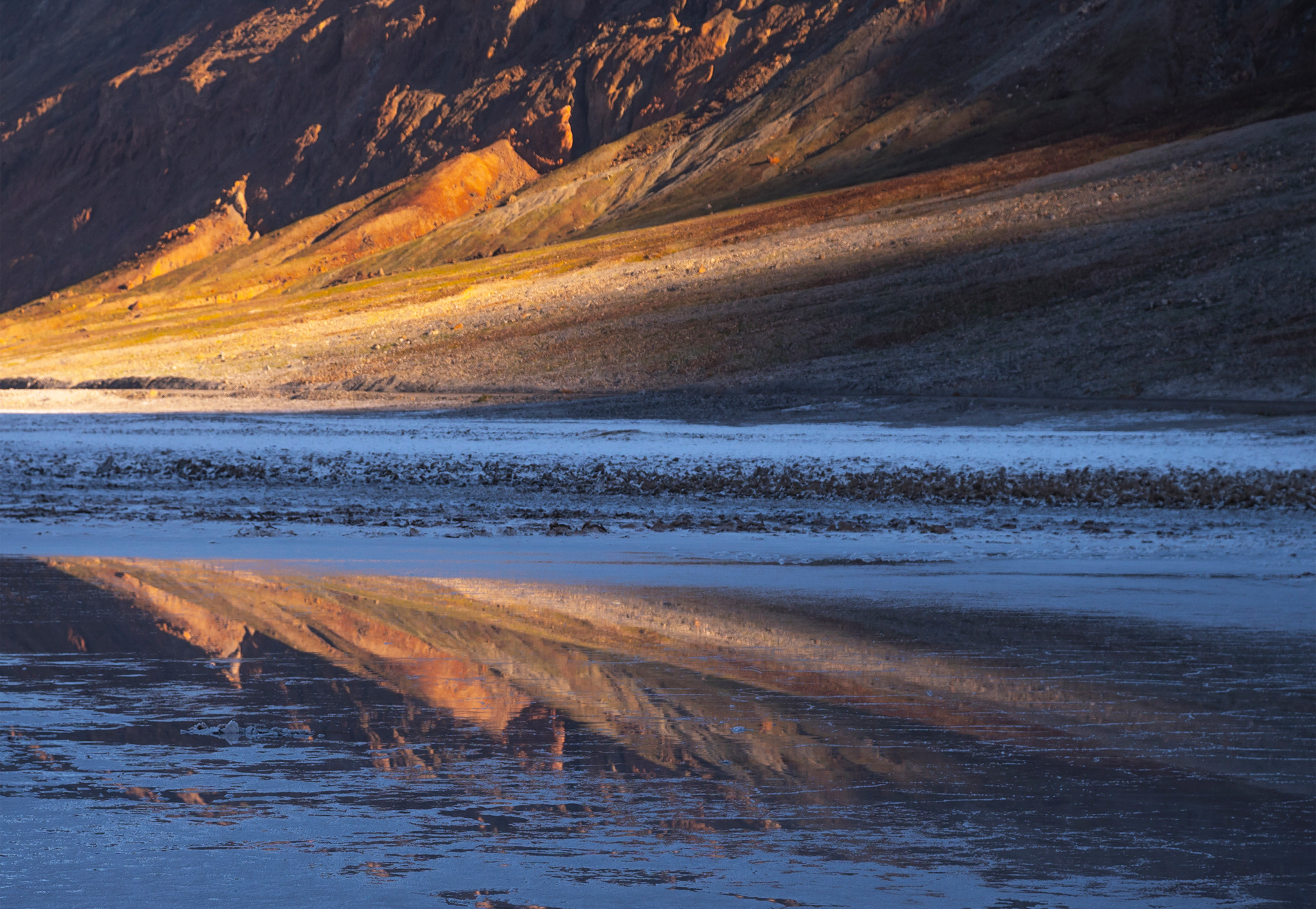
What separates observation from interpretation? At what point does a landscape stop being a subject and start being a language? And what does it mean to find, within the vast terrain of the American West, not the grand gesture of the vista, but the quiet grammar of light, edge, and form?
These are the questions that Zalman Wainhaus seems to be asking, whether consciously or not, every time he uses a camera.
Looking at his dune photographs from Death Valley, what strikes you immediately is how little they resemble photographs in the conventional sense. The long ridgelines of sand catch the last raking light of evening and become something closer to brushwork: a single amber line suspended between deep blue shadow planes, precise and curved as a calligrapher's stroke. The dunes are not the subject so much as the surface, and what Wainhaus is really photographing is the geometry that wind and light conspire to produce. He uses long telephoto lenses frequently, compressing space, flattening depth, reducing the three-dimensional world to something that behaves more like a painting than a scene. This is not an accident. It is a method. A method I have also been leaning into more and more over the years.