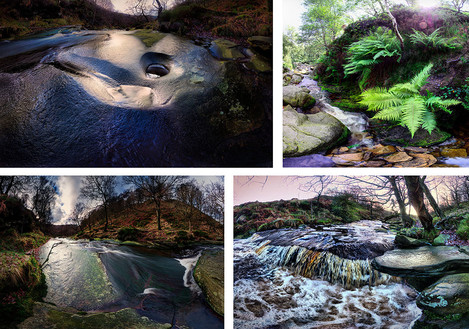
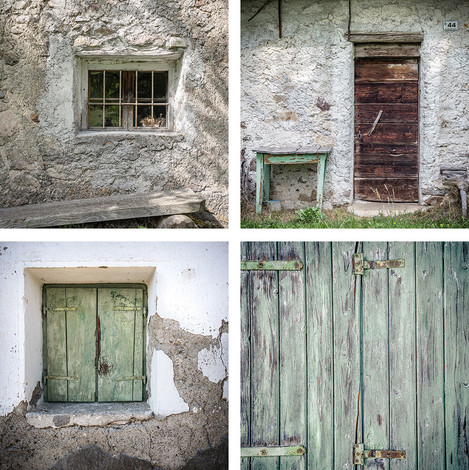
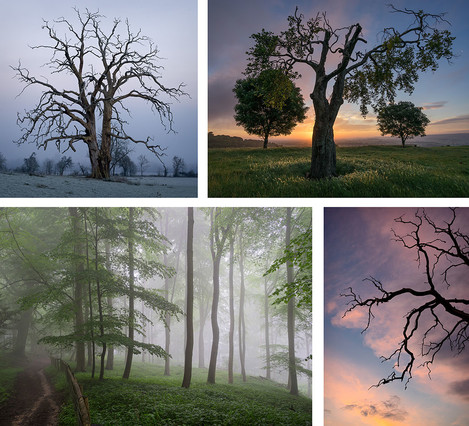
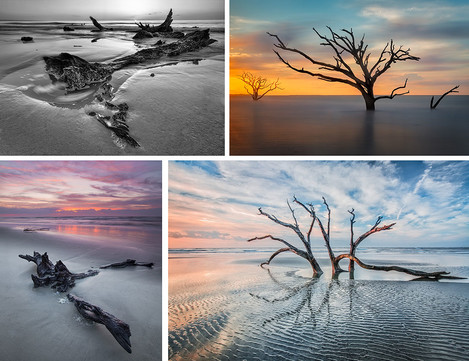
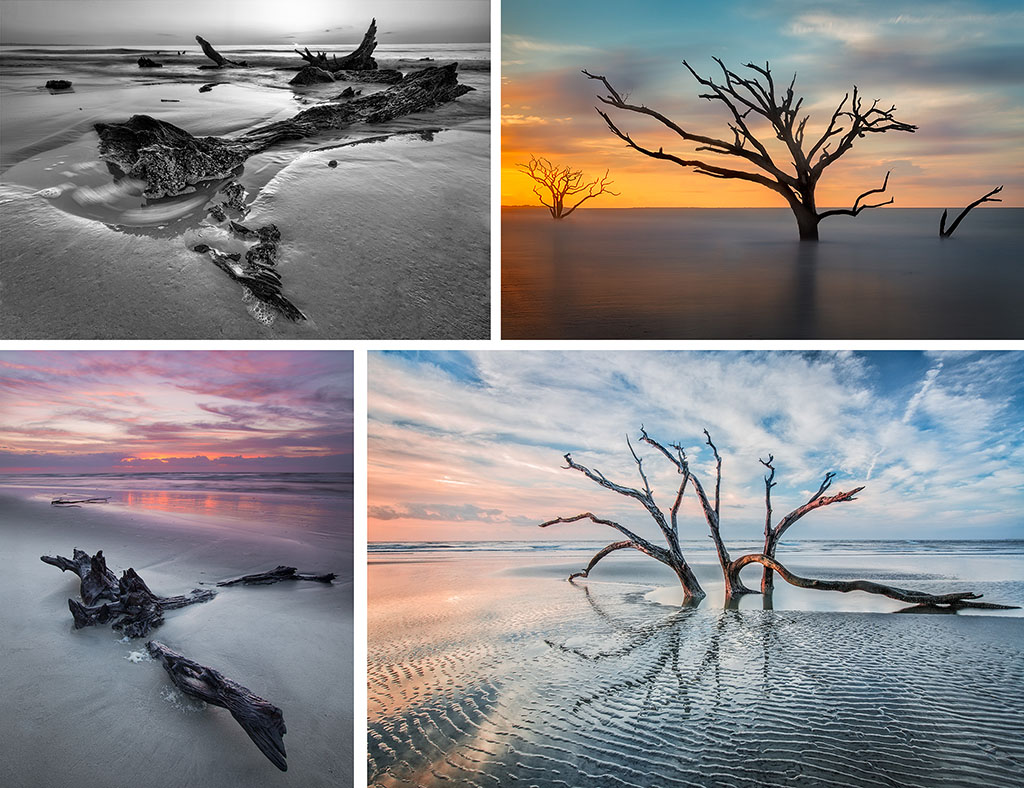
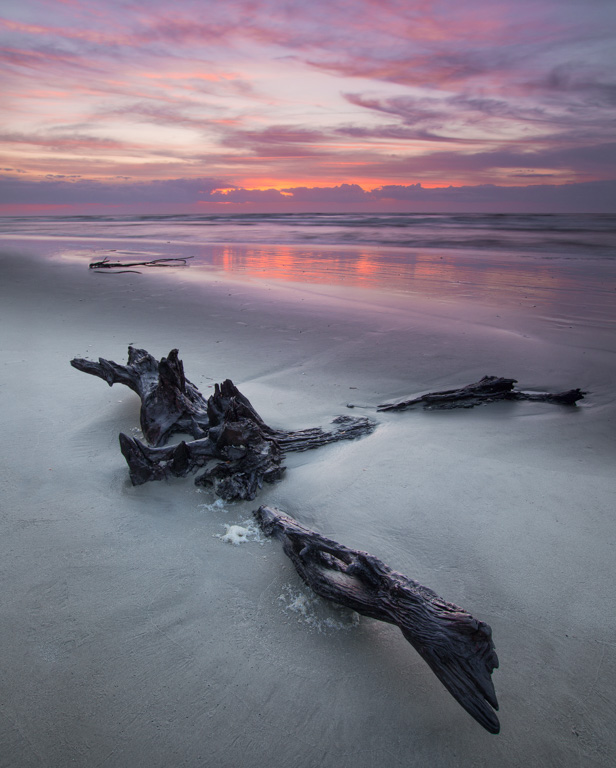
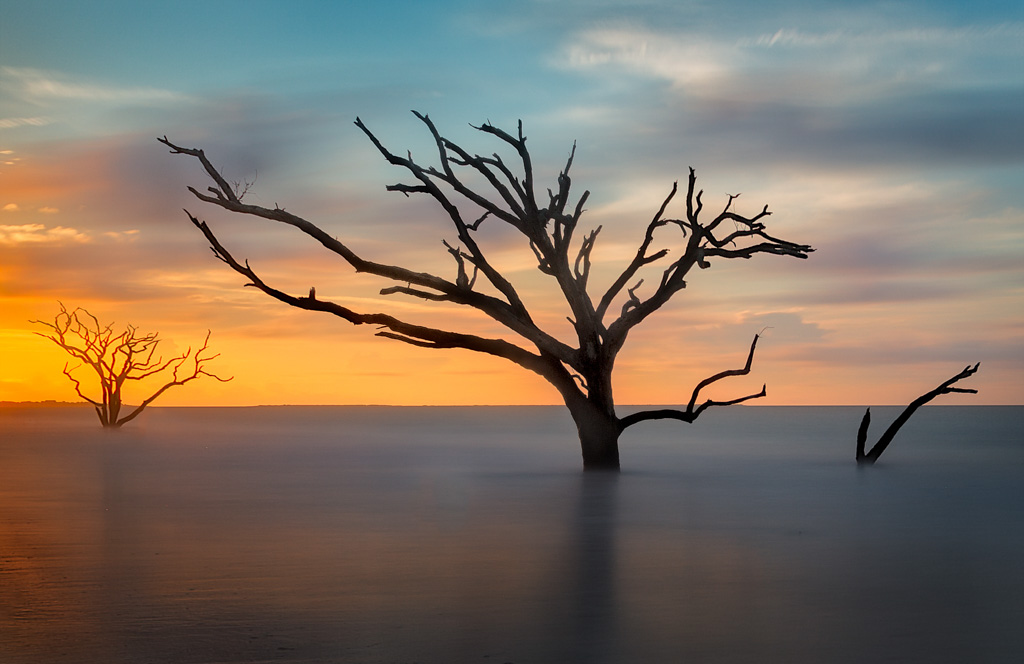
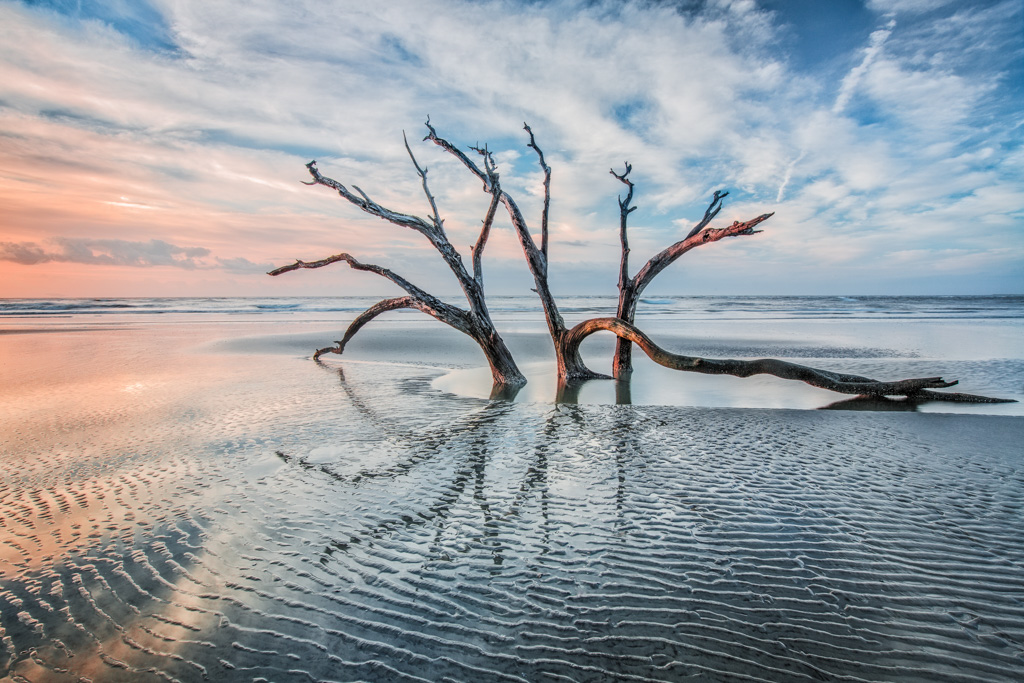
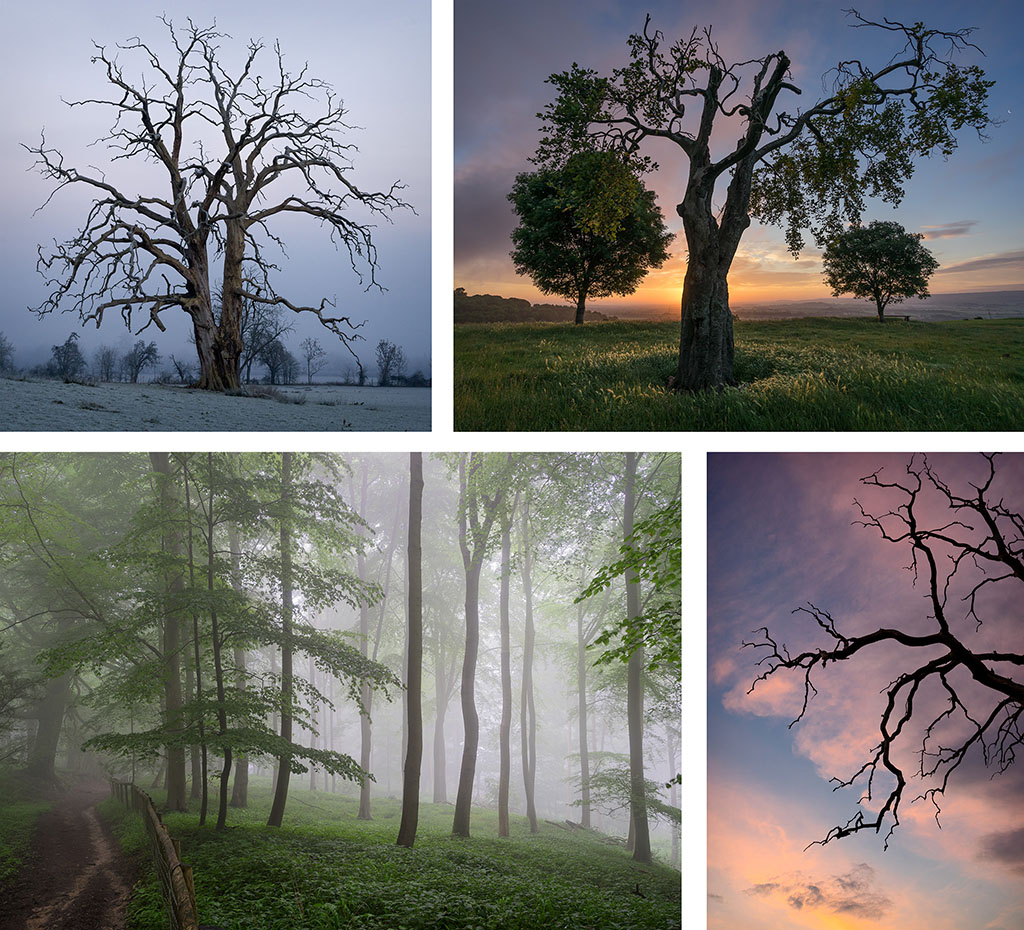
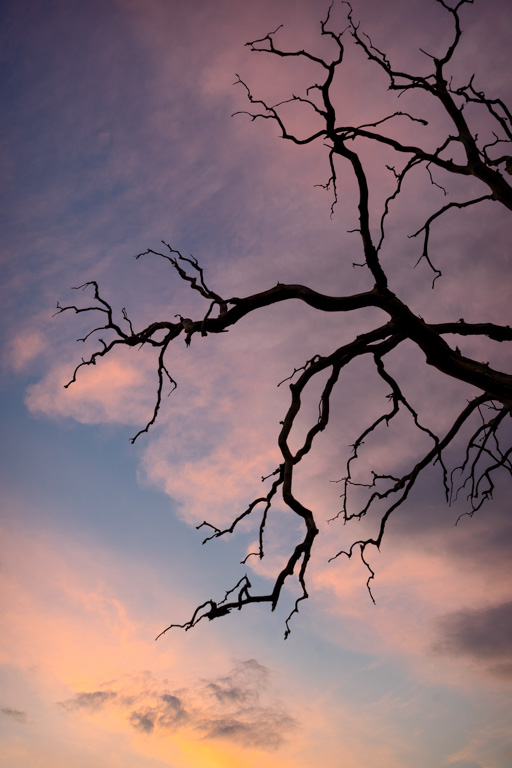
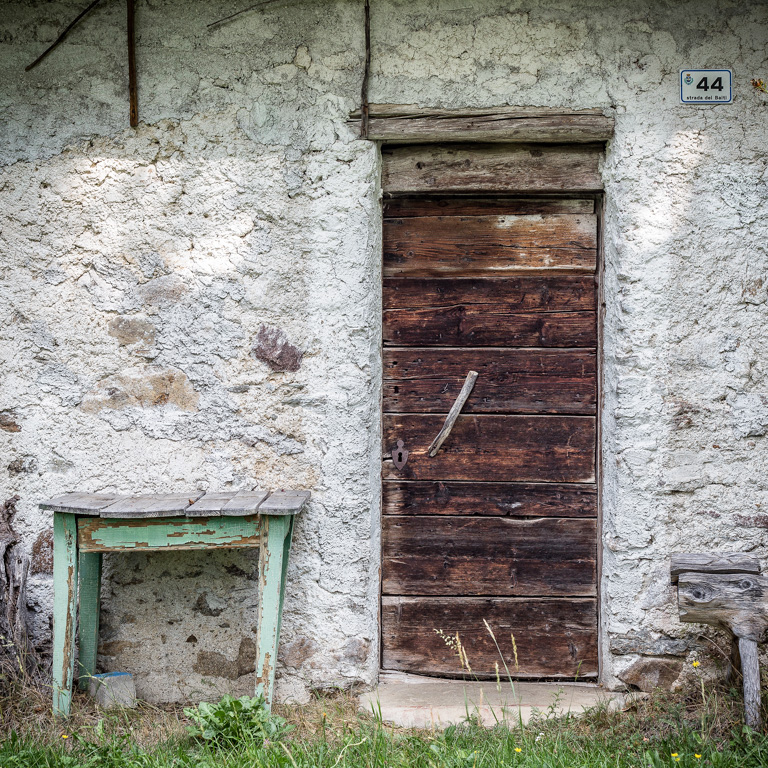
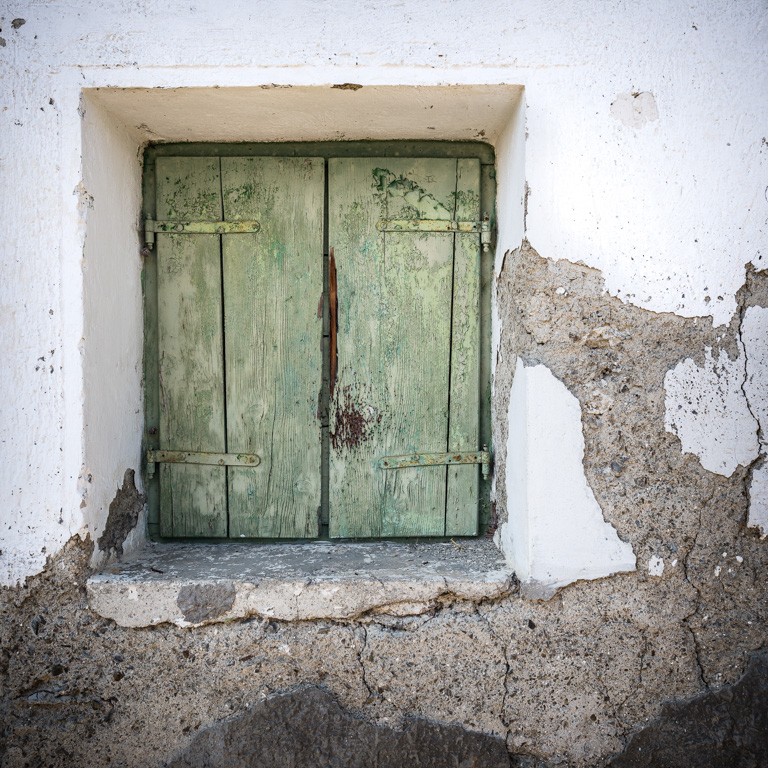
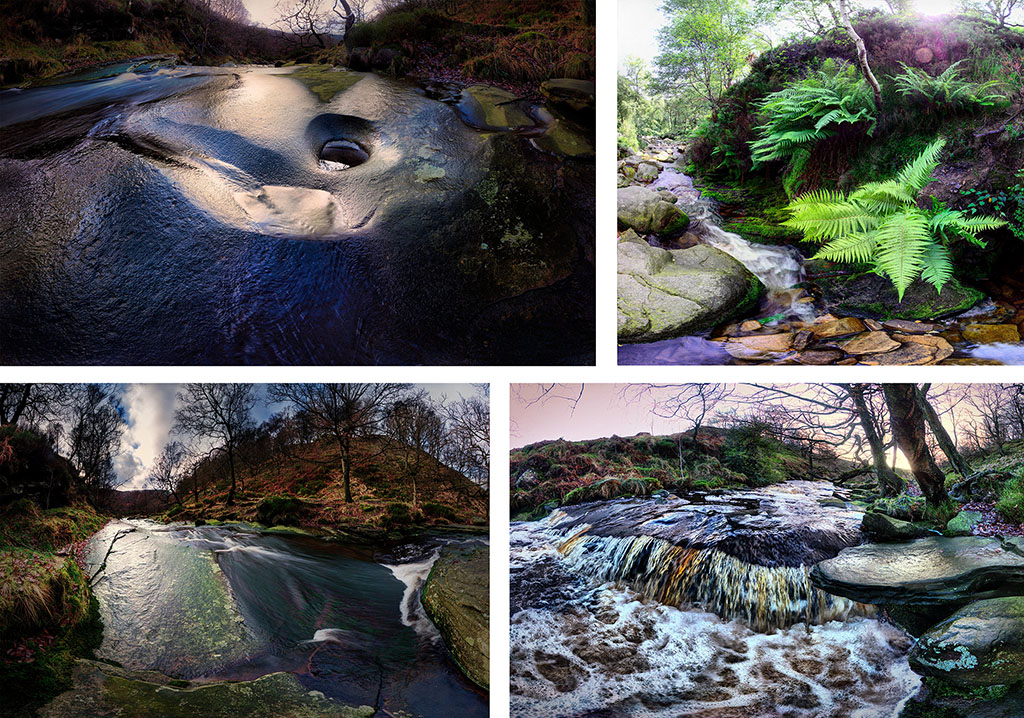
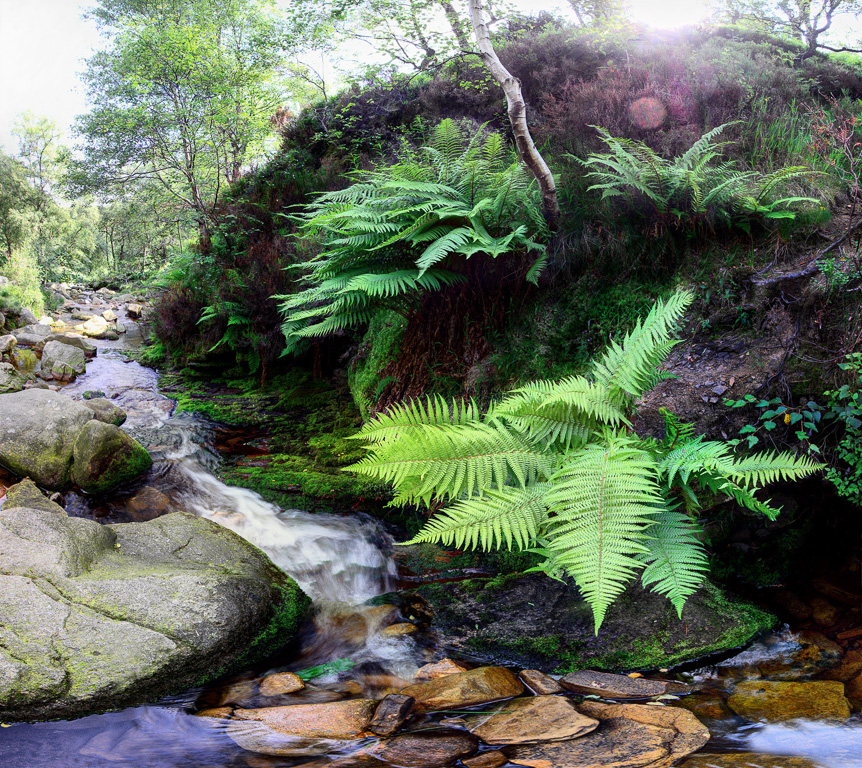
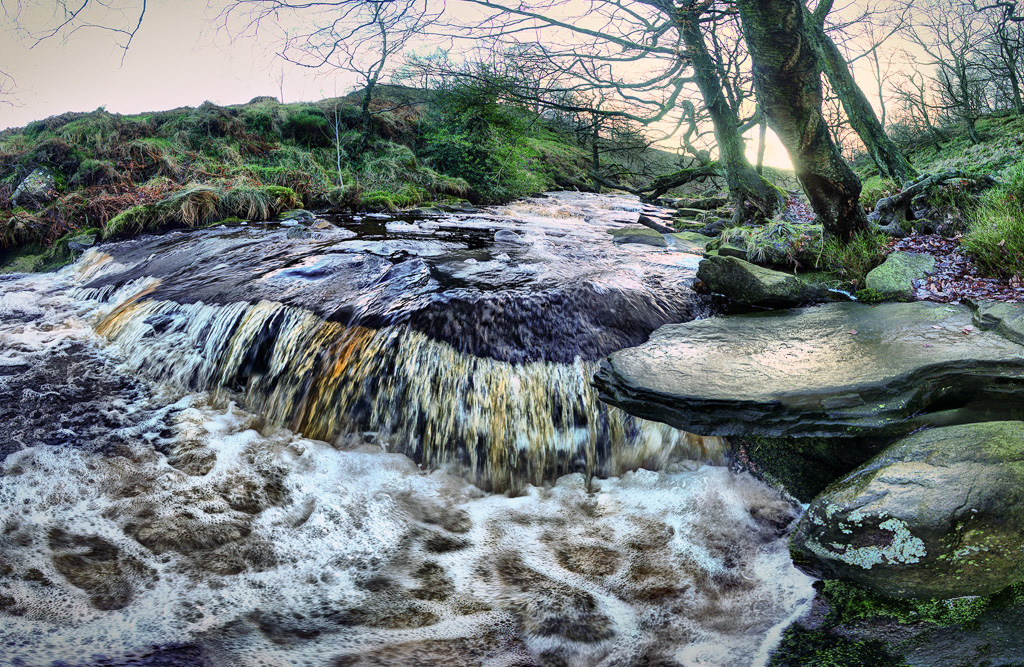
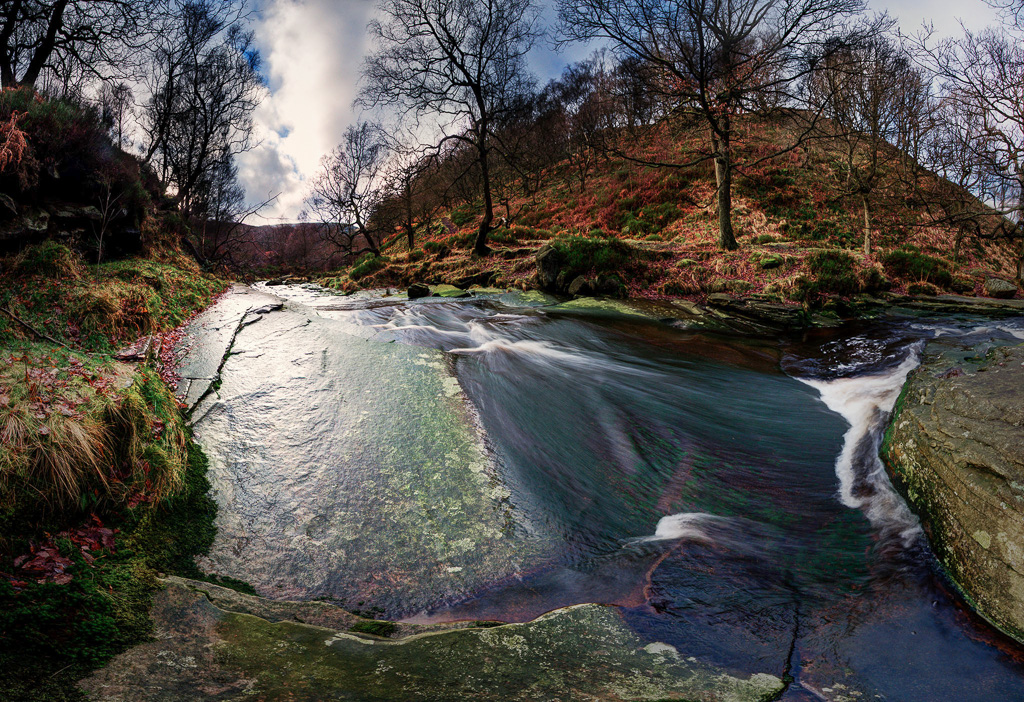
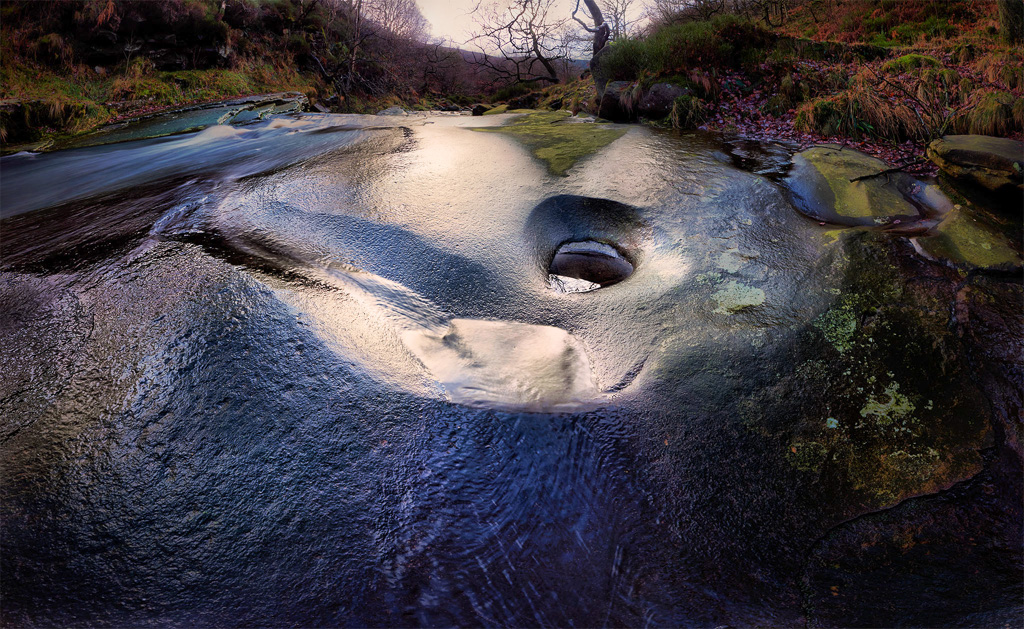
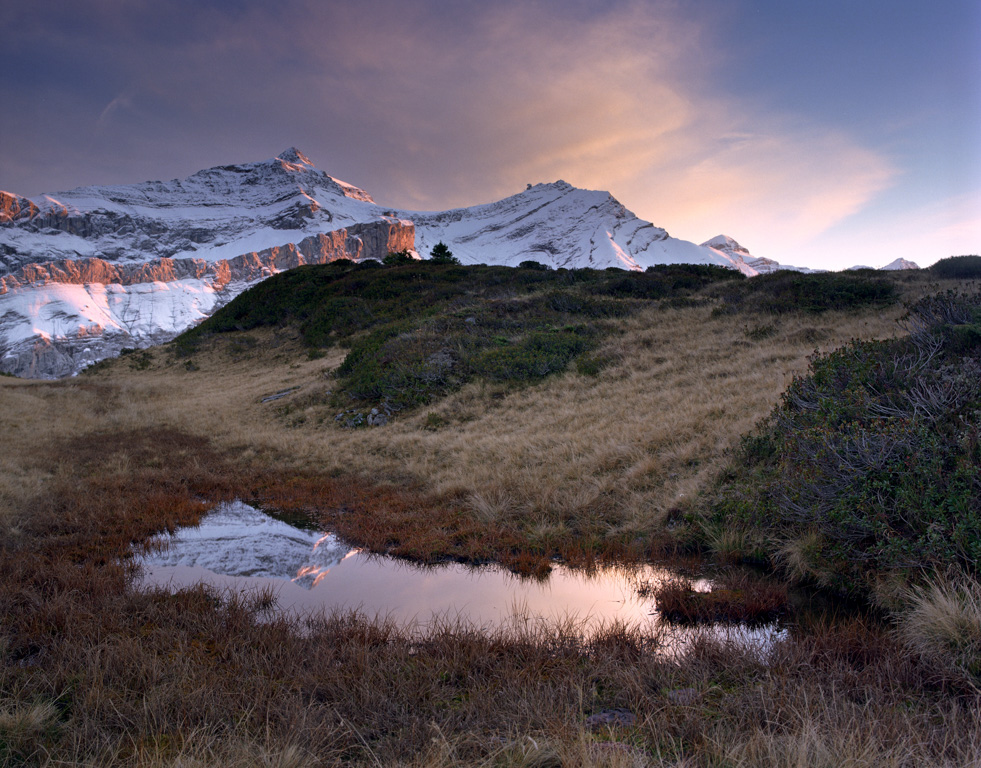
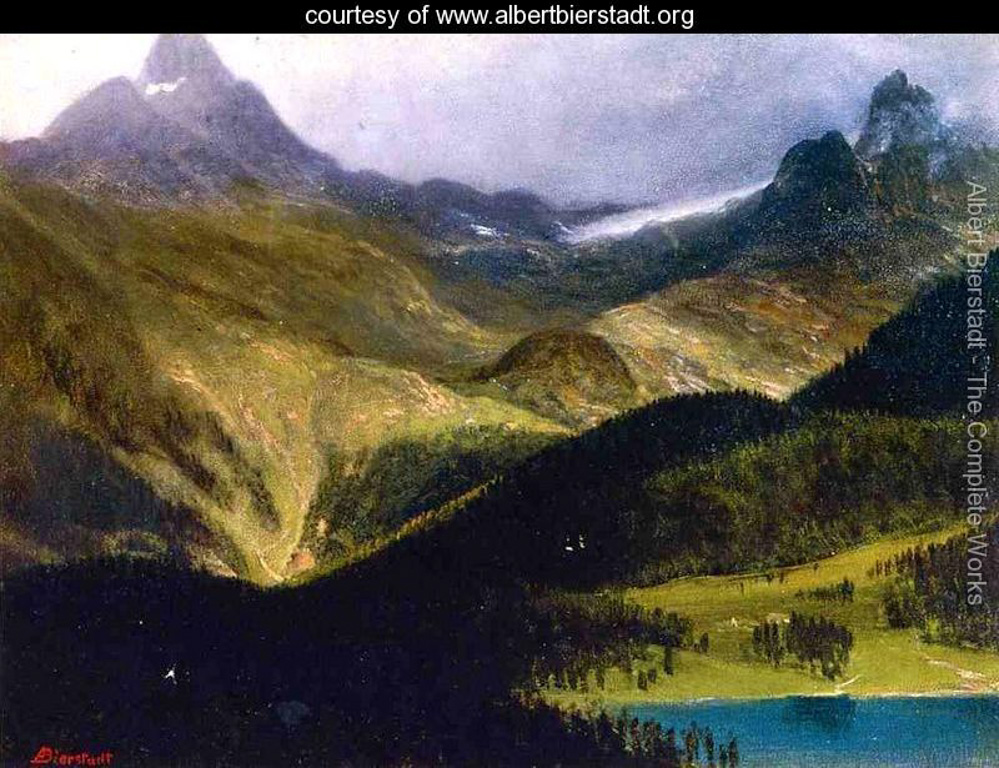
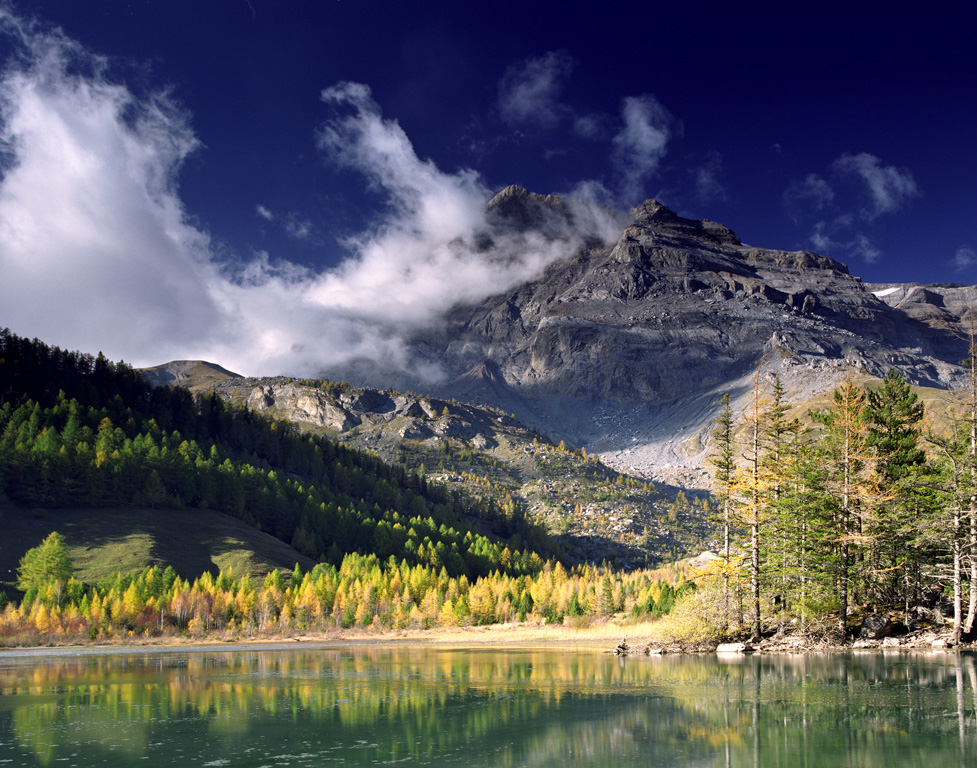
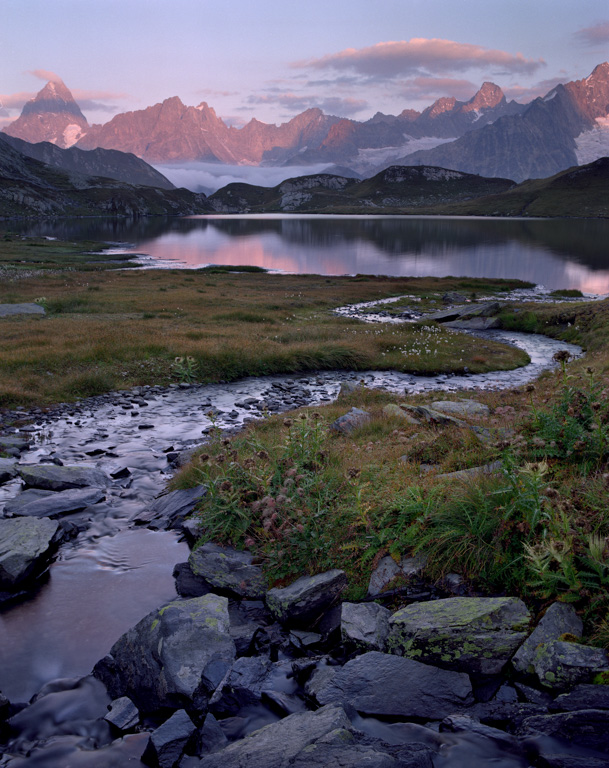
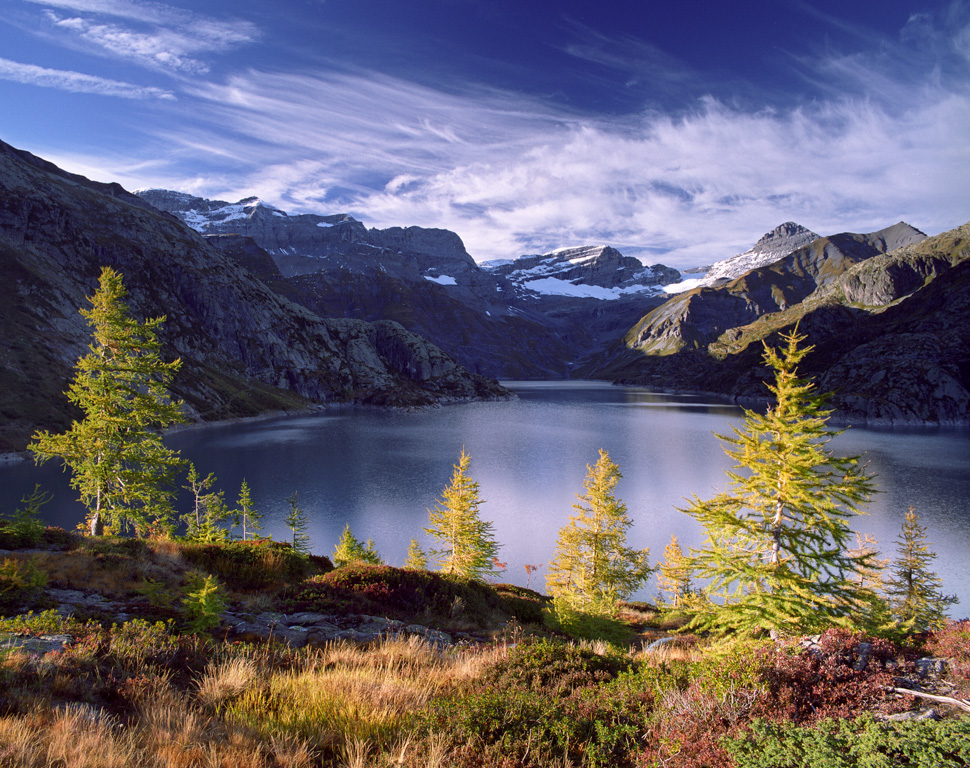
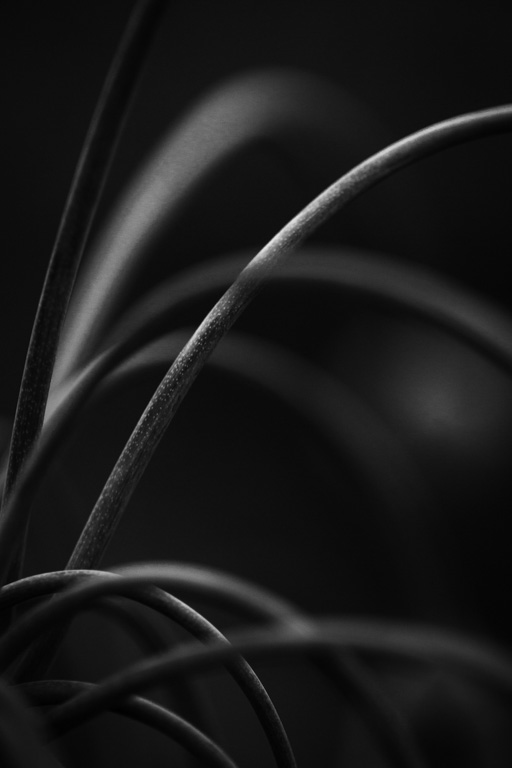
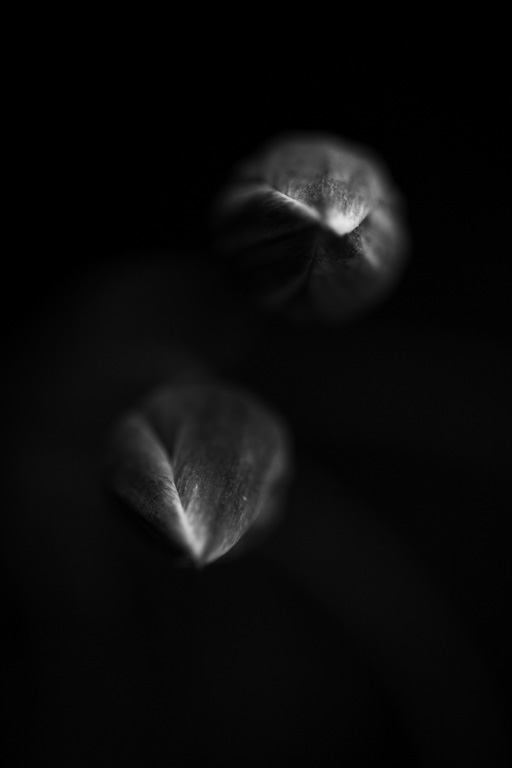
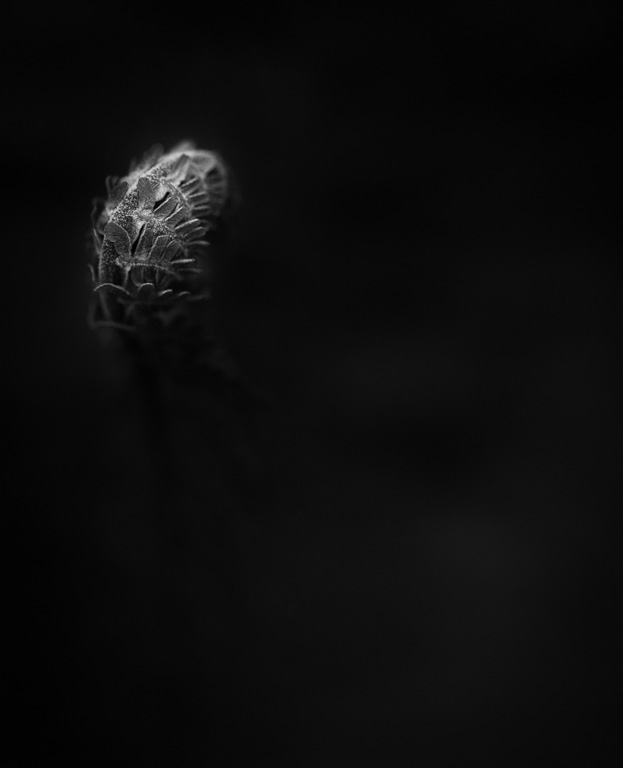
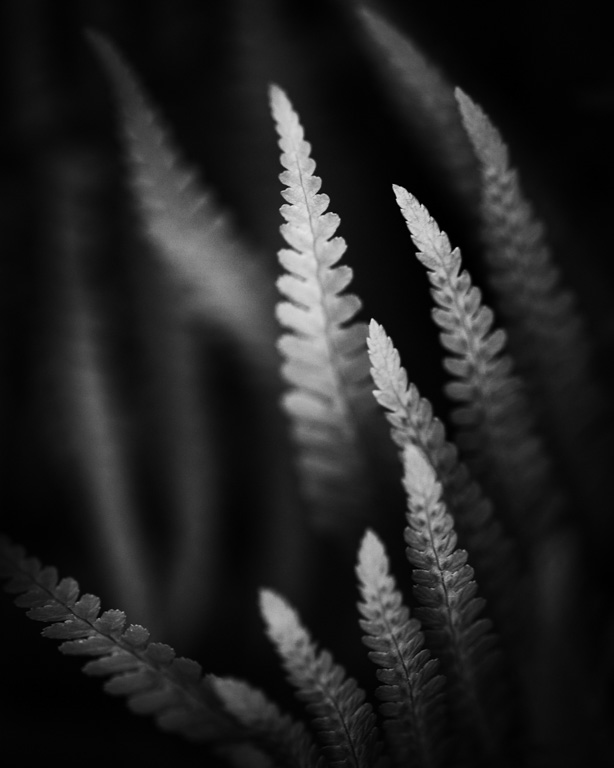
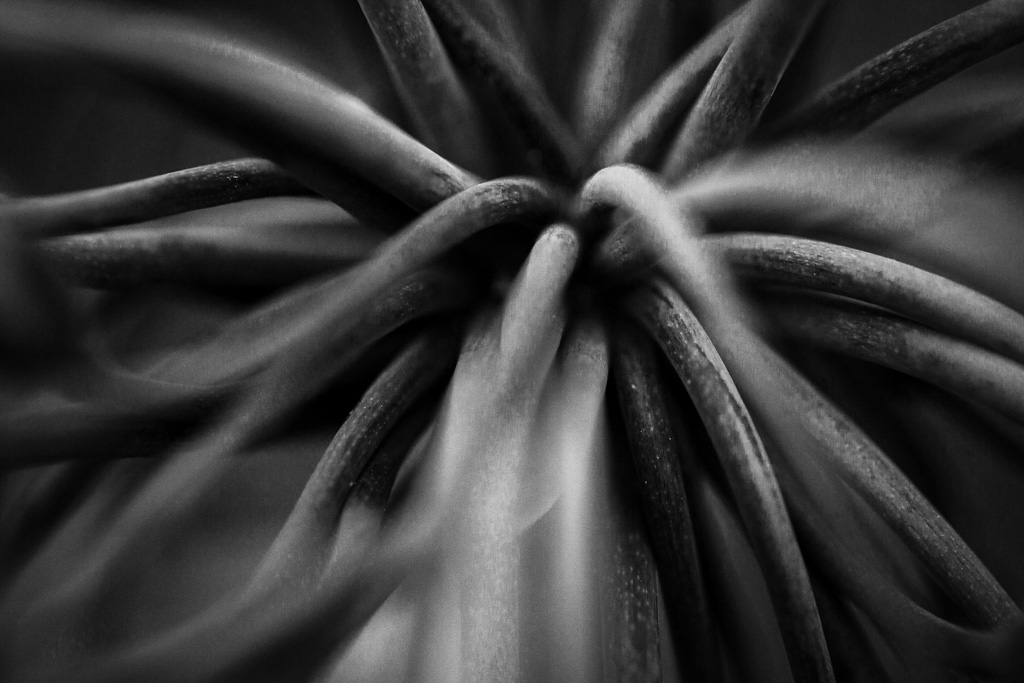
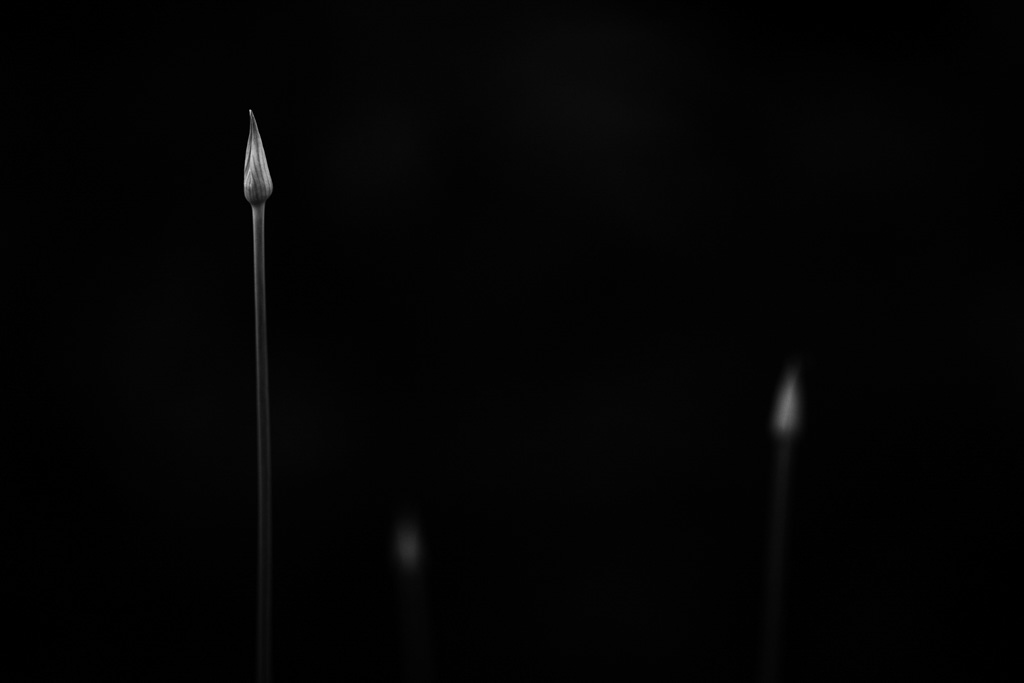
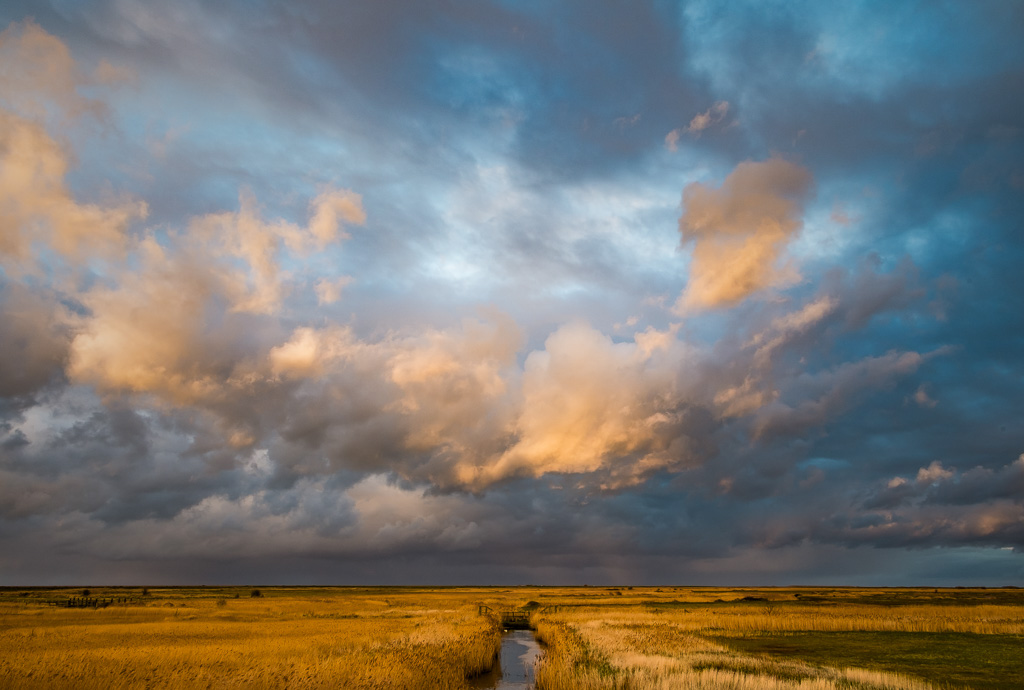
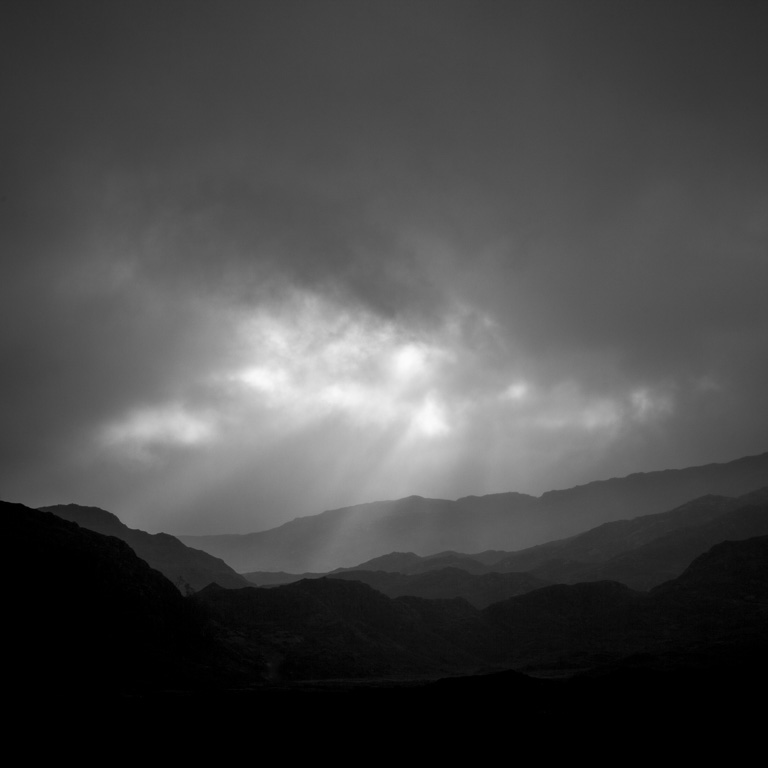
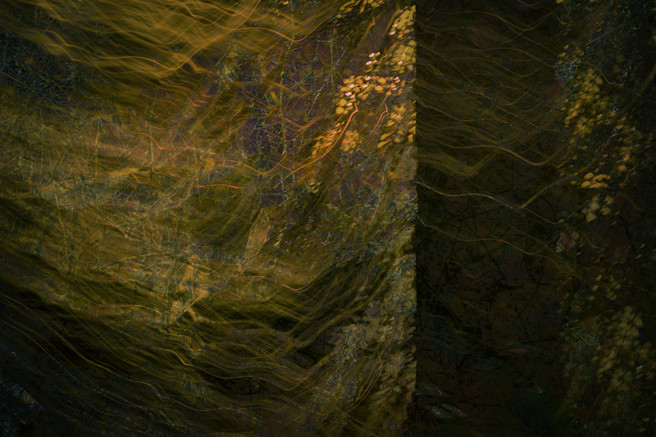
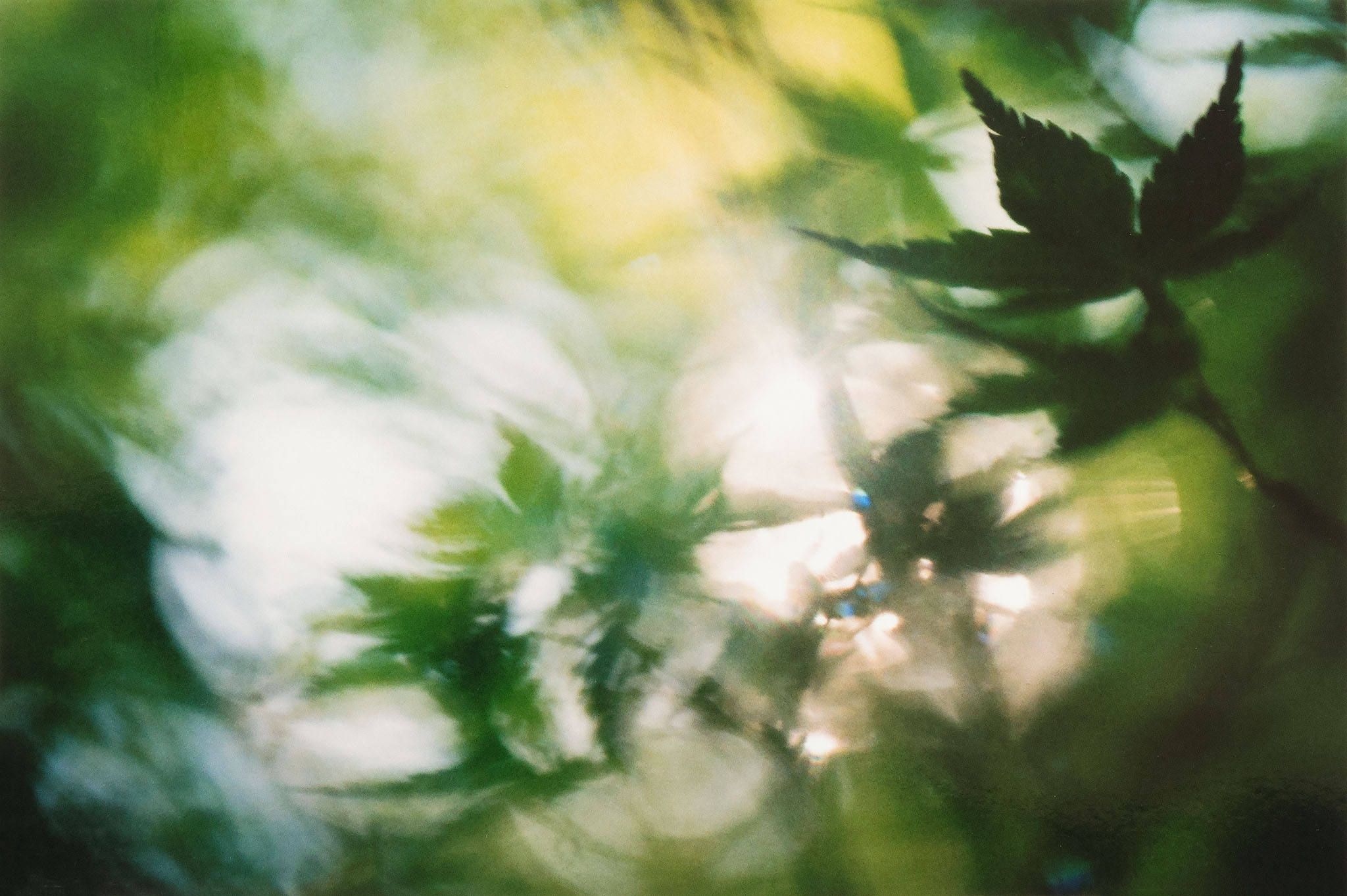
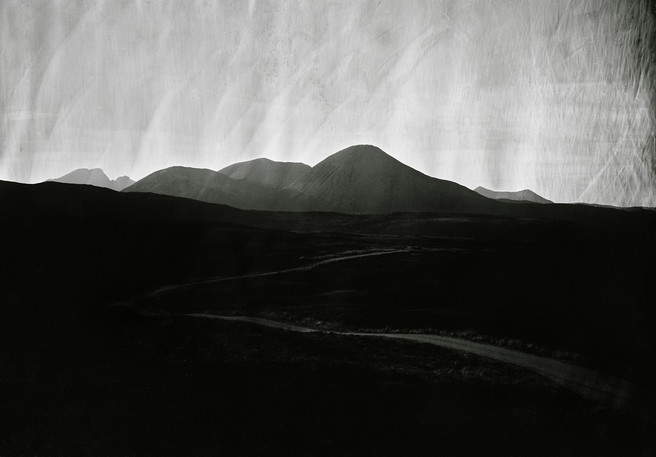
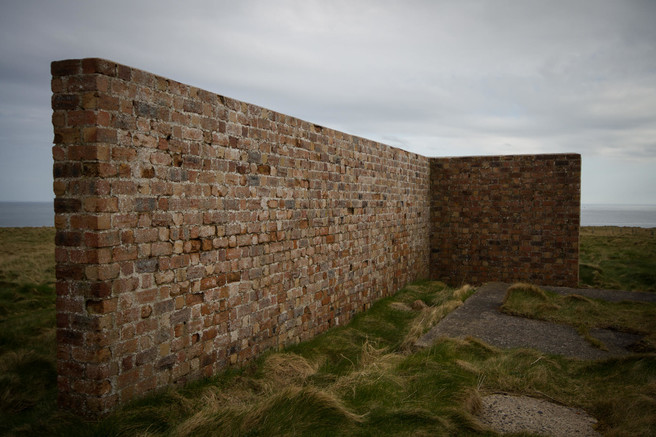
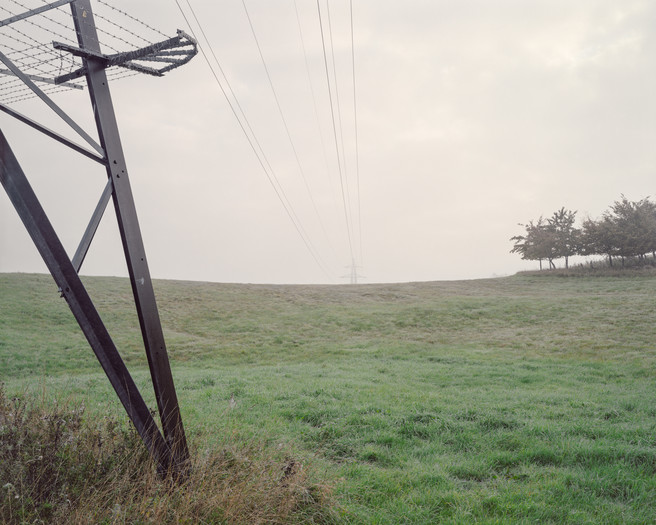
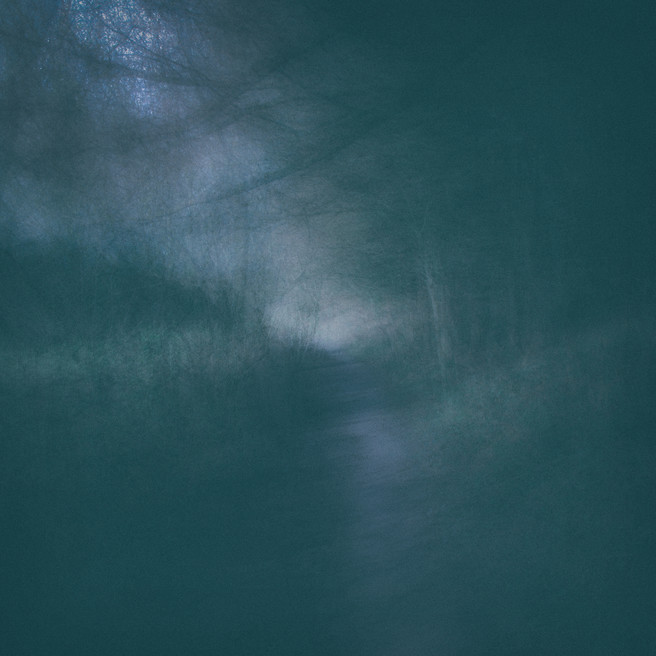
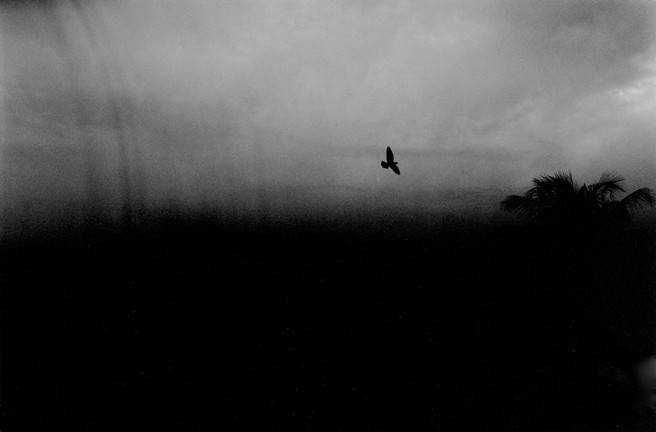
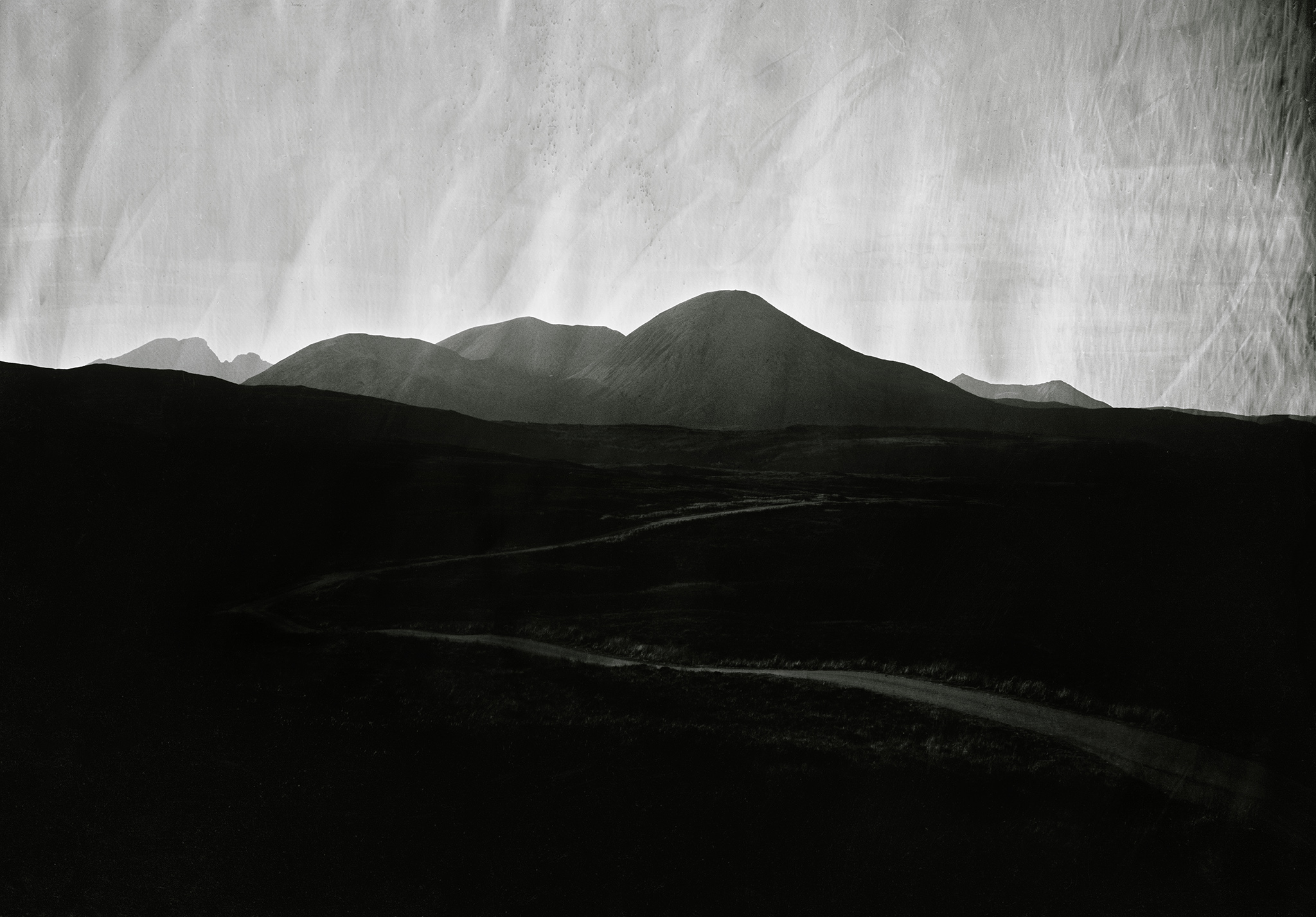
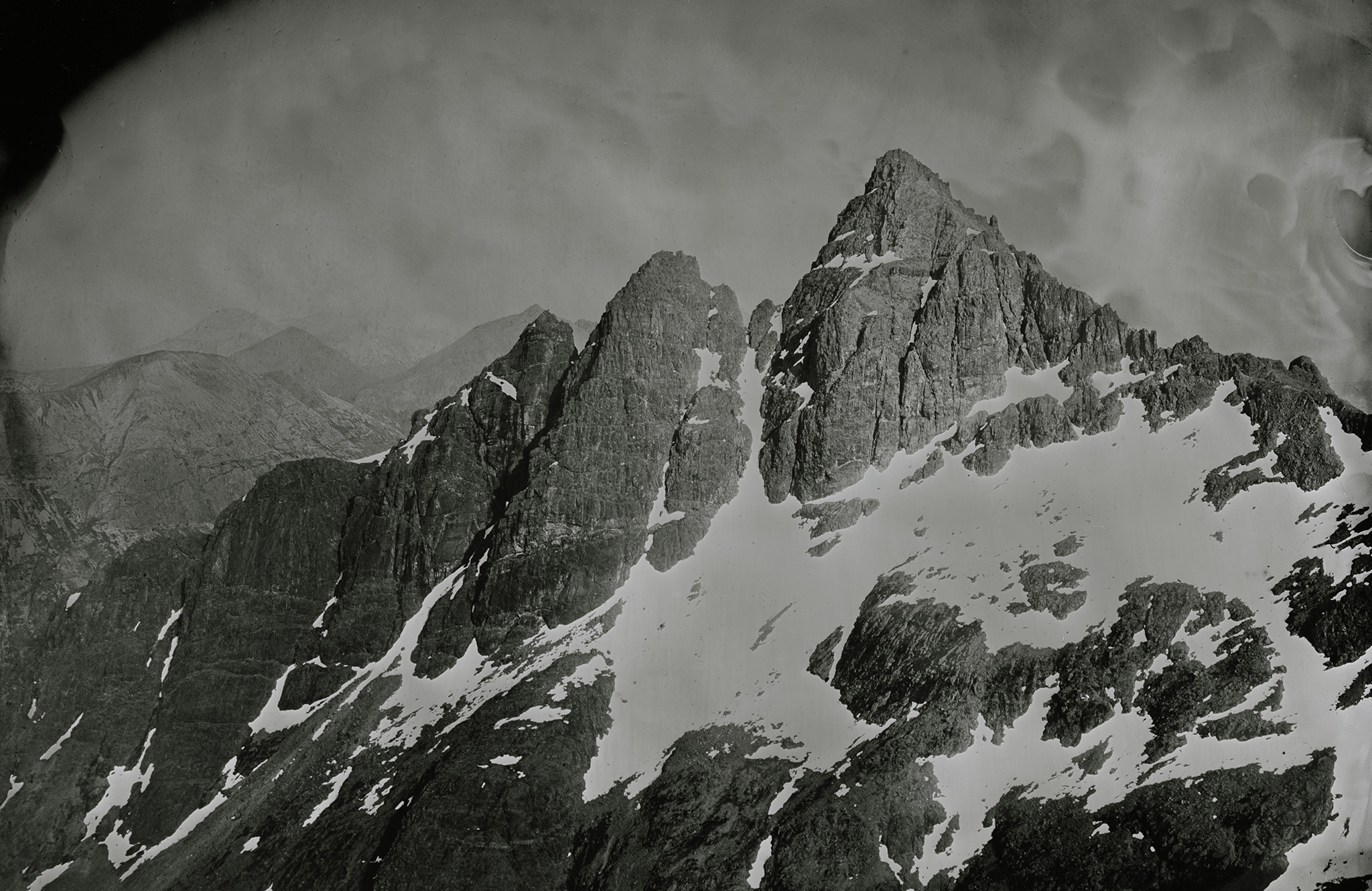
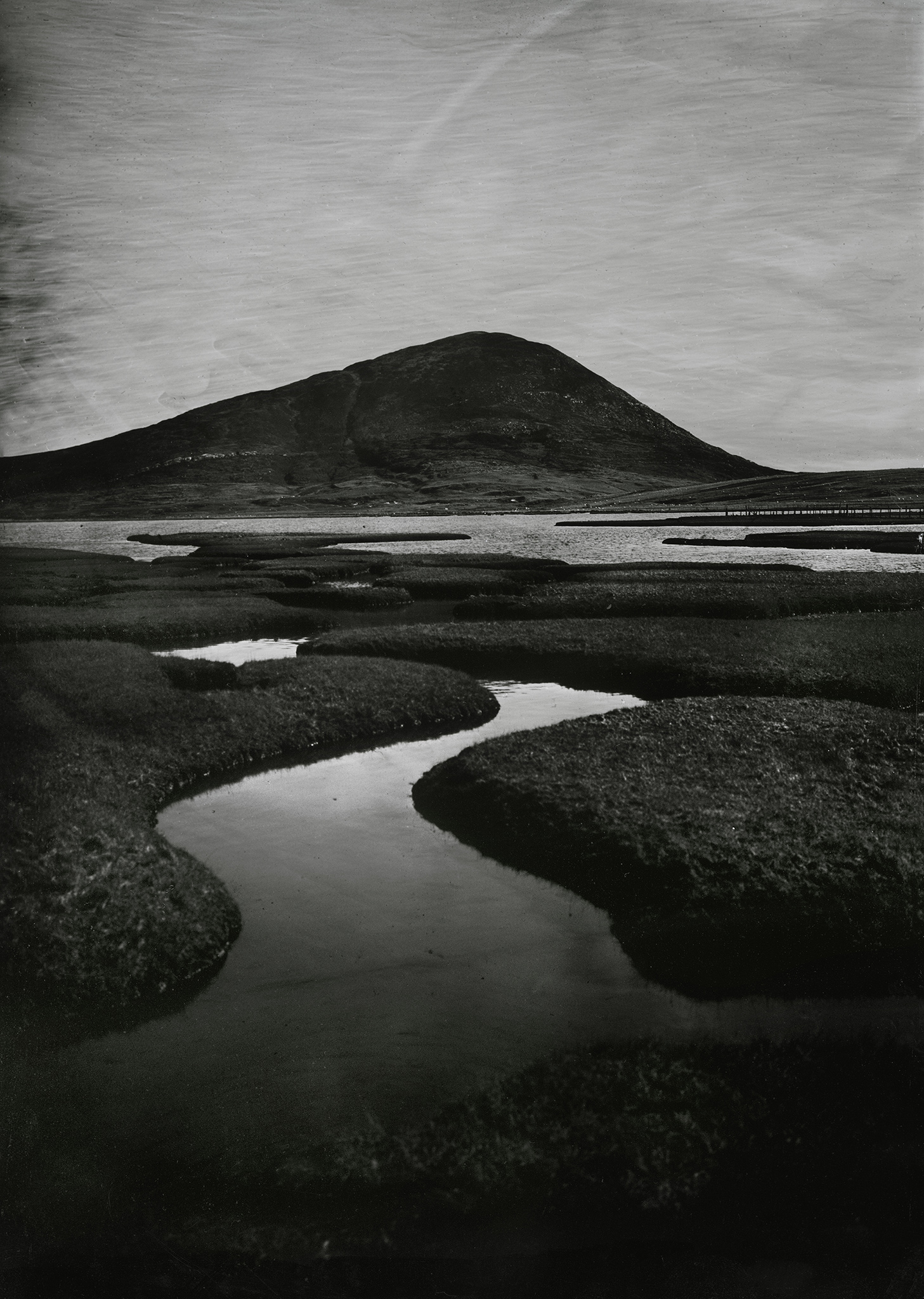
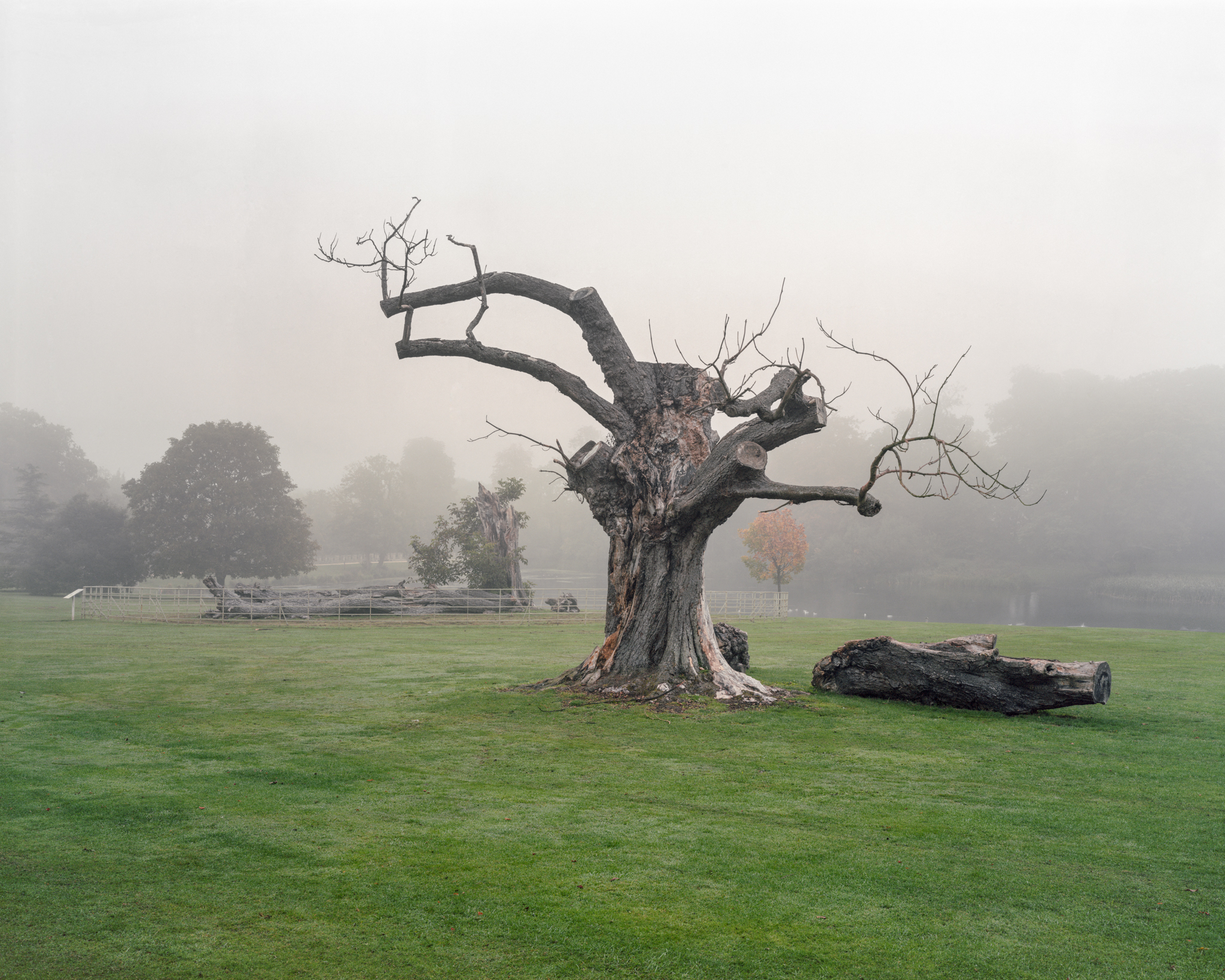
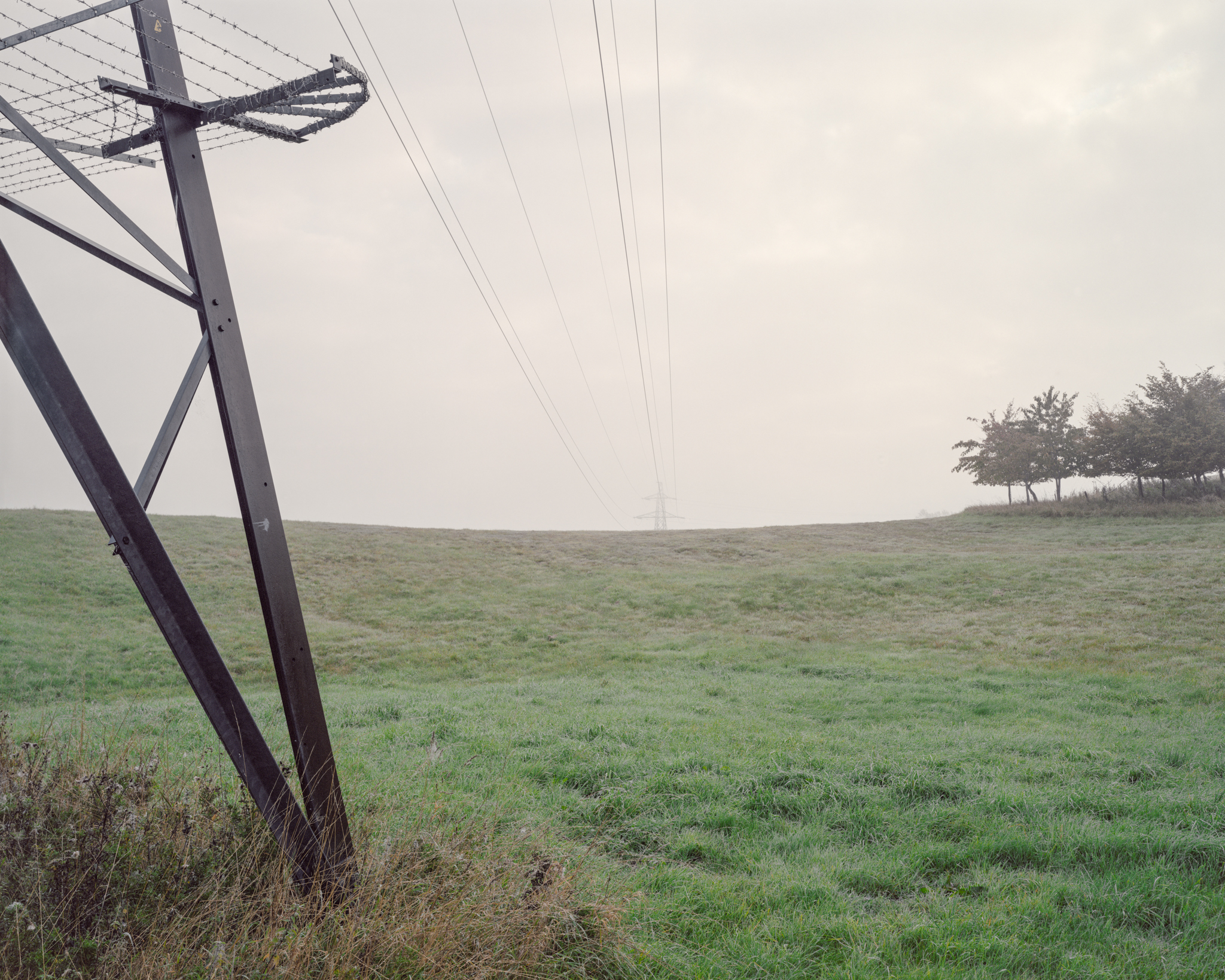
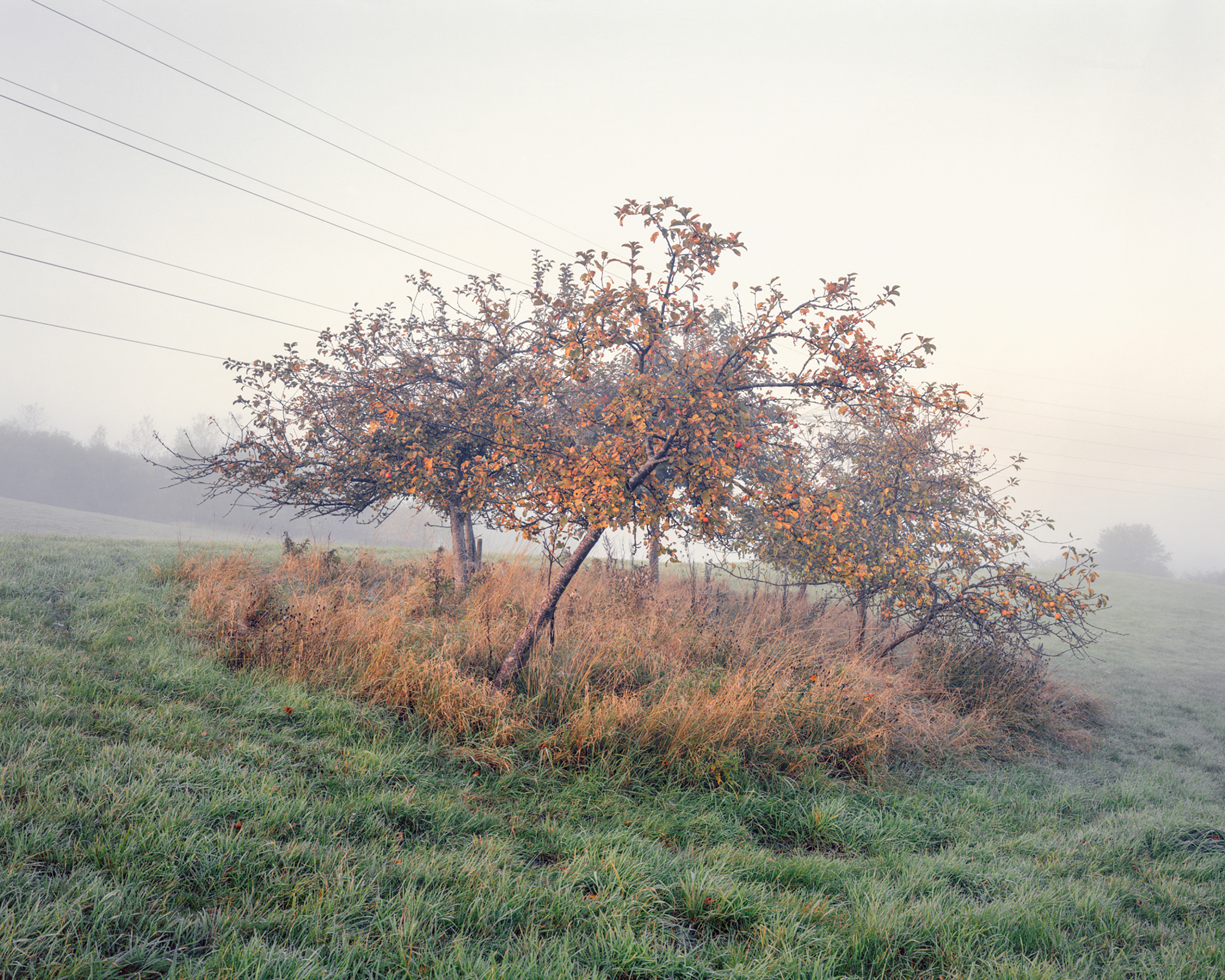
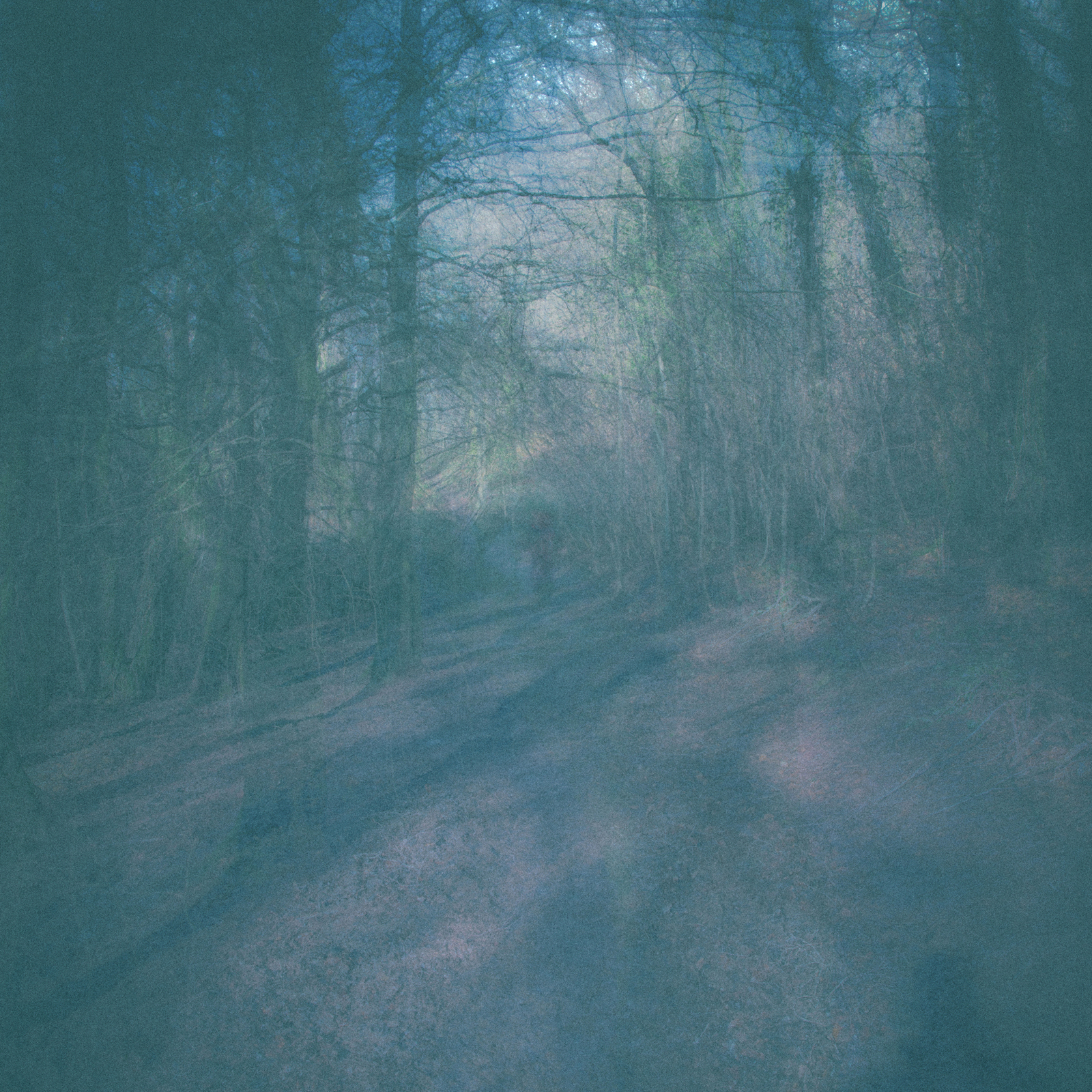
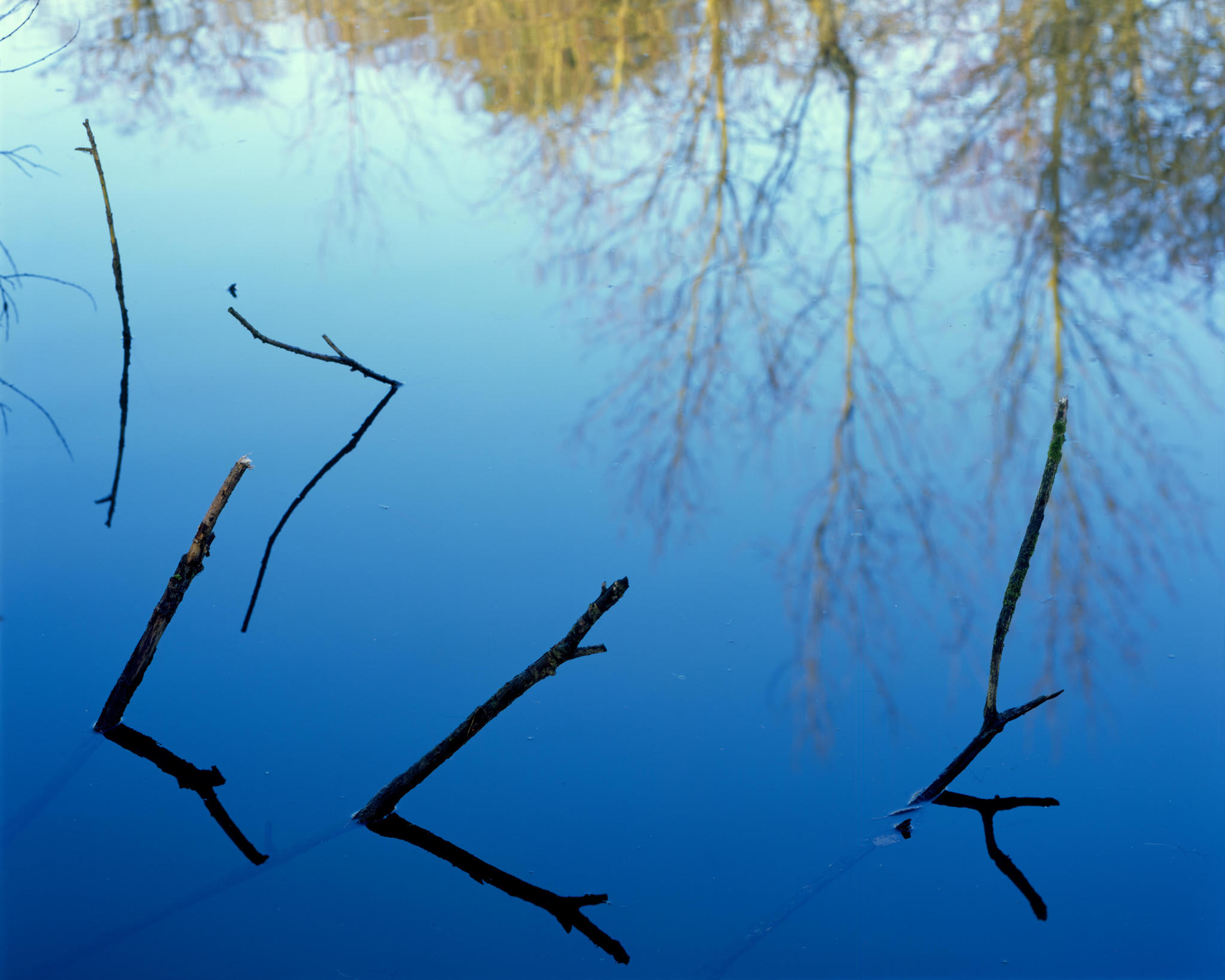
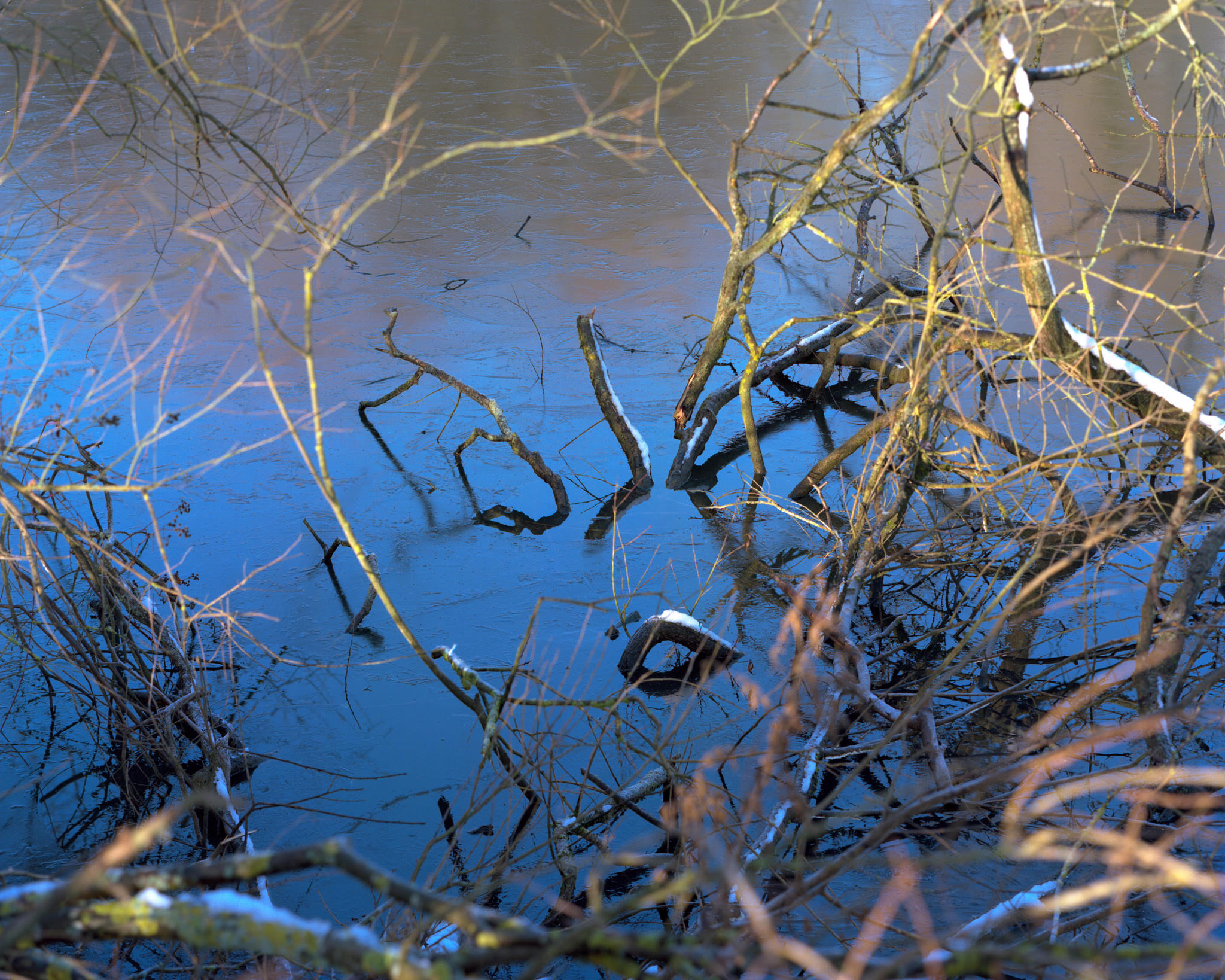
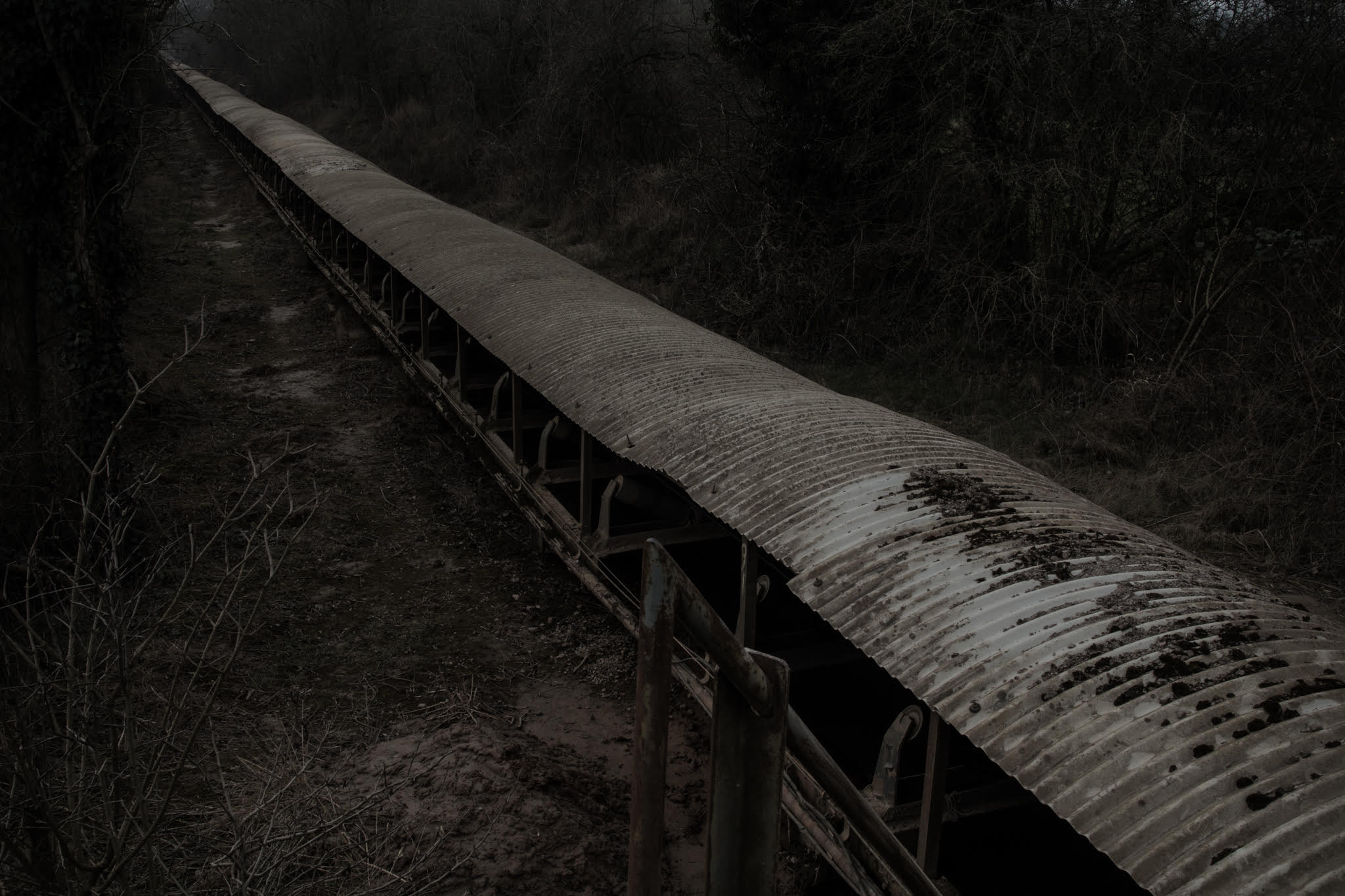
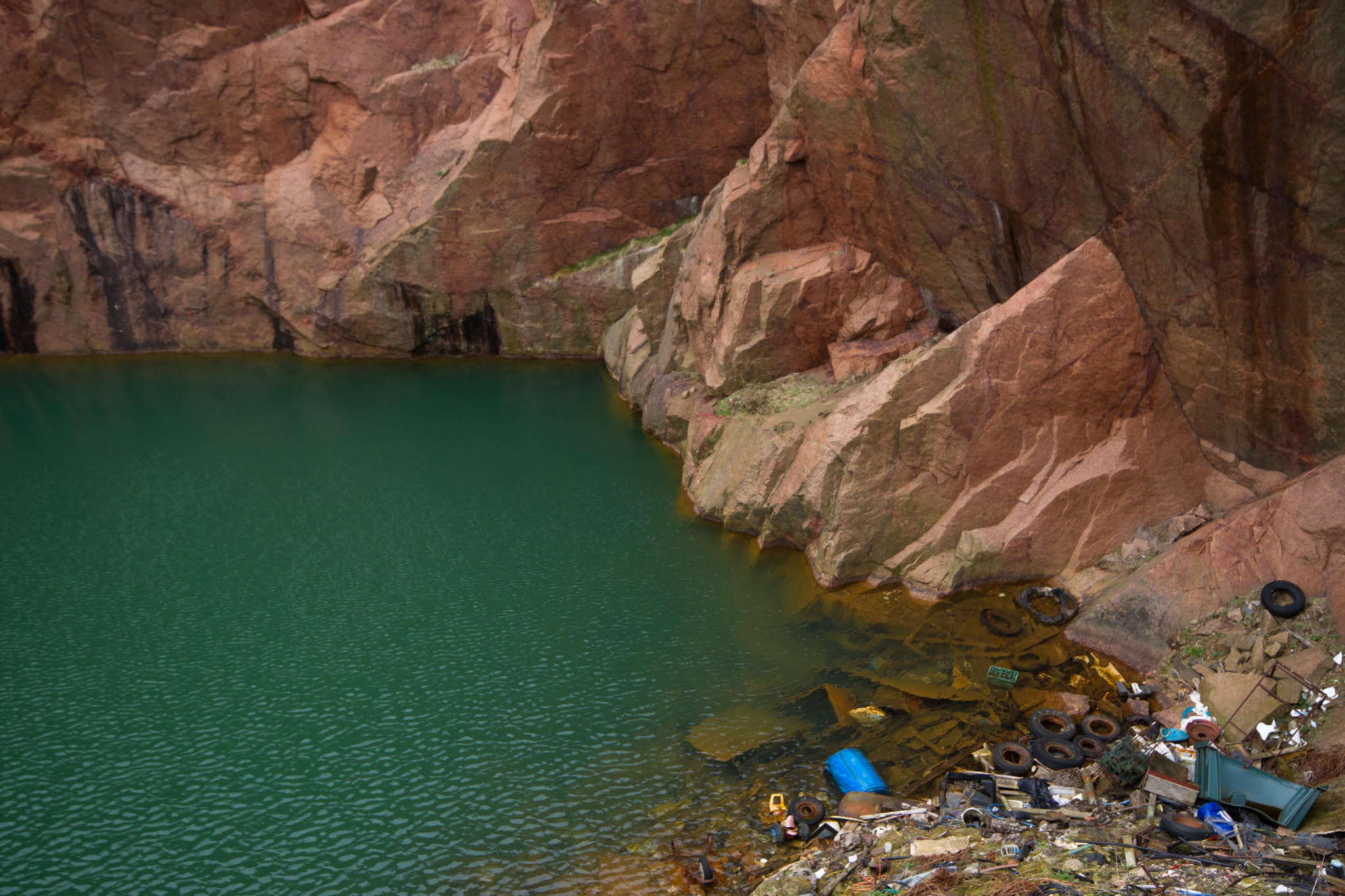
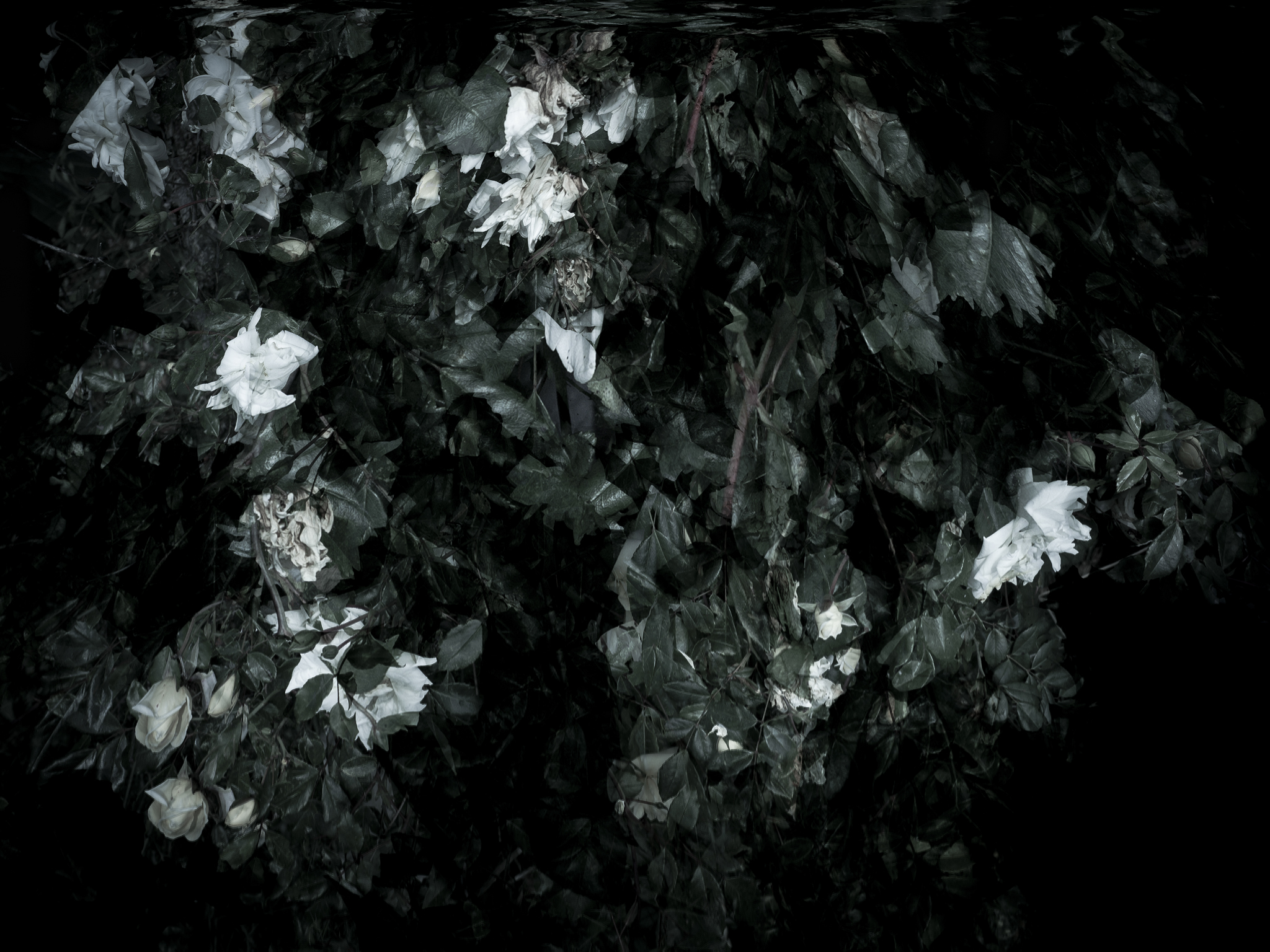
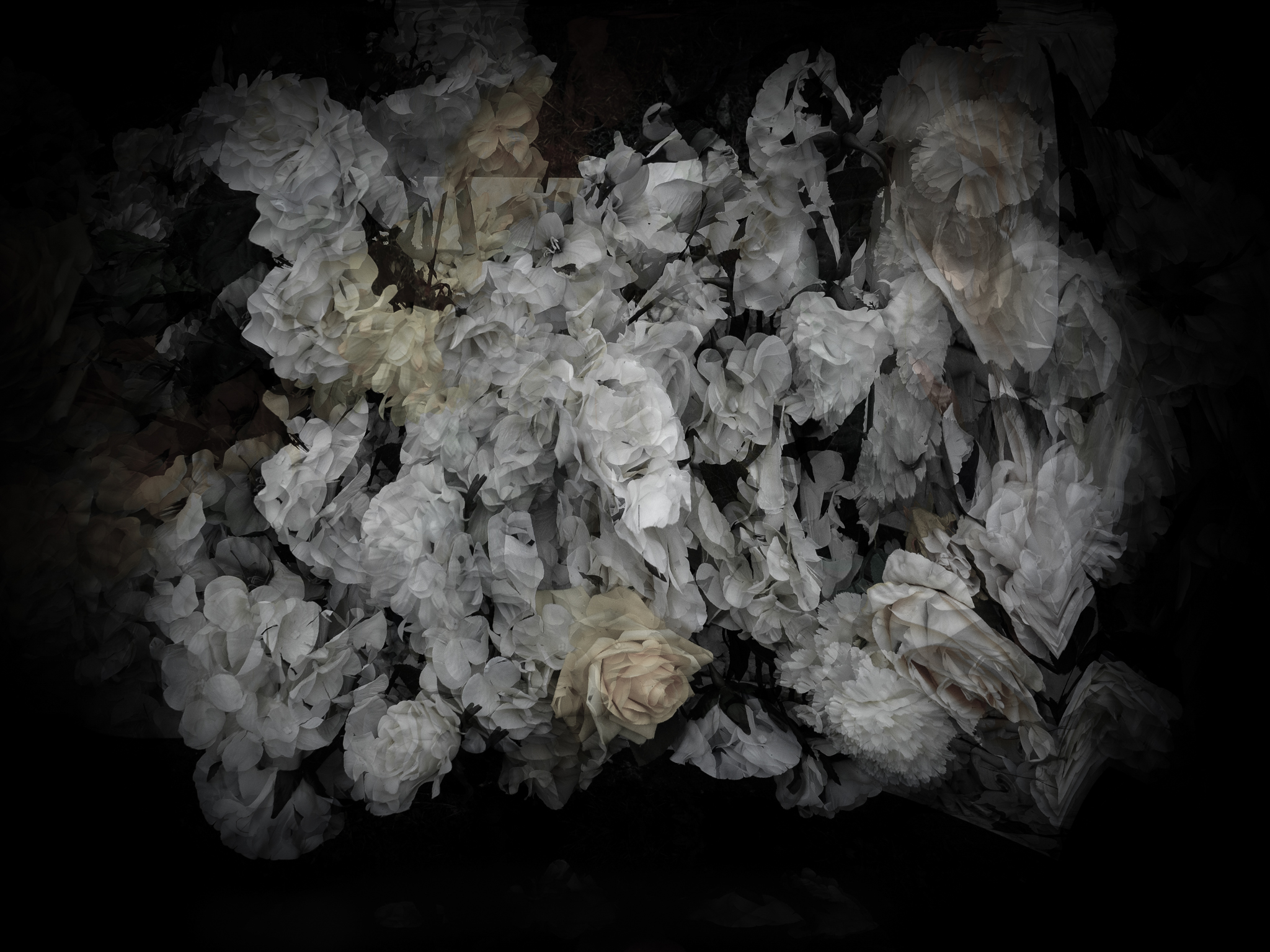
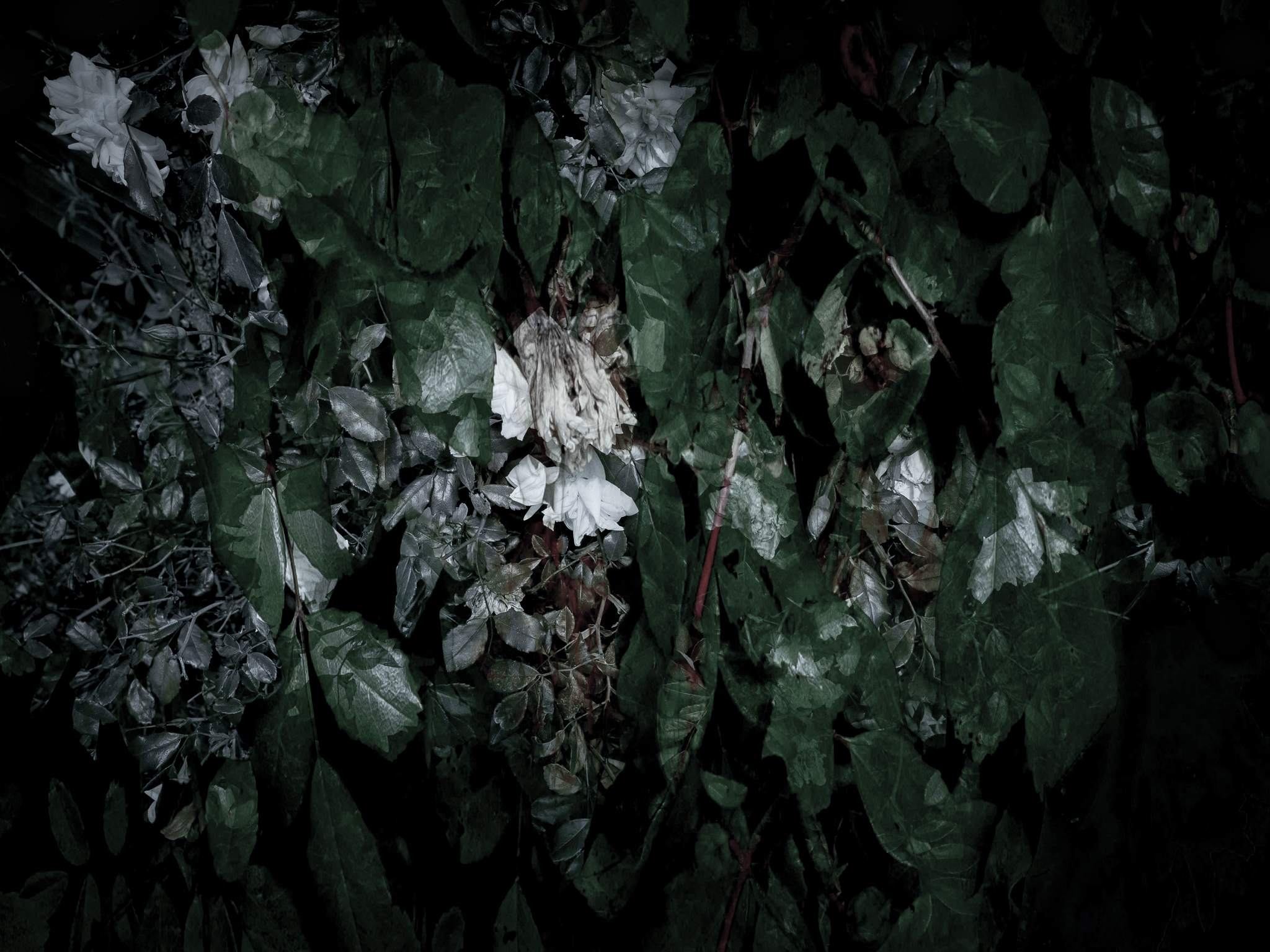
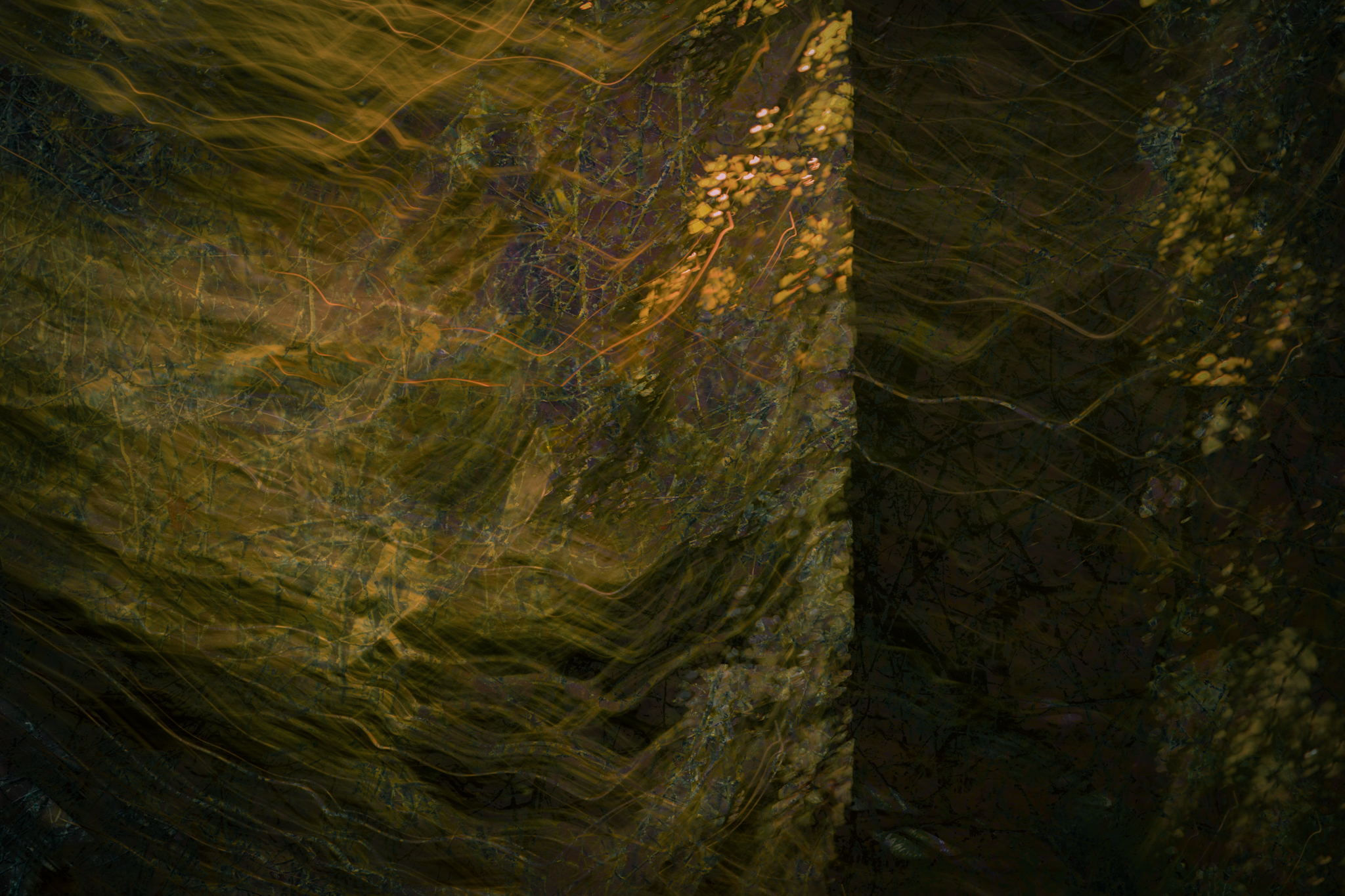
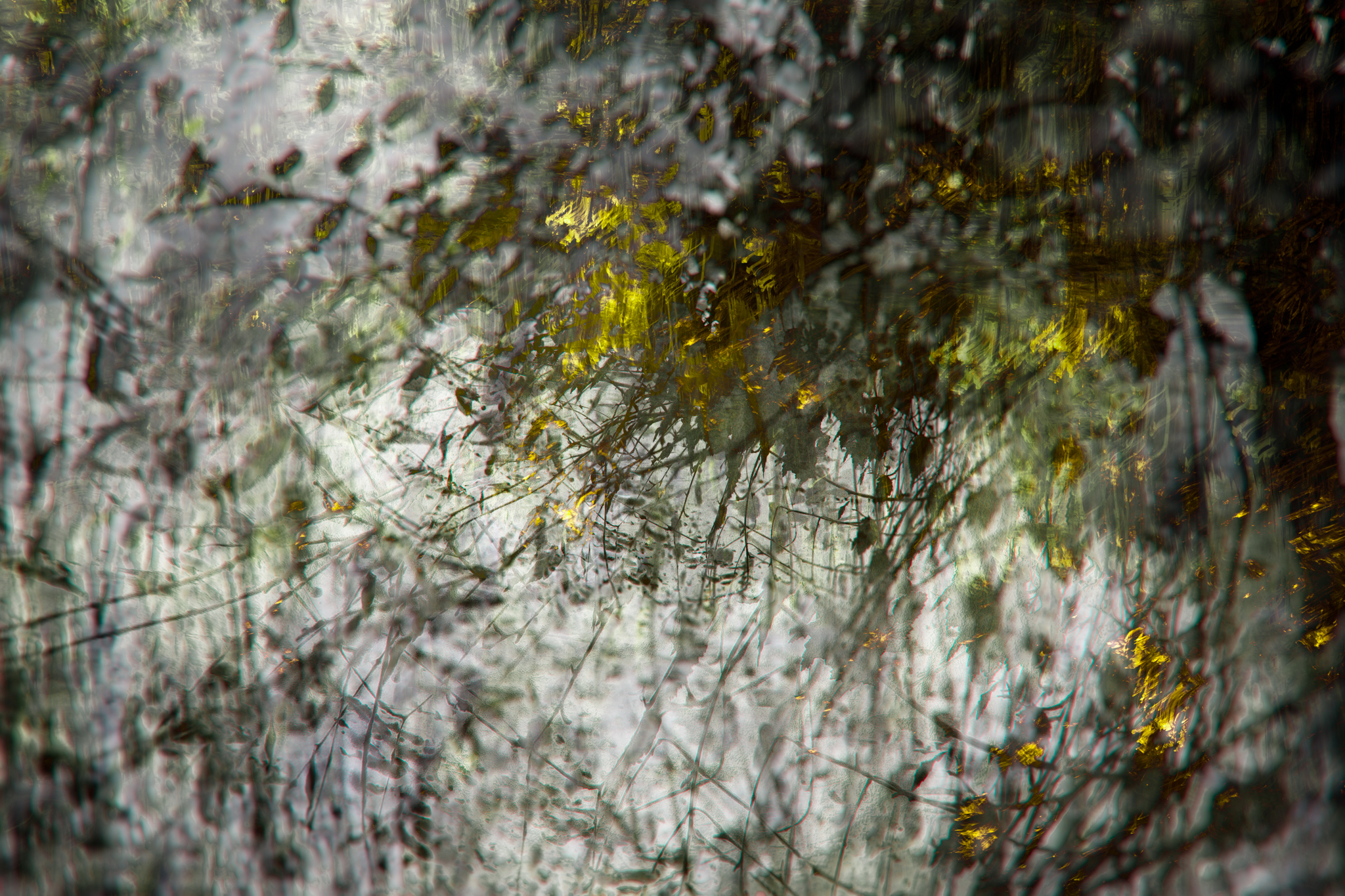
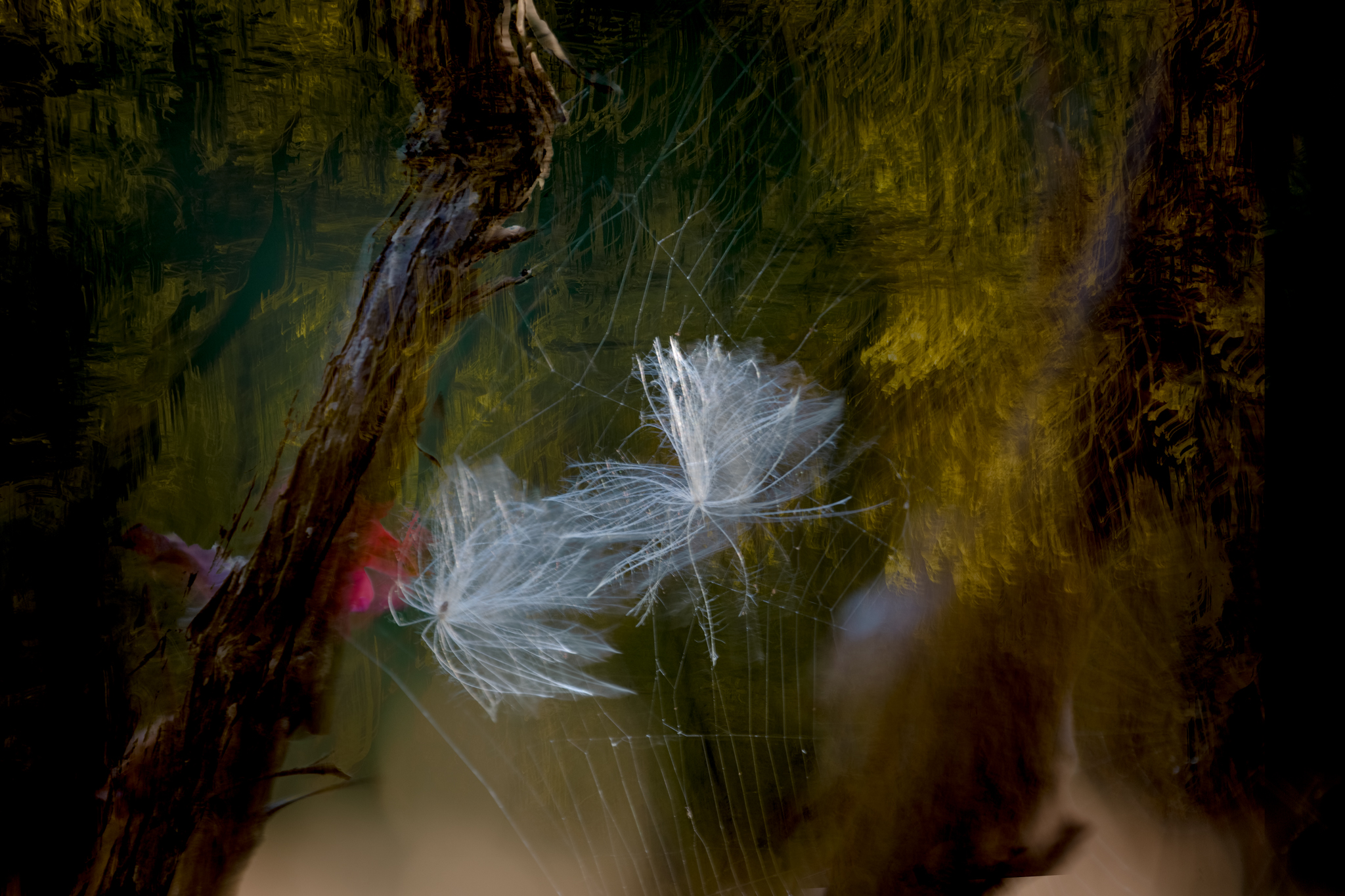
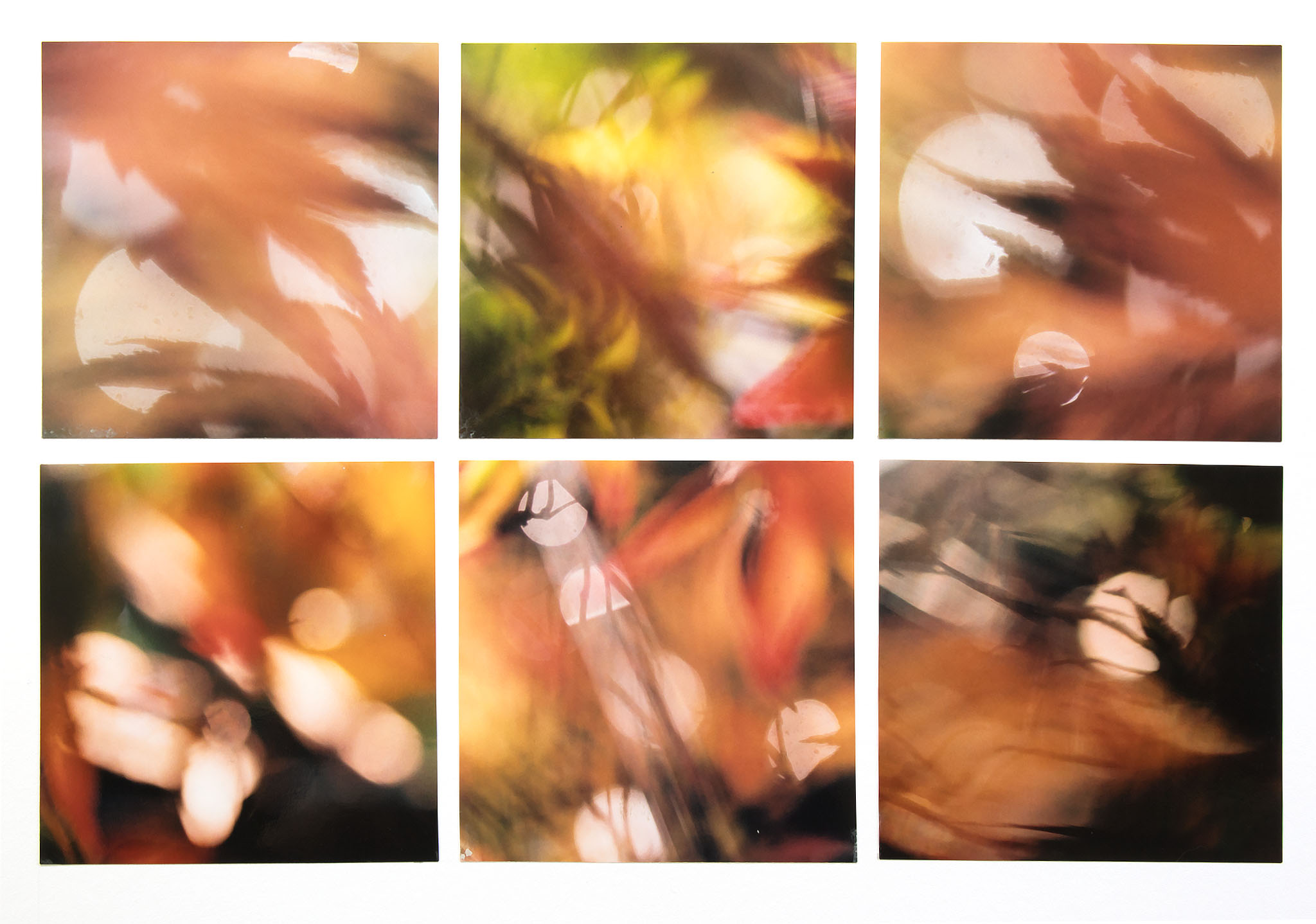
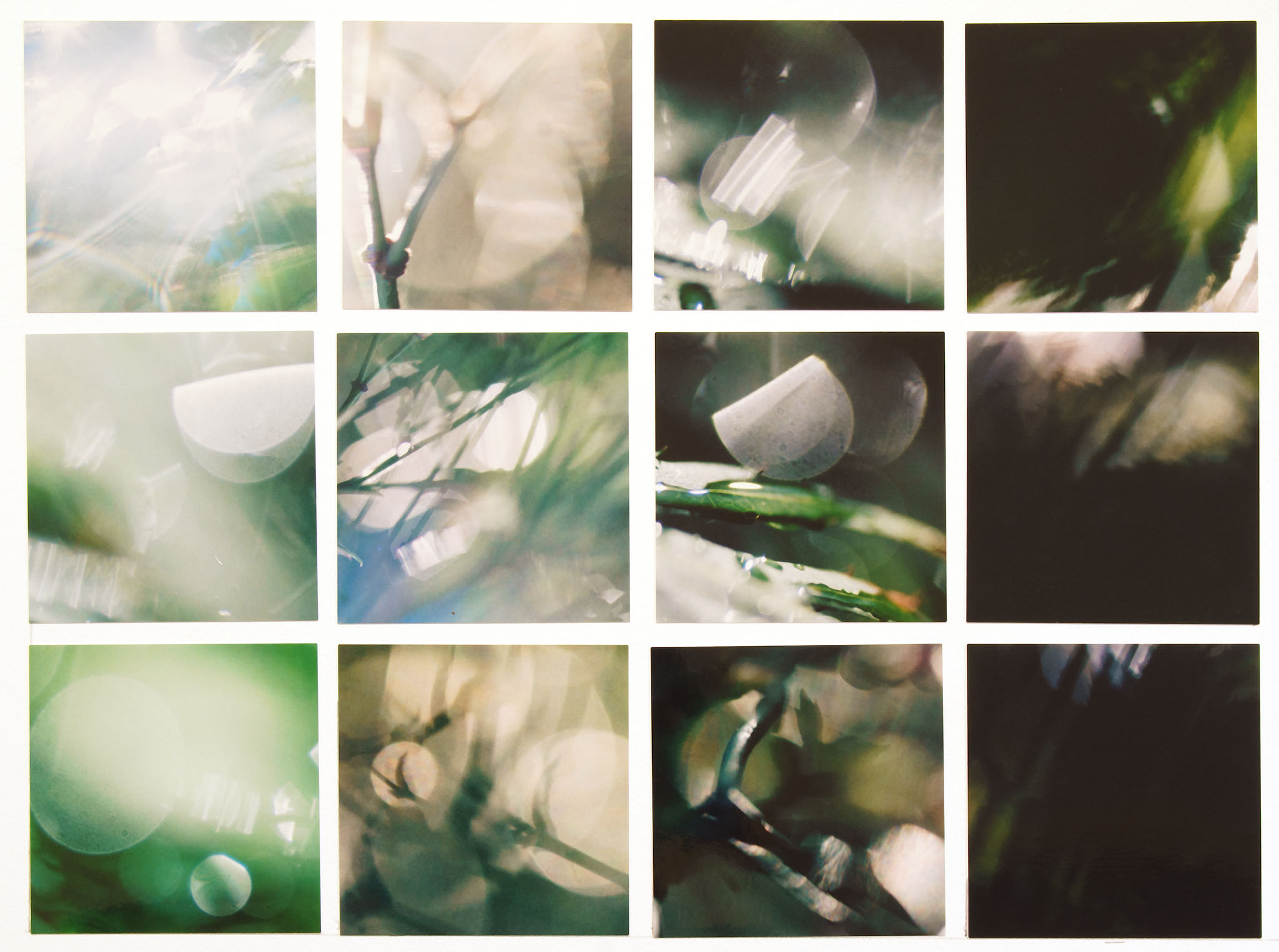
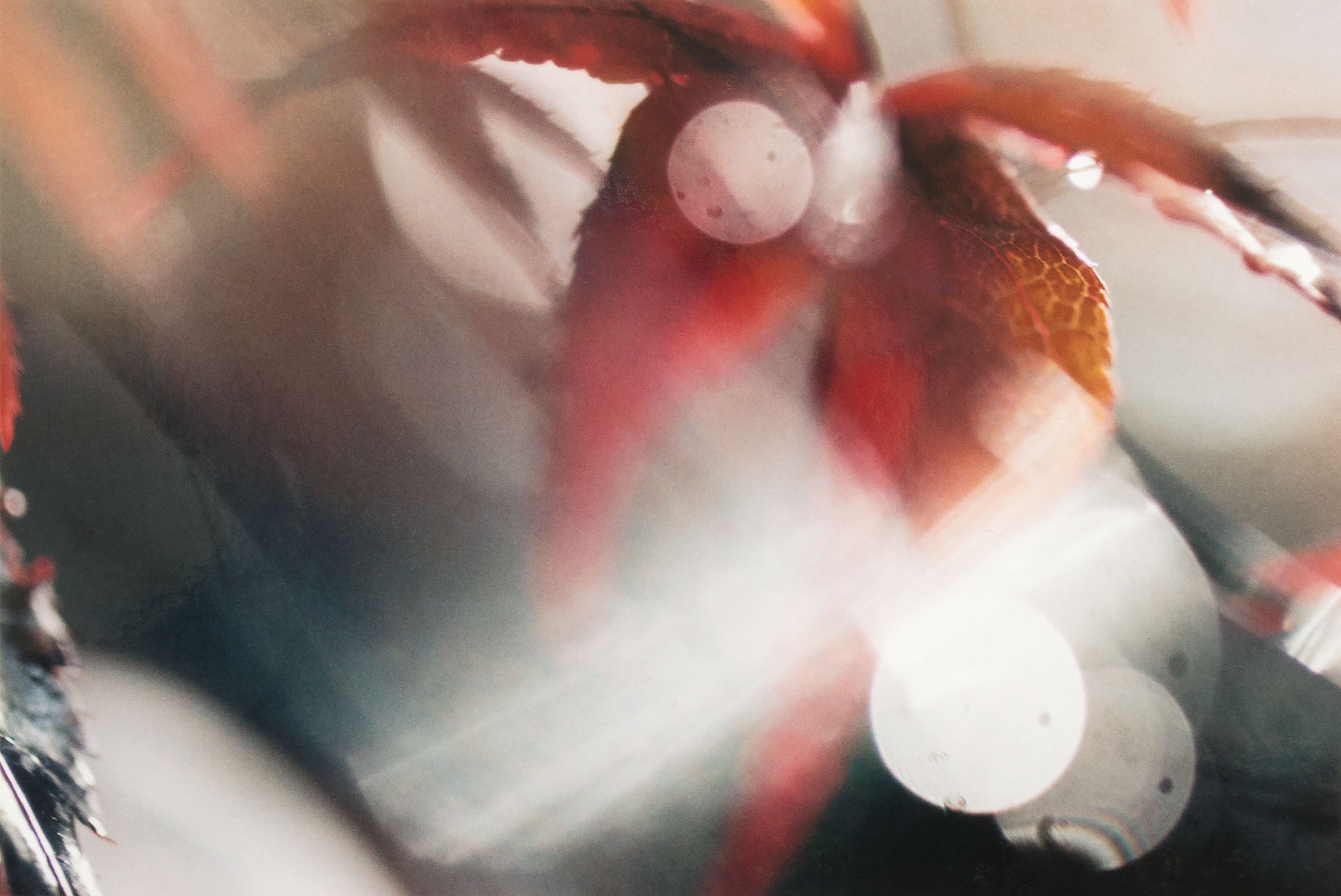
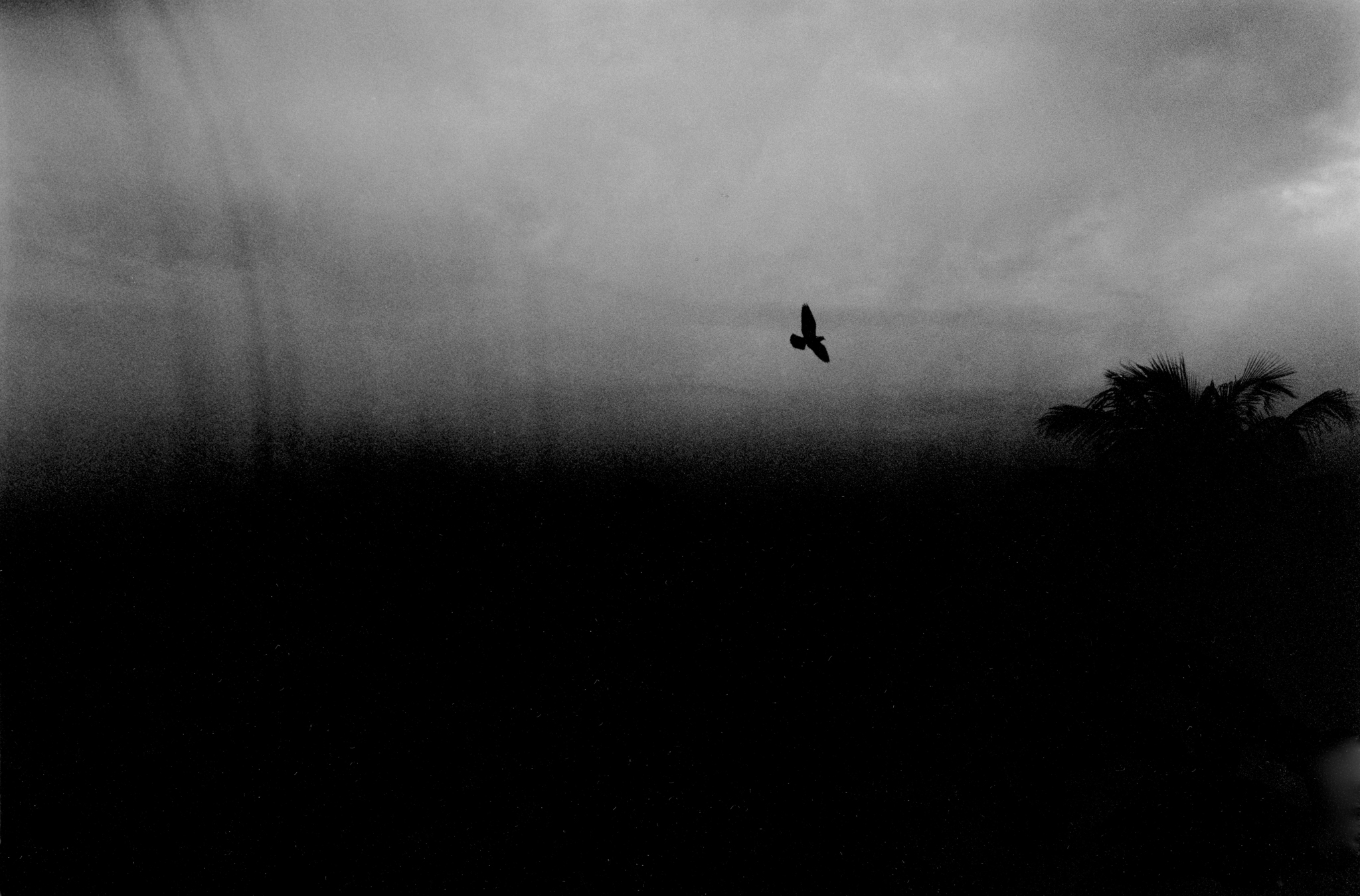
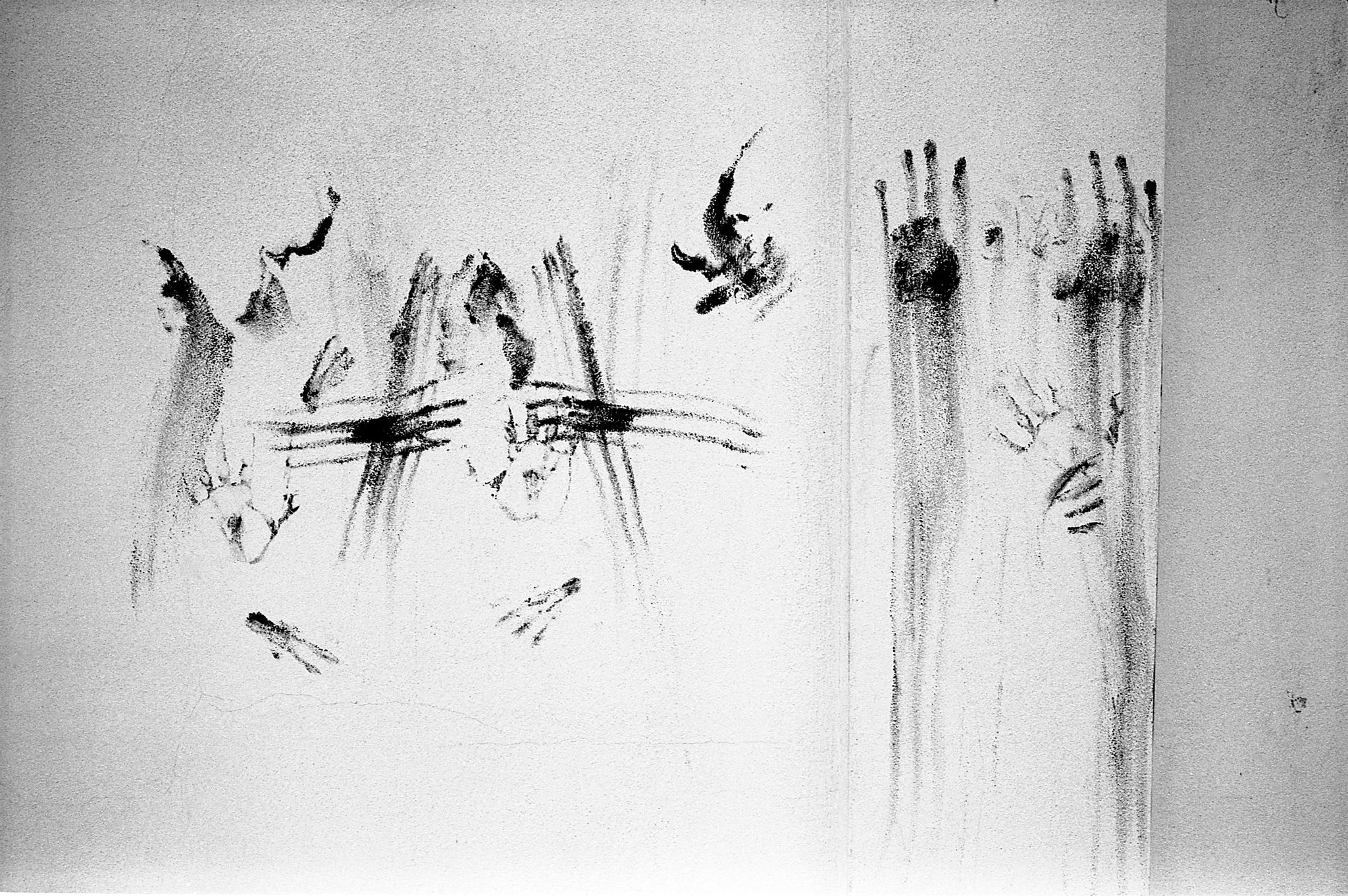
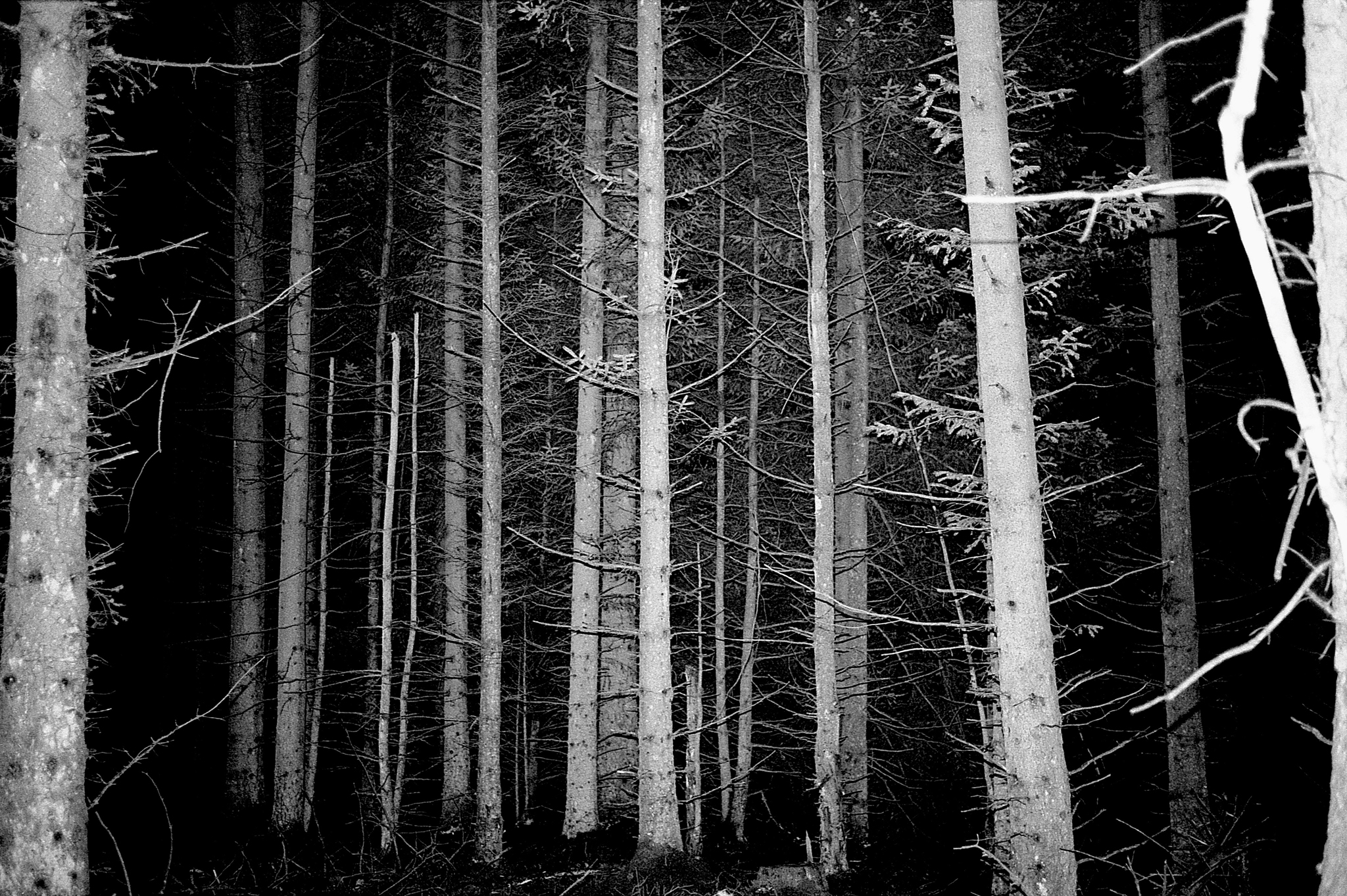
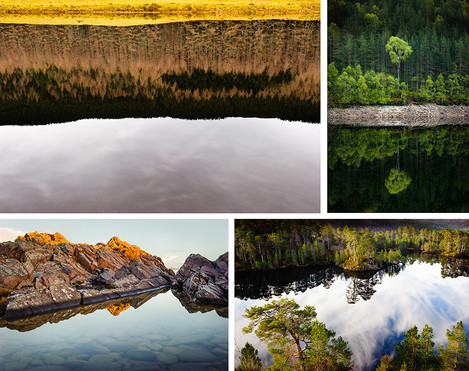
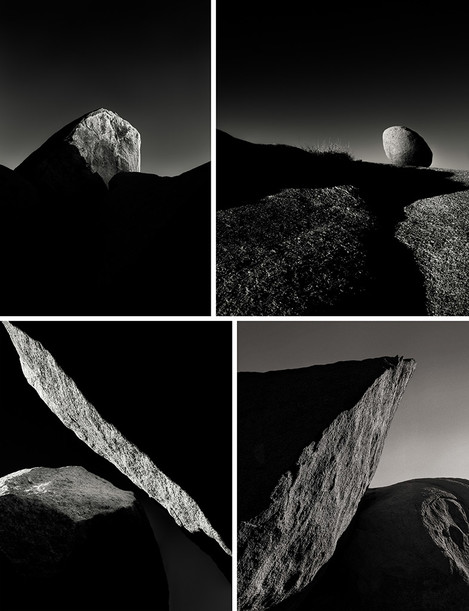
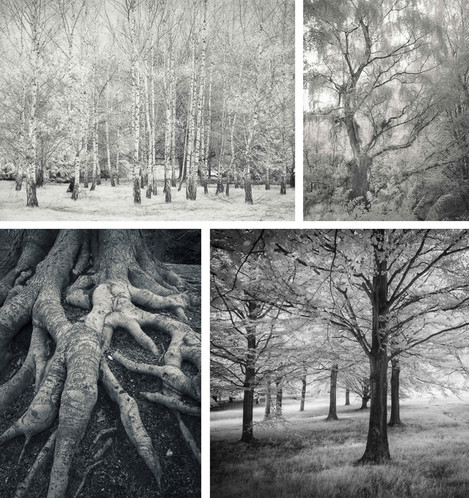
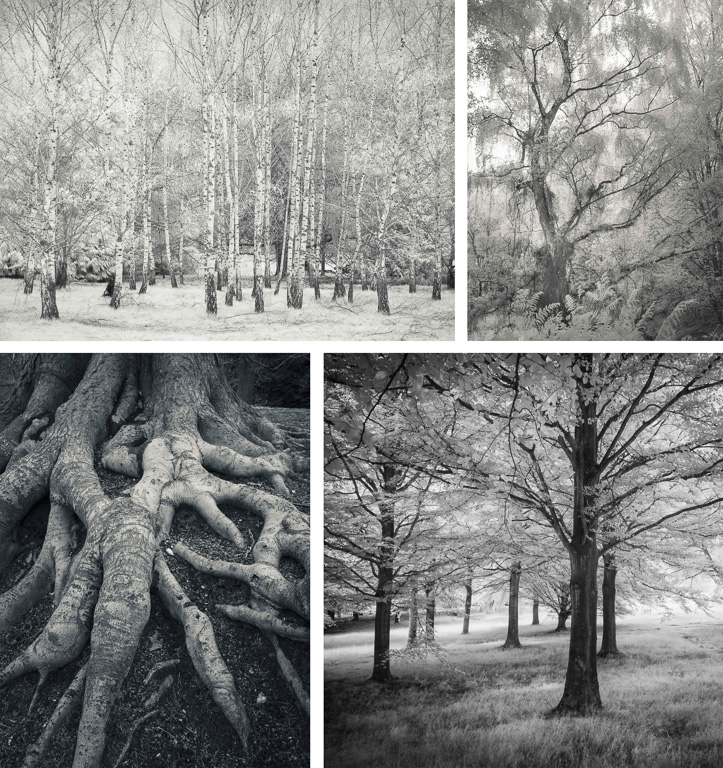
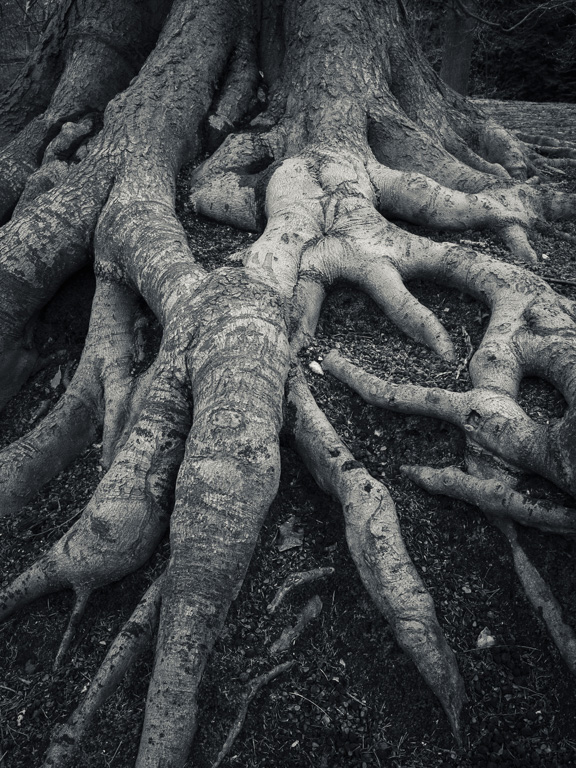
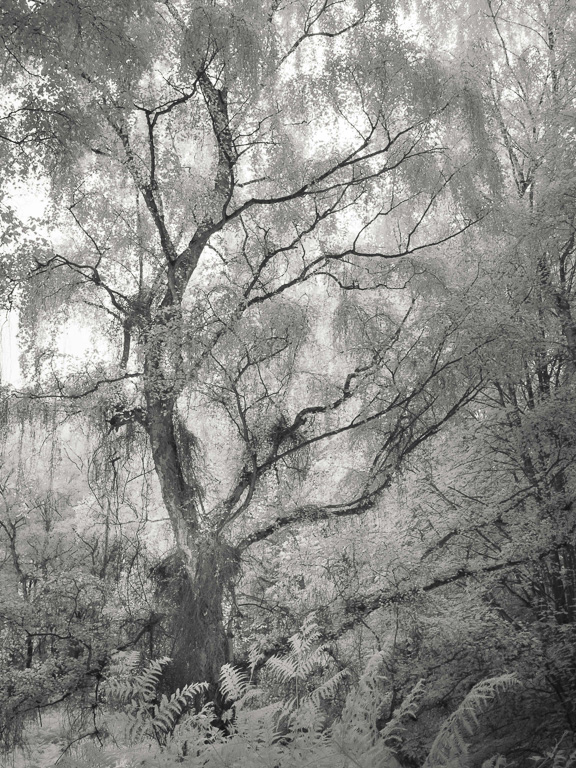
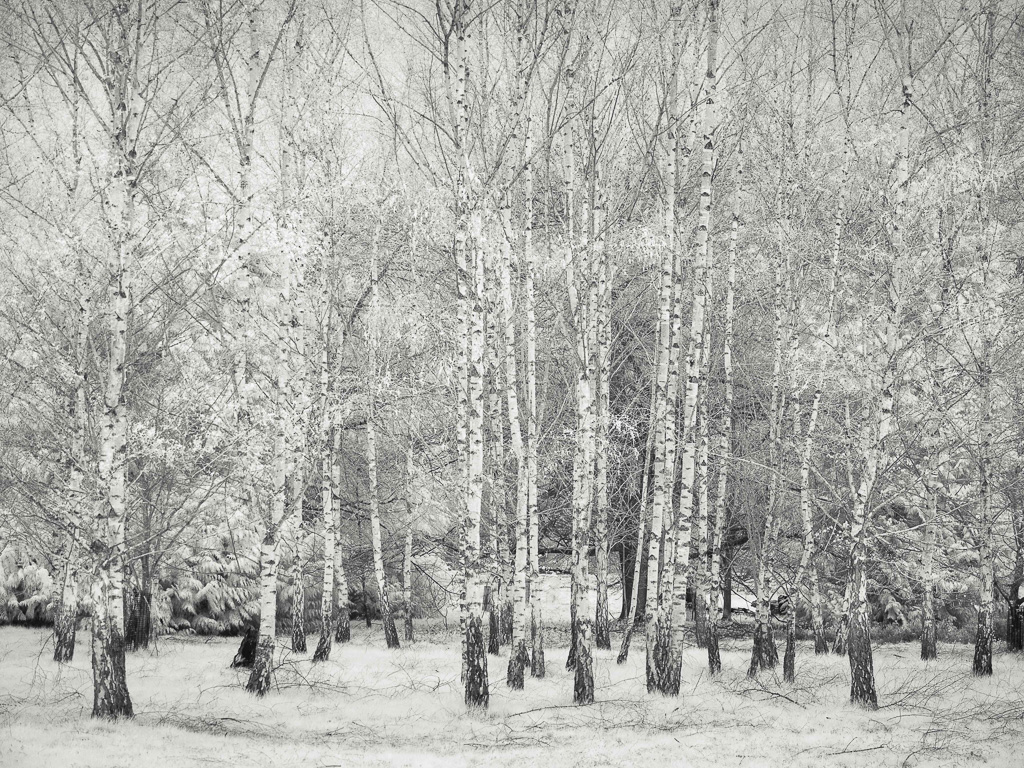
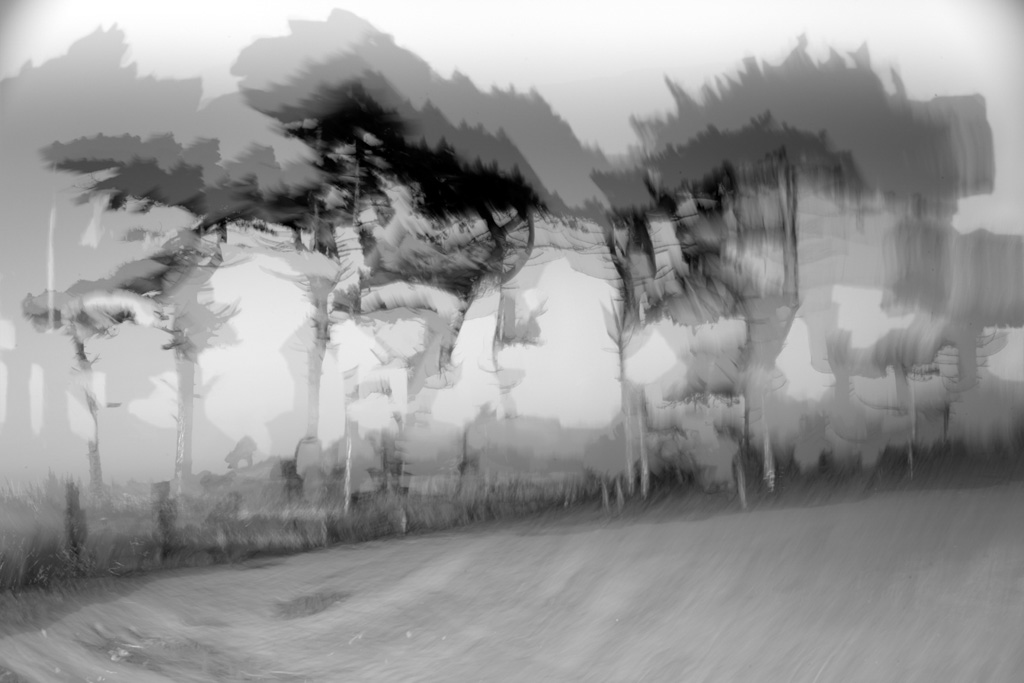
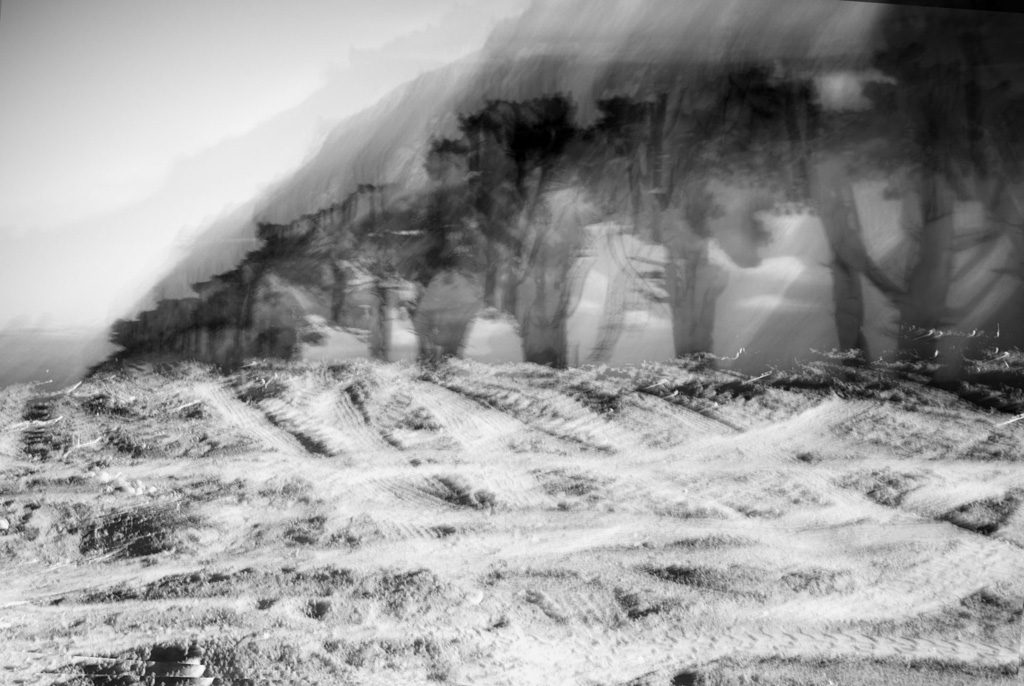
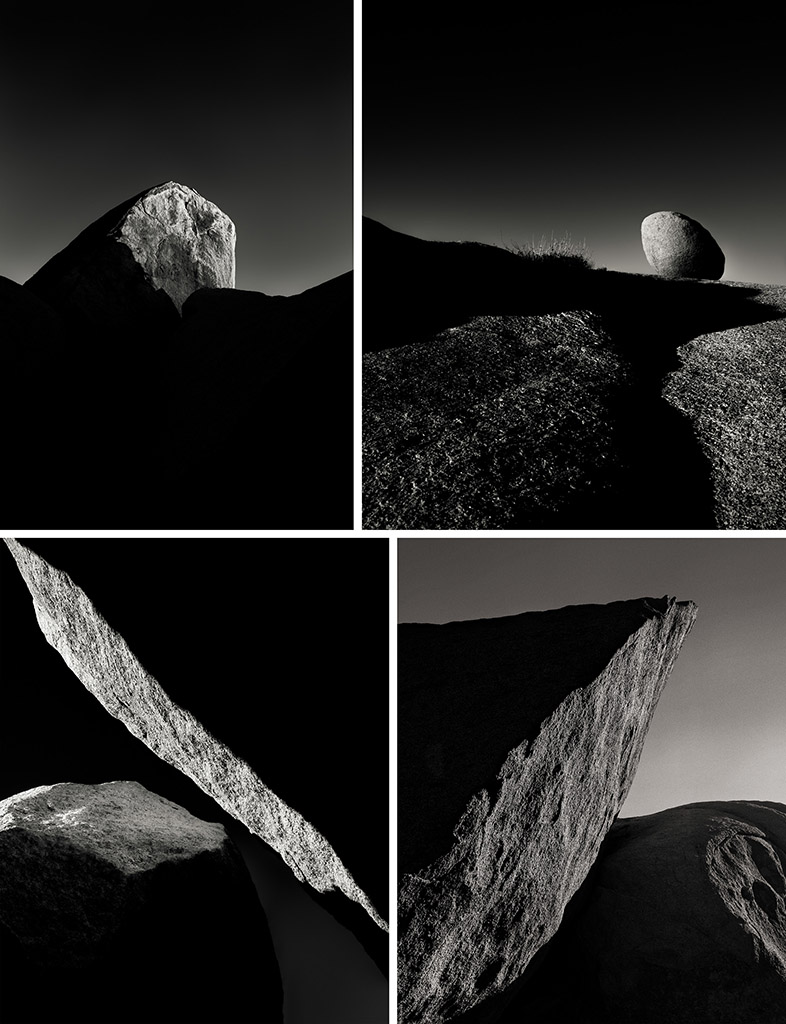
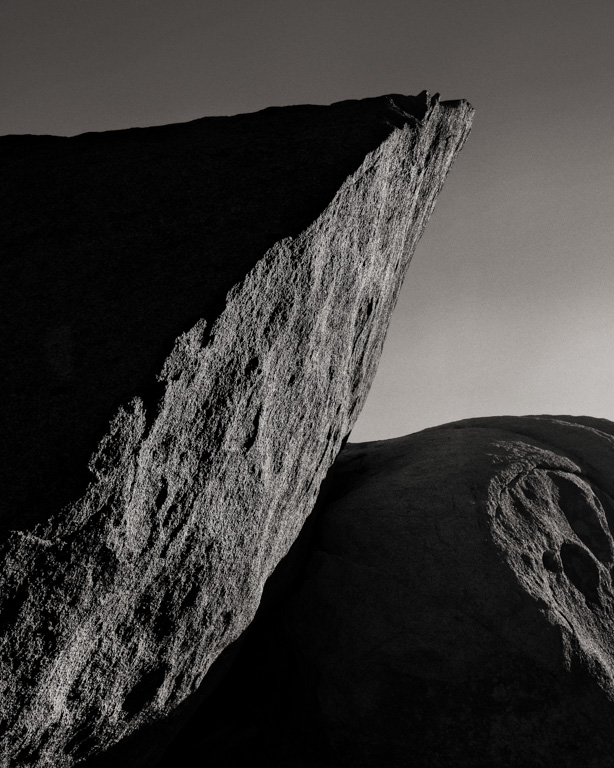
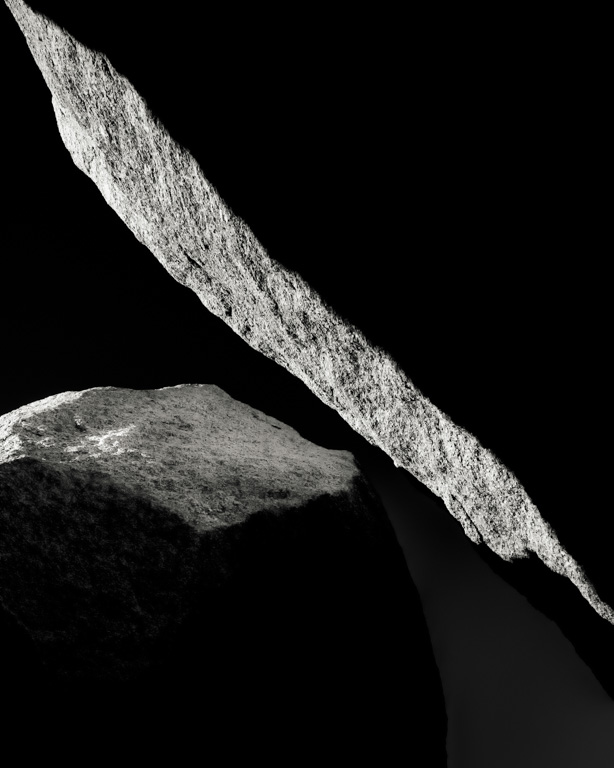
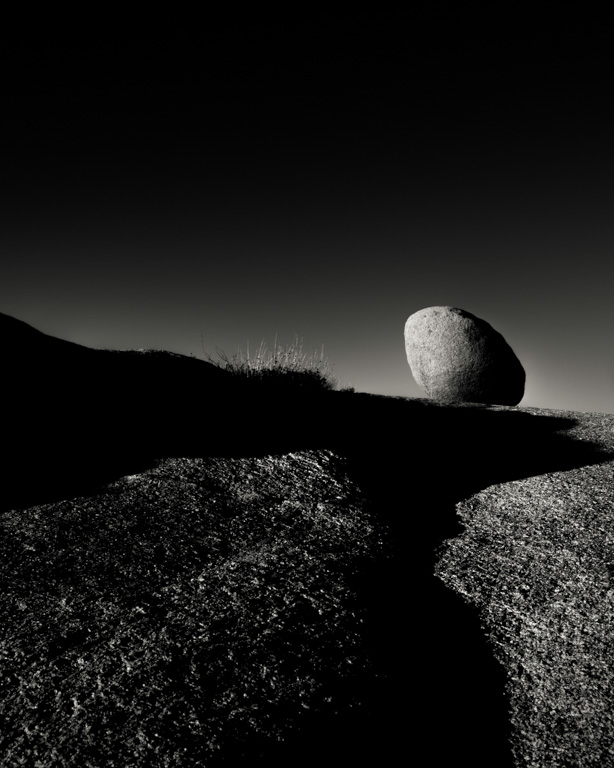
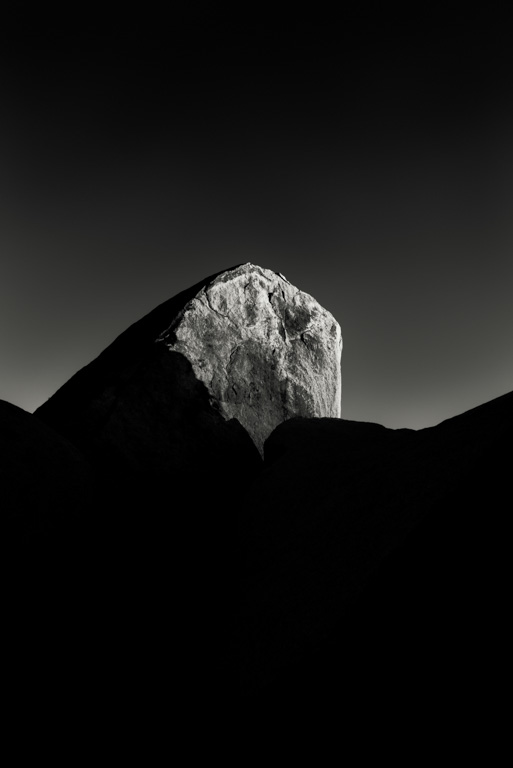
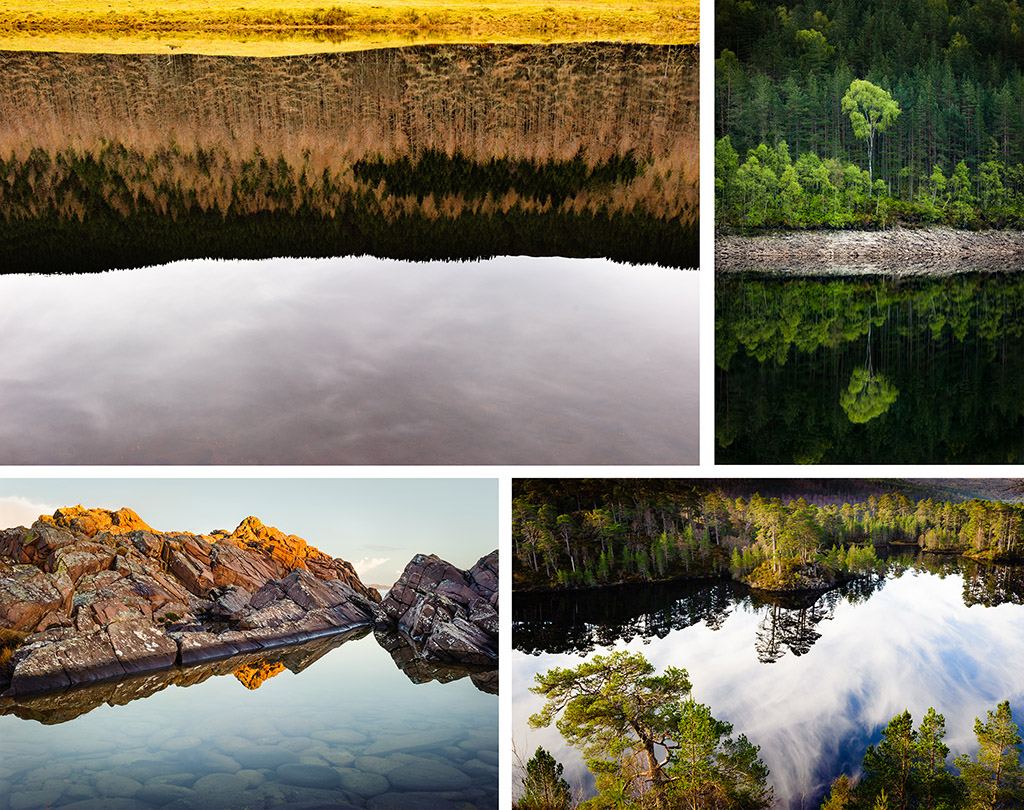
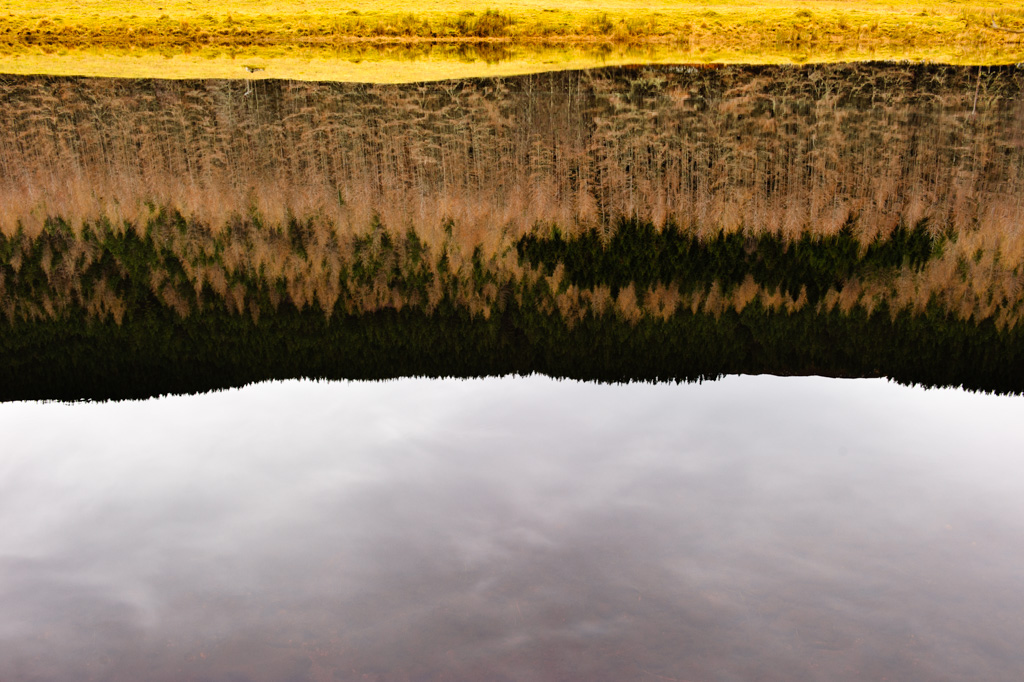
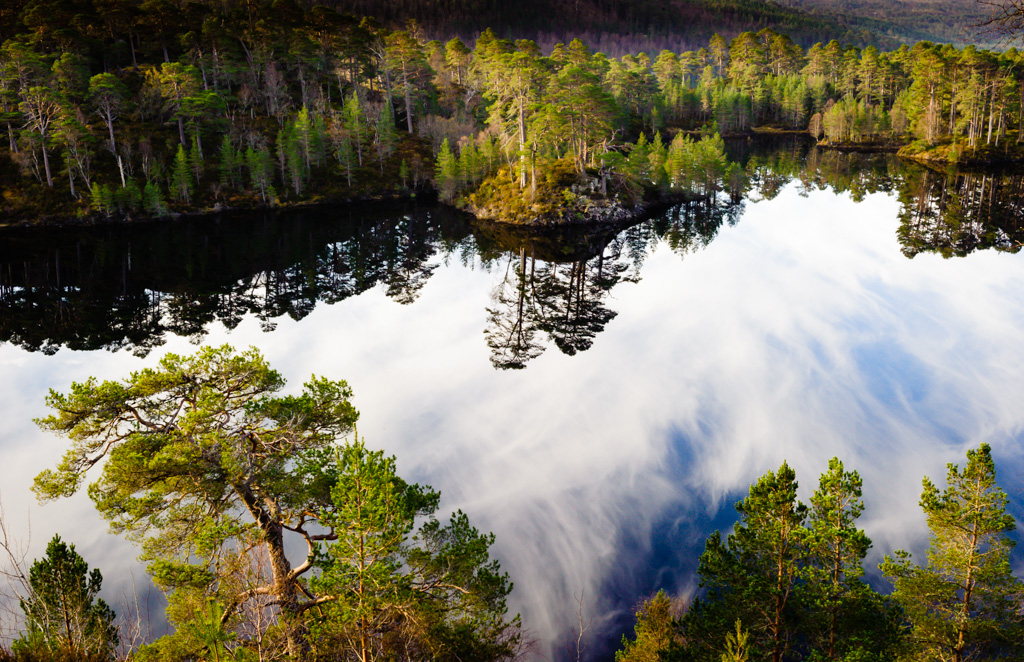
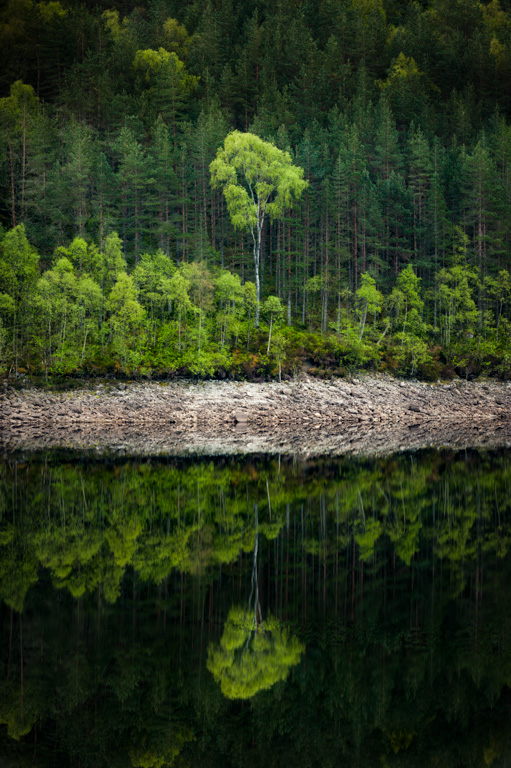
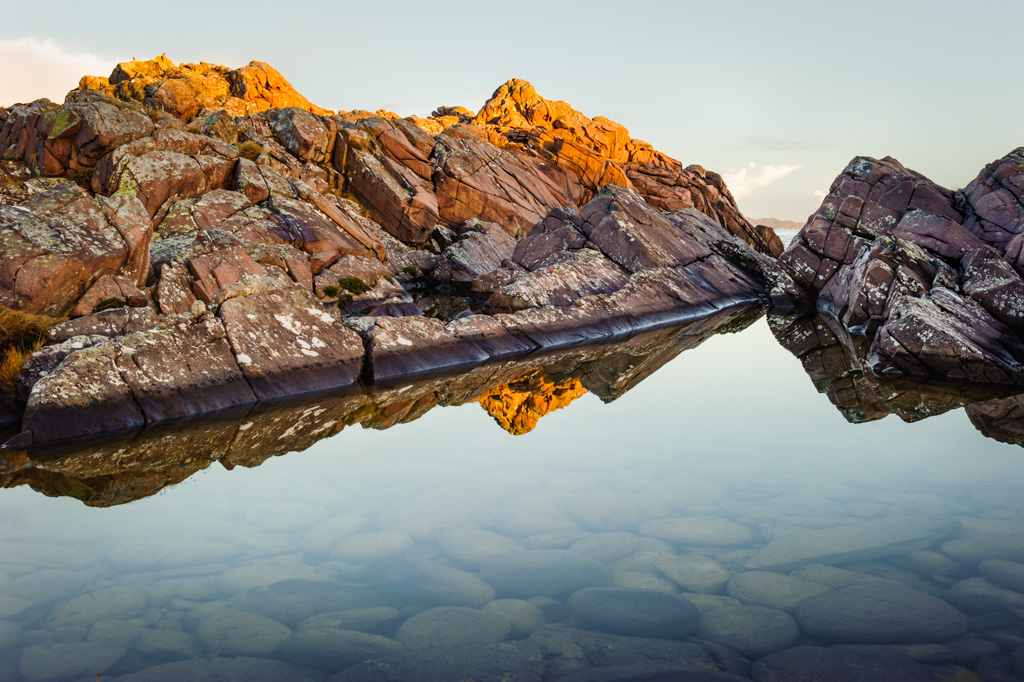
Our 4x4 feature is a set of four mini landscape photography portfolios from our subscribers, each consisting of four images related in some way. You can view previous 4x4 portfolios here.
If you would like to submit your 4x4 portfolio, please visit this page for submission information. We are looking for contributions for the next few issues, so please do get in touch if you're interested!
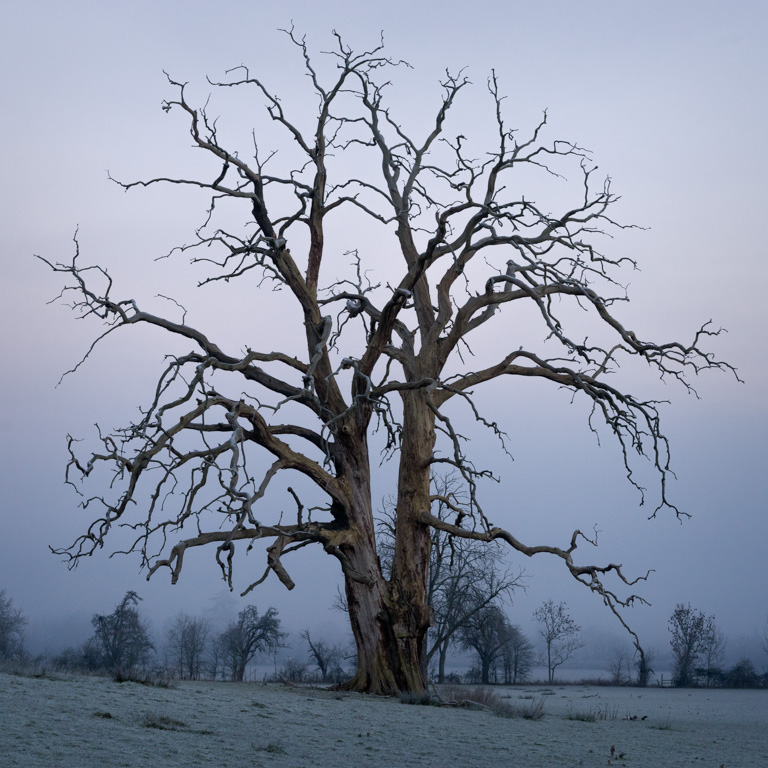
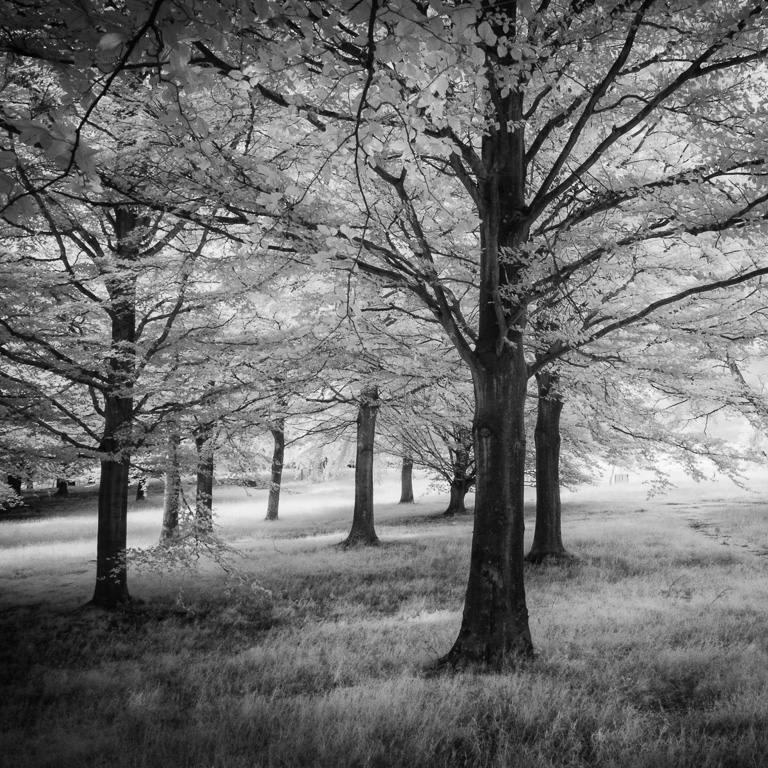
Waiting for the M25 to clear ready to of to Norfolk, pooped to Farnham Common for the dawn with Paul Mitchell as the forecast was for a cold and frosty morning. We were rewarded with lovely conditions. A bit out of my comfort zone - no sea in sight but......I enjoyed the experience.
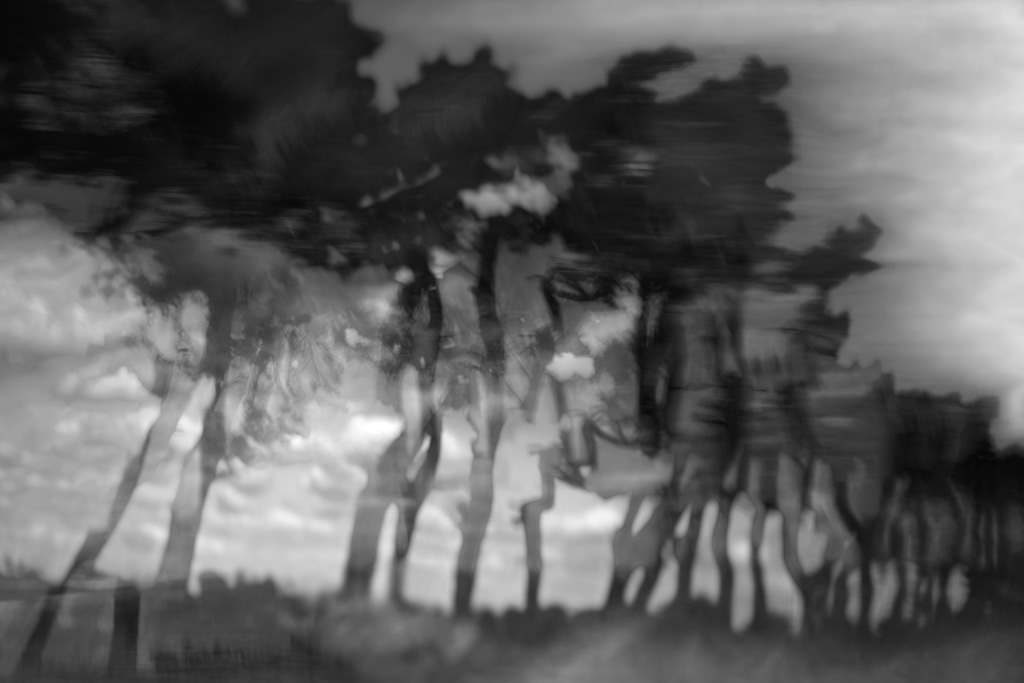
I spend every day commuting into London, frustrated looking out of the train windows at the moods of the Chilterns. So I decided to see what I could do with my ever present iPhone and a few apps, notably SlowShutter and Snapseed.
There is no point in aiming for sharpness etc through filthy train windows, battling reflections etc and the seas encourage me to focus more on capturing the mood of the day, be that the weather or how I'm feeling on an Instagram feed. There are many more on the feed but these four give a feeling without being the most challenging.
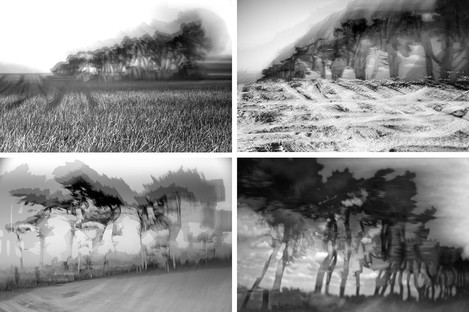
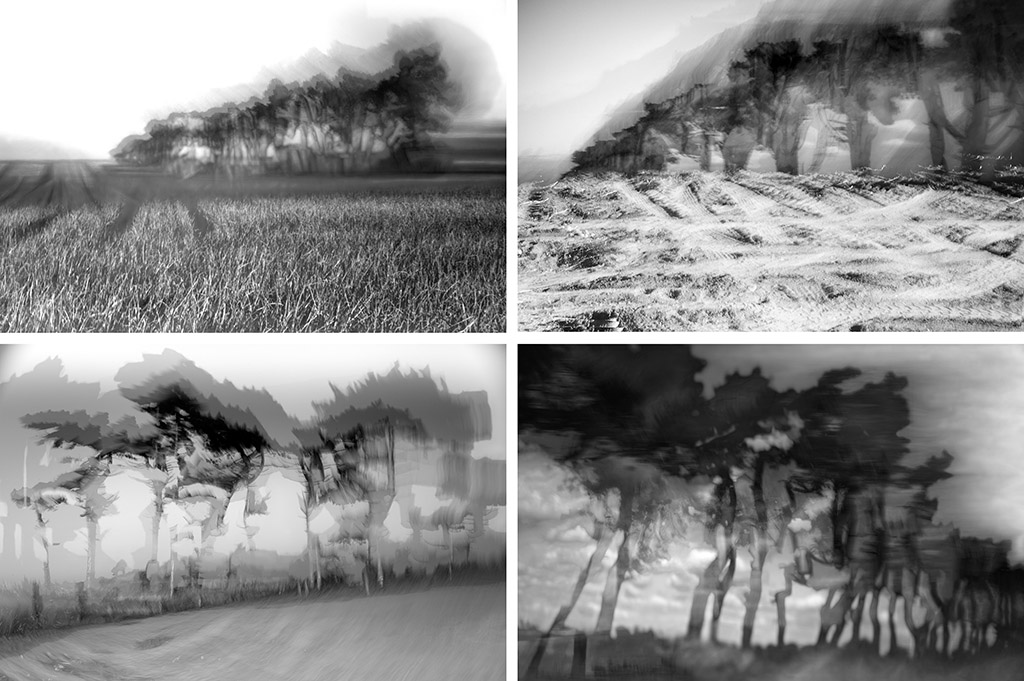
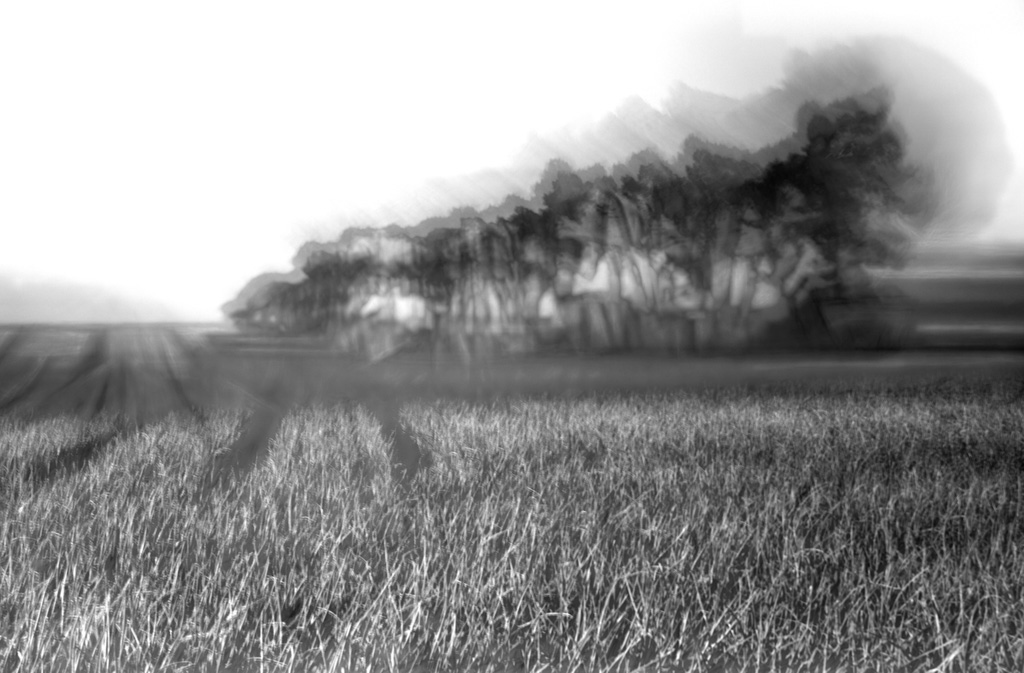
In November 2015 I went to Canary Wharf; it was a rather foggy day and I hoped for shots of towers disappearing into mist. These did not materialise but the conditions were such as to provide quite beautiful reflections of the buildings in the water of Millwall Docks. The first image is from that day.
The first image is from that day. Having just returned from a workshop on ICM and multiple exposure (with Doug Chinnery and Valda Bailey) I returned a few days ago in similar conditions. The last three images are from that shoot.
My photography is mainly taken around dawn when the sun is at its lowest point, in the time frame photographers call the "golden hour", when it radiates the fine golden hues which creep out in the autumn months. This year Autumn has arrived rather late which has
This year Autumn has arrived rather late which has encapsulated the iconic feel of autumn and kept it hanging around that little bit more, allowing me to exploit its natural beauty. The views around the new forest are remarkable and with the conditions being so perfect, it has allowed myself and fellow photographers to capture the autumn season at its very best!
You may remember that last summer we launched our permanent exhibition at the Joe Cornish Gallery. We've had some wonderful feedback and have been working hard behind the scenes to launch the next exhibition.
With the Meeting of Minds Conference, Christmas and a house move to plan for, it's been a juggling act for us, but with the support of Adam Richardson and Jo Rose, we are delighted to announce the date of the next exhibition at the Joe Cornish Gallery.
First Light Inspired Exhibition
Working with Adam and Jo, we wanted our second exhibition at the gallery to show what an influence Joe Cornish and the gallery have been on landscape photography in the UK. Going back through our featured photographers and other interviews (and talks at the conference), the common theme with a lot of photographers was who they drew inspiration from when they were defining their voice and style of photography.
Joe Cornish's book 'First Light' was one of the books that was cited many times over as an inspiration for those photographers' work, so it felt right to use this as a theme of the next exhibition.
Working with the team at the gallery we have curated an exhibition by photographers who have been featured in the magazine or who have been part of the conference, that have mentioned First Light as a direct influence.
Launch of Exhibition
On Saturday 4th March 2017 we launched our second exhibition 'First Light Inspiration' and held a panel discussion with Joe Cornish, Tim Parkin and the exhibiting photographers to discuss the influence and inspiration of First Light (click here for our review of First Light) on their photography and the wider conversation around influence and inspiration in their creativity.
Back in Issue 129, we published the images submitted into the Meeting of Minds Community Exhibition. In this issue, we are delighted to publish the PDF catalogue of this exhibition. (Click here to download).
During our Meeting of Minds Conference held at The Rheged Centre from the 18-20th November 2016, we ran a community exhibition. Each of the delegates was invited to submit an image into the exhibition which was to be exhibited in the Rheged’s main exhibition space. Fotospeed supported the venture and kindly printed and mounted each image on foamboard for us.
It was mentioned by a number of people at the conference to compile the images into a catalogue. So thanks for the ideas and hope you enjoy the read.
Can you tell me a little about your education, childhood passions, early exposure to photography, etc.?
I took up photography some day during the autumn of 2006. I remember my older brother bought Panasonic DMC FZ50. He was inspired by our uncle Dalibor who is a keen technician and has been into photography since the 1990s. My brother probably was not so much into photography itself, but rather into the technical part of cameras and stuff, so he didn´t really shoot that much. Meanwhile, I, being in the first year of grammar school at that time, started to borrow my brother´s camera more and more often.
I was 12 years old, had a speech defect and felt like an outsider in a new class in my school. So I kept borrowing the camera and every day after the school I headed into the River Odra Basin natural protected area. It is a lowland floodplain area, not even a national park, but it is located very close to my hometown of Studénka, a suburb town of Ostrava city, which is the third largest and most industrial city in the Czech Republic. I was always inspired by nature since my early childhood. Our family lives in a house with a huge, beautiful garden with an apple orchard and a small forest. Furthermore, as I mentioned, there is Odra Basin 10 minutes walk from our doorstep, so I spent a lot of time there, ever since the day my parents had taken me there before I could walk.
As a follow up to what I felt was a slightly panicked 10 minute lightning talk at this year's On Landscape Conference (it’s very hard to concentrate with half of my brain counting down the seconds and a gun pointing at your head!), I would like to take a little more time to better clarify a couple of the points I was trying to make.
I regularly post my images on social media, particularly Facebook, Flickr and now Instagram. Every now and then a comment will pop up saying something along the lines of; “when I saw the thumbnail image I immediately recognised it as being a ‘Richard Childs’ “Of course I recognise my own work because I can (still) remember the making of each image but I’m not sure I would recognise my own unique style among the blizzard of images we are exposed to these days.
I’ve never really set out as a photographer to create a ‘signature’ style with my image making. My method is simply to head out with an open mind and see what happens, the resulting images a reaction to the light and conditions I experience. Clearly, I prefer to shoot on darker days, something perhaps born out of necessity while living in Scotland but also because that's what appeals to me (it is reflected in my musical tastes, and of course in all the other visual arts I choose to indulge in). To that end, a forecast of settled weather and clear skies will usually see me heading out for a walk, in my office or at the gallery.
The foreground is particularly important to me (in more ways than simply as a compositional aid) and I shall discuss why later in the article. The foreground is certainly the reason I shoot the large majority of my images upright as I always want to include as much of it as I can. The way I choose to use foreground has had a profound impact on the overall composition of many of my wider landscape shots bringing me to realise that I very often employ my own ‘rule of fifths’. While this isn’t unique to my photography, I’ve taken the time to go back and analyse my images and found it’s something I’ve come to realise I use very regularly.
I have just published a book called “A Long Ride South”. It is a book that has grown out of a number of strands; an old unrecorded adventure, a growing love of photography, a desire to learn Adobe Indesign and encouragement from the wonderful Eddie Ephraums who made it possible.
The Adventure
Ten years ago, at a time where I had a Canon EOS and a passing interest in photography, a mid-life crisis evolved into a personal challenge to ride (horses not bikes!) from John O’ Groats to Lands End. The adventure was a year in the planning. As you can imagine finding a route which was as “off-road” as possible, and places for humans, a horse and horsebox to stay every night, was a big challenge. But on 30th April 2006, Monty, one of my two horses and I, set from John O Groats, eyes firmly looking South.
A long road south shortly after leaving John O' Groats
There were many fantastic things about the journey. To spend eleven weeks riding on horseback through some of the most beautiful and less travelled areas of Great Britain was a privilege I will never forget. To see the bleakness of Northern Scotland transform into the Highlands, then softer Perthshire and so on, all the way down to the rocky Cornish coastline, was an amazing experience. To see how the types of dry stone walling evolve as you move south; the slate slabs of Caithness, to the craft built walls of Northern England, to the misnamed “Cornish hedges” was one of the many fascinating regional changes I witnessed along the way. And the people were fantastic too. Everywhere we went they wanted to help me, with one possible exception in Yorkshire!
I used the ride as an opportunity to raise money for two charities, Great Ormond Street Hospital in London and my local charity, the Fortune Centre of Riding Therapy, a school for special-needs young people where they learn everything through the medium of horses, even how to cross the road.
To help with the fund raising during the ride, I put a daily blog on the internet, and this was also used by the Fortune Centre to help teach the students about maps and geography of Great Britain.
Flax field near East Kennett
Each day I was limited to what I could carry happily on the horse. I did, however, find room for a small Nikon six mega pixel Coolpix Camera in my bumbag. I took photographs regularly each day, and each week they were sent home and a few put on the website with the blog. All of the images of the journey in “A long Ride South”, were taken with it. At the time, my only reason for taking a camera was to record the journey for myself and the blog.
My Photography
Over the last few years since the ride, I have taken photography, particularly landscape, more seriously and thoroughly enjoy days out with my camera and workshops with like-minded people in beautiful parts of the world. Photography is also a chance to explore whether I have any artistic talent lying dormant after thirty years of repression, working as a lawyer!
Each day I was limited to what I could carry happily on the horse. I did, however, find room for a small Nikon six mega pixel Coolpix Camera
Early morning on the Somerset Levels
As a result, my photography since the ride has inevitably become a lot more considered. Now each image is carefully composed. Much time is taken in selecting the exact place, how to frame the image etc. You all know the score! On the ride, I think most images took less than thirty seconds from taking the camera out of the bumbag to putting it back. I did not even get off the horse, so a lot of the images were taken one handed. On numerous occasions, I had to retake an image because I had closed the camera down before the camera had finished processing. There was no thought of waiting for the light or finding the exact spot, though we might have moved a step or two to find the best vantage point over a hedge. I probably considered where the sun was, but only as to whether it was worth taking the image at all! I never considered the brightness of cloudless days and, as we were very lucky with the weather, there are many clear blue skies in the images. So I finished the ride, ended the blog, and all the images sat on an external hard drive, forgotten.
But as I got more into my “considered” photography, the question arose of what to do will all of the images I was creating. Print the best ones? Fine, but printing seems like a whole new “Dark Art” which I am only just summoning up the courage to learn. And in any event, we only have so much wall space. Collate the images and view on the computer. Not very satisfying. Make a book? For me, that has a lot more appeal.
Westy on Simonside Hills
I like a project to focus (pardon the pun) my photography around, so something like a book project is very attractive. I also like the potential that a series of images provides to say something more profound than a single image. Eddie Ephraums then explained his photo-book mentoring scheme to me, which sounded just what I was looking for. He also explained that to get involved in creating a book; I should get involved in the design process and even get to grips with Indesign, the Adobe publishing software.
I like a project to focus (pardon the pun) my photography around, so something like a book project is very attractive. I also like the potential that a series of images provides to say something more profound than a single image.
That was when it occurred to me that the images I had from the ride, which had been forgotten for ten years, would be the perfect project to start with. Since the ride, many people had suggested I write a book about it, but I never have. But a book created from the existing images was a much more enticing and achievable idea. I could start to learn Indesign and finally create a lasting record of the ride. I also devised a concept of a limited edition book, sold at a premium, with all of the profit going to one of the original charities, the Fortune Centre. Eddie cleverly refined this by suggesting an edition of 78, the number of days of the ride and then selling them for £78 each, of which £45 from each book will go to the Fortune Centre.
The Book Concept
Eddie and I agreed that a chronological layout of the selected images was the most powerful. We wanted the reader to feel they were themselves travelling from north to south down the length of Great Britain. Eddie devised a long thin format for the book so that seven or eight images could be seen at a time when the book was open, enhancing the sense of a journey.
The images themselves are mainly simple views of the area I was passing through, some taken through the ears of the horse, to remind everyone that this was how I saw the world. It’s a good view from a horse. You are higher up than you would be walking or on a bike, and moving at a speed which enables you to fully appreciate and absorb your surroundings, at least when I was not concentrating hard on the navigation, which was a lot of the time!
The book includes a short edited extract from each day of my blog to add some context to the images and the journey.
There are approximately 150 images in the book. Each image of itself may not be a work of art from a landscape photographer’s point of view. In fact, few if any would merit any interest from On Landscape. But, before I had the idea for this book I remember a well-known landscape photographer telling me that if you want to put together a series of images, they should each make the same contribution to the whole. This would not, however, happen if some images were significantly “better” than others. This advice struck a chord with me at the time, and I think this book demonstrates what good advice it was. Any one of the images in the book, on its own, is a holiday snap. Put 150 together in a geographical sequence, and you have a journey.
Before I had the idea for this book I remember a well-known landscape photographer telling me that if you want to put together a series of images, they should each make the same contribution to the whole.
Image Selection
I took images on almost every day of the ride. Some days I took more than others depending on the scenery, the weather and how involved I was in navigation and problem solving. Consequently, for some days it was difficult deciding which images to exclude from the book and for others there were not enough relevant images to choose from. I decided to include a few images of people to add interest and to link into the blog.
I was worried whether the quality of the images would be good enough, but Eddie assured me that they were for this type of travelogue. It was not meant to be a picture-perfect landscape photography book (just as well I thought!). There had to be enough images to create the effect of the journey, but not so many that the book became unwieldy, too expensive and, more importantly, failed to retain the reader’s interest.
Deanich Lodge on the Alladale Estate
Some images were taken to show the landscape we were travelling through. Some were taken to show problems I had, which were described in the blog. For example, there is a large picture of me looking rather stressed on Day 3, just after Monty had fallen through a bridge in the middle of nowhere.
The Book Production
Many cups of coffee were consumed at the Photographer’s Gallery in London where Eddie and I met to discuss all aspects of the book. There were so many things to consider: layout, size, type of paper, the colour of paper, cover design, how to bind it, whether to have a sleeve, etc. These were all things about which I knew very little and were all interlinked. For example, I could have an opinion as to whether I liked a certain paper, but I had no idea how that would influence the printing or the binding. I could suggest a colour for the cover, but that had to work with the predominant colours in the images inside and create the right feel for the book. Initially, I did not fully appreciate this interdependence. As an ex-city lawyer, I am used to the world where you make a decision and move on. With this process, Eddie and I took many “decisions” which we then had to review or change once we got to a different part of the process.
Moy near Loch Laggan
Initially, I found this a little frustrating but came to realise that you cannot rush the design and production processes. Attention to detail is everything. Identifying those details and finding the right solution that works for all of them takes time and consideration. For example; finding the correct size, colour and shade of font in each part of the book; should we use full stops at the end of the image captions; getting the right line weight of the map on the sleeve and cover; which type of binding will be robust enough for the long thin design of the book? In other words, the final design evolved from a lot of thinking and discussion, but above all from Eddie’s vast experience and intuitive design and bookmaking skills.
So finally, Indesign has been (partially) conquered, the images have been selected, the book designed and printed. I have enjoyed re-living the adventure through creating the book and, whether or not anyone actually wants to buy it, I now have a beautiful lasting record of those amazing eleven weeks in 2016. Time now to move on to the next project and the next book.
A long road south shortly after leaving John O’ Groats
It was 4:30 a. m. I could barely see through the fog, which appeared from a hazy combination of a dark, frosty night on a long, straight road and my standard early morning daze. As I sipped my steamy Earl Grey tea, the only thought crossing my mind at this indecent hour was, “Where should I photograph the sunrise?”
As I made my way to Acadia National Park on Mount Desert Island in Maine, I had an hour and a half to ponder such a challenging question, one that offered seemingly countless right answers. I know the park intimately, like a mother knows her own child, having spent over 300 days in the past six years exploring her forests, mountains, and coasts (thanks to serving three stints as an artist-in-residence, leading multiple photography workshops, and spending as much personal time as possible there). Despite living in Arizona, Acadia feels like a second home to me. No matter where my wanderings lead me, the park never disappoints.
During our Meeting of Minds Conference held at The Rheged Centre from the 18-20th November 2016, we ran a community exhibition. Each of the delegates was invited to submit an image into the exhibition which was to be exhibited in the Rheged's main exhibition space. Fotospeed supported the venture and kindly printed and mounted each image on foamboard for us.
The exhibition was part of our goal of creating conversation and bringing together like-minded people to talk about their craft and passion for landscape photography.
Sadly we could only keep the exhibition up for the weekend of the conference and it seems a shame not to show the work here in On Landscape.
We're already working on 2018 Meeting of Minds Conference and seeing if we can extend the length of the exhibition so more people can visit and engage with the wonderful images.
Thank you to everyone who participated in our inaugural Meeting of Minds Community Exhibition. Please click on the images to view full screen.
As our ferry slipped out of Lochmaddy on its way to the Isle of Harris, the light was fading and an evening gloom started to envelope the ship. It all seemed very calm but at the same time somehow foreboding – and yes, rain set-in once we were out on open water
Mersey Morning
Adrian Tilbrook
Early morning mist shrouding the normally busy view from the Albert Dock on the river Mersey. What can’t be heard are the ethereal sounds of the many fog horns and warning bells that created a truly magical and mysterious scene.
Berries, River Nent
Alan Hayward
Over several years, Alan has concentrated on a short stretch of the River Nent near his home in Alston, Cumbria. The river Nent is a tributary of the South Tyne.
Abandoned Croft, Staffin, Isle of Skye
Alastair Ross
Behind the campsite in Staffin I found this outwardly abandoned cottage, but peering through the broken windows the ironing board was still up and dried flowers were in a vase in the window as if someone had left in a hurry that morning. Taken using Iford Delta 100 and a Zero Image 2000 pinhole camera.
Thunderstorm, Fangs Pass
Alex Nail
A thunderstorm approaches Fangs Pass on the Drakensberg Escarpment in South Africa. Moments later I was sprinting back to the tent in an onslaught of hail.
River Ouse, York
Allan Harris
My image is a stitched panorama taken on the afternoon of Boxing Day 2015. We had just managed to get through the rising floodwaters near York and decided to stop in York for food and to see how bad it actually was. This view of the swollen Ouse from Ouse Bridge, looking towards King’s Staith shows the effects of building on a floodplain
Dumfries Lumber
Andrew Beasley
One of an increasing number of B&W landscapes I have, this was taken across a small valley while lost in Dumfries on holiday in 2015 and is about a third of the full panorama. The whole area is undergoing heavy logging and it is unlikely that I will see these hillsides covered in trees like this in my lifetime again.
Welsh Slate
Andrew Herbert
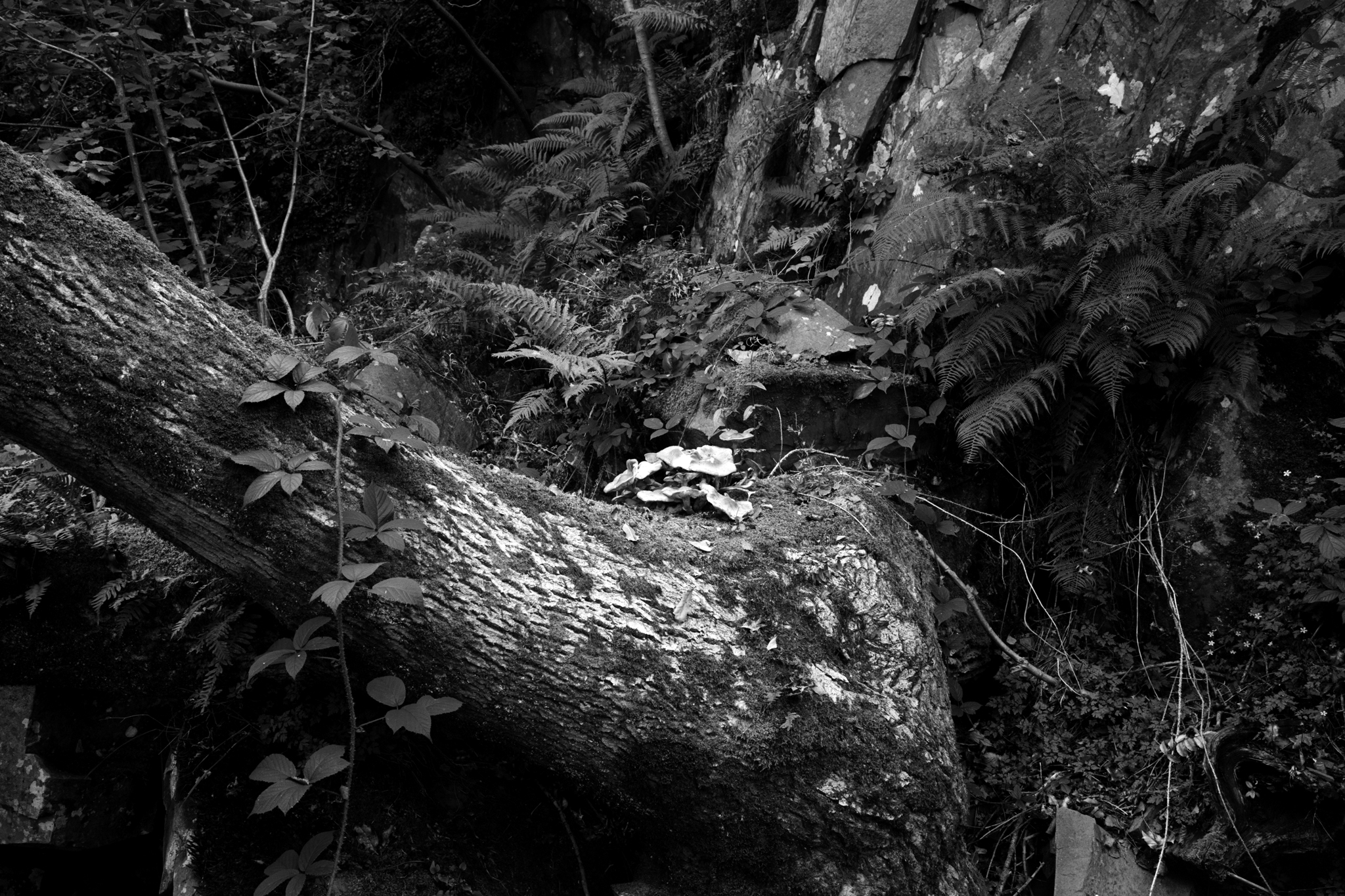
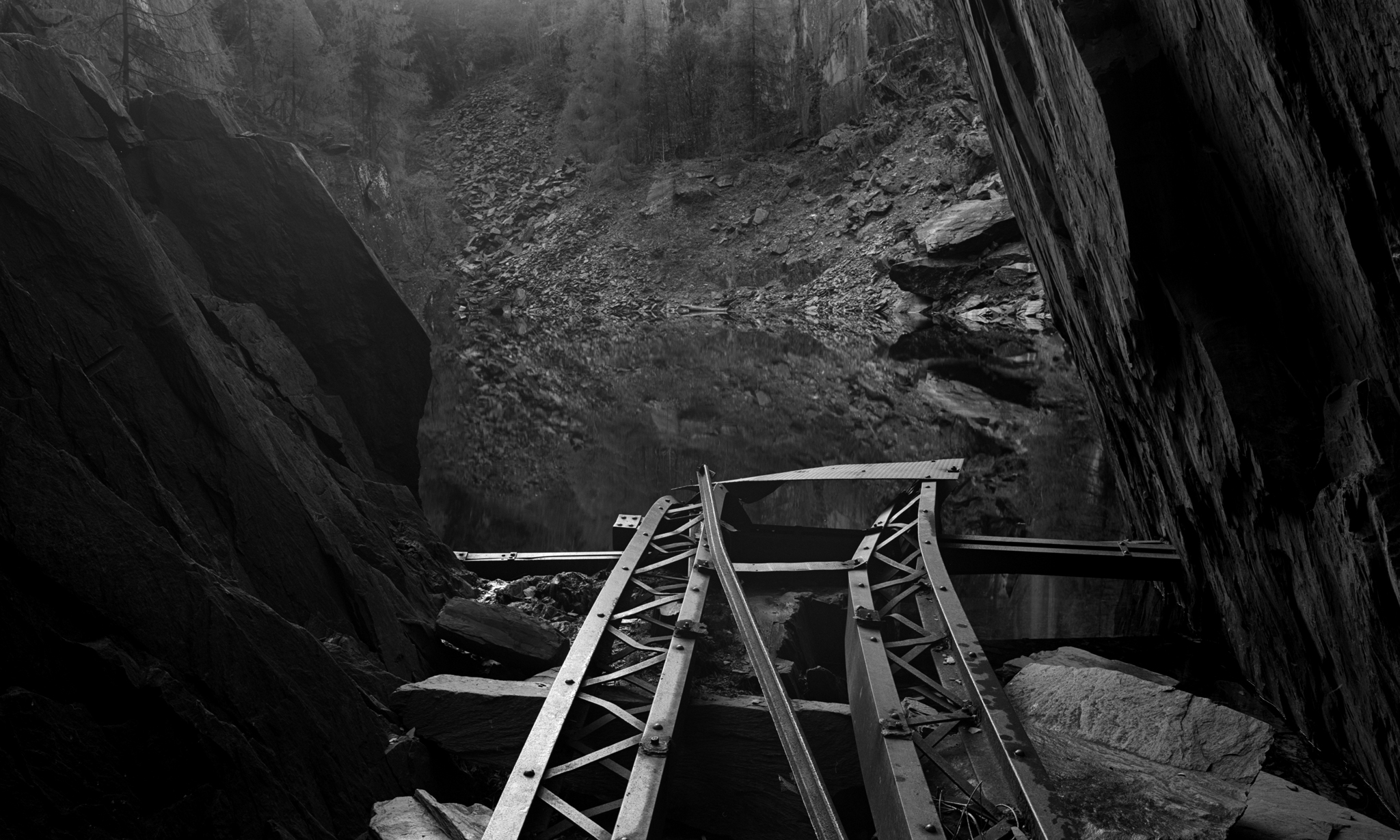
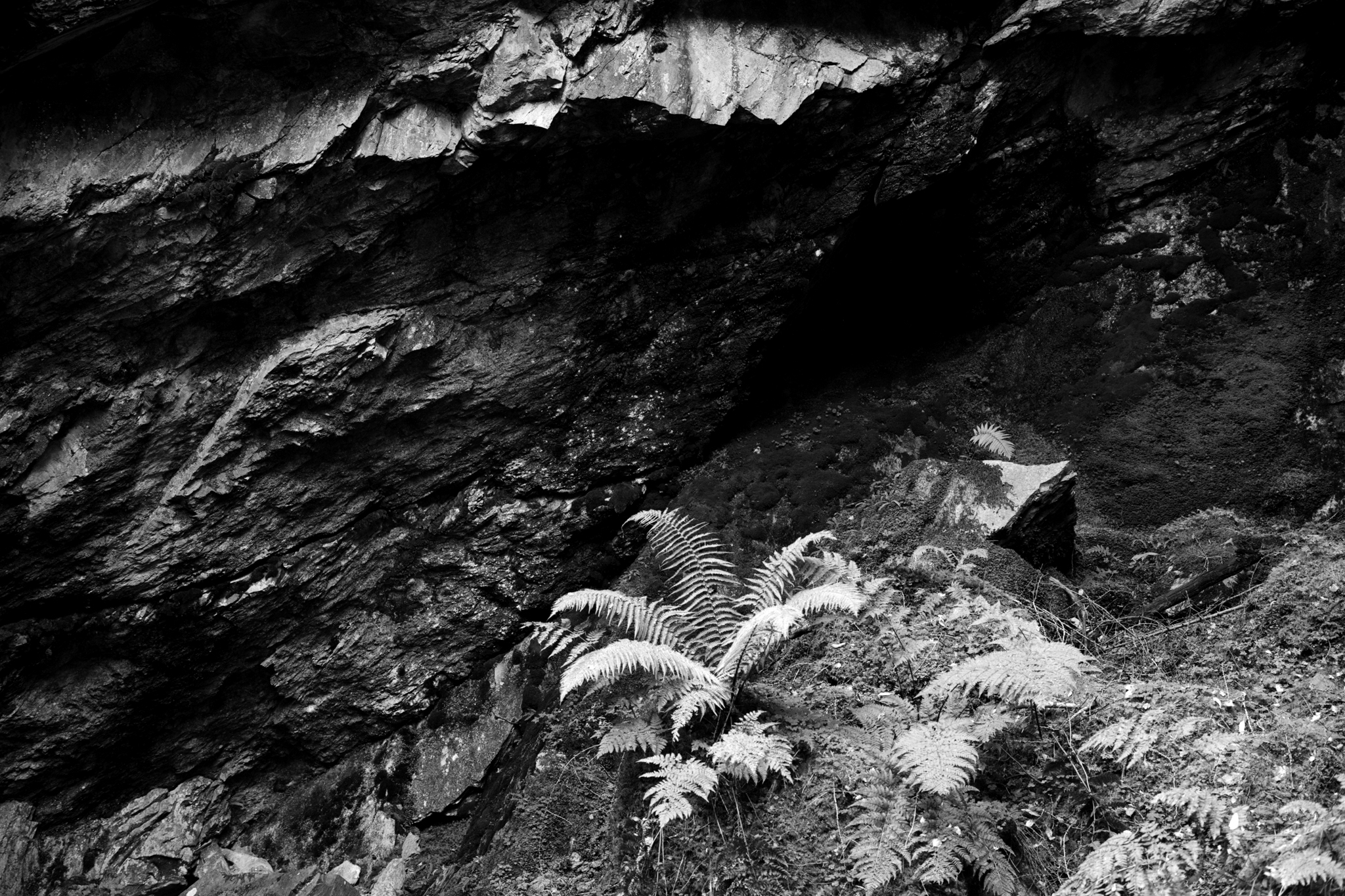
This was taken on a workshop in North Wales with Richard Childs exploring the abandoned slate mine workings and all taken on film with a Hasselblad 500cm. The mines are slowly being taken back by nature which is why it was such a perfect location for me and I think. Using black and white seems to fit the gritty industrial nature of the locations, can’t wait to go back.
Whitemill Bay, Sanday
Andy Latham
Taken on the final day of a trip to Orkney this summer, the mist and drizzle clearing at the very end of the day.
Sgur a Choire with squall & gulls, Elgol, Skye, 2015
Ann Holmes
After an otherwise overcast day in December, dusk light was to break through heavy cloud and briefly illuminate a passing rain storm over the Cuillin mountains and loch creating a moment of spectacular impressionistic beauty.
Blue Shed
Anna Booth
More of a weathered scape than a landscape perhaps. Captured on film glorious film.
Junkyard Guppy
Anna Duke
Taken amongst the incredible, apparently unending (daylight ran out before I ran out of subject matter) vehicles belonging to Archie Lewis in Moriarty, New Mexico. This little fish, in a big sea of beautifully decaying cars, deserved to have its curvaceous lines and colours preserved forever.
View from a carriage in Bath
Anthony Plank
One of the advantages of taking an early morning train is to see the landscape from a different viewpoint, higher and from a different angle. On a day when it is not a misty start, this harmony of country living and nature is hardly noticeable for farm buildings and other man-made impediments.
Last sun rays on the glacier
Bob Davis
Driving east along route one in southern Iceland towards Skaftafell. We were about an hour away from sunset and the sun was illuminating the top of the glacier with a rosy pink wash of light that demanded a quick stop.
Anniversary Snow
Bruce Davies
Be twice twenty-one we had lingered atop the horn there and lay near the eagles’ circling. Panorama of Upper Loch Torridon, Ben Alligin and Liathach in April 2016 the day before our wedding anniversary (42nd)
Honister Pass in a Gale
Carol Gregory
The beck tumbles over a jumble of varied glacial rocks as it flows toward Buttermere (in an autumn gale).
One Below Zero
Catriona Thompson
Holme Fen at around -1m altitude. I’m not sure what the temperature was, but not far off that.
Barns, Muker
Charlie Francis
Old ruined barns near Muker in Swaledale, the Yorkshire Dales. Many barns in the Dales have been restored but these ones have so far missed out.
The Wave’s Caress
Cheryl Hamer
I was out at one of my favourite locations on the island of Anglesey – Llanddwyn – teaching a weekend workshop. I pretty soon realised that we had something fairly special going on as the waves rolled in, caressed the beach and then pulled back leaving gorgeous patterns and trails. It was truly mesmerising!
The Winding Road
Darren Clolli-Leach
This image was taken on the Kjölur route in the Central Highlands of Iceland. The remote road is an epic one which cuts between the Langjökull and Hofsjökull ice caps and is only passable in a 4WD for a few months of the year.
Water Colour
Dave Martin
Crystal clear water and reflected light. Lower river gorge, Abisko National Park, Sweden.
Castle Crag and the Borrowdale Fells, November 2014
Dave Mead
The end of one the best days I have ever spent behind a camera.
Milford Sound, New Zealand
David Ashcroft
This image is unusual for me as I normally work in B&W. It was taken off a boat in the Fiordland National Park in New Zealand. They weather conditions were poor with a lot of rain and spray making things a bit interesting.
Cutting Edge
David Cole
The highlight of my visit to Namibia in April this year was a dawn trip to Sossusvlei. In the brief opportunity when the rising sun catches the edge of the dunes, I was struck by this ‘arrowhead’ of shadow, surrounded by the rippling sand.
Storm at Haweswater
David Eberlin
April storm on Haweswater this year on a David ward & Mark Littlejohn workshop, Mark taking us up a wee 10 min (read 30 min) climb to a great view over the reservoir, then the storms came through, including hail and snow.
Smailholm Tower, Scottish Borders, near Kelso
David Hardwick
Smailholm is a fortified house built in the 15th century at the time of the Border Reivers. It later became the childhood home of Sir Walter Scott.
Scott described the powerful effect on his imagination of the Border ballads told to him here at this time and the sight of the ancient tower, “standing stark and upright like a warden”.
Heather, cnoc and lochan
David Muiry
This image was made at sunrise in August, not far from the Golden Road that winds its way through this coastal landscape. It seeks to capture both the ruggedness of the terrain and the tranquility of the moment.
Walltown Trees
David Taylor
Even at the height of summer Walltown, in the Northumberland National Park, can be a chilly place thanks to a near-constant wind blowing in from Cumbria and the Solway Firth.
After the Pub, Great Habton
David Toft
Leaving The Grapes in Great Habton after a meal with our friends the light was captivating. We had to walk past our cottage on the way to our friends for a coffee so I popped in for my camera. This field and tree is only 200 yards from the pub and 50 yards from our friends.
East Force, Keld
Dave Varo
I do like photographing waterfalls. I think it’s the way you can convey movement in a still image, and in my opinion Swaledale has some of the best.
Eroding Wreck with Sea Barnacles and Shells
Despina Kyriacou
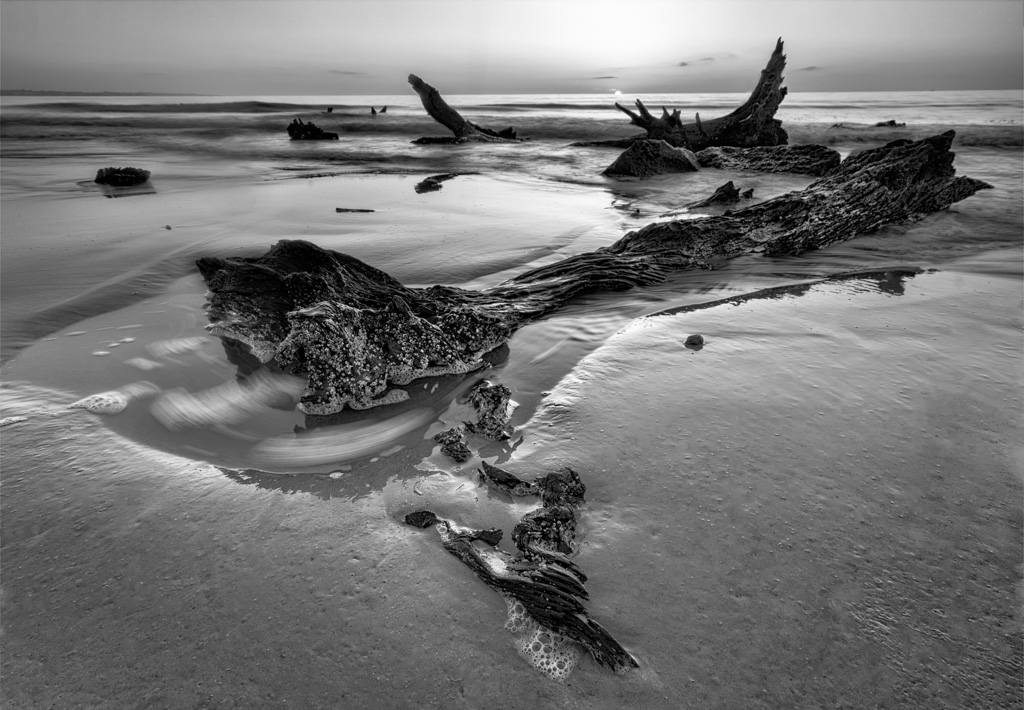
I was drawn to a wreck on a beach as the intensity of the sun accentuated the burnt orange colour of a wreck to emphasise it’s detail of seabanacle and shell attached to it. In close up, I managed to magnify the chaotic circular shapes, almost as though to emulate the erratic brushstrokes of a Jackson Pollock painting.
Where twisted rocks run down to the sea
Ed Hannam
Inspired by lyrics from Phil Colclough`s “A Song for Ireland”, this image was made of sunset across Galway Bay form The Burren in County Clare.’
Saltwick Nab
Eriene Georgakakou
This photograph was taken at Saltwick Nab just by Whitby, Yorkshire, using a Song Alpha A900 DSLR. I took this during a personal project, whereby I aimed to explore how tranquility can be interpreted in the landscape.
Into The Light
Euan Ross
Chasing the last of the icebergs around Boavista Peninsula, Newfoundland.
Ceibwr Bay
Gareth Parry
A secluded bay on the north Pembrokeshire coast. Hidden amongst the complex and contorted rock strata are many partially submerged caves, mostly inaccessible from the land.
Tree of Life
Gill Hood
This image was taken at the end of Glen Brittle. It reflects the 50 years since my previous visit as a child to the Isle of Skye.
Auvergne: Col de la Croix Morand, February 2016
Graham Cook
At an elevation of over 1400m, biting winter winds contort the isolated birch and pine. In harsh conditions, these often stunted shapes can be heavily clad in ice and snow, leaving the delicate, coral like appearance understated in its beauty.
Totley Moor mist
Graham Dunn
This image was captured in the Peak District on a delightfully foggy day last September. I’m always drawn to the way that mist and fog can add mystery and intrigue to what would otherwise be a rather ordinary scene.
Winter is coming
Greg Whitton
To Snowdonia and this tree, against all odds, thrives in what can be an inhospitable environment. As snow gently falls around it the tree is symbol of the strength that is needed to flourish in such times of hardship.
Cave Wood, Wye Valley
Harvey Lloyd-Thomas
The framing and viewpoint, angled down towards the ground, was chosen to give a blank canvas of snow to show off the “twiddly bits” against.
Disappearing Fence
Ian Stacey
This fence caught my eye as I walked along the New Bedford River bank near Sutton Gault in Cambridgeshire. The land had been intentionally flooded and this fence dropped down the riverbank into the water. To me the cloud reflections in the calm water give it a rather serene feel.
Mickleden, Upper Great Langdale
Idse Herrema
The forecast was low cloud with risk of sleet, so we decided to stay low. Having come down from Blea tarn, I liked the view into Mickleden with some light on the farmed lowland, abutting the moor above, which disappears into the low cloud and murk hanging in the Pikes.
Morning mist, Loch Ard
Janet Burdon
Our first visit to Loch Ard and we were treated to these fabulous conditions of the trees emerging from the morning mist. Loch Ard has an east-west alignment, so it is good for for early morning and evening light, this and its ability to hold on to mist for long periods make it a photographer’s dream location.
Nature’s Opals, Lake Laberge, Near Whitehorse, Yukon Territory, Canada
Janet Webster
Sunrise is later in the winter months in the Yukon. As I drank my coffee one morning last November, I watched the warm pink glow of a new day slide across the newly forming ice on Lake Laberge. Blue ice and pink light – Nature’s Opals emerging before my eyes
Cnoc Ceann a’ Ghàrraidh
Jim Souper
Also known as Callanish II, Cnoc Ceann a’ Ghàrraidh is a stone ring close to the main stone circle. This image was made soon after sunrise in late August 2016.
Lagazuoi Outlook
Joe White
An early summer sunrise illuminates the Italian Dolomites. This image was taken from Rifugio Lagazuoi whilst walking the Alta Via 1 trail in June of this year.
Above Aysgarth Falls
Joe wright
Force of Nature
John Clifton
This one is a ‘grab shot’ – hand held with a long exposure, using a Fuji X-100. The venue is Cragside House in Northumberland – a venue synonymous with the Armstrong dynasty and their efforts to harness the power of water.
Abandoned House, Harris
John Harper
Visiting Harris with David Ward in May, I was the last in a group of photographers to take pictures of the inside of this house. As I left, I saw this view of the back and stopped to capture it. David and team were waiting impatiently for me to finish, but I persisted!
Misty Isles
John Illingworth
I set out to photograph what looked like a promising sunset whilst visiting friends on the Isle of Skye. Looking away from the setting sun I saw these three small islands (Clett, Isay and Mingay) shrouded in mist and seeming to rise out of the calm sea. A beautifully tranquil scene I couldn’t resist!
Ice Island
John Lamont
From 2010 this is a local shot from which I have learned:
1. Views exist everywhere so explore behind large walls along unremarkable main roads.
2. Weather is an opportunity not a barrier.
3. You think you know your own work, but others see it differently.
Oldshoremore Bay, Sutherland, Scotland
John Maltas
There are many stunning bays and beaches on the NW coast of Scotland and Oldshoremore Bay ranks as one of my favourites. On this occasion I used a Lee Big Stopper in an attempt to capture the tranquil mood of the scene, with the subtle colours of the sea and sand under a somewhat threatening sky. Fortunately it didn’t rain!
Misty Morning
Jon Lewis
Taken in January 10 mins from my backdoor.
Approaching storm, Svínafellsjökull
Jonathan Tweed
With ice axes and crampons, we went for a morning walk on the Svínafellsjökull glacier, in southern Iceland. Dark, foreboding clouds were a constant presence. We carried on, the storm never reached us.
Autumn at Stourhead
Judith Plank
The view across the lake to the temple of flora, nestling in the trees, is one of my favourites, especially in Autumn.
Beech Party
Judy Sharrock
This image was taken in the Auvergne in March this year.
Gole di Breggia
Julian Barkway
The Gole di Breggia is a steep-sided gorge, located near Chiasso in southern Switzerland, where tightly folded strata of limestone and sandstone have been laid bare by the fast-flowing river Breggia. This makes it a particularly fascinating location for landscape photography.
Dune Echoes
Karl Mortimer
It was the alignment of the swirling marram grasses with the hills behind that initially caught my eye. Some further careful repositioning of the tripod allowed me to build up several echoes of line and form throughout the image.
Sarine No. 1 (Canton de Fribourg, Switzerland)
Keith Bevan
As a hydrologist I often take pictures of water. Capturing the dynamics in a still image is always a challenge. This one was taken while travelling light (Fuji XE-2 + Contax G 90mm lens). Most of my work is still on 6×6 film.
The Great Ridge, Derbyshire
Kelvin Richards
Perhaps, not a ‘classic’ sunrise but it was one worth getting up for…and getting back to cook breakfast before anyone else had stirred.
Dinorwig, Wales. Late sun on slate
Kev Fidler
Mist, Drewsteignton, Dartmoor, Devon, October 2015
Kevin Mclean
This was my first serious attempt at landscape photography, my first outing with the D750 and the first time I had got up so early in ages.
Bronzed sands of Whitby
Lesley Peatfield
This was taken just after sunset one September evening in Whitby. The birds were following the tide line as it receded, and I was fascinated by their subtle movement. The light was playing on the sand and changing by the second.
Prairie grasses, New Mexico, November ’15
Maggie Travers
Lundy Bay
Marc Elliott
One of those days, I should have been working really. I couldn’t, I couldn’t face the world this day. The day matched my mood. I was in no rush, I had no agenda, I had to clear my mind with a walk .
Horgabost, Approaching Squall
Margaret Ridgewell
Sad Deserted Shore
Margaret Smith
This image was taken near Aultbea on the NW coast of Scotland. If you look closely you will see a figure on the shore. I have tried to create a particular mood by restricting the colour palette and using the the lyrics from a song by Sandy Denny as the title.
Borlum Bay, Loch Ness
Margaret Soraya
This image was shot early morning on Loch Ness. I live by the Loch and often visit this location but it is unusual to be able to capture such a still, misty morning.
Autumn Woods, Exmoor
Marj Baillie
The late afternoon light was briefly highlighting a few branches and leaves. I used a shallow depth of field to concentrate on these and to enhance the mystery of the woods beyond.
View Over The Luddenden Valley, West Yorkshire
Mark Sage
The atmospheric rural landscapes and rich industrial heritage of the Southern Pennines have always captured my imagination. This view of Oats Royd Mill on the flanks of the Luddenden Valley encapsulates everything that I find so inspiring about this most characterful corner of northern England.
Scafell Crag
Mike Prince
An intimidating and brooding high mountain crag which provides climbers with stern tests in both summer and winter. The aura of the crag is enhanced by the names of the climbs including Ringwraith, Shadowfax and The Nazgul. The is the view across from Lingmoor Fell in late October – throughout the winter virtually no direct sun will illuminate the face.
Evanescence
Norma McKellar
St Mary’s Lighthouse, Whitley Bay, or as I’ve nicknamed her “the Lady”.
Iconic, teasing, an endless treasure trove for artists and photographers. A causeway to die for and every mood imaginable, never disappoints. So many veils, so many meanings…for me the Mona Lisa of our wonderful Northumberland coastline.
Rocks, trees, water
Mike Wilkinson
Description: A semi-abstract account of a small river in Swaledale, North Yorkshire (October 2016) using colour, form and texture to explore a response to an early autumn landscape.
Three Trees, Hokkaido, Japan, 2016
Miles Flint
November Radiance, Epping Forest
Nigel Morton
Epping Forest displays its full autumn glory during a very atmospheric morning last year.
The Magic Ring
Nigel Norris
Danebury Ring is an Iron-Age hill fort near Winchester. For me it can be a somewhat magical place – on a still evening one can almost hear the ghosts. In this image I tried to capture something of that feeling.
Reeds, Skipwith Common
Mike Curry
In camera multiple exposure of reeds in a frozen pond. Overexposed deliberately to remove distracting elements and converted to B/W to provide the abstract graphic quality I was looking for
The Reflecting Pool (series, #0437), North Yorkshire
Michela Griffith
I went for the trees but found a seasonal pool, already visibly shrinking in extent. New worlds within await, the only pre-condition for entry a little imagination. Birch trees, a wood, inverted; reinverted and reinvented. Layered stems and branches dissolve into watery paint, ever softening. Look long and deep enough into a pool of water and your gaze will be returned – what we see is a reflection of who we are.
Fields and Fells
Michael Hirst
In February I moved from Cornwall to the heart of the Lake District. I relished this amazing opportunity by challenging myself to complete 100 different walks over the course of the year. Number 46 was a short walk through St John’s in the Vale offering stunning views of the Derwent Fells.
Reverie
Mel Foster
A state of abstracted musing or dreamy meditation. This woodland daydream goes some way towards expressing my love of nature and the joy that the creative struggle of photography brings me. Although not overly typical of my work, I’m drawn back to this image – although I’ve still to work out why!
Hard & Soft, Elgol, Isle of Skye, Scotland
Oleg Ershov
Blue Curve, Luskentyre
Pam Harrington
As the tide ebbs and flows at Luskentyre on the Isle of Harris, the shapes and the shades of blue, turquoise and white in the water and the sand are unending.
Black and Light, Gruinard Bay, Scottish Highlands
Patrick Kaye
I wanted to create an under-exposed image to bring out the highlights.
Búðir, Snaefellness Peninsula, Iceland
Paul Arthur
Inevitably, it’s easy to get drawn in by the honeypot locations wherever you go in the world, and I’m no different. I try as much as possible to find images that aren’t of the most obvious subject at a location, however, and this is why the sweep of movement in this grass attracted me more than the pretty church behind.
Storm Brewing Over Camber Sands
Paul Graber
Several members of Guildford Photographic Society were on a workshop at Rye and Camber in early March, led by the excellent Paul Sanders, when seriously bad weather arrived from the sea. We were hailed on for a few minutes before conditions cleared – but the light while it was happening was excellent.
The Wheat Field
Paul Moon
This photograph was taken at the edge of one of my favourite Yorkshire Wolds locations, the dry chalk valley system of Millington Pastures. I have spent many years exploring these steep-sided open access dales, one of which, Frendal Dale, can be seen in the distance. The broken sheaves at the edge of a wheat field created wonderful shapes and texture as the last rays of sunlight glanced across the golden ears. A pastoral symphony!
This image was captured early one morning by the side of Derwent Water in February at the end of an inspiring week under the workshop leadership of Mark Littlejohn. The warming glow of sunrise lit the clouds above one of the most photogenic mountains in the Lake District.
Canyon View
Peter Atkinson
Power of the Sea
Peter Stevens
The image was taken at Saltwick Bay, Yorkshire, and shows the slow, continuous destructive power of the sea. It has been composed with the main subject elements centrally positioned in the frame, and the colour range has been adjusted a little to emphasise the two main contrasting colours of blue and orange.
Tree Lines
Richard Burdon
A simple graphic image of a stubble field captured on a snowy day, with the row of trees just disappearing in the blizzard in the background. I was drawn to the graphic nature of the scene, so I’ve deliberately printed it very high contrast to emphasise this graphic look.
Glyn Rhonwy
Richard Childs
Having seen the potential of this location on a previous visit I returned with my Large Format camera and found that I had only one sheet of Velvia. With no margin for error and fast changing light seeing the transparency come out of my processor was a moment of joy.
Frozen Lake, Rif, Iceland
Richard Earney
On a snowy, icy, windy day in February 016, I passed by Rif airfield. The lake was frozen over, but the wild light that accompanied the weather conditions revealed the extraordinary shapes, colours and textures from what was underneath the surface.
Harris and Lewis
Richard Ellis
Captured on a visit to Harris and Lewis earlier in 2016. The image conveys for me the importance of the sea in shaping the land.
Vatnajokull from Hofn
Richard Garlick
Amongst the dark stands…
Rob Oliver
Three small silver rich trees stand in a small clearing surrounded by the brooding presence of a stand of conifers in Gleann Meadal, Sleat, Isle of Skye.
Loch Clair
Robin Jones
I am sure you would recognise the view. In a snow shower i had to improvise and use a bit of imagination. If you check out page 109 of Scotland’s Mountains,by Joe Cornish, my little bit of bracken is in the foreground somewhere.
The Guardian
Rod Bennington
This image forms part of a long-term, on-going project to document the life of an ancient cherry tree, Prunus avium, the second oldest/largest in the UK. Anthropomorphic projection has long been a concept inseparable from my visualisation of detail in landscape photography and here the warm gentle glow from the setting sun created the effect I had been seeking to achieve for some time.
Car Cemetery
Roland Meier
Taken on a trip to Death Valley back in 2008, this is the photo that started my obsession with derelict places and things. Thinking about my journey as a photographer, it also helped broadening my photographic interest well beyond ‘classical’ landscapes into man-made ones, details and textures.
The View from Pettico Wick
Roland Tarr
On the first few visits to the National Trust for Scotland’s St Abb’s Head National Nature Reserve these extraordinary geological formations were masked by a soupy haze which obscured the chaotic drama of the millions of tons of folded rocks on this stretch of the Coast Path from Newcastle to Edinburgh.
High Summer on the Jurassic Coast
Rosie Mathisen
This is 6 picture stitch panorama was taken in August on high ground overlooking The Knoll, on the Jurassic Coast between Bridport and Portland. The field patterns and manorial villages along this valley reflect its medieval past – with small hedged field shapes clustering around locally quarried stone churches, barns and cottages.
The Giant and the Witch’ at Tjornuvik on the Faroe Islands
Roy Fraser
This image was taken into the face of a sleet storm with very high winds and was my main ‘keeper image’ from my trip as it truly expressed to me the majesty of the Faroe seascape.
Sunset on Ynys Mon
Sam Loughran
This photograph was taken from Newborough Beach on the Isle of Anglesey, North Wales. Fishermen are casting their rods and in the distance is the beautiful view of Snowdonia across the water.
Ashness Jetty, Storm over Derwentwater, Cumbria
Sandy Weir
This image means a great deal to me; I feel that it exudes atmosphere as all good photographs should rather than simply being a record shot of what was in front of the lens. This I.C.M. image holds so much more emotion than the “straight” tripod-mounted 30-second exposures which followed and will forever remind me of the battering wind and the lashing rain I endured whilst standing on the flooded jetty.
Ben Starav
Sarah Bindon
This photograph was taken in August this year at the bottom of Glen Etive. It was a very blustery day which provided more atmospheric lighting conditions to the superb Scottish Highland scenery.
tranquillity
Scott Morgan
This image resonated with me for inclusion in the conference exhibition as it was taken on my only previous visit to the Lakes District. It was taken on the only photo shoot I managed on an interrupted visit. But, it was one of the most spectacular sunrises I have witnessed and I have been looking forward to getting back ever since.
Ramsley Moor
Sheila Curzon
An early morning visit to Curbar Edge in the Peak District did not result in the cloud inversion I had hoped for. So I moved on to Ramsley moor where the trees were veiled in mist but the sun was trying to burn it’s way through the cloud.
Along the Boardwalk
Shirley Graber
This was taken late afternoon at local Surrey heathland Thursday Common. I was using a camera we have recently had converted to Infrared – having a lot of fun with it.’
Hardwick Ripples
Simon Gulliver
I was drawn to the patterns formed by dripping rain falling off bare trees with autumnal leaves in the water providing some ambiguity.
Northern exposure, Autumn
Stephen Hutchins
The NW corner of Svalbard in the high Arctic – the first signs of winter
Autumn Reflections, Kirroughtree
Steve Giles
One of those rare occasions of being in the right place at the right time with a camera! Mist forming over a tranquil autumnal lakeside. Beautiful!
Bracelet Bay
Steve Williams
This was my grandmother’s favourite bay on Gower and I always try to visit it when I travel to South Wales. Taken on a brooding November afternoon with an incoming tide threatening the tripod legs, this is an exposure of about 1 minute 20secs, using a 10 stop filter.
Church at Vic, Icelandc
Ted French
After taking pictures on the beach, I turned round and saw the church in the distance. The scale of the church in comparison to the mountains impressed me. It was taken on my Nikon D700 camera, which I’ve had converted to take infrared.
Monument Valley
Thomas Peck
An iconic view of America. I wanted to give it a twist, a stamp of my own. So I shot it with an IR camera, and converted to B/W. The effect makes the sky stand out quite crisply which certainly wasn’t so evident on the day. I like the little cars in the foreground that define the scale of the landscape.
San Francisco Bay Bridge from Fishermans’ Wharf
Tim Nicholson
One of the key elements in the picture is the lighting on the distressed pontoon pillars in the foreground. This came from neon streetlights about thirty feet away, just enough to provide the colour and tone, but not so close to affect the main image.
Sunrise at Fermoyle Beach, Dingle Peninsular
Trish French
The emotions of serenity and tranquillity very early in the morning at Fermoyle beach on the Dingle peninsular with the sun just peeking above the horizon, its shaft of light hitting the rock before the sun blasts onto the scene. My feelings then disappeared when my eyes were confronted by a new vista and I reacted to the light in a totally different way by refocusing my thoughts on the panorama of light.
Tungenesset, Senja, Norway
Trym Ivar Bergsmo
I was teaching a workshop in the end of January having two days of windy and wet weather. We went to Tungenesset, a famous location on Senja, during the rainy weather to photographed the moving water and the ice which came loose because of the large waves. All of sudden the fog lifted and for a few seconds we saw Okstindan (The Devil’s Teeth).
Windmills in the Mist
Ursula Lawrence
Kinderdijk shot early morning in April 2014. A Dutch friend (in the image) and I spent a long weekend shooting the industrial tulip bulb growing fields and the Kinderdijk. Living locally meant we could maximise our time and have the place to ourselves.
Longstone Edge
Valerie Dalling
Over 20 million people live within an hour’s drive of the Peak District National Park…Journeys through the landscape is an ongoing personal project which evolved for visual artist Valerie Dalling some two years ago, after drawing inspiration from the 17th century journals of Celia Fiennes who explored England on horseback, and more recently the travel writer Robert Macfarlane and his journeys on foot.
In Flight over Derwent water
Verity Milligan
On the shoreline of Derwent water in the Lake District after a misty autumnal sunrise, the light breaks through to illuminate one of the many islands situated on the water, highlighting the glorious autumnal foliage. At the same time, some wildfowl fly in formation, low to the water, adding balance to an already delightful morning vignette. One of those beautiful experiences that are hard to forget and rarely replicated.
My photography started about ten years ago now. It started initially as a way to photograph my cars at the time - another interest of mine. However, soon after, I saw landscape photography as a way of escaping the stresses of work. That last part will resonate with many people, I'm sure. Over the last few years, it has been more important to me than ever.
For people that are relatively new to my photography, they may be slightly surprised by my choice for an End Frame article. You see, although my own photographic direction has moved to a more urban documentary style, my original inspiration came from a certain Joe Cornish. It wasn't as if he was one of many landscape photographers that I studied; he was pretty much the only one. I studied and absorbed his photographs relentlessly. The accompanying text that Joe writes within his books was also digested in full too.
Although my own personal style and journey have taken me off on tangents from the raw landscape images I was so fascinated by, I look back with most fondness at viewing Joe’s work. After all, breathtaking photography is still breathtaking, no matter the genre.
For the people who have had the pleasure to view Joe’s books, you’ll know how difficult it was for me to select a single image. However, I’ve managed to do so… I think!
Our 4x4 feature is a set of four mini landscape photography portfolios from our subscribers, each consisting of four images related in some way. You can view previous 4x4 portfolios here.
If you would like to submit your 4x4 portfolio, please visit this page for submission information. We are looking for contributions for the next few issues, so please do get in touch if you're interested!
These four photographs were shot near where I live in the region of Marche in Italy. I've been impressed by the line and the marks left by farmers in the period of autumn before planting vegetables for the winter; I took this pictures in a couple of weeks searching the best light and the best field with interesting line and curves.
This series of images come from my first real foray into the southern Lake District. Having been inspired to visit the area after seeing the marvellous work made there by Colin Bell, these four images really sum up the "four seasons in one day" that typifies the Lakeland weather.
For over thirty years I have been mesmerised by the beauty and vastness of the High Moor, on Dartmoor. I return again and again to try to capture the drama and light of this lonely, windswept and desolate place, which changes daily with the weather and the seasons.
My favourite area, one to which I return again and again, are the Western Tors, off the road between Tavistock and Princetown, and this is the location of the 4 photographs submitted for this 4x4 portfolio.
Lessinia is where I have learned to photograph and where I can escape from the routine of life, in a land where it seems as if time has taken a break.
Lessinia Lights is a small work where I try to catch the beauty of this land where the wild Nature melts with the human presence.
In the beginning, every time a I tried to escape from our prints and I was searching my answers where Nature can show its shapes alone. I didn’t like to see so many buildings, road and fenced areas. But day by day I have also understood how the huts and the grazings are inside this land and its story.
So the wish to see these border shapes of Lessinia in the same way, and the same respect, I have for the more wild ones.
And as photographers we know that “good” light can reveal some great secrets of a place and can give it a spark of mystery.
Alex credits his interest in photography to a love of nature which inspired him to buy a camera and explore the world of macro photography. From butterflies and bugs, the new world that he discovered developed his eye for detail and after a dalliance with landscape views he is now often to be found on the Sussex coast exploring both the natural and the manmade.
Would you like to tell readers a little about yourself – your education, early interests and career?
I was brought up in the beautiful Surrey Hills where my interests included a variety of pursuits and interests becoming to a young lad including football, golf, bikes and fishing. Whilst I did take GCSE Art, I wasn’t a natural with either brush or pencil, but scraped a reasonable grade nonetheless. At 16 I didn’t really know what I wanted to do, but knew that further education was not appealing. At a careers event I applied for several jobs with high street banks and started a career with Barclays straight from school (this was before the days when everyone just HAS to go to University for the experience!). I spent many years in banking before moving into IT roles from where my career has carried on with other blue-chip companies.
How did you first become interested in photography? How much of your early inspiration came directly from nature, and how much from the images that you were seeing online at the time?
Travelling to the end of the world is not an easy task, and South Georgia certainly qualifies for this category. First, you need to cross 1850km of open water from the southern tip of South America over the Scotia Sea to get there; a voyage which can be a stormy inferno if the luck isn't with you. So I thanked God that this time mother nature was kind to us as we had four days of gentle rolling on a fairly smooth sea. And then there she was, South Georgia, with her 200 kilometres of jagged mountains, glaciers and beaches garnished with wildlife in abundance. Visiting this island had been a dream ever since I got hooked on landscape photography and at one stage I thought I would never be able to go there. Now, finally, the dream came true.
Scotia Sea
I almost immediately realised that depicting such a great wilderness in just one trip would be an impossible task. You simply need a lot of time to travel along the island. On a short trip like this one you have to deal with the conditions for the day and the chances are small that you will have the best places with great light. The landscape is so amazing though that you could almost stop at every meter and make a photograph. I had 5 days and about 10 landings - still not too bad. The first one was at King Håkon Bay, the location for Ernest Shackelton’s landing after his heroic crossing from Elephant Island in 1916. One hundred years later we landed in this fairly wind sheltered bay, sliding up on the sandy beach with our Zodiacs. I stepped off the boat and proceeded to navigate between the wildlife. King penguins, fur seals and elephant seals occupied almost every inch of the beach. The place felt very much like Svalbard, but on heavy steroids. Higher mountains and way more wildlife. For me, as a landscape photographer, I now had so much wildlife around me that I automatically also became a wildlife photographer. In almost every single landscape photograph the wildlife became an ingredient. Typical for South Georgia, instead of trees, there is a thick carpet of tussock grass on the ground. This grass looks fantastic and If frequently used it as foreground for my wide-angle images. The mountains and the sky are also amazing backgrounds in almost all directions. At King Håkon Bay I found a small pocket of water and two swimming South Georgia Pintail ducks (endemic) and here was another working foreground. I wanted to move a bit further to the front right to get a cleaner view of the pocket of water, but there was a grumpy male fur seal just five meters in this direction. This is the way it works on South Georgia and Antarctica. You have to stay at a minimum distance of five metres from the wildlife.
King Håkon Bay
Later the same evening we were hit by a hurricane.
I’ve never really been a kit man, so to speak. Since starting my journey in landscape photography a few years ago, almost every shot I have taken has been on one of two lenses.
Now I can already imagine the incredulity that some will feel reading this, what an amateur! But I think it boils down to two reasons – firstly to save weight as a lot of my photography is spent up and down mountains and secondly the cost of new kit. From Scotland to Iceland, the Dolomites to the Himalayas, a 16-35mm and a 70-200mm have pretty much always provided what I needed.
My love of the outdoors came long before I picked up a camera, from years of walking in the Lake District and holidays to the Cornish coast growing up. The camera became an extension of that, extra motivation to keep getting out there, but ultimately a means to an end.
However that changed, to a certain extent, when around ten months ago I rather rashly splashed out on a Hasselblad 500cm. "But you just complained about the cost of gear", I hear you say. True, I did, and I do feel that sadly a lot of things in photography such as new kit and workshops are priced well out of the reach of many people. But I had this money squirrelled away with the intention of buying something a little bit special.
And I could never have imagined how special I have found using the Hasselblad, especially having a sum total of zero experience in medium format film photography previous to this. I actually find it quite hard to properly describe why I have found the process of using the camera so satisfying and fulfilling. But everything about it – from loading the film to the noise it makes when I wind on the crank, or the feeling of excitement when the envelope of developed film drops through the door ready to scan – has really engaged something within me that digital never has. That’s not to say I have now become snooty about digital; I just feel that a whole new aspect to my photography has been opened up.
At the start the hardest thing I found was working out what film to buy, as the longer, I spent researching, the more confused I became. It felt like there were limitless choices, all with different results. I also needed to learn to meter and find out the best way to do it, as I had never used a camera previously that didn’t do it for me.
I actually find it quite hard to properly describe why I have found the process of using the camera so satisfying and fulfilling.
Thankfully through the help of a few very patient friends I was able to narrow down the choice of film to Velvia 50 and Portra 400 and these have been what I’ve used since (apart from a roll of Ilford 400 and a recent exploration into Pro 400h). I also settled on a metering app on my iPhone which I have found works really well and being able to touch the screen to tell the camera where to meter is very useful.
With just 12 shots per film, it has really focused me on spending, even more, time ensuring each image is just right, casting my eye across all corners of the square image
It also seems to have turned my mind much more towards project work, regarding each roll as the latest instalment. With just 12 shots per film, it has really focused me on spending, even more, time ensuring each image is just right, casting my eye across all corners of the square image as well metering over and over again to check I did it right the time before. So far these projects have involved concentrating on a nature reserve just a few minutes from home and the old part of Newcastle (where I live).
Having just moved house in January, I was delighted to stumble across the nature reserve on a walk from the house, and despite living just ten minutes from Newcastle city centre, I have so far seen, amongst various animals, deer and red squirrels. And having returned throughout the year, often before the working day begins, I decided to only use the Hasselblad there as an ideal testing ground as I learnt the craft of film photography.
The final major hurdle I faced was how to finish up with an image on the computer screen in front of me and after exploring a few different options I was able to get hold of a secondhand Epson v750 scanner (thanks to Mr Parkin). This process too has been a lot of fun, learning to scan in the images (which have been expertly developed by Peak Imaging in Sheffield). As I said before, I love the feeling of anticipation when the envelope of negs drops through the door, the nervous excitement about whether I’ve messed them all up or if there will be at least a couple I’m really pleased with.
And looking back over this journey I think what I can conclude is that I have begun to really appreciate the process of making the photographs, rather than just taking them. Ultimately it seems like a bit of indulgence for me, but it is one I am so glad I indulged in.
I'm reading the review section of the Guardian newspaper one Saturday and, above a review of Yuki Chan in Brontë Country, a novel by Mick Jackson, there's a lovely photograph of, presumably, the North York Moors. Even on newsprint, it's striking: a long vista over a craggy moor, alive with the russet and green tones of moorland in scudding sunlight. You can practically feel the wind tugging at your clothing. In the mid-distance, there's a crag that could be a house or a house that could be a crag. So I look to see who made it; to do this, I have to turn the paper sideways and squint at the truly tiny picture credit at the bottom right-hand edge. It reads ALAMY. Nothing else. This beautiful image has been sourced, merely for illustrative purposes, from a stock photo agency.
Later, looking through Landmark, an intelligent and interesting anthology of contemporary landscape work compiled by William A. Ewing, I find myself wondering, is landscape photography over? In one sense, clearly not: more and more people are producing more and more landscape photographs, and it has become both a major genre in its own right and an important ancillary to other activities, like walking, climbing, travelling and even spirituality and philosophy. But... sheer populousness is often a sign that something has peaked, and that its exciting, pioneering days are over. Given how varied the world is, and how different people are, I wondered: why do so many landscape photographs look exactly the same? Why are they so unregarded? To the extent they can be bought by the yard, and published uncredited?
The... arguments against photography ever being considered a fine art are: the element of chance which enters in, finding things ready-made for a machine to record, and of course the mechanics of the medium. ...I say that chance enters into all branches of art: a chance word or phrase starts a new trend of thought in a writer, a chance sound may bring a new melody to a musician, a chance combination of lines, new composition to a painter. ...Chance—which in reality is not chance—but being ready, attuned to one's surroundings—and grasp my opportunity... Edward Weston
Every so often I come across a bit of wisdom stated so brilliantly that the words resonate in my mind even years later, any time a related subject is brought up. One such case was a discussion several years ago among a group of friends, all experienced photographers, about our respective approaches to making images. Although all offered interesting insights, the one that left the most lasting impression on me was offered by my friend, Canadian photographer Eric Fredine, who described his approach simply and succinctly as, “putting myself in the path of opportunity.” It instantly struck me as a perfect way to describe what I consider an important aspect of my own approach: the diligent avoidance of preconceptions.
Our 4x4 feature is a set of four mini landscape photography portfolios from our subscribers, each consisting of four images related in some way. You can view previous 4x4 portfolios here.
If you would like to submit your 4x4 portfolio, please visit this page for submission information. We are looking for contributions for the next few issues, so please do get in touch if you're interested!
The Feldsee is a small tarn in the southern part of Germany's Black Forest mountain range. Not too far from where I live, it is one of those places that I have visited regularly over the last years. It is surrounded by steep mountainsides and thick forests, and this beautiful location never fails to inspire me.
My last visit took place on a chilly October morning in 2015 when I went there with a fellow photographer in order to capture the colours of autumn. When descending towards the Feldsee in darkness and in fog it looked like we came too late by a week or two. The leaves looked brown and uninteresting.
But as soon as we arrived on the shore and as soon as the sun rose, we saw that our eyesight had fooled us in the darkness. We were treated to a rich display of reds and greens and yellows, and wonderful reflections in the water on top of that.
All images in this portfolio have been taken on this morning, over the course of only two to three hours. It was truly a magical experience.
Situated on the edge of the Peak District lies an area of 'Forestry Commission' woodland known as Bottom Moor and Farley Moor just above Matlock. Due to it's location the area is prone to fog and mist and on the right day, the whole area is enveloped by blanket of mist.
All these images were taken whilst on the way to work, completely unplanned and spontaneous. I say unplanned, I always keep my wellies and camera in the car, just in case. I named the series "Short Moments" as I never took more than 15 minutes taking the shots, before I was back in the car on my way to work.
I have always been fascinated with patterns in the nature and how the various forces of nature can create something together that we often perceive aesthetically beautiful. Sand ripples, also known as sand waves, are one of the nicest patterns that one can find in the nature - they are typically 'sculptured' by wind or water.
By these pictures I tried to capture the work of these forces in the dunes of Maspalomas in Gran Canaria (Spain). The idea behind the series was to create a set of meditative, minimalistic / abstract pictures about the sand waves in their landscape settings.
February is, I find the best time to go to the beach in North Cornwall. Bracing 40mph prevailing winds and blasted by sand and spray, are the standard conditions and make for challenging photography. But the wild movement and texture of the Marram grass among the dunes is fascinating for me on days like this.
There was a lot of Cornish mizzle in the wind and visibility was pretty poor, which hopefully made for some quite stark and dramatic monochrome images. The four images I think gives a representative impression of this spectacular, wild, windblown landscape.
We all bring disparate parts of ourselves into our photography and skills that we might initially dismiss as unrelated can prove invaluable. It was not only Carla’s photography that caught the eye of Charlie Waite but also the way that she looked after customers at the café/restaurant that she and her partner run in Porthleven. She now helps lead workshops for Light and Land and at the time of the interview had just returned from two week-long workshops in Iceland. Cornwall, Norway and Italy also feature in her diary.
Carla’s aerial photographs of Iceland As The Delta Flows were featured in Issue 119 of On Landscape and encouraged us to divulge a little more about herself and her photography.
Guy Tal’s “Radiant Pastels” represents one of the many images that drew me to his photography. It impresses me with its deep energy, stillness, and contemplative quietness.
It also was taken close to where I live, a few short hours away. I was at first impressed to seek out the locations where the photos were made and make my own trophy, seeking to emulate the style and depth of his images. Having driven by similar scenes in Utah where they were taken I could just stop and find similar places and subjects.
Then I found two eBooks he has written and made available online. I downloaded “More Than A Rock” and read it thoroughly. I discovered through his articulate writing the reasons behind his photography: finding and living in his place, his relationship to the stillness and quiet of the Colorado Plateau. He changed his life from a participant in information technology in Silicon Valley to be nearer to the place that resounded deeply with his being, a place that spoke to his soul. He quit his day job that was unfulfilling and moved to a small community to be where his heart related and he could express himself through photographic art.
I sense in this image and his other photographic art a mindful awareness, with all of his senses clearly open; hearing, smell, vision, and touch are engaged. Day after day, year after year for decades he has placed himself in contact with his place, the Colorado plateau, and allowed the essence of his experience to find expression in his photography. Fully engaged in the place over time he has increased his awareness of the subtle nuances of seasons, weather, light and wildlife.
I began to realise that my seeking to make images like his would lack the full commitment to place that he has made and continues to make.
This image challenges me to experience my own unique life more mindfully, and when moved, make images that convey my sensitivity to my place. My wife and I built a small retreat in Eastern Idaho in the valley of the Grand Tetons where we live during the summer and autumn.
Day after day, year after year for decades he has placed himself in contact with his place, the Colorado plateau, and allowed the essence of his experience to find expression in his photography.
I walk daily on doctor’s recommendation and take a camera with me. Making images has become deeply satisfying and an opportunity to share my deep resonance with our place with prints for family, friends and neighbours. I also began a resolution to select an image per day and post it on-line. I have found my place and my images are the result of observing the changing light, weather and seasons for over a decade. I’m still walking and making images and sharing them.
The world doesn’t need another Guy Tal, or Ansel Adams. I can within an hour stand where Ansel stood and make my image of the Snake River Overlook or Oxbow Bend and bring home a trophy similar to his. And I have done this, they reside in my computer, however the satisfaction of expressing myself creatively comes not from replicating their vision but discovering my own.
I find myself having greater satisfaction walking within two miles from home and seeking deeper meaning in expressing my love for this unique place in my own way.
During the week after the Meeting of Minds conference, myself, Erin Babnik, Len Metcalf, Paul Arthur and David Unsworth spent a few days in Borrowdale to discover some of the beauty of area (and of the whisky, beer and food on offer).
On Wednesday, Mark Littlejohn left a message to say “I’ve organised a boat trip for you if you’re interested!” to which we all replied with a resounding “Yes please!” and so turned up at Glenridding at 1:30pm for the 2pm cruise.
As you’ve probably seen from the pictures that Mark has included with his article, the Ullswater Steamers are quite beautiful things in their own right and we spent the first few minutes ooh’ing and ah’ing at the boat itself. It wasn’t long until the boat set off on its way down toward Howtown though and so also began Mark’s stream of seemingly omniscient knowledge of Ullswater and its surroundings.
Capturing images from a moving boat isn’t my normal style of landscape photography, to say the least. First of all I’m normally operating a large format camera and secondly I’m taking about 10 to 30 minutes on each picture. In this case I was using my Sony A7R2 with a Canon 100-400mm Mark II on a Metabones adapter and as we started off and passing out of Cherry Holm I was taking a photo every minute or so.
It was once we came up to Silver Point that things started to get interesting though. Mark’s intimate knowledge of the conditions at different times of year meant that he knew we were in for a treat.
As the late winter light, only six degrees above the horizon, skimmed across the bank of Birkfell it started to pick out small groups of birch trees. The contrast between these and the blue shadows of the unlit trees was astonishingly beautiful.
What we didn’t quite realise is that Mark Littlejohn has some sort of telepathic link with the pilot of the boat and as we passed into this confluence of light and landscape the boat slowed down and shifted towards the bank. The following three photographs, and many more, were taken between 14:53 and 14:55.
The 100-400 focal length was superb although all but the close up of the trees were taken between 100 and 200 and I could have done with a little wider at a couple of points. A 70-200 would have been almost perfect.
I have to say that the experience of producing photographs at such a pace, of being forced to instinctively compose and recompose, was extraordinarily powerful. This sense of flow, of being embedded in the moment was something I could find strangely addictive.
Alas, the two minutes only last a couple of minutes and the pilot started to make up for a little bit of lost time. The views were far from over, though; as we passed various part of the lake we saw many more potential images from small boatsheds to more lakeside trees.
One of the more interesting aspects of the boat ride was watching the play of light and reflection on on the wake.
The 100-400 wasn’t the best to capture these effects but my friend Paul Arthur had a 16-35 on his Sony and although he missed many potential photographs because of this, his wake photograph, in particular, is quite beautiful.
So a big thank you to Mark for introducing us to the sport of steamer based photography. It was so much fun that I started Ebay searches for ‘Passenger Boat’ although I haven’t told Charlotte about this one yet.
Once I'd 'friended' Graham Cook on Facebook it became quickly noticeable that a new thread of images were inhabiting my stream. These weren't the usual classic landscape and not even what you would expect from a photographer making more intimate images. These were truly abstract extractions of the world but still with a solid link with reality. As it became quite clear that Graham had quite a unique way of looking at the landscape I thought I'd ask him to write a few words about what he does. After a little tussle with the "but it's not landscape" he finally accepted, and for that I'm grateful and I hope you will be too.
Photographically I consider myself largely anonymous, with only a handful of respected friends on Facebook acting as my photographic ‘community’. Most of my output is eclectic and highly personal. But the invitation to write something about my work has meant stopping to consider what it is I do and why it is I’m doing it.
Surface tension – Shoreditch
I make no apologies for leaning on others to help articulate what goes on behind my eyes and I can’t pretend that this will blossom into an article of any intellectual or technical merit – in any event that just isn’t me – but it may offer some insight into the passion and motivation behind what I do and where I come from.
I’ve never had a problem with ‘creating’ or thinking differently. In fact, the problem sometimes has been controlling it and adding purpose, as Primary school reports trenchantly imply. But creativity has many spurs and as my eyes became more panoramic and receptive the desire to take advantage of this ‘landscape’ became overwhelming.
To be precise, it was light striking the angular hull of a fishing boat that opened my eyes to the possibility for an image to be something other than merely an objective facsimile.
Cornish trawler
During my first weeks at Art College, as a relatively shy individual, I felt intimidated by other students. However, in a free-thinking non-judgemental environment I soon discovered that a lively imagination, coupled with raw talent and supple vision meant as much if not more than myopic academia. Although not a pre-requisite for the graphics course, what also set me apart was a natural talent for drawing and painting but really, all that meant was a deep frustration at not being able to attend the fine art course.
Consequently, I never found answers to the questions I kept asking myself about the true value of my painting ability. I was never able to develop a style or still the persistent voice inside me.
After Wallis
Although photography was an important element at art college and during my 45 years as a designer, I’d never intended it to become a major part of my life or have much of an influence on my creative output. The plan for retirement was to satisfy those finer, more personal artistic ambitions that had remained frustrated since college and had played second fiddle to a profession spent serving largely untutored commercial and corporate audiences.
So photography was introduced simply as a strategy, a means to an artistic end, to help rewire my mind allowing less predictable thinking regarding colour, form and composition in preparation for the genuine ‘artistic’ task of painting. Little did I know photography was to become an end in itself.
I believe the landscape can be reborn, that it also exists in a kind of parallel world, just as real but revealing itself using a different visual language.
But why in the landscape space? On reflection, the starting point for this journey was greatly influenced by David Noble*, a freelance designer working with me during the mid 1980’s. After attending a series of photographic workshops with Nicholas Sinclair, Thomas Cooper and Paul Hill and a summer school at the University of Derby where he met John Blakemore and Martin Parr, David introduced me to a full range of possibilities associated with photography. Now Edward Weston, Walker Evans, Paul Strand and Minor White became a regular part of our general creative discussions.
Roughly 25 years later, a chance meeting with Charlie Waite at the Oxo Tower Gallery reinforced the view that landscape photography had much to offer. What followed were the naïve fumbling years of my photographic adolescence. Through practice and the odd single day workshop (beech avenues and National Trust gardens spring to mind) I began to build the skills and broader knowledge necessary to progress.
My first David Ward and Joe Cornish masterclass in Cornwall was cathartic. Mixing with a group of highly talented participants was both inspiring and intimidating. I’d never doubted my ability to do ‘art’ and have an unshakeable inner confidence but here, out of my comfort zone, my photographic confidence was indeed shaken. By the end of the week I was the only one not to show prints. I felt I’d let myself down. But all was not lost.
Evocation
Although conventional landscapes formed most of the early work I found them difficult to value accurately and simply recording superficial impressions became progressively unrewarding. It was so difficult getting what I was about into the image. However, there was light at the end of this particular tunnel. To be precise, it was light striking the angular hull of a fishing boat that opened my eyes to the possibility for an image to be something other than merely an objective facsimile.
If I think about it, what I’m trying to develop is a voice that describes the natural world in a distilled and simplified form.
In this modest, tightly framed geometric abstract, I felt for the first time that here was an opportunity for self-expression, where subjective application could recalibrate a subject and introduce ambiguity, mystery and intrigue. I came to understand that nearly every object within a more general scene had the capacity to engage on several levels. There was also realisation that the artistic spirit could be satisfied and motivated towards taking an active role in expressing a personal creative vision. This one image changed forever the way I looked at the world through a camera lens. I had, it seemed, found a ‘photographic’ voice.
That was December 2013 and since then David and Joe have been integral in helping me to pursue and develop my ‘voice’. There are of course many many others who have directly influenced the way I respond to image making. It’s almost unfair to single out individuals but a supporting cast would be led by Valda Bailey, Paul Kenny, Mark Littlejohn and the highly considered work and writing of Guy Tal. I just love artists who ask questions of me and force me to question how I see. Artists who show humility and don’t follow ‘styles’ or ‘trends’ but remain true to their own beliefs whilst appreciating photography in the wider context of ‘art’.
Ingression
Nearly all art shares the goal of communicating a message to an audience but the style in which that message is communicated differs greatly. If I think about it, what I’m trying to develop is a voice that describes the natural world in a distilled and simplified form. Yes, one can enjoy a pint of bitter from the wood but a nip of fine whisky or cognac is a different, more intense experience. Is one better than the other? It could be argued so but really they are just different. What is essential to the taste is the intent and the passion behind the process of creation.
For me photography is not an obsession but creating is. This obsessive voice within, nagging and prompting, driving my eyes to interpret and reinterpret the world. I believe the landscape can be reborn, that it also exists in a kind of parallel world, just as real but revealing itself using a different visual language. I consciously try to create images that provoke and ask questions of the viewer. I may not like the answer but the viewer is as much a part of the process as I am. In common with my paintings, I don’t want to be passive or absent from my work and I don’t want to produce work that provides all the answers.
Writing this has forced me to consider whether or not I do actually take ‘abstracts’. If we examine the word abstract, and for this I turn to the Tate’s glossary of art terms, it states ‘Abstract art is art that does not attempt to represent an accurate depiction of a visual reality but instead use shapes, colours, forms and gestural marks to achieve its effect’. But isn’t what I do ‘an accurate depiction of a visual reality?’
To me, it ’s not the scruffy ugliness of crudely painted fibre glass filler or sun melted tar, it’s the attraction of what it could become, how it can re-surface as something else, something visually intriguing and graphically pleasing, taking one beyond the ordinary range of perception.
Am I not just as representative as everyone else? After all the camera doesn’t lie! I photograph what nature puts in front of me. I don’t cheat, I don’t add or subtract, I simply frame differently and in doing so free the image from an obvious association. Is that abstraction?
Multiplicity
Everything I’ve done creatively, from a life in short trousers to retirement and a life in shorts, has felt instinctive. Feeding this has been an open mind and a surreal and somewhat irreverent imagination. I’m almost totally driven by feel, by curiosity and an unlikely connection with the subject. When I identify an image, instinctively I respond, intuitively knowing it’s right. I spot an opportunity, often in the most unremarkable circumstances, and immediately zone in. This moment is uncompromising and a point when I try not to let an overreliance on technical mastery spoil natural interpretation. As David Ward has often stated, ‘Craft is important but it’s not paramount; vision is’.
It’s frequently said that we’re the sum total of all the parts of our life, where a synthesis of ideas, influences and experiences make a whole. How those ‘parts’ or experiences affect how much we see, varies considerably but this essential formative process operates subconsciously. For me it’s a vital element of the process of seeing. I take inspiration from a wide range of artistic and creative sources and much of my work has a narrative fed by artists – anything from Blake to Rackham, Palmer to Rothko. I retain an infants’ psyche and reference works as varied as Alice in Wonderland to Just William, from Tin Tin to Rag, Tag and Bobtail.
Combined with an appreciation of design, and an endless fascination in the ability of nature to reclaim ground once lost to the hand of man, I try to allow my ‘abstract’ forms reveal an alternative beauty to be found in the patina and continuum of life. As Paul Klee said: ‘the intention is not to reflect the visible, but to make visible.’ I try to challenge assumptions, to penetrate the world, both natural and man-made, with an eye in such a way that the inner structure of reality is revealed.
I want to find a beauty in the obscure or perhaps try to extract beauty from the ordinary.
Little Langdale trough
Why photograph the obvious when fragments act as shorthand to the life of an object? Scratches and paint drips, the flow of discolouration from exposure to the elements often say all you need to know – your mind can do the rest. I allow myself to think how much beauty and ambiguity lies between the surface of erosion and decay. To me, it’s not the scruffy ugliness of crudely painted fibre-glass filler or sun melted tar, it’s the attraction of what it could become, how it can re-surface as something else, something visually intriguing and graphically pleasing, taking one beyond the ordinary range of perception.
To walk round the back streets of any town or city offers a keen eye real opportunity to turn the functional, the ordinary, the used, the second-hand, into something more remarkable. Freeing objects from their true association. Similarly, to travel through the natural world where intricate shapes and rich textures, lend grandeur to the natural forces at work, yet captured in a particular way, can defy obvious interpretation. The erosion of sandstone or fractured granite reveal almost lyrical abstract design. These austere, organic shapes have a constructivist feel, with simple forms offering aesthetic potential.
However, I wouldn’t choose to live in a world of total abstraction, devoid of beauty, emotion and feeling as the chords forming the soundtrack of my life are far from discordant. I think Kandinsky was right in recognising that one must always be mindful of the danger of abstract painting becoming ‘mere geometric decoration’ and this is possibly even more relevant with ‘abstract’ photography. Therefore, part of my battle is to make seemingly inaccessible images accessible. Images that repay repeated visits.
Tate tea room
I want to find a beauty in the obscure or perhaps try to extract beauty from the ordinary. I understand that beauty is a combination of qualities held very much in the eye of the beholder, yet fresh resource and the changing conditions of visual language in modern life gives legitimacy to alternative means of expression. What passes for beauty continues to be reinterpreted as we grow a different understanding of reality and a greater tolerance towards art and artists.
As someone who responds to creative challenges by feel, the deeper technical facets of photography are something of a stranger. Although important, I’m happy to avoid more detailed technical discussion in preference for dreaming. My camera bag is rarely if ever refreshed, and the 5d III only seems to make an appearance on workshops – roughly five times a year. This means I’m constantly trying to remind myself of its functions so the first day of any workshop is often awkward and unproductive.
Apart from a Fuji XE-1 the majority of the images I share are taken using the iPhone. It is my sketchpad. It allows me spontaneity. There are occasions when my eye is so keenly tuned that only the convenience of the iPhone allows me to meet demand. I’m also a big fan of cropping and see it as a much maligned creative tool. This may be a legacy of my design career, but I crop as I see fit. There is an intention to live by the mantra of the need ‘to get it right in frame’ but is it not possible to improve and encourage creative growth through judicious pruning?
What passes for beauty continues to be reinterpreted as we grow a different understanding of reality and a greater tolerance towards art and artists.
Orange sunset
My ideal environment for post-capture editing is Lightroom. Used responsibly, it has become a very creative and liberating part of the process. It’s quite remarkable how one can resuscitate discarded images and rescue perfectly good files that were taken with intent but that lacked the presence to impress during initial reviewing. I’m also not shy to use the dodge and burn facility in Photoshop as I feel I’m putting my hands directly into the image and influencing outcome. This has a painterly quality about it. What is perhaps more interesting is how I use Lightroom to advance understanding of my painting. Photographing an artwork as I progress, I can locally adjust things such as colour intensity and contrast. Essentially it identifies areas where I’ve been too timid, giving an insight into where improvements can be made.
There’s little difference in terms of the principles of composition between painting and photography but how those principles are applied is very different. When I paint I do so facing a blank canvas but the camera viewfinder is the complete opposite. A painter can enjoy the freedom of placing an object where he or she chooses yet the photographer must work harder to isolate elements within a crowded frame in order to bring agreeable composition to a well-balanced work of art.
Reception
I can lose myself when I photograph but I’m totally absorbed when I paint. Light may be of equal importance but time has a different relevance. The tactile and direct nature of pushing paint around has greater resonance and I find the whole process more inwardly satisfying since I feel there’s more of me in a painting. However, creatively I find little difference. I’m excited in equal measure to reach a new level of accomplishment in painting as I am in identifying a unique capture in photography.
I’m excited in equal measure to reach a new level of accomplishment in painting as I am in identifying a unique capture in photography.
Yet there’s a wonderful irony in the fact that I’m able to be freer with photography than with painting. I seem to have fewer hard wired preconceptions about what stands for photographic convention yet I’ve always been ‘photographic’ in the way I draw and as such, I struggle to realise painted works as freely and expressively as photography. It was fascinating to discover that at a recent exhibition held in partnership with a landscape painter friend, my ‘abstract’ photographs were considered more painterly than his ‘photographic’ paintings!
As you may imagine, there is an on-going battle between pixels and paint and the dilemma for me is the constant flick flacking from one medium to the other. The ambition to master both may be beyond me. I may end up being the proverbial ‘Jack of all Trades’. However, I derive satisfaction from the progress I’ve made so far and photography and painting are currently happy bedfellows. But my main enemy is time. After sacrificing so much in favour of being relatively successful professionally I am, at 66, fast-tracking to prove I’m the artist I always thought I could be.
Letterbox
If I have an ambition it’s to pull the two disciplines of photography and painting closer together. Quite how this will manifest itself is the exciting part. Regardless of the outcome or how successful my work is judged to be it’s for others to determine its relevance. I’ll be content to satisfy and meet my own expectation and will remain predictably unpredictable. What I do know is that I now look at the world in a much more probing and provocative manner and in that respect my life continues to be refreshed and enriched…and for that I have, in part, to thank landscape photography and those generous and open-minded practitioners who have advised, influenced and motivated me to just be me and not to say ‘why?’ but ‘why not?’
*David gained BA(Hons) Photographic Studies (First Class) at the University of Derby and teaches BA(Hons) Photography Award at Staffordshire University.
I retired from the Police in late 2011, having completed 30 years of service. The last decade had been spent analysing paedophiles' computers and reviewing the material they had been accessing, sometimes millions of images at a time. Photography had entered my life a year or so before as a way of relaxing, and I spent the first year of my retirement wandering Ullswater and the Eden Valley taking various photographs. But I missed the camaraderie of my working years, and in 2013 I decided that I should perhaps think of getting a wee job somewhere (or perhaps more accurately: my wife wanted me out from under her feet).
A friend told me that there were some seasonal jobs at the Ullswater Steamers starting in the February. What could be better than to spend my days sailing up and down Ullswater in all weathers and getting paid for it. The operations manager was already a fan of my images, and I was barely even interviewed. The only question was “When can you start?” I’ve been there four seasons now, and I have loved nearly every minute. I see other landscape photographers travelling all over the UK, consulting the latest photographers guidebook and going from honeypot location to honeypot location. Working every day on Ullswater highlights how long it can take to intimately know your local landscape. I am constantly uncovering new and hitherto unknown gems. Why would I need to travel when I have such riches on my doorstep?
Semiotics is the study of how meaning is created and communicated – signs and symbols and their use or interpretation. It grew out of the study of the written and spoken word: linguistics, but rapidly broadened to encompass all forms of communication. All of us are excellent semioticians, particularly in the visual sphere. For example, think of when you are driving your car and you see red or green traffic lights. Meaning and understanding is instantaneous – we know the signs and the code, its rules and regulations – and we behave accordingly.
In the art world, including photography, there is a tendency however, for meaning to be slightly more obscure. Particularly modern & conceptual art seems to delight in ambiguity. But Dan Nathan’s most recent photographical art works are exactly the opposite of this. As well as being very beautiful and dramatic images, their meaning is very clear. And Nathan achieves this meaning through use of a simple structural device, the diptych.
What does a diptych do? By bringing together two images the artist is implying a relationship between them. The viewer has to react to that relationship, to question it.
What does a diptych do? By bringing together two images the artist is implying a relationship between them. The viewer has to react to that relationship, to question it. Physically the eye darts from one image to the other, seeking similarities and differences. Intellectually the viewer is placed between the images and is forced to ask why has the artist brought these images together? Semiotically we search for signs that will lead to meaning. As John Szarkowksi (Director Moma) said: “photography is a sequence of arrests in time; the insterstices are filled in by the viewer”.
Let’s consider the two images above. They come from a series called Paralland in which Nathan has made photographs in two very disparate locations, the Sahara and the borderlands between Utah and Arizona. The author has chosen the images very carefully for his diptychs. For example they are clearly linked compositionally. The triangular shape and line running from the left hand side towards the right in the Sahara image creates a sense of flow which continues through the Utah photograph via the striations in the rock. This line flares out on the right hand side to create another, reversed, triangle. In the foreground the light catches the Saharan sand dune welling up to meet the Utah rock which then flows away again – an ebb and flow that thus runs through both pictures. The sky in the Sahara picture is blackened. This contrasts with the bright sky of the Utah landscape. The eye seeks out such harmonies and disparities as it jumps from one image to the other.
The images are also both printed in monochrome. That sounds like an obvious thing to say, but it is curious… The Sahara perhaps has a tradition of representation that includes black and white photographs. But Utah? I’ve been to this area – I think the image is actually from White Pocket in the Vermillion Cliffs National Monument – and the most striking thing about this area is the colour! Vermillion Cliffs gives the game away; these rocks are a visual explosion of vibrant colours. So the choice to discard colour, in both images, is another intentional act by the artist that allows him to bring together two locations that are thousands of miles apart.
There is one other device that pulls together the two pictures: the title: Sahara 08:33, Utah 23:38. Nathan has geolocated the different positions of the two images, but used GMT to link them. Different places but parallel times.
In terms of semiotics we have so far only looked at the ‘signs’, the things in the images that are there for us to interpret. So what about that interpretation…, what is being ‘signified’? What does it all mean? Shifting sands and sandstone rock, linked by time, by composition, by monochrome treatment…. The suggestion is that these are the same in some way; how natural forces have melded and shaped both these terrains. The impact of geological metamorphosis is the same in both locations. The fact that one is sand, and the other sandstone, is merely a question of time. Ultimately everything will turn to sand…
Dan Nathan is represented by Serena Morton 2 gallery for exhibition work: http://serenamorton.com/ His work is being exhibited now until end of January alongside other photographers such as Billy Name, Bill Bernstein, Peter Angelo Simon, Burt Glinn and Hunter Barnes
I have always preferred making photographs in the winter months. I do love autumn and spring, but there is something about the starkness of trees with no foliage, or the muted light, and often the lack of sunlight, that I feel portrays the landscape as ‘realistic’ and something that displays elements that are conducive, for me at least, in making beautiful photographs.
Scotland is a place I strive to be in during the winter months. From November to February the place seems more remote and empty, certainly in comparison to the busier seasons when motor homes are plentiful and the coffee shops are full of tourists and travellers. During the winter months the landscape is stripped of anything that could be regarded as available to the tourist. Hotels close down, gift shop owners hang their “Closed for Season” signs and the skies darken with storms and daylight dwindles to a few hours either side of 10am to 4pm.
Along with these conditions come two sets of emotions for me. Firstly, the feeling that I am alone out there. It is clear that I am not and although the villages and hamlets seem sleepy and desolate, they aren’t and the evidence of this is apparent during the school run. Secondly, (and an emotion which naturally follows being alone,) is a degree of vulnerability. This was made quite apparent approximately ten years ago when on a fierce and stormy February afternoon I headed out from Elgol on the Isle of Skye in Scotland and made my way around the edge of Loch Scavaig and I took a hard fall on the slippery boulders within the tidal zone. I thought I had broken my leg and luckily I hadn’t, but the sense of isolation was palpable for a short moment in time.
As a landscape photographer, I have often been advised that there is no substitute for "being there" with "the right light", preferably during the "golden hour" to make wonderful pictures. I have often wondered about this universal advice, is it strictly true? Is it just a case of "being there"? Is it really that simple, or is there more to it than that? The more I thought about it over time; I found that just being there is not enough to produce that really special photograph.
It all started with a question about my own work, one that I'm sure many of you have asked yourselves at one point or another. I started to wonder why some of my images really hit the spot, so to speak, while others with the same potential, usually made at the same time at the same location, missed the mark widely..............
To me, it seems after a lot of though that the images that failed did so because although I was at the right place at the right time, my mind and soul was subconsciously elsewhere, not "in" that specific moment. The more I considered this, the more I came to realise the need to concentrate more on the moment itself, to immerse myself more in the atmosphere of my immediate surroundings. I learned that I needed to tune into the landscape, feel it's very presence within my soul and drink in some of that very atmosphere that I'm trying to present within my photographs.
A recent example of this was a recent trip to Saltwick Bay. I had envisioned photographing the wreck of the Admiral Von Tromp trawler, at sunrise, with the sky ablaze above it. I arrived and everything was perfect, right time, right place, right weather, (although a few more clouds would have been nice - never truly happy are we?).
I started to wonder why some of my images really hit the spot, so to speak, while others with the same potential, usually made at the same time at the same location missed the mark widely
I got the pictures I felt that I wanted and returned home to eagerly view them on the big screen for editing. It was only then that I noticed that after the glitzy sunrise images of the wreck, the beautiful light, the compositional masterpieces (only joking), the one picture that stood head and shoulders above the rest was a simple composition consisting of The Black Nab outcrop, a couple of rocks and some reflected light, made after I'd got the main "shots" in the bag and had relaxed totally into the atmosphere of the location and just chilled out. I did not even remember taking it until it popped up on the screen. Of all the photographs made that day, this is the one that will be printed and hung on my wall.
This one revelation alone has no doubt improved my photography, it has led to me making time to relax when arriving at a location and really observing my surroundings, not just hunting down those preconceived ideas but going with the flow, not just looking with my eyes but also with my inner self, trying to absorb some of that atmosphere into the pictures I make.
All we have to do is to "listen" to our inner self, hear what our surroundings are telling us, open our minds as well as our eyes to the possibilities in front of us, not just those we may have constructed in our own head.
Do I still make glitzy sunrise images? Well yes, occasionally, but now when I leave home for a location I always make sure I also pack my soul in the bag along with my filters......
It’s just over six years since I said to my wife “You know that stable and well paid job I’ve got, well I fancy ditching it and starting a landscape photography magazine”. I have to say that Charlotte took it remarkably well, considering, and I’ve got no permanent injuries to show for it. I think she has even forgiven me by now (mostly) and the magazine today is very much a joint effort between the two of us (and Joe!).
Over the last years we’ve tried to keep upping our game a little; introducing new writers and commissioning interviews and articles from some known (and lesser known but equally talented) artists and writers. We have also introduced the photography conference, a permanent exhibition space and in the new year we will be looking at a new base in Scotland where we can start to expand on our content even more (to be announced!).
The one thing that hasn’t changed over the last six years is our price. Given the fact that global wages haven’t risen much since the 2009 recession, we decided to keep the price of the magazine the same for our customers. However, we have now reached a point where we can’t avoid VAT registration. This means that we will have to put the price of the subscription up from £52 to £59 just to compensate for this (we’re on a flat rate scheme).
However, we know that some of our subscribers have less money than others and so instead of imposing a price rise, we’re going to ask you if you mind us increasing your recurring payments. If you feel that is OK then just let us know but if you wish to remain at the existing price, for whatever reason, just inform us and we’ll keep you on the old payment. Whatever your choice, we are still extremely grateful for you subscribing on a regular basis to the magazine!
We’ll start sending out emails individually next week so you don’t have to do anything at the moment and more detailed information about your subscription will be included in each email.
John Blakemore was one of our speakers at the the Meeting of Minds Conference in November 2016. In this interview with Joe Wright, John talks about his photography, creativity and projects. John's work was exhibited alongside a group of other photographers through the Inside the Outside collective at the Photo Parlour, Nottingham.
SEDUCED BY LIGHT | John Blakemore, an interview by Joseph Wright
This interview transcript was first published by the Inside the Outside collective on 25th September 2016, who have given permission for it to be created in its entirety here (Original interview link).
Introduction by Joseph Wright
There is much photographic and other artwork I find interesting and quite often inspiring. However, I can only cite a handful of photographers work I can genuinely say that has had a positive influence in my own personal work. One such person is John Blakemore. Someone that is unlikely to need much introduction, but I’m sure whom many others can also can say has had similar influences in their own work and careers.
Over the past couple of years I have had the great pleasure of becoming personally acquainted with John and in that time I have picked up snippets of what makes John ‘tick’, what it is that drives him to be so creative. So much so, that even at the nimble age of 80, after at least 50 years of a photographic career vocation he is just as productive now – perhaps more so – than when he first picked up a camera in his twenties.
Having spoken to John on a number of occasions it is very clear that creativity for him is a deeply personal experience and it was a great honour for me and my friends in the ITO Collective for John to agree to a rare interview. Indeed, a wonderful experience where John was very open and giving with his time. Even at times willing to share some quite personal insights about how self-expression, a deep interest in human-kind and an obsession to make images are just some of the things we discover lie at the core of his astonishing work.
The interview
JW: What is it that drives your desire to be creative?
JB: I suppose I have always been an image maker it is always been necessary to me and all through my childhood I drew and painted and then when I discovered photography at the age of around twenty that took over. But it has always been necessary for me to make work. I am not really happy if I am not making images. So it is a compulsion and obsession I suppose.
JW: In terms of your creativity, has it always been imagery related or has there been a writing aspect to it as well?
JB: I am a compulsive reader, enjoy language and have written for books but I am not a notebook keeper. I wrote poetry as a child but my school record was not very good because I hated school. I generally made a nuisance of myself [laughs]. I did have something published in the poetry magazine every time it was published whilst I was at school but it is not something I followed up in any way.
JW: Looking at your biography through various background research there seems to have been a transition where you moved from documentary and journalistic photographic work to the more metaphorical imagery that has been a great part of your later and current work, what led to that?
JB: I began photography after seeing the Family of Man book [Catalogue from the photography exhibition curated by Edward Steichen] and I really saw it as a way of changing the world and when I was demobbed from the Royal Air Force I worked for Black Star for a time but I fairly quickly realised that I have not got a freelance mentality. I worked commercially for 12 years continuing a personal documentary practice and exhibiting the work locally.
I began photography after seeing the Family of Man book and I really saw it as a way of changing the world...
In 1970 I came to Derby to teach having made little work the previous year. I went on a trip with some students to London and I was travelling back to Derby talking to a student about the ‘creative block’. He said that him and two other students had an exhibition arranged, he invited me to join them and I agreed.
After agreeing to have an exhibition, I thought, well now I have to make some work. The experience which had been intensive for me just before that had been spending a winter in Wales. I had not photographed a lot but I had walked and written notes about the landscape. So I decided I would go back to Wales. At the time I only had 35mm gear and thought that is not really suitable for the landscape. It happened that at the time I was sharing a flat with a Japanese student and he had a Zenza Bronica so I borrowed that and went to Wales for the weekend. I made the images for the exhibition. That was really the start of the landscape work.
When I was working in documentary if somebody had said you would photograph the landscape I would have scoffed at him.
It was for me a rediscovery of childhood fascinations. In my childhood I was a keen ornithologist and I spent a lot of time in the landscape. When I first left school I worked on farms for two years. It was a rediscovery because after my stint in the Royal Air Force I had been living in cities and I had forgotten that connection.
Going back to Wales was really a remaking of that, getting back to the landscape. Spending time in Wales was a very important experience for me.
[John quotes from the introduction of his book ‘Inscape’, a passage referring to the time he visited the Mawddach Estuary in North West Wales]
‘As soon as I arrived I felt spiritually akin with it. It had an overwhelming effect on me, a land of paradox, harsh lunar landscapes running with gurgling water and supporting everywhere a riotous life. From the very rocks trees stretched upwards, life at its most tenacious gripping convulsively at the unyielding rock and waving twisting in the unrelenting wind. Limbs green with the parasitic growth of moss and lichen which weld tree and rock into one entity. Trees grey and armoured as the rock itself. Wood froze to the rock for the struggle for life and overall a sky as subtle and ever changing as the landscape itself.’
JW: Do you tend to work better with a commitment then or the freedom of working to your own schedule?
JB: I do both or either, the main pressure is from myself, as I say, I do have this compulsion to make images.
JW: Looking now to the title of one of your early books ‘Inscape’. Is this the beginning of the period where you started to think perhaps more inwardly about your work rather than a more literal documentary approach?
JB: Yes, ‘Inscape’ is a term from Gerard Manley Hopkins and it is that connection between the exterior world and your inwardly response to it and this became quickly very important to me in the landscape. In fact, the first set of pictures I called a sequence was called ‘Wounds of trees’. I had gone to Wales and had been photographing close ups of trees and that was all I was doing when I started. Then I made a connection between my own inner state which at that time was pretty bad, from the process of wounding, then from there I made the connection to the wounds on the trees.
I began to see very much in terms of the landscape as a metaphor for my own feelings. It was being attracted to the exterior world and seeing that through one’s own personal experience. Wanting images that connected to both of those things
So I began to see very much in terms of the landscape as a metaphor for my own feelings. It was being attracted to the exterior world and seeing that through one’s own personal experience. Wanting images that connected to both of those things
JW: Was there a real connection then with things happening in your personal life at the time?
JB: Oh yes because when I first went to Wales I had just broken up with my first wife. And it was a period of some sort of emotional trauma for me. So yes, I made those connections.
JW: You use the word ‘sequence’ in relation to a connected set of images, so that leads me to the work of Minor White who also used that term in a similar way. How familiar were you of his and others work that explored metaphor in their image making?
JB: When I began working in the landscape I did not really know anything about other landscape photographers at that time, and certainly there was not really a tradition of landscape photography in Britain at the time. I knew of Ray Moore’s work and saw some work of his in an exhibition. Then a friend brought a copy of ‘Mirrors Message Manifestations’ [Minor White] and I was very attracted by his ideas about the idea of the sequence, and the notion of the metaphor was exacerbated by that.
I had worked in documentary and commercially, and was self-taught. I only gradually became aware of an alternative tradition. So the discovery of Minor White and the American tradition was of great significance to me.
JW: Is it true to say much of your work since then has been an exploration of metaphor?
JB: Yes, it underpins all the work that I make.
JW: When you set out to create a new piece of work, is what your endeavouring to do always driven by inner expression.
JB: Inevitably yes. My landscape work was for me an exploration of the landscape as energy, an energy revealed through the processes that shape the landscape through time.
JW: Following on from the ‘inscape’ discussion, the term ‘biographical landscapes’ is used, can you explain that a little more?
JB: Yes, I think that is the term ‘inscape’. They are biographical in the sense they are understood by the photographer and hopefully by the audience as a reflection of the inner space of the photographers as well as the exterior reality.
JW: As you started to develop these sequences have you moved away from having a standalone image or is there still a place in your repertoire for that?
JB: Well there is a contradiction here because when you are making a photograph you are concentrating on a single image, but I've always thought in terms of a group of images. Minor White referred to this as a constellation which I think is quite a nice term. So if I want to photograph something new I’ll immediately want to know what the images are that surround it to give it a context. So I do not really think in terms of single images at all apart from the moment the image is exposed [laughs].
JW: Let us use that last point as a segway into your book making! Did I see correctly somewhere quoted that your first handmade book was in 1984?
JB: That was the first one where I consciously saw myself as a book maker. Up until then I had always made little books, spiral bound generally and if I went to stay with friends I would make photographs and send them little books when I came back home. I have made books of my children. But I had not really thought about the book as a source of serious enterprise.
Then whilst I was teaching photography in Derby in 1984 a group of us on the photography course who were interested took over the book making course for a semester one year and we made sewn books. So my first book was a book of a cat I owned at that time, a book called the ‘Book of Schmaltz’ which is probably the world’s biggest book dedicated to a single cat with ninety odd images in it [laughs].
JW: Was your book making intended to be a professional enterprise?
JB: No, not at all. I did not see any of my book making being a professional enterprise to make profit, it is just something I do for myself.
JW: Have you subsequently taken any other tuition in book making?
JB: Not formally, the influence of fellow book-makers and reading. I was teaching a lot of workshops and people were asking can we make a book and so I developed the fold and glue books as something you could make anywhere and I have carried on doing those. I have not gone back to sewing books, anyway I cannot remember how to do it anymore [laughs].
JW: At some point you then began to create work almost entirely within your own garden and home. When and why was that?
JB: That was a bit later, the intensive landscape period was from 1971 to 1981. I find that I generally work on a subject for a while and then I begin to question it and I question it so much I think there is no longer any point during this. I was like that with documentary and the portrait. And I got like that with landscape as well, so I stopped working in the landscape. I can just say that as it was very traumatic at the time and having stopped working in the landscape and being someone that had to make images I said to myself what can I do now.
So I began working with things that I found around my house and garden, and that began the black and white still life work. But when I moved to the house I am in now I began to photograph my living room and garden that is all I did until last year. That is all I did for ten years, I did not take a camera beyond the house and gardens.
JW: I understand you have recently been making work at a local arboretum. Do you see this as a return to the landscape or do you see it as something else?
JB: My partner was given a residency at the local arboretum. I went along and began to photograph, perversely deciding to used 5x4 and work in black and white. We then applied for a joint residency and planned to work in the space for a year.
I saw this is a return to a narrow landscape in an urban setting. Much of the work in my garden I see as a species of landscape, a landscape of light.
JW: Is the book always the final outcome of any series of images you're working on, or simply sometimes making images?
JB: Well, it is always for the imagery, but I do like there to be an end product. In the seventies and eighties it was always exhibitions. I exhibited continuously for about twenty years, but you get tired of it and people get tired of you of course – you are an old boy around the block and they want new people [laughs]. The book itself is like an exhibition, but you are making if for yourself rather than for public display. I like there always to be an end product, so you can say this piece, which is perhaps not finished, but at a defined point. I do not like work which is unconsidered. The book seems to me to be the proper home for photographs. An exhibition is a very fleeting thing, whereas a book sticks around. You can look at it and think about it in different ways each time.
JW: At what point did people start to become aware of your books; was there a period where you were just making them for yourself, and then how did that kind of connection to the public with your books come about?
JB: Well, it has never really been made, the only people who saw or knew about my books were those people that came on my workshops. They do not have a public face beyond that. There are some in my archive now of course, which is difficult to access but you might be able to get in to see them. But I never necessarily saw it as a public process, but as something which I did for myself. When I was still exhibiting that was rather good because there is such a pressure to keep exhibiting continuously, but the book for me was my own private practice. I did not want it to be public, my public face was the exhibition and my private face was the books I made. In the beginning though the images in the books were very different work to what I was exhibiting.
JW: The more commercial books that have been published with your work, how did those come about? Were they a commercial venture, a form of income?
JB: Books are not that to any great extent. Published books, you do not make very much money from. The only thing they do I suppose is help establish your name. The first book I made which was an Arts Council book began to help make my name. ‘Inscape’ and the ‘Tulip’ book were both published by Zelda Cheatle Gallery and they were financed through people in ‘the City’. I think Zelda wanted me to have a book because it was some way of referring to my work as I am not very good at cataloguing things [laughs]. Once you have a book someone could say, ‘I would like an image from page 74 or wherever’. Unfortunately though, I did not have the foresight to keep many of my books [laughs loudly!]
JW: If we now look to the series of images we are sharing as part of this feature; ‘Seduced by light’. Can you place the time when light itself became the subject of your work rather than the necessarily illuminating component?
JB: It has been going on for a long time and I actually made images similar to those in the 1950’s. They were actually my first landscape photographs although I did not think of them as landscape photographs at the time, I thought they were about colour and at the time my main practice was mainly about documentary. But then they went underground and re-surfaced again in the mid-80’s. But the main thing that started the light work was the quote from the book ‘Catching the Light’ by Arthur Zajonc that I use all the time; ‘what is this invisible thing called light, that reveals everything except itself’.
I am fascinated by light, but I think really it is impossible to make a photograph which is just about light. It is really about seeing how close one can approach to that.
That has really been my mantra for the last thirty years and I explored it in black and white, and colour with all sorts of different subject matter. I am fascinated by light, but I think really it is impossible to make a photograph which is just about light. It is really about seeing how close one can approach to that. But of course with the photograph, what you photograph tends to try and remain, and it is really about finding ways to reduce the referent and honing in on the light. I think with the ‘Seduced by light’ work is as close as one can get to it – or as close as I can get to it so far. But I have done all sorts of series about getting around this idea and it fascinates me.
I am constantly aware of light. If I see a flicker of light and I do not know where it is coming from I have to try and track it down. I think that is probably one of the most valuable things I have got from photography, an awareness, because it is constantly with you.
JW: Do you think you are ever likely to run out of subject matter, considering the huge body of work you have already created?
JB: Things come to a sort of conclusion, I think the photography in this room is finished. I think my photography in my garden is probably finished. I have not done any this year; I could have done, but I did not. I find that with sequences I sometimes see things which I think that could be part of that sequence, but I do not photograph it; I acknowledge its existence and pass on.
JW: Growth and decay features in a number of series of your work, how much of that metaphorically relates to human cycle of life?
JB: I see the work I do with plants and flowers as a metaphor for humanity. I was photographing flowers, but that process is analogous to the process of the human life. So I see the work as being about that. One series of still lifes was about the garden, ‘The Garden, Fragments of a History’ and that for me was very much about an awareness of the transitory-ness of my occupancy of that space. Because it is about the history of the garden and the occupancy of other people prior to me and forward to when I was no longer there – which I am not actually because I have moved from that house. So that sort of awareness underlies the work all time.
JW: With your black and white work I may be wrong here, but you have always developed and printed it but that does not appear to be the case with your colour photographs, why is that?
JB: For me the black and white work is very much about control of process, learning to make prints with a subtly and richness which evoke the surface qualities of the subject. When I began working in the landscape I wanted to make prints which had that sort of richness and fullness of texture.
The colour was about the moment of seeing, then the only other control I had was sequencing and making it onto a book. So I was prepared to abrogate control of process and move to what I think is probably the most important thing, the moment of seeing. I just enjoy that process, the making of images and then sequencing and making a book.
JW: With the colour work I’ve only ever seen small [4x6, etc] prints of yours, have you made larger prints?
JB: I have had three colour exhibitions. I did not exhibit colour for a long time, but I put together sequences of prints, each that were perhaps about three of four feet, quite big. So when they were put together they were about six or seven feet long. But they were made from the 35mm and they had a particular quality. They are in my archive in Birmingham if you want to see them.
JW: That sounds like a great idea, let us make an appointment and ask them to get everything of yours out on display for us.
JB: Do not say everything, there is a lot of stuff. I have got too much [laughs]. Anyway I am not happy in that my favourite people had to leave the Archive and now it is also much more difficult to see the work.
JW: Now we have explored a few areas, lets quickly go back now to the first question and repose it - What is it that drives your desire to be creative?
JB: I would never call it a desire to be creative, because I am not quite sure what that means.
To make images is a process of looking intensely, of working and reworking a place or motif. The process of learning to see, to understand and to translate that understanding into images, this for me is the basis of image making and perhaps of creativity.
Whether or not I am creative is not my decision, that is for someone else to say. I just make the work [laughs]
John very kindly allowed the Inside the Outside collective to share a large number of page spreads and photographs from his 'Seduced by Light' handmade book
A month they said. A whole month! “That’s a lifetime, not a deadline,” I thought, “I can rattle off a shortlist of my favourite photographs in a few minutes.” Well it's not been as easy as I anticipated. I work on the picture desk of a national newspaper and scan through thousands of images every day. It's hard enough to pick a best image from any given 24 hours; so when I actually stopped to think about it, choosing the greatest picture ever is an impossible task. So if it's not an ultimate all-time fave, then what is it?
There have been several images that have moved me, stayed with me and ultimately go some way to explain why I write this hunched over an iPad inside a small tent under Stanage Edge on a blustery autumn night.
In 1986 I discovered one of the first pictures I really loved, and I mean couldn't stop looking at. It was inside the gatefold sleeve of Iron Maiden's Live After Death album. There was nothing cooler than bassist Steve “Bomber”' Harris, in his stripy spandex, jumping off the drum riser as flames shot out from the eyes of “Eddie”, Maiden’s giant mechanical mascot. I mean, what's not to like? Nothing. But is it suitable “End Frame” material? Not really. That said, I think it probably did plant a creative seed in my teenage mind. Both photography and music are enormously important to me and not just from an artistic point of view. They have been the foundations for bonds of friendship that have lasted a lifetime.
Our 4x4 feature is a set of four mini landscape photography portfolios from our subscribers, each consisting of four images related in some way. You can view previous 4x4 portfolios here.
If you would like to submit your 4x4 portfolio, please visit this page for submission information. We are looking for contributions for the next few issues, so please do get in touch if you're interested!
Starting a new project can be difficult; very often enthusiastic ideas and concepts fail to make decent images. The photographs shown here will hopefully evolve into a new and much larger project.
As a photographer who is interested in the human-altered landscape I started looking more closely at what happens when nature is allowed to reclaim former industrialised areas (in South Wales heavy industry has faded and replaced by shopping malls, enterprise zones and parkland). One such area of parkland and the location for these pictures is a place on the South Wales coast called Pembrey.
Pembrey Country Park was once a Royal Ordnance Factory. Sand dunes and artificial mounds were used as camouflage and protection for underground bunkers. It manufactured munitions for two world wars with production reaching its peak in 1942. The factory was closed in 1965 and the transformation of the area into parkland began in 1970.
Many of the buildings, bunkers and tunnels remain and a few are photographed here.
I have always been fascinated by the details, the details of what surrounds us, especially in the natural world. The nature, from a visual point of view, lends itself easily to become a metaphor of interiority. So I try to represent not merely descriptive and realistic second mode (the beauty) but rather subjective and creative (the suggestion).
For about a year I am dedicated in a more careful and aware, less naturalistic and more introspective, to represent branches, vegetation, logs, textures and graphic elements derived from vegetation. This research is taking me towards forms and abstract type content, unconstrained by the object that constitutes the initial idea of representation.
The four images were all taken on various trips to the coast over the past few years. Aldeburgh is of Maggie Hambling’s tribute to Benjamin Britten. When looking for subjects I tend to look down not up hence Embleton Bay. Mellon Udrigle was cold,windy and overcast so head down again. West Mersea was a glorious February afternoon full of colour.
These photographs are the beginning of a long-term project centred on the River Swale and woodland close to my home in the Yorkshire Dales. I've made the images as I walk my dog on the paths running alongside the river.
Fitting photography into my daily routine has been liberating and was sparked partly by a quote that resonated from LensWork founder Brooks Jenson when he said: "Maybe the great lesson that is presented to us every day is that there will never be time for photography, but that there is always time for life. When we find a way to make photography fit our life we'll have time for photography. Perhaps we'd best learn this before our time for life runs out."
But what is happiness except the simple harmony between a man and the life he leads? ~Albert Camus
I recently posted a quotation by Humphrey Trevelyan, who wrote that an artist “must never grow complacent, never be content with life, must always demand the impossible and when he cannot have it, must despair.” In response, a reader commented “Keep it then. Sounds awful.” This led to an interesting exchange that set in motion the train of thought below.
~
The study of happiness has been a topic of thriving research in recent years. Having a keen interest in psychology and neuroscience, I follow closely as study after study reveals correlations between happiness and such things as creativity, cognitive performance, health and success. But admittedly there is another reason for my fascination with the subject of happiness, which is this: for most of my life I did not consider myself a happy person, did not consider happiness to be very important in general, and often even considered occasional episodes of depression to be instrumental in emotionally engaging with my subjects and conducive to the things I wish to express in my photographic and written work.
Can you tell me a little about yourself – your education, early interests and career?
I’ve had many incarnations in my 43 year stint on this planet but have always been the sort of person who throws themselves into something with all their heart and soul; I’m an all or nothing type of guy! Although I’m originally from Manchester, I grew up in Peterborough on the edge of the fens and was a typical child of the 70s/80s. I used to love playing football, going to watch the local speedway team, exploring the city on my push bike and getting into mischief with my mates. I had absolutely no interest in school and left a year early without any qualifications to pursue music which was my first real obsession.
I would play the guitar for 8 hours a day and gig with my band in the evenings which was enormous fun for someone who should have been at school getting an education! I later learned to play five more instruments and worked in a local recording studio for a few years where I engineered and produced sessions as well as teaching guitar and trying to write the hit single that would set me up for life. Needless to say, that didn’t happen! In my mid-20s my passion for playing waned and I reluctantly entered the ‘real’ world and mainly drove fork lift trucks which I actually really enjoyed.
What do the mountains mean to you and what impacts have they had on your life?
It wouldn’t be an exaggeration to say that spending time in the mountains whether walking, climbing or taking photographs is my life. It’s been that way for the last 15 years and aside from family and friends they are my greatest source of joy, solace and inspiration. I’ve spoken in past interviews about my history of substance abuse, how discovering the mountains had a transformative effect on me and how, over time, they helped me to find a way of life that was mentally, physically and spiritually more healthy and fulfilling. When I’m out in the hills whether photographing them or just traipsing around it is almost an act of worship, and I enjoy a wonderful feeling of freedom.
Of course, it’s hard for any of us to predict what life will bring in the future but at the moment I am completely devoted to the hills, and through thick and thin they are the one constant that grounds me and gives meaning to my life. As a photographer, I feel very fortunate to be able to immerse myself so deeply in my subject matter, but that didn’t happen by accident. After a particularly painful relationship breakdown, I found the courage -practically overnight- to throw everything in and put the mountains right at the centre of my life. It was the best decision I’ve ever made!
When did the photography bug first get you? What nudged you from simply taking a photographic record of your climbs to making more considered images?
When I’m out in the hills whether photographing them or just traipsing around it is almost an act of worship, and I enjoy a wonderful feeling of freedom.
I was always a great proselytiser when it came to the great outdoors, a zealot if you like, and my original intention was to become a writer to spread the gospel. Unfortunately, my pen wasn’t as mighty as I would have liked and I got nowhere fast. I needed a new medium to put the word out there, and although I had been taking a camera into the hills for years there were two particular occasions when I thought “Hang about, photography might be the way forward”. The first was on a traverse of the Aonach Eagach in Glencoe where I enjoyed a temperature inversion from dawn to dusk and captured some really good images on a £60 Samsung compact, one of which was commended in the LPOY competition a few years after it was taken. The second lightbulb moment came after I took another inversion shot of my then fiancé Lucie after a climb on the Arrowhead Ridge of Great Gable in the Lake District. I can remember thinking “I wish I had a better camera”.
A couple of months later I checked out a few entry level DSLRs as that was all I could afford, but they felt like toys, and I knew I would smash them up in no time. In the end, I settled for a Canon G12 which I used exclusively in manual mode, learning a lot in the process. That was in December 2010 and the moment I got that camera everything changed, and I entered into a frenzy of photographic activity both in the mountains and in the Welland Valley where I lived at the time. When I look at it now, the first year or so was incredibly exciting, and I went hammer and tongues exploring all the more garish and dishonest extremes of post-processing, HDR, replacing skies, that kind of thing.
I used to post my pictures on the UK Climbing website, regularly getting a photo of the week and did really well in their first annual photography awards coming 3rd overall and winning two of the categories. I was starting to get a bit too big for my boots and relished the acclaim, but there was a nagging feeling that some of my more popular shots were the result of subterfuge so from then on I tried to be more honest with myself and give the landscapes I love the respect they deserve. Strangely enough, I don’t get a photo of the week very often these days!
That was in December 2010 and the moment I got that camera everything changed, and I entered into a frenzy of photographic activity both in the mountains and in the Welland Valley where I lived at the time.
Who (photographers, artists or individuals) or what has most inspired you, or driven you forward in your own development as a photographer?
This isn’t an easy question to answer at all because although I greatly admire the work of so many photographers I am not inspired by their work as such, I gain all my inspiration from my immediate surroundings which are a part of my everyday life. That said, there are certain individuals whose incredible work rate is a kick up the backside sometimes, Andrew Yu being one that instantly comes to mind. He consistently churns out superb images week in, week out and I don’t know how he does it considering he works full time and is a family man. He is a proper pocket rocket!
I would have to mention John Rowell, my ‘Soul of Snowdonia’ colleague, who has been a bit of a mentor to me since my arrival in Wales. I am by nature impulsive, petulant and argumentative and John has put up with me for three and a half years. He offers mature, measured advice from decades of experience and is always having it thrown out by me but never complains. He’ll sit back quietly, waiting for the penny to drop which sometimes takes months but it always does eventually and then I have to say “John, you were right” which I think he enjoys enormously!
Thinking about it, there is one photographer in particular who has been a huge inspiration to me and is perhaps the reason I am sitting here doing this interview. My introduction to the superb mountain scenery we have here in Britain and my inspiration for exploring it comes from the books of Walter Poucher which I chanced upon in my local library in my late twenties. His books Wales, The Highlands of Scotland and Lakeland Panorama provided the original spark that led me to the life I now lead and although his work is very dated I still look at them regularly, and strangely his photographs take me in my mind’s eye into the mountains more vividly than the best contemporary UK mountain photography does.
Oh, and one more! Dave Newbold, whose photography can be found on post cards and posters all over North Wales. Dave’s classic images were all shot on film, many of them have figures in the landscape and feature wonderful light. He’s still at it now, but his stuff has lost some of that youthful vigour! I’d like to think I am picking up the baton from Dave in producing Snowdonian mountain photography from the perspective of a mountaineer rather than a landscape photographer.
How has moving to Wales and developing a close connection with one place changed things for you?
Before the move, I spent a great deal of time in Wales but also regularly visited Lakeland, Scotland and the Peak, but I started to feel I was just collecting a random collection of images from holidays or weekend trips, almost photographic tourism albeit with a real affection for the places in which it took place.
Soon after coming here to live I realised that affection without intimacy had led me to a body of work which was without narrative. Almost straight away my thirst for visiting other areas vanished and I began a journey (which is still on-going) to discover my Snowdonia.
Soon after coming here to live I realised that affection without intimacy had led me to a body of work which was without narrative. Almost straight away my thirst for visiting other areas vanished and I began a journey (which is still on-going) to discover my Snowdonia. I was no longer recording the landscape just for the sake of it. I was recording my place within it. For example, if I were to look at any of my photographs I would see within the image literally hundreds of days spent in the mountains and not just a snatched memory of a trip which ended when I had to return home to my ‘other’ life.
It’s the same thing when I actually go out to shoot. I sit there looking at the surrounding mountains, their ridges, crags and lakes, recalling numerous experiences both alone and shared with others. This aspect of concentrating on a single area has brought me a real sense of belonging and given my work context which I feel was missing when I was flitting here, there and everywhere.
Guy Tal posted something the other day which perhaps sums up what I am trying to say…”There are many landscapes I find beautiful, but not many where I am comfortable being and working in. For better or worse, I need to feel connected and comfortable with the place I am in to make images that are meaningful to me. This sometimes makes for an awkward conversation when asked about my desire to photograph in other places. It's not about the landscape; it's about *this* landscape”.
How much time are you able to devote to photography? Do you have a ‘typical’ day or routine?
Aside from work commitments I can spend as much time out on the hills with my camera as I like. In the summer months, I can feasibly do a sunrise from a summit before running down to work and then go out for a sunset at the other end of the day although these days that level of activity is reserved for when I am almost certain that the conditions will be favourable.
The main limiting factor is the weather which can be bad for weeks on end. Last autumn/winter it rained here in Capel Curig every day for three months, and I did very little photography as I thrive on good light and struggle without it. In prolonged periods of bad weather, I have learned to be patient and play the long game. That’s the price you pay for living here, and you’ve three choices, deal with it, go insane or move to somewhere that has less precipitation!
In prolonged periods of bad weather, I have learned to be patient and play the long game. That’s the price you pay for living here, and you’ve three choices, deal with it, go insane or move to somewhere that has less precipitation!
On good days my typical routine will be a bacon sandwich followed by a mooch around the gallery before putting my batteries on charge and cleaning filters/lenses etc. I’ll then have a think about where I want to go and what I want to shoot. I prefer to arrive at my location after a good day’s walking, perhaps covering 10 or more miles over a few summits before settling down to take photographs. In expending so much energy, I arrive at my destination calm, relaxed, in tune with the landscape and feeling that the photography part of the day is the culmination of a wider journey. If things have gone well, I will head down just as the sun sinks into the Irish Sea and usually be back home within an hour and a half. Depending on the time of year I’ll either nip down the Tyn y Coed (my local) for food and drink or have a bottle of wine at home and get on with some processing. Rinse and repeat!
Do you still see photography as a means to an end – a way of sharing your passion – rather than a goal in itself?
There was a period of about a year when I got very uptight if I wasn’t regularly capturing what I thought to be decent images, be it through bad weather or just not being on my game. It was at a point when I was just beginning to sell images to hillwalking magazines and starting to think of myself as a ‘proper’ photographer, whatever that means! A little later, without realising it, I got caught up in photography as a competitive sport and found myself feeling frustrated when others were making great images, and I was having a drought. I suppose that is a natural phase to go through in an age when we see so many photographs and especially so when you are friends with a lot of talented photographers who are out a lot and working hard.
I also think that when you start to build a name in this little community of ours, you can put pressure on yourself to be constantly coming up with the goods which can have a detrimental effect on your enjoyment and creativity. I was imposing unrealistic expectations on myself and losing the plot with it all. In the end, I had to have a word with myself and put photography back in its proper place which is an extension of my life in the mountains and not my raison d'être. I feel I’ve got the balance right now and I’m much happier for it.
I know you get quite annoyed if you encounter traces left by others (I’m thinking of the rock spiral)?
Ah, the spiral, you really have done your homework haven’t you Michela? I’m fully aware of the fact that the landscapes I love are largely man made in terms of their appearance due to sheep farming and past industrial endeavours. I also know that here in the UK we have very little, if any land, which can be called a true wilderness. That said I prefer to think of wilderness as a state of mind rather than a totally unblemished landscape. Where am I going with this?
Well, I strongly believe that the wilder places we have are precious and should be protected from inappropriate developments. In Snowdonia National Park alone and at any one time there are tens of planning applications for hydro schemes which, and let’s be honest, have absolutely nothing to do with environmental issues but have everything to do with noses in the trough. The same is true of wind farms which are the biggest scam going. These kinds of projects ruin the aesthetic qualities of a place and in the case of wind turbines don’t even repay the carbon debt used in their construction and installation within their lifetime. And for what eh? We live in a society where growth is king and consumerism is God, so it’s very saddening but hardly surprising that a system rooted in philistinism sees little value in leaving the wild land as it is. Now, more than ever, the opportunities for physical recreation in the mountains and the spiritual renewal they provide should be seen as something to protect and promote rather than exploiting them for short-term financial gain. This is something that I am incredibly passionate about.
We live in a society where growth is king and consumerism is God, so it’s very saddening but hardly surprising that a system rooted in philistinism sees little value in leaving the wild land as it is.
On a smaller scale, there are things like litter, riding mountain bikes in sensitive areas such as peat bogs and also the impact we all have on the environment as we walk our way through it. I do my very best to leave absolutely no trace of my passing and if I have the choice between stepping in peat or jumping from rock to rock I will do the latter. There is no doubt though that as more people take to the hills the paths will suffer and in fairness to the National Park Authorities and the National Trust they are engaged in sterling work managing the worst cases of erosion while at the same time being complicit in some very dubious projects including one particular art installation which has trashed a large slab on the Watkin Path and can be seen from many miles away. What strikes me as the most peculiar mind-set though is when people who have obviously made an effort to visit a wild place then feel the need to leave their mark in a very obvious manner which neatly brings me back to the rock spiral!
I was in the Rhinogydd earlier in the year, one of my favourite areas of Snowdonia and without doubt on of the wildest and most unspoilt places in Britain. I was looking for compositions on the enormous gritstone pavements of Craig Ddrwg, an incredible place where glacial erratics lay strewn around and still in their original position. What I found saddened me; a beautiful spiral work of art, assembled from surrounding rocks which had obviously taken a great deal of effort to produce. It was lovely but why did its creator feel that a place for which the main attraction is its pristine nature was an appropriate one in which to leave their mark? Hadn’t the primaeval and extremely affecting Rhinogydd atmosphere inspired them to reflect on what they were about to do?
I could, of course, have dismantled it but moving those rocks seemed almost as bad as creating the sculpture in the first place, so I let it be. I have been back recently, and it’s still there just as I left it, the work of an unknown artist who has yet to learn that nature’s creations are infinitely more beautiful than anything man can devise.
Which cameras and lenses do you go to as of choice and how do they affect your photography? Has this changed with time?
When it comes to the kit, I am very much a minimalist and have only ever taken one lens and one body out with me on the hill. In truth I’ve never been too interested in kit and being relatively poor, I’ve never had much money to buy it! My first DSLR was a 7D, and I had the 17-40 L which I was often unhappy with as it could be a bit soft around the edges of the frame. I also knew that I was missing potential shots because I didn’t have the reach of a telephoto but as I mainly shot large panoramic images I wasn’t overly fussed at the time. At the moment I’m using a 6D with a 24-70 L which does give me a little more scope for pulling things in but after recently borrowing a 70-300 and being blown away with it I have been toying with getting one, but as you know, they’re not cheap. Less evenings in the pub perhaps!
Can you choose 2-3 favourite images from your own portfolio and tell us a little about them?
The first photograph I’d like to choose was taken a couple of weeks ago while out with my friend Will and his two lovely hounds. It’s just a record shot of a moment during that walk but one which perfectly captures the tenor of the day. Like me, Will is a hopeless romantic and has an enormous passion for these mountains. All day we talked of our love for Snowdonia, the connection we feel to it and the transient nature of our time on this planet. This shot was taken near Llyn y Caseg Fraith, the furthest we got that day before returning home along the tops. I didn’t want to leave the place, I never do! Will felt the same, and in this shot I caught him looking longingly at Tryfan.
The second shot was taken on the flanks of Y Llethr overlooking Llyn Hywel in the Rhinogydd, my favourite area and a wonderfully wild range of hills. I’d taken a shot from this exact spot once before, minutes after receiving a phone from my fiance telling me that it was over and when I returned home I had to move out. It was a mighty blow I can tell you! A week later I moved to Wales but couldn’t face going back until 18 months later. It was a pilgrimage and a poignant evening for me and thankfully I had the whole mountain to myself. I like the image visually, but it’s all about how I was feeling and is symbolic of the progress in my emotional healing at the time.
The final image was taken on an after-work evening jaunt up Carnedd y Filiast. It was one of those times when the conditions looked certain to play ball but asas I neared the summit things took a turn for the worse. ‘Filiast’ is one of those mountains on which I seem to suffer quite badly with the cold and this occasion was no different as I agonised over whether or not to wait until the end even though it didn’t look worth it. A few minutes before sunset I was beginning to pack away when suddenly a little bit of light started to filter through. I quickly got set up again and with seconds to spare grabbed a shot from the jaws of defeat. Another reminder that it’s never over until it’s over. I walked down in the gloaming a happy man!
Tell readers a little about your typical workflow for post-processing?
A few minutes before sunset I was beginning to pack away when suddenly a little bit of light started to filter through. I quickly got set up again and with seconds to spare grabbed a shot from the jaws of defeat.
I try not to do too much and hope to present a faithful reproduction of what I felt at the time of capture, however, there is a very fine line, and I sometimes lurch onto the wrong side of it. There are occasions when I feel an image needs a little ‘push’ in the name of artistic expression, but that is the exception rather than the rule.
99% of my processing is done in Lightroom, and after getting my files on the computer, I’ll go through them and decide which ones I want to work on. I usually sort out the white balance first as I generally shoot too warm and then I’ll look through the camera profiles before getting stuck in.
Chromatic aberration and dust spots get zapped before I go any further. To be honest, though, I don’t have a typical workflow as every image requires a different approach and after using Lightroom for years, I have found many ways to achieve the desired effect.
The majority of my images are made from a single raw file, and it is very rare that I go over to Photoshop for exposure blending or layer work. I used to do my stitching in ps but being able to do it in Lightroom has sped up my work flow considerably.
I must say that I really enjoy post processing, but if I take any longer than 15 minutes per image I start to wonder if there is actually a good image to be had so it could be said that I need to work on my pp!
How did the Soul of Snowdonia Gallery come about? Do you make your own prints / how do you prefer to present your images?
The SoS gallery is a collaboration between myself, John Rowell and Marion Waine of Chasing the Light Photography and the Moel Siabod Café which hosts the gallery. When I arrived to work at ‘Siabod’ John and Marion took me under their wing and were regulars and a part of what we lovingly call the ‘Siabod Family’ which is a group of friends and colleagues who work and socialise together. The café is very progressive, and community minded and since opening four years ago has become a major hub for walkers, runners, climbers, cyclists, paddlers, photographers…you name it, they’re here! In December 2013 my boss Dorina noticed we were getting an increasing number of photographers in and suggested we team up and open a photographic gallery. A month later after many late nights of building the room, painting, sorting out the lighting and finally hanging our first range of prints we opened for business. It was a huge team effort by the ‘Siabod Family’ and SoS has become an integral part of the café. I just love to see my work framed and hung and the whole process of opening and running the gallery has led me to the conviction that a physical print is by far the best way of appreciating a photograph.
With regard to printing, Marion handles everything up to A3. With A2 and larger Julian Wynne at the pixelprinter.com on Anglesey is someone we trust implicitly and have a great relationship with. We also use Fframia in Llanberis for our framing, so we’ve got quite a local thing going on which is in keeping with Siabod’s ethos of sharing the local love!
You must have been pretty chuffed to have been signed up by fotoVUE for the ‘Photographing the Snowdonia Mountains’ guide? How’s it going and when is it due for publication?
Chuffed is an understatement! Mick Ryan, Stuart Holmes (fotoVUE) and I had been talking on and off for around two years about the possibility of doing the book and finally nailed it down this April, so I was thrilled to sign the contract when it came. The thrill was soon tempered by the realisation of the enormity of what I’d taken on. That said, I’m chipping away at it bit by bit and trying not to think of the book as a whole as it can become quite overwhelming when I look at how much I’ve still got to do. There’s an old Welsh saying, “dyfal donc a dyr y garreg” which roughly translates as “a steady tapping breaks the stone” and that has become somewhat of a mantra these past few months! All being well and with a little luck with the weather it should be out sometime next summer.
Can you give readers an insight into your approach and how the book will be structured? Are you catering for the more serious walker / climber / photographer or will it include easier options too?
I’ve been thinking about our potential audience recently as ‘Photographing the Snowdonia Mountains’ will differ slightly from other fotoVUE titles in that the ‘meat’ of the book is based around 15 mountain walks rather than a collection of single locations. As well as the main routes I’m working on a selection of roadside locations, and I’ll be sharing one or two of my ‘secret’ places which very few know about!
There will also be peripheral chapters on technique, mountain safety and the right kit for the job. FotoVUE has a very strong philosophy that their books are designed to help the reader make the most of their photography and with ‘Photographing the Snowdonia Mountains’ we’re looking at encouraging hillwalkers to take better photographs and enthusiastic photographers to venture out into some of the most challenging landscapes that Wales has to offer.
You probably don’t have much time for other things at the moment, but do you have any plans, projects or ambitions for the future?
Yes, at the moment I’m flat out getting the book together, and that’s all I can think about! When it’s finally finished, I’m going to take stock and look at what I want to do in my next chapter as a photographer. I lead photography days each year for a couple of walking festivals in Snowdonia, and this is something I’d like to do more of. I also give talks and again they’re something I enjoy so when the book comes out I’ll doing a lot more of them! I also want to run more workshops, but rather than specifically helping people with the technical side I want to use my years of experience in the mountains to take people to places they might not have the confidence to explore on their own.
If you had to take a break from all things photographic for a week, what would you end up doing?
That’s the easiest question to answer in this whole interview! I would, of course, be on the mountains doing something or other but most probably rock climbing which over the years has had to take a back seat as photography became more important to me. I would, of course, maximise my time in the pub, especially in summer when last orders have long rang by the time I get down to the valley after a shoot!
Which photographer– amateur or professional - would you like to see featured in a future issue?
I would love to see MJ Turner featured in On Landscape. I suppose you could say that he is my Lake District counterpart and I adore his work which features the most sumptuous light imaginable. I can’t believe the boy isn’t a big name, but I get the feeling he may be a bit shy!
It’s a bit of a running gag in the photography community that I get a nose bleed whenever I leave the Yorkshire Wolds. I admit that I’m not the most adventurous landscape photographer in the country and rarely take a trip outside my local area solely for photography. I do however venture into other parts of the country on family holidays.
My camera kit always comes with me but I find that the lack of connection with distant areas makes it difficult for to get me excited. When I arrive at these destinations I do venture out with my camera as a way of soaking up the landscape and keeping my eye in but the results of my holiday snaps are often just record shots of my outings on these trips away.
This year has been no exception. A trip to North Devon in early June was wonderful. Lovely sunny days on sandy beaches, lots of early morning strolls with my camera and a few images that are reminders of the scenery and weather conditions.
Have you felt it? That feeling of being of being in the right place… at the wrong time? Arriving for a much anticipated session making images at long dreamed of location only to realise that the elements have conspired against you (again) and the hoped for conditions are not to be?
Of course you have, we all have.
Whom shall we blame? The weather gods? Cruel beings who toy with us, sometimes tantalising us with photographic wonder, more often than not turning off the lights on their way out. We could blame other photographers, the likes of Joe Cornish, Mark Littlejohn and Guy Tal who so obviously have their own weather systems which follow them around, over which they seemingly have total control and can produce mist, golden light or whatever conditions they require at will to produce an endless stream of glorious images - there can be no other explanation for their wonderful output, right?
Or, perhaps, we could vent our venom on the curse of ‘pre-visualisation’. Those days spent at our day job, when we should have been doing something productive (from the point of view of our boss) but in reality we were dreaming of being out with the camera, picturing the location, the magnificent light, the mirror reflections in the water, the compositions we would make, the wind in our face, the awards we would win - all now not to be.
Then there is the guy (and I’m not being sexist here because, even though I am not a betting man, I would put good money on it being a man) who one day, somewhere, back in the mists of photographic time decided for us that the only light in which beauty could be captured in an image was during two or three hours of ‘golden’ light a day, and if that golden light should fail to materialise then all that remained for the photographer was to let shoulders slump, heart sink and to turn their backs on the landscape and trudge home in defeat.
How can we interpret the landscape in different conditions, in different ways so that we make satisfying work more often? How can we stop our minds thinking negatively about the conditions? How can we begin to realise there are many ways of interpreting the landscape?
Or, maybe, just maybe the fault lies with us? In reality, can’t arresting images be made in nearly all conditions? Let us discount gale force winds so strong we can barely stand, rain so heavy our gear is in danger of failure, dangerous blizzards and so on. Apart from these extremes, how can we see beyond the halcyon view held out to us by so many that dictate we need mirror calm lakes, explosions of colour in the sky, surfaces bathed in glorious gold, wraith like mist and crepuscular rays scoping across the hillsides? How can we interpret the landscape in different conditions, in different ways so that we make satisfying work more often? How can we stop our minds thinking negatively about the conditions? How can we begin to realise there are many ways of interpreting the landscape?
‘Pre-visualisation’ can be our enemy. (I prefer to think of it as simply ‘visualisation’, but that is just the pedant in me seeing the prefix as redundant). It is so easy to pre-load our minds with a set of ideal conditions which raise expectations. When the conditions don’t materialise it is difficult to raise enthusiasm for anything less. Personally, I much prefer to approach a location as a blank canvas. To have nothing in mind as to what I want, rather to see and react to what I am presented with. The conditions, coupled with how I am feeling on the day will drive how I make my images. It will affect which camera and lens I choose to use - whether film or digital, pinhole or Polaroid. It will guide me as to whether I will work in a more conventional way or if I will use alternative techniques like ICM (Intentional Camera Movement) or ME (Multiple Exposures). Should I extend my exposures with extreme neutral density filters? It will also dictate whether I begin ‘seeing’ in monochrome or colour. All these decisions I leave until I arrive on the day and take in the scene and conditions. In this way, I find I am rarely disappointed and find I maintain a more positive approach to the place. Its not foolproof, but it certainly helps me.
Certainly, visualisation is a useful tool, especially in terms of composition. Prior visits may have planted the seeds of an image in our mind. Scouting a location, often in varying conditions builds a healthy familiarity with place. We begin to feel comfortable and in harmony with a particular location. Images start to form in our mind. The best time of year, the best time of day and the ideal weather too.
Certainly, visualisation is a useful tool, especially in terms of composition. Prior visits may have planted the seeds of an image in our mind. Scouting a location, often in varying conditions builds a healthy familiarity with place.
However, the more prescriptive we become about this idealised visualised image in our head the more likely we are to experience disappointment and frustration when this ideal fails to materialise. Perhaps, too, the less likely we will be to accept alternative creative options presented to us. Once we have the perfect image visualised in our head, might it be that nothing else will do? Might it also be the case that we become blind to the other possibilities that surround us in the relentless pursuit of the ideal we have created in our minds?
Perhaps the worst example of when pre-visualisation is unhelpful is when it is done for us. When others have been to the place before and made images we have seen. Those blingy images on social media and in magazines. It can be so easy to allow these pictures to seduce us, to allow them to seep into our soul and convince us this is THE image we need. The only image that will do when we visit. We put on creative blinkers, shutting out all other possibilities and just have to have THAT image in our collection. If the light doesn’t play ball, if the tide isn’t right, if the mist doesn’t rise we go home dejected and defeated.
Indeed, anything that closes our mind to creative possibilities is our enemy. The more caveats we put on what is essential for, to our minds, a compelling image, then then the fewer joyful times we will have in the field and the more creative opportunities we will miss. Creativity requires an open mind. A willingness to explore, to experiment, to test, to fail, to fall and get back up, a willingness to adapt to the conditions, a willingness to open our eyes and see the world as we see it, not as others have told us it should look, a willingness to stand out as different.
So, while I earnestly urge everyone to look at as much quality photography and art as possible (in all genres), to read poetry and other creative writing, listen to music - indeed to experience as much as possible which will stimulate us creatively, it is still essential that we then use this as a source of inspiration, not as something to slavishly copy. Let us take all that inspiration in which we have immersed ourselves with us into the landscape, then open our eyes and really look at what is around us. This takes time and patience. It takes a willingness to make less images. Take time to explore a location examining all the possibilities. More often than not the most compelling images don’t leap out at us, they need to be searched for. Alarming those this may be for some, this may involve walking some distance from the car park. It can often be that such images are not of the wider landscape, but are of more intimate scenes or detail images and these can take some searching out. Using a small compact camera as a digital ‘notebook’ to experiment with compositions is such a useful tool in this. It saves getting the ‘big’ camera out and allows us to wander unhindered and play. To play with angles and compositions, to think about light and exposure, about mood and effect, about lens choice and all the rest. Then, once settled we can begin to craft our image.
The holy grail for most of us is communicating emotion and feelings in an image. It is no easy thing to achieve. It is so easy to get wrapped up in the gear, in apertures and ISO’s, in barrel distortion and micro-contrast in the shadows, to be so engrossed in technical perfection we fail to communicate any emotion at all in our photograph.
Creativity requires an open mind. A willingness to explore, to experiment, to test, to fail, to fall and get back up, a willingness to adapt to the conditions, a willingness to open our eyes and see the world as we see it, not as others have told us it should look, a willingness to stand out as different.
They can be wonders of technical excellence with front to back sharpness that will make your eyes bleed, an exposure so perfectly balanced it would make the scales of justice proud and yet as to be so devoid of feeling and passion they become instantly forgettable, Renditions of reality, yes, but lifeless in the sense of having no soul, incapable or truly moving our audience beyond a momentary impressing them with the extent of your gear acquisition syndrome and mastery of such.
I would argue, that far more important than any technical perfection is the need to make images that get your audience to feel something. To do this we need to think about how the sensation of being in the landscape is making us feel but we are so often wrapped up in operating the camera we don’t stop to think about how we are feeling or what the landscape means to us. If we fail to think about how we feel, how can we hope to inject feeling and emotion into our photographs? If we can, amidst the rush to get the technical stuff right think, too, about whats going on inside us then we are taking the first step to creating images that are a reflection of who we are, not who others are. We are all different and if we allow our individuality to come through in our images they will project this to our audience. Our images will feel different to those of others. Perhaps not radically, after all it is almost impossible to be truly unique, but our work will be far removed from the ‘photo-copied’ images we are deluged with in this socially media driven world. If we are prepared to, in some way, express the feeling of the wind in our face, the fear inspiring nature of a storm in the mountains, the melancholy of a twisted Rowan on a bleak hillside, the hope from a glimpse of light between the clouds - if we can help our audience feel something of what we felt as we stood there, then they will begin to connect with us and with the landscape we are revealing to them.
I have to say here that there is absolutely nothing wrong with the pretty landscape. I will leap on it as hungrily as the next photographer. I glory in beauty. When the mist rises and golden light bathes a scene I will eagerly make the most of the opportunities presented, of course. I am not a photographer who feels that simply making beautiful images of beautiful places is somehow less worthy. Quite the opposite. But I do believe with a passion that there is so much more out there and that there are so many more ways of showing the world to people who don’t look at the world as we do.
Now, it is all very well waxing lyrical about producing creative images full of emotion and a sense of place, but it is quite another to know how to use the camera to do it. How do we go about it, in practical ways?
I do believe with a passion that there is so much more out there and that there are so many more ways of showing the world to people who don’t look at the world as we do.
As always with photography the task can seem daunting. However, in reality, we still have a basic set of tools at our disposal and it is best to keep things simple, especially to begin with. It is easy to let the complexity of modern cameras get in the way of making images, but it still all boils down to mastering exposure. Having a real understanding and perhaps more importantly, a feel for how aperture, exposure length and ISO combine to affect how our image looks. By juggling these three factors we can manipulate the image to our advantage. Add to this a willingness to be more experimental with the point of focus and depth of field (which includes aperture choice in large part) and we can begin to craft compelling images.
Lens choice is so important. We may have lenses we feel we ought to be using in the landscape, or using in certain ways, because this is what we have read or been taught. A willingness to experiment with less conventional lens choices or perhaps using them in more radical ways can help us in our quest. As examples, if our lens of choice in the landscape is a super-wide zoom try using a longer lens, or maybe try the discipline imposed by a prime. Dare I suggest putting a Lensbaby on or trying some old legacy lenses with adaptors on your super-modern camera body. If you usually work at narrower apertures, try the experience of capturing the landscape wide open or at mid-range apertures. Doing things differently will alter the results you get and may be surprisingly pleasing.
By being prepared to break the ‘rules’ enforced on us by those who try to set themselves up as the ‘Photography Police’ we can use exposure, lens choice and composition to express our view of the world. So often we are lectured that highlights should not be blown and, yes, if detail can be held in the highlights all well and good - but no one ever hung a histogram on a gallery wall. Will the world come to an end if we allow pure white to exist in our picture? Why do we HAVE to hold detail in all of our shadows? Why can we not plunge some areas into darkness if this creates a certain low key mood? Saturate. Desaturate. Place key objects in the centre of the frame. Centralise horizons. Blur. Freeze. Shallow depth of field. Front to back sharpness. Nothing should be off limits. No one should tell us what our images should look like. We should feel completely free to portray the landscape in whatever way we see it.
As photographers we all place restrictions on ourselves. We all have boundaries. The things we find acceptable, the lines we won’t cross. For some, there must always be something in the frame which is sharp. For others sharpness can be irrelevant. For yet others nothing less than ‘front to back’ sharpness will do. Some will clone out irritating objects while others refuse to remove a thing from the frame save dust spots on the sensor and so on. What I would caution against is becoming so bound by personal restrictions, perhaps based on what we feel is seen as correct by those we follow and admire, that our creativity is stifled. From an inability to accept any other approach but one that can result in an endless reel of identikit images that can sometimes (not always, but sometimes) lack real soul. By binding ourselves with a long list of technical requirements and self imposed rules on what makes an acceptable image, be it in location type, conditions or style, we lack the fluidity and adaptability of the artist.
Most artists love happy accidents, a run of paint, an errant brush stroke, ill disciplined pencil marks. It is these very things which bring the life and spontaneity into their work, that make the pictures sparkle and intrigue, that lift them from being mere technical drawings created in AutoCad into art that has flowed from a human soul. Art that moves and inspires.
Should our photographs not have something more of that in them?
This weekend we're up in Penrith for our Meeting of Minds Conference. If you can't make it this weekend, we are live streaming our event for free for all of our readers.
The schedule of the conference is on our website. The live streaming has one amendment which is Simon Norfolk talk's won't be filmed and instead we'll be broadcasting David Ward's talk from the Conference in 2014.
Green Room
The green room talks are straight after the speakers talks whilst the rest of us will be having a coffee break. So this is your opportunity to ask questions to the speakers. David Ward and Tim Parkin will be hosting the green room. Any questions, please either email them in to me, Tweet us a question or use the live chat on YouTube.
The Rowan or Mountain Ash (also known as Quickbeam and Rowan Berry) is, intriguingly, a member of the Rose family along with Hawthorns, the Whitebeam and the Service Tree. Most fruit trees and shrubs are also in the Rose family, close enough that there are crosses that bear fruit. One cross between a Mountain Ash and a Pear is called the Shipova (other fruit tree and shrubs in the family are apples, quinces, apricots, plums, cherries, peaches and oddly raspberries, loquats and strawberries). It is most definitely not an Ash, though, and fortunately is also not susceptible to Ash die back (Phew!).
Ardnamurchan - Tim Parkin
The Rowan (as it is most commonly known in the UK) is most distinctive in its leaves. The Rowan has a compound, pinnate (feather-like) leaf that splits into six to eight pairs of leaflets with a single leaflet at the end and each leaflet is toothed. The leaves are hairless and dark green above grey-green underneath. This can lead to the mountain ash ‘glittering’ in the light in a similar way to Birch.
It is an incredibly hardy tree and can be found all over mountain areas of Europe from Northern Spain and Italy upwards (excluding southern Spain and Greece) and well into the Arctic Circle. Variations of the Rowan also inhabit most of Russia and Asia and spread by humans into North Eastern America.
The Rowan is an apomictic (google “apomixis”) species which means that it can reproduce hermaphroditically which produces clones of the parent plant. This can cause very odd microspecies to continue propagation i.e. two different Rowan species breed normally and produce a mutated child tree. This child tree can then clone itself repeatedly. This leads to quite varied ecosystem of microspecies of Rowan, making detailed identification quite difficult. We’ll be talking mostly about Sorbus Aucuparia subspecies Aucuparia here though.
Autumn Jewels, Glyn Rhonwy, Richard Childs, website
It can be found higher up on mountainsides than any other tree in Britain and is often seen above the usual tree line hanging to rocky outcrops or scree slopes or on open heathland. The reason for this seems to be that the roots need to be ‘aerated’ and so they don’t grow well in wet conditions. Because of this, they do not like very dry conditions either.
They rarely form stands of trees and are most commonly found in isolation. However, because of their ease of self-fertilisation and widespread dispersal by berry-eating birds, you can usually find the occasional sapling, even under tree cover. These rarely form into large trees.
The trees themselves grow up to 30ft but some examples reach up to about 80ft (in the Chilterns for instance). The largest examples may grow up to one hundred years old but once the main trunk becomes infested with fungi it dies and then ‘stool’ shoots. In this way the tree can keep growing for hundreds or even up to a thousand years.
The latin name ‘Aucuparia’ means bird catching because a mixture of the berries and other ingredients was used to make a sticky substance for catching songbirds for food. The substance was also used to make sticky bombs in the war (but failed as it wouldn’t stick to dusty, muddy tanks).
If food for birds is scarce in Scandinavia, many birds such as Waxwing, Redwing and Fieldfare will migrate to the UK to feed on our berry crop.
The berries are edible to humans and are rich in vitamin C, but people should be careful of eating it raw in large quantities as it contains para sorbic acid, which is toxic. Cooking breaks down it down and renders the berries harmless.
Late Summer Fog, Norland Moor, Calderdale, Yorkshire, Robert Birkby, website
Folklore
The Rowan is a prominent tree in folklore across the whole of Europe. In Greek legend, the birth of the Rowan came about because of Hebe (Zeus’s daughter) and Hera (The goddess of youth who could make a drink that restored youth). Hera was supposed to bring drinks to the Hebe but she let the cup be stolen by demons. The gods sent an eagle to recover the cup and in the battle, wherever a drop of blood or an eagle's feather hit the ground, a Rowan grew (hence the feathery leaves and red berries).
Windfall, Keil's Den, Largo, Fife, Andy Latham, website
It is thought that the Norse myth of the frost dressed Rowan tree in moonlight, celebrated at winter solstice, gave birth to the Christmas tree. The myths even talk of a special star that twinkled at the top of the tree.
It has a life-saving mythology in Scandinavia too, where Thor was rescued from a set of rapids by an overhanging Rowan. In Scandinavian myth the Rowan gave birth to the first woman (as Ash gave birth to the first man).
Rowans have also been historically associated with mythical beasts such as dragons or serpents, a counterpoint to its powers as the ‘tree of life’ in most countries mythologies.
Late splendour, Búðardalur, Iceland, Gerard Oostermeijer, Website
In Irish mythology the Rowan was associated with the artistic (usually musical) Muse, probably to do with its popularity with songbirds.
In Scottish myths the Rowan was protective against evil spirits and is also known as the wayfarer’s or traveller’s tree. People are warned not to cut down a Rowan tree on their property for fear of bad luck.
Photographing Rowan Trees
From the first Sprigs of bright green in April, white blossom in May, through autumn colour and red berries that can stay on the tree up to December, the Rowan offers a range of opportunities visually.
Count the leaves... to sleep Parang Mountains, Romania by Serban Simbotelecan, website
The early blossom is not often photographed but in a good year the profusion of creamy flowers against the fresh green is a treat at the start of spring.
But for most people the fun with Rowan really starts with the appearance of its first berries around July.
Dalt Quarry, Rowan Dalt Quarry, Borrowdale, August 2015, David Fearn, Flickr
As can be seen above in David Fearn's image, the Rowan's propensity to grow in unisual places can be used to great effect (have a look around quarries for them)
The highlight of the calendar for many people is when the berries are at their peak and the colour of the leaves starts shifting to oranges and yellows.
First Frost, Lower Glen Affric, Scottish Highlands, Nick McLaren, Website
Rowan are a little unpredictable though - sometimes they have no berries and sometimes the leaves skip to a burnt yellow (either sun damage or poor conditions).
Mountain Ash, Kvaloya, Norway, Growing on the banks of a lake lower down, the leaves of this tree contrast beautifully with the dark blue waters, Adam Pierzchala, website
The leaves of the Rowan tend to fall quite quickly however and often you end up with a leafless tree covered in berries.
Rowan berries, Hunter's Path, Above the Teign Valley, Eastern Dartmoor, Terry Hurt, website
Bowdown Woods, Bowdown Woods, Berkshire, Rob Oliver, Website
Twisted Rowan, Snilesworth, North Yorkshire Moors, Geoff Kell, Flickr
But if you're a bit crafty you can borrow some colour from trees behind your Rowan such as Birch or Beech.
Twisted Rowan III, Holme Fell Tarn, Colin Bell, Website
Thank you all for your contributions again this issue - it's been a pleasure going through them all and we've included everyone in the gallery below. If you find any examples after reading this we'd love to see them so tag us on our Facebook or Twitter accounts.
Rowan berries, Hunter’s Path, Above the Teign Valley, Eastern Dartmoor, Terry Hurt, website
Rowan leaves in Autumn, Tandle Hill Park, Oldham, Paul Adams, website
Dalt Quarry, Rowan Dalt Quarry, Borrowdale, August 2015, David Fearn, Flickr
Bowdown Woods, Bowdown Woods, Berkshire, Rob Oliver, Website
Mountain Ash, Kvaloya, Norway, Growing on the banks of a lake lower down, the leaves of this tree contrast beautifully with the dark blue waters, Adam Pierzchala, website
Our 4x4 feature is a set of four mini landscape photography portfolios from our subscribers, each consisting of four images related in some way. You can view previous 4x4 portfolios here.
If you would like to submit your 4x4 portfolio, please visit this page for submission information. We are looking for contributions for the next few issues, so please do get in touch if you're interested!
All the photos were taken in what have become popular landscape locations. So not wanting to imitate what had already been done and also thinking that I couldn't portray the scene any better I chose to put my own angle on them and make them as individual as possible. The images involve using multiple exposures and ICM.
The two sunrise shots were taken in Santiago de la ribera,Spain which was my home for ten years. The private bathing stations and boats moored there make it popular with photographers. The moorland shot was closer to home in the peak district, and the pier shot was made in Blackpool.
Hope this is of some help. Feel free to edit as you wish.
Multiple exposures & ICM are two techniques that both fascinate and frustrate me.They´re both very easy to do but to do well is another story.There's a big difference between an image looking naturally abstract to one looking very contrived.All that said there are endless possibilities with them both and I´m only just at the beginning of what I hope will lead to much enjoyment.
These images were made on the shore of Loch Snizort on the Isle of Skye. We were spending a night nearby before a morning ferry to Harris. The waves were gently lapping around rocks and seaweed as the sun set. Looking towards the sun the faces of the waves reflected the blue sky behind me, the rest of the water picked up warm colours from the sun. I used a combination of multiple exposure and long shutter speeds to emphasise the movement and texture of the water. As beautiful as Harris is, these are probably my favourite images from the trip.
Silecroft beach is just minutes from my house, and at first glance there's not much there to inspire a landscape photographer. Foreground interest and all the perceived necessities of a photograph are lacking, but once you delve a little deeper that becomes immaterial.
I know the stretch of coastline like the back of my hand, and it's an ongoing project to capture the multitude of moods it evokes. There's waves, there's power, there's serenity. But above all there is wind. Movement is a must for this location, and I've aimed to capture as much of that as possible along with the constantly changing north-western weather conditions.
The main objective to this series is simply to illustrate that those 'rules' that many photographers follow blindly need not be applied in every single photograph, and they might not be the best way to capture to mood of a location.
If I were to define my current style, I enjoy taking monochrome (B&W) landscapes. I feel as a landscape photographer colour can, at times, distract the eye. With B&W however, it can emphasise natural light, add depth, accentuate shadow and aids the perception of scale. With this, I feel B&W lends itself to Mountain scapes. The peaks, swirling clouds and mystique of the World’s most iconic summits, once stripped back in B&W, adds intrigue and mystery; something that can inspire us all. Being a lad from the North East England, one of my earliest inspirations was Joe Cornish and his wonderful portrayal of Roseberry Topping and the North Yorkshire Moors. To this day, I keep my JC calendar close and have shared many stories whilst abroad with fellow photographers about his work; isn’t it a small World?
Why I love photography and my future plans
Images inspire. I feel at a time where conversation is seen as a ‘dying art’, photography can communicate; able to engage individuals of all ages, sex, backgrounds and cultures. My mantra is if it catches your eye, makes you smile, think or identify with a particular place or person, you are on to a winner. Above all, just have some fun! I would love to continue my adventures in the Alps (that is if my University friends invite me back!) Having had my bridge camera for a year now, in the future I would love to invest in a DSLR, lenses and a tripod having borrowed a GoPro Tripod this Summer. The latter would help me on tricky terrain and would help eradicate the pitfall faced by young amateur photographers: the excited ‘shake’, especially in low light - keeping my shots sharp and reducing the dreaded wobble on my next adventure!
Monchrome Landscapes
Each of these shots were taken high above the town of Zermatt in the Swiss Alps; on the lakeside of Lake Riffelsee, overlooking the Matterhorn and surrounding glaciers (Gornergletsher) - Summer, 2016.
Having been inspired relatively unknowingly by Robert Fulton’s work in and around the Trossachs of Central Scotland, and having somehow always been one step behind him when finding views and discovering new locations, I had been stalking his winning location near Blair Drummond for a couple of years for ‘that’ shot when it appeared as the winner of LPOTY 2011….
We eventually met when I was invited, as a young, (if only in experience, and not age) landscape photographer to talk at the Paisley Colour Camera Club and met this unassuming, quiet, but very knowledgeable man.
I later had cause to contact Robert when invited to be part of the judging panel on the Al Thani photo competition and sought his advice as the initial contacts from the organisers seemed like an internet organ harvesting scam rather than a genuine invite… but Robert reassured me it was legitimate and thus began my photographic ‘coming of age’ through working and judging with five highly decorated and rated photographers to deliver a ‘fresh’, new and stunning first prize image for the prestigious competition…
Through the many rounds and cuts one specific image emerged as a front runner and with it being a landscape image, in the presence of many other stunning images and genres, I felt a great responsibility and ownership having been brought onto the panel specifically for the landscape element and my experience therein…
In two weeks time our landscape photography conference begins and we are very proud to be bringing Erin Babnik over from the US to talk. Erin's work has an intriguing balance of the classic sublime but without the level of bombast that this sub-genre of landscape typically engenders. We asked Erin a few questions about her photography and background. If you like what you read, please come and see her talk titled "Life Lessons for Creative Expression" on Sunday at the Meeting of Minds conference (or watch it via live streaming!).
You entered photography via a fairly unusual route, documenting archaeological digs while completing a history of art dissertation. Does your history of art background affect your approach to photography and can you pick three artworks that were and/or are still influences in your creative work?
Although I was photographing while participating in archaeological digs, it was always someone else who had the job of documenting those excavations, and the photographs that I made were for my own research and teaching archive. What I needed was a collection of images that communicated whatever I found important about particular artifacts or architectural remains, and I traveled widely to archaeological sites and museums to produce that collection. For example, because my specialty was ancient Greek sculpture, I often needed angles of statues and certain lighting for them that helped me to explain my own interpretations of the artworks. Likewise, with photographing archaeological sites, I typically wanted to convey the context and display conditions of sculptures so that I could explain how these settings might have affected artistic decisions and viewer reception. So documentation per se was never really the name of the game for me.
That emphasis on interpretation carried over quite naturally into my creative efforts once I began devoting my time to landscape photography. Because of my training in visual analysis, I tend to see metaphors and stories in nature scenes quite readily. My background also has instilled in me a tendency to see natural features as abstract sculptures of a sort. Mountains especially can seem to gesture, catch the light, and occupy space much in the way that statues do, and I often find myself amused by such observations and inspired to compose or to develop a photograph according to them.
As for specific artworks that have inspired me, the first that come to mind are Hellenistic Greek sculptures. There are many that have enchanted me over the years, including the Nike of Samothrace, the Laocoön Group, and the Ludovisi Gauls. Although Hellenistic sculpture is sometimes dismissed as overwrought and excessively emotional, I have always enjoyed the art works that I mentioned for their theatricality, profundity, and emphatic visual treatments. They are also virtuoso works of composition and craftsmanship. These qualities are ones that I tend to strive for in my photography.
I have always enjoyed the artworks that I mentioned for their theatricality, profundity, and emphatic visual treatments. They are also virtuoso works of composition and craftsmanship. These qualities are ones that I tend to strive for in my photography.
I presume your art history education came later in life, what inspired you to venture in this direction?
Yes, I had a successful career as a graphic designer and creative director for many years before deciding to enrol in art school so that I could take that career to an even higher level. While continuing to work full-time, I took classes on everything from figure drawing to art history and found myself especially fascinated by the latter. I realised that writing, one of my early passions, had no place in my current career, and I craved more of it. I also really enjoyed teaching and wished that I could practice it at a higher level. At that point I was working side jobs as a Photoshop instructor at a few different art institutes and had grown quite jaded by the technical nature of teaching software; I wanted to engage with students about ideas, not about buttons and sliders. When art history got me into photography, I ultimately realised that leaving graphic design had gained me the stimulating writing and teaching that I desired at the expense of having an outlet for creative expression. Now as a full-time photographer, I get to enjoy it all!
All art forms have certain visual principles in common, and I don’t believe that any of those principles really belong to any particular medium. For example, light and dark areas in any medium will determine emphasis or recession; strong lines will suggest movement; textures will add differentiation and visual interest.
Your previous career was a graphic designer, and we have interviewed a disproportionate number of people who have experience in this industry. Do you think a lot of what we think of as composition is actually graphic design and what are the main elements of graphic design that you bring to photography (e.g. white space, typography, colour)
All art forms have certain visual principles in common, and I don’t believe that any of those principles really belong to any particular medium. For example, light and dark areas in any medium will determine emphasis or recession; strong lines will suggest movement; textures will add differentiation and visual interest; and so forth, regardless of whether we are talking about sculpture, painting, photography, or graphic design. Even the introduction of colour has parallels across mediums, adding a layer of aesthetic complexity to any essential forms of an art work. Since I have devoted many years to the study of art works of every medium, I don’t feel as though I can specify any tendencies in my photography that I owe to graphic design in particular. I suppose that if I had to choose one, however, it might be my interest in the visual hierarchy. I have written quite a bit on the concept of hierarchy and its application in landscape photography, and I tend to compose my own photographs in a hierarchical manner. Although studying art history did a lot to help nuance my ideas about hierarchy, my own photographic habits with it probably did develop largely out of my years of working as a graphic designer.
Do you think your painting experience has informed your photography in terms of the experience of culture, different approaches to picture building and composition?
If there is anything that I have carried over from my years as a painter, it is probably my approach to post-processing. When I painted with oils, I liked to apply layers of tinted glaze, slowly building up differences in tonality and colour. I work very similarly with layers in Photoshop as my method of dodging, burning, and editing colour. Editing this way allows me to have control over very subtle variations in tones and hues, and it allows me to target areas of a photo very selectively.
If there is anything that I have carried over from my years as a painter, it is probably my approach to post-processing. When I painted with oils, I liked to apply layers of tinted glaze, slowly building up differences in tonality and colour.
Also, some of the techniques that I employ in my photography do require a certain level of ‘construction’, taking different exposures with the intention of combining them into a presentation of a scene that is more representative of my experience than what I could achieve otherwise. For example, I might combine different shutter speeds, stitch together frames for a greater field of view, or blend together different focal points for greater depth of field. Of course, this approach to creating a final photograph can be quite laborious, but once you have spent months creating a single oil painting, a few days in Photoshop seems like nothing!
The culture of painting is also ingrained in me now, causing me to have fairly liberal ideas about topics such as manipulation in landscape photography. Although my own practices tend to be relatively conservative, I am certainly no purist, and I’m very supportive of photographers who choose to express their ideas about nature in ways that I might not.
You’ve traveled to some quite varied landscape (especially varied in temperature!) which do you feel is ‘your’ type of location where you feel most creative and at home?
I am probably most at home in alpine environments, although desert regions run a close second. Some of my first memories are of experiences in the mountains of California, where my family lived when I was very young. According to my mother, one of my first drawings for a school assignment showed our house with clouds beneath it, an oddity that caused my kindergarten teacher to express concern about me. My mother had to assure the teacher that we did indeed live above the clouds! Given the environment of my upbringing, it is probably unsurprising that I would be drawn to the exploration of mountainous areas as a photographer.
Similarly, I think that my years of doing archaeological fieldwork in the Middle East instilled in me a great appreciation for some of the aesthetics that I now feature in my photographs of desert locations. Ironically, though, I do not gravitate much towards coastal areas for photography, even though I spent most of my summers as a preteen and teenager living aboard a boat on the California coast.
Your work fits into a ‘school’ of photography that has quickly gained ground in the US. That being the use of forced perspective, post processing techniques of painting with light, blending components in different and creative ways. The results speak for themselves but do you think that a lot of the conversation around this genre takes the focus away from consideration at the moment of capture?
I suppose that it’s fair to say that my work fits in with that school, although I have an unusually restrained style of employing such techniques. Conversations that address progressive post-processing do often miss the point that most of these techniques require pre-visualization and deliberate decisions at the moment of capture. There can be no focus-stacking without shooting multiple focus points in the field, for example. Likewise with a “perspective blend”, which results in a composition that is not visible all at once through the camera, the ‘pieces’ for it have to be pre-visualized as a whole and photographed accordingly. So when I see these techniques characterised as some kind of retrofitting cooked up while sitting behind a computer, it is clear to me that the techniques are easily misunderstood, causing people to be unaware of how it all comes together and that these decisions mostly originate at the moment of capture.
Near/Far compositions are a relatively new thing in photography that came about in the 1960/70’s with the availability of small cameras with very wide angle lenses (I’m thinking David Muench). Why do you think this sort of representation hasn’t really been seen in art before (or if it has can you talk about it)? If it hasn’t been seen before, have wide angle lenses given us a new way of seeing the world?
Near/Far compositions are essentially solutions for making certain details of a scene more understandable. For example, by enlarging the scale of foreground flowers relative to a mountain peak in the background, we can show the details of those flowers to the extent that we would understand them while experiencing a place. When we get a good look at small details of nature and then gaze over them to features beyond, the brain puts it all together as the eye darts around. So bringing a foreground ‘close’ can help to replicate the actual experience of being in a place and understanding its smaller features within a larger context, allowing those features to have greater value within the scene’s hierarchy of meaning.
Near/Far compositions are essentially solutions for making certain details of a scene more understandable. For example, by enlarging the scale of foreground flowers relative to a mountain peak in the background, we can show the details of those flowers to the extent that we would understand them while experiencing a place.
Manipulating scale to facilitate understanding is nothing new in art. I can think of countless examples in ancient art, such as the victory stele of Naram-Sin from the third millennium B.C. It depicts soldiers engaged in battle on the steep slopes of a mountain, with the figures and tree made enormous relative to the mountain, allowing viewers to appreciate the narrative of the scene much more easily than would be possible if the figures and tree were tiny specks dotting the slopes. Perhaps an example that aligns more closely with landscape photography would be the famous Nile Mosaic of Palestrina (ca. 100 B.C.), which shows local flora enlarged massively in relation to other details, right alongside the use of orthogonals in instances of herringbone perspective. So in the case of the mosaic, the artist was clearly concerned with creating a sense of real space while also allowing the smaller features of each scene to be legible.
The introduction of linear perspective and the use of mirrors and lenses to aid image-making obviously had an enormous effect on pictorial representation, long before the birth of photography. What ensued was a widespread adherence across mediums to the aesthetics of available optics. To my mind, the developments in optics and imaging that ushered in the age of Near/Far compositions have enabled a return to an ancient mode of representation. In that sense, it is not so much a new way of seeing the world as it is a new aesthetic within the medium of photography.
You talk a lot about finding the meaning in your photographs. Can you give examples that go beyond the obvious adjectives and statements frequently used (i.e. loneliness, adversity, ecological messages)
Sure, there are a number of ways that photographs can convey ideas, but I tend to be most interested in how they can suggest stories and metaphors that evoke universal human experiences, the great concerns of mankind that play out in all cultures to some extent. Those concerns might boil down to the types of adjectives that you mention, but any image that has any real power for a viewer will have its own intonation and set of implications that help to nuance whatever essential message a photo might hold for the individual viewing it.
One of my own photos that I have written about at length in this regard is “Life Cycle,” which depicts cracks in a dried lakebed that echo the form of a rainbow arcing across the background. To me this image is loaded with potential for interpretation, and in an article about it I identified several concepts that might come to mind for the pensive viewer: a fractured past versus a bright future, a happy symbiosis between opposites, an encapsulation of the cycle of life, or an epiphany that connects disparate ideas.
Of course, these concepts are simply the ones that occur to me. As the philosopher Richard Wollheim explained, the artist always intends more than the viewer sees, and the viewer always sees more than the artist intends. What really matters to me is not the specificity of meaning but the power of it, the extent to which an image seems to transcend its superficial qualities.
Like many photographers who specialise in wilderness areas, I was passionate about hiking and backpacking long before I ever got into photography. At heart, I am a wanderer, an explorer, and a lover of nature, in addition to being someone who is unapologetic about calling herself an “artist”.
I think it’s safe to say you walk a lot further than most photographers in order to photograph your subjects. Do you think the walking and sense of discovery is more important than the photographic results or do you need to have both?
Yes, I put a lot of miles on my boots each year. Like many photographers who specialise in wilderness areas, I was passionate about hiking and backpacking long before I ever got into photography. At heart, I am a wanderer, an explorer, and a lover of nature, in addition to being someone who is unapologetic about calling herself an “artist”. Art and nature have been the two constants in my life, and walking to reach remote areas has been my favourite mode of intersecting these two areas of interest most productively. Nonetheless, if an injury or old age ever prevents me from hiking long distances, I am sure that I will find other outlets for discovery that can further my photography. Sometimes I make ‘discoveries’ at more accessible places too, so I think what matters most to me is not dependent upon the remoteness of a location.
What items and/or knowledge do you think are essential for photographers that want to get into the mountains more?
The most essential knowledge that a photographer can have about any mountainous area is an understanding of the terrain involved in traversing it. Terrain knowledge is essential not only for safety reasons but also for targeting locations that have good photographic potential. For example, knowing where the tree line ends in a given area will help to determine what views might be available there, a lesson I learned very early on when using topographical maps to plan my routes and later having issues with trees obscuring certain views that I hoped to photograph. Terrain knowledge can also help in understanding what qualities of light might be on offer for a particular area. Besides knowing how much light an interesting peak might receive, it is helpful to know whether any light might reach areas around it that would feature in the foreground or middle ground of the most desirable compositions. Tall peaks or nearby walls can cause some areas to be in shadow most of each day, and some peaks receive light only part of each year. Trekking through mountains can be very physically demanding and time consuming, so a little extra research can help a photographer to make the most of a trip by targeting areas that have high potential.
Can you tell us a little more about the use of ‘perspective blends’ and what they are trying to achieve?
A perspective blend is essentially the combination of frames from a single scene taken with differing nodal points. The most common example would be a simple wide-angle ‘vertorama’ that enables an even wider field of view and/or a perspective that exaggerates foreground details more than would be possible in a single frame. More complicated instances would be akin to what Cubism sought to accomplish in showing a figure from multiple angles at once. For example, a photographer might want to show a foreground feature from a low angle that makes that feature most descriptive or expressive in combination with a slightly higher camera position that allows a view over the feature to something beyond it. The resulting image, in either case, allows a more experiential representation of a scene, more concerned with communicating the essence of a place than with recording specific alignments from a fixed point.
Tilt shift lenses or focus blending?
I own a tilt-shift lens and never use it anymore. While these lenses certainly have their advantages, focus blending will produce better results for landscape photography more often than not. Tilt-shift lenses work best with even planes and do less well when there is a lot of variety in all axes of a plane, such as when foliage comes close to the lens. Focus blending is much more complicated, however; it requires more work in the field and in the editing chair, so it is a good solution only for photographers who can happily incorporate these demands into their workflow without disrupting their own creative habits.
What are your next creative challenges?
I feel as though most of my creative growth tends to take care of itself simply through the process of following my own nose. Nonetheless, professional realities do introduce challenges that I have to consider quite consciously. Choosing new locations to explore is one of those challenges that seems to be a constant for me because teaching workshops is a large part of my livelihood as a full-time landscape photographer. Although it would be nice to have the freedom to devote my time to whichever location might appeal to me, it makes more sense to focus on areas where I could lead workshops that the average photographer could actually attend.
For example, locations that require long treks and working at very high elevations have limited appeal as workshop destinations, regardless of how photogenic they might be. I currently offer numerous ‘adventure-style’ workshops that involve hiking and backpacking, but they all fit within the limits of what is reasonable and what is appealing to most potential participants. I am therefore always striving to find locations that speak to me, that are likely to further my own creative development, and that also offer a lot of options for instructing and inspiring the people who trust me to help them advance their own creative growth.
There is an almost architectural approach to Rohan Reilly’s long exposure black and white images – from the way in which he carries out his preliminary appraisal, to execution and processing with the final image quite often a vertorama of three images using tilt-shift lenses.
Can you tell me a little about yourself – your education, early interests and career?
I attended college in Dublin, studying Engineering, eventually deferring for a year and restarting my studies in London at the City University. I started working part time in the music industry which led me astray from my studies, eventually leaving university and working full time in the music business.
I returned to Dublin in 1995 and started DJ'ing and working in a record shop. I eventually set up my own shop, record label and organised club nights in the city.
In the course of running my photography workshops, I’m often asked about how much planning goes into my shots. My usual response – like most landscape photographers – is ‘lots.’ I do my fair share of studying potential locations on Google Earth, poor over OS maps, check out other shots of the place before I go, and study The Photographers Ephemeris carefully to see what the sun – or indeed the moon – will be doing on any particular day. As often as I can, I plan the trip specifically to suit what the sun will be doing – both where it will be falling and where it will be rising or setting, and then I make my plans to go. (Of course, I then spend several days doing ‘weather dances’ in the hope that the Gods of Photography will hear them and bring me some decent light!)
Having just spent a week teaching photography in the Dolgellau area of North Wales, during which I had been unable to make many photos myself (for various reasons), I was suffering severe photography withdrawal! So, as the weather forecast was good, I determined to get up for the sunrise and get myself down to the Mawddach estuary in good time. Obviously having spent a week teaching there, I knew that the sun would rise at the top of the estuary, and I had planned the shot for the whole group to ‘have a go’ at – unfortunately the weather had conspired against us, and we hadn’t been able to get this particular shot – but got lots of other fab ones!
I'm so glad that despite being pretty tired at the end of the week, that I managed to get myself up and out - as you can see it was utterly glorious. I’ve called the first shot ‘Gothic Sunrise’ in honour of that wonderful building on the left hand side (an old country house I think), which makes a wonderful focal point as the eye then travels back up the estuary, and of course the low cloud over the mountains was the final touch that I was overjoyed to see!
So, as you can imagine the ‘main event’ was going on in all its glory in front of me, playing out it’s wonderful morning symphony and I was entranced as the light shifted and changed from minute to minute. I tried hard to ‘stay in the moment’ and make sure I enjoyed what was going on in front of me, rather than just concentrating exclusively on making pictures. Despite being August, the wind was whistling down the estuary quite fiercely, and I was glad I’d had the foresight to bring an extra layer, scarf and gloves.
I remembered the advice I always give to my workshop participants – “always look behind you!” I turned around and was confronted with a very different scene with beautifully gentle pastel clouds floating over the harbour and sea.
Then I remembered the advice I always give to my workshop participants – “always look behind you!” I turned around and was confronted with a very different scene with beautifully gentle pastel clouds floating over the harbour and sea. My heart did another ‘skip’ as I realised there was another very different picture playing out in that direction. A quick assessment of the scene had me racing about 50 yards further up the bridge to where I could isolate the boat and pier and then framing up a vertical shot that made the most of those clouds.
These two shots really do illustrate that both planning and spontaneity are important tools in any landscape photographers tool box – just as important as what camera, lenses or filters we may all use.
Within 50 yards and a couple of minutes of each other, I made two very different images, one full of the power and glory of the sunrise, and the second a very simple, minimalist image that is gentle and calming.
I would always recommend that to get above average landscape photographs, planning a shoot is really important – if I had turned up to try and get ‘Gothic Sunrise’ in December, for example, it just wouldn’t have happened as the sun would have been rising off to my right. Nevertheless, that element of spontaneity is also important too – you never know what you will get if you just ‘look behind you!’ [/s2If]
The late start was inevitable. The decision to go and photograph this canyon was made in the small hours whilst playing that final round of pool over a few too many beers.
Jamie, an accomplished volunteer and dear friend offered to accompany me. This sealed the deal. It would become the next days mission.
Canyoning in the Blue Mountains is a very cold, wet experience. Bracingly cold. Physically demanding, involving wetsuits, dry bags, waterproof Pelican boxes and some considerably long walks and what seems like never-ending swims.
All with a heavy wet pack. We often use air mattresses to paddle on, but I have found with so much in pack it has enough buoyancy to keep me afloat. At least this canyon didn’t need the climbing harness, helmets or abseil ropes.
Choosing the camera was easy, take the smallest toughest one you have, and pack just one lens. Better make it a light weight one in one of your favoured focal length. So in this instance it was a 1950’s 4 x 5 metal field camera, a Linhof Technica III. I had already surgically removed the rangefinder to shed a few more ounces of weight. The lens was a small crisp Fuji W 135mm f5.6 lens. It all folds up neatly into a small package, yet is feels a bit like a brick. It has a few moderate movements, a tiny bit of tilt activated by dropping the bed. It has some swing, and I have often threatened to have a Arca Swiss standard dovetail attached to the side so I can mount it sideways so I can use the swing as tilt.
Choosing the camera was easy, take the smallest toughest one you have, and pack just one lens. Better make it a light weight one in one of your favoured focal length.
I had been using colour transparency exclusively for the past couple of years and had only worked in the canyons with these films previously. They do make it slightly harder with their limited latitude. You have to learn to embrace the blacks. The first visits were in 1988 when I tackled Claustral Canyon over three days with a large format camera, wetsuit, abseil ropes and overnight camping gear (that trip finished with a 75 pound pack, transparencies I had to print them with contrast reducing masks on Cibachrome and an art school portfolio worthy of high distinctions, but that is another story for another time).
For the ever creative mind, the desire to express oneself can be a constant source of inspiration in itself. There probably comes in a time in most our lives when we find ourselves indulging in a little soul searching. We may find that during, or after particularly trying times in our lives we become more in need of an outlet, perhaps to aid with the release of old feelings and attachments, or to recover from a loss. Having a creative outlet such as photography, can be an extremely useful and cathartic means of ridding oneself of a manifestation of negative feeling.
Following a few years of personal turmoil, I found myself keeping a journal of my thoughts, simply as a means of dispelling any negativity. This journal began to accompany me everywhere, furthermore it has become a useful and essential tool in my photographic endeavours.
Always striving to capture the mood of a location, I’ve found it very useful to write down in my journal all of the feelings that arise when I’m out on location. I’d also taken to making a note of the sensory experiences, the smells and sounds of the coast etc; jotting down simple quotes such as “Bladderwrack popping under foot”. Some of the locations that I visit can have quite a profound impact on me, by that I mean that sometimes I really feel at home, or some form of connection. For example, it’s almost as if I can feel the history of a location, maybe the spirit of a place. Not being quite sure where this connection stems from, but it is very real. I first experienced this strange connection with the landscape as a lad, when I was out exploring the North York Moors, I feel very much at home in North Yorkshire. Conversely, when I visit the Lake District, as beautiful as it is, I don’t feel the same level of connection with this landscape, certainly not equal to the feelings I have experienced elsewhere. However, in 2016 I have visited many other locations on the west coast of the UK, including the Isle of Skye, Anglesey and west Cornwall, all of which I had felt a very strong connection with.
About 15 years ago I happened to pass by a photography gallery in Oakhurst California and decided to drop in. Oakhurst is about 1/2 hour from the Mariposa gate of Yosemite National Park and there were many very large photographs of the park on display. I know that these stunning images were taking with large format cameras because of the incredible quality of the large prints.
I remember one large 40x50 vertical image of a tree that was nearly bare. It was almost black and white except for some red leaves on the tree. It brought me to my knees and I knew I had to start shooting 4x5 or give up photography all together. The photograph was by Charles Cramer.
Charles Cramer was a student of Ansel Adams and has probably been taking photographs as long as or longer than many of Ansel’s better known students. Maybe because he doesn’t do any writing and only recently has been teaching printing workshops does he not have the wider acclaim that he should have.
Our Birch article a couple of issues back was extraordinarily successful and we had so many entries that we reached a few download limits for our PDF! We hope to repeat the successes of the last time with our next tree article, this time on the Mountain Ash.
The Mountain Ash, also known as the Rowan in the UK, is one of our most colourful trees which at its peak can show intense reds, oranges, yellows and greens all at the same time as well as that silvery grey trunk. And that peak is about now in the UK and what a crop of berries they have this year! What we want you to do is submit your pictures of Rowan trees, whether they are UK based or not, and this time we’ll be picking a range of pictures that show the diversity of the tree and its habitats. So don’t just think of a ‘portrait’ of a Rowan but also features that show details of its leaves or berries or trees that are growing in interesting places.
To get you going, here's s photo of a few Rowan around a tumbledown cottage in Ariundle Woods, Ardnamurchan from a trip to Scotland, Charlotte and I made three years ago when we had a wonderful season for berries.
The article will be published in issue 126 and the deadline for submissions is 6th of November, midnight.
Our 4x4 feature is a set of four mini landscape photography portfolios from our subscribers, each consisting of four images related in some way. You can view previous 4x4 portfolios here.
If you would like to submit your 4x4 portfolio, please visit this page for submission information. We are looking for contributions for the next few issues, so please do get in touch if you're interested!
The Auvergne in Winter is a new experience for me. I’ve been there several times in Summer, and I’ve thought about going there in Autumn but never quite made it. David Ward organised a trip this year in March, and it seemed like a good time to see the area in winter. However, the climate is so variable it was only the higher areas that were fully snowbound. It’s fascinating, but you have to go high to get the right conditions. Another year and the snow level could be right down. We stayed in Le Mont-Dore, right in the centre of the area and explored many of the valleys in the snow covered regions.
The weather wasn’t great, but there is a difference between what I wanted as a photographer and what I might have wanted as a tourist. The pictures show only a small variety of what you can find. There is much more, and it all looks different and is totally unspoilt. Hire some snow shoes, and you are ready to go. There are areas which are totally unspoilt, the Vallee de Chaudefour, the Lac de Servieres, the hills behind Chambon-sur-Lac. There are all sorts of places which you can explore yourself. I guarantee it will look different.Try it.
Since times long before Ancient Greece, Milos has been an important centre of mining. Volcanic by birth, the small, crescent-shaped island was a source of Obsidian 15,000 years ago. Since then Baryte, Sulphur, Millstone and Gypsum have all been extracted from its rich earth. These days open-pit mines remove Bentonite, Perlite, Pozzolana and small quantities of Kaolin. No wonder then, that island is ringed with dramatic coves and landscapes of colourful, surreal rock formations.
My objective with this set of images is to interpret the mood and feel of a selection of local coastal locations that I know well. The locations of these images are along a twenty mile stretch of the North Yorkshire coast between Redcar and Whitby, all of which are within a five to thirty-minute drive from where I live. This close proximity allows me to visit them at times when the light and tidal conditions are likely to provide naturally photogenic opportunities.
These images are largely created using in-camera techniques with the aid of; Polarising, Neutral Density and graduated Neutral Density filters. Post processing is limited to the correction of colour balance and light levels to replicate the transient mood of the location at the time.
Much of my photographic output is ‘classical’ - carefully composed, exposed and focused, recognisably a particular subject or place. However, even back my film days I experimented with multiple exposure and Intentional camera movements. It was tricky in those days - film costs a lot of money, and you didn’t get instant feedback. Digital allows you more the freedom to play with these techniques, fine-tuning the initially rather random results. The portfolio here was made on a single Spring day in Dalby Forest, North Yorkshire.
The aim was to use the visual scene in front of me as source material and see what would happen when it was abstracted through the use of camera movements and multiple image capture. As such the images exist in an abstract space between the original subject, the camera used to create the exposure, and the subsequent ‘interpretation’ applied in post processing. They won’t be to everyone’s taste, but I find them rather beautiful and love the joy of the ‘unexpected result’ that such techniques can produce.
In a human being, provided he has not been crushed by an economic or governmental machine, there is the same kind of individuality, a something distinctive without which no man or woman can achieve much of importance, or retain the full dignity which is native to human beings. It is this distinctive individuality that is loved by the artist, whether painter or writer. The artist himself, and the man who is creative in no matter what direction, has more of it than the average man. ~Bertrand Russell
We are today at a point where much that used to be impressive about the art of photography in the past no longer is, at least not to the degree that it used to be. Cameras today are smart enough as to rarely miss a proper exposure; automatic focusing has become fast and accurate; resolution, noise and dynamic range of digital sensors have reached impressive levels; software manufacturers boast a plethora of easy-to-apply presets and effects making it possible to produce beautiful results almost effortlessly and without great investment; high-quality large prints can be produced simply by uploading a file to a printing service; and it is remarkably easy to look up directions, or join a guided tour, to locations practically guaranteed to yield beautiful images. And indeed, an overwhelming plethora of such visually spectacular images—often of repetitive subjects and/or compositional templates—are posted to various media sites every day.
Ralph Waldo Emerson wrote, “The heroic cannot be the common, nor the common the heroic.” In an age when visual appeal and technical excellence have become commonplace and easy to accomplish, it should be acknowledged that such qualities today also are less impressive and less distinctive than they used to be. As more people become aware of how easy it is to produce visually appealing photographs; and as the same places and visual effects become more and more widespread and recognised; they also lose their distinction as indicators of the excellence of the photographer or serve to distinguish their work.
“Watching The River Flow” and subtitled “The Medway and its Moods” is my second exhibition. The first show, in February 2014, was a pretty miscellaneous collection of work, described by a friend as “a pre-retrospective that took him 60 years to put together”. In it were a few photos in it that I’d taken along my local stretch of the River Medway, and they were well-received. This helped reinforce an idea I’d had for a while that an exhibition about the river might work in its own right.
I had been been photographing a six mile or so stretch of the Medway not far from home, for several years, and had seen it in all kinds of weather. It’s maybe not gob-smackingly beautiful landscape much of the time, but it’s quite varied. Between Tovil Bridge and Wateringbury, which is what the show covers, the Medway runs through woodland, open fields and remnants of the Kent cherry orchards. It’s mostly quite open ground, and one constantly-changing feature of the area I’ve been photographing is its fantastic skies. The river is the focal point of the exhibition, but very often it’s been the sky that has given an image its mood and character.
There have been time when I’ve regretted that artists like JMW Turner and John Constable never painted in this part of Kent, as far as anyone knows. As a lover of 19th century art, I’ve occasionally, and more often than not accidentally, been able to give a hat-tip to some old favourites. I like a “painterly” look to my photos at times, which on this occasion only really been done by pushing a basic image ever so slightly beyond it’s comfort zone.
I’ve photographed the area with a variety of cameras, from a Bronica GS down to a far from humble iPhone 6. The latter has served me well with the components of panoramic shots stitched together in PTGui software.
When you spend your normal working day trapped behind a DSLR, it’s good to go out to play with different toys. My simple main aim has been to present “my” the part of the Medway valley in the way I’ve experienced it. When the mood has taken me, I’ve shot in mono. There are occasions, such as after heavy rain, when the water can be quite dark, and refuses to reflect a great sky. I’ve also worked all year round. Some spots shot in winter, with skeletal tree reflections in the water, are almost unrecognisably different in the summer, and all the more attractive for it.
The exhibition is not a “calendar” however. How we set it up on the walls of the lovely little “Below 65” gallery in Maidstone hasn’t been decided yet!
Watching The River Flow Exhibition runs at the Below 65 Gallery, Gilbert and Clark Frame and Print, Maidstone from 1st to 29th November 2016.
Do you have an exhibition, project, trip report or location review that you would like to submit an article on to On Landscape? We'd love to hear from you! Please submit our submissions form and we will get in touch.
‘Blurry Julie’ first came to my notice on Flickr, but is active on Twitter too. There’s a sense of energy to her images, which mix intentional camera movement and multiple exposure. They’re often based around fairly simple landscapes – beaches and dunes, or fields, water, and sky – but usually feature some gilded light or texture that lifts them beyond simply being blurry.
Can you tell me a little about yourself – your education, early interests and career?
Hills of Home #20
English and German were my favourite subjects at school, along with biology and sports. I have always loved animals and the outdoors and started climbing trees and wandering about on my own when I was still quite little.In my teens I wanted to work with horses, but then changed my mind and went to university instead. I studied translation in Cologne, but worked as an au-pair in East Sussex for about half a year before that. During my studies I also spent a semester in Spain and some months in Ireland. After a traineeship with a translation company in Dublin, I set up my own business as a freelance translator. And this is what I’m still doing – translating and reviewing texts. It’s not easy to earn a living with that, but still, I like being my own boss and the possibilities that come with it. I recently translated some photography-related magazine articles, which I enjoyed very much, and I get some equestrian translations every now and then too. It’s great when my work and personal interests combine like that.
Someone, it may have been Tolstoy, once claimed that there are really only two stories: "A Person Goes On A Journey", and "A Stranger Comes To Town". This was obviously intended to be provocative, but there is a debatable truth in there, and it strikes me that a similarly reductive provocation might be applied to landscape photography.
A couple of years ago I had an exhibition in Innsbruck, Austria, and on the back of it was invited to do a ten-day residency in the city. I was hardly going to say no, but I did have some serious misgivings. I had last visited Innsbruck as a teenager, hitchhiking in Europe in summer 1972. Forty-two years is a long time between visits, and although mountains are not much subject to change, cities and their inhabitants most certainly are. Not to worry, my host said, we want to see what we look like through your eyes. A stranger comes to town...
From time to time I reckon all my good luck cards are used up…but then another one comes along. Earlier this year, Drew Altdoerffer from Phase One, with whom I have worked before on Skye and in the Antarctic, emailed. Was I interested in leading a Mongolia workshop tour, with Julian Calverley? If only so you can casually say to friends, “yes, just got back from Outer Mongolia”, this was not an opportunity to pass up.
Julian and I discussed it, met at The Photography Show in March, and all looked good. But as the months went by all became quiet, and I wondered if the project would happen. Julian received an assignment offer he could not refuse so had to drop out, and when Drew and I finally discussed the plan we had a total of three clients. While not classically ‘viable’ Drew decided to do it anyway, including two mystery guests from Phase One who would use the trip to field trial some prototype and new gear, and OS updates. For a landscape-loving equipment-fascinated bloke it was, in a typically British, understated way, an attractive prospect.
A weekend workshop in the UK Lakes with the ultimate photographic systems and the ultimate photographers & trainers.
This is an intimate two-day workshop at the 4 Star Borrowdale Gates Hotel in Borrowdale, Derwentwater, the Lake District, Cumbria.
The event costs will include one night's accommodation, breakfast, lunch on both days, morning and afternoon refreshments and Banquet Evening Meal on the Friday night.
This will be a great opportunity to meet everyone, socialise, relax and share ideas over some great food. www.borrowdale-gates.com.
Situated in "the loveliest square mile in Lakeland" Alfred Wainwright MBE, with open log fires and award winning cuisine, where better to relax and admire the panoramic views with like-minded photographers.
Extra Nights available at special rates.
Over the two days the delegates will be divided into small groups to spend time with each of the mentors. and multiple camera systems.
Two location shoots, lots of Phase One XF, IQ3 digital backs and Technical cameras worth over half a million pounds to play with, plus we will use together Capture One Pro software to deliver the best images possible from your RAW files.
Places are strictly limited to 20 to ensure maximum benefit for all attendees. The cost of this event is £750+VAT (£850 inc VAT) For more information and an itinerary contact Chris Ireland at chris@directdigitalimaging.co.uk
It can seem like Autumn at any time of the year when you are in the Lake District - such is the famed changeability of the weather. And some would argue that climate change is leading to a similar blurring of traditional seasons for the whole of the UK - turning the mild changeability of Autumn into the norm. With this in mind, we thought we would take a look at some of the issues and kit outdoor photographers need to think about when heading out into changeable weather.
Autumn Colours by Crummock Water, Lake District
Being prepared for all possibilities is always going to be a challenge, but a key Autumn priority for me is protection from the rain - both from myself and my photographic gear. Starting with the latter, if I am taking a substantial amount of kit out it goes in my F-Stop Loka bag. This is made from sturdy, water repellant materials, has a good supportive back system, and a substantial hip belt to transfer the bulk of the weight effectively to my leg muscles.
It also provides plenty of space - not only for my camera gear, but also for the waterproof and warm clothing, food and drink that I need to carry. However, it is most definitely not fully waterproof. That’s because of all the stitching needed to join together the various panels that make up the rather complicated shape of the bag. The way most things - jackets, tents, etc - get around this problem is to apply waterproof tape over the seams.
Doing this in an elaborate shape like a rucksack is difficult and expensive, so you won’t find many genuinely waterproof photo bags. In fact if a camera bag says it provides ‘all weather protection’, it usually means it comes with a separate rain cover. This will certainly stop the outside getting too wet, but personally we wouldn’t rely on it as a complete solution.
A rain cover over the outside of your bag will help the bag itself stay dry - make sure it fits properly, and choose a bright colour so it can be spotted in an emergency. Dry bags and phone pouches offer extra protection for spare dry clothes, and valuable electronics
The reason is that water has a way of finding a route in, whatever you put on the outside of the bag - down your back is a favourite route in if it’s a rucksack. Rain covers also have an annoying habit of getting blown around in the wind when you are trying to put them on, and then working loose unless tightly attached. They also impede you getting to anything inside the bag, or any external side pockets.
One solution - and something Neil and I tend to use for expensive/essential bits of kit - is to put things inside dry bags, or dedicated pouches. That way you know that even if the water should get into the bag itself, your iPhone, iPad, camera, and particularly your spare dry clothing, are all well protected. Dry bags come in a variety of sizes and colours, so they can also provide a useful way of organising and identifying your kit.
The ‘season of mists and mellow fruitfulness’ can be a dream for landscape photographers
You can get what are effectively dry bags with shoulder straps on too - turning them into a lightweight fully waterproof rucksack suitable for carrying lightweight jackets, a fleece for warmth, and a snack lunch. However, they are literally a bag with a roll closure top - with no significant back system, and no real structure to support or cushion what is inside.
I use one of these myself when conditions are mild, when I am going out ‘fast and light’, or for sight-seeing when I am only carrying a Fuji X-100 or similar small CSC with me. The Exped Cloudburst bag I use is hard to come by now, but we have recently found a new range of similar bags from a British company called OverBoard. These have a more substantial construction - albeit at the expense of extra weight - with wider straps and some limited back padding.
My trusty Exped Cloudburst bag is difficult to obtain now, but British Company OverBoard make a range of similar lightweight waterproof bags - including some designed to just take an SLR
Out in the open…
This is fine when the camera is safely tucked away inside your bag, but when I am out walking it is usually out ready to catch those fleeting photographic moments as the light and weather change. Personally I hang the camera from the shoulder straps of my rucksack, using a set of Think Tank Camera Support Straps. These take the weight from around your neck and transfer it to the much more substantial and comfortable back system of the bag. Having the weight of the camera and lens on the front helps to balance up the whole package as well - aiding stability when you are covering uneven terrain or heading up or down hill.
Hanging the camera from the straps of your rucksack takes the weight off your neck and helps to balance the weight on your back. A suitably sized dry bag can make an effective rain cover if needed.
Having the camera out leads on to the need to protect it - however shower or waterproof your camera system claims to be, rain on the lens is still going to be a problem..! Personally I carry a dry bag that is just big enough to go easily over the camera and lens and then clip together around the hanging straps. There is still an opening on the bag using this method, but it faces my body and is therefore largely protected from everything but the worst downpours. It can also be put on and removed in a hurry.
Whatever kind of jacket you have, the more changeable weather of Autumn is a good prompt to treat it to a wash and possibly a re-proof.
You could of course use an ordinary plastic bag for the same purpose, but keeping it on can be tricky. Another cheap solution is to pick up one of those disposable shower caps that you find in hotel rooms - they may not last forever, but in an emergency they do the job. For the ‘well healed’ there are also all sorts of elaborate rain jackets to cover camera and lens - sometimes with clear viewing windows or hoods to get inside. I have to say that for me all of these interfere with using the controls of the camera, and I suspect will end up being more of a hindrance than a help.
Keeping yourself dry - top half…
And that leads us on to keeping yourself dry. The minimum that most people will have will be some kind of waterproof jacket - either featuring a waterproof membrane, like Gore-Tex, or possibly a Paramo style analogy garment. Whatever kind of jacket you have, the more changeable weather of Autumn is a good prompt to treat it to a wash and possibly a re-proof. This will help to keep the face fabric water-repellant, and the system as breathable as possible.
Whether your jacket is lined with a membrane like Gore-Tex or Pertex Shield, or is a non-membrane Paramo Analogy Waterproof, you must wash and re-proof it regularly to keep it performing well.
Note here that the requirement to wash and re-proof applies just as much to membrane based systems as it does to those without - they all need to be regularly maintained if they are to perform well. The gold standard system for doing this is made by Nikwax - a British company founded by Nick Brown - which forms the base upon which the Paramo waterproof and breathable clothing brand has been built.
There are two stages to the process:
Tech Wash - for washing your gear
This is a gentle non-detergent soap formula that removes dirt from whatever waterproof clothing system you use, whilst leaving any water repellant coating largely intact. By contrast, using an ordinary detergent to wash your gear will clean it, but it will also strip off any water repellency. Furthermore, it will leave behind detergent residues that stick to the surface of your garment. Ironically enough, these residues are hydro-phyillic - attracting water to them - which is that last thing you want on a waterproof jacket..! The residues can also block some of the pores in the waterproof liner inside, making it less breathable.
TX Direct - for re-proofing your gear
Tech Wash may be gentle, but each wash does remove a small amount of the water repellant coating applied to your jacket. So after about five or six washes the coating will be ‘wearing a bit a thin’ - it’s effectives reduced by the washing, and also by abrasion and exposure to UV. At this point it is time to use TX Direct to apply a fresh coating of water repellency. All of this can be done in an ordinary washing machine, although the formula is also available in a pump spray for application to the outside of rucksacks and other bags.
The breathable membrane paradox…
That is why it is critical that you regularly use the washing/re-proofing regime outlined above - even if your jacket uses a physical water-proof barrier such as a Gore-Tex style membrane.
As noted above, there are two aspect to all of this - keeping the rain out, and keeping your jacket breathable, so that it allows water vapour to escape from within. Put simply, membrane based systems like Gore-Tex stop the liquid water coming through from outside because the water molecules are too big to go through the microscopic pores in the liner. Meanwhile, the water vapour molecules generated by you getting hot and sweaty inside, are small enough to pass through the pores in the membrane - pulled outwards towards the lower humidity outside.
That’s fine in principal, but in our experience we have found that it is quite easy to ’wet out’ - or overwhelm - even the most breathable of membrane lined jackets. This is particularly true in the relatively mild conditions of Autumn and Spring. If it starts raining - when you are most likely to be wearing the jacket - the humidity will often be little different on the outside to that on the inside of your jacket. So the pull towards equilibrium that the model relies upon is dramatically reduced.
If the water vapour does make it through the membrane, it then meets the additional barrier of the face fabric of the garment. In real world scenarios, the face fabric may not be clean and re-proofed, as advised above, in which case it is likely to be soaking wet with rain water. Nothing will escape through that barrier, and water vapour is just going to condense. That is why it is critical that you regularly use the washing/re-proofing regime outlined above - even if your jacket uses a physical water-proof barrier such as a Gore-Tex style membrane.
Dalby Forest - near Pickering, North Yorkshire - is one of our local stomping grounds, and a fantastic place to capture the beauty of Autumn
The Paramo alternative…
I have to confess that when it comes to waterproofs, we are all ‘Paramo Fanboys (and Fangirls)’ at Trailblazer Outdoors. We just find their gear more comfortable to wear than any of the membrane lined alternatives. And the fact that their analogy garments keep you dry without needing a membrane makes them supremely breathable, and ideal for our increasingly mild, damp climate. Don’t get me wrong, you will get warm inside a Paramo if you are expending energy, but we find that your temperature returns to equilibrium much more quickly, and any damp you feel inside disperses very rapidly.
The way Paramo Analogy garments work is by using an inner ‘pump liner’ that actively moves moisture away from your body - moving water vapour and liquid sweat outwards and pushing it towards the water repellant face fabric of the garment. Because there is no membrane to be protected Paramo face fabrics can be softer and less ‘crackly’ - making them popular with wildlife watchers, and others who want to be ‘stealthy’. It also makes them easier to pack down into a compact space when not in use.
The lack of a membrane makes Analogy waterproofs easy to repair - with Paramo offering a cost effective service, that prolongs the useful life of the garment. Finally, Paramo garments can be re-cycled at the end of their life - something rendered impossible with conventional systems where the non-recyclable waterproof membrane has to be bonded to the face fabric.
We believe the new Velez Jacket is the best lightweight waterproof Paramo have ever made. The venting pockets are high up - making it ideal for use with a rucksack, and the ‘halo’ hood moves comfortably with you as you turn your head. The Velez Jacket’s light weight and moderate insulation make it ideal for the mild, damp climates of Autumn, Spring, and increasingly year round…
Base layers and layering…
Be it membrane based or Analogy, your Jacket will only work well if you are wearing a suitable base layer underneath - to effectively wick sweat away from your skin. If you try to get away with wearing a standard cotton T-Shirt, the moisture is going to soak into it and stay there, making you feel really clammy. Because water molecules are a very effective conductor of heat, the wet fabric can also make you lose body heat very quickly - producing discomfort, but also risking the far more serious problem of hypothermia.
Layering is a useful concept to get your head around in this context, and becomes increasingly important as we move towards the colder months.
Layering is a useful concept to get your head around in this context, and becomes increasingly important as we move towards the colder months. Combining differing layers allows you to adapt to changing conditions whilst still remaining comfortable:
Base-Layer - worn fairly tightly next to the skin to wick sweat away so that you stay dry, which is half the battle in keeping warm
Mid-Layer - provides an additional warm layer when required, usually consisting of some form of fleece to trap a layer of insulating warm air
Outer Shell - membrane lined or Paramo style jacket provides water and wind repellency, whilst also preventing the insulating warm air from escaping, and cutting down the effect of wind chill
And this will be my last plug for Paramo. In our experience, unless you are standing still for a long time, or are out in the depths of winter, most people don’t need a mid-layer when wearing an Analogy Waterproof. That’s because the pump liner effectively works like a lightweight insulator - rather like wearing a thin synthetic down layer underneath the outer shell of the jacket. So a good base layer plus the new Velez Jacket will be our ideal walking/photography system this Autumn - and probably well into Winter.
mist and fog are highly prised by landscape photographers, but can make you feel extremely cold. A good base layer will help by keeping your skin dry, whilst a mid layer and outer shell will trap an insulating layer of warmer air and help protect you from the cooling moisture in the atmosphere.
What about my legs..?
Keeping your legs dry is something that often gets forgotten. I have lost count of the number of times I have run into photographers wearing jeans when out in cold, damp, and rainy conditions - yet it is difficult to think of less appropriate leg wear..! They may be tough, but jeans are generally stiff and heavy, they absorb sweat and rain water like a towel, and they take forever to dry - meaning that you get very cold very quickly if the wind picks up.
I have lost count of the number of times I have run into photographers wearing jeans when out in cold, damp, and rainy conditions - yet it is difficult to think of less appropriate leg wear..!
The changeable conditions of Autumn can be dealt with much more effectively by a good pair of walking trousers. There are many makes to suit all shapes and sizes, but we particularly like those made by the German company ‘HS’ - standing for ‘Hot Sportswear’, don’t laugh..! They come in standard form and fleece lined versions for Winter warmth, in a wide range of sizes and three different leg lengths. But perhaps their best feature is that they are made from a comfortable stretch fabric that moves with you as you negotiate the landscape and any obstacles such as stiles, fences, etc.
Like many dedicated walking trousers, the outer surface is coated with a Durable Water-repellant Coating (DWR) - just like the jacket options discussed above. Whilst not being fully waterproof, this does help rain, and the Autumn mist and dew, to bead up and run off the surface rather than soaking straight in. Being made largely from man made fibres such as polyester, polyamide and elastane, they are also very quick drying. The DWR can be replenished periodically in the same way as described above using Nikwax Tech Wash and TX Direct.
Gaiters are also a sensible addition at this time of year - adding extra protection for your boots, whilst keeping the bottoms of your walking trousers clean and dry. They will also help to combat the spectacular amounts of dew that tends to be a feature when walking through grassland and remaining crops in the Autumn. The pictures below illustrate the way that this can wick up the legs of your trousers if you don’t keep on top of re-proofing for your leg wear..!
Gaiters are a cheap and practical addition to any outdoor photographer’s kit - keeping some of the mud off of your boots and the bottom of your trousers. The Fjallraven G-1000 fabric that the walking trousers are made from is a dense weave polycotton - extremely tough, breathable and fast drying. However, if not re-proofed regularly with Greenland Wax or Nikwax Cotton Proof, they will still soak up moisture like a sponge. In this case the iPhone that was in the leg pocket was soaking wet by the time I had crossed one dew filled Autumn field - should have put it in one of the pouches pictured at the start of this article..!
If you want to completely protect yourself from moisture, and wind chill, you could invest in some light-weight, membrane lined over trousers. These can be fairly cheap - although Gore-Tex lined ones will set you back over £100 - and they add little weight or bulk to the kit in your bag. However, you do need to be aware of the changing conditions as timing when to put them on can be tricky. You also have to perfect the ‘over-trouser dance’ to get into them without falling over - so look for ones that aren’t too narrow in the leg, and have a decent length zip opening at the ankle.
The ultimate leg-wear..?
Alternatively you could go the whole hog and get yourself some fully waterproof trousers - such as those in the Paramo Cascada, Torres or Enduro ranges. We live in these when we are out in the Autumn and Winter - they keep you cosy and dry when it’s cold, but have full side ventilation for when the sun comes out. They are of course a more serious investment - although you can kit yourself out with everything mentioned so-far for way less than the cost of a ‘professional’ lens for my Nikon D810..!
I hope that we have given you some useful advice here for when you are heading out to capture the Autumn colours. It is a fantastic time of year to be shooting, but you have to be prepared for anything weather wise. If we have at least persuaded you of the value of topping up the water-proof coating on your jacket and trousers, we think we will have done a good job.
Next time we will be looking at issues you need to consider, and kit that can be helpful, when you head out into the landscape this Winter. In the meantime, we look forward to talking to you personally at the Meeting of Minds Conference in November, where the Trailblazer Outdoors stand will feature many of the items mentioned above.
Whilst only in my second year of photography I went on a family holiday to the west coast of Scotland, my first visit I might add. Still quite wet behind the ears and having just passed my driving test, I relished the challenge of driving all that way. Little did I know that the trip from the South West to Scotland would become a familiar routine in years to come.
Photographically, I had a really successful and enjoyable time, probably because I was very lucky with the weather. One morning we visited Oban. I was lost in my new world of photography and stumbled across a gallery on the high street. Without hesitation, I rushed inside and was blown away, not only by the quality of work, but the compositions and sheer volume of images, all of which had a particular style and romance. At the time, I was living in Cornwall and had a real soft spot for seascapes, which peppered the gallery. Yet, the one image that struck me was one very large print, hung at eye level on the wall as I walked in. The detail in the image was astonishing. It had subtle colours, a pin sharp focus and a composition that pulled you into the image. I could have stared at it for hours. Ever since stepping into Richard Child’s gallery, I’ve been a huge fan of his work. To pick one favourite image is an impossible task. Yet, when I was asked by On Landscape to contribute my favourite image, this particular memory sprung to mind.
On a recent visit to On Landscape headquarters we asked Jon Cuff whether he would be able to answer a few questions about the process of creating the filters and a few questions from our readers as well. Jon graciously agreed and also took a few photographs of the operation for us.
When people see a Lee filter for the first time, there is a perception that you must just buy in a sheet of clear plastic, dye one end and then chop them to size and wonder why they are so expensive. Could you let us know just how the filters are made and why the processes are so demanding? i.e. plastic type, optical purity, how to get parallel/smooth, how to get neutral dyes, how to get the right gradation.
Firstly, it is important to note that our resin filters are made by hand in Andover, Hampshire. It is here we convert a selection of raw materials into the filters many of our customers know and love. The resin used in our filters is a formulation known as CR39 (which has the highest abrasion/scratch resistance of any uncoated optical plastic). This is similar to that used in the manufacture of spectacle lenses, but it is not the same. We buy the constituent parts of a CR39 resin, and our team of chemists formulate it to our own specifications and tolerances in house. This gives us ultimate control over the quality of the resin; plus the mixing conditions we use gives a superb optical clarity that we could not achieve by simply buying in sheets.
Once we have the correct formulation we cast the resin sheets in a ‘mold’ of two perfectly flat pieces of float glass. The thickness of the filter is controlled by a specifically made filament system. The combination of the glass and the filament allows us to achieve perfect flatness as well as a parallel sheet. These ‘molds’ then go into a highly programmable oven which cures the resin for 24 – 48 hours.
Once removed from the ovens the filters are tested for optical clarity, flatness and hardness. If they pass all of these requirements, they are then sent on to our dedicated resin dying team.
All of the dyes we use are, again, supplied to us in a raw form and are formulated from a number of individually coloured dyes on site. This allows for very fine control in maintaining the accuracy of our colours as we can adjust the final dye depending on any variables that we may encounter.
All resin filters are hand dyed in tanks heated to a specific temperature. The heat will enable the dye to migrate into the surface layers of the resin. The density of the filter is not only affected by the dye itself but also the duration in the dye tank.
Graduated filters are partially dipped into the dye and agitated depending on the type of graduation we are producing. This is a very time-consuming process which can vary from filter to filter; for example, a 1.2 (4stop) ND takes longer than a 0.6 (2 stop) ND.
All filters are then given visual checks that are also confirmed by spectrophotometers to ensure they meet specification.
The filters are then cut to the correct size, sent through a rigorous quality control and then packed for worldwide dispatch.
During the whole process, each filter will undergo at least 12 separate quality checks, and of course, can be rejected and discarded at any point. We have quite a high waste figure, but an incredibly low returns rate, and that’s how it should be.
Recently Lee has introduced two new gradations, the very hard and medium ones, to make a total of four different gradations. Where did the demand for these come from and are they proving popular?
The new graduations have been received very well indeed. For those who don’t know; we have added medium and very hard to the 100mm and SW150 systems and a medium to the Sev5n. In truth, we have been making these graduations in one form or another for our professional photographers for some time now. There were a few reasons to offer them as a general release.
"Which Graduation?"
We're currently doing some research and testing to work out which graduation is best for a particular lens/camera system but in short we're pretty sure it depends on three things 1) Focal length - longer needs harder 2) Distance of filter from nodal point of lens - farther needs harder 3) Aperture - larger needs harder (e.g. f/1.4 blurs the edge of a hard grad)
Firstly, we wanted to give the photographer as much creative control as possible. Secondly, with the ever increasing popularity of APS-C / M4/3 mirrorless systems we wanted to give a harder graduation range that would be better suited to their equipment needs. Lastly, focal length has a direct effect on the usefulness of a grad with longer focal lengths requiring a much harder edge.
The very dense neutral density filters have proved very popular and are glass based rather than plastic. How are these manufactured and how hard was it to get a result that has minimal colour casts?
It is worth noting that the vast majority of our range is still made from resin. However, sometimes it is necessary to produce a filter in glass. In the case of the Stopper filters; glass was an essential part of their design. Glass has to be used in order to block the infrared colour cast associated with long exposures. These filters are made in a deep dye process where the dye is mixed into the molten glass rather than a surface-coated treatment. This not only locks in the dye, making it permanent, but it also enables us to achieve the high densities we require. The essential part of the process is to get the dye mix correct at the point of casting. Once cast, the colour cannot be changed. After the casting process is complete, the glass is cut into sizes and then highly polished to a finished surface.
A couple of manufacturers make glass graduated filters (albeit only in soft gradation and at enormous expense). Have you considered producing your graduated filters in glass?
We never discount anything, but we will only produce out of glass if we are confident it is better than we currently make. At this time we plan to stick with resin. There are a number of reasons why we continue to use resin for the majority of our products, but the main one is the ability to control our graduation types. By using resin, we can dip dye the filter in tanks and tightly control the differences between the four graduation types. Glass grads are made in a very different process where a vaporised metal is effectively sprayed onto the surface of a glass substrate. The clear part of the filter is shielded off, thereby giving you a graduated filter. This process often leads to big variations in the graduation lines, often leaning more towards a softer edge. Using glass also adds the complication of reflectiveness. By adhering metal to a glass surface, you are effectively making a mirror. It is, therefore, necessary to add all types of anti-reflective multi-coatings to combat this. We do not experience such an issue with the resin filters we make.
Colour correction filters used to be very popular for film use. Are you seeing demand for these filters again now that film is becoming more popular?
Digital photography has meant that we do not sell as many colour correction filters as we use to, but the demand has never totally gone away with even a number of digital photographers preferring to use some of the weaker variants. We have seen more and more film based photographers get in contact with us, especially if they are planning long exposures using a Stopper; combating the blue colour cast with one of our amber filters.
Strongly coloured filters for black and white film photography can create some dramatic looks or just give increased contrast etc.
What are the most popular of these?
Black and white landscapes are ever popular and I am pleased to say that many still use traditional black and white film. We make a select range of black and white filters, each with their own benefits. Yellow absorbs blue in images, which has a great effect on darkening skies and foliage. Yellow-green is great for lightening foliage and grass and darkens reds. Reds and oranges are ideal for adding drama to an image with an increased contrast, absorbing blues/greens with the effect of the red filter being very strong. We even have some digital photographers use these filters effectively too (Tim: Be wary though, very dense red or blue filters can have a big effect on resolution)
Gel filters are considerably cheaper than resin ones, what are the disadvantages of using these?
To clarify, we make a couple of gel filters. One is our range of lighting gel. These are sold in sheets and rolls and are for lighting control only. Sadly they do not have the optical quality to be used in front of a lens.
The other type of gel is a select range of polyester camera filters. These super thin gels offer incredible optical quality due to the fact that they are so thin and therefore have a very low refractive index. However, they need to be mounted in a frame to be used in a holder. Their thin nature makes them more delicate than resin, and they can damage easily. They are an excellent option when a temporary solution is needed. It is worth noting that we cannot offer graduated filters or strong ND’s in polyester gel form.
In terms of product development, have a look in the crystal ball and tell us what you see in the potential Lee filters pipeline.
We are lucky to have a very active R&D team. A great deal of work is put into investigating new technologies, applications and ideas. Sadly R&D are a secretive bunch so sadly no juicy bits today I am afraid. However, we do endeavour to view our product line in a wider scope and are already seeing photographers and film makers use our filters in increasingly creative and different ways. We take a great deal of inspiration from this and look to develop products that not only offer filtration but support the photographer too.
Questions from Readers
We like the new dayglo 75mm adapter caps, will you be doing similar ones for the 100mm system? Can you redesign the 100mm caps to make them fit better, protect the lens better and more easily removable?
The new Sev5n caps have been very well received. At the moment we do not have plans to replace the 100mm system cap, but you never know. The 100mm system caps have to be of a different design because of the more complicated shape of the 100mm adaptor rings, and we originally made them white so that you can also take a fairly good white balance reading through them.
Can you make adapters that repeat the lens thread so I can use my own lens caps?
This is something we used to have but changed some time ago when we widened the design of the standard rings to give more angle of view. The far more popular wide angle style rings are made to be incredibly thin and by design have no area for a repeat thread.
Lots of people are asking about a reverse grad - can you tell us what the problems with this are?
We do get asked for reverse ND grad filters, and it is actually something we are looking into. However, we believe we have a very good reason why we have not offered them in the past. Most customers use such a filter for sun below the horizon shots, seascape sunsets, etc. and want a very hard grad line at the horizon with a short graduated area to darken the sun. Reverse ND grads as they are currently available do offer a hard horizon line edge, but the blend to a fade can often be too wide, or the lens itself is not seeing a wide enough expansion of sky to see the faded area. In many instances, an ND stripe works well.
Before you ask, sadly we do not currently offer a ND stripe, but there is an option by using two ND grads together. If you insert one of the grads upside down you can overlap the filters; where they cross you get a ND stripe.
This is not only adjustable to suit your scene and or focal length of lens but you can vary the effect massively by using different strengths and graduation types. This gives the photographer a lot of control. Using this technique does mean that you have to allow for the second ND grad affecting your foreground exposure but once you understand the technique it is very simple. That being said, if we can produce a reverse ND grad that we feel offers the photographers what they want, we will do all we can to do that.
What do you recommend to clean the filters? Will using natural soap cause any problems?
We do have a cleaning solution in our range that works well, if you have other filter/lens cleaners they should be ok too as long as they are not aggressive in their cleaning action. If you shoot near the sea and find that at the end of a session you have a lot of salt on the filter, we would recommend washing this off first. Luke warm (NOT HOT) water is ideal. This will dissolve the salt away. Once dry you can polish with our cleaning solution and a cloth.
Filters eventually change colour. How long should a Lee filter last and stay within spec? Can you do trade in discounts on updating filters that have gone out of spec?
As the dye in the resin filters is a surface coating, it can fade after use and time. With good storage, you can expect to get 7-10 years of use out of them. Sadly we do not do any trade in schemes to replace these filters but as all of our filters are dated, if a problem occurs before this time, a customer can contact us directly, and we can sort it out.
Will you be making an adapter or system for the Canon 11-24mm fisheye?
We currently have an adaptor for the SW150 system that works with the Canon 11-24mm lens. It is worth noting however that vignetting does occur at 11mm. You can, however, use the holder fitted with two slots at 13.5mm and one slot at 12.5mm. These figures are when the holder is being used relatively straight. If you angle the holder, then the vignetting issue is much greater, and you have to sacrifice more focal length. The only way around this would be to make an even larger filters system with dramatically wider filters. At the moment this is not something we are planning to do.
Is there any way Lee can make the grad transition zones more uniform at each given style i.e., soft, medium, hard. I virtually always use multiple grads to arrive at my requirement but none of the transition at the same rate.
As our filters are hand-made there is a tolerance to each of the graduations. However, there are very distinctive differences between them. Due to the different depths of each graduation transition there can be a variance from one type to another, especially if you are using a soft filter with a harder one at the same time. Since we changed to the 4 variations of gradation, we have had to tighten our tolerances for manufacture even further. But because the filters are made by hand there will always be some variation from filter to filter, but you will find that LEE filters made in the last 2 years or so will have much less variance in the transition zone than filters from a few years back.
Do you still see a place for graduated filters as digital cameras have more and more dynamic range?
Dynamic range has indeed become much better in recent years, but we find that there is still a need for a graduated filter. Even the most modern cameras with impressive dynamic ranges often need a two stop grad to give them a balanced image. We are seeing that customers need less ND strength to balance their image than they use to, but there is still some way to go before we wave goodbye to graduated filters.
A big thank you to Jon for his answers to our questions. We'll have our research into how to choose your graduated filters in a future issue - if anybody would like to help who has a range of lenses and a Lee filter holder, please get in touch!
On Landscape Meeting of Minds Conference
Jon Cuff will be on the Linhof Studio stand at the conference this November, so if you have any questions for Jon, please do visit him on the stand.
Lee Filters DSLR Starter Kit Offer from Linhof Studio
Our 4x4 feature is a set of four mini landscape photography portfolios from our subscribers, each consisting of four images related in some way. You can view previous 4x4 portfolios here.
If you would like to submit your 4x4 portfolio, please visit this page for submission information. We are looking for contributions for the next few issues, so please do get in touch if you're interested!
The live oak “boneyards” of the southeast coast of the United States hold a deep fascination for me. They are starkly beautiful and often deeply mysterious. They also serve as a metaphor for life on earth. The ocean, having given rise to all life, is now reclaiming these forests as the salt water erodes the land that once supported them.
I aim to combine my photography with hiking. After two long distance photo-hikes (not on consecutive days) – the full length in both directions of both The Cotswold Way and The Thames Path – I looked for something much nearer home and settled on Bredon Hill near my home in Worcestershire. I started on 1st January 2016 with the objective of hiking and photographing there on average once per week throughout the year. Bredon Hill covers about 30 square miles within the encircling road and is criss-crossed by some 50 miles of public and permissive paths.
At well over half way through the year I’ve now covered many of the paths several times at different times of the day, in different weather and lighting – and in various frames of mind. And there are always new images to be found, often being a new perspective on a previous subject. The hill supports a diverse mix of agricultural land, woodland, game shooting, nature reserve as well as having a number of iron age hill forts – all of which provide me with plenty of material to work with. My ultimate objective for each photo-hiking project is to present a selection of my favourite images in a print folio and/or book as well as present a project page on my website and a progress blog.
I'm lucky enough to have an Italian girlfriend whose family own a house hidden in the Mountains near Levico Terme in the North of Italy. Every year we go for a few days and it's like stepping back in time.
The texture, colours and simple nature of these houses, many of which have been handed down through generations, is a stark contrast to the bland 'new build' apartments that are now cropping up in Italy's conurbations, and across Europe generally.
Dotted around the slopes of the mountains these houses are simple yet effective and just staying in them for a few days is a great way to go back to a slower way of life where the main concerns are shelter, food and water.
Black Clough is a gorge on the southern flank of the Woodhead Pass. Its steepness isolates it from the managed boredom of the surrounding grouse moor. Deciduous trees line the stream as it tumbles down amongst the rocks. The tight confines give it an intimate and ever-changing character. I like its modest scale.
I move slowly up the clough, amongst the trees, the rocks, the chutes and the falls. I walk, see, think and be. When I have my camera with me I may see something that I’m drawn to; I might take a picture. Not purpose-less but purpose-free. My process is an iterative discursion. I contemplate, refine, execute, review, repeat.
Then I put that moment aside, leave it gathering digital dust in the HDD basement until it's matured, been forgotten, changed. After a while, it can be months or even years; I bring it back up to the surface, and I process the images. Sometimes I am back in the moment. Sometimes it's a different experience and sometimes there's a mystery. Usually all three. Then I attempt to make a picture.
After many years of walking in The Alps with a camera, I start realising that my understanding of photography much evolved from its original form. In the beginning, the way I practised artistic landscape photography was quite within the original goal of the photography, designed and thought as a mean to capture a favourite subject at the desired moment, i.e. make a document. Many tourists, when they come to visit new places, want a document (rather many of those) stating they were there. These documents usually called postcards.
My alpine photography was not much different at its beginning. Of course, I did try to photograph picturesque subjects at interesting moments, but still, too often, I ended up with just a document stating the fact of subject’s existence. Nothing more. Later on, I realised that an image of a picturesque subject, even captured at an interesting moment, but without an overall support of other elements of the scene, has little artistic value. A foreign detail, as a boring, disharmonic but well visible line might detract attention and impeach the spectator to enjoy your subject.
Sunset view over Les Dia-blerets with a small pond in the foreground. Annoying dark horizontal line breaks cross-talk between fore- and far-plans and ruins the image. Pentax 67II, SMC Pentax 55-100mm lens, Fuji Reala.
Being wielded nowadays with very modern (or even not so) cameras, we tend to forget our spectators are still humans and they are unlikely to get an “upgrade” that would enable us (photographers) manage their attention in a way we like and make spectator ignore unwanted details. The principles of human perception, have evolved a lot over the past century of modern art, but still remain close to the origin. Hence, I believe it is worth observing those, that have been well formulated in the flourishing heritage left to us by classical landscape painters.
Albert Bierstadt
In my previous post, I referred to some paintings done by Alexandre Calame, who was regarded at his time as a creator (or one of the creators) of the romantic alpine landscape. Here I would like to introduce the works by Albert Bierstadt, an American painter of German origin. After his 5-year education in the famous Kunstakademie Düsseldorf and professional maturation during his tour with fellow painters over Germany, Switzerland and Italy, he definitively moved to States, where he quickly gained celebrity grace to his monumental and romantic yet realistic works, full of dramatic light effects. The way Bierstadt painted mountains closely corresponds to my understanding of what a perfectly composed alpine landscape should be.
Albert Bierstadt, Storm over the Rocky Mountains, 1866.
Chiaroscuro
The image below readily demonstrates us the technique to concentrate spectators’ attention in the interior of an image, one of the base principles of the romantic landscape. Well known and appreciated earlier as chiaroscuro, such an effect of emphasising was employed by many Renaissance artists including Caravaggio. In application to landscape painting/photography, it suggests us that the closest foreground would remain in shadow, while the subject, being somewhere at the mid-plane is highlighted. Of course, such a complex scene we see on this monumental multi-stage painting is impossible to observe in reality, and I assume Bierstadt had never seen it entirely but rather composed it in a studio from sketches and plain-air etudes. We cannot benefit from this technique using classical photographic means, but following the principle of keeping illuminated subject somewhere inside the frame outlines the way to go and harvest some reasonably good images.
Morning light illuminates a mountain grid near Montblanc, September. Pentax 67II, SMC Pentax 55-100 mm lens, Fuji Reala.
Multi staging
Another basic principle of the romantic landscape is the abundance of stages or coulisses in the image.Technically speaking, these are shapes like stretches of ground, residing somewhere between the closest edge of a scene and the point of infinity. There should be at least two stages: fore and far ground, but more are always welcome.
Albert Bierstadt, Autumn landscape – the Catskills.
A sufficient number of intermediate layers helps us to achieve one of the photographer’s vital duties - render depth of the scene with confidence. Landscapes having at most one single plan are usually too simple and quite flat, in my humble opinion. It is indeed difficult to say sometimes how many stages there are and where one finishes and the next one starts, though natural relief and alternating illumination might give us a hint on where the boundaries are. Probably, the spectator does not have to count stages, but rather feel they are enough to entertain her or his eyes.
View on Les Dents du Midi, October. Pentax 67II, SMC Pentax 55-100 mm lens, Fuji Reala.
Alternation of light and shadows
Multi-staging comes closely related to yet another important rule in romantic landscape – alternation of light and shadows at fore- and mid-grounds, which is, in fact, an extension of the principle of chiaroscuro, discussed earlier. A closer look at image 1 would reveal us that the magnificent work by the famous painter does have several light strokes on the foreground, though less evident and important than the main one. As well as practically all romantic landscape painters, Bierstadt did reiterate this approach multiple times [see image below] and was famous as a virtuoso of luminism.
Albert Bierstadt. Mountain Landscape II
I perhaps should not speak much to fellow photographers to persuade that revealing illumination, as well as light accents, in reality, is a privilege, not the right. No one can be certain that being at a location would benefit having such. However, some prior knowledge might help. Knowing beforehand that direction of incident light on the hour almost coincides with the orientation of slopes, one might expect a revealing illumination. Certain weather conditions like next sunny day after a good rain stimulate the formation of low clouds, which usually provide interesting light accents. Having all these, it is worth to compose and wait until your frame becomes full of nicely highlighted details like e.g. the flow of curves of ground relief [see image 5, View on Les Dents du Midi, October] or stretches of larches revealed by light strokes.
The ground principles enumerated above are indeed very important and total ignorance of those usually make results unacceptable (at least, for me). However, we cannot always require that all rules be satisfied at 100%. The photography, as we all know, is totally different from the spontaneous rendering of scene elements using pencil and brush, so we cannot have the same freedom. As I wrote in my previous post, we can only wait, search for the perfect viewpoint and select the right lens. The choice of focal length or long exposure are powerful instruments of creativity in photography, unavailable to classical artists, so we can positively use those advantages, while still remaining faithful to the base principles of the romantic landscape.
Foreground with wide-angle lens
Looking on classical landscapes, we readily observe that their creators depict subjects as they see the scene looking just straight, with perhaps some little movements of eyes around (this correspond photographing via a normal lens e.g. 40-50mm lens in 135 format, 80mm in medium format, 150mm in 4x5” and so on). Using modern wide-angle lens, we can render images that naturally cannot be seen without turning the head left and right or up and down. We thus willingly distort the image, giving eminent, sometimes utter importance to foreground elements and reducing mountains on the far-plan to small ridges. This is opposite to the way classical artists treat mountain forms - they always tried to emphasize their grandeur. Though little classical, I find photographing mountains via wide-angle lens is still acceptable if foreground elements compensate lost “value” and entertain spectator with a plethora of unusual shapes and combinations of colour [see images 3 Morning light illuminates a mountain grid near Montblanc & image number 8, Sunrise with a view on Montblanc grid]. Both example images obey the same principle discussed earlier – multi-staging. These multiple coulisses composed of completely different elements (stones, bunches of plants, steady or running water or even clouds) assure spectator’s eye amusements while accompanying its walk to infinity.
Sunrise with a view on Montblanc grid, late September. Pentax 67II, SMC Pentax 55-100mm lens, gradient filter and filling flash, Fuji Reala.
Ambient light instead of direct light
Though the fore and mid grounds in the latter example clearly does not have any alternation of light and shadows, we still can reasonably well read all its details. Why? Grace to a different reflective capability of its elements, the water surfaces are still less dark than the areas covered by various mountain herbs. On the same note, deranged by a little wind and thus reflecting bright sky a part of the lake is clearly visible in between and separates the darken ridge and still water casting ridge’s reflection. Though not as powerful as incident sunlight spots, all these subtle variations do the job alternating dark and light areas and assure readability of the image.
Colour instead of light
The previous image also shows us how the opposite colours, the herbal green-brown hues alternate with blue-purple tones reflected from water and greyish stone faces. Variation of colours at adjacent planes is another possibility to stay conformed with the rule of alternation when direct sunlight is unavailable. Interchange of opposite colours in addition to (or instead of) classical light and shades was well studied and employed by impressionists. Nothing prevents us from also combining both tonal and coloristic approaches and thus create images rich in various counterpoints.
View at Lake Emosson, mid-October. Pentax 67II, SMC Pentax 55-100mm lens, polarising filter, Fuji Reala
On this image, in addition to several obvious light-shadow alternations at both fore and far grounds, we can as well observe how yellowish hues of larches contrapose to blue tones of the lake. While taking this image, I paid special attention and spent quite an amount of time to find a viewpoint where illuminated halves of the larches remain on a darker background, yet their shaded counterparts stay rendered over lighter areas.
Atmospheric effects
Atmospheric effects are another very effective mean helping photographer to unglue planes. I keep saying that fog is the best photographer’s friend. Just a little presence of haze can readily separate planes and help rendering depth with confidence.
Bierstadt certainly had observed this effect many times before immortalised it on one of his paintings. Haze naturally accumulates almost every evening, though during some days more than other. After several warm, windless days it is certainly there. Hence a photographer might benefit if the scene is deep enough. To give you an idea, the distance between the point of view and Montblanc on the last photograph is about 20 km.
Albert Bierstadt, Storm among the Alps
Originality
Sceptic reader might say: yes, following these principles is, perhaps, a fruitful idea, but the resulting images are embarrassingly similar to already existing paintings. True, it is clearly a point, though it is only because of choice of the subject. Same as a century or two ago, in the mountains, we tend to immortalise easily accessible locations, i.e. low altitudes, though nowadays we have much more technical means to go a little bit higher. In The Alps trees exist up to about 2 km, thus at already 2.5-3 km we have quite a different scene, rarely depicted during previous centuries just because only a few painters dared to be there.
Sunset with a view of Montblanc grid, late June. Toyo 45AII, Apo Symmar 210mm, Fuji RDP III.
We can name just several high mountain landscape artists (e.g. Edward Theodore Compton, Gabriel Loppé, Marcel Wibault), who were brave to go high with all their heavy mountain as well as artistic equipment, but without all these modern hi-tech mountain shoes, jackets, pants and skies. Though not always romantic, their works show us they did observe same above discussed principles. I am impressed by these people and do think that those, seeking nowadays for original artistic images of mountains, should follow their efforts.
Plagiarism or follow up?
Did Bierstadt and other influence me? Certainly yes, with their artistic ideas. My works included in this post should illustrate it quite evidently. Though, while looking in my archives, I did find several of them with quite striking similarity to Bierstadt works, this happened “to my surprise”, as I never tried to repeat his Alpine images. I can certify it is impossible, even if he would paint the entire canvas at the location and I knew his exact viewpoint. I cannot make technical replicates of some my own photographs after my move from medium to a large format camera, though I, of course, know exact place, date and time. There are simply much more conditions than just place and time. I believe it is actually very good. Modern technology and means of transportation tempt people to follow other. I guess everyone heard stories on how many try to copy famous “Moon and Half Dome”, so there is even sometimes a queue of photographers at the location on the right day and time. However, looking at these resulting images, one can easily spot out the Ancel Adams’ work just because it is arguably more artistic. I will let the methodical reader find out if his masterpiece conforms to at least some of the principles that we have just spoken about. I hope my post will help fellow photographers to see the beauty of Nature from less technical and more artistic point of view.
Lee Acaster has built up an enviable track record of competition successes, so it’s likely that you have heard of him and seen some of his images. His urban goose - the winning picture in the British Wildlife Photography Awards 2014 – is prominent on the current catalogue of a well-known paper manufacturer; a slight irony perhaps for an East Anglian landscape photographer.
Can you tell me a little about yourself – your education, early interests and career?
I grew up on the edge of a small town in East Yorkshire, where my dad was a dustman and my mum worked in factories, often on nights, so needed to sleep during the day. Like many children back in the 70’s and 80’s I was often ushered out of the house to go and “play outside somewhere”, so I spent much of the time exploring the nearby farmland and countryside. I’ve had a love of nature and the outdoors ever since. Two or three days indoors soon has me climbing the walls.
I’d always been fairly good at art at school, so after leaving with underwhelming exam results, I enrolled on a general Art and Graphic Design course at a nearby art college. This included a small amount of photography and was where I first got my hands on an SLR camera. I learned the basics of aperture and shutter speeds etc., and how to process and print in the darkroom. Although I really enjoyed the photography aspect, I found it slightly frustrating that my pictures always seemed to be a pale imitation of what I had seen through the viewfinder, and as I progressed through higher education I concentrated on graphic design, rarely picking up a camera again.
I recently found myself facing a bit of time in post-operative recuperation, during which I would be unable to carry or use my camera, walk any significant distances or manoeuvre a tripod. In short, I was going to have to rest and not take any photographs for a while. I wrongly assumed this would be relatively simple and the free time I was to be afforded would allow me to undertake all the image editing, printing and absorption of books that I hadn't managed to get around to for a while. Instead, only a few days into my enforced period of sofa warming I found myself much like a small child in a sweet shop being told they can’t have an everlasting gobstopper. I wanted the one thing I couldn’t have; I needed to create some images.
In order to create those images, I had to accept some restrictions that were being imposed upon me by my recovery. I could not drive, carry a bag full of gear, manipulate a tripod, bend down or stretch and even though I could walk, I could not go for longer than a few minutes without stopping to rest. Those constraints pinned me geographically to my back garden, and to subject matter that was at a convenient height, which in turn led to other decisions regarding camera and lens choice. On top of these imposed constraints, I chose to add some more of my own. I wanted to produce a cohesive set of work, so a consistent depth of field, wide open, and final rendering styles were decided upon even before the press of the first shutter.
I also set myself a deadline by which I wanted to complete the set of 12-15 images. As for subject matter, I’m fortunate enough to have a garden stocked with architectural plants and foliage which at the time were at just the right stage of growth to match my impaired bending ability, but I didn't want to simply hone my macro skills, and instead wanted to use this as an opportunity to explore for myself form, line, structure and space within the confines of the image frame in a more abstracted way. In short, I’d given myself a fairly tight brief to work to, overlaid with several layers of constraints all helping to initially define and then refine that brief.
I had to accept some restrictions that were being imposed upon me by my recovery.I could not drive, carry a bag full of gear, manipulate a tripod, bend down or stretch and even though I could walk, I could not go for longer than a few minutes without stopping to rest.
I also set myself a deadline by which I wanted to complete the set of 12-15 images. As for subject matter, I’m fortunate enough to have a garden stocked with architectural plants and foliage which at the time were at just the right stage of growth to match my impaired bending ability, but I didn't want to simply hone my macro skills, and instead wanted to use this as an opportunity to explore for myself form, line, structure and space within the confines of the image frame in a more abstracted way. In short, I’d given myself a fairly tight brief to work to, overlaid with several layers of constraints all helping to initially define and then refine that brief.
Now, the concept of applying constraints to our image making processes is anything but a new idea. The photographic press is periodically awash with advice on how we can benefit from constraining ourselves whilst shooting; only shoot with one focal length, only shoot in black-and-white, only shoot one type of subject matter, only shoot X number of frames, only shoot using a tripod, only shoot handheld, the list goes on and on. Whilst the advice itself is clearly rooted in common sense, very rarely is the benefit of doing so fully explored beyond the obvious, e.g. Shooting a fixed focal length will teach you to see and compose stronger images with that focal length; Shooting with your camera set to black and white will help you to see in black and white, understanding the translation of colours and tones from the colour we see with our own eyes into the black and white image on our computer. That advice is generally focused on helping people improve their technique, their craft, and does not necessarily explore what it can do for your creativity.
Several photographers based locally to me in South Wales, regularly produce beautiful portfolios of work, borne out of a world full of self-imposed constraints of one type or another. Rob Hudson’s ‘Mametz Wood’ project and ‘North Towards the Orison’ series, Matt Botwood’s ‘Ephemeral Pools’ and Neil Mansfield’s latest series ’29 Steps’, are all constrained in terms of their approach to composition, capture and/or also post-capture treatment, and in most cases are also geographically constrained to their local area. Rob’s work, in particular, is constrained by a piece of prose or poetry that beautifully frame and drive that body of work.
Chris Tancock's long-term projects take on many levels of constraints, from the choice of camera and lens, the time of day the work is produced, and even so far as adopting the habits of the wildlife that inhabit the landscape he works in. While Michael Jackson constrained himself for many years shooting sand patterns on a small section of a single beach, Poppit Sands in West Wales and his more recent Luminograms are produced in the darkroom ‘simply’ using an enlarger and some light, but no camera whatsoever.
when I look enviably at each of the bodies of work listed above, I simply don't see those constraints manifesting themselves as limitations or restrictions in their imagery, instead on the contrary I see exploration and variety, the birth and evolution of ideas, the chasing down of a creative spark or thought.
However, when I look enviably at each of the bodies of work listed above, I simply don't see those constraints manifesting themselves as limitations or restrictions in their imagery, instead on the contrary I see exploration and variety, the birth and evolution of ideas, the chasing down of a creative spark or thought, the subtle ongoing conversation between the creator and the created and in some cases a genuine sense of play. I sense each photographer using those constraints not as limiting factors but instead as guiding lines and principles that help define a bounding box or world within which they can explore their ideas freely.
Constraints can give a photographer permission to focus, permission to shut out other distractions and build themselves a creative framework within which they can explore, experiment and develop ideas or concepts. Creativity can blossom in such environments, in much the same way that our remaining senses become heightened and more acute when one of them is impaired, lost or masked in some way. Our photographic instincts can sharpen, our creativity begins to flow with more clarity, and our craft improves through play. Research suggests that the most reliable way to facilitate our brain’s shift to a more creative state is first to undertake a simple, repetitious task requiring little forethought such as sorting children’s building blocks by colour. By giving ourselves constraints, such as lens choice, subject matter or a pre-determined treatment style, we are in fact removing those typically conscious decisions from our workflow and by doing so opening up the relevant neural pathways in our brain allowing us to more easily enter that creative state of mind.
Constraints can give a photographer permission to focus, permission to shut out other distractions and build themselves a creative framework within which they can explore, experiment and develop ideas or concepts.
Care does, however, need to be taken to ensure those guiding lines and self-imposed rules or constraints do not become an all smothering blanket for our creativity. It can be all too easy to sleepwalk into allowing those constraints to turn into a warm, snuggly duvet of comfort from beneath which we would rather not emerge, taking those easy images that require little forethought and little effort to create and ultimately leave us looking at them on the computer screen with a feeling of slight disappointment and a nagging sense of familiarity. Neither should those constraints be akin to a straight jacket, stifling our creativity and restricting our ability to react and explore. We should use constraints carefully, and most importantly mindfully to enrich and challenge ourselves.
We should not, however, lose sight of the fact that we are inviting these constraints into our photographic lives, if they begin to feel like a burden or anchor weighing us down, then we can and should shed them and move on. Some can live entirely within a world of constraints quite happily, for others, a short time spent engaging in a project or a series in this way is a more realistic proposition and can provide a well-needed kick up the creative backside. The important thing for all of us though is to be mindful of our own creative processes and know when those processes are being fed or starved by the decisions we make.
We should not, however, lose sight of the fact that we are inviting these constraints into our photographic lives, if they begin to feel like a burden or anchor weighing us down, then we can and should shed them and move on.
I unexpectedly learned these lessons and discovered those benefits for myself as I attempted to fulfil the brief I’d set. Initially, as I gently rocked back and forth amongst the foliage of the Iris in the border, simply hunting for abstract lines and forms in the viewfinder as tiny sections of leaves drifted in and out of focus, I would notice something in an image or through the lens that acted as a seed or catalyst for another run of images. A glimmer of something that momentarily appealed to me, a line or shape placed in a particular way or position within the frame, a curved leaf tip gently leading the eye around the frame to its own natural pointy conclusion, or the transmogrification within the two dimensions of the viewfinder of a flower bud into the gaping mouth of a newborn chick.
Sometimes these experiments went nowhere and instead led to creative dead ends, and the idea was discarded or parked, sometimes they lead to other streams of exploration that in turn themselves became sparks for ideas I have yet to pursue but have been captured in my trusty notebook for future reference. Most importantly, though, as the thread of an idea emerged, it could easily be explored, refined and honed or dismissed, all within the safety of the constrained brief. Perversely, instead of feeling constrained and restricted, I found myself feeling freer than I had for a long time with my own image making, refining both craft and ideas along with a fair amount of hugely refreshing play along with the way.
I have already seen the influence of that project and the importance of constraints in the work I've created since, and now have notebook pages covered with scribbled ideas and trains of thought I'm looking forward to exploring over the coming months and years. Try it, constrain yourself for a while and set yourself free in the process.
There is one spectacle grander than the sea, that is the sky.
Victor Hugo
Often, as ‘landscape’ (or ‘seascape’) photographers, our focus is on the just that, the land or the sea. Here is our foreground, the place we search for leading lines and ’S’ curves, for texture and interest. It is very easy to become preoccupied with what is happening around our feet and off towards the horizon while forgetting, or placing too little importance on, what is going on above us in the sky. Indeed, for some, it appears the main consideration concerning the sky is which ‘third’ to place the horizon line on. (and don’t get me started on the Rule of Thirds [We've written about it before here, here and here - Tim]). We can, if we are not careful, just accept what the sky presents us with and make the image almost in spite of it.
Indeed, for some, it appears the main consideration concerning the sky is which ‘third’ to place the horizon line on.
As photographers however, we are photographing light and the sky, or perhaps more accurately, the sun, as the source of that light. We are drawn to the colours of light around the edges of the day, at dawn and dusk, but we may fail to realise that what is happening in the sky can often make or break the effectiveness of a composition; not just because of the quality of the light but also because of the patterns in the clouds. We take so much care to organise the foreground elements in the frame, should we not also give the sky the same intensity of consideration? If we do not, then perhaps we are treating it simply as a backdrop. The kind of thing a studio photographer drapes over a stand just to give a portrait image a background. How sad that would be when, as Mr. Hugo said above, the sky is such a grand spectacle.
Waiting for the Cloud
Or, it may very well be, that if possible, we return to that composition many times until one day we are blessed with that wonderful coming together of earth and sky which work together perfectly. Those are the moments we landscape photographers live for.
To use the sky as an integral part of our composition we need patience. It so rarely performs for us as we would like. I can’t be the only landscape photographer who sometimes wishes I could just nudge clouds into position, much as a landscape painter can place the clouds exactly where they want to enhance the painting? Or perhaps even to change the cloud type, maybe from a leaden grey blanket of low Stratus into a day of high wispy Cirrus? On location, if an image is really worthwhile, it is worth waiting to see if the right clouds drift into position for us and this takes patience, rather than running around a place firing off lots of frames regardless of what is happening above us. Making the clouds an integral part of the composition can really elevate an image and add so much to it.
Inside the Outside is a collective comprising: Al Brydon, Stephen Segasby, Joseph Wright and myself - Rob Hudson. We were brought together by a similar approach to photographing the landscape. Our name comes from the great Scottish naturalist and founder of the American national parks movement John Muir, who said, "I found that going out was really going in."
We are diverse in technique, style, method and process; yet we share a similar approach and understanding that is difficult to summarise in a succinct phrase, but might be shortened to ‘beyond the visual’. This isn't without irony, as it's also the title of a conference where three of our founder members first met. Somewhere in our DNA, there is a shared appreciation of the need for varying degrees of narrative, metaphor and investigation. That a photograph should speak of something more than the photographic process itself. That there's a big difference between a photograph of something and a photograph about something.
We are diverse in technique, style, method and process; yet we share a similar approach and understanding that is difficult to summarise in a succinct phrase, but might be shortened to ‘beyond the visual’.
Whereas the common understanding of landscape photography is broad, its intentions to catch as many as possible, our aims are more liberating, and possibly more uncompromising. We're more focused on the intimate relationship between the voice of the photographer and the inner eye of the viewer.
The exhibition aims to bring our work together with others who share this perspective, to act as a marker of where the photographers of the landscape are at now, and to introduce these ideas to a broader public. The selection in many ways marks the closing of a circle, the expression of a voice that for too long has remained quiet, restrained by its own intimacy and engaged with looking out in order to look in.
I fell in love with the landscape of South Wales long before I fell in love with photography. It was the experience of that landscape; it was its valleys, hills and coast that could alter my perceptions and emotions, that opened my mind to a new world of possibilities. It would be in photographs of that landscape that my thoughts and feelings were first given a tangible expression. Photographing the landscape introduced me to new friends, which led to us forming our collective and now to an exhibition.
Although the exhibition is of landscapes of England, Scotland and Wales, that isn't all they are about. The images maybe of the diverse territories of our islands, they may describe the topography for us, yet they also use the voices found in their subjects to speak about other things. Mainly they use them to talk about us, the people who view, make and inhabit these lands.
Landscapes without those people are just nature. Landscapes don't exist without being imagined through the prism of our intellect (or indeed cameras). Landscape is an idea; we bring landscape into being. So it should be no surprise that the photographs also speak of the way we interact, see, feel and think about these environments.
The intention of these photographs is often to render the abstract worlds of thoughts and feelings more concrete through the depiction of the physical world around us. They inquire below the apparent surface and build, in series, to a bigger picture. As it is we who make the landscape it is ready to be mined to illustrate ourselves.
Being in the landscape (and representing the landscape) is to simultaneously inhabit two worlds, the one before us and the one inside us. And when those two worlds collide and intermingle the result can often surprise.
Being in the landscape (and representing the landscape) is to simultaneously inhabit two worlds, the one before us and the one inside us. And when those two worlds collide and intermingle the result can often surprise.
Dealing as it does with the apparent reality of what is before us, and also with the often unspoken ability to express something of our inner selves; photography, it turns out, is the perfect medium to explore our relationship with the land. And it is also the perfect medium to mediate between those two simultaneous worlds of being there experiencing and the revelations that occur when we open ourselves to the creative possibilities of that liminal space.
To my mind there are two elements that make a successful landscape photograph; they portray both that which we already knew and help us see that which we thought we knew. In Seamus Heaney’s essay ‘The Sense of Place' he describes two (often contradictory) ways in which we experience the landscape: "One is lived, illiterate and unconscious, the other learned, literate and conscious." Yet, he goes on to say, "both are likely to coexist in a conscious and unconscious tension."
It is this tension between the conscious and unconscious knowing of a place that has produced many of the photographs in this exhibition. And which leads to what poet Owen Sheers described as the ‘double-sensation of recollection and illumination; of being presented with something familiar and yet also shown something new.’
The individual photographers will be your guides to the exhibition, and I believe they will both revitalise and illuminate our experience of place and through them ourselves. I hope our visitors can take the time to look through each photographer's work, in turn, to find the value in each and the connections between.
Valda Bailey
Valda Bailey’s ‘Southern Song' is part of a larger project that attempts to explore the Japanese concept of Wabi Sabi. One of many dictionary definitions defines it as "a way of living that focuses on finding beauty within the imperfections of life and accepting peacefully the natural cycle of growth and decay. Valda focuses on the bittersweet beauty of the transience of nature and its imperfections that she finds expressed in her Sussex garden.
John Blakemore
John Blakemore is one of England’s leading landscape photographers and is Emeritus Professor of Photography at the University of Derby, where he taught from 1970 to 2001. Informing all his work is a constant interest in death and decay, the cycle of nature and the history of Western visual culture, as well as an all-consuming concern with the craft of fine photographic printing. Notably for an exhibition by Inside the Outside he is the author of ‘Inscape’ a book of biographical landscape photographs made between 1971 and 1991, which shows his ideas both influenced and predate our own.
Alex Boyd
Alex Boyd’s series 'The Hebrides' began in 2013 when he was appointed as the Royal Scottish Academy Artist in Residence on the Isle of Skye. Despite using Victorian photographic processes, he wanted to push his practice in new directions, both physically, mentally, and aesthetically.
While he worked on this series Takeshi Shikama, the renowned elderly Japanese photographer, printer and artist, accompanied him on many of his journeys. His influence on the work is apparent, with Japanese minimalistic approaches to image making paired with a dedication to craftsmanship.
Jacqui Booth
In ‘Yours and Mine’ Jacqui Booth finds the land is the only place that allows her to draw her own interpretation. The contours of the land, the ruined traces of humanity that pervade it and the foliage covering it are mute. Even the prevailing environmental factors have no voice other that what we’ve applied through folklore and literature. It’s up to us. We’re the ones making it speak, be it a howl, whisper or a lullaby. It’s there for the taking.
Al Brydon
Al Brydon discovered twenty rolls of undeveloped exposed film but was unable to recollect what they might hold. The films were originally exposed roughly fifteen years ago, and he couldn't have known this would be the basis for a conversation with his future self. As each new exposure was made, he realised he was in effect destroying the original, but creating a new link with someone long gone. The result of this conversation was ‘Based on a False Story’, a unique collaboration with his former self. Making double exposures 15 years apart to explore memory, time and the gulf between who we are and who we were.
In the act of alarming optimism, he has kept one film back to re-expose in another fifteen years.
Mike Colechin
Mike Colechin’s ‘Graphica Ricercata’ is inspired by the Hungarian avant-garde composer, György Ligeti and Mike’s collaboration with the pianist Stuart Ellam. Like the music, the pictures are part of a much larger body of work - an exploration of the landscape in and around a series of gravel pits at Attenborough to the West of Nottingham; an on-going work of photographic research in a liminal location, where urban sprawl is curtailed by the need to give a river room to breath. It is a space exploited by industry - first through extraction of aggregates and now by the business of managing nature for the benefit of wildlife, but also for the benefit of the local human population.
Chris Friel
Chris Friel’s ‘Memorial’ is another series to use music as an inspiration. In his series, multiple exposures of the flowers left on graves are digitally displaced using audio samples from Fauré's Requiem Opus 48.
In his travels, he's been fortunate to film burial ceremonies around the world. Including celestial burials in Tibet and Mongolia, fire burials in Bali, ritual finger amputation in Papua New Guinea, and the ceremony of Famadihana in Madagascar where the dead are exhumed, rewrapped in fresh cloth and then danced around the grave before being reburied. So a walk in his local overgrown and generally ignored Victorian cemetery full of plastic flowers set him thinking about the British attitude to death and memorial.
Stephen Segasby
Stephen Segasby’s ‘A Process of Reclamation’ depicts the healing of scars in a post-industrial landscape that hint at the healing of our inner scars; and both nature’s and our own strength in adversity. His work addresses the effects of human influence on the landscape and nature’s drive to return it to a new natural state. This series is solely photographed within abandoned slate quarries of the English Lake District, one of the areas significantly affected by the industrial revolution. Where slate mining to provide roofs for houses followed the migration from rural to urbanisation. It depicts a landscape’s journey through time and the change abandonment and natural decay bring to bear. While also reminding us of the people of the area moving from rural to Victorian urban squalor under the roofs of that very slate.
Joseph Wright
Joseph Wright’s ‘The Lost Forest’ delves deep into our landscape's history and our fading connections to the past. It's an ongoing project begun in 2014 to rediscover and reassert the ancient boundaries of Bradon Forest. Retracing and walking its entirety, along the way telling its story by making images in response to topography, social history and to place. Exploring what forms boundary and permanence in the land, it's an altogether modern perambulation of ancient lines steeped in myth and folklore.
Using the records from 1228 AD, his journey starts in the edge lands, suburbs and industrial estates of Swindon, through sculpted parklands, into the pastoral landscape, across farmland, visiting ancient towns and villages, and finally to the heart of the old forest.
This reminds us all that our understanding of the landscape is too often one dimensional, when, in reality, it is deep with historical reminders, multilayered and open to multiple readings.
Rob Hudson
In my own ‘North Towards the Orison’, which although ostensibly retraces a journey by the poet John Clare, also addresses the issue of mental illness and the restorative power, and perhaps therapy to be found amongst nature. In 1841 the poet John Clare walked out from the asylum in which he was incarcerated at High Beach in Epping Forest to walk the 80 miles north to his home in Helpston, near Peterborough. He went in search of his first love Mary Joyce, who’d been dead for three years and who he believed to be his wife, despite being married to another woman. The walk took Clare four days.
The old word ‘orison’, meaning prayer is pronounced ‘orizen’, much like horizon with a silent ‘h’. When John Clare conflated these two words in his writing, I found a powerful metaphor with which to make a body of work that represented Clare’s search for that orison and in doing so also explore both our and Clare’s relationship with the land. The images were made in a small wood on the outskirts of Cardiff.
Dan Wood
There are yet more broad hints of the deceptions of the mind in Dan Wood's ‘Hypnagogia', where he expresses the fears found in those moments between sleep and wakefulness. These are dark, brooding diverse images of the world about us, but combined they speak of powerful, disturbing forces in our psyches. They take us to a realm of imagining and remind us of our fragility.
These photographers demonstrate both the diversity of relationships with and expressions of, the landscape. This isn't the formulaic common conception of landscape photography, but of photographers who reached as deeply within themselves as they have closely studied the land around them. And in those photographs of the land, they provide a vision allowing for exploration of the self as equally as an exploration of the topographies of our islands.
It seems timely to present an exhibition of photographs of the landscape. There are multiple threats to the environment from fracking, opencast mining and the industrialisation of farming, to doubts about the future of conservation funding after the Brexit vote. Plastics pollute our oceans, rivers and soil; pesticides designed to protect crops threaten to undermine the ecosystem upon which we all depend on. Technological change seems to conspire to drive us further away from the contemplative, healing qualities of the natural world.
The landscape has become a place of physical activities, somewhere to run, cycle or walk the dog. It is mostly seen from the window of a train or car. We are becoming remote from the charms of the flaneur, aimless, contemplative, coexistence. How often do we walk alone into a dark wood, feel the spider's web upon our face and the cool, moist air surround us and feel cocooned by the gently swaying green oasis? Indeed, climate change could become a threat to the very future of human civilisation. These factors speak of our growing inability to listen to the voices of the landscape and the effects of our actions upon the environment.
What can a photography exhibition do about this? Practically and directly, very little. But the photographs can remind us of what is threatened, not just nature, but all of us that it contains and mirrors. Our relationship with the landscape isn't purely one of physical dependency, but it's also spiritual and emotional. Photographers can deepen our understanding and appreciation of the landscape while also deepening our understanding of ourselves.
Perhaps they could form a memory bank of a shared experience, for it's difficult to appreciate the beauty of a place after it's gone. Better, perhaps we could be persuaded to adopt a more sustainable existence because we become aware that the threat isn't simply ‘out there’, but inside, to us personally. For what we could lose is also a piece of the puzzle that makes us, us. Let us not forget going out is really going in.
Ice is very special. Being the solid state version of water, it is lighter the liquid state. Water is the only chemical substance showing this property. Normally a substance is increasing in density from gas to liquid to solid. This unique property is of enormous importance for life on earth. If this were not the case, all lakes would be deep frozen all the way to the bottom, and no life would survive during the winters.
The melt from glaciers provides an even refill of water for creeks and rivers and keep their flow alive all year around. This has been taken for granted until now. Due to global warming, glaciers are shrinking, and so with a speed, we have never seen before. The fronts of the glaciers on Iceland are retracting roughly 50-100 m per year. As a result, their unique ”ice rivers” are drying out one by one. Wetlands and lakes fed by the melt water are also drying out and leaves a desert like landscape behind.
On Greenland, the inland ice is now showing meltwater lakes on top of the glacier. Something we also have never seen before. The meltwater eventually plunges down trough crevasses 3000m to the bottom of the ice. There it forms a huge subglacial lake. The lake´s water works as a lubrication and makes the ice slide faster down the slopes towards the surrounding sea. In 1997 the average calving speed of the inland ice into the ”Icefjord" of Western Greenland was about 30 m per day. Now almost 20 years later it has doubled. This results in more icebergs than before, but also more deposit of fresh water into the sea. Since fresh water has less density than salt water it has a less ”sinking effect”.
The fronts of the glaciers on Iceland are retracting roughly 50-100 m per year. As a result, their unique ”ice rivers” are drying out one by one. Wetlands and lakes fed by the melt water are also drying out and leaves a desert like landscape behind.
This ”sinking effect” is the pump which keeps the Gulf Stream alive. The Gulf Stream works like a conveyor belt. On its northern turning point just south of Greenland, the stream´s surface water is cooled off. The cooled off water then sinks towards the bottom of the sea. Salt water with its higher density sinks faster than fresh water and therefore works as a more effective pump. The sinking water then moves south keeps the conveyor belt going. Some scientists predict the Gulf Stream to stop if the salt water gets too much diluted by fresh water. The consequence of this would be a disaster for the whole of Northern Europe.
Our 4x4 feature is a set of four mini landscape photography portfolios from our subscribers, each consisting of four images related in some way. You can view previous 4x4 portfolios here.
If you would like to submit your 4x4 portfolio, please visit this page for submission information. We are looking for contributions for the next few issues, so please do get in touch if you're interested!
The images here are from Virginia Water, part of Windsor Great Park near Staines. Although it is landscaped and managed, there are many wilder parts where once I am concentrating on my photography I forget how near I am to towns and motorways.
I have recently been doing more black and white work, harking back to how I started photography (colour film being very expensive for teenagers in those days!), and dabbling with mono infra-red. Shooting in dull and even very wet weather, I hope to show the variety of textures and shapes and how these affect the mood of the scene.
The consideration of form within space concerns me in this series.
Focusing on forms within the landscape and photographic space has been a challenge for me along my local environment of the East Anglian coast.
During a recent conscious decision to seek out new subjects away from the draw of sea, river, and estuarine environments, with all of the beauty and challenge of the acres of space, tone, light, texture and glorious saline, I stumbled across and was reminded of the field border planting of Scots Pine Trees across Suffolk and Norfolk.
Undertaken to reduce erosion, these borders of plantings have become synonymous with parts of East Anglia, in particular along the sandy coastal fields and across chalk lands of Breckland. Their twisted forms, often sitting on distant horizons within the imagery of the region, as sentinels to mass within the great swathes of space.
Through this series, I feel as though I have been attacking these lonely spectres of evergreen. Starved of mountains, boulders, and as my good Welsh friend extols ‘real landscape’, I have set upon them, demolishing, deconstructing and seeking to reform their shadows into photographic representations of their existing gnarled solidity.
This approach to subject and representation has been consistent in my work for some time now, incorporating the now much better-understood processes of in camera movement and multiple exposures. While working from a technical perspective, I hope my work; I feel benefitting from the adoption of a more structured and considered practice as I learn, transcends just considerations of the adoption of this technical approach.
I am striving through my images to find some essence of the subjects I ponder, for me, the use of multiple exposure and ICM suits a natural desire to abstract and deconstruct, a remnant of earlier drawing and painting practice likely, and to reform.
Form being key in this series, however at times implied and faint, leaving just shadows of its’ former self, and within context, juxtaposed with the landscape and spaces it sits within.
I hope the results achieve some sense of these aims and resolve the sense of subject?
The two most prominent features of Joshua Tree National Park are its trees and its rocks. A mecca for rock climbers and geologists alike the boulders and rocky outcroppings of this California desert landscape draw the eye and hold it. The four images here are meant to hi-lite the shapes and textures produced by a February sunset.
Subject, as it is to the weather systems blowing in from the North Atlantic Ocean, and with its rugged topography, the North-West Highlands of Scotland, are best known for producing images of a tempestuous nature. There are times, though, especially in the early winter and spring mornings, when peace and tranquillity can pervade. At these times, before the heat of the sun rising above the valley walls stirs the still air, the surface of the lochs in the bottom of the straths and glens becomes mirror-like – perfectly reflecting the shore and skyline above.
I love capturing these moments, exploring not only the geometry and symmetry created within the framed image but also how they can mess with our heads, especially when a normal point of reference, the sky, is removed from the top of the frame. This can, for many viewers, bring to the fore a phenomenon called ‘unconscious inference’ - the power of the mind to piece together incomplete data using assumptions based on previous experience. Drawing on past experiences, however, is not a skill we are born with; so these types of encounter can take us back to the first few days of life. Back to a time when, as babies, we see the world upside down - because our brains haven’t yet learnt to flip the raw visual data. An uneasy feeling, as anyone new to looking at the ground glass of a view camera, will attest!
I don’t know where I first saw Colin’s images. It may have been in one of the photography magazines in the early 2000s or perhaps when he started working with platinum palladium printing or perhaps it was simply that his compositions looked so mature and timeless that I found it difficult to believe that he’d only been producing them for just over a decade. Whatever way I saw him first it has been a pleasure to follow his progress and see his work develop from a subtle homage to Michael Kenna (and he's hardly alone in that) to something that is more distinctive. In particular, his latest work on rivers and coasts show that, although they have a hint of the Thomas Joshua Cooper's, they draw in from many other sources and have become uniquely Colin.



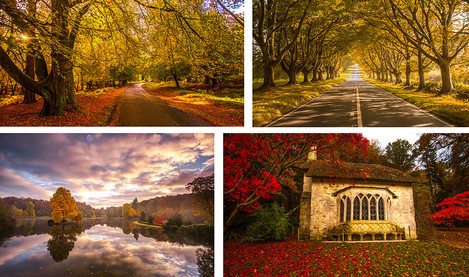
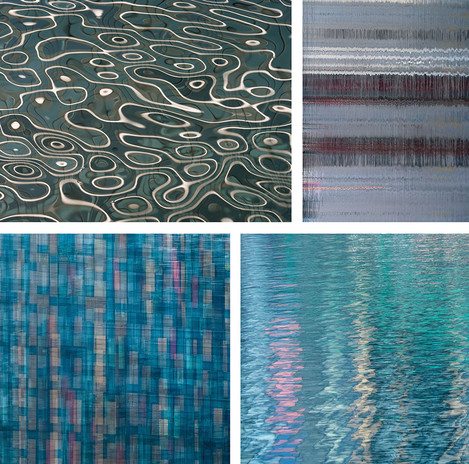
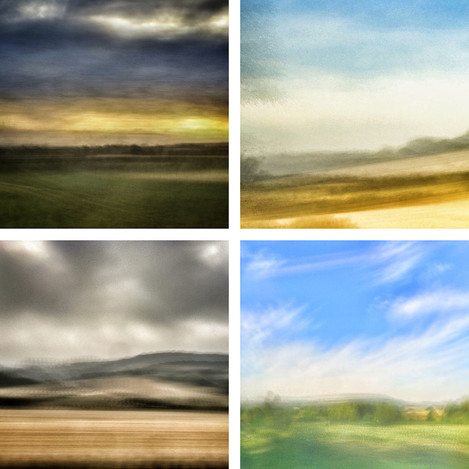
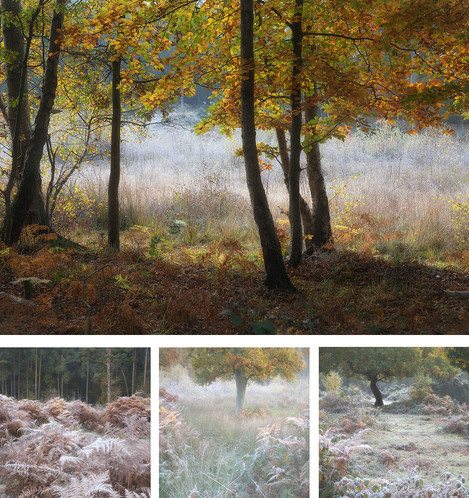
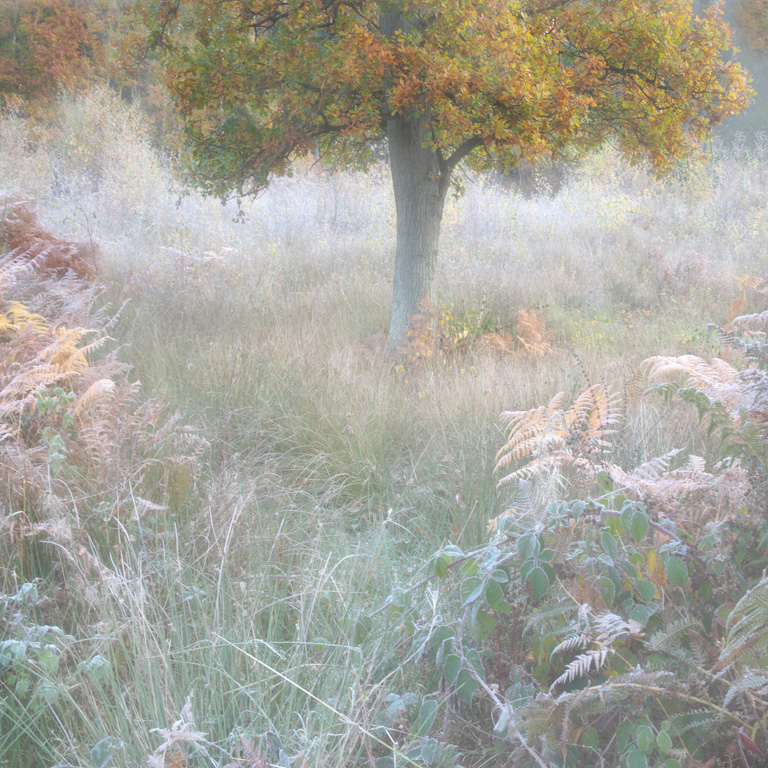
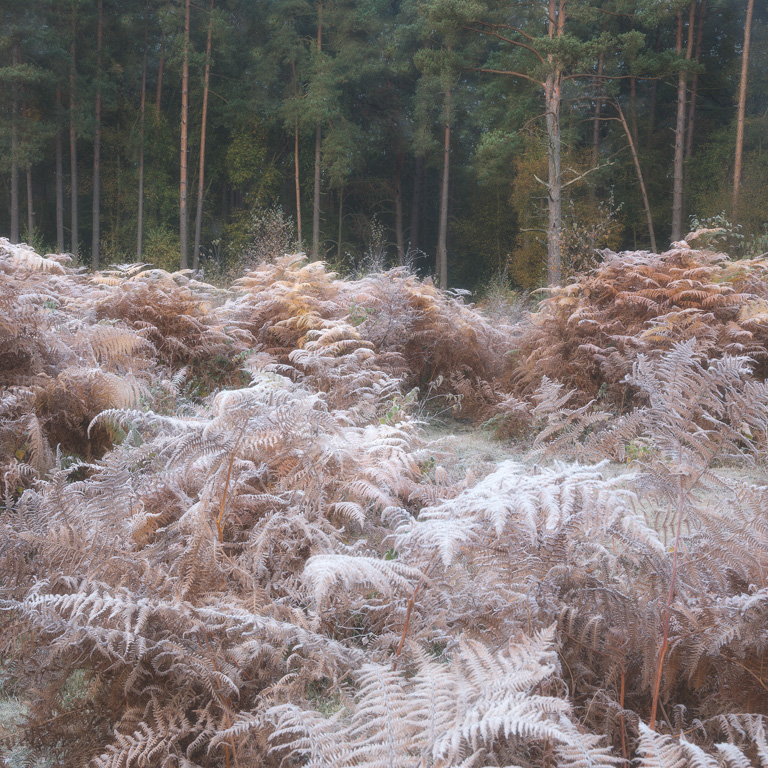
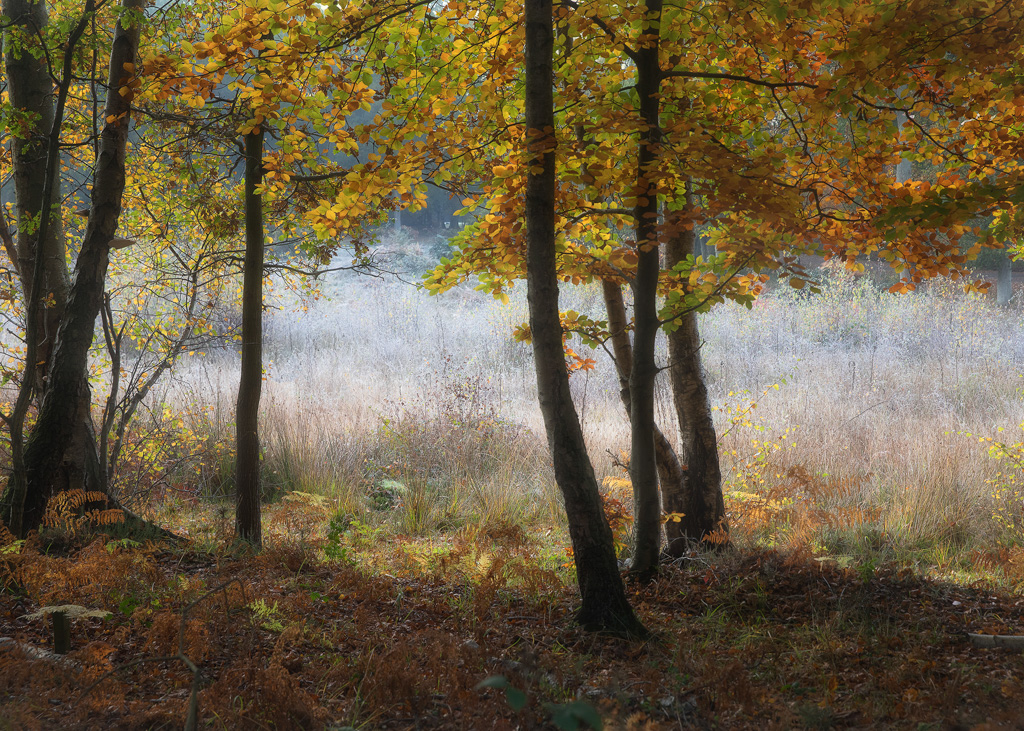
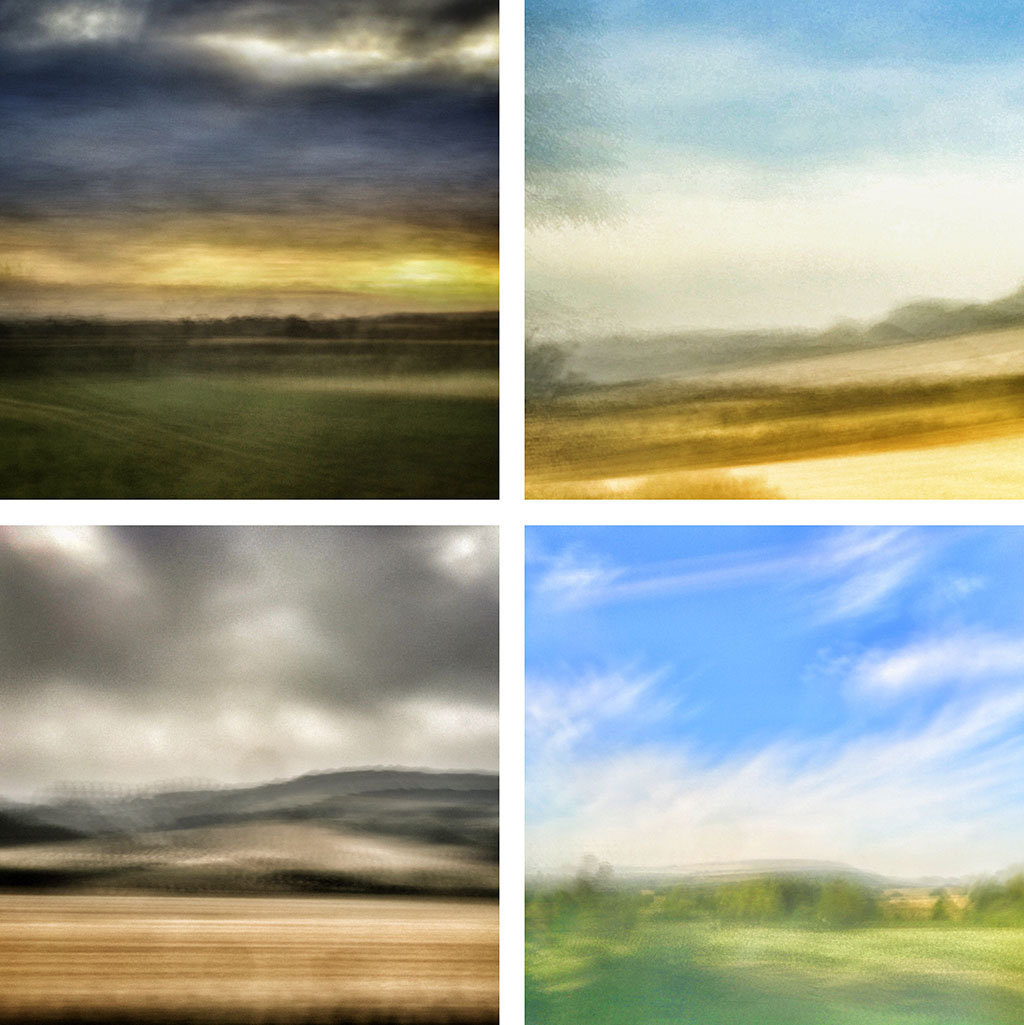
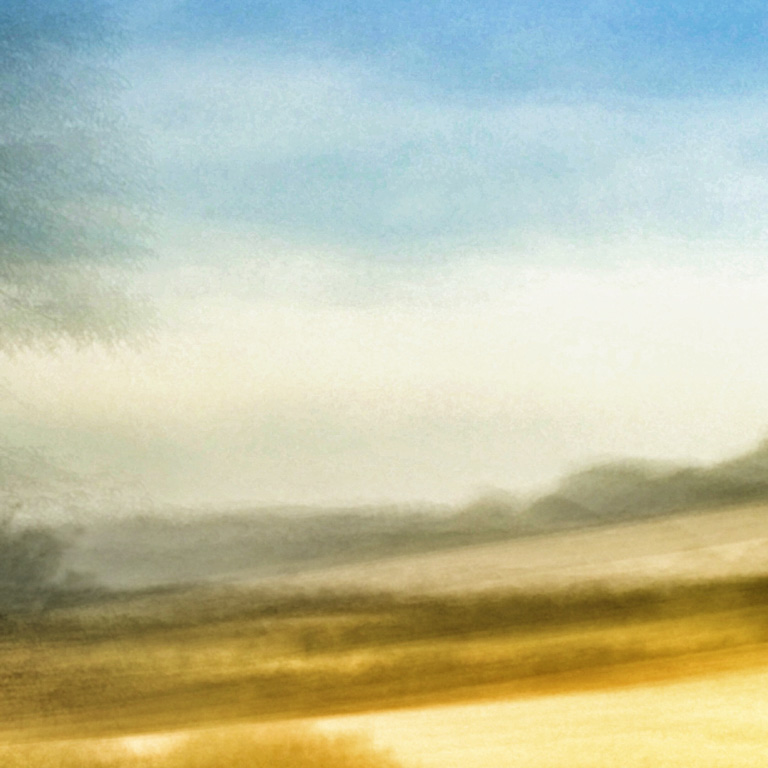
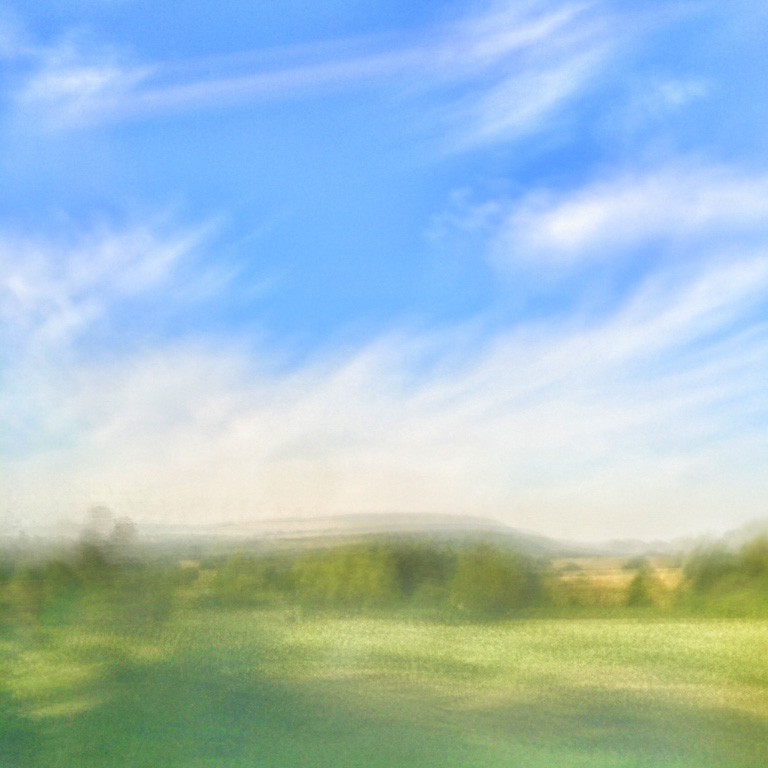
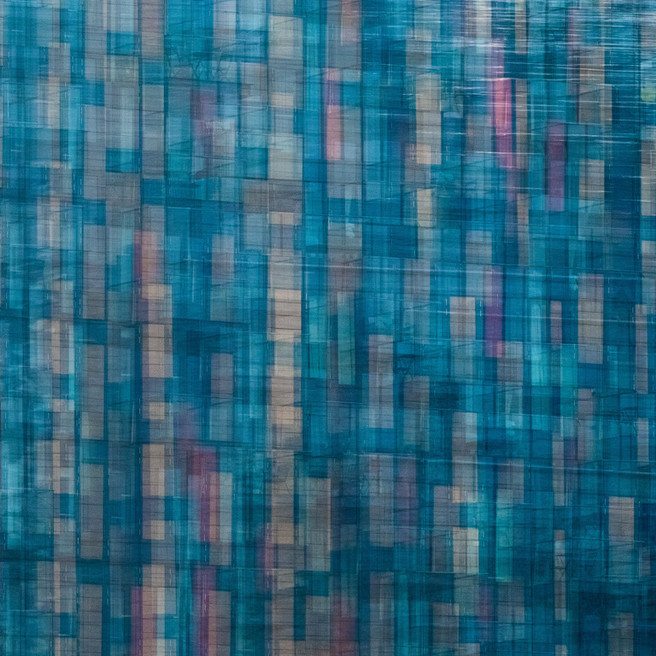
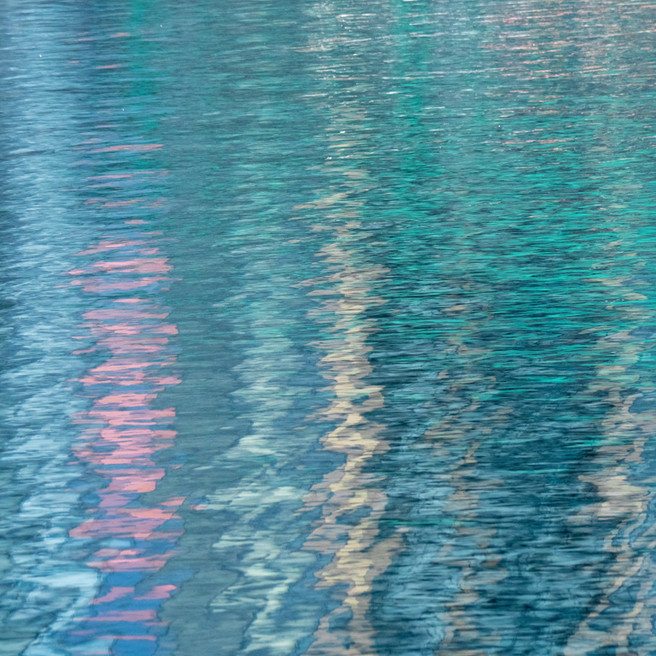
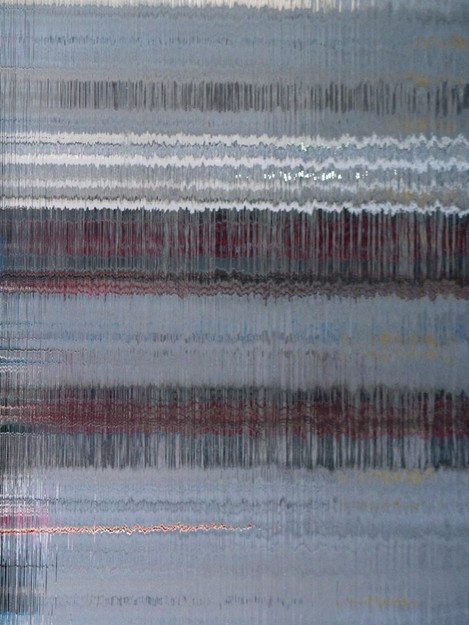
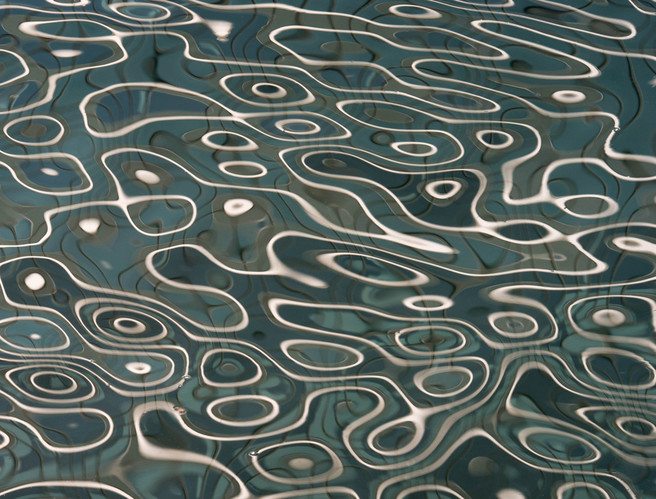
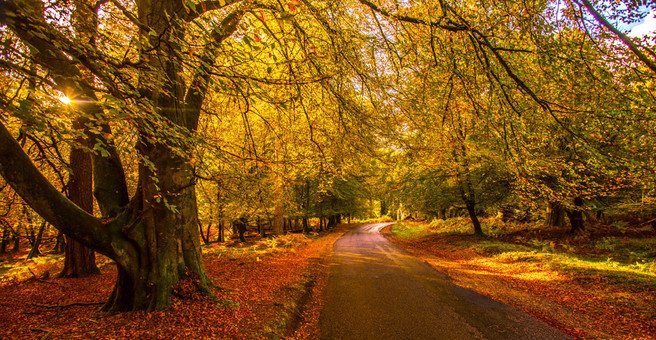
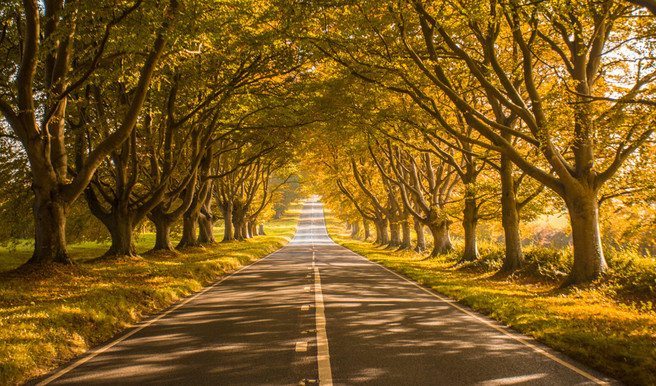
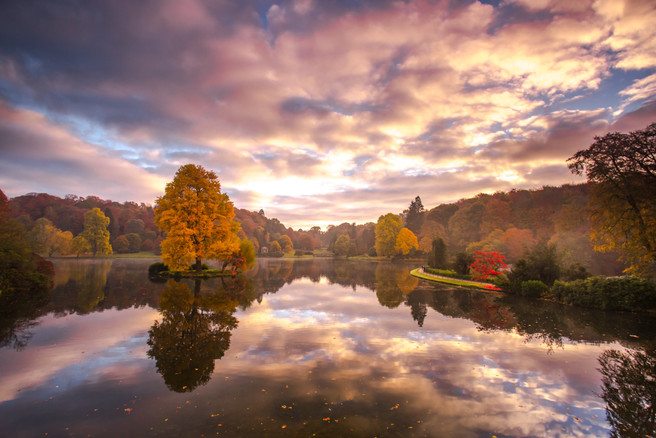
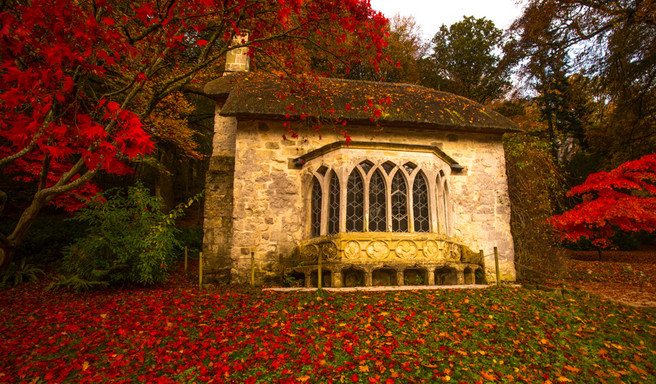
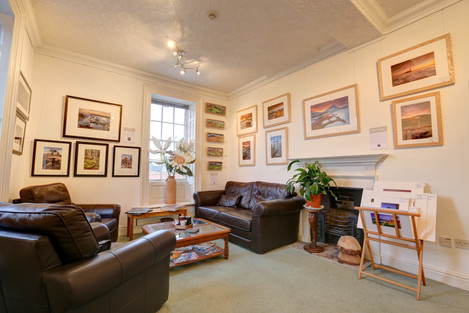
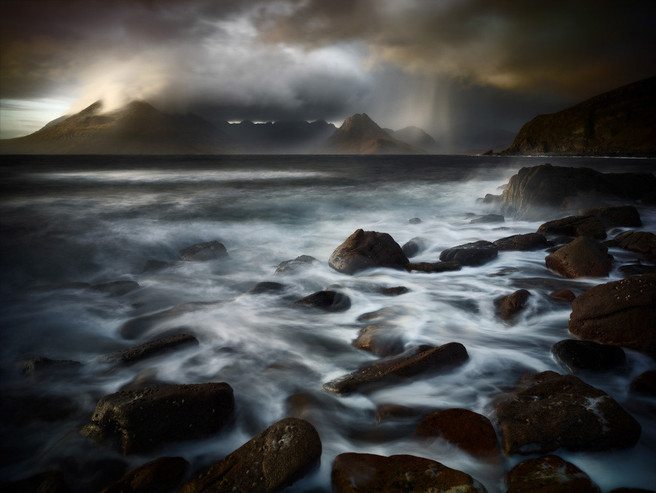
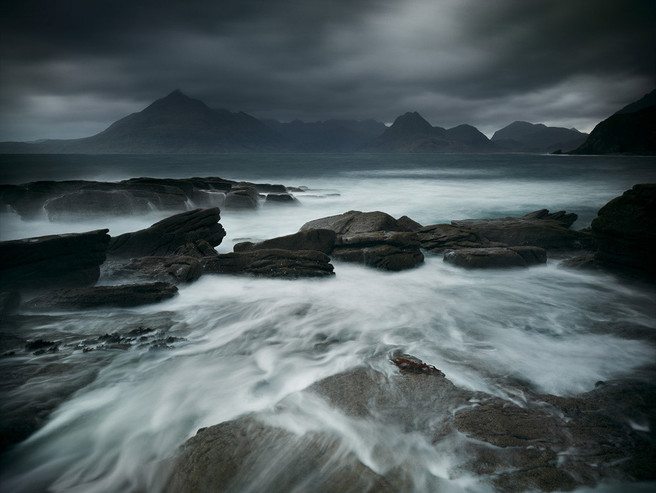
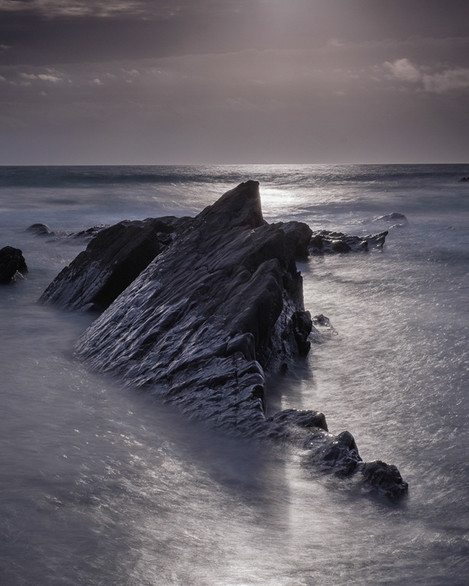
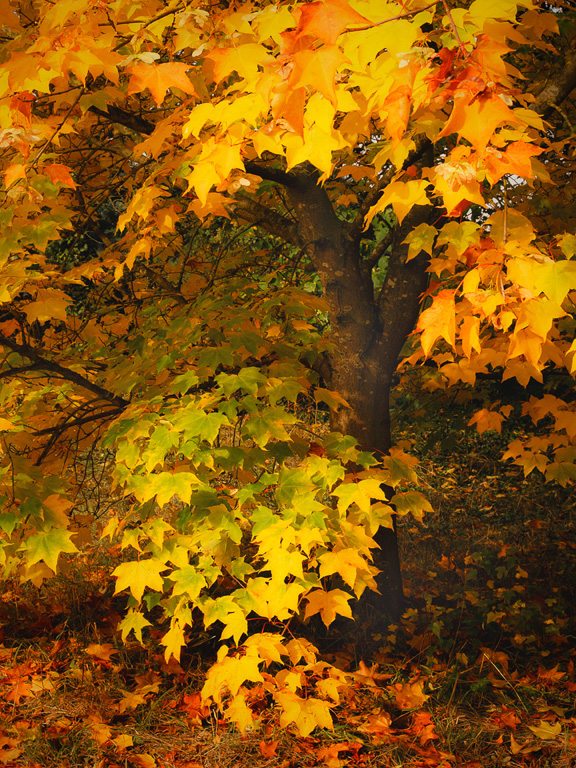
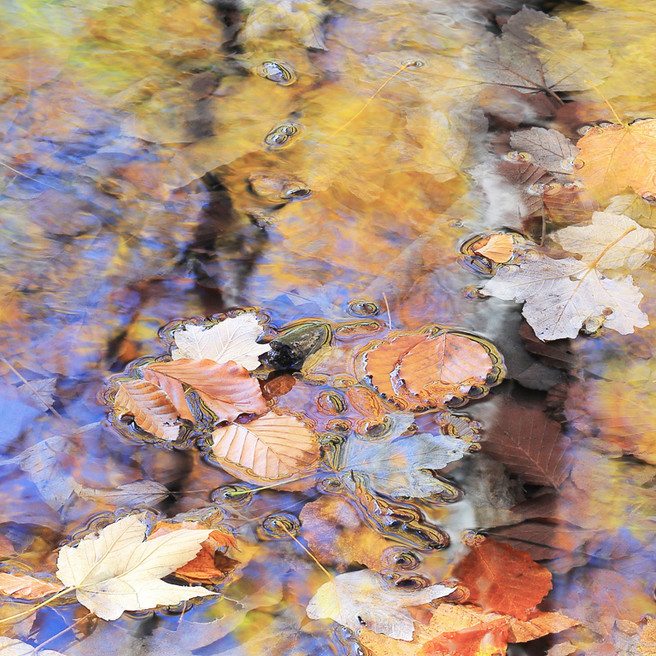
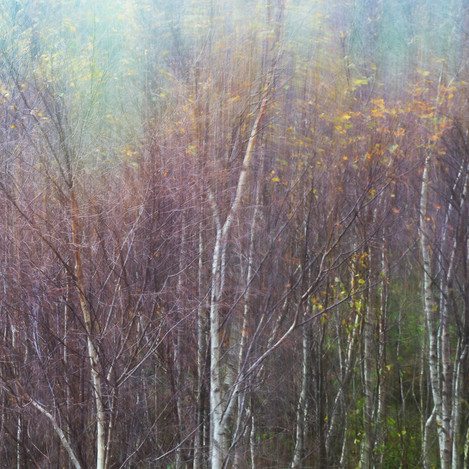
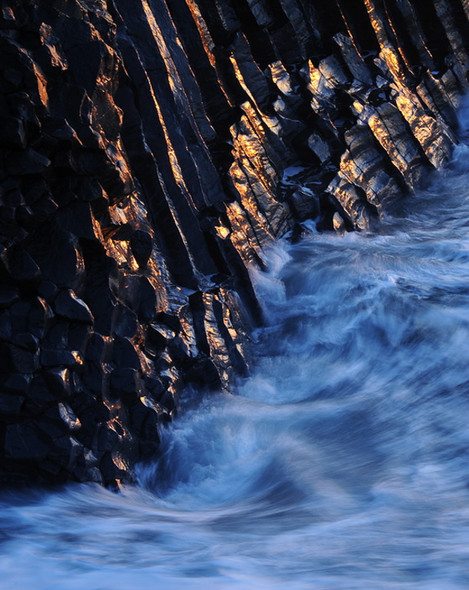
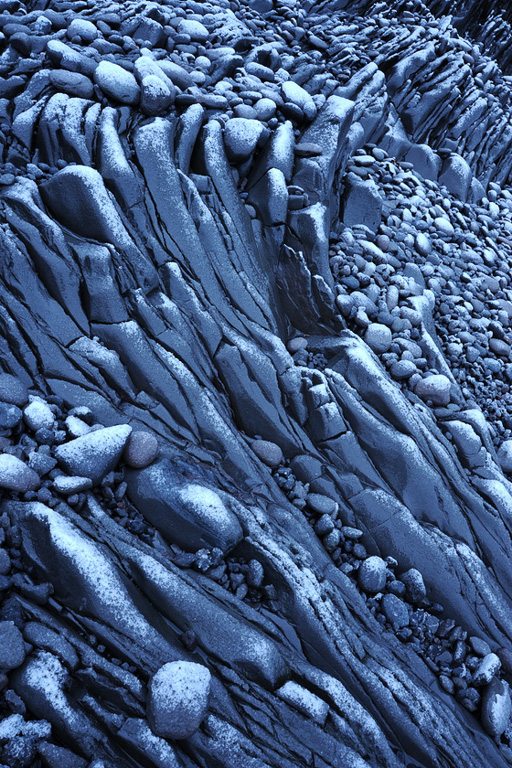
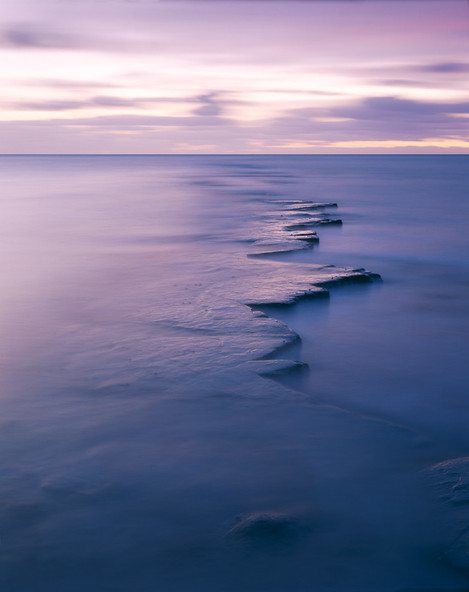
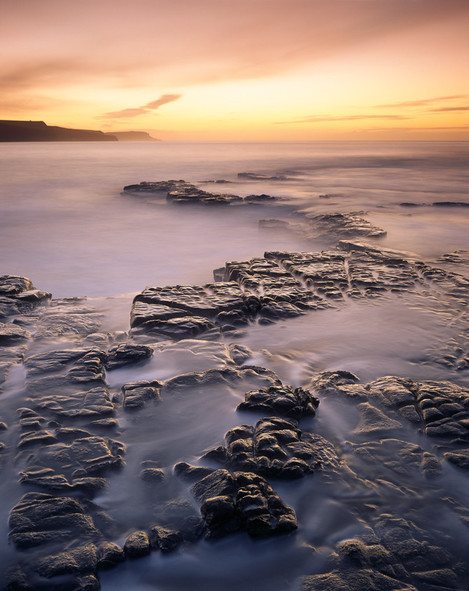
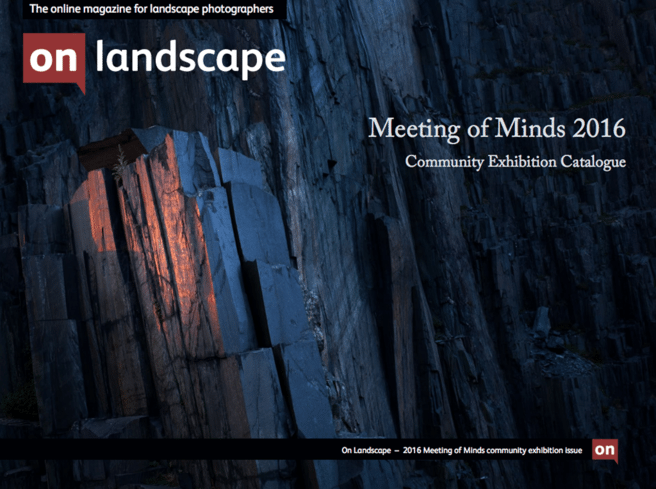
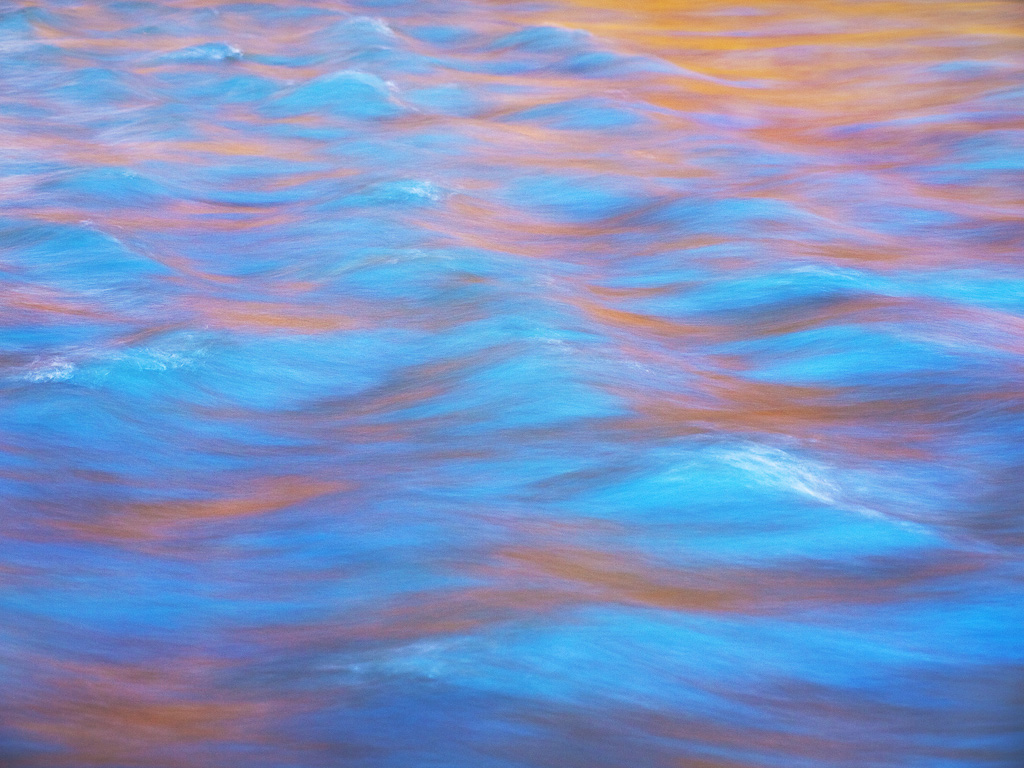
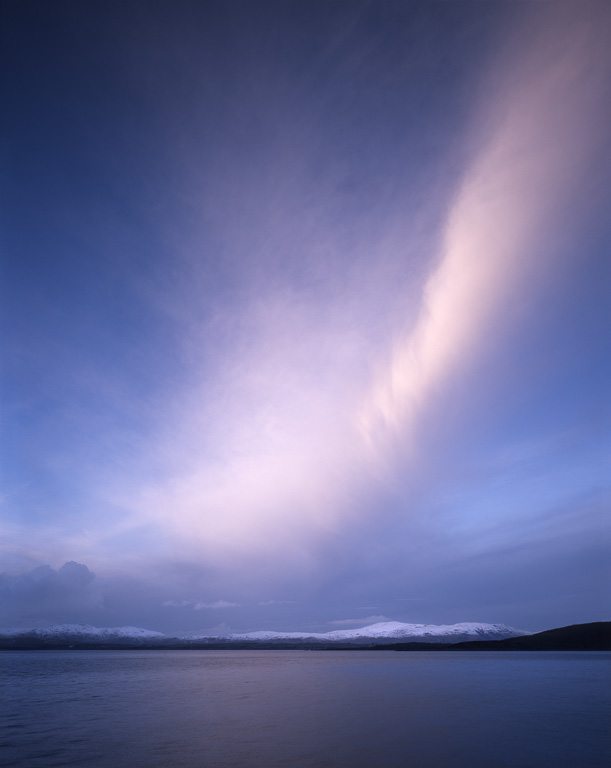
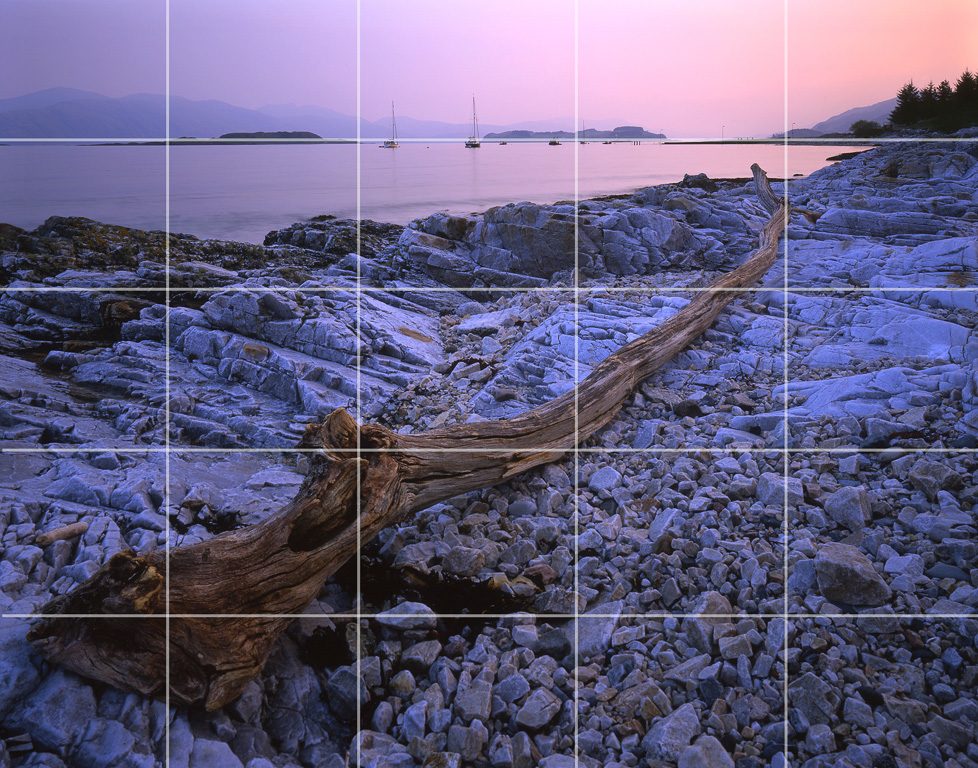
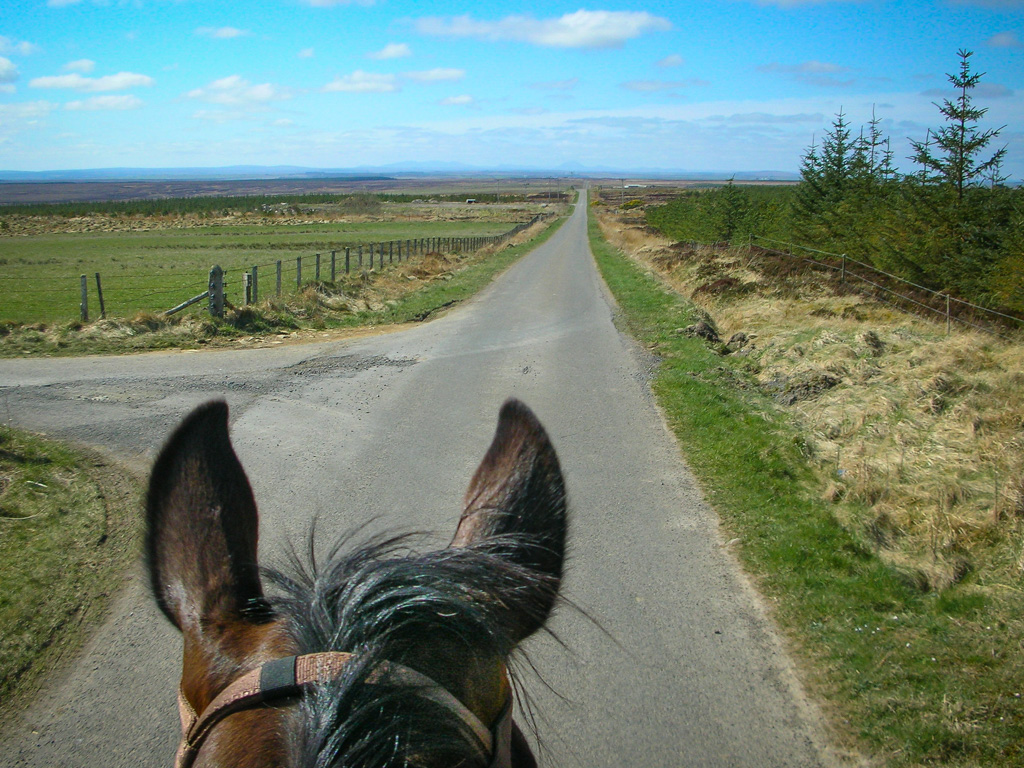
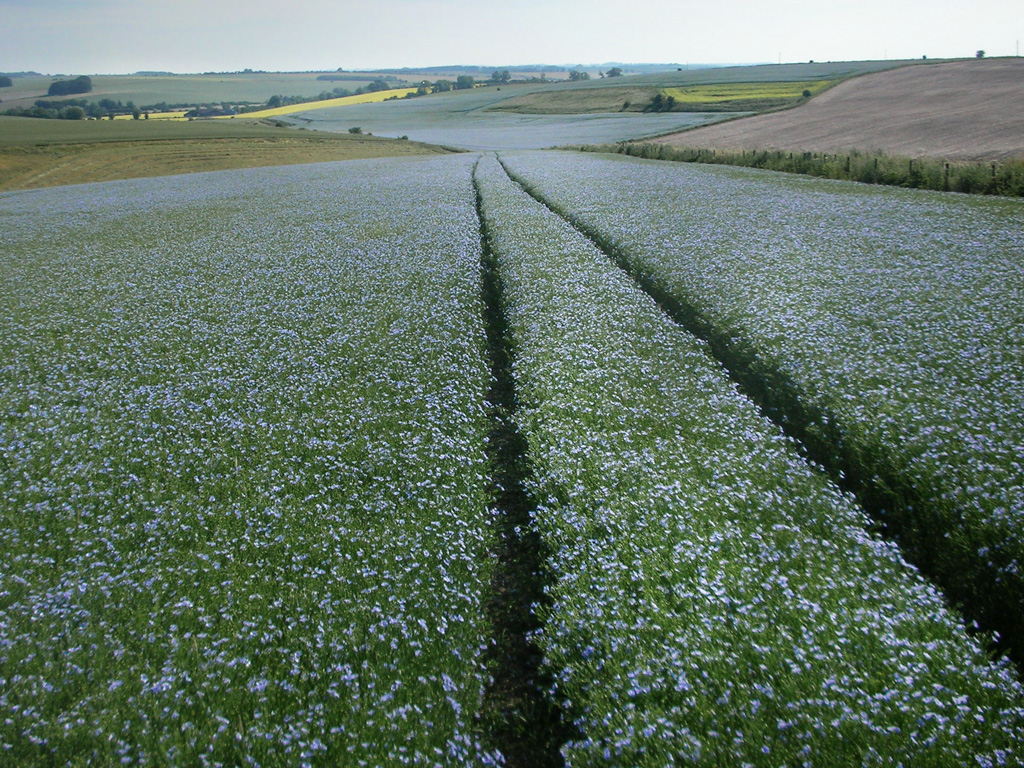
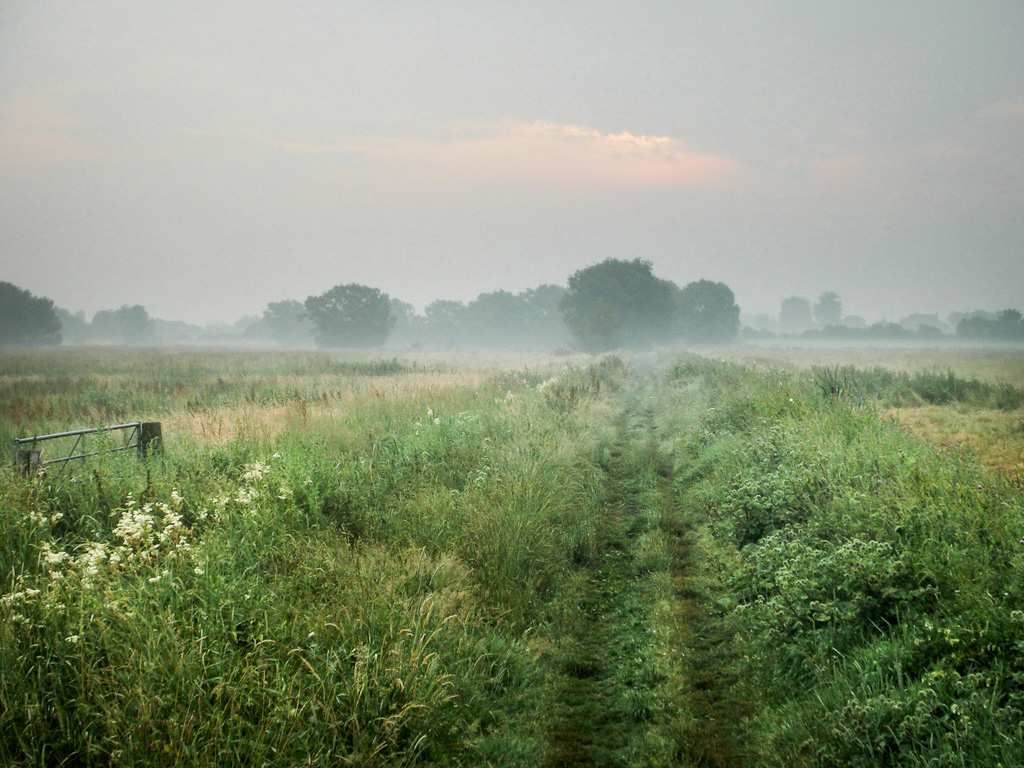
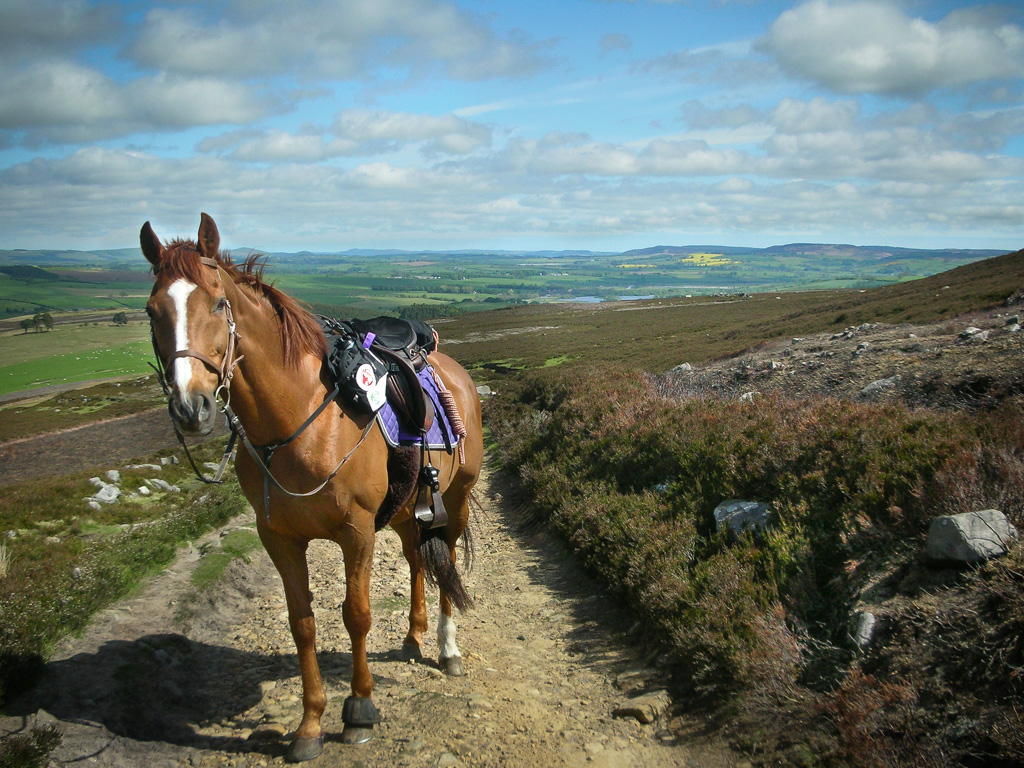
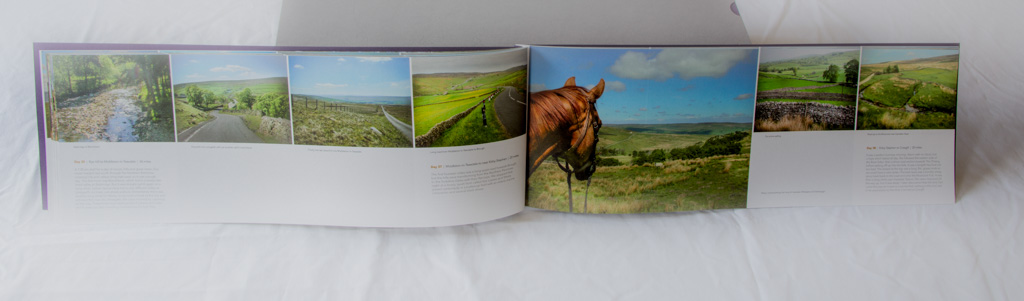
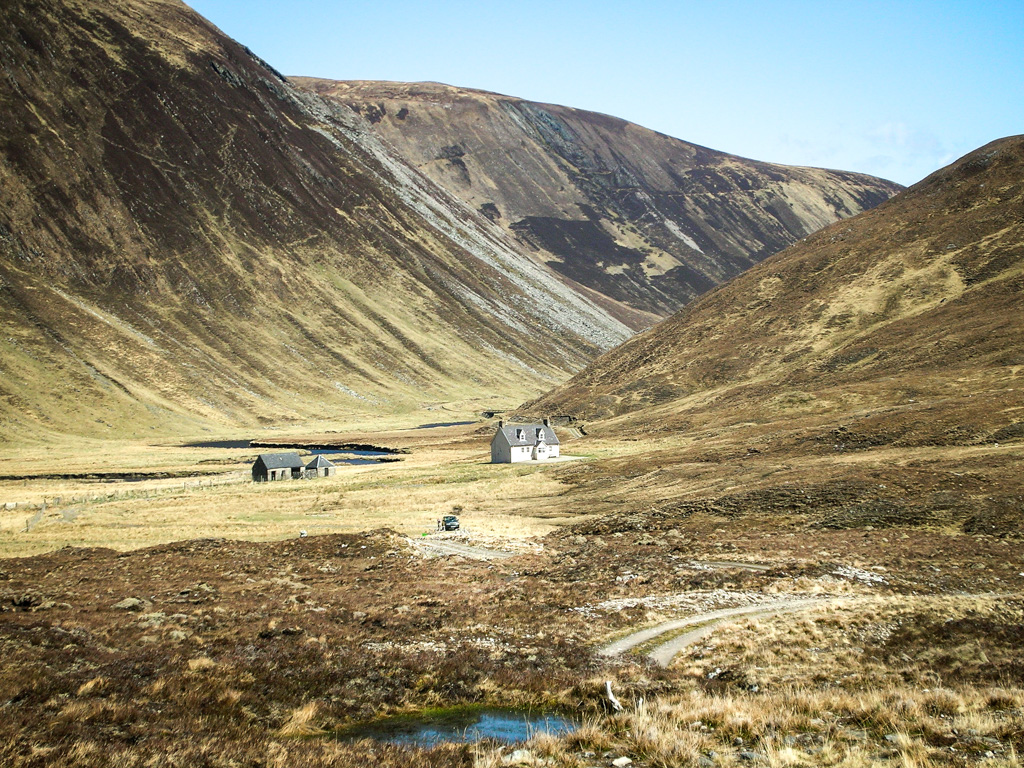
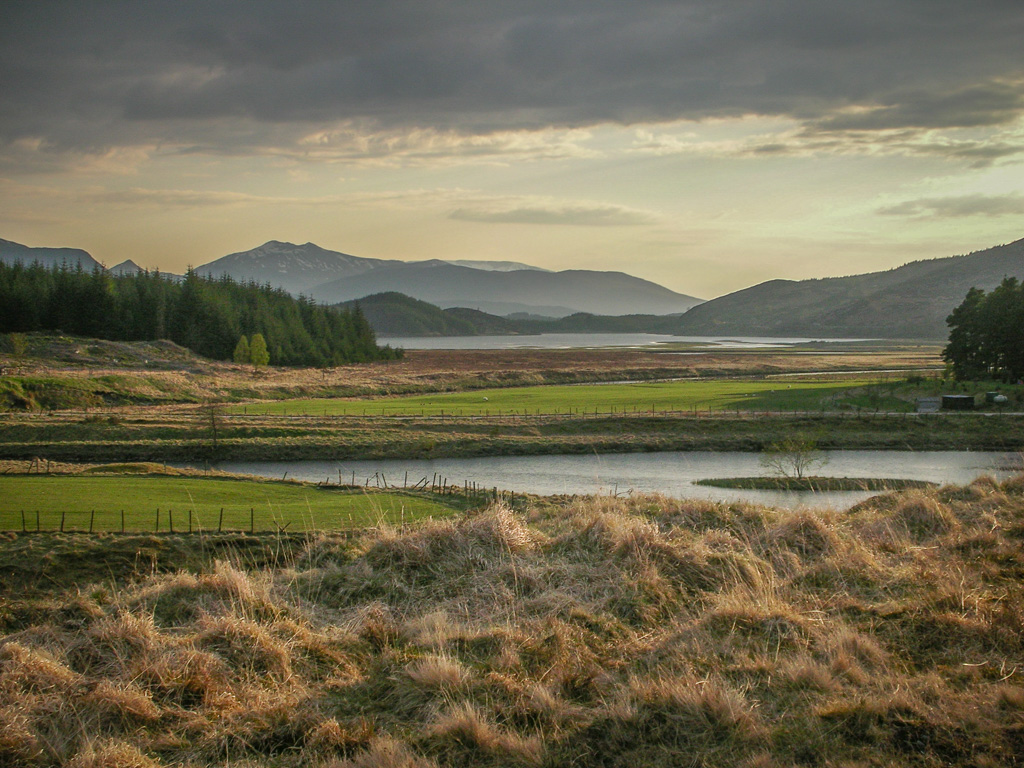
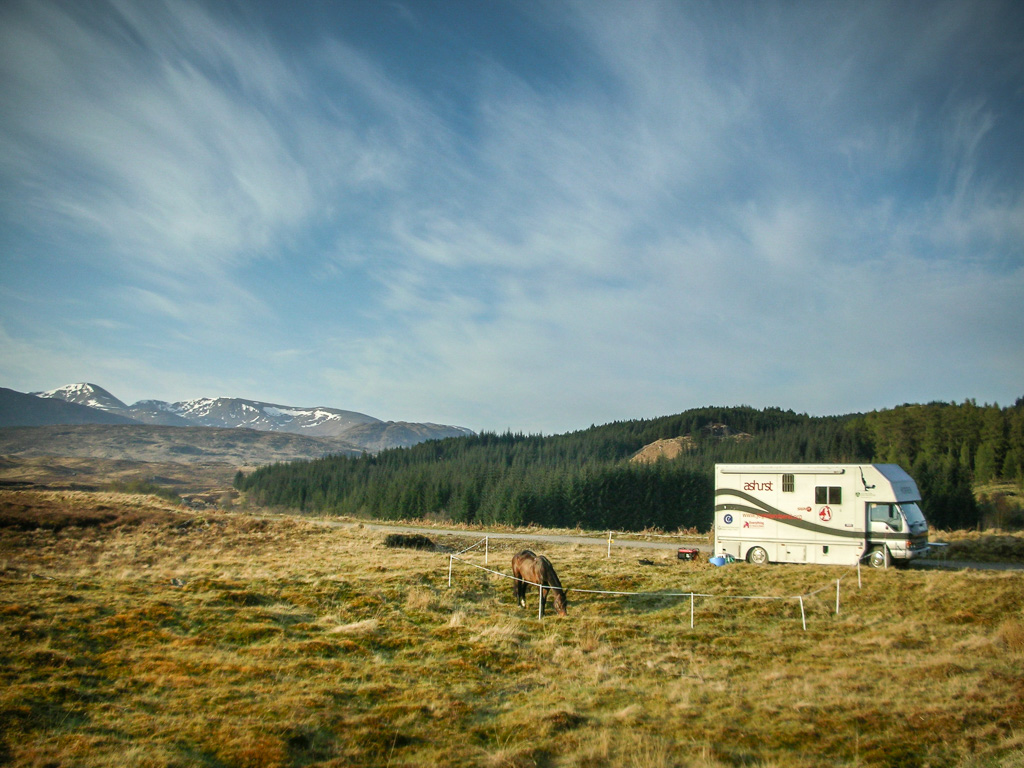
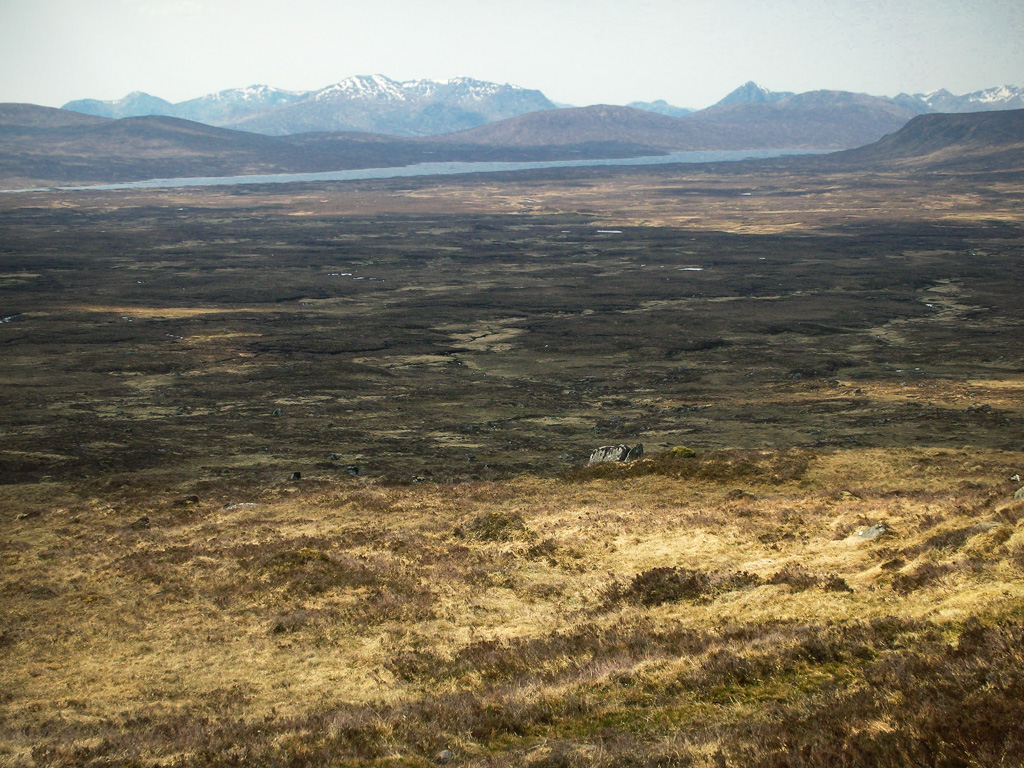
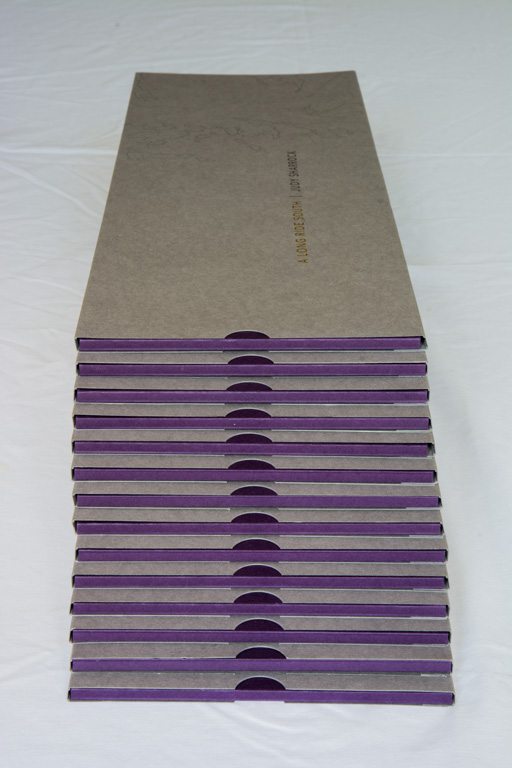
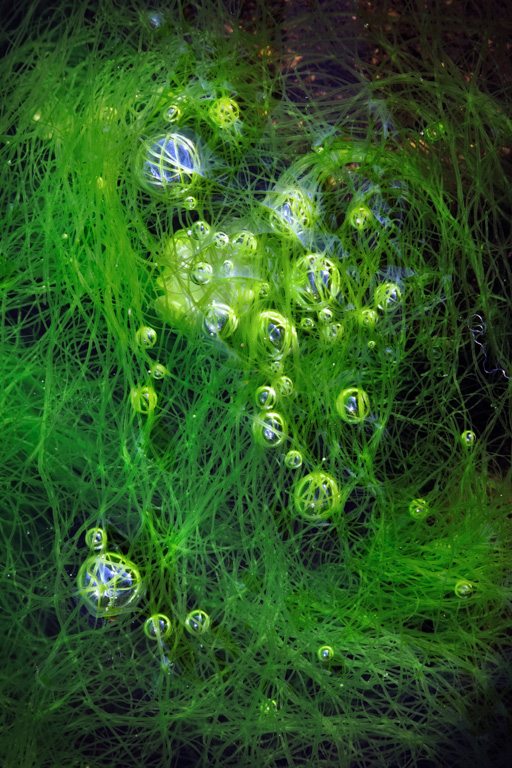
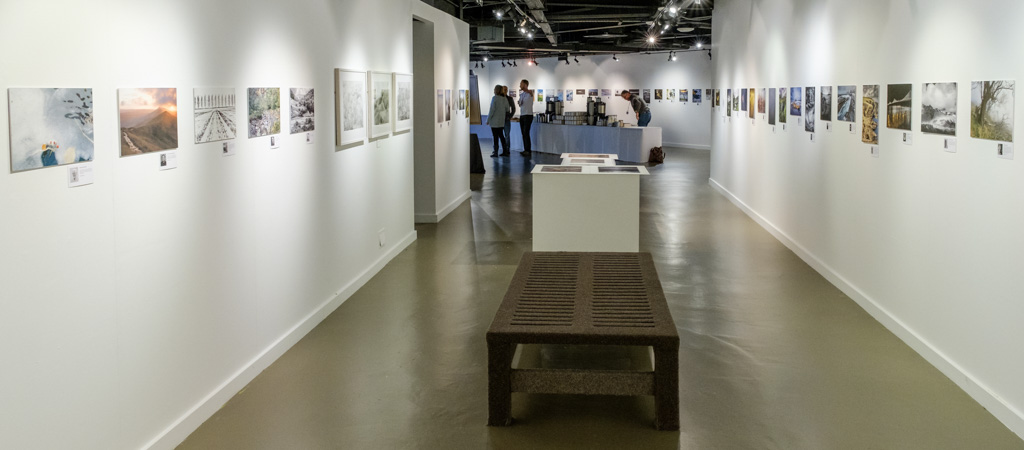
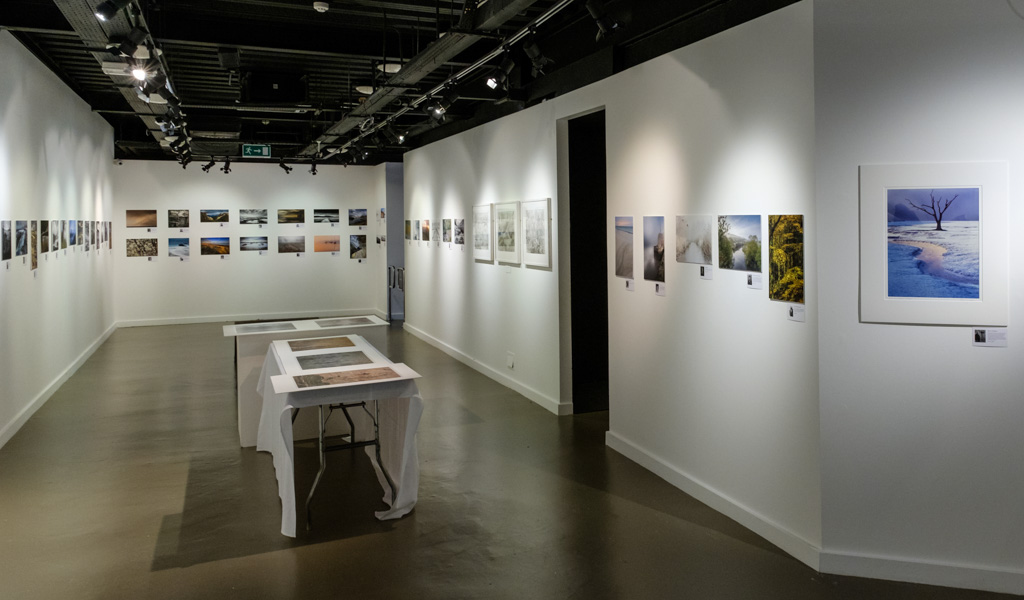
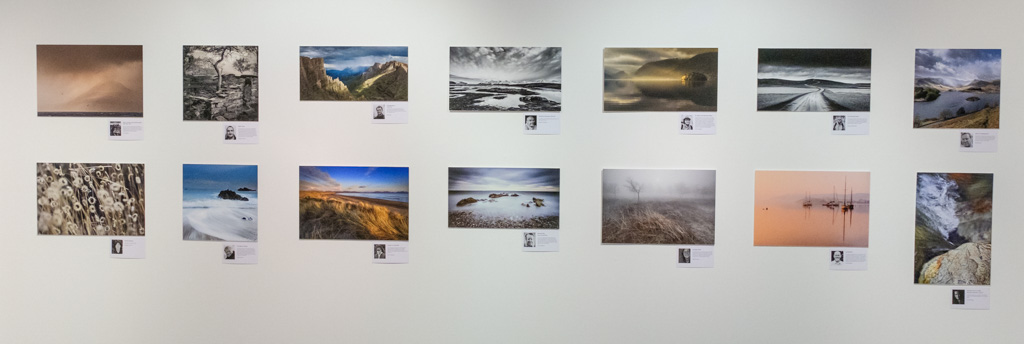
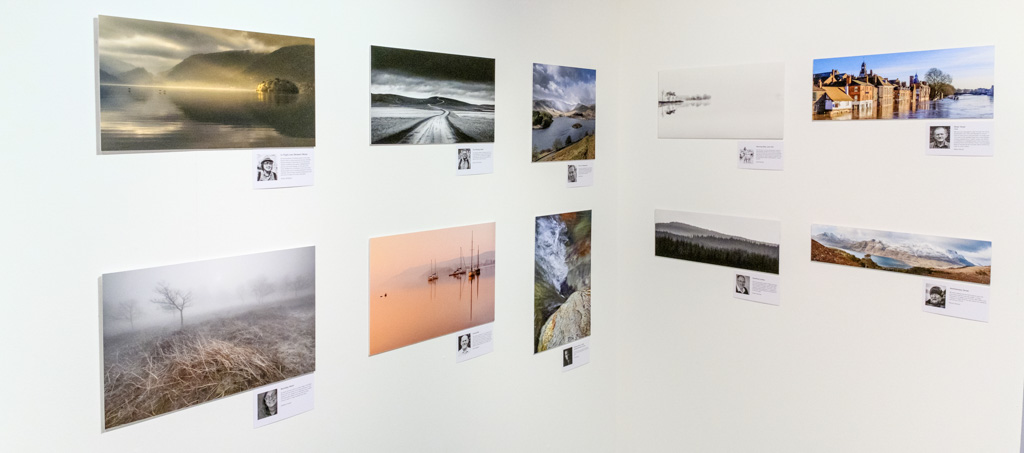
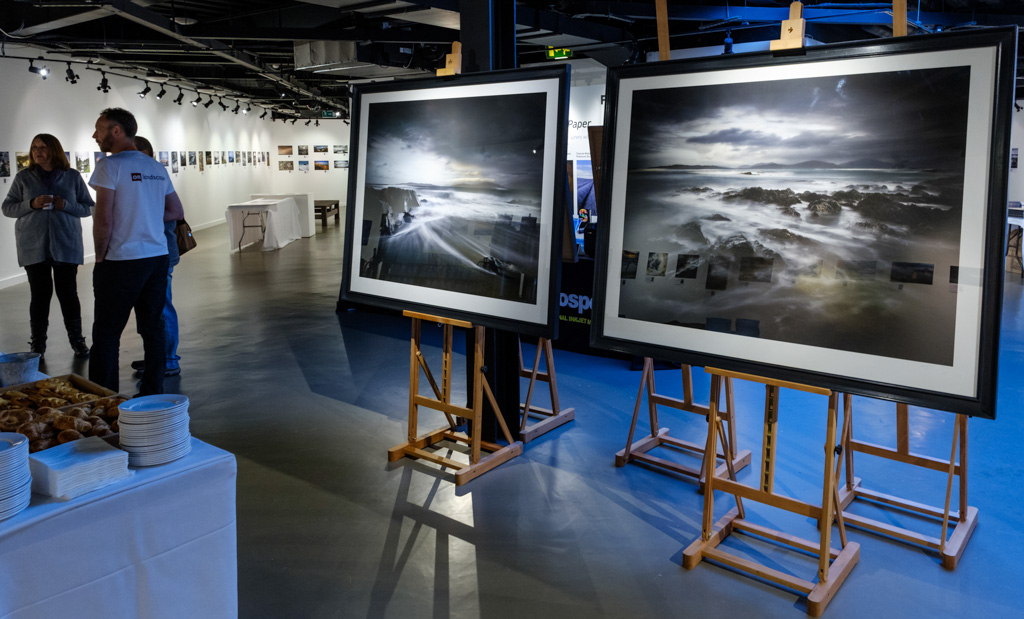
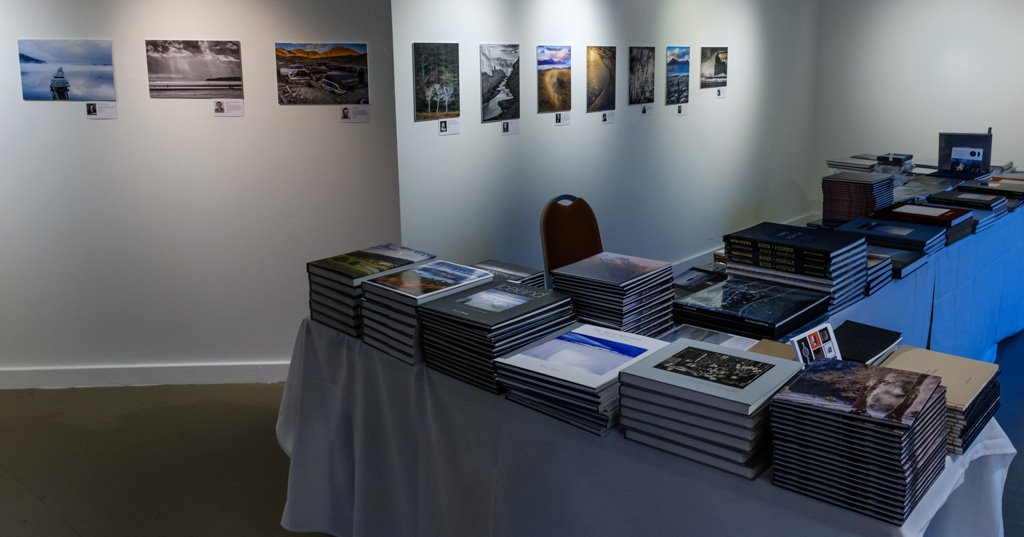
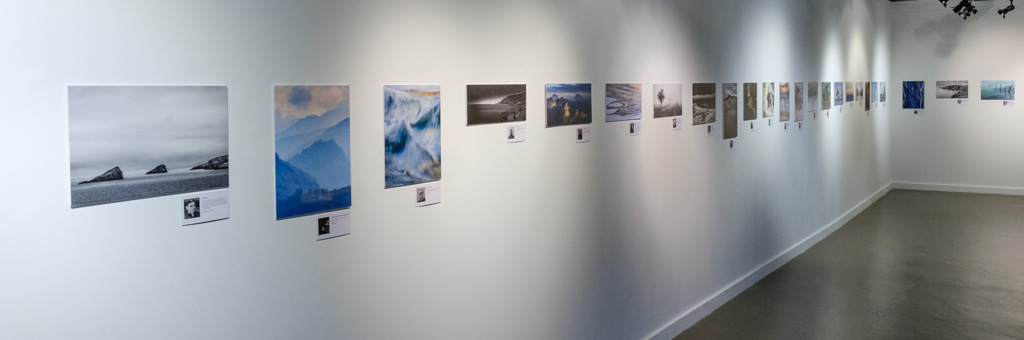
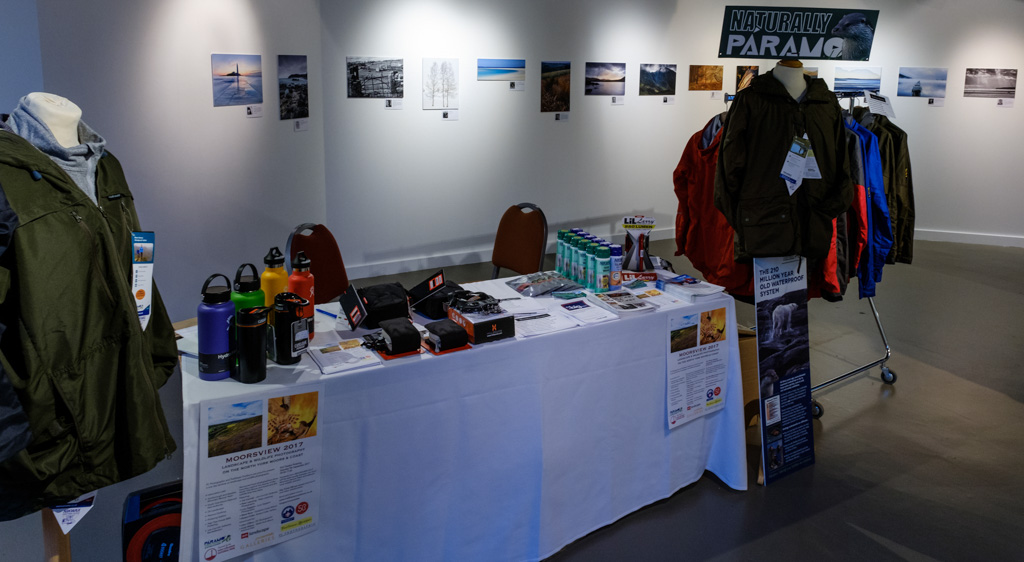
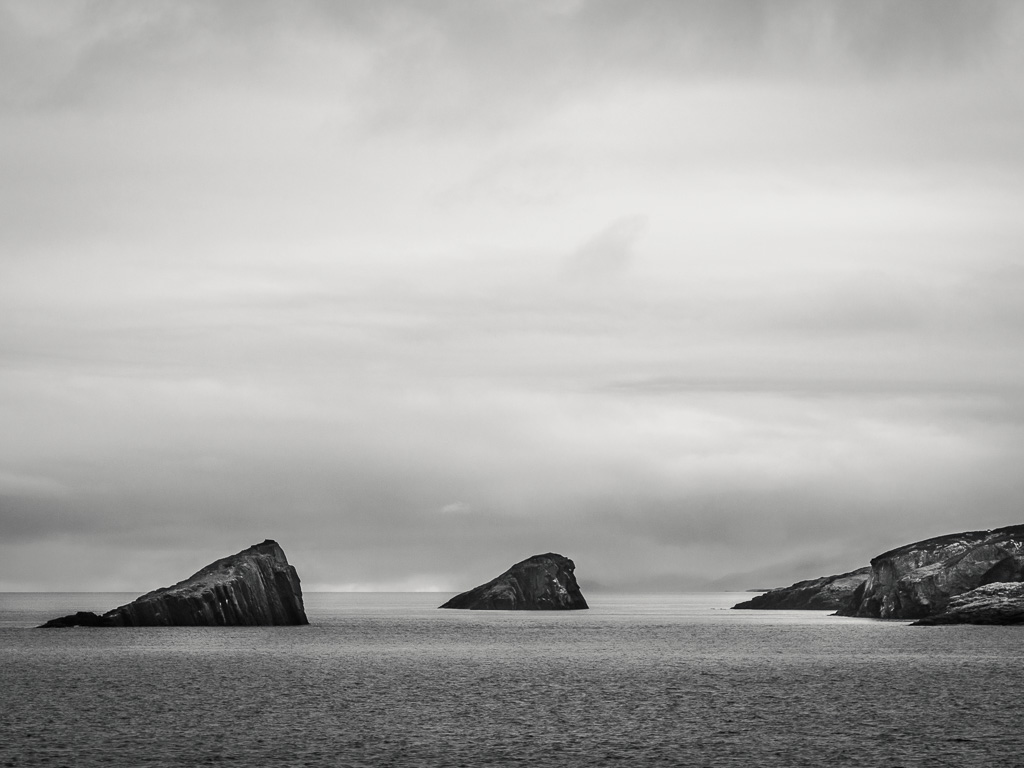
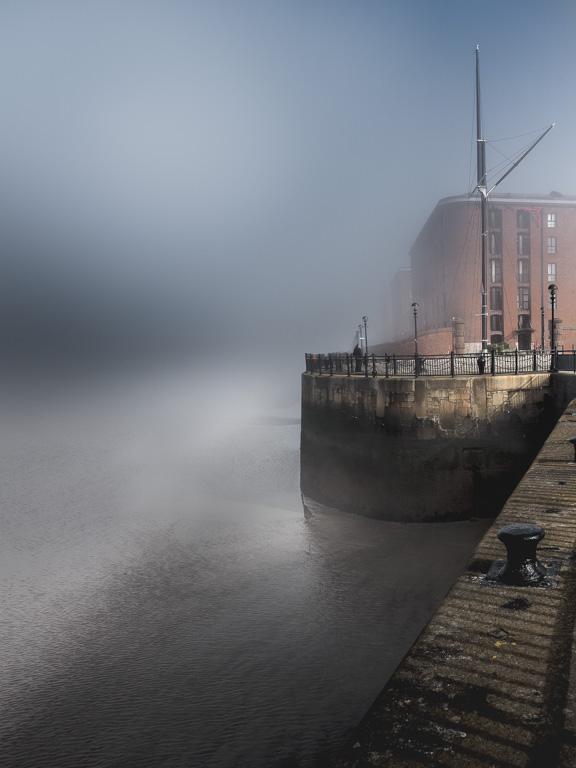
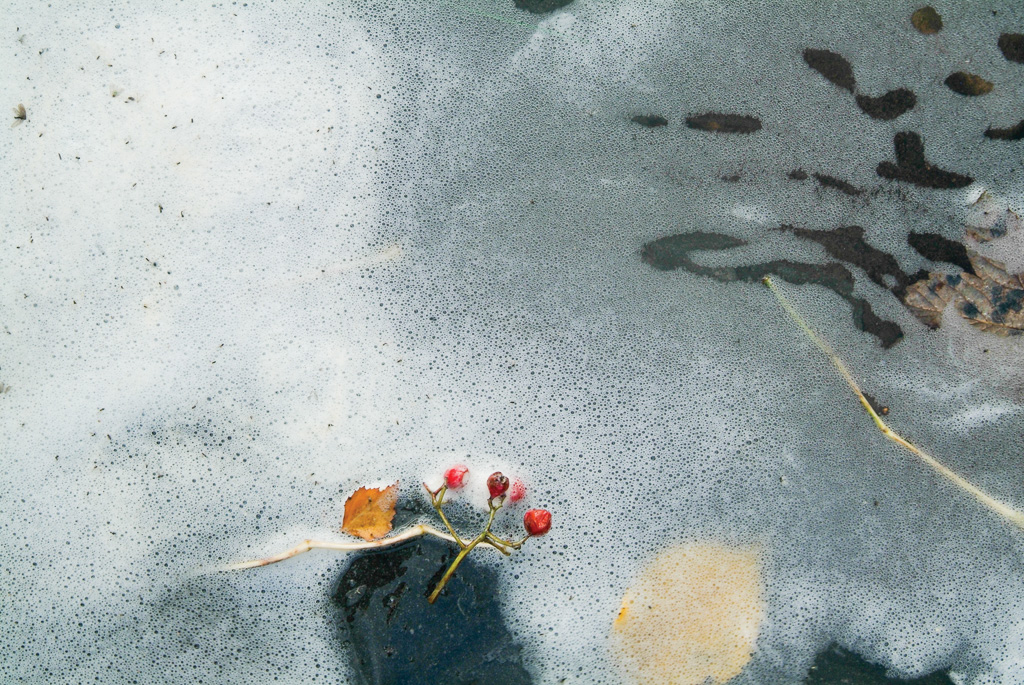
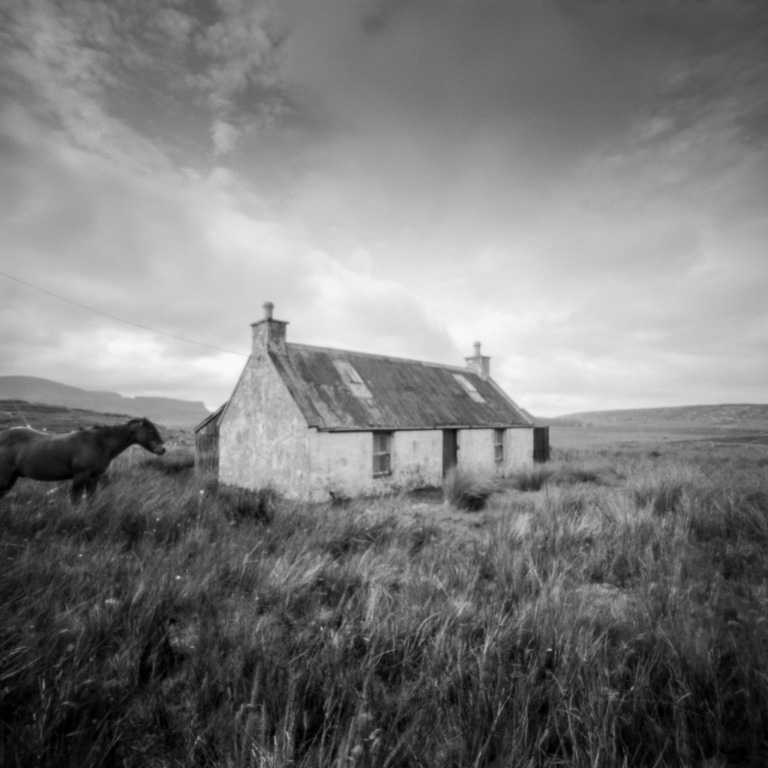
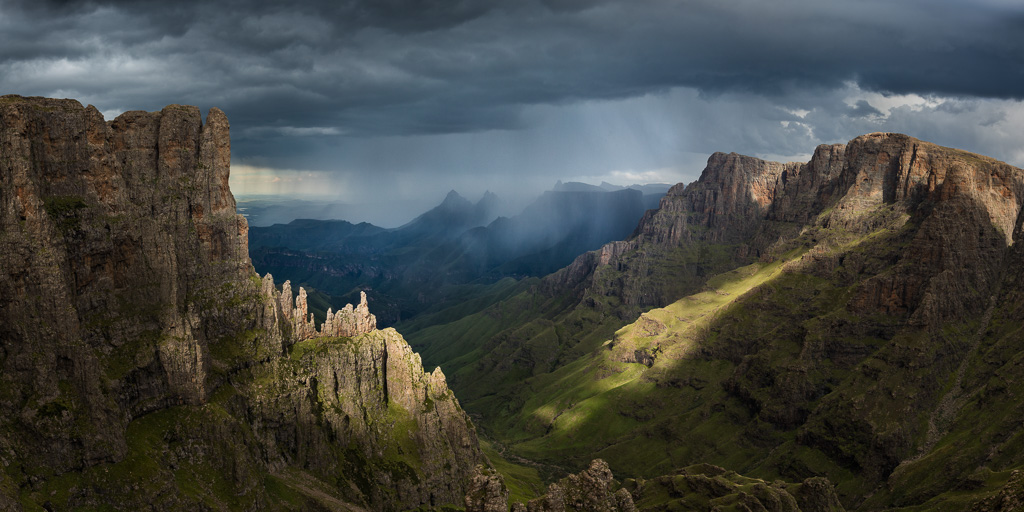
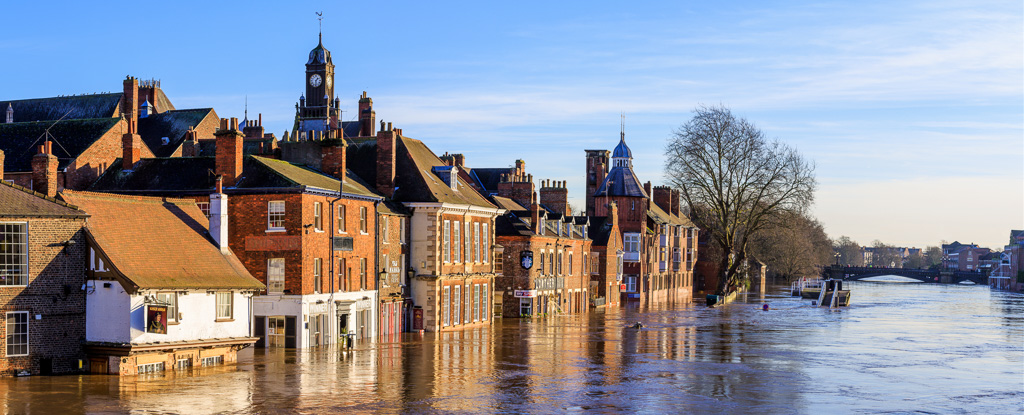
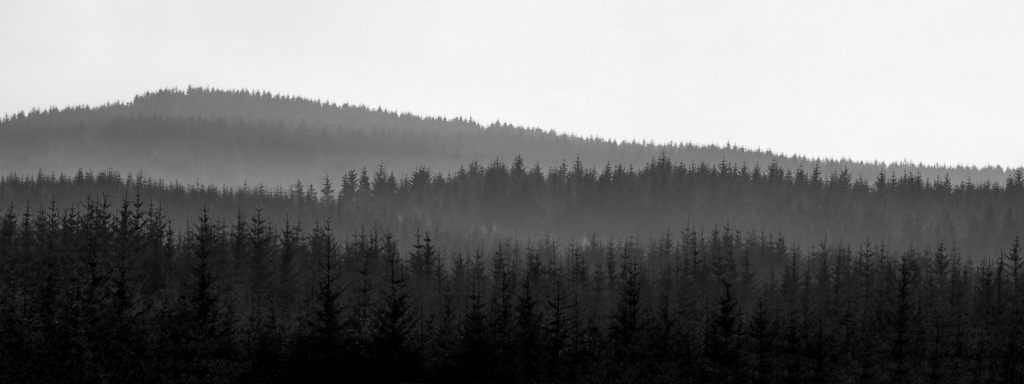
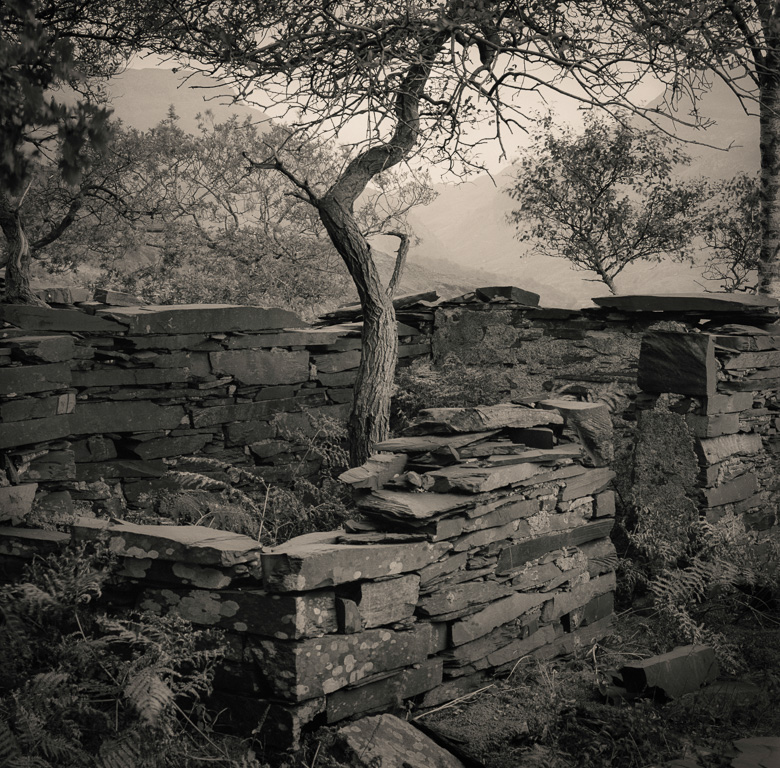
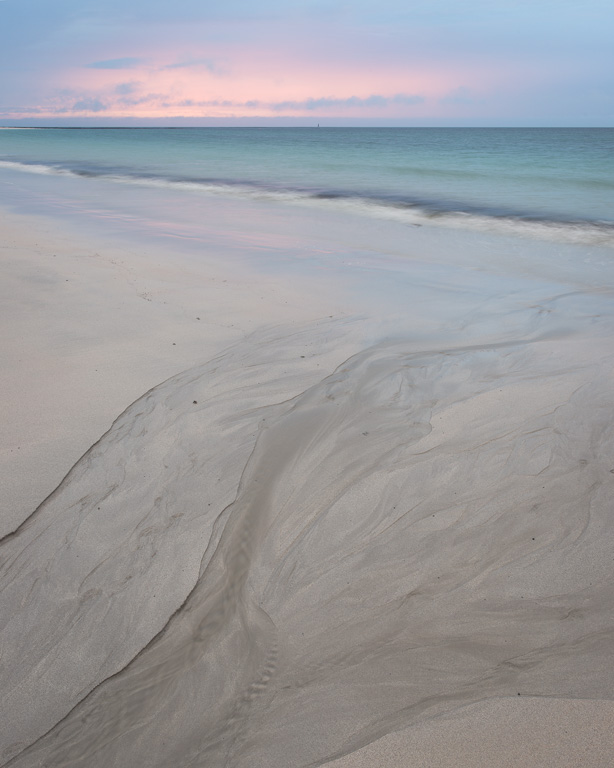
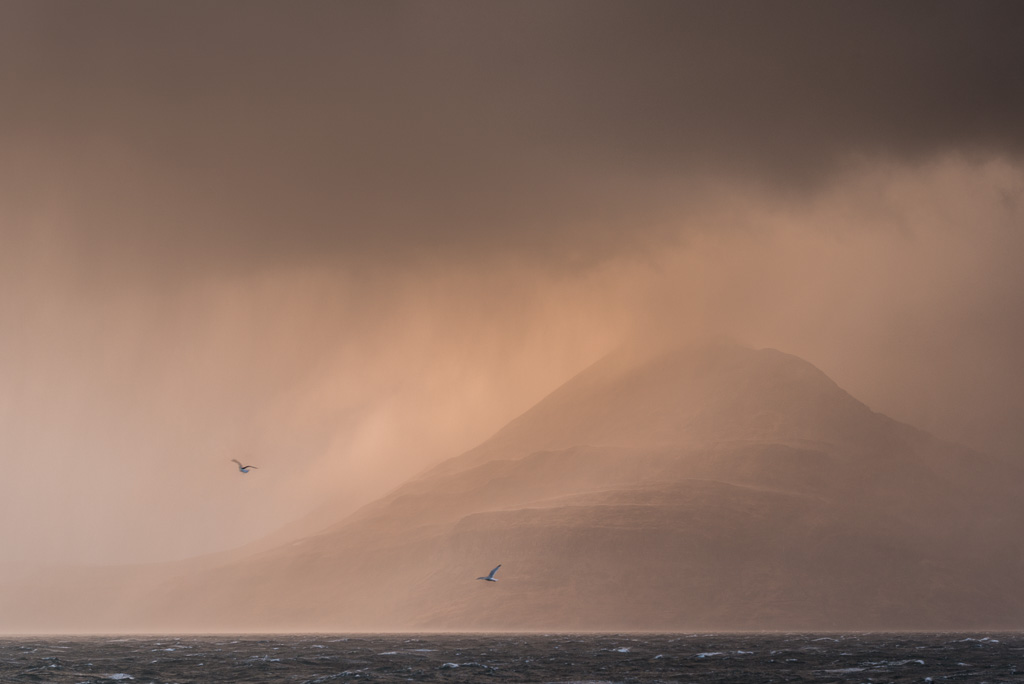
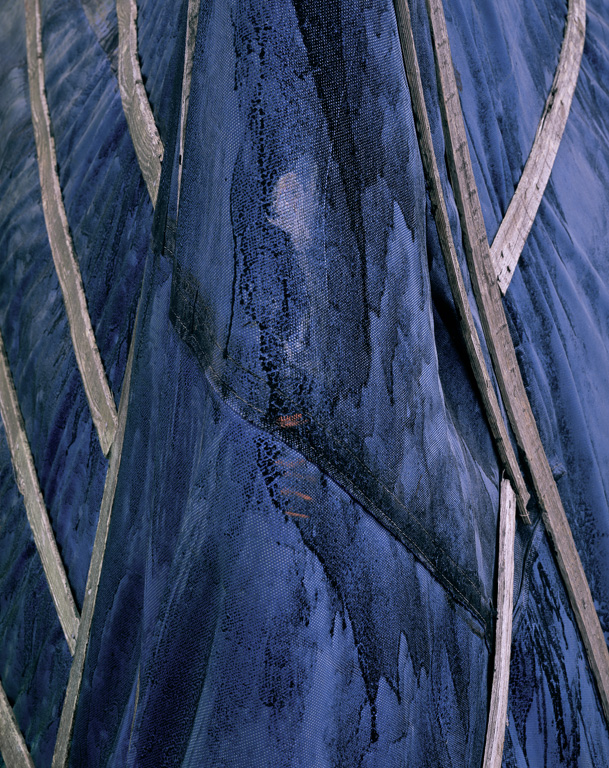
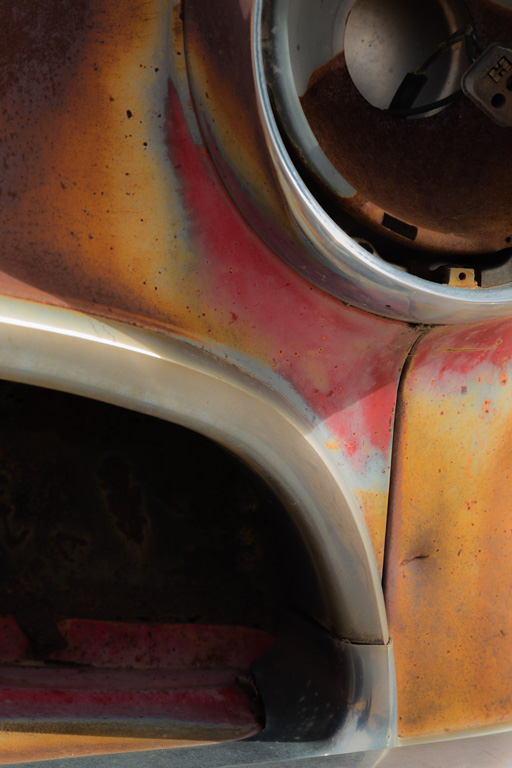
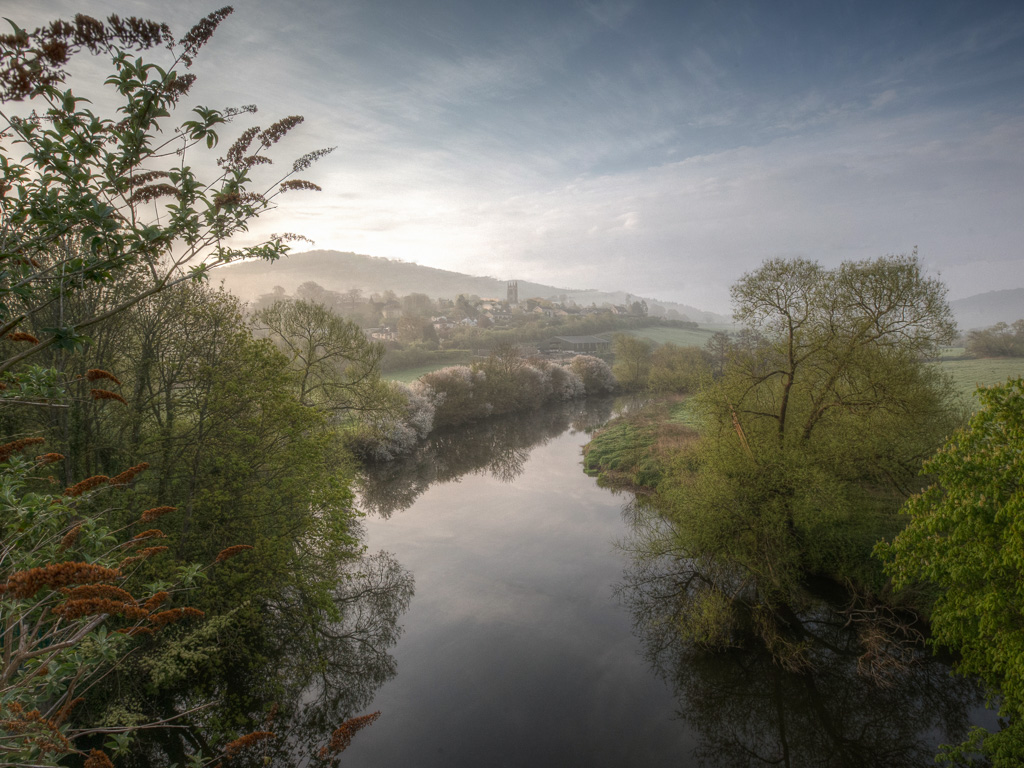
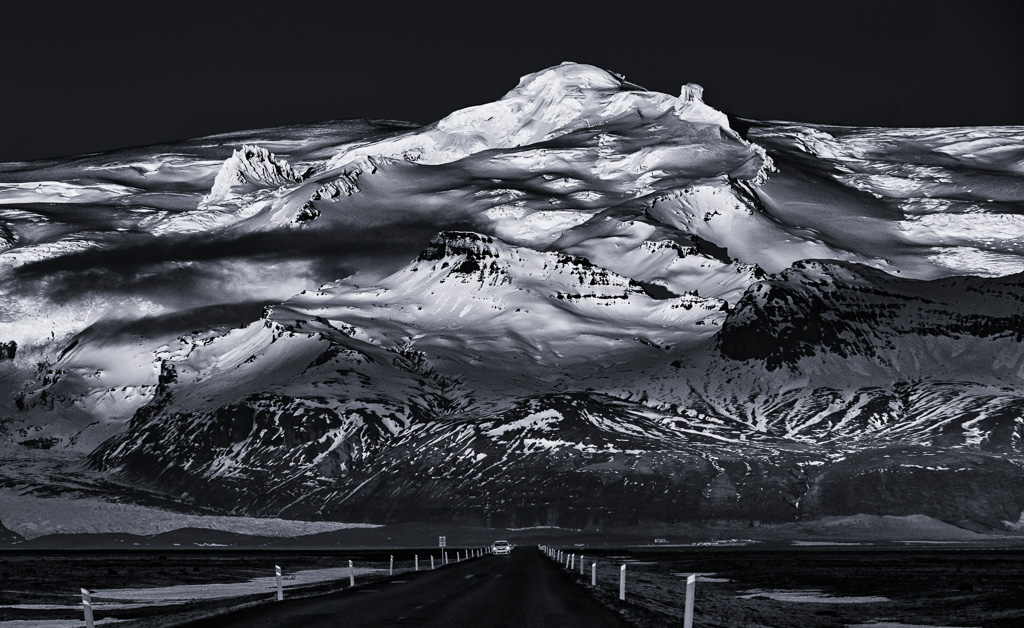
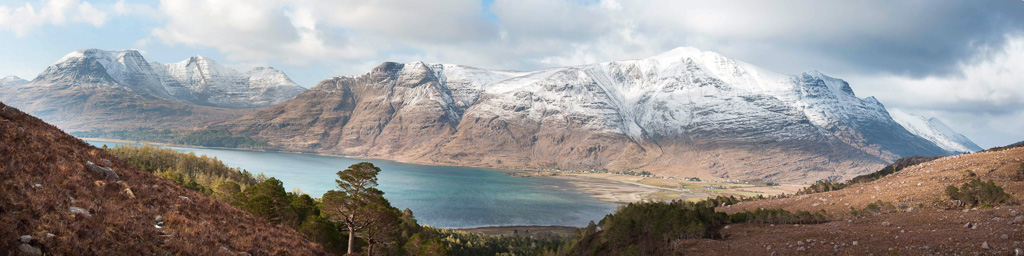
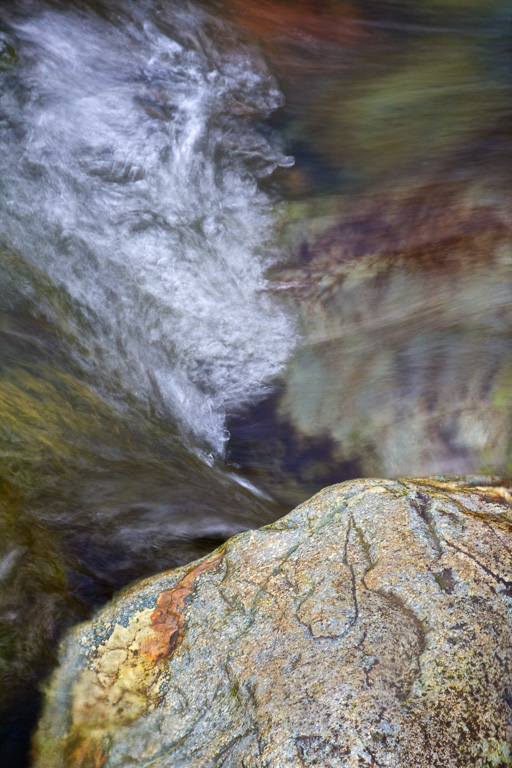
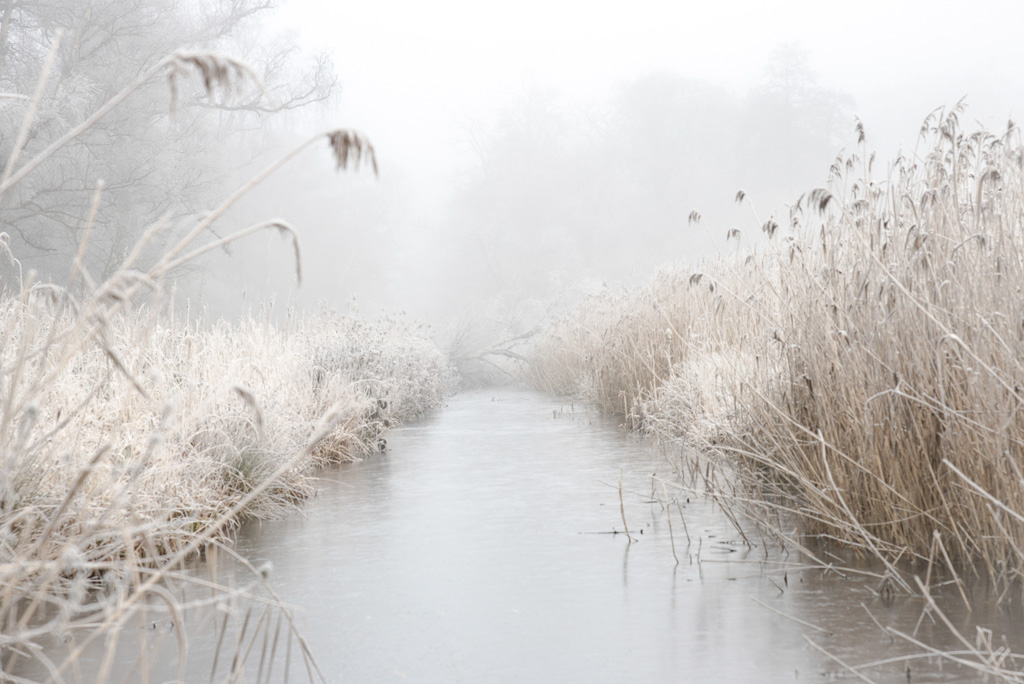
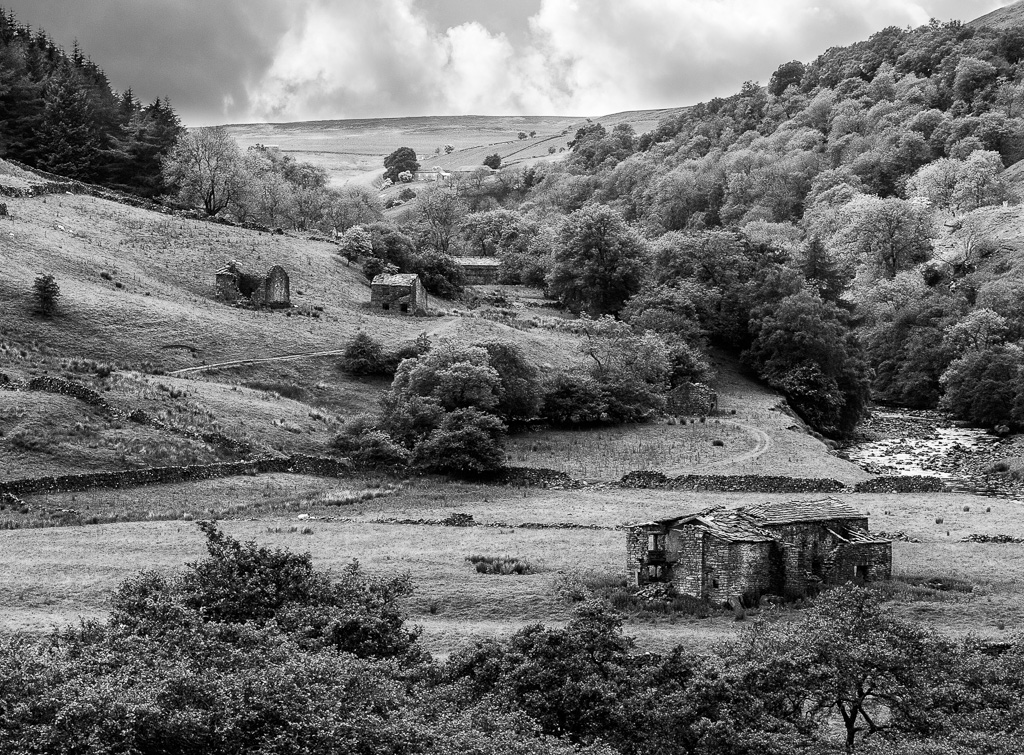
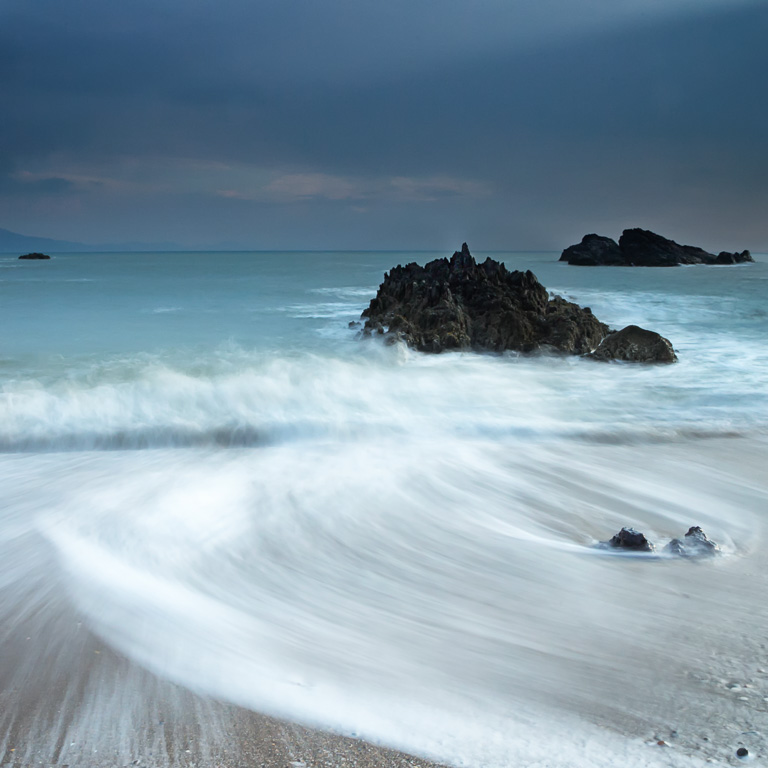
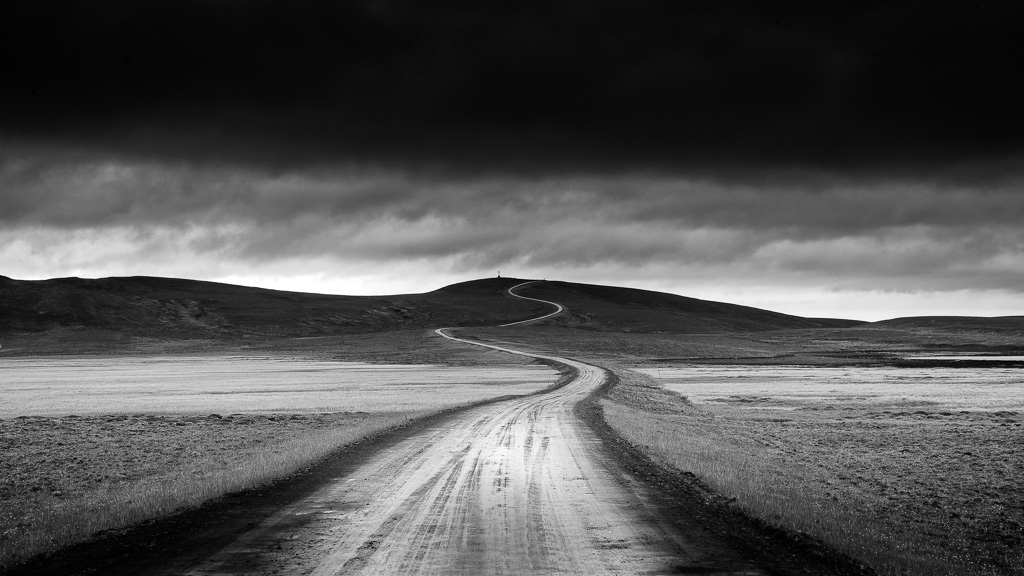
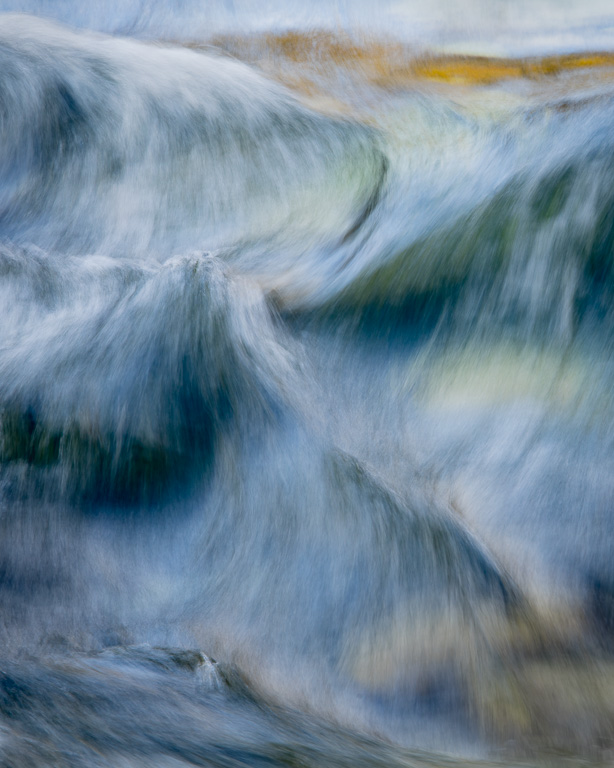
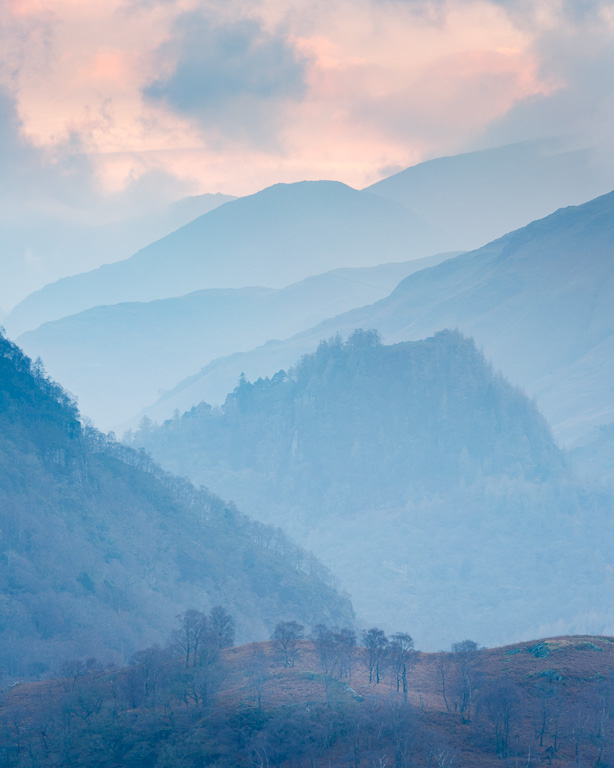
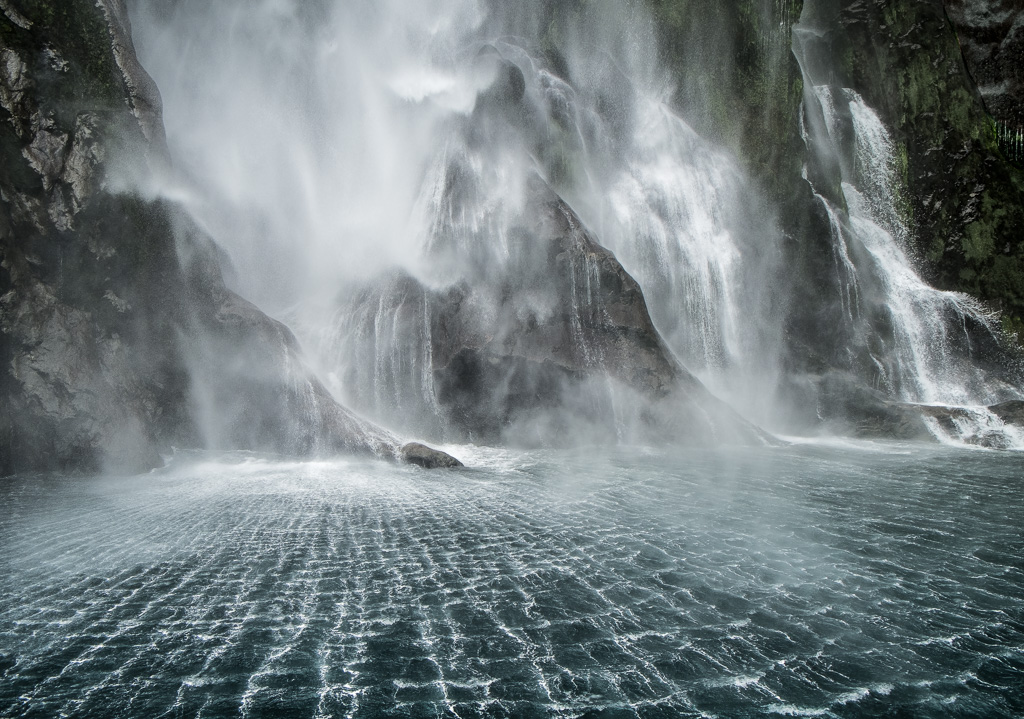
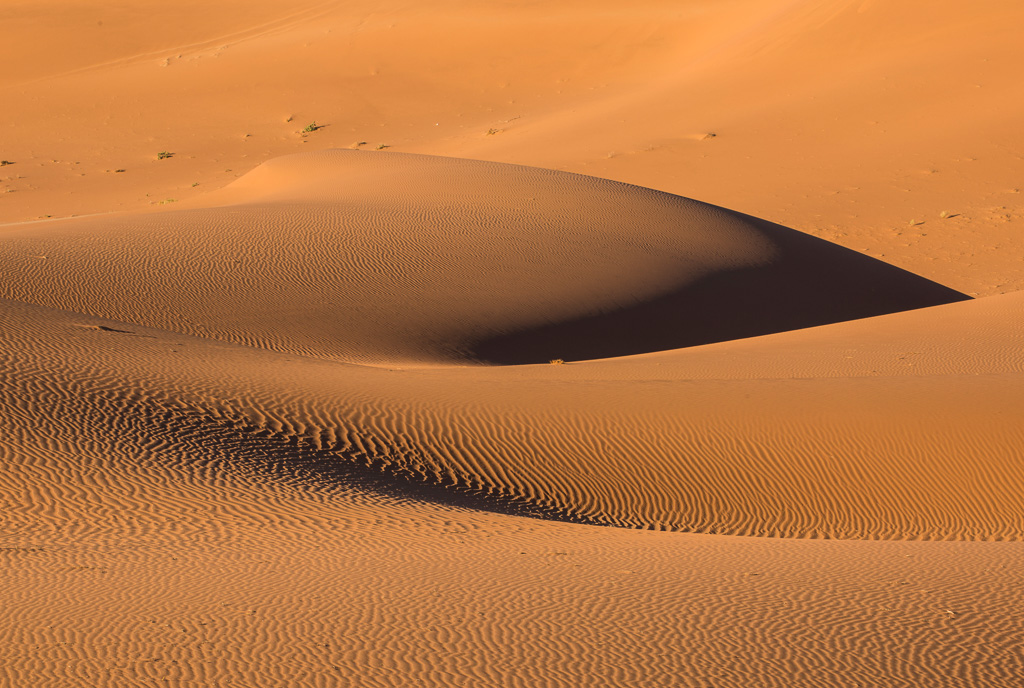
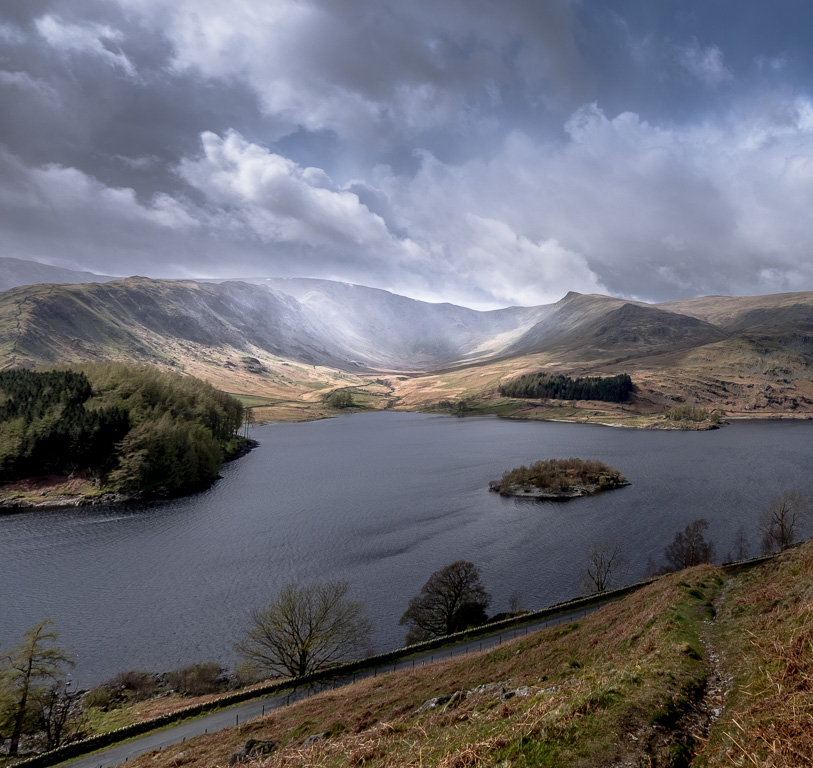
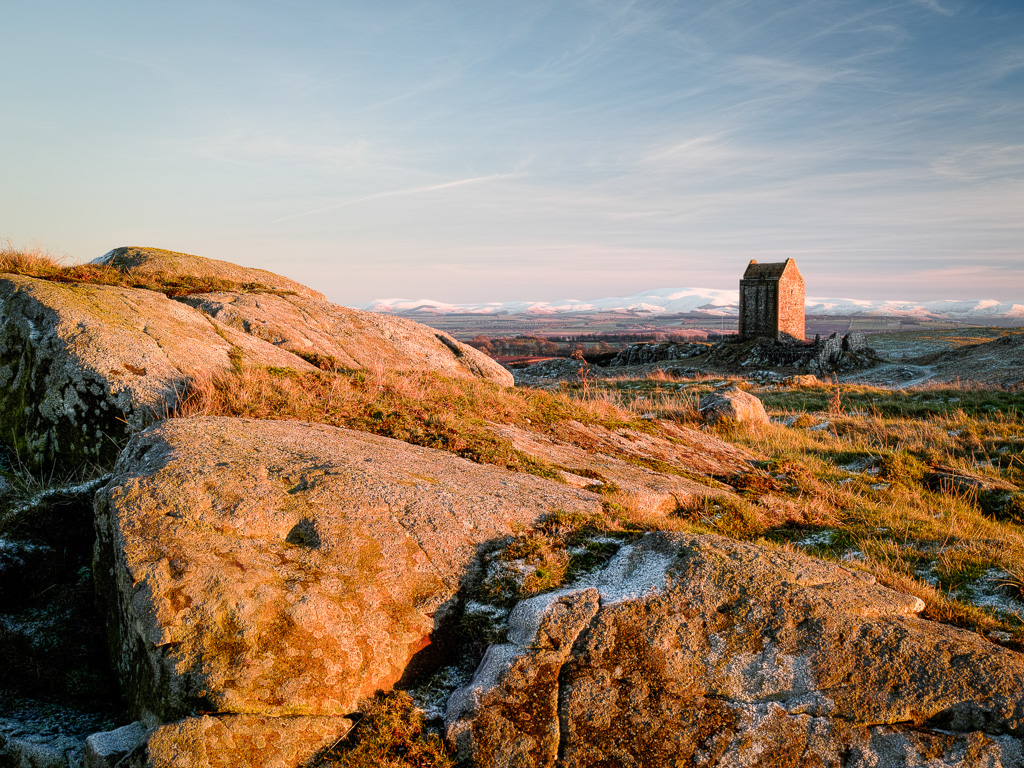
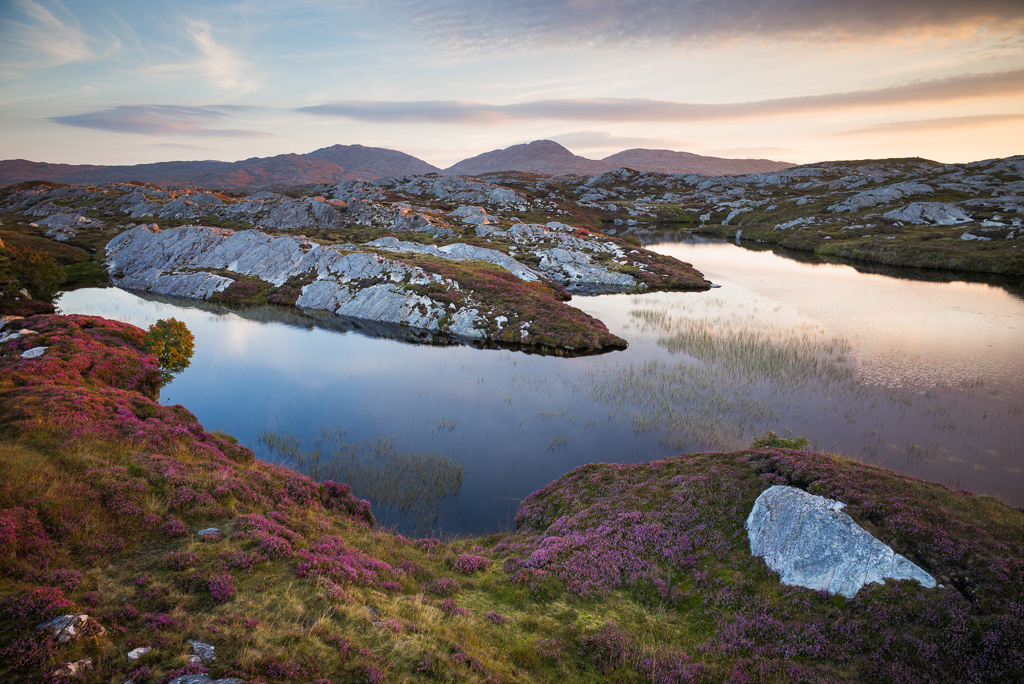
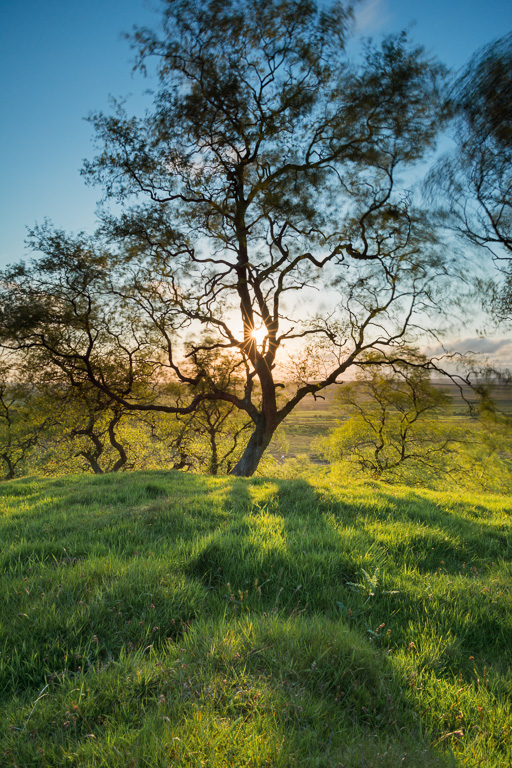
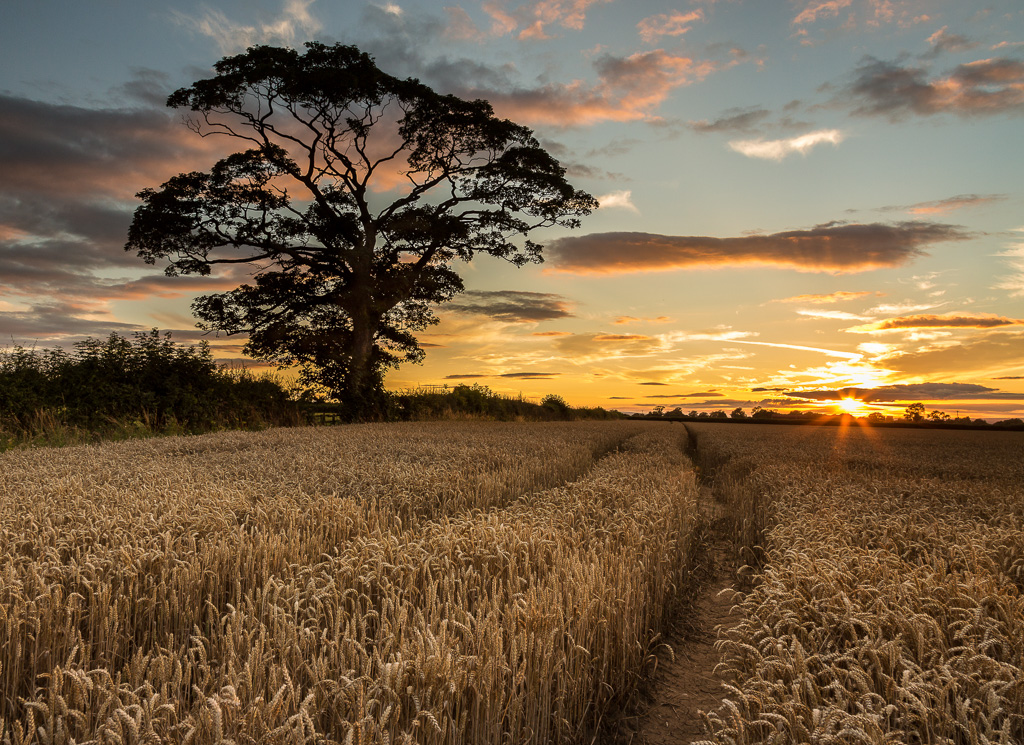
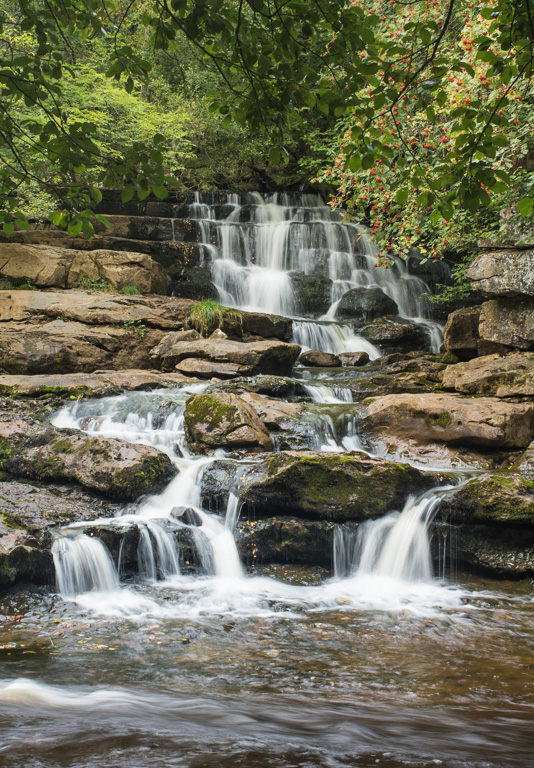
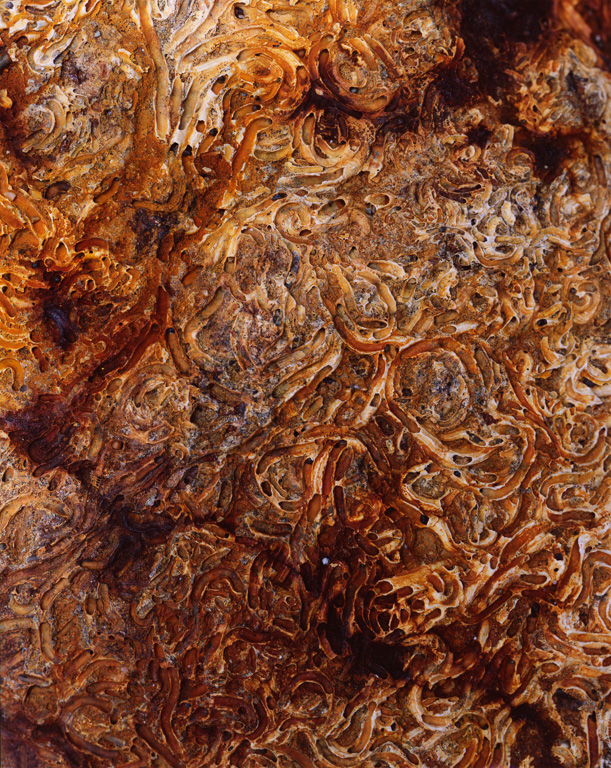
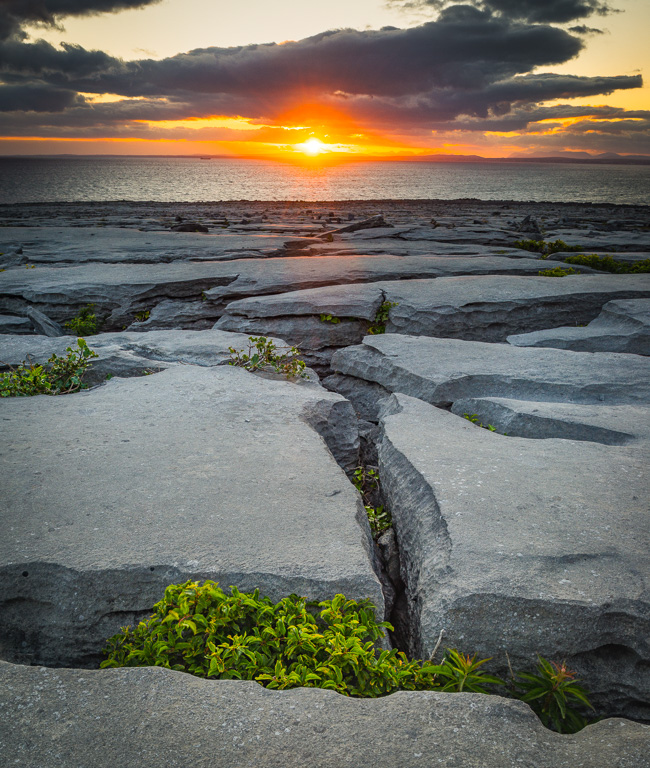
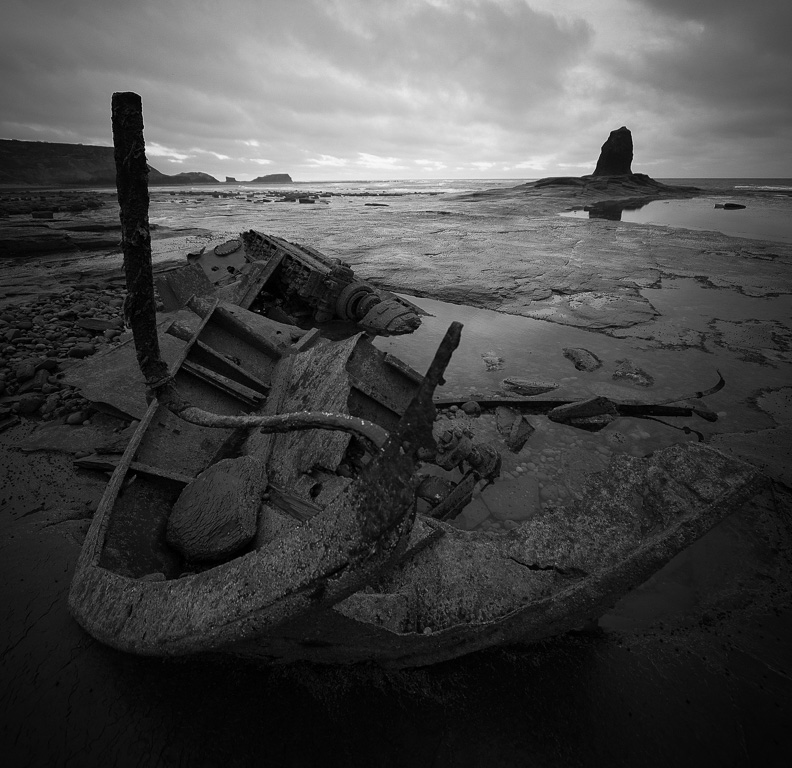
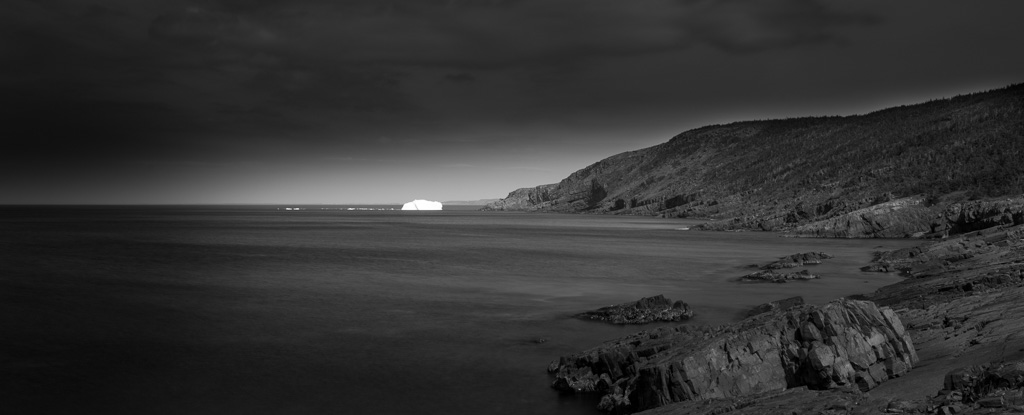
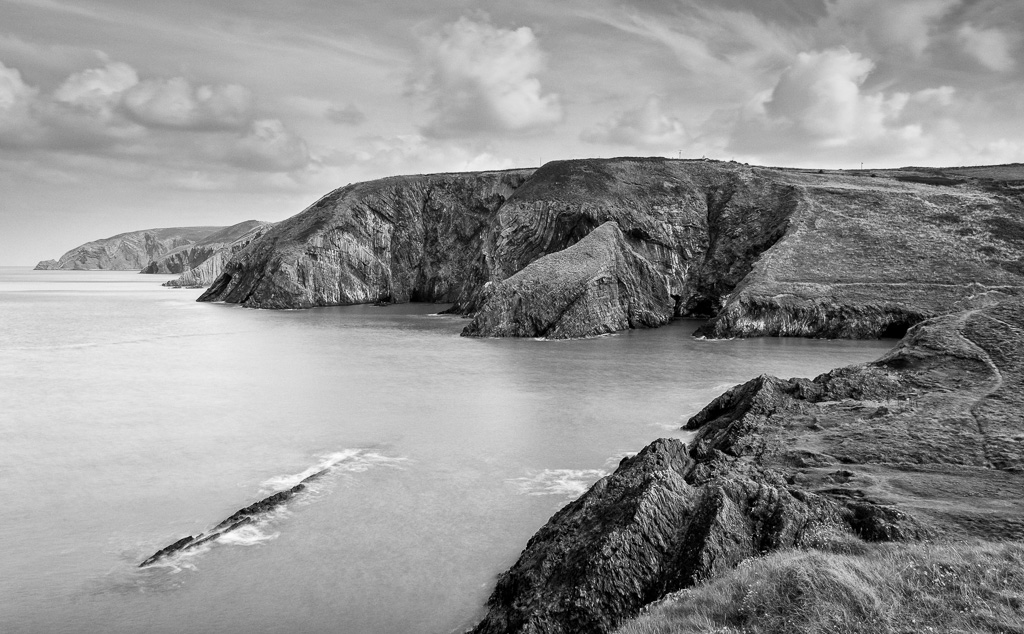
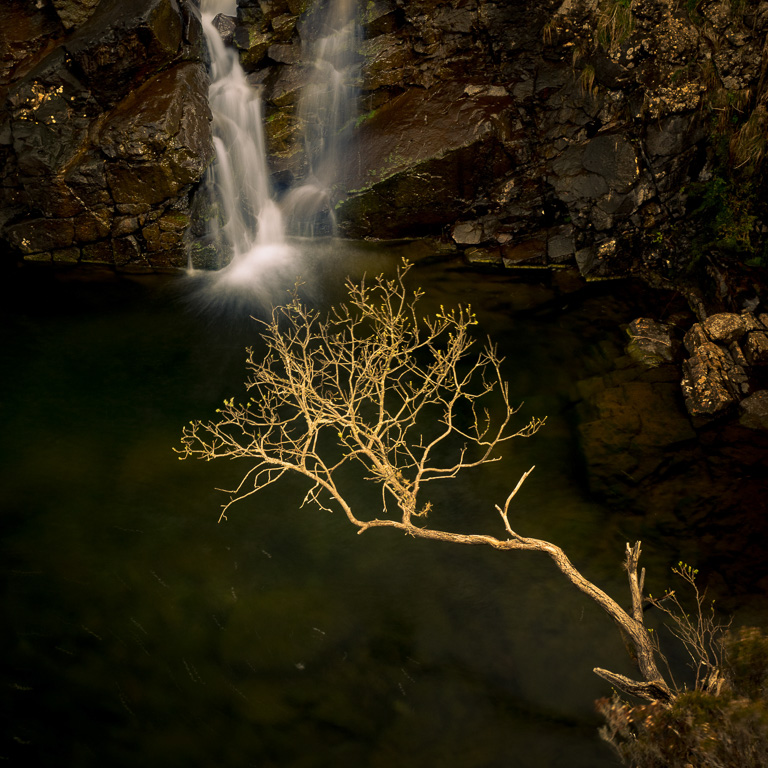
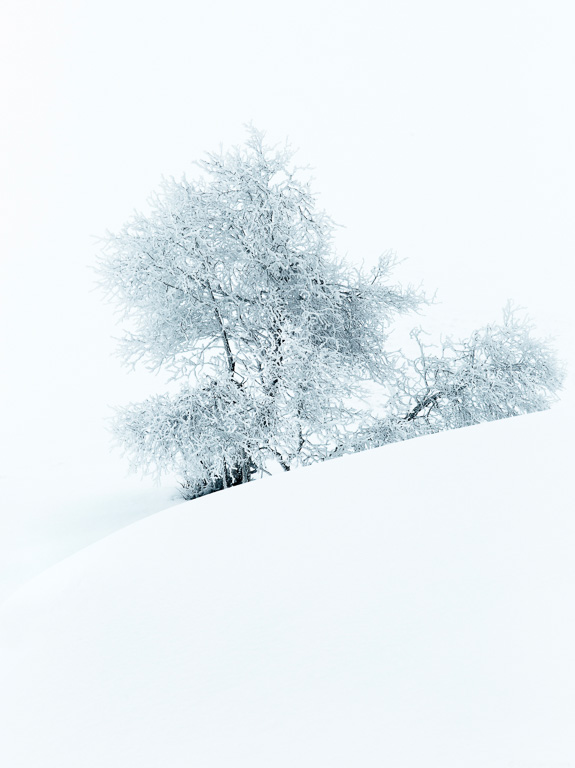
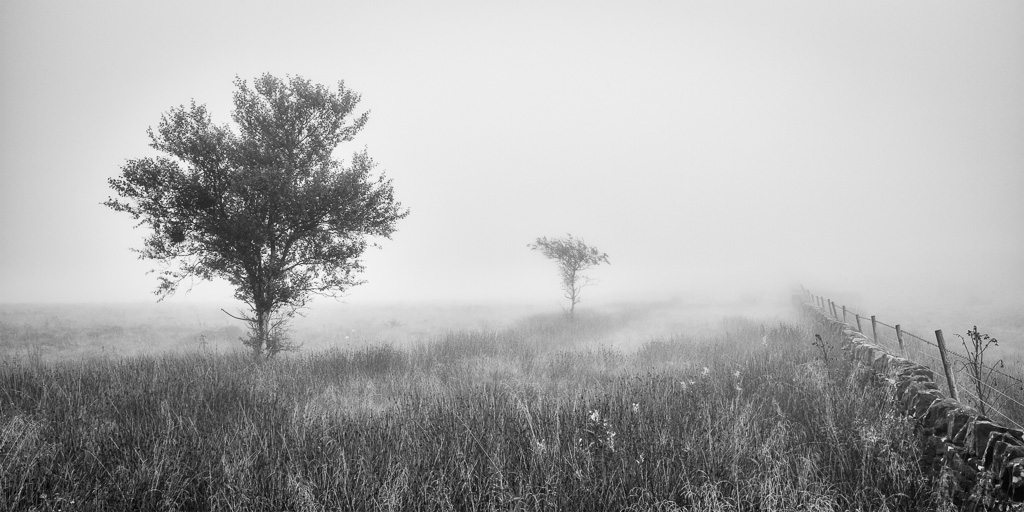
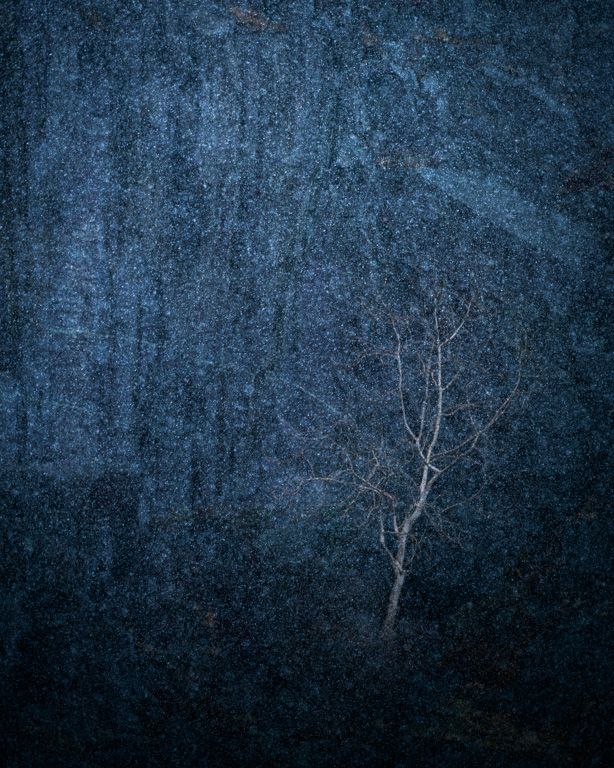
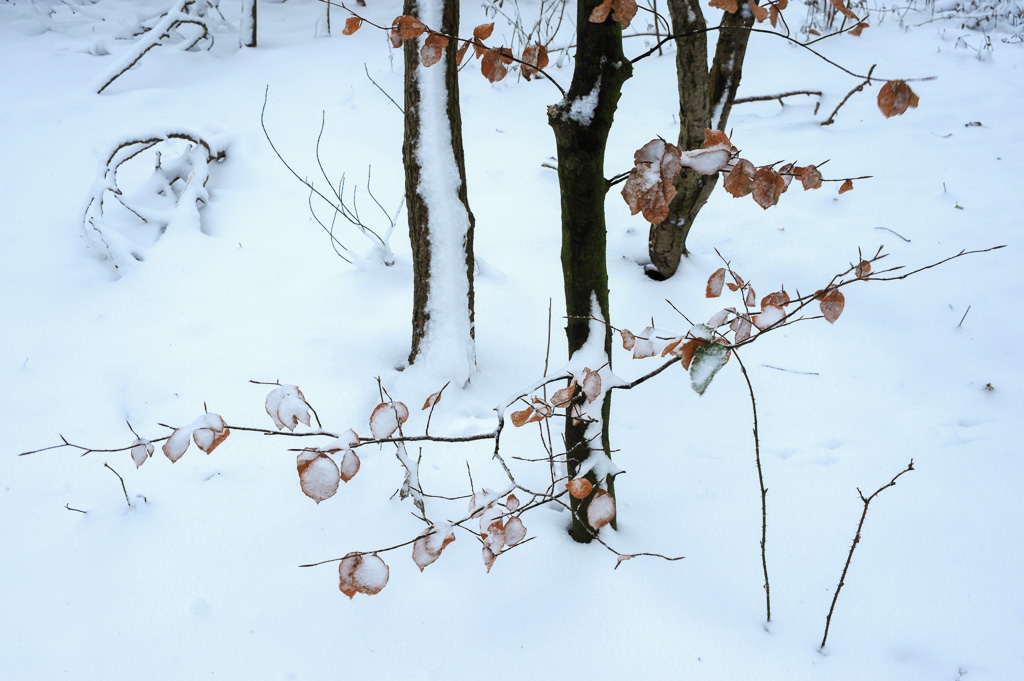
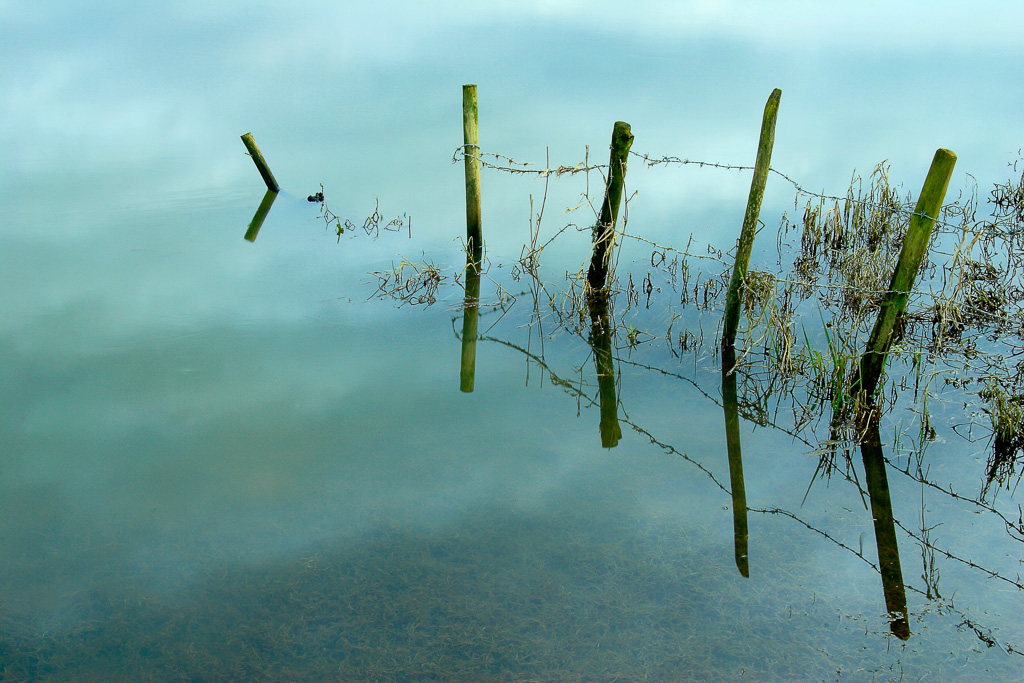
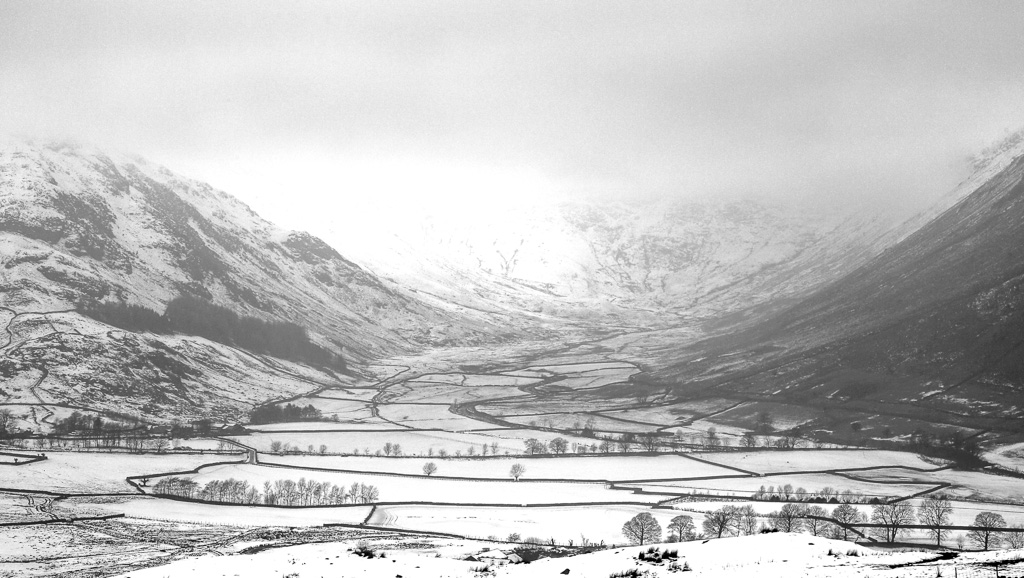
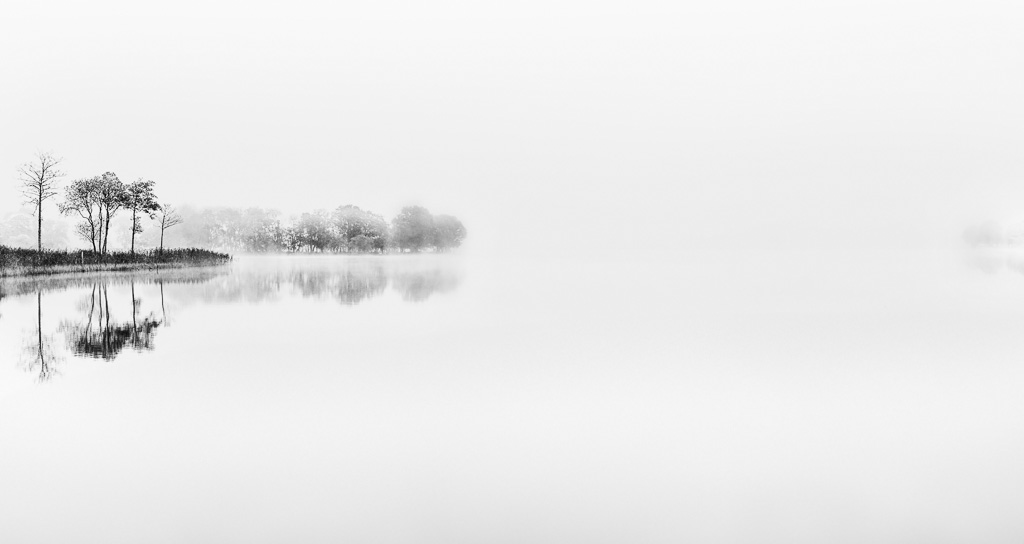
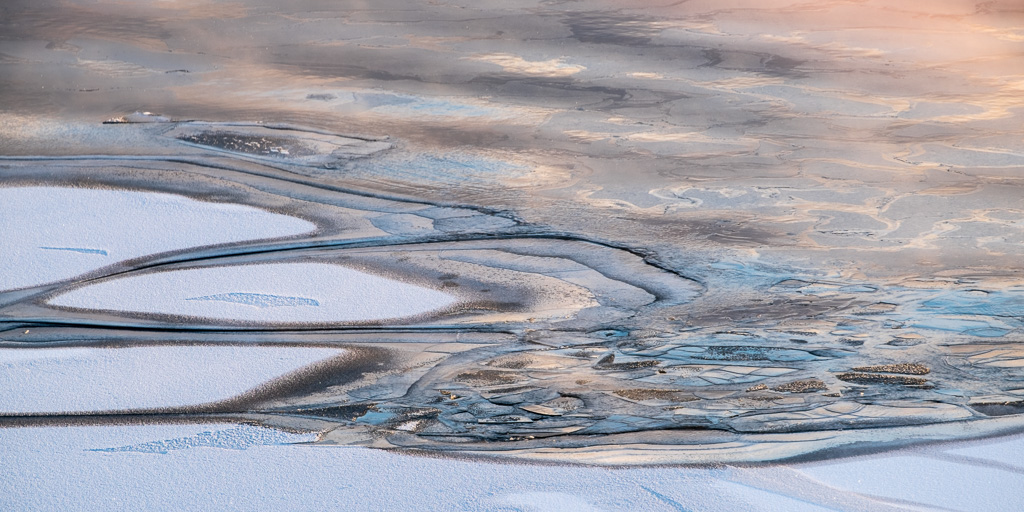
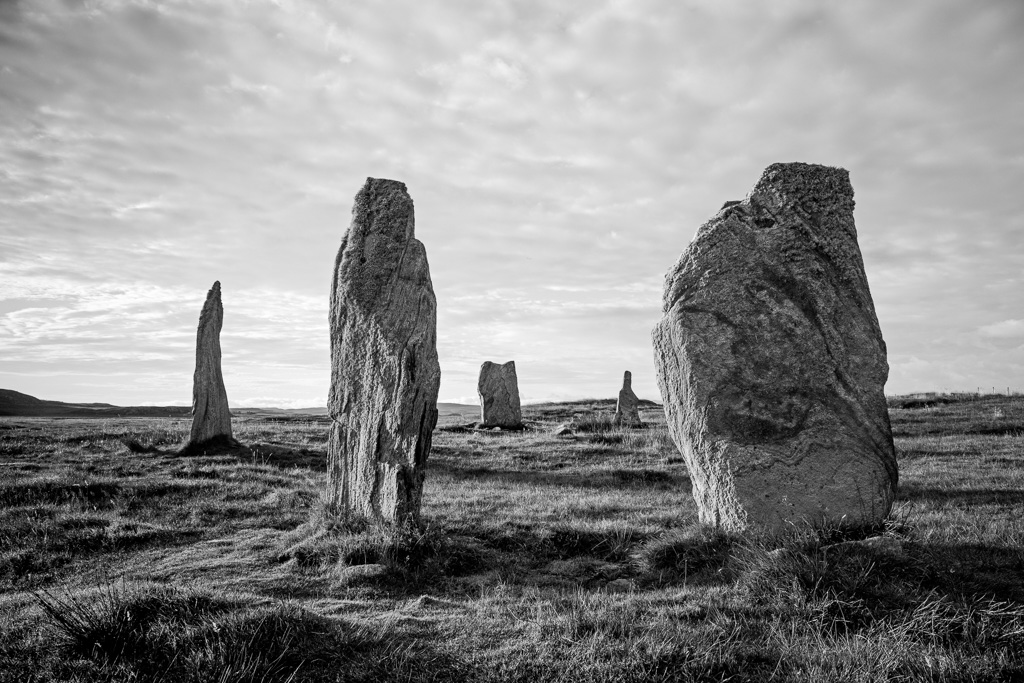
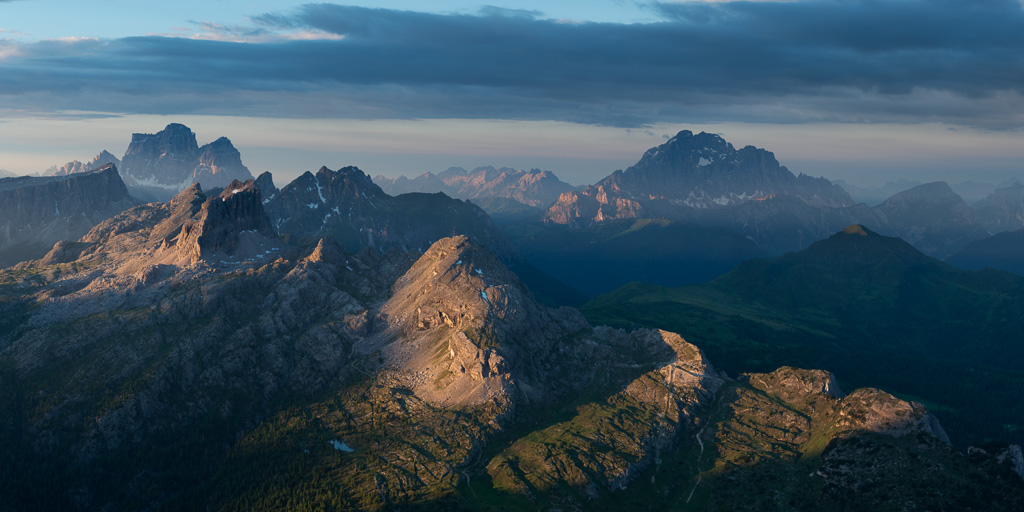
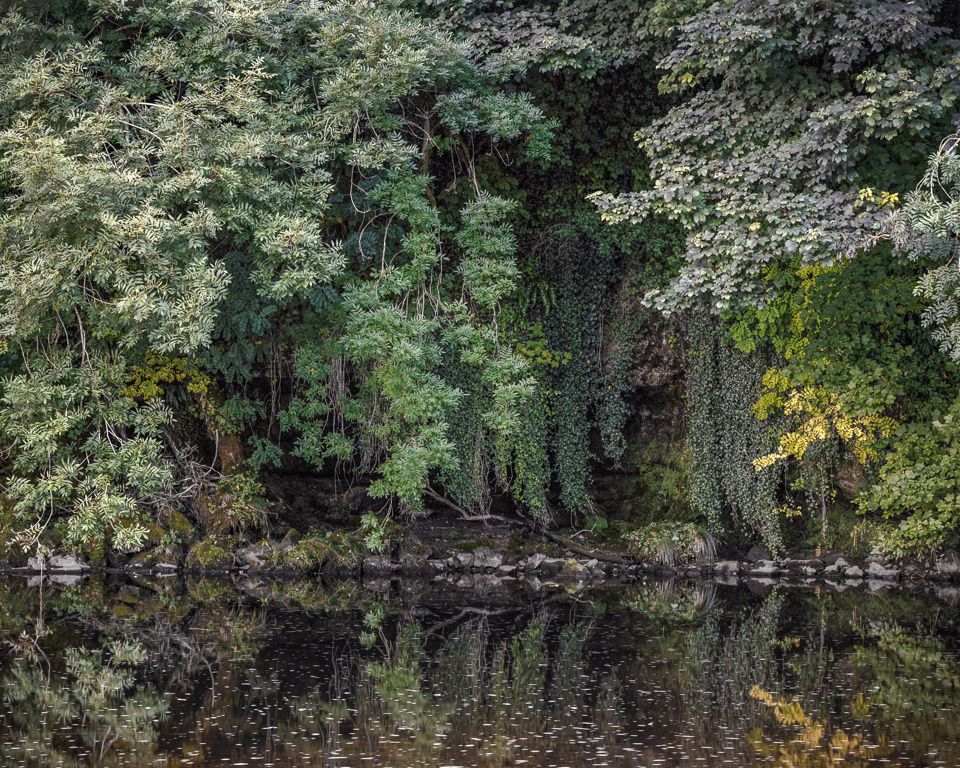
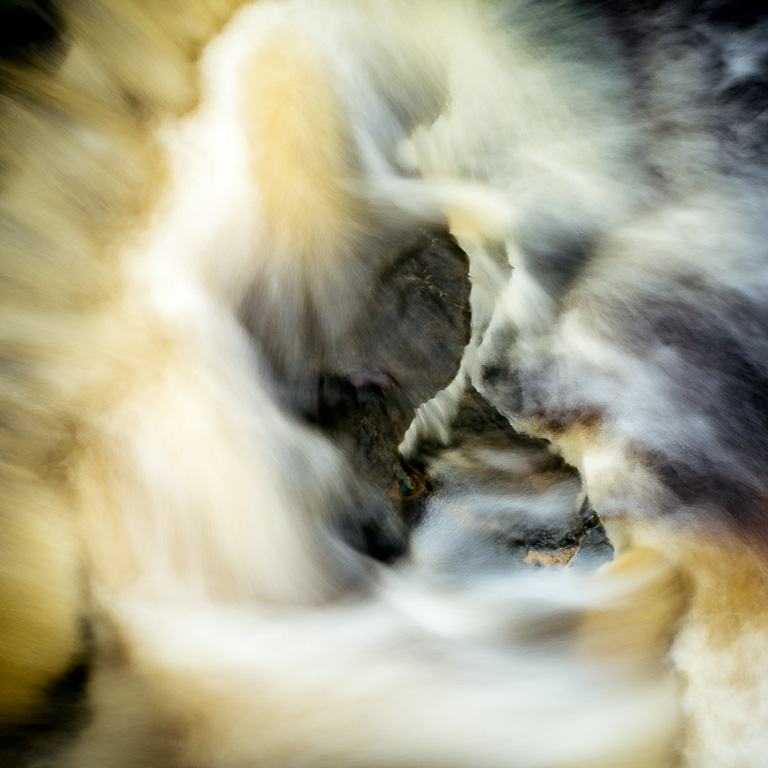
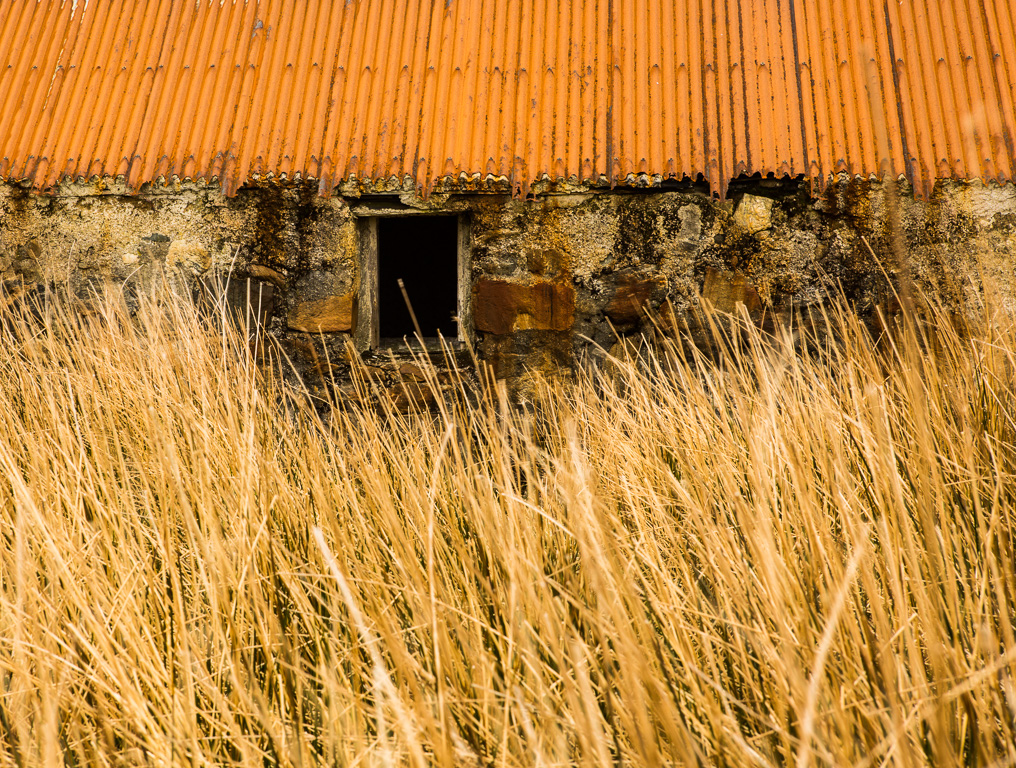
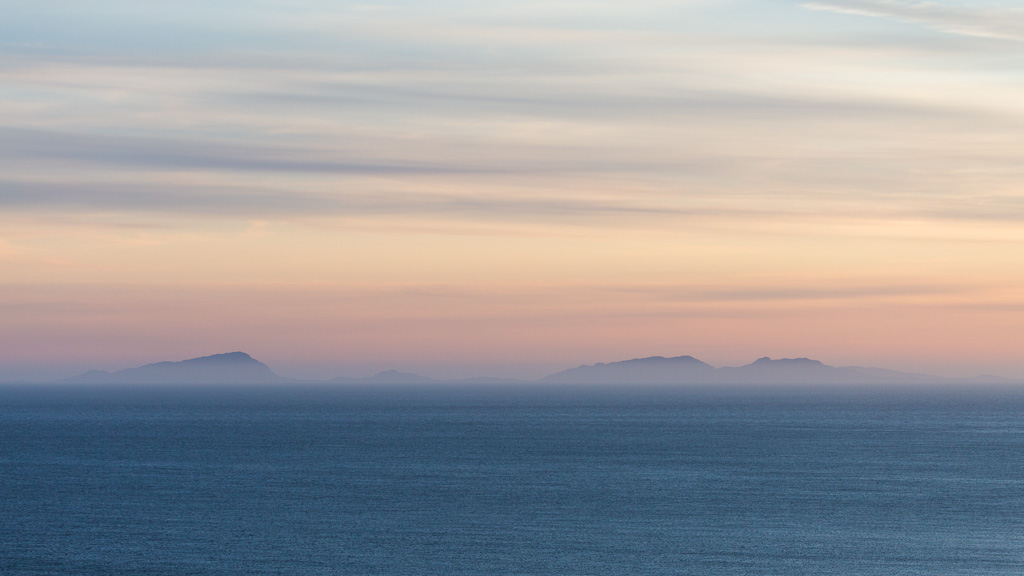
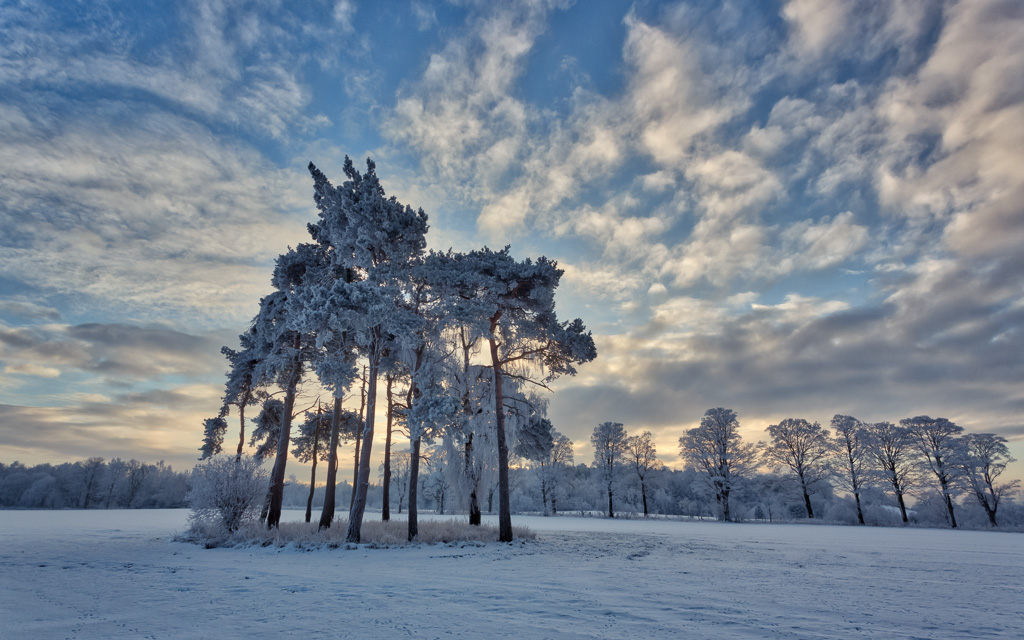
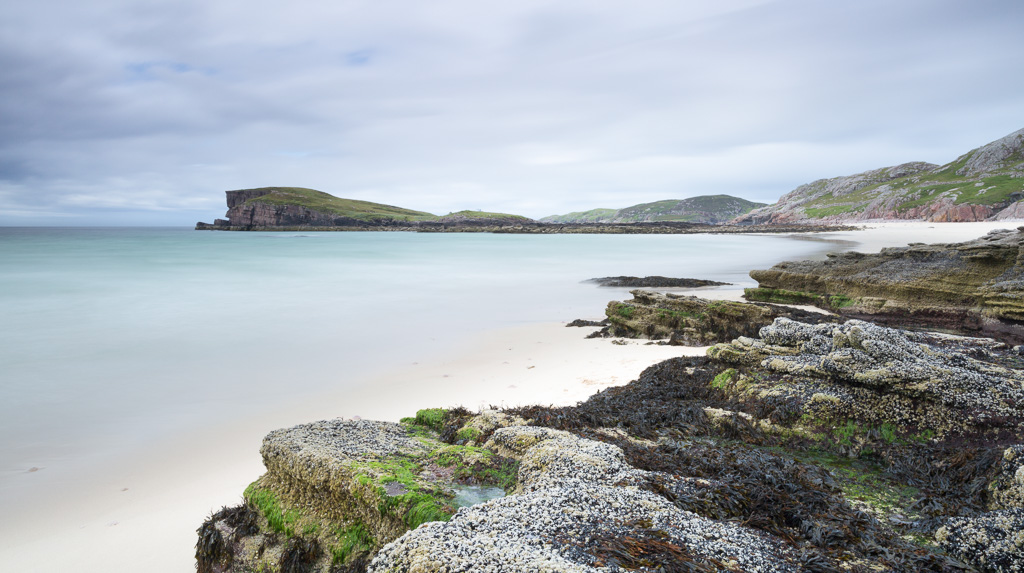
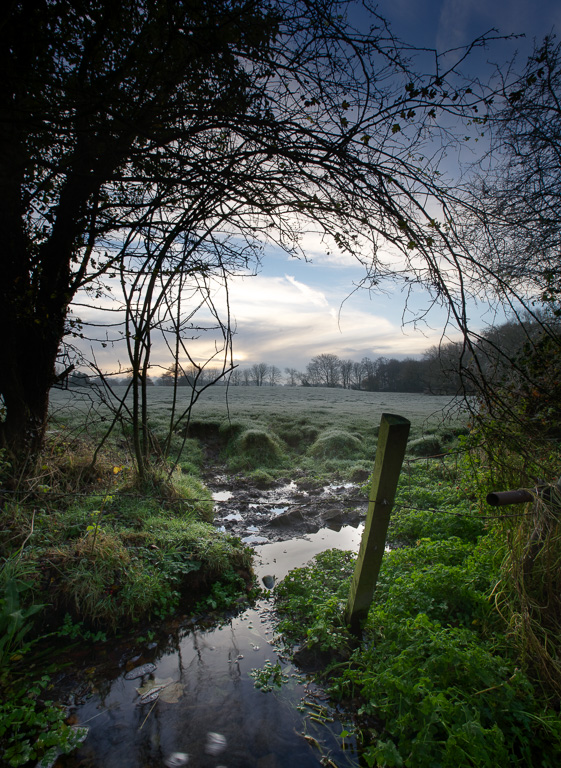
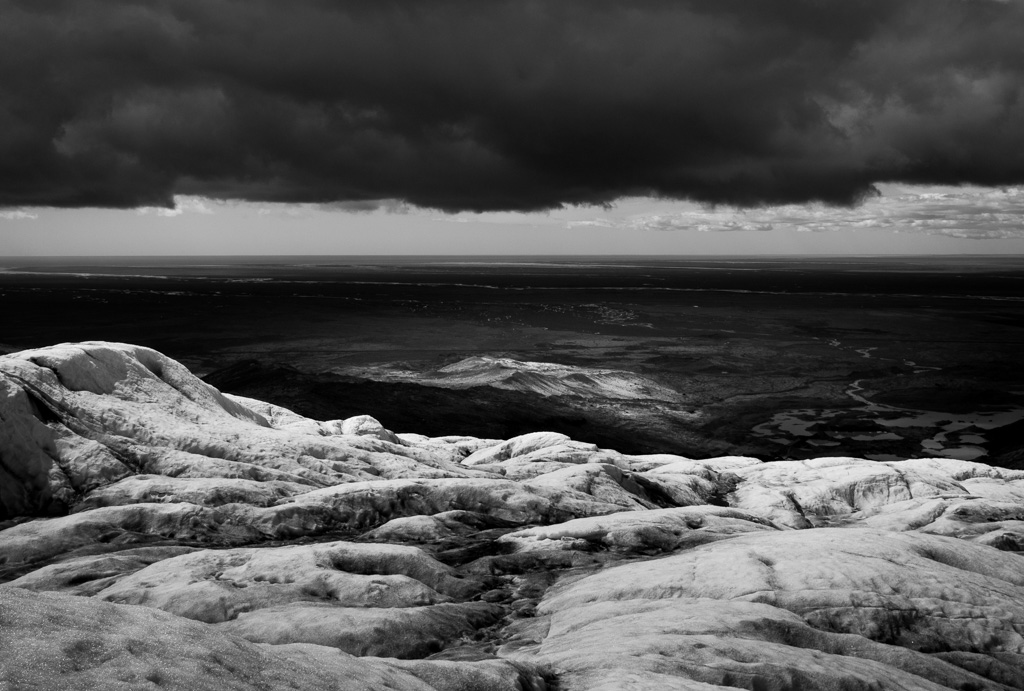
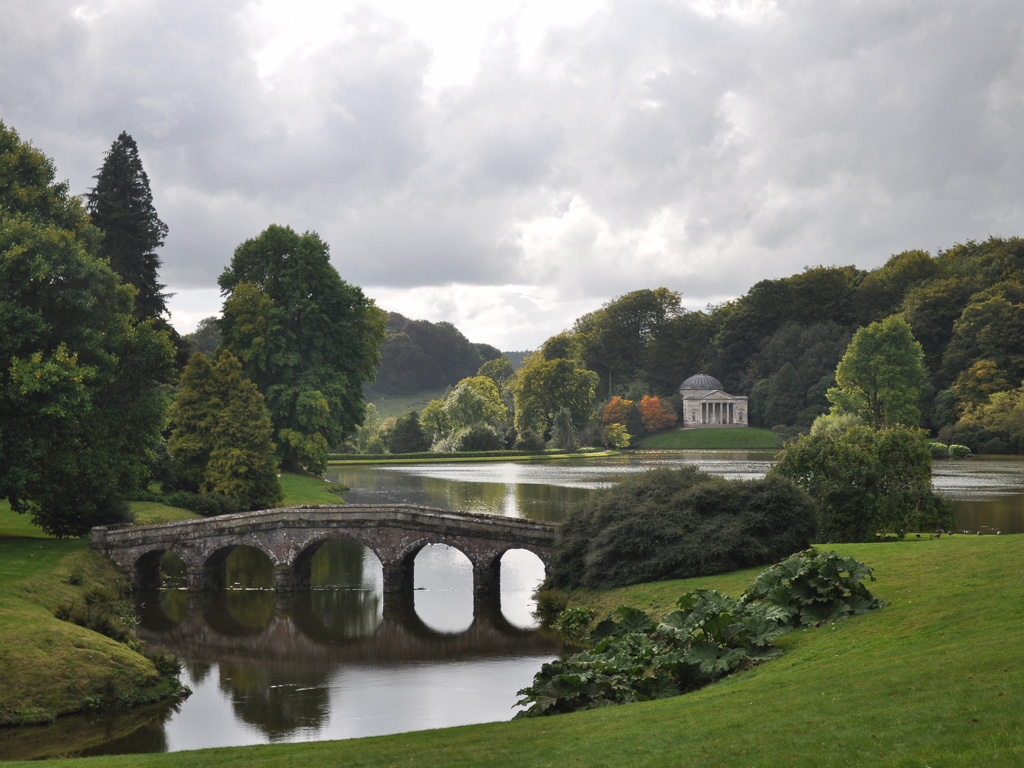
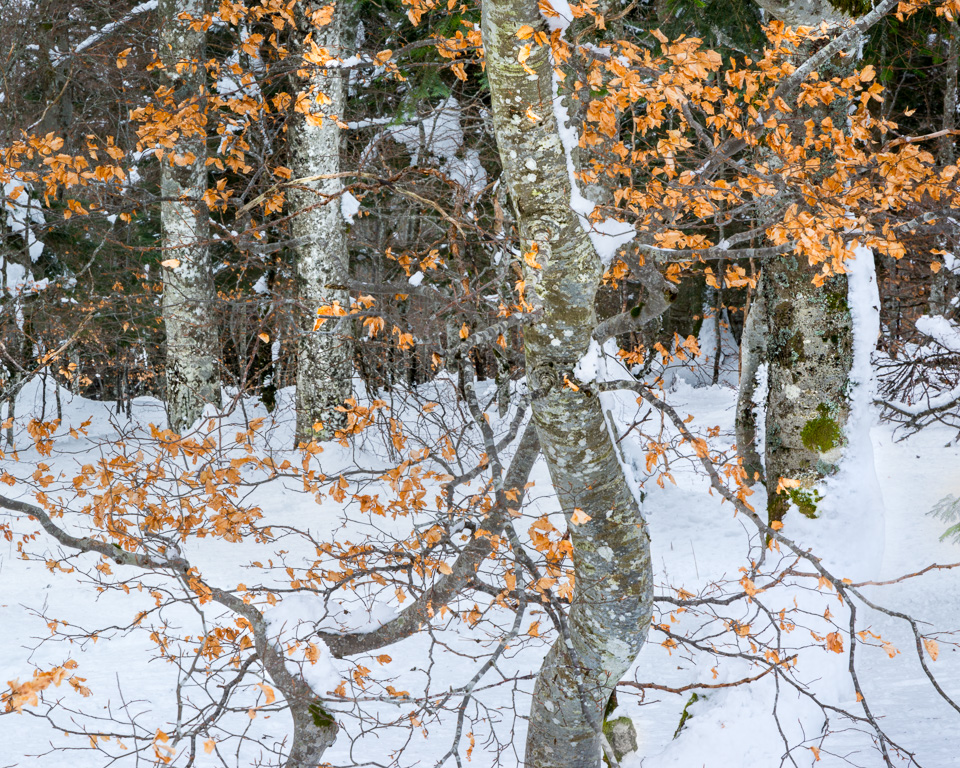
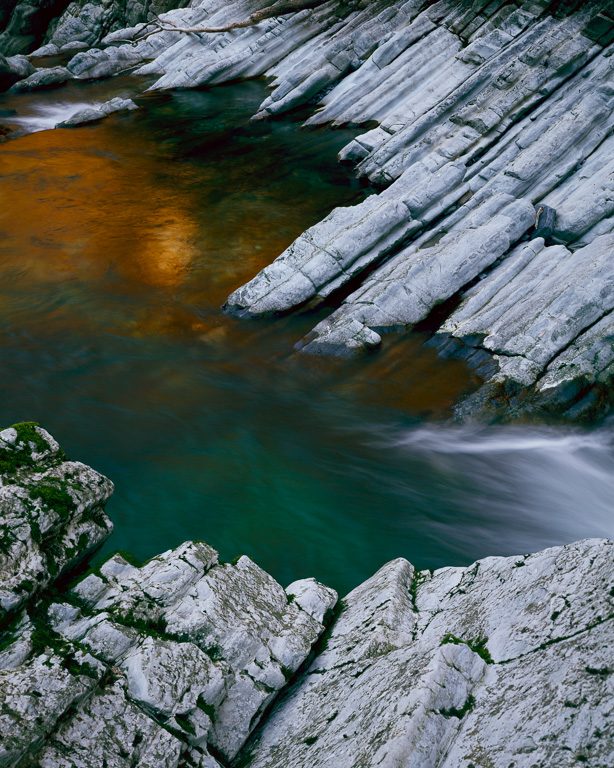
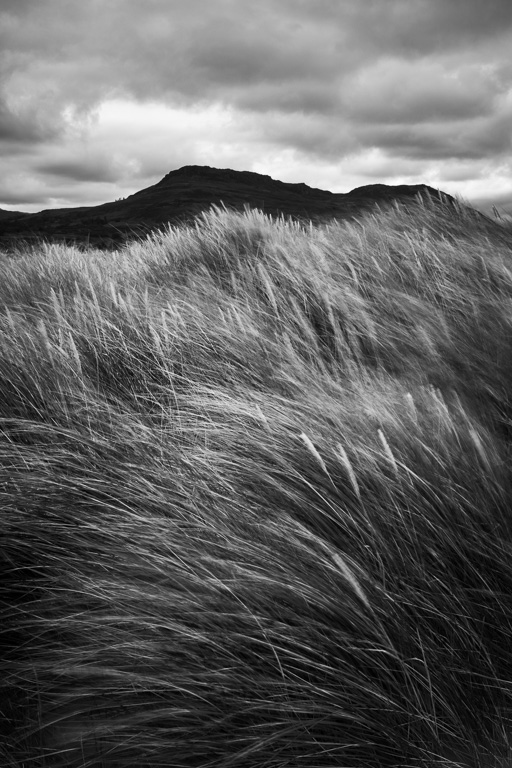
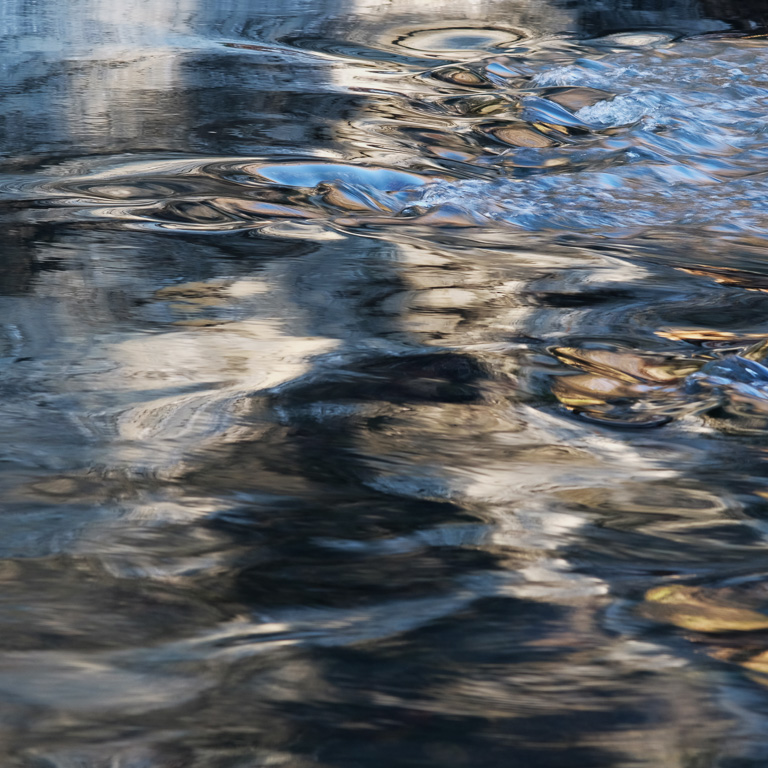
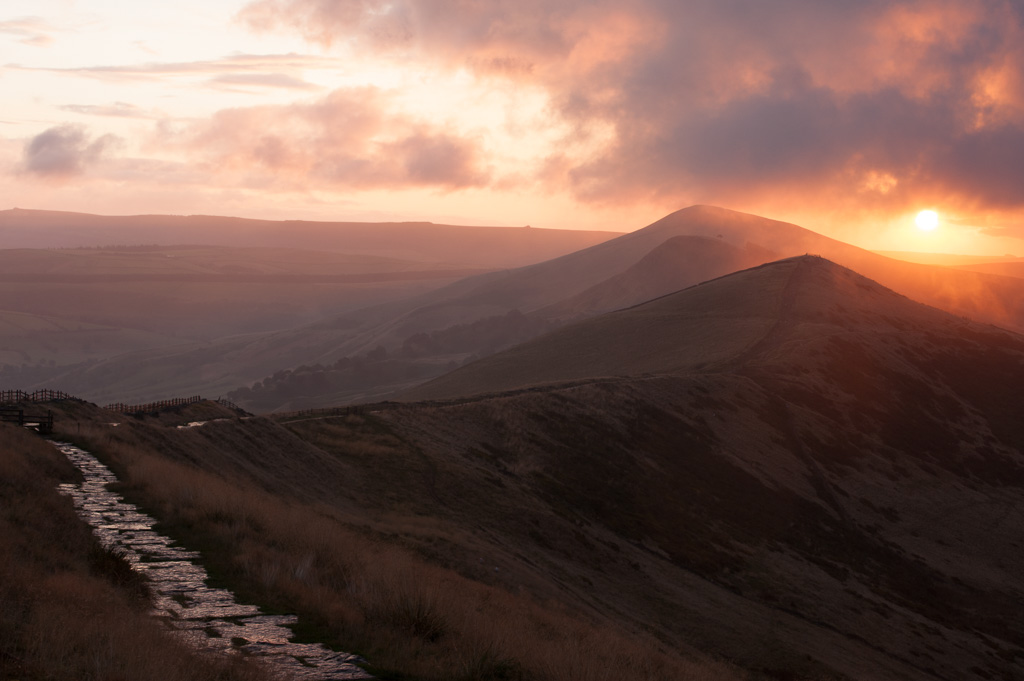
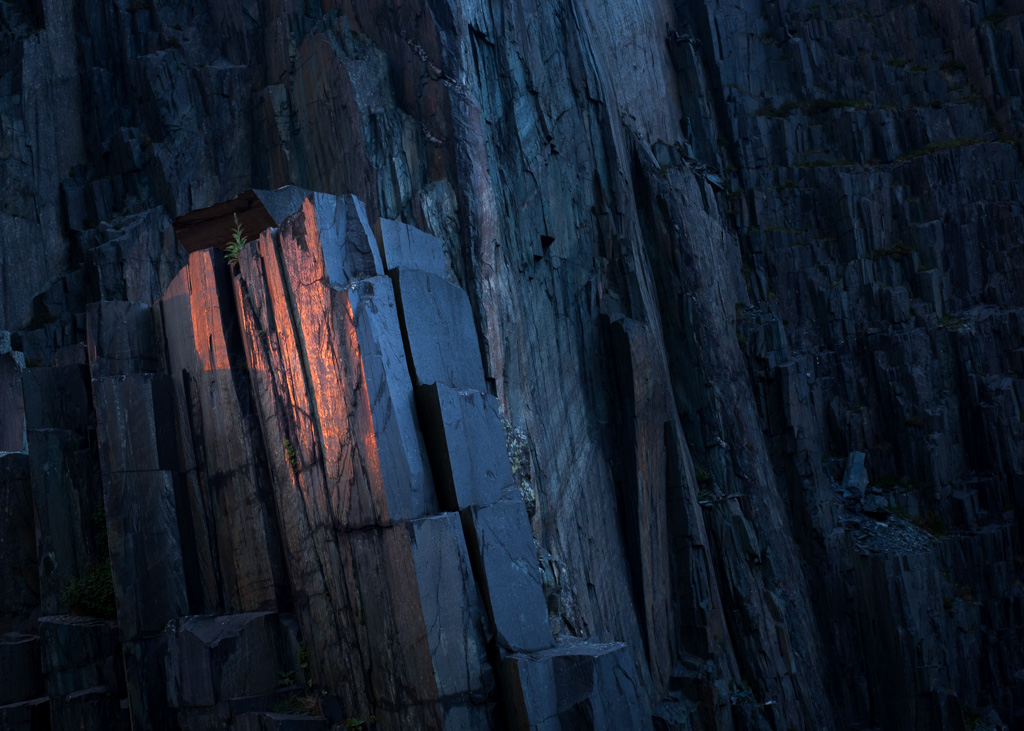
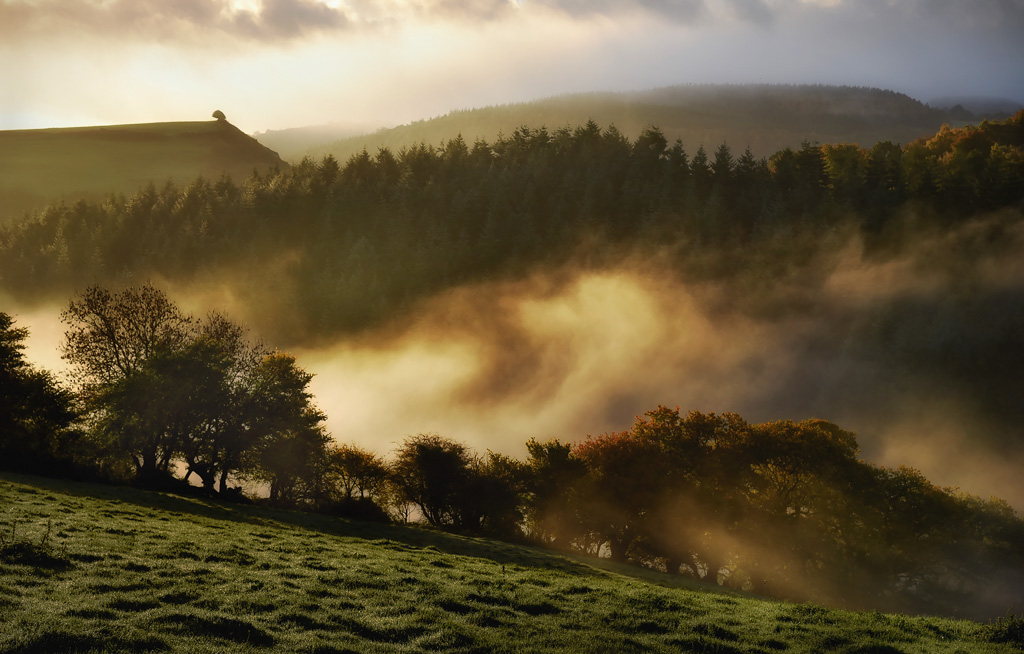
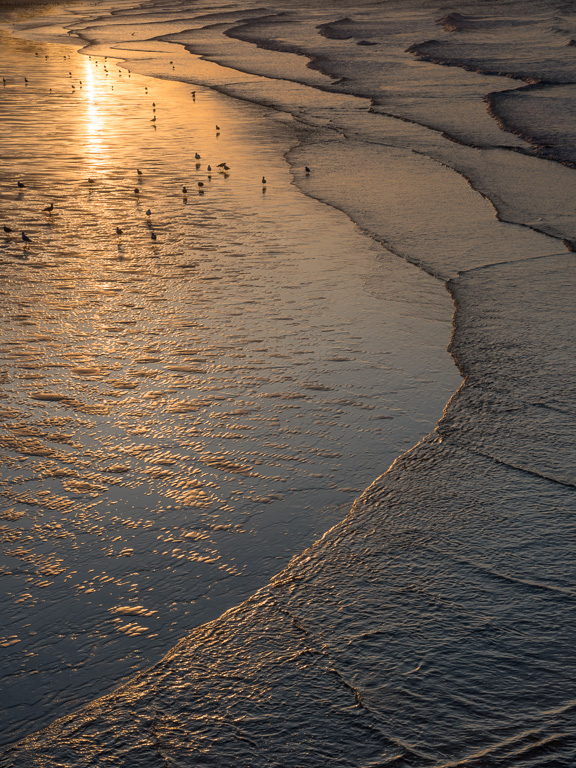
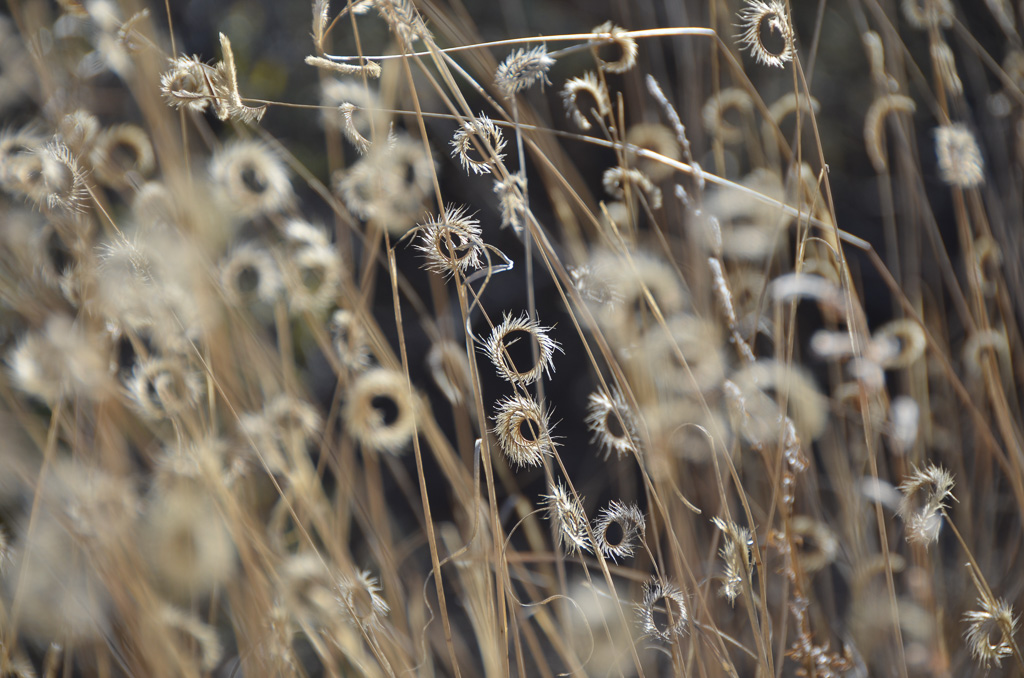
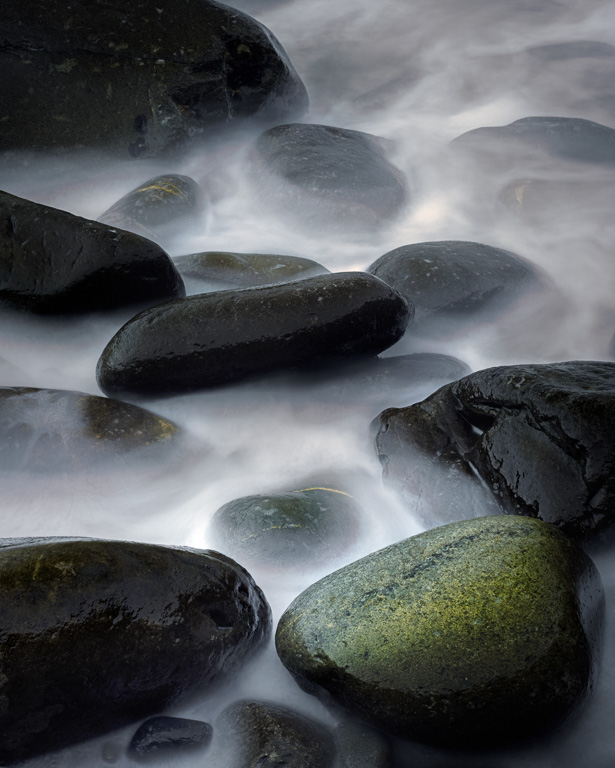
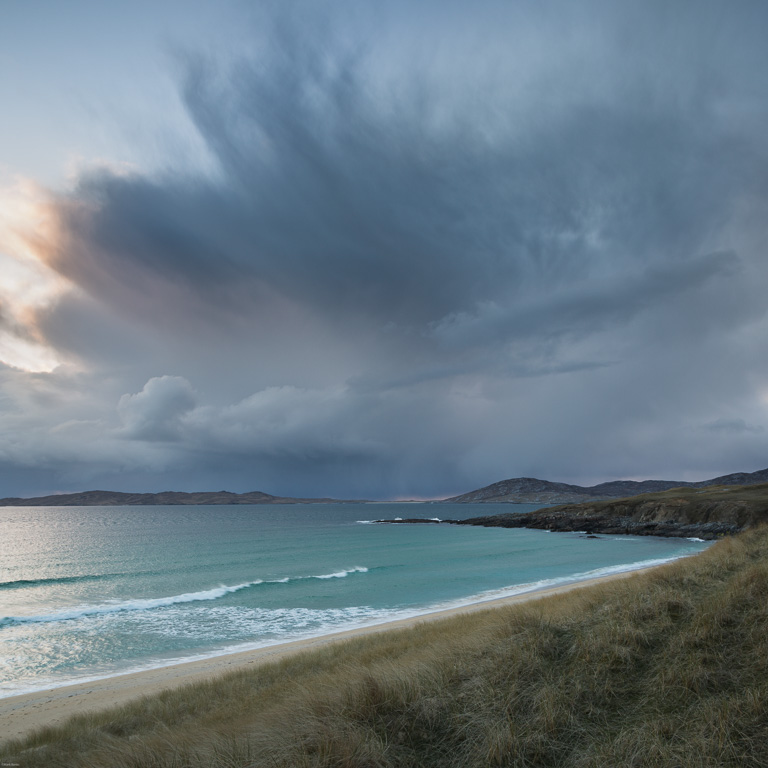
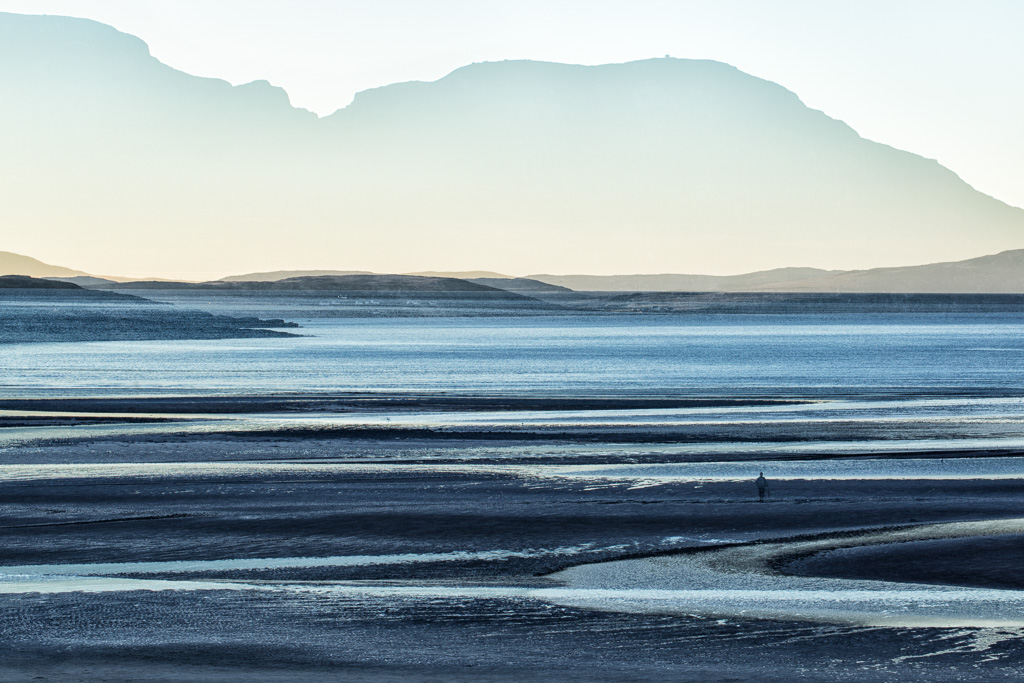
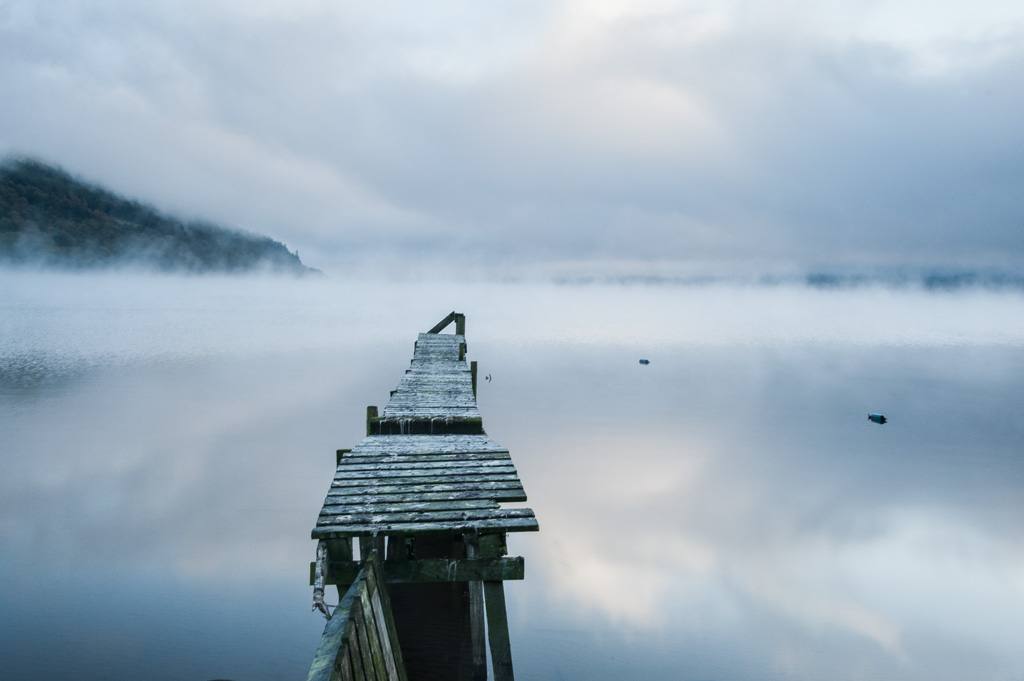
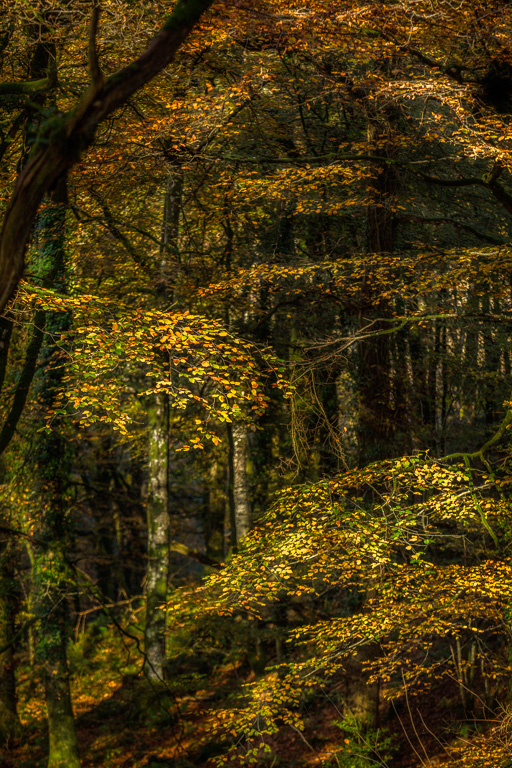
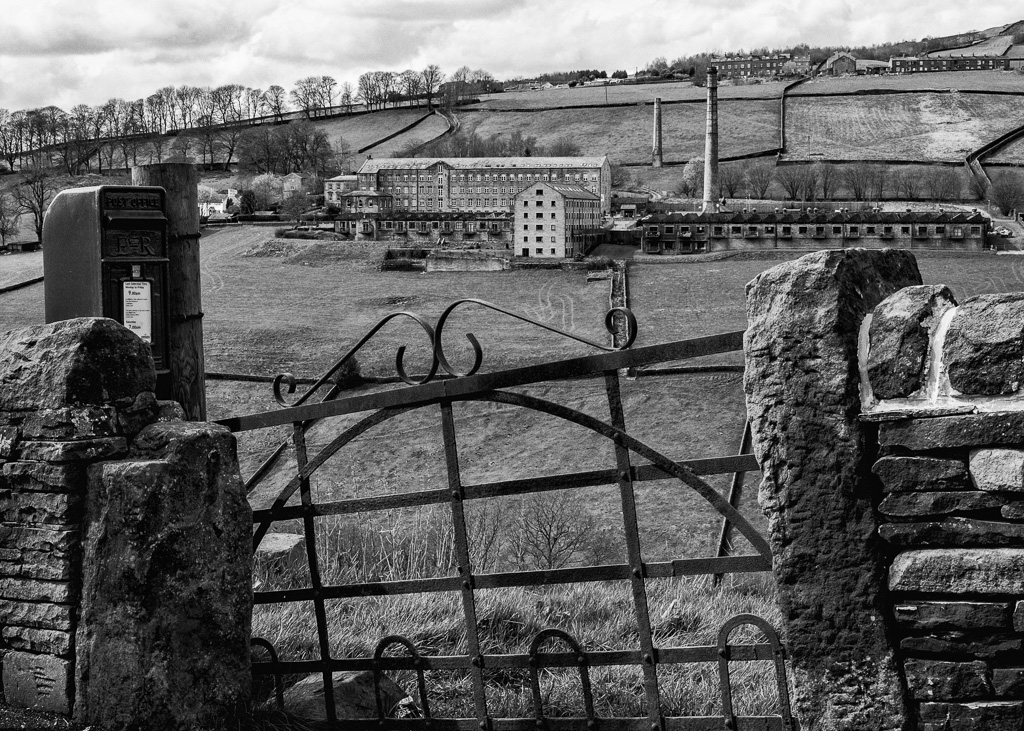
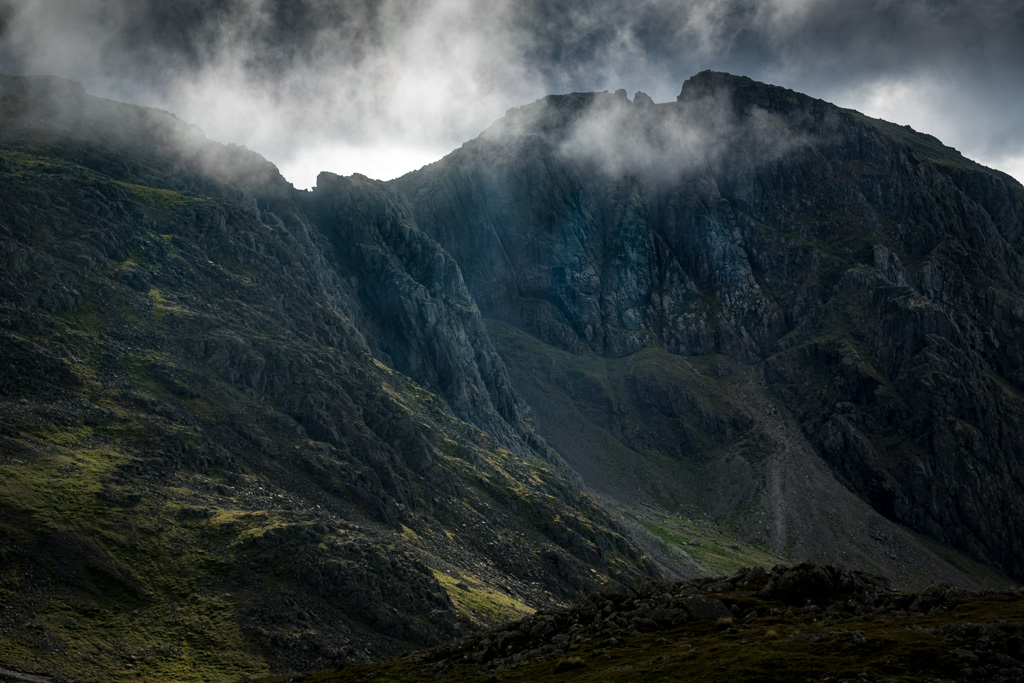
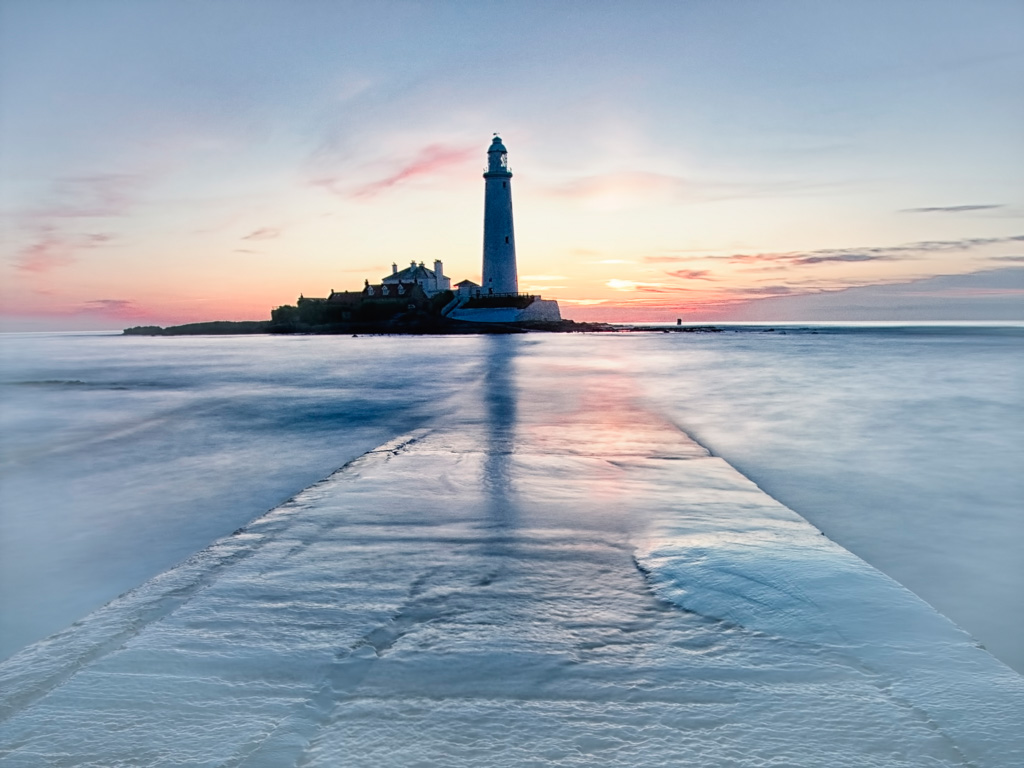
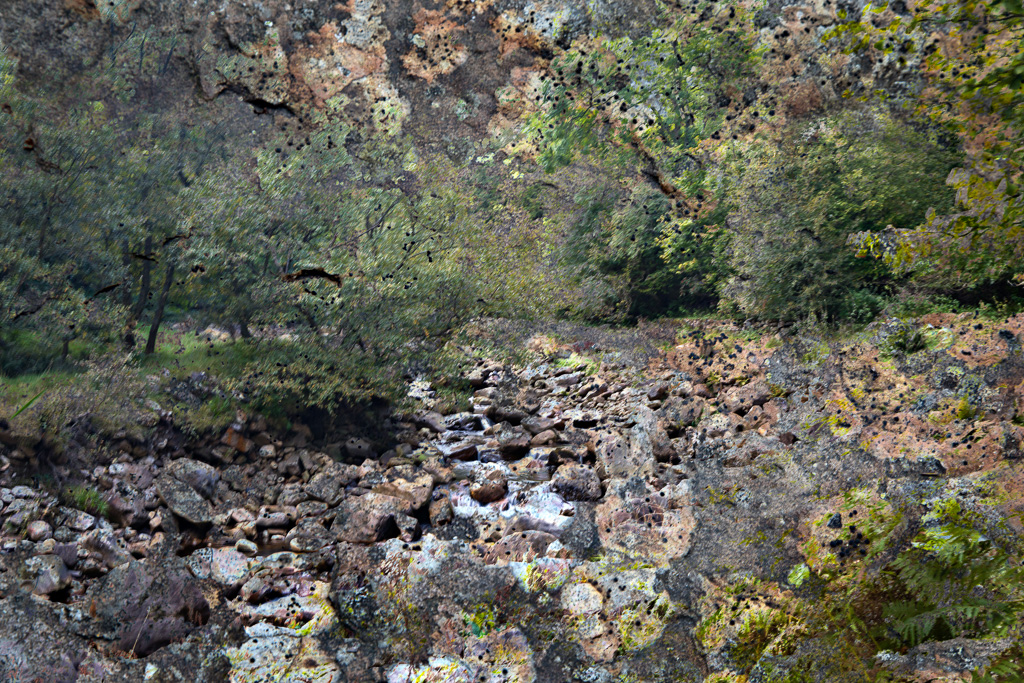
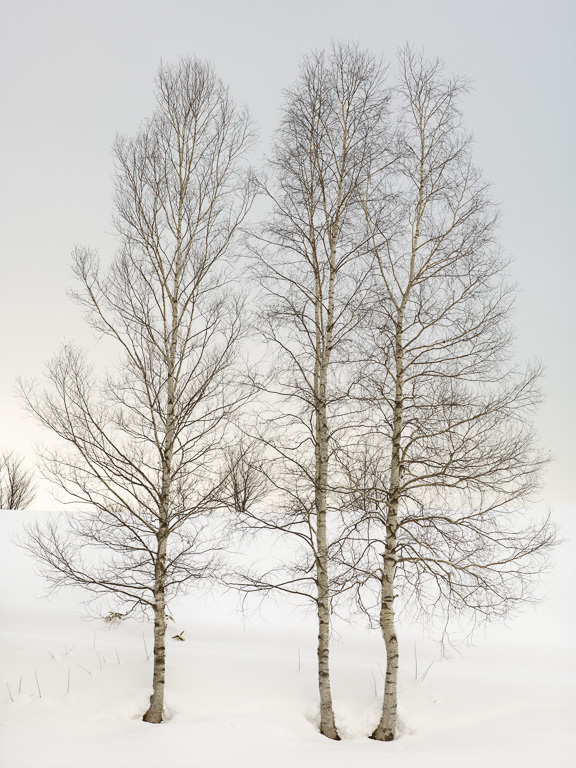
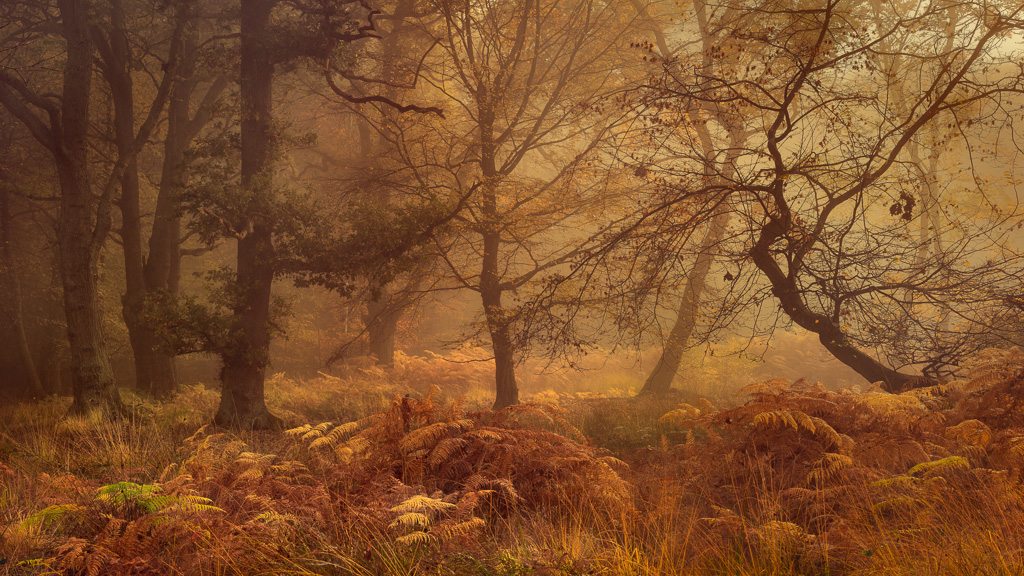
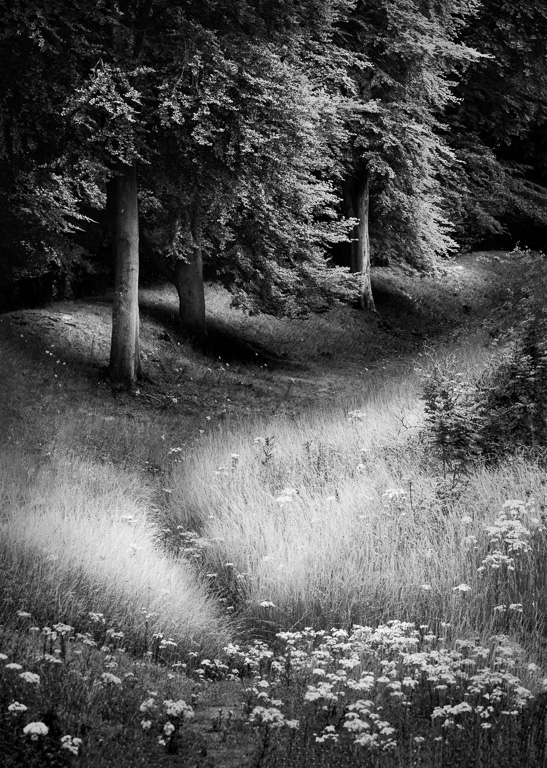
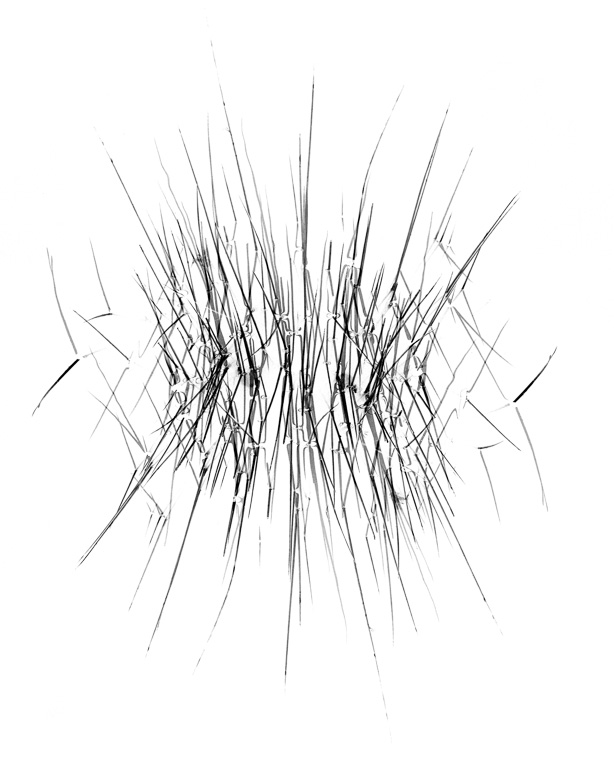
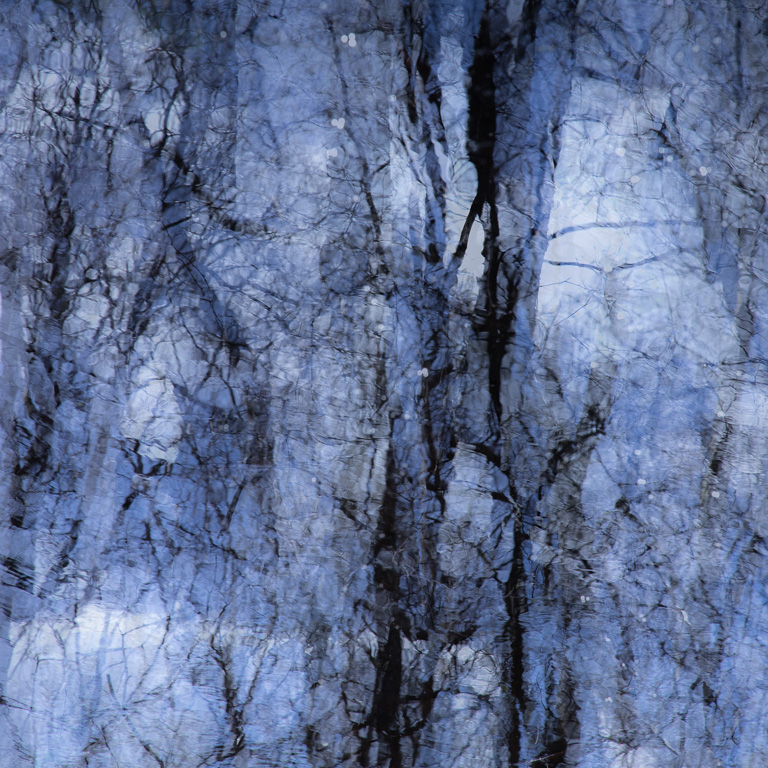
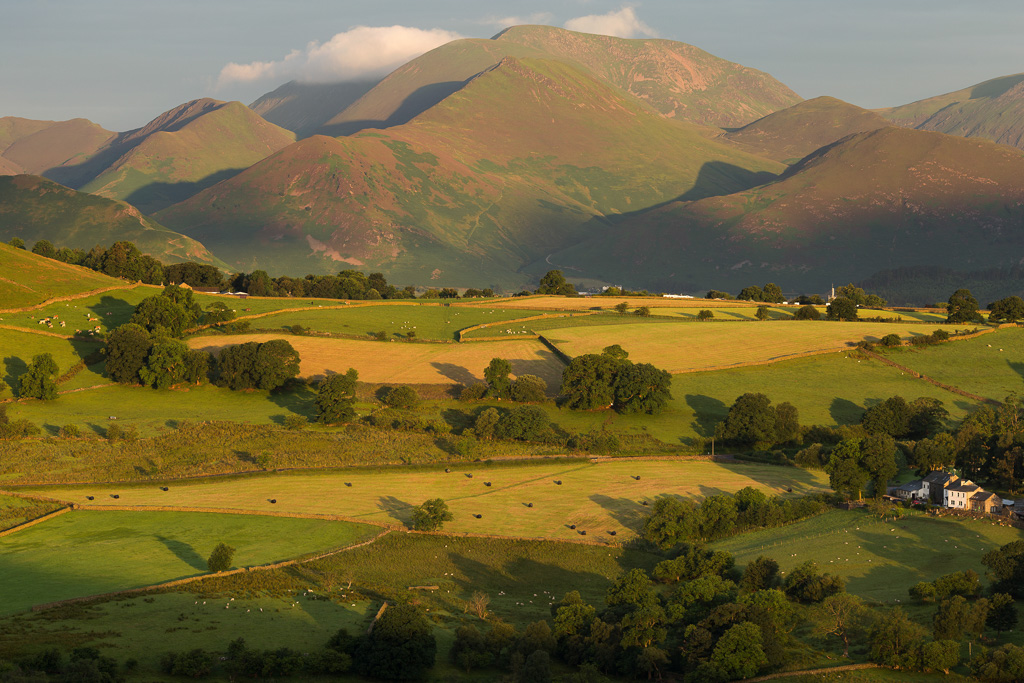
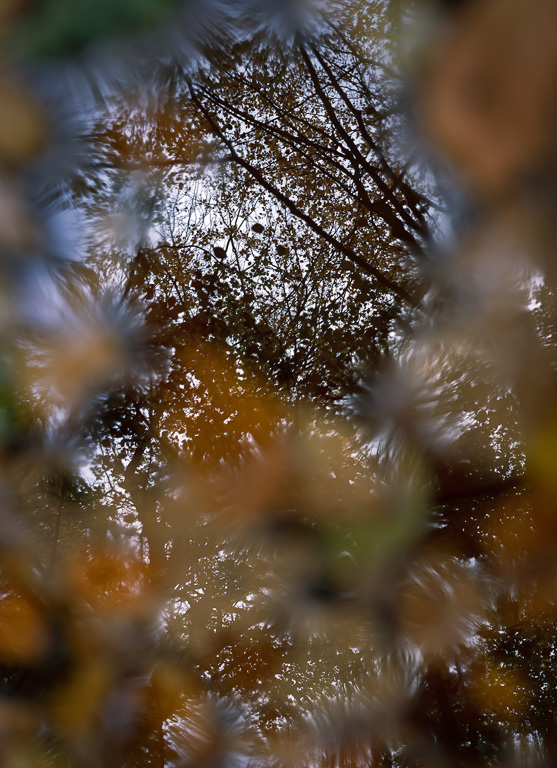
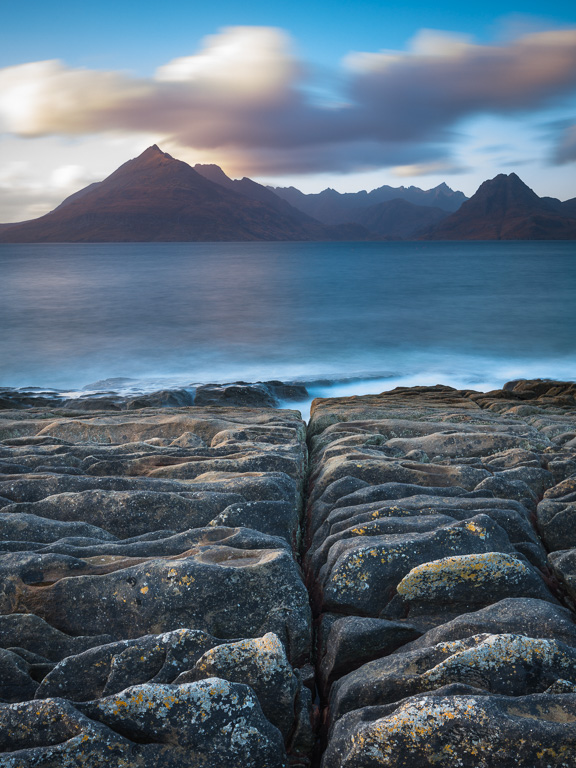
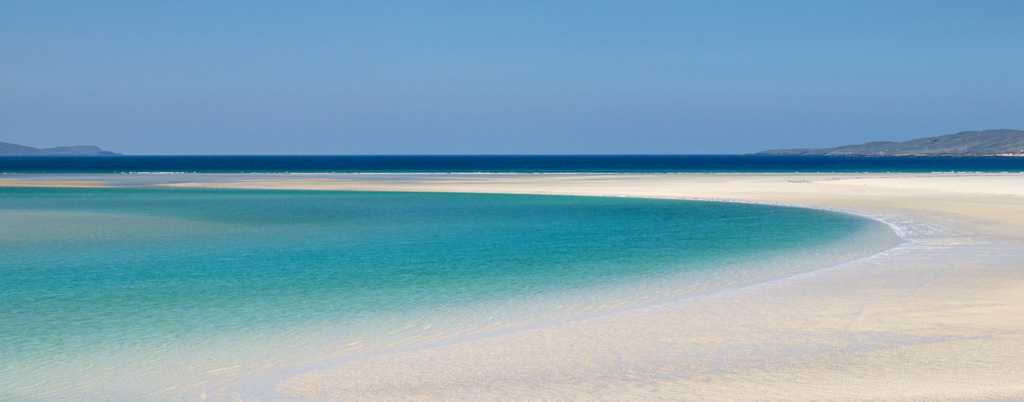
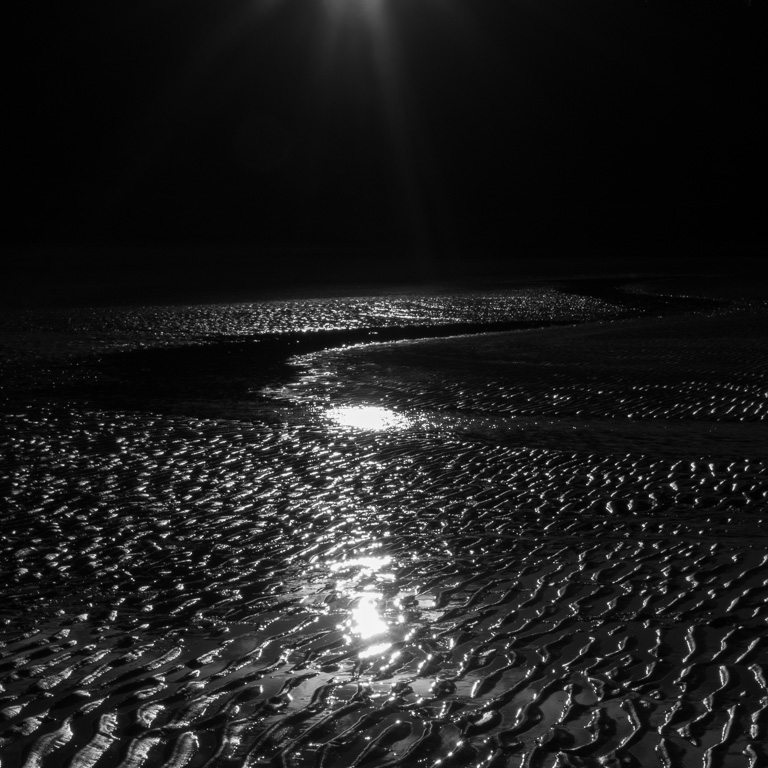
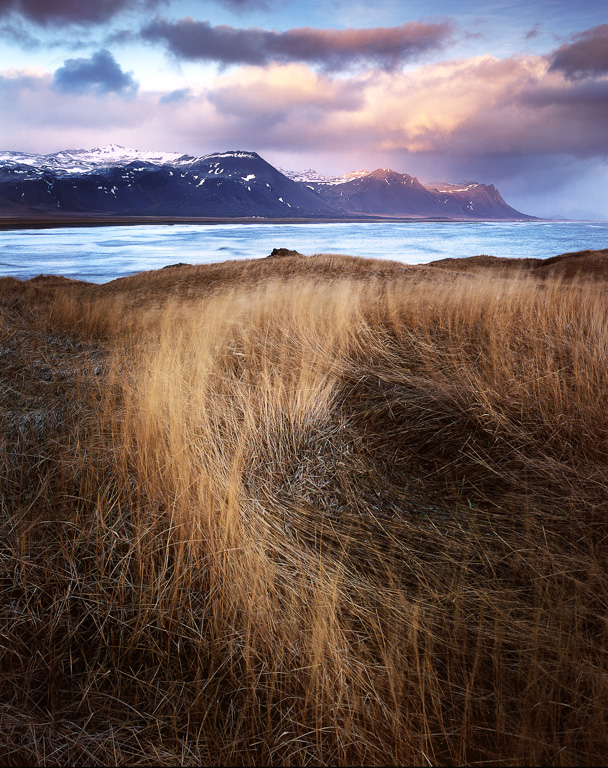
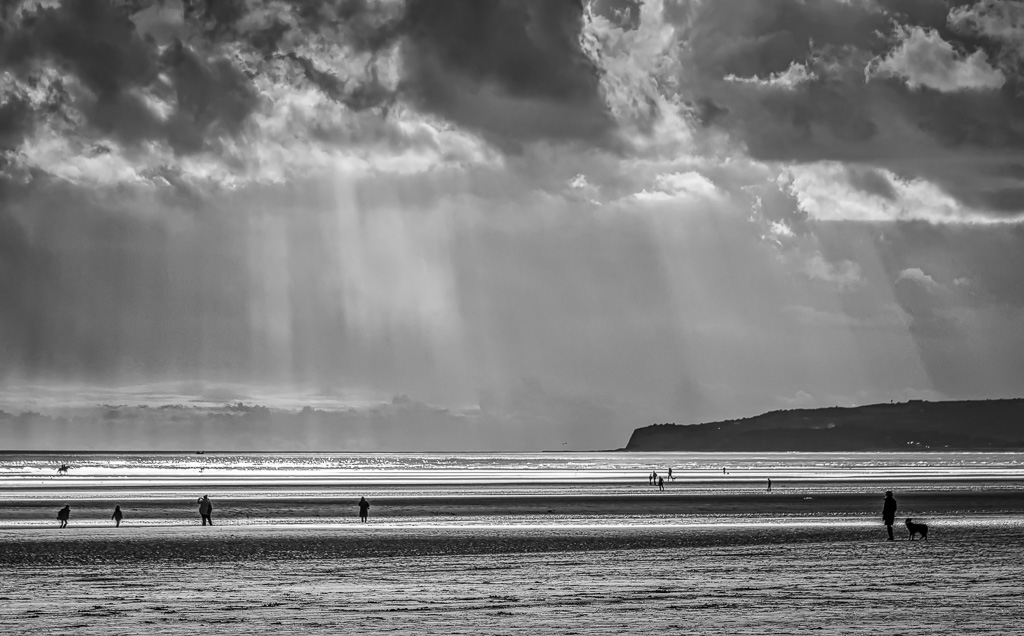
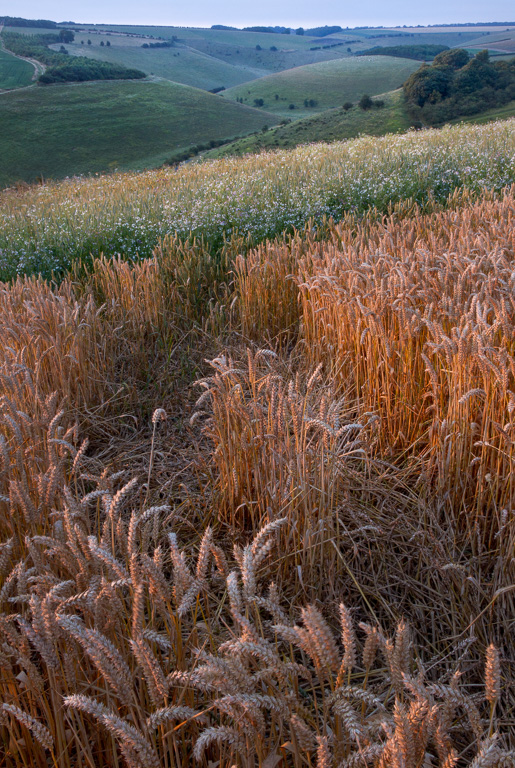
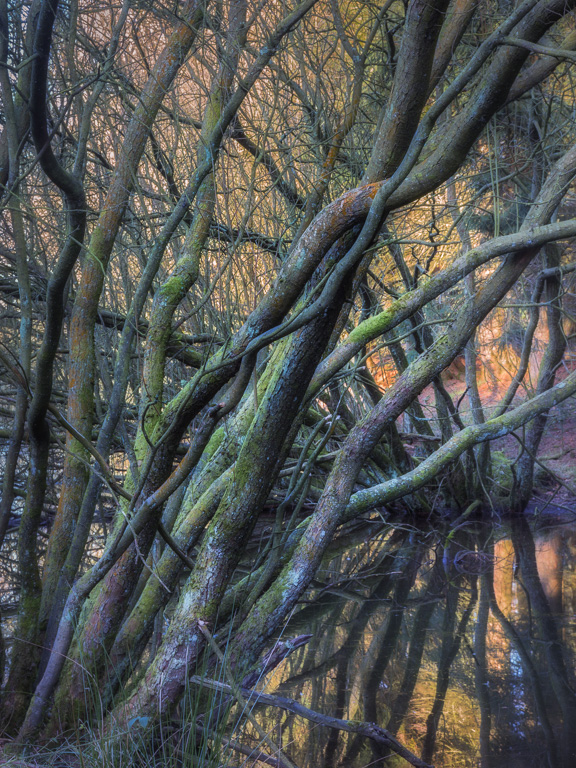
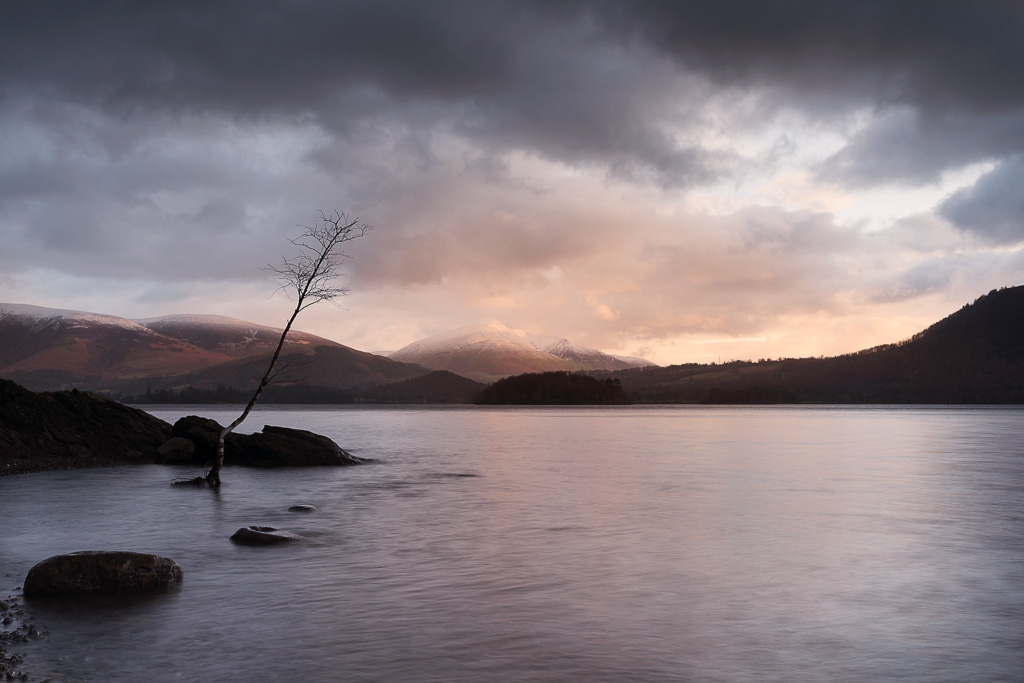
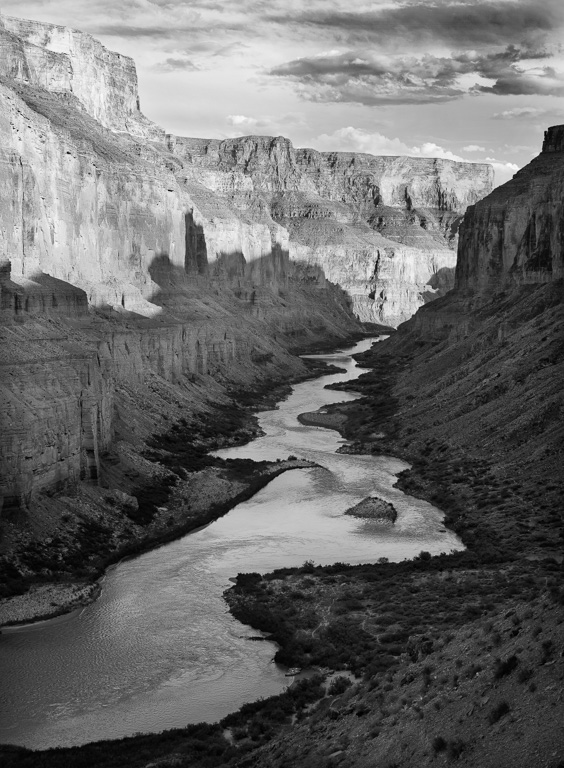
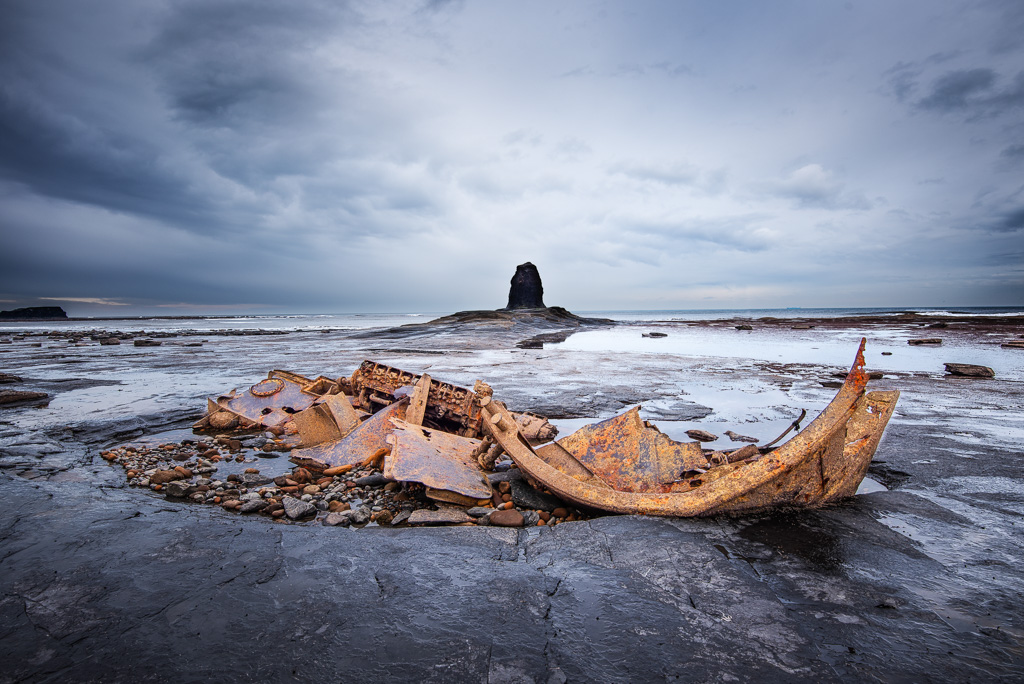
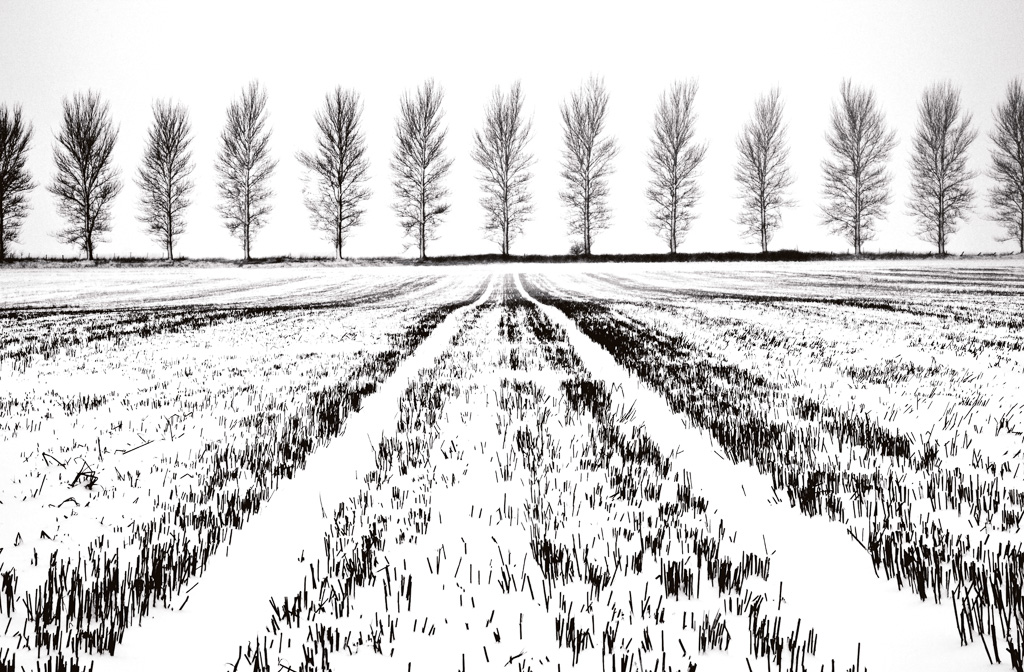
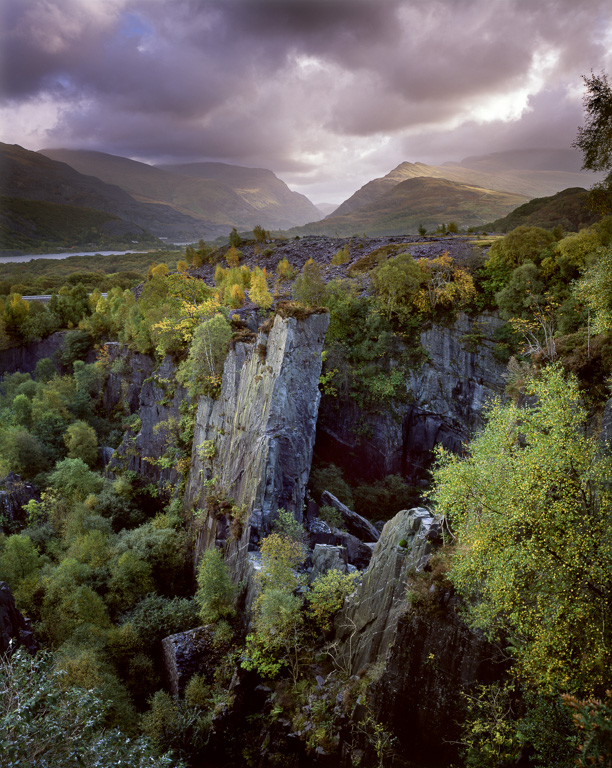
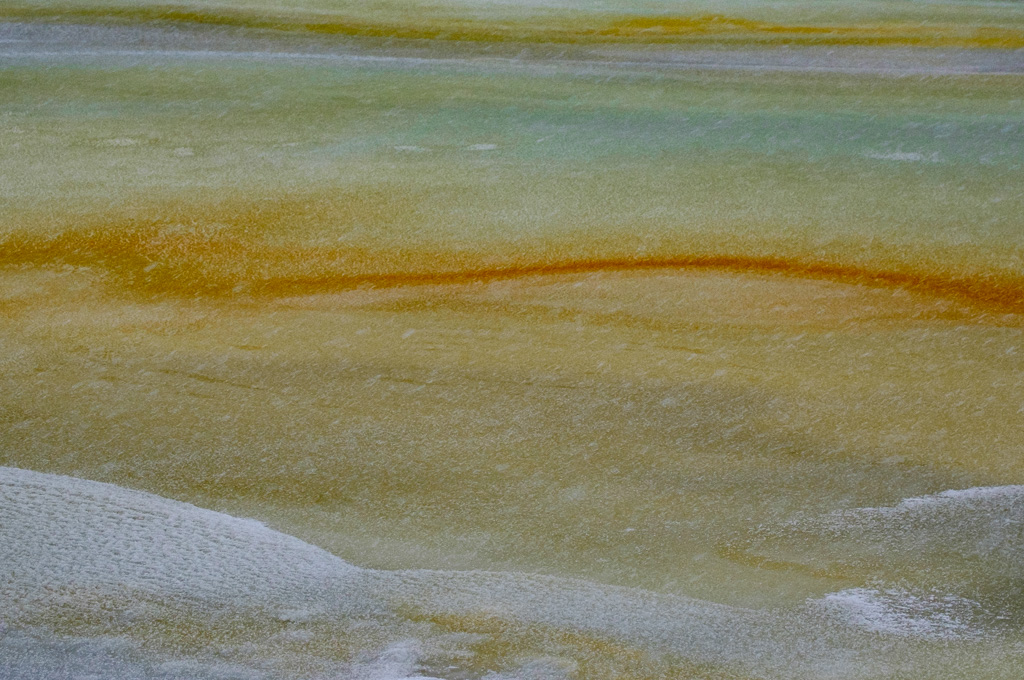
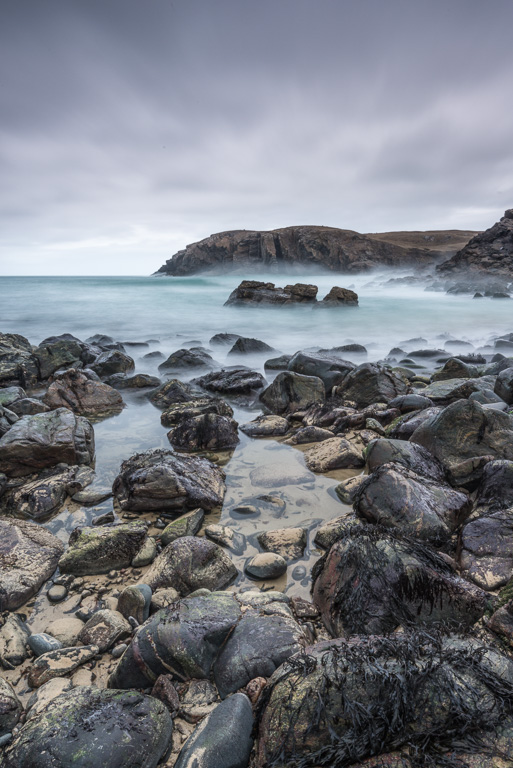
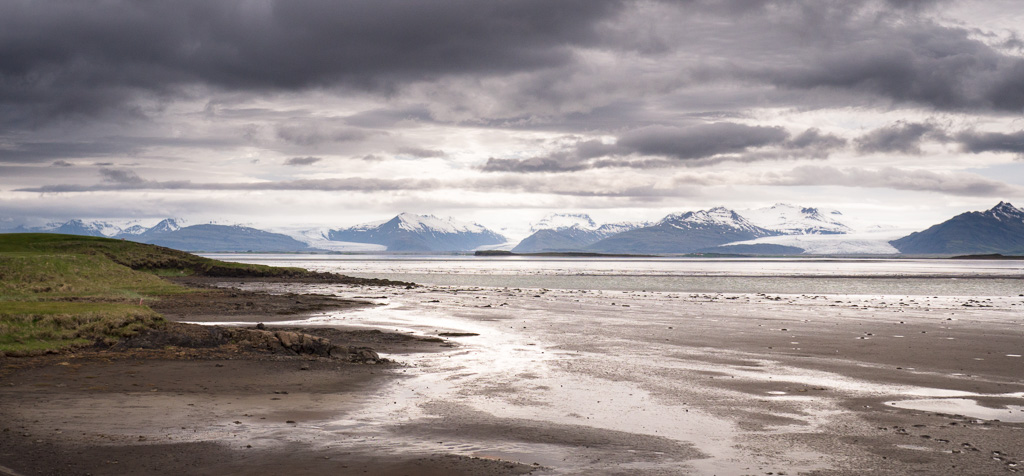
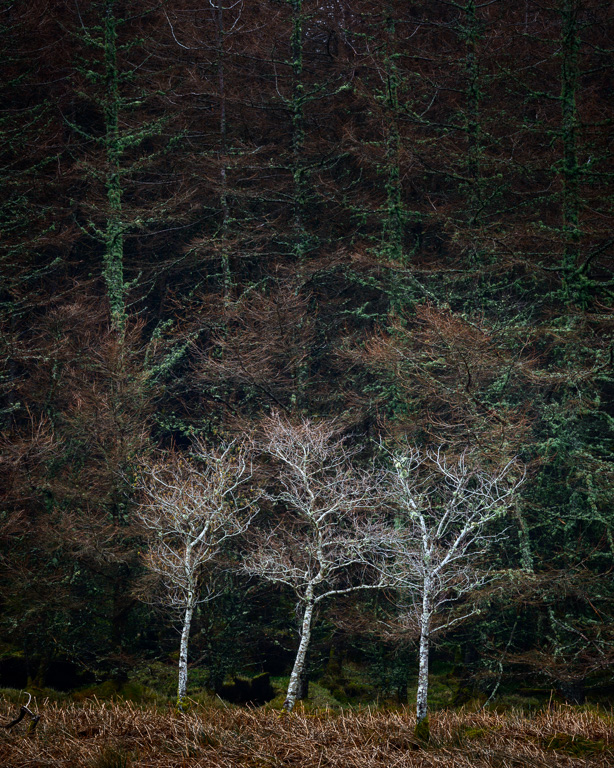
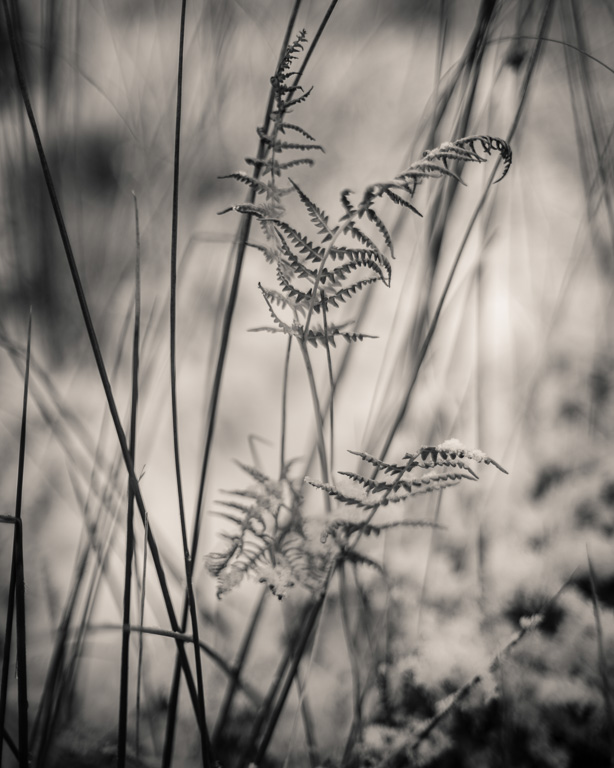
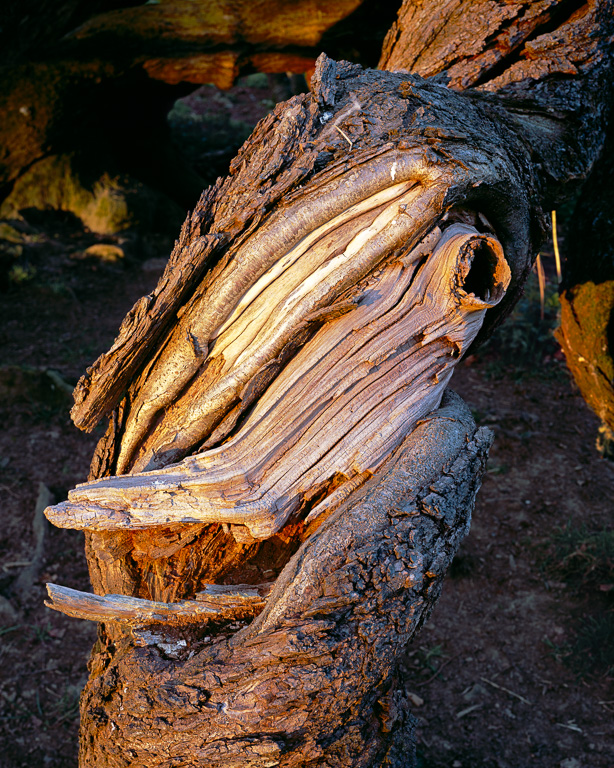
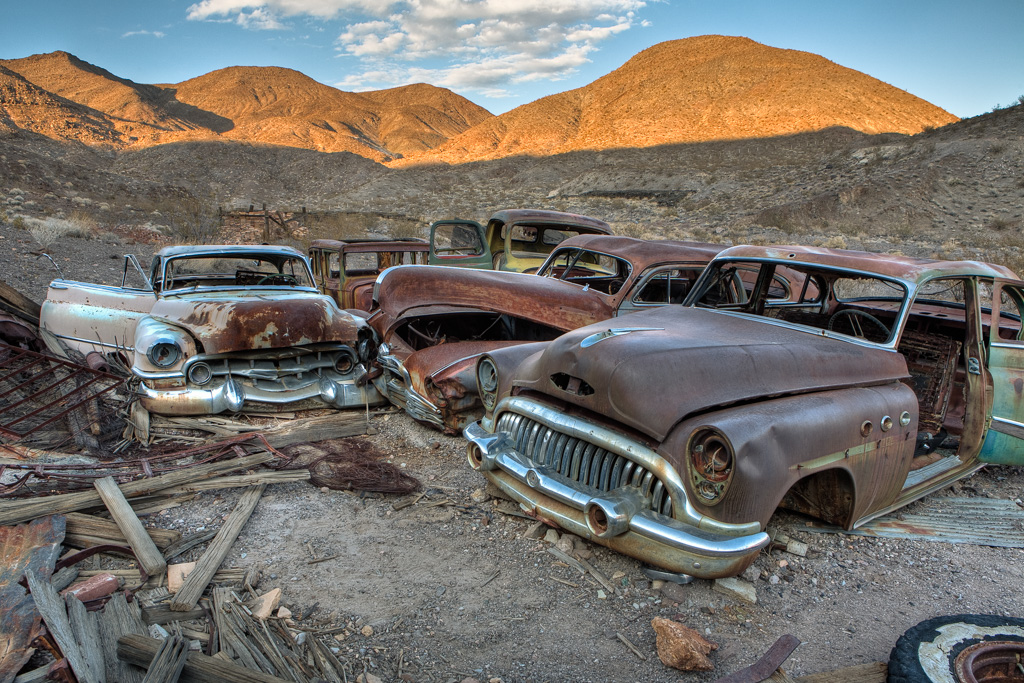
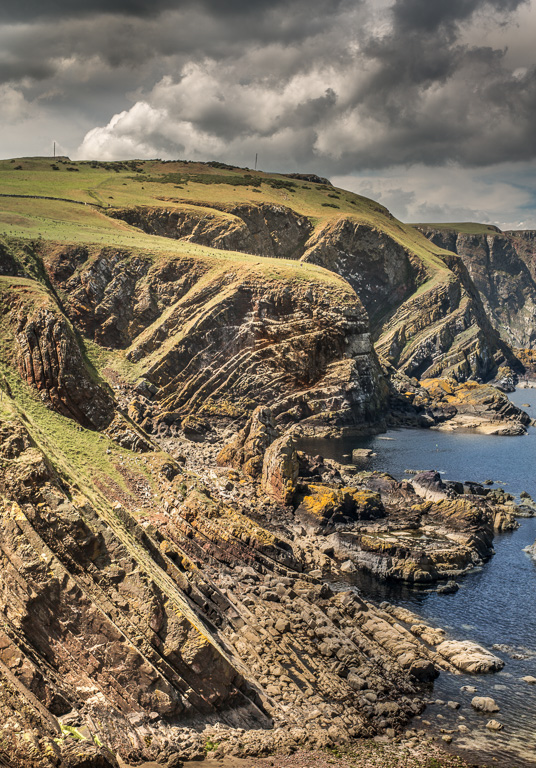
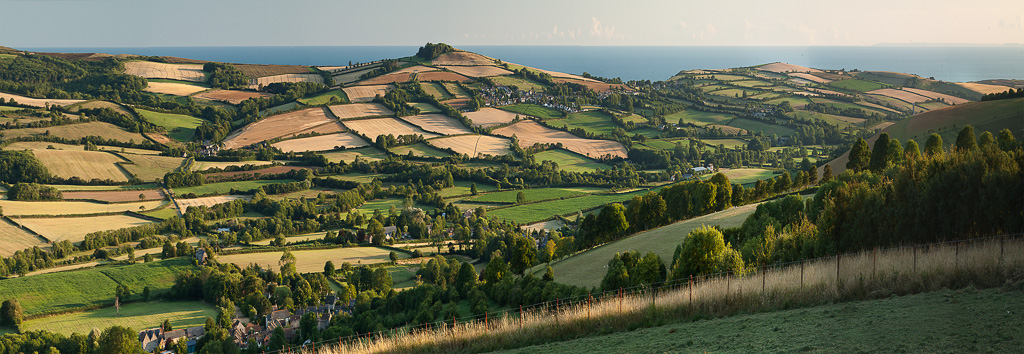
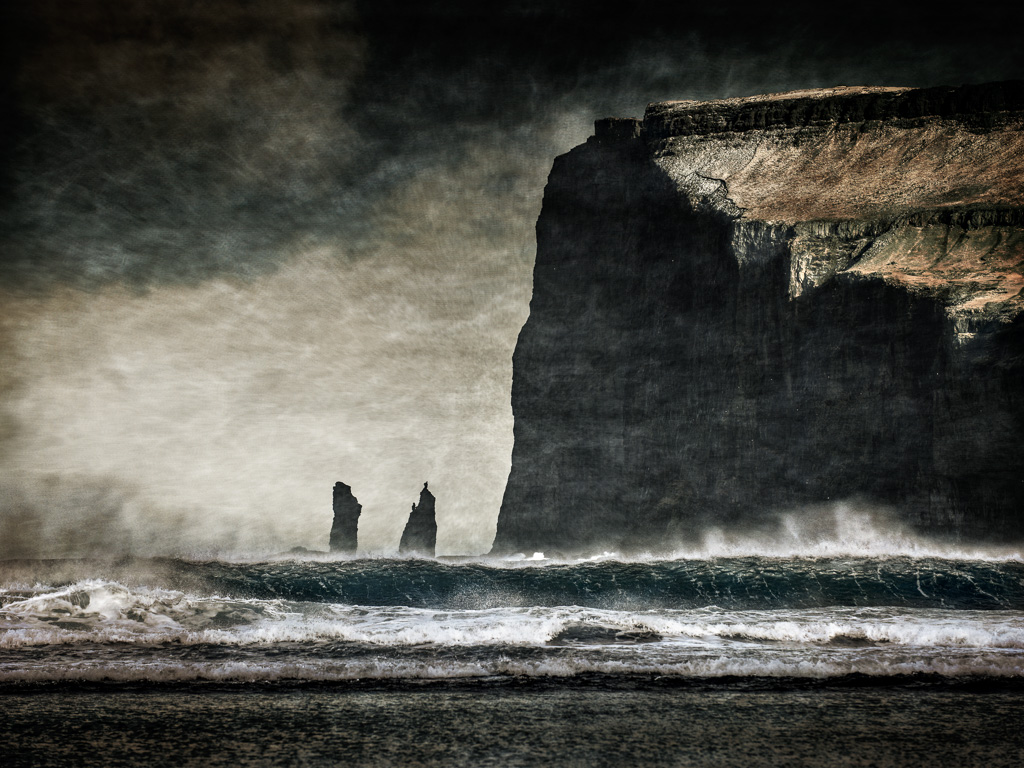
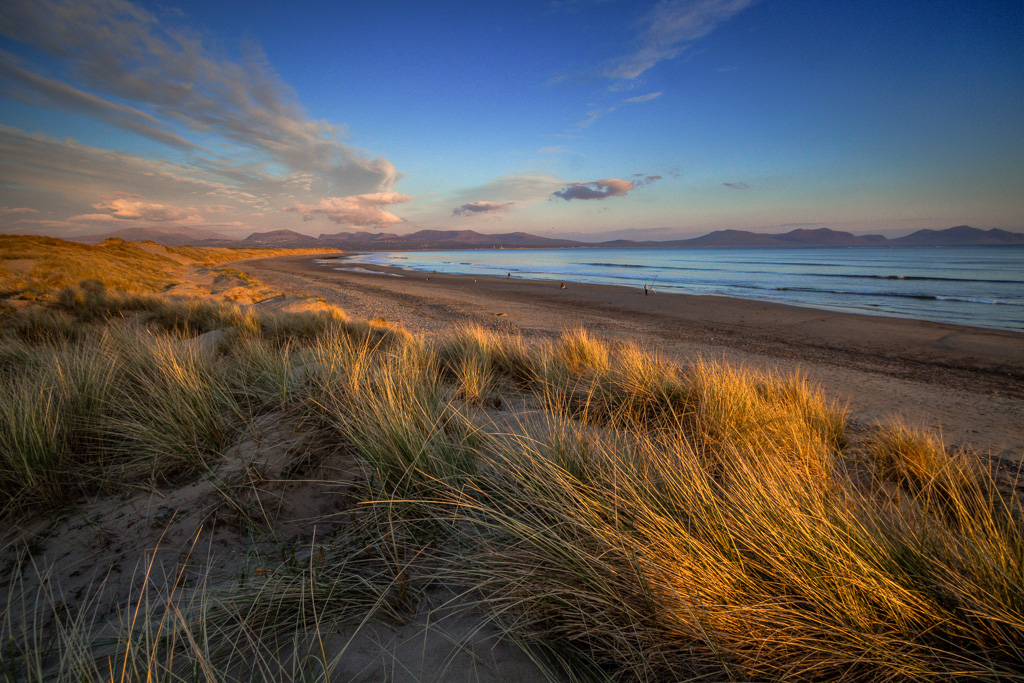
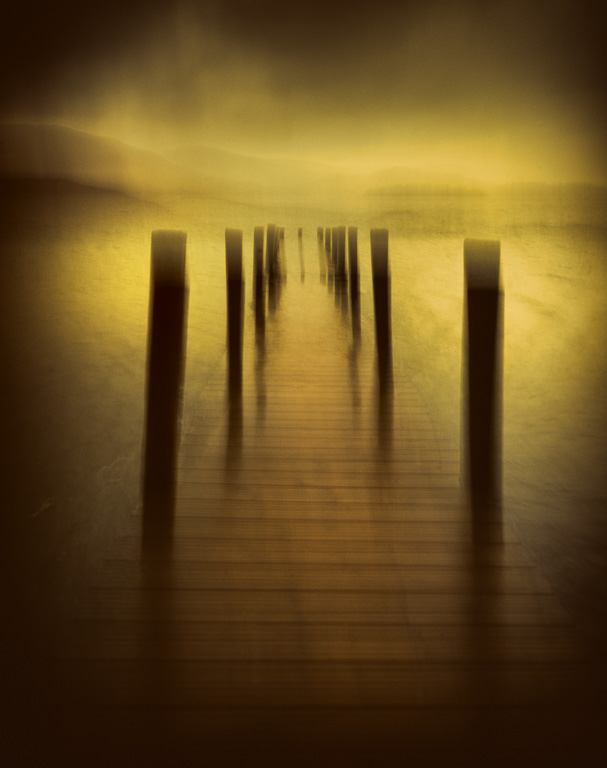
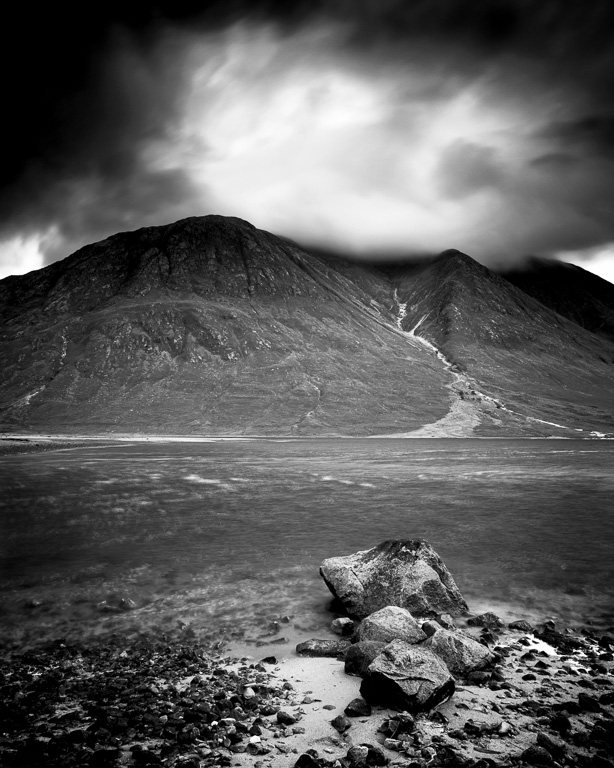
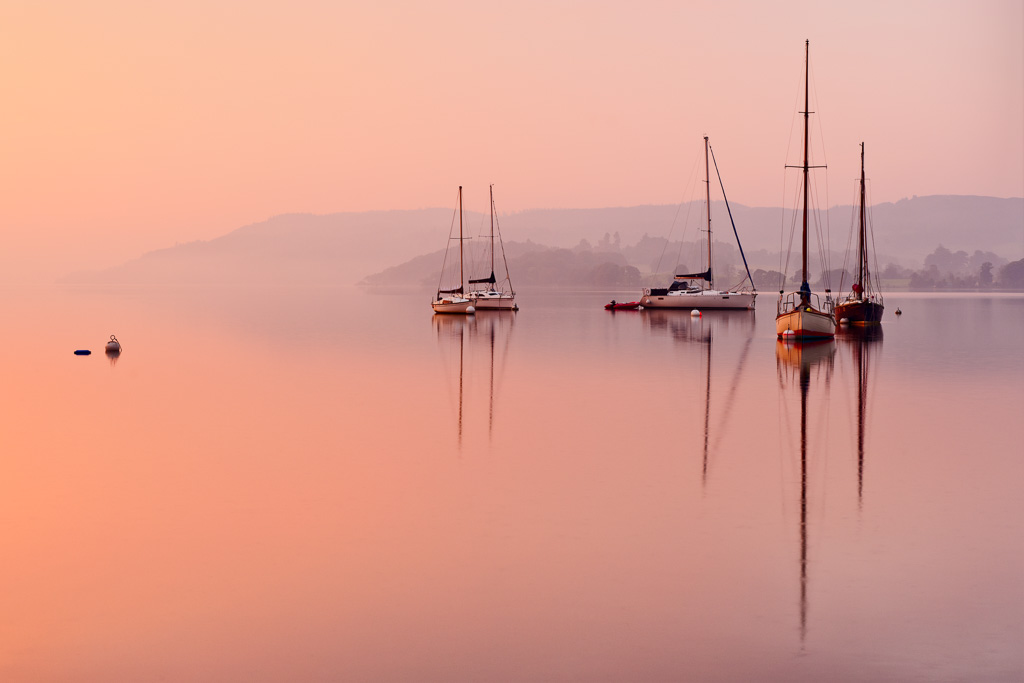
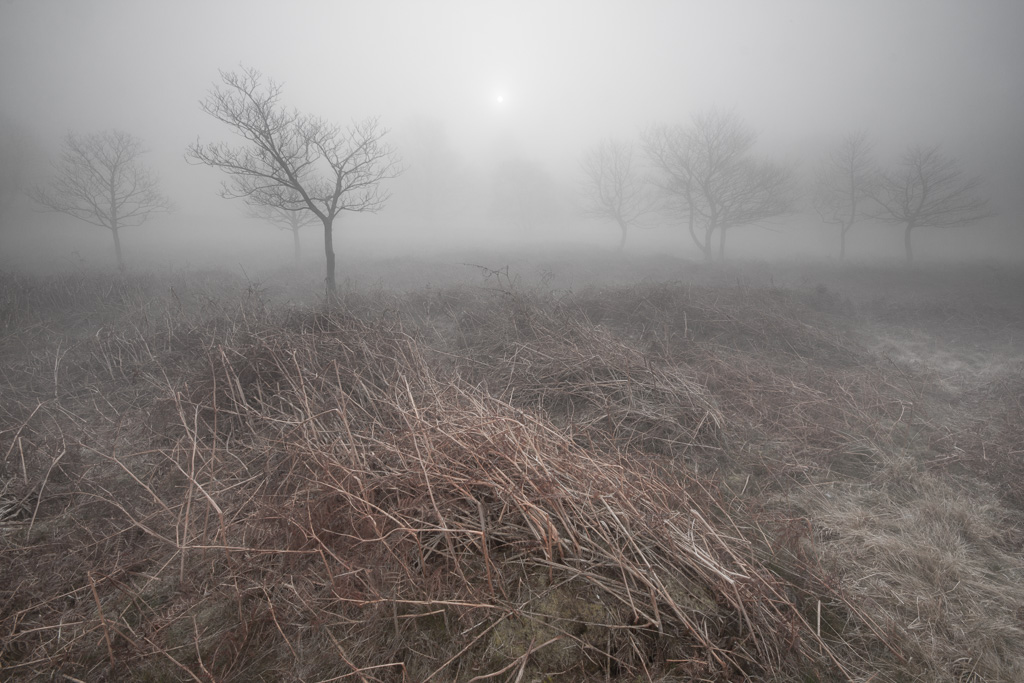
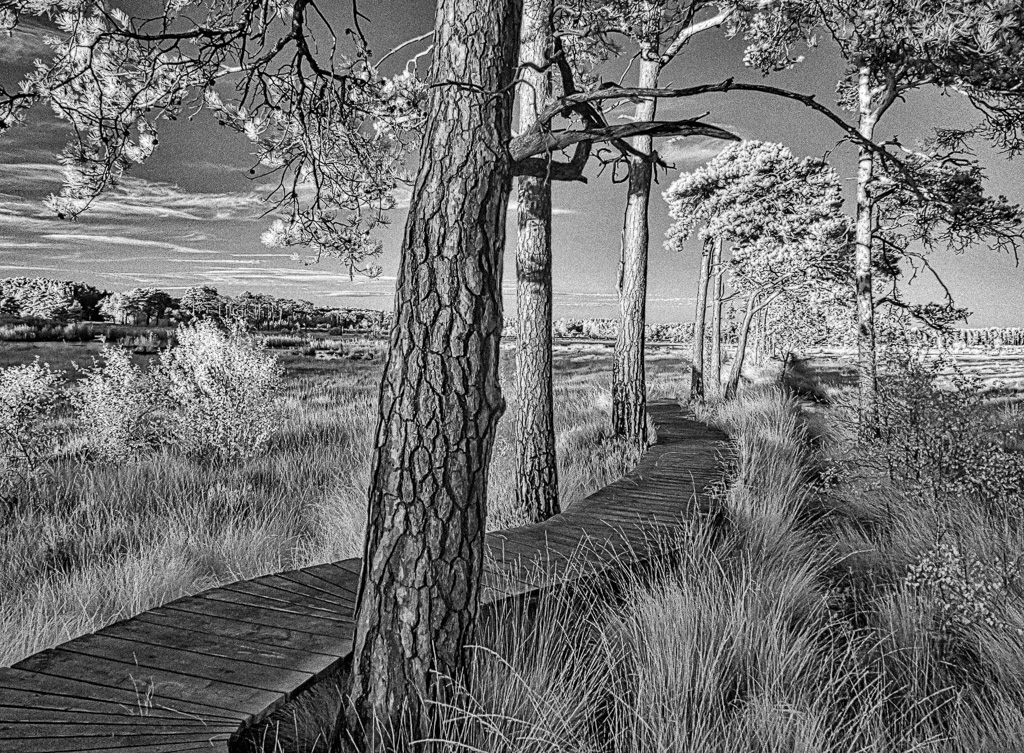
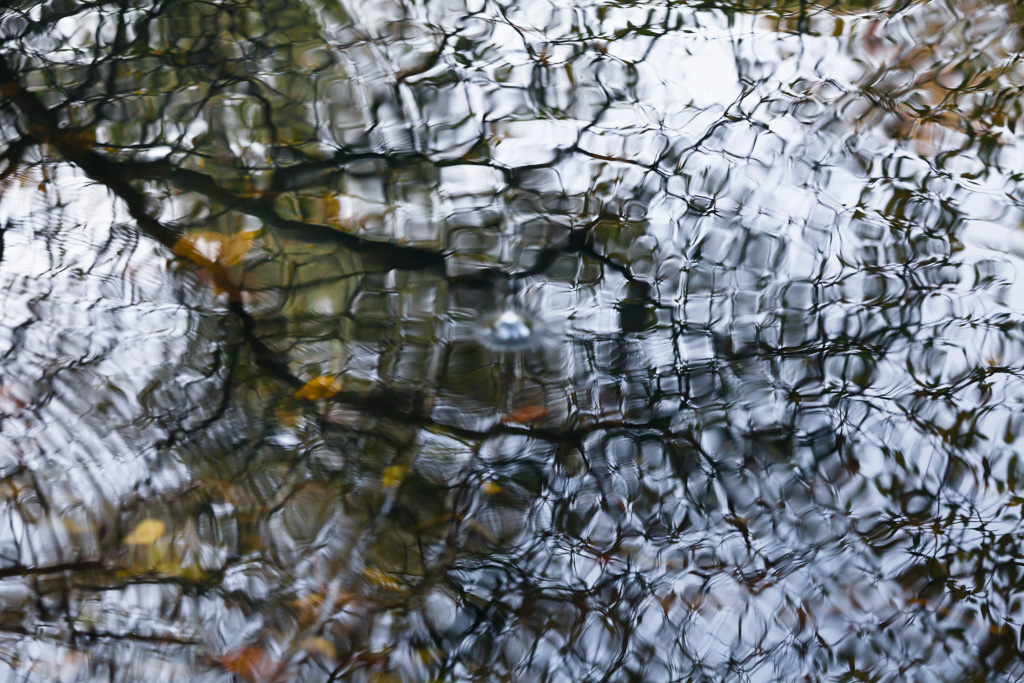
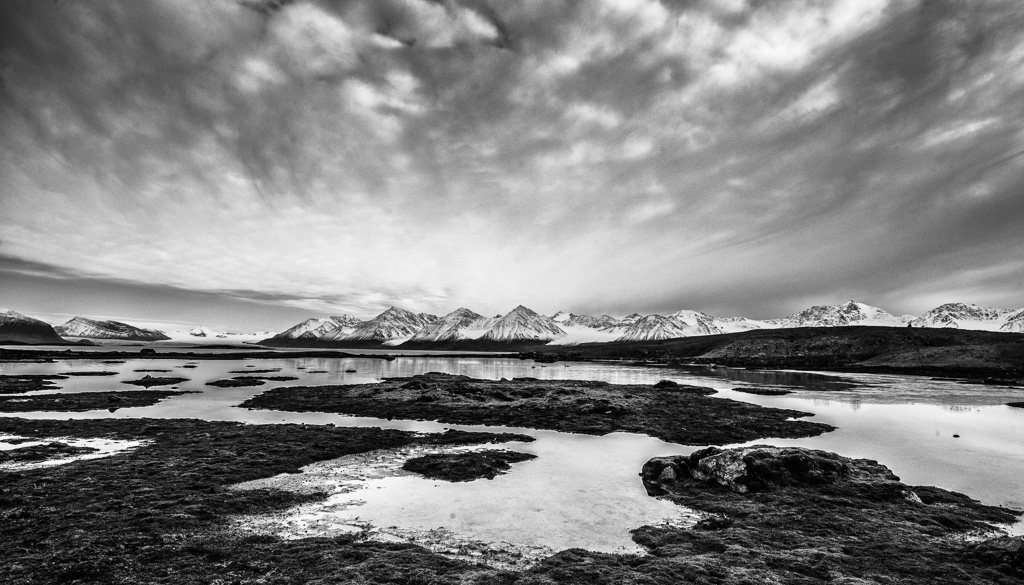
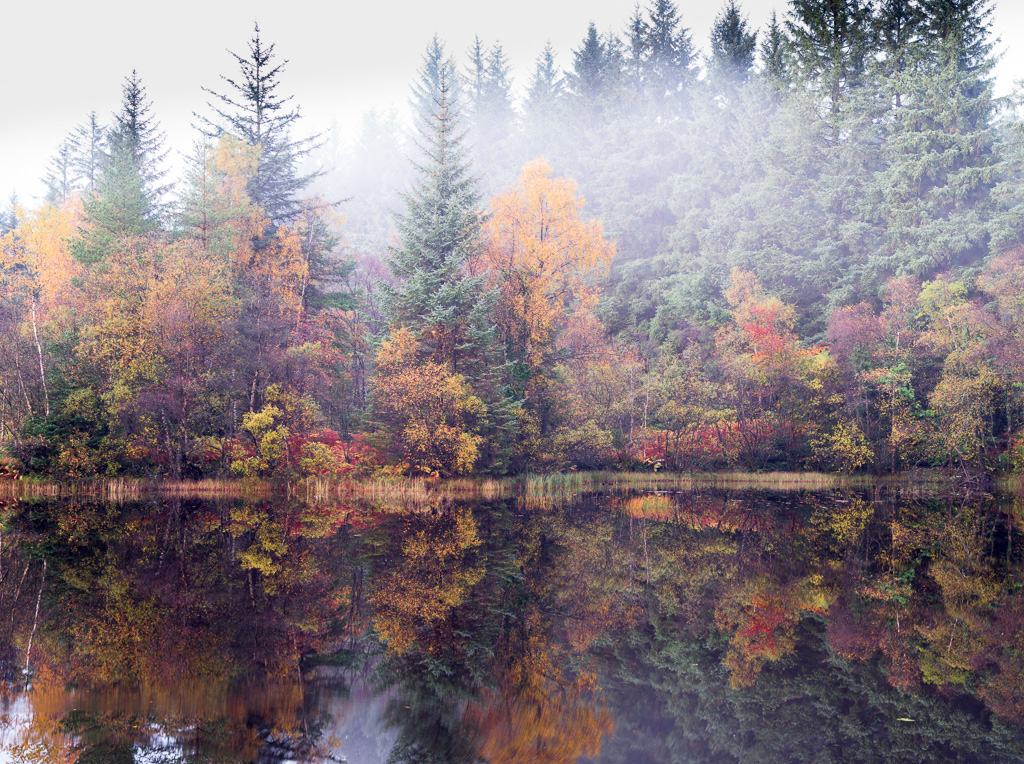
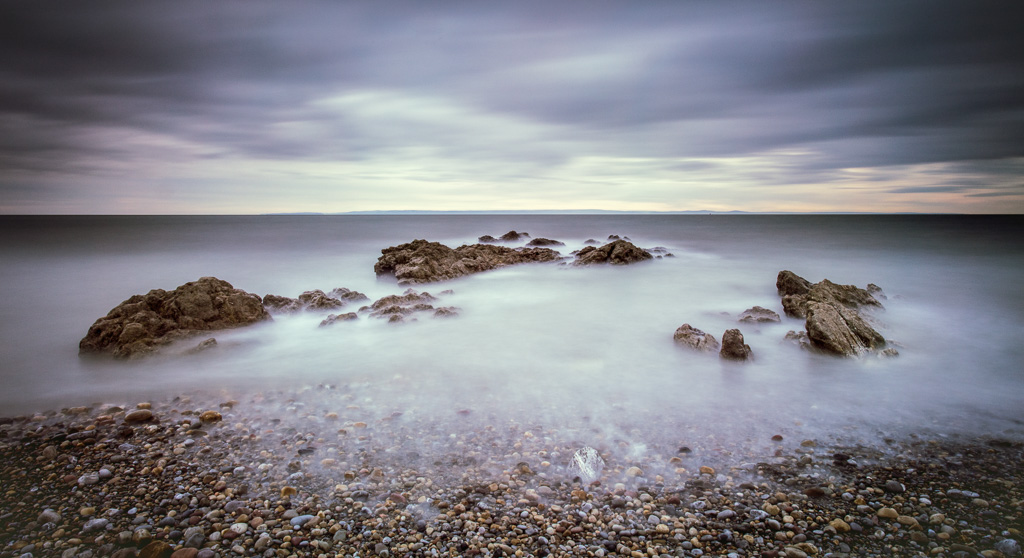
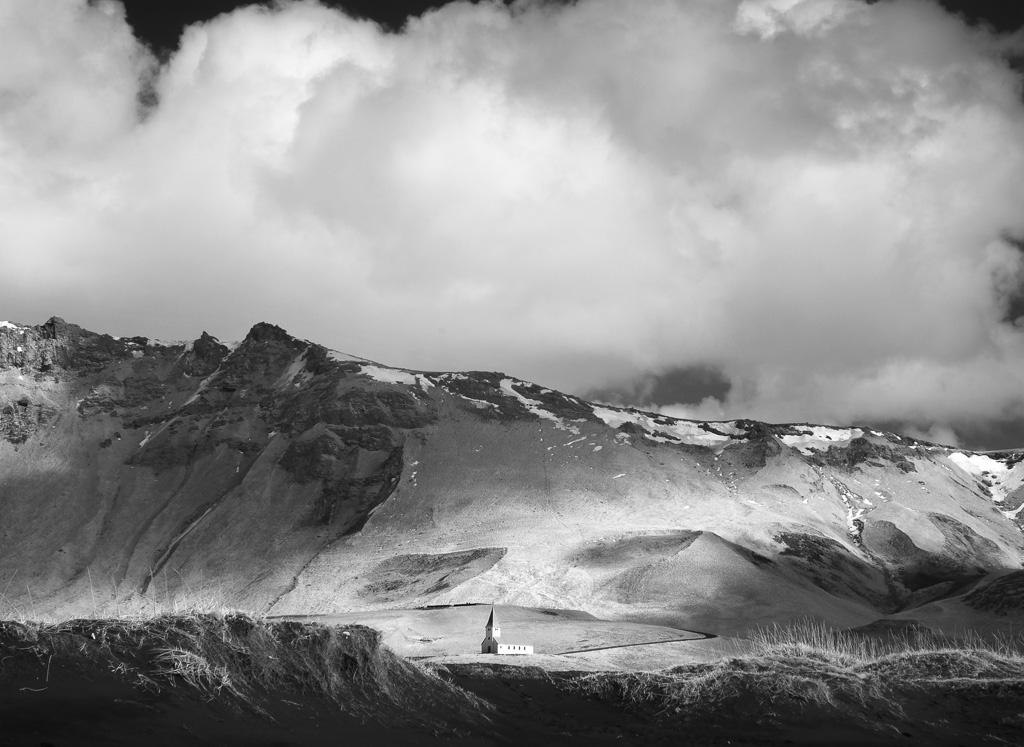
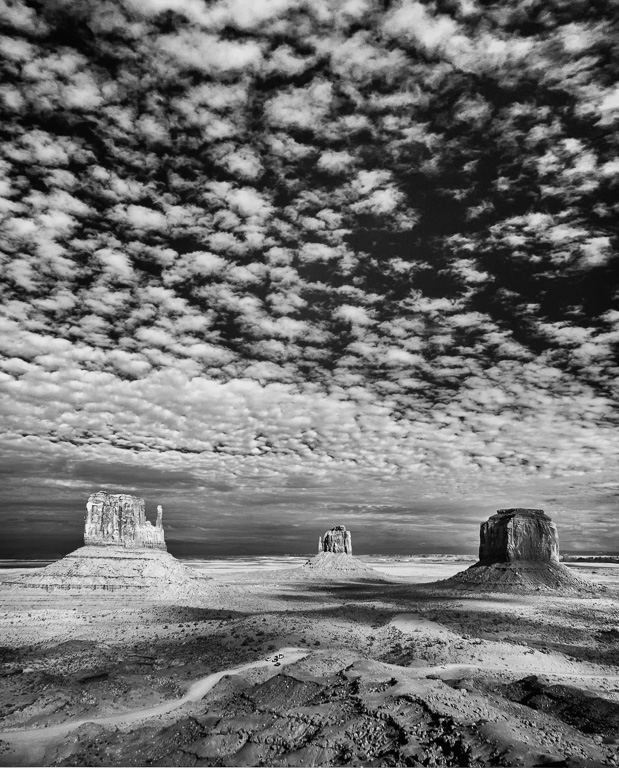
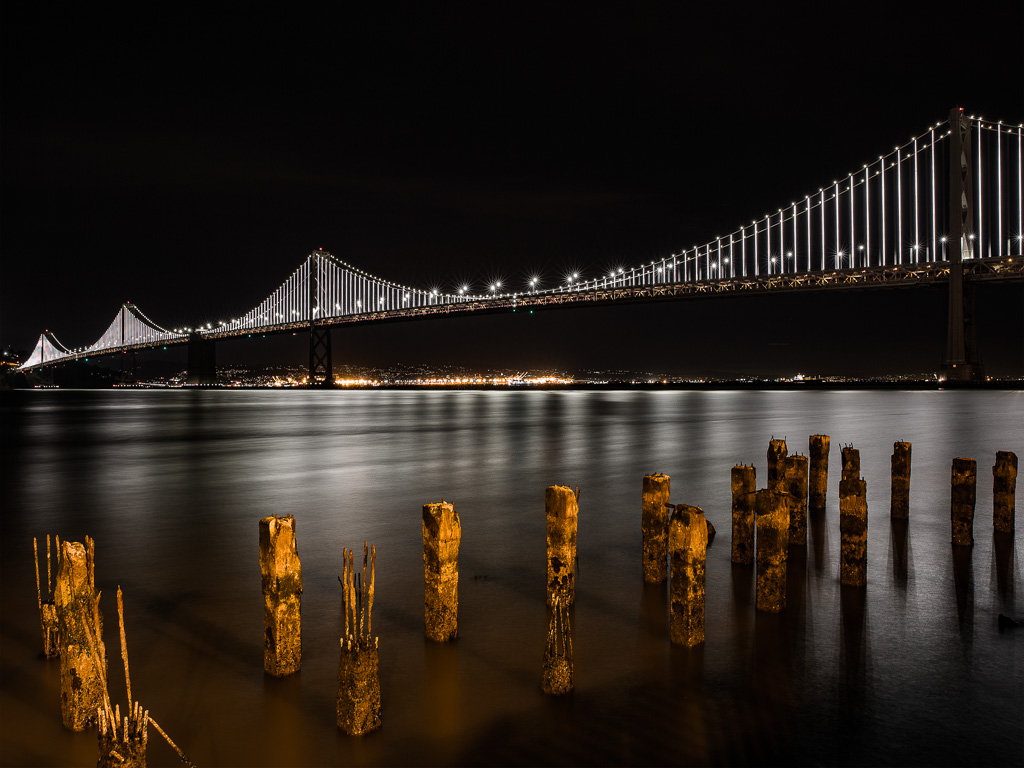
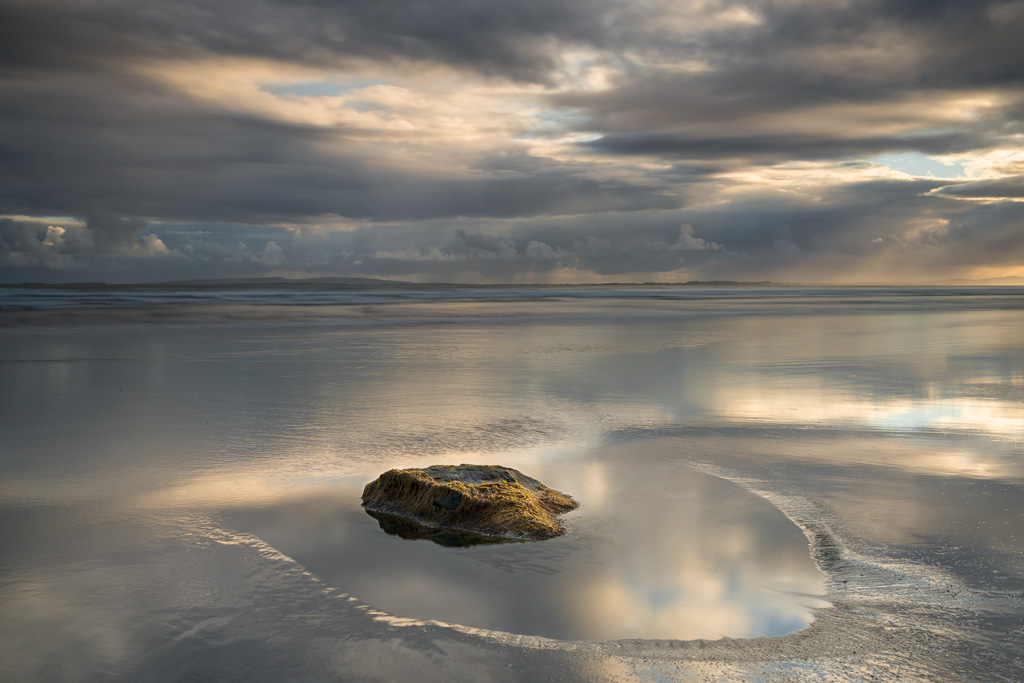
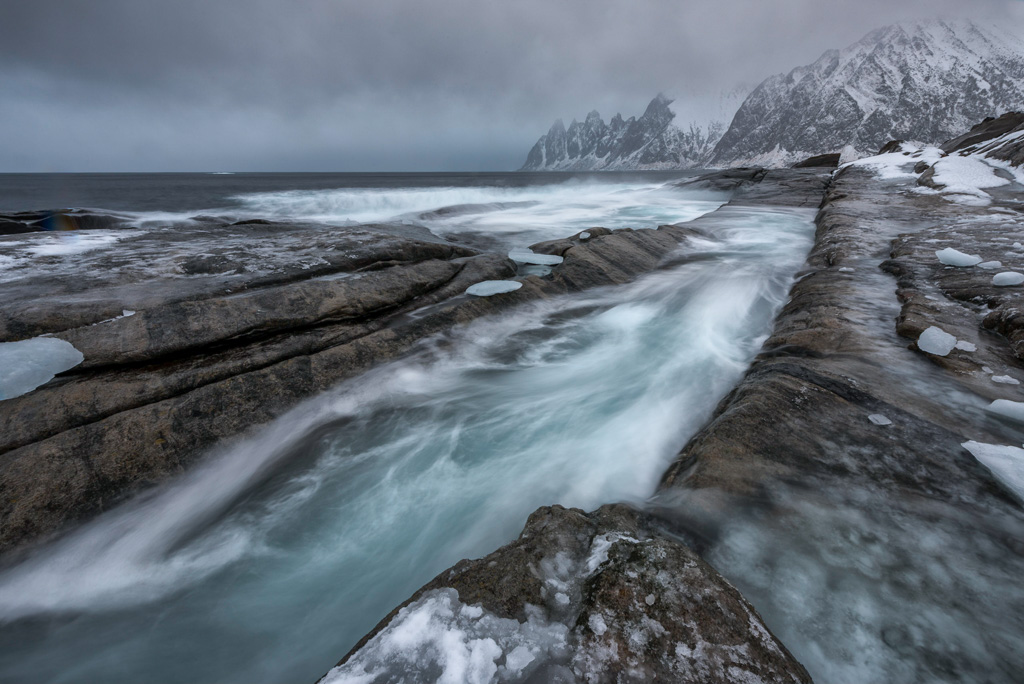
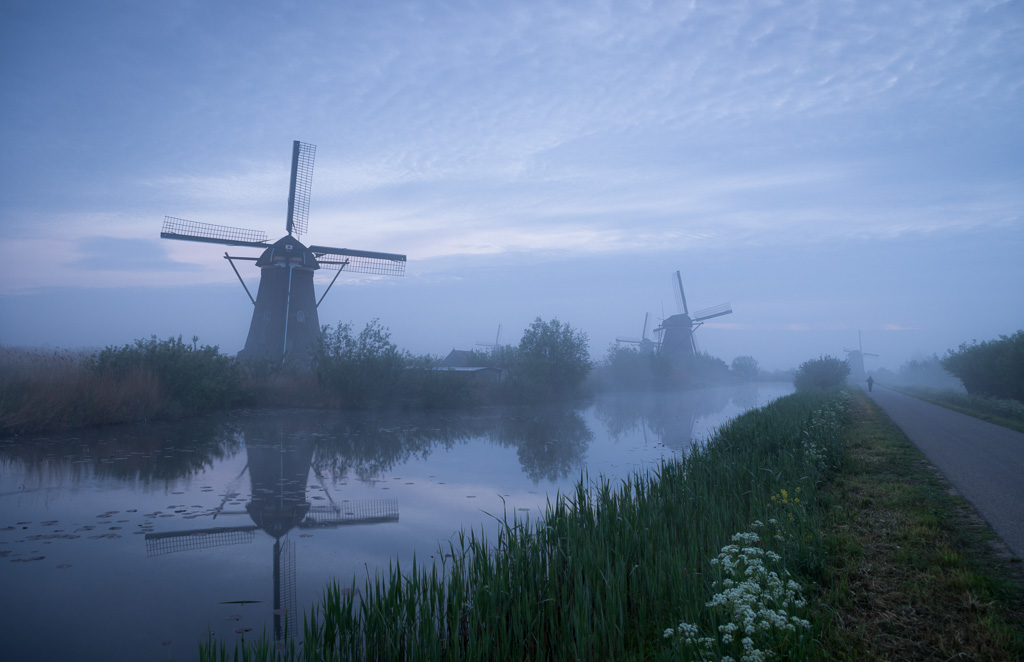
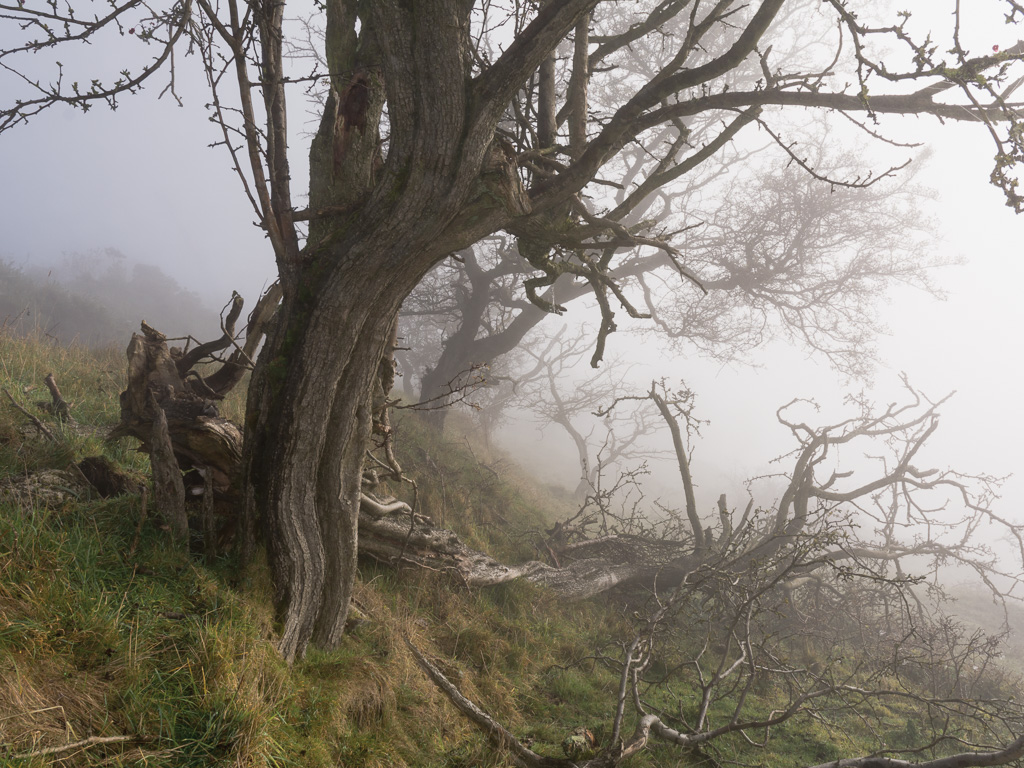
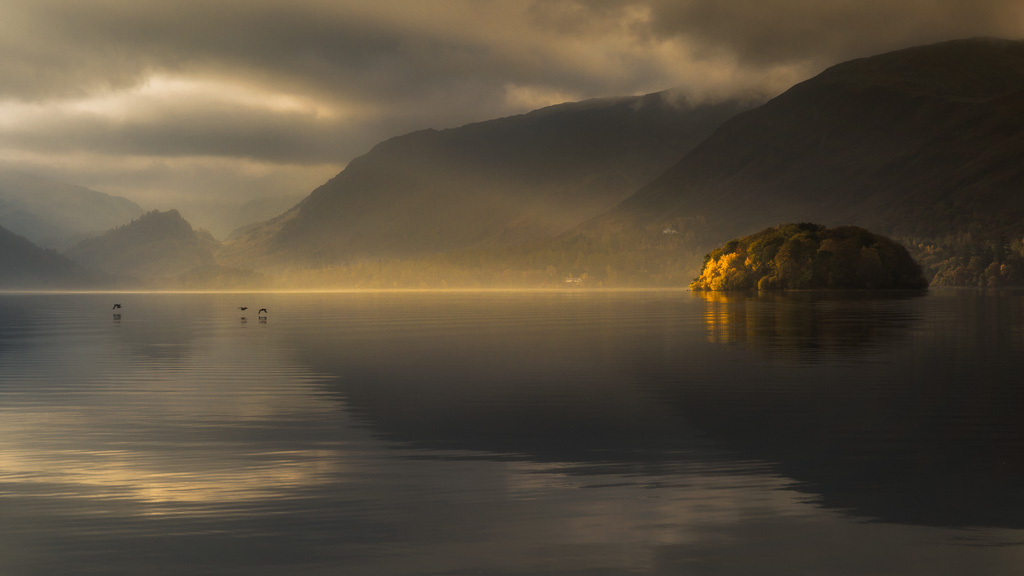
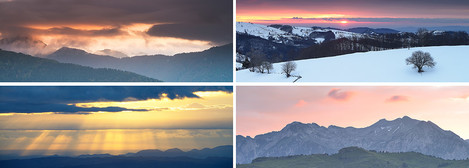
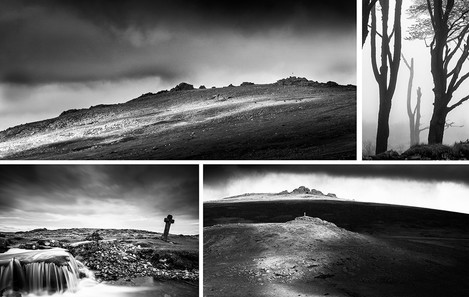
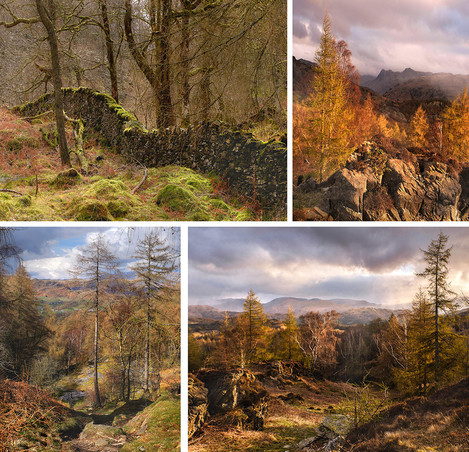
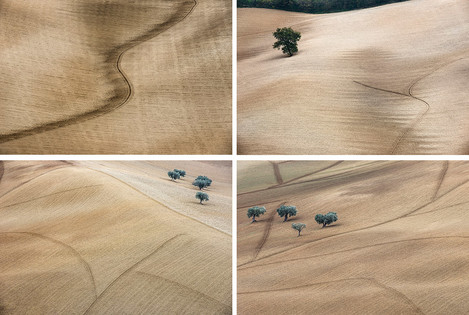
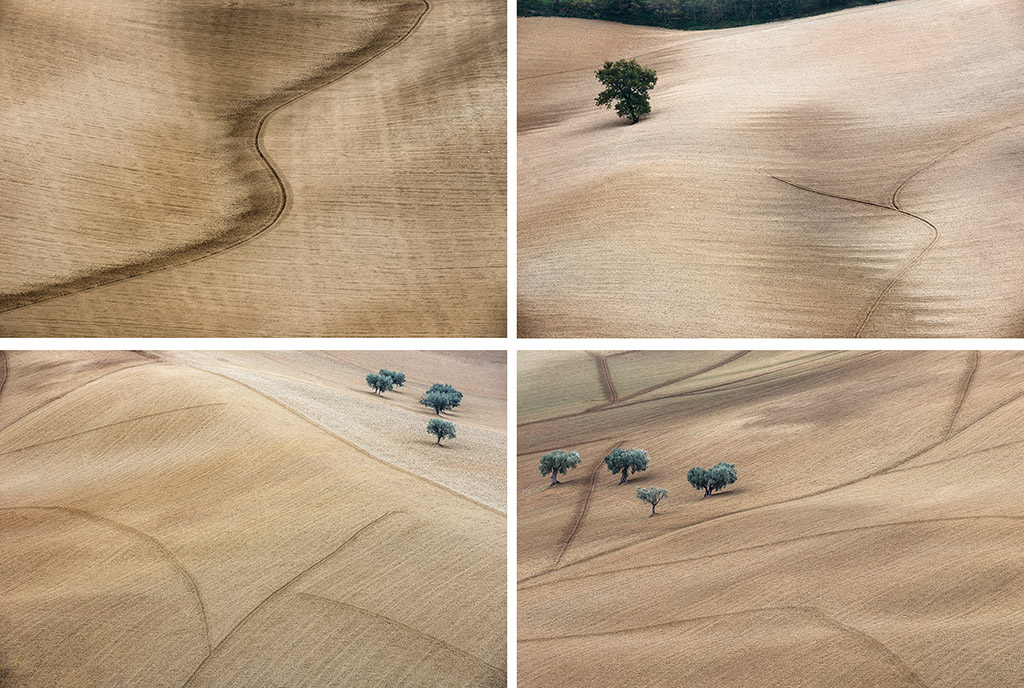
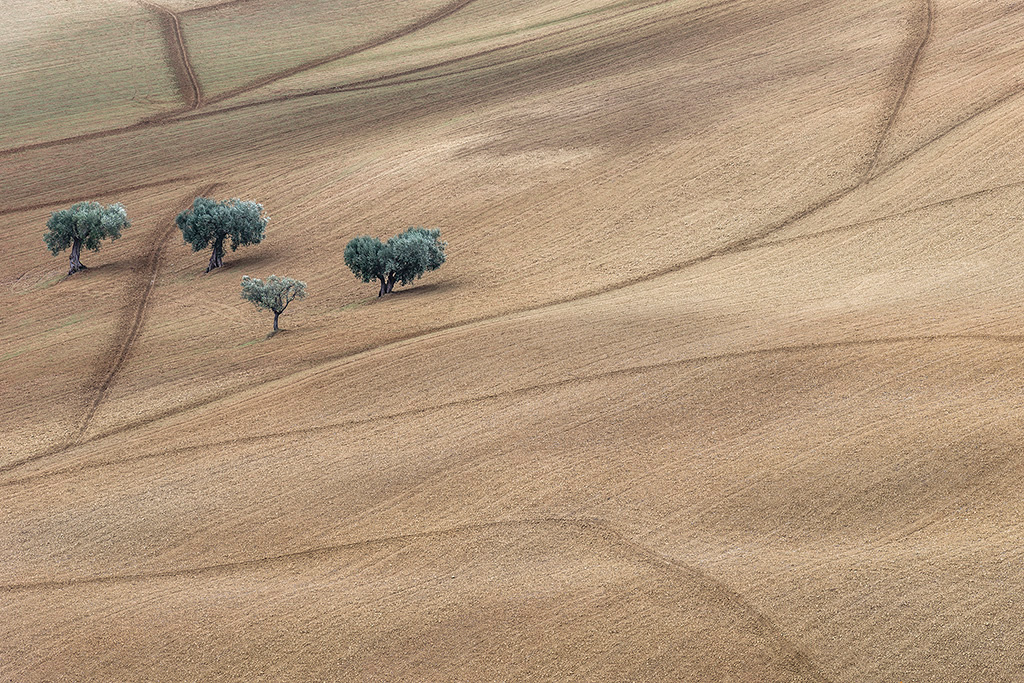
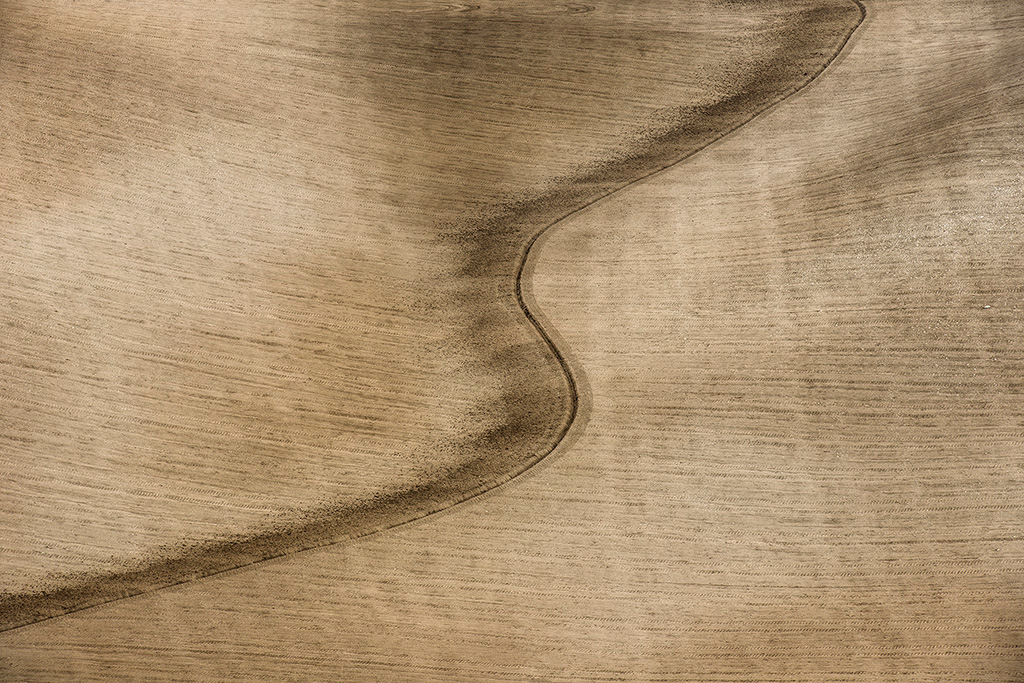
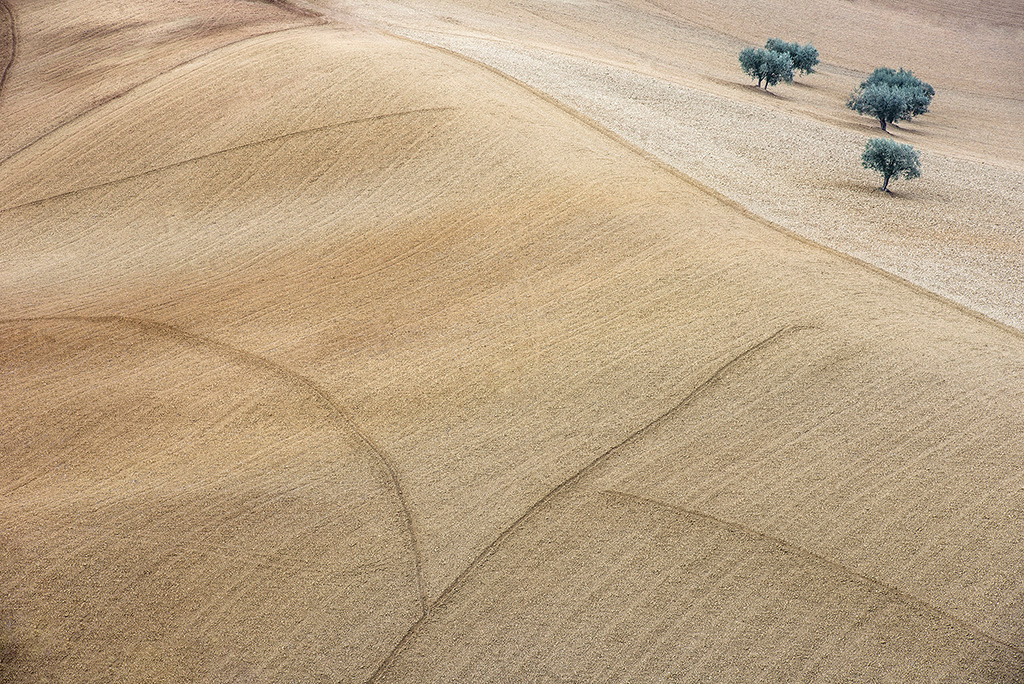
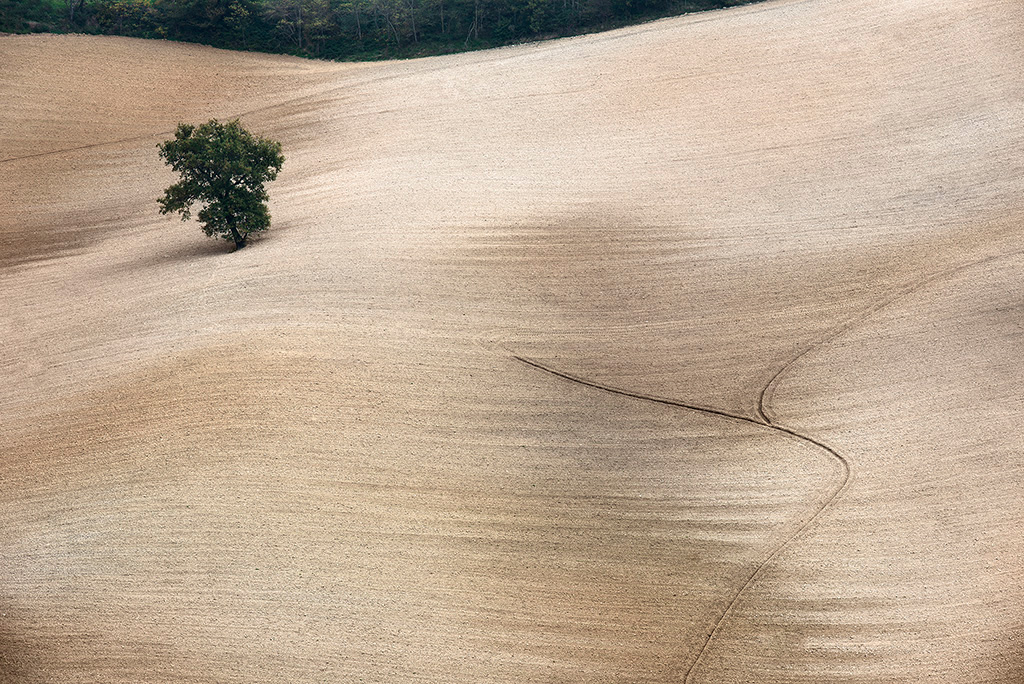
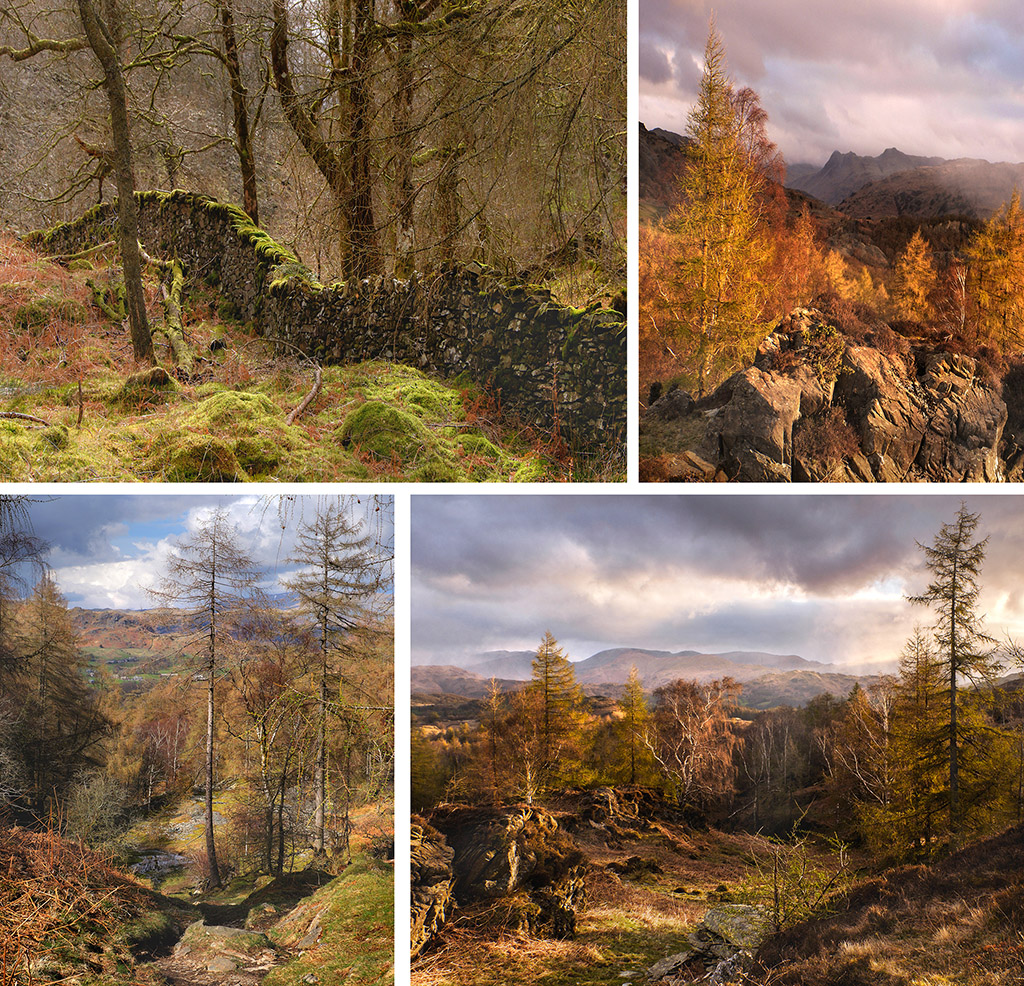
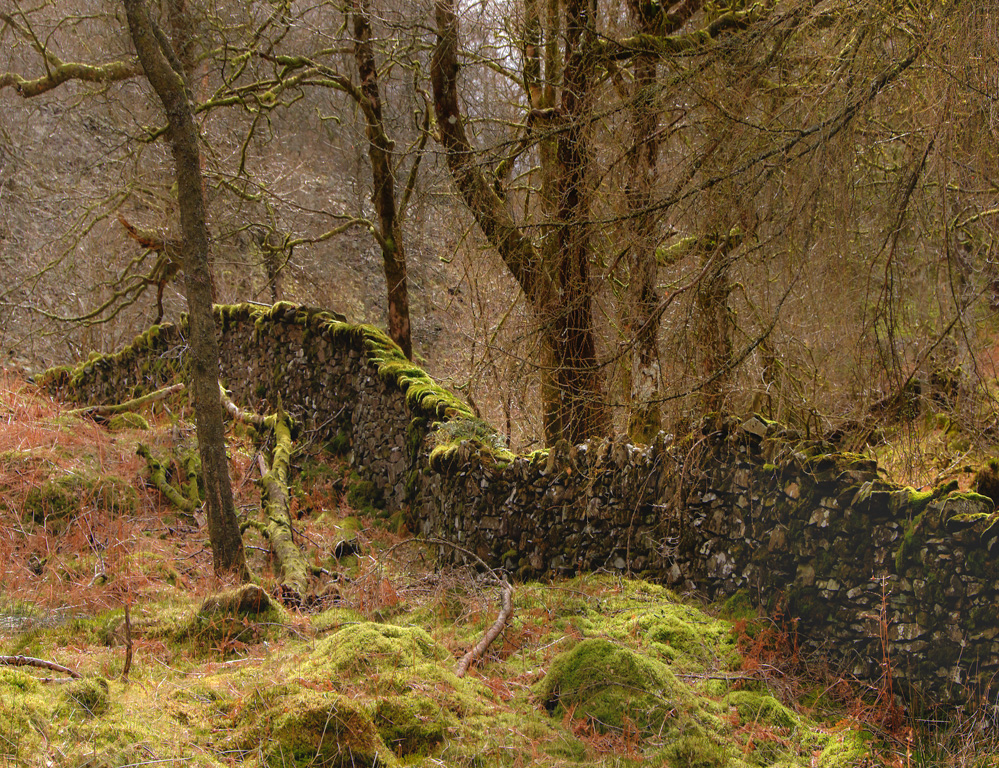
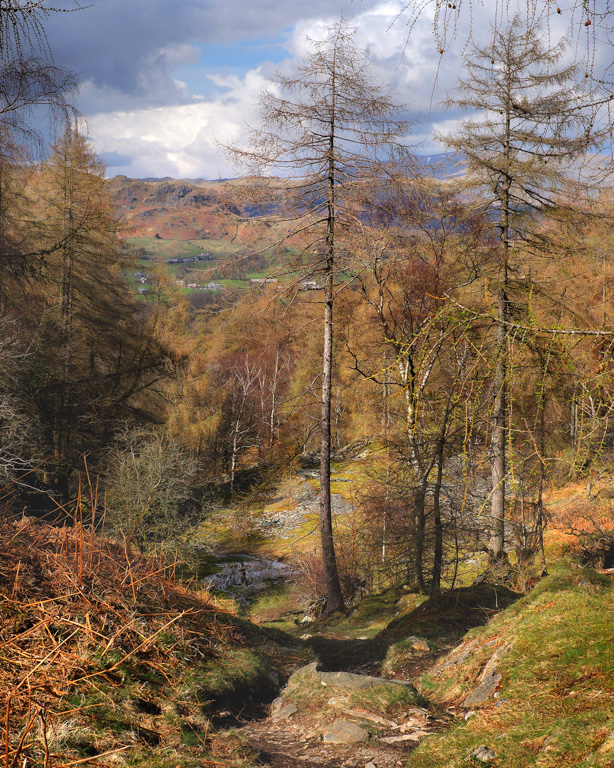
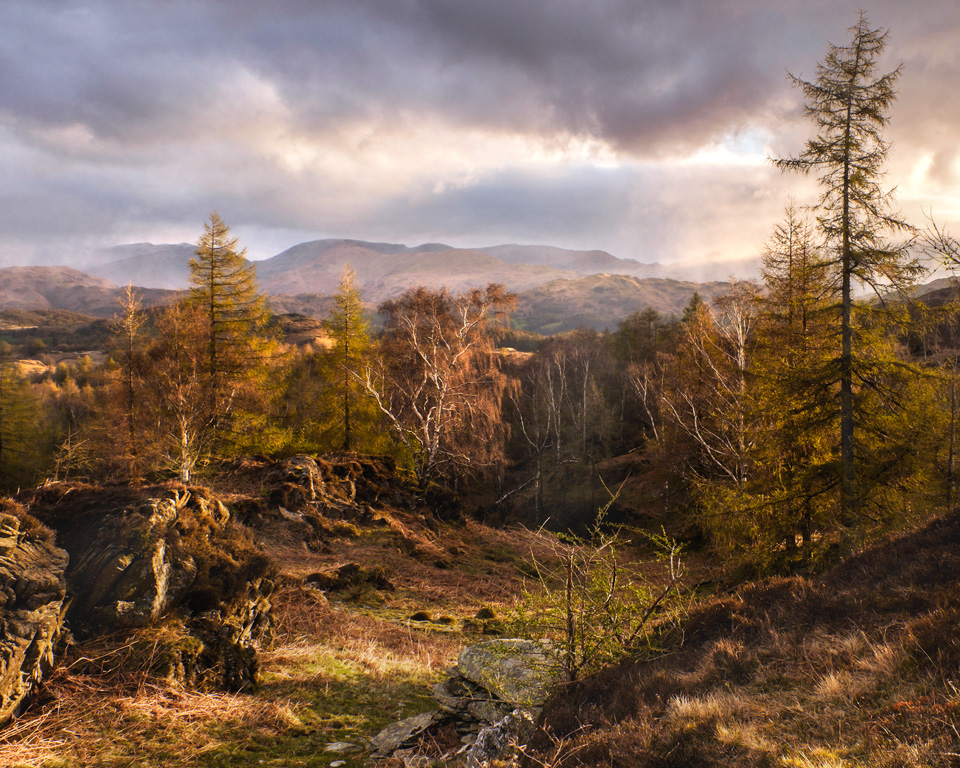
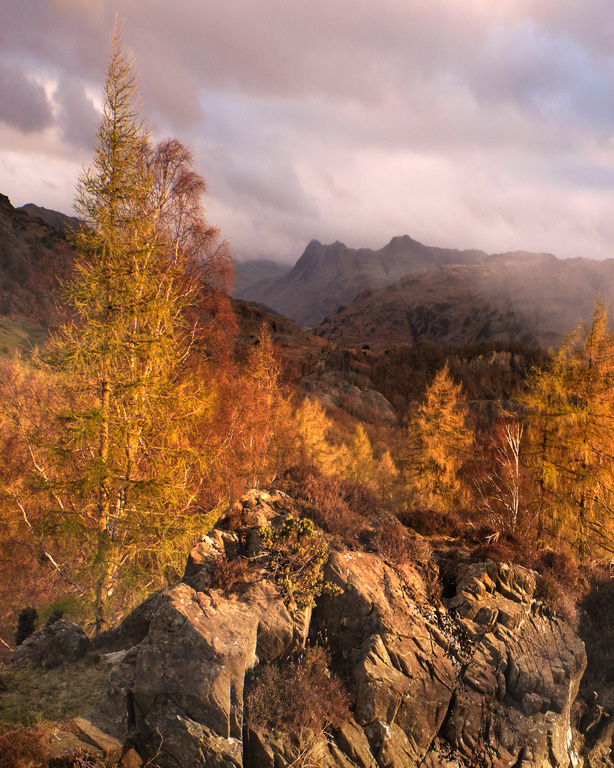
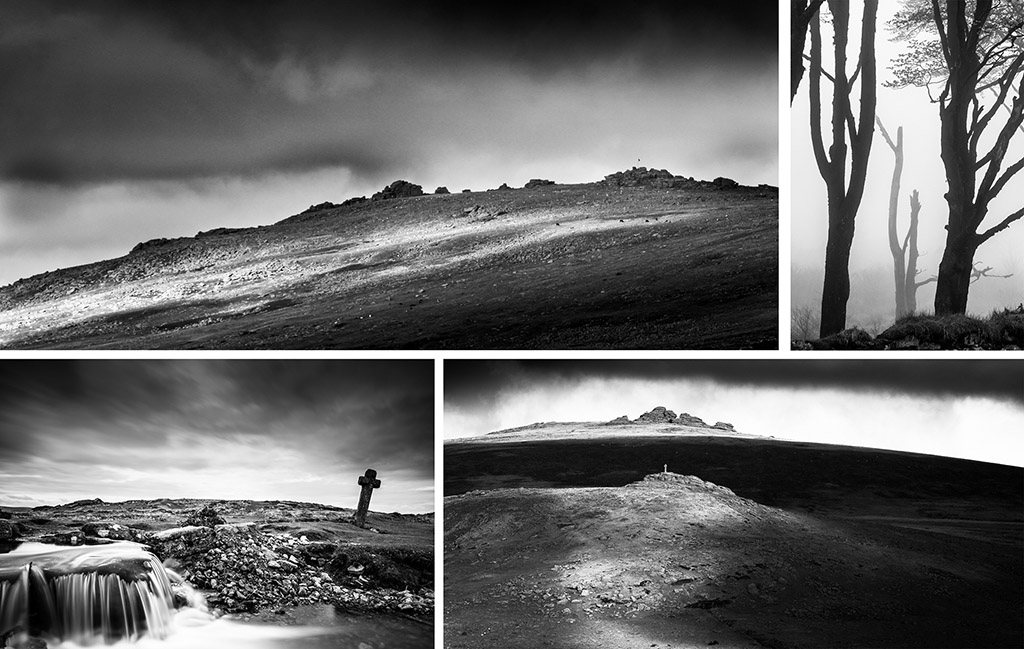
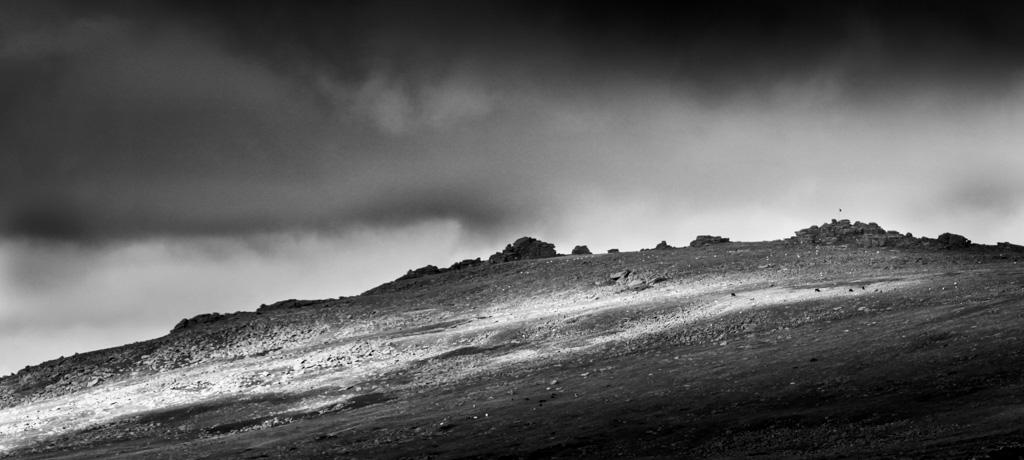
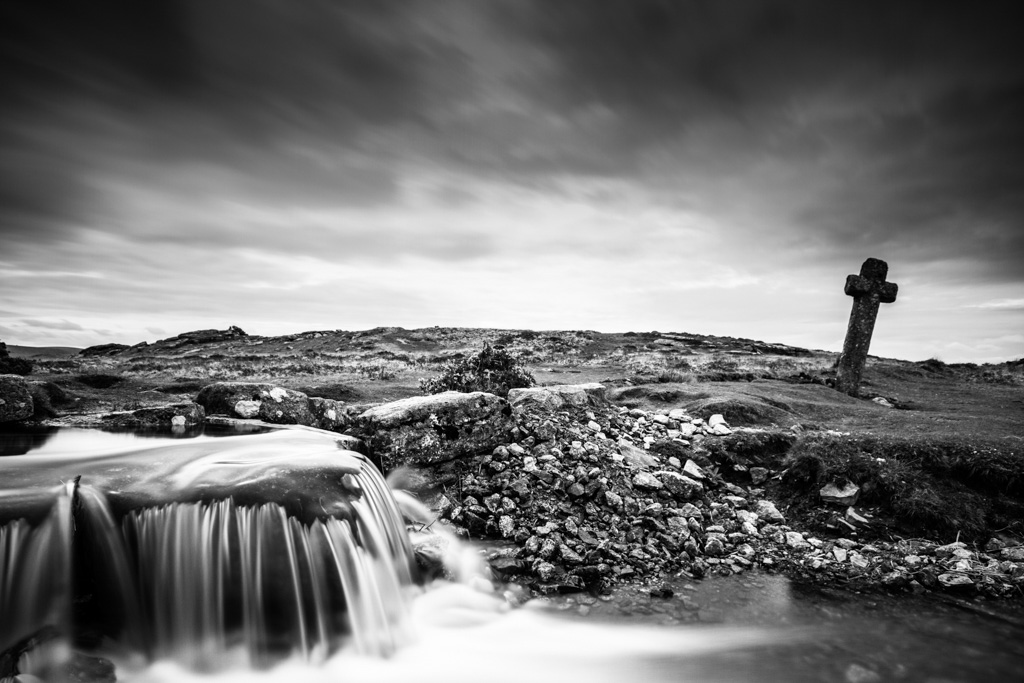
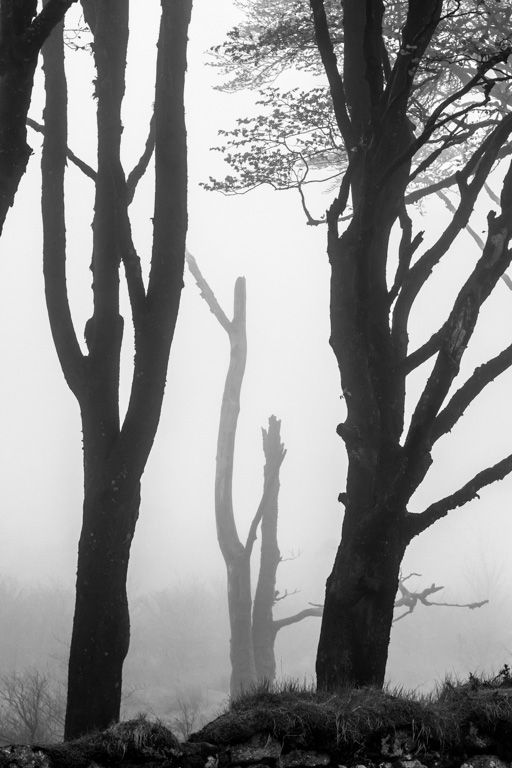
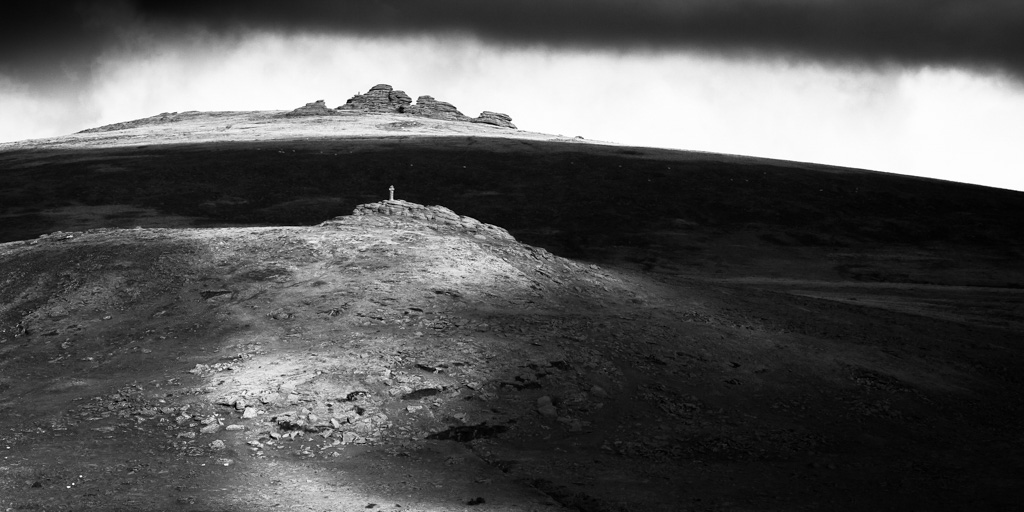
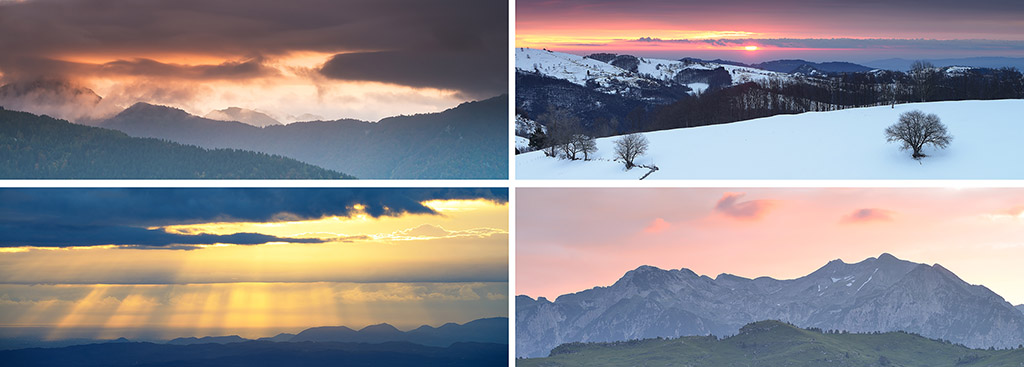
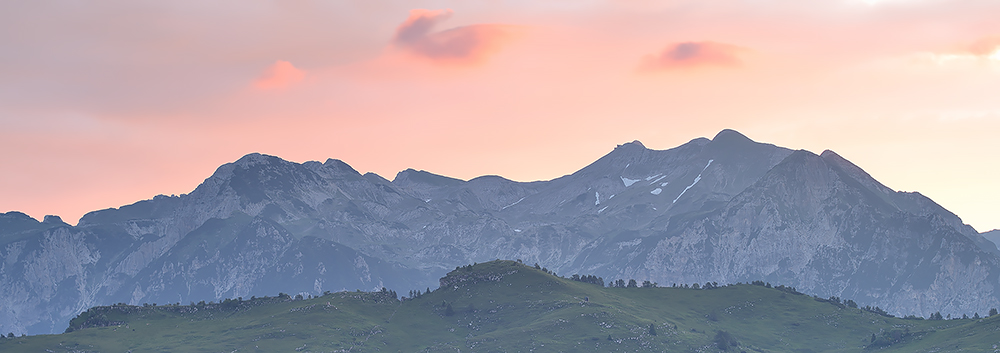
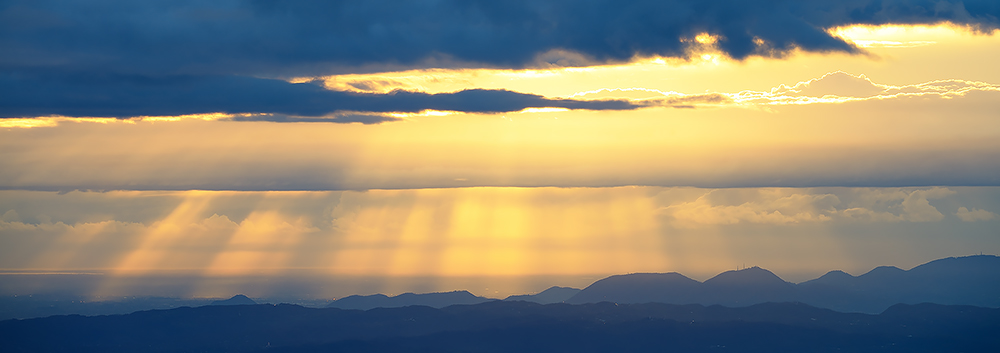
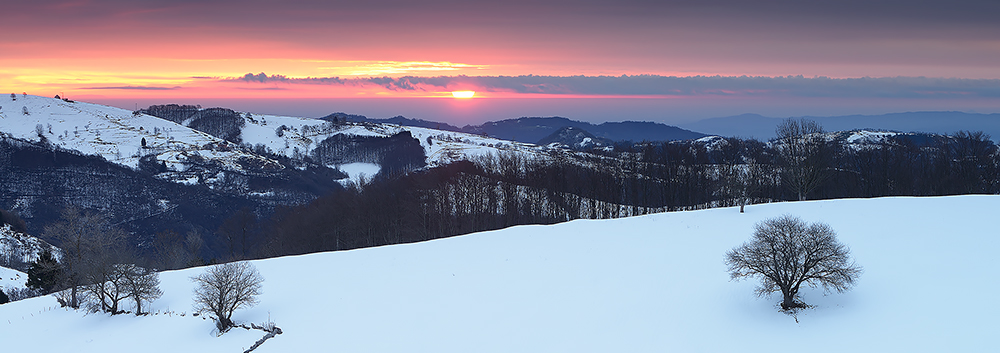
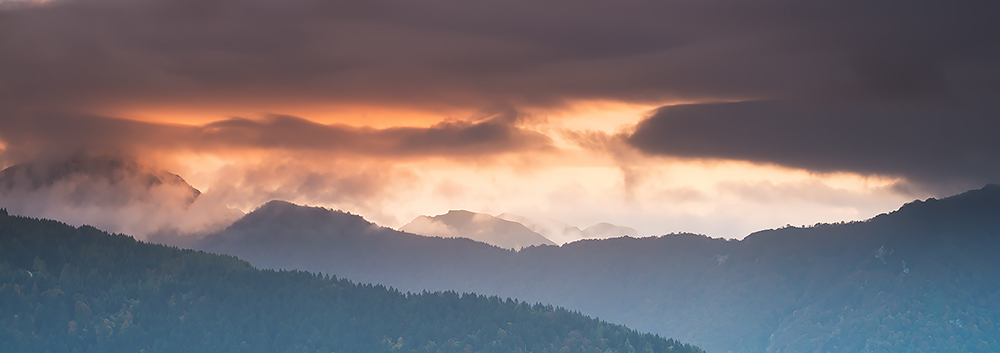
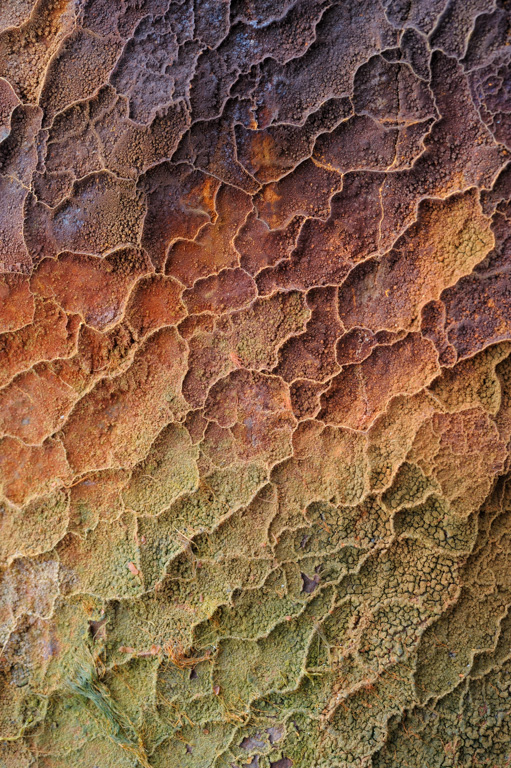
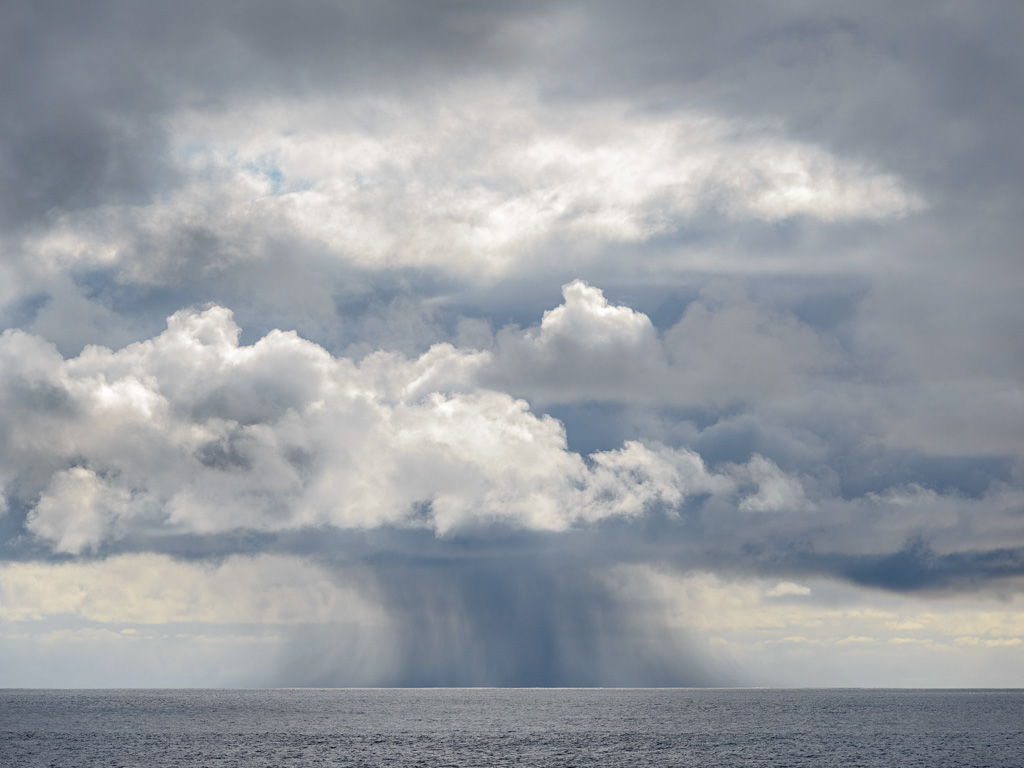
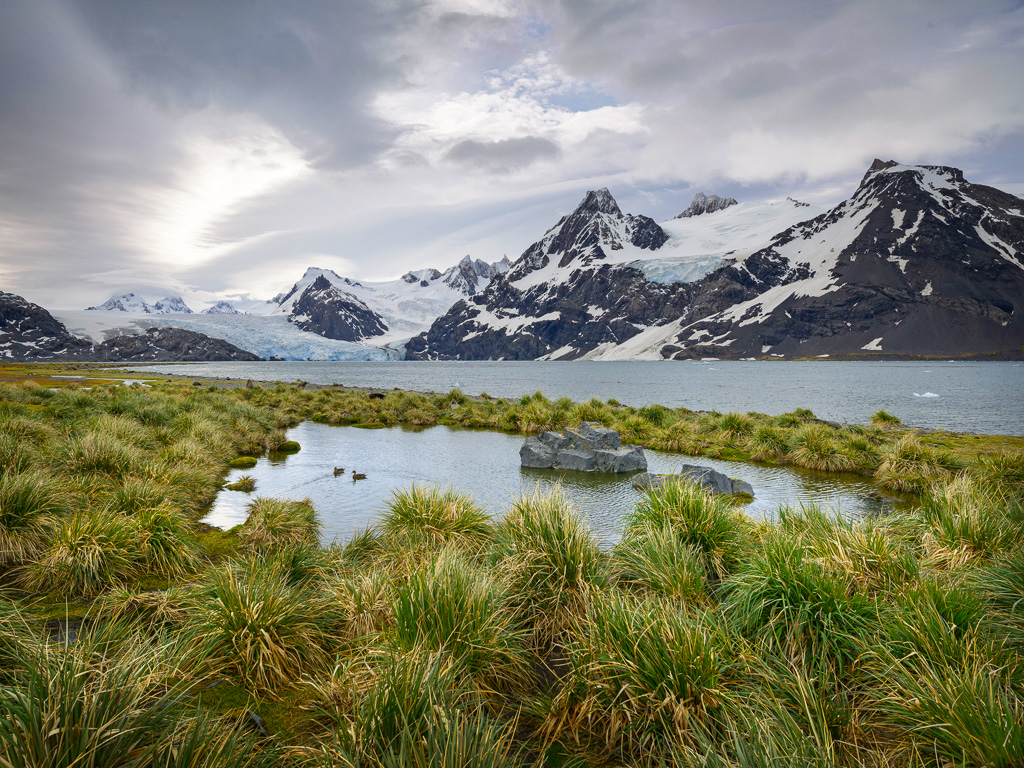
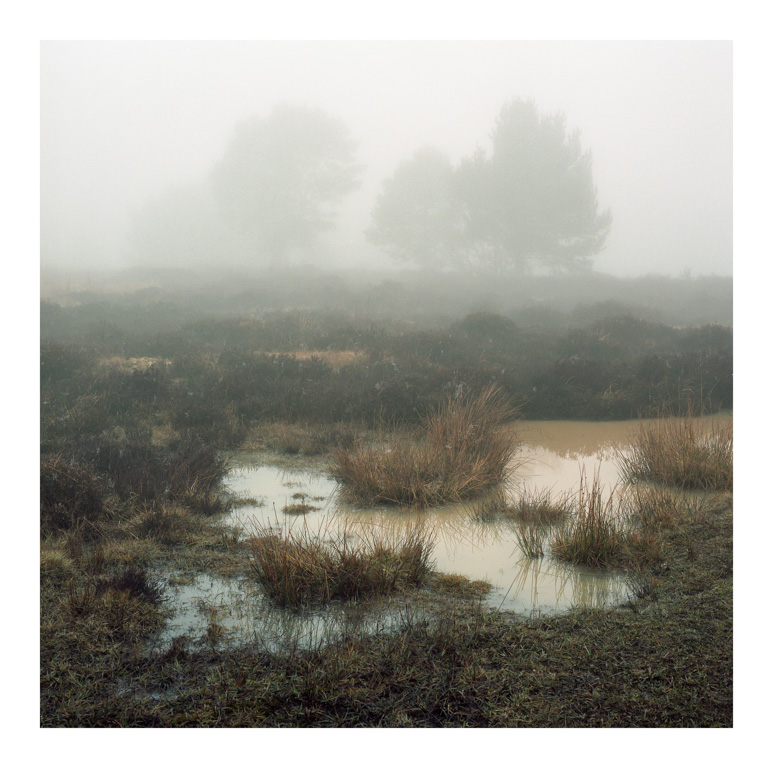
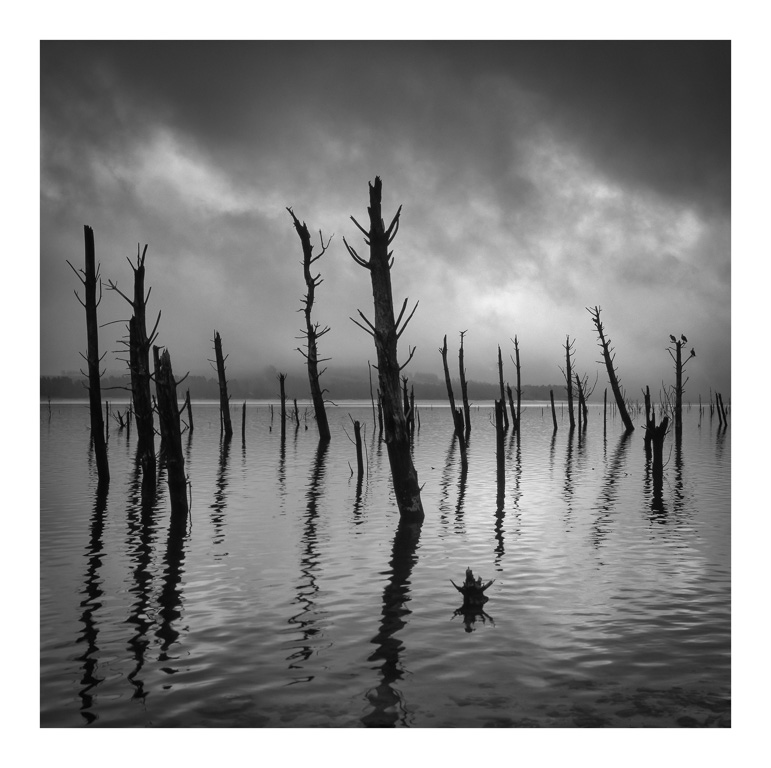
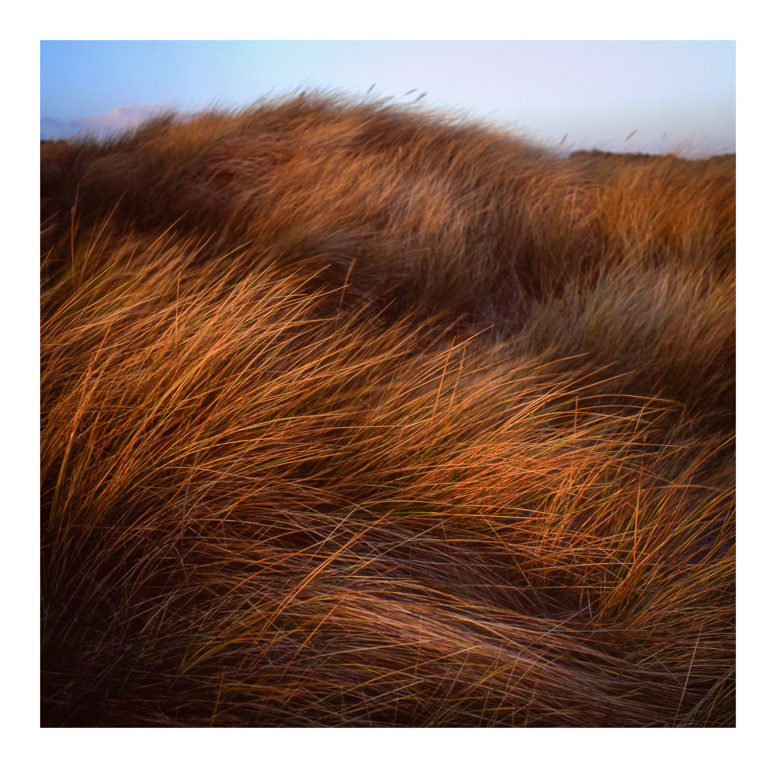
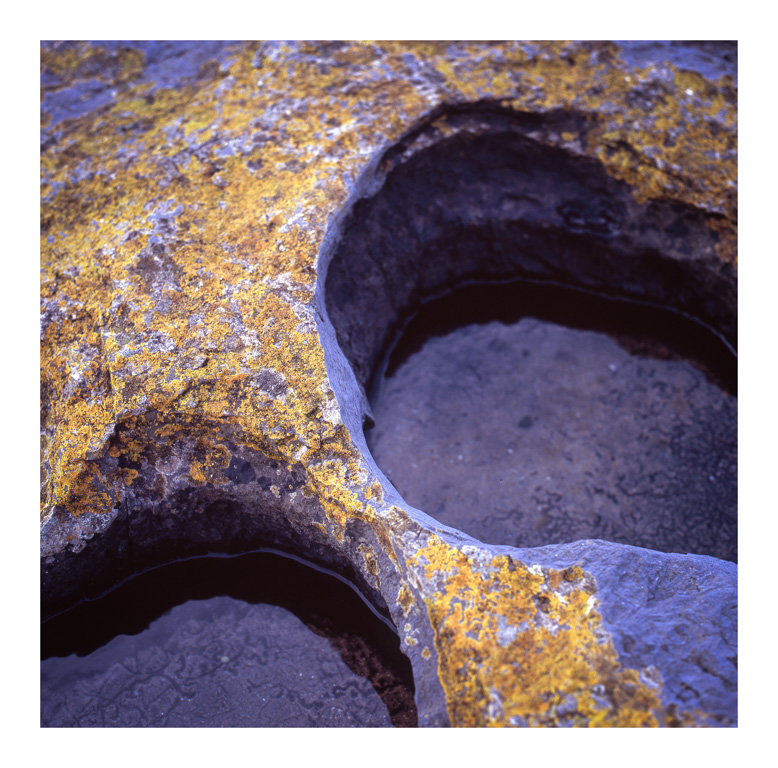
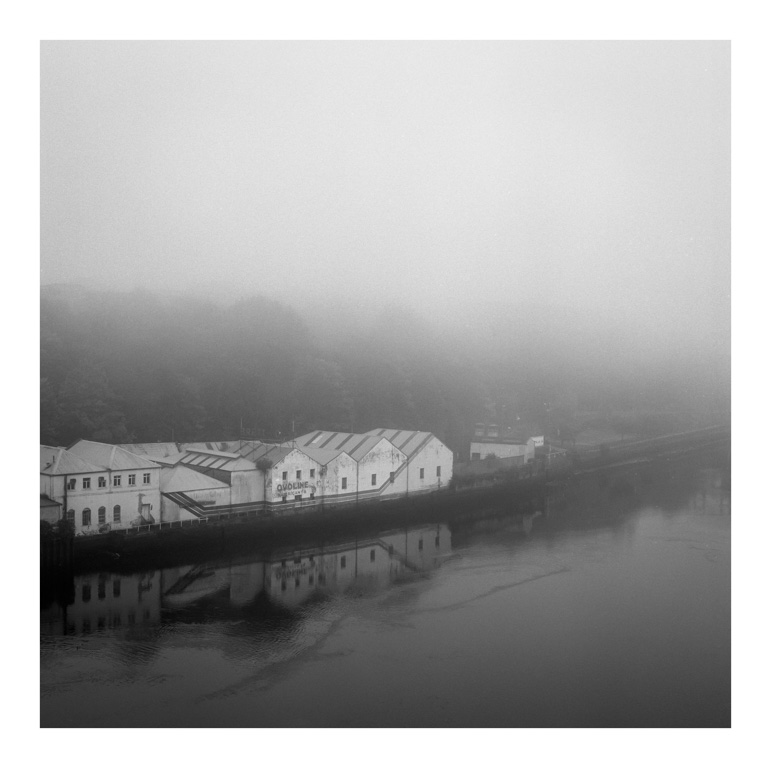
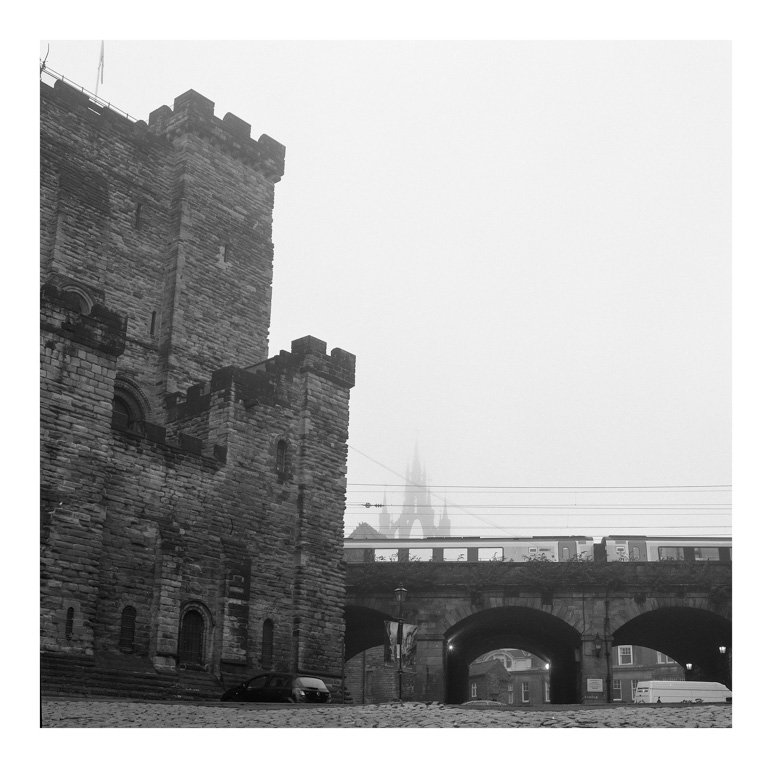
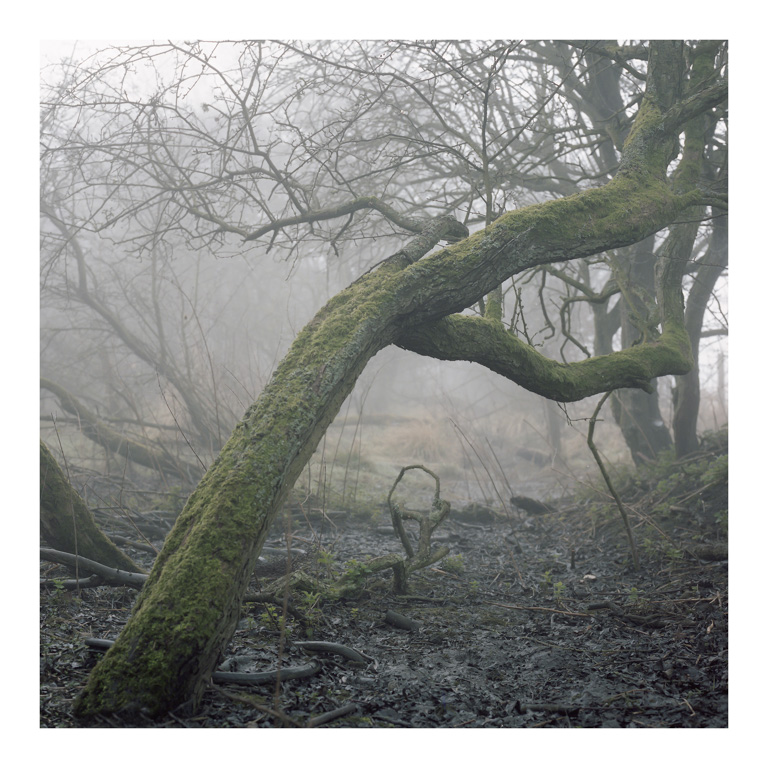
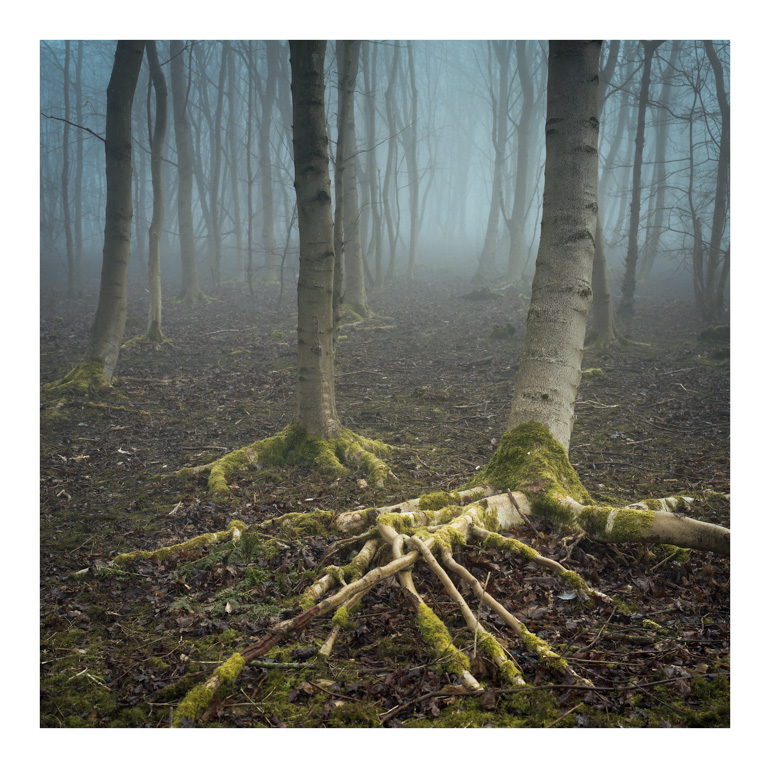
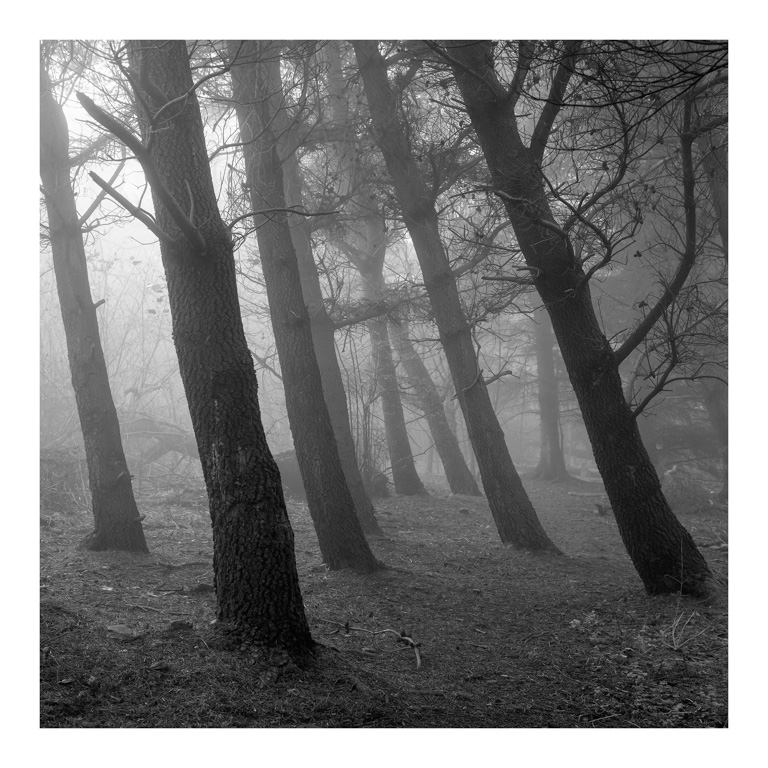
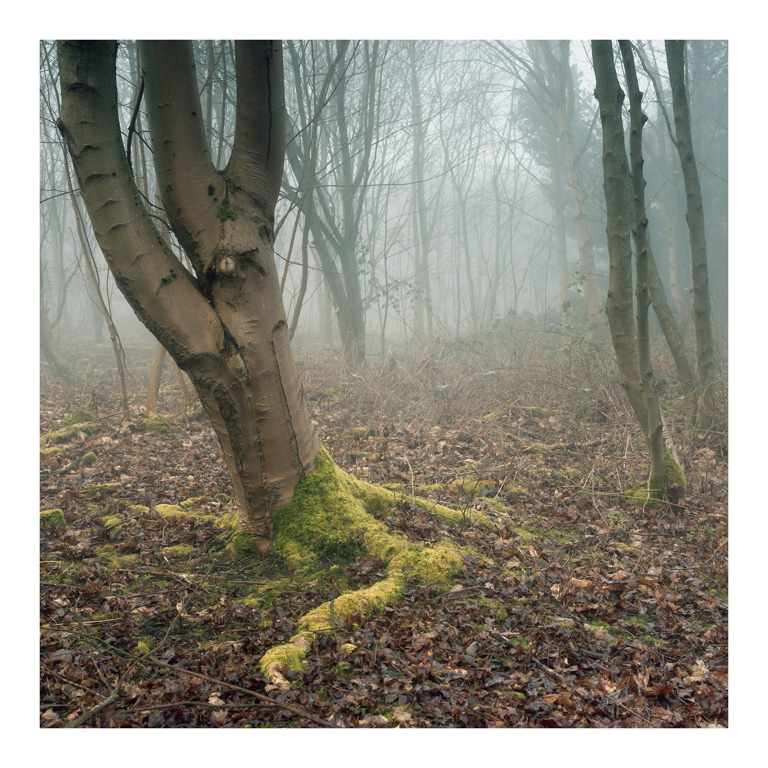
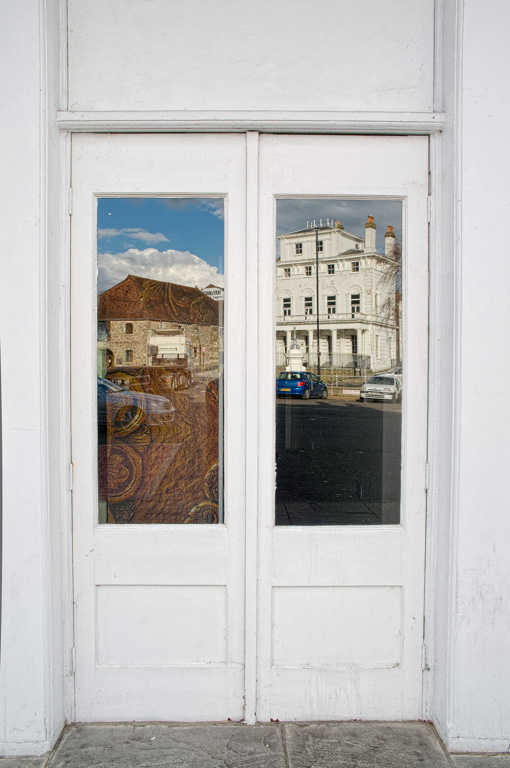
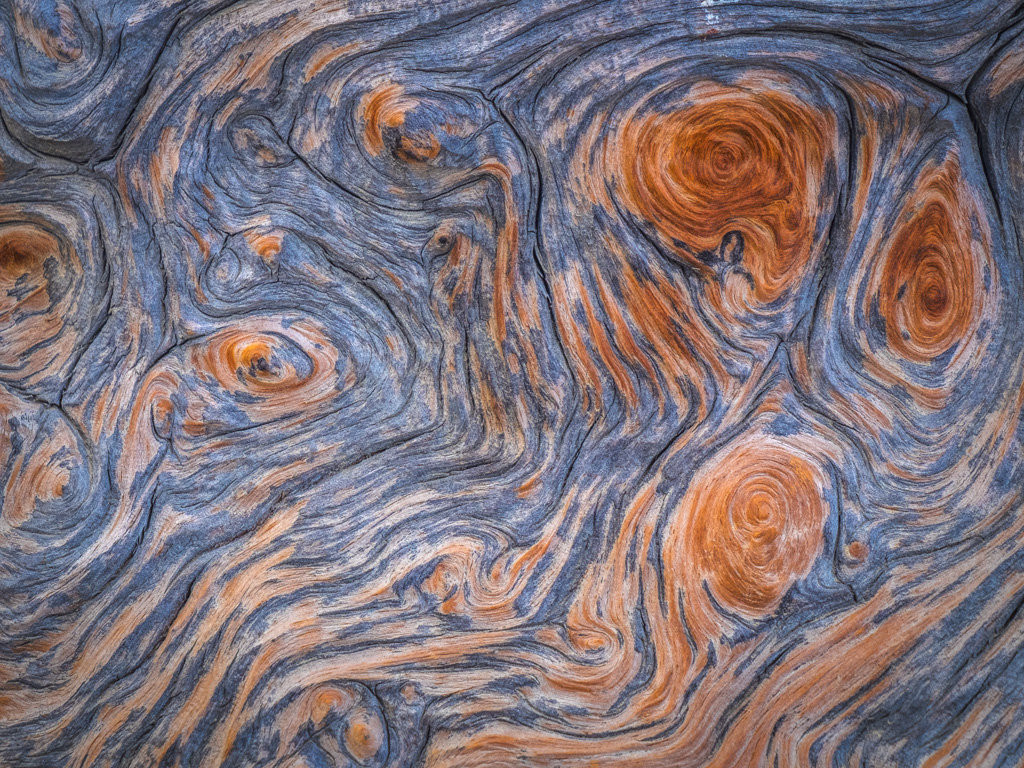
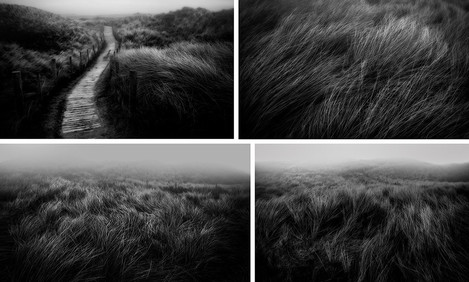
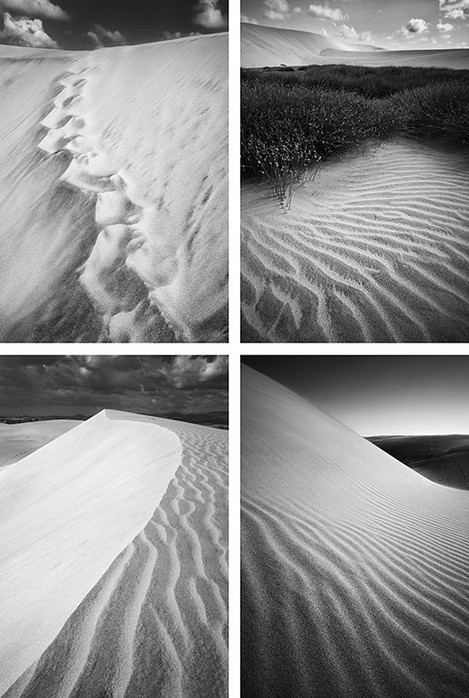
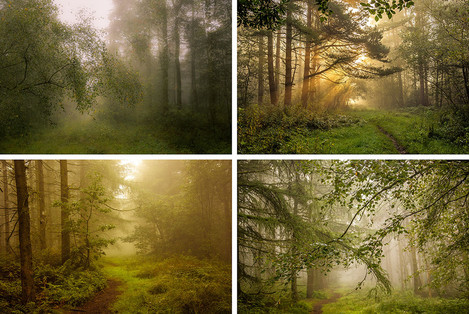
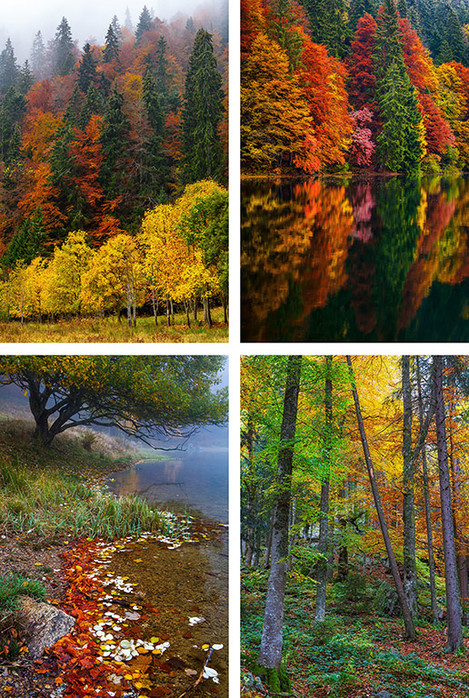
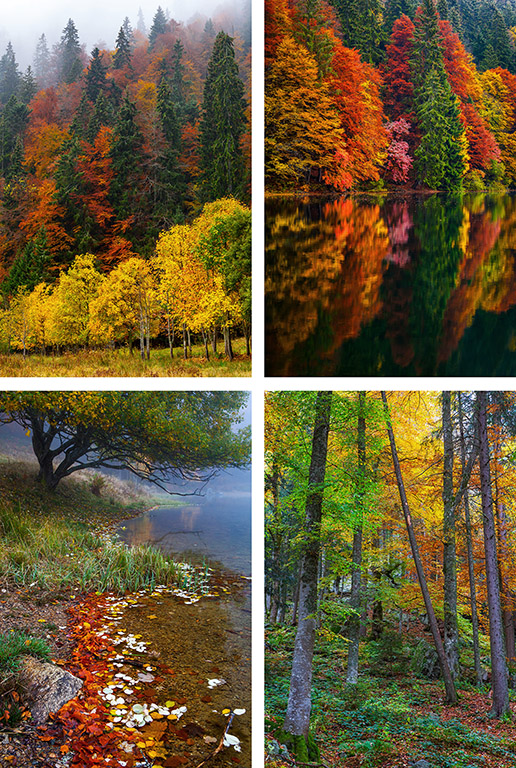
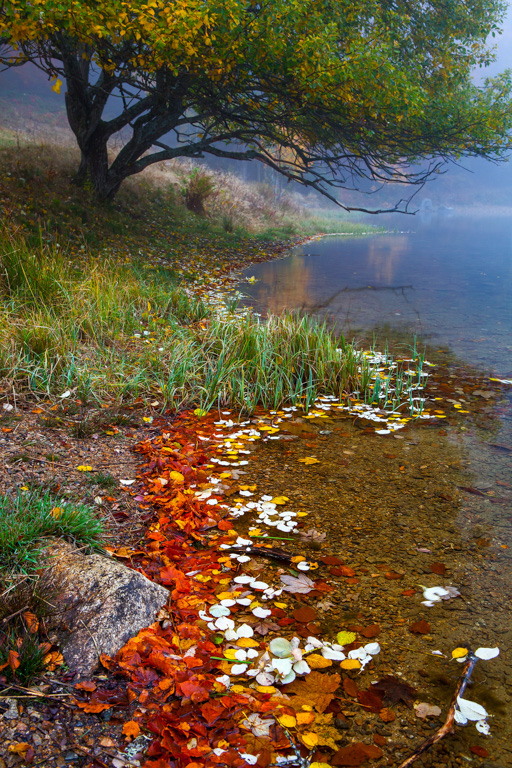
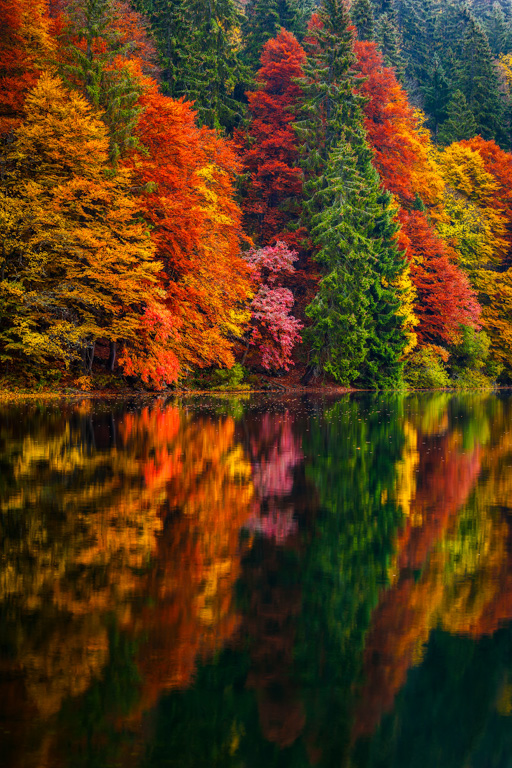
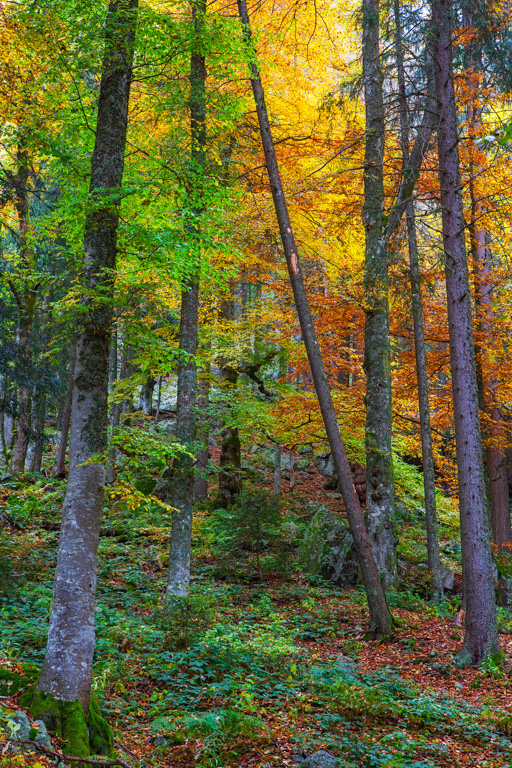
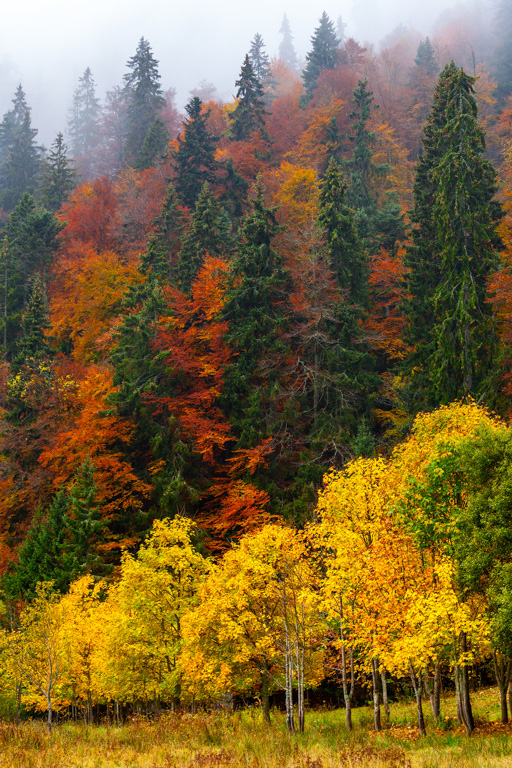
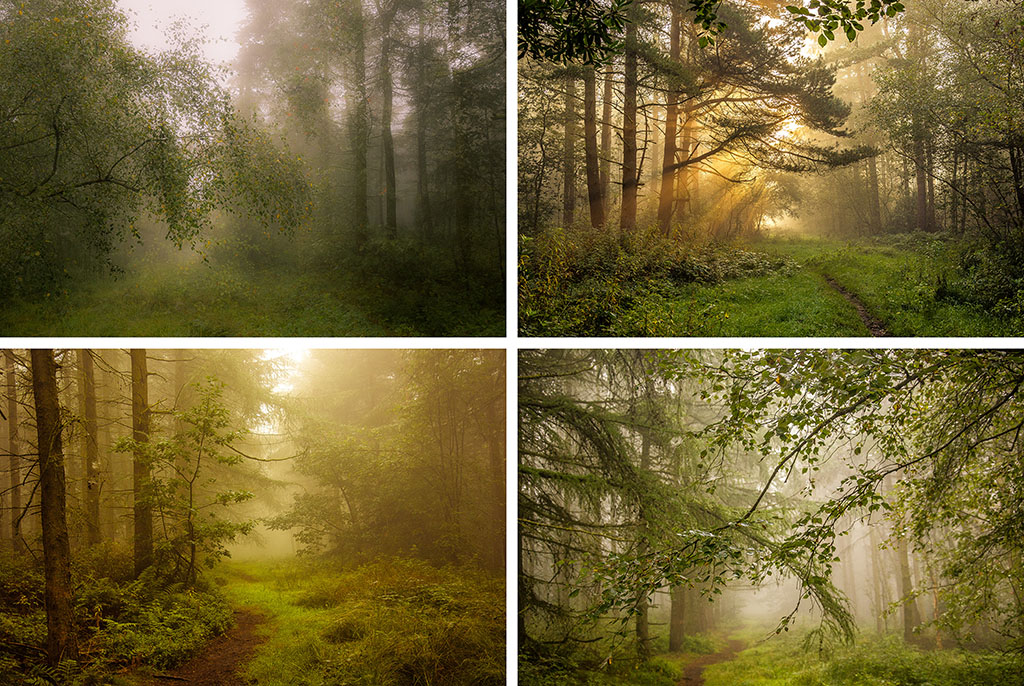
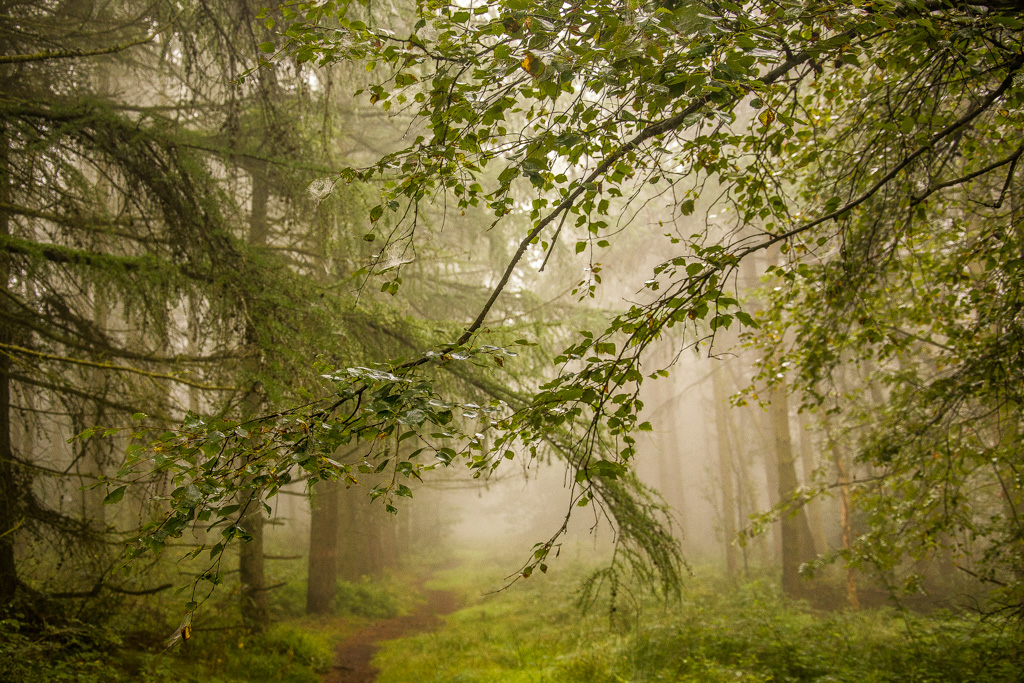
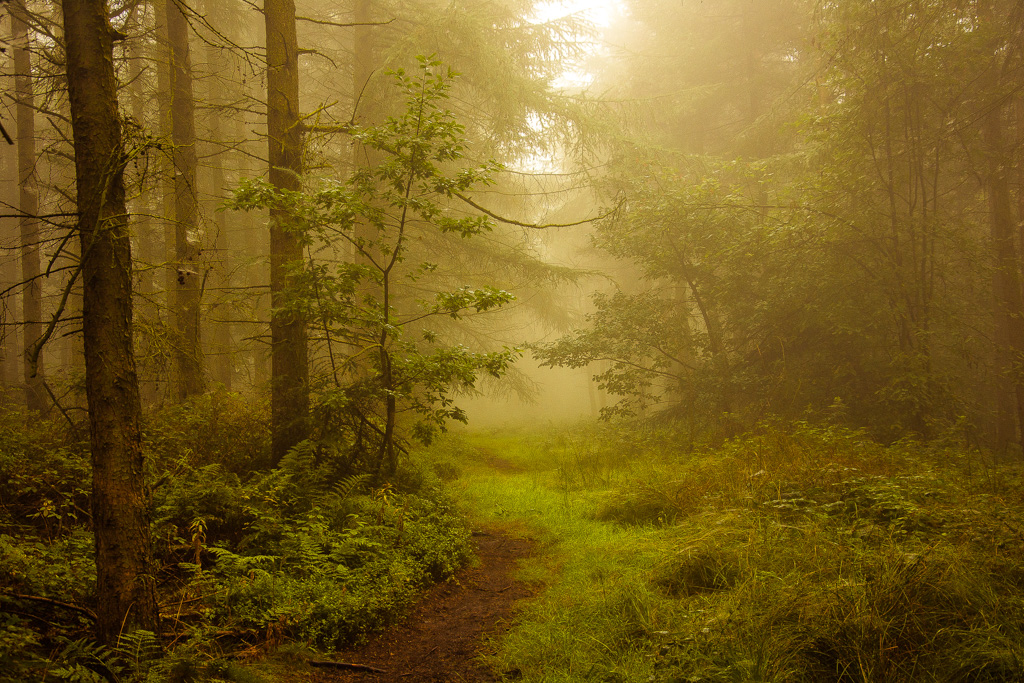
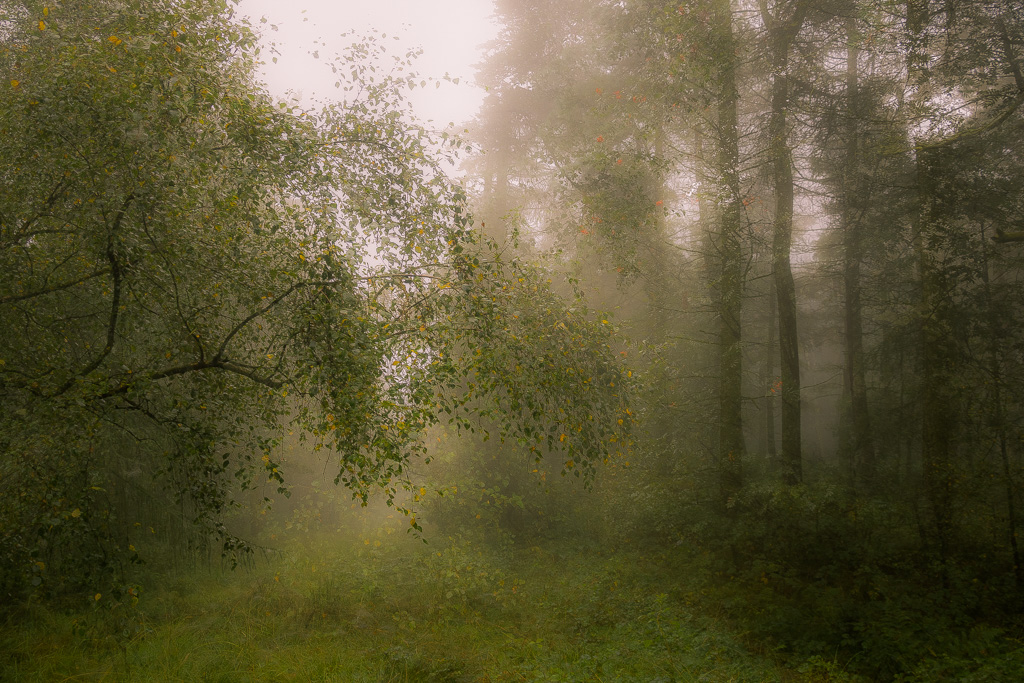
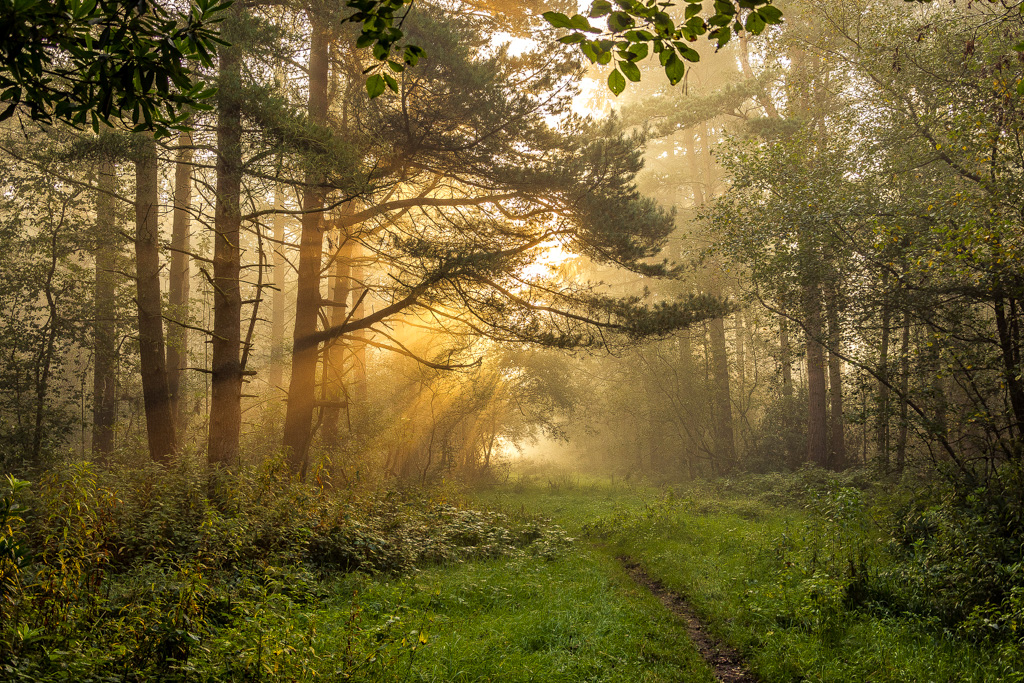
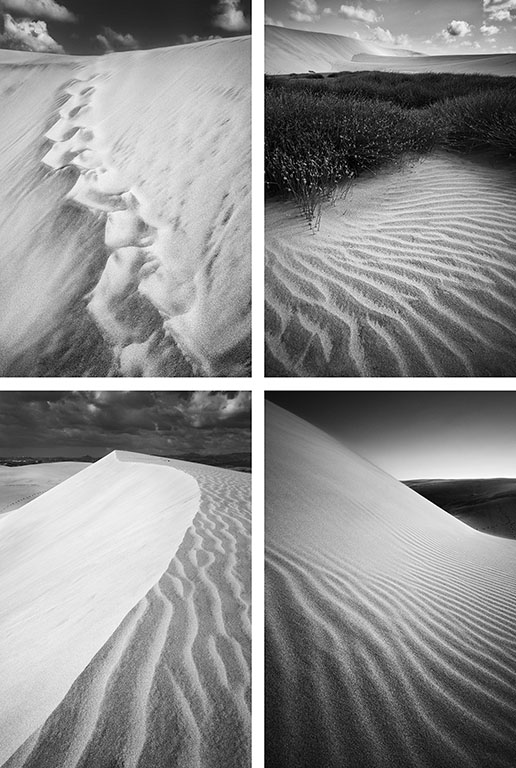
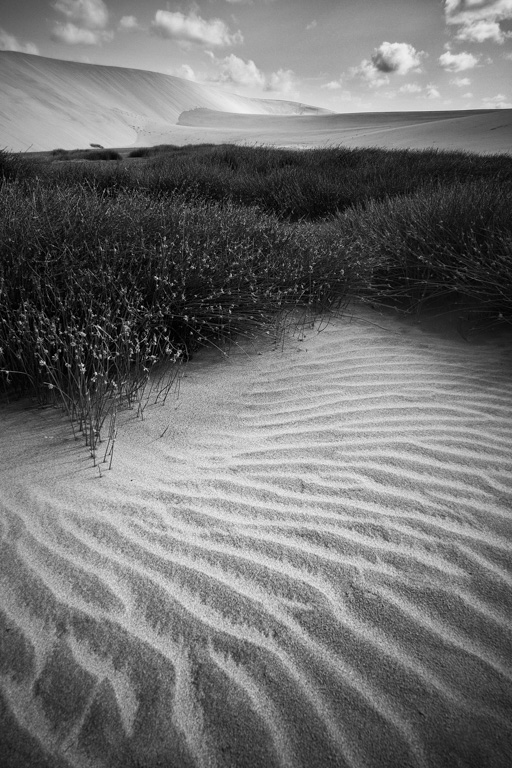
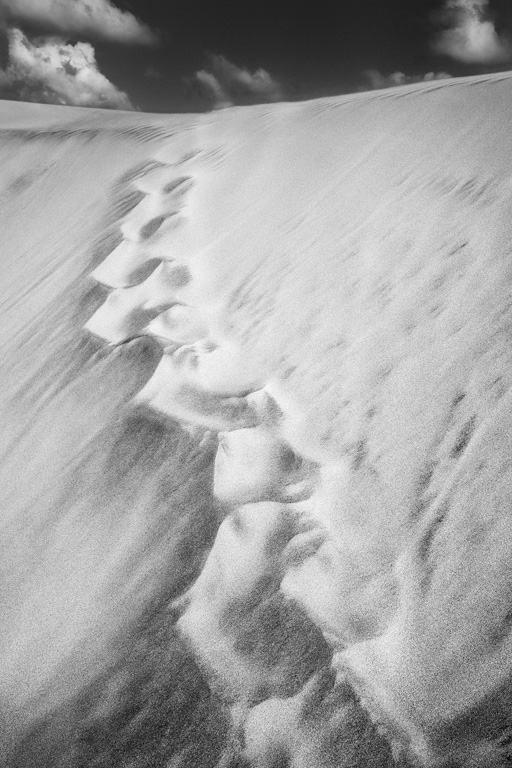
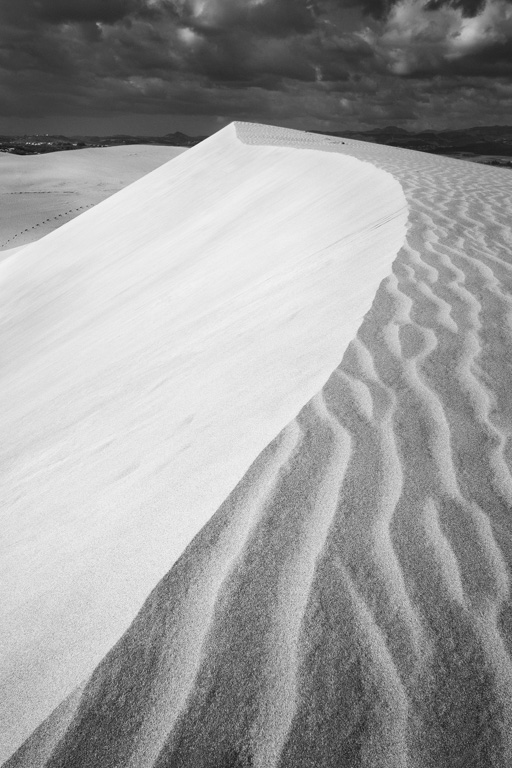
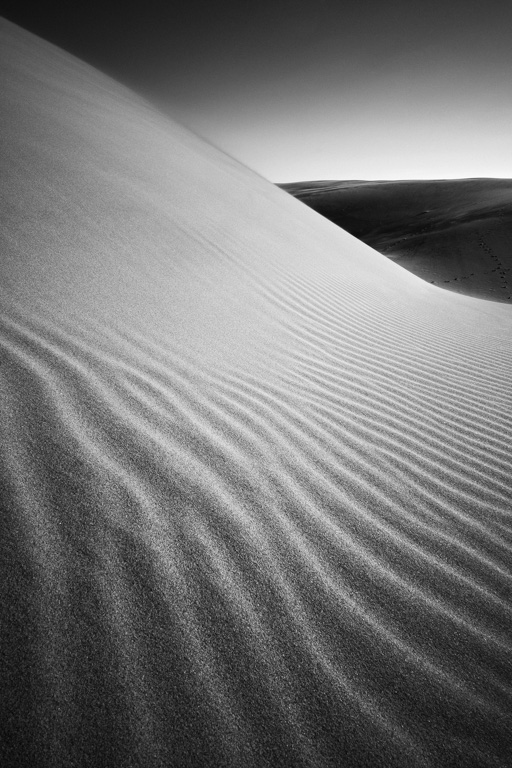
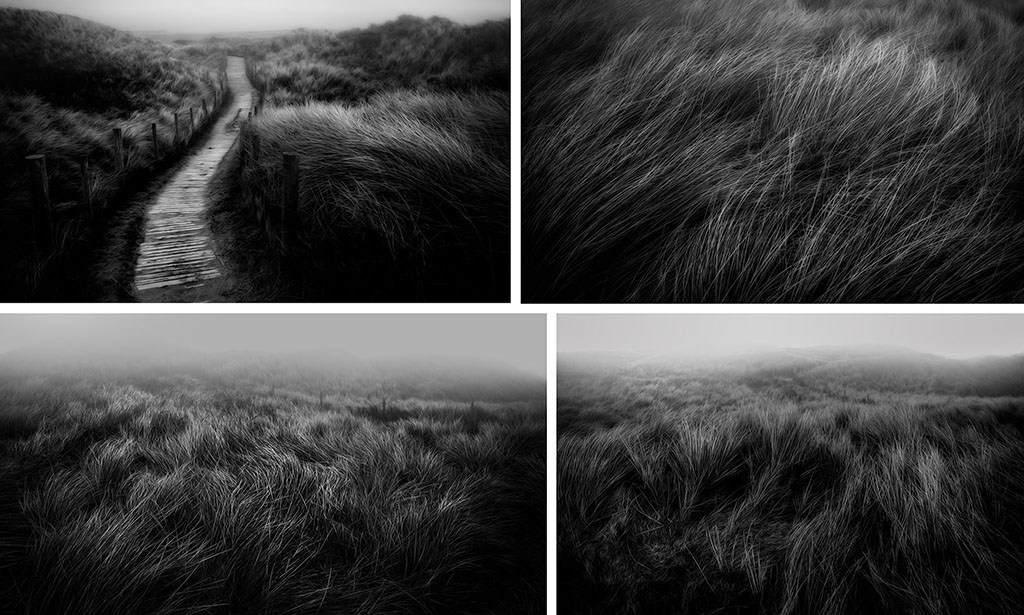
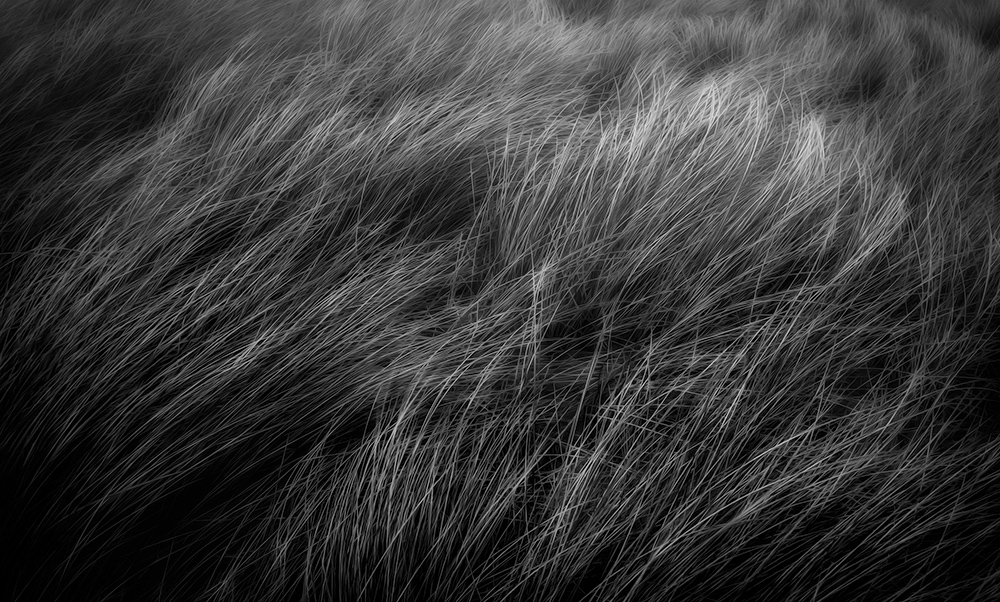
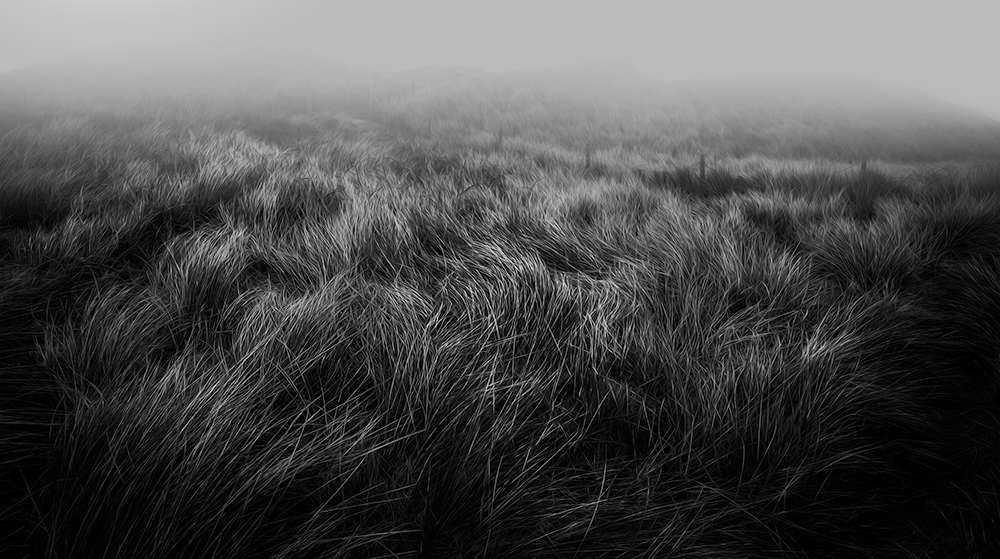
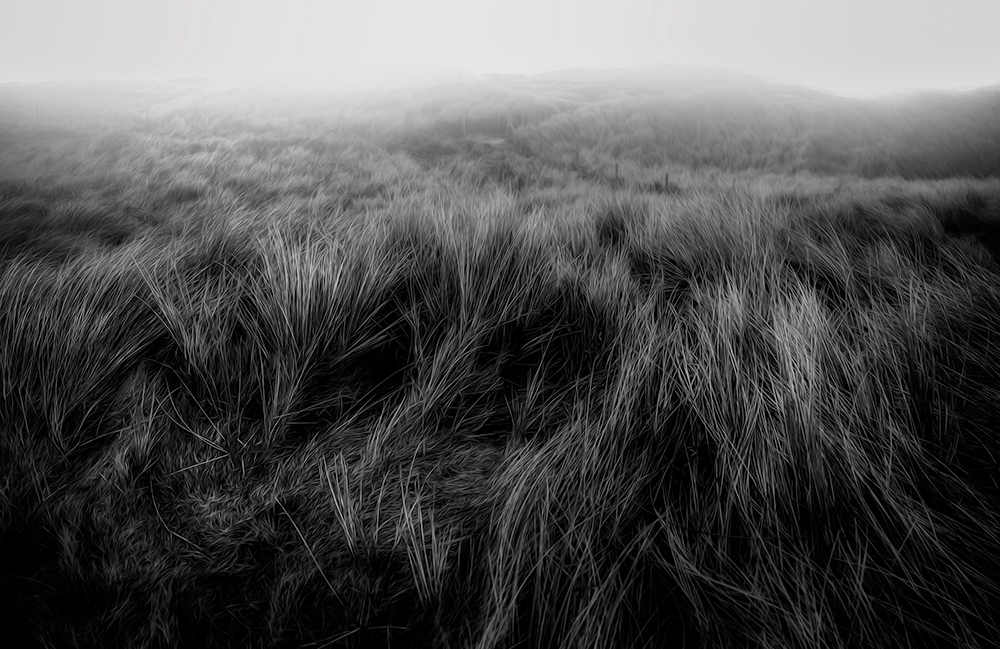
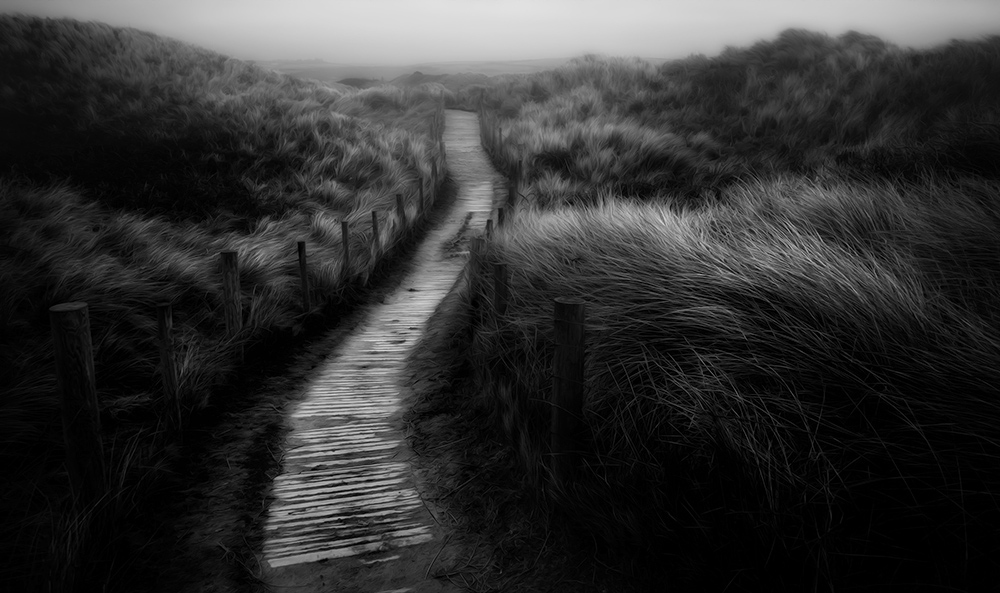
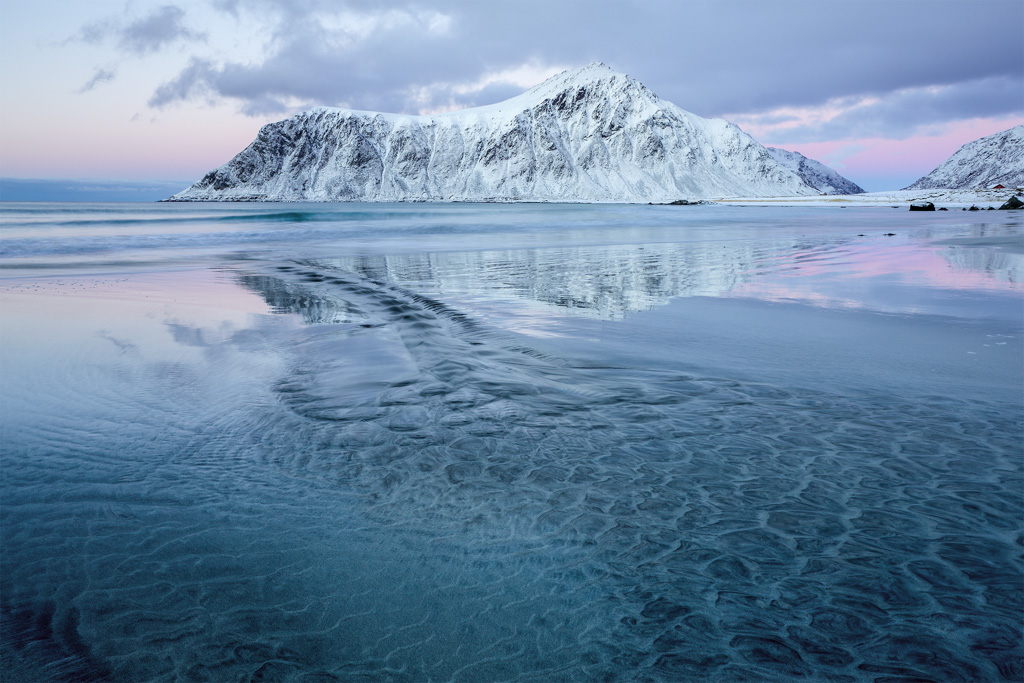
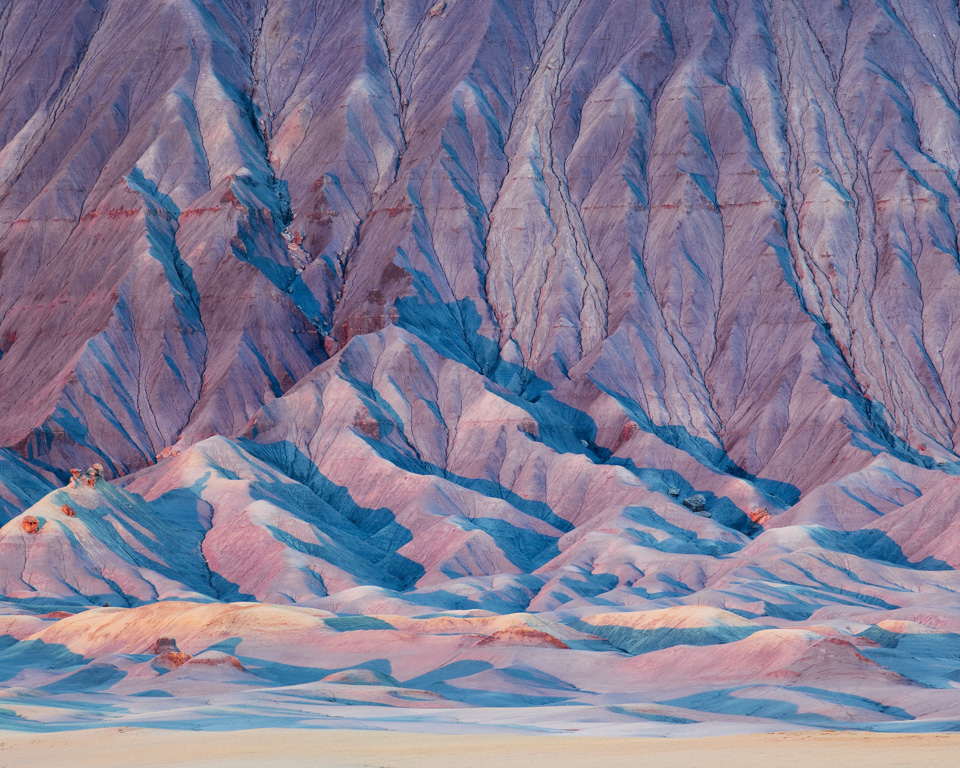
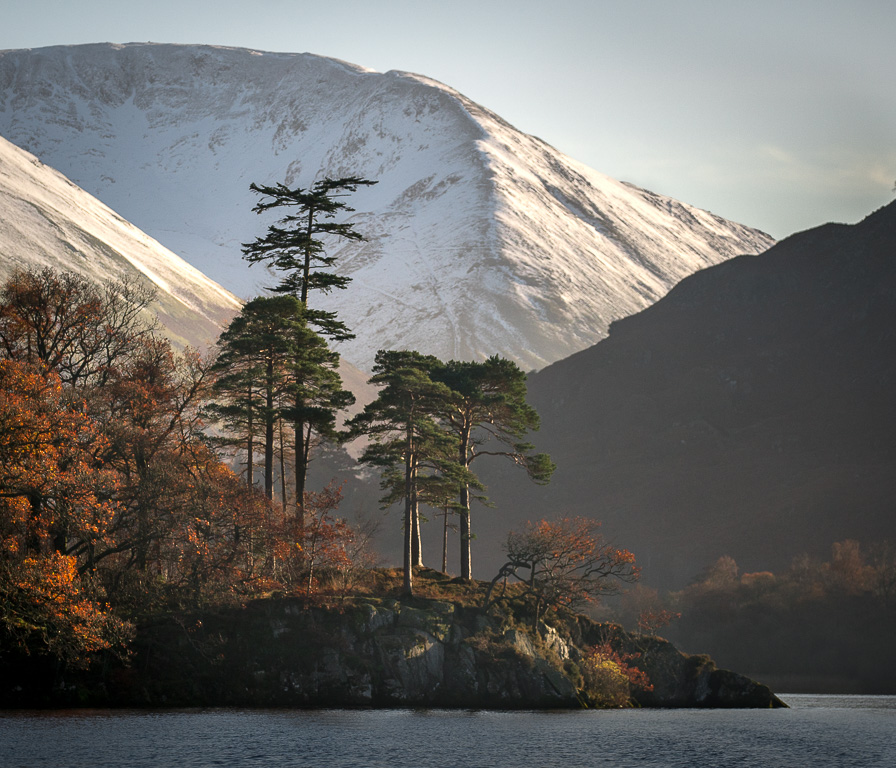
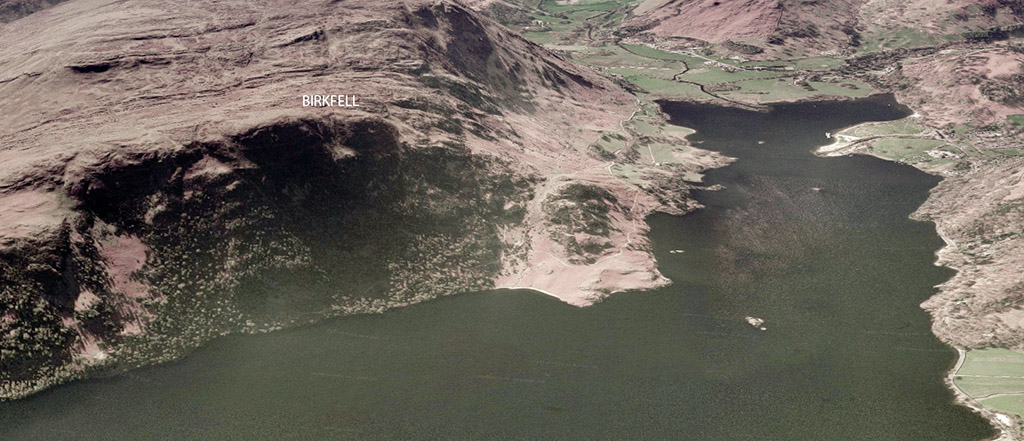
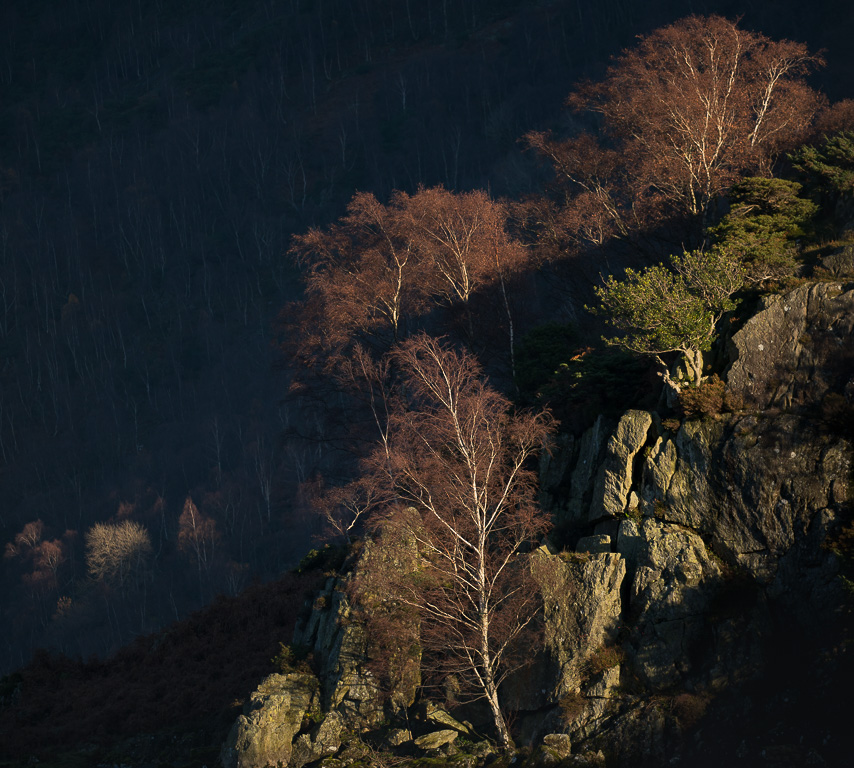
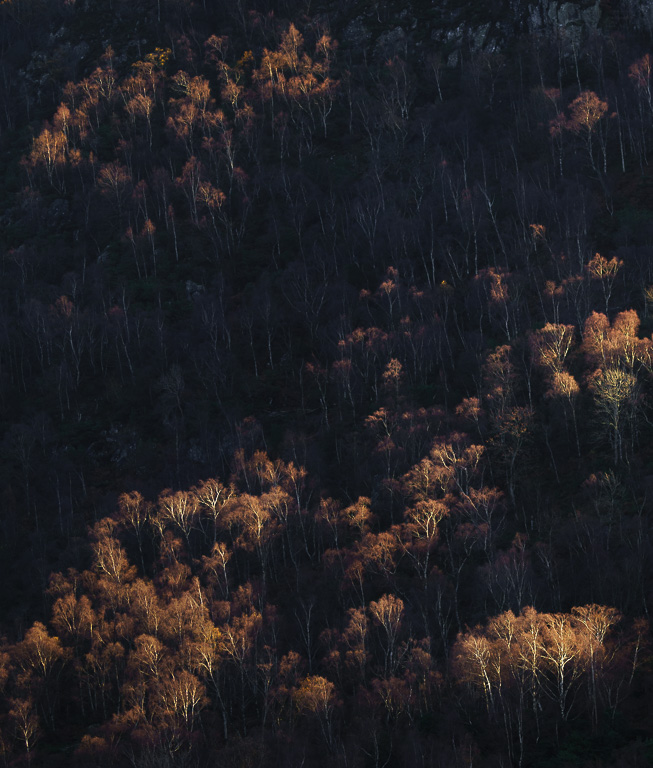
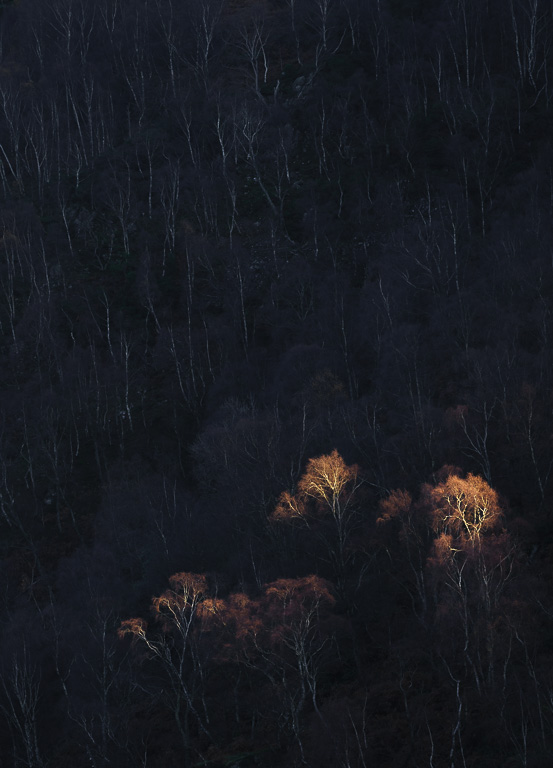
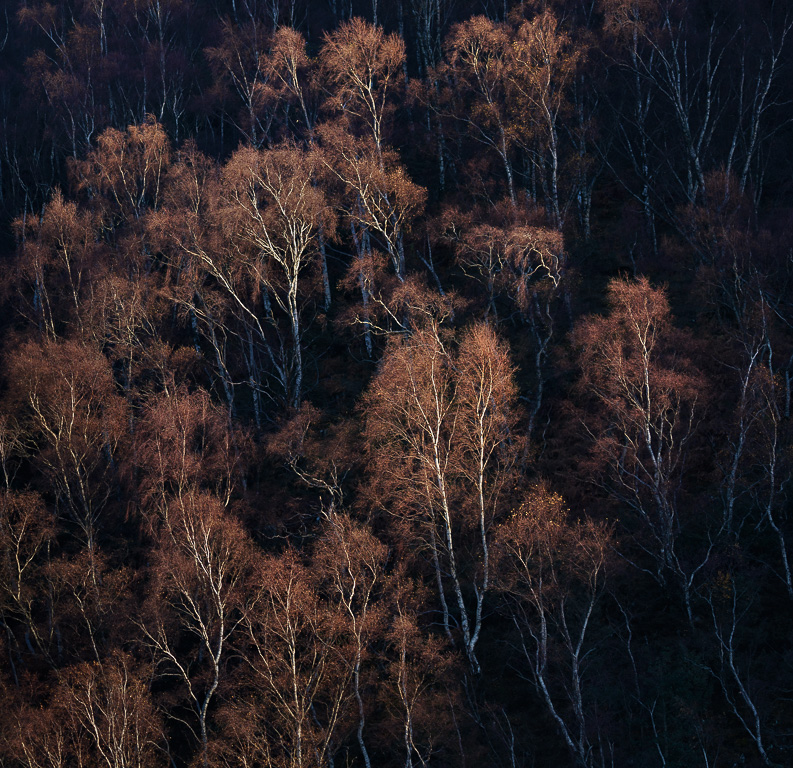
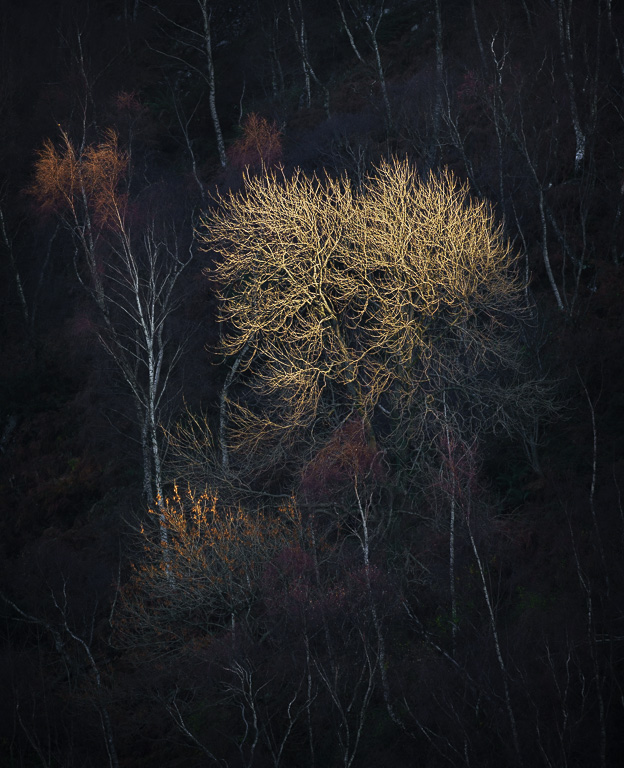
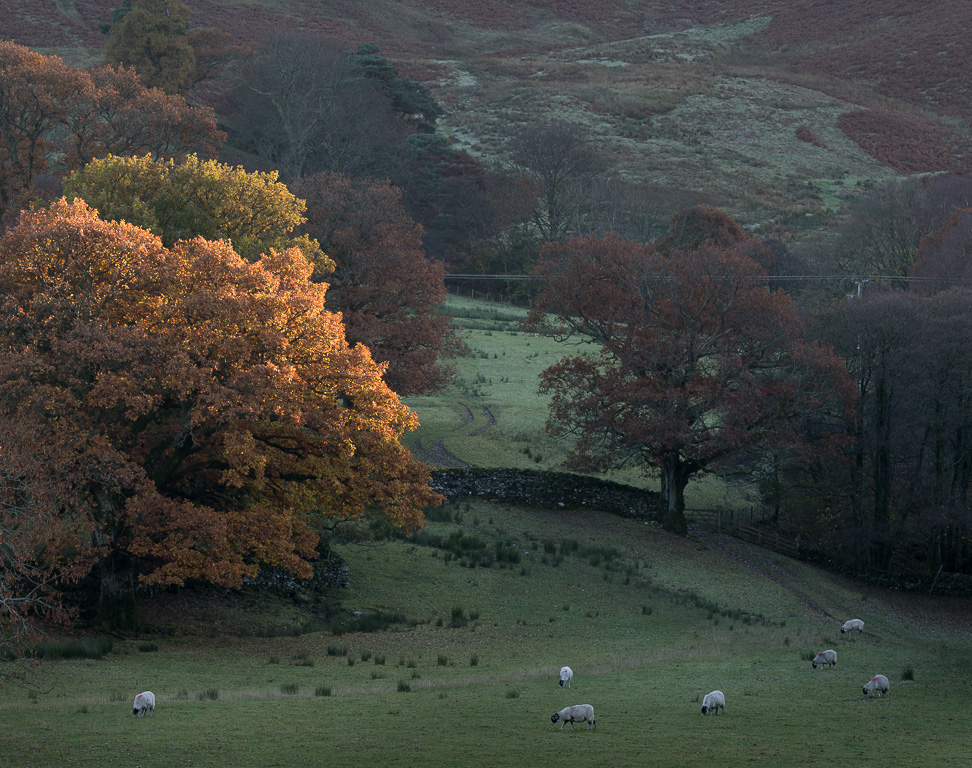
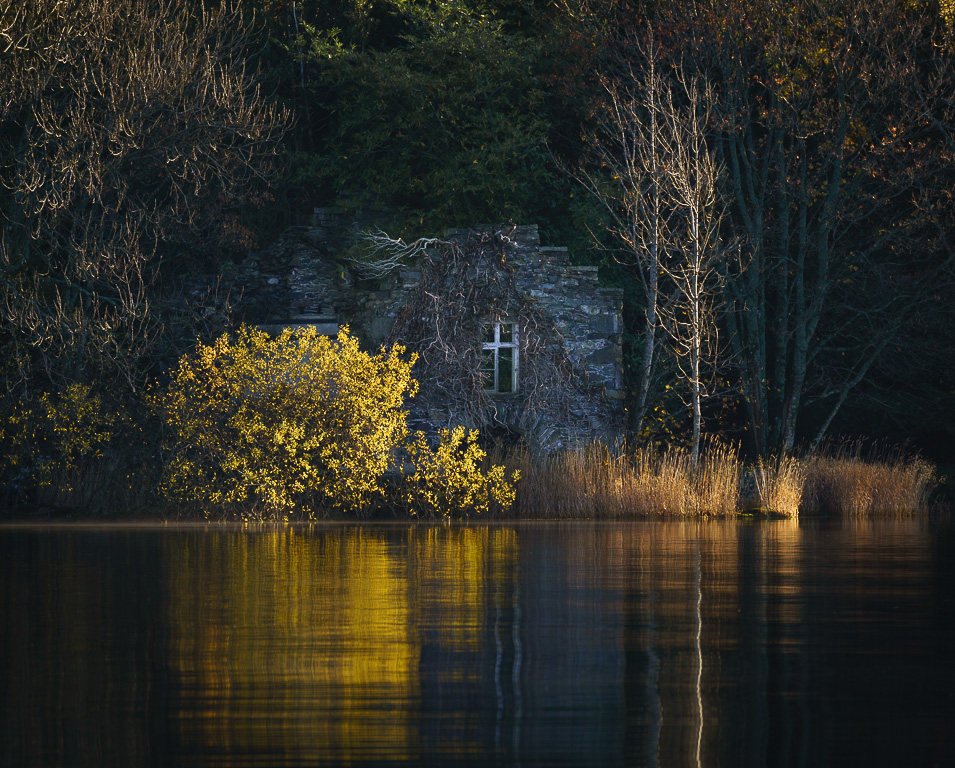
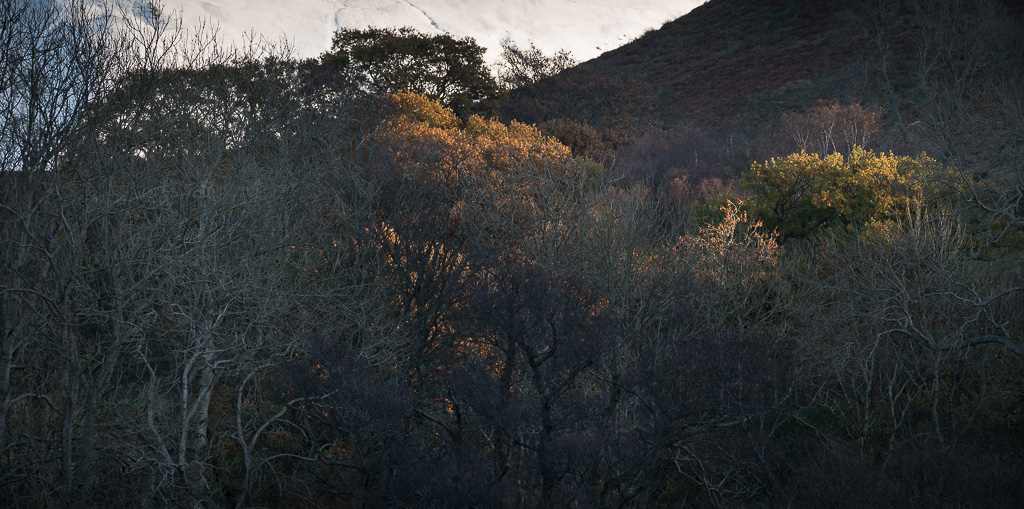
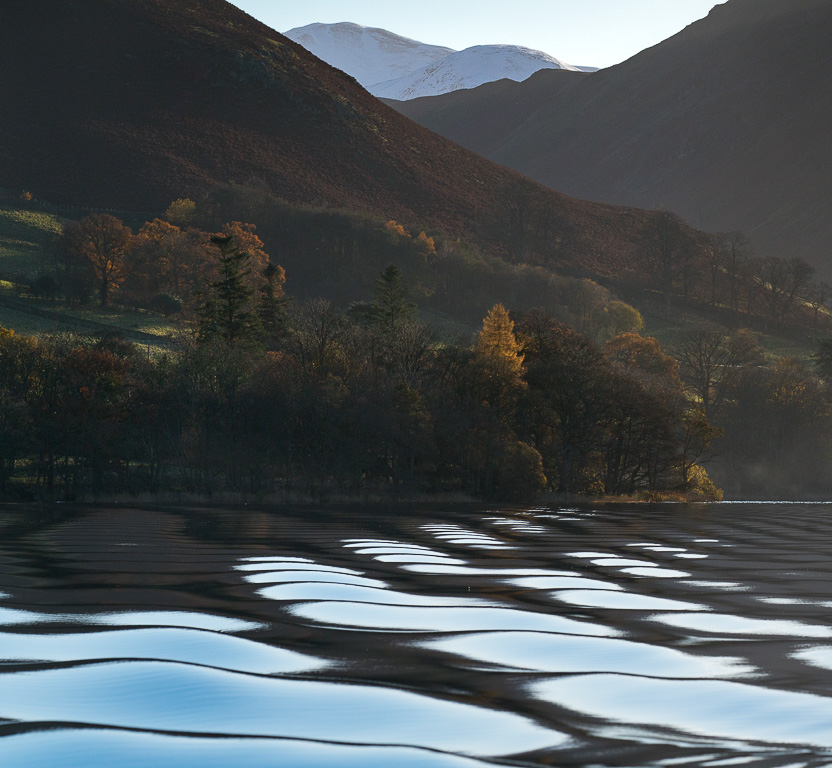
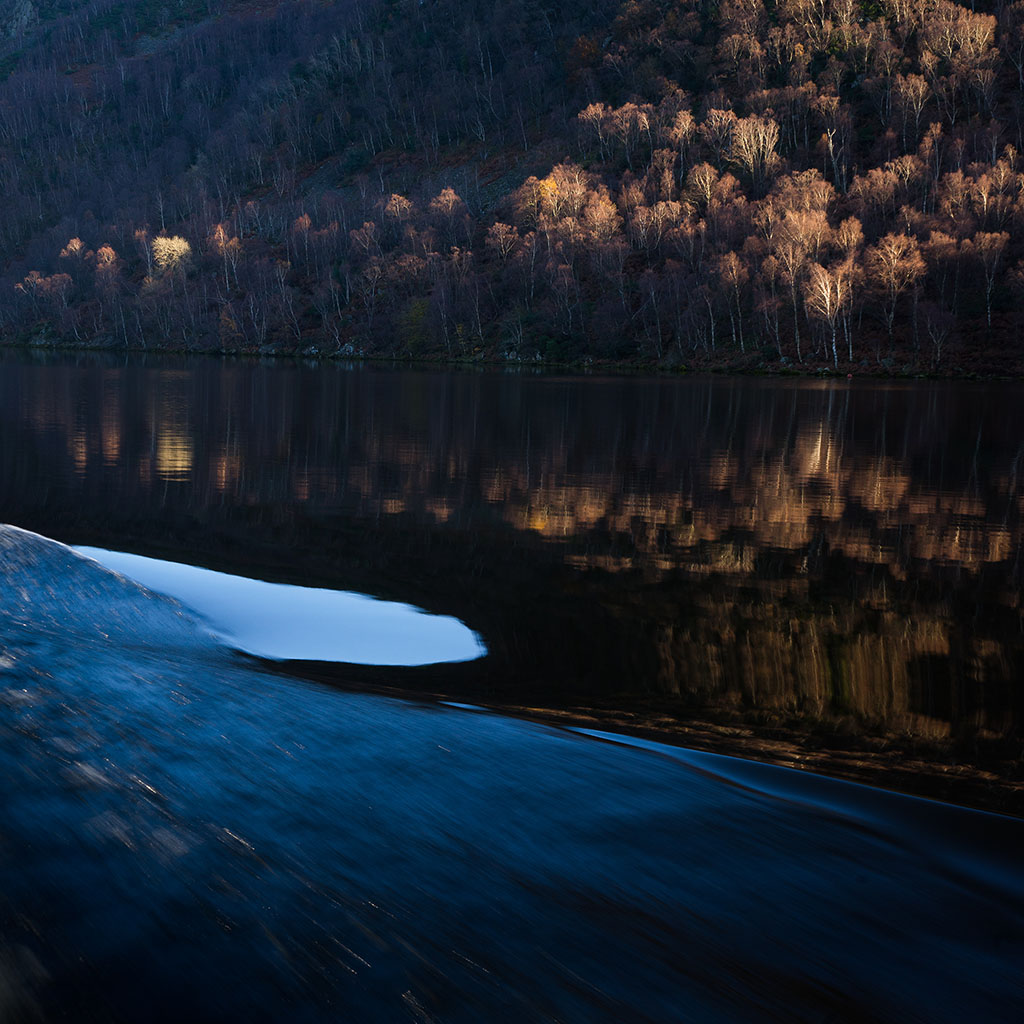
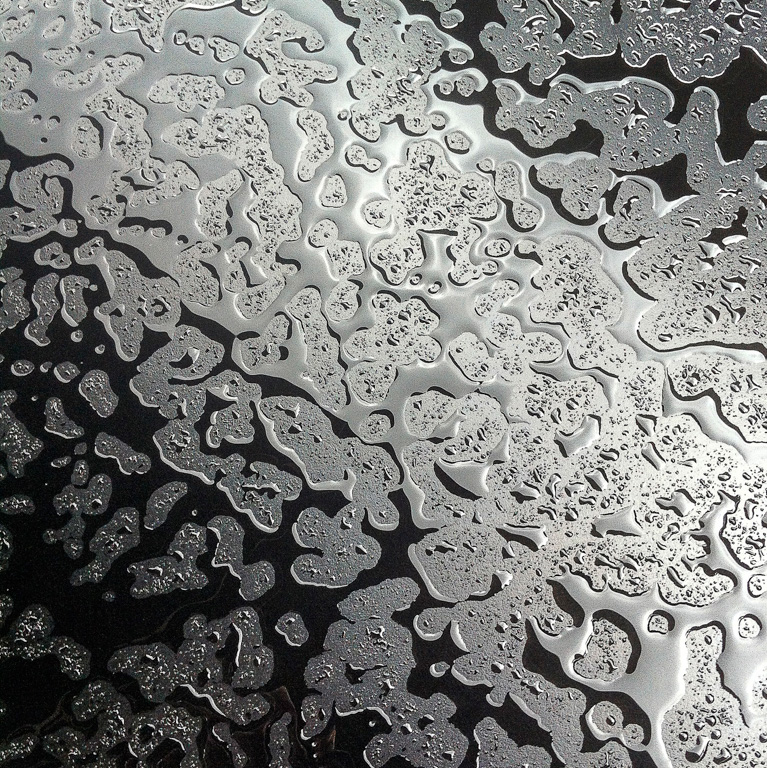
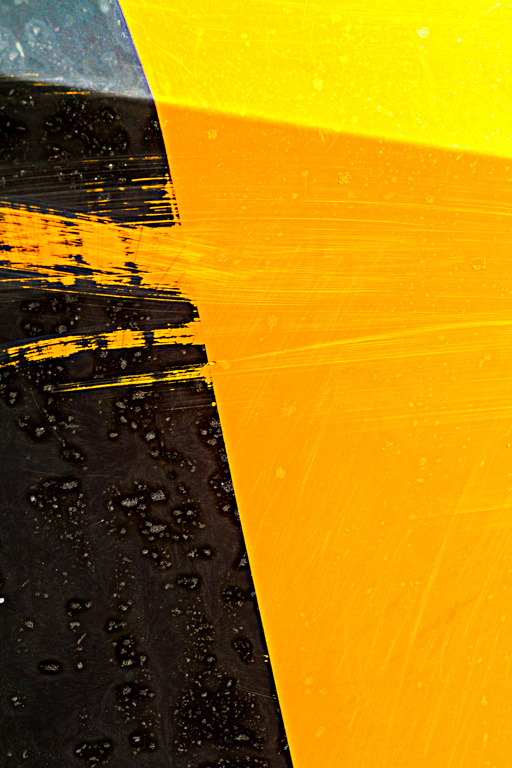
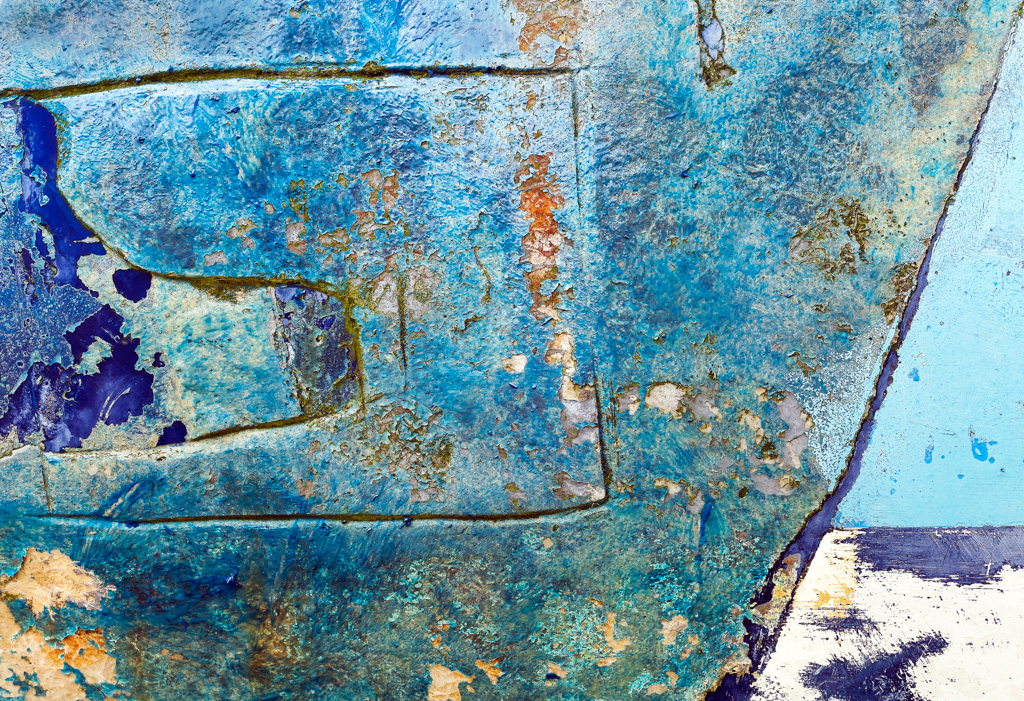
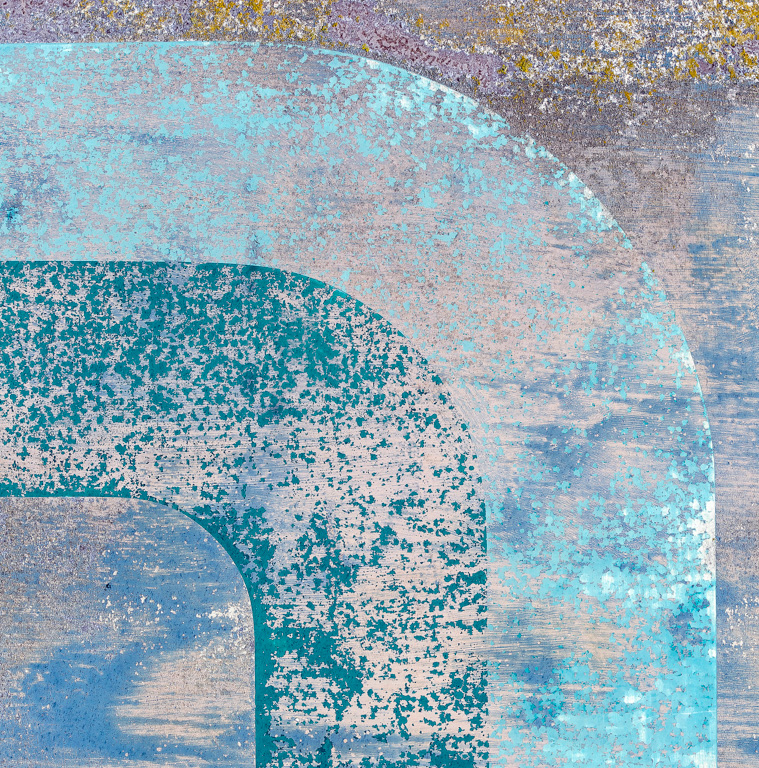
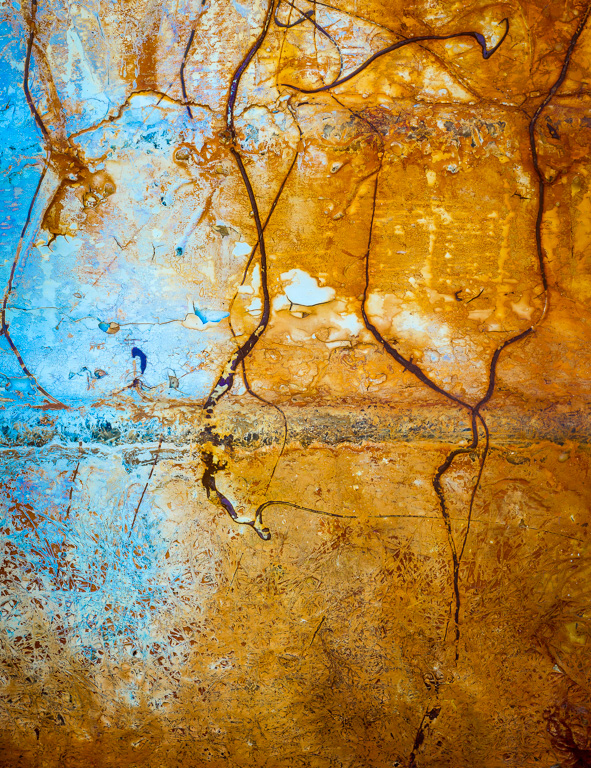
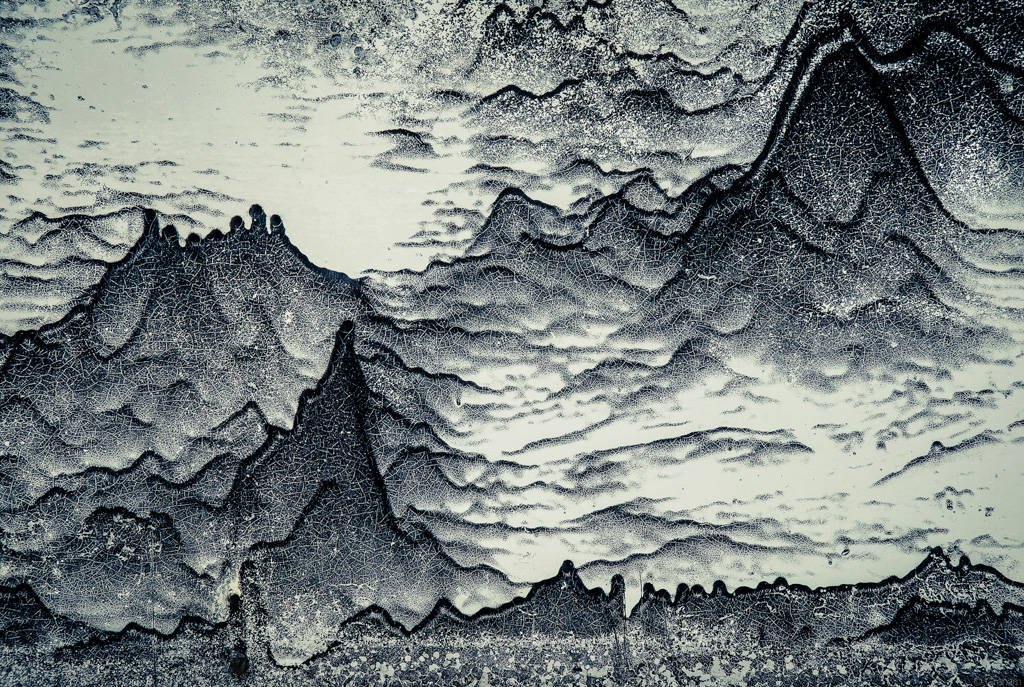
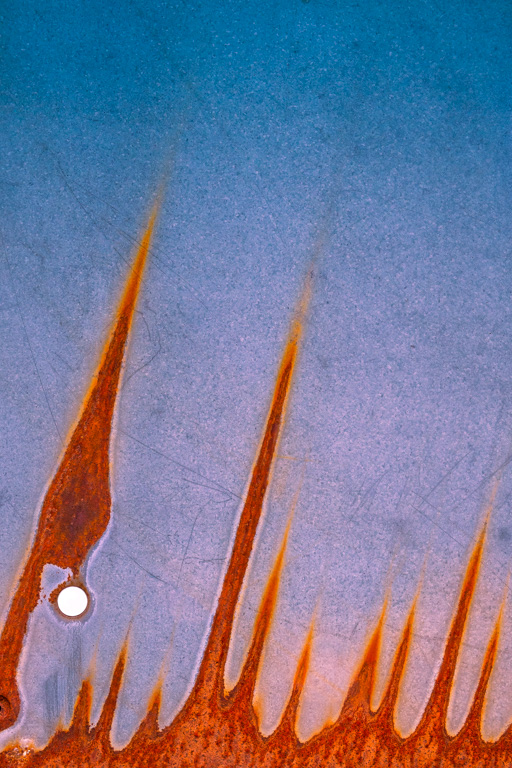
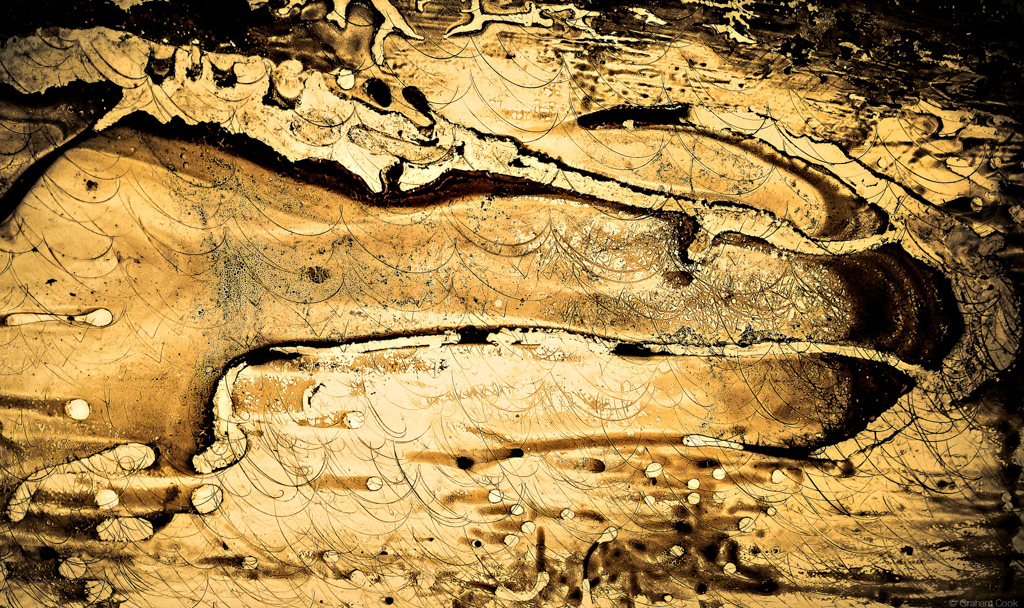
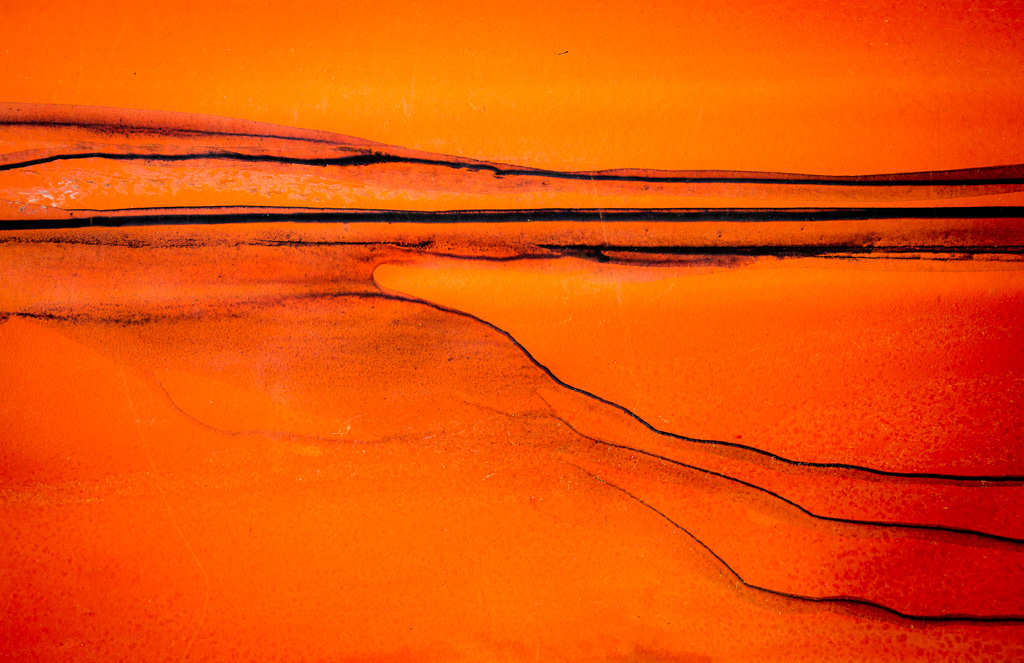
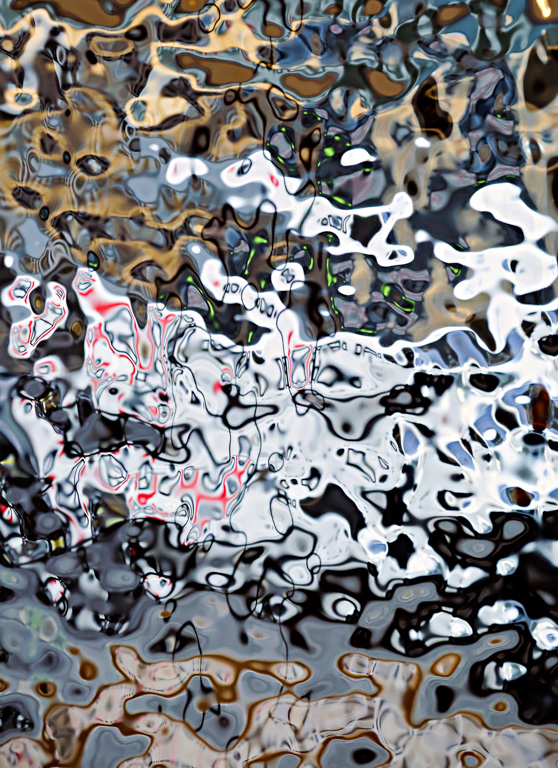
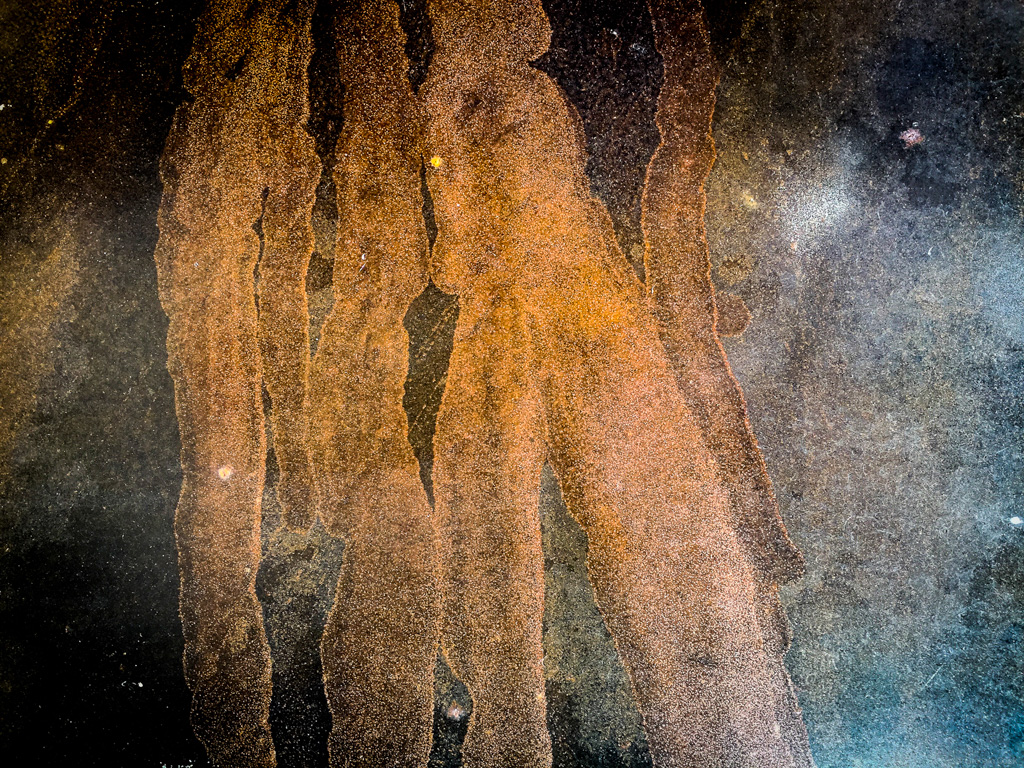
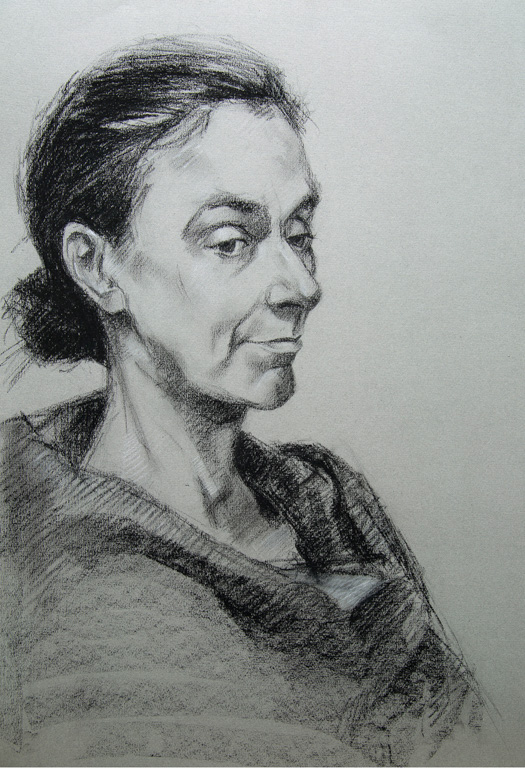
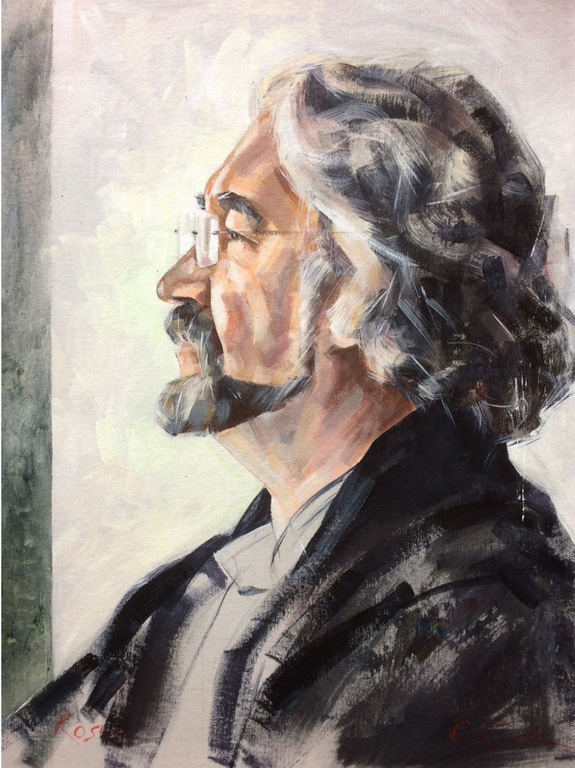
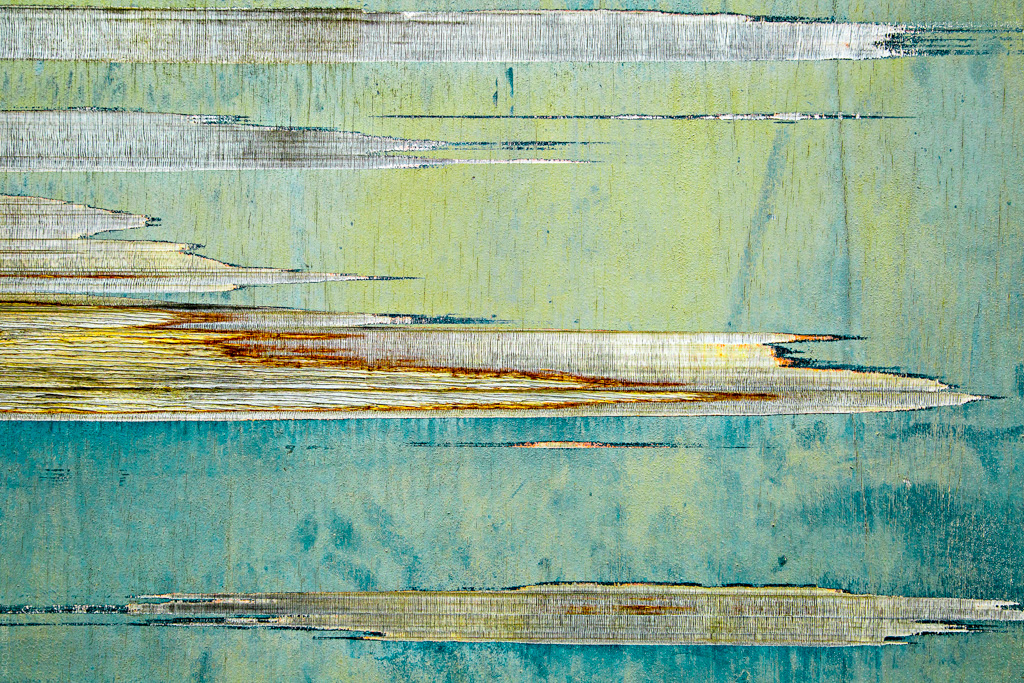
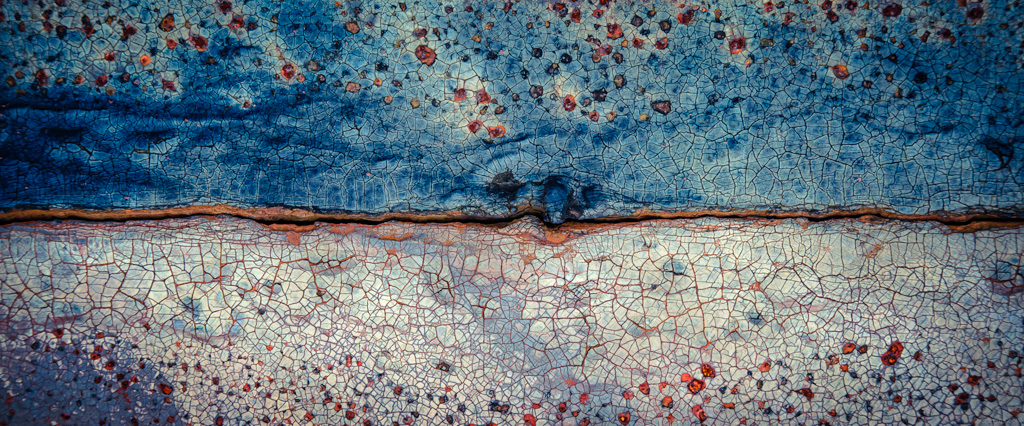
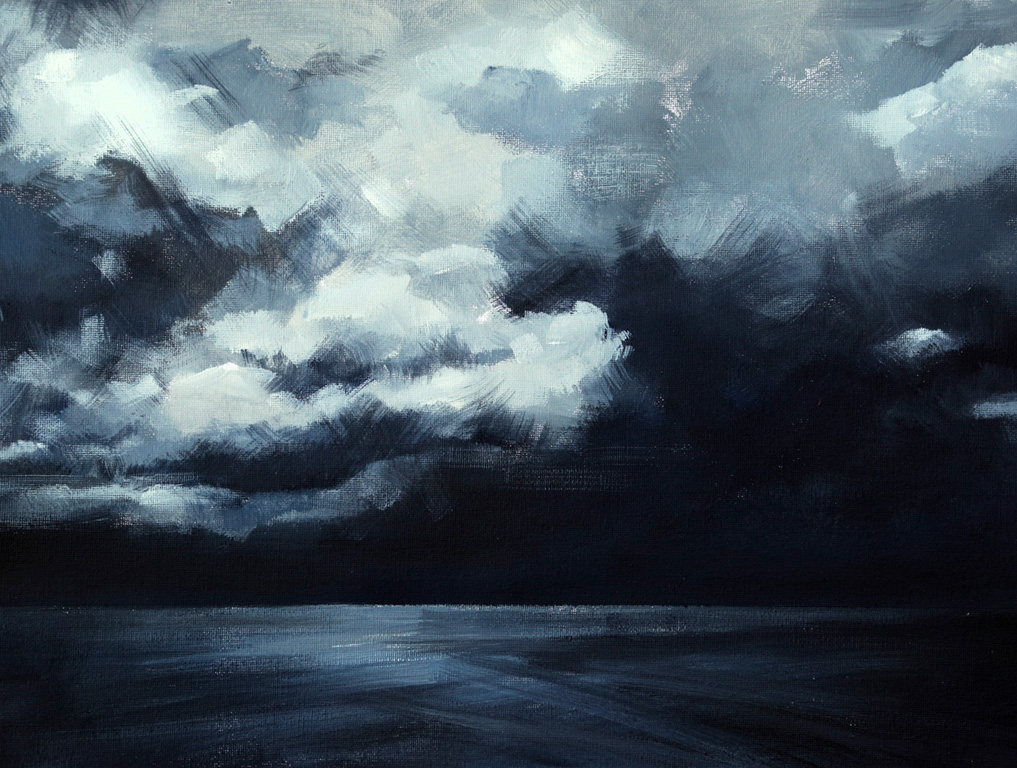
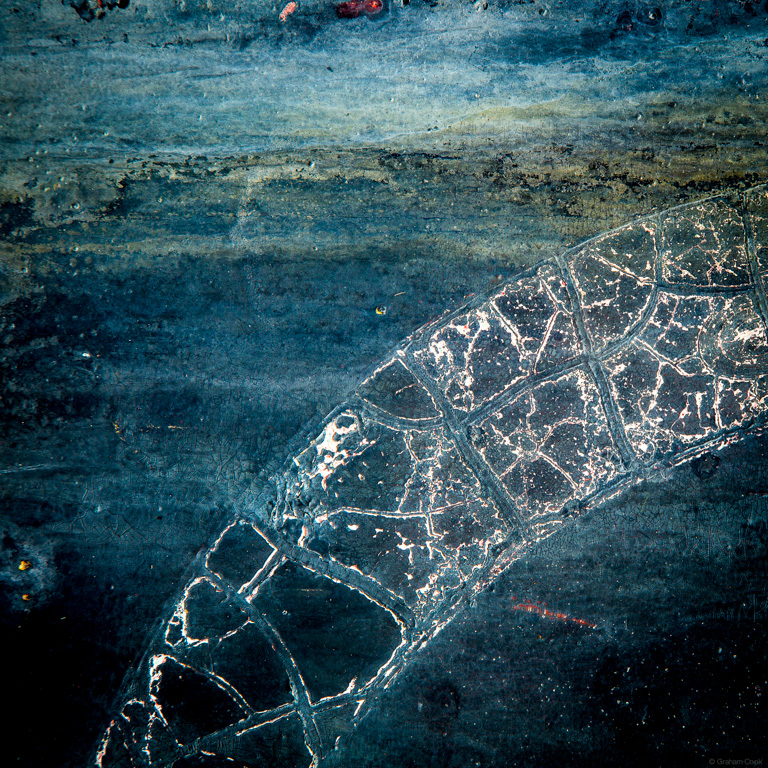
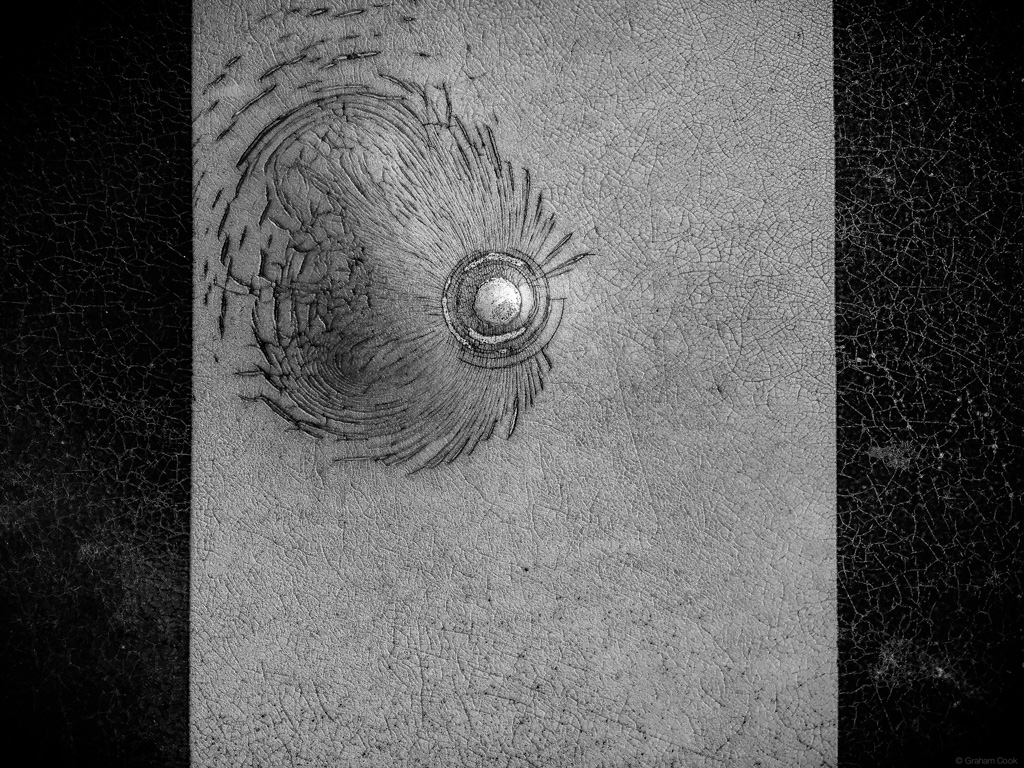
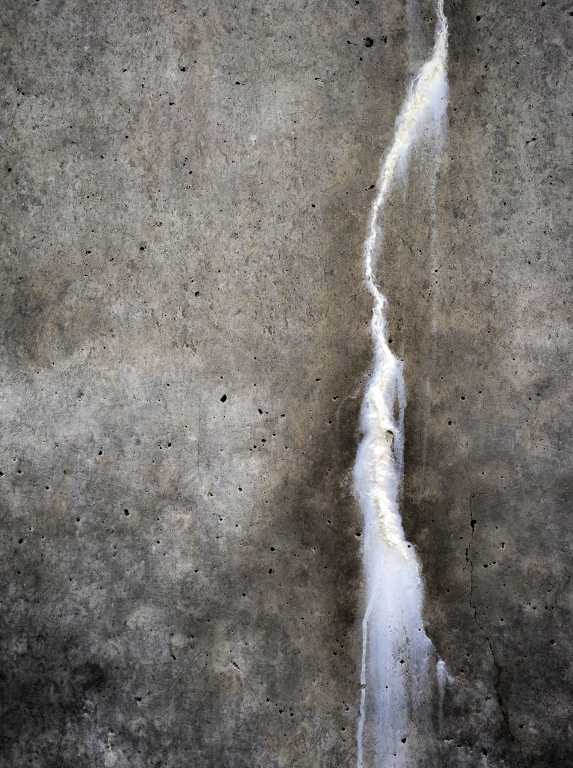
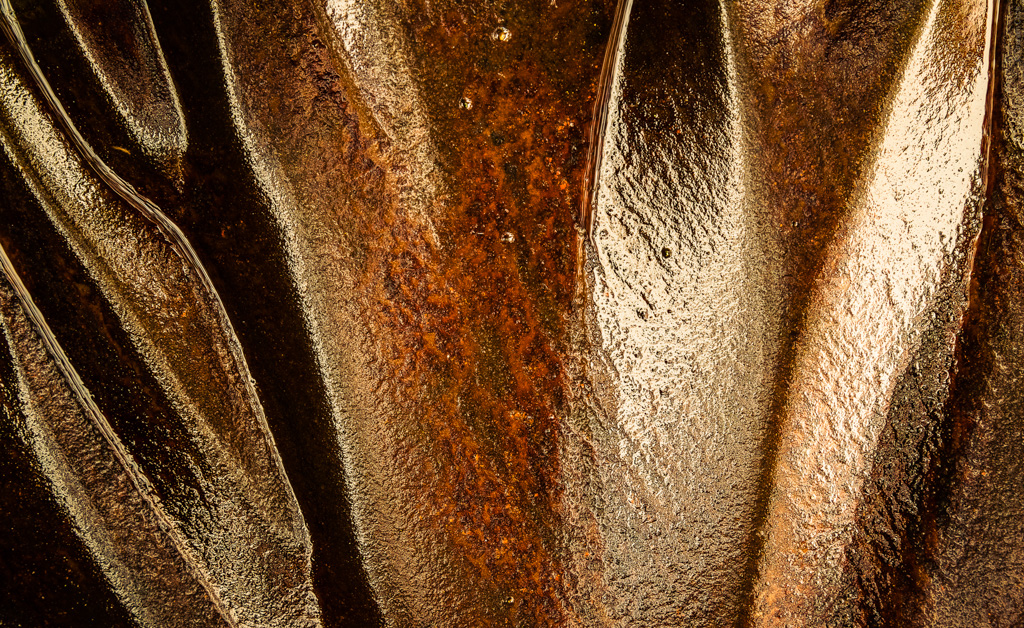
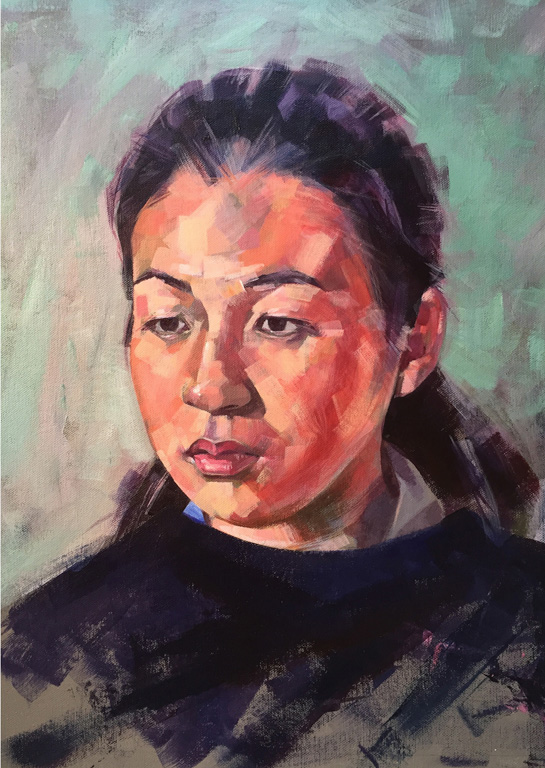
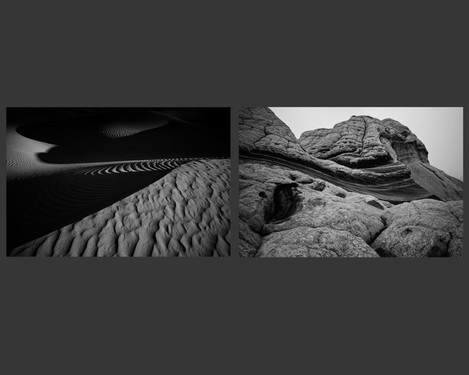
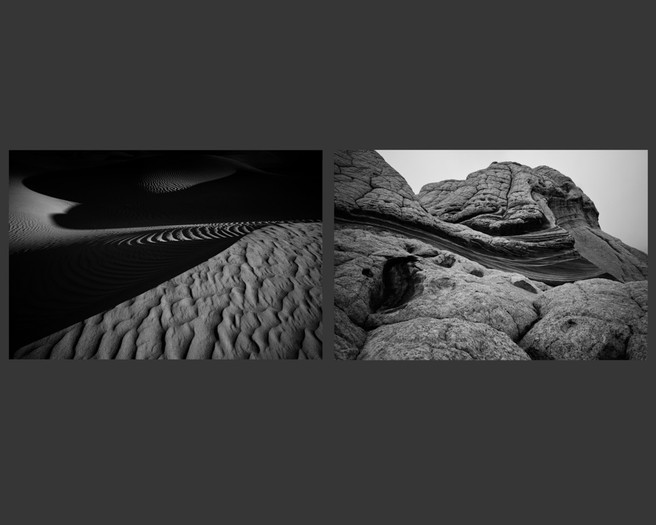
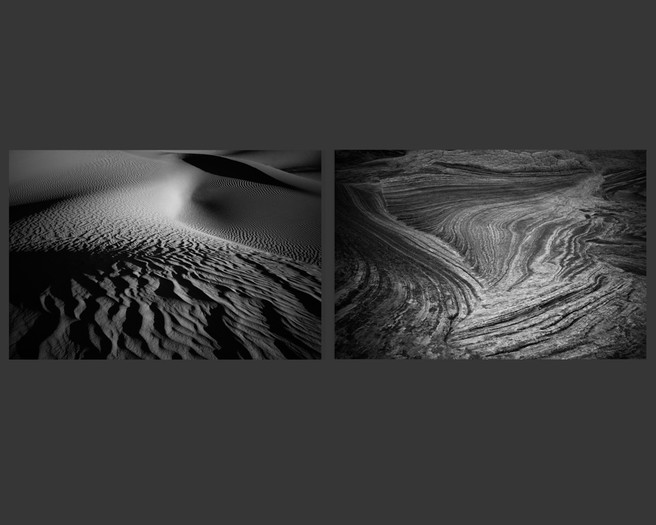
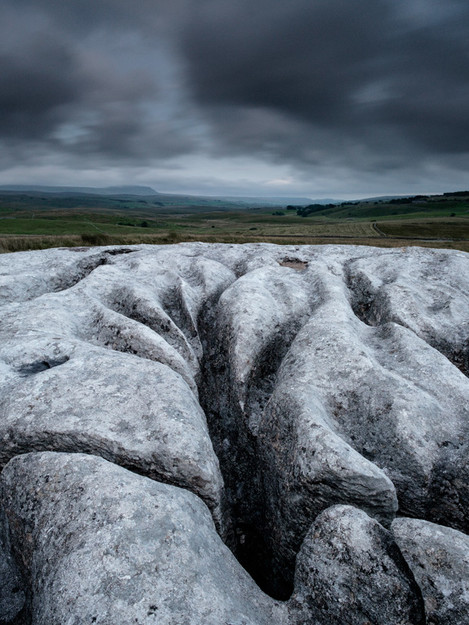
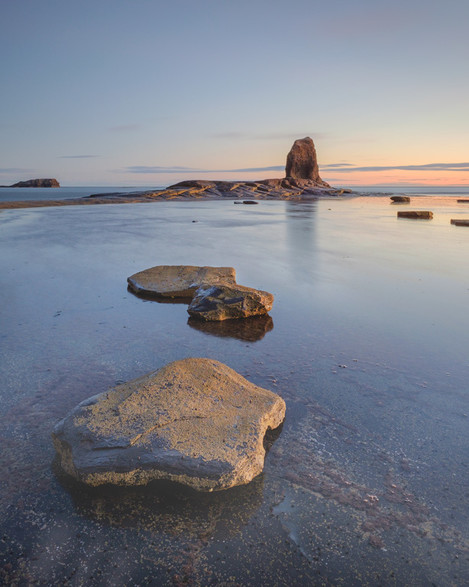
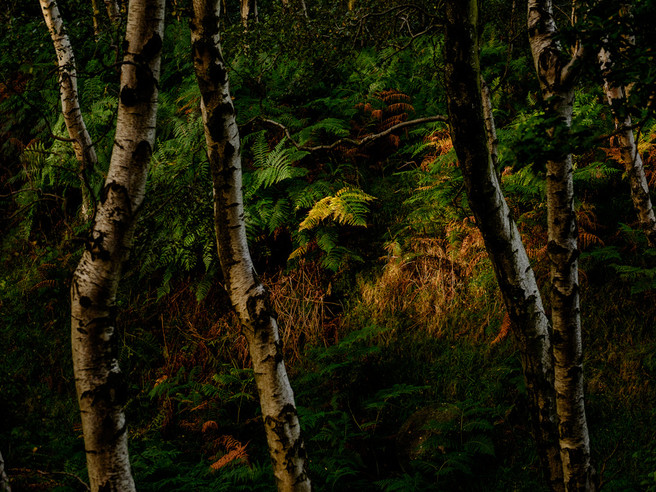
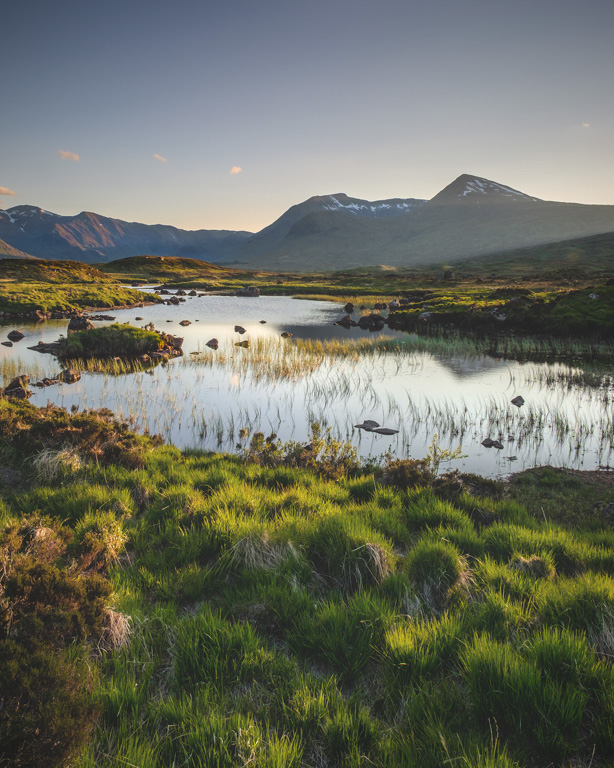
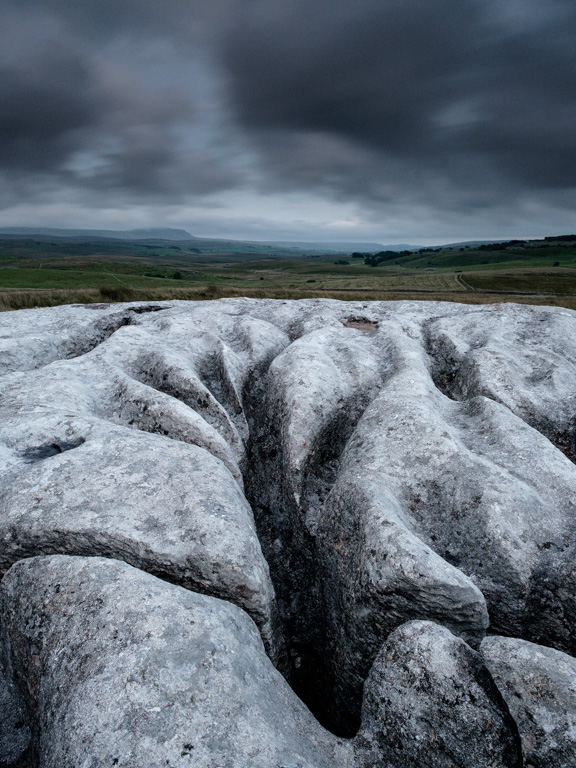
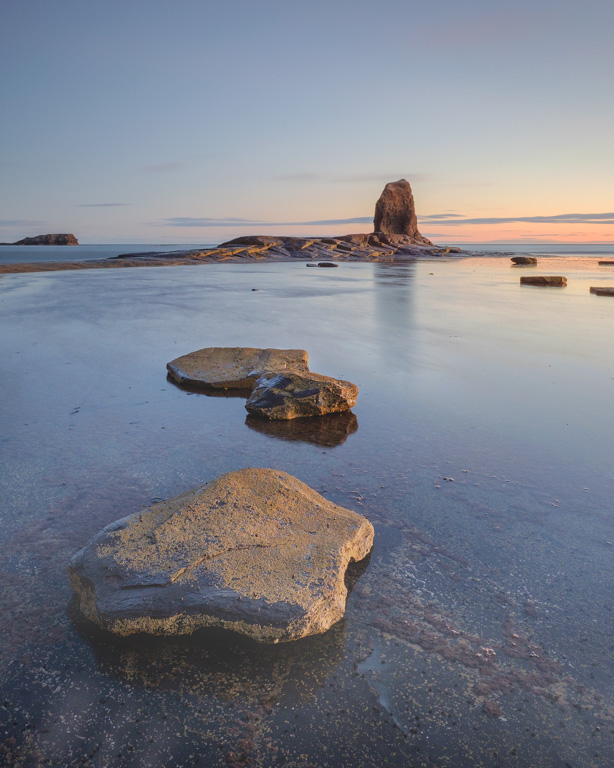
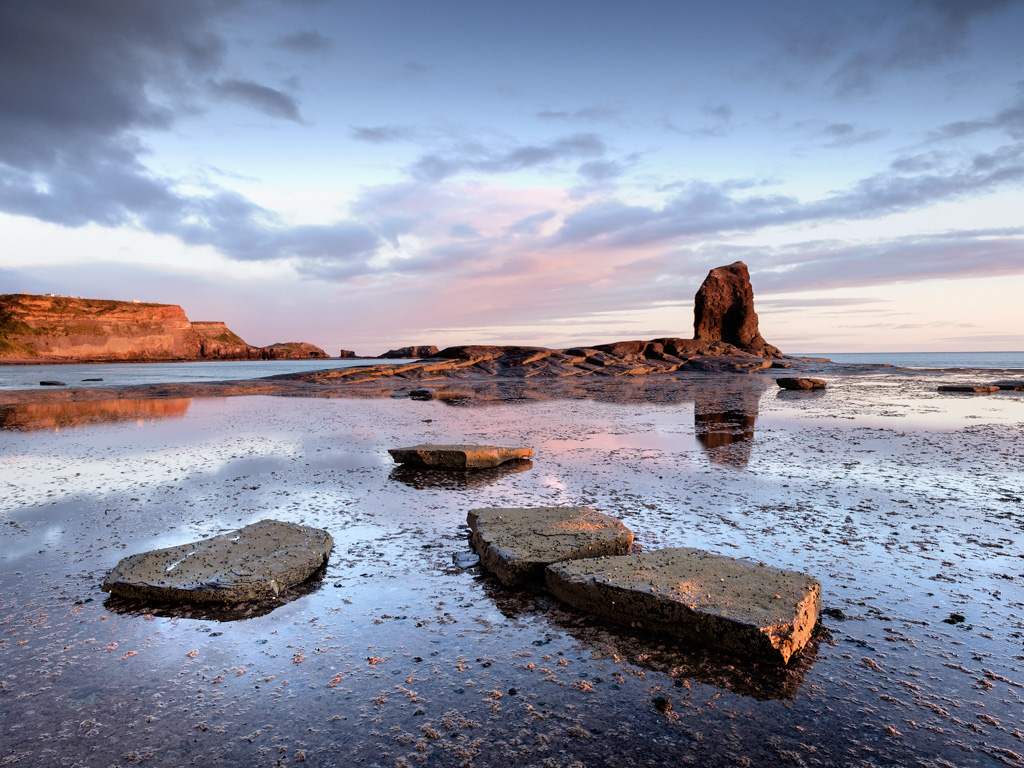
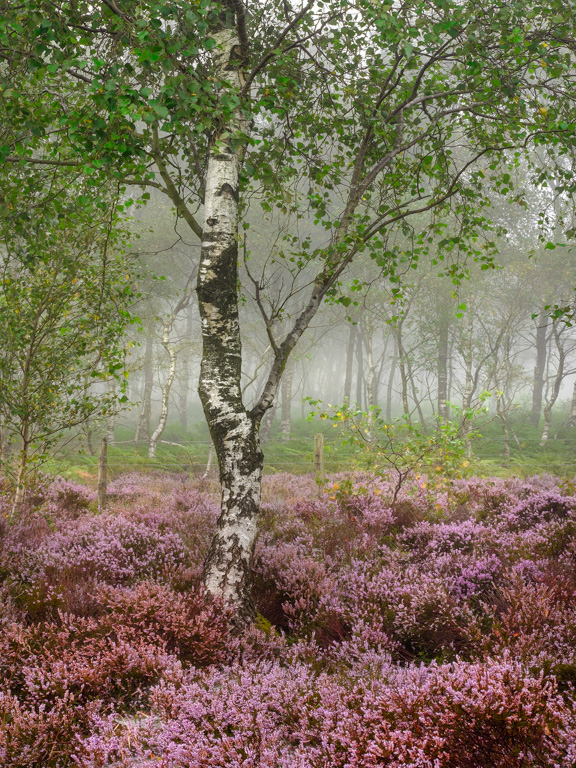
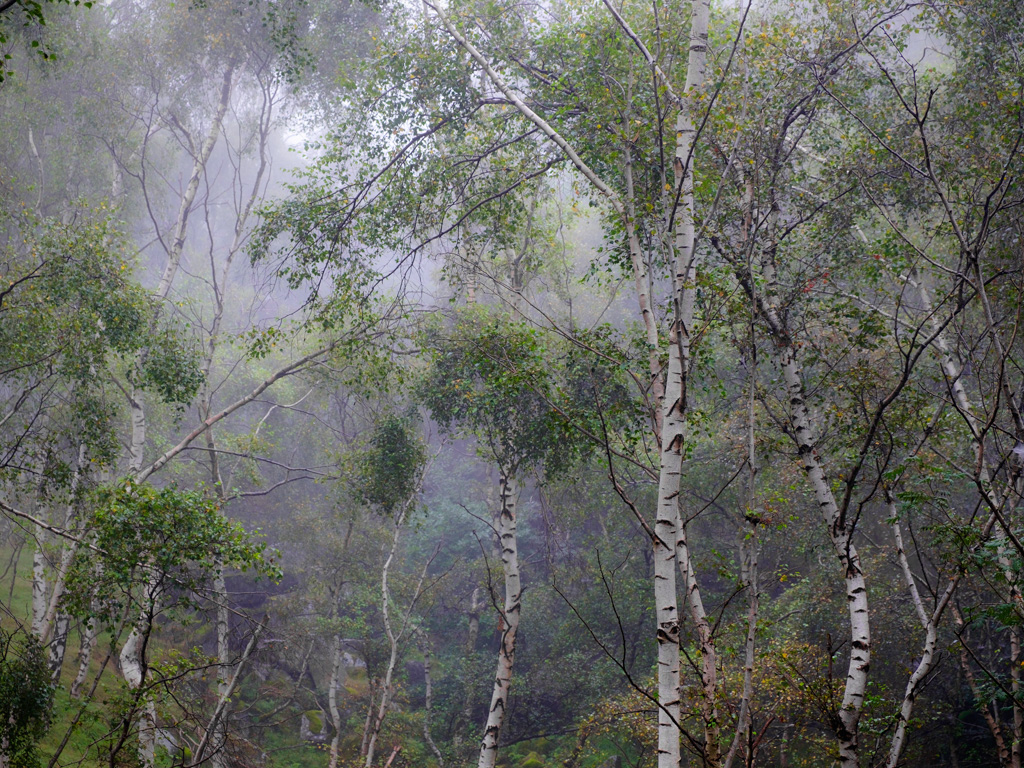
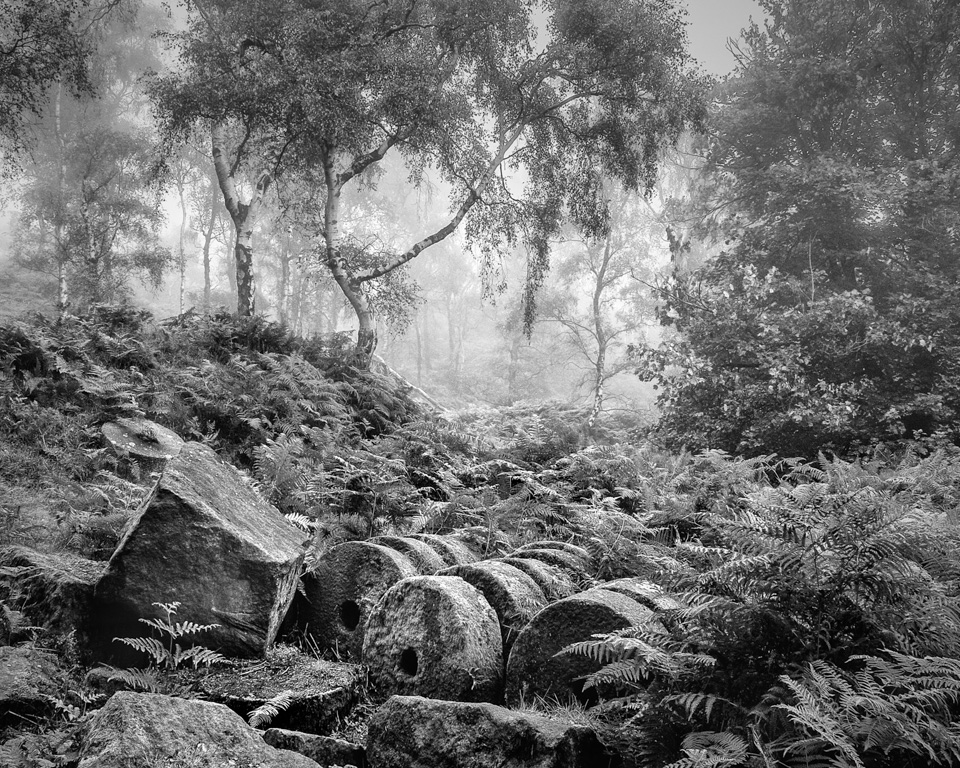
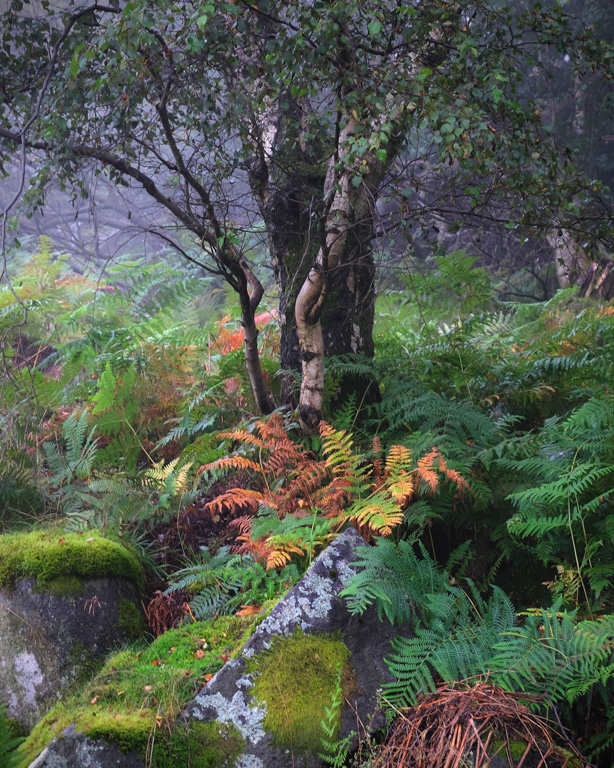
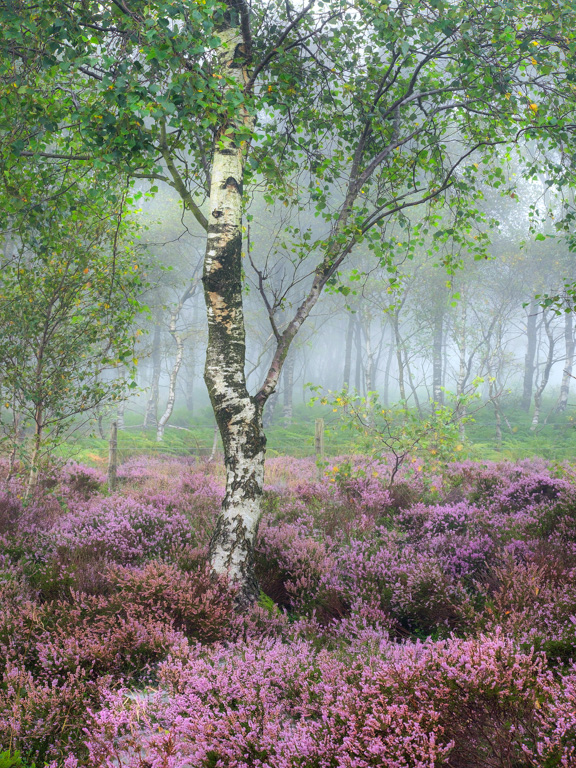
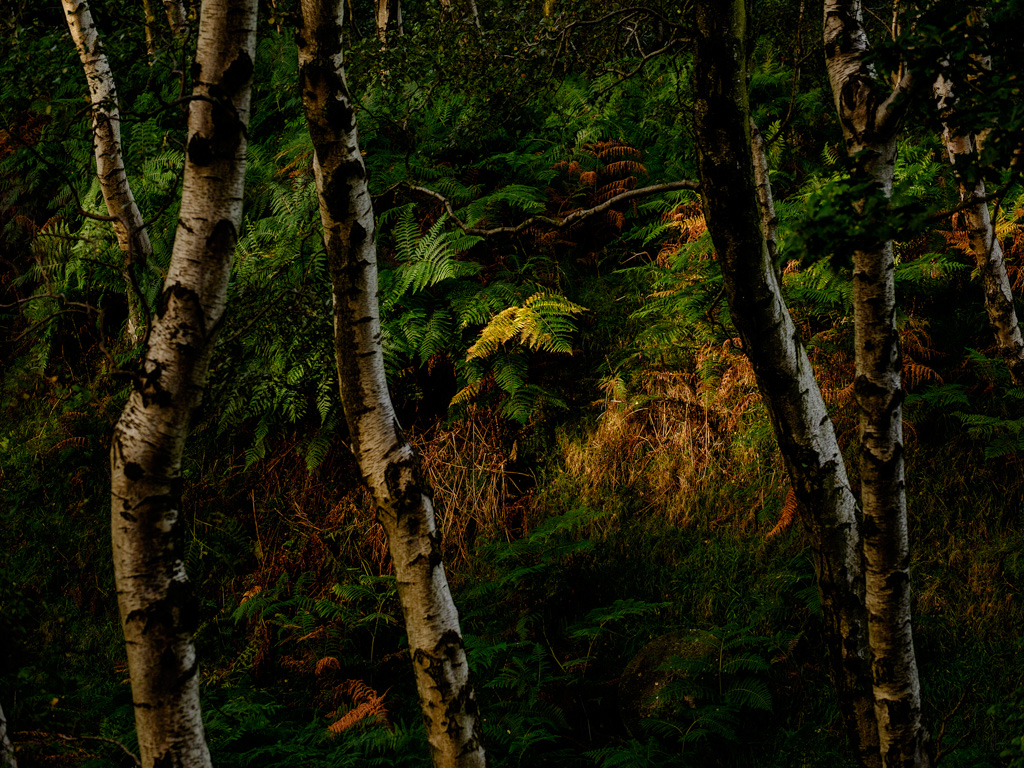
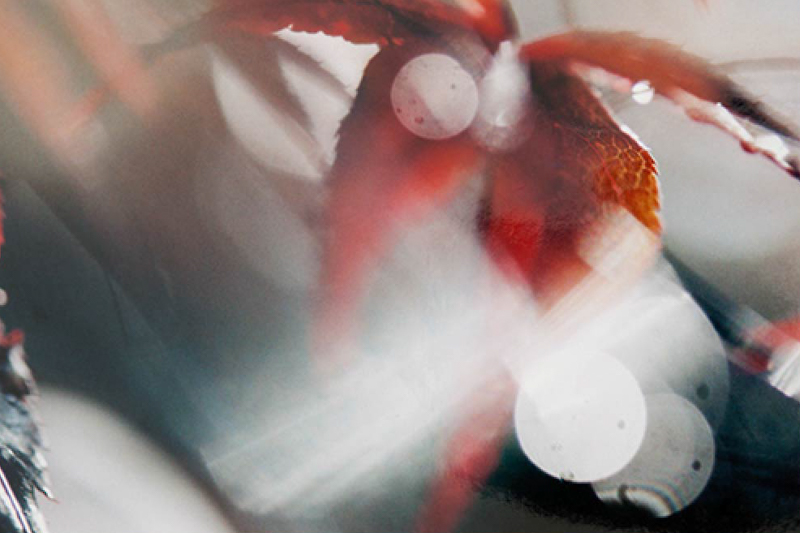
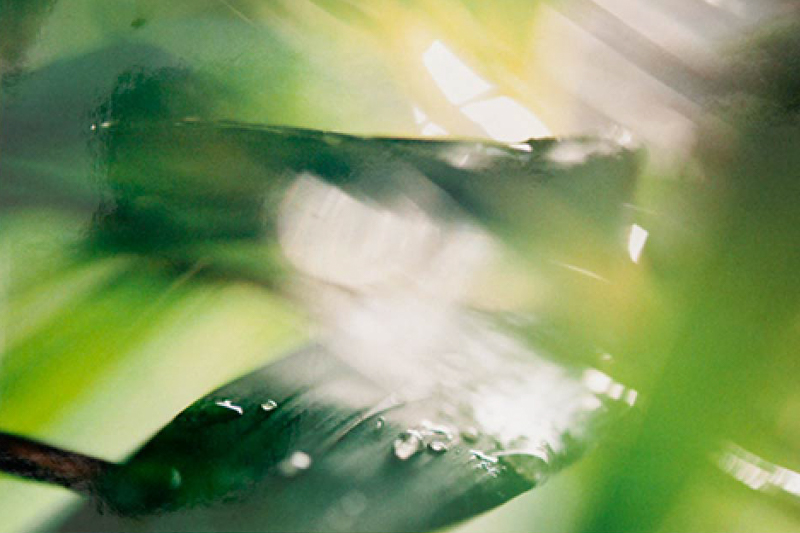
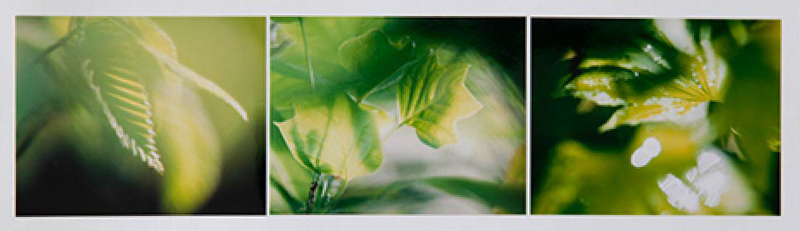
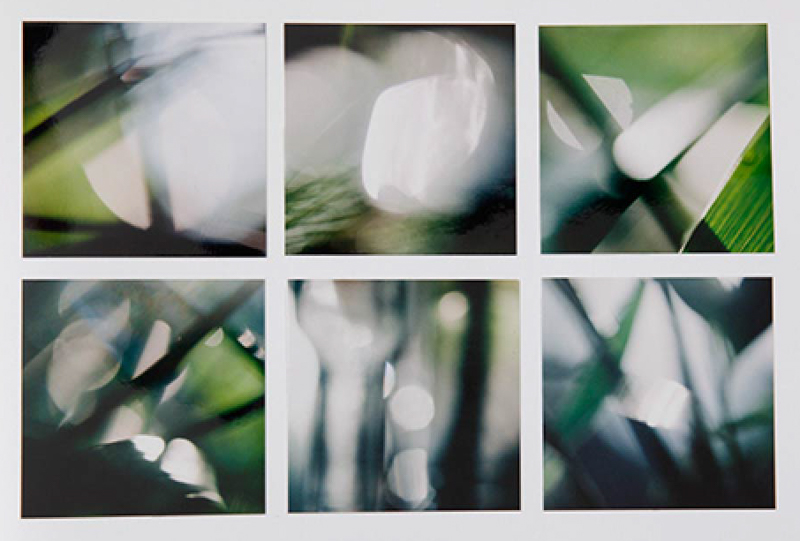
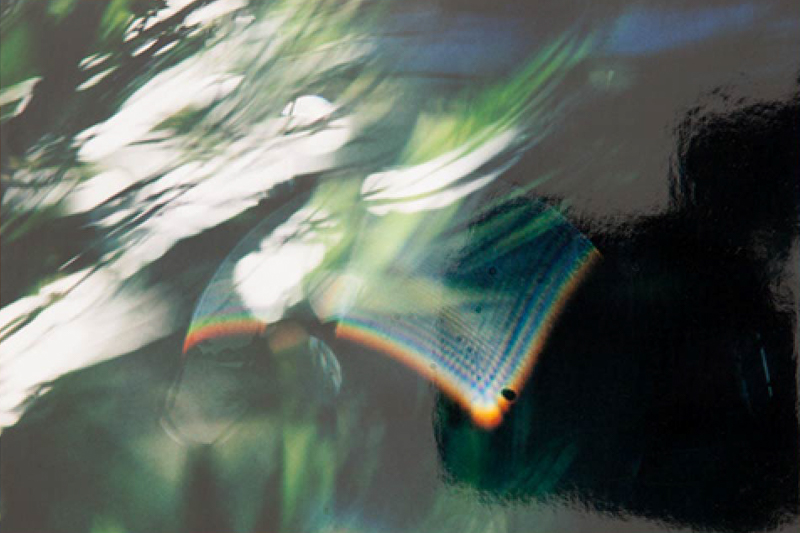
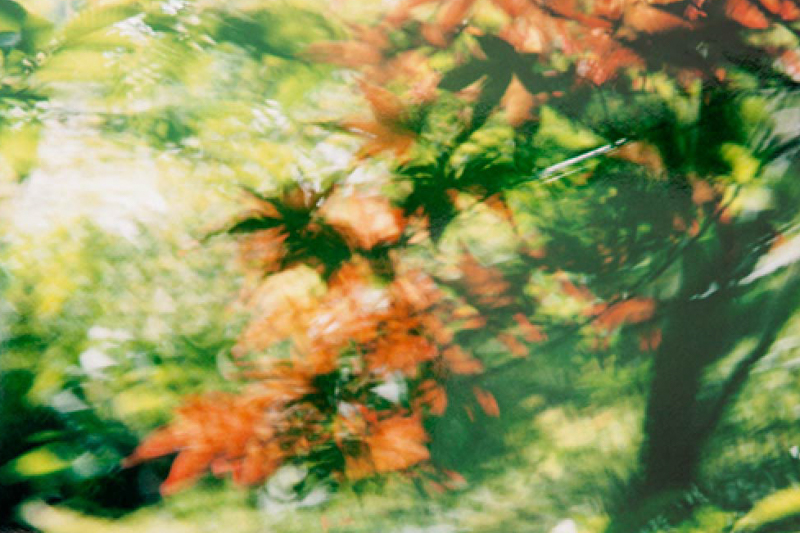
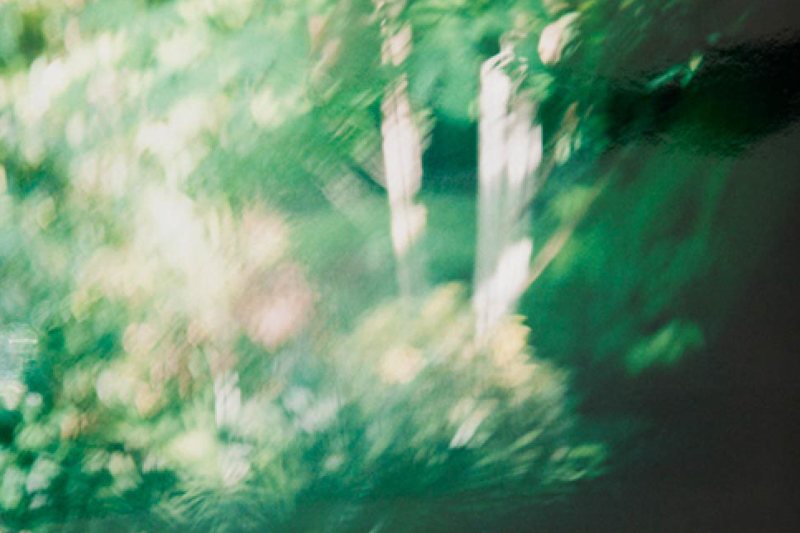
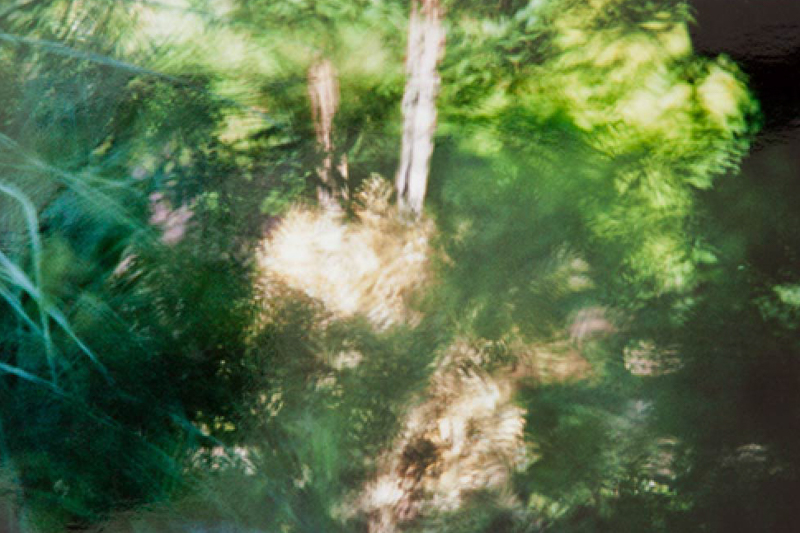
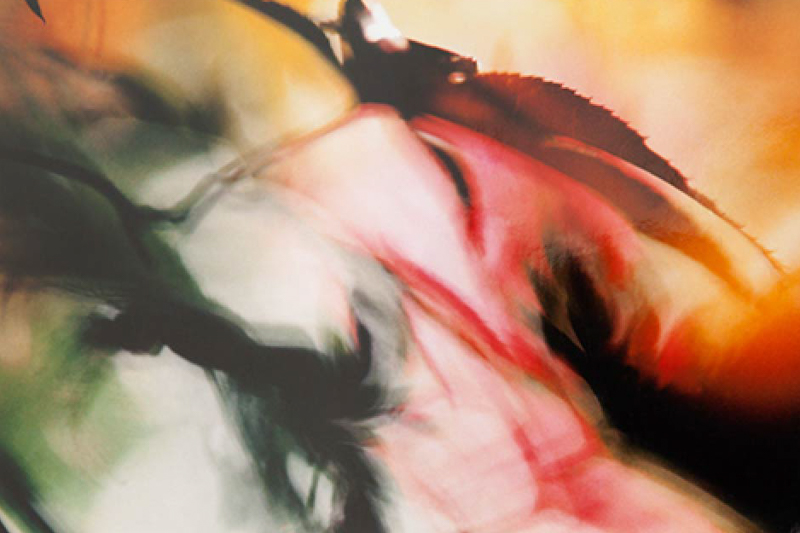
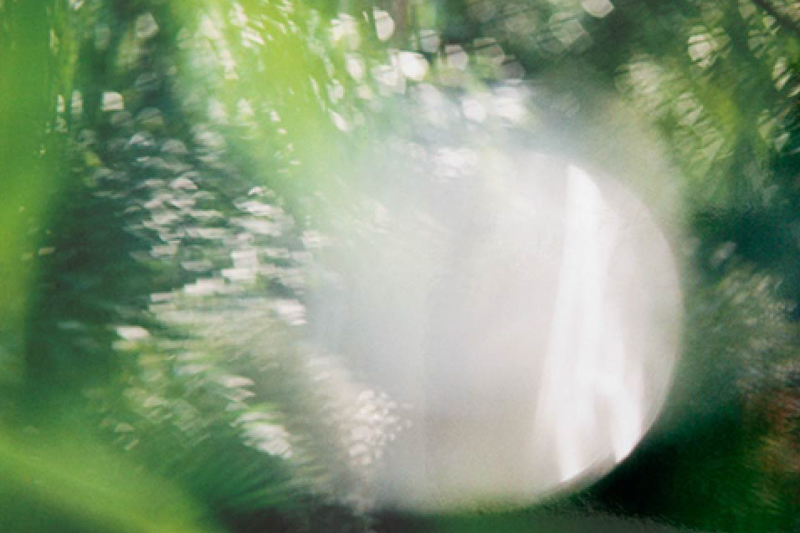
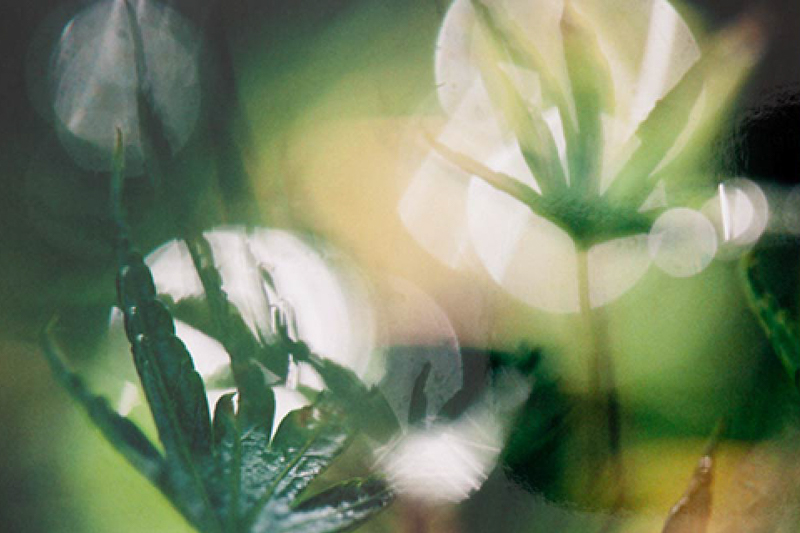
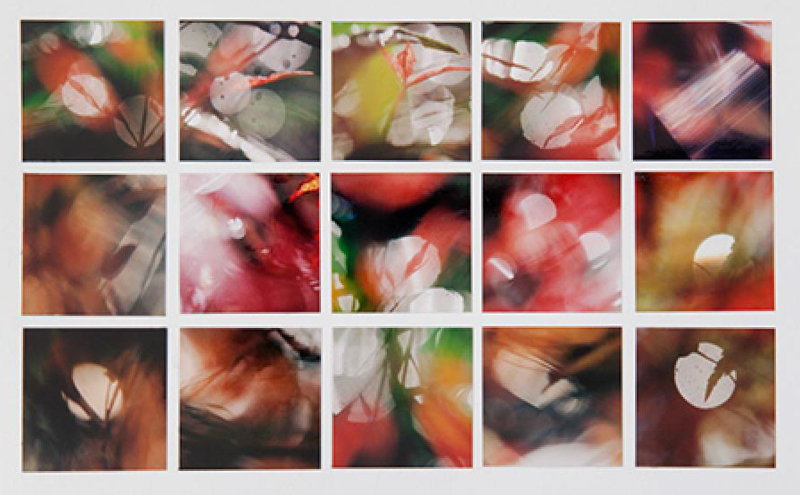
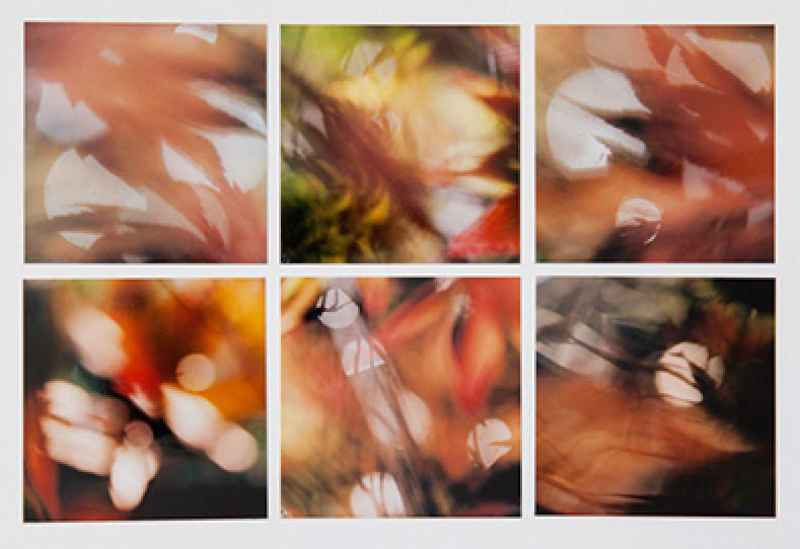
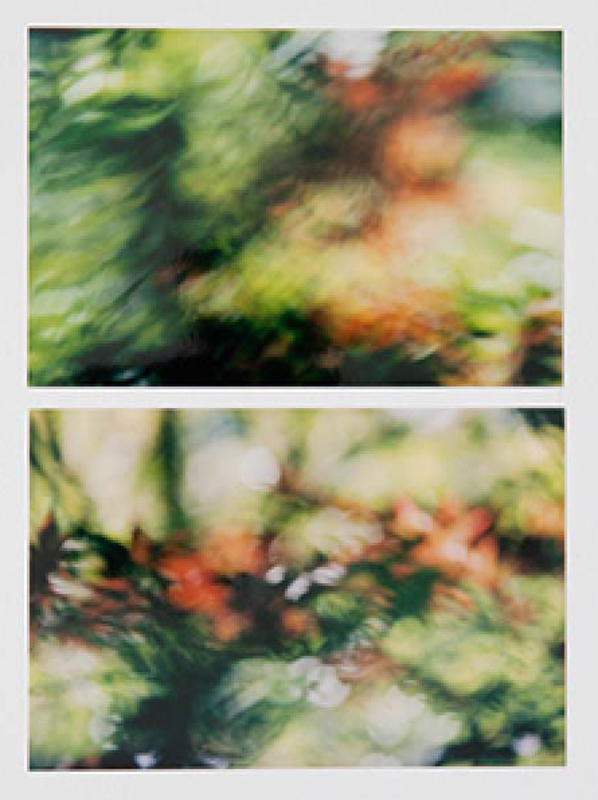
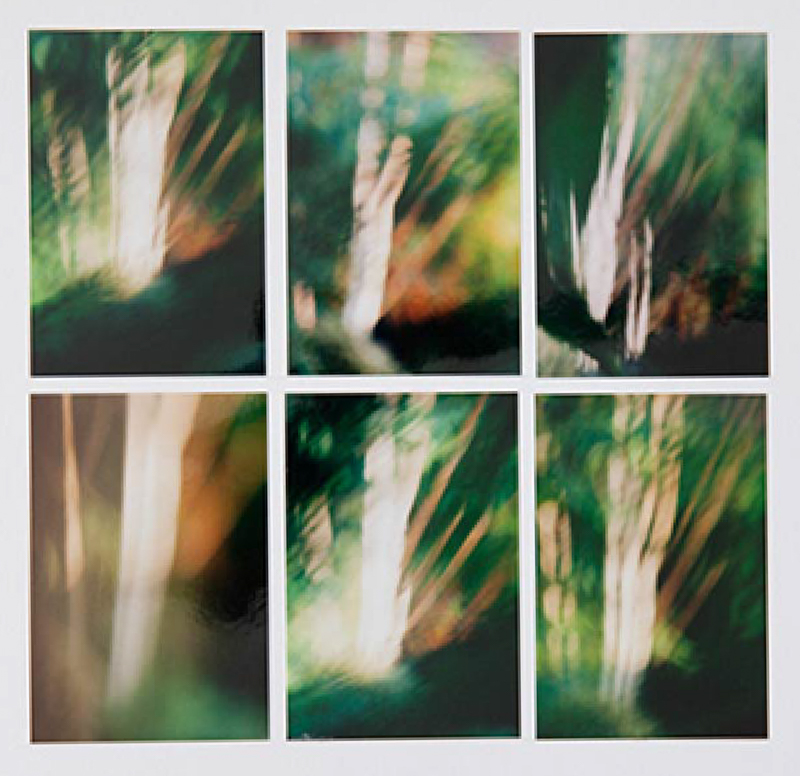
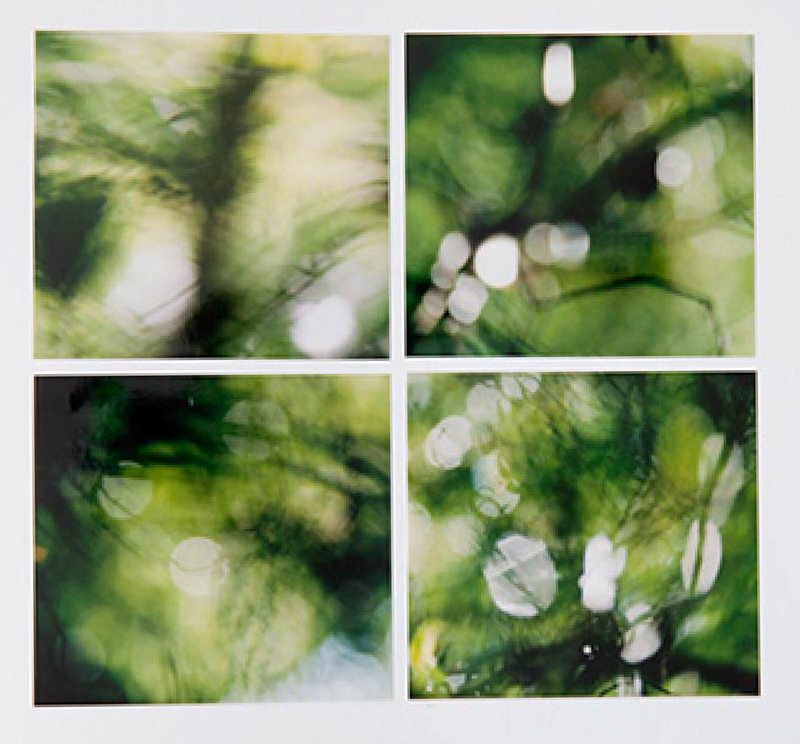
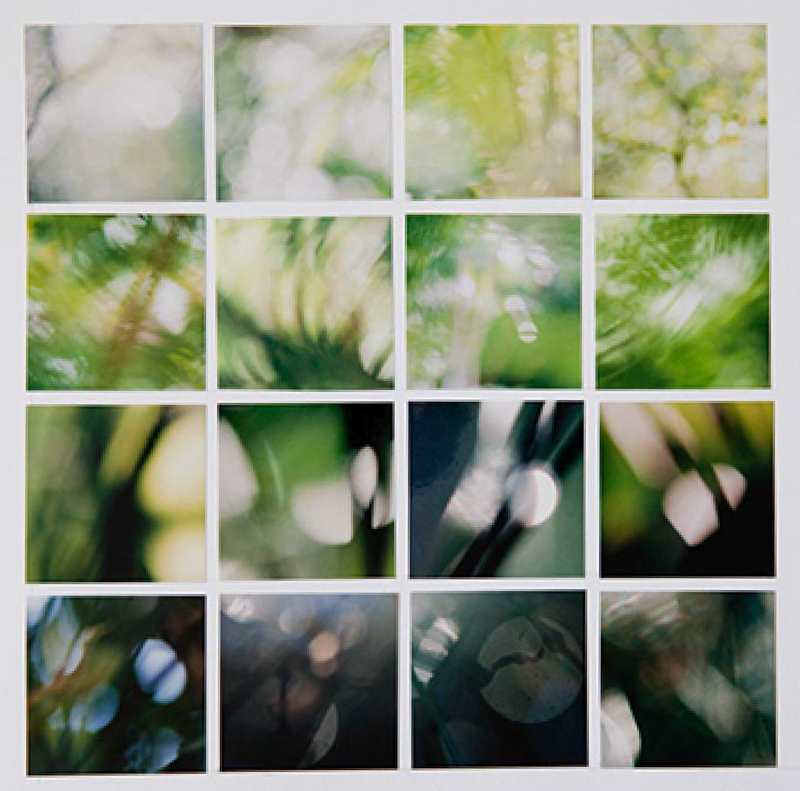
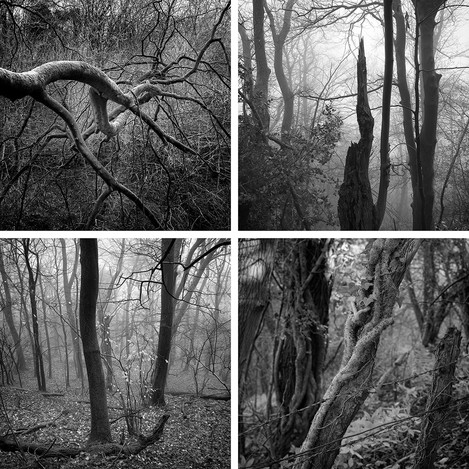
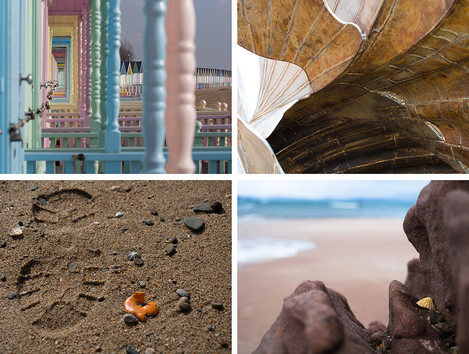
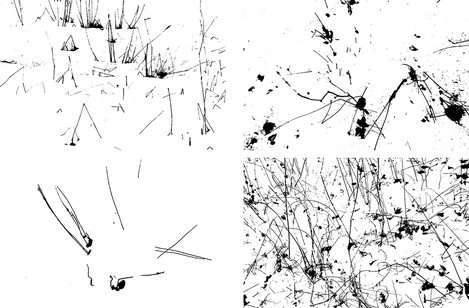
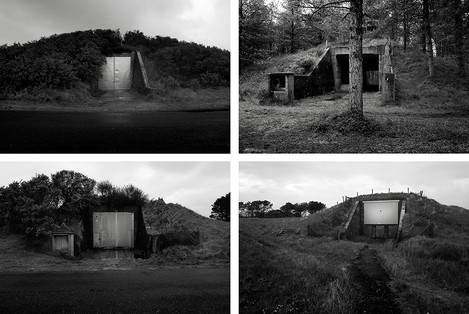
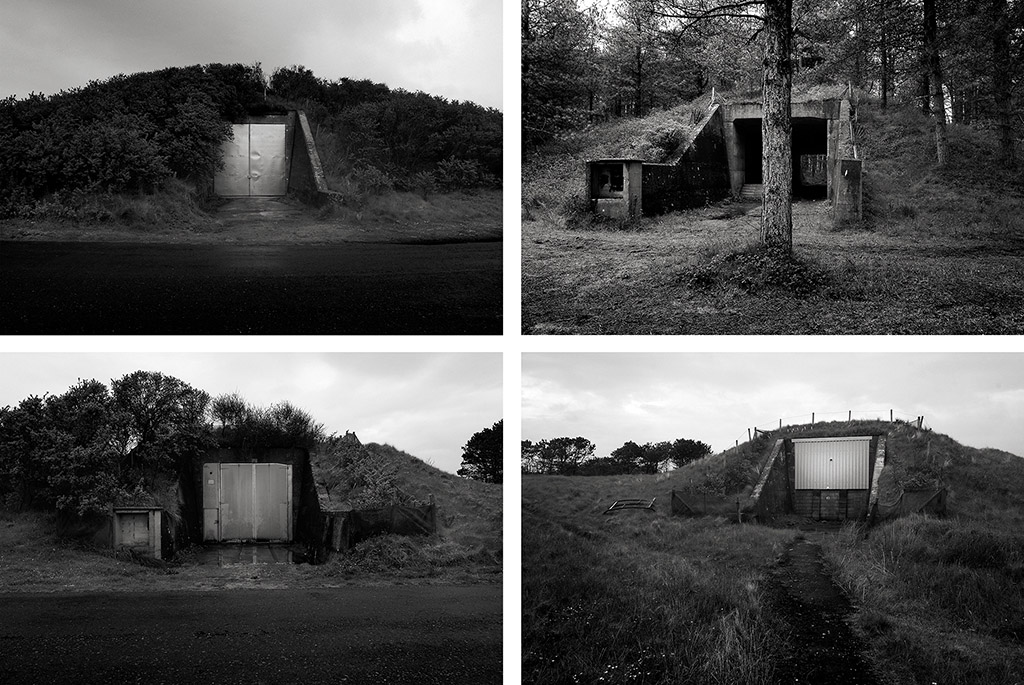
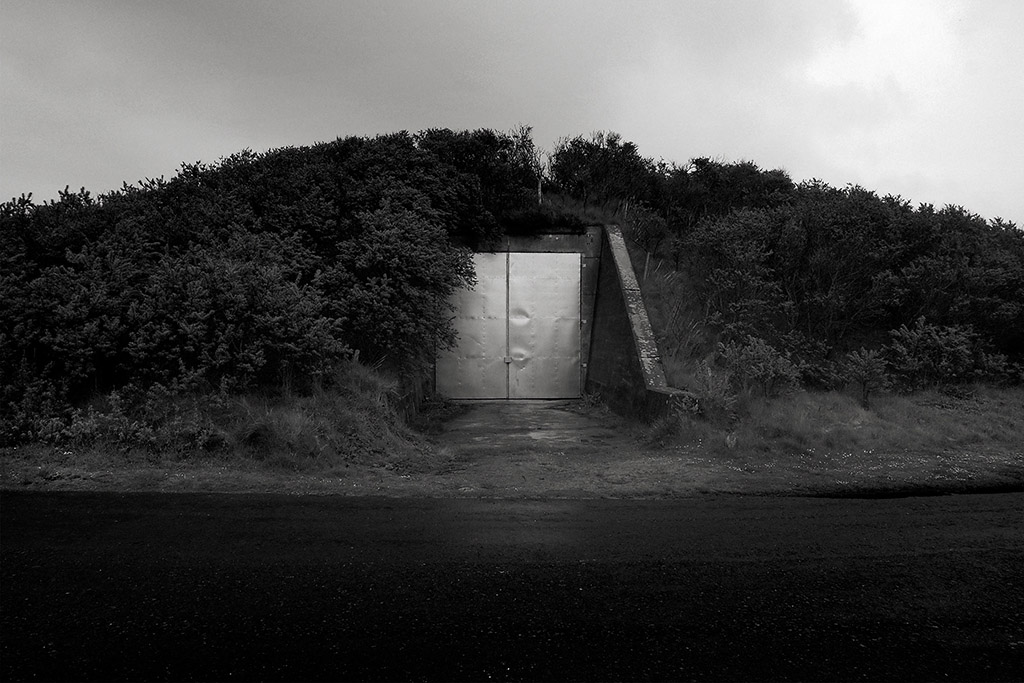
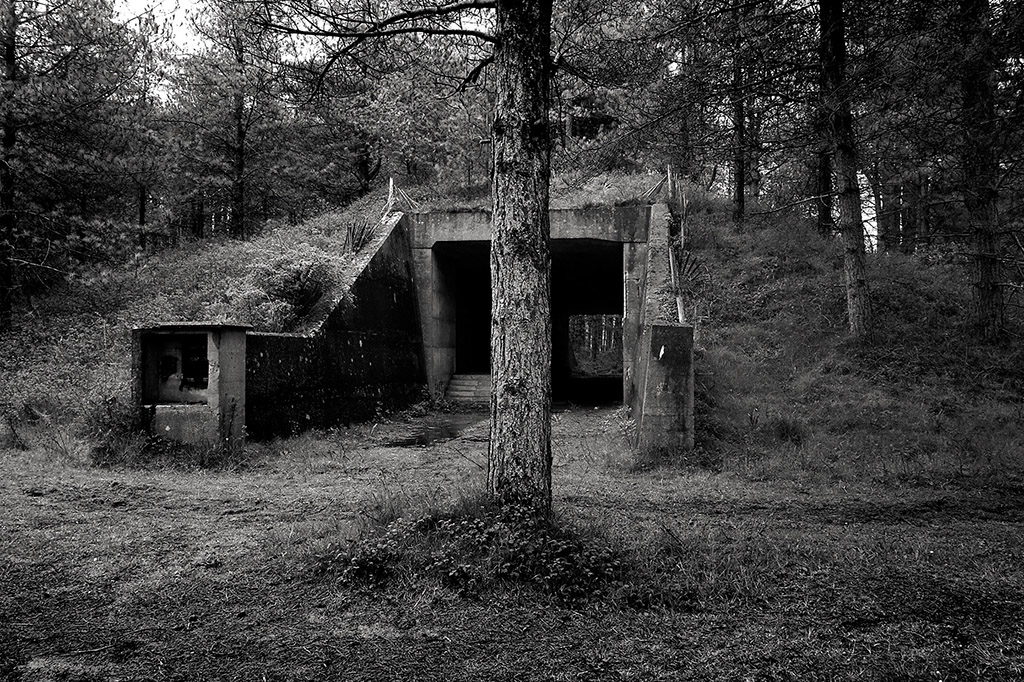
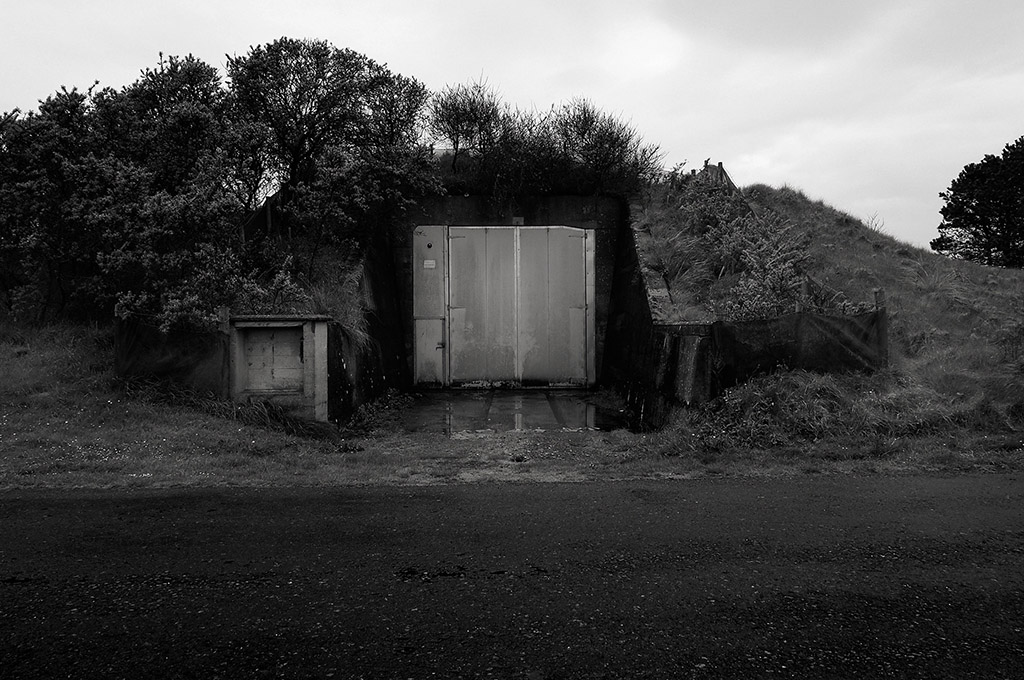
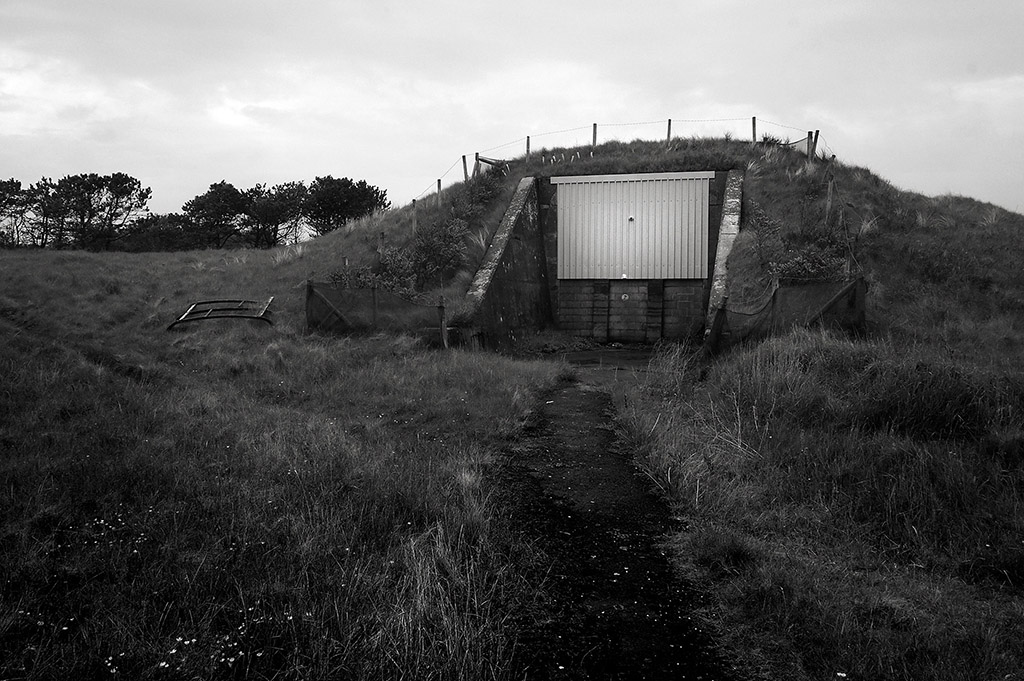
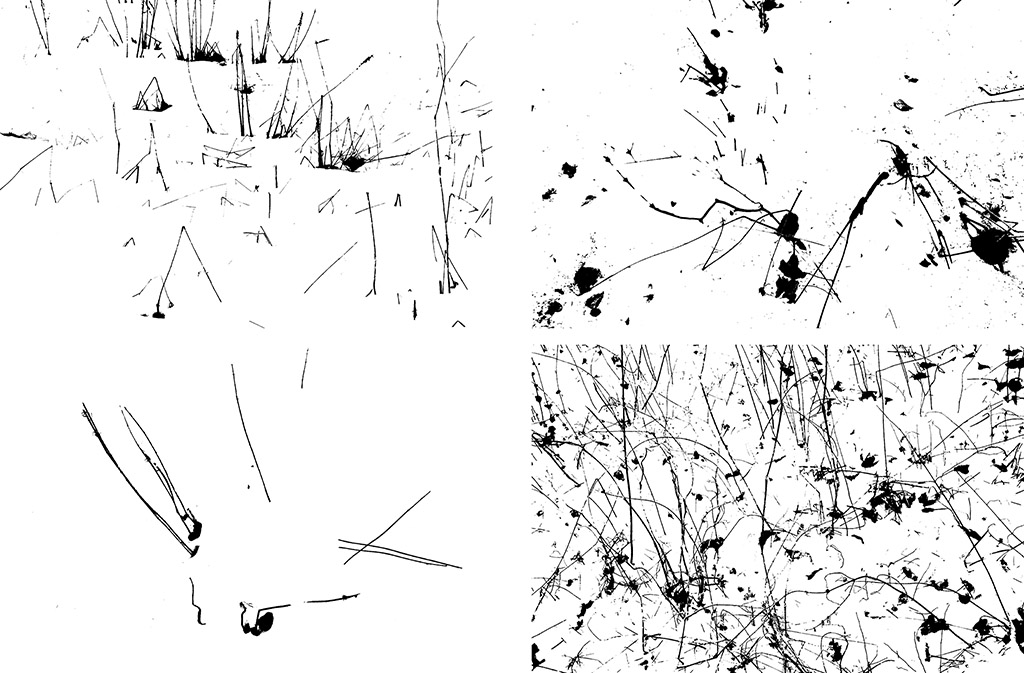
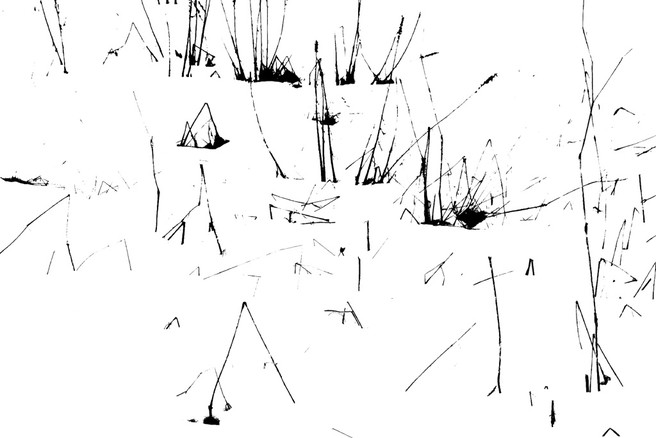
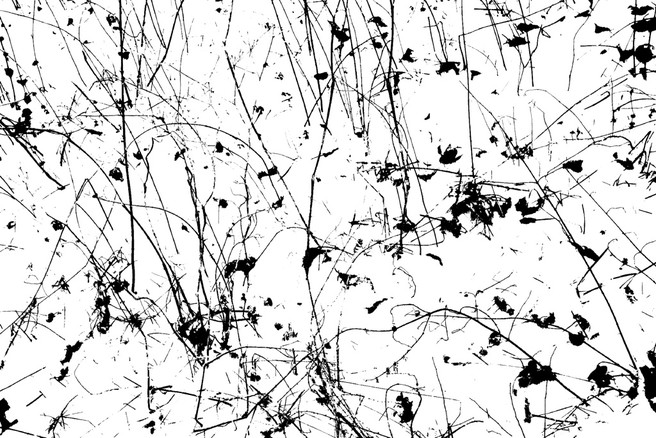
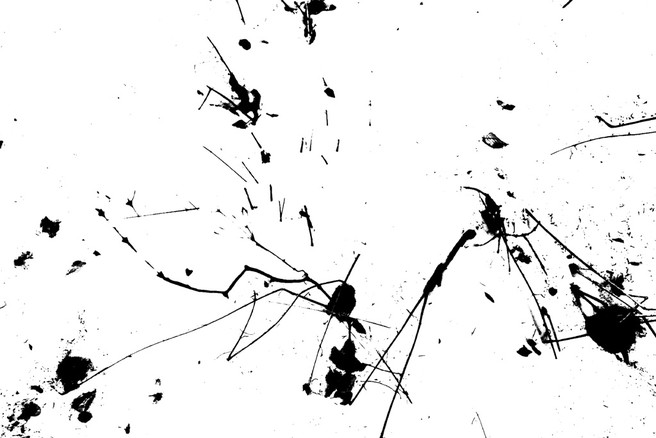
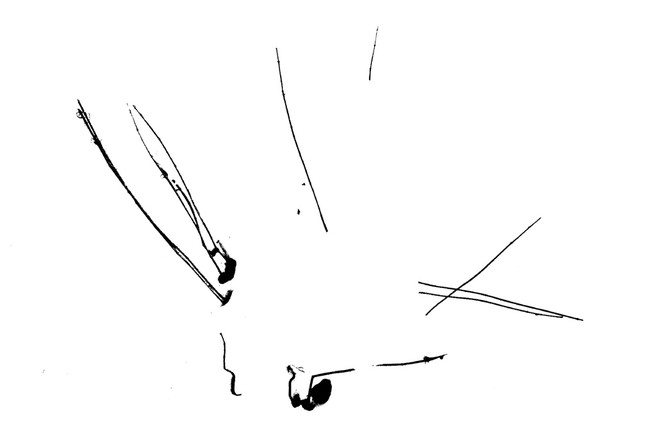
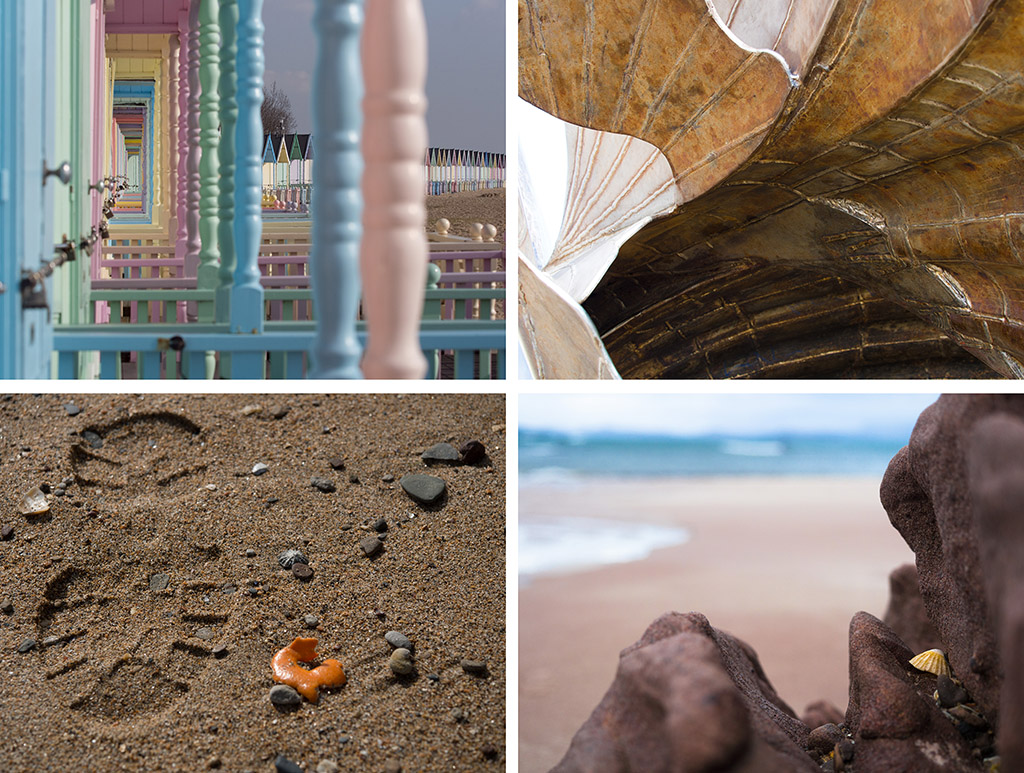
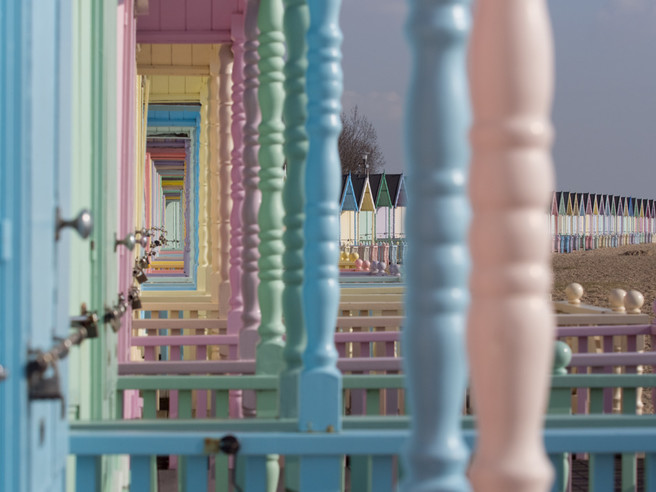
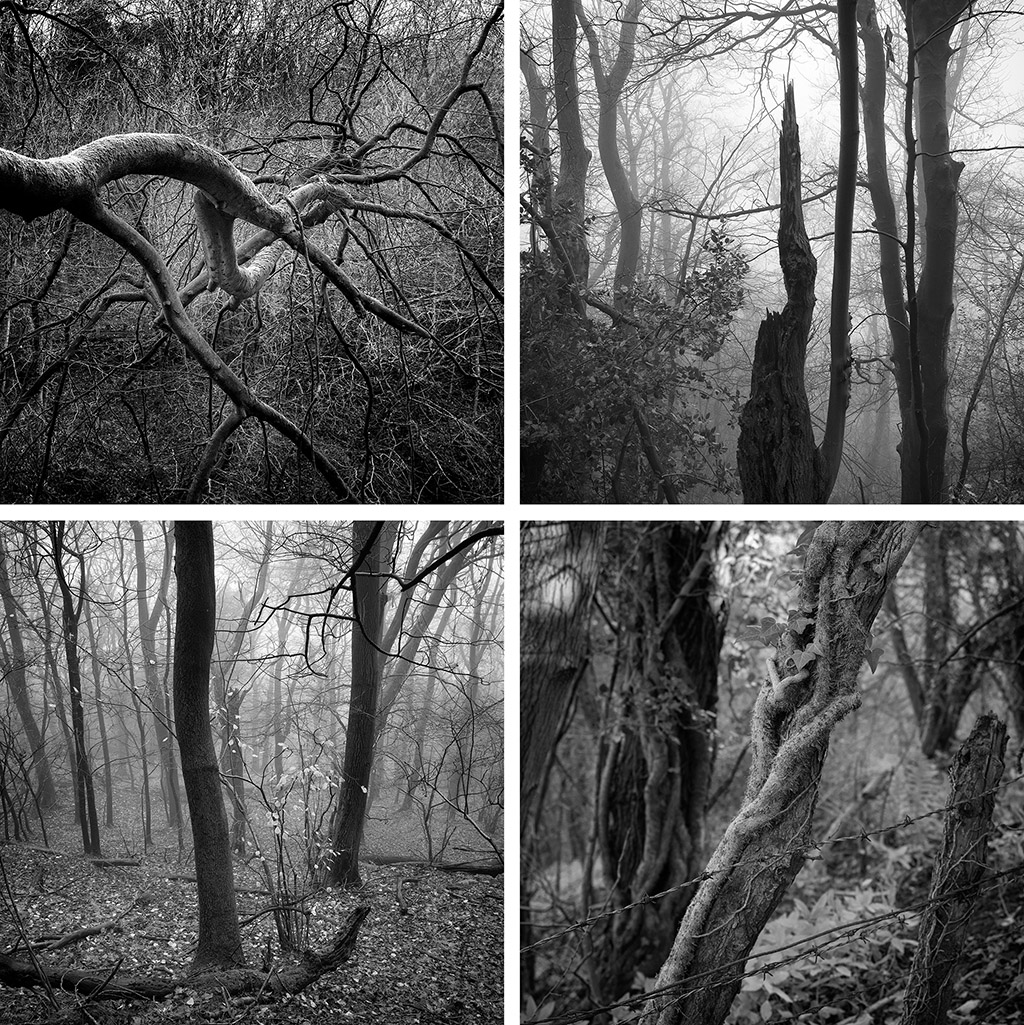
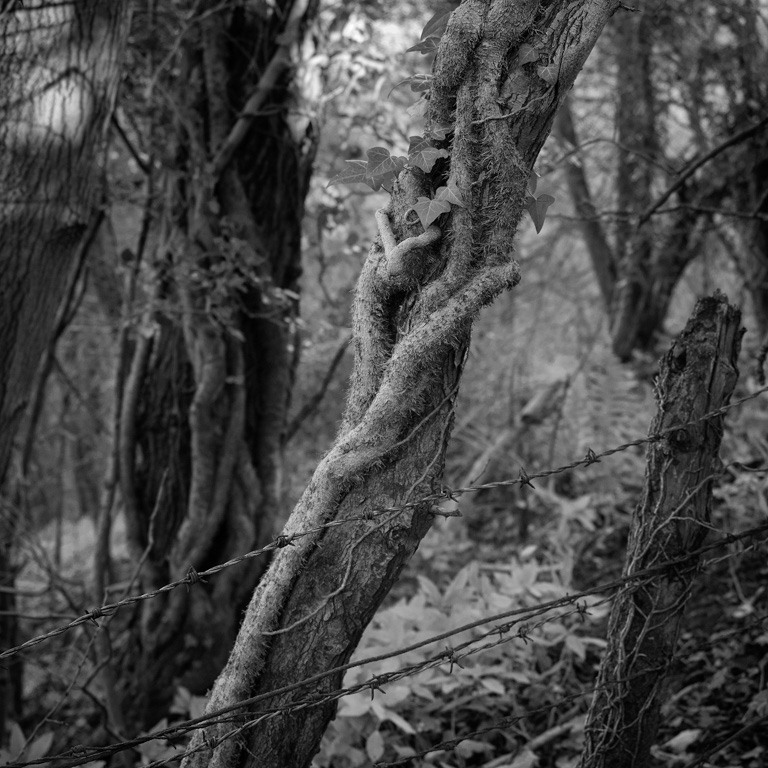
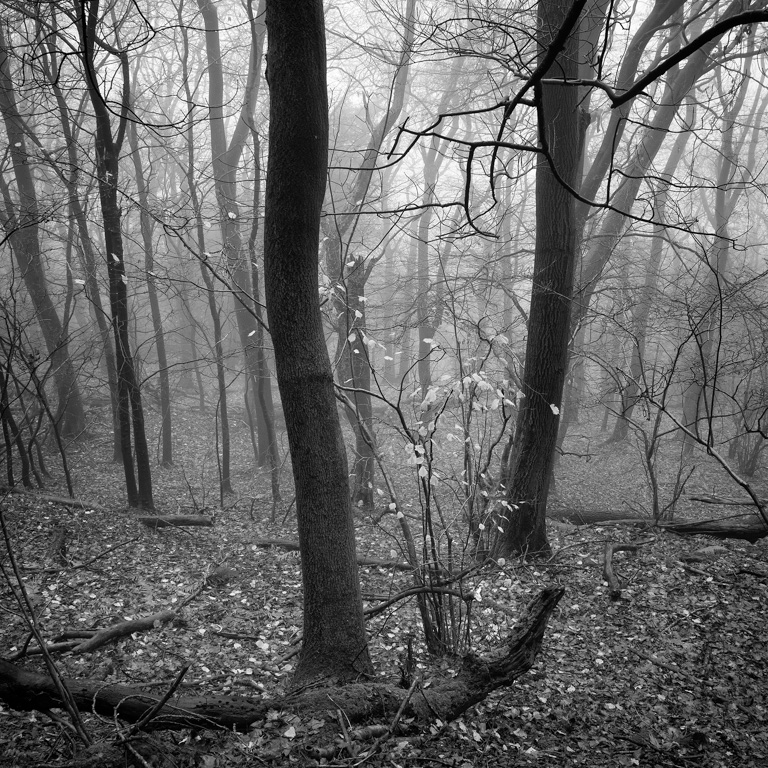
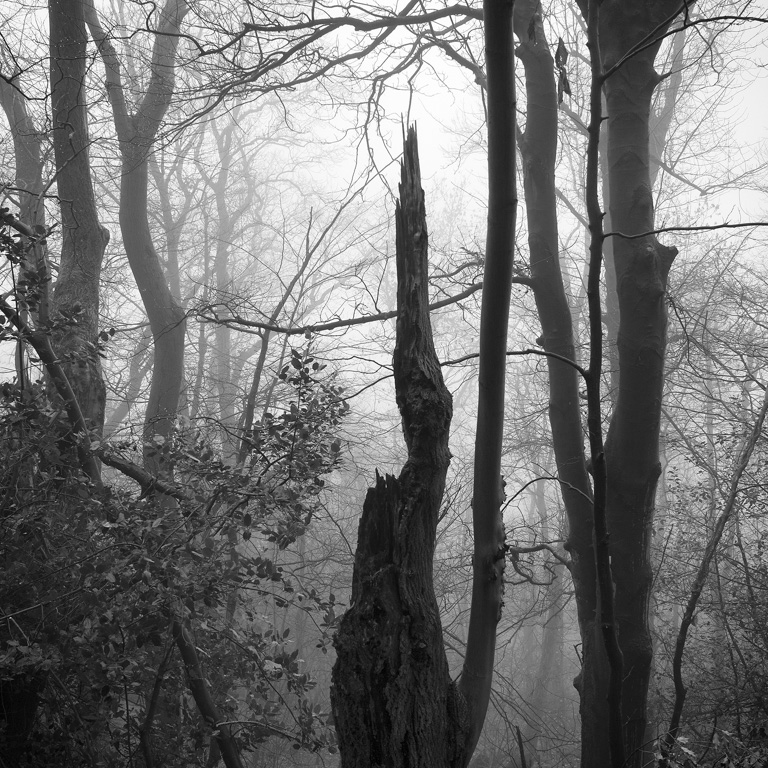
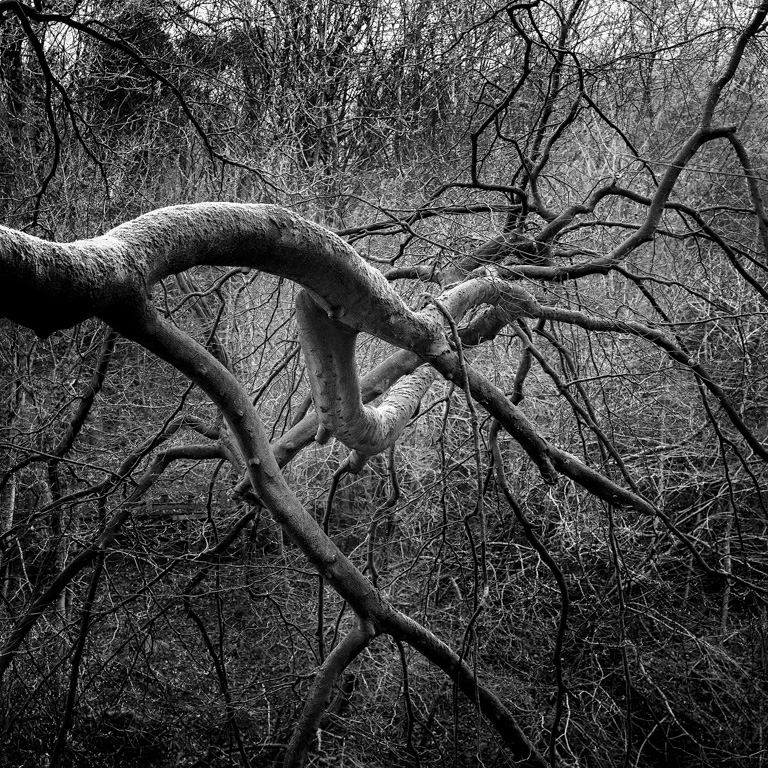
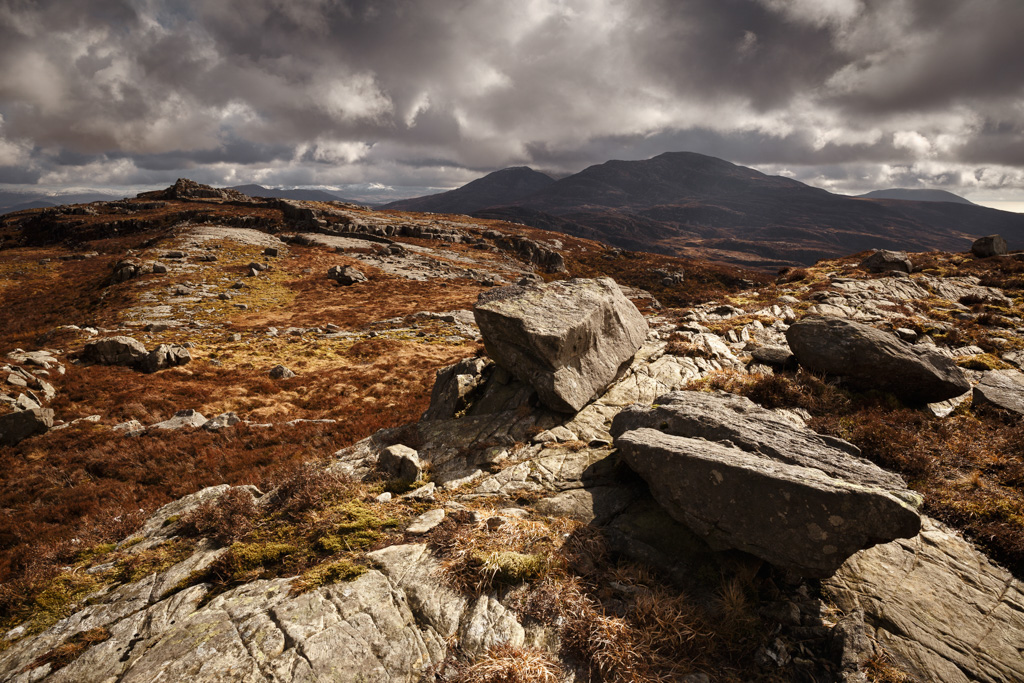
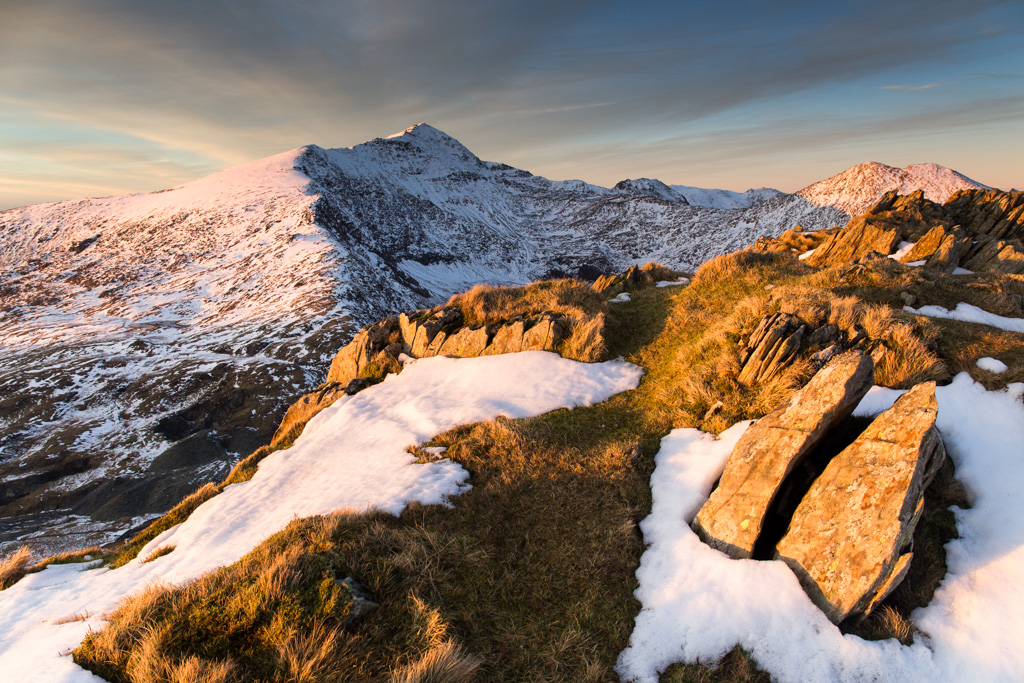
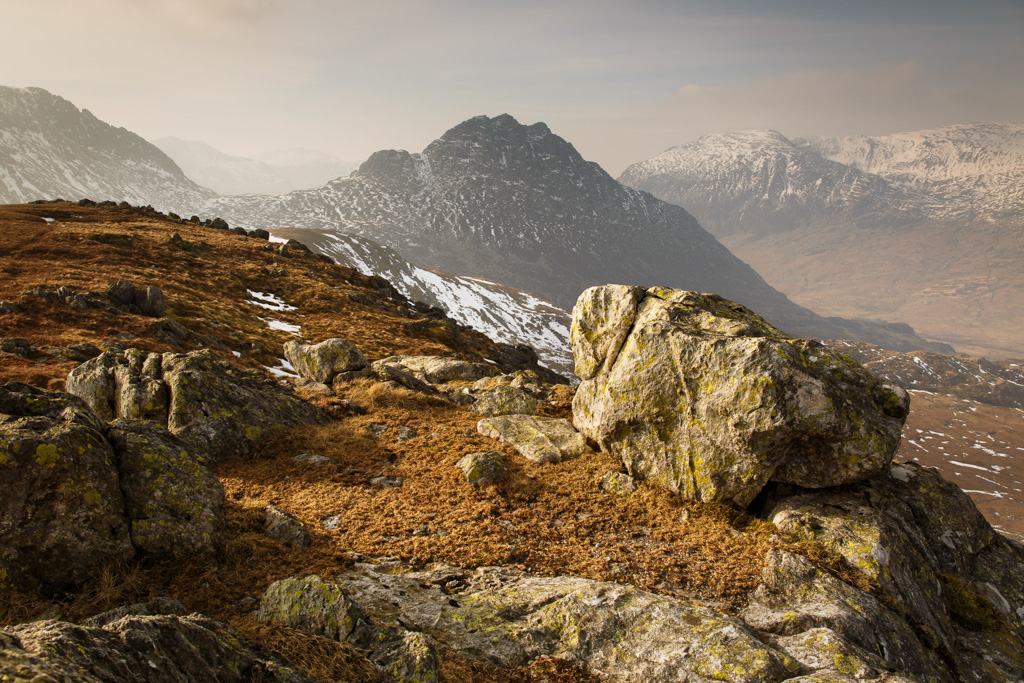
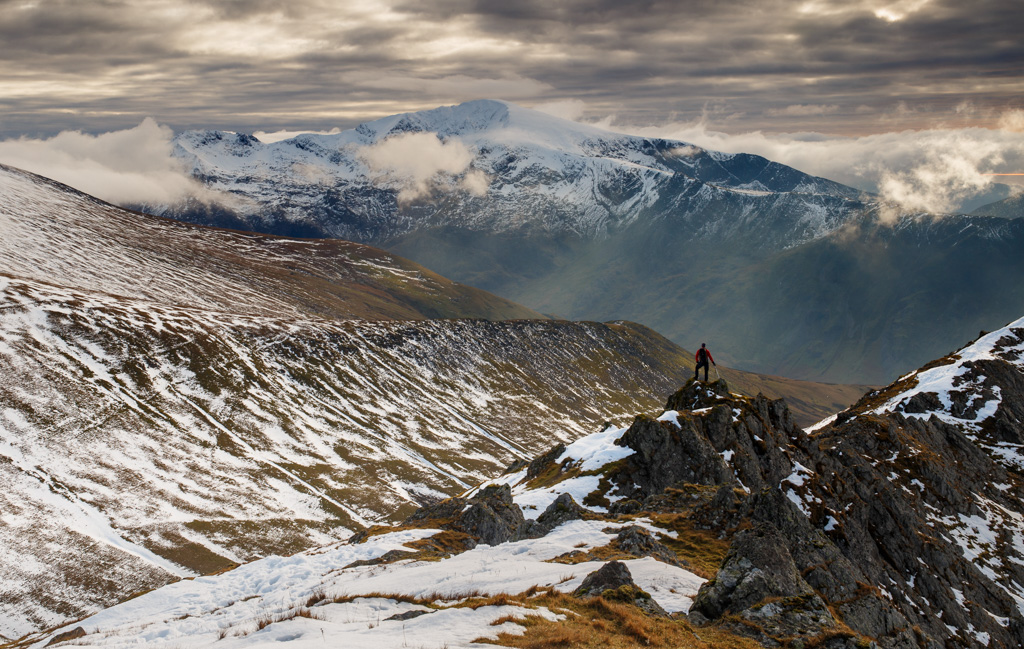
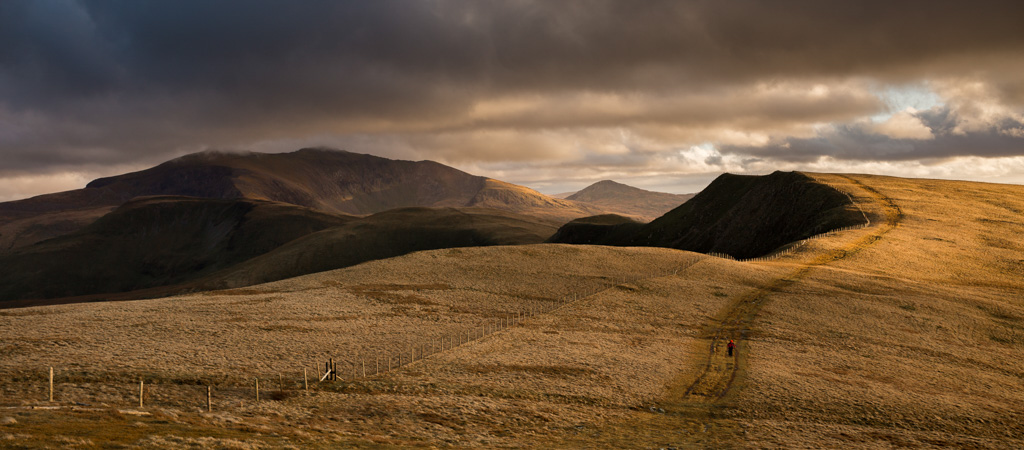
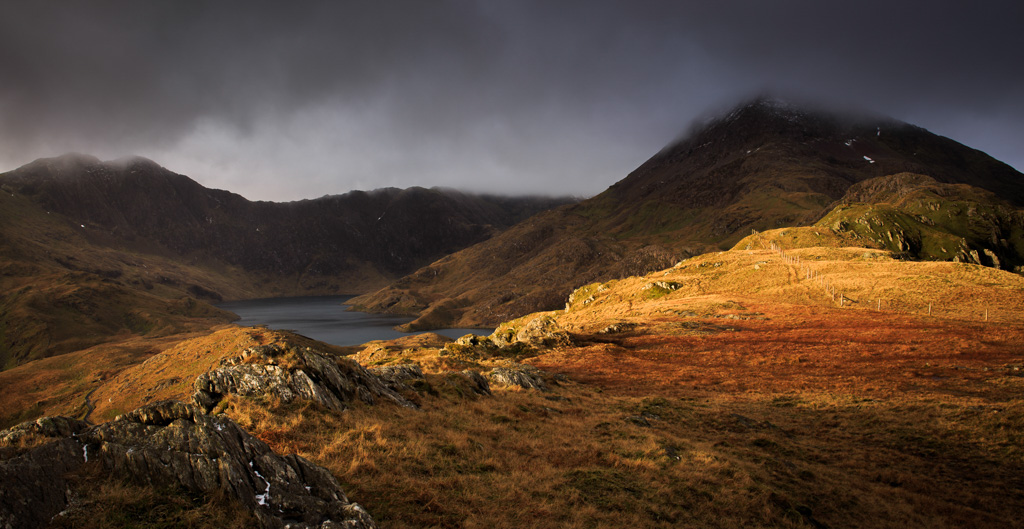
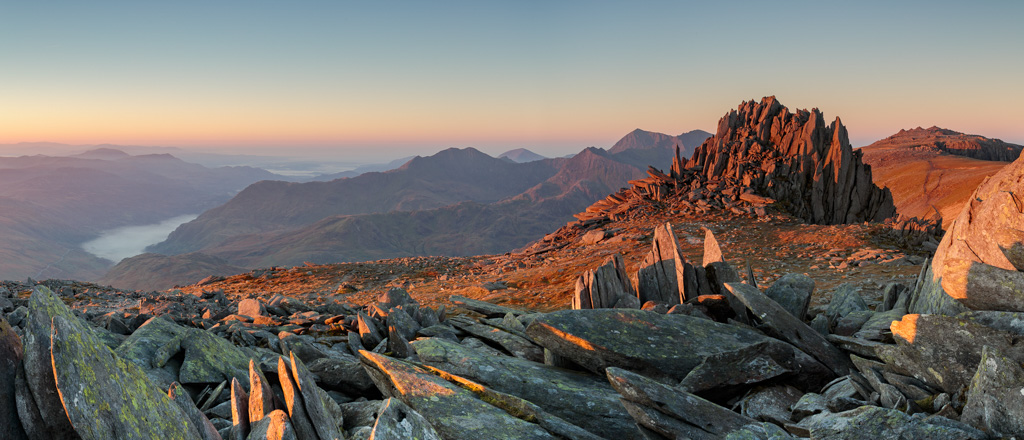
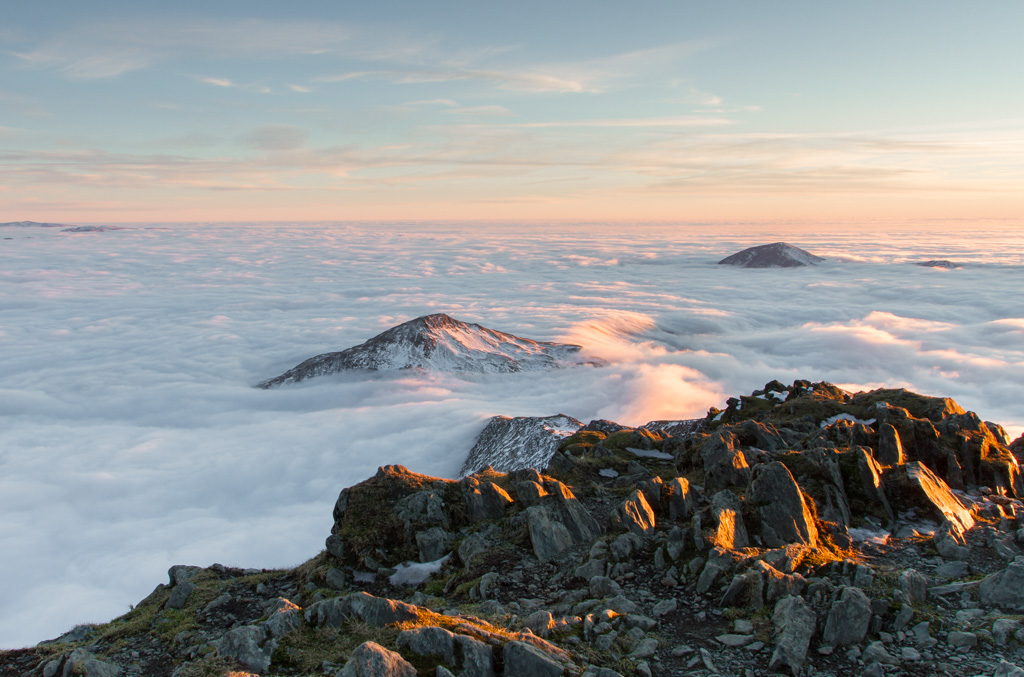
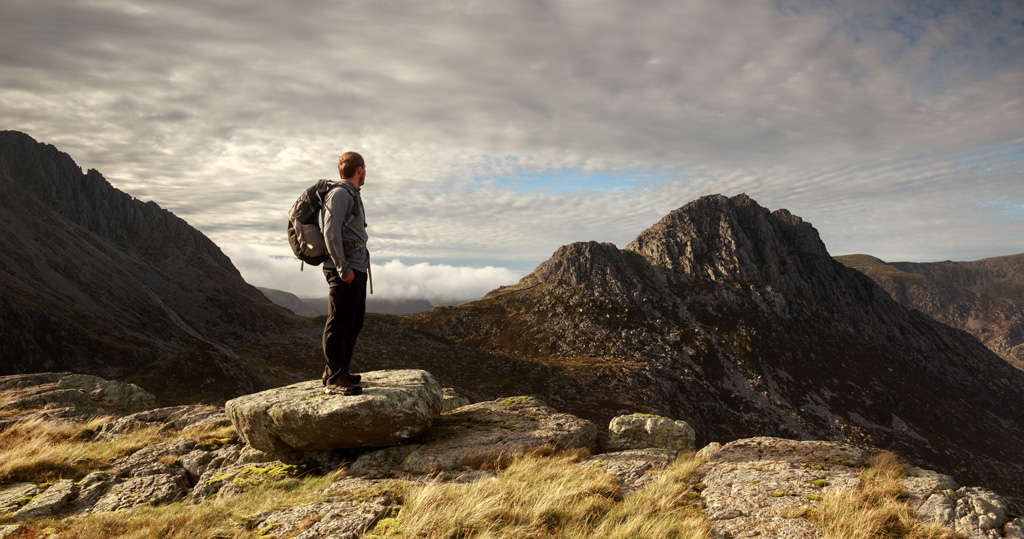
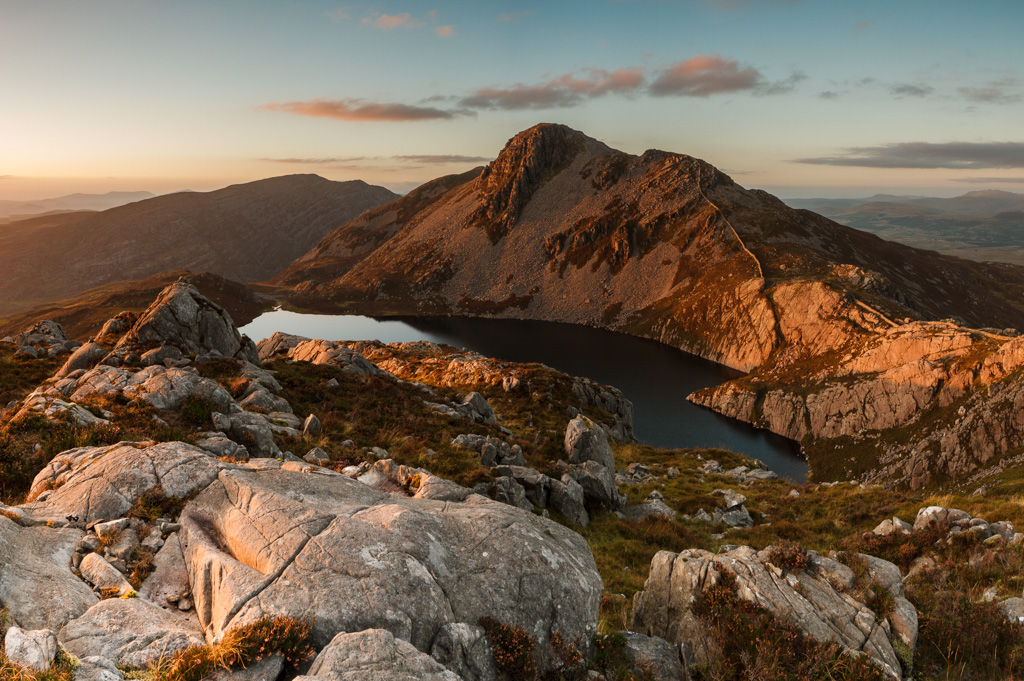
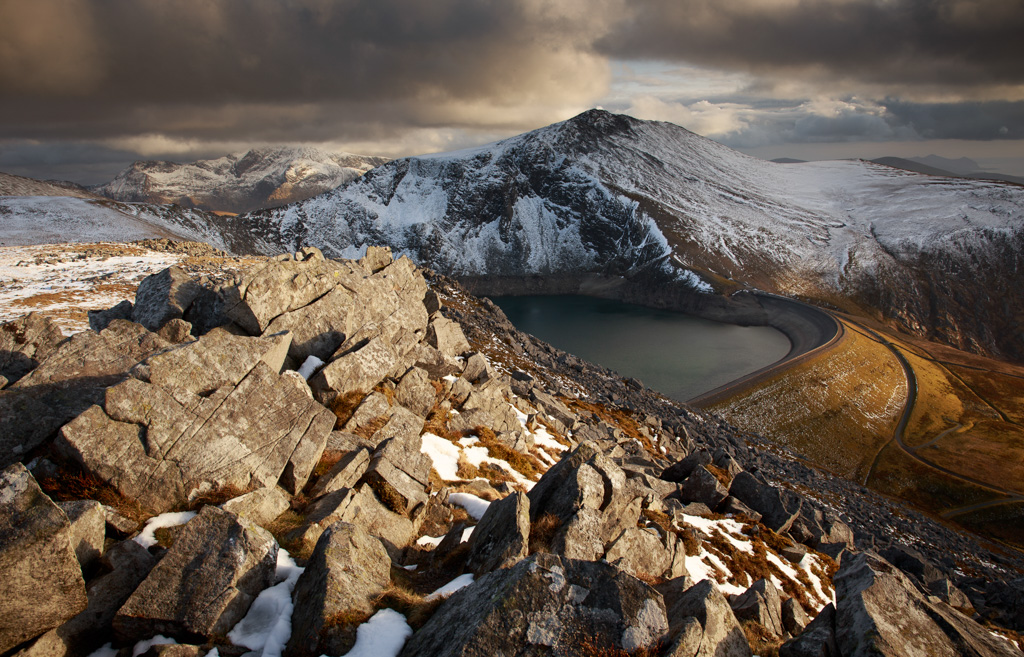
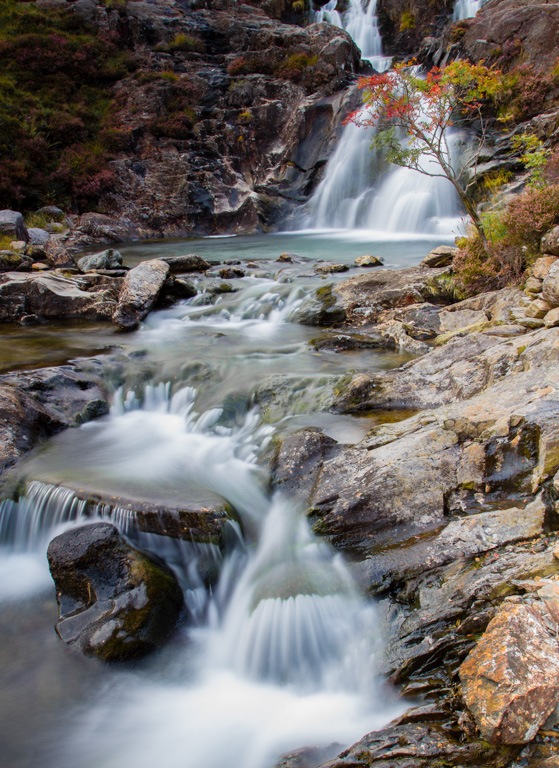
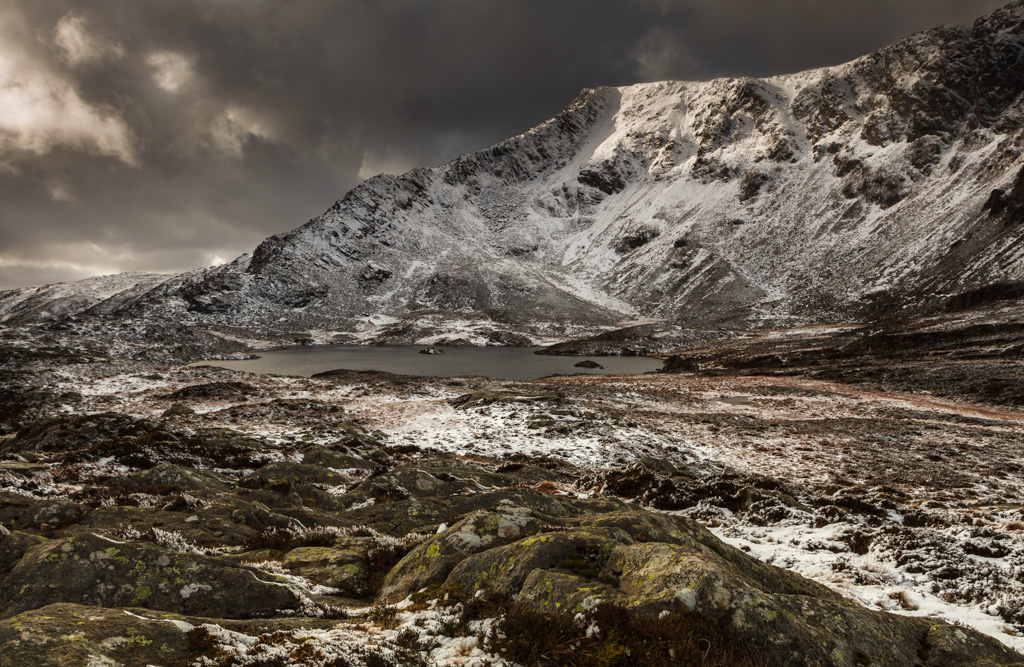
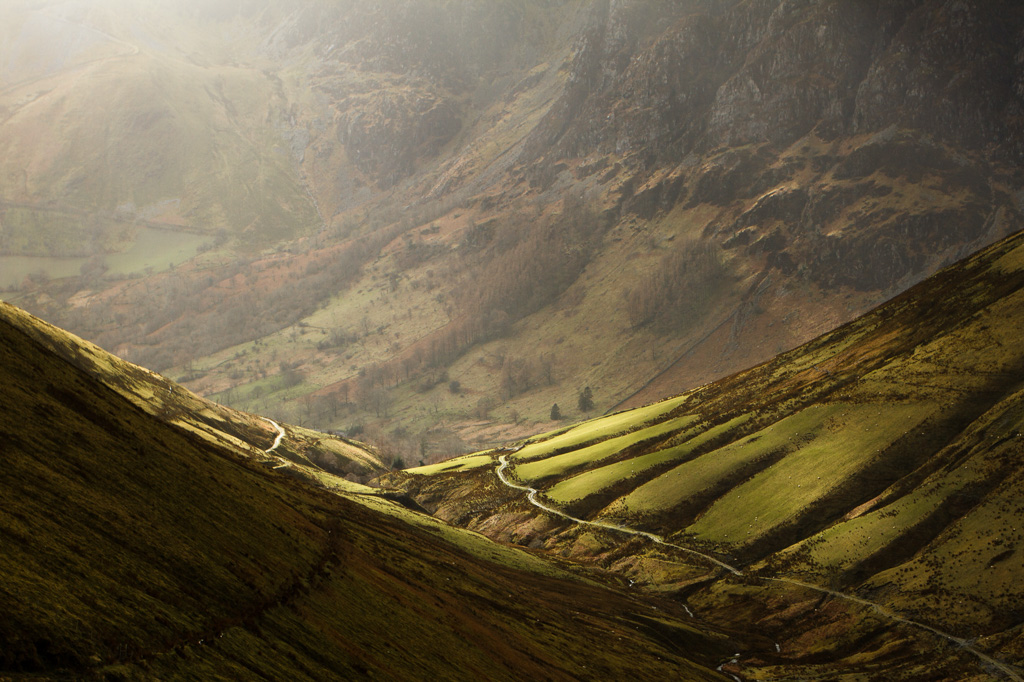
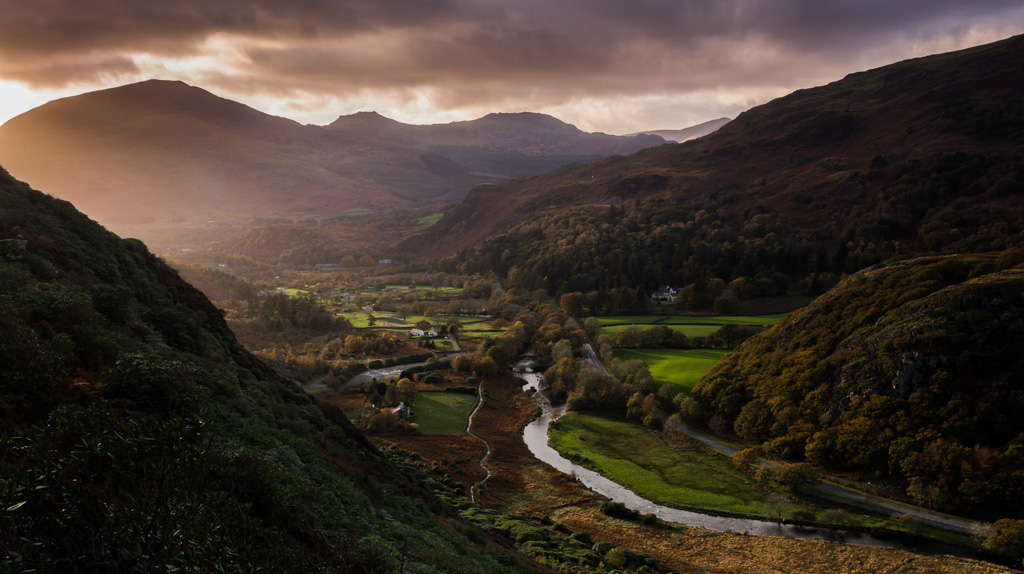
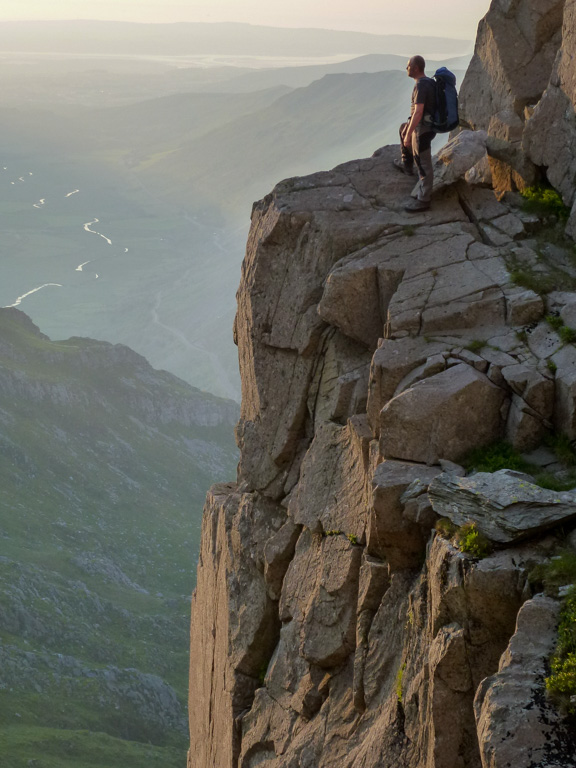
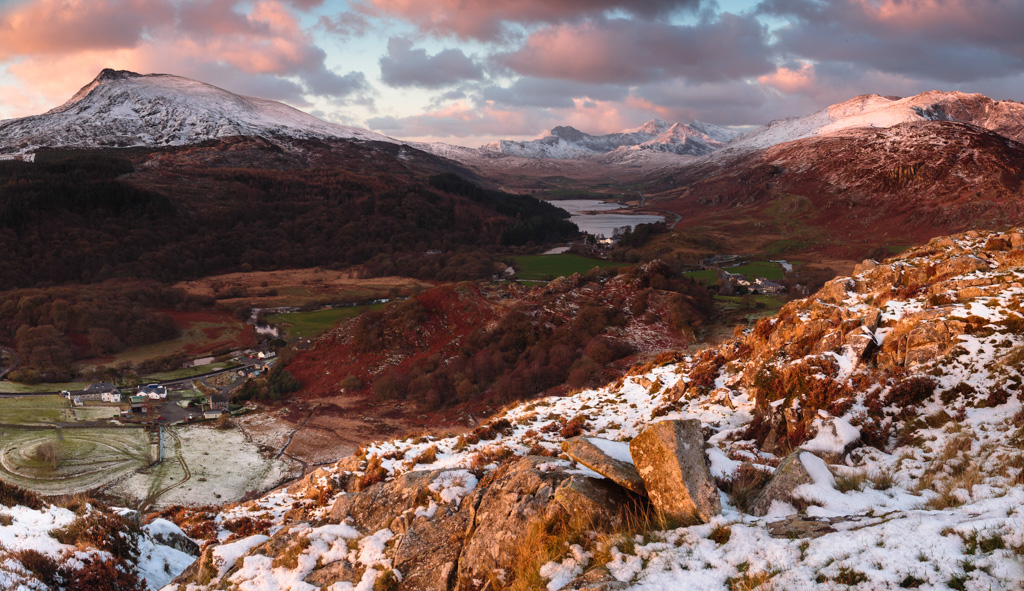
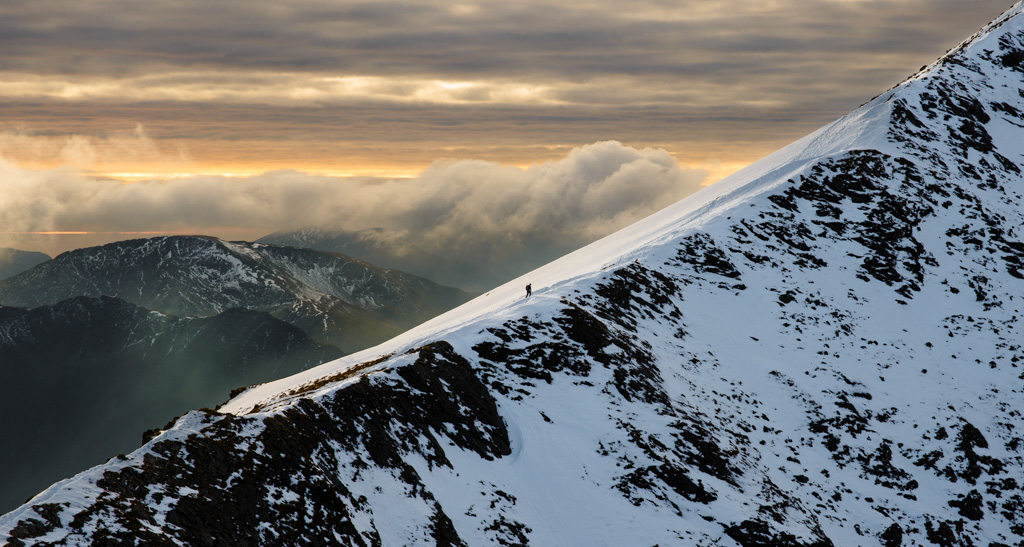
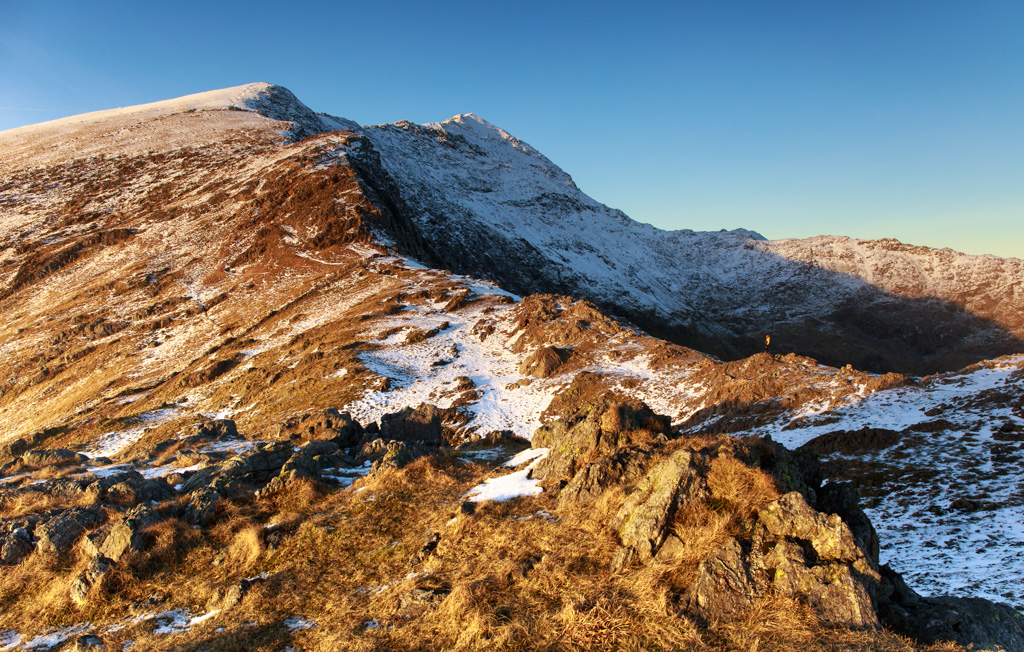
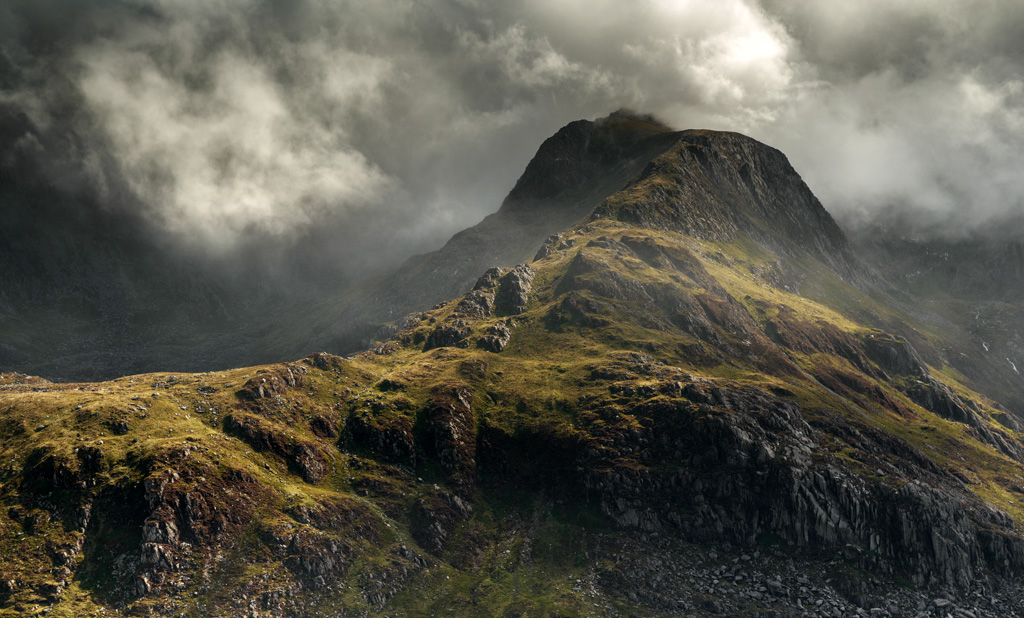
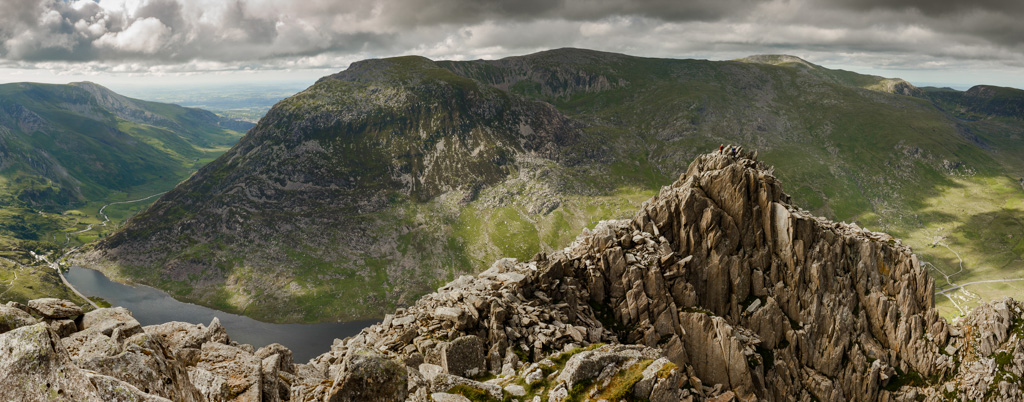
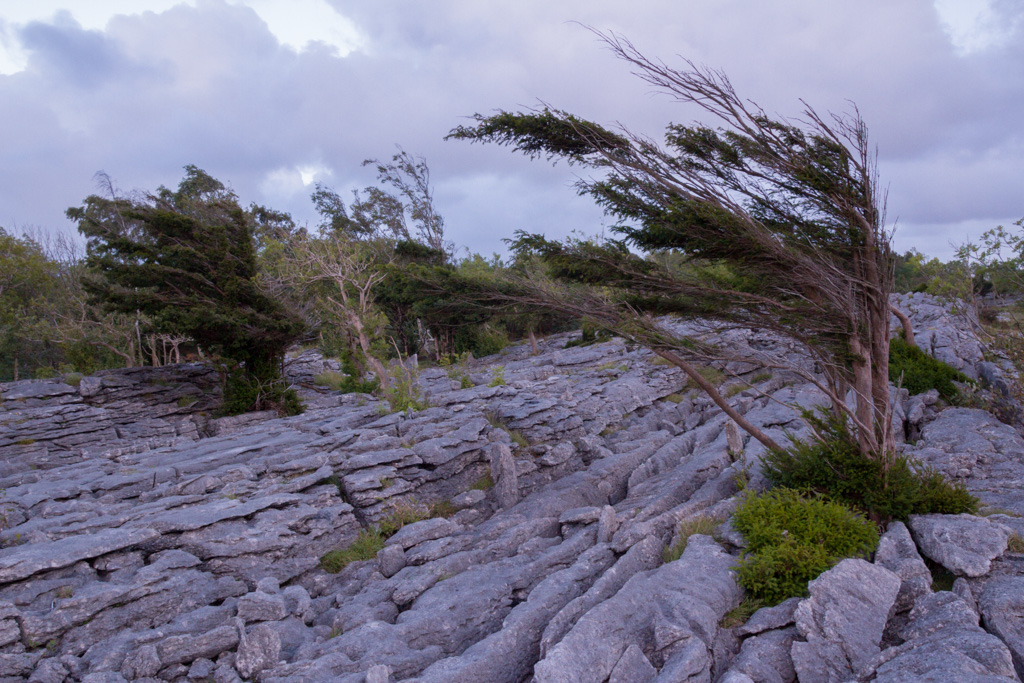
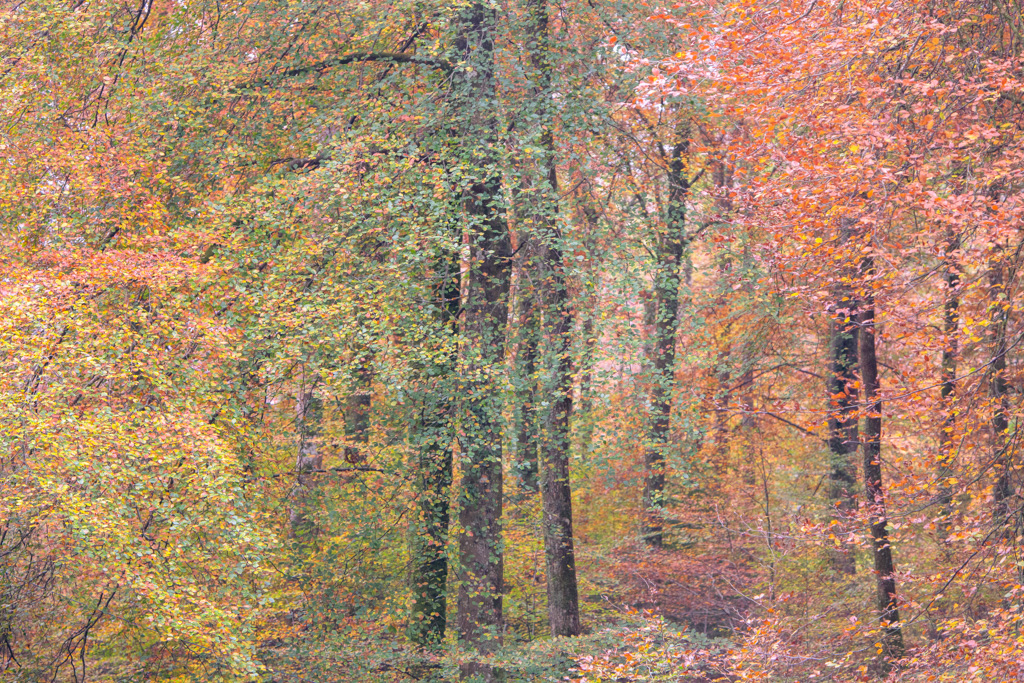
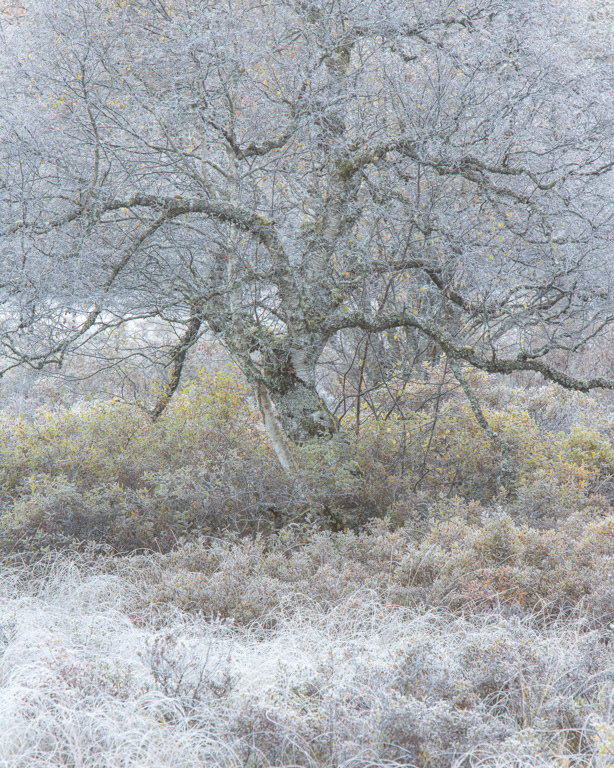
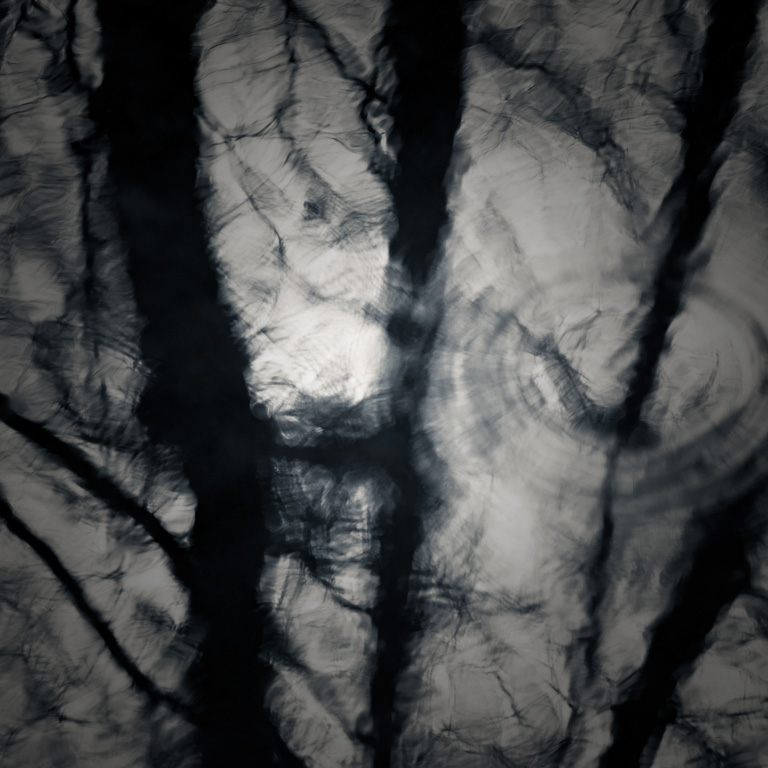
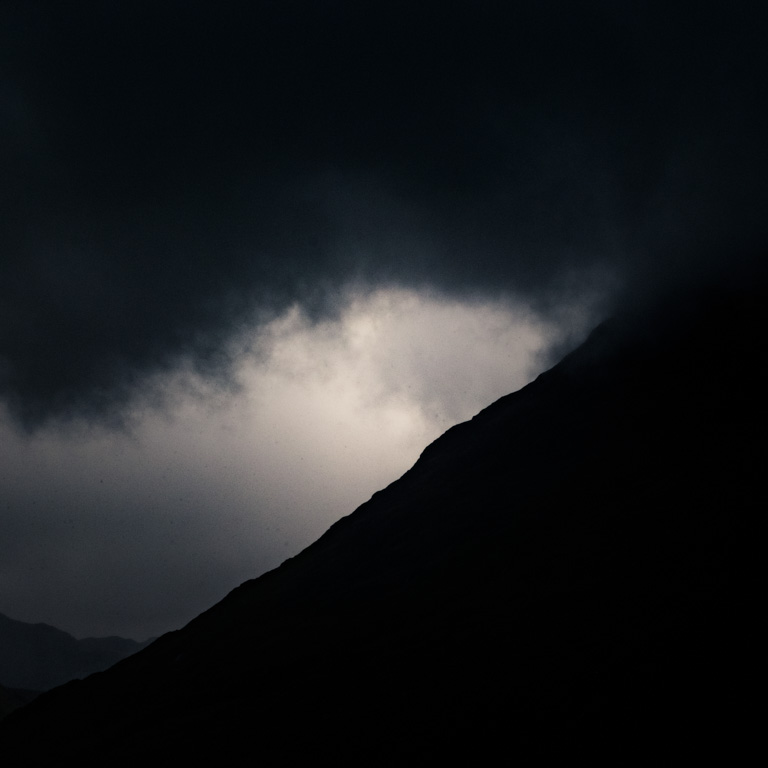
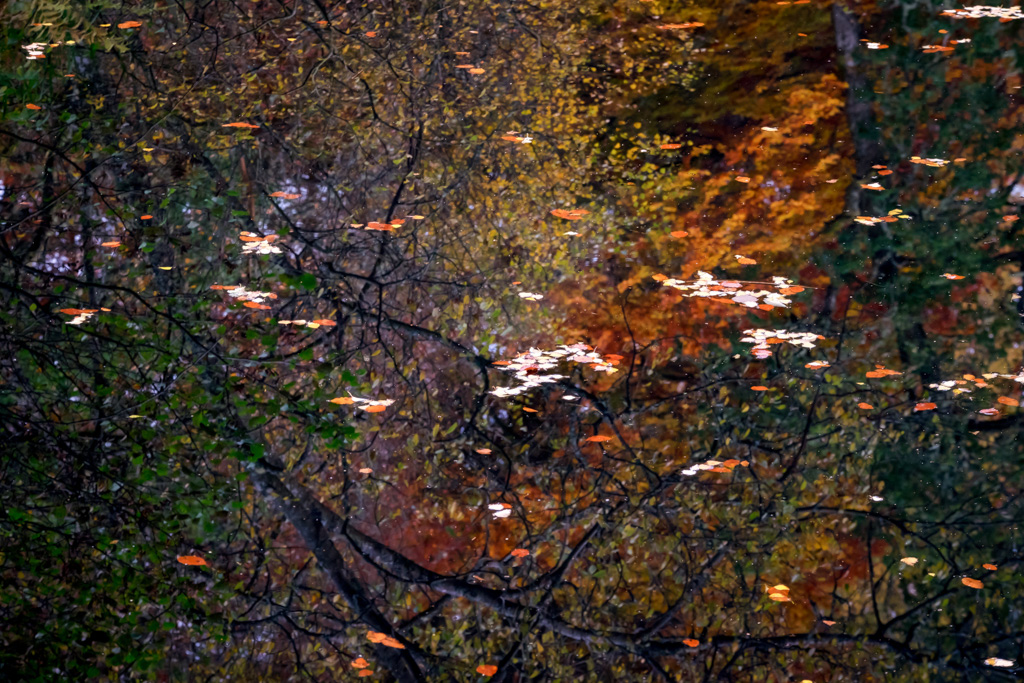
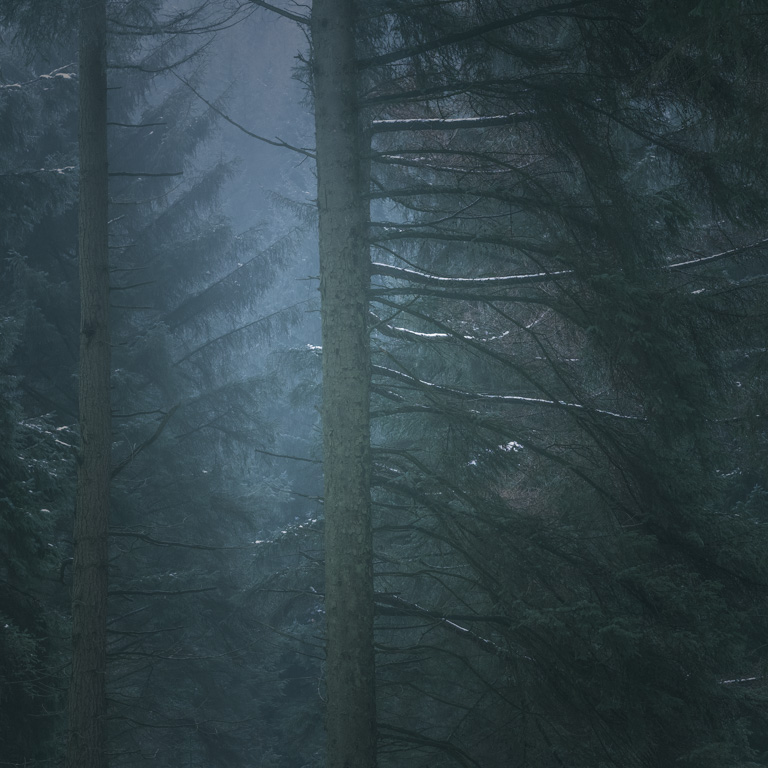
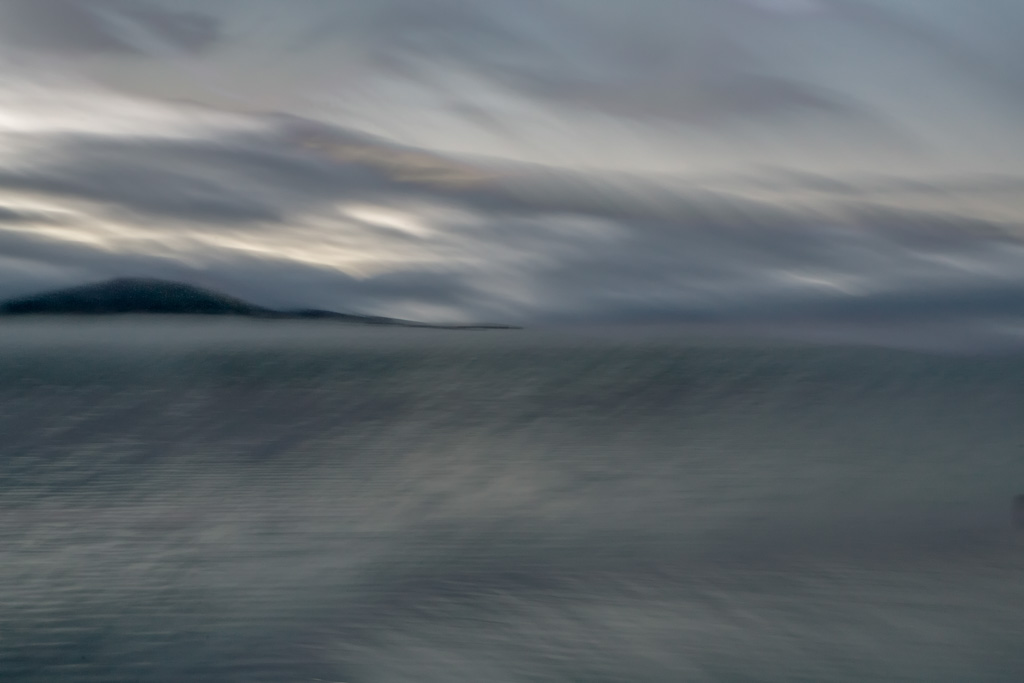
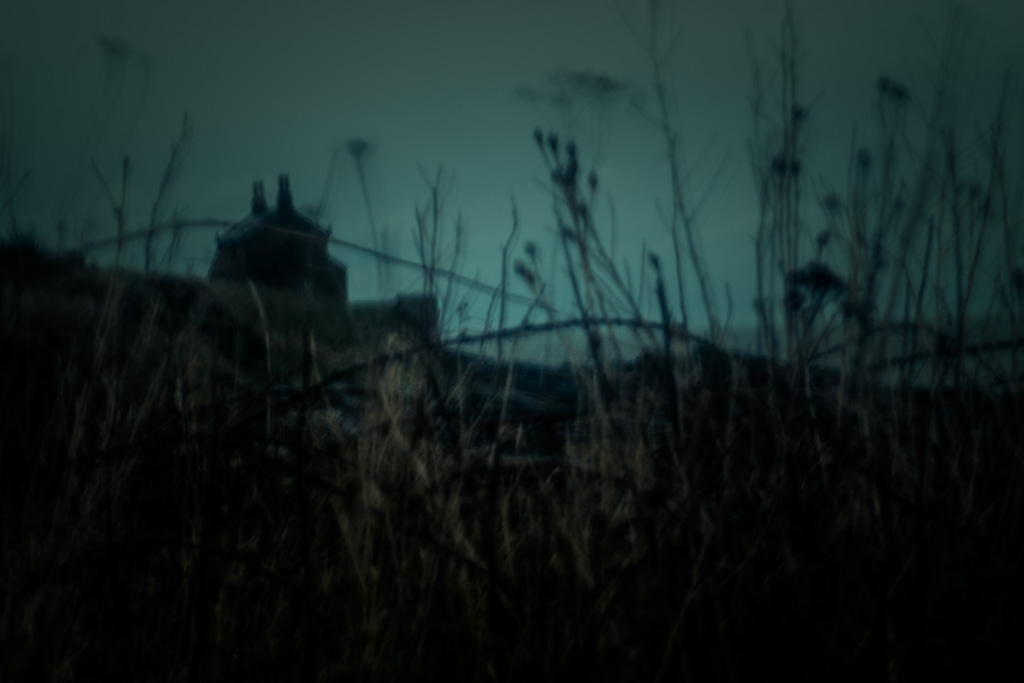
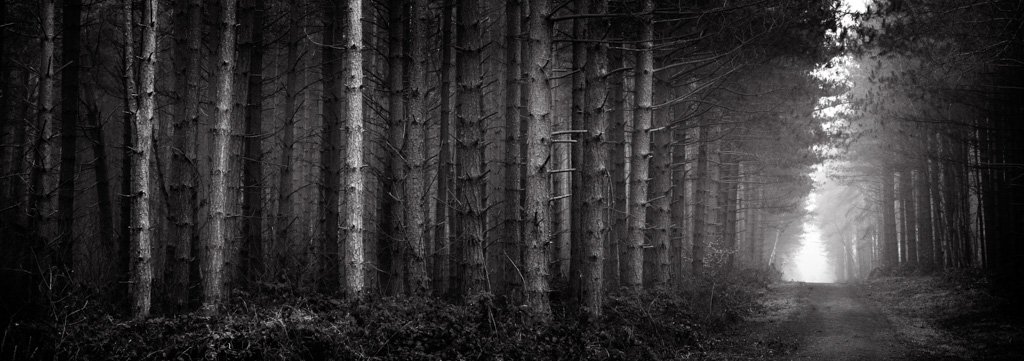
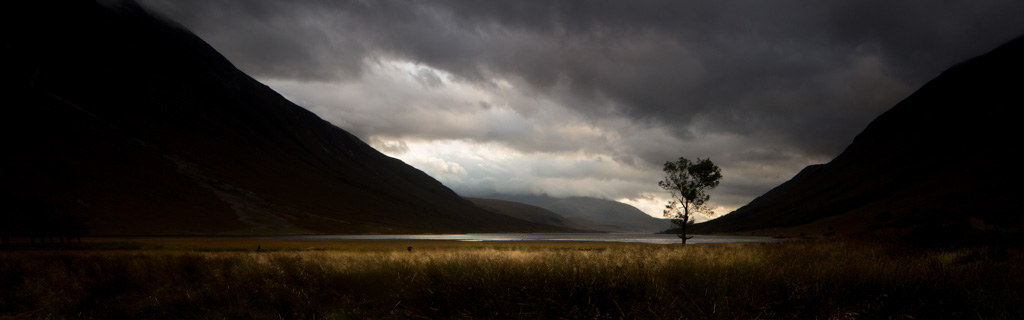
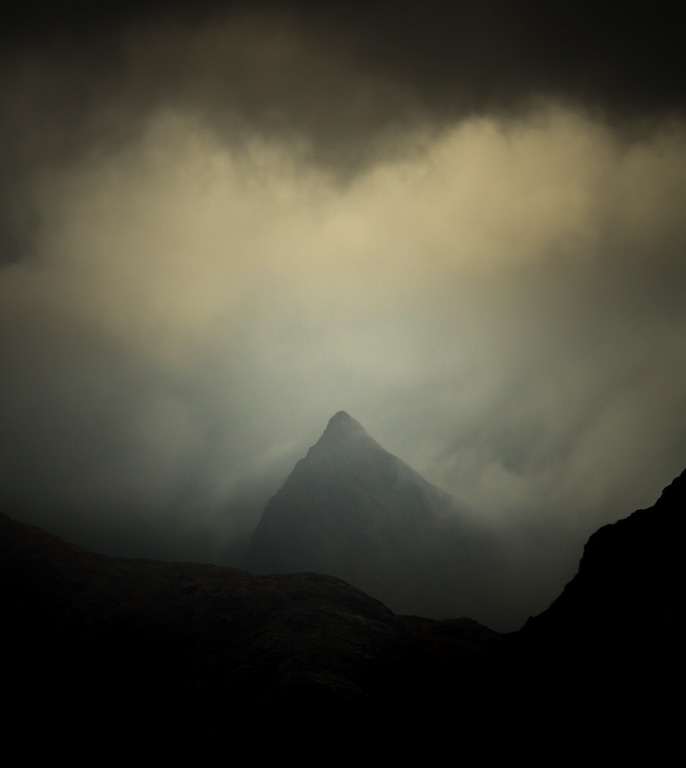
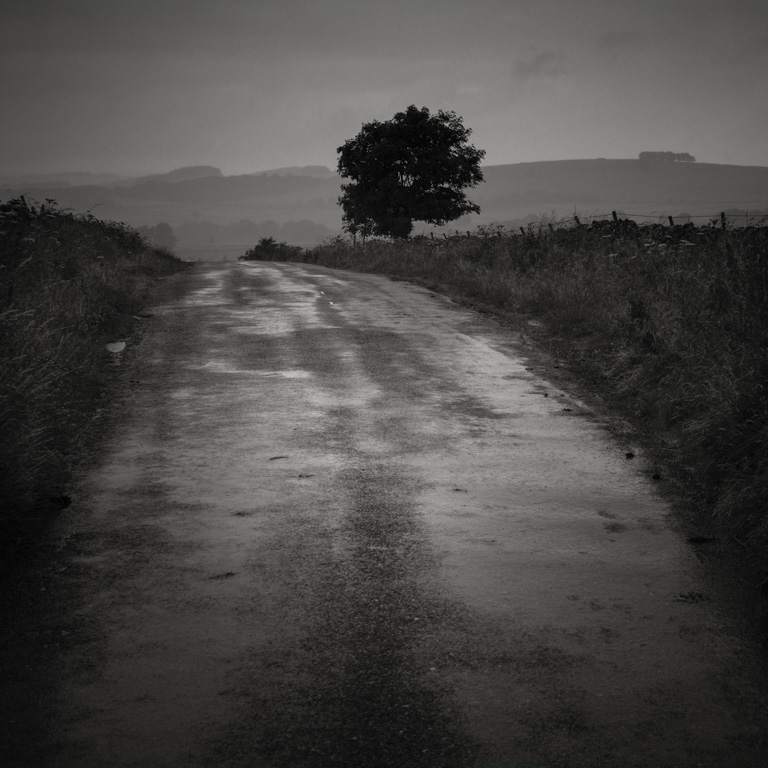
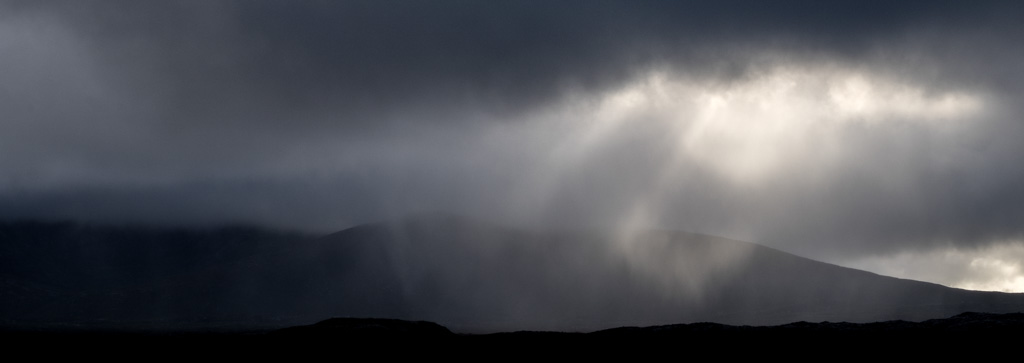
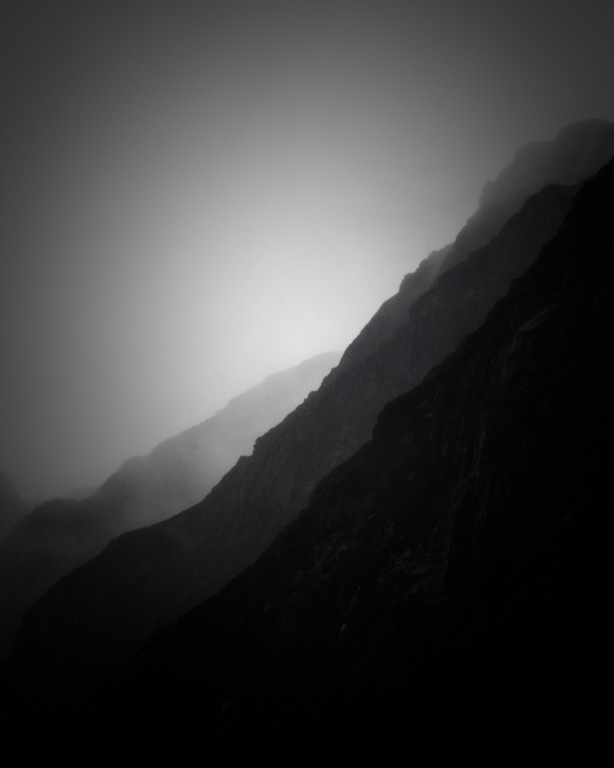
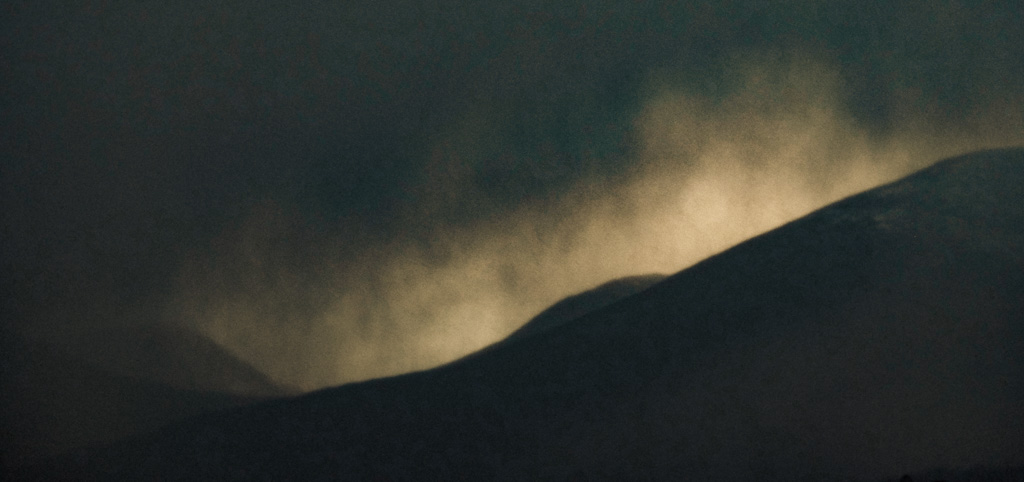
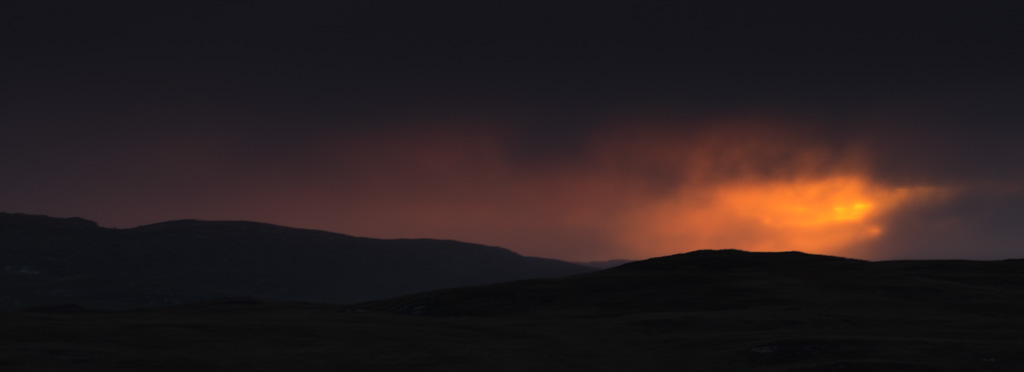
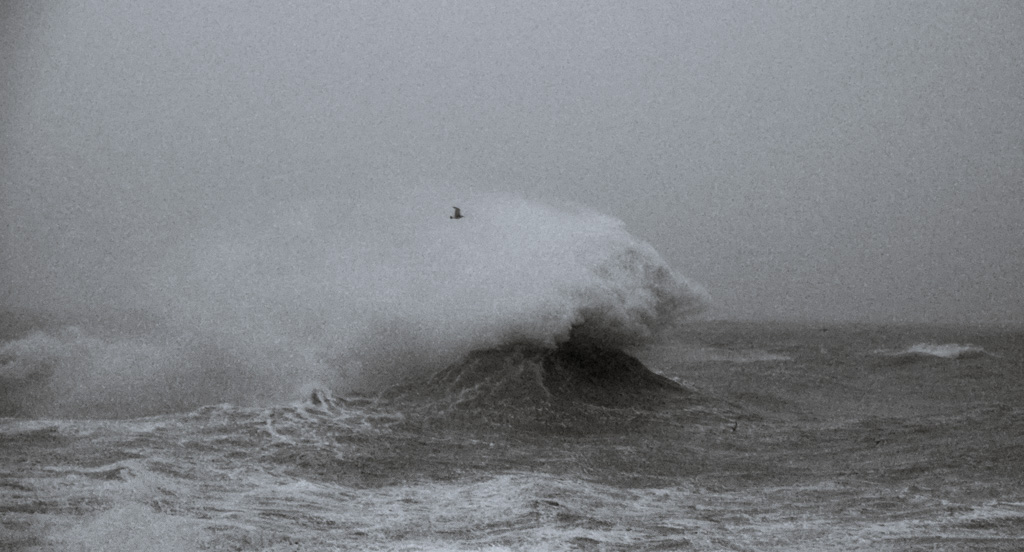
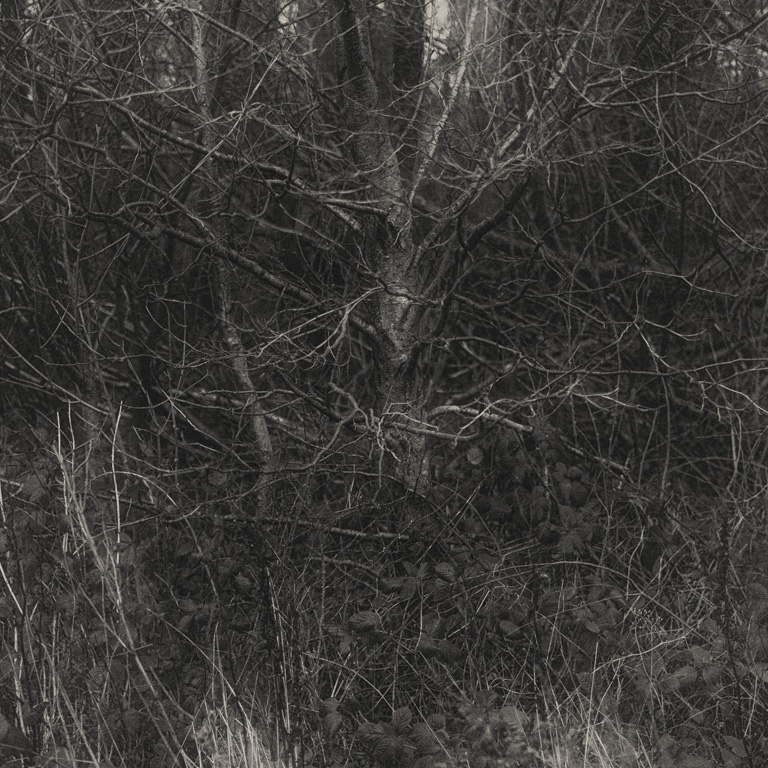
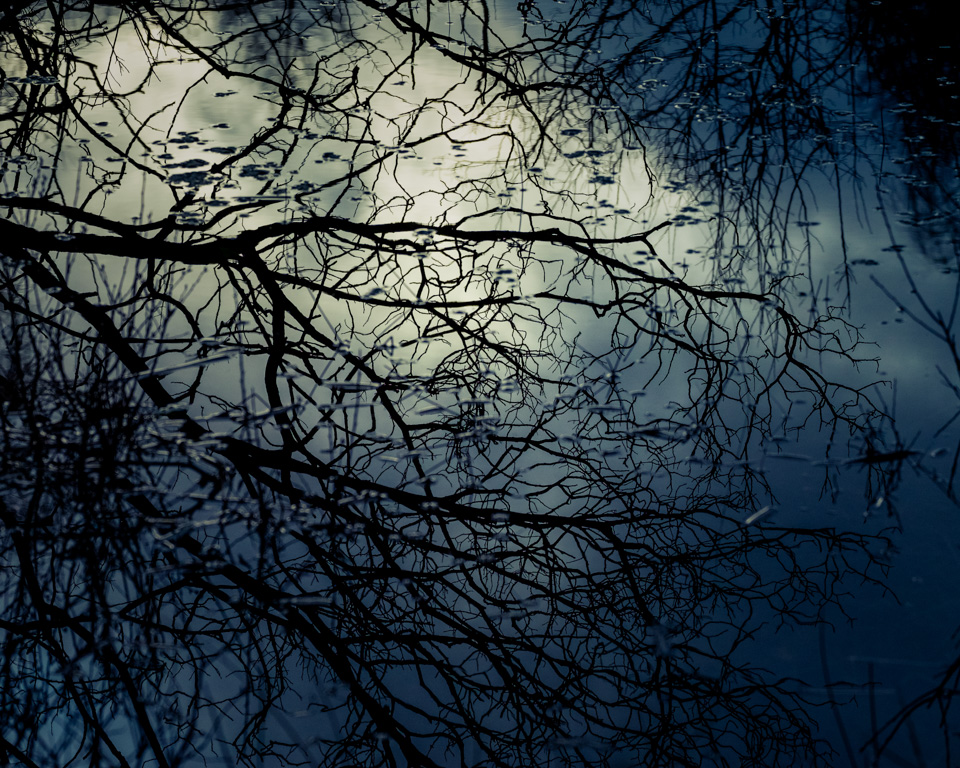
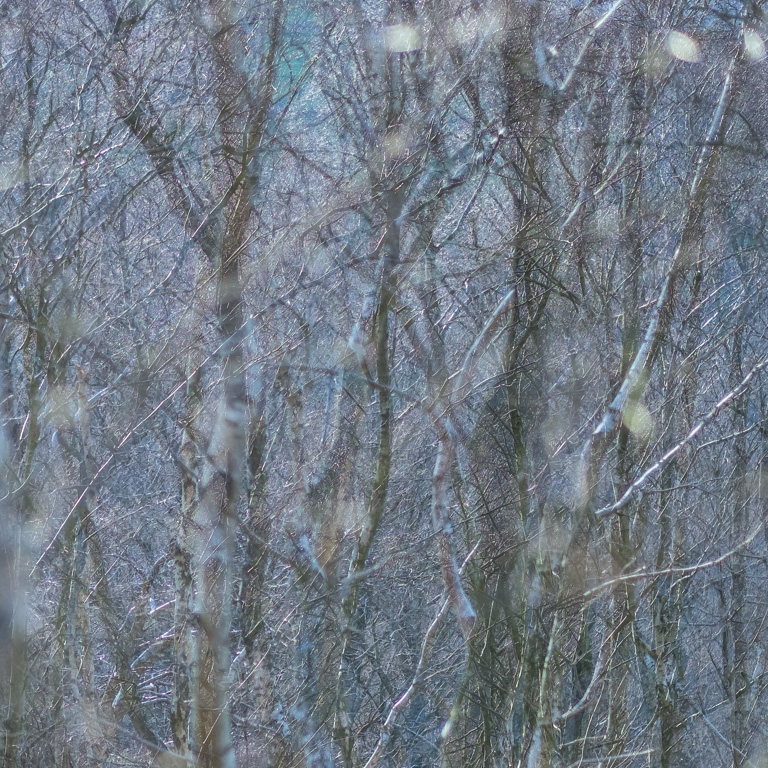
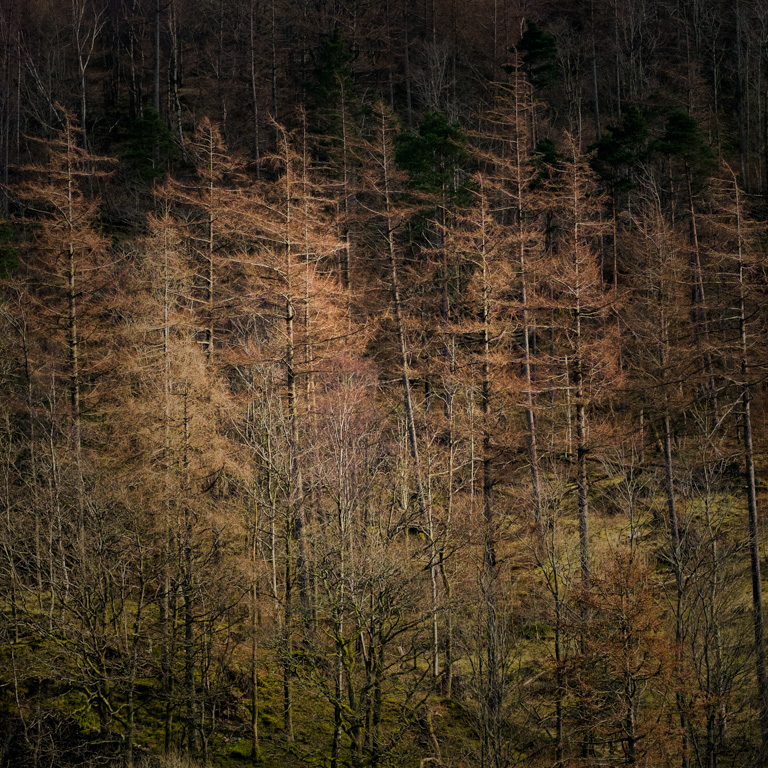
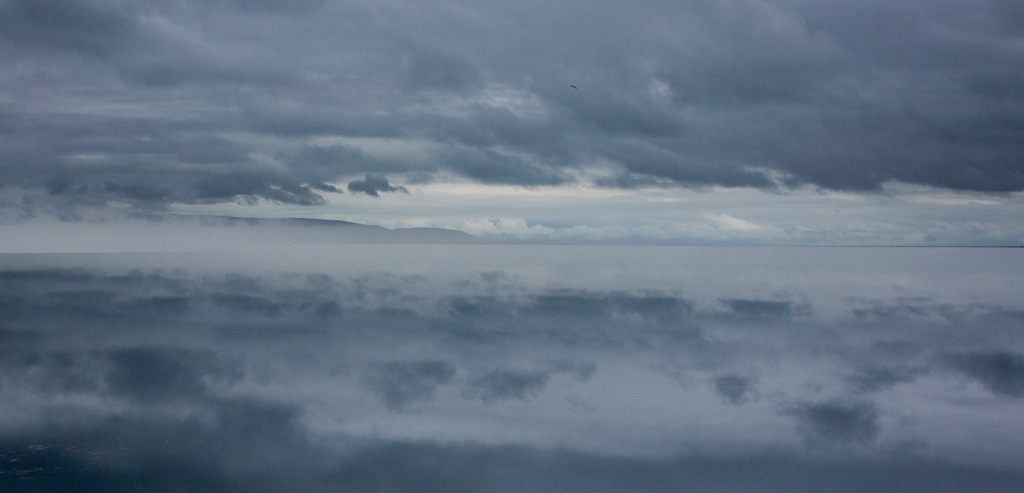
 This weekend we're up in Penrith for our Meeting of Minds Conference. If you can't make it this weekend, we are live streaming our event for free for all of our readers.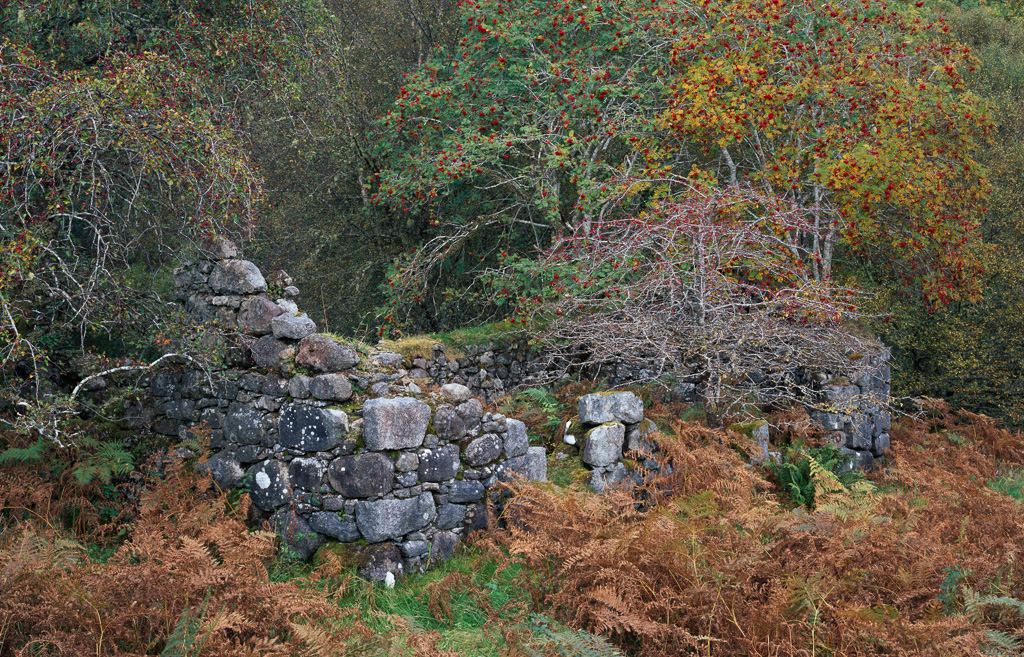
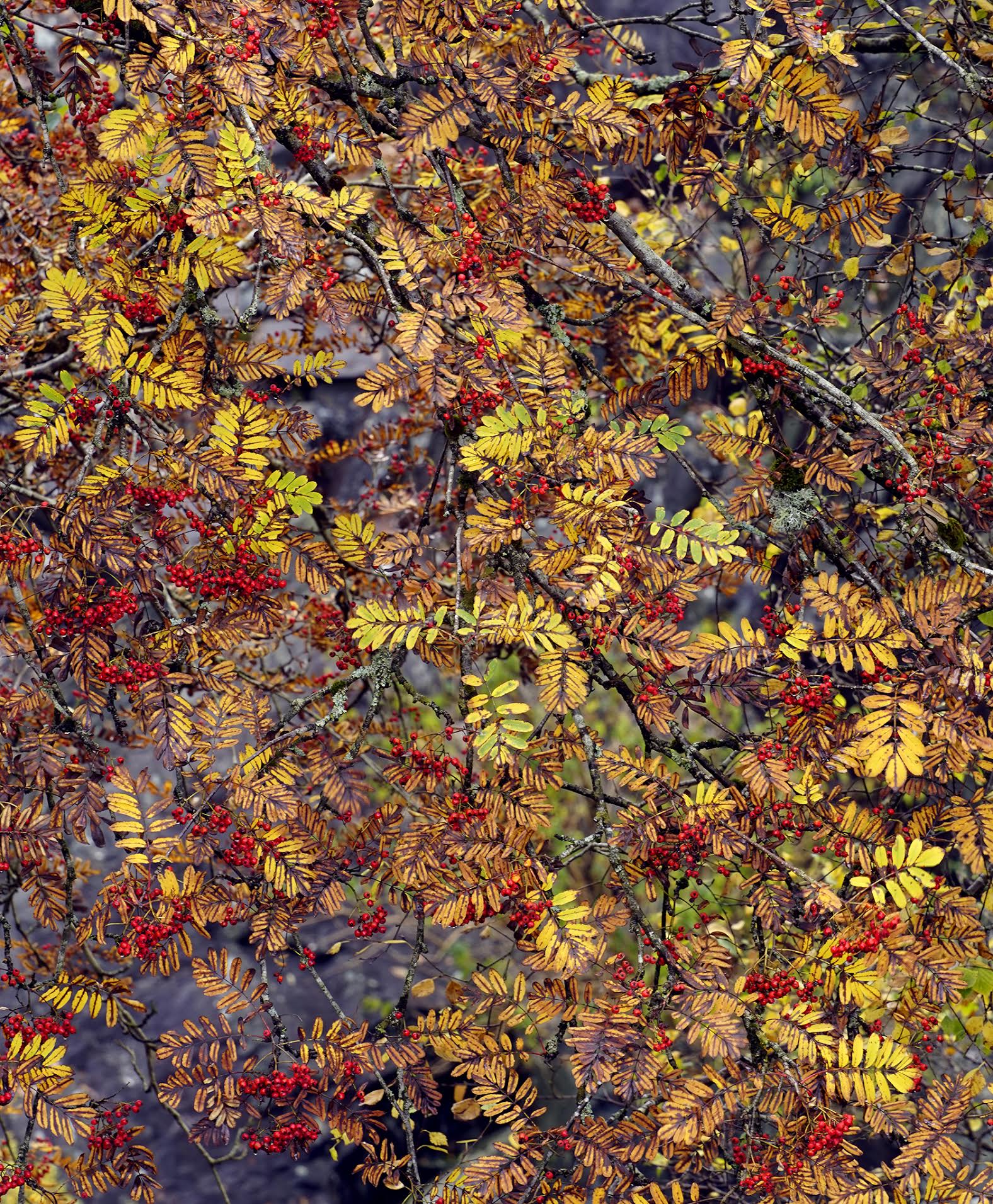
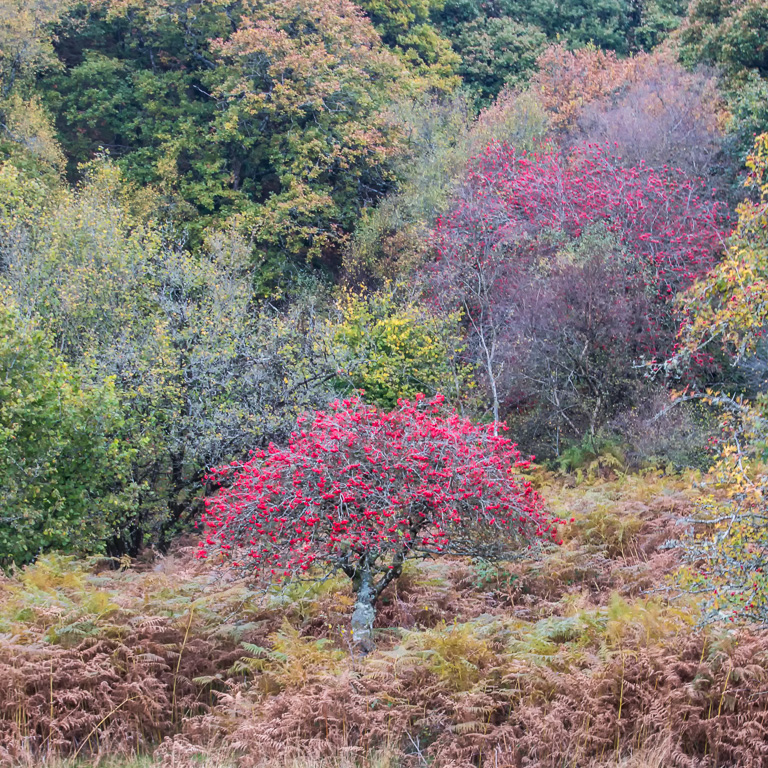
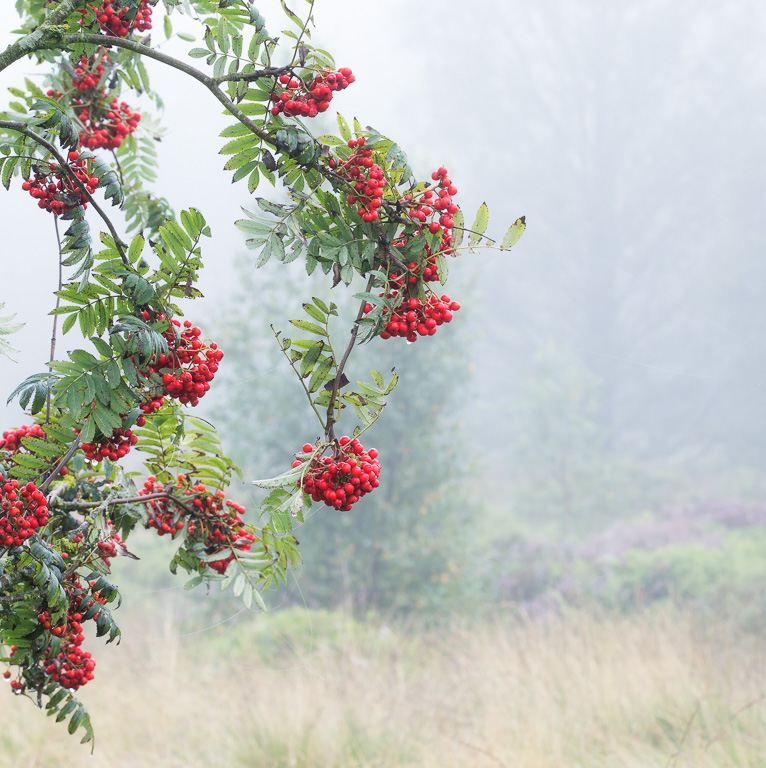
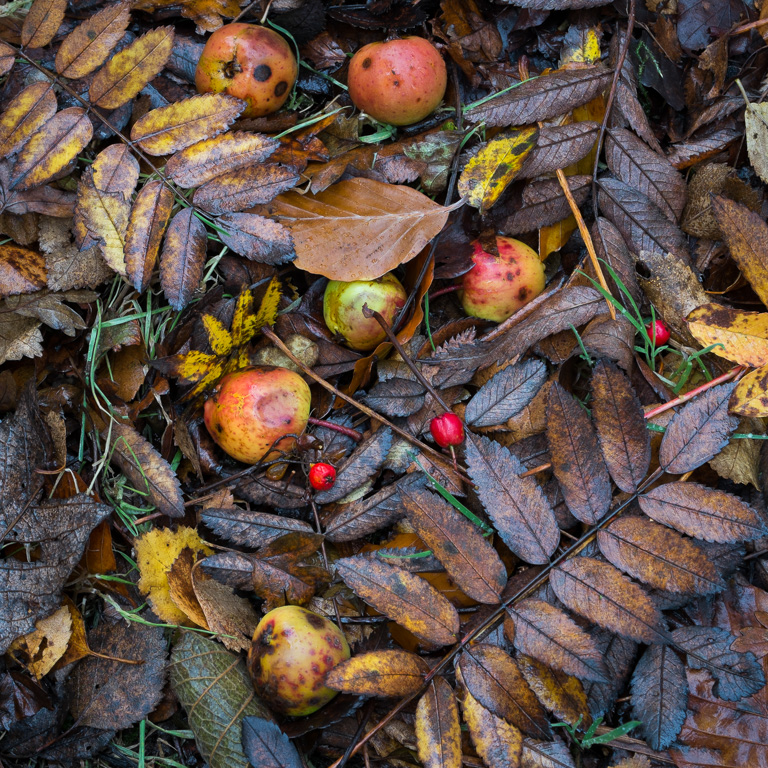
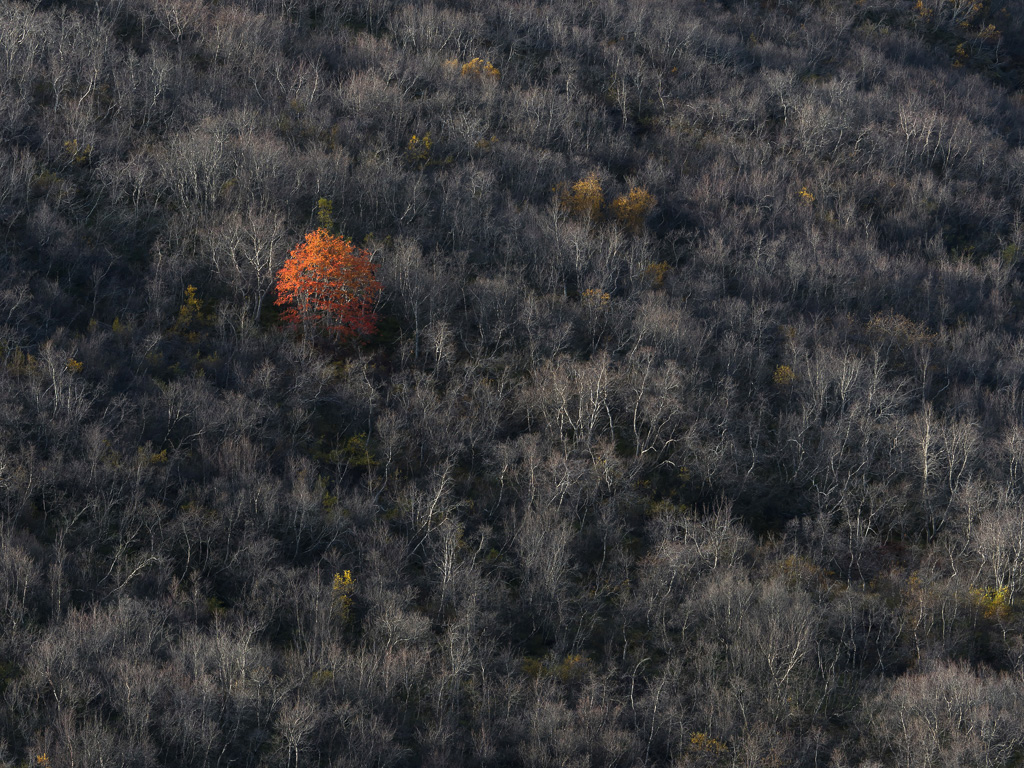
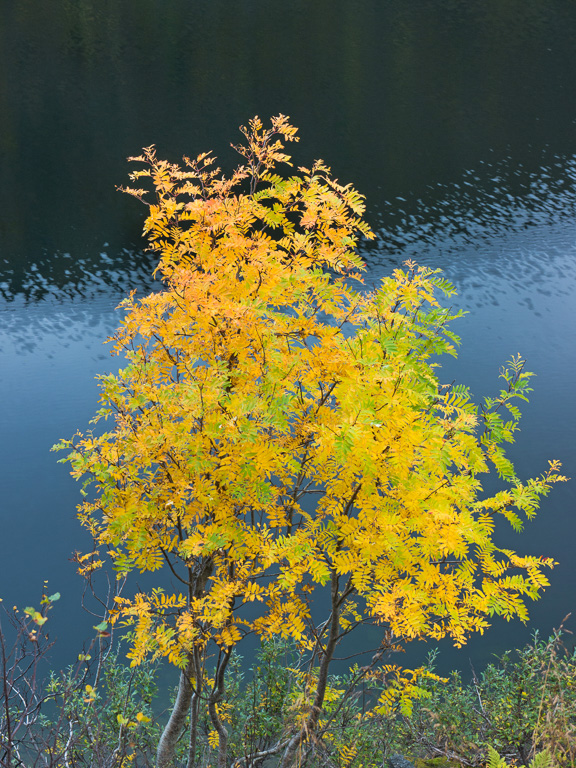
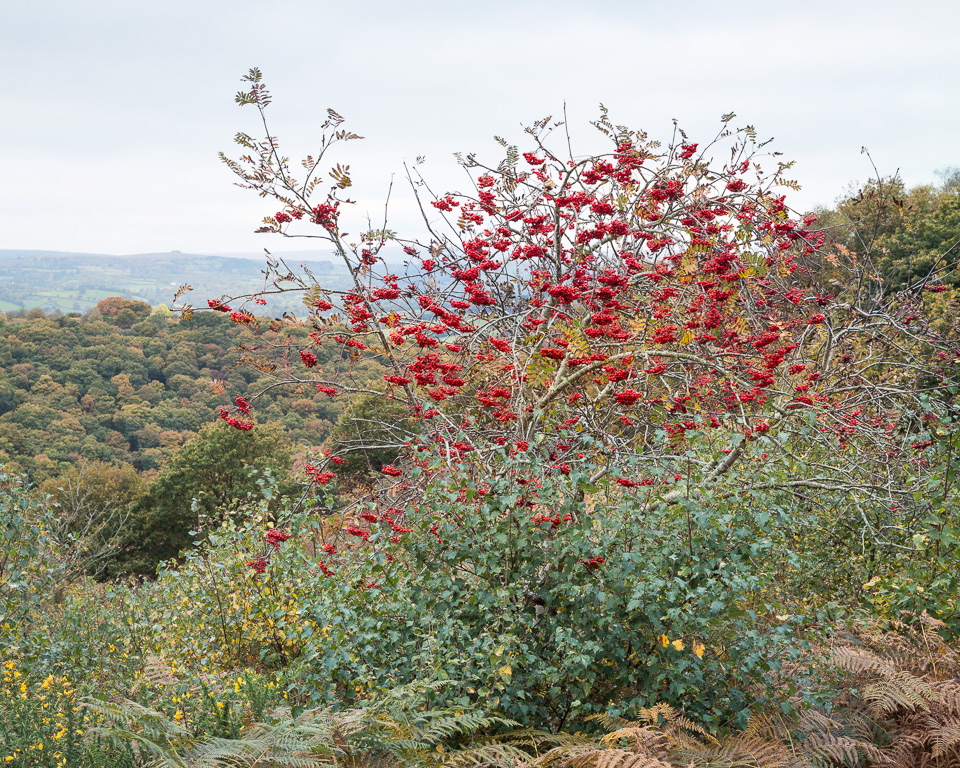
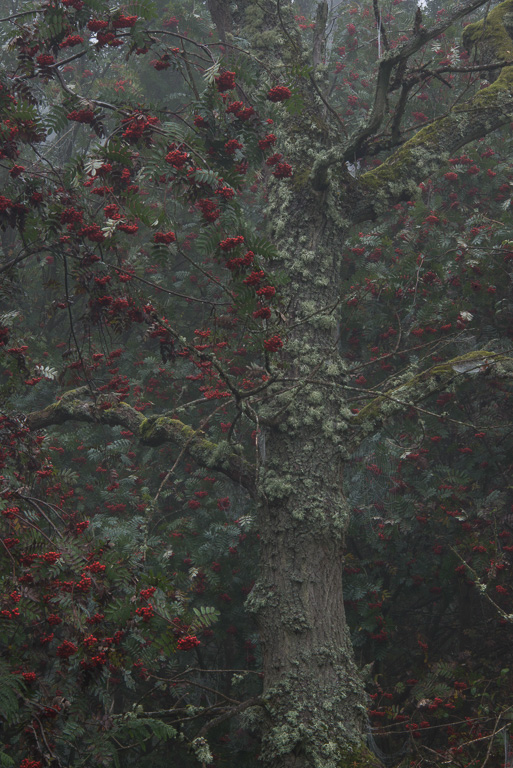
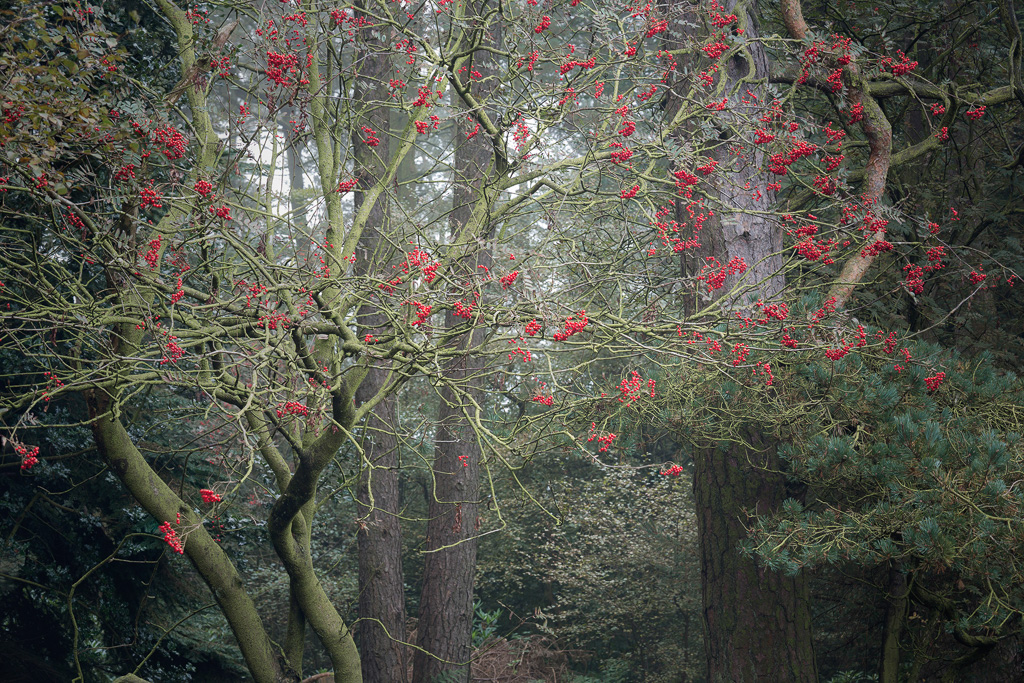
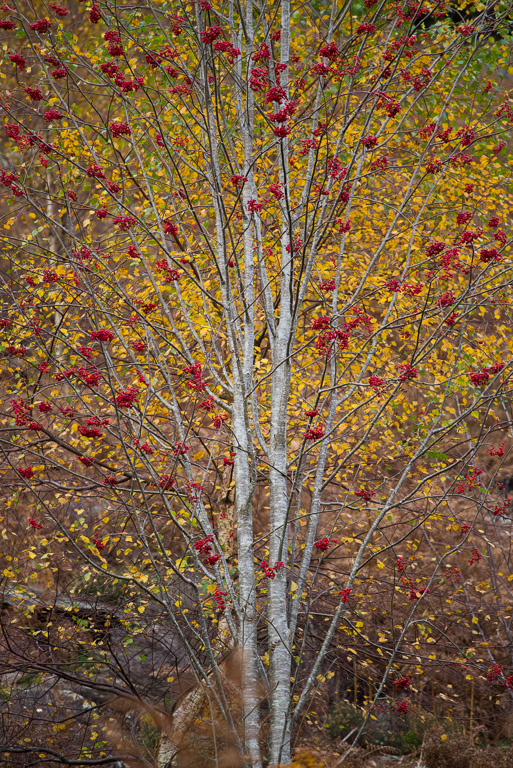
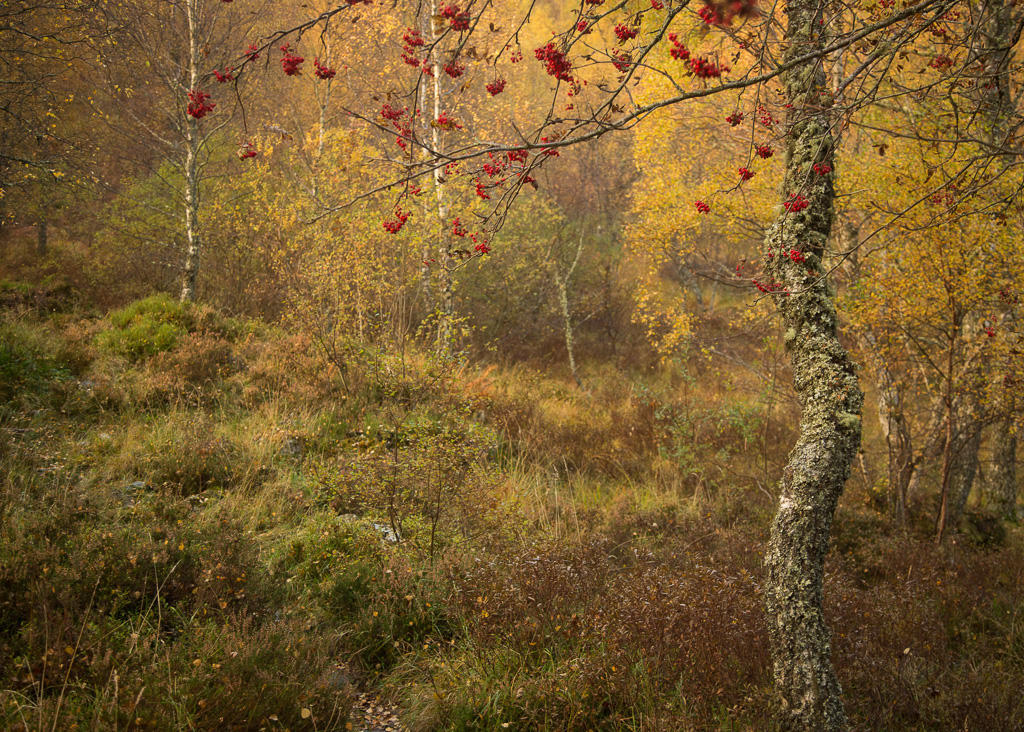
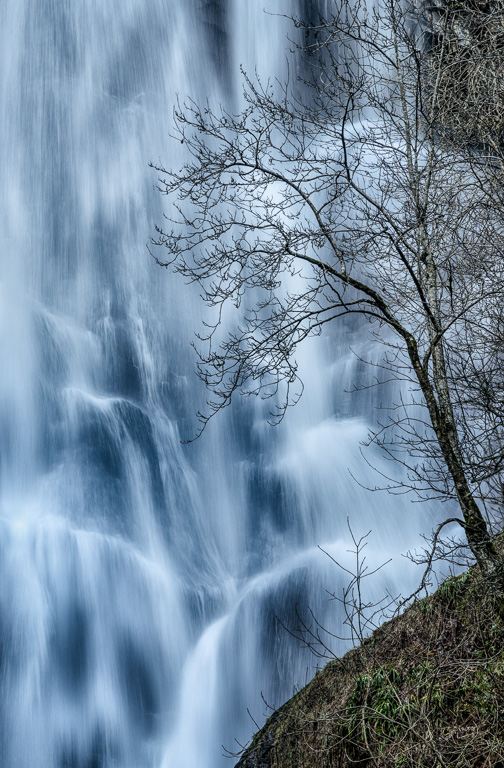
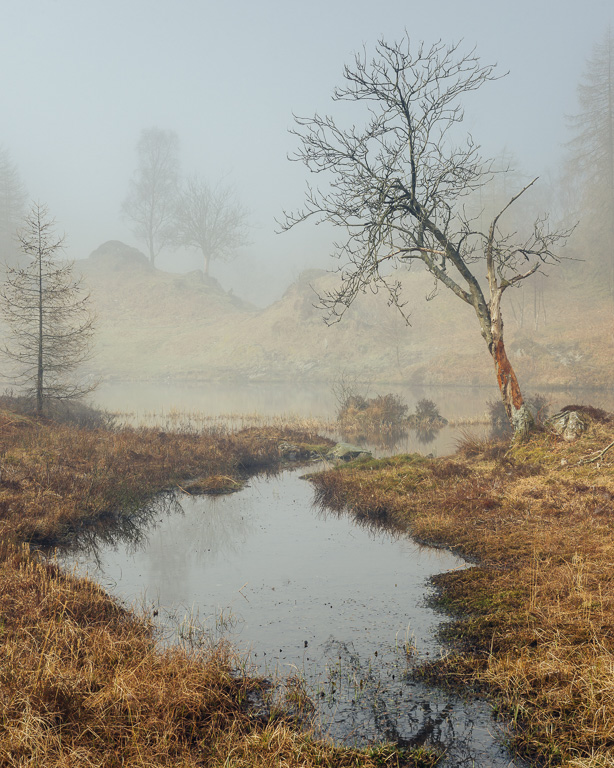
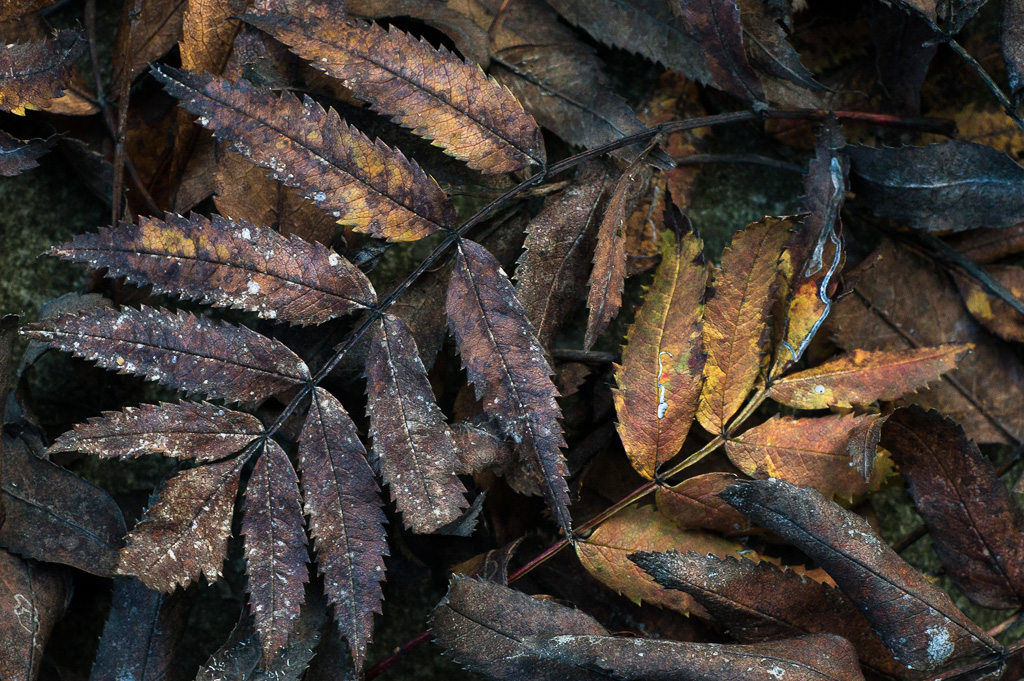
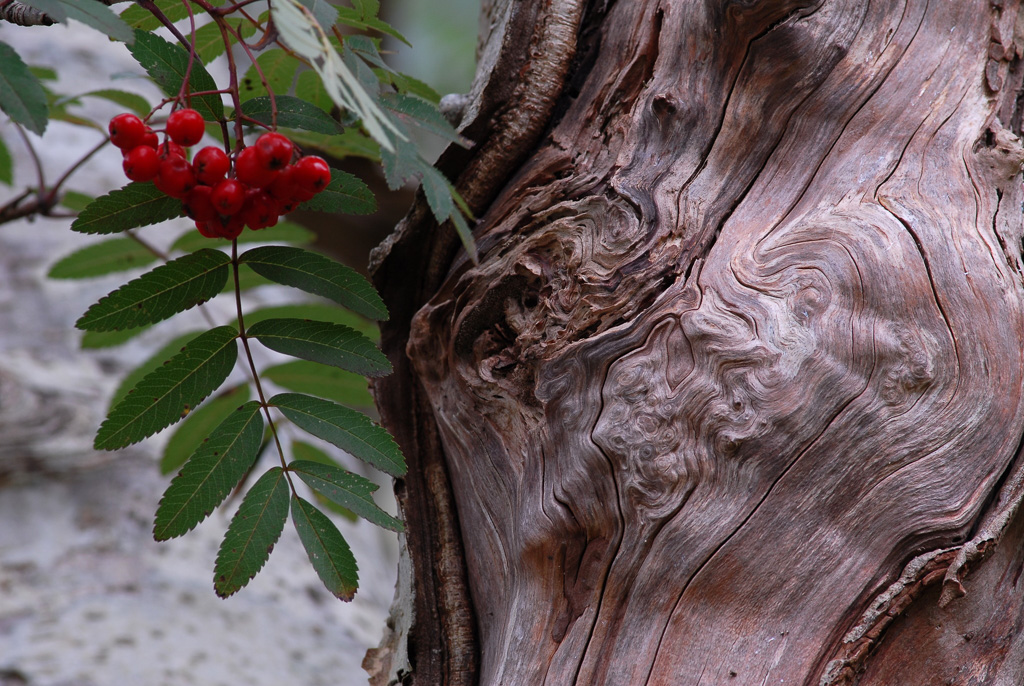
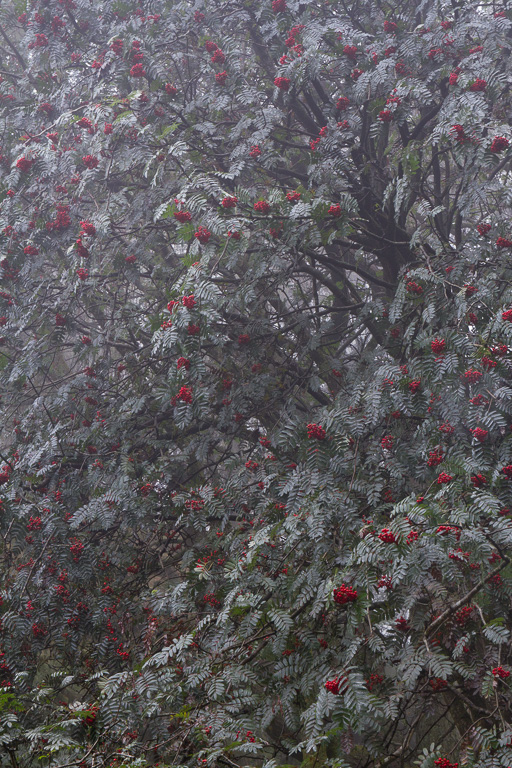
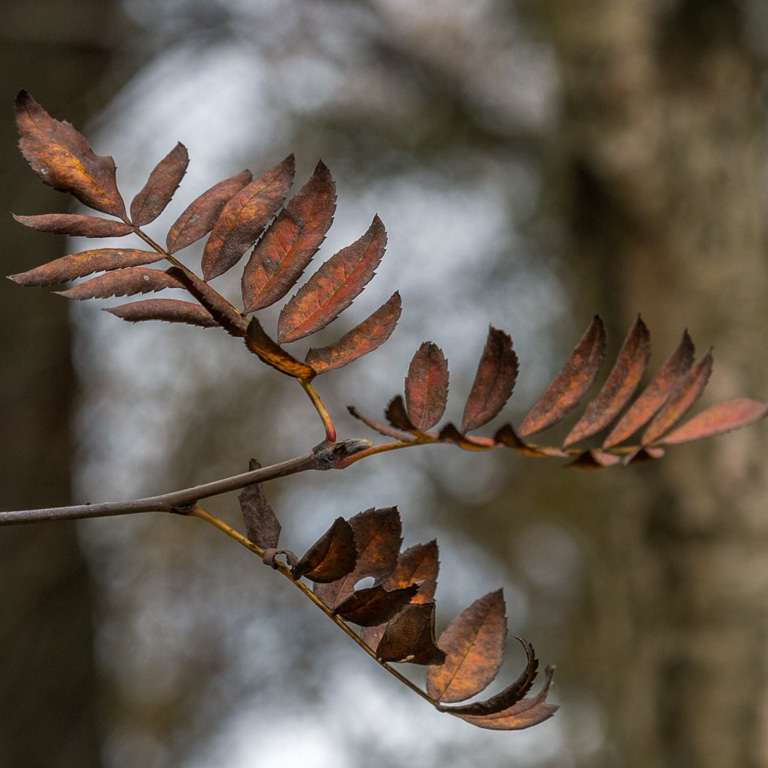
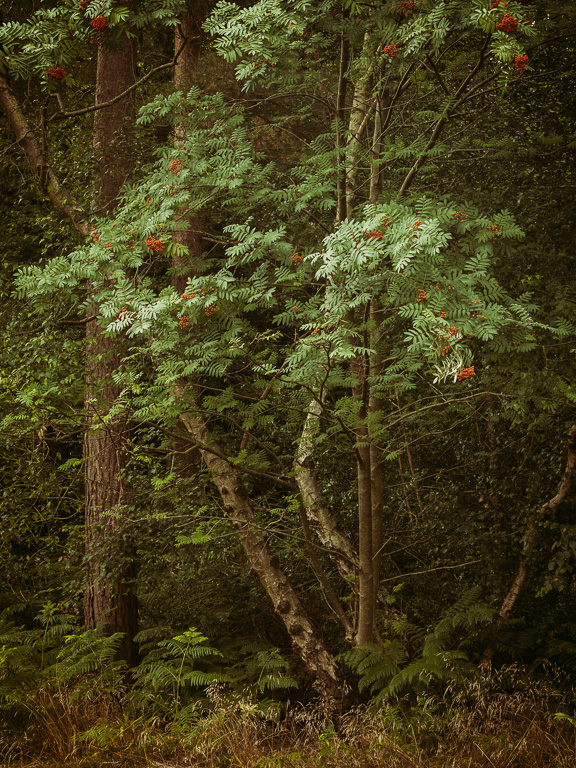
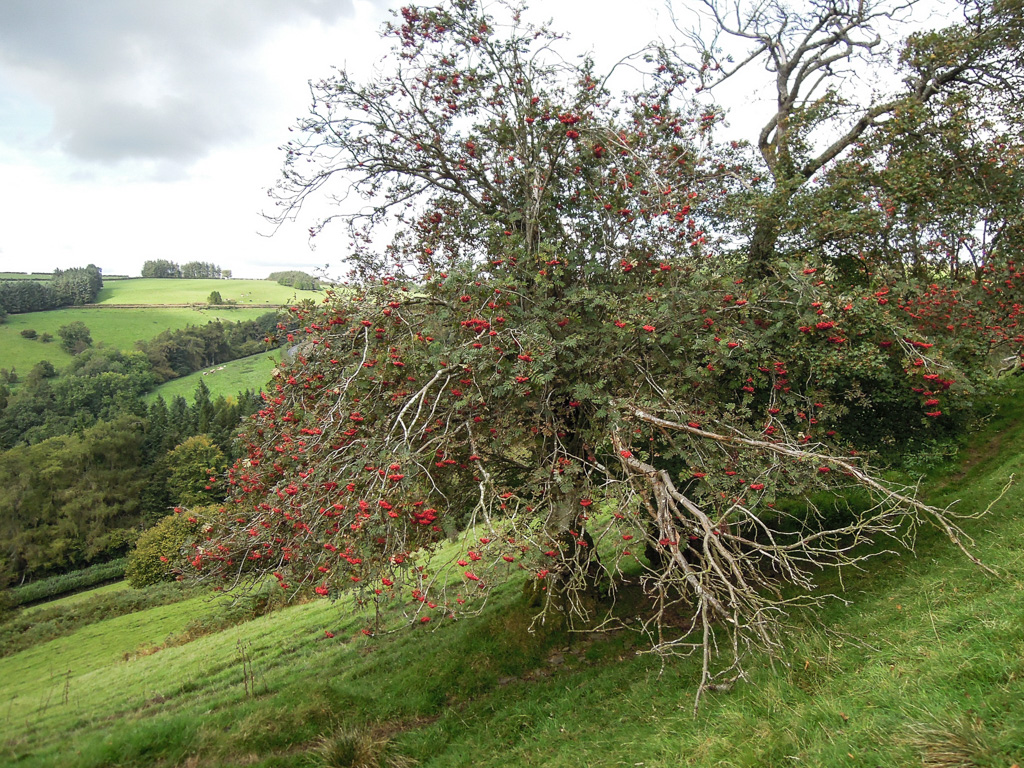
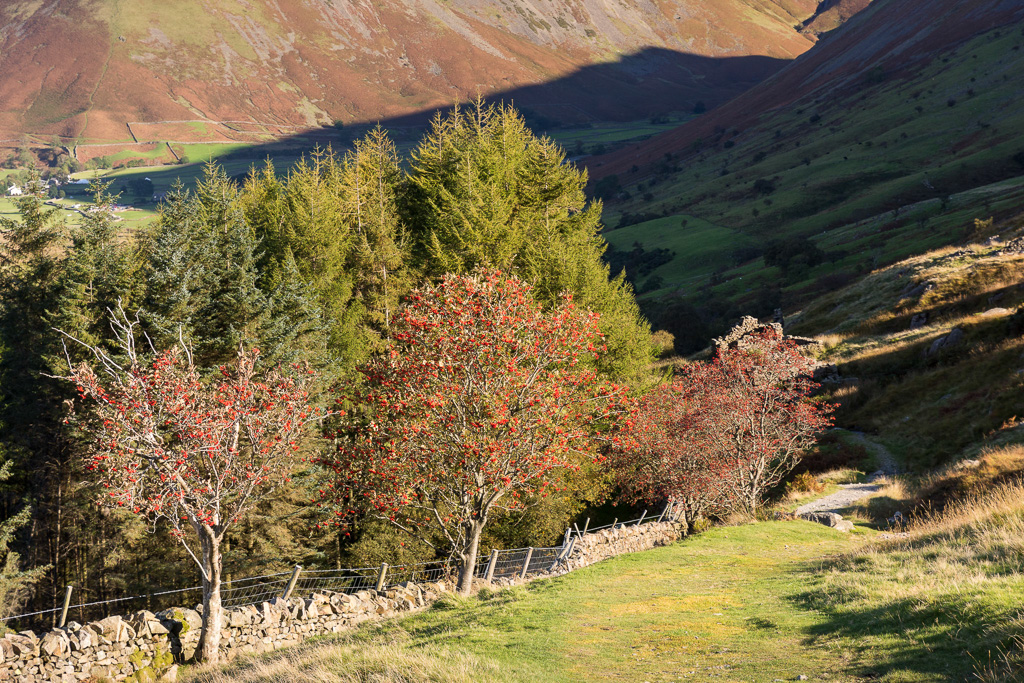
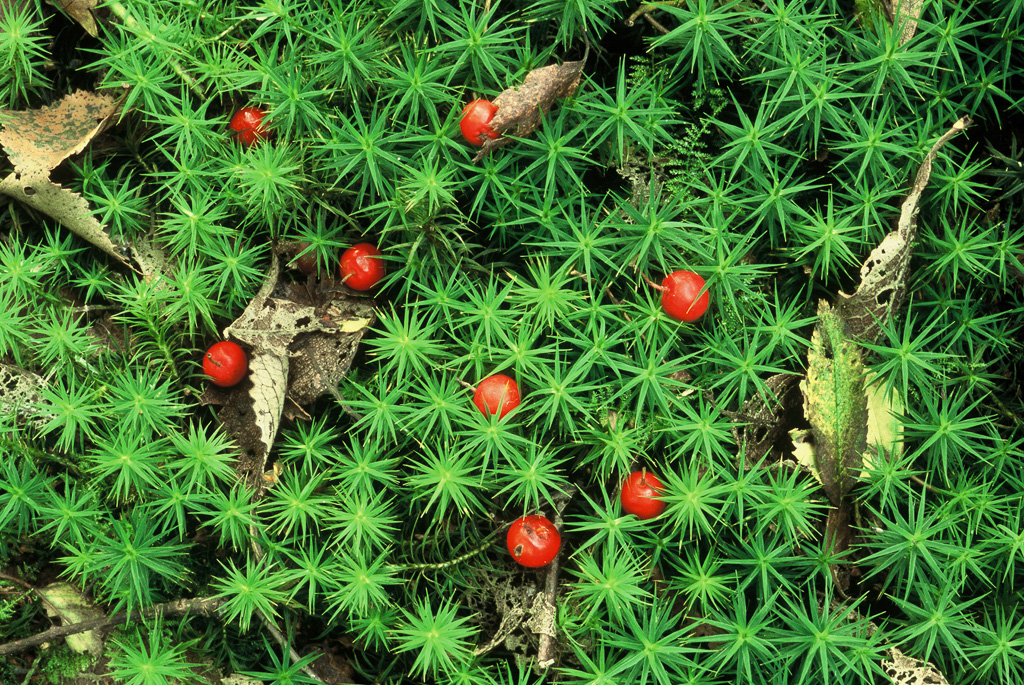
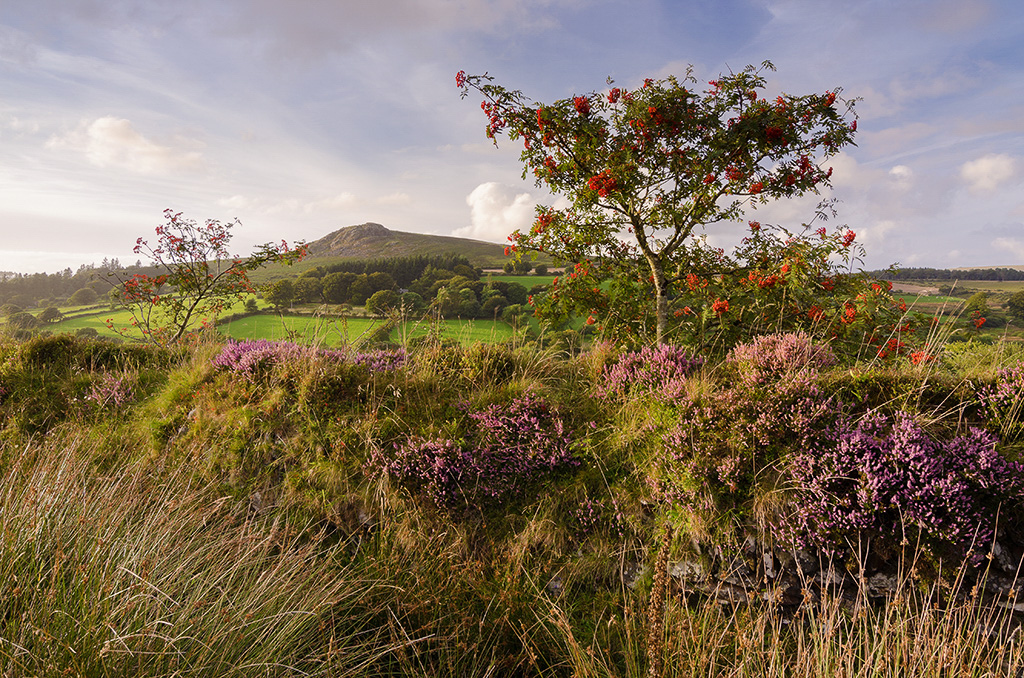
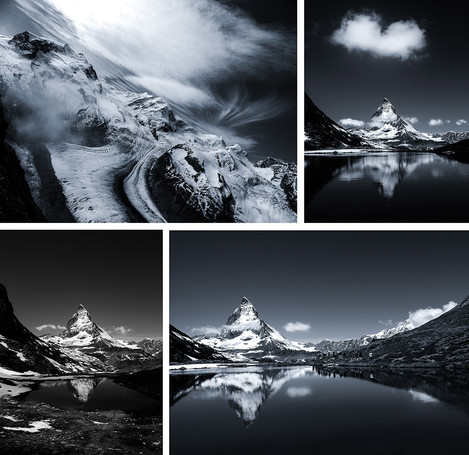
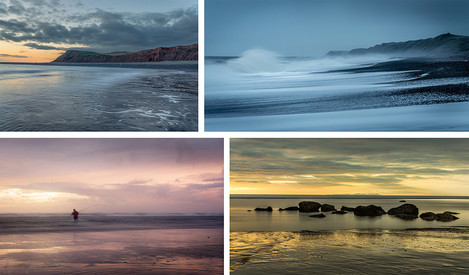
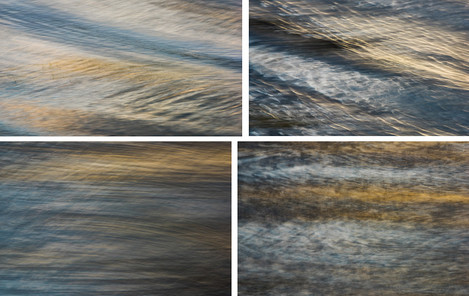
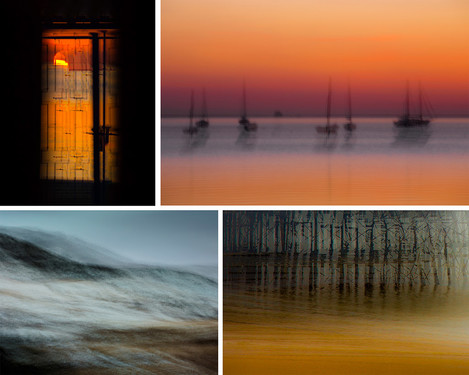
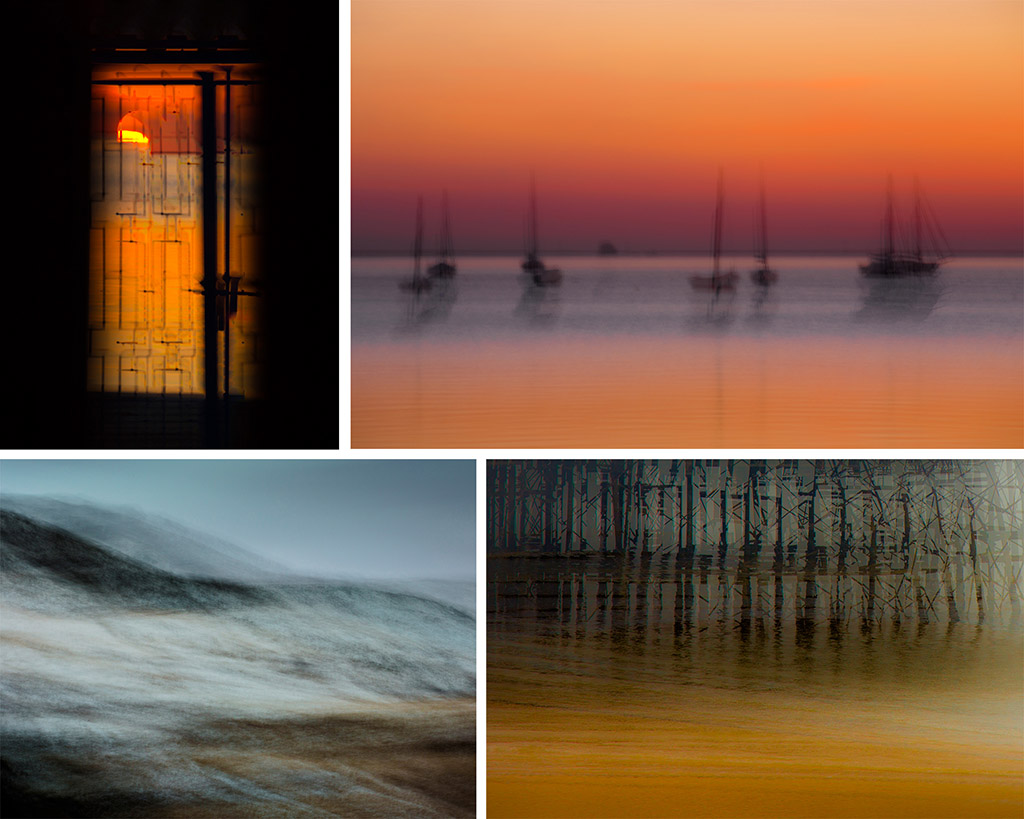
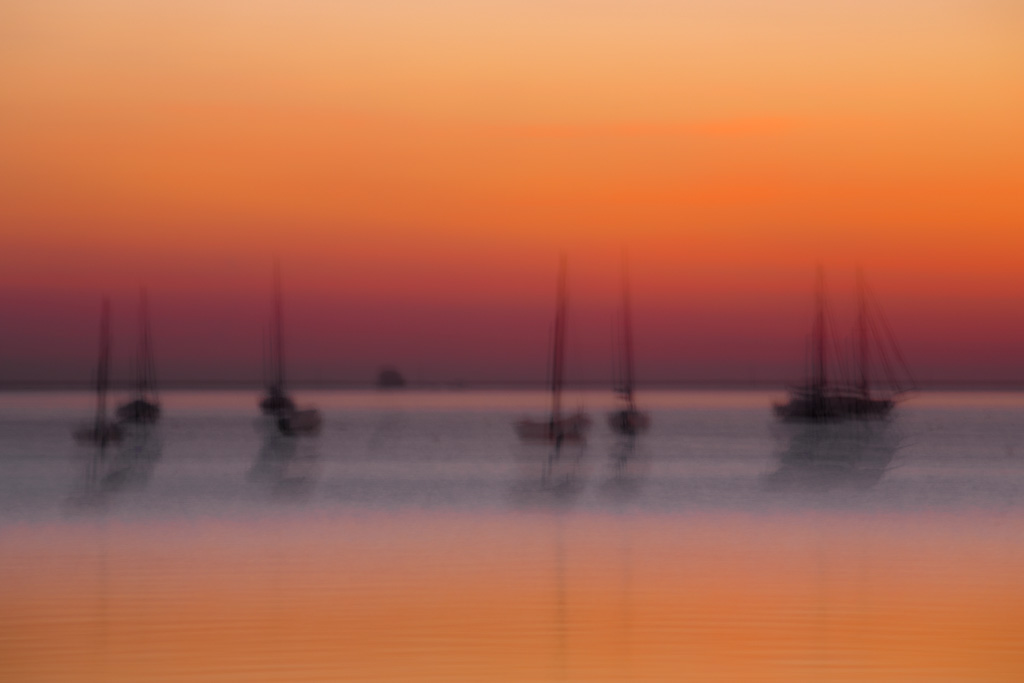
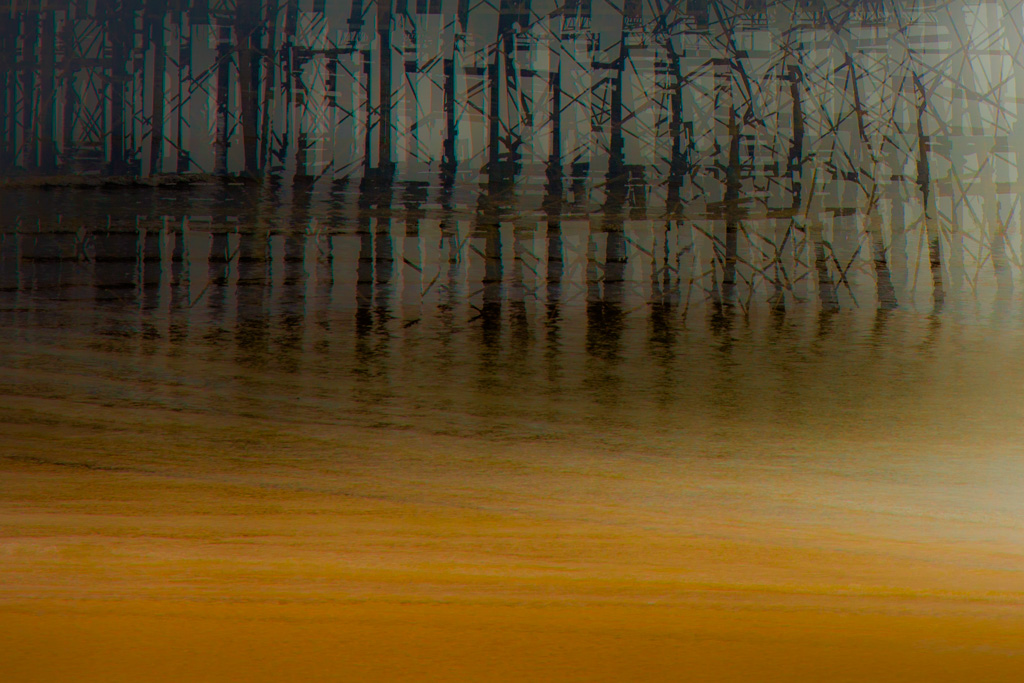
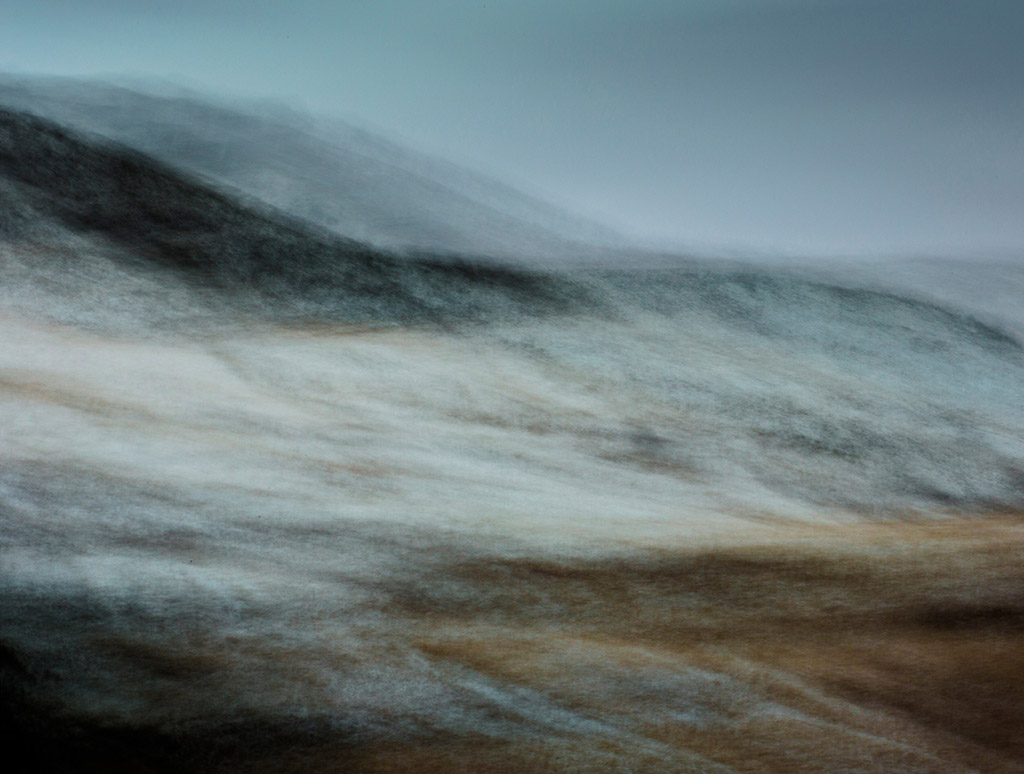
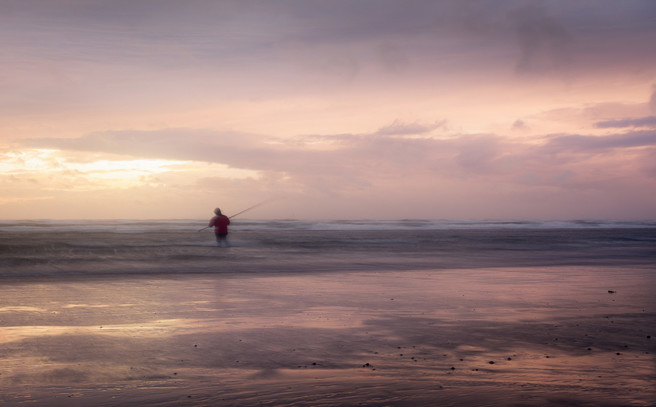
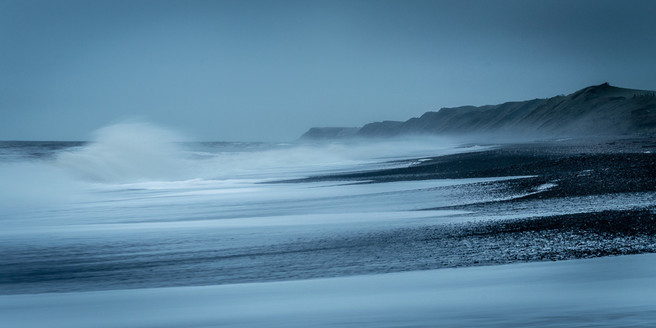
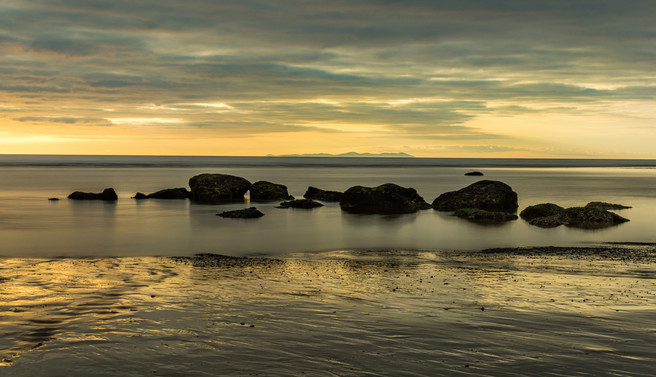
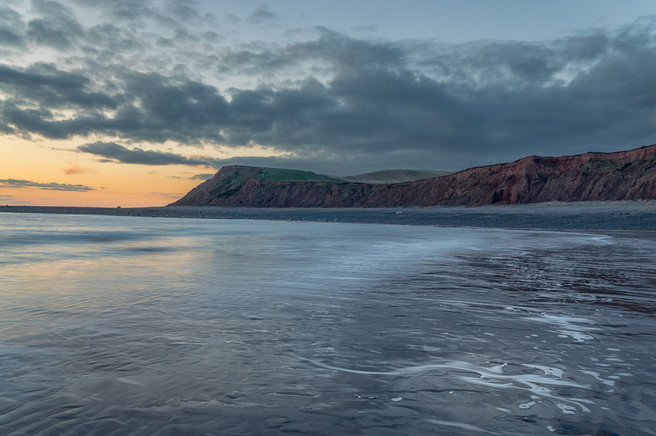
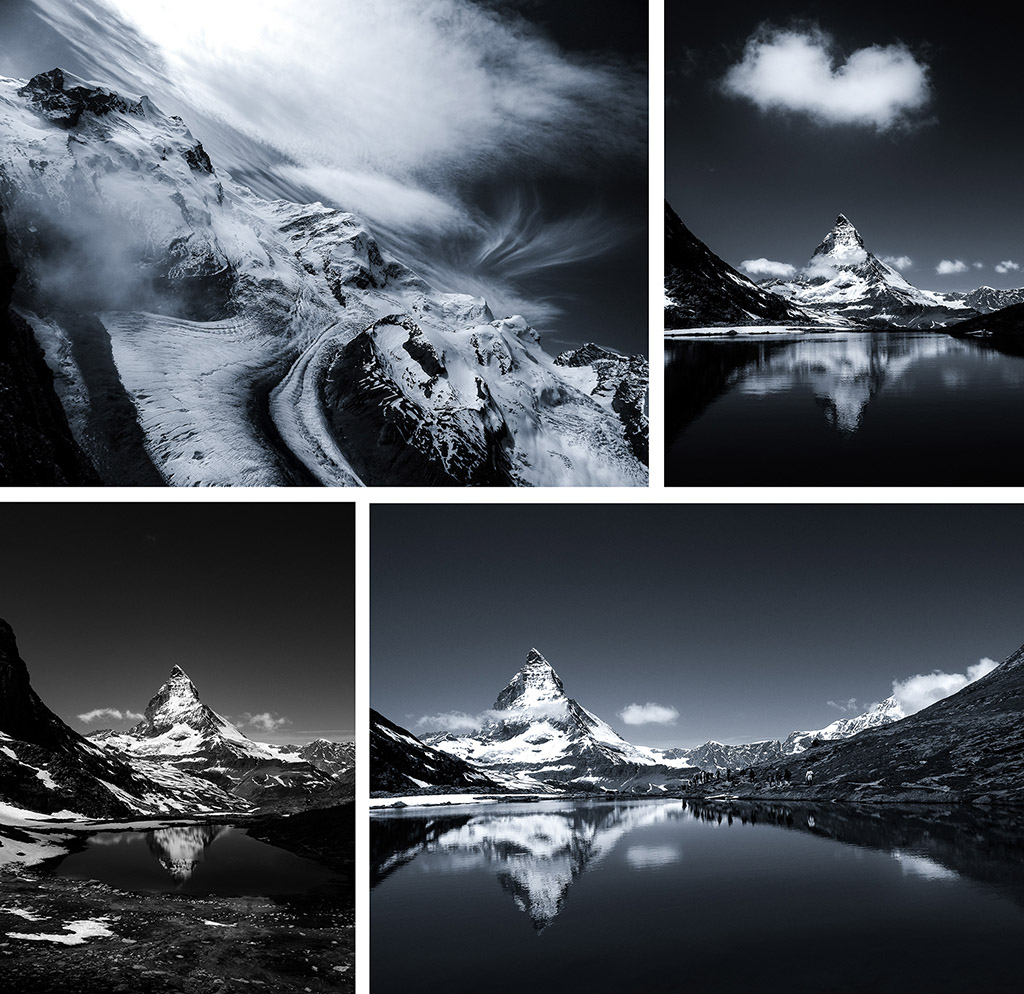
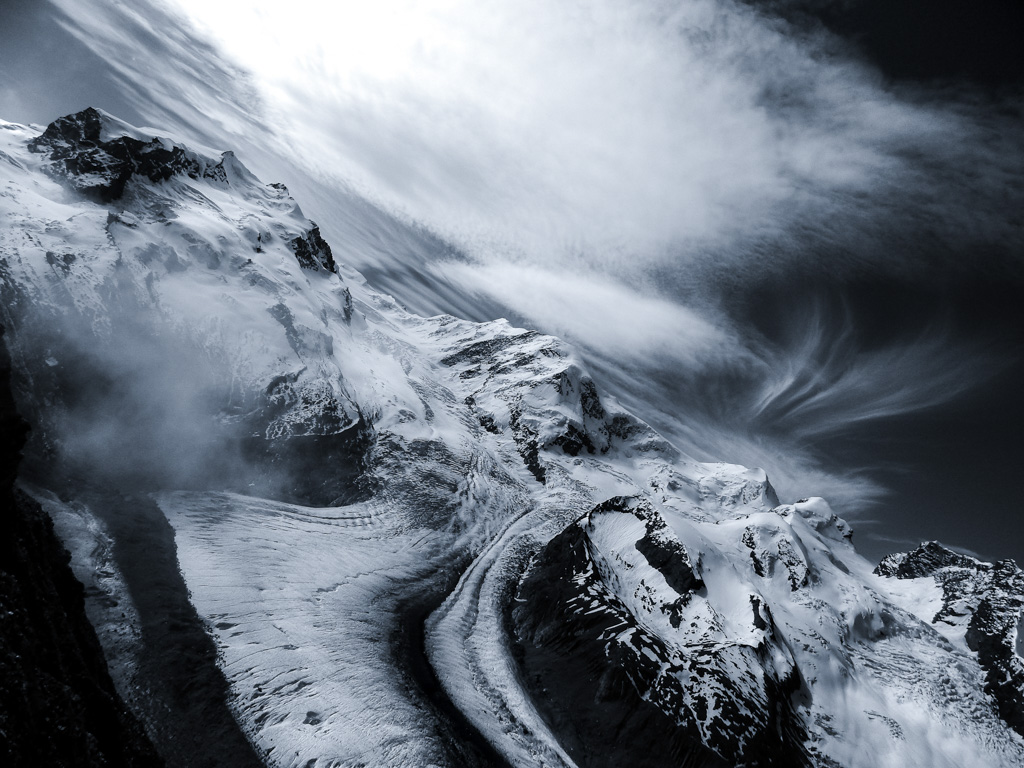
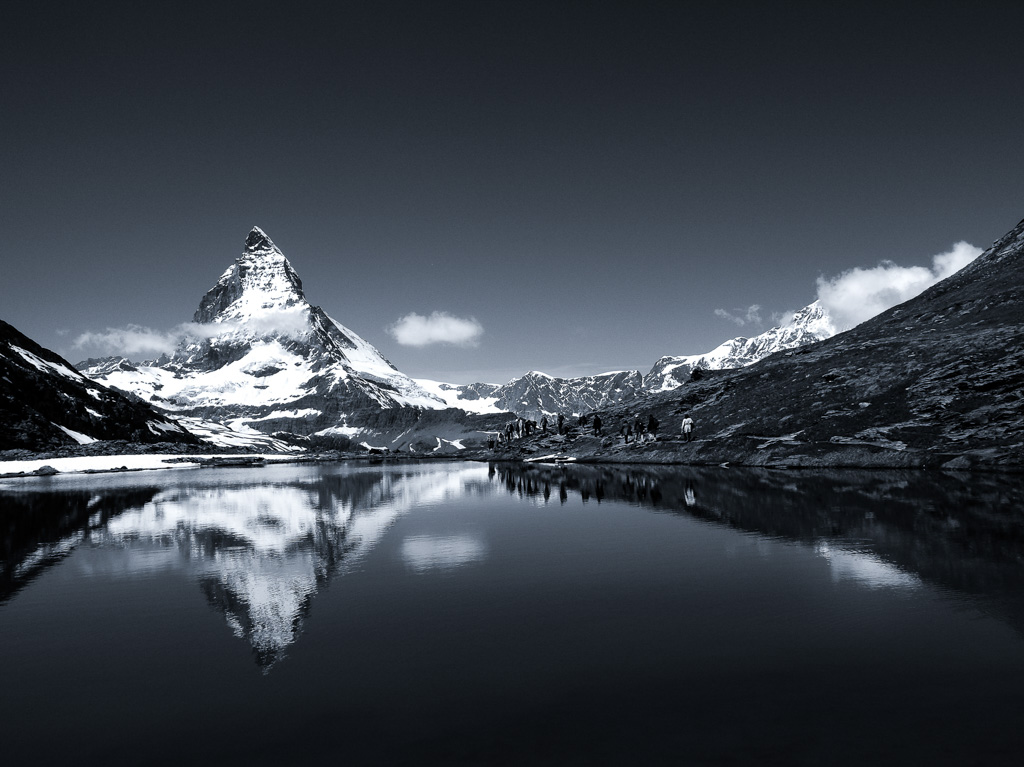
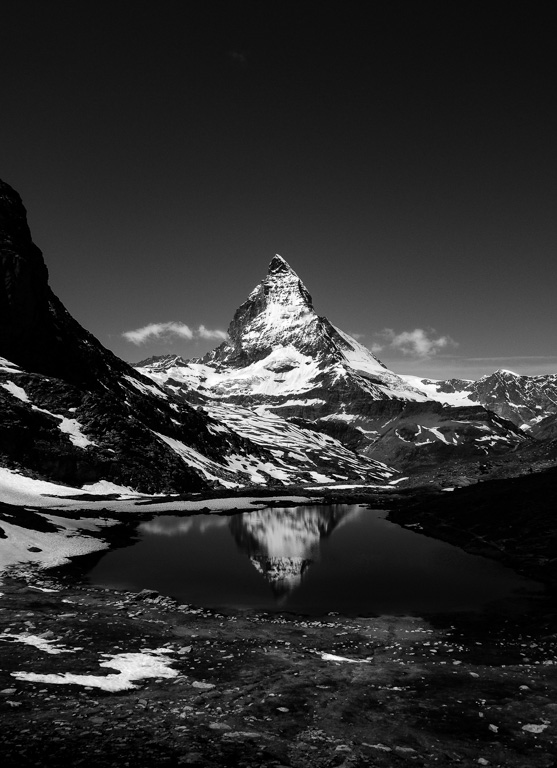
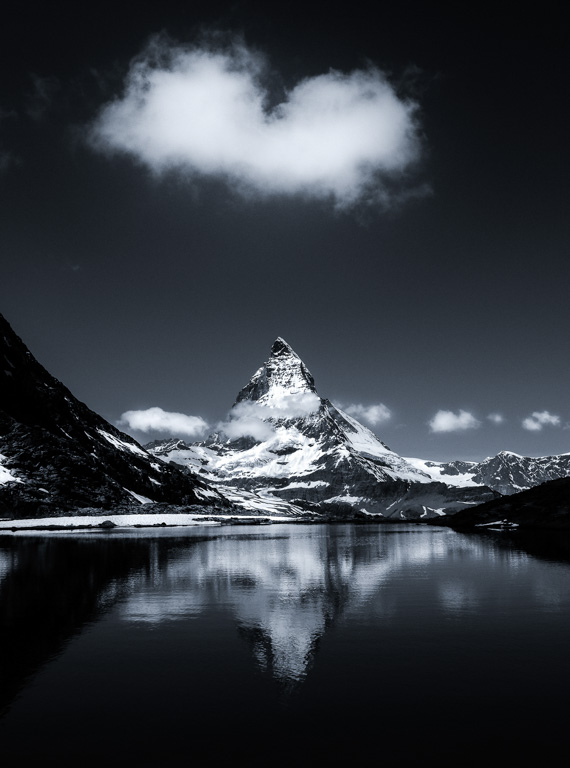
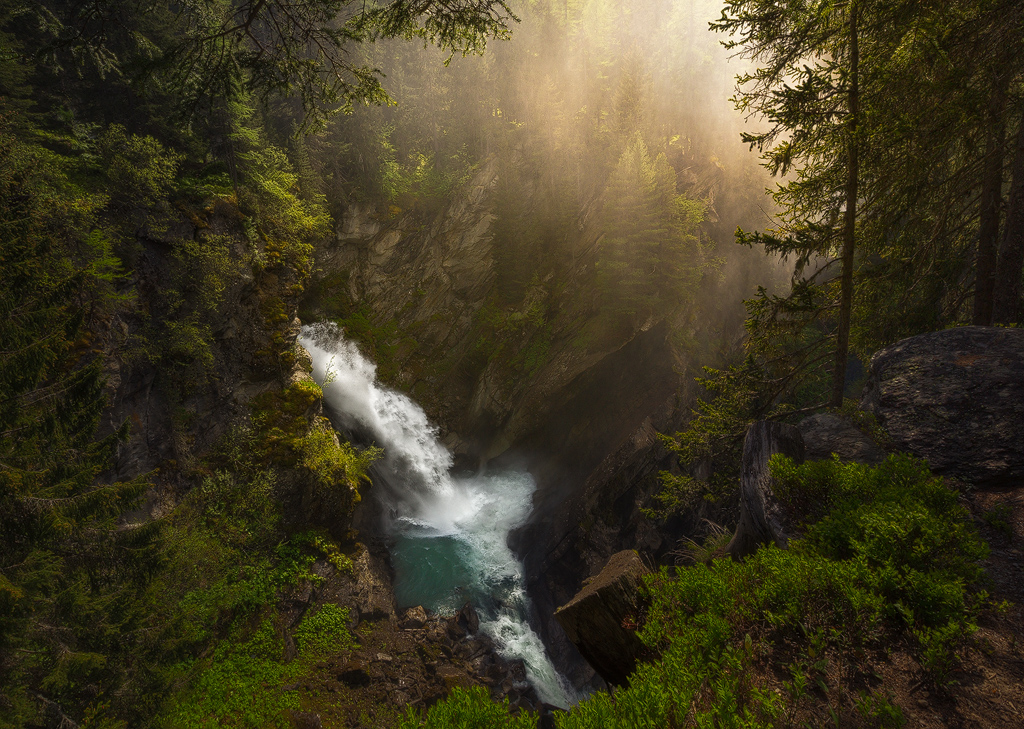
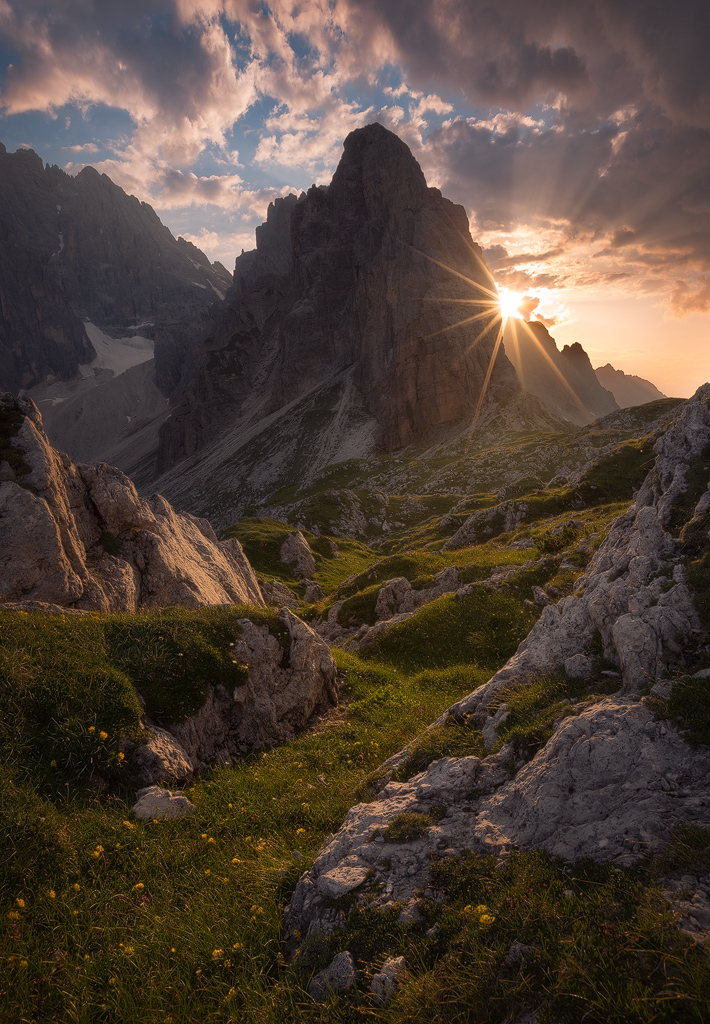
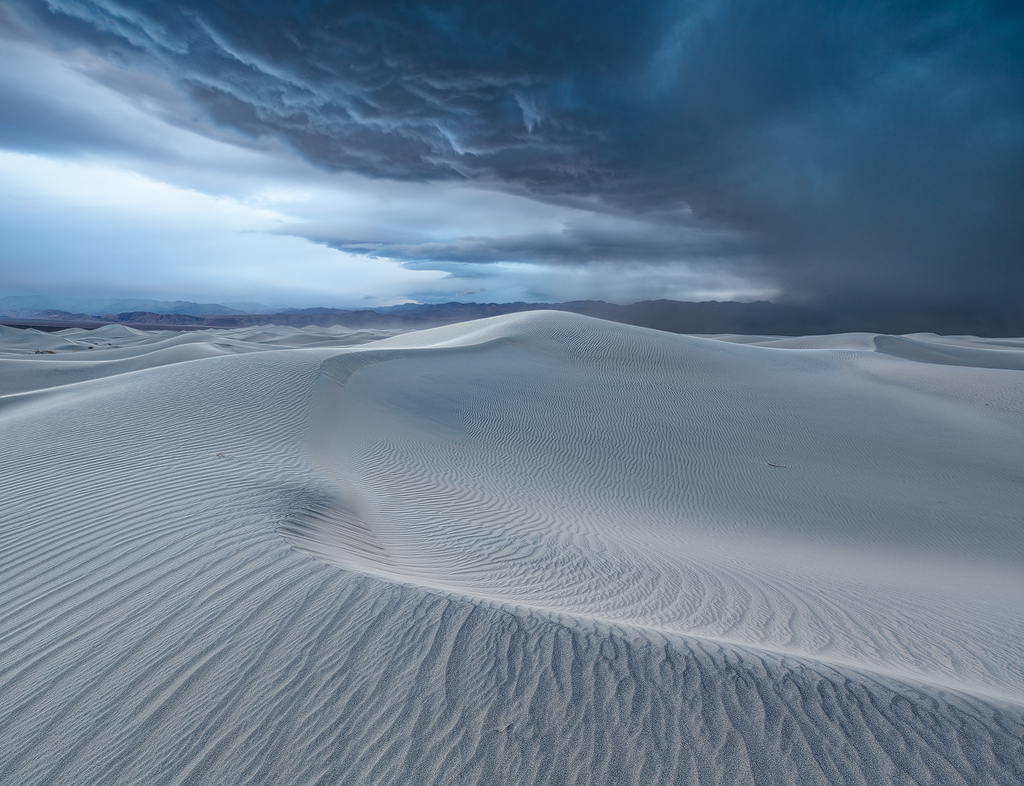
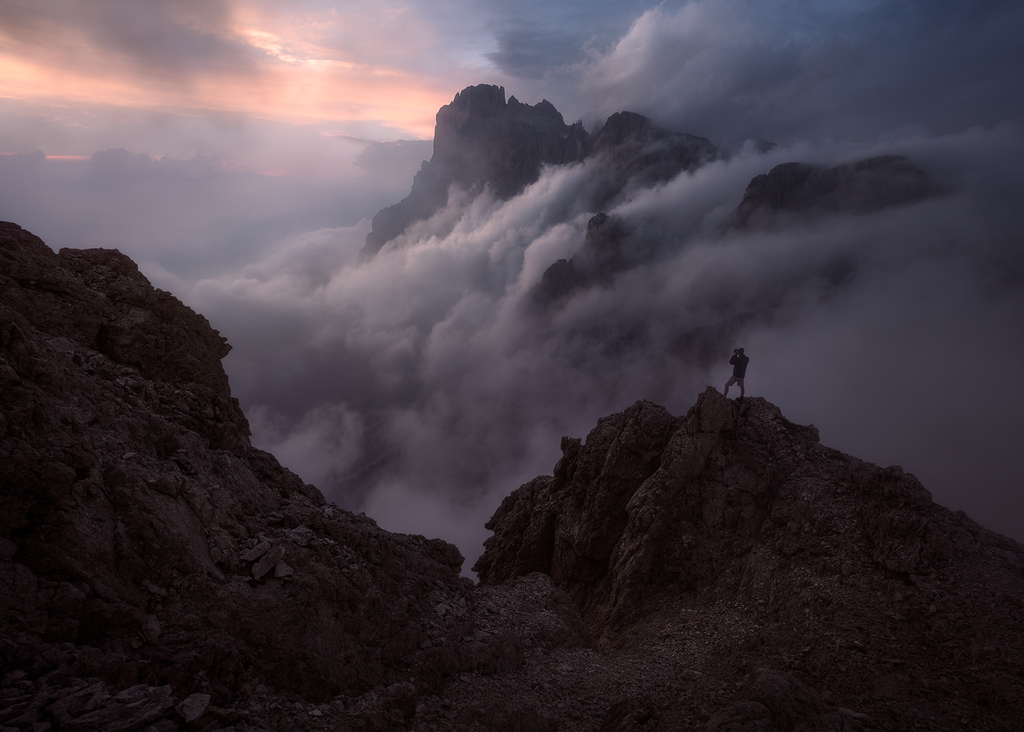
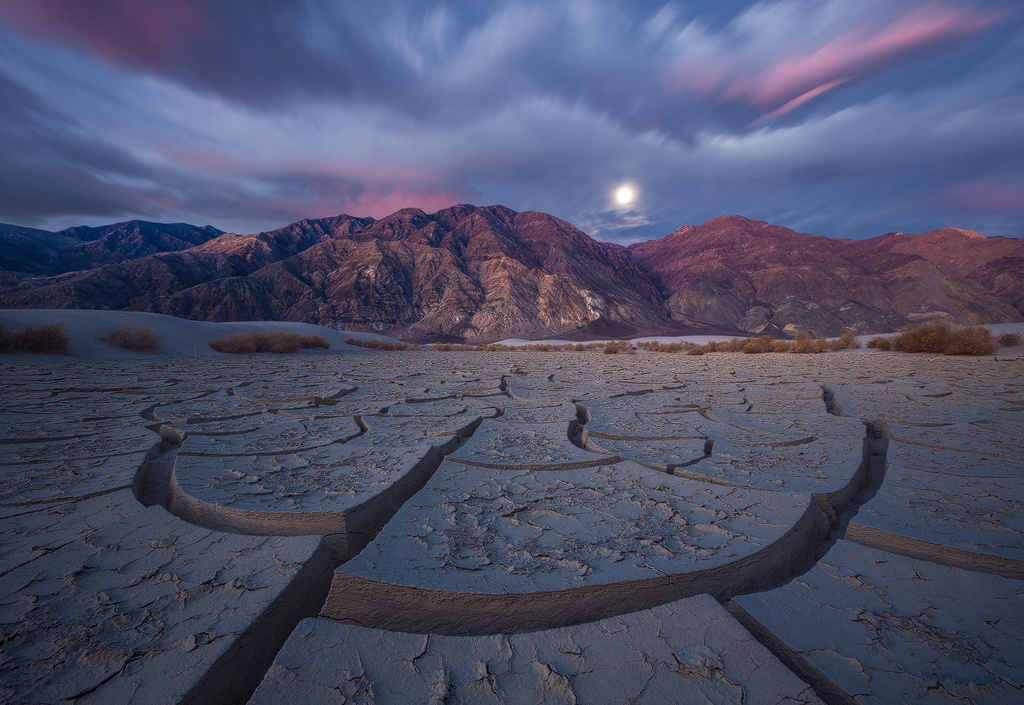
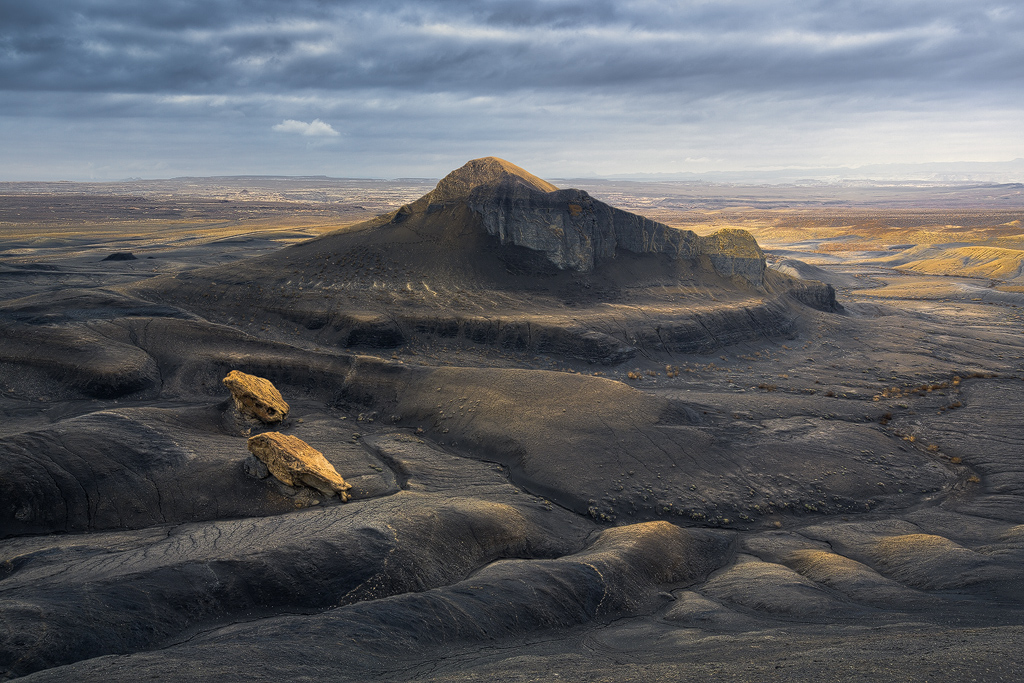
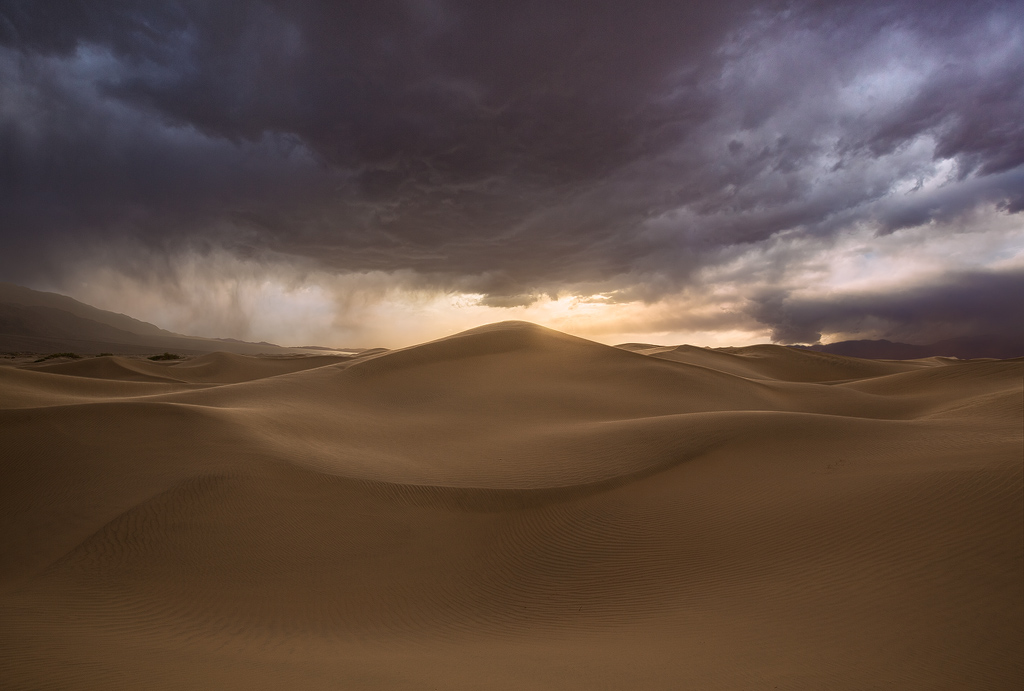
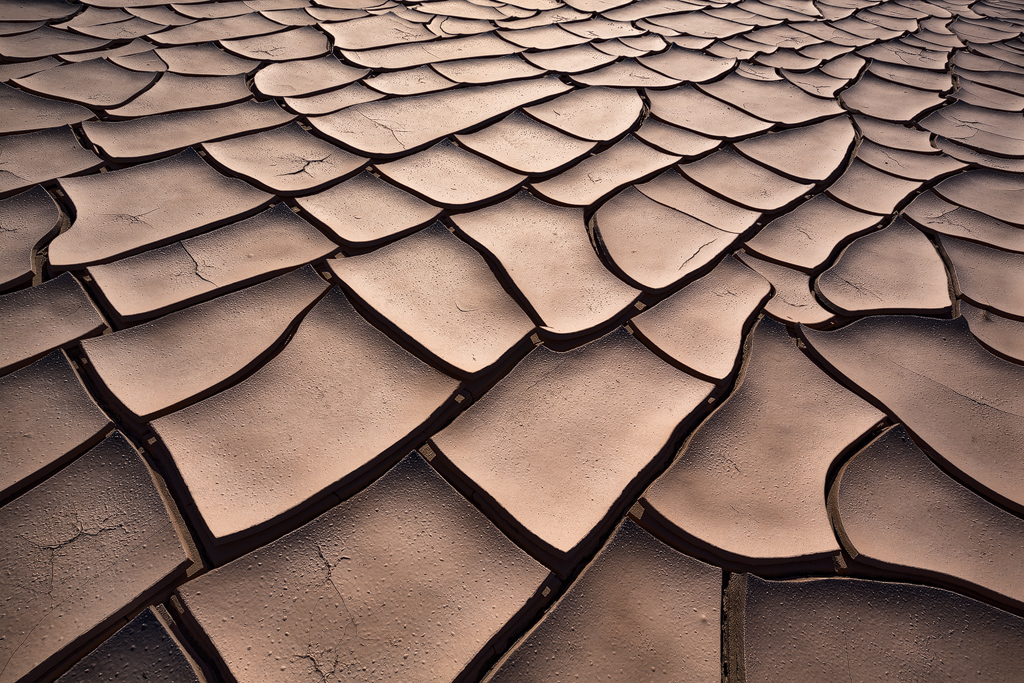
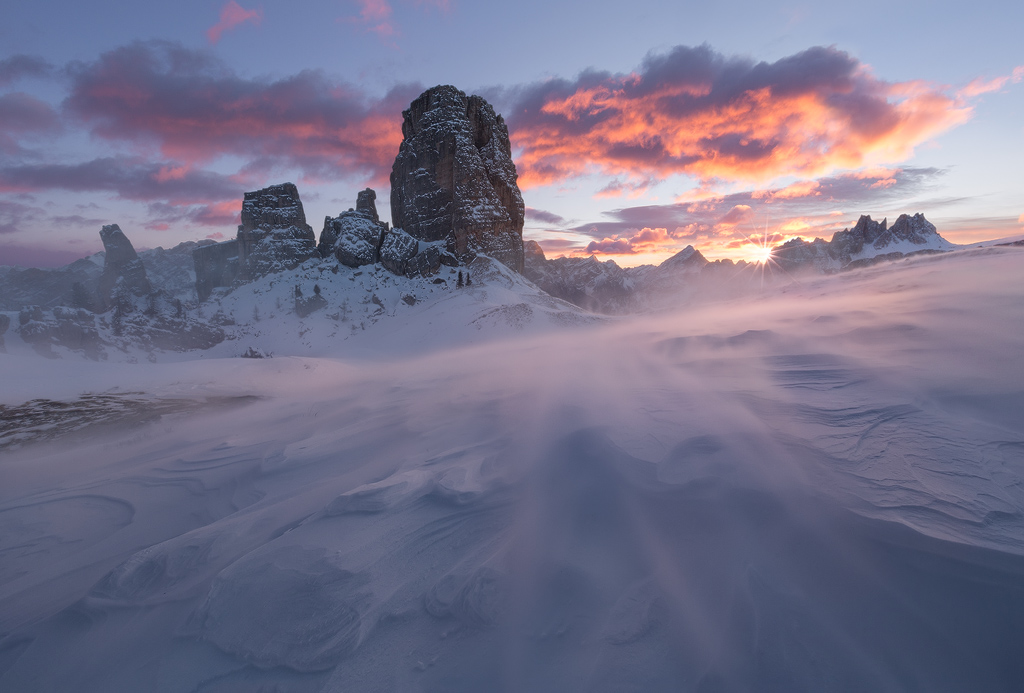
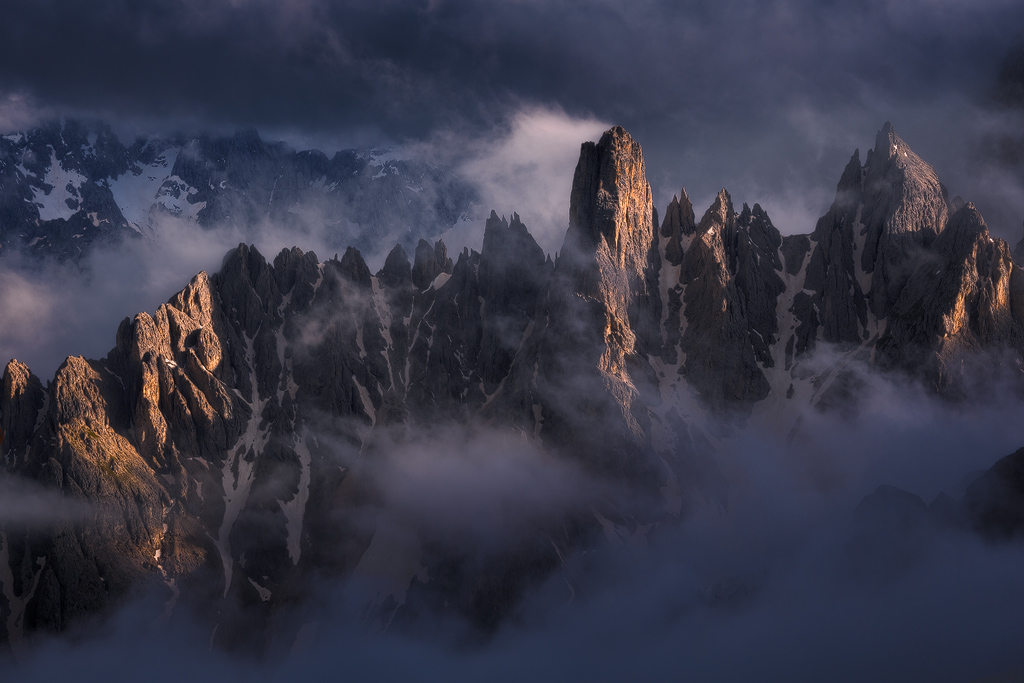
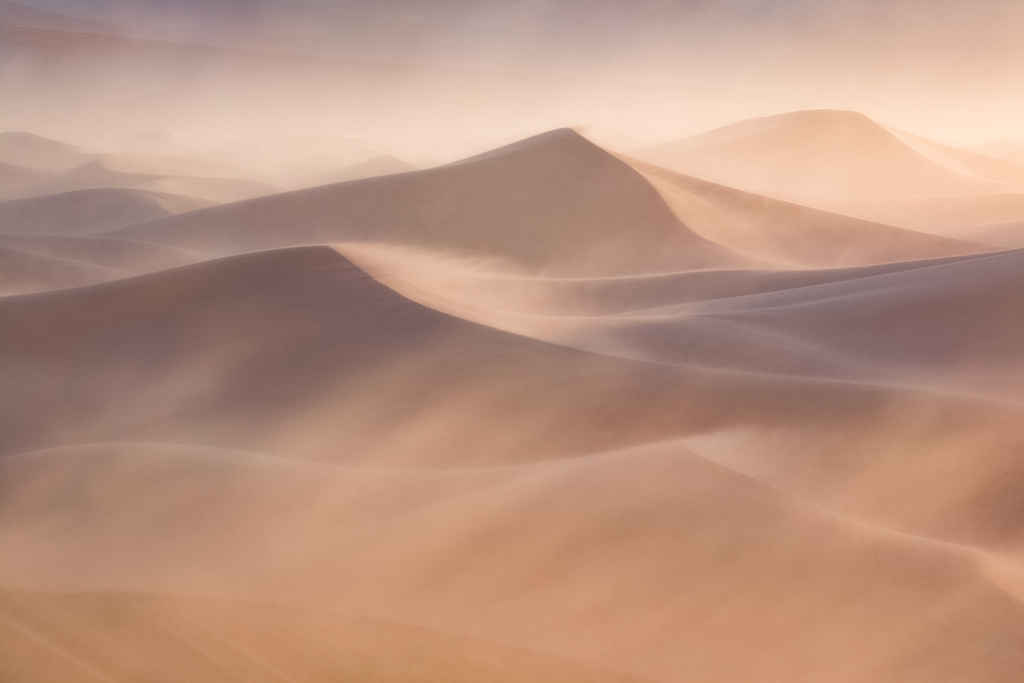
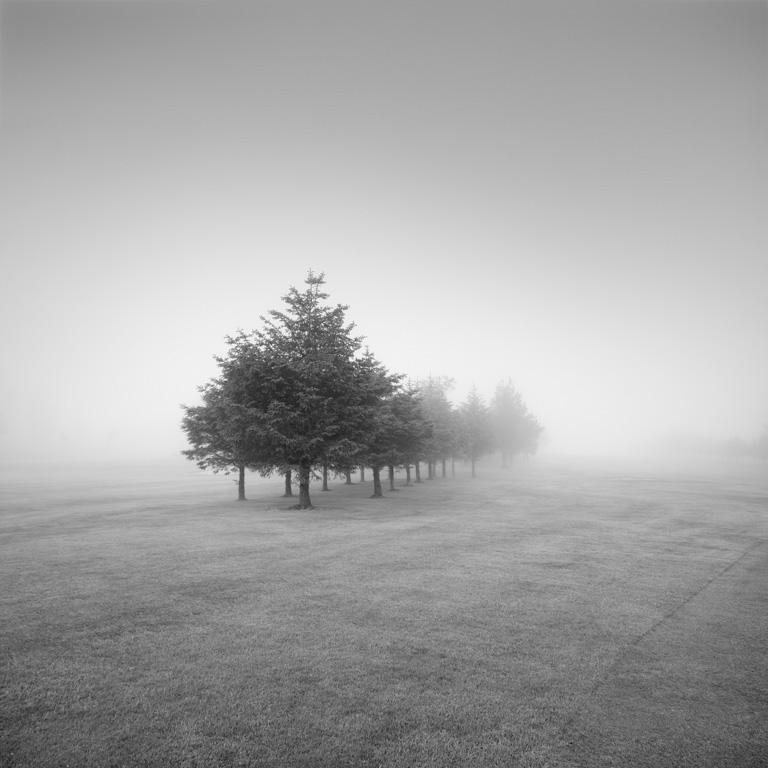
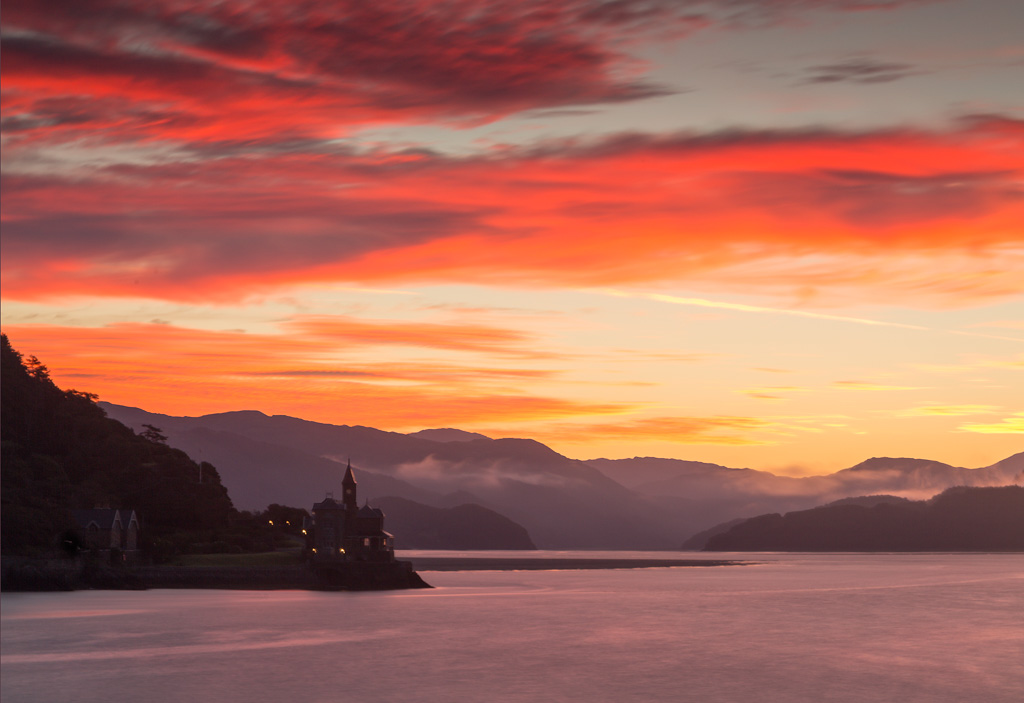
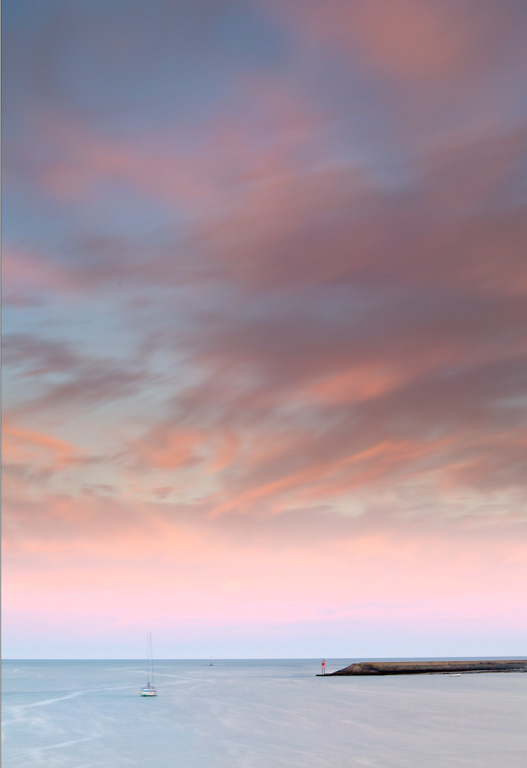
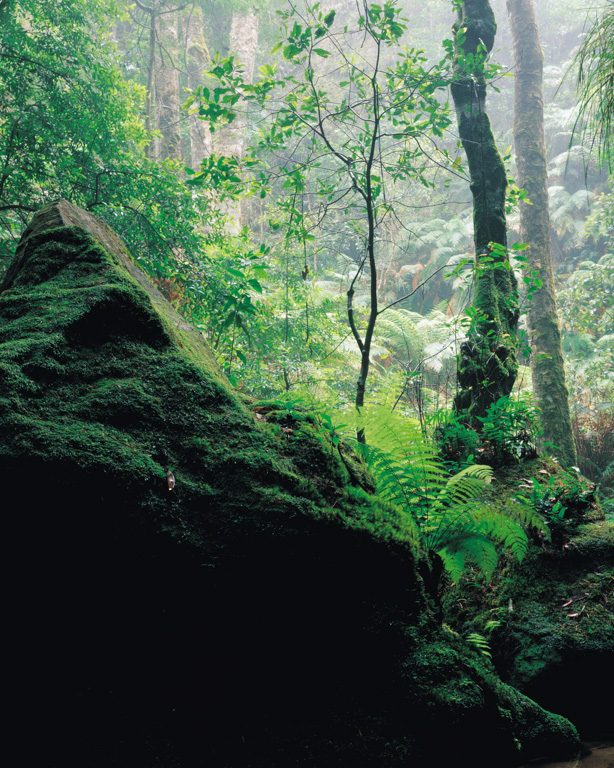
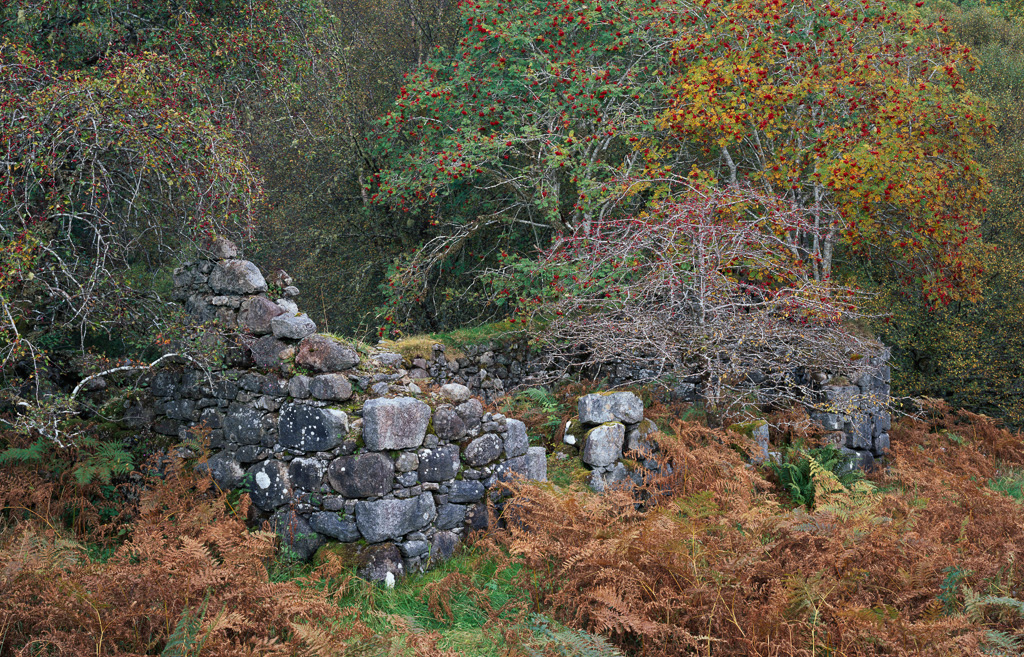
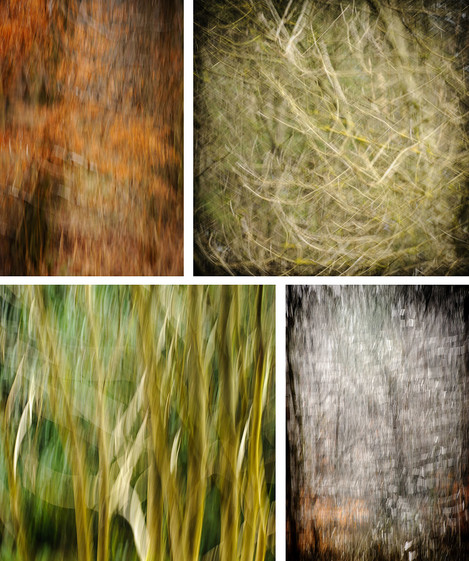
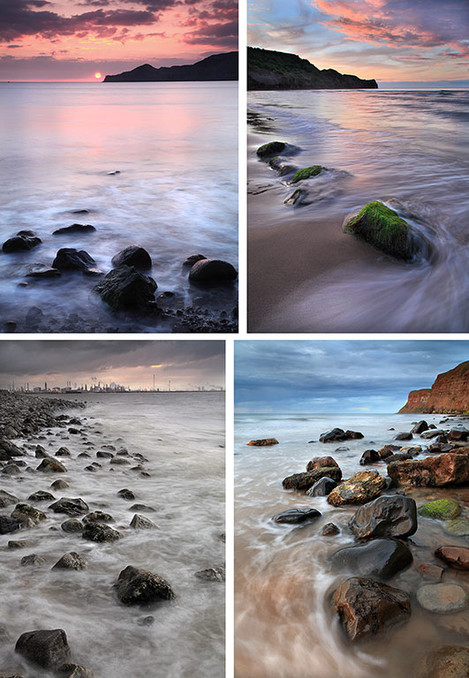
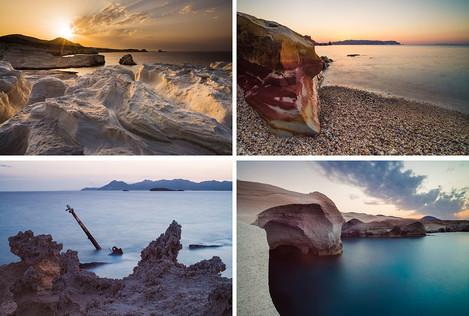
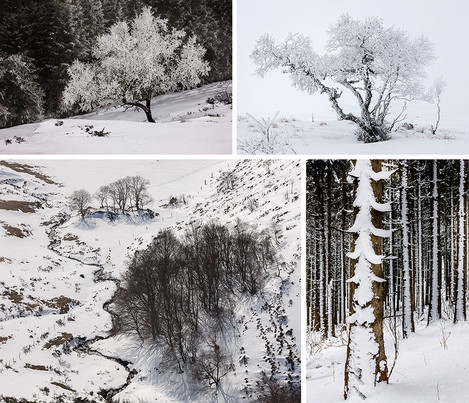
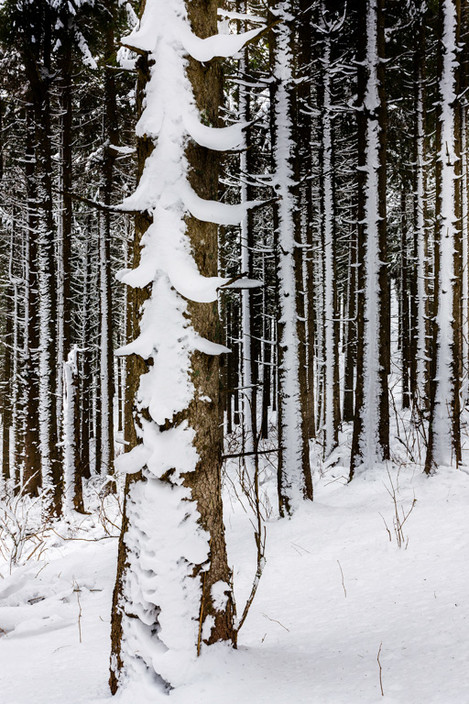
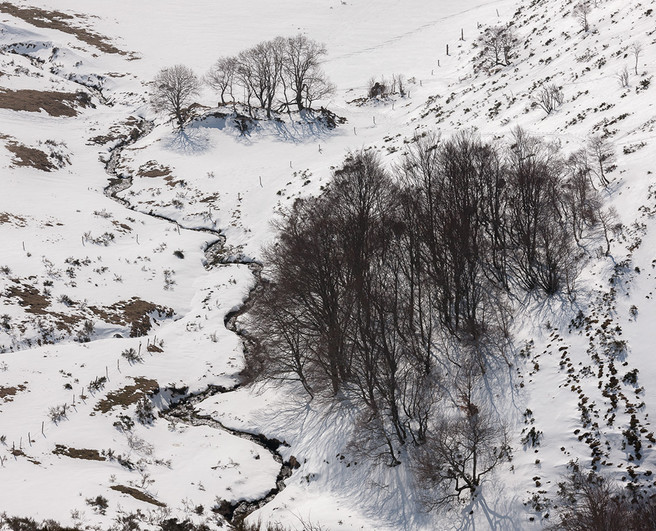
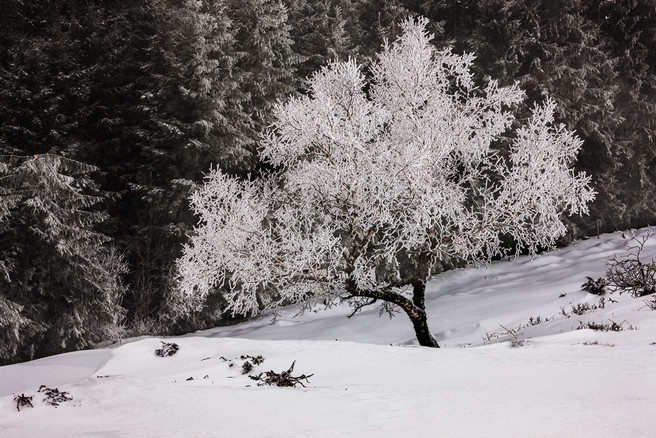
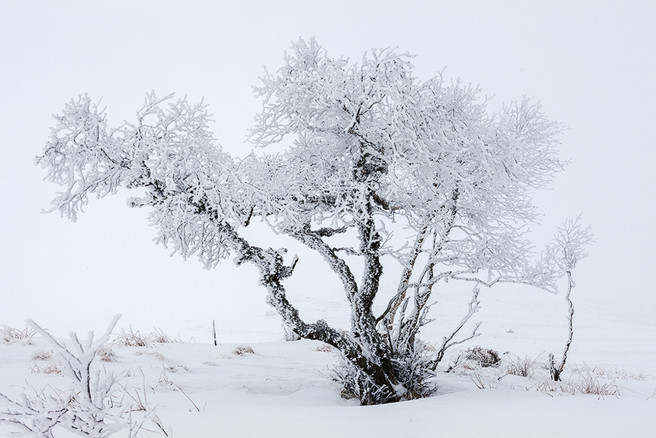
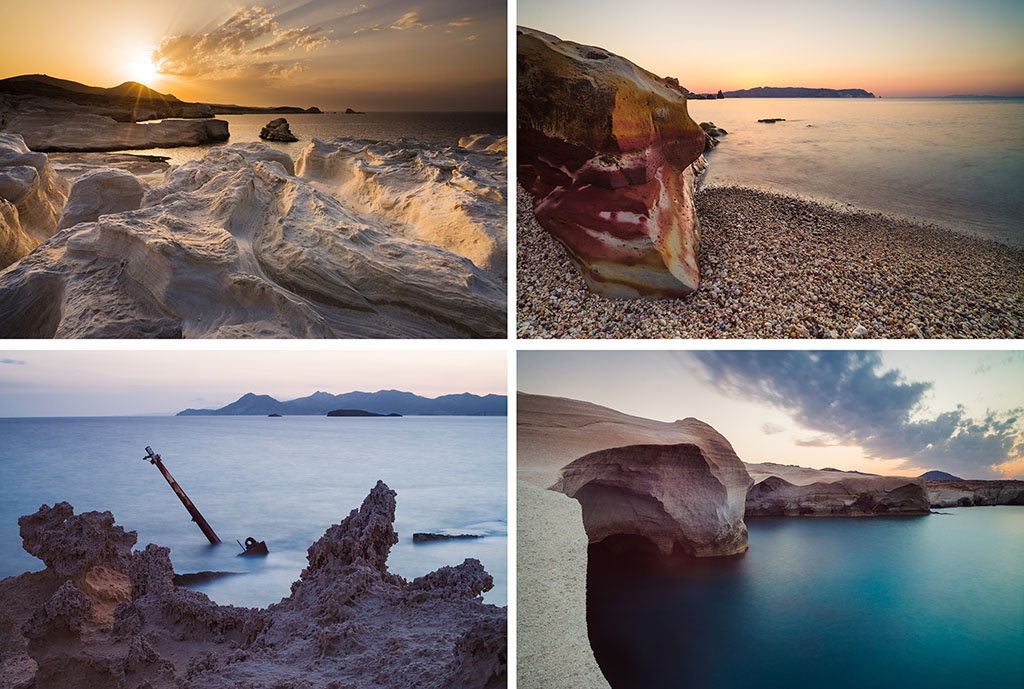
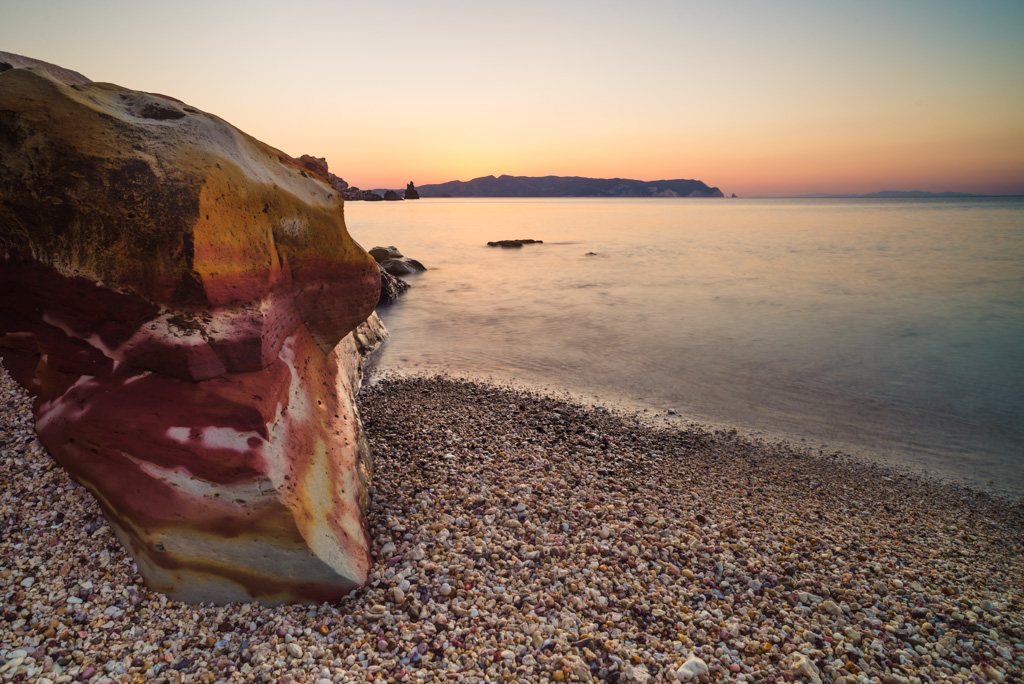
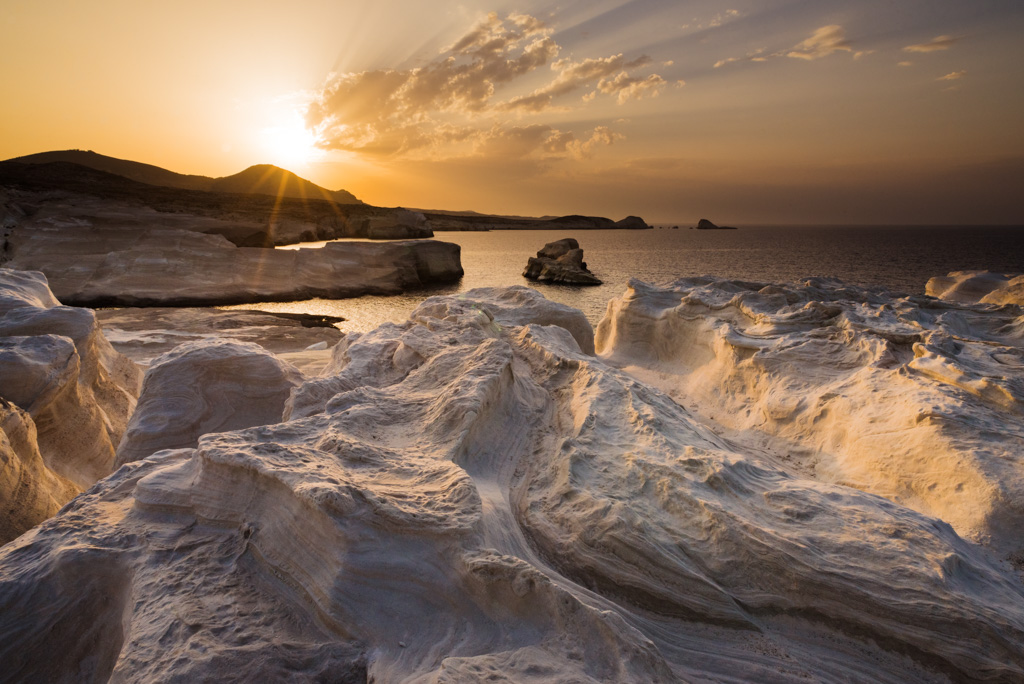
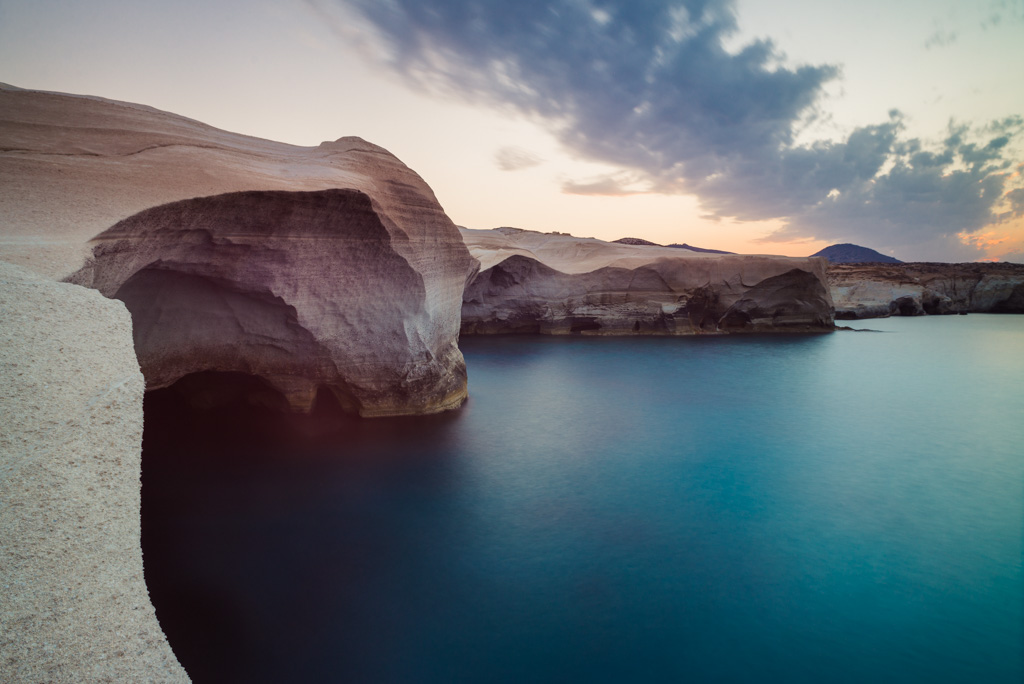
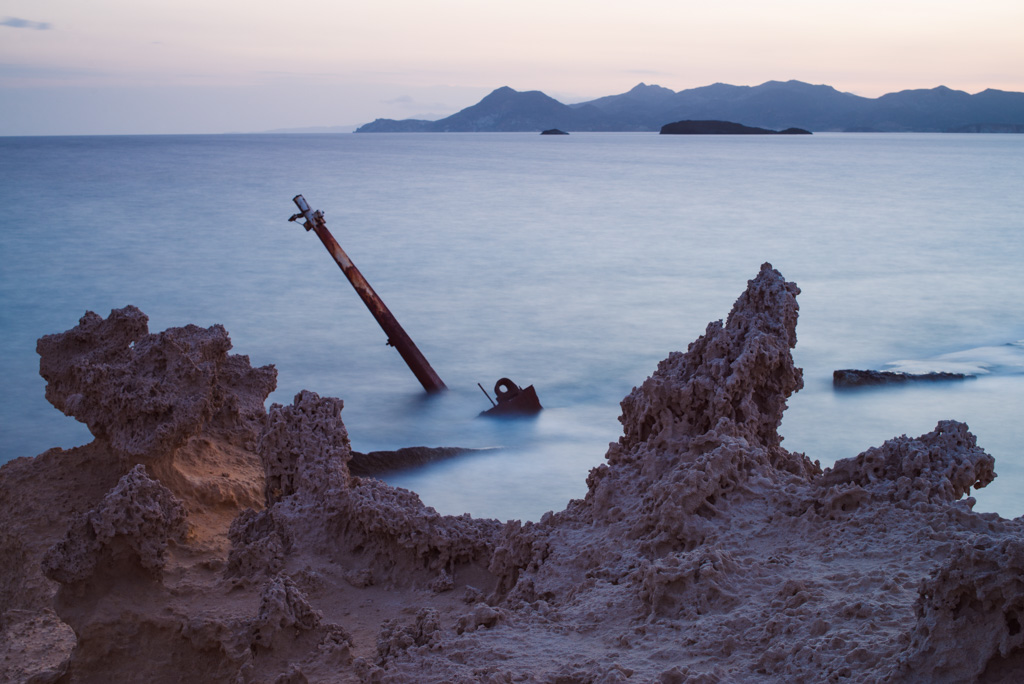
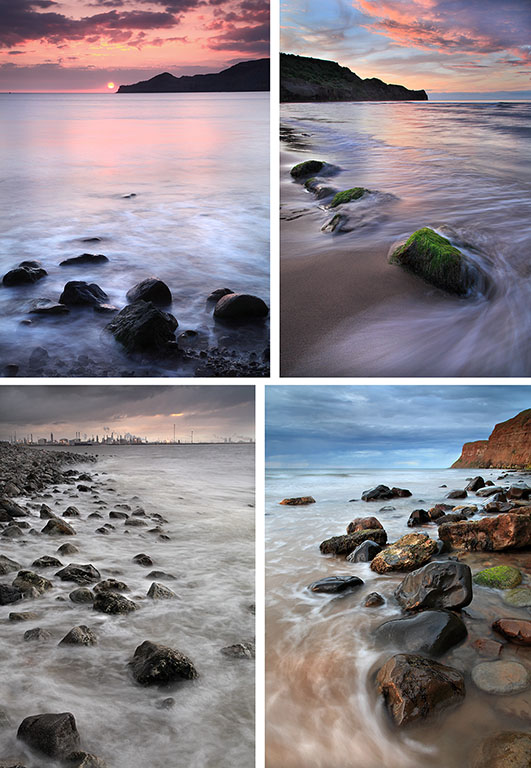
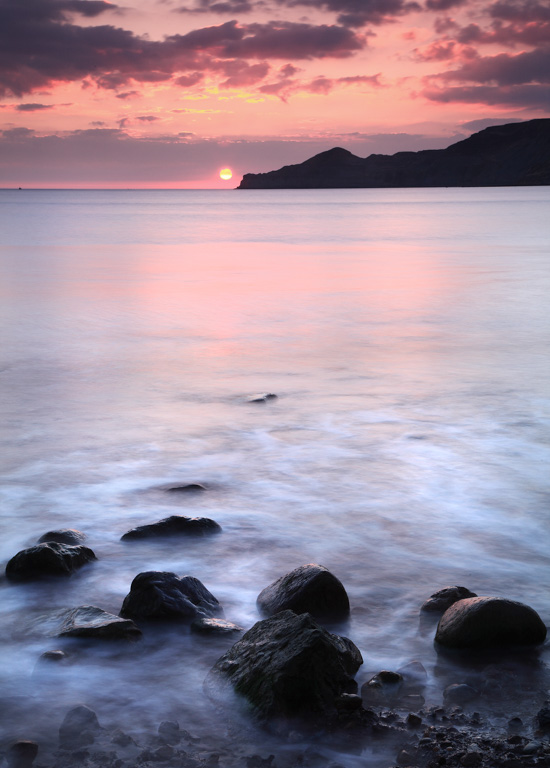
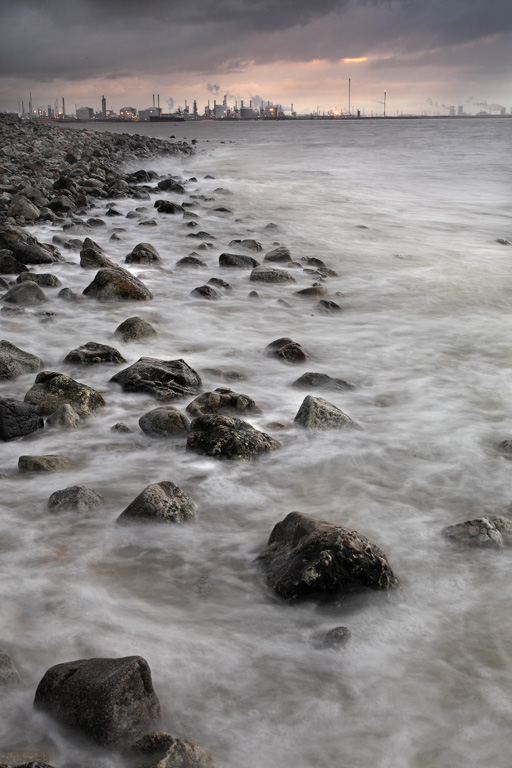
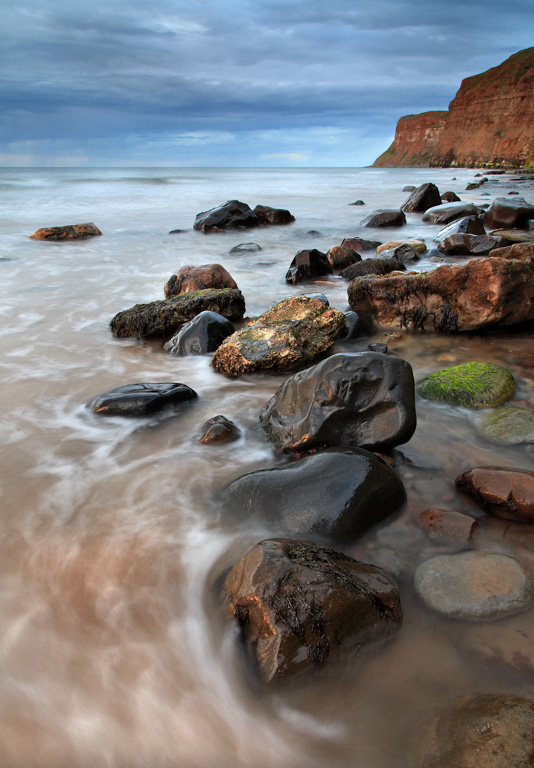
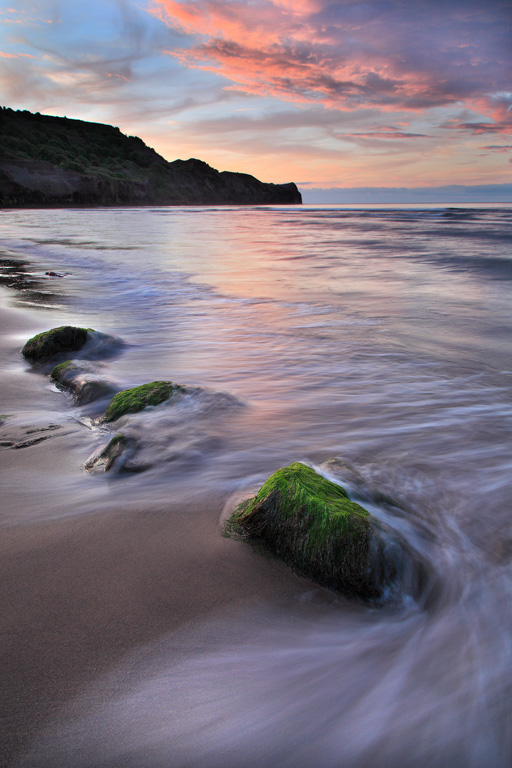
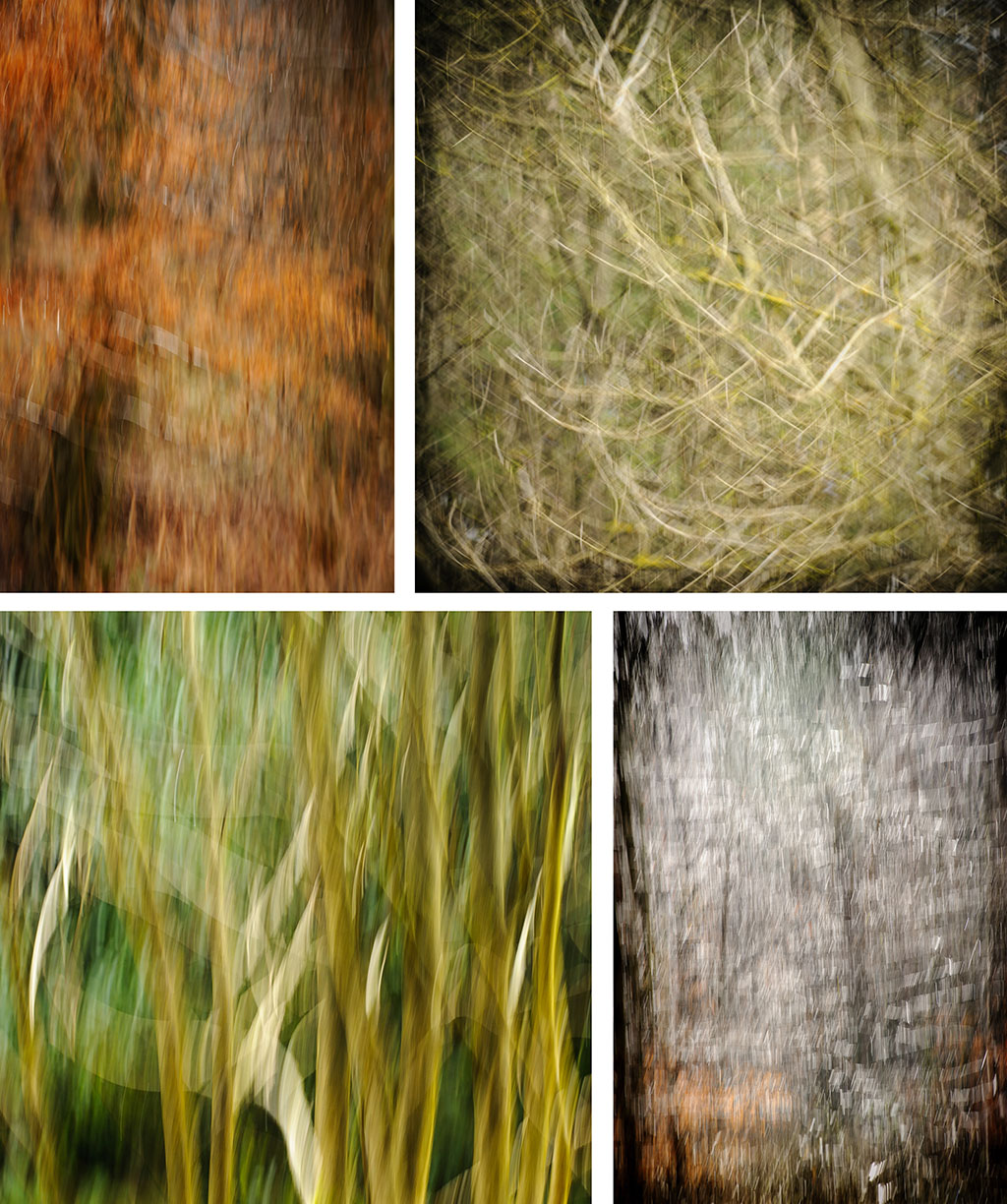
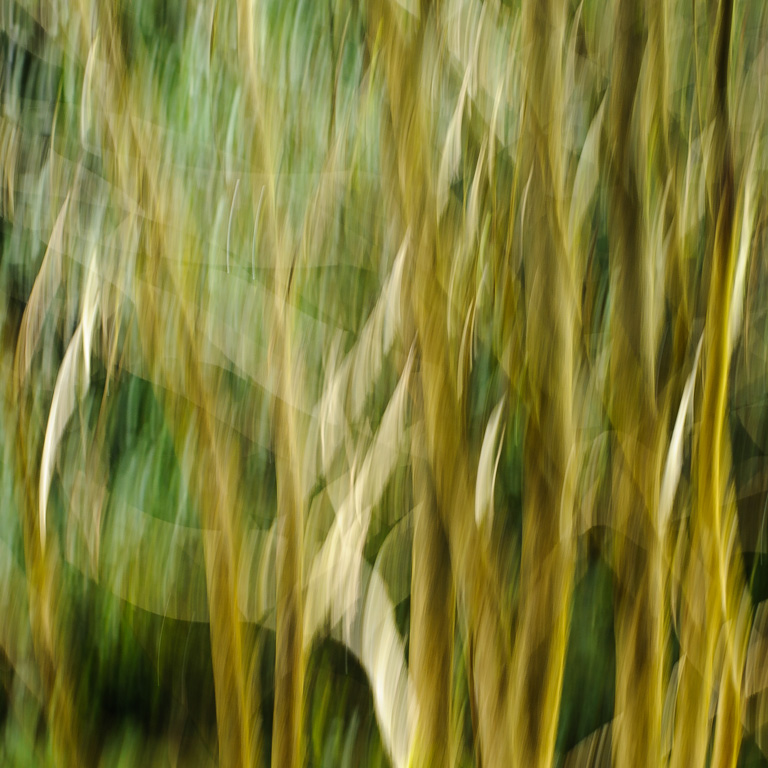
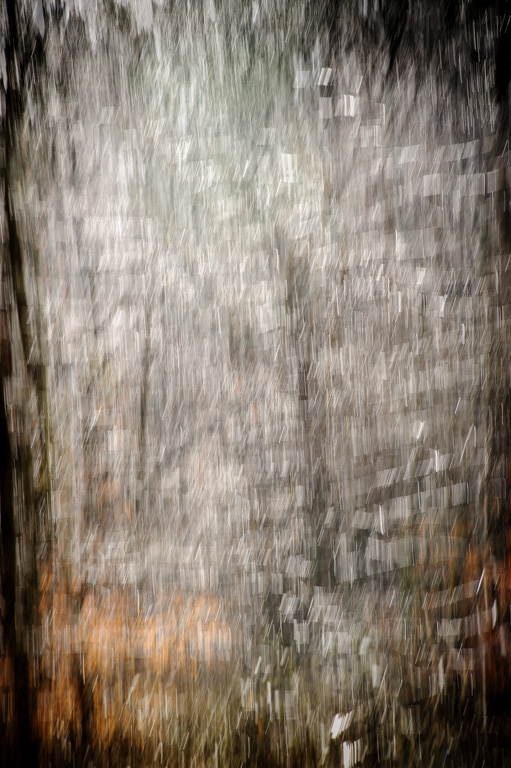
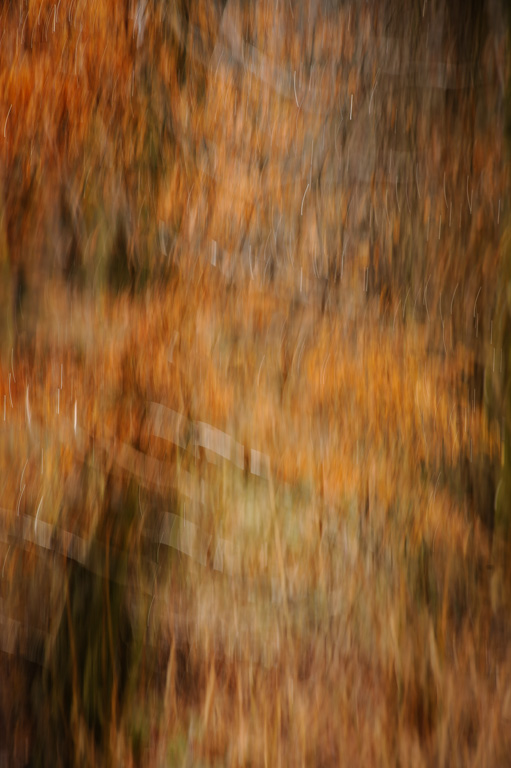
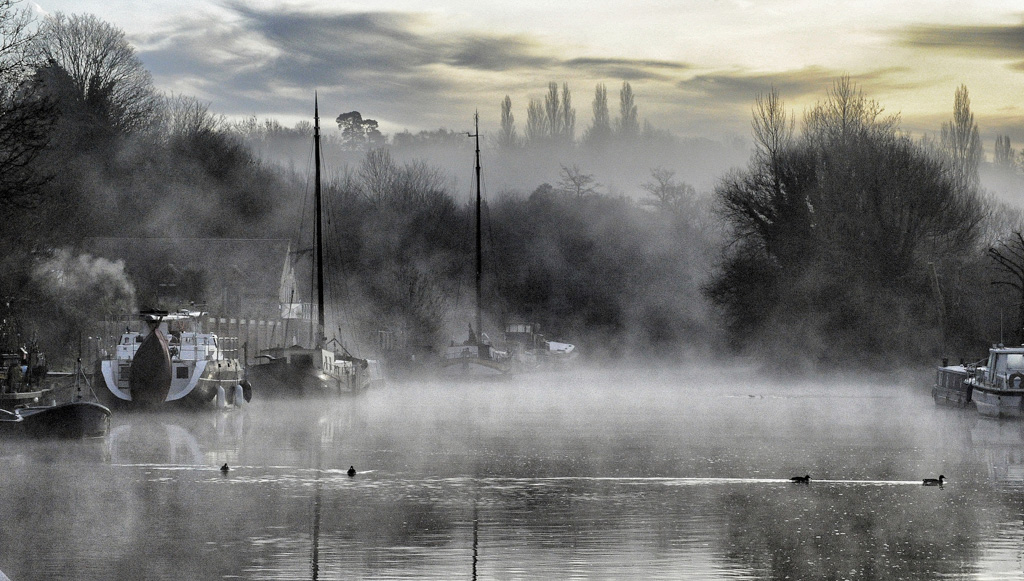
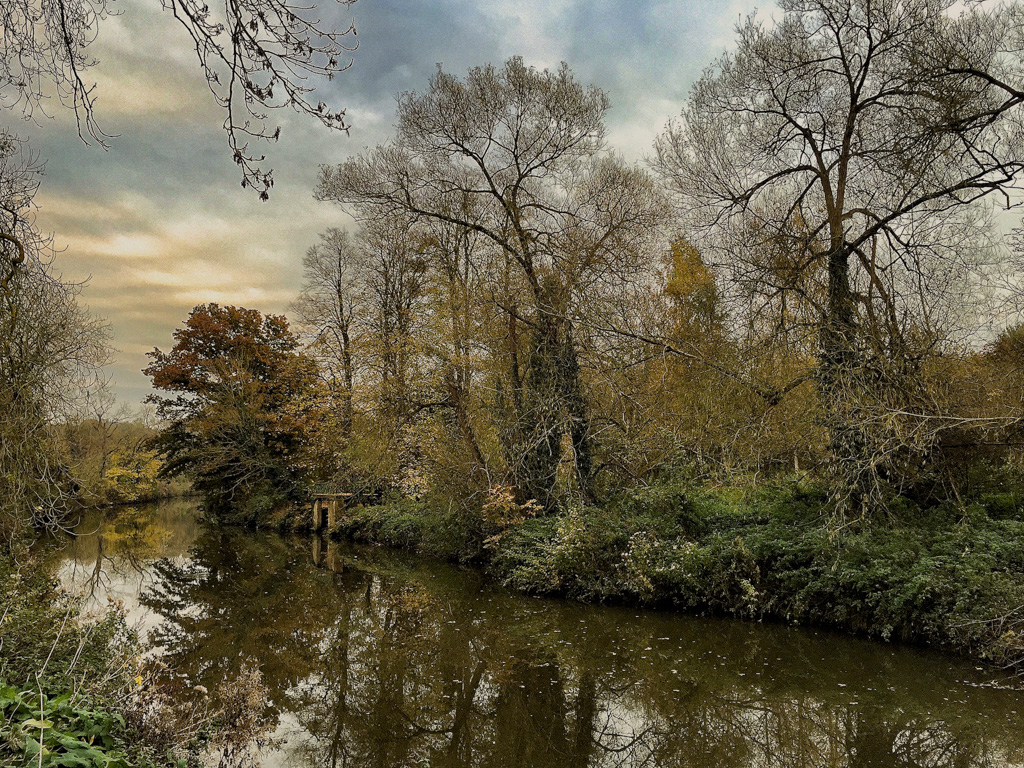
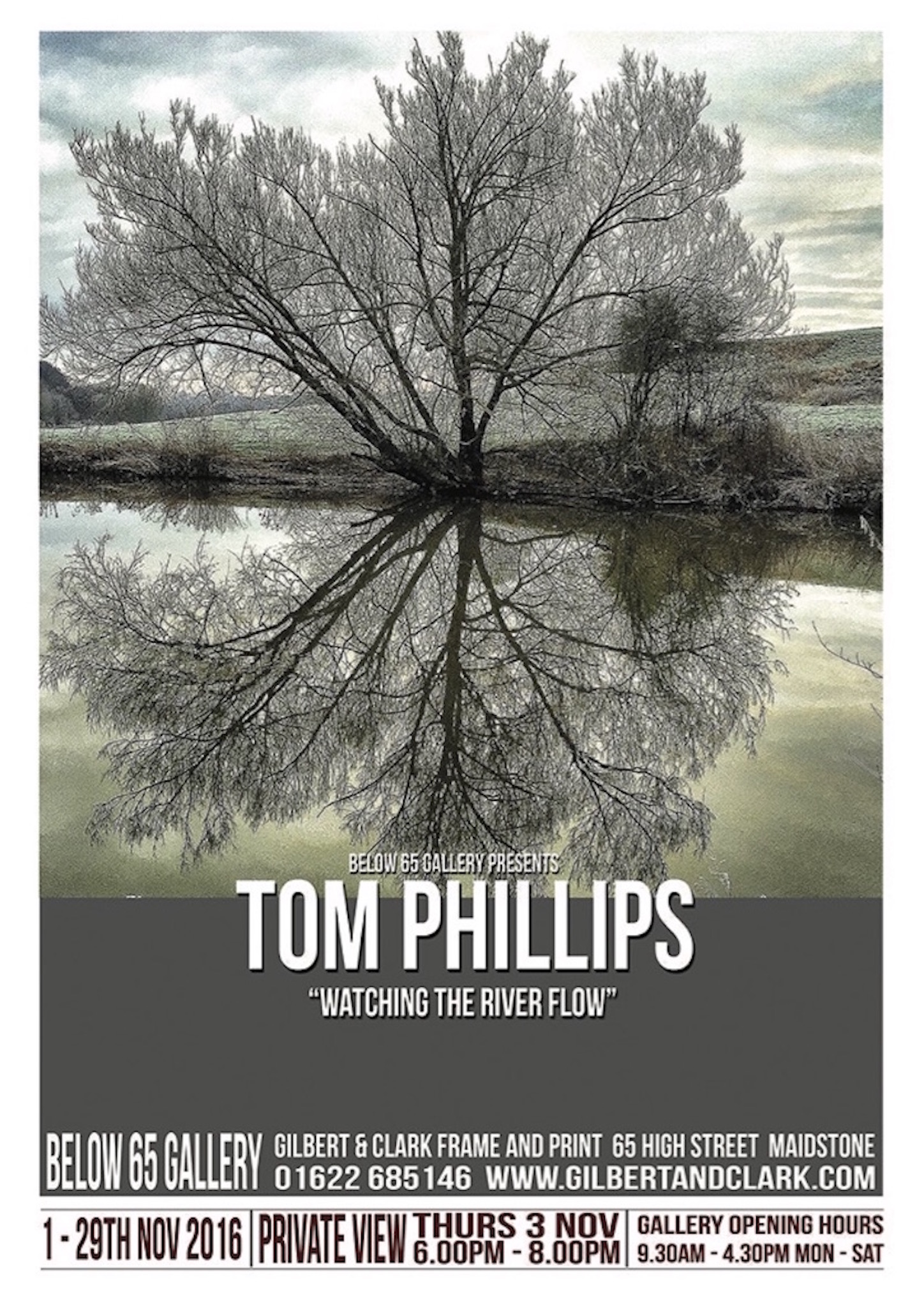
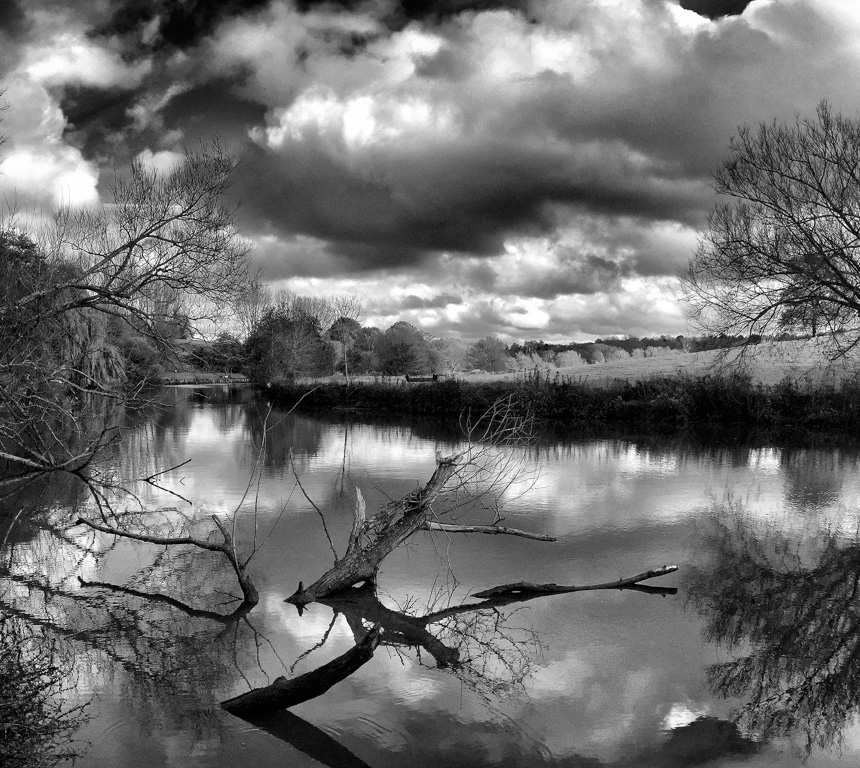
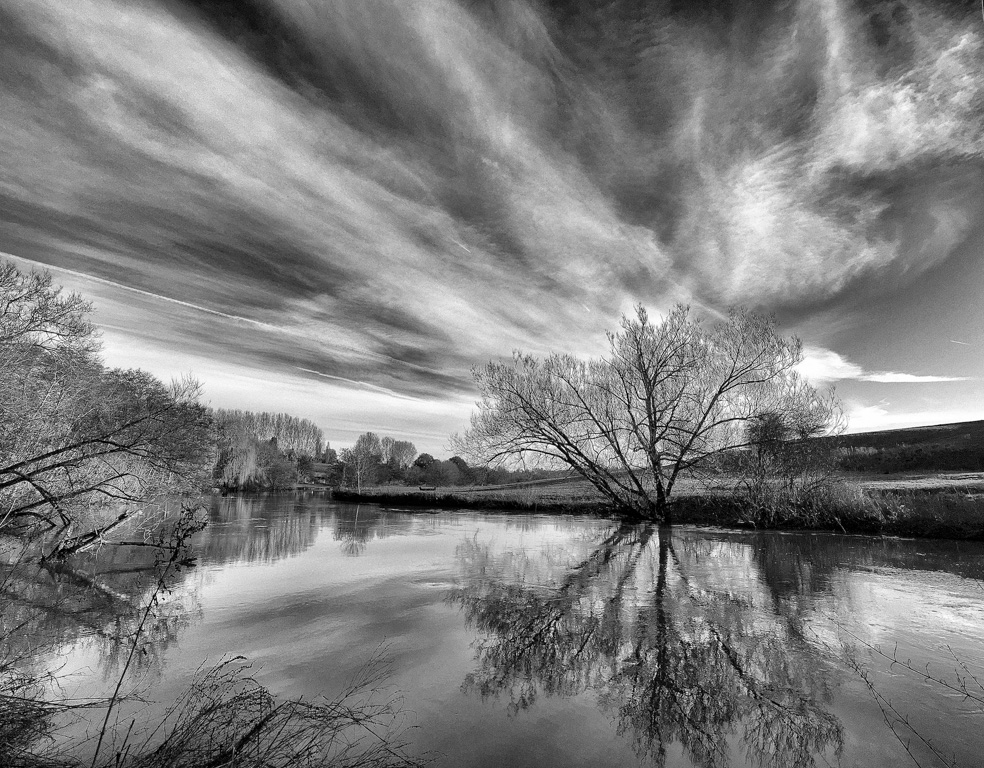
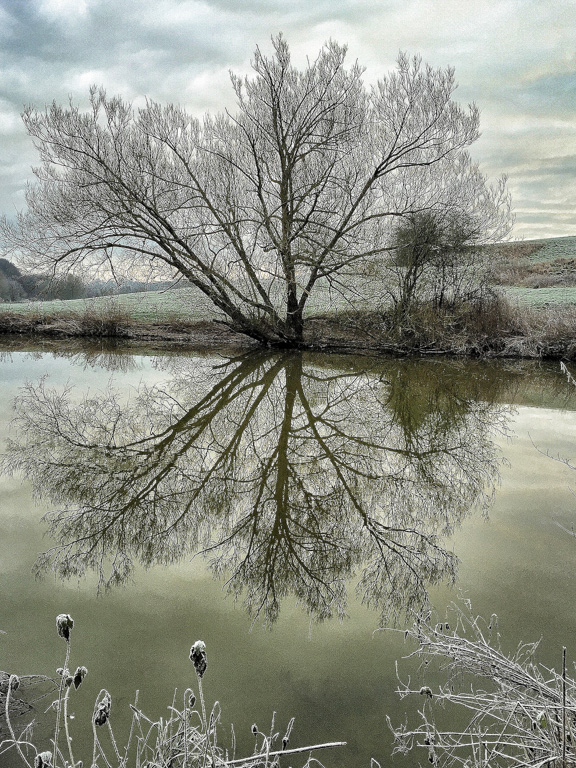
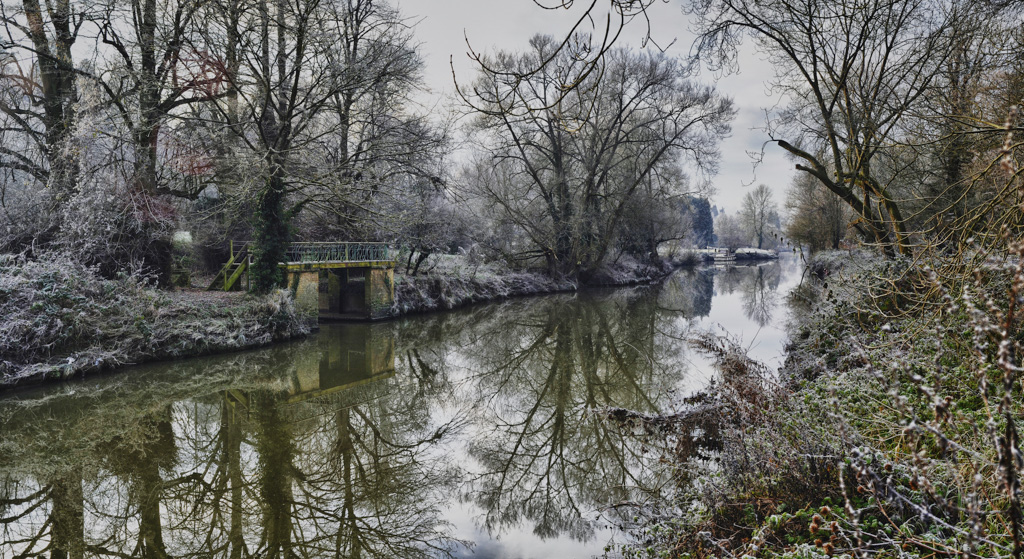
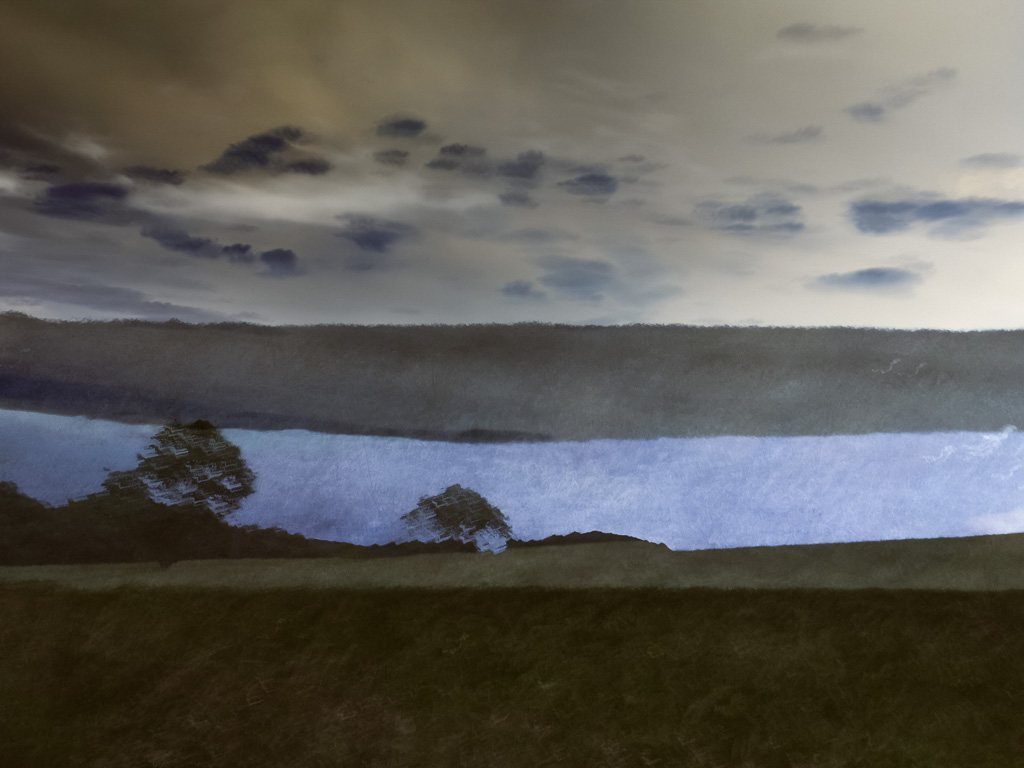
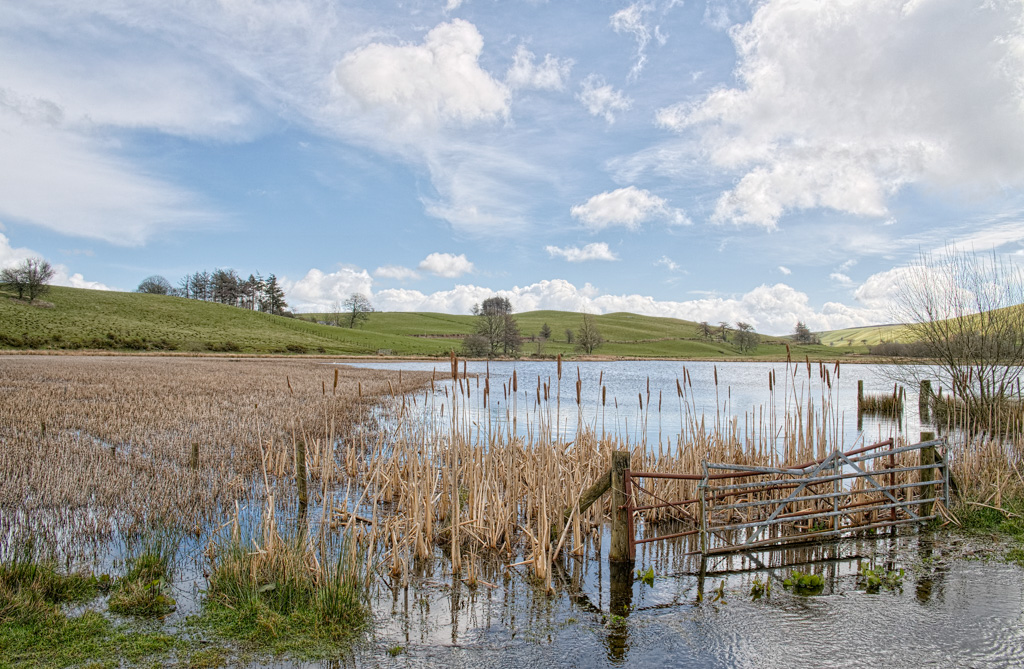
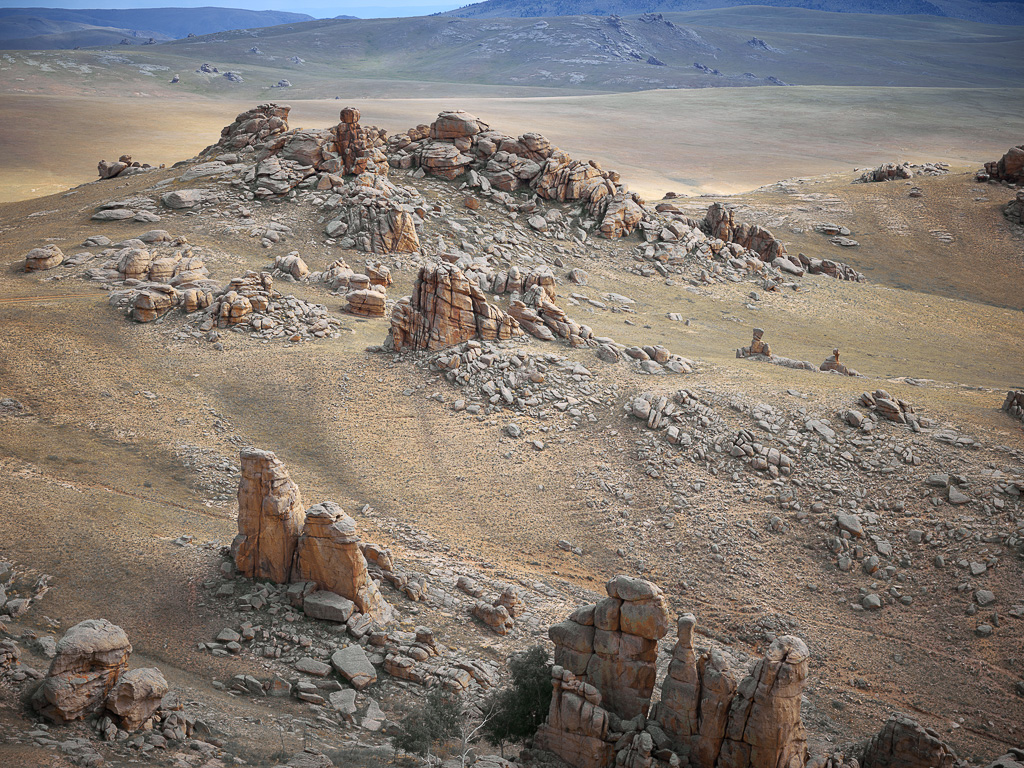
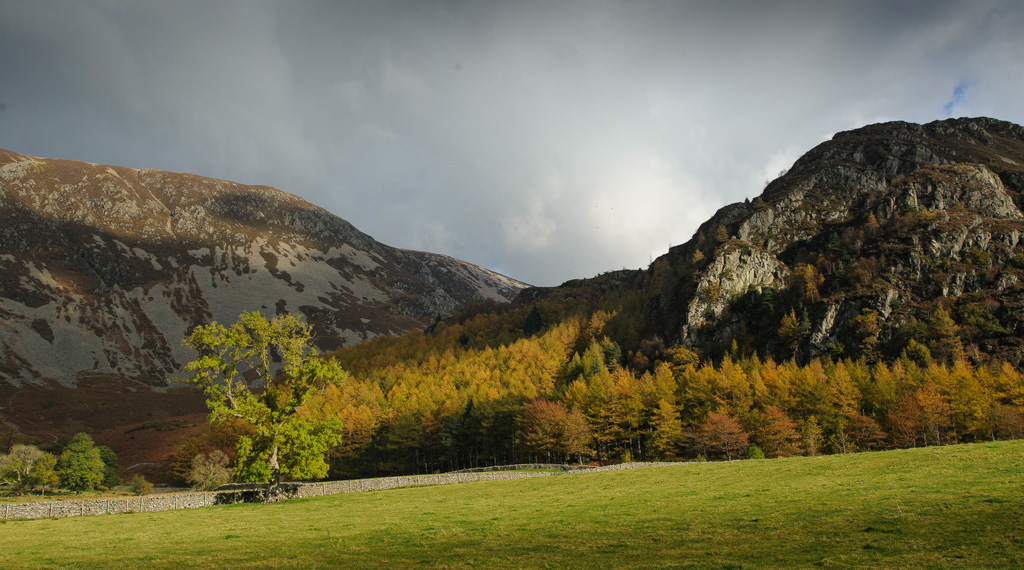
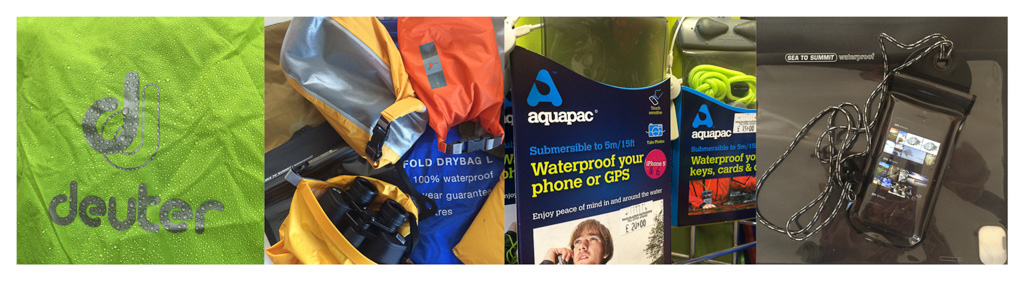
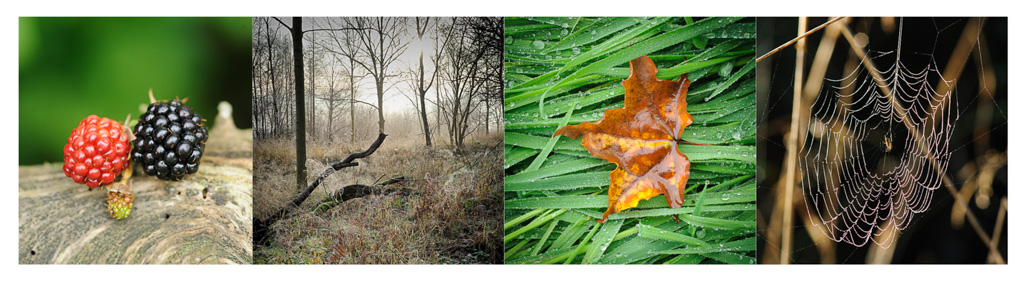

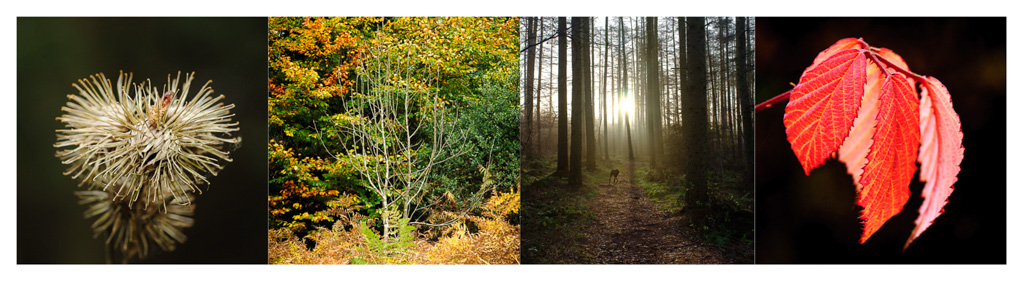
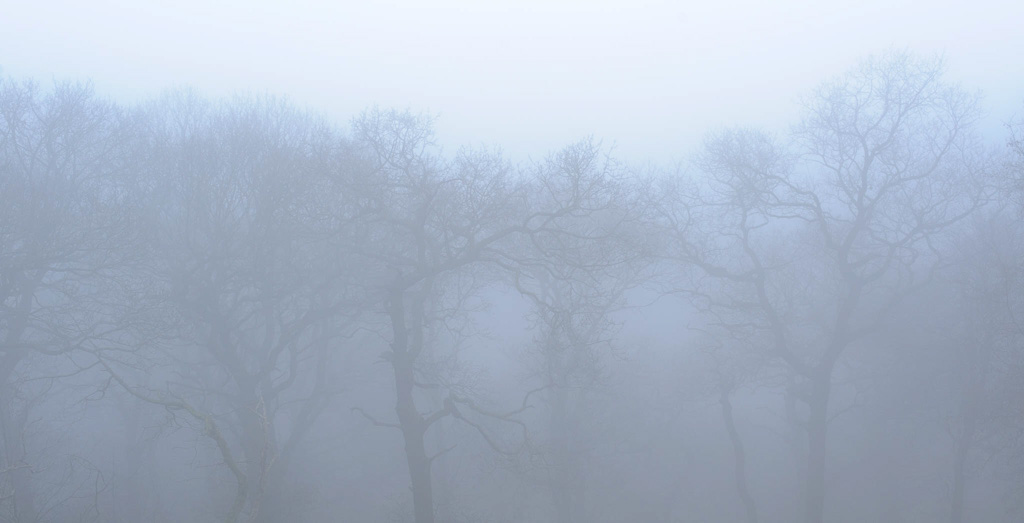
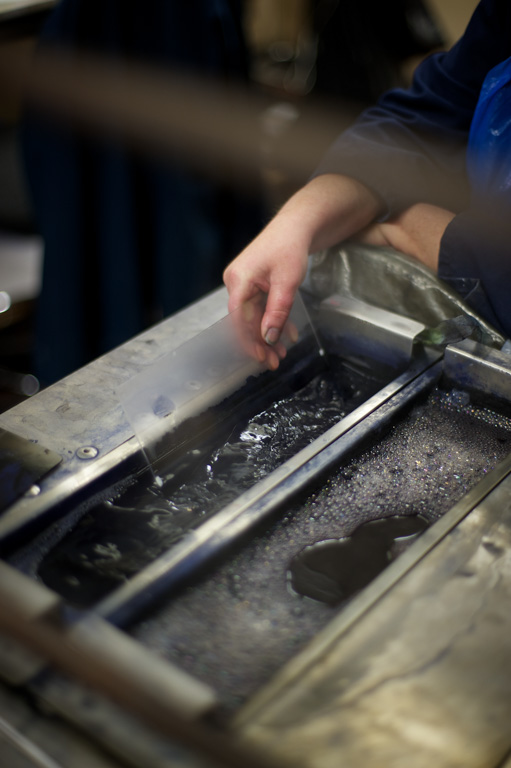
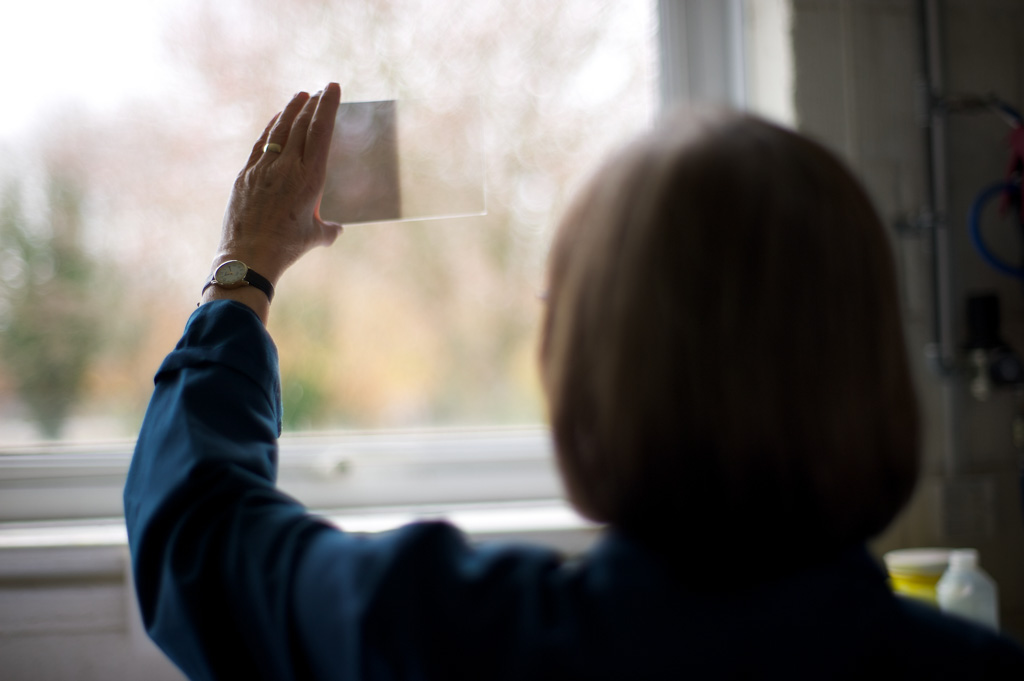
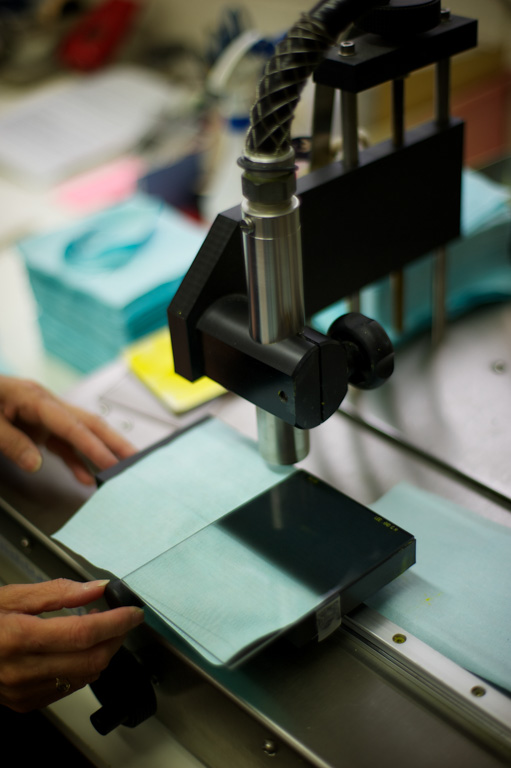
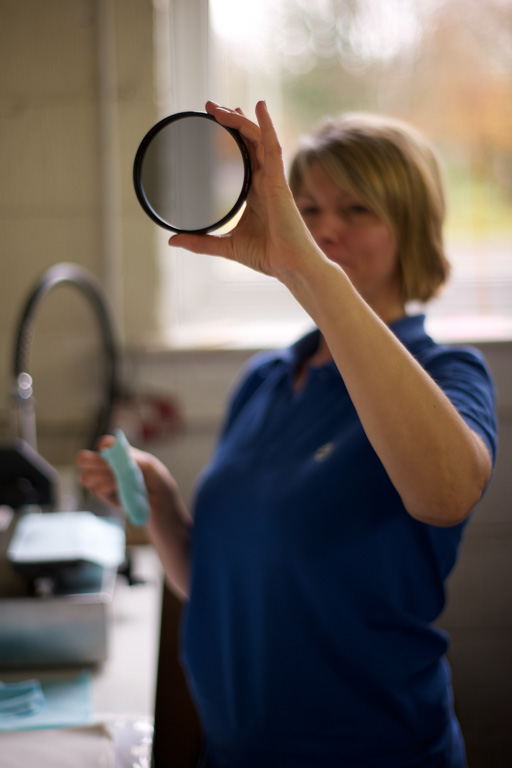
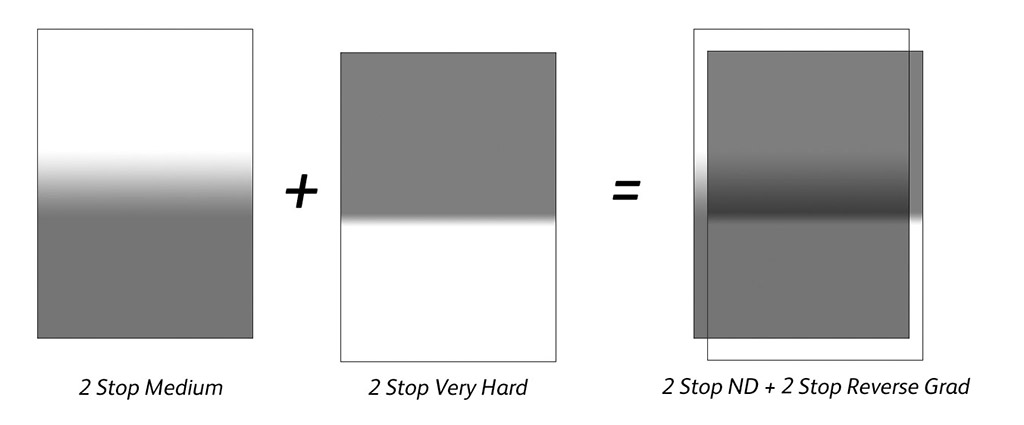

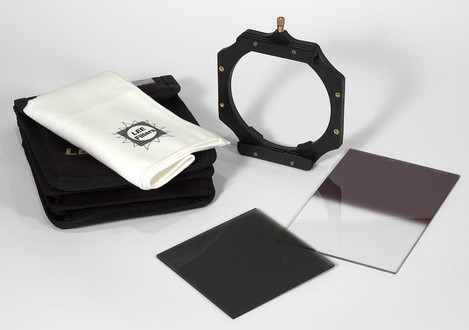 Buy the